The Calm Mind and Creativity: Unlocking Flow States Through Peace
A calm mind creates the mental space necessary for creativity to emerge and supports the flow state by reducing inhibitory anxiety.
The Calm Mind and Creativity: Unlocking Flow States Through Peace
In a world that glorifies burnout, celebrates busyness, and equates stress with importance, a quiet revolution is taking place. It’s a revolution not of more noise, but of profound silence. Not of frantic doing, but of conscious being. At the heart of this shift lies a powerful, almost paradoxical truth: our greatest creative breakthroughs, our most innovative ideas, and our deepest sense of productive fulfillment do not emerge from the chaos of a cluttered, anxious mind. They are born from peace.
We’ve all experienced fleeting moments of it—those times when work doesn’t feel like work, when hours pass like minutes, when ideas flow effortlessly, and action and awareness merge. Psychologists call this state “flow.” Artists know it as being “in the zone.” Athletes describe it as “the bubble.” It’s the secret engine behind masterpieces, scientific discoveries, and peak performance in every field.
But what if flow isn’t a rare gift bestowed upon the lucky few? What if it is a profoundly accessible state of mind, a natural consequence of a specific inner environment? This article posits that the most reliable pathway to sustained creativity and the coveted flow state is not through stimulants, pressure, or chaotic brainstorming. It is through the deliberate cultivation of a calm mind.
We stand at a fascinating crossroads of ancient wisdom and cutting-edge technology. For millennia, contemplative practices have taught the art of inner peace. Today, we can augment that understanding with quantifiable data about our own physiology. This is where the synergy of mindset and technology becomes transformative. Imagine having a gentle, personal guide on your journey toward calm—a guide that doesn’t just preach peace, but helps you understand your unique path to it. This is the promise of modern wellness technology, like the advanced biometric tracking offered by devices from innovators such as Oxyzen. By making the invisible visible—our heart rate variability, stress responses, and sleep quality—we gain the knowledge to intentionally architect our inner world for creativity to flourish.
This exploration will take us deep into the neuroscience of calm and creation, deconstruct the anatomy of the flow state, and provide a practical, evidence-based framework for building a life that doesn’t just chase creativity, but systematically invites it in through the door of peace.
The Modern Paradox: Seeking Creativity in a Storm of Stress
We live in the “creativity economy.” From Silicon Valley startups to marketing agencies, the premium is on novel ideas, innovative solutions, and original content. Yet, the environments we’ve built to foster this creativity are often anathema to its very genesis. Open-plan offices buzz with distractions. Notification pings fracture attention. The cult of multitasking reigns supreme, mistaking constant activity for productive output. We wear burnout as a badge of honor, believing that the pressure of a deadline is the only muse we need.
This approach is not just flawed; it’s counterproductive. Stress, in its acute form, can trigger a fight-or-flight response that narrows our focus to immediate survival—great for outrunning a predator, terrible for brainstorming a groundbreaking product design. Chronic stress is even more deleterious. It floods the brain with cortisol, which, over time, can impair cognitive function, shrink the prefrontal cortex (the seat of executive function and creative thinking), and hamper the connectivity between different brain regions essential for insight.
The paradox is clear: we demand creative output while systematically eroding the mental conditions required for it. We seek to draw water from a well we are simultaneously poisoning. The first step in unlocking true, sustainable creativity is to recognize this broken model. Creativity is not a frantic spark struck from the friction of anxiety. It is more like a delicate plant that grows best in the fertile, quiet soil of a peaceful mind. It requires space to breathe, time to germinate, and an environment free from the constant frost of stress.
The journey out of this paradox begins with awareness. We must become archaeologists of our own energy and attention. Tools that provide objective feedback, like the detailed physiological insights from a comprehensive wellness tracker, can be invaluable. By visiting resources like the Oxyzen blog, one can explore how data transforms vague feelings of "being stressed" into actionable knowledge, the first critical step toward change.
The Neuroscience of Calm: How a Peaceful Brain Creates
To understand why calm is a prerequisite for high-level creativity, we must take a brief journey into the brain. Neurological research reveals that our mental states are not abstract concepts but physical realities with distinct neural signatures.
When we are stressed or anxious, the brain’s amygdala—our threat detection center—becomes hyperactive. It shouts down the prefrontal cortex (PFC), the brain’s “CEO,” responsible for complex thinking, planning, and decision-making. In this state, brain activity is often erratic, noisy, and inefficient. The brain is lit up with the neurological equivalent of static.
Conversely, a calm, focused, and meditative state is marked by a profound shift. Studies using EEG and fMRI show two key patterns:
Increased Coherence and Alpha Waves: The brain enters a more synchronized, coherent state. Alpha wave activity (8-12 Hz) increases, particularly in the prefrontal and occipital regions. Alpha waves are associated with relaxed alertness, daydreaming, and the bridge between conscious and subconscious thought—a perfect incubator for creative insights. This is the brain taking a step back to see the bigger picture.
Quieting of the Default Mode Network (DMN): The DMN is a network of brain regions that is most active when we are not focused on the outside world—when our mind is wandering, ruminating, or self-referencing. Often called the "monkey mind," an overactive DMN is linked to anxiety, depression, and circular, unproductive thinking. Practices that induce calm, like meditation, reliably reduce DMN activity, quieting the internal critic and the chorus of "what-ifs" that stifle creativity.
In this calm state, the PFC can function optimally. Furthermore, the brain’s connectivity changes. There is improved communication between distant regions, allowing for the novel associations that define creative thought—connecting the seemingly unconnectable. The brain becomes a quiet, well-organized workshop instead of a chaotic emergency room.
This isn’t just theory. Research from organizations like the Center for Compassion and Altruism Research at Stanford has shown that compassion meditation can literally rewire neural pathways. The takeaway is revolutionary: calm is not a passive state of absence; it is an active, generative neurological mode. By cultivating calm, we are not just feeling better—we are physically restructuring our brains to be more insightful, connected, and creative. For those intrigued by the science of optimizing their mental hardware, delving into the research and mission behind wellness tech companies can reveal how product development is increasingly guided by these very neuroscientific principles.
Deconstructing Flow: The Five Pillars of the Zone
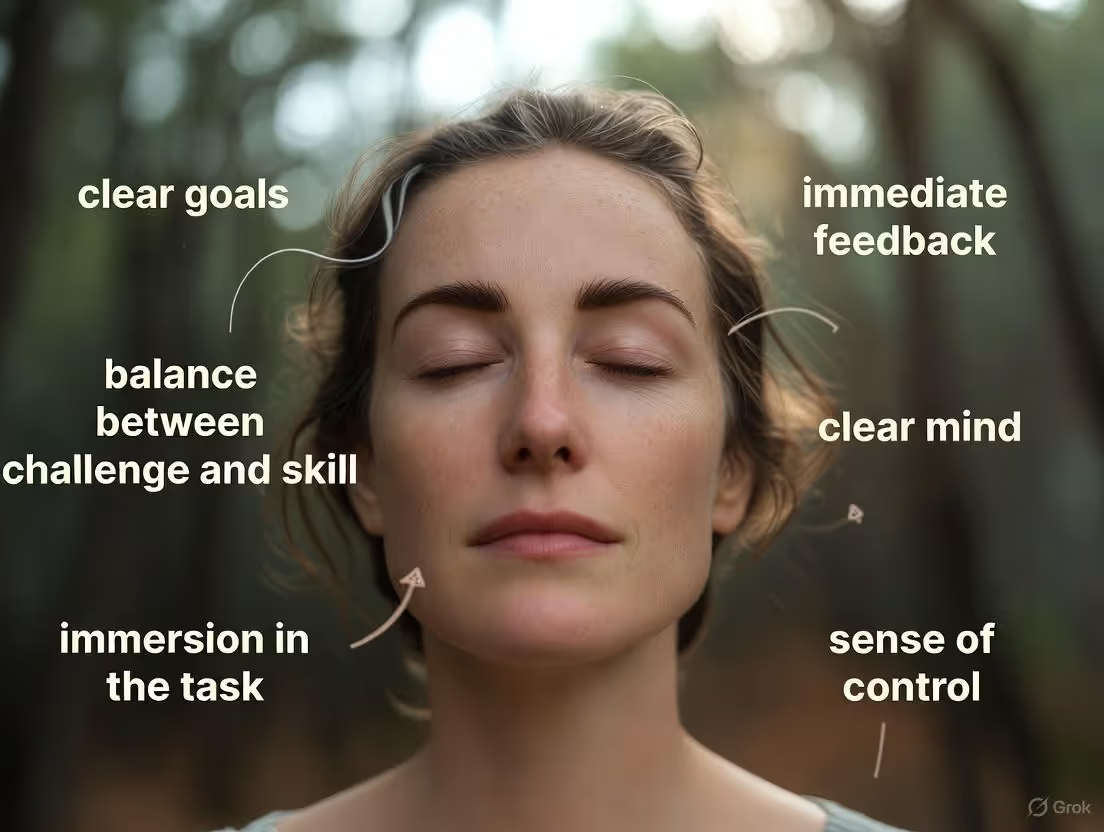
If calm is the fertile soil, flow is the spectacular bloom. First identified and named by psychologist Mihaly Csikszentmihalyi, flow is defined as an optimal state of consciousness where we feel and perform our best. It’s the ultimate fusion of calm and creation. But what exactly is happening during flow? We can deconstruct it into five core pillars, each intimately connected to an underlying state of peace.
Complete Immersion and Focus: In flow, attention is fully absorbed in the task at hand. The distracting chatter of the mind—the to-do lists, the insecurities, the external noise—falls away. This intense focus is only possible when the brain’s threat detection systems are quiet. You cannot be fully immersed in writing code or playing a sonata if your amygdala is screaming about an unanswered email.
A Loss of Self-Consciousness: The anxious, evaluating sense of “self” vanishes. You are not thinking about how you are doing; you are simply doing. This correlates directly with the neurological quieting of the Default Mode Network discussed earlier. The inner critic is offline, allowing for unfiltered expression and experimentation.
Clarity of Goals and Immediate Feedback: In flow, you know precisely what needs to be done next (write the next sentence, make the next brushstroke, solve the next equation), and you get instant feedback on how well you’re doing it. This creates a tight, positive feedback loop that is inherently rewarding. This clarity is a product of a mind unclouded by conflicting priorities or fuzzy anxiety.
The Transformation of Time: Time dilates—it either flies by or slows down dramatically. This altered time perception is a hallmark of a brain operating outside its normal, stress-bound mode of consciousness. It’s a sign of deep cognitive absorption.
Autotelic Experience: The activity becomes intrinsically rewarding. You are doing it for the sheer joy of the activity itself, not for an external reward. This is where work becomes play. A calm mind, free from the desperation of “needing to succeed” or the fear of failure, is far more capable of accessing this joyful, intrinsically motivated state.
Flow, therefore, is not a random event. It is a specific set of conditions that arise when challenge slightly exceeds skill, goals are clear, and—most foundationally—when the mind is free from inner turbulence. It is the ultimate expression of a calm mind in dynamic, creative action. Understanding these pillars allows us to move from hoping for flow to engineering the conditions for it. For practical examples of how individuals structure their lives to invite flow, the real-world experiences shared in Oxyzen testimonials often highlight the role of managed stress and optimal physiology in achieving peak states.
The Enemies of Flow: Identifying and Disarming Creativity Blockers
To cultivate the garden of calm creativity, we must first recognize the weeds that choke it. These are the silent saboteurs of flow, often masquerading as normal parts of modern life.
Digital Fragmentation: The single greatest enemy of deep focus is the smartphone. Each notification is a micro-interruption, not just stealing seconds but causing a “attention residue” that can impair cognitive performance for minutes afterward. This constant context-switching trains our brain for distraction, making sustained immersion in a single task neurologically difficult.
Multitasking Myth: Science is unequivocal: the brain does not multitask. It toggles. And each toggle comes with a cognitive cost—increased errors, reduced memory, and mental fatigue. The attempt to do multiple things at once creates a low-grade anxiety that is the antithesis of calm focus.
Perfectionism and the Inner Critic: This is the voice that says “this isn’t good enough” before the first draft is even complete. Perfectionism is fear dressed in high standards. It paralyzes action, kills experimentation, and keeps the DMN in a state of hyperactive, self-referential critique.
Physical Disregulation: We cannot separate mind from body. Poor sleep, erratic nutrition, dehydration, and a sedentary lifestyle create a physiological baseline of stress. An elevated resting heart rate, poor heart rate variability, and systemic inflammation send constant “danger” signals to the brain, making a calm, creative state biologically inaccessible.
Lack of Psychological Safety: Whether in a corporate team or our own internal dialogue, if we fear judgment, ridicule, or failure, we will not take the creative risks necessary for breakthrough ideas. Creativity requires vulnerability, which is impossible under perceived threat.
Disarming these blockers requires a two-pronged strategy: environmental and internal. Environmentally, it means creating “flow chambers”—times and spaces protected from digital intrusion. Internally, it means building self-awareness to catch the inner critic in the act and gently return to the task. Crucially, it also means addressing the physical foundation. This is where biometric awareness becomes a superpower. By using a device to track sleep patterns, stress indicators, and recovery, you move from guessing to knowing. You can answer questions like: “Was my creative block today due to a bad night’s sleep?” or “Did that morning meditation actually improve my afternoon focus?” For common questions on how to leverage such technology, resources like the Oxyzen FAQ can provide clear, actionable starting points.
The Foundation of Calm: Sleep as the Ultimate Cognitive Reset
If flow is the peak, sleep is the essential base camp. There is no pillar of wellness more fundamentally tied to cognitive function, emotional regulation, and creativity than sleep. During sleep, especially during deep (Slow-Wave) and REM stages, the brain undergoes critical maintenance.
Memory Consolidation and Integration: The brain replays the day’s experiences, transferring them from short-term to long-term storage. More importantly, it begins to make novel connections between disparate pieces of information. This is the “sleep on it” phenomenon in action—the brain, in its quiet, offline state, solves problems and generates insights that eluded the waking, conscious mind.
Cognitive Housecleaning: The glymphatic system, the brain’s waste-clearance system, is most active during sleep. It flushes out metabolic toxins, including beta-amyloid proteins linked to cognitive decline. A sleep-deprived brain is literally operating in a toxic environment, with impaired neural communication.
Emotional Recalibration: REM sleep plays a key role in processing emotional experiences, stripping away the sharp emotional edges from memories. This is why after a good night’s sleep, yesterday’s crisis often feels more manageable. It directly quiets the amygdala’s reactivity.
Poor sleep, therefore, erodes every prerequisite for creativity and flow. It weakens focus, amplifies emotional reactivity, stifers insight, and heightens stress. Prioritizing sleep is not a luxury for the creative; it is the first and most important non-negotiable investment in their craft.
Yet, in our hustle culture, sleep is often the first sacrifice. The key to changing this is to reframe sleep not as lost productive time, but as the most productive time of all—it’s when your subconscious creative team is working hardest. Optimizing sleep isn’t just about duration, but quality and consistency. Understanding your personal sleep architecture—how much deep and REM sleep you get, your sleep latency, and your nighttime restlessness—provides a blueprint for improvement. This kind of personalized data transforms sleep from a vague concept into a tangible, improvable skill, central to the vision of holistic wellness that drives companies like Oxyzen, whose origin story is often rooted in solving these very human performance puzzles.
The Physiology of Presence: Heart Rate Variability and Your Creative Rhythm
Beyond sleep, there is a second, more dynamic physiological metric that serves as a real-time window into your nervous system and its readiness for calm creativity: Heart Rate Variability (HRV).
HRV is the measure of the subtle variation in time between each heartbeat. Contrary to popular belief, a healthy heart is not a metronome; it has a complex, variable rhythm that responds to breath, thought, and emotion. High HRV indicates a resilient, adaptable autonomic nervous system (ANS)—one that can respond effectively to stress and then recover quickly to a relaxed state. Low HRV is associated with a stressed, fatigued, or inflexible ANS, often stuck in a sympathetic (fight-or-flight) dominant state.
Why is HRV a crucial biomarker for creativity?
It Measures Your "Stress Buffer": A high HRV suggests you have a greater capacity to handle cognitive and emotional challenges without being thrown into reactive anxiety. You can encounter a difficult problem or a critical piece of feedback and remain in a state of relaxed engagement, rather than defensive panic. This is the physiological basis for the "clear goals and feedback" pillar of flow.
It Reflects Recovery and Readiness: Tracking HRV trends can tell you if your body is recovering from physical or mental exertion. A rising HRV trend suggests you are well-recovered and primed for deep, focused work. A dropping trend is a red flag, indicating you may be overreaching and need more restorative time. Trying to force creative flow when your HRV is low is like trying to sprint with a sprained ankle.
It’s a Biofeedback Tool: By practicing paced breathing (e.g., inhaling for 4 counts, exhaling for 6), you can actively increase your HRV in the moment. This is a direct lever to pull to shift from a stressed physiological state to a calm, coherent one. It’s a way of using the body to calm the mind, creating the internal peace required for creativity to surface.
Monitoring HRV empowers you to work with your body’s natural rhythms. You learn to schedule demanding creative work for when your physiology is primed for it, and to honor signals for rest when needed. It turns the abstract goal of “being calmer” into a daily, data-informed practice. For a deeper dive into the science of biomarkers like HRV and their role in performance, further reading on our blog offers a wealth of accessible explanations and practical guides.
Designing Your Environment for Effortless Focus
Calm is an internal state, but it is profoundly influenced by external space. Our environments are not neutral backdrops; they are active participants in our cognitive and emotional processes. To systematically invite flow, we must become architects of environments that minimize friction and maximize focus.
The Digital Sanctum: This is the most critical design challenge. Create explicit, tech-free zones and times. Use app blockers (like Freedom or Cold Turkey) during deep work sessions. Turn off all non-essential notifications. The goal is to make distraction a conscious choice requiring effort, not a default state. Your devices should serve your creativity, not fragment it.
The Ordered Physical Space: Visual clutter is cognitive clutter. A chaotic desk sends competing signals to the brain, demanding micro-attention. A clean, minimalist workspace, with only the tools needed for the current task, reduces cognitive load. Natural light, plants, and a view of nature (or even images of nature) have been shown to lower stress and improve concentration.
Auditory Landscape: For many, total silence can be as distracting as noise. The key is to control the sonic environment. Options include:
Noise-Cancelling Headphones: A physical and psychological barrier against the world.
Focus Soundtracks: Ambient soundscapes, binaural beats, or instrumental music (like lo-fi or classical) can mask disruptive noise and induce a calm, focused state. Certain sound frequencies are even associated with increased alpha brain waves.
"Café Ambient" Sounds: For some, the low murmur of a coffee shop provides the perfect level of gentle, non-intrusive background stimulation.
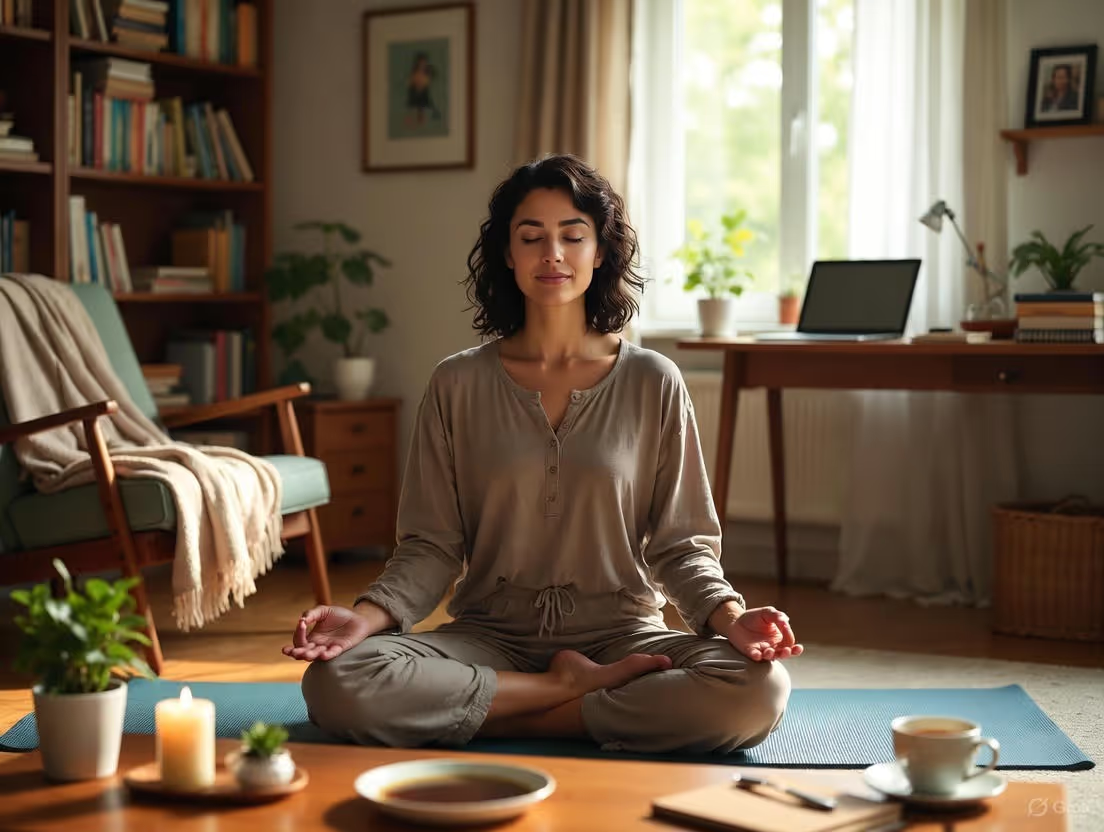
The Ritual of Beginning: Environmental design extends to ritual. A pre-flow ritual—brewing a specific tea, arranging your tools, five minutes of mindful breathing—signals to your brain that it’s time to shift modes. It’s a psychological “on-ramp” to the state of calm focus.
By intentionally designing these external layers, we reduce the willpower required to enter a creative state. The path of least resistance becomes the path of focused work. The environment itself becomes a co-conspirator in your quest for peace and productivity. Learning how others have successfully crafted their sanctuaries can spark new ideas, a topic frequently explored in user stories and community experiences.
The Daily Practices: Building a Non-Negotiable Ritual for Calm
Environment sets the stage, but practice builds the actor. Cultivating a reliably calm mind is a skill, and like any skill, it requires consistent, deliberate practice. These are not grand, time-consuming exercises, but small, woven threads that create a tapestry of inner stability.
Morning Anchoring: The first hour after waking sets the tone for the day. Avoid immediately grabbing your phone. Instead, invest in a “winning the morning” ritual. This could include:
Mindful Silence: 5-10 minutes of sitting in silence, observing your breath.
Intentional Movement: Gentle stretching, yoga, or a walk—focusing on the sensations in your body.
Gratitude Journaling: Writing down three things you’re grateful for. This practice actively shifts neural activity toward positive patterns.
Intention Setting: Clearly stating one primary creative focus for the day.
Mindfulness Micro-practices: You don’t need hour-long meditations. The power is in bringing mindful awareness to everyday activities. Practice fully focusing on the taste of your coffee, the sensation of water in the shower, or the feel of your feet on the ground while walking. Each of these is a rep for the “focus muscle,” training your brain to return to the present moment.
Scheduled Deep Work Blocks: Proactively defend time for immersive work. Use a calendar to block 90-120 minute sessions of uninterrupted, single-tasking focus. Communicate these as unavailable times. Treat these blocks with the same sacred respect as a meeting with your most important client—because you are meeting with your most important creative self.
The Strategic Pause: Creativity is nonlinear. The constant push often leads to diminishing returns. Build in deliberate pauses. The Pomodoro Technique (25 minutes of work, 5-minute break) is a classic for a reason. During breaks, do something truly restorative: look out a window, step outside, do a brief body scan. Don’t switch to another cognitive task like social media.
Evening Unwind Routine: Just as you need an on-ramp to focus, you need an off-ramp to rest. An hour before bed, begin a digital sunset. Dim lights, read a physical book, listen to calming music, or practice gentle stretching. This tells your nervous system the workday is over, allowing cortisol to drop and melatonin to rise, paving the way for the regenerative sleep that fuels tomorrow’s creativity.
The cumulative effect of these rituals is a nervous system that trusts it will have periods of focused effort, but also guaranteed periods of restoration. This security is the bedrock of a calm mind. For individuals seeking to structure such rituals with data, understanding the full capabilities of a wellness tracker is key, a process often begun by exploring a company’s comprehensive guide and support.
Nutrition for the Creative Mind: Fueling Focus and Calm
The brain, though only 2% of body weight, consumes roughly 20% of our energy. The quality of that energy directly influences cognitive function, mood stability, and our susceptibility to stress. The modern “creative” diet of caffeine, sugar, and processed snacks is a recipe for jittery anxiety and energy crashes—the exact opposite of the sustained, calm energy required for flow.
Stabilizing Blood Sugar: The primary goal. Sharp spikes and crashes in blood glucose lead to irritability, brain fog, and cravings. To avoid this:
Prioritize Protein, Healthy Fats, and Fiber: These slow the absorption of sugars. Think nuts, seeds, avocados, legumes, lean meats, and fatty fish.
Complex Over Simple Carbs: Choose whole grains, sweet potatoes, and oats over white bread, pastries, and sugary cereals.
Regular, Balanced Meals: Avoid long stretches without food, which can lead to cortisol-driven stress responses and poor decision-making (“hanger”).
The Mighty Omega-3s: Found in abundance in fatty fish (salmon, mackerel), walnuts, and flaxseeds, these fats are critical for brain cell membrane health and have potent anti-inflammatory effects. Chronic inflammation is increasingly linked to brain fog, low mood, and impaired cognition.
Gut-Brain Axis Awareness: The gut is often called the “second brain.” The microbiome produces a vast array of neurotransmitters, including about 90% of the body’s serotonin (a key regulator of mood and calm). Feeding your gut with prebiotic fiber (from vegetables, fruits, garlic, onions) and probiotic foods (yogurt, kefir, sauerkraut) supports a healthy gut-brain connection, promoting emotional resilience.
Strategic Hydration: Even mild dehydration (as little as 1-2%) can impair concentration, memory, and mood. Creative work is demanding mental labor. Keep water at your desk and sip consistently throughout the day.
Mindful Caffeine Use: Caffeine is a powerful adenosine blocker, enhancing alertness. But its timing and dosage matter. A morning coffee can aid focus, but caffeine too late in the day can sabotage the deep sleep essential for creativity. Furthermore, relying on caffeine to push through an energy trough often masks underlying issues like poor sleep or nutrition.
Eating for creativity isn’t about restrictive diets; it’s about viewing food as information and fuel for your most valuable asset. It’s another way of building a stable physiological platform from which a calm, insightful mind can operate. The journey to understanding your unique physiological needs often starts with awareness, a principle that guides everything from personal nutrition to the development of personalized tech at Oxyzen.
Movement as Meditation: Using the Body to Quiet the Mind
The Cartesian idea of a mind separate from the body is a fallacy that has hindered our understanding of creativity. The body is not merely a vehicle for the brain; it is an integral part of our cognitive and emotional processing system. Intentional movement is one of the most potent, underutilized tools for inducing a calm, creative state.
Cardio for Cognitive Clarity: Aerobic exercise (running, cycling, swimming) increases blood flow to the brain, delivers oxygen and nutrients, and stimulates the release of Brain-Derived Neurotrophic Factor (BDNF)—a protein that acts like fertilizer for brain cells, promoting neuroplasticity (the brain’s ability to rewire and adapt). A brisk walk can literally clear mental fog and often leads to unexpected insights, a phenomenon so common it’s called the “walking ideation” effect.
Yoga and Tai Chi: Embodied Calm: These practices uniquely combine movement, breath control, and mindful awareness. They are moving meditations that actively train the nervous system to stay calm under mild physical stress (holding a pose). This trains the mind-body system to maintain equanimity during mental stress. The focus on breath and bodily sensation pulls attention away from ruminative thoughts and into the present moment, the only place where flow can occur.
Walking Meetings and Dynamic Workstations: Breaking the sedentary trap is crucial. Whenever possible, convert a sit-down discussion into a walking one. The rhythmic, bilateral movement of walking can facilitate more open, creative conversation. Similarly, using a standing desk or a desk treadmill at a slow pace can combat the physical stagnation that often accompanies mental stagnation.
The Posture-Mood Link: Our physical posture directly influences our neurochemistry. “Power poses” (open, expansive stances) have been shown to temporarily reduce cortisol and increase testosterone, associated with confidence and a willingness to take risks. Conversely, slumped, closed postures can induce feelings of helplessness and anxiety. Simply sitting or standing with a tall, open spine can create a physiological foundation for a more confident, calm creative state.
The key principle is somatic awareness—getting out of the purely conceptual mind and into the felt experience of the body. When stuck on a creative problem, instead of furiously thinking, the answer often lies in moving. A short walk, some stretches, or a few minutes of conscious breathing can reset the system, lower stress hormones, and allow a new perspective to emerge from the quiet that follows movement. This holistic view of human performance—where mind and body are one system—is central to the philosophy behind many modern wellness tools, a philosophy you can explore in the brand’s core narrative.
The Art of Strategic Disengagement: Why Rest Is Not the Enemy of Results
In our productivity-obsessed culture, rest is often framed as the opposite of work—a necessary evil, a concession to weakness, or worse, wasted time. For the creative individual seeking flow, this mindset is a profound error. True creativity operates on a rhythm of engagement and disengagement. Strategic rest is not the enemy of creative output; it is its most vital partner.
This concept is rooted in the neuroscience of the "default mode" and "diffuse mode" networks. When we are focused on a task (the "focused mode"), we are using specific, goal-oriented neural pathways. When we rest, daydream, or engage in non-demanding activity, the brain shifts into the "diffuse mode." This network is far more expansive, connecting disparate ideas and allowing for the novel associations that constitute breakthrough insight. It’s in the shower, on a walk, or just before sleep that the "aha!" moments often strike. Why? Because we’ve stopped forcing the solution and allowed the diffuse network to work its magic.
Therefore, to optimize creativity, we must deliberately schedule and sanctify disengagement:
The Creative Sabbath: Instituting one full day a week completely devoid of "productive" creative work. This is a day for play, nature, connection, and hobbies with no outcome goal. This extended period of diffuse-mode activity allows the subconscious mind to integrate the week’s work, often leading to Monday morning breakthroughs.
Micro-Restoratives Throughout the Day: Beyond the Pomodoro break, consider 5-10 minute "nothing breaks." Simply staring out a window, closing your eyes and listening, or gentle stretching. The rule: no consumption of information (no news, social media, podcasts). This is pure mental space-making.
The Value of Boredom: In an age of infinite entertainment, boredom has become a rare commodity. Yet, boredom is a potent catalyst for the internal generation of ideas. It is the uncomfortable space from which creativity springs. Allow yourself to be bored in a waiting room, on a commute (without headphones), or in a quiet moment. Resist the urge to fill the void; see what arises from within.
By honoring rest as a creative act in itself, we reframe our relationship with time. We understand that the incubation period is as critical as the execution period. The mind, like the soil, needs fallow periods to remain fertile. A device that tracks your stress and recovery can provide hard data to support this rhythm, showing you objectively when you are pushing into counterproductive strain and when you are truly recovered and ready for deep work. Seeing a low "readiness" score can give you the permission slip you need to take a strategic rest day without guilt. To understand how others have successfully implemented such rhythms, exploring real-world user experiences and testimonials can be incredibly validating and instructive.
From Reactive to Responsive: Mastering Emotional Regulation for Creative Resilience
A calm mind is not a mind devoid of emotion. It is a mind that is not enslaved by emotion. The creative process is inherently vulnerable and emotional. It involves facing uncertainty, confronting the blank page, and risking failure. Fear, frustration, impatience, and self-doubt are not signs you're on the wrong path; they are often signposts that you're on the right, challenging one. The key is not to avoid these emotions but to develop the capacity to hold them without being derailed.
This is emotional regulation: the ability to influence which emotions you have, when you have them, and how you experience and express them. It’s the difference between being reactive (a flood of anxiety causing you to abandon a project) and responsive (noticing the anxiety, naming it, and choosing to take a small, manageable next step despite it).
Building Emotional Regulation for Creativity:
Name It to Tame It: Neuroscientist Dr. Dan Siegel's famous phrase highlights a simple but powerful tool. When you feel a surge of creative resistance or anxiety, silently label it: "This is frustration," "This is fear of judgment." This act engages the prefrontal cortex and reduces the amygdala's reactivity, creating space between the feeling and your reaction.
Cognitive Defusion: Learn to see thoughts and feelings as transient events in the mind, not absolute truths or commands. Instead of "I'm a fraud" (a fused, believed thought), practice thinking, "I'm having the thought that I'm a fraud." This creates psychological distance, reducing the thought's power to dictate your actions.
The Pause-and-Plan Response: When you feel a stress reaction rising (heart pounding, breath quickening), consciously initiate a physiological shift. Take three slow, deep breaths with a longer exhale. This activates the parasympathetic nervous system, shifting you from "fight-or-flight" to "rest-and-digest." From this calmer state, you can make a plan: "Okay, this feels overwhelming. What is the single, smallest next action I can take?"
Cultivate Self-Compassion: Talk to yourself as you would to a valued colleague who is struggling. Instead of "This is terrible, you'll never finish," try, "This is really challenging right now. It's okay to find it hard. Let's just focus on this one section." Research by Dr. Kristin Neff shows self-compassion increases resilience, reduces fear of failure, and fosters a safer internal environment for creative risk-taking.
Emotional regulation transforms the inner landscape from a minefield into a dynamic, if sometimes stormy, ecosystem. It ensures that the inevitable emotional weather of the creative process doesn't destroy the project. By developing this skill, you become the steady captain of your ship, able to navigate both calm seas and creative squalls. For those seeking structured guidance on managing the stressors of modern life, resources and community insights can often be found by exploring a company's blog and support hub.
The Social Dimension of Calm Creativity: Cultivating a Supportive Ecosystem
Creativity is often portrayed as a solitary act—the lone genius in the garret. While deep work requires solitude, the overall creative life is deeply social. The people and culture that surround us can either be a constant drain on our calm or a powerful source of regeneration and inspiration. We must be intentional about our creative ecosystem.
Seek Out Brain Trusts, Not Just Networks: Move beyond transactional networking. Cultivate a small circle of trusted peers—a "brain trust"—with whom you can share half-formed ideas without fear of premature judgment. These are people who understand the creative process, ask generative questions, and offer support during the inevitable dips. The psychological safety of this group is a direct antidote to the anxiety of creation.
Establish Communication Boundaries: Make your deep work blocks known to colleagues, friends, and family. Use tools like shared calendars or status indicators ("In Focus Mode until 11 AM"). Teach your ecosystem how to support you by respecting these boundaries. This prevents the resentment and interruption that shatters calm.
Consume Nourishing Input: The media and content we consume are part of our social diet. A steady stream of outrage-driven news, social media comparison, or cynical commentary will inevitably create a noisy, anxious internal state. Curate your inputs. Subscribe to inspiring newsletters, listen to in-depth podcasts from deep thinkers, read biographies of creators you admire. Fill your mind with material that expands your sense of possibility, not contracts it with fear or cynicism.
The Power of Co-Regulation: Humans regulate their nervous systems through one another—a process called co-regulation. Spending calm, present time with a trusted partner, a pet, or even in a peaceful community setting (like a library or quiet café) can literally help down-regulate your own stress response. The calm of another can become your calm.
Finding Your Creative Community: Whether online or in person, finding a community of practitioners in your field (or in adjacent creative fields) provides a sense of belonging and normalizes the struggles of the creative journey. It reminds you that you are not alone in facing the blank page or the inner critic.
By proactively designing a social ecosystem that values depth over distraction, support over competition, and calm over chaos, you create an external world that mirrors and reinforces the internal state you are cultivating. This alignment reduces friction and makes sustaining a creative practice not just possible, but joyful. The story of how a brand builds its own community, as detailed in sections like our story, often reflects this same understanding of the importance of a supportive ecosystem for innovation and well-being.
Leveraging Technology as a Guide, Not a Distractor
We have rightly diagnosed technology as a primary source of fragmentation and stress. However, when used with intention, technology can also be one of our most powerful allies in the pursuit of calm creativity. The distinction lies in moving from passive consumption to active, purposeful use. The goal is to make technology obvious in its support and invisible in its interference.
Tools for Focus and Flow:
Distraction Blockers: Applications like Freedom, Cold Turkey, or Forest allow you to block distracting websites and apps for set periods, creating a virtual "flow chamber." They externalize willpower, making distraction a conscious choice you must override.
Ambient Sound Generators: Tools like Brain.fm, Noisli, or myNoise provide scientifically designed soundscapes (e.g., focus-enhancing music, pink noise, nature sounds) that mask environmental noise and can even entrain brain waves toward states of concentration.
Digital Note-Taking and Idea Capture: Systems like Obsidian, Notion, or even a simple notes app serve as a "second brain," allowing you to offload ideas, research, and tasks from your working memory. This practice, known as "Getting Things Done" (GTD), clears mental RAM, reducing anxiety and creating space for creative thought.
The Role of Biometric Feedback (The Quantified Self for Creativity): This is where wearable technology, such as a sophisticated smart ring, transitions from a general wellness device to a dedicated creative performance tool. By providing objective data, it closes the feedback loop between your internal state and your creative output.
Pre-Session Check-In: Before a planned deep work block, check your stress and recovery metrics. A high stress reading or low HRV might indicate you need a 10-minute breathing or movement break before you start, ensuring you begin from a place of calm capacity.
Identifying Your Creative Chronotype: By correlating your focus and output with time-of-day data on your body temperature, heart rate, and HRV, you can pinpoint your biological prime time for deep creative work. Are you truly a morning person, or does your cognitive horsepower peak in the late afternoon? Data doesn't lie.
Post-Session Review: After a particularly productive (or unproductive) session, review the physiological data. Did your heart rate stay relatively low and stable, indicating calm focus? Or was it spiky, suggesting underlying anxiety? This forensic analysis helps you refine your rituals and environment.
The philosophy here is biohacking for creativity. It’s about using empirical evidence to make iterative improvements to the system that is you. It transforms self-improvement from a vague, guilt-driven endeavor into a curious, data-informed experiment. This pragmatic, evidence-based approach to human optimization is central to the mission of many modern wellness tech companies, a mission you can learn more about by visiting Oxyzen's about page.
The Long Game: Building a Sustainable Creative Life, Not Just a Project
The pursuit of flow and creative brilliance is often focused on the short-term: finishing a painting, launching a product, writing a book. But the most profound creative contributions come from those who can sustain their practice over decades. This requires shifting from a project-based mindset to a lifestyle-based philosophy. The goal is not to achieve a single flow state, but to build a life that makes flow states a frequent and natural occurrence.
This involves several key paradigm shifts:
Process Over Product: Fall in love with the daily practice—the ritual of showing up at your desk, the feel of the tools in your hand, the quiet struggle with the material. When the process is the reward, you are insulated from the rollercoaster of external validation and criticism. The calm mind finds joy in the doing, making the outcome a welcome byproduct, not the sole source of meaning.
Embrace the Plateaus: Creative growth is not a linear, upward trajectory. It is a series of steep learning curves followed by long, flat plateaus of integration. The plateau is where the real work happens—where skills become automatic, where style deepens. The calm mind does not panic on the plateau; it trusts the process and uses the apparent stillness for refinement and subtle exploration.
Cultivate Creative Cross-Training: Just as athletes cross-train to prevent injury and build overall fitness, creatives benefit from engaging in different, seemingly unrelated forms of creation. A programmer learning pottery, a writer studying dance, a designer taking a gardening course. These activities work different neural muscles, prevent burnout in your primary field, and create unexpected connections that fuel innovation in your main work. They are a form of "diffuse mode" play for the whole being.
The Legacy of Curiosity: Frame your work not as a series of outputs to produce, but as a lifelong vehicle for learning and exploration. Ask: "What does this project allow me to learn? What new territory does it force me to explore?" This cultivates the mind of a beginner—open, curious, and calm because it is not attached to already knowing.
Building a sustainable creative life is an act of faith in compound interest. The small, daily investments in calm, focus, health, and curiosity may not yield a dramatic breakthrough tomorrow. But over years, they compound into a reservoir of skill, insight, resilience, and wisdom that becomes your greatest asset. It is the ultimate application of the calm mind: viewing your creative journey not as a sprint to a finish line, but as a mindful, enriching walk through a landscape of endless discovery. For ongoing inspiration and strategies to maintain this long-view perspective, a curated resource like the Oxyzen blog can be a valuable companion on the journey.
Integrating the Framework: A Week in the Life of a Calm Creator
Theory and principles are essential, but integration is where transformation occurs. Let’s crystallize everything discussed into a practical, archetypal week. This is not a rigid prescription, but a flexible template showcasing how the pillars of calm creativity can weave into the fabric of daily life.
Monday – Intention & Planning:
Morning: No email. Morning ritual of meditation, journaling (gratitude + top 1-3 creative priorities for the week), and a nutrient-dense breakfast.
Work Block (9 AM - 12 PM): Review weekly goals. Schedule deep work blocks in calendar for the week. Tackle the most intellectually demanding creative task of the week first, while mental energy is fresh. Use distraction blocker.
Afternoon: Administrative tasks, meetings, communication. Evening: Light movement (walk or yoga). Digital sunset 1 hour before bed. Check device metrics for previous night’s sleep score.
Tuesday – Deep Immersion:
Morning: Ritual. Check readiness score. If high, proceed to major deep work block. If low, incorporate a longer morning walk or breathing session first.
Work Block (9 AM - 1 PM): Extended, uninterrupted flow session on primary project. Communicate "do not disturb" status. Ambient sounds on.
Afternoon: Lighter creative work, research, or editing. Strategic pause at 3 PM for a walk outside without headphones (embracing potential boredom).
Evening: Social or hobby time. No work-related consumption.
Wednesday – Connection & Input:
Morning: Ritual. Moderate creative work or problem-solving on a different project.
Afternoon: "Brain Trust" meeting or 1:1 with a creative peer. Focus on sharing challenges and asking generative questions. Attend a webinar or engage with inspiring content (curated input).
Evening: Free reading or documentary related to field (for inspiration, not work).
Thursday – Iteration & Review:
Morning: Ritual. Review work from Tuesday’s deep dive. Edit, refine, iterate. This is a "cooler," more analytical engagement with the creative work.
Afternoon: Tie up loose ends, prepare for Friday’s wind-down. Check in on weekly goals progress. Use a post-work block to review physiological data from the week’s deep work sessions, looking for patterns.
Evening: Unwind. Co-regulation activity—quiet dinner with partner or friend.
Friday – Completion & Wind-Down:
Morning: Ritual. Finalize weekly tasks. Clear inbox and workspace. Create a "stop list" for the week—what will you consciously not carry into the weekend?
Afternoon: No new deep work. Administrative closure, planning for next week. End workday with a clear shutdown ritual (review accomplishments, plan for Monday).
Evening: Fun, social, celebratory. Mark the end of the work week.
Saturday – Creative Sabbath (Full Disengagement):
No "productive" creative work. Engage in play: hiking, cooking a complex recipe for fun, art without purpose, time in nature, long conversations. Let the mind wander freely. This is the ultimate diffuse mode day.
Sunday – Gentle Preparation & Integration:
Morning/Afternoon: Light, enjoyable activities. Maybe some journaling reflecting on the past week and setting loose intentions for the week ahead—not a rigid plan, but a gentle direction. An hour of reading for pleasure. Evening: Digital sunset, early bedtime to prime sleep for Monday.
This template demonstrates balance: deep work and diffuse rest, solitude and connection, effort and ease. It shows how checking biometric data can inform decisions, and how rituals create stability. It is a life designed not for sporadic moments of brilliance, but for the consistent, calm generation of meaningful work. For individuals adapting such frameworks, having a supportive resource for common questions is key, making a well-organized FAQ section an invaluable tool.
Conclusion of This Portion: The Invitation to Begin
The journey to unlocking flow states through peace is not about adding one more burdensome "self-optimization" project to your life. It is an invitation to subtract—to strip away the habits, environments, and thought patterns that create noise, so the inherent signal of your creativity can emerge with clarity.
We have traversed the landscape from the neurology of calm to the architecture of flow, from dismantling creativity blockers to building supportive rituals and ecosystems. The throughline is undeniable: a calm mind is not a luxury for the contemplative; it is the high-performance engine for the creator, the innovator, the problem-solver.
This path is iterative, not perfectionistic. It begins with a single, small experiment. It might be:
Protecting your first hour of the morning from digital intrusion.
Scheduling one 90-minute distraction-free block this week.
Using a breathing app for 5 minutes before starting a creative task.
Simply observing, without judgment, the moments when your mind feels most scattered versus most clear.
The tools and technologies available today, like advanced biometric wearables from Oxyzen, are powerful allies because they move you from subjective guessing to objective knowing. They turn the art of self-awareness into a science, providing a feedback loop that accelerates your learning about what truly works for you.
Remember, the goal is not to never experience stress or creative block again. That is an impossibility. The goal is to change your relationship with these experiences—to see them as part of the process, not as evidence of failure. With a foundation of physiological awareness, emotional regulation, and intentional design, you can meet these challenges from a place of responsive calm, navigating back to your creative center with greater speed and grace.
This portion of our exploration has laid the philosophical and practical groundwork. The journey continues as we delve deeper into advanced techniques for navigating creative anxiety, the role of archetypes and myth in the creative process, and how to build creative systems that thrive over a lifetime. The door to a calmer, more prolific creative life is not locked; it is simply waiting for you to turn the handle with intention.
Advanced Archetypes of the Creative Mind: Understanding Your Inner Cast of Characters
The creative process is not a monologue but a dynamic internal dialogue. Within each creator exists a cast of archetypal characters, each with its own voice, function, and emotional signature. Understanding these inner personas—when to engage them and when to soothe them—is a master-level skill for achieving calm and entering flow.
The Child (The Explorer & Playmate): This is the source of curiosity, wonder, and unfiltered play. The Child loves “what if?” and isn’t concerned with practicality. It is fearless in experimentation but needs safety and permission to emerge. How to engage: Create judgment-free time for play. Use prompts, toys, or free-writing with a timer. Calm the critical mind to let the Child lead.
The Craftsman (The Editor & Executor): This is the diligent, detail-oriented builder who loves process, structure, and refinement. The Craftsman turns the Child’s messy ideas into coherent form. However, if engaged too early, it can kill nascent ideas with criticism. How to engage: Invite the Craftsman in during the revision and iteration phases. Its calm is found in order and systematic progress.
The Sage (The Visionary & Integrator): This is the wise, detached observer who sees the bigger picture and connects disparate dots. The Sage operates in the diffuse mode, often providing insight during rest. It is the voice of your deepest intuition and wisdom. How to engage: Create space for silence and reflection. Journaling, long walks in nature, and meditation are invitations for the Sage to speak.
The Warrior (The Disciplined & Protector): This archetype provides the grit to show up daily, defend your creative time, and ship the work. The Warrior battles procrastination and external distractions. However, an unchecked Warrior can lead to burnout and rigidity. How to engage: Channel the Warrior to protect your ritual and honor your commitments, but temper it with the compassion of the Sage.
The Jester (The Trickster & Perspective-Shifter): This archetype uses humor, irony, and absurdity to break rigid thinking patterns. The Jester deflates the ego of the Craftsman and the seriousness of the Warrior, creating psychological space for new ideas. How to engage: When stuck, deliberately seek the absurd. Ask, “What’s the most ridiculous solution to this problem?”
The path to a calm creative mind involves recognizing which archetype is currently “on stage.” Is your anxious inner Craftsman critiquing the Child’s first draft? Gently thank the Craftsman for its concern and schedule its review for tomorrow. Is your weary Warrior forcing a session when the Sage is whispering you need rest? Listen. By consciously directing this inner council, you move from being at the mercy of conflicting internal voices to being the skilled moderator of a productive, ultimately peaceful, creative team. For more on balancing the different facets of performance and well-being, the Oxyzen blog offers perspectives on integrating diverse aspects of a healthy, creative life.
The Dark Night of the Creative Soul: Navigating Creative Depression and Existential Anxiety
Even with the best systems, every serious creator encounters periods of profound doubt, meaninglessness, and stagnation—a “dark night” where flow feels like a distant memory and the work seems pointless. This is not a failure of technique; it is often a necessary, if painful, phase of deep growth. The calm mind does not avoid this darkness but learns to navigate it with resilience.
These periods often signal one of three things:
A Creative Evolution: You have outgrown your current mode of expression. The old forms no longer contain the new consciousness trying to emerge. The frustration is a birth pang. The calm response is to practice radical acceptance and patient exploration, allowing the new direction to reveal itself slowly, without forcing.
Existential Reckoning: The work confronts you with fundamental questions of purpose: “Why does this matter?” This is not pathology; it is depth. Engaging with these questions, perhaps through philosophical reading, therapy, or deep dialogue, can lead to a more authentic, grounded creative voice on the other side.
Systemic Overload: Sometimes, the “dark night” is simply the body and mind’s final, undeniable signal that the current pace is unsustainable. It is a total system crash demanding rest and replenishment, not just a tweak.
Strategies for Navigating the Darkness:
Lower the Stakes Dramatically: Shift from “creating a masterpiece” to “filling one page with nonsense” or “making a ugly sketch.” The goal is not output, but maintaining the thread of connection to the practice itself.
Seek Resonance, Not Originality: Instead of trying to generate something new, immerse yourself in the work of creators who move you deeply. Copy passages by hand. Analyze their structure. Let their energy remind you of the feeling you’re seeking.
The “Minimum Viable Practice” (MVP): Commit to the absolute smallest version of your creative ritual. For a writer, it might be one sentence. For a painter, one brushstroke. The action itself, however tiny, maintains the identity and pathway.
Radical Self-Compassion: This is the time to double down on the language of kindness. Speak to yourself as you would to a beloved friend in a crisis. The research is clear: self-compassion fosters greater resilience and reduces the fear of failure that often underlies creative blocks.
Consult the Data, Not Just the Emotion: In these subjective emotional storms, objective data from a wellness tracker can be an anchor. Is your sleep severely disrupted? Is your HRV in a sustained trough? This can confirm a physiological basis for the struggle, shifting it from “I am a fraud” to “My system is depleted and needs care,” which is a far more actionable—and calm—conclusion.
The dark night, when met not with panic but with compassionate curiosity, can become a crucible that forges a deeper, more resilient, and ultimately more authentic creative spirit. It is in these depths that one often touches the universal human condition, which is the wellspring of the most powerful art. For support during challenging phases, understanding the human-centric mission behind supportive tools, as described in our story, can provide a sense of shared purpose.
The Future of Creativity: Bio-Integration and the Quantified Muse
We are on the cusp of a new frontier where the line between human intuition and technological augmentation for creativity will blur in fascinating ways. The future of unlocking flow lies in seamless bio-integration—using real-time physiological and neurological data not just to inform our habits, but to directly interface with and enhance the creative process itself.
Imagine near-future scenarios:
Neurofeedback-Driven Environments: Your creative space adjusts in real-time based on your brainwaves. As you struggle to focus, the lighting dims to a calming hue and a soundscape tuned to boost alpha waves begins. When your EEG shows signs of flow-state coherence, the environment locks in, eliminating all external disruption signals.
Predictive Flow Scheduling: Your wearable doesn’t just tell you your current readiness; its AI learns your unique patterns and predicts your optimal 3-hour flow window two days in advance, automatically clearing your calendar and pre-blocking that time.
Emotion-Aware Editing Tools: Software that analyzes your galvanic skin response (GSR) or heart rate variability as you review your own work. It could highlight passages where you physiologically react with engagement or confusion, providing a unique, somatic editing layer beyond intellectual critique.
Collaborative Bio-Synchronization: For creative teams, imagine a system that monitors the collective stress/calm signatures of the group. It could suggest the optimal moment for a break or signal when the group has achieved a rare, collective state of calm, focused flow, maximizing collaborative breakthrough potential.
This is not about outsourcing creativity to machines. It is about using technology to remove the friction, guesswork, and self-sabotage from the biological system that is the human creator. The “quantified muse” is about creating a perfect feedback loop between intention, physiology, and output. The calm mind of the future will be an informed calm, supported by an ambient intelligence that understands its needs before it consciously does. This visionary future is being built today by companies at the intersection of wellness and technology, whose foundational principles you can explore by learning more about Oxyzen’s mission and vision.
Creating a Legacy of Calm: Mentorship and Passing On the Practice
The ultimate test and fulfillment of a principle is its ability to be shared. As you master the art of unlocking flow through peace, a natural progression is to guide others. This act of mentorship not only amplifies your impact but deepens your own understanding and commitment. Teaching the integration of calm and creativity shifts it from a personal hack to a cultural value.
Principles of Mentoring for Calm Creativity:
Model, Don’t Preach: The most powerful lesson is a lived example. Let your mentees see your boundaries, your rituals, your non-reactivity to creative setbacks. Your calm demeanor in the face of a challenge is more instructive than any lecture on mindfulness.
Focus on the Inner Game: While technical skills are important, dedicate significant mentorship energy to the psychological and physiological fundamentals. Discuss sleep, teach a simple breathing technique for pre-presentation nerves, and normalize conversations about creative anxiety.
Create Psychological Safety: Be the curator of a brain-trust environment for your mentee. Ask generative questions. Celebrate experimentation, including “failed” experiments, as vital learning. Your belief in their process can become the inner voice that eventually sustains them.
Introduce Tools Thoughtfully: Share resources—from book recommendations to apps—but always frame them as servants to the inner state. The goal is not gadgetry, but self-knowledge. You might recommend exploring a tool to understand sleep patterns, directing them to a comprehensive resource like the Oxyzen FAQ to start their inquiry.
Share Your Data (Selectively): In an appropriate context, showing a mentee how you correlate a period of high creative output with strong sleep and HRV data can be a revelatory, objective lesson on the mind-body-creation link. It demystifies the “tortured genius” myth and replaces it with an empowering, actionable model.
By mentoring in this way, you contribute to a new paradigm: one where creativity is seen not as a chaotic, painful gift, but as a sustainable, joyful discipline rooted in self-awareness and peace. You help build a future where creators are not burnt-out casualties but long-term contributors, thriving across the span of their lives. The testimonials of those who have transformed their practice, such as those shared in Oxyzen testimonials, often highlight the pivotal role of guidance and community in their journey.
The Unifying Theory: Flow as the Confluence of Internal and External Harmony
Having explored the terrain from neuron to network, from ritual to revolution, we can now articulate a unifying theory. The flow state is not merely a psychological condition. It is the experiential signature of a profound alignment—a confluence where internal and external harmonies resonate at the same frequency.
The Internal Harmony: This is the synchrony of your physiological and psychological systems.
Your nervous system is in a state of relaxed alertness (high HRV, coherent heart rhythm).
Your brain exhibits synchronized alpha/theta waves, with a quieted Default Mode Network.
Your emotional state is characterized by gentle curiosity and absence of fear.
Your inner archetypes are collaborating, with the Child and Sage given space, and the Craftsman and Warrior deployed at appropriate times.
The External Harmony: This is the alignment of your environment and actions.
Your physical space is ordered and free from unscheduled intrusions.
The challenge of the task slightly exceeds your perceived skills, creating a “sweet spot” of engagement.
The goals for the session are crystal clear, and feedback is immediate.
Your social ecosystem supports and respects your creative rhythm.
Flow occurs at the confluence. When the calm, ordered internal system meets the clearly structured, respectfully bounded external challenge, the self-conscious “you” dissolves. What remains is pure engagement—the action itself. The musician becomes the music. The coder becomes the logic. The writer becomes the narrative.
This theory empowers us because it makes flow a system we can engineer. We may not control the muse of inspiration, but we can, with meticulous care and self-knowledge, control the internal and external conditions that make her visitation not a matter of chance, but of statistical probability. This is the core promise of a deliberate creative life. For a continuous stream of insights on maintaining this delicate harmony, a repository of knowledge like the Oxyzen blog serves as an ongoing guide.
Your Personal Blueprint: Conducting a Creative Systems Audit
Now, we move from theory to your personal architecture. It is time to conduct a “Creative Systems Audit.” This is not a one-time task, but a quarterly reflective practice to assess and refine the alignment of your life with the principles of calm creativity.
Step 1: The Physiological Foundation (The Bedrock)
Sleep: Review 90-day sleep data (from your tracker or journal). Average duration? Consistency? Quality score trend? What is one change to improve it?
Recovery & Stress: What’s your average HRV or stress score? Can you identify patterns (e.g., low recovery after client calls, high stress on days without morning ritual)?
Nutrition & Movement: How consistently are you fueling with stable-energy foods? How often are you incorporating intentional, non-stressful movement?
Step 2: The Psychological Infrastructure (The Internal Landscape)
Emotional Regulation: Note the last three times you felt creative resistance or anxiety. How did you respond? Reactively or with a pause-and-plan? What tool can you practice for next time?
Inner Archetypes: Which archetype feels most dominant? Which feels neglected or silenced? What one action can you take to engage a needed archetype this week?
Self-Talk: Record your self-talk during a challenging creative moment for one day. Is it compassionate or critical?
Step 3: The Environmental Design (The External Stage)
Digital Hygiene: How many times are you interrupted per deep work block? What is your one biggest digital distraction source? What one blocker or rule can you implement?
Physical Space: Does your workspace inspire focus or induce clutter anxiety? What one item can you remove or add to improve it?
Time Architecture: Look at your calendar from last month. What percentage of time was proactively blocked for deep work versus reactive communication? Can you increase it by 10% this quarter?
Step 4: The Social & Input Ecosystem (The Surrounding Climate)
Brain Trust: Do you have one? If not, who is one person you could initiate a more generative creative conversation with?
Input Diet: List the top 5 sources of information you consumed last week. Do they inspire or deplete? Can you replace one depleting source with an inspiring one?
Boundaries: Think of one recurring interruption or energy drain. What is a clear, respectful way to communicate a boundary around it?
This audit creates a holistic snapshot. The goal is not to score perfectly in all categories, but to identify the one or two key leverage points where a small change will yield the greatest increase in overall system harmony. It is the practice of being the chief engineer of your own creative life. For support in interpreting your own data and building your blueprint, exploring the community and resources available through Oxyzen’s platform can provide a powerful head start.
The Eternal Return: Creativity as a Spiritual Practice
Finally, we arrive at the deepest layer: the understanding that the disciplined pursuit of calm creativity is, in its highest form, a spiritual practice. It is a path of encountering the self, of wrestling with meaning, of learning surrender, and of making offerings to something greater.
The Practice of Presence: The core requirement for both calm and flow is to be fully here, now. This is the essence of mindfulness and the antithesis of spiritual sleepwalking. Each time you gently return your focus to the breath, to the sentence, to the brushstroke, you are performing a sacred act of awakening.
The Practice of Non-Attachment: Creativity teaches you to pour your heart into work and then let it go into the world, detaching from the outcome—the praise, the criticism, the commercial result. This is a direct training in non-attachment, a central tenet of countless wisdom traditions.
The Practice of Humility and Wonder: Facing the blank page or the unsolved problem daily humbles you. It reminds you that you are a channel, not solely a source. The “aha!” moment often feels given, not manufactured. This cultivates a sense of wonder and gratitude, a recognition of participating in a mystery.
The Practice of Contribution: To create is to contribute a piece of your consciousness to the human tapestry. It is an act of service, of saying, “This was my experience of being alive; perhaps it resonates with yours.” This connects you to the timeless human endeavor of meaning-making.
When framed this way, the daily ritual, the management of energy, the navigation of dark nights—all of it becomes part of a sacred architecture. The calm mind is not just a productive mind; it is a receptive mind, a clear vessel. The flow state is not just a peak performance zone; it is a glimpse of ego transcendence, where the separate self dissolves into the dance of creation itself.
This is the ultimate unlock: realizing that the pursuit of creative flow through peace is not merely a strategy for better output. It is a path to a more integrated, meaningful, and awake human experience. It is about becoming both a clearer conduit for what wants to be expressed and a more compassionate, grounded human being in the process.
Final Summary & Call to Integration
We have journeyed through the science of calm and the anatomy of flow. We’ve dismantled the enemies of focus and built frameworks for environmental, physiological, and psychological harmony. We’ve looked at advanced psychology, future technology, and the spiritual underpinnings of the creative act.
The throughline is unwavering: Peace is not the absence of creative challenge; it is the very ground from which creative genius grows.
You now hold a map—a detailed, evidence-based, multi-layered map. But a map is not the territory. The territory is your one precious, unique creative life. The work begins not with a massive overhaul, but with a single, small, intentional step informed by this knowledge.
Will you defend your sleep tonight as an act of creative faith?
Will you schedule one uninterrupted “flow chamber” tomorrow?
Will you pause and take three breaths the next time creative anxiety rises?
Will you look at your own biometric data not as a scorecard, but as a compassionate guide to your inner state?
The tools for this journey are more advanced than ever. From the ancient practices of meditation to the modern insights provided by devices that quantify your physiology, you have an unprecedented ability to know thyself and optimize thyself—not for sterile efficiency, but for profound, joyful creation.
Begin where you are. Start with curiosity, not judgment. Use the data from your body, the wisdom of your emotions, and the design of your environment to craft a life that doesn’t force creativity, but patiently, calmly, and systematically invites it in, day after day, for a lifetime.
The calm mind awaits. The flow state is its natural expression. Your most meaningful work is the destination. The journey starts with your next, conscious breath.



%402x.svg)