


The Complete Guide to Emotional Balance: Science Meets Practice
Neurobiology shows the prefrontal cortex regulates the emotional amygdala; balance is achieved through strengthening this regulatory connection.
Neurobiology shows the prefrontal cortex regulates the emotional amygdala; balance is achieved through strengthening this regulatory connection.
%402x.svg)
In an age of constant connection, we have never felt more disconnected—from ourselves. We track our steps, monitor our sleep, and optimize our diets with scientific precision, yet a fundamental metric of human existence remains elusive, unquantified, and often unmanaged: our emotional balance.
Emotional balance is not the absence of negative emotions, nor is it a state of perpetual, placid happiness. That is a fantasy. True emotional balance is the dynamic, resilient capacity to experience the full spectrum of human feeling—joy, sorrow, anger, fear—without being overwhelmed or derailed by any single one. It is the skillful navigation of life’s internal weather, allowing storms to pass without destroying the landscape of our minds. It is what allows us to respond instead of react, to choose instead of compulsively follow, and to find meaning amidst chaos.
For centuries, this was the realm of philosophy and spirituality. Today, it is the frontier where cutting-edge neuroscience, psychology, and technology converge. We now understand that emotional balance is not a soft, abstract concept but a hard, physiological reality with roots in our autonomic nervous system, neurochemistry, and brain structures like the prefrontal cortex and amygdala. It is a skill that can be trained, a state that can be measured, and a capacity that defines the quality of our lives, relationships, and performance.
This guide is your map to that frontier. We will dismantle the myths and build upon the evidence. We will journey from the ancient wisdom traditions that first charted the inner world to the modern labs using fMRI and HRV (Heart Rate Variability) to quantify it. We will explore practical, proven techniques to cultivate balance and examine how emerging technology, like the advanced biometric tracking from Oxyzen smart rings, is providing unprecedented, real-time feedback on our emotional physiology.
Consider this more than an article; it is an integrated system for understanding and mastering your emotional life. By merging science with practice, insight with action, we move beyond theory into transformative experience. Let’s begin.

To master emotional balance, we must first understand what an emotion is. Popular culture often conflates emotion with feeling, mood, or temperament, but from a scientific standpoint, they are distinct processes with precise definitions.
An emotion is a complex, short-duration, physiological response to a specific internal or external stimulus. It is a full-body event. When you receive startling news, for example, the process isn't just in your mind. Your brain’s amygdala (the threat detector) signals an alarm. Stress hormones like cortisol and adrenaline flood your bloodstream. Your heart rate accelerates, muscles tense, breath shallows, and palms may sweat—all within milliseconds. This is the emotion, in its raw, biological form.
A feeling, in contrast, is your conscious awareness of that emotional reaction. It is the mind’s interpretation of the body’s state. While the emotion is the symphony played by your nervous system, the feeling is you listening to it and giving it a label: "I feel afraid."
A mood is a longer-lasting, lower-intensity affective state, often without a clear, pinpointable cause. It’s the emotional background music that can play for hours or days, subtly coloring your perceptions.
So why do we have emotions at all? Evolutionary psychology provides a clear answer: they are adaptive survival mechanisms. Fear prompts avoidance of danger. Anger mobilizes us to overcome obstacles. Disgust prevents us from consuming toxins. Sadness signals loss and can elicit social support. Joy reinforces behaviors that promote survival and bonding. Emotions are not glitches; they are features of a highly sophisticated human operating system.
However, this system, optimized for the savannah, is often mismatched for the modern world. The same amygdala that jolted our ancestors from a lion’s roar now fires at a harsh email, a traffic jam, or a social media comment. We experience chronic, low-grade emotional activation without the physical release (like fighting or fleeing) the body expects. This leads to a state of dysregulation—where our emotional responses are disproportionate, prolonged, or mismatched to the present moment.
The key neurobiological players in this drama are:
Understanding this anatomy transforms emotional balance from a vague hope into a tangible project. We can learn to strengthen the prefrontal cortex’s regulatory power, calm an overactive amygdala, and improve the flexibility of our autonomic nervous system. It begins with awareness, and as we’ll see, that’s where both ancient practices and modern technology like those explored on the Oxyzen.ai blog come into play, offering tools to see the unseen patterns of our inner world.
The self-help aisle is saturated with a single, seductive message: Think positive, and you’ll be happy. This ideology of perpetual optimism suggests that negative emotions are failures of perspective, to be eradicated through affirmation and willpower. This is not only scientifically inaccurate; it can be emotionally harmful. The pursuit of constant positivity creates what psychologist Dr. Susan David calls "toxic positivity"—the denial and invalidation of authentic human experience.
The science of emotion regulation reveals a counterintuitive truth: acceptance, not suppression, is the pathway to balance. A landmark series of studies by Dr. David and others shows that when we judge our emotions as "bad" or try to forcefully push them away, we amplify their distress. This is known as emotional suppression, and it has measurable costs:
In contrast, emotional acceptance—simply allowing the emotion to be present without judgment—discharges its intensity. Mindfulness-based research demonstrates that when we observe an emotion with curiosity, noting "this is sadness" or "here is anxiety," we activate the prefrontal cortex and deactivate the amygdala. We create a space between the feeling and our reaction. In that space lies our power to choose.
This isn't passive resignation. It’s active recognition. You might feel furious, but by accepting the fury as a temporary physiological state, you prevent it from dictating your behavior. You might feel profound grief, and by allowing it space, you permit the natural, healing process of mourning to unfold.
The flawed logic of forced optimism lies in its goal: to feel only one half of the emotional spectrum. But emotions are a binary system. You cannot numb sadness without also numbing joy. You cannot suppress anger without dampening passion. The neural pathways are shared. Emotional balance requires the full orchestra, not just the major chords.
Think of your mind as a sky. Emotions are the weather—passing clouds, storms, and sunshine. Positive thinking insists you must only have clear blue skies, so you exhaust yourself trying to blow away every cloud. Emotional balance is the skill of sitting comfortably on the ground, watching all weather patterns come and go, knowing you are not the weather; you are the sky that holds it. This foundational skill of acceptance is the bedrock upon which all other practices for balance are built, a principle deeply aligned with the mindful approach to technology and wellness you can discover in Oxyzen's story and mission.
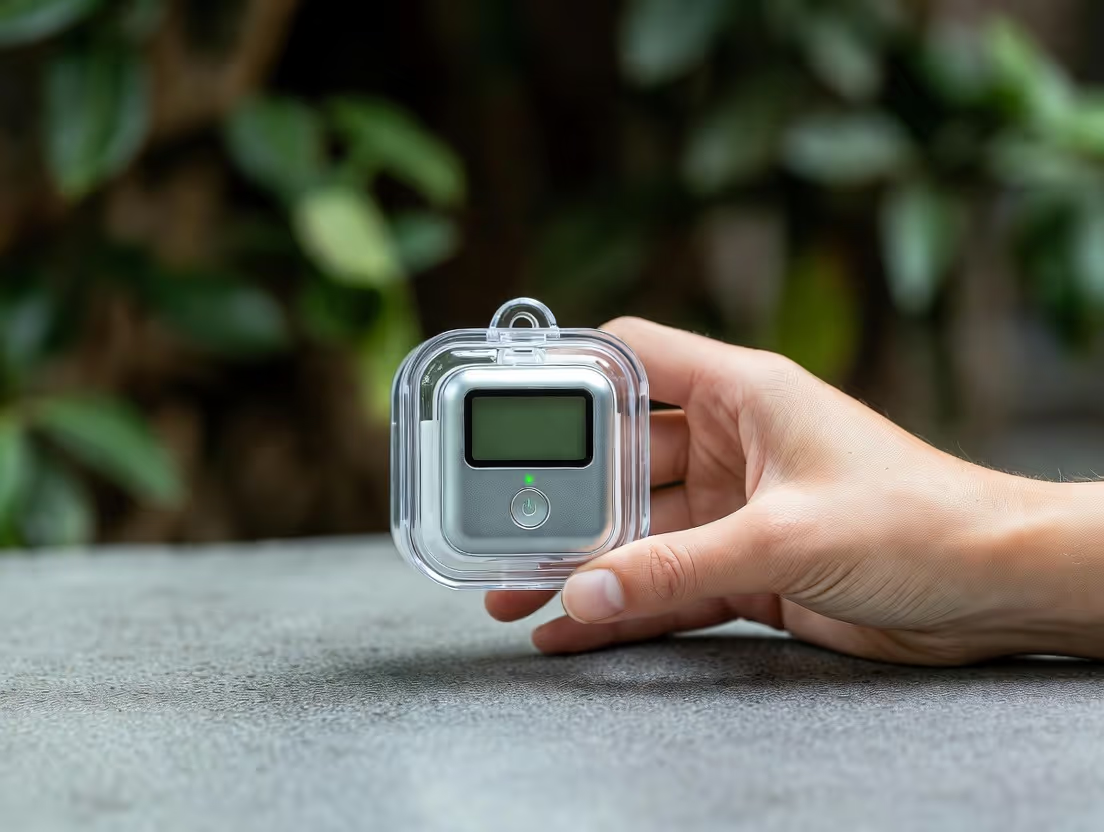
We often believe our emotions start in the mind: a thought triggers a feeling. While this "top-down" process is real, an equally powerful—and often overlooked—pathway is "bottom-up." Our physical state directly generates our emotional experience. Your posture, breath, facial expression, and muscle tension aren't just expressions of emotion; they are drivers of it.
This is the core of the somatic feedback loop. Pioneering work by psychologists like William James in the 19th century and modern researchers like Amy Cuddy has cemented this principle: changing the body can directly and immediately change the mind.
The Evidence for Embodied Emotion:
This has profound implications for cultivating emotional balance. It means we are not at the mercy of our thoughts. When you feel anxiety rising, you don't have to wait for your cognitive therapy to kick in. You can intervene directly through the body:
This physiological approach is why biometric tracking is so revolutionary for emotional wellness. By monitoring markers like Heart Rate Variability (HRV)—a direct indicator of ANS balance and resilience—devices like the Oxyzen ring provide an objective window into this body-mind loop. You can see in real-time how a stressful thought tanks your HRV, and how a minute of deep breathing restores it. This turns abstract concepts into concrete, manageable data. For those curious about how this technology translates theory into daily practice, our FAQ section delves into the specifics of how such tracking works.
If we could choose one single, objective number to represent our current capacity for emotional balance, it would be Heart Rate Variability (HRV). For decades, this metric was known only to cardiologists and neuroscientists, but it has now emerged as the gold-standard biomarker for resilience, stress, and autonomic nervous system function.
What is HRV? Contrary to what you might assume, a healthy heart does not beat with the monotonous regularity of a metronome. The time interval between successive heartbeats fluctuates by milliseconds. This subtle variability is a very good thing. It indicates that your body is responsive and adaptable. High HRV means your parasympathetic ("rest-and-digest") system is strong and can quickly apply the brakes after a stressor. Low HRV indicates a dominant, exhausted sympathetic ("fight-or-flight") system—you’re stuck on the gas pedal, leaving you emotionally reactive, fatigued, and vulnerable.
HRV and Emotional Balance: The Direct Link
Your emotional state is reflected in your ANS, and your ANS activity is reflected in your HRV. When you are calm, focused, and resilient, your HRV is typically higher. When you are stressed, anxious, or emotionally drained, your HRV drops. Studies have consistently linked higher HRV to:
This makes HRV not just a reporter of your state, but a guide for your practice. By tracking your HRV trends, you can answer critical questions:
How to Use HRV for Emotional Mastery:
By integrating HRV awareness, we move from guessing about our emotional state to knowing. It demystifies the vague concept of "stress" and replaces it with a personal, quantitative dashboard of our nervous system’s health. It’s the perfect marriage of ancient wisdom (listen to your body) and modern technology (here’s exactly what your body is saying). For a deeper dive into the science behind these biomarkers and how they are captured, exploring Oxyzen's technology provides a clear window into this future of personalized wellness.

You cannot talk about emotional balance without addressing its most fundamental pillar: sleep. Sleep is not a passive state of inactivity; it is a dynamic, essential process of neurological housekeeping and emotional integration. To be sleep-deprived is to operate with a brain that is functionally and emotionally impaired.
The Neuroscience of Sleep and Emotion:
During sleep, particularly during REM (Rapid Eye Movement) sleep, something extraordinary happens. The brain's emotional centers, like the amygdala, reactivate and replay the emotional events of the day. Meanwhile, stress-related neurotransmitters like norepinephrine are switched off. This creates a unique, "safe" neurochemical environment where the brain can process and file away emotional memories, stripping them of their sharp, visceral charge. It’s like a nocturnal therapy session.
When we are sleep deprived, this process is short-circuited. Research using fMRI scans shows that a tired brain exhibits a hyperactive amygdala—it reacts more strongly to negative stimuli. Simultaneously, the connection between the amygdala and the prefrontal cortex weakens. The result? You are left with overblown emotional reactions and a diminished capacity to regulate them. A minor frustration feels like a catastrophe. A sad thought spirals into despair.
Consequences of Sleep Debt on Emotional Health:
Practical Sleep Hygiene for Emotional Balance:
Optimizing sleep is the most potent, underutilized tool for emotional regulation. It’s not just about duration, but quality and consistency.
Sleep is the foundation. You can have the best emotional regulation techniques in the world, but if you are chronically sleep-deprived, you are trying to build a skyscraper on sand. Prioritizing sleep is the first and most profound act of emotional self-care.
The adage "you are what you eat" extends powerfully to your emotional world. The brain, though only 2% of body weight, consumes 20% of the body's energy. The quality of that fuel directly influences neurotransmitter production, neuroinflammation, and ultimately, your emotional landscape. The gut-brain axis—a constant, bidirectional communication highway via the vagus nerve and inflammatory pathways—means your digestive system is, in many ways, co-piloting your emotional state.
Key Nutritional Principles for Emotional Balance:
1. Balance Blood Sugar: The Emotional Rollercoaster
Blood sugar spikes and crashes are a primary driver of mood swings, irritability, anxiety, and brain fog. When blood sugar plummets, the body releases cortisol and adrenaline to mobilize stored glucose, mimicking a stress response.
2. Support Neurotransmitter Production: Building Blocks for Mood
Serotonin (the "calm and content" neurotransmitter) and GABA (the "brake pedal" neurotransmitter) are crucial for emotional regulation. Over 90% of serotonin is produced in the gut.
3. Combat Neuroinflammation: Calming the Fire Within
Chronic, low-grade inflammation in the body and brain is strongly linked to depression, anxiety, and brain fog. Inflammatory cytokines can cross the blood-brain barrier and disrupt neurotransmitter systems.
4. Nourish the Gut Microbiome: The Second Brain
A diverse and healthy gut microbiome produces neuroactive compounds, regulates inflammation, and influences the stress response via the vagus nerve.
The Hydration & Electrolyte Factor:
Even mild dehydration (a 1-2% loss of body water) can impair cognitive function, increase perception of task difficulty, and elevate cortisol. Electrolytes like magnesium and potassium are critical for nerve transmission and calming the nervous system. Magnesium, in particular, is a natural relaxant, supporting GABA function.
A Data-Driven Approach to Nutrition:
How do you know what works for your unique biology? This is where biometric feedback becomes invaluable. By monitoring markers like HRV and resting heart rate, you can observe in near-real-time how different foods affect your nervous system. You might discover that:
This moves nutrition from generic advice to personalized experimentation. It connects the fork directly to your emotional resilience. For those navigating the complex world of wellness data and seeking to understand their personal patterns, resources like Oxyzen's blog often explore the intersection of diet, biometrics, and mood, offering evidence-based insights.
If you could bottle the effects of consistent exercise into a pill, it would be hailed as the most powerful antidepressant, anxiolytic, and cognitive enhancer ever created. Physical activity is not merely about physical health; it is a direct, potent modulator of the brain’s emotional circuitry. It works through multiple, simultaneous biological pathways to foster resilience and balance.
The Neurochemical Cascade:
Exercise triggers a beneficial flood of neurochemicals:
Exercise and the Stress Response:
Regular physical activity fundamentally changes how your body and brain handle stress. It is a form of hormetic stress—a controlled, acute challenge that makes the system stronger. Through repeated exposure to the physiological stress of exercise (elevated heart rate, cortisol release), your body becomes more efficient at shutting off the stress response afterward. This leads to:
The Best Exercise for Emotional Balance?
The answer is highly individual, but key principles emerge:
Listen to Your Body’s Data:
Just as with nutrition, your body’s biometric response is the ultimate guide. Overtraining is a surefire way to crush emotional balance, leading to exhaustion, irritability, and suppressed immunity (and plummeting HRV). Use recovery metrics to guide your intensity. A smart ring that tracks nighttime HRV and resting heart rate can tell you if you’re recovered enough for a hard workout or if you’d be better served with a gentle walk or rest day. This prevents exercise from becoming another stressor and ensures it remains the powerful medicine it is meant to be. For athletes and active individuals, understanding this balance is key, a topic frequently covered in resources like our blog for holistic wellness strategies.

Our environment shapes our nervous system, and in the 21st century, our most pervasive environment is digital. Smartphones, social media, and the 24/7 news cycle are not neutral tools; they are sophisticated attention- and emotion-regulation devices, often designed to hijack our limbic systems. Cultivating emotional balance in the modern world requires becoming intentional about our digital diet—a practice we can call Digital Mindfulness.
How Technology Disrupts Emotional Balance:
Practices for a Digitally Balanced Life:
1. Perform a Digital Audit:
For one week, use your phone’s built-in screen time tracker or a dedicated app. Don’t judge, just observe. Which apps are you spending the most time on? How do you feel during and after using them? Anxious? Energized? Empty? Data is the first step to awareness.
2. Design Your Defaults:
3. Cultivate Conscious Consumption:
Shift from passive, endless scrolling to active, intentional engagement. Before opening an app, ask: "What is my purpose here?" Log in to check a specific message or update, then log out. Follow accounts that inspire, educate, or genuinely connect you. Mute or unfollow sources of chronic negativity or comparison.
4. Schedule Digital Sabbaths:
Designate a block of time each week—a morning, an afternoon, or a full day—to be completely device-free. This allows your nervous system to reset, reduces cognitive load, and creates space for the analog pleasures that nourish us: face-to-face conversation, reading a physical book, spending time in nature.
5. Use Technology For You, Not On You:
This is where the paradigm flips. Instead of being used by technology, use it as a tool for self-awareness. This is the core philosophy behind thoughtful wellness tech. A device that tracks your sleep and HRV isn’t another distraction; it’s a biofeedback tool that pulls your awareness inward, away from the digital noise. It helps you correlate how an hour of mindless scrolling before bed impacts your sleep score, or how a day of back-to-back video calls depletes your HRV. This turns your relationship with technology from one of consumption to one of self-discovery and empowerment—an ethos central to Oxyzen's approach to mindful innovation.
Human beings are not meant to regulate their emotions in isolation. We have a social nervous system, a hardwired biological imperative to co-regulate—to soothe and be soothed by others. Our relationships are not just a backdrop to our emotional lives; they are active, physiological regulators of our inner state. From the moment an infant is calmed by a parent's heartbeat to the way a friend's empathetic listening can dissolve our anxiety, connection is medicine.
The Science of Co-Regulation:
Co-regulation occurs through subtle, often unconscious, biological synchrony. When we are in safe, attuned connection with another person:
Conversely, social threat—loneliness, rejection, conflict—is processed in the brain similarly to physical pain, activating the same neural pathways. Chronic loneliness is as damaging to health as smoking 15 cigarettes a day, creating a state of hypervigilance and chronic inflammation.
Building Emotionally Regulating Relationships:
The Digital Dilemma and Reconnection:
Modern life, with its remote work and digital communication, can create a paradox: we are more connected than ever, yet starved of the physiological benefits of in-person co-regulation. A text message cannot stimulate the vagus nerve like a warm tone of voice or a facial expression can.
This makes intentional, high-quality connection a non-negotiable practice for emotional balance. Schedule regular, device-free time with people who leave you feeling energized and understood. A weekly coffee with a friend, a partner walk without phones, or even a warm interaction with a familiar barista can provide micro-doses of essential social regulation. Remember, seeking connection isn't a sign of neediness; it's a recognition of our biological design. Our capacity for this is part of the human story we aim to honor and support through the community we build around wellness.
Between an external event and your emotional reaction lies a critical space—and in that space lives your interpretation. This is the core insight of Cognitive Behavioral Therapy (CBT) and related modalities: our thoughts (cognitions) directly cause our feelings and behaviors. Not events themselves, but the stories we tell ourselves about them. Emotional balance, therefore, requires becoming a skilled editor of your own internal narrative. This practice is called cognitive reframing.
Understanding Cognitive Distortions:
Reframing begins with identifying the distorted, automatic thought patterns that fuel emotional dysregulation. These are common mental traps:
These distortions are like lenses that warp reality, generating unnecessary negative emotions.
The Reframing Process: A Step-by-Step Practice
Example in Action:
This isn't about naive positivity. It's about moving from a distorted, emotionally-charged interpretation to a more accurate and flexible one. It strengthens the prefrontal cortex's ability to overrule the amygdala's knee-jerk narrative.
Integrating Reframing with Biometric Awareness:
This is where practice meets proof. As you engage in cognitive reframing, you can use your physiological data for biofeedback. Notice: when you are caught in a catastrophic thought spiral, check your HRV (if you have access to a live reading) or simply notice your breath and heart rate. They will likely show stress. Then, after you successfully reframe the thought, check in again. You will often feel—and see in the data—a physiological shift toward calm. This positive reinforcement makes the abstract skill of reframing concrete and incredibly motivating. It demonstrates viscerally that changing your mind literally changes your body. For practical support on integrating these kinds of mental practices with daily life, our FAQ addresses common questions about making such techniques sustainable.
Emotional balance is not merely about feeling calm in a vacuum; it is about feeling oriented and aligned in the midst of life’s chaos. This sense of direction and meaning is generated by a clear connection to your purpose and values. While emotions are the ever-changing weather, your values are the fixed stars by which you navigate. They act as a profound stabilizing force, transforming emotional reactivity into purposeful action.
The Neuroscience of Meaning:
Acting in alignment with your core values isn’t just philosophically satisfying—it’s neurologically regulating. When we engage in value-congruent behavior, brain imaging studies show activation in the ventromedial prefrontal cortex (vmPFC), an area associated with positive valuation, self-relevance, and a sense of coherence. This activity can downregulate the amygdala’s distress signals. Conversely, living out of alignment—compromising our integrity or spending time on things that feel meaningless—creates a state of cognitive dissonance, which is a potent, low-grade stressor on the nervous system, often manifesting as anxiety, apathy, or irritability.
Values vs. Goals: A Critical Distinction:
A common source of emotional turmoil is conflating values with goals.
The emotional peril lies in tethering your self-worth to goals. If your value is "health and vitality," but your goal is "run a marathon," an injury that derails your training can feel catastrophic. If, however, you focus on the value, the injury becomes a different path on the same journey—you can adapt, showing up for your health through physical therapy, swimming, or mindful nutrition. Your self-worth remains intact because you are still living your value. This shift from goal-oriented to value-oriented living is a cornerstone of psychological flexibility and resilience.
How to Discover and Live Your Core Values:
This is not an intellectual exercise but an excavation of what matters most.
Using Values as an Emotional Regulation Tool:
When you are emotionally triggered, ask this powerful question: "What is the value I want to embody in this moment?"
This practice places you back in the driver's seat. You are no longer a passive reactor to external events or internal emotional storms; you are an active agent, choosing your direction based on your deepest principles. This alignment creates a profound form of emotional balance that is proactive, not just reactive—a theme central to the vision and story behind Oxyzen, which aims to empower such intentional living through awareness.
We have explored basic mindfulness as acceptance. Now, we ascend to its more potent form: meta-awareness, or the awareness of awareness itself. This is the cultivation of the observer self—that part of your consciousness that can witness thoughts, feelings, and sensations without fusing with them. It is the difference between being lost in a raging river (complete identification with emotion) and sitting safely on the riverbank, watching the current flow by (observing the emotion).
Why Meta-Awareness is the Ultimate Emotional Tool:
Meta-awareness creates the fundamental psychological space necessary for all regulation. Neuroscientist and philosopher Sam Harris describes it as "the one thing you can always know you’re doing, and it’s the one thing you can’t stop doing." When you recognize "I am aware of being anxious," you have already introduced a sliver of space between "you" and "anxiety." In that space, choice becomes possible.
This is supported by neuroscience. The practice of mindful observation strengthens the lateral prefrontal cortex and the anterior cingulate cortex (ACC), brain regions involved in attention, self-regulation, and cognitive control. Simultaneously, it decreases activity and connectivity in the default mode network (DMN), the brain's "narrative self" network responsible for mind-wandering, rumination, and self-referential thinking—the very engine of much emotional suffering.
Practices to Cultivate the Observer Self:
Meta-Awareness in the Heat of the Moment:
The real test is applying this during emotional activation.
This process doesn't necessarily make the emotion vanish, but it radically changes your relationship to it. It moves from "I am angry" (identification) to "I am experiencing a strong sensation labeled as anger" (observation). This detachment is not cold or avoidant; it is the clarity that allows for a wise response.
Integrating this with biometric feedback creates a powerful loop. You can observe how, as you practice meta-awareness, your physiological markers (like a rapidly rising heart rate) begin to stabilize. Seeing this correlation—between the internal shift in perspective and an external shift in nervous system state—provides incontrovertible evidence of your own agency, a tangible insight many users share when discussing their journey with tools like the Oxyzen ring in user testimonials.
Building on acceptance, values, and meta-awareness, we arrive at a synthesizing competency: emotional agility. Coined by psychologist Dr. Susan David, emotional agility is "the ability to be with your thoughts and emotions with curiosity, compassion, and especially the courage to take value-connected steps." It is not control, but skillful navigation. It’s the difference between being rigidly stuck or chaotically overwhelmed, and moving with fluidity and purpose through life's emotional terrain.
The Four Steps of Emotional Agility:
Example of Emotional Agility in Action:
The Role of Self-Compassion in Agility:
Emotional agility is impossible without self-compassion (as defined by Dr. Kristin Neff). It is the essential lubricant for the process. When you fail or feel pain, self-compassion involves:
Self-compassion allows you to "show up" to painful emotions without being crushed by them. It turns failure from a identity-threatening indictment ("I am a failure") into a human moment of suffering ("This is really hard right now, and it's okay that it hurts"). This compassionate stance is far more conducive to learning, growth, and resilient action than punitive self-criticism.
Emotional agility is the applied art of emotional balance. It’s the toolkit you use in real time when life pushes your buttons. It ensures that your emotional awareness translates into empowered, values-based living, not just passive observation. For those seeking to deepen their understanding of these applied psychological skills, resources like the Oxyzen.ai blog often provide practical, science-backed frameworks for daily implementation.
Willpower is a finite resource. Relying on it to make healthy choices in moments of emotional turbulence is a losing strategy. The solution is to design your environment and daily structure to automatically support emotional balance. This is the power of ritual and routine. By creating intentional, repeating patterns, you build a "scaffolding" for your nervous system, reducing cognitive load and creating predictable pockets of restoration.
The Neuroscience of Routine:
Habits and routines are managed by the basal ganglia, a deep brain structure that operates on automatic pilot to conserve the prefrontal cortex's energy for complex decisions. A well-designed routine outsources regulatory tasks to the basal ganglia. Your morning meditation, your wind-down ritual, your weekly meal prep—they become automatic, requiring little to no willpower. This frees your PFC to handle emotional regulation when real challenges arise.
Key Rituals for Emotional Equilibrium:
1. The Morning Anchor:
The first hour after waking sets the tone for your nervous system. Design a ritual that cultivates calm agency, not reactive scrambling.
2. Transition Rituals:
The space between activities is where emotional residue builds. Create 5-minute rituals to "shed the skin" of one context before entering another.
3. The Evening Wind-Down:
This is non-negotiable for sleep and emotional processing. Begin 60-90 minutes before your target bedtime.
4. Weekly Restoration Blocks:
Schedule non-negotiable time for activities that deeply replenish you, treating them with the importance of a business meeting.
Using Data to Optimize Routines:
Your biometrics are the ultimate feedback loop for your rituals. Track how different morning routines affect your daytime HRV. Correlate your evening wind-down activities with your sleep score and next-morning readiness. You might discover that reading fiction is more restorative than watching a calm show, or that your ideal workout time for emotional stability is late afternoon, not early morning. This personalized optimization is the hallmark of a modern, data-informed approach to emotional wellness, a practical application explored by users who share their stories on platforms like our testimonials page.
While the principles of balance are universal, specific emotions often require tailored approaches. Let's apply our toolkit to three of the most common and challenging emotional experiences.
Anxiety is the mind's projection of threat into an uncertain future. It's the amygdala and prefrontal cortex conspiring to imagine catastrophe.
Science-Backed Interventions:
Anger is a signal that a boundary has been crossed, a value violated, or a need unmet. It is energy for change. The goal is not to eliminate it, but to channel it constructively.
Science-Backed Interventions:
Grief is not a problem to be solved, but a process to be honored. It comes in waves, and balance here means learning to float, not fight the current.
Science-Backed Interventions:
In each case, the foundational skills apply: meta-awareness to observe the emotion, acceptance to allow it, self-compassion to soothe the pain, and values to guide the next small step. For additional support and community insights on navigating these universal challenges, many find comfort and perspective in the shared experiences found on our blog and community resources.
We have alluded to technology throughout this guide. Now, let's define its optimal role in the ecosystem of emotional balance. Biometric wearables and apps are not silver bullets, nor are they mere gadgets. They are tools for augmented introspection. Their value lies not in the data itself, but in the feedback loop they create: the cycle of awareness, experimentation, and behavioral change.
The Three Stages of Technological Integration:
1. The Mirror Stage (Awareness):
This is the initial, often startling phase where technology acts as a mirror, reflecting your inner state objectively. You see the tangible impact of a stressful day on your HRV, the correlation between poor sleep and next-day emotional reactivity, or how alcohol decimates your sleep architecture. This stage shatters denial and provides "aha" moments. It answers the question, "What is actually happening in my body?"
2. The Laboratory Stage (Experimentation):
With awareness established, you move into experimentation. You use the data to test hypotheses.
This stage transforms you from a passive recipient of your physiology to an active researcher of your own well-being. The data provides immediate, objective feedback on what works for you, moving beyond generic advice.
3. The Integration Stage (Embodiment & Detachment):
This is the ultimate goal. The insights from the laboratory become embodied wisdom. You no longer need to check your device to know you're stressed; you feel the early signs in your body and respond. The technology has taught you the language of your own nervous system. You use the device not for daily micromanagement, but for periodic check-ins—like a quarterly blood test for your nervous system health—to ensure you're on track or to troubleshoot when you feel "off."
Pitfalls to Avoid:
When used wisely, technology accelerates the journey to emotional balance. It provides the objective validation that your practices are working, deepening motivation. It turns subtle, internal shifts into visible trends, reinforcing your commitment. This thoughtful integration of human wisdom and technological insight is at the core of the mission at Oxyzen, where the aim is to provide tools that foster deeper self-knowledge, not dependency.
Emotional balance is not sustained by a single "magic bullet" practice. It is the product of a holistic, personalized ecosystem—an interconnected set of habits, tools, relationships, and environments that work together to support your nervous system. Think of it as cultivating a garden. You need good soil (foundational health), the right plants (practices), consistent tending (routines), and a supportive climate (environment & community).
The Four Pillars of Your Ecosystem:
1. The Foundational Pillar (Non-Negotiables):
These are the bedrock elements without which all other practices falter.
2. The Practice Pillar (Daily Skills):
These are the active skills you train, like going to the gym for your mind.
3. The Structural Pillar (Scaffolding):
This is the architecture of your days and weeks that makes the above easy.
4. The Support Pillar (Resources):
The external tools and people that bolster your efforts.
How to Build Your Ecosystem:
Your ecosystem is unique. For a busy parent, a 10-minute meditation during a commute might be the keystone practice. For an executive, it might be protecting the first hour of the day for deep work. The goal is not a perfect, rigid system, but a resilient, adaptable one that supports your life and values. For inspiration on how others are designing their ecosystems and integrating tools for awareness, the community stories and our about page can offer valuable perspectives.
It is essential to conclude this portion of our guide by dispelling a final myth: the idea that emotional balance is a final state of arrival. You do not "achieve" balance like a trophy and then place it on a shelf. Emotional balance is a dynamic, ongoing practice—a lifelong journey of falling down and getting back up, with increasing skill, speed, and self-compassion. It is the cultivation of resilience (the ability to bounce back) and grace (the kindness extended to yourself when you don't).
Embracing the Cycles:
Your emotional life will have seasons. There will be periods of remarkable stability and ease, and there will be winters of grief, stress, or upheaval that test every skill you've learned. This is not failure; it is the nature of being human. The practice is to meet each season with the appropriate tools: hunkering down with foundational self-care during a storm, and expanding into growth and connection during the spring.
The Role of Setbacks:
Setbacks and emotional "relapses" are not interruptions to your journey; they are part of the curriculum. They show you where your current ecosystem has a vulnerability. A period of burnout might reveal a weak boundary. A bout of anxiety might highlight a need for more somatic grounding practices. Treat setbacks with curiosity, not condemnation. Ask, "What is this here to teach me?"
Cultivating a Growth Mindset for Emotions:
Psychologist Carol Dweck's concept of the growth mindset applies perfectly here. A fixed mindset says, "I'm just an anxious person." A growth mindset says, "I am currently struggling with anxiety, and I can develop skills to manage it." This mindset transforms challenges into opportunities for learning and reinforces your sense of agency.
The Ultimate Goal: Integration, Not Perfection:
The endpoint of this work is not a sterile, emotionless life. It is a rich, vibrant, fully integrated life where emotions are welcomed as messengers, where you have the capacity to feel deep joy and profound sorrow with equal presence, and where your values guide you through it all. It is about becoming the author of your experience, not just the character buffeted by plot twists.
This journey is both profoundly personal and universally human. It is the work of a lifetime, and it is the most important work you will ever do, for it colors every other aspect of your existence. As you move forward, remember that you are not alone. There is a growing community of people using science, practice, and supportive technology to navigate this same terrain. Continue to seek resources, ask questions, and share your learnings. For ongoing support and to dive deeper into any of the concepts covered here, remember that resources like our comprehensive FAQ and evolving blog content are here to assist you on your path.
Your Trusted Sleep Advocate: Sleep Foundation — https://www.sleepfoundation.org
Discover a digital archive of scholarly articles: NIH — https://www.ncbi.nlm.nih.gov/
39 million citations for biomedical literature :PubMed — https://pubmed.ncbi.nlm.nih.gov/
Experts at Harvard Health Publishing covering a variety of health topics — https://www.health.harvard.edu/blog/
Every life deserves world class care :Cleveland Clinic - https://my.clevelandclinic.org/health
Wearable technology and the future of predictive health monitoring :MIT Technology Review — https://www.technologyreview.com/
Dedicated to the well-being of all people and guided by science :World Health Organization — https://www.who.int/news-room/
Psychological science and knowledge to benefit society and improve lives. :APA — https://www.apa.org/monitor/
Cutting-edge insights on human longevity and peak performance:
Lifespan Research — https://www.lifespan.io/
Global authority on exercise physiology, sports performance, and human recovery:
American College of Sports Medicine — https://www.acsm.org/
Neuroscience-driven guidance for better focus, sleep, and mental clarity:
Stanford Human Performance Lab — https://humanperformance.stanford.edu/
Evidence-based psychology and mind–body wellness resources:
Mayo Clinic — https://www.mayoclinic.org/healthy-lifestyle/
Data-backed research on emotional wellbeing, stress biology, and resilience:
American Institute of Stress — https://www.stress.org/


