


From Chaos to Calm: The Comprehensive Framework for Lifelong Peaceful Existence
A complete framework for transitioning from chaos to lifelong calm.
A complete framework for transitioning from chaos to lifelong calm.
%402x.svg)
In a world that glorifies busyness, celebrates burnout, and equates stress with success, the quest for a peaceful existence can feel like a radical act of defiance. We wake up to notification symphonies, navigate days fragmented by endless demands, and lie awake at night with minds racing through tomorrow’s to-do lists. This constant state of low-grade emergency—this chaos—isn't just unpleasant; modern science confirms it's eroding our health, shrinking our cognitive capacity, and shortening our lifespans. Yet, beneath the static of modern life, a fundamental truth remains: the human nervous system is hardwired not for perpetual panic, but for profound peace. The journey from chaos to calm isn't about escaping life, but about building a life you don’t need to escape from. It’s about constructing an internal sanctuary so resilient that external turbulence cannot dictate your inner weather. This comprehensive framework is your architectural blueprint. We will move beyond fleeting coping mechanisms and into the realm of lasting, systemic change, integrating ancient wisdom with cutting-edge technology to map, measure, and master your unique path to tranquility. The age of guessing is over. Welcome to the era of intentional serenity.
We often wear stress like a badge of honor, a silent signal of our importance and workload. But what we dismiss as “just being busy” is, physiologically, a full-scale siege on our bodies and minds. To transition from chaos to calm, we must first understand the enemy: chronic, dysregulated stress. This isn't the acute stress of running from a predator—a useful, short-term survival tool. This is the slow drip of cortisol, the constant hum of sympathetic nervous system activation, turning our biology against itself.
The data is alarming. The American Psychological Association’s annual Stress in America report consistently shows a majority of adults cite significant stress, with work, money, and the news cycle as top culprits. But the cost isn't merely emotional. Chronically elevated cortisol impairs the prefrontal cortex—the brain's CEO responsible for decision-making and emotional regulation—while enlarging the amygdala, our fear center. This creates a vicious cycle: stress makes us less capable of handling stress. Physically, this state is linked to inflammation, a root cause of nearly every modern disease from hypertension and diabetes to autoimmune disorders and accelerated aging.
Yet, the most insidious cost is the theft of presence. Chaos fragments our attention. We are physically in one place while mentally in ten others. This cognitive load—the mental "bandwidth" consumed by juggling worries—leaves little room for joy, creativity, or deep connection. We become reactors, not creators, in our own lives. Recognizing this isn't about inducing guilt; it's about igniting clarity. The first step toward calm is the conscious, courageous acknowledgment that the chaos has a tangible, measurable impact on every facet of your existence. It is a legitimate health crisis requiring a legitimate health strategy. By understanding its mechanisms, we can begin to dismantle it, moving from a state of automatic reactivity to one of chosen response. For a deeper exploration of how technology can help quantify this invisible load, the resources at Oxyzen.ai/blog offer valuable insights into modern stress-tracking methodologies.
A common, paralyzing myth is that calm is a passive state, a destination you arrive at once external conditions are perfect: when the project is done, the inbox is zero, the kids are asleep, and the bank account is full. This fallacy leaves us perpetually waiting for a peace that never comes. The foundational paradigm shift of this framework is this: Calm is not a circumstance. It is a cultivatable skill. Like building muscle or learning a language, it requires consistent, deliberate practice.
This redefinition is empowering. It means your inner peace is no longer held hostage by external events. The chaotic meeting, the traffic jam, the unexpected bill—these become not disruptions to your calm, but opportunities to practice it. Neurologically, this skill is called neuroplasticity: the brain's ability to rewire itself based on repeated experience. Every time you consciously choose a calm response over a chaotic reaction, you strengthen the neural pathways associated with regulation and resilience. You are literally building a "calm brain."
What does this skill comprise? It’s a triad of competencies:
Mastering this skill requires moving from abstraction to data. How can you improve what you don't measure? This is where the marriage of timeless practice and timely technology becomes revolutionary. For instance, using a device like a smart ring to get objective feedback on your stress levels and sleep quality transforms guesswork into a guided practice. You can learn more about how such technology supports skill-building on the Oxyzen.ai homepage. Calm, therefore, starts with a decision: the decision to become an active participant in crafting your inner state, one mindful moment at a time.
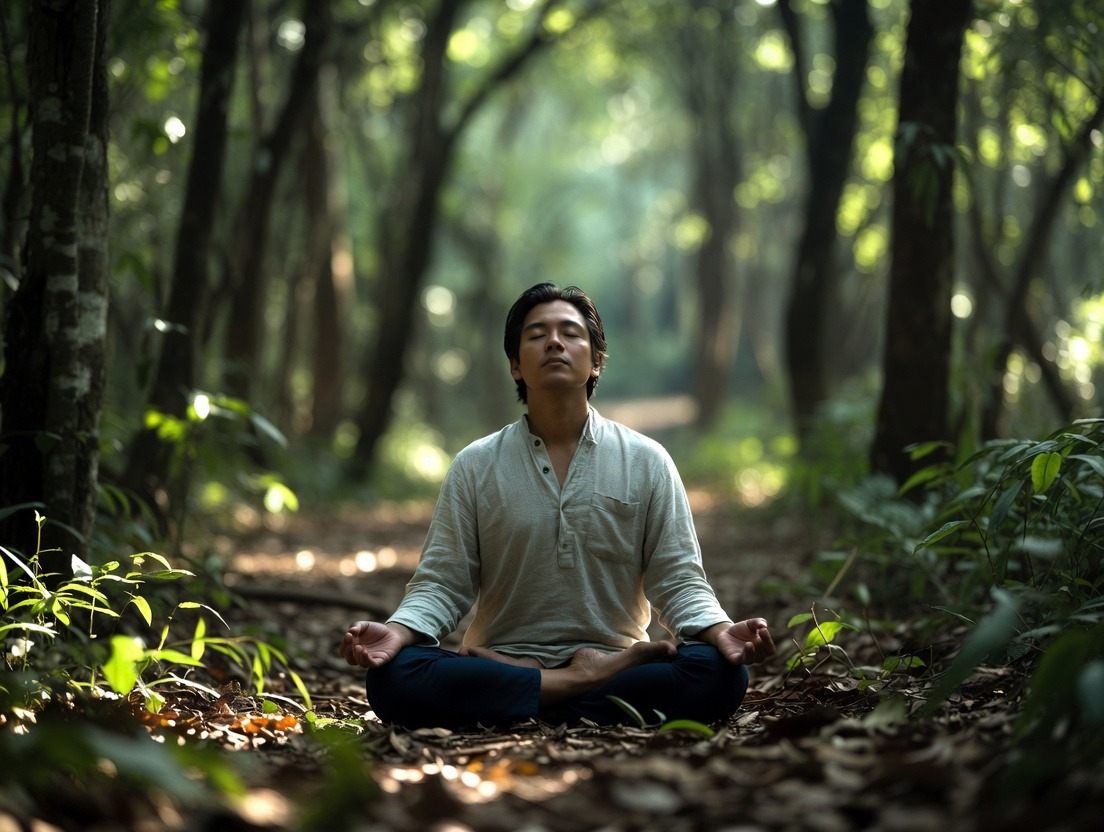
You cannot change what you are not aware of. The journey from chaos to calm begins with turning the light of consciousness inward. This pillar—Awareness—is the bedrock of the entire framework. It’s the practice of becoming a compassionate scientist of your own inner world, observing thoughts, emotions, and bodily sensations with curiosity rather than criticism.
Most of us live in a state of "unconscious competence" or, more often, "unconscious incompetence" regarding our stress. A stressful thought triggers a wave of emotion, which triggers a physiological reaction (clenched stomach, raised shoulders), which leads to a reactive behavior (snapping at a colleague, scrolling mindlessly). We are swept away by the cascade without ever noticing the initial trigger. Awareness inserts a crucial pause between stimulus and response. In that pause lies your freedom.
How do we build this? Through formal and informal practices:
This pillar is not about achieving a blank mind or perpetual happiness. It’s about developing a fearless intimacy with your entire experience—the pleasant, the unpleasant, and the neutral. It is from this place of clear-seeing that all effective action toward calm proceeds. As the pioneering psychologist Carl Rogers said, “The curious paradox is that when I accept myself just as I am, then I can change.” Awareness is the practice of that acceptance.
Awareness shows you the landscape; the next step is learning to navigate it. This brings us to the hardwired machinery of chaos and calm: your autonomic nervous system (ANS). You don't need to think your way into calm; you need to physiologically engineer it. The ANS has two primary branches: the sympathetic (gas pedal) for action and stress, and the parasympathetic (brake pedal) for rest and repair. Chronic chaos is a stuck gas pedal. Lasting calm is the ability to gently apply the brake at will.
The master lever for this system is your breath. It's the only autonomic function you can consciously control, making it a direct hotline to your state of being. Shallow, rapid chest breathing signals "danger" to the brain, activating the sympathetic cascade. Deep, slow diaphragmatic breathing signals "safety," triggering the parasympathetic response. Techniques like 4-7-8 breathing (inhale 4, hold 7, exhale 8) or coherent breathing (5.5 breaths per minute) are not spiritual platitudes; they are precise biohacks to lower heart rate, reduce blood pressure, and increase HRV.
But breath is just the start. The entire body must be recruited:
Understanding this physiology demystifies calm. It becomes a series of actionable, physical steps. When you feel chaos rising, you don't just "try to relax." You engage the machinery: you take five deep belly breaths, you stand up and stretch, you hum a low tone. You move from being a victim of your biology to being its skilled operator. The team at Oxyzen.ai, whose mission is deeply tied to this physiological understanding, shares more about their science-backed approach on their about-us page.
We are in a constant, silent dialogue with our surroundings. Your environment isn't just a backdrop to your life; it is an active participant in shaping your nervous system. Chaos in your physical space often mirrors and amplifies chaos in your mind. Conversely, a deliberately designed environment can act as a "third teacher," consistently guiding you back toward peace without you having to exert conscious effort. This pillar is about moving from a reactive relationship with your space to a co-creative one.
Consider the sensory inputs your environment broadcasts:
Your environment should have "calm cues"—physical triggers that remind your body to downshift. It could be a comfortable chair with a soft blanket for reading, a diffuser with a calming essential oil blend, or the specific lighting you use in the evening. By designing spaces that support your calm skill, you reduce the willpower needed to maintain it. The environment does some of the work for you. For inspiration on creating a holistic wellness environment, the stories and community experiences shared at Oxyzen.ai/testimonials often highlight the role of a supportive ecosystem.
In the torrent of daily demands, peace is not found; it is built. And it is built through ritual. A ritual is not a routine performed on autopilot; it is a routine imbued with intention and presence. It is a deliberate punctuation mark in the run-on sentence of the day, signaling a shift in state. These rituals act as anchors, holding you steady when the waves of chaos try to pull you adrift. They are the daily, non-negotiable deposits into your bank of calm.
Effective rituals are personal, practical, and protective. They should address different phases of your daily cycle:
The power of ritual lies in its consistency, not its complexity. It is the daily repetition, the sacred commitment to yourself, that rewires your expectations and builds an unshakeable inner rhythm. When you have these anchors in place, external turbulence becomes a storm you observe from the safety of a sturdy harbor, not one you are lost within.
Our quest for calm faces a formidable, designed opponent: the attention economy. Social media feeds, news cycles, and app notifications are not neutral tools; they are sophisticated systems engineered to capture and commodify our most precious resource—our attention. This constant fragmentation of focus is a primary architect of modern chaos. We mistake being "informed" and "connected" for being at peace, when often the opposite is true. This pillar is not about Luddite rejection, but about intentional, sovereign use of technology.
The first step is auditing your digital diet with the same scrutiny you would your food. Ask: Is this input nourishing me or depleting me? Does it expand my perspective or contract it into anger and fear? Does it connect me meaningfully or leave me feeling lonely and inadequate? Common culprits include:
Reclamation requires tactical boundaries:
This reclamation is an ongoing practice of saying "no" to the trivial so you can say "yes" to the meaningful. It's about creating space between the ping and your response, reclaiming your right to uninterrupted thought. For more strategies on creating a balanced digital life that supports wellness, a wealth of curated discussions can be found on the Oxyzen.ai/blog.
Two people can experience the same external event—a job loss, a traffic jam, a critical comment—and have diametrically opposite inner experiences. One plunges into despair and chaos; the other finds a path to resilience and calm. The difference lies not in the circumstance, but in the story they tell themselves about it. This pillar delves into the software of your mind: your thoughts and beliefs. Lasting peace requires becoming the author of your narrative, not just a passive reader.
Cognitive reframing is the practice of identifying stress-inducing thought patterns (cognitive distortions) and consciously choosing to see the situation from a more balanced, empowering angle. It's not about naive positivity, but about flexible, reality-based thinking.
Building this "narrative intelligence" involves:
This work is profoundly empowering. It means that no external event has the final say on your inner peace. You hold the pen. By mastering your internal narrative, you build an inner citadel that cannot be breached by life's inevitable disappointments and surprises. This intellectual and emotional work is a core part of a holistic journey, much like the integrated vision described in Oxyzen.ai/our-story.
Human beings are wired for connection. Our nervous systems co-regulate—they calm in the presence of safe, calm others and become agitated in the presence of threat or hostility. Therefore, the quality of our relationships is a direct determinant of our capacity for calm. Chaos is often a social phenomenon; it spreads through toxic dynamics, poor boundaries, and relationships that deplete rather than restore. This pillar is about auditing your relational ecosystem and learning the art of boundaries.
First, map your connections. Think of your social world in concentric circles:
The journey to calm requires a courageous audit. It may involve:
Loneliness is chaotic; toxic connection is chaotic. True, calm connection is a sacred buffer against the storms of life. It reminds us that we are not alone in the chaos, and that together, we can cultivate gardens of peace. The sense of community and shared mission is something we value deeply, as reflected in the connections we've forged, which you can read about on our about-us page.

A life devoid of purpose is a breeding ground for existential chaos—a feeling of drifting, of reactivity, of wondering "Is this all there is?" Conversely, a deep sense of purpose acts as a North Star, providing direction and resilience even in turbulent times. Purpose doesn't have to be a grand, world-changing mission. It is simply the answer to the question: What makes my life feel meaningful and worthwhile? It is the thread that connects your daily actions to something larger than your immediate desires or fears.
Purpose is an antidote to chaos because it transforms suffering into sacrifice. A difficult task for a random reason is stressful; a difficult task in service of a deeply held value becomes meaningful. To connect with your purpose:
Integrating purpose into daily life is about micro-alignments. It's not quitting your job tomorrow; it's finding one small way today to express a core value. If learning is a value, listen to an educational podcast on your commute. If connection is a value, put your phone away during dinner. If creativity is a value, spend 15 minutes sketching or writing before bed.
This sense of directed meaning creates a profound, underlying calm. The surface waves of daily irritations still exist, but they no longer rock the deep vessel of your life. You are moving toward something, not just running from stress. You become an active agent in your own story, and that agency is the quietest, most powerful form of peace there is.
Calm is not the absence of adversity; it is the stability and clarity maintained through adversity. This distinction is crucial. Life will inevitably deliver setbacks, losses, and surprises—the external chaos we cannot control. The difference between being shattered by these events and navigating them with grace lies in your resilience reservoir: the depth of your psychological and emotional resources to withstand and recover from stress. Think of your daily calm practices as deposits into this reservoir. When a crisis hits, you have a vast reserve to draw from, rather than an empty well that leads to immediate burnout or breakdown.
Resilience is not an innate, fixed trait; it is a set of learnable skills built on the pillars we’ve already established. It’s the practical application of awareness, regulation, and perspective under pressure. The core components of a robust resilience reservoir include:
Building this reservoir requires intentional stress exposure—not avoidance. Just as muscles tear and repair to grow stronger, your nervous system needs manageable challenges to build tolerance. This is known as stress inoculation. It could be taking on a slightly difficult project, having a courageous conversation you’ve been avoiding, or even practicing intermittent cold exposure. The key is the dose: a challenge that stretches you without breaking you, followed by adequate recovery. This cycle of stress + recovery = growth is the fundamental equation of resilience. For those tracking their physiological response to such intentional challenges, tools that monitor heart rate variability can provide invaluable feedback, a topic often explored in resources like those found at Oxyzen.ai/blog.
If calm is the skill, sleep is the masterclass. There is no single factor more critical to your journey from chaos to calm than the quality of your sleep. Sleep is not downtime; it is a highly active, non-negotiable physiological process of repair, consolidation, and emotional regulation. During deep sleep, your brain washes away metabolic toxins via the glymphatic system. During REM sleep, it processes emotional experiences, stripping away the sharp edges of yesterday’s stress. To neglect sleep is to pour chaos directly into your nervous system’s foundation.
Chronic sleep deprivation (consistently less than 7 hours for most adults) creates a state of physiological and psychological vulnerability:
Therefore, optimizing sleep is not a luxury; it is the most important wellness protocol you can implement. This goes far beyond just spending more time in bed. It requires crafting a sleep sanctuary and a sleep ritual:
Tracking your sleep can move you from guesswork to precision. Understanding your sleep stages, wake times, and resting heart rate overnight provides objective data on the quality of your restoration. This feedback loop allows you to experiment and see what truly works for you, turning sleep from a mystery into a measurable pillar of your calm framework. Many users find that integrating detailed sleep data into their wellness strategy brings a new level of understanding, as discussed in community stories on Oxyzen.ai/testimonials.
The food you consume is the raw material from which your brain constructs neurotransmitters, your cells generate energy, and your body manages inflammation. You cannot out-meditate or out-breathe a diet that fuels chaos. The modern diet, high in processed foods, refined sugars, and unhealthy fats, is pro-inflammatory and destabilizing to both mood and energy. To build a calm biology, we must consider food as information—instructions we send to our cells about how to function.
Key nutritional principles for a calm nervous system:
This is not about restrictive dieting; it’s about strategic nourishment. It’s asking: "What can I add to support my calm?" rather than only "What should I remove?" Start with foundational habits: drinking a large glass of water upon waking, ensuring each meal contains a protein source, and incorporating 2-3 servings of leafy greens daily. Notice how dietary shifts alter your stress response, your sleep, and your mental clarity. Your body's feedback, potentially augmented by data on recovery and readiness from a wellness tracker, can create a powerful dialogue between your choices and your physiology. For common questions on how lifestyle and technology intersect, resources like the Oxyzen.ai/faq can provide helpful starting points.
The body and mind are not separate; they are an integrated system. Stored tension in the body fuels anxiety in the mind, and chaotic thoughts manifest as physical stress. Therefore, intentional movement is one of the most direct pathways to discharge accumulated stress and signal safety to the nervous system. But not all movement is equal in the pursuit of calm. The goal here is not necessarily high-intensity, performance-driven exercise (which can be another form of stress), but somatic practices that reconnect you to your bodily experience and promote regulation.
The principle is movement with awareness. It’s about using physical activity not as a punishment or a performance metric, but as a dialogue with your body. It’s a way to process and move stress hormones like cortisol and adrenaline out of your system, replacing them with endorphins and a sense of grounded vitality. When the mind is racing, the body can often lead it back to stillness.
Our sense of hearing is always on, a primary channel through which chaos enters our system. The jarring slam of a door, the relentless ping of notifications, the abrasive drone of machinery—these sounds trigger micro-stress responses, keeping our nervous system subtly braced for threat. Conversely, certain soundscapes can induce profound states of calm, focus, and even healing. This pillar is about taking conscious control of your auditory environment, transforming it from a source of pollution to a tool for peace.
The Problem: Noise Pollution & Auditory Stressors
The Solution: Intentional Soundscaping
By curating your auditory input, you design an environment that supports your desired state. You are no longer a passive recipient of sonic chaos but an active composer of your acoustic atmosphere. This deliberate design extends to all facets of a calm life, a philosophy that resonates with the holistic approach we take, as detailed in our our-story page.

A primary source of internal chaos is the exhausting, impossible struggle to control the uncontrollable. We try to control outcomes, other people's opinions, the past, the future, and even our own fleeting emotions. The friction between our desire for control and the fundamental reality of life's uncertainty generates immense suffering. The final, and perhaps most profound, pillar in this portion of our framework is the art of letting go. This is not passivity or resignation; it is the wise, active choice to invest your energy only where it has power: in your own responses, actions, and attitudes.
The Serenity Prayer captures this perfectly: "Grant me the serenity to accept the things I cannot change, the courage to change the things I can, and the wisdom to know the difference." Cultivating this wisdom is a daily practice.
Letting go is a skill built through micro-moments: taking a deep breath when stuck in traffic instead of raging, allowing a child to make a minor mistake without intervening, ending a workday with tasks still unfinished. It's trusting that you are resilient enough to handle what comes, and that peace is found in flow, not in force. This philosophical and practical approach to wellness is part of a broader conversation about sustainable living, a topic we often explore with our community through platforms like Oxyzen.ai/blog.
We have now excavated the pillars—from awareness and physiology to environment, nutrition, and mindset. Knowledge, however, is not power; applied knowledge is power. This section is your workshop. Here, we move from theory to synthesis, building a living, breathing, personalized Calm Protocol. This is not a rigid, one-size-fits-all prescription, but a dynamic, self-customized operating system for your nervous system. Your protocol is your unique recipe for returning to center, blending the ingredients we’ve gathered into a daily practice that fits your life.
Step 1: The Baseline Audit (The “Where Am I?”)
Begin with a clear-eyed, compassionate assessment. You cannot plot a course without knowing your starting point. For one week, become a detective of your own chaos and calm.
Step 2: The Non-Negotiable Core (The “Daily Pillars”)
From your audit, identify 2-3 foundational practices that you will commit to daily, rain or shine. These are your keystone habits. They should be so simple that they’re nearly impossible to skip. Examples:
Step 3: The Situational Toolkit (The “Emergency & Enhancement” Kit)
This is your curated menu of practices for specific needs. Print it out or save it on your phone.
Step 4: The Weekly Integration & Review
Your protocol is a living document. Dedicate 20 minutes each week (perhaps Sunday evening) to review.
Your Calm Protocol is your personal manifesto for peace. It makes your commitment concrete, moving you from the vague desire “I want to be less stressed” to the empowered declaration “Today, I will practice calm by doing X, Y, and Z.”
While the journey to calm is deeply personal, it need not be lonely. In fact, attempting it in isolation is often a recipe for stagnation. The Community Quotient acknowledges that we are social creatures wired for co-regulation. A tribe that shares your values acts as a mirror, an accountability partner, and a sanctuary. It normalizes the struggle and celebrates the progress, making the path sustainable and even joyful.
Your calm tribe is not necessarily your existing friend group or family (though they can be part of it). It is a curated network of connections that explicitly or implicitly support your journey toward peace. This tribe can exist in several layers:
To cultivate your tribe:
A supportive community provides something no app or book fully can: the embodied experience of shared humanity on the path to peace. It reminds us that our struggles are universal and that our efforts matter. The story of building such a community around shared values is central to many missions, including our own, which you can learn more about at Oxyzen.ai/our-story.

Paradoxically, one of the most powerful ways to solidify your own inner peace is to turn your focus outward in service to others. The act of contribution moves us beyond the ego’s endless loop of personal wants and worries and connects us to a larger tapestry of purpose. It is a profound antidote to the isolating anxiety of modern life. When we contribute, we experience eudaimonic well-being—the deep satisfaction derived from meaning and purpose, which is far more durable than the fleeting pleasure of hedonic pursuits.
Contribution need not be grandiose. It is any act that uses your energy, time, or attention to benefit another being or a cause larger than yourself. The key is that it feels authentic, not obligatory.
The psychological benefits are well-documented: reduced stress hormones, increased oxytocin (the “bonding” hormone), decreased inflammation, and a greater sense of life satisfaction—a phenomenon often called the “helper’s high.” By contributing, you affirm your place in the interconnected web of life. You are not a isolated node of stress, but a vital source of calm for the whole system. This outward flow of energy prevents your inner work from becoming self-obsessive and completes the cycle of peace: cultivate it within, extend it without.
Our framework prepares us for the daily waves, but what about the tsunamis? Life delivers inevitable seismic shifts: career changes, grief and loss, major illness, relocation, relationship endings or beginnings. These events can shatter even the most established routines and trigger profound chaos. The goal here is not to avoid the natural storm of emotion these transitions bring, but to prevent it from causing a permanent cataclysm within you. It’s about riding the earthquake without your inner foundation collapsing.
Phase 1: The Shock & Surrender (The First 72 Hours to Weeks)
When the ground first gives way, abandon all but the bare essentials of your protocol. Your only job is radical self-compassion and basic regulation.
Phase 2: The Reconstruction (The Following Weeks to Months)
As the initial shock subsides, you begin to rebuild a new normal. This is where your framework becomes your scaffold.
Phase 3: Integration & Wisdom (Months to Years Later)
The transition becomes part of your landscape, not an active cataclysm. Here, you harvest the lessons.
Transitions are not interruptions to a peaceful life; they are the very terrain of a peaceful life. Your framework ensures you are not a helpless passenger, but a skilled navigator, using the stars of your practice to find your way in the dark.
In our quest for a timeless, human-centered peace, we would be remiss to ignore the most timely tool at our disposal: technology. Used poorly, it is the primary architect of chaos. Used wisely, it becomes a powerful ally, providing the objective feedback loop that our subjective perception often lacks. The key is synergy—using data to inform intuition, not replace it. The goal is empowerment, not obsession.
Principles for a Healthy Data Relationship:
Actionable Insights from Key Metrics:
This informed, intuitive approach to bio-data allows for precision in your protocol. It turns self-care from a guessing game into a guided practice. For those curious about how this synergy works in practice, common questions are addressed in resources like the Oxyzen.ai/faq, and deeper dives into the science and application can be found on the Oxyzen.ai/blog.
Peace is not a finish line you cross; it is a relationship you nurture for a lifetime. Your needs, challenges, and capacities will shift across decades. The calm of your 20s, focused on career launch and social identity, will differ from the calm of your 40s, managing family and peak professional demands, which will differ again from the calm of your 70s, navigating retirement and legacy. The framework is not rigid; it is adaptable. This final section is about cultivating the meta-skill of adaptation itself, ensuring your practice of peace evolves as you do.
Anticipating Seasonal Shifts:
The Sustaining Mindsets:
Your commitment is to the process itself—to showing up for your own inner life with consistency and kindness, season after season. The peaceful existence you cultivate becomes not just your own refuge, but a legacy of stability and presence you offer to everyone you encounter. It is the ultimate contribution.
We began by identifying the modern stress epidemic not as a personal failing, but as a systemic challenge requiring a systemic solution. We have traveled through the inner landscapes of awareness and physiology, shaped our external environments, refined our nutrition and movement, harnessed technology, and fortified our mindsets. We have built a personalized protocol, found our tribe, and learned to navigate both daily waves and life’s earthquakes.
The journey from chaos to calm is, in truth, a homecoming. It is a return to the innate equilibrium of your nervous system, a reclamation of your attention, and a remembrance that beneath the noise of doing, your fundamental state of being is peace. This framework is your map, but you are the traveler. The path is walked one conscious breath, one mindful step, one compassionate response at a time.
It is a continuous journey because life is continuously offering you opportunities to practice—not to be perfect, but to be present. Every moment of overwhelm is an invitation to breathe. Every trigger is a chance to choose your response. Every transition is a lesson in resilience. You now possess the comprehensive architecture. The building is your life’s work.
Start where you are. Audit your now. Choose one pillar to strengthen this week. Be gentle, be curious, and be consistent. The profound, lifelong peaceful existence you seek is not a distant destination. It is the very path you are now equipped to walk, with clarity, courage, and calm. To continue exploring and refining this path with a community of like-minded individuals, we invite you to discover more about our integrated approach and the resources available to support your journey.
Your Trusted Sleep Advocate (Sleep Foundation — https://www.sleepfoundation.org/)
Discover a digital archive of scholarly articles (NIH — https://www.ncbi.nlm.nih.gov/
39 million citations for biomedical literature (PubMed — https://pubmed.ncbi.nlm.nih.gov/)
experts at Harvard Health Publishing covering a variety of health topics — https://www.health.harvard.edu/blog/)
Every life deserves world class care (Cleveland Clinic -
https://my.clevelandclinic.org/health)
Wearable technology and the future of predictive health monitoring. (MIT Technology Review — https://www.technologyreview.com/)
Dedicated to the well-being of all people and guided by science (World Health Organization — https://www.who.int/news-room/)
Psychological science and knowledge to benefit society and improve lives. (APA — https://www.apa.org/monitor/)
Cutting-edge insights on human longevity and peak performance
(Lifespan Research — https://www.lifespan.io/)
Global authority on exercise physiology, sports performance, and human recovery
(American College of Sports Medicine — https://www.acsm.org/)
Neuroscience-driven guidance for better focus, sleep, and mental clarity
(Stanford Human Performance Lab — https://humanperformance.stanford.edu/)
Evidence-based psychology and mind–body wellness resources
(Mayo Clinic — https://www.mayoclinic.org/healthy-lifestyle/)
Data-backed research on emotional wellbeing, stress biology, and resilience
(American Institute of Stress — https://www.stress.org/)


