


Health Tracking Technology: Privacy and Security Considerations
Addresses the important concerns of how personal health data is stored, used, and protected.
Addresses the important concerns of how personal health data is stored, used, and protected.
%402x.svg)
Imagine a vital sign more revealing than your resting heart rate, more sensitive than your blood pressure, and more personal than your step count. It’s a metric that can whisper warnings of impending stress, sing praises of your recovery, and provide a real-time window into the balance of your entire nervous system. This is Heart Rate Variability (HRV), the subtle, millisecond variation between each heartbeat. For decades, it was a secret known only to cardiologists and elite sports physiologists, measured in clinical labs with cumbersome electrodes. Today, it’s a feature on your wrist, on your finger, and in your pocket.
The democratization of HRV is one of the most significant leaps in personal health technology. We’ve moved from a world of annual check-ups to one of continuous, intimate biofeedback. But this shift raises a critical question: Can the sleek device on your finger truly measure something as nuanced as HRV with clinical accuracy? The answer is a fascinating journey through physics, physiology, and cutting-edge software—a story of how consumer technology is not just simplifying, but revolutionizing, access to deep health insights.
This article is your deep dive into that very question. We will unravel the complex science behind the simple reading, exploring exactly how modern health trackers capture, calculate, and interpret your HRV. From the photoplethysmography (PPG) sensors in smart rings and watches to the proprietary algorithms that clean the signal, we’ll demystify the process. You’ll learn why accuracy isn't just about hardware, but about context, consistency, and intelligent interpretation. By understanding the "how," you can finally harness the "why"—transforming this esoteric data point into a powerful tool for managing stress, optimizing performance, and truly listening to what your body has to say. For a deeper exploration of how this technology integrates into daily life, you can always discover how Oxyzen works in our detailed guides.

To appreciate how technology measures HRV, we must first understand what it is we’re measuring. Contrary to popular belief, a healthy heart is not a metronome. It’s a dynamic, responsive symphony. Heart Rate Variability is the natural variation in time intervals between consecutive heartbeats, measured in milliseconds. If your heart beats at 60 beats per minute, it’s not beating exactly once every second. The intervals might be 0.95 seconds, then 1.05 seconds, then 0.98 seconds. This variability is not an error; it’s a sign of health.
At its core, HRV is a direct proxy for your autonomic nervous system (ANS)—the unconscious control center regulating your digestion, respiration, and, crucially, your heart. The ANS has two primary branches engaged in a constant, delicate tug-of-war:
A high HRV typically indicates a strong, resilient parasympathetic influence and a flexible nervous system that can adapt smoothly to stress and recover effectively. A low HRV can suggest sympathetic dominance, often associated with stress, fatigue, overtraining, or illness. However, context is everything—HRV is highly individual. Comparing your number to someone else’s is meaningless. The power lies in tracking your own trends over time.
Why has this metric exploded in popularity? Because it’s profoundly actionable. It moves beyond simple activity tracking into the realm of readiness and resilience.
The journey from this clinical understanding to a nightly reading on your smartphone is a marvel of modern engineering. It begins with a fundamental choice: how to detect the heartbeat itself.
The gold standard for measuring HRV is an electrocardiogram (EKG or ECG). It uses electrodes placed on the skin to detect the tiny electrical impulses that trigger each heartbeat. This method is highly accurate for timing each beat but is impractical for continuous, all-day wear. Enter photoplethysmography (PPG), the technology that powers virtually every consumer health tracker, from smartwatches to smart rings like the Oura or our own Oxyzen ring.
PPG is deceptively simple in principle. A small LED (usually green light, sometimes red or infrared) shines into the skin. A photodetector opposite the LED measures the amount of light that is reflected back. Here’s the key: blood absorbs light more effectively than surrounding tissue. With each heartbeat, a pulse of blood surges through your capillaries, momentarily increasing blood volume in the area. This absorbs more light, causing a slight dip in the amount of light reflected back to the sensor. The interval between these dips corresponds to your heart rate, and the subtle timing differences between them form the basis for calculating HRV.
The wrist and the finger present two very different environments for PPG sensors, which critically impacts data quality.
But capturing the raw pulse wave is only the first step. The true magic—and the source of differentiation between devices—happens in the digital realm, where algorithms work tirelessly to find the signal in the noise.
A raw PPG signal is messy. It’s contaminated by a symphony of interference known as "artifact":
This is where sophisticated proprietary algorithms come into play. They act as a digital sieve, filtering out the garbage to isolate the true cardiac rhythm. The process typically involves:
The outcome of this digital cleanup is a series of timestamps for each valid heartbeat—a "beat-to-beat" or "RR interval" series. This series is the pure, time-stamped raw material from which HRV is derived. The relentless focus on this algorithmic refinement is central to our mission at Oxyzen, as detailed in our story of innovation and vision.
With a clean RR interval series in hand, the device now faces a mathematical question: How do you quantify variability? The HRV you see in your app is not a direct measurement but a statistical summary of the interval series. Different metrics emphasize different aspects of the variability, and understanding them is key to interpreting your data.
The most common metrics derived from consumer devices fall into two categories: Time-Domain and Frequency-Domain. Most consumer apps simplify this by presenting one primary score, often a time-domain metric.
Time-Domain Metrics: These are calculated directly from the intervals between beats.
Frequency-Domain Metrics: These use power spectral analysis to break down the heart rhythm into its constituent frequency "waves," like separating a chord into individual musical notes. The main bands are:
Most consumer devices, for simplicity and to preserve battery life, focus on time-domain metrics like RMSSD for your daily score. The device’s firmware performs these complex calculations locally or sends the interval data to a companion app where the math is done. The result is that single, often confusing, number that holds so much meaning.
If you take a reading while checking email, walking the dog, or after a cup of coffee, your HRV will be chaotic and nearly meaningless. Context controls the signal. This is why the best practice, and the method adopted by leading devices, is to measure HRV during a standardized, controlled state. For daily trending, no state is more controlled than sleep.
Measuring HRV during sleep, particularly during deep non-REM sleep, provides the ideal physiological baseline. During sleep:
A device like a smart ring is uniquely positioned for this. Worn overnight, it can passively collect thousands of data points across all sleep stages. The software then typically calculates an average HRV for the entire night, or for specific stable segments (like your longest deep sleep period). This nightly average becomes your baseline datum. Day-to-day fluctuations in this number—a drop of 10-20% or more—are what hold actionable insight, suggesting your body is under some form of strain (training, emotional stress, illness onset).
This focus on nocturnal measurement transforms HRV from a spot-check curiosity into a longitudinal trend. You’re not looking at a single point, but at a moving average of your physiological resilience. This foundational philosophy guides the design of devices focused on recovery, and you can read our complete guide to understanding these nightly biomarkers.
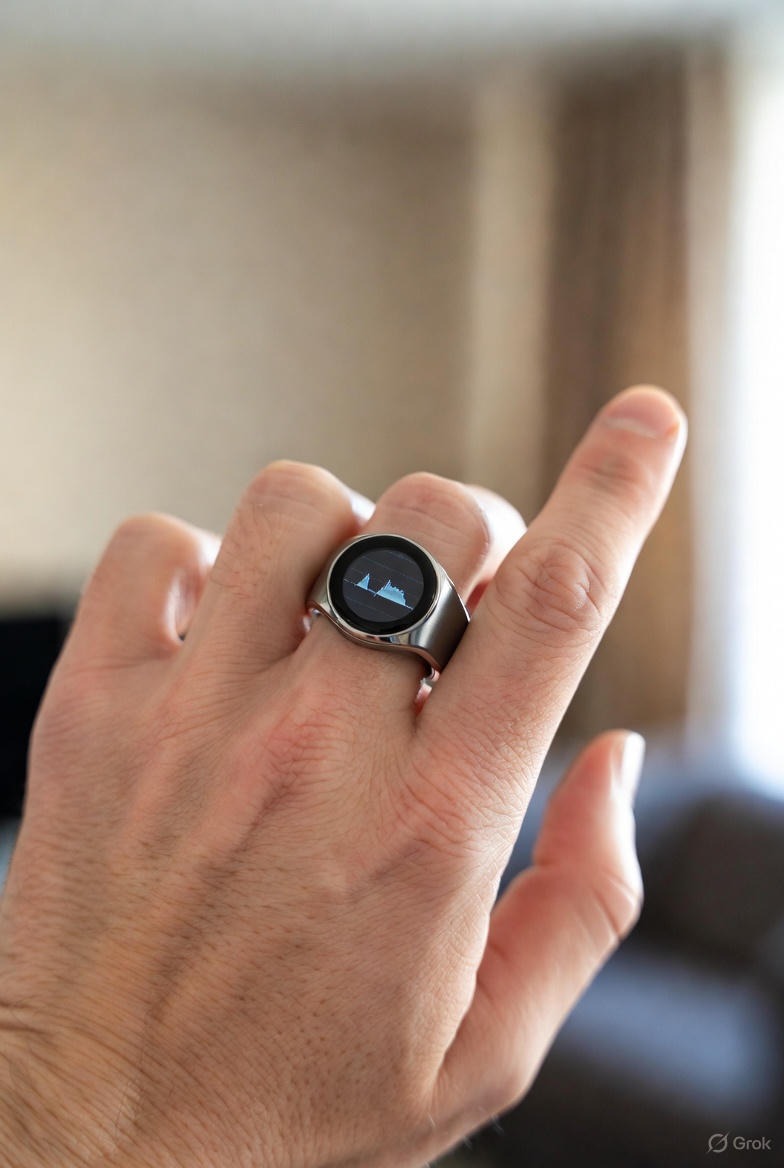
Accuracy in HRV tracking isn't just about a single perfect reading; it's about consistent comparability from day to day. You need to know that a change in your number is due to your physiology, not a change in measurement conditions. This is where wearability and sensor placement become paramount.
The finger, as a measurement site, offers inherent advantages for consistency:
This consistency allows the algorithms to work with a more predictable signal. When the hardware provides a stable foundation, the software can focus on fine physiological details rather than compensating for large positional shifts. It turns the finger into a dedicated, always-on bio-data port. Achieving this level of consistent, user-friendly monitoring is a core challenge we embrace, as outlined in our company's mission and values.
Even with perfect technology, HRV is not a number generated in a vacuum. It is deeply personal and influenced by a myriad of factors that users must understand to interpret their data wisely. A drop in HRV isn't an alarm bell; it's a question. The technology provides the question, and your lifestyle provides the context for the answer.
Expected Influences That Lower HRV:
Expected Influences That May Raise HRV:
The most advanced platforms don't just show you your HRV number; they provide a space for you to log these very factors—training, stress, nutrition, alcohol. Over time, you can begin to see your unique, personalized correlations. This transforms the device from a tracker into a coach.
The million-dollar question for the health-tech industry is: How do these convenient PPG-based measurements stack up against the clinical gold standard of an EKG? The answer is found in validation studies.
Reputable manufacturers invest in and publish peer-reviewed studies where participants wear both the consumer device (like a smart ring or watch) and a medical-grade EKG holter monitor simultaneously. The data is compared to assess metrics like:
The consensus from rigorous studies is encouraging. For nocturnal, resting HRV measurements (like RMSSD), modern PPG devices, particularly those in a stable form factor like a ring, show high correlation and acceptable agreement with EKG. They are excellent tools for tracking relative changes and trends in an individual's HRV over time, which is precisely their intended use case.
However, it is crucial to understand the limits:
The goal is not to replicate a lab EKG on your finger, but to provide a valid, reliable, and actionable trend line for personal health optimization. For common questions on accuracy and use, our FAQ and support section provides detailed answers.
A number without interpretation is noise. The final and most critical layer of technology is the app ecosystem that translates your HRV data into personalized insight. This is where raw biophysics becomes practical wellness.
Modern platforms use several methods to make your HRV meaningful:
This transformation—from millisecond intervals to a clear message like "Consider a lighter workout today"—is the ultimate promise of the technology. It externalizes your internal state, giving you a chance to make conscious, data-informed choices that support your body's needs. For real-world examples of how this impacts users, explore the real customer reviews and experiences shared by our community.
The frontier of wearable sensing is moving beyond the single green LED. To tackle remaining challenges like signal loss during low perfusion (cold hands, poor circulation) or more accurately parsing blood constituents, advanced devices are incorporating multi-wavelength PPG and sensor fusion.
Multi-Wavelength PPG: This involves using different colors of light that penetrate tissue and interact with blood in distinct ways.
Sensor Fusion: This is the practice of combining data from multiple physical sensors to create a more accurate picture than any one sensor could alone. A prime example relevant to HRV is fusing the PPG optical sensor with a 3-axis accelerometer.
The combination of multi-wavelength PPG and sophisticated sensor fusion represents the cutting edge, pushing consumer devices closer than ever to providing medical-grade data in a seamless, user-friendly package. This relentless pursuit of precision is at the heart of the innovation you can learn more about on our homepage.
The journey of HRV tracking is far from over. We are on the cusp of a new era where this metric will become even more integrated, predictive, and personalized. Several exciting frontiers are emerging:
The mission remains constant: to give individuals an intimate, accurate, and actionable understanding of their own physiology. To turn the silent, rhythmic language of the heart into a conversation we can all understand and learn from. The technology measuring HRV is not just a feat of engineering; it's a bridge to greater self-knowledge and a more responsive, resilient life. To follow this ongoing journey of discovery and innovation, you are invited to explore our brand's founding story and vision for the future.
Your HRV number is meaningless in isolation. A score of 50 ms could be excellent for one person and dangerously low for another. Age, genetics, fitness level, and even gender create wide natural variations. This is why the most important phase of using any HRV tracker isn't the first week of data—it's the first month.
Establishing a robust personal baseline is a process of calibration, where your device learns the unique rhythm of your nervous system. During this period, typically 3 to 4 weeks, the algorithm collects your nocturnal HRV readings under various, normal-life conditions: after easy days, hard workouts, stressful workdays, and relaxed weekends. It uses this data to calculate your personal range—often expressed as a rolling average or a "normal zone."
How to Approach Your Baseline Period:
Once your baseline is set, the magic begins. Now, daily and weekly deviations become meaningful. The platform will likely present your data in one of two ways:
This personalized framework transforms HRV from an abstract statistic into your personal biometric compass. It answers the only question that matters: "Am I more or less resilient today than I normally am?"
Even with a perfect baseline, the path from data to wise action is littered with potential misunderstandings. The human tendency is to see a simple metric and desire a simple rule: "Higher is always better." But with HRV, this oversimplification can lead to anxiety and poor decisions—the exact opposite of its intended benefit.
Mistake #1: Chasing a High Number
The wellness culture often glorifies "biohacking" to optimize numbers. With HRV, this mindset is counterproductive. Artificially trying to push your HRV higher every day is like trying to force your nervous system to be perpetually in a state of deep relaxation. It’s not sustainable or healthy. Stress is a necessary and productive part of life. The goal is resilience—the ability to dip in response to stress and then efficiently recover, not to avoid dipping at all.
Mistake #2: Overreacting to a Single Low Reading
A single day's low HRV is rarely a cause for alarm. It could be due to a heavy meal before bed, a single night of poor sleep, or a minor, unnoticed stressor. The intelligent approach is to look for trends. Two or three consecutive days of a depressed HRV, especially when coupled with an elevated resting heart rate and poor sleep feedback, form a much stronger case for needing intentional recovery.
Mistake #3: Ignoring Contextual Logs
If you don't tell the app you had three glasses of wine, ran a marathon, or started a new medication, you are trying to interpret a puzzle with missing pieces. The correlation between these behaviors and your physiology is where the deepest learning occurs. Without logging, a low score is just a mystery. With logging, it becomes a lesson: "Ah, my system really needs two nights to recover from that level of intensity."
Mistake #4: Comparing Your Score to Others
This is the most fundamental error. HRV ranges vary dramatically. A supremely fit, young endurance athlete might have an RMSSD baseline of 100ms. A healthy, fit individual in their 50s might have a perfectly healthy baseline of 30ms. Comparing your 35 to a friend's 80 is physiologically meaningless and psychologically destructive. Your only valid comparison is you, yesterday, last week, and last month.
Mistake #5: Measuring at the Wrong Time
Taking a spot reading in the middle of a busy workday and expecting it to reflect your recovery status is a recipe for confusion. For daily trend tracking, trust the nightly, passive measurement. If you do use morning spot checks (a common practice with some chest straps), always do them immediately upon waking, before coffee, food, or looking at your phone, and maintain a consistent posture (usually seated).
Avoiding these pitfalls is the key to developing a healthy, productive relationship with your HRV data. It should serve you, not stress you. For more on developing this balanced approach, our blog offers numerous user guides and perspectives.
HRV is a powerful narrator, but it tells the richest story when it has a supporting cast. In isolation, a low HRV is ambiguous—it could mean you're getting sick, you're overcooked from training, or you're emotionally drained. When combined with other metrics, the picture comes into sharp focus. Modern wellness trackers, especially comprehensive devices like smart rings, measure a symphony of biomarkers that, together, provide a holistic view of your readiness.
The Core Quartet for Recovery Assessment:
Secondary Supporting Metrics:
Advanced platforms don't just show these metrics in separate silos. They use algorithms to synthesize them into a unified picture. For example:
By learning to read these metrics as an interconnected system, you move from guesswork to guided understanding. This integrated approach to biometrics is central to the philosophy behind devices designed for true wellness, a principle you can discover more about in our company's mission.
Theory is vital, but application is where life changes. How do different people actually use HRV data to make better decisions? The protocols vary by goal, but the underlying principle is the same: use objective data to inform subjective choice.
For the Athlete & Fitness Enthusiast (The Training Optimization Protocol):
For the High-Performance Executive (The Stress Management Protocol):
For the Health-Conscious Individual (The Lifestyle Experiment Protocol):
These protocols demonstrate that HRV isn't just for elite performers; it's a tool for anyone seeking a more conscious, responsive relationship with their body. For inspiration from others on this journey, real customer reviews and stories can provide powerful examples.
While personal tracking is powerful, HRV also sits at the intersection of larger, compelling health and wellness narratives. Understanding these connections enriches the meaning of your own data and places it within the wider context of human health.
HRV and the Science of Longevity:
Research consistently links higher HRV (particularly SDNN over 24 hours) with better health outcomes and longevity. Low HRV is a known predictor of future cardiovascular events and all-cause mortality. Why? Because HRV is a marker of your system's complexity and adaptive capacity—key features of a resilient, aging organism. By improving and maintaining your HRV through lifestyle, you are not just optimizing for tomorrow's workout; you are potentially investing in your systemic health for decades to come. It is a quantifiable measure of your "healthspan."
HRV and Mental Health:
The mind-body connection is vividly illustrated through HRV. Conditions like anxiety, depression, and PTSD are frequently associated with chronically low HRV and a dysregulated autonomic nervous system stuck in a sympathetic-dominant state. Conversely, interventions proven to benefit mental health—Cognitive Behavioral Therapy (CBT), mindfulness-based stress reduction (MBSR), and certain antidepressants—have been shown to increase HRV. For many, tracking HRV provides physical proof of the efficacy of their mental health work, making an intangible struggle feel more manageable and visible.
HRV and Metabolic Health:
Emerging research points to a connection between low HRV and insulin resistance, metabolic syndrome, and type 2 diabetes. The autonomic nervous system plays a crucial role in regulating glucose metabolism and inflammation. A rigid, low-variability nervous system may contribute to a dysregulated metabolic state. This positions HRV not just as a fitness metric, but as a potential early-warning sign and tracking tool for metabolic wellness.
HRV and Women's Health:
For women, HRV tracking must be viewed through the lens of the infradian rhythm—the monthly hormonal cycle. HRV naturally fluctuates with estrogen and progesterone levels. Typically, HRV is highest during the follicular phase (post-menstruation, as estrogen rises) and lowest in the late luteal phase (pre-menstruation). A woman using HRV for training must therefore compare her scores to her phase-based baseline, not her overall average. This allows for cycle-synced training, planning higher-intensity work during the higher-HRV follicular phase and prioritizing recovery and lower-intensity exercise in the luteal phase. This application is a profound example of personalized, female-specific health tech.
By understanding these broader connections, your daily data point becomes part of a larger conversation about integrative health. It underscores that caring for your nervous system is foundational to virtually every aspect of well-being.
To be an informed user, it helps to peek under the hood at some of the technical decisions manufacturers make—decisions that directly impact your experience and data quality. Three critical, interconnected factors are: sampling rate, data processing, and battery life.
Sampling Rate (Hz): How Often the Sensor Listens
This is how many times per second the PPG sensor takes a reading. A higher sampling rate (e.g., 250 Hz) captures a more detailed, higher-fidelity waveform than a lower rate (e.g., 25 Hz). For accurate peak detection—especially important for HRV's millisecond precision—a sufficiently high sampling rate is crucial. Most modern devices use rates between 25 Hz and 250 Hz for all-day tracking, which is more than adequate for reliable RR interval detection. However, continuously running a sensor at its maximum rate would drain a small battery in hours.
Data Processing: On-Device vs. Cloud Analysis
Where does the number crunching happen?
The Battery Life Trade-off: The Eternal Dance
This is the central engineering challenge. Every technical choice has a battery cost:
Manufacturers make strategic compromises. A device focused on continuous, clinical-grade data might have shorter battery life (1-2 days). A device optimized for convenience and passive, daily trend tracking—like a smart ring—will often use intelligent, adaptive sampling. For example:
The result is a device that can last 5-7 days on a charge while still capturing the essential, high-fidelity nocturnal data needed for accurate HRV trends. Understanding this balance helps you choose the right tool for your needs and appreciate the engineering behind the seamless experience. For detailed technical questions, our FAQ and support page often covers these specifics.

With an understanding of the science and technology, you are equipped to make an informed choice about the right device for you. The market offers several form factors, each with strengths and compromises for HRV tracking.
1. Smart Rings (e.g., Oura, Circular, Ultrahuman, Oxyzen)
2. Smartwatches & Fitness Bands (e.g., Apple Watch, Garmin, Whoop Strap)
3. Chest Strap Monitors (e.g., Polar H10, Garmin HRM-Pro)
4. Dedicated HRV Sensors (e.g., Elite HRV CorSense)
Recommendation:
Your choice should reflect your primary goal: effortless trend awareness or precise workout/spot-check data. Many serious users end up with a combination—a ring for 24/7 recovery and a chest strap for intense training sessions. To compare these approaches and discover what might work for you, exploring dedicated resources can be invaluable.
In an age of quantification, it’s paradoxically easy to become a slave to the numbers we measure. HRV, with its intimate connection to stress and performance, is particularly prone to triggering anxiety or obsessive checking—a phenomenon sometimes called "quantified self-stress." The goal, therefore, is not just to track, but to track mindfully. This means using data as a guide, not a gospel; a source of curiosity, not condemnation.
Principles of Mindful HRV Tracking:
Mindful tracking transforms HRV from a performance metric into a partnership. It becomes less about "hacking" your biology and more about listening to it and responding with respect. For more perspectives on building a balanced approach to wellness technology, our blog features thoughtful discussions on this very topic.
The daily and weekly fluctuations of HRV provide tactical guidance. But the true transformative power of this technology is unlocked over months and years. Longitudinal data—the hundreds of nightly readings collected over seasons—paints a profound portrait of your life’s impact on your biology. It moves from measuring states to revealing stories.
What Longitudinal HRV Analysis Can Uncover:
This long view is where the device transitions from a cool gadget to a legacy tool. It provides a form of biological autobiography, one that can inform not just your next workout, but your next decade. Companies focused on this long-term partnership, like Oxyzen, build their platforms with this journey in mind, as reflected in our story and vision for enduring user value.
The future of HRV technology is not just about better passive measurement, but about active modulation. This is the realm of HRV biofeedback (HRV-B), a well-researched therapeutic technique that is now entering the consumer mainstream through accessible apps and devices.
How HRV Biofeedback Works:
The principle is elegant: since your breathing rhythm directly influences your heart rhythm (a phenomenon called respiratory sinus arrhythmia), you can use conscious, paced breathing to entrain and elevate your HRV. In a biofeedback session, you see your HRV or a derived "coherence" score in real-time on a screen while practicing specific breathing techniques (typically at 5-6 breaths per minute). The visual feedback allows you to see instantly which patterns increase coherence, training your nervous system to access a calm, resilient state on demand.
Integration with Consumer Technology:
Modern wearables are bringing this out of the clinic and into daily life.
The Next Step: Contextual, Real-Time Nudges
Imagine a device that doesn't just report your overnight state in the morning, but intervenes helpfully in the moment. Early implementations of this are here:
This evolution turns the tracker from a historian into a coach, using the very data it collects to prompt restorative actions in real-time. It closes the biofeedback loop, making the technology an active partner in nervous system regulation. For users curious about how these advanced features are implemented, our FAQ section often covers such interactive functionalities.
Your HRV does not exist in a vacuum. Its true potential is multiplied when it can converse with other sources of health and lifestyle data. The most powerful personal health insights will come from the integration of biometric, behavioral, and environmental data streams—a concept known as the "digital phenotype."
Potential Integration Points:
This ecosystem approach moves us toward a truly holistic and personalized health model. The smart ring or watch becomes the central hub of your personal health data, synthesizing information from multiple domains to offer contextual, actionable wisdom. It’s a vision that guides the development of open platforms, a topic explored in resources like those found on our company's website.
As we embrace the power of this technology, it is responsible to also acknowledge its limitations and the ethical questions it raises. A critical consumer is an empowered one.
Technical and Physiological Limitations:
Ethical and Privacy Considerations:
Best Practices for Privacy and Security:
After understanding the science, technology, protocols, and ethics, we arrive at the ultimate goal: seamless integration. The end state of a mature relationship with HRV tracking is not more time spent analyzing charts, but less. The insights become internalized, informing a more intuitive, responsive way of living.
The Integrated Life with HRV Awareness:
In this state, the technology fades into the background. It becomes like a wise, silent companion that occasionally taps you on the shoulder with a gentle, data-driven nudge, helping you live in closer harmony with your own physiology. It empowers you to not just do more, but to be better—more rested, more resilient, and more in tune.
This journey from millisecond heartbeats to a more conscious life is the grand promise of HRV tracking technology. It represents a pivotal shift in personal health: from reactive care based on symptoms to proactive care based on signals; from generic advice to personalized insight; from ignoring our body's whispers until they become shouts, to listening closely and responding with grace.
Your Trusted Sleep Advocate: Sleep Foundation — https://www.sleepfoundation.org
Discover a digital archive of scholarly articles: NIH — https://www.ncbi.nlm.nih.gov/
39 million citations for biomedical literature :PubMed — https://pubmed.ncbi.nlm.nih.gov/
Experts at Harvard Health Publishing covering a variety of health topics — https://www.health.harvard.edu/blog/
Every life deserves world class care :Cleveland Clinic - https://my.clevelandclinic.org/health
Wearable technology and the future of predictive health monitoring :MIT Technology Review — https://www.technologyreview.com/
Dedicated to the well-being of all people and guided by science :World Health Organization — https://www.who.int/news-room/
Psychological science and knowledge to benefit society and improve lives. :APA — https://www.apa.org/monitor/
Cutting-edge insights on human longevity and peak performance:
Lifespan Research — https://www.lifespan.io/
Global authority on exercise physiology, sports performance, and human recovery:
American College of Sports Medicine — https://www.acsm.org/
Neuroscience-driven guidance for better focus, sleep, and mental clarity:
Stanford Human Performance Lab — https://humanperformance.stanford.edu/
Evidence-based psychology and mind–body wellness resources:
Mayo Clinic — https://www.mayoclinic.org/healthy-lifestyle/
Data-backed research on emotional wellbeing, stress biology, and resilience:
American Institute of Stress — https://www.stress.org/


