


Movement and Wellness for Desk-Bound Professionals: Ring Strategies
For desk-bound professionals, it provides specific strategies to increase movement based on ring data.
For desk-bound professionals, it provides specific strategies to increase movement based on ring data.
%402x.svg)
You know the feeling. The 3 PM slump hits not like a gentle tide, but a concrete wall. Your eyes glaze over the spreadsheet, your lower back hums a dull ache, and a fog descends on your brain that even a third coffee can’t pierce. This isn't just an afternoon lull; it’s the physical and cognitive tax of a sedentary, screen-bound life. For the modern professional, the desk has become both a command center and a cage, where productivity is often purchased at the expense of vitality.
But what if your greatest tool for reclaiming your energy, focus, and long-term health wasn’t a standing desk app or a gym membership you rarely use, but something you wear 24/7? Enter the smart ring—an unassuming piece of technology that is revolutionizing personalized wellness from the ground up. This isn't about tracking steps for vanity; it's about acquiring a continuous, intimate stream of biometric intelligence. It’s about moving from reactive "I feel terrible" to proactive "My data shows I’m primed for a movement break to prevent a crash."
This guide is your strategic blueprint. We will move beyond generic advice like “move more” and into the realm of targeted, data-informed action. We will explore how the nuanced metrics from a device like the Oxyzen ring—from heart rate variability (HRV) and resting heart rate to skin temperature and sleep architecture—can be decoded into a hyper-personalized movement prescription for the desk-bound professional. The goal is not to become an athlete, but to build a resilient, energized, and focused body that can thrive within the demands of a cognitively intensive career. Let’s begin by understanding the true enemy: not just inactivity, but the specific physiological chaos it unleashes.
We’ve all heard the headline: “Sitting is the new smoking.” While provocative, this analogy falls short because it simplifies a complex, systemic assault. For the knowledge worker, prolonged sitting isn’t a single bad habit; it’s a catalyst for a cascade of physiological dysfunctions that undermine your performance and health from the inside out.
The Metabolic Shutdown: After just 90 minutes of sustained sitting, your body’s production of lipoprotein lipase—an enzyme crucial for breaking down fats in the bloodstream—drops by up to 90%. This signals your metabolism to shift into storage mode. Blood sugar levels begin to spike more dramatically after meals, increasing insulin resistance, a precursor to type 2 diabetes. This isn't about weight alone; it's about cellular energy. When your cells become resistant to insulin, they struggle to take in glucose, leaving you feeling perpetually drained despite adequate calorie intake.
The Postural Collapse: The classic desk posture—rounded shoulders, forward head, a curved spine—isn’t just an aesthetic issue. It’s a biomechanical disaster. This position chronically shortens your chest muscles (pectorals) and hip flexors while weakening your upper back (rhomboids, trapezius) and glutes. This imbalance creates constant, low-grade tension. Your neck and shoulder muscles become overworked as they strain to hold up your forward-leaning head (which can feel like a 12-pound bowling ball at a 15-degree angle). The result is the ubiquitous “tech neck” and shoulder pain, but also reduced lung capacity, as your compressed chest cavity can’t fully expand.
The Cognitive Corrosion: The brain is not separate from this physical decay. Reduced blood flow from a sedentary body means less oxygen and nutrient delivery to the prefrontal cortex—the command center for focus, decision-making, and complex thought. Simultaneously, inflammation markers rise. Chronic, low-grade systemic inflammation is now recognized as a key player in brain fog, anxiety, and even depression. Your 3 PM inability to concentrate is as much a vascular and inflammatory event as it is a mental one.
The Silent Stress Signal: Perhaps the most insidious impact is on your autonomic nervous system (ANS). This system, which governs your "fight-or-flight" (sympathetic) and "rest-and-digest" (parasympathetic) states, is exquisitely sensitive to movement. Prolonged stillness chronically nudges you toward a low-grade sympathetic state—a background hum of stress. This is measurable through a decline in Heart Rate Variability (HRV), the gold-standard metric for nervous system resilience and recovery. A low HRV indicates your body is struggling to adapt, making you more reactive to minor stressors (like a frustrating email) and less capable of deep recovery.
The first step to solving a problem is quantifying it. This is where passive, continuous biometric tracking becomes non-negotiable. You cannot feel a 5% drop in HRV or a subtle rise in resting heart rate, but these are your body’s early-warning signals, whispering of mounting stress and inadequate recovery long before your conscious mind declares burnout. To understand how to intercept these signals, we must first become fluent in the language of our own physiology.
Vague notions of “feeling good” are no longer sufficient for the high-performing professional. To build an effective movement strategy, you need objective, personal data. A sophisticated smart ring like Oxyzen transforms your finger into a 24/7 health observatory, capturing a symphony of signals. But data is only noise without interpretation. Let’s decode the core metrics that will form the foundation of your ring-powered wellness strategy.
Heart Rate Variability (HRV): Your Nervous System’s Dashboard
HRV is the measure of the slight variations in time between each heartbeat. Contrary to intuition, a higher HRV is better. It indicates a robust, adaptable autonomic nervous system—a heart that can swiftly and elegantly respond to changing demands. Think of it as your body’s reserve capacity for stress.
Resting Heart Rate (RHR): Your Metabolic Engine Idle
Your RHR is the number of times your heart beats per minute while you are completely at rest. A lower RHR typically indicates better cardiovascular fitness and more efficient heart function.
Sleep Architecture: The Foundation of Daytime Performance
For the cognitive worker, sleep isn’t downtime; it’s non-negotiable maintenance and memory consolidation. The Oxyzen ring tracks sleep stages—light, deep, and REM—providing a blueprint of your nocturnal recovery.
Skin Temperature & Respiratory Rate: The Subtle Sentinels
These are often overlooked but profoundly insightful metrics.
When these metrics are viewed not in isolation but as an interconnected dashboard, they tell a dynamic story of your daily resilience. The power of the ring is its ability to establish your personal baselines. You’re not competing with an athlete’s HRV; you’re learning what your body looks like when it’s thriving versus merely surviving. This foundational knowledge is what transforms random activity into a strategic movement protocol.
Armed with an understanding of your biometrics, we now apply this intelligence to the arena where the battle is won or lost: the workday. The goal is not to find two hours for the gym, but to strategically disrupt the sedentary pattern every 20-90 minutes with targeted "movement snacks." These micro-interventions are designed to reset posture, boost circulation, calm the nervous system, and refocus the mind, all informed by the live feedback from your ring.
The 20-20-20 Movement Protocol (Beyond the Eyes):
You may know the 20-20-20 rule for eye strain (every 20 minutes, look at something 20 feet away for 20 seconds). Let’s create a full-body version.
Data-Informed Energy Management:
This is where your ring transitions from tracker to advisor.
Ergonomics Meets Biometrics:
Your ring can reveal the hidden cost of poor setup. If you notice a tension headache forming and see a correlated dip in HRV, use that as a cue to audit your workstation. Are your elbows at 90 degrees? Is your monitor at eye level? Is there tension in your jaw? The data provides the "why" to fuel the ergonomic "how."
By integrating these micro-strategies, you stop the workday from being a slow drain on your resources and transform it into a rhythmic practice of renewal. The cumulative effect is profound: reduced pain, sustained energy, and protected cognitive capacity. To explore more foundational strategies for recovery, especially after hours, our resource on proven strategies to improve sleep offers a perfect complement to these daily habits.

Micro-movements prevent decline, but to build lasting resilience against the ravages of desk life, you need a foundation of purposeful strength and mobility. This is not about bodybuilding; it’s about "anti-desk" training—strengthening what sitting weakens and lengthening what sitting shortens. Your ring data will guide the intensity and timing of this training to maximize benefit and avoid overstress.
The Anti-Desk Pillar 1: Posterior Chain Activation
The muscles of your backside—glutes, hamstrings, upper back—are systematically deactivated by sitting. Reawakening them is priority one.
The Anti-Desk Pillar 2: Thoracic Mobility & Opening
We must reclaim the ability to breathe fully and stand tall.
The Anti-Desk Pillar 3: Hip Flexor Liberation & Core Integration
Tight hip flexors pull your pelvis into an anterior tilt, exaggerating lower back curvature.
Using Your Ring to Guide This Training:
Schedule two 15-20 minute "foundational sessions" per week. Check your readiness score (often a composite of HRV, RHR, and sleep) in your Oxyzen app beforehand. On a high-readiness day, you can push the intensity slightly—add light resistance bands to your bridges, hold positions longer. On a low-readiness day, focus on gentle mobility and form. The goal is adaptation, not annihilation. Post-session, observe your sleep data. Quality strength and mobility work should support, not sabotage, your deep sleep, as the body repairs the minor stress of the workout. For a deeper dive into how this recovery process works on a physiological level, you can read about the science of deep sleep and what happens to your body during these critical restoration phases.
In the pursuit of optimized wellness, we often overlook the most fundamental, accessible, and potent movement of all: walking. For the cognitive worker, walking is not a lesser form of exercise; it is a uniquely powerful multi-tool for physical, mental, and metabolic health. When informed by ring data, it transforms from a mundane activity into a precision instrument.
The Cognitive Catalyst:
Stanford researchers found that creative thinking improves by an average of 60% during walking and immediately after. The rhythmic, bilateral movement seems to facilitate a state of "transient hypofrontality," where the hyper-analytical prefrontal cortex quiets down, allowing more diffuse, associative thinking to arise. Stuck on a problem? A 20-minute walk may be more effective than another hour grinding at your screen. Your ring can log this as an "Active Period," and you may later correlate these walks with breakthroughs in workflow.
The Metabolic Regulator:
Recall the metabolic shutdown of sitting. Walking acts as the perfect counterpoint. A post-meal walk—even just 10-15 minutes—has been shown to significantly blunt the blood sugar spike of a meal, improving insulin sensitivity. This directly fights the metabolic stagnation of desk life. Track your resting heart rate over weeks; a consistent walking habit will likely contribute to a gentle, favorable downward trend.
The Nervous System Harmonizer:
Walking, especially in nature or without headphones, is a potent stimulator of parasympathetic ("rest-and-digest") tone. The repetitive, cyclical motion is inherently calming. This is reflected in your biometrics. After a relaxed walk, you may see a positive uptick in your HRV or a slowing of your respiratory rate. On a high-stress day where your ring shows elevated stress scores, a gentle walk is often a more effective reset than an intense workout, which could add to the systemic load.
Strategic Walking Integration:
Walking requires no special equipment, no membership, and minimal time. It is the ultimate low-friction, high-reward movement. By intentionally scheduling and appreciating walks through the lens of your biometric data, you elevate them from incidental to instrumental in your wellness strategy. For professionals whose performance is tied to cognitive output, this simple act is a legitimate competitive advantage.
If movement is defined as the act of changing physical position, then breathing is our most fundamental and continuous movement. For the desk-bound professional, chronic stress and poor posture often lead to shallow, clavicular (chest) breathing, which perpetuates a cycle of anxiety and tension. Learning to consciously engage your diaphragm—a process called diaphragmatic or "belly" breathing—is a movement strategy you can deploy anywhere, anytime, with immediate effects measurable by your smart ring.
The Physiology of the Breath Reset:
Diaphragmatic breathing stimulates the vagus nerve, the main superhighway of your parasympathetic nervous system. A deep, slow inhale followed by a long, controlled exhale signals direct safety to your brain, slowing your heart rate and lowering blood pressure. This is the opposite of the shallow, rapid breathing of stress. The impact is so direct that you can often watch your live heart rate dip on your ring’s app during a focused breathing session.
The "Desk Breath" Protocol:
This is a 90-second reset you can perform anytime you feel overwhelmed, foggy, or notice your ring’s stress metric climbing.
Connecting Breath to Movement and Posture:
Your breathing pattern is dictated by your posture. A slumped spine physically restricts your diaphragm’s range of motion. Conversely, practicing diaphragmatic breathing forces you to engage your core and sit taller. Use them together:
By treating breath as a deliberate movement practice, you gain a lever of control over your physiological state that is independent of your environment. It is the ultimate biohack: zero equipment, zero time cost, profound impact. When your ring data shows signs of accumulated stress, your breath is the first and most accessible tool in your toolkit to initiate correction.
The energy to move, the capacity to recover from movement, and the very integrity of the musculoskeletal system you’re asking to support you through a workday all depend on the fuel you provide. For the sedentary professional, nutritional needs are unique: the goal is to combat the inflammatory and metabolic effects of sitting while providing stable, clean energy for both cognitive and physical tasks. Your ring’s data, especially sleep and recovery metrics, provides immediate feedback on how your fueling strategies are working.
The Inflammation-Fighting Plate:
Prolonged sitting increases inflammatory markers. Your diet can be a powerful counter-force.
Hydration: The Unsung Hero of Mobility and Focus:
Dehydration is a silent saboteur. A mere 2% loss of body water can impair cognitive performance, attention, and short-term memory. It also increases the perception of effort during movement and can elevate your resting heart rate—something your ring will clearly show.
The Timing Triad: Fuel for Work, Movement, and Sleep:
Your ring acts as a biofeedback loop for your nutritional choices. Notice a night of poor sleep recovery after a late pizza dinner? See your HRV tank after a day of coffee and pastries? This isn’t about strict diets; it’s about using objective data to build a personal, sustainable eating pattern that supports your movement goals and your cognitive performance. For more personalized guidance, you can always reach out with your questions via our FAQ page.
For the high-achieving professional, recovery is often seen as passive—the empty space between periods of effort. This is a critical mistake. In the context of a movement strategy for a sedentary body, recovery is an active, non-negotiable pillar of performance. It is when the adaptation to your movement efforts occurs, when your nervous system resets, and when your cognitive buffers are replenished. Your Oxyzen ring provides the ultimate audit of your recovery quality, moving it from a vague concept to a measurable, improvable process.
Sleep: The Non-Negotiable Foundation
We’ve touched on sleep architecture, but let’s frame it as the cornerstone of movement readiness.
Active Recovery and Non-Sleep Deep Rest (NSDR):
Not all recovery happens at night.
The Psychological Detach:
True recovery requires mental separation from work. The constant "mental inbox" of unfinished tasks is a chronic low-grade stressor. Schedule and protect time for activities that bring you joy and present-moment engagement—hobbies, time in nature, connection with loved ones. This psychological offloading is reflected in a more resilient nervous system, captured beautifully by a recovering or elevated HRV trend.
By elevating recovery to a strategic priority, informed by your ring’s biometric feedback, you ensure that your movement efforts compound into positive adaptation. You stop fighting your body’s need for rest and start partnering with it. This creates a virtuous cycle: better movement improves sleep, and better sleep improves your capacity and desire to move. For a comprehensive look at how all these elements—temperature, timing, and habits—come together, explore our deep sleep formula.

You now possess a toolkit of strategies. The art lies in orchestrating them into a daily symphony that resonates with your unique biological rhythm. This is where the Oxyzen ring shifts from being an informative device to your personal conductor, providing real-time cues to harmonize your activities.
Step 1: Establish Your Baselines (The 2-Week Audit)
Before you can conduct, you must know the sound of the orchestra at rest. Dedicate two weeks to normal life while consistently wearing your ring. Do not try to change everything at once. Simply observe.
Step 2: Design Your Daily Rhythm (The Prototype Day)
Using your baselines, build a template day that strategically layers your movement strategies.
Step 3: Implement, Review, and Refine (The Weekly Review)
Every Sunday, spend 15 minutes reviewing your Oxyzen app's weekly report and your subjective journal.
This iterative process—observe, design, implement, review—turns wellness from a static goal into a dynamic practice of self-experimentation. Your ring provides the objective data to strip away guesswork and confirmation bias. You are no longer following generic advice; you are following a protocol written by your own physiology. To see how others have applied this data-driven approach, you can find inspiration in real user experiences and testimonials.
Adherence is the greatest challenge in any wellness endeavor. The initial motivation fades, travel disrupts routines, illness strikes, and progress stalls. Your smart ring is not a judge during these times; it is a compassionate diagnostician and a guide back to the path.
The Motivation Plateau: When Data Becomes Boring
The novelty of seeing your HRV score wears off. This is normal.
The Disruption: Travel, Sickness, and Busy Seasons
Life happens. A work crunch leads to three days of 12-hour sessions. A flu knocks you out. These are not failures; they are stress tests for your system.
The Performance Plateau: When Metrics Stop Improving
You've been diligent, but your HRV has flatlined for a month, and you're not feeling better.
By anticipating these obstacles and having ring-informed strategies for each, you build resilience not just in your body, but in your practice. You learn to flow with life's disruptions instead of being broken by them. The data provides objectivity, removing the emotional shame of a "bad week" and replacing it with a clinical assessment and a clear action plan.
The ultimate goal for the knowledge worker is not a six-pack; it is an unshakable mind. Every movement strategy we've discussed has a direct, profound impact on your cognitive and emotional state. Let's make these connections explicit, so your motivation to move is tied not just to your back pain, but to your creativity, emotional resilience, and leadership capacity.
Movement as a Cognitive Enhancer:
Movement as an Emotional Regulator:
By framing movement as essential mental and emotional hygiene, you eliminate the false choice between "working" and "working out." They are synergistic. The time invested in movement is not stolen from productivity; it is the foundation upon which sustained, high-quality productivity is built. For a deeper exploration of how the pinnacle of recovery supports this cognitive function, consider reading about the brain-boosting connection between deep sleep and memory.
While the daily benefits of energy and focus are compelling, the most significant ROI on your movement strategy is measured in decades, not days. The sedentary professional's path is littered with statistical risks: cardiovascular disease, type 2 diabetes, certain cancers, osteoporosis, and neurodegenerative decline. Your ring-powered movement protocol is a direct, preemptive strike against these future realities.
Metabolic Defense:
Every post-meal walk, every resistance session that builds muscle mass, directly improves insulin sensitivity. Muscle is metabolically active tissue; more muscle means a higher resting metabolic rate and a greater "glucose sink" to pull sugar from your bloodstream. Your ring's trend toward a lower resting heart rate is an early indicator of improving cardiovascular efficiency—a key factor in long-term heart health.
Skeletal and Joint Preservation:
Weight-bearing and strength-training movements are non-negotiable for bone density. The stress of lifting signals your bones to fortify themselves, combating the osteoporosis risk that increases with age and inactivity. Similarly, mobility work ensures the health of your joints—the hinges of your body. Well-lubricated, strong-supported joints prevent osteoarthritis and preserve your freedom of movement for a lifetime.
Neurological Resilience:
The links between cardiovascular health, sleep quality, and brain health are indisputable. Regular movement increases cerebral blood flow and stimulates the production of BDNF, which is crucial for neuron health and the formation of new neural connections. This is a primary defense against cognitive decline. Furthermore, by using your ring to optimize deep sleep, you enhance the brain's glymphatic system—its nightly "power wash" that clears out metabolic waste products like beta-amyloid, a protein associated with Alzheimer's disease.
The Biometric Legacy:
Think of your Oxyzen data as a long-term health ledger. Over years, it tells a story. A story of a gradually declining RHR and rising HRV trend is the story of a resilient system. Stable, healthy sleep architecture is the story of a brain protecting itself. These are not just numbers; they are predictive biomarkers of longevity and healthspan. You are building a body that doesn't just avoid disease, but one that retains the vitality to enjoy life deeply, well into your later years. For those interested in how these needs shift over time, our article on how age affects deep sleep and how to compensate offers valuable perspective.
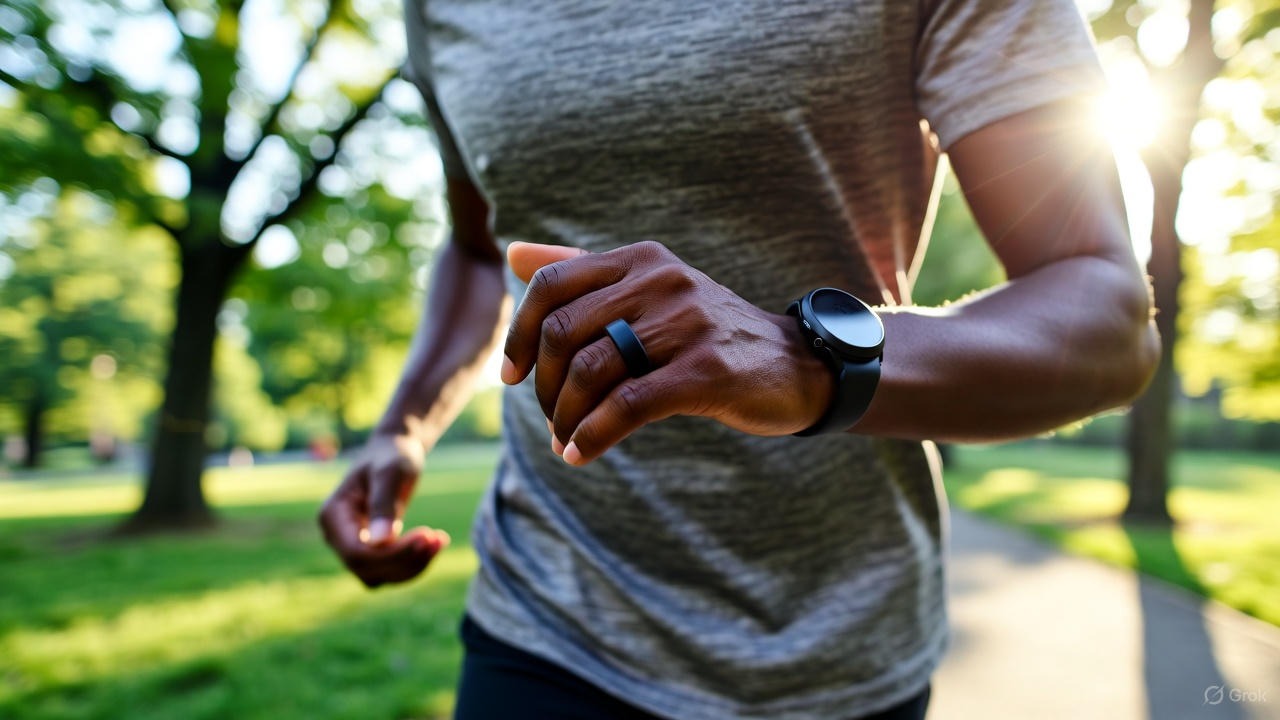
To fully harness the power of your smart ring, we move into advanced applications. These features transform the device from a wellness monitor into a sophisticated biofeedback tool for nuanced life management.
Decoding the Stress Metric: It's Not Just "Bad":
The "stress" score on your Oxyzen app is typically derived from heart rate variability, heart rate, and sometimes skin temperature. It's crucial to understand that this metric measures physiological arousal, which can be positive (eustress) or negative (distress).
Post-Workout Analysis: Beyond Calories Burned:
For your foundational training, the ring provides superior insight to a simple fitness tracker.
Cycle Syncing for Female Professionals:
For women, the menstrual cycle is a central biological rhythm that dramatically influences energy, recovery capacity, and nutritional needs. The Oxyzen ring, by tracking skin temperature and resting heart rate, can help identify the different phases (follicular, ovulatory, luteal, menstrual) with remarkable accuracy.
By engaging with these advanced features, you move from using a tool to developing a partnership with a deeply insightful health companion. It brings a level of self-awareness that was previously the domain of elite athletes and biohackers, now accessible on your finger. To explore the technology that makes this possible, you can read our explainer on how sleep trackers actually work.
The most perfect personal protocol will fail if your environment is hostile to it. We must engineer our physical and digital spaces, and our social ecosystems, to make the healthy choice the easy, default choice.
The Biometric-Informed Workspace:
Technology as an Ally, Not a Warden:
The Power of Community and Accountability:
By intentionally designing your environment, you reduce the cognitive load required to make healthy choices. The path of least resistance becomes the path of movement, recovery, and vitality. This is the ultimate integration: your biology, your behavior, and your environment all aligned toward the same peak-performance goal.
We have journeyed from understanding the profound costs of sedentarism to building a responsive, data-informed daily practice. We've integrated movement, breath, nutrition, and recovery into a cohesive system, using the smart ring as our guiding compass. We’ve prepared for setbacks and optimized our environment. Now, we arrive at the culmination: translating this personalized system into a sustainable philosophy for lifelong performance and exploring the future it unlocks. This final portion is about cementing your identity as a conscious architect of your own vitality.
The final, and perhaps most critical, transformation is not in your routine, but in your perception. For long-term adherence, you must shed the industrial-age notion of "exercise" as a separate, grueling task you should do, and embrace the biological imperative of "essential movement" as something you get to do—a series of practices that are as fundamental to your operating system as sleeping or eating.
Reframing the Internal Narrative:
The Identity of the "Active Professional":
This shift culminates in a new self-concept. You are not a sedentary person who exercises. You are an active professional. Movement is woven into the fabric of your day, not bolted onto the end of it. You walk to think, you stretch to focus, you strength-train to preserve your capacity to work and live pain-free. This identity makes the actions automatic, identity-congruent, and resilient to fleeting drops in motivation. When someone asks about your ring, you don't just say it tracks sleep; you explain it's your biofeedback tool for managing energy and focus—a statement of a professional who optimizes their human hardware.
The Ring as an Objective Mirror:
Your Oxyzen ring reinforces this identity not with cheerleading, but with truth. On days you live in alignment with your active professional identity, the data will generally reflect it: higher readiness, more stable energy markers, better sleep. On days you don't, the data is a non-judgmental report card, offering clues for realignment, not a source of guilt. This objective feedback loop is powerful for solidifying the new mindset. For stories of others who have made this profound shift, exploring our customer testimonials can be a powerful reinforcement.
While the core principles are universal, their application can be optimized for different professional patterns. Let’s tailor the ring-powered strategy to three common archetypes.
The Digital Nomad / Frequent Traveler:
The Deep Work Specialist (Coder, Writer, Analyst):
The High-Stakes Communicator (Executive, Consultant, Client Manager):
By adapting the core framework to your specific professional pattern, you increase its relevance and effectiveness tenfold, making it an indispensable part of your professional toolkit.

The Oxyzen ring you wear today is a snapshot of a rapidly evolving field. Understanding the trajectory of biometric intelligence helps you appreciate the tool you have and anticipate the even more powerful insights to come. This isn't about waiting for the next gadget; it's about building the foundational habits today that will allow you to harness future advancements tomorrow.
Continuous, Non-Invasive Blood Biomarkers:
The holy grail is moving from indirect metrics (HRV as a proxy for stress) to direct, continuous measurement. Future wearables may use spectroscopic sensors to non-invasively track key blood biomarkers like:
Advanced Nervous System Mapping:
Beyond HRV, future algorithms may decode more subtle patterns in your heart rhythm to identify specific states of nervous system imbalance or predict migraines, anxiety attacks, or moments of peak creativity with greater accuracy. Your ring could suggest a specific breathing protocol (e.g., resonant frequency breathing) tailored to your real-time nervous system state.
Deep Integration with AI and Your Digital Environment:
Imagine your ring data seamlessly integrating with your calendar and AI assistant.
This future is one of hyper-personalization, where your wearable doesn't just track—it understands, predicts, and seamlessly coaches. The foundational habit of paying attention to your biometrics, which you are building now, will be the critical human skill required to partner effectively with these advanced systems. To stay updated on these evolving technologies and their applications, our blog is a constant resource.
We have covered vast terrain. Let's consolidate this into a single, actionable, sustainable blueprint—your permanent operating manual for thriving as a desk-bound professional.
The Core Daily Non-Negotiables (The 80/20 Rule):
These are the pillars that deliver 80% of the results. Do these consistently, and you have won.
The Weekly Review Ritual:
Every Sunday, perform this 20-minute audit with your Oxyzen app:
The Quarterly "Seasonal" Reset:
Every 3-4 months, take a broader view.
This blueprint is iterative, not static. It is a living system that evolves as you do, guided by the unwavering objective feedback from your ring. It is the system that allows you to perform at your peak without burning out, to be ambitious without being self-destructive. For ongoing support and answers to common questions as you implement this, remember the FAQ page is always available.
The narrative of the desk-bound professional has long been one of inevitable decline: the slow creep of back pain, the expanding waistline, the dimming of energy and sharpness. We have accepted this as the cost of doing business in the information age.
This entire guide proposes a radical refutation of that narrative.
The desk is not your cage; it is your cockpit. The smart ring is not just a tracker; it is your instrument panel. The data it provides is not mere numbers; it is the live feed from the most complex system you will ever command—your own biology.
You now have the strategy to move from being a passive victim of your work environment to an active architect of your well-being within it. You understand that:
This is not about adding more to your plate. It is about changing the composition of the plate itself. It is about integrating vitality into the very fabric of your professional life so completely that the line between "working well" and "living well" disappears.
The journey begins with a single data point, a single five-minute walk, a single conscious breath. It is cemented by the weekly review and the gentle, consistent return to practice. The Oxyzen ring is your companion on this journey—a silent, wise guide on your finger, reminding you that the path to professional excellence is inextricably linked to the practice of self-care.
You are not just managing your time; you are curating your energy. You are not just building a career; you are building a capable, resilient, and vibrant human being who can enjoy the fruits of that career for decades to come.
That is the ultimate ring strategy.
Your Trusted Sleep Advocate (Sleep Foundation — https://www.sleepfoundation.org/)
Discover a digital archive of scholarly articles (NIH — https://www.ncbi.nlm.nih.gov/
39 million citations for biomedical literature (PubMed — https://pubmed.ncbi.nlm.nih.gov/)
experts at Harvard Health Publishing covering a variety of health topics — https://www.health.harvard.edu/blog/)
Every life deserves world class care (Cleveland Clinic -
https://my.clevelandclinic.org/health)
Wearable technology and the future of predictive health monitoring. (MIT Technology Review — https://www.technologyreview.com/)
Dedicated to the well-being of all people and guided by science (World Health Organization — https://www.who.int/news-room/)
Psychological science and knowledge to benefit society and improve lives. (APA — https://www.apa.org/monitor/)
Cutting-edge insights on human longevity and peak performance
(Lifespan Research — https://www.lifespan.io/)
Global authority on exercise physiology, sports performance, and human recovery
(American College of Sports Medicine — https://www.acsm.org/)
Neuroscience-driven guidance for better focus, sleep, and mental clarity
(Stanford Human Performance Lab — https://humanperformance.stanford.edu/)
Evidence-based psychology and mind–body wellness resources
(Mayo Clinic — https://www.mayoclinic.org/healthy-lifestyle/)
Data-backed research on emotional wellbeing, stress biology, and resilience
(American Institute of Stress — https://www.stress.org/)


