Sleep Tracking Accuracy: What Your Device Can and Can't Measure
Sleep tracking device accuracy varies significantly across metrics and conditions. This honest assessment explains what wearables measure precisely versus approximately, identifies limitations in stage detection and timing, and helps you understand which data points deserve trust for decision-making about your rest.
Sleep Tracking Accuracy: What Your Device Can and Can't Measure
You slip the sleek band onto your wrist or the minimalist ring onto your finger every night, trusting it to tell the story of your sleep. In the morning, you check the app: 7 hours, 22 minutes. A Sleep Score of 82. You spent 1 hour and 40 minutes in deep sleep and woke up 12 times. These numbers feel definitive, giving a scientific veneer to the deeply subjective feeling of being rested or exhausted. But how much truth do they hold?
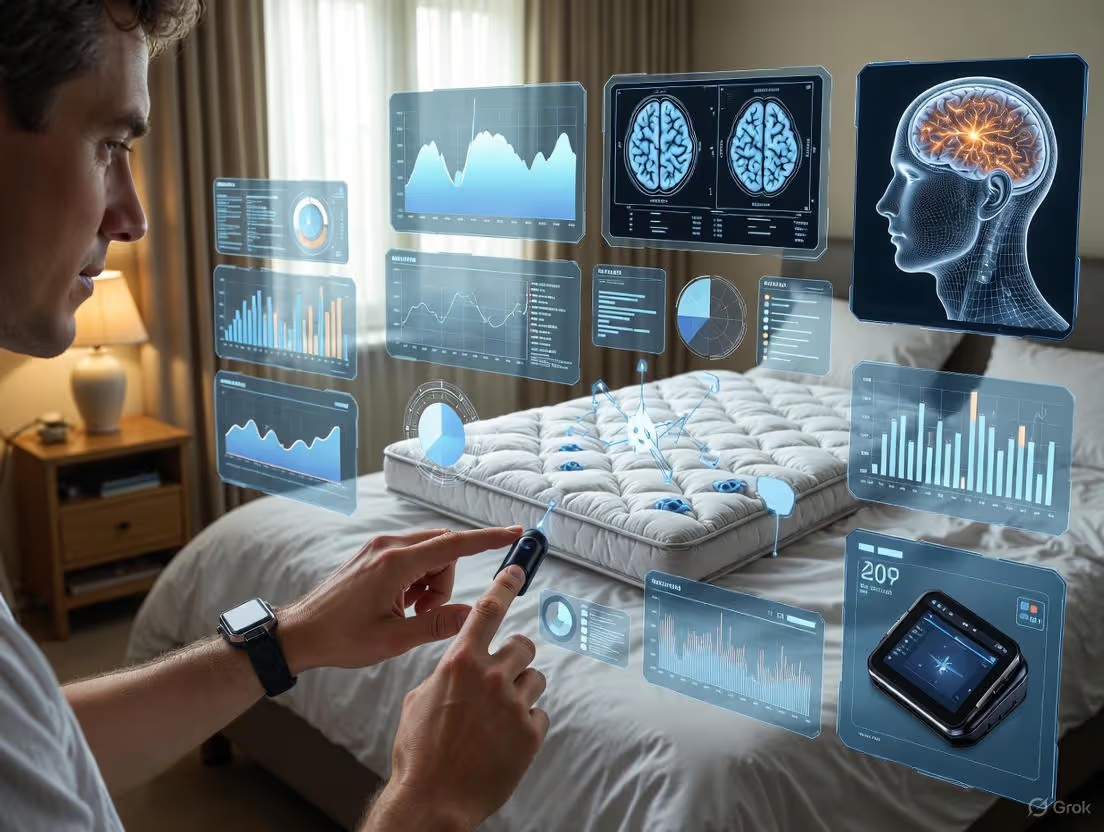
The reality of sleep tracking is a fascinating landscape of remarkable technological achievement and inherent biological complexity. Today, one in three Americans has used an electronic device to track their sleep. For many, these devices have led to changed behaviors and a greater focus on sleep health. They represent a monumental shift from the intimidating, wire-laden polysomnography (PSG) tests of sleep labs to quiet, continuous monitoring in our own beds. Yet, as these gadgets become household staples, a critical question emerges: just how accurate are they, and what are they truly measuring?
This article dives deep into the science and the limitations of consumer sleep technology. We will explore the gold standard of sleep measurement, unravel how your wearable makes its best guesses, and dissect what it excels at versus where it must make educated assumptions. From the impressive accuracy of detecting sleep versus wakefulness to the murkier waters of distinguishing between light, deep, and REM sleep, we will provide you with the knowledge to interpret your own data intelligently.
Our journey will cover the three main categories of devices—wearables, nearables, and airables—and examine how factors like your physical characteristics, sleep disorders, and even which finger you wear a ring on can influence the results. We aim to empower you to use your sleep tracker not as an infallible oracle, but as a powerful tool for spotting trends, understanding your body’s patterns, and having more informed conversations about your health. After all, the goal isn't just to collect data, but to use it to finally wake up feeling refreshed.
The Gold Standard: How Sleep is Measured in a Lab
To understand what your consumer device is attempting to do, you must first understand the rigorous, multi-faceted process it is trying to replicate. The undisputed gold standard for sleep measurement is an overnight polysomnography (PSG) study, typically conducted in a specialized sleep lab. This comprehensive assessment doesn't rely on a single signal but creates a synchronized symphony of physiological data to paint a complete picture of sleep architecture and quality.
At the heart of PSG is the electroencephalogram (EEG), which measures electrical activity in the brain via electrodes placed on the scalp. It is the EEG that allows sleep technicians to definitively distinguish between the five recognized stages of sleep: Wake, N1 (light sleep), N2 (deeper light sleep), N3 (deep or slow-wave sleep), and REM (Rapid Eye Movement) sleep. The brainwave patterns for each stage are distinct. For instance, the deep, slow oscillations of N3 sleep are unmistakably different from the faster, desynchronized waves of REM sleep, where vivid dreaming occurs.
However, the brain tells only part of the story. PSG is a multi-modal tool that incorporates several other key measurements:
Electrooculogram (EOG): Electrodes placed near the eyes monitor eye movements. This is crucial for identifying REM sleep, which is characterized by—as the name suggests—rapid bursts of eye movement.
Electromyogram (EMG): Sensors, usually on the chin and legs, measure muscle tone and activity. Muscle tone typically plummets during REM sleep (a state known as REM atonia), which helps differentiate it from wakefulness. Leg EMG can also detect periodic limb movements that disrupt sleep.
Respiratory Effort and Airflow: Belts around the chest and abdomen monitor breathing effort, while sensors at the nose and mouth measure airflow. This combination is essential for diagnosing sleep-related breathing disorders like sleep apnea, where breathing repeatedly stops and starts.
Pulse Oximetry: A clip on the finger continuously measures blood oxygen saturation (SpO₂). Frequent dips in oxygen levels often correlate with apnea events.
Electrocardiogram (ECG): Records heart rate and rhythm, which vary characteristically across different sleep stages and can be affected by breathing disturbances.
A trained sleep technician then scores this data in 30-second segments, or "epochs," interpreting the complex interplay of all these signals to assign a sleep stage to each moment of the night. It is an intensive, expert-driven process that provides a high-resolution map of sleep.
The contrast with a consumer device is stark. Where PSG uses direct brainwave measurement, your wearable or nearable must rely on proxy signals like movement, heart rate, and sometimes blood oxygen, to infer what the brain is doing. It is the difference between reading a book and guessing its contents by watching how often someone turns the page. This fundamental difference in methodology is the root of both the impressive utility and the significant limitations of the sleep tracker on your wrist or bedside table.
The Proxies: What Your Device Actually Tracks (Movement, Heart Rate, Oxygen)
Since consumer devices cannot directly measure brain activity, they have become remarkably sophisticated at monitoring secondary physiological signals and using complex algorithms to translate them into a story about your sleep. Understanding these proxies is key to interpreting your data.
1. Movement and Inactivity (Accelerometry): This is the oldest and most fundamental method. Accelerometers—tiny motion sensors—detect movement. The core assumption is simple: when you are asleep, you are still; when you are awake, you move. By tracking periods of prolonged inactivity, devices can estimate when you likely fell asleep and woke up. However, this method has well-known flaws. It can mistake lying still in bed (reading, relaxing) for sleep, and it can miss wakeful periods where you lie motionless. It is also poor at distinguishing between sleep stages, as you can move during both light and deep sleep.
2. Heart Rate and Heart Rate Variability (HRV): This is where modern wearables significantly advance beyond simple motion tracking. Using photoplethysmography (PPG), a sensor shines light into the skin (typically on the wrist or finger) and measures minute changes in blood volume with each heartbeat to determine heart rate. During sleep, your heart rate generally slows and becomes more regular as you descend into deep sleep (N3). During REM sleep, however, heart rate can become more variable and even spike, mirroring the brain's increased activity. Heart Rate Variability (HRV)—the subtle variation in time between consecutive heartbeats—is also a key metric. Higher HRV during sleep is often associated with better recovery and more restorative rest. By analyzing the pattern and variability of your heart rate throughout the night, algorithms make educated guesses about your sleep stages.
3. Blood Oxygen (SpO₂): Many newer devices, especially smart rings and higher-end watches, now include pulse oximetry sensors. These use different wavelengths of light to estimate the oxygen saturation of your blood. While useful for general wellness, its primary sleep-related application is in screening for potential breathing disturbances. Frequent, significant dips in blood oxygen levels during the night can be a red flag for conditions like sleep apnea. Some advanced devices calculate an Oxygen Desaturation Index (ODI), which quantifies how often these drops occur per hour.
4. Skin Temperature and Galvanic Skin Response: Some devices, like certain smart rings, track subtle changes in peripheral body temperature. Your core body temperature drops as you fall asleep and reaches its lowest point during the early morning hours. Tracking this trend can help confirm sleep onset and assess circadian rhythm. A less common metric is galvanic skin response (GSR), which measures minuscule changes in sweat gland activity that can correlate with stress or arousal during sleep.
Your device's app takes this buffet of data—movement, heart rate pattern, oxygen levels—and feeds it into a proprietary machine learning algorithm. This algorithm has been "trained" on datasets where these proxy signals were recorded simultaneously with PSG. It learns to recognize patterns: "This specific combination of low movement, steadily slowing heart rate, and stable oxygen likely means the user is in N2 sleep." It’s a powerful form of statistical pattern-matching, but it remains an inference, not a direct measurement. This explains why two different devices on the same person can sometimes provide different results; they may be using different sensors or different algorithms to interpret the same basic signals.
What They Get Right: Detecting Sleep vs. Wake and Total Sleep Time
Given the indirect nature of their measurements, it’s fair to ask: what can consumer sleep trackers do reliably? The most consistent finding across scientific validation studies is that modern devices are highly proficient at distinguishing sleep from wakefulness and estimating total sleep time (TST). For the average user, this is often the most valuable and trustworthy data point.
High Sensitivity for Sleep Detection Research consistently shows that popular wearables have high sensitivity for detecting sleep. In a 2024 study comparing the Oura Ring, Fitbit Sense 2, and Apple Watch Series 8 to PSG, all three devices demonstrated a sensitivity of 95% or higher for detecting sleep epochs. This means that when the gold-standard PSG confirmed a person was asleep, the wearable correctly identified it as sleep over 95% of the time. This excellent performance is why your device is unlikely to miss large chunks of your actual sleep.
Accuracy for Total Sleep Time Following from their ability to identify sleep, these devices also provide a reasonably accurate estimate of your total time asleep. The same 2024 study found that all three tested devices were statistically similar to PSG in their estimation of overall sleep duration. A larger 2023 multicenter study of 11 different devices also concluded that specific trackers showed "substantial agreement" with PSG for sleep monitoring. For most healthy adults, the total sleep time figure on your app in the morning is a reliable ballpark metric you can use to track trends over weeks and months.
The Power of Trend-Spotting This reliability in macro-level tracking is where consumer devices truly shine for personal use. While the absolute number on any single night might have a small margin of error, the longitudinal data is powerfully insightful. You can confidently observe patterns, such as:
Consistently shorter sleep duration on work nights versus weekends.
The impact of an evening workout or a late meal on your total rest time.
How a change in your bedtime routine influences how long you sleep.
As experts at Johns Hopkins note, this trend-spotting ability is a primary benefit. The tracker gives you "something to reflect on," with graphs that make it easy to see correlations between your behavior and your sleep quantity. This empowers you to become your own sleep scientist, running informal experiments to see what truly helps you log more hours of rest. For anyone looking to improve their sleep hygiene, this consistent, reliable feedback on sleep duration is an invaluable tool. You can learn more about how to interpret these long-term trends in our dedicated wellness resources on the Oxyzen bloghttps://oxyzen.ai/blog.
The Murky Middle: Accuracy of Sleep Stage Breakdown (Light, Deep, REM)
This is where the crystal-clear waters of sleep tracking become notably more turbid. While devices excel at telling you if you’re asleep, they are significantly less precise at determining what stage of sleep you’re in. Diving into the breakdown of light, deep, and REM sleep means venturing into the territory of algorithmic estimation, where accuracy varies considerably.
The Challenge of Inference Recall that PSG uses direct brainwave (EEG) reading to definitively stage sleep. Your wearable has no such access. It must rely on its proxies—primarily heart rate patterns, movement, and sometimes heart rate variability—to make its best guess. The problem is that the physiological signatures of different sleep stages, as seen through these proxies, can overlap and are not always distinct. For example, a rising heart rate could signal a transition to REM sleep, or it could simply be a brief arousal in light sleep. This leads to inherent uncertainty.
What the Research Shows Validation studies reveal a wide range of performance in sleep stage classification. The 2023 multicenter study of 11 devices found that epoch-by-epoch agreement in sleep stage classification showed substantial performance variation, with macro F1 scores (a measure of accuracy) ranging from a high of 0.69 to a low of 0.26. This indicates that while some devices do a fair job, none are perfect, and performance varies widely by brand and model.
More recent, head-to-head studies provide a clearer snapshot:
Oura Ring (Gen3): In a 2024 study, the Oura ring showed no statistically significant difference from PSG in its estimation of wake, light, deep, or REM sleep duration. Its sensitivity for staging sleep ranged from 76.0% to 79.5%.
Fitbit Sense 2: The same study found the Fitbit had a tendency to overestimate light sleep by about 18 minutes and underestimate deep sleep by about 15 minutes. Its staging sensitivity ranged from 61.7% to 78.0%.
Apple Watch Series 8: The Apple Watch showed a pattern of underestimating deep sleep (by a considerable 43 minutes) and wake time, while overestimating light sleep.
Interpreting Your "Deep Sleep" Number This research has a crucial implication for you as a user: take your nightly sleep stage percentages with a grain of salt. The "45 minutes of deep sleep" on your dashboard is not a clinical measurement but an algorithmic estimate that may be off by a meaningful margin. It is more accurate to view these stage breakdowns as relative trends over time rather than absolute truths. If your device shows your deep sleep proportion consistently dropping for a week, that trend is likely worth noting, even if the exact number each night isn't perfect. However, fixating on a single night's "low" deep sleep reading can lead to unnecessary anxiety, a phenomenon sometimes called "orthosomnia" or an unhealthy obsession with perfect sleep data.
The takeaway is to use sleep stage data for pattern recognition, not precision diagnosis. It’s a useful tool for seeing how lifestyle factors might be influencing the structure of your sleep, but it should not be treated with the same confidence as your total sleep time.
Beyond the Basics: Specialized Metrics (HRV, Respiratory Rate, Temperature)
The frontier of consumer sleep tracking is moving beyond simple stage breakdowns into a suite of specialized biomarkers that offer a deeper look at your body's autonomic nervous system and overall health during rest. These metrics, often found on more advanced wearables and smart rings, provide context that can make your sleep data far more meaningful.
Heart Rate Variability (HRV): The Stress and Recovery Gauge If you could only track one advanced metric, HRV might be it. While your average heart rate slows during sleep, HRV measures the tiny, millisecond variations in the time interval between each heartbeat. A higher HRV during sleep generally indicates a more resilient, adaptable nervous system—it means your body is in "rest and digest" (parasympathetic) mode, effectively recovering from the day's stresses. A lower nighttime HRV can be a sign of physical stress, overtraining, illness, or psychological strain. Many devices now provide a nightly HRV average, and tracking its trend is a powerful way to gauge your recovery status and readiness for the day ahead.
Respiratory Rate: The Silent Rhythm Your breathing rate is a fundamental vital sign that naturally slows and becomes very regular during deep, non-REM sleep. Tracking respiratory rate throughout the night provides another window into sleep quality and autonomic stability. Significant, sustained increases in nighttime respiratory rate can sometimes signal sleep disturbances, such as apnea events or even the onset of a respiratory infection. Seeing a stable, low respiratory rate on your chart is a good sign of peaceful, uninterrupted sleep.
Nocturnal Body Temperature: The Circadian Compass Your body temperature follows a clear circadian rhythm, dipping as you fall asleep and reaching its nadir in the early morning hours before rising to wake you up. Some devices, particularly those worn on the finger like smart rings, are adept at tracking peripheral temperature trends. The finger provides a stable site with good blood flow, less affected by blankets or ambient room temperature than the wrist. Deviations from your personal baseline—like a elevated nighttime temperature—can be one of the earliest signs of immune system activation, illness, or hormonal changes. For women, tracking this metric can also offer insights into menstrual cycle phases.
Blood Oxygen (SpO₂) and Apnea Screening As mentioned earlier, nocturnal blood oxygen monitoring has moved from the clinic to the consumer device. While not a diagnostic tool, it is a powerful screening metric. Many devices will report your average and minimum SpO₂ for the night. More advanced implementations, like those in certain smart rings, can calculate an Apnea-Hypopnea Index (AHI) or Oxygen Desaturation Index (ODI) over multiple nights, which estimates the number of potential breathing interruptions per hour. It is critical to understand that these are risk indicators, not diagnoses. As one smart ring company explicitly states, their device "can’t diagnose sleep apnea, but it can reveal patterns... that often signal a problem". This data is most valuable as a conversation-starter with a healthcare professional.
These advanced metrics transform a sleep tracker from a simple sleep-logging device into a holistic nocturnal wellness monitor. They answer not just "how did I sleep?" but "how well did my body recover and regulate itself overnight?" For those interested in the science behind these measurements and how they integrate into a complete picture of health, you can explore more about our approach at Oxyzenhttps://oxyzen.ai.
Form Factor Matters: How Wearables, Nearables, and Airables Compare
Not all sleep trackers are created equal, and their physical form—where they are placed and how they collect data—fundamentally shapes their strengths, weaknesses, and the type of data they provide. The 2023 validation study classifies them into three distinct categories: wearables, nearables, and airables. Understanding these differences is key to choosing the right tool for your needs.
Wearables: Rings and Watches These are devices you wear on your body.
Smart Rings (e.g., Oura, Ultrahuman): Worn on the finger, rings are praised for comfort and stability. The finger provides a strong PPG signal for heart rate and SpO₂ due to good blood flow, and it moves less than the wrist during sleep, potentially improving data consistency. They are also unobtrusive, making them easy to wear every night. The 2024 study noted the Oura Ring's strong performance across sleep metrics.
Smartwatches (e.g., Apple Watch, Fitbit, Galaxy Watch): The most common type, worn on the wrist. They are versatile but can be bulky for some sleepers. The wrist is a more active site, which can sometimes lead to motion artifacts in sensor data. However, their algorithms are highly advanced, and they benefit from massive datasets for training. The 2023 study found wearables as a class could show "high proportional bias in sleep efficiency" estimates.
Nearables: Devices That Sit Near You These sit on or near your bed without direct skin contact.
Under-Mattress Pads (e.g., Withings Sleep Mat): These use ballistocardiography (BCG) to detect the minute vibrations of your heartbeat and breathing through the mattress. They are completely unobtrusive—you don't wear anything—and are excellent for tracking respiration and overall restlessness. The 2023 study noted that nearables as a category exhibited "high proportional bias in sleep latency" estimation.
Bedside Devices (e.g., Amazon Halo Rise, Google Nest Hub): These often use low-power radar or other sensors to detect motion and breathing patterns from a short distance. They are also hassle-free but can be sensitive to the presence of a partner or pets in the bed.
Airables: Your Smartphone as a Sensor This category consists of smartphone apps (e.g., SleepScore, Pillow) that use the phone's built-in microphone and/or accelerometer to analyze your sleep. Placed on the mattress near your pillow, the microphone listens for sounds of movement and breathing, while the accelerometer detects bed movement. While convenient and low-cost, this method is generally considered the least accurate and most susceptible to environmental noise.
Choosing What's Right for You The best choice depends on your priorities:
For maximal data accuracy and advanced metrics (HRV, temperature, SpO₂), a smart ring or high-end smartwatch is superior.
For absolute comfort and zero wearability concerns, an under-mattress nearable is ideal.
For a low-cost introduction to sleep tracking, a smartphone airable app can provide basic insights.
Each form factor makes different trade-offs between accuracy, convenience, and comprehensiveness of data. For real-world perspectives on how these different devices perform in everyday life, you can read about user experiences in our Oxyzen testimonialshttps://oxyzen.ai/testimonials.
The Impact of Individual Factors: Why Your Results May Vary
Even the most accurate device on the market will not perform identically for every person. A critical layer of understanding sleep tracker accuracy involves recognizing how individual biological and lifestyle factors can influence the data. Your device's algorithm is making generalizations based on population data, but your body is unique.
Physical Characteristics
Body Composition and BMI: The 2023 multicenter study specifically noted that subgroup analyses revealed variations in accuracy based on factors like BMI. Adipose tissue (body fat) can affect how well optical PPG sensors can detect blood flow pulses, potentially impacting heart rate and SpO₂ readings. A snug, proper fit is even more crucial for accurate sensing across different body types.
Skin Tone: While modern sensor technology has improved, studies still sometimes evaluate performance across skin tones. The 2024 study of three devices, for instance, documented participants' dorsal skin tone as part of its methodology. Melanin can absorb the green light used by many PPG sensors, which may, in theory, affect signal quality on very dark skin. Device makers are continually working to mitigate these issues with multi-wavelength sensors and improved algorithms.
Medical Conditions: The presence of sleep disorders significantly challenges consumer algorithms. The same 2023 study found performance variations based on the Apnea-Hypopnea Index (AHI), a measure of sleep apnea severity. Irregular breathing, frequent limb movements, or highly fragmented sleep create patterns that differ from the "normal" sleep the algorithms were primarily trained on. A device might still detect the fragmentation, but its stage estimations may become less reliable.
Sleep Itself: The "Normal" vs. "Disordered" Spectrum Algorithms are typically trained and validated on data from people with relatively healthy sleep patterns. When sleep is highly efficient and follows a predictable architecture, the proxies align more cleanly with the expected patterns. However, if you have severe insomnia (with long periods of motionless wakefulness), sleep apnea (with constant micro-arousals), or an irregular circadian rhythm, the algorithm's task becomes much harder. It may mislabel wake as light sleep or struggle to identify deep sleep blocks that are frequently interrupted.
Device-Specific Factors
Fit and Placement: This cannot be overstated. A wearable must be snug. A loose smartwatch can wobble, creating motion noise. A loose ring may not maintain consistent skin contact for its sensors. For rings, finger choice (index, middle) can also matter due to differences in artery size and motion.
Battery Life and Charging Routine: A device that needs nightly charging is more likely to be missed on the nights you forget. The best device for tracking is the one you actually wear consistently. This is a noted advantage for smart rings, which often boast multi-day battery life.
The key takeaway is that accuracy is personal. Your age, fitness level, health status, and even how you wear the device all play a role. This is why longitudinal tracking of your own baselines is so valuable—you're not comparing yourself to a generic "ideal," but watching for meaningful deviations from your own personal norm. If you have specific questions about how these factors might affect your tracking, our Oxyzen FAQhttps://oxyzen.ai/faq offers further guidance.
The Double-Edged Sword: Potential Benefits and Pitfalls of Self-Tracking
Armed with nightly data, you enter the realm of quantified self. This practice can be incredibly empowering, but it also carries psychological weight. Understanding both the benefits and potential pitfalls is essential for maintaining a healthy relationship with your sleep tracker.
The Benefits: Awareness, Accountability, and Empowerment
Enhanced Awareness: Before tracking, most people have a vague sense of "I slept badly." A device quantifies this, revealing patterns you'd never notice: maybe you consistently wake up 45 minutes before your alarm, or your sleep is markedly worse after even a single afternoon coffee. This objective data cuts through subjective guesswork.
Behavioral Accountability: Seeing a direct correlation between actions and outcomes is a powerful motivator. When you see a poor "Readiness Score" after a late night of alcohol and screen time, it reinforces the value of healthier habits. Studies show that 68% of people who use sleep trackers report changing their behavior based on the data.
Early Insight into Potential Issues: While not diagnostic, trackers can serve as an early warning system. Consistently low blood oxygen, a very high resting heart rate, or extreme sleep fragmentation can be flags that prompt a timely conversation with a doctor.
Personalized Experimentation: You can systematically test what works for you. Does a cooler room temperature improve your deep sleep? Does a 20-minute meditation before bed increase your HRV? Your tracker provides the feedback loop to find your optimal routine.
The Pitfalls: Anxiety, Misinterpretation, and "Orthosomnia"
Data Anxiety and Sleep Performance Pressure: The pursuit of a perfect "Sleep Score" can become a source of stress, ironically making sleep harder to achieve. This phenomenon, sometimes called "orthosomnia," is when a preoccupation with perfect sleep data creates new sleep problems. If checking your score fuels anxiety rather than curiosity, it's time to step back.
Misinterpreting Natural Variability: Sleep is not a machine output; it varies naturally from night to night due to stress, diet, and simple biology. Fixating on a single night's "low" deep sleep percentage is like fretting over one day's weight on a scale. The trend over time is what matters.
Over-Reliance and Self-Diagnosis: A tracker is a wellness tool, not a medical device. It is dangerous to use its data to self-diagnose conditions like sleep apnea or insomnia. It can screen and suggest, but only a healthcare professional can diagnose.
The Placebo (or Nocebo) of Data: If you feel your data must be bad after a stressful day, you may interpret your tiredness through that lens, creating a nocebo effect. Conversely, a great score might make you feel more restored than you actually are.
Striking a Healthy Balance Use your tracker as a guide, not a grade. Look at weekly and monthly averages, not nightly scores. If the data causes more worry than insight, take a break from checking it every morning. The ultimate goal is to feel rested and energized during the day—that subjective feeling is the most important metric of all. Sometimes, the healthiest step is to stop tracking and simply trust your body. The journey to better sleep is deeply personal, and understanding the story behind our technology is just one part of it. To learn more about our philosophy on balanced, technology-assisted wellness, you can read our storyhttps://oxyzen.ai/our-story.
Looking Ahead: The Future of Sleep Tracking Technology
The field of consumer sleep technology is not static; it is accelerating at a breathtaking pace. The devices we use today will seem rudimentary in just a few years as several converging technological trends push the boundaries of what's possible outside the sleep lab.
1. Multi-Modal Sensor Fusion The next generation of devices won't rely on one or two proxy signals but will fuse data from an array of sensors to create a more robust picture. Imagine a smart ring that simultaneously measures PPG for heart rate, a thermistor for precise skin temperature, a bio-impedance sensor for fluid shifts and respiration, and an advanced accelerometer for micro-movements. By cross-referencing these data streams, algorithms can resolve ambiguities that single-sensor systems struggle with, leading to more confident sleep stage predictions and new biomarkers.
2. Advanced Biomarkers and Personalized Baselines Future algorithms will move beyond generic population models to highly personalized baselines. Using machine learning over months of your own data, a device will learn your unique physiological fingerprints for each sleep stage, your typical HRV range, and your personal circadian temperature curve. Deviations from your norm will be more meaningful than comparisons to population averages. We may also see the tracking of new biomarkers, like nocturnal blood pressure trends or markers of sleep-dependent memory consolidation.
3. Integration with Proactive Wellness Ecosystems Sleep tracking will cease to be a standalone function and become the core of an integrated, predictive wellness system. Your device will not just report last night's sleep but will use that data, combined with your daily activity, stress levels, and calendar, to make proactive recommendations. It might suggest an earlier wind-down time before an important meeting, recommend a specific type of exercise based on your recovery score, or adjust smart home devices (thermostat, lights) in real-time to optimize your sleep environment.
4. Toward Diagnostic-Grade Insights (The Holy Grail) The major challenge and opportunity lie in bridging the gap between consumer wellness and clinical-grade insight. Research is already exploring how aggregate data from consumer wearables can be used in large-scale population sleep studies. The future may involve FDA-cleared software updates that allow certain high-fidelity devices, when used under a doctor's guidance, to provide data sufficient for diagnosing conditions like atrial fibrillation or even specific types of insomnia or sleep apnea. This would truly democratize sleep health, making initial assessments accessible and continuous.
This evolution promises a future where understanding and optimizing our sleep is seamless, personalized, and deeply integrated into our healthcare. The smart ring or wearable will become less of a "tracker" and more of a 24/7 health guardian, using the third of our lives spent asleep as the most valuable dataset for protecting our health during the other two-thirds. The mission to harness this potential responsibly is what drives innovation in this space, a mission you can explore further by learning about ushttps://oxyzen.ai/about-us.
Sleep Tracking Accuracy: What Your Device Can and Can't Measure
Part 2: Practical Interpretation and Advanced Applications
Understanding Your Sleep Dashboard: A User's Guide to Metrics
Your morning ritual likely involves checking a sleep score—a single number meant to summarize a complex night of rest. But what's behind that score? Understanding the specific metrics that feed into your overall assessment transforms raw data into actionable insight.
The Components of Your Sleep Score Most devices calculate their proprietary score by weighting several key metrics. While algorithms vary, they typically include:
Sleep Duration: This is usually the most heavily weighted factor. Hitting your personal sleep target (often 7-9 hours for adults) contributes significantly to a high score. Consistently missing this target is the single biggest factor in a poor score.
Sleep Consistency: Going to bed and waking up at roughly the same time each day, even on weekends, signals a healthy circadian rhythm. Your tracker rewards this regularity.
Sleep Stages: The balance and amount of deep and REM sleep you get are factored in. While the absolute accuracy of these stages is debated, the algorithm uses its best estimate of these restorative phases.
Restlessness/Awakenings: The number of times you wake up or have major body movements during the night. Fewer disturbances mean more efficient sleep.
Sleep Latency: The time it takes you to fall asleep. An optimal range is typically between 10 and 20 minutes. Taking too long (suggesting difficulty) or falling asleep instantly (often a sign of severe sleep deprivation) can lower your score.
Advanced Biomarkers (Increasingly Common): Some advanced devices now incorporate resting heart rate, heart rate variability (HRV), and respiratory rate into their overall assessment. Lower resting heart rate, higher HRV, and a stable respiratory rate indicate better recovery and boost your score.
How to Interpret Trends, Not Just Daily Numbers A single night's score is almost meaningless. The true power lies in the trend line. Here’s how to read it:
Look for Weekly Averages: Ignore the noise of daily fluctuations. Is your average score this week 78, compared to 72 last week? That's meaningful progress.
Correlate with Lifestyle: Use the journaling feature in your app (or your own notes). Did your score dip for three nights after you started a new high-intensity workout regimen? That might indicate you need more recovery. Did it soar during a vacation week? That highlights the impact of reduced work stress.
Watch for Sustained Shifts: A gradual, sustained decline in your sleep score or a key metric like HRV over several weeks can be an early warning sign of overtraining, impending illness, or chronic stress that you might have otherwise normalized.
Contextual Factors Your Tracker Might Miss Your device is blind to crucial context. You must be the interpreter:
Emotional Stress: A difficult conversation before bed won't show up directly, but the resulting elevated nighttime heart rate will.
Diet: A heavy, late meal or alcohol consumption can fragment sleep and suppress REM, even if you sleep a full 8 hours.
Sleep Environment: A room that's too warm, a partner's snoring, or street noise—all invisible to a wearable—can destroy sleep quality.
For a deeper exploration of how to correlate lifestyle factors with your biometric data, our Oxyzen bloghttps://oxyzen.ai/blog offers numerous guides and case studies.
The Role of Sleep Tracking in Managing Health Conditions
Beyond general wellness, sleep data is becoming an invaluable tool for managing specific health conditions, offering patients and doctors a window into the one-third of life previously shrouded in mystery.
Sleep Apnea and Breathing Disturbance Screening Consumer devices are revolutionizing the first step in the sleep apnea journey: suspicion.
The Screening Signal: While a ring or watch cannot diagnose sleep apnea, it can show highly suggestive patterns. Look for frequent, rhythmic dips in blood oxygen (SpO₂), accompanied by spikes in heart rate (as the body reacts to the breathing pause), followed by a movement (as you briefly awaken to resume breathing). Many devices now provide an estimated oxygen variation score or respiratory disturbance index.
Facilitating the Doctor's Visit: Instead of saying, "I'm tired," you can show your doctor a graph: "My device shows my blood oxygen drops below 90% an average of 15 times per hour, and my heart rate is spiking 20 times a night." This objective data can fast-track a referral for a formal sleep study.
Insomnia and Sleep Anxiety Management (CBT-I) For those with insomnia, trackers can be a double-edged sword but, when used correctly, are integrated into Cognitive Behavioral Therapy for Insomnia (CBT-I), the gold-standard treatment.
Breaking Misperceptions: People with insomnia often dramatically underestimate how much they actually sleep. Objective data from a tracker can help correct this "sleep state misperception," reducing anxiety. Seeing that you did, in fact, sleep for 5.5 hours—not the 2 you felt you did—can be therapeutic.
Supporting Sleep Restriction Therapy: A core component of CBT-I involves temporarily restricting time in bed to match actual sleep time, building sleep drive. A tracker helps objectively determine this baseline sleep duration to guide the therapy.
The Caveat: For some, the data can fuel performance anxiety. A good CBT-I therapist will guide patients on when to look at the data (e.g., only weekly check-ins with the therapist) and when to ignore it.
Tracking Recovery from Illness or Surgery Sleep is when the body repairs itself. Monitoring sleep during recovery provides a clear, objective progress report.
Post-Operative Healing: Increases in deep sleep (N3) are associated with physical tissue repair. Watching your deep sleep percentage gradually return to pre-surgery baselines can be a encouraging sign of healing.
Infectious Illness: The body increases slow-wave sleep to support immune function. A spike in deep sleep and a rise in basal body temperature are classic signs your body is fighting something, often before obvious symptoms appear.
Mental Health: For conditions like depression and anxiety, improvements in sleep continuity (fewer awakenings) and the restoration of healthy REM sleep architecture often correlate with clinical improvement from therapy or medication.
This application of sleep data transforms it from a curiosity into a legitimate remote patient monitoring tool. It empowers individuals to participate actively in their own care. If you're managing a health condition and considering how sleep tracking might help, our FAQhttps://oxyzen.ai/faq covers some common considerations.
Smart Rings vs. Smartwatches: A Detailed Comparison for Sleep
The choice between a ring and a watch for sleep tracking isn't just aesthetic; it's a decision about sensor placement, comfort, and data priority. Let's break down the key differences that matter for sleep.
Sensor Placement and Data Quality
Smart Rings (The Vascular Advantage): Worn on the finger, rings have a significant physiological advantage. The palmar digital arteries in the finger provide a strong, consistent pulse signal for PPG sensors. The finger is also less prone to motion artifacts during sleep compared to the wrist. This can lead to more reliable heart rate, HRV, and SpO₂ readings throughout the night. The finger is also an excellent site for measuring peripheral temperature trends, a key circadian rhythm marker.
Smartwatches (The Wrist's Challenge): The wrist is a bonier area with smaller arteries. To get a good signal, the watch must be worn very snugly, which some find uncomfortable for sleep. The wrist is also more likely to be bent or tucked under a pillow during sleep, which can temporarily break the sensor's contact with the skin or introduce motion noise.
Comfort and Wearability Consistency
The Ring's Edge: For most people, a well-fitted ring is virtually unnoticeable during sleep. There's no buckle to dig in, no screen to light up. This unobtrusive nature and multi-day battery life (often 4-7 days) make it exceptionally easy to wear every single night without fail. Consistency is the most important factor in tracking, and rings excel here.
The Watch's Hurdle: Even the slimmest watch adds bulk. Some people cannot sleep with anything on their wrist. Furthermore, watches typically require daily or every-other-day charging. It's all too easy to forget to put it back on after a nighttime charge, creating a data gap.
Feature Sets and Daytime Utility
Smartwatches (The All-Day Device): Watches are superior for comprehensive daytime tracking: GPS for runs, a screen for notifications, apps for workouts, and continuous heart rate monitoring. For someone who wants one device for everything, a watch is the obvious choice, even with sleep tracking compromises.
Smart Rings (The Focused Specialist): Rings are purpose-built for continuous, low-profile biometric monitoring. They excel at 24/7 readiness and recovery metrics but lack a screen and many sport-specific features. They are the choice for the user who prioritizes sleep and recovery data above all else and may already wear a traditional watch.
Who Should Choose What?
Choose a Smart Ring if: Your primary goal is optimizing sleep and recovery. You want the most comfortable, consistent sleep tracking experience. You value temperature and HRV data highly. You don't mind having a separate device for daytime notifications or fitness.
Choose a Smartwatch if: You need an all-in-one device for fitness, communication, and sleep. You don't find a watch uncomfortable to sleep in. You are diligent about charging it nightly. You value on-wrist access to sleep data immediately upon waking.
For real-world insights into how users experience these trade-offs, the authentic stories shared in our Oxyzen testimonialshttps://oxyzen.ai/testimonials can be very revealing.
How to Perform Your Own Sleep Validation Test
You don't need a sleep lab to build confidence in your device's data. With some simple self-experimentation, you can understand its biases and learn what its metrics actually mean for you personally.
Step 1: The Basic Correlation Check (Subjective vs. Objective) For one week, follow this morning routine:
Immediately upon waking, before looking at your device, write down two subjective scores:
Sleep Quality: On a scale of 1-10, how refreshed and restful did your sleep feel?
Morning Alertness: On a scale of 1-10, how alert do you feel right now?
Then, check your tracker. Record its key metrics: Sleep Score, Total Sleep Time, Deep/REM sleep, HRV.
Look for correlations. Does a high subjective score consistently align with a high Sleep Score? More importantly, when they disagree (e.g., you feel great but your score is low, or vice versa), investigate. What was different? This teaches you which metrics from your tracker best correlate with your actual feeling of being rested.
Step 2: The Lifestyle Intervention Test Identify one sleep hygiene factor you want to test. For example: "Does reading a physical book before bed improve my sleep compared to using my tablet?"
Phase 1 (Baseline): For 3-4 nights, use your tablet. Record your tracker's metrics and subjective scores.
Phase 2 (Intervention): For the next 3-4 nights, read a physical book. Record the same data.
Compare the averages. Look beyond the score. Did sleep latency decrease? Did deep sleep or HRV increase? Did you wake up fewer times? This turns your tracker into a powerful tool for personalized science.
Step 3: Spot-Checking for Major Errors Your device is least accurate in distinguishing quiet wakefulness from light sleep. To test this:
The Purposeful Lie-Still Test: When you go to bed, stay perfectly still but awake for 10-15 minutes (maybe practicing deep breathing). Then check the app's sleep graph in the morning. Did it correctly mark this period as "Awake," or did it log it as "Light Sleep"? This shows you the device's specific bias for your sleep patterns.
Step 4: Validating the "Readiness" or "Recovery" Score Many devices offer a daily readiness metric (like Oura's "Readiness" or Whoop's "Recovery"). To validate it:
Create a Simple Performance Test: Each morning, after recording your score, perform a standard, brief physical test. This could be:
Measuring your heart rate during a standard 1-minute stair climb.
Tracking your time for a standard, gentle morning walk.
Using a simple grip strength dynamometer.
Correlate over time. Does a low "Readiness" score consistently correspond to a higher heart rate on the stairs or weaker grip strength? If so, you can start to truly trust that metric as a guide for how hard to train that day.
This process of self-validation demystifies your data. You stop seeing it as an external judgment and start seeing it as a reflection of your unique biology. For more ideas on personalized health experiments, explore the community-driven content on our bloghttps://oxyzen.ai/blog.
The Ethics of Sleep Data: Privacy, Ownership, and Commercial Use
As we generate this intimate nightly stream of biometric data, critical questions about who owns it, how it's protected, and how it might be used—for and against us—demand attention.
Data Privacy and Security: What Happens to Your Sleep Patterns? Your sleep data reveals more than restfulness; it can infer stress levels, illness, and daily routines. Understanding a company's data policy is paramount.
Anonymization vs. Aggregation: Most companies state they use "anonymized and aggregated" data for research and product improvement. It's crucial to understand what this means. Anonymized data should have all personally identifiable information (name, email) stripped out. Aggregated data is combined with data from millions of others to show trends. The risk lies in re-identification, where seemingly anonymous data sets can be cross-referenced with other data to identify individuals.
Cloud Storage vs. On-Device Processing: Where is the heavy computational work done? Processing on the device itself is more private, as less data is transmitted. Most devices, however, send raw data to the cloud for analysis. You should look for companies that use end-to-end encryption for this data transmission and storage.
Third-Party Sharing: Scrutinize the privacy policy to see if and with whom your data is shared. Is it shared with "research partners"? Could it be sold to data brokers or health insurance companies? Reputable companies are transparent about this and often allow you to opt out of data sharing for research.
Potential for Misuse: Insurance, Employment, and Profiling The hypothetical misuse of this data is a significant concern, though largely regulated in many regions.
Health and Life Insurance: In some countries, insurers can offer discounts for healthy behaviors tracked by wearables (e.g., Vitality programs). The flip side is the fear of penalization for poor sleep or activity data. Currently, in places with strong healthcare laws like the US (HIPAA) and EU (GDPR), insurers cannot use data from consumer wearables to set premiums without explicit, voluntary participation in a wellness program. However, the long-term landscape is uncertain.
Workplace Wellness Programs: Employers may offer corporate wellness programs that include subsidized wearables. It is vital to understand if the data is visible to your employer. Ethical programs should provide data only to the individual employee, with aggregate, anonymous reports to the company about overall program participation—never individual sleep scores or health metrics.
The Argument for Data Positivity: Advancing Public Health Research When handled ethically, the collective power of sleep data is revolutionary.
Large-Scale Population Studies: Researchers can study sleep patterns across millions of people in their natural environments, leading to discoveries about how sleep is affected by geography, season, major world events (like a pandemic), and socioeconomic factors. The UK Biobank study, for example, has distributed wearables to hundreds of thousands of participants to build an unprecedented dataset.
Faster Medical Research: During the COVID-19 pandemic, several studies used data from wearables and smart rings to investigate if changes in resting heart rate, HRV, or temperature could serve as early warning signs of infection. This research would have taken years using traditional methods.
As a user, you have a right to be both cautious and optimistic. Support companies that are transparent, champion strong data ownership rights, and use data to advance public good. Our commitment to this ethical approach is detailed in our storyhttps://oxyzen.ai/our-story.
Integrating Sleep Data with Other Health Metrics
Sleep does not exist in a vacuum. It is the foundation upon which daytime health is built. The most powerful insights emerge when you connect your sleep data with other streams of health and lifestyle information.
The Sleep-Stress Cycle: Cortisol, HRV, and Glucose These three metrics form a critical feedback loop.
The Disruptive Pattern: High daytime stress (indicated by elevated cortisol or low daytime HRV) → leads to hyper-arousal at bedtime → results in poor sleep quality (low deep sleep, high awakenings) → which impairs glucose metabolism and hormone regulation the next day → leading to increased perceived stress and cravings → perpetuating the cycle.
The Insight: By wearing a continuous glucose monitor (CGM) alongside your sleep tracker, you might see that on nights with poor deep sleep, your morning fasting glucose is higher and your glucose variability increases throughout the next day. This directly shows you the metabolic cost of a bad night's sleep.
Sleep and Fitness: Recovery as the Limiting Factor For athletes and active individuals, sleep is the most powerful performance enhancer.
The Connection: Your tracker's "Recovery" or "Readiness" score should dictate your training load. A low score (driven by poor sleep, low HRV, high resting heart rate) means your body hasn't recovered. Training hard on that day increases injury risk and yields diminished returns.
The Data Fusion: Modern apps like Strava, TrainingPeaks, and Apple Health allow you to overlay sleep/recovery data with your workout data. You can literally see how a week of poor sleep correlates with declining power output on your bike rides or slower paces on your runs. This makes the case for rest as compelling as the case for effort.
Creating a Unified Health Dashboard To take action, you need to see the connections. Here's how to build your dashboard:
Choose a Health Hub: Platforms like Apple Health (iOS) or Google Fit (Android) are designed to pull data from many sources.
Connect Your Devices: Authorize your sleep tracker, your fitness app, your smart scale, your menstrual cycle tracker, and even your food logging app to share data with this hub.
Look for Correlations Manually or with Apps: Some apps, like Exist.io or Gyroscope, specialize in finding correlations across your connected data. You might discover that:
Your deep sleep is consistently lower on days your step count is below 5,000 (suggesting a minimum activity level is needed for quality rest).
Your HRV plummets and resting heart rate spikes exactly two days after heavy alcohol consumption.
Your sleep duration is longest during the follicular phase of your menstrual cycle.
This integrated view stops you from optimizing one metric in isolation. You learn that taking a walk after dinner might improve your glucose response and your sleep depth, or that an intense workout without proper sleep the night before does more harm than good. It's the holistic picture that leads to sustainable change. To see how we envision these integrations working seamlessly, learn more about our approach at Oxyzenhttps://oxyzen.ai.
Debunking Common Myths and Misconceptions
The world of sleep tracking is rife with oversimplifications and marketing claims that can lead users astray. Let's separate fact from fiction.
Myth 1: "More Deep Sleep is Always Better."
The Reality: While deep sleep (N3) is crucial for physical restoration and immune function, its amount is not a simple "more is better" metric. It is highly age-dependent (declining significantly after adolescence), genetically influenced, and varies night-to-night. An average adult gets about 1-2 hours of deep sleep per night. Obsessively trying to increase it beyond your personal baseline is futile and stressful. Furthermore, if a device is overestimating your light sleep and underestimating your deep sleep (a common error), you're chasing a phantom number.
Myth 2: "A High Sleep Score Means You're Healthy."
The Reality: A sleep score is a useful composite, but it's a general wellness indicator, not a comprehensive health diagnostic. You can achieve a high score by sleeping a long, consistent duration, yet still have an undiagnosed sleep disorder like Upper Airway Resistance Syndrome (UARS) that causes frequent, brief arousals without major oxygen drops—a pattern many consumer devices miss. The score also cannot assess sleep disorders like REM Sleep Behavior Disorder or restless legs syndrome with certainty.
Myth 3: "All Sleep Trackers Are Equally Accurate for Stages."
The Reality: As the validation studies show, accuracy for sleep stage classification varies widely between devices. A 2023 review in Sleep Medicine Reviews concluded that while devices are good at detecting sleep, "the ability to classify sleep stages varied considerably between devices." Assuming your $50 fitness band provides the same stage accuracy as a $300+ dedicated smart ring or watch is a mistake. The sensor quality, algorithm sophistication, and research validation behind the device matter immensely.
Myth 4: "You Should Wear Your Tracker for a Nap to Get the Full Picture."
The Reality: The algorithms in most sleep trackers are primarily trained and validated on nocturnal sleep data. Daytime naps have a different physiological structure—often dominated by lighter N2 sleep—and occur against a different circadian backdrop. A device may correctly detect that you were asleep, but its stage breakdown for a 30-minute nap is likely even less accurate than for nighttime sleep. It's better to use nap tracking simply as a binary "did I sleep or not" tool.
Myth 5: "If Two Trackers Disagree, One is Broken."
The Reality: Given that all consumer devices are using different sensors and different algorithms to solve an inherently ambiguous problem (inferring brain state from proxies), disagreement is expected. One might prioritize heart rate drop as a marker for deep sleep, while another might prioritize ultra-low movement. They can both be "right" within the limitations of their method. This is why trusting trends from a single device is more sensible than comparing absolute numbers across devices.
Dispelling these myths is essential for developing a rational, empowered relationship with your sleep data. It helps you focus on what's truly meaningful and avoid the rabbit holes of optimization that lead nowhere. For ongoing education on what your data can and cannot tell you, our bloghttps://oxyzen.ai/blog is regularly updated with science-backed insights.
Sleep Tracking Accuracy: What Your Device Can and Can't Measure
Part 3: Choosing Your Device and Building a Sustainable Sleep Practice
How to Select the Right Sleep Tracker for Your Needs
With dozens of devices on the market, selecting the right sleep tracker requires moving beyond marketing claims to a clear-eyed assessment of your personal priorities, lifestyle, and budget. This decision matrix will help you find your optimal match.
Step 1: Define Your Primary Goal (The "Why") Your main objective will steer you toward a specific category of device. Be honest with yourself about what you truly want to achieve.
For General Sleep Awareness & Habit Building: If you're simply curious about your sleep duration and want to improve basic sleep hygiene, a mid-range smartwatch (like a Fitbit Charge or Samsung Galaxy Watch) or a smartphone app may suffice. They provide solid sleep/wake detection and total sleep time data.
For Advanced Recovery & Wellness Optimization: If you're an athlete, a biohacker, or someone managing chronic stress, you need insights into autonomic nervous system recovery. Prioritize devices that excel at Heart Rate Variability (HRV), nocturnal temperature, and provide a reliable Readiness/Recovery score. This points directly to smart rings (like Oura, Ultrahuman) or high-end watches (like Garmin Epix, Whoop strap).
For Screening Potential Sleep Disorders: If you or a partner snores heavily, or you experience overwhelming daytime fatigue, look for a device with robust blood oxygen (SpO₂) monitoring and the ability to detect breathing disturbances. Many smart rings and higher-end watches now offer this. Remember, this is for screening only; it provides data to take to a doctor, not a diagnosis.
For Absolute Comfort & Minimalism: If you cannot stand wearing anything on your wrist while sleeping, an under-mattress sensor (Withings Sleep) or a smart ring are your best bets for unobtrusive, consistent tracking.
Step 2: Evaluate Key Technical & Lifestyle Factors Once you know your goal, weigh these practical considerations:
Sensor Suite: Don't just count sensors; understand their quality and placement. A device claiming SpO₂ should use a medical-grade sensor array. For recovery, ensure it measures HRV via PPG accurately (finger-based often has an advantage).
Battery Life & Charging: This is critical for consistency. A device that needs nightly charging is more likely to be forgotten. Multi-day battery life (4+ days), as found in most smart rings, ensures you wear it every single night. Ask: Can it charge quickly? Can you wear it while charging (some rings allow this)?
App Ecosystem & Data Ownership: The hardware is only half the product. Explore the app's interface. Is the data presented clearly? Does it offer actionable insights or just raw numbers? Crucially, read the privacy policy. Who owns your data? Can you export your raw data? Reputable companies are transparent about this.
Subscription Model: Be aware of the total cost of ownership. Some devices (like Whoop) are hardware-free but require a monthly subscription to access all data. Others (like most watches) have a one-time cost. Smart rings like Oura have moved to a hybrid model. Calculate the 2-year cost to compare fairly.
Comparison at a Glance:
Smart Ring (e.g., Oura): Best for: Recovery optimization, comfort, advanced biomarkers (temp, HRV). Consider if: You prioritize sleep data above all else and want a minimalist form factor.
Fitness Tracker (e.g., Fitbit): Best for: General sleep/fitness balance, value. Consider if: You want a capable all-rounder for sleep, steps, and basic workouts without a huge investment.
Smartwatch (e.g., Apple Watch): Best for: Daytime utility, ecosystem integration, fitness. Consider if: You want one device for everything and sleep tracking is a secondary, though important, feature.
Under-Mattress Pad (e.g., Withings): Best for: Comfort, partner tracking, effortless use. Consider if: You never want to wear a device and care primarily about breathing and sleep cycles.
Step 3: Read Validation Studies, Not Just Marketing Before purchasing, search for "[Device Name] validation study" or "[Device Name] vs PSG." Look for research published in peer-reviewed journals (like Sleep, Journal of Clinical Sleep Medicine). Pay attention to what the study actually says about accuracy for sleep stages, not just sleep detection. This separates evidence-based products from those relying on hype.
For a detailed look at how different technologies align with various wellness philosophies, our Oxyzen bloghttps://oxyzen.ai/blog features in-depth comparisons and user-guided selection tools.
Setting Up for Success: Optimizing Your Device and Environment
The most accurate device in the world will give poor data if used incorrectly. Proper setup and environmental calibration are essential to ensure the numbers you see are meaningful.
Device Placement and Fit: The Non-Negotiables
Smart Rings: Wear it on your index, middle, or ring finger. Ensure a snug but comfortable fit—it should not slide easily over your knuckle but should not leave a deep imprint. The sensors must maintain constant skin contact. Avoid wearing it on fingers with significant swelling variability.
Smartwatches: Wear it higher on your wrist (1-2 finger widths above the wrist bone) and snugly. It should not slide around. If using optical heart rate, ensure the sensor back is clean and in full contact with the skin. A nylon or elastic band is often more comfortable for sleep than a rigid metal link band.
Nearables: Place under-mattress pads centered under your torso, not down by your feet. For bedside radar devices, ensure it has a clear, unobstructed view of your bed and is placed at the recommended height and distance.
Syncing and Data Hygiene
Establish a Routine: Sync your device each morning. Consistent syncing ensures data isn't lost and allows you to review your night while it's fresh.
Use the App's Tagging/Journaling Feature: Log factors like caffeine (time and amount), alcohol, late meals, stress, medication changes, and workouts. This creates the context needed to interpret your data. Without context, a low HRV reading is just a number; with context, you know it's because you had two glasses of wine.
Calibrate with Subjective Feelings: Each morning, mentally note how you feel before looking at your data. This builds your internal sense of correlation and prevents you from being swayed by the score.
Optimizing the Sleep Environment Your Tracker Can't Control Your device measures the outcome, but you control the inputs. Create an environment conducive to the high-quality sleep you're trying to track.
Temperature: The optimal bedroom temperature for sleep is between 60-67°F (15.5-19.5°C). A cool room facilitates the core body temperature drop necessary for sleep onset. Use your tracker's peripheral temperature reading to gauge if your room is in your personal optimal range.
Light: Eliminate blue light from screens at least 1 hour before bed. Use blackout curtains to make the room pitch black. Even small amounts of light can disrupt melatonin production and sleep architecture.
Sound: Aim for quiet or consistent, low-frequency white noise. Sudden noise spikes cause micro-arousals that fragment sleep. If you live in a noisy area, a white noise machine is a worthwhile investment.
The Pre-Sleep Ritual: Your tracker can detect the physiological wind-down. Create a 30-60 minute buffer zone before bed for calming activities: reading (physical book), light stretching, meditation, or a warm shower (the subsequent cooling mimics the body's natural temperature drop).
By optimizing both your device and your environment, you ensure you're collecting the cleanest possible data on a foundation that is already set up for success. For more practical tips on building this holistic sleep sanctuary, explore the community-driven ideas in our testimonialshttps://oxyzen.ai/testimonials section, where users share what worked for them.
When to See a Professional: Red Flags in Your Sleep Data
Your sleep tracker is a fantastic guide, but it has limits. Knowing when to step beyond the app and seek expert medical advice is a crucial aspect of using this technology responsibly.
Data Patterns That Warrant a Doctor's Visit Do not self-diagnose, but use these patterns to formulate specific concerns for a healthcare provider:
Consistently Low Blood Oxygen with Breathing Irregularities: If your device shows your average SpO₂ consistently below 94% or you have frequent, dramatic dips (e.g., below 88%) accompanied by a sawtooth pattern of heart rate spikes, this strongly suggests sleep-disordered breathing. Bring these graphs to your primary care doctor or a sleep specialist.
Extreme Sleep Fragmentation Despite Good Habits: You're in bed for 8 hours, your environment is perfect, but your tracker shows you waking up 20+ times per night with virtually no consolidated deep or REM sleep. This could indicate conditions like Periodic Limb Movement Disorder (PLMD) or Alpha-Intrusion Sleep, which require professional evaluation.
Very High Resting Heart Rate / Very Low HRV Trends: If, over several weeks, your nightly average resting heart rate trends upward by 10+ BPM from your baseline, or your HRV trends steeply downward, and this correlates with fatigue, it could signal an underlying issue like cardiovascular strain, overtraining syndrome, thyroid dysfunction, or chronic infection.
Behavioral Anomalies Captured by a Partner: If your partner reports you acting out dreams, shouting, or jerking violently in your sleep, and your tracker shows intense movement during REM sleep, this is a key symptom of REM Sleep Behavior Disorder (RBD), which requires neurological assessment.
Chronic Short Sleep Duration with Inability to Sleep More: You consistently log under 6 hours of sleep despite having 8+ hours in bed opportunity. If improving sleep hygiene doesn't change this, it could be chronic insomnia, for which Cognitive Behavioral Therapy for Insomnia (CBT-I) is the first-line treatment.
How to Prepare for Your Appointment Walking in with data transforms the conversation from "I'm tired" to "Here's what I'm observing."
Bring Visual Summaries: Screenshot weekly or monthly trends of key metrics: sleep duration, resting heart rate, SpO₂ graphs, and your journal of lifestyle factors.
Prepare a "Sleep Log" for 2 Weeks: Note bedtime, wake time, estimated time to fall asleep, awakenings, and subjective quality. Corroborate this with your device data.
Ask the Right Questions: "Based on my data showing frequent oxygen drops, should I consider a sleep study?" or "My data shows severe sleep fragmentation; could this be related to my high blood pressure?"
What a Professional Sleep Study (PSG) Offers That Your Tracker Can't It's important to understand the clinical gold standard's unique value:
Direct Brain Measurement (EEG): The only way to definitively diagnose sleep stages, narcolepsy, or nocturnal seizures.
Comprehensive Breathing Analysis: Measures respiratory effort (chest/abdomen belts) and airflow (nasal cannula) to precisely classify apnea events (obstructive, central, hypopneas).
Leg Movement Electromyogram (EMG): Diagnoses Periodic Limb Movement Disorder.
Expert Scoring: A trained sleep technician scores the entire study in 30-second epochs, interpreting all signals in concert—something no algorithm can yet match.
Your tracker is the spotlight that helps you know where to look; the sleep professional provides the detailed map. If you're unsure about your data, a great first step is to review our FAQhttps://oxyzen.ai/faq for common interpretations, but always err on the side of consulting a professional for medical concerns.
Building a Long-Term, Sustainable Sleep Practice
The end goal is not to become dependent on your tracker, but to use it as a temporary teacher to build an intuitive, sustainable sleep practice that lasts a lifetime. This is the journey from external quantification to internal wisdom.
Phase 1: The Discovery Period (Months 1-3)
Goal: Data collection and pattern identification. Wear your device consistently and log everything.
Action: Don't try to change anything yet. Just observe. Learn your personal baselines for sleep duration, HRV, and temperature. Discover your unique correlations (e.g., "yoga days = higher HRV," "pizza after 8 PM = 40% less deep sleep").
Phase 2: The Experimentation Phase (Months 4-6)
Goal: Targeted interventions. Use the insights from Phase 1 to make specific, small changes.
Action: Implement one change at a time for 2-3 weeks and monitor the trend. For example: "I will stop caffeine after 2 PM for 3 weeks and watch my sleep latency trend." Or "I will implement a 30-minute no-screen buffer before bed and monitor my deep sleep percentage." Document what moves the needle.
Phase 3: The Integration Phase (Months 6-12)
Goal: Habit formation and reduced device reliance. The successful experiments from Phase 2 become non-negotiable habits.
Action: You no longer need data to tell you that caffeine after lunch ruins your sleep; you know it and simply avoid it. Your sleep routine becomes automatic. You start checking your tracker only once or twice a week to ensure you're on track, not every morning.
Phase 4: The Mastery Phase (Year 1 and Beyond)
Goal: Intuitive living. Your body's signals become your primary guide.
Action: You use the tracker sparingly—perhaps for a week every quarter as a "check-up," or when life changes (new job, travel, illness) to recalibrate. You can feel when your HRV is low or your sleep was shallow. The device has served its purpose: it has educated your intuition.
Avoiding Burnout: When to Take a Break from Tracking If you experience any of the following, it's time for a tracker holiday:
Sleep Performance Anxiety: You feel stressed about achieving a perfect score.
Data Obsession: You check your app multiple times a day and fixate on single metrics.
Ignoring Subjective Feelings: You feel great but dismiss it because your score is 75, or you feel terrible but dismiss it because your score is 90.
Compulsive Behavior: You alter healthy behaviors (like skipping a social event to protect your sleep score) in counterproductive ways.
Take 2-4 weeks off. Sleep without being measured. Reconnect with how you feel. You can always return to tracking with a healthier, more detached mindset. For inspiration on this journey towards balanced, intuitive health, read our storyhttps://oxyzen.ai/our-story to understand the philosophy behind mindful technology use.
Conclusion: Embracing a Balanced, Informed Relationship with Sleep Technology
We began this exploration with a simple, potent question: What can your sleep device truly measure? The journey through the science, the psychology, and the practical application reveals an answer that is both empowering and humbling.
The Core Truths We've Uncovered: Your consumer sleep tracker is a remarkable proxy, not a window. It excels at telling you if and how long you slept, providing a trustworthy foundation for habit change. It is a capable trend-spotter, unveiling the hidden connections between your daily life and your nightly rest through metrics like HRV and temperature. Yet, it remains a limited interpreter, making educated but often imperfect guesses about the complex theatre of your sleep stages. Most importantly, it is a powerful teacher when used to educate your own intuition, and a potential source of anxiety when mistaken for an infallible judge.
The Path Forward: Informed, Intentional Use The future of sleep health lies not in more perfect tracking, but in wiser integration. Let your device be the compass that helps you navigate, not the destination itself. Use it to:
Build Awareness, not anxiety.
Spot Meaningful Trends, not obsess over daily digits.
Facilitate Conversations with healthcare professionals, not replace them.
Experiment and Learn what works for your unique biology, then internalize those lessons.
The Ultimate Metric In the end, the most accurate sleep tracker you possess is your own conscious experience. Do you wake up feeling restored? Do you have energy for your day and resilience for life's challenges? Do you find joy in your waking hours? These subjective measures are the final, and most important, arbiter of success. Technology should serve this end.
Sleep is a biological imperative, a personal sanctuary, and a complex symphony of brain and body. By understanding both the capabilities and the limitations of the tools we use to measure it, we can step out of the analysis paralysis and into a more peaceful, restorative relationship with the one-third of our lives we spend in slumber. We can finally use the data not just to sleep better, but to live better, fully awake.
For continued support on this journey, from choosing the right tools to interpreting your evolving data, we invite you to explore all the resources available at Oxyzenhttps://oxyzen.ai, where our mission is to provide clarity and balance in the age of quantified self.



%402x.svg)