


How to Build Sleep Health Habits That Last
Build lasting habits by starting small, being consistent, and linking new behaviors to established ones.
Build lasting habits by starting small, being consistent, and linking new behaviors to established ones.
%402x.svg)
You know the feeling. That heavy, groggy fog that refuses to lift after a night spent tossing and turning. The desperate reach for a third coffee, the afternoon slump that hits like a tidal wave, and the quiet resignation that tonight will probably be the same. You’ve tried everything—melatonin, white noise apps, expensive pillows—yet lasting, restorative sleep feels perpetually out of reach. You’re not alone. In our always-on, hyper-connected world, chronic sleep deprivation has become a silent epidemic, eroding our health, happiness, and potential.
But what if the problem isn’t just what you do in the hour before bed? What if the secret to sleep that truly restores lies not in a single quick fix, but in a holistic, intentional architecture of your entire day? This isn’t about another restrictive sleep hack. This is about building a foundational Sleep Health practice—a set of integrated, sustainable habits that align your biology, your environment, and your mindset to make deep, consistent sleep your new default.
The journey to mastering your sleep is the single most impactful upgrade you can make for your cognitive function, emotional resilience, and long-term physical health. It’s the cornerstone upon which all other wellness goals are built. And in this modern age, we’re no longer navigating in the dark. Technology, particularly the nuanced, continuous data from devices like the Oxyzen smart ring, provides a powerful lens to understand your unique sleep architecture, moving you from guesswork to guided, personalized habit formation.
This comprehensive guide is your blueprint. We will deconstruct the science of sleep, unravel the threads of modern life that sabotage it, and systematically build a personalized framework for sleep health habits that endure. We’ll move beyond theory into actionable strategy, empowering you to become the architect of your own rest.

We often wear our busyness and sleep deprivation as badges of honor, but the data paints a grim picture of a public health crisis. The Centers for Disease Control and Prevention (CDC) has declared insufficient sleep a public health epidemic. Adults need 7-9 hours per night, yet over a third of us consistently fail to hit that minimum. This isn’t just about yawning; it’s a systemic assault on our biology.
Sleep is not a passive state. It is an active, highly orchestrated physiological process essential for life. During sleep, your brain isn’t “off.” It’s performing critical housekeeping: consolidating memories, flushing out metabolic waste via the glymphatic system, and processing emotions. Your body repairs tissues, synthesizes hormones, and regulates metabolism. Chronic sleep disruption throws every one of these systems into disarray.
Consider the compounding cost of sleep debt:
The first step in building lasting habits is understanding the profound why. Improving your sleep isn’t a lifestyle luxury; it is non-negotiable preventive medicine. It is the foundation upon which you build a healthier, sharper, and more resilient version of yourself. To dive deeper into the interconnected science of wellness and recovery, our blog offers a wealth of resources on how data can illuminate these hidden biological processes.
To build better sleep, you must first understand its blueprint. Sleep is not a monolithic state but a cyclical journey through distinct stages, each with a unique purpose. This architecture is measured in roughly 90-minute cycles that repeat throughout the night.
Stage 1 (N1 - Light Sleep): The gateway. Lasting just a few minutes, this is the transition from wakefulness to sleep. Your muscles relax, and your brain produces theta waves. It’s easy to be awoken here.
Stage 2 (N2 - Light Sleep): You are now officially asleep. Your heart rate slows, body temperature drops, and brain activity shows sleep spindles and K-complexes—bursts of activity believed to be crucial for memory consolidation and sensory processing. We spend nearly 50% of our night in this stage.
Stage 3 (N3 - Deep Sleep or Slow-Wave Sleep): This is the most physically restorative phase. The brain produces slow, rolling delta waves. It’s difficult to be awakened, and if you are, you’ll feel disoriented. Deep sleep is when tissue growth and repair occur, energy is restored, and crucial hormones for growth and development are released. It’s the cornerstone of physical recovery.
REM Sleep (Rapid Eye Movement): The stage of mental restoration and dreams. Your brain activity surges to near-waking levels, but your voluntary muscles are temporarily paralyzed (a state known as atonia). REM sleep is essential for learning, memory consolidation, emotional processing, and creativity. The proportion of REM sleep increases in each successive cycle later in the night.
A healthy night’s sleep involves seamlessly cycling through these stages 4-6 times. Disruptions—from caffeine, alcohol, blue light, or sleep disorders—fragment this architecture, robbing you of the deep and REM sleep you need most.
This is where modern biometric tracking becomes invaluable. A device like the Oxyzen smart ring passively tracks these sleep stages through the night, providing you with a objective report of your sleep architecture. Instead of wondering “did I sleep well?” you can see precisely how much deep and REM sleep you obtained, and how often you were restless or awake. This data transforms abstract concepts into tangible, personalized insights, forming the bedrock of intelligent habit change. For those curious about how this technology precisely works, our FAQ page details the sensors and algorithms behind this advanced sleep staging.

Your sleep-wake cycle is governed by your master internal clock: the circadian rhythm. This 24-hour biological cycle, centered in the brain’s suprachiasmatic nucleus (SCN), regulates not just sleepiness and alertness, but also body temperature, hormone secretion (like cortisol and melatonin), digestion, and cellular function. You cannot hack sleep without first synchronizing this rhythm.
The most powerful regulator of your circadian rhythm is light. Specifically, bright blue-wavelength light. When light hits photoreceptors in your eyes, it signals to your SCN that it’s daytime, suppressing melatonin (the sleep hormone) and promoting alertness. In our ancestral past, this was perfectly aligned with sunrise and sunset. Today, we live in a sea of artificial light that constantly scrambles these signals.
Building Circadian-Centric Habits:
Think of your circadian rhythm as the conductor of your body’s orchestra. When it’s in sync, every system plays in harmony, leading to effortless sleep and energetic days. When it’s out of tune, the result is dissonance and fatigue. Aligning with this rhythm is the single most effective keystone habit for sustainable sleep health.
You can’t sprint into sleep. Expecting your mind and body to shift from the day’s high-speed stress to deep rest in a matter of minutes is unrealistic. A pre-sleep ritual, or “wind-down,” is the essential buffer zone—a deliberate, gradual deceleration that signals safety and readiness for sleep to your nervous system.
An effective ritual is less about a rigid checklist and more about creating a sequence of calming, pleasurable cues performed consistently. It should last 60-90 minutes and focus on transitioning from sympathetic (fight-or-flight) to parasympathetic (rest-and-digest) dominance.
Elements of a Powerful Wind-Down:
Example Ritual (9:30 PM Target Sleep Time):
The ritual’s power lies in its repetition. Over time, these actions become classically conditioned cues that trigger a neurochemical cascade preparing you for sleep. For inspiration and personal stories on how individuals have crafted their perfect wind-down, our testimonials page shares real user experiences.
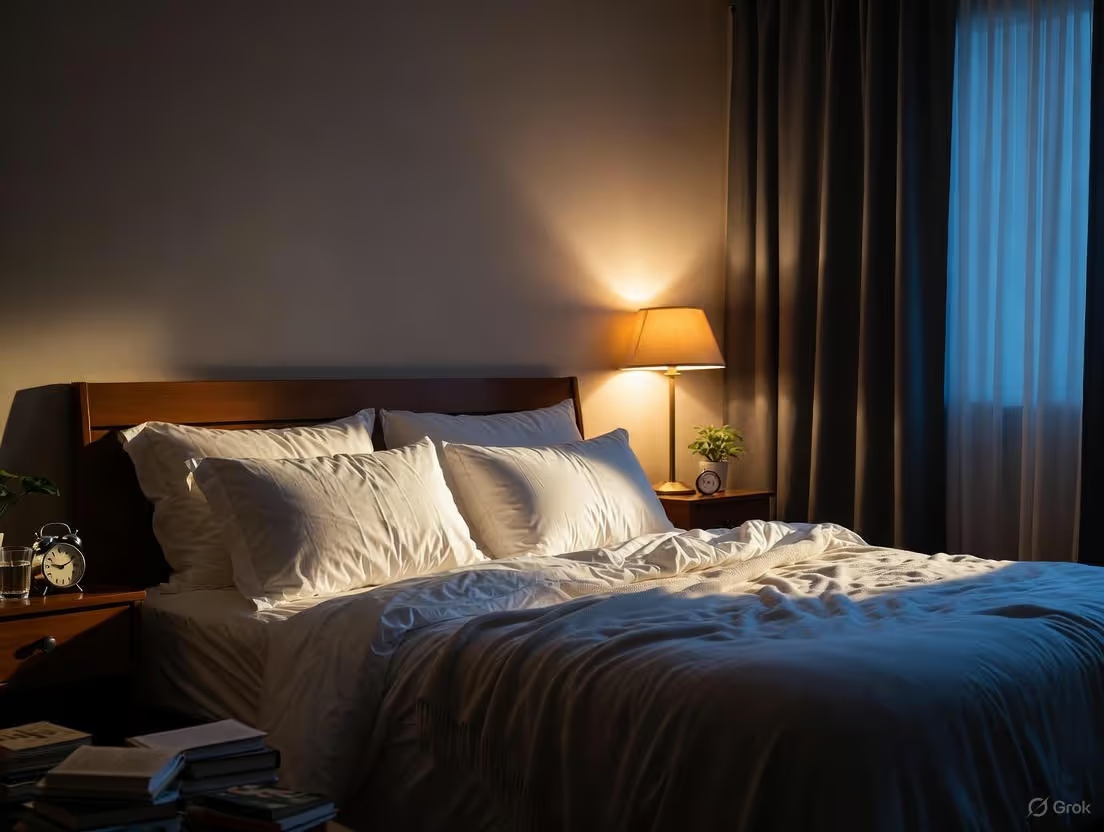
Your bedroom environment should have one primary purpose: to facilitate uninterrupted, high-quality sleep. It should be a sanctuary designed for restoration, free from the stimuli and stresses of the waking world. Optimizing this space is a foundational habit that works for you passively, all night long.
The Core Pillars of a Sleep Sanctuary:
The Digital Detox: The bedroom should be an electronics-free zone. Beyond the blue light and mental stimulation, the mere presence of a smartphone can create “anticipatory anxiety”—the low-grade stress of expecting a notification. Remove TVs, laptops, and charge your phone elsewhere. If you use your phone as an alarm, switch to a traditional alarm clock.
By engineering your environment, you remove barriers to good sleep. You create a space that actively supports your biology rather than fighting against it. It’s a one-time setup that yields nightly dividends. To understand how our founders prioritized this holistic environment-first thinking in product design, you can read about our philosophy in our story.
What you eat and drink, and when you consume it, plays a dramatic role in your sleep architecture. Food is information that directly influences neurotransmitters, blood sugar stability, and digestive load—all of which can either promote serenity or trigger a night of restlessness.
The Timing Principle: The goal is to finish your last major meal 2-3 hours before bedtime. This allows your body to complete the bulk of digestion (which raises core temperature and metabolic activity) before you attempt to sleep. A large, heavy meal too close to bed can cause discomfort, acid reflux, and fragmented sleep.
Nutrients That Nurture Sleep:
The Major Sleep Disruptors:
Evening Snack Strategy: If you need a small snack before bed, opt for a combination of protein and complex carbs or healthy fat. Examples: a small bowl of plain yogurt with a sprinkle of nuts, a banana with almond butter, or a few whole-grain crackers with cheese. The goal is to avoid going to bed hungry, which can also keep you awake, without overloading your digestive system.
A racing mind is the most common barrier to sleep initiation and maintenance. When your nervous system is locked in a state of hyperarousal from the day’s stress, it’s physiologically incompatible with the state of calm required for sleep. Building sleep health, therefore, requires building stress resilience.
Daytime Stress Management: You cannot compartmentalize a day of high stress and expect a peaceful night. Proactive stress management throughout the day is preventive medicine for your sleep.
Bedtime Cognitive Techniques: When you’re in bed and thoughts intrude, you need tools to disengage.
Mastering the mind-sleep connection is about creating space between you and your thoughts. It’s recognizing that while you can’t control every thought that arises, you can control your relationship to it. By cultivating daytime calm and employing nighttime tools, you build a mental environment conducive to rest. For more researched strategies on managing stress through data and awareness, explore our collection of wellness articles on the blog.
In the quest for better sleep, subjective feeling—“I slept okay”—is a flawed metric. We are notoriously bad at estimating our own sleep duration and quality. This is where objective data from a biometric tracker, like a smart ring, becomes a game-changer. It moves you from guesswork to precision, providing the feedback loop essential for building lasting habits.
A device like the Oxyzen ring measures key physiological signals all night long: heart rate, heart rate variability (HRV), skin temperature, and blood oxygen saturation. From this data, sophisticated algorithms can accurately determine:
How to Use Data for Habit Formation:
Data transforms sleep from a mysterious, frustrating process into a manageable, personalized science. It provides the “why” behind the advice, allowing you to tailor universal principles into a custom protocol that delivers real results. It turns you from a passive sleeper into an active participant in your own restoration. To understand the full scope of what this kind of tracking can reveal about your overall wellness, visit the Oxyzen homepage.
Physical activity and sleep have a bidirectional, synergistic relationship. Regular exercise is one of the most effective, evidence-based ways to improve sleep quality and duration. Conversely, good sleep enhances exercise performance, recovery, and motivation. Integrating the right kind of movement at the right time is a cornerstone habit for sleep health.
How Exercise Improves Sleep:
Timing Matters: While any exercise is better than none, timing can optimize its sleep benefits.
Type of Exercise: Both aerobic (cardio) and resistance (strength) training improve sleep. Consistency is more important than intensity. A mix of both is ideal. Notably, mind-body exercises like yoga and Tai Chi have shown particularly strong benefits for sleep, likely due to their combined physical and stress-reducing effects.
Listen to Your Data: This is where biometric feedback is crucial. If you experiment with evening workouts, check your sleep data the next morning. Did your sleep latency (time to fall asleep) increase? Was your sleep more fragmented? Or did you see no negative impact and perhaps even improved deep sleep? Your personal physiology is the ultimate guide. Using a device to track recovery can help you understand when your body needs a gentle day versus a challenging workout, preventing overtraining which itself can harm sleep.

The pursuit of perfect sleep can itself become a source of anxiety—a condition sometimes called “orthosomnia.” The goal is not a flawless 100% sleep score every single night. Life happens. There will be late nights, early mornings, sick children, and moments of stress. The true foundation of lasting sleep health is not perfection, but resilient consistency.
This means building a routine that is flexible enough to accommodate life’s realities but strong enough to pull you back to center. It’s about the 80/20 rule: if you adhere to your core habits 80% of the time, the 20% of deviation won’t derail your progress.
Strategies for Sustainable Consistency:
Sustainable habit formation is a marathon. It’s about showing up for yourself with kindness and commitment, day after day, trusting that the cumulative effect of small, consistent actions is what creates profound, lasting change. This journey is deeply personal, and having a supportive community can make all the difference—read about others navigating their own paths in our user testimonials.
Sleep health is not confined to the hours of 10 PM to 6 AM. It is woven into the fabric of your entire day. The choices you make from the moment you wake up set in motion a biological cascade that culminates in the quality of your sleep. By building supportive daily habits, you create a pro-sleep lifestyle that makes excellent rest almost inevitable.
The Pro-Sleep Day Blueprint:
The Role of Mindfulness: Weaving moments of mindful awareness throughout your day—pausing to feel your feet on the ground, taking three conscious breaths—continuously down-regulates your nervous system. This creates a lower baseline of arousal, making the transition to sleep far smoother.
In our hyper-connected, performance-driven world, we have engineered a host of invisible enemies to sleep. These aren't the obvious monsters under the bed; they are subtle, pervasive, and often woven into the fabric of modern life. To build habits that last, we must become detectives of our own environment, identifying and systematically neutralizing these hidden disruptors. This goes beyond caffeine and blue light to the structural and psychological saboteurs that fragment our rest.
1. The Always-On Mentality & Cognitive Looping:
The boundary between work and home has dissolved. The unfinished project, the unanswered email, and the mental to-do list don't switch off at 5 PM. This creates "cognitive pre-sleep arousal," where your brain remains in problem-solving mode. The habit to build here is a "Shutdown Ritual" at the end of your workday. This is a deliberate, 10-minute process where you review your day, list your top 3 priorities for tomorrow, and consciously tell yourself, "My work is complete for today." This cognitive closure signals to your brain that it's safe to disengage.
2. Passive Scrolling & Doomscrolling:
The infinite scroll of social media and news apps is a perfect storm for sleep sabotage. It combines stimulating (and often anxiety-inducing) content with bright blue light. The algorithm is designed to keep you engaged, activating dopamine pathways associated with seeking and novelty, which are antithetical to calm. The habit: "App Jail." Use your phone's built-in digital wellbeing features to set hard time limits on social media and news apps after 8 PM, or simply move them off your home screen. Replace the scroll with a single, intentional activity from your wind-down ritual.
3. Temperature Misregulation:
We often heat our homes for evening comfort, but this works against our biology. The sleep sanctuary principle of coolness is often undermined by heavy pajamas, synthetic bedding, or a high thermostat. The disruptor is an artificially warm microclimate. The habit: Layer for Temperature Cycling. Use breathable, moisture-wicking base layers and layer blankets you can remove. Consider a chiliPAD or BedJet system for precise temperature control. Track your nighttime skin temperature via a smart ring; a stable, low temperature is a strong indicator of good sleep quality.
4. Substance Dependence Masking as Solutions:
5. Inconsistent Weekend Schedules:
"Social jet lag"—the drastic shift in sleep and wake times on weekends—is like flying from New York to London every Friday and Sunday night. It desynchronizes your circadian rhythm, making Monday morning feel like a true jet lag. The saboteur is the belief you can "catch up." The habit: The 90-Minute Rule. Allow yourself to sleep in no more than 90 minutes past your weekday wake time. If you stayed up late, still get up at this adjusted time and consider a short, early afternoon nap instead. Consistency is the currency of circadian health.
By proactively hunting for these modern disruptors, you move from a defensive to an offensive stance in your sleep health. You stop merely reacting to poor sleep and start designing an environment and routine that actively protects it. This requires vigilant self-awareness, a willingness to question cultural norms ("happy hour," late-night scrolling), and a commitment to using data—like the recovery scores and sleep breakdown from your Oxyzen ring—to objectively identify what's truly helping or hurting. For support and answers on integrating technology into this detective work, our FAQ is an excellent resource.
Willpower is a finite resource, easily depleted by a long day. Relying on sheer discipline to implement a 10-step wind-down ritual is a recipe for failure. The genius of lasting habit formation lies not in motivation, but in architecture. James Clear, in Atomic Habits, popularized the concept of "habit stacking"—the practice of linking a new, desired behavior to an existing, habitual one. This method leverages the neural pathways you've already built, making the new habit more automatic and less reliant on conscious effort.
How Habit Stacking Works for Sleep:
Your brain loves efficiency. Existing habits (like brushing your teeth, locking the front door, pouring your evening tea) are stored in your basal ganglia as automatic sequences. By "stacking" a new sleep-promoting habit immediately before or after one of these strong anchors, you hijack that existing neural circuitry.
The Formula: "After/Before [CURRENT HABIT], I will [NEW SLEEP HABIT]."
Examples of Powerful Sleep Habit Stacks:
Advanced Stacking: Building Ritual Chains
You can link multiple small habits together to form a seamless wind-down ritual chain. The completion of one becomes the cue for the next:
Keys to Successful Stacking:
Habit stacking transforms your sleep routine from a daunting to-do list into an automatic, flowing sequence. It removes the decision fatigue and mental negotiation ("Should I really dim the lights now?"). The action simply unfolds, guided by the architecture you've deliberately built. This is the engineering behind effortless consistency. For more on the behavioral science of building wellness routines, our blog offers deeper dives into sustainable habit formation.
Collecting sleep data is only the first step. The transformative power lies in intelligent interpretation—turning numbers and graphs into a narrative about your body, and then using that story to make informed adjustments. Without this step, data is just noise. Let's move beyond the simple sleep score and learn to read the deeper signals.
Key Metrics and What They Really Mean:
Conducting a Personal Sleep Experiment:
This process of inquiry turns you from a passive consumer of data into an active scientist of your own well-being. It replaces generic advice with personalized truth. By learning this language of your body, you gain the ultimate tool for building habits that are perfectly tailored to your unique physiology. Sharing these discoveries and learning from others can be incredibly motivating—a community of like-minded individuals shares their insights and journeys on our testimonials page.
Napping is a double-edged sword. Done strategically, it can boost alertness, improve mood, and enhance cognitive performance. Done poorly, it can steal sleep pressure from the coming night, leading to insomnia. The key is to understand the purpose and physiology of napping and to build a habit of proactive, not reactive, rest.
The Science of Sleep Pressure: Throughout the day, a neurotransmitter called adenosine accumulates in your brain, creating "sleep pressure." This pressure is what makes you feel increasingly tired and is essential for driving deep sleep at night. A long or late nap reduces this adenosine, effectively "resetting" the pressure gauge and making it harder to fall asleep later.
The Art of the Power Nap:
The goal of a strategic nap is to gain restorative benefits without entering deep sleep (which causes sleep inertia—that groggy, disoriented feeling) and without significantly reducing sleep pressure.
The Habit of Strategic Napping:
When to Avoid Napping:
Napping as a Tool, Not a Crutch: A regular need for long naps may be a signal of insufficient or poor-quality nighttime sleep. Use your sleep tracker data. If you're napping because your nightly sleep efficiency is low or your deep sleep is consistently poor, address the root cause of your nighttime sleep first. The nap should be a performance enhancer, not a band-aid for a significant sleep debt.
Building a healthy relationship with napping means respecting your sleep pressure. It's about viewing a short, intentional nap as a precision tool in your wellness toolkit—one that can sharpen your afternoon, not sabotage your night. For individuals using biometric trackers, monitoring how an occasional nap affects your nightly sleep scores provides the final, personalized verdict on whether napping is a helpful habit for you. Learn more about how recovery metrics can guide your daily decisions on the Oxyzen homepage.
For decades, the "early bird gets the worm" mantra has dominated our cultural perception of productivity and virtue. But what if you are physiologically wired to be a night owl? Forcing an owl's biology into a lark's schedule is a recipe for chronic misalignment, stress, and poor sleep. Understanding your chronotype—your genetically influenced, natural propensity for sleep and wake times—is a revolutionary step in building sustainable sleep habits that work with your biology, not against it.
Beyond Morningness and Eveningness: The Four Chronotype Model
While the simple lark/owl dichotomy is common, sleep researcher Dr. Michael Breus popularized a more nuanced model using four animal archetypes:
Identifying Your Chronotype:
You can take scientifically validated questionnaires like the Morningness-Eveningness Questionnaire (MEQ) or use behavioral observation. Ask yourself: When would you naturally go to bed and wake up if you had zero social or work obligations for a month? What time do you feel most alert and focused? Your consistent, free-day pattern is your chronotype speaking.
Building Chronotype-Aligned Habits:
The goal is not to radically change your type, but to optimize your life around it as much as possible and use strategic habits to gently nudge when necessary.
The Role of Technology: A smart ring like Oxyzen can objectively support chronotype discovery. By tracking your sleep patterns over weeks in a free-living state (like on vacation), you can see your natural sleep onset and wake time emerge in the data. Furthermore, tracking your daytime body temperature rhythm—which is delayed in wolves and advanced in lions—provides a physiological confirmation of your type.
Respecting your chronotype is an act of self-compassion and biological realism. It moves you from fighting your nature to leveraging it. While we can't completely override our genetic wiring, we can use intelligent habits to gently nudge our rhythms to better fit our life's demands, minimizing the drag of social jet lag. This personalized approach is at the heart of modern sleep science. For more on personalized health strategies, explore the insights shared in our blog.
We often think of the brain as the sole conductor of sleep. But a second brain—the enteric nervous system in your gut—plays a surprisingly lead role in this nightly symphony. The gut-brain axis, a bidirectional communication superhighway linking your digestive tract and your central nervous system, is a critical frontier in understanding sleep health. What you eat doesn't just feed your body; it directly programs the microbial ecosystem that communicates with your brain, influencing neurotransmitters, inflammation, and ultimately, your sleep quality.
The Microbiome's Role in Sleep Regulation:
Your gut is home to trillions of bacteria (the microbiome) that produce a vast array of neuroactive compounds. These gut microbes can produce:
How Poor Sleep Hurts Your Gut:
The relationship is a two-way street. Sleep deprivation alters your microbiome composition, reducing beneficial bacteria diversity. It also increases intestinal permeability ("leaky gut") and cravings for high-sugar, high-fat foods that further feed dysbiosis. This creates a vicious cycle: poor sleep → worse gut health → worse sleep.
Building Pro-Sleep Gut Habits:
Listening to Your Gut-Brain Connection:
Pay attention to correlations. Do nights after a high-sugar dinner or heavy processed meal lead to more restlessness and poorer sleep scores on your tracker? Does a period of consistent, fiber-rich eating correlate with better deep sleep and higher HRV?
The gut-sleep axis underscores a fundamental principle of lasting sleep health: everything is connected. You cannot compartmentalize nutrition from neurology. By cultivating a diverse, resilient gut microbiome through daily dietary habits, you are effectively farming the very neurotransmitters and anti-inflammatory compounds that pave the way for stable, restorative sleep. It’s a long-term investment in your internal ecosystem that pays dividends every night. Our story delves into how holistic connections like this inspire our integrated approach to wellness technology.
For some, the standard advice of "cool, dark, and quiet" is merely a starting point. Sensitive sleepers, including Dolphins and those with mild insomnia, often need to graduate to advanced sleep hygiene—a process of microscopic fine-tuning their environment and routine to eliminate the faintest barriers to sleep. This is the practice of becoming a master architect of your own sensory world.
1. Sound Engineering Beyond White Noise:
2. Light Elimination at the Nuclear Level:
3. Temperature Precision:
4. Electromagnetic Field (EMF) & Air Quality Considerations:
5. The Tactile Domain:
The Process of Fine-Tuning:
This is not about implementing all of this at once. It is a systematic, patient process of experimentation and measurement.
For the sensitive sleeper, this meticulous approach is empowering. It transforms sleep from a mysterious, elusive state into a manageable engineering project. By taking absolute control over your sensory inputs, you build a fortress of consistency that allows your nervous system to fully let down its guard. This deep level of personalization is what turns good sleep into great, reliable sleep. For answers to common technical questions about optimizing your tracking in such a detailed environment, our FAQ provides clear guidance.
Life is not a controlled laboratory. The true test of resilient sleep habits is how they weather the storms of real life: a high-stress work project, the arrival of a newborn, traversing time zones, or navigating personal loss. During these transitions, the goal shifts from "optimal" to "protective." The habits you've built become a lifeline, a source of stability and recovery when everything else is in flux. The strategy is to simplify, anchor, and adapt.
Strategy 1: The High-Stress Period (Work Crisis, Grief, Anxiety)
Strategy 2: Parenthood & Newborn Sleep Disruption
Strategy 3: Jet Lag & Shift Work
The Meta-Habit: Self-Compassion and the Long View
During transitions, the most important habit of all is kindness. Abandon perfectionism. One bad night, one terrible week, does not unravel months of habit-building. Your tracker provides the long view. After a stressful period, look at the monthly graph. You'll see the dip, and then the recovery as you return to your routines. This visual proof builds resilience and trust in your system.
Navigating life transitions proves that sleep health is not a fragile glass sculpture, but a robust, flexible system. By having a core set of principles and the ability to adapt them, you ensure that sleep remains a source of strength, not another casualty, when life demands more from you. Hearing how others have maintained their wellness through similar challenges can be a powerful motivator, as shared in our user testimonials.
Despite our best efforts with environment, routine, and mindset, some individuals continue to struggle with profound, persistent sleep issues. In these cases, the problem may not be a lack of good habits, but the presence of a clinical sleep disorder. Recognizing the red flags that distinguish poor sleep hygiene from a medical condition is a critical step in seeking appropriate help and finding true relief. Your meticulously gathered sleep data can be a crucial tool in this recognition.
Common Sleep Disorders & Their Signatures:
The Role of Consumer Sleep Trackers (Like Oxyzen):
These devices are screening and awareness tools, not diagnostic instruments. They are exceptionally good at showing you patterns and potential red flags.
The Actionable Pathway: From Data to Diagnosis
Why This Matters: Building habits on top of an untreated sleep disorder is like trying to fix a leaky boat by bailing water faster instead of plugging the hole. CPAP therapy for apnea, cognitive behavioral therapy for insomnia (CBT-I), or medication for RLS can be life-changing interventions that then allow your healthy sleep habits to flourish.
Empowering yourself with data allows you to be a proactive, informed participant in your health care. It moves the conversation from "I'm tired" to "Here is objective evidence of a potential problem." This is the responsible and powerful way to use modern wellness technology. For more on how our technology is designed to support awareness and healthy inquiry, you can read about our mission and vision on our about us page.
Your Trusted Sleep Advocate: Sleep Foundation — https://www.sleepfoundation.org
Discover a digital archive of scholarly articles: NIH — https://www.ncbi.nlm.nih.gov/
39 million citations for biomedical literature :PubMed — https://pubmed.ncbi.nlm.nih.gov/
Experts at Harvard Health Publishing covering a variety of health topics — https://www.health.harvard.edu/blog/
Every life deserves world class care :Cleveland Clinic - https://my.clevelandclinic.org/health
Wearable technology and the future of predictive health monitoring :MIT Technology Review — https://www.technologyreview.com/
Dedicated to the well-being of all people and guided by science :World Health Organization — https://www.who.int/news-room/
Psychological science and knowledge to benefit society and improve lives. :APA — https://www.apa.org/monitor/
Cutting-edge insights on human longevity and peak performance:
Lifespan Research — https://www.lifespan.io/
Global authority on exercise physiology, sports performance, and human recovery:
American College of Sports Medicine — https://www.acsm.org/
Neuroscience-driven guidance for better focus, sleep, and mental clarity:
Stanford Human Performance Lab — https://humanperformance.stanford.edu/
Evidence-based psychology and mind–body wellness resources:
Mayo Clinic — https://www.mayoclinic.org/healthy-lifestyle/
Data-backed research on emotional wellbeing, stress biology, and resilience:
American Institute of Stress — https://www.stress.org/


