


How to Reduce Nighttime Anxiety and Racing Thoughts
Strategies to calm anxiety and racing thoughts that occur at night.
Strategies to calm anxiety and racing thoughts that occur at night.
%402x.svg)
It begins as a faint whisper, a fleeting worry as you turn off the light. Then, in the profound quiet of your bedroom, it amplifies into a roaring chorus. The unresolved task from work, the awkward conversation from yesterday, the vague future fear—your mind, freed from the distractions of the day, decides now is the perfect time to hold a council meeting. Your heart rate picks up. Your body is tired, but your brain is wide awake, sprinting on a hamster wheel of "what-ifs" and "should-haves." You check the clock: 1:17 AM. A wave of secondary anxiety crashes over you—"If I don't sleep now, tomorrow will be a disaster." The cycle tightens. You are not alone.
Nighttime anxiety and racing thoughts represent a modern silent epidemic, a cruel paradox where the time meant for our deepest restoration becomes a theater of mental chaos. It’s estimated that over 50% of adults experience insomnia symptoms a few nights a week, with anxiety being a predominant driver. This isn't just about "not sleeping well." This is about your nervous system being stuck in a high-alert state, your cognitive processes refusing to power down, and the significant toll this takes on your physical health, emotional resilience, and overall quality of life.
But here is the vital truth: This cycle is breakable. The quiet of the night doesn't have to be your enemy; it can be reclaimed as your sanctuary. This comprehensive guide is your evidence-based blueprint for doing just that. We will move beyond superficial "sleep hygiene" tips and dive into the core physiological, psychological, and environmental mechanisms that fuel nighttime anxiety. You will learn not just to manage symptoms, but to address root causes, transforming your relationship with sleep, stress, and your own mind.
We will explore how cutting-edge technology, like the nuanced data from a smart wellness ring, can provide the personalized insights needed to crack your unique anxiety code. Companies like Oxyzen are at the forefront of this personalized health movement, creating devices that track your physiological baselines to reveal what your conscious mind cannot. Discover how Oxyzen works to turn nighttime data into actionable daytime strategies.
This journey is divided into foundational understanding and actionable systems. The first third of our guide, which you are about to read, lays the critical groundwork. We will define our enemy precisely, understand its biological and psychological roots, and establish the non-negotiable pillars of a calm nighttime environment and a de-escalated nervous system. Consider this the essential preparation—building the stable, quiet dock from which you can later launch more advanced techniques for navigating stormy mental seas.
To conquer an opponent, you must first know its name, its nature, and its tactics. "Nighttime anxiety" and "racing thoughts" are often used interchangeably, but they are distinct, interconnected experiences that feed each other in a vicious cycle.
Nighttime Anxiety is the emotional and physiological state of apprehension, worry, and fear that specifically intensifies or emerges as you try to fall asleep or upon nighttime waking. It's characterized by:
Racing Thoughts are the cognitive engine driving much of this anxiety. This is the uncontrollable, rapid succession of thoughts, images, and ideas that flood your mind. They often lack clear structure but are charged with emotional urgency. Common themes include:
Why Night? The Perfect Storm of Biology and Psychology
The quiet of night creates the ideal conditions for this cycle to thrive. During the day, your brain is engaged in "external" attention—processing sensory input, managing tasks, interacting with people. This acts as a buffer against introspection. At night, with sensory input reduced, your attention turns "internal." For a calm mind, this is a time for reflection and rest. For a stressed mind, it’s an empty auditorium where anxious thoughts can take the microphone and amplify.
Biologically, this is tied to the dip in cortisol (your primary stress hormone) that should naturally occur in the evening. If you’re in a state of chronic stress, your HPA axis (your body's stress response system) can be dysregulated, leading to an irregular cortisol rhythm that fails to decline properly. Simultaneously, the rise in melatonin (your sleep hormone) can feel incongruent with a body still primed for "fight or flight," creating internal conflict.
Furthermore, the brain's Default Mode Network (DMN)—a network of interacting brain regions active when we are not focused on the outside world—becomes highly active. In healthy states, the DMN is involved in constructive introspection and memory consolidation. In states of anxiety and depression, it becomes a hub for negative self-referential thinking—essentially, the physical substrate of your racing thoughts.
Understanding this isn't just academic; it’s empowering. It means your experience is not a personal failing or a mysterious curse. It is a predictable outcome of identifiable factors. As we’ll explore in later sections, tools that provide physiological data, like those developed by innovators in the wellness tech space, can be revolutionary. For instance, tracking your nighttime heart rate variability (HRV) can show you the direct impact of your anxiety on your nervous system, moving you from feeling "anxious" to knowing your body is in a state of "sympathetic overdrive." You can read our complete guide on understanding biometrics like HRV for deeper context.
The first step out of this labyrinth is to stop blaming yourself for being in it. The next step is to map its pathways, starting with the most powerful one: your own biology.
Your ability to fall asleep peacefully is not just a mental choice; it is a physiological process governed by your autonomic nervous system (ANS). The ANS has two primary gears: Sympathetic ("Fight or Flight") and Parasympathetic ("Rest and Digest"). Nighttime anxiety is, at its core, your sympathetic nervous system refusing to hand over the reins to its parasympathetic counterpart.
When the sympathetic system is dominant, your body is in a state of high alert:
This state is lifesaving in a genuine emergency but utterly destructive when triggered by a remembered email or a future worry while lying in a safe, warm bed. The problem for chronic sufferers is a concept called allostatic load—the cumulative wear and tear on the body from repeated stress response activation. A high allostatic load lowers the threshold for what triggers this response, making you more reactive to minor stressors. Your body gets stuck in a "high-idle" state.
Key Biological Players in the Nighttime Drama:
This is where modern technology becomes a game-changer. You cannot feel your cortisol levels or accurately perceive your HRV. A smart wellness ring like those from Oxyzen, worn continuously, acts as a personal biofeedback monitor, quantifying what you cannot qualify. It can reveal if your pre-sleep routine actually lowers your resting heart rate, or if that late-night news scroll keeps your nervous system on edge. This moves you from guessing to knowing. Seeing the direct correlation between a worrying thought and a physiological spike on a graph is profoundly motivating for change. For those curious about the human element behind this technology, the Oxyzen story highlights the vision of using precise data to empower personal peace.
The goal, then, is not to eliminate stress but to increase your nervous system resilience—to teach your body how to downshift from high alert. The following sections provide the foundational practices to begin that retraining, starting with the very space you sleep in.
Your environment is not a passive backdrop; it is an active participant in your nervous system's state. A cluttered, stimulating, or poorly arranged bedroom sends continuous subtle signals to your brain that this is a place of activity, not restoration. Creating a true sleep sanctuary is your first tangible act of reclaiming the night. This goes far beyond a comfortable mattress.
The Pillars of an Anxiety-Free Sleep Environment:
1. The Primacy of Darkness:
Light is the most powerful regulator of your circadian rhythm. Even small amounts of ambient light from streetlights, electronics, or LED indicators can suppress melatonin production and signal wakefulness to the brain.
2. The Sound of Silence (or the Right Sound):
Unexpected noises—a car alarm, a creaking pipe—can trigger micro-arousals, pulling you toward wakefulness and activating threat detection. Conversely, complete silence can make internal thoughts louder.
3. The Thermal Zone:
Core body temperature needs to drop by about 1-2 degrees Fahrenheit to initiate and maintain sleep. A room that's too warm inhibits this process.
4. The Digital Quarantine:
This is the most difficult yet most impactful change. Screens are a triple threat:
* Blue Light: Directly suppresses melatonin.
* Cognitive Stimulation: Engaging content (social media, work emails, news) activates the mind and emotional centers.
* Psychological Association: They train your brain to associate the bed with activity, not sleep.
5. The Order of Calm:
Visual clutter creates cognitive clutter. A messy room can subconsciously symbolize unfinished tasks and mental chaos.
Transforming your bedroom is a concrete project that yields immediate environmental benefits. For more tailored ideas on creating holistic wellness spaces, explore our blog for more wellness tips. Once your environment is optimized, you can focus on optimizing the system that operates within it: your own nervous system, through the power of ritual.
You wouldn't sprint at full speed and then immediately try to sit perfectly still. It’s physically and mentally jarring. Yet, that’s what many of us do with our minds—we engage with stimulating work, intense conversations, or gripping dramas until the moment we close our eyes, and then wonder why our brain won’t switch off. The wind-down ritual is the essential buffer zone, a gradual deceleration lane for your nervous system.
An effective wind-down isn't a random collection of "calm" activities; it's a deliberate, consistent sequence that signals safety and transition to your brain and body. Consistency is key—performing the same sequence nightly creates powerful conditioned responses.
Sample 60-Minute Pre-Sleep Ritual (Tweak to Fit Your Life):
T-60 Minutes: The Digital Sunset
T-50 Minutes: The Tidy & Prepare
T-40 Minutes: The Hygge Hour
T-20 Minutes: The Body Scan & Breath
T-5 Minutes: The Final Cue
The Science of Ritual: Rituals reduce anxiety by providing a sense of predictability and control in an uncertain world (or an uncertain mind). They lower cortisol levels and activate the prefrontal cortex, engaging the planning brain rather than leaving you at the mercy of the reactive emotional brain.
Tracking the efficacy of your ritual is where data shines. By wearing a device that measures physiological readiness for sleep, you can objectively see which rituals lower your resting heart rate and increase your HRV most effectively. It turns self-care into a personalized science. If you have questions about how such tracking integrates into daily life, our FAQ page offers detailed support.
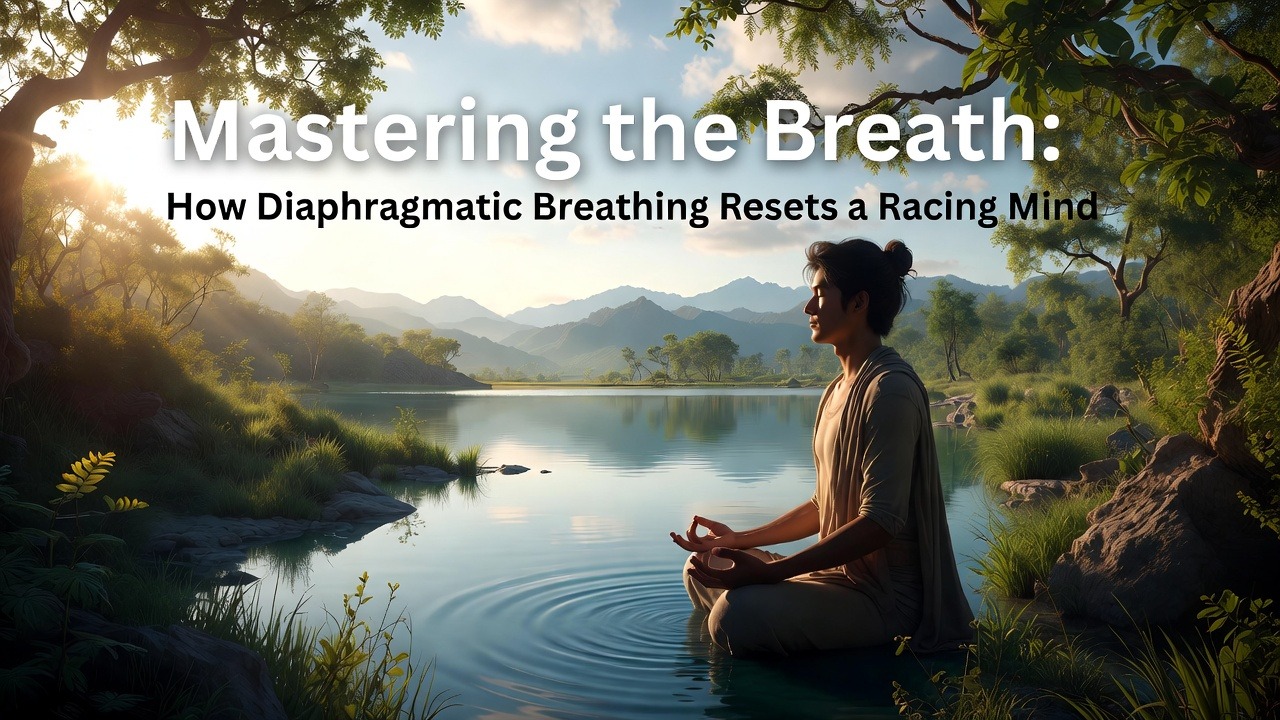
When anxiety strikes, your breathing is the first system to be hijacked. It becomes rapid, shallow, and originates from the chest—this is thoracic breathing. This type of breathing perpetuates the anxiety loop by maintaining low-grade hyperventilation, which can lead to dizziness, chest tightness, and further panic. Crucially, you can voluntarily control your breathing, and in doing so, you send direct commands to your autonomic nervous system to stand down.
Diaphragmatic Breathing (also called belly breathing or deep breathing) is the antidote. It is the way infants and sleeping adults naturally breathe. This technique engages the diaphragm, a large muscle below the lungs, pulling them downward and allowing for full, efficient oxygen exchange. It stimulates the vagus nerve, the main conduit of the parasympathetic nervous system, triggering a "relaxation response."
Why It Works for Nighttime Anxiety:
How to Practice Diaphragmatic Breathing (Even in Bed):
Advanced Application: The "Breathing Space" for Racing Thoughts
When thoughts are particularly intrusive, use this 3-minute "Breathing Space" exercise from mindfulness-based therapies:
This practice doesn't erase thoughts; it changes your relationship to them, creating space so you are not identified with the mental noise. For many, seeing the tangible impact of such practices is what sustains them. Real user experiences, like those shared in our testimonials section, often highlight how combining breathwork with data tracking created a breakthrough in managing anxiety.
Your mind is a thought-generating machine. It produces thousands of thoughts per day, many of them nonsense, worry, or random fragments. The problem with nighttime anxiety is not the production of anxious thoughts—that's just the machine doing its quirky, often unhelpful thing. The problem is fusion—the act of grabbing onto those thoughts, believing them to be literal truth, and getting entangled in their story.
Cognitive de-fusion, a core concept from Acceptance and Commitment Therapy (ACT), is the skill of learning to observe your thoughts rather than be consumed by them. It's the difference between staring at a speeding train from the platform (observation) versus standing on the tracks trying to stop it (fusion).
De-fusion Techniques to Use When Thoughts Race:
1. The Naming Game:
Give your anxious mind a silly name and a character. "Ah, there's 'Catastrophe Carl' again, telling me I'll fail tomorrow." Or "Here comes 'The Late-Night Committee' with their agenda of worries." This creates psychological distance. You're not having a catastrophic thought; you're observing the part of you that generates them.
2. Thought Labeling:
Mentally preface thoughts with a neutral label. Instead of "I'm going to embarrass myself in that meeting," note: "I am having the thought that I will embarrass myself." Inserting that small phrase creates critical space between you and the thought's content.
3. The "Thank You, Mind" Technique:
When your mind offers up a particularly alarming thought, respond with detached gratitude. "Thank you, mind, for that creative attempt to protect me. I've noted it." It acknowledges the thought without engaging in a debate with it.
4. Sing It or Say It in a Funny Voice:
Take the repetitive, nagging thought and sing it to the tune of "Happy Birthday" or hear it in the voice of a cartoon character. This breaks the thought's emotional gravity and highlights its arbitrary nature.
5. Leaves on a Stream Visualization:
Close your eyes and imagine a gentle, flowing stream. See each thought that arises as a leaf, and place it on the stream. Watch it float by, from one side of your mind's eye to the other, and disappear. If a thought sticks, simply notice it's sticking, and gently return it to the stream. You are the bank of the stream, not the leaves passing by.
The Goal is Not Elimination: The aim of de-fusion is not to have a blank, thought-free mind. That's impossible. The aim is to reduce the impact and influence of those thoughts so they don't trigger a full-scale physiological alarm. You learn to let the thought be there without following it down its rabbit hole. This skill takes practice but weakens the core mechanism of anxiety—the belief in your worried thoughts as reality.
Nighttime anxiety is not born at 11 PM; it is the interest paid on the stress capital accrued throughout the day. You cannot compartmentalize a dysregulated nervous system. How you live your waking hours sets the stage for your mind's performance at night. Building daytime resilience is about making consistent deposits into your nervous system's "calm bank account."
Critical Daytime Pillars for Nighttime Peace:
1. Morning Light Exposure:
Within 30-60 minutes of waking, get 10-15 minutes of bright, natural light (without sunglasses if safe). This is the most powerful signal to reset your circadian clock, strengthening the cortisol spike in the morning and ensuring a steeper, more definitive drop at night. It builds a robust sleep-wake rhythm.
2. Strategic Movement:
Regular exercise is a potent anti-anxiety treatment, but timing matters. Vigorous exercise too close to bedtime can be stimulating. Aim for moderate exercise (brisk walking, cycling, strength training) in the morning or afternoon. It metabolizes stress hormones, increases resilience-enhancing BDNF (brain-derived neurotrophic factor), and raises core body temperature, promoting a better drop later.
3. The Caffeine & Alcohol Audit:
4. Hydration & Nutrition:
Dehydration can mimic anxiety symptoms (elevated heart rate, fatigue). Ensure steady hydration throughout the day, tapering off slightly before bed to minimize disruptions. Avoid heavy, greasy, or high-sugar meals within 3 hours of bedtime, as digestion can interfere with the body's sleep initiation processes.
5. Stress Inoculation Through Micro-Breaks:
Practice bringing moments of parasympathetic activation into your day. This is "stress inoculation." Set reminders for:
* A 60-second breathing break.
* A 2-minute walk outside.
* A 5-minute mindful pause where you simply notice your senses.
These tiny resets prevent stress from accumulating into an unmanageable lump by bedtime.
Understanding the holistic nature of this challenge is central to the mission of companies focused on whole-person wellness. At Oxyzen, we believe in connecting daytime habits to nighttime outcomes, a philosophy deeply rooted in our vision and values. The data from a wearable can illuminate these connections—showing you how a day with poor hydration and no movement directly correlates with a restless night and elevated resting heart rate, making the need for holistic change undeniably clear.
Frustration often compounds anxiety when you don't understand the basic mechanics of sleep. Two primary processes govern your sleep-wake cycle: Circadian Rhythm (your 24-hour internal clock) and Sleep Homeostasis (the pressure to sleep that builds the longer you're awake). Anxiety often disrupts both, but understanding them can help you realign.
Sleep Homeostasis (Sleep Pressure):
Think of this as a sand timer. The moment you wake up, the timer is flipped, and "sleep pressure"—driven by the accumulation of a chemical called adenosine in the brain—begins to build. The longer you're awake, the more adenosine builds, the sleepier you feel. Caffeine works by blocking adenosine receptors. A successful night's sleep clears the adenosine, resetting the timer. The problem with anxiety: If you lie in bed for hours awake but trying to sleep, your brain is not getting the clear signal that "bed" equals "sleep," weakening the association. Furthermore, the frustration and clock-watching create alertness that counteracts the natural sleep pressure.
Circadian Rhythm (Your Internal Clock):
This is your body's master clock, located in the suprachiasmatic nucleus (SCN) of the brain. It regulates the timing of sleepiness and wakefulness throughout the 24-hour day, influencing hormone release, body temperature, and digestion. It creates a "sleep window"—typically driven by the evening rise of melatonin. The problem with anxiety: Chronic stress and poor light hygiene (blue light at night, no sunlight in the morning) can shift or flatten this rhythm, pushing your natural melatonin release later or making it less pronounced.
Leveraging This Knowledge:
Mastering these fundamentals creates a stable sleep foundation. With this base established, we can then integrate more nuanced tools and address deeper patterns, which we will explore in the subsequent portions of this guide. The journey from frantic nights to peaceful sleep is a process of layering knowledge, skill, and self-compassion. You've now built the essential framework.
You've mastered the foundation of diaphragmatic breathing—a vital tool in your arsenal. But the nervous system is a complex instrument, and sometimes it requires more nuanced techniques to shift from a state of high alert to deep calm. When basic breathwork feels like trying to whisper over a roaring crowd, these advanced methods can help you turn down the volume on your physiology itself.
1. The Physiological Sigh: The Two-Minute Instant Calm
Discovered by researchers at Stanford, the physiological sigh is the body's natural hard reset for stress. You do it spontaneously when crying or in moments of high emotional relief. It’s remarkably effective at reducing physiological arousal in real-time.
2. Coherent Breathing (Resonance Frequency Breathing):
This technique aims to find the breathing rate that creates maximum synchronization between your heartbeat and your breath—a state called "cardiac coherence," linked to optimal nervous system balance and emotional regulation. For most people, this rate is around 5 breaths per minute.
3. Temperature Manipulation: The Dive Reflex
The Mammalian Dive Reflex is a hardwired survival mechanism that, when triggered, immediately slows the heart rate and redirects blood flow to vital organs. You can activate it safely to short-circuit a panic spiral.
4. Progressive Muscle Relaxation (PMR) 2.0:
You may know PMR—systematically tensing and relaxing muscle groups. The advanced version adds a mindfulness component for deeper somatic awareness.
Integrating these techniques creates a toolkit. Some nights call for a physiological sigh; others require a full 10 minutes of coherent breathing. The key is to practice them during the day, in moments of low stress, so they are familiar and accessible when you need them most in the dark. For a deeper exploration of these and other somatic techniques, our blog features related articles on cutting-edge calming protocols.

If cognitive de-fusion is a specific skill for disentangling from thoughts, mindfulness is the foundational gym where you build the mental muscle to do it. Mindfulness is the practice of paying attention, on purpose, to the present moment, without judgment. For the anxious mind that is perpetually time-traveling to past regrets or future catastrophes, this is a revolutionary act.
Why Meditation Works for Nighttime Anxiety:
Neuroplasticity—your brain's ability to rewire itself—is on your side. Regular mindfulness practice:
A Beginner-Friendly Meditation for Sleep (The Body Scan for Sleep):
This is different from the quick PMR scan. This is a slow, exploratory practice.
The "Noting" Practice for Racing Thoughts:
When thoughts are too intense for a body scan, switch to a direct "noting" meditation.
Consistency Over Duration: Five minutes of daily practice is infinitely more valuable than 30 minutes once a week. The goal is to integrate mindful awareness into the fabric of your being, not to achieve a perfectly empty mind. Many users of Oxyzen find that pairing meditation with their physiological data reveals its profound impact, noting visible improvements in sleep-onset latency and resting heart rate over weeks of consistent practice. Reading about real customer experiences with such integrative approaches can provide both motivation and community.
While behavioral change is paramount, biochemistry matters. Certain nutrients act as essential co-factors for the production of neurotransmitters like serotonin and GABA, which are critical for mood regulation and sleep. A strategic approach to supplementation and diet can support your nervous system's healing from the inside out. Crucially, always consult with a healthcare provider before starting any new supplement regimen.
Key Nutrients and Herbs for Anxiety and Sleep Support:
1. Magnesium (Glycinate or L-Threonate):
Often called "nature's relaxant," magnesium is a critical mineral involved in over 300 enzymatic reactions, including those that regulate GABA, the brain's primary calming neurotransmitter. Chronic stress depletes magnesium, creating a vicious cycle.
2. L-Theanine:
An amino acid found predominantly in green tea, L-Theanine promotes relaxation without sedation. It increases alpha brain waves (associated with relaxed alertness) and modulates levels of GABA, serotonin, and dopamine.
3. Apigenin:
A flavonoid found in chamomile, parsley, and celery. It acts as a positive allosteric modulator of GABA-A receptors, similar to how some anti-anxiety medications work (but much milder and without the dependency risk).
4. Glycine:
A simple amino acid that acts as an inhibitory neurotransmitter in the central nervous system. It has been shown to lower core body temperature, a key signal for sleep onset.
The Dietary Foundation:
Supplements are adjuncts, not substitutes, for a nutrient-dense diet. Prioritize:
Understanding the interplay between what you consume and how you feel requires paying attention to subtle bodily signals. This is another area where objective data can be illuminating. By tracking your sleep and stress metrics, you can sometimes correlate dietary changes or supplement intake with tangible improvements in your nightly rest, moving from guesswork to personalized insight.
In a world where technology often fuels our anxiety, it can also be harnessed as a powerful tool for healing—if used correctly. Sleep trackers and smart rings, like the Oxyzen ring, move you from subjective guesswork ("I slept terribly") to objective understanding ("My sleep latency was 52 minutes, my HRV was critically low, and I had 12 micro-awakenings").
What Advanced Wearables Actually Measure:
How to Use This Data Without Becoming Anxious About It (The Paradox):
The goal is informed awareness, not obsessive control. Follow these guidelines:
The Unique Advantage of a Smart Ring: Unlike wrist-worn devices, a ring is less obtrusive for sleep, more likely to be worn consistently, and can often provide more accurate continuous heart rate data due to the placement on a finger artery. This consistent, comfortable tracking is key to gathering reliable long-term trend data.
When used wisely, this technology provides the feedback loop essential for lasting behavior change. It answers the question, "Is what I'm doing actually working?" For a detailed look at how this technology functions and its benefits, you can learn more about smart ring technology.
The techniques outlined so far are powerful for situational anxiety and moderate sleep issues. However, if your nighttime anxiety is a symptom of deeper currents—such as unresolved trauma, an anxiety disorder (like Generalized Anxiety Disorder or Panic Disorder), or chronic, unrelenting stress—a professional guide is not just helpful, it's essential. Seeking help is a sign of strength and a commitment to your well-being.
Red Flags That Indicate It's Time to Seek Professional Support:
Effective Therapeutic Modalities for Nighttime Anxiety:
1. Cognitive Behavioral Therapy for Insomnia (CBT-I):
The gold-standard, first-line treatment for chronic insomnia, of which anxiety is a core component. CBT-I is a structured program that addresses the thoughts and behaviors perpetuating sleep problems. It includes:
* Stimulus Control Therapy: Strengthening the bed-sleep connection (as discussed).
* Sleep Restriction: Temporarily limiting time in bed to increase sleep efficiency, which builds confidence and reduces anxiety.
* Cognitive Restructuring: Challenging and changing catastrophic beliefs about sleep (e.g., "I'll have a breakdown if I don't sleep 8 hours").
2. EMDR (Eye Movement Desensitization and Reprocessing):
Particularly effective for anxiety rooted in traumatic memories. EMDR helps the brain reprocess distressing memories, reducing their emotional charge so they no longer trigger a fight-or-flight response when recalled at night.
3. Somatic Experiencing & Trauma-Informed Yoga Therapy:
These approaches focus on releasing trauma and anxiety that is stored in the body itself, beyond the reach of cognitive talk therapy. They teach you to safely feel and discharge physiological arousal, increasing your window of tolerance for stressful sensations.
The Role of a Supportive Community: Healing is not a solitary journey. Connecting with others who understand the struggle can reduce shame and provide practical support. While a therapist offers expert guidance, peer support can offer day-to-day encouragement. Exploring the mission of wellness companies often reveals a shared commitment to fostering these communities, recognizing that technology and human connection are both vital to healing.
Knowledge is only power when it's applied. This final section of the first third of our guide is about synthesis—weaving the threads of environment, physiology, mind, and lifestyle into a cohesive, personalized action plan. You will not implement everything at once. This is about strategic, layered integration.
Phase 1: The Foundation (Weeks 1-2) – Environmental and Behavioral Reset
Phase 2: Skill Building (Weeks 3-4) – Neurological Retraining
Phase 3: Optimization and Personalization (Week 5 Onward) – Data and Refinement
This personalized protocol is a living system. It will evolve as you do. The core principle is consistent, compassionate action. Some nights will still be hard, and that's okay. Progress is not a straight line. You are building a new relationship with the night, one based on trust in your own capacity to find calm, rather than fear of the chaos.
You have now built a formidable foundation. You understand the enemy, you have fortified your environment, you possess a toolkit for regulating your nervous system and mind, and you have a framework for integrating these elements into your life. In the next portion of this comprehensive guide, we will dive deeper into specialized topics: the role of dreams in emotional processing, managing anxiety-induced insomnia loops, advanced nutritional psychiatry, the impact of relationships on sleep, and long-term strategies for maintaining your hard-won nighttime peace. The journey continues toward lasting mastery.
To explore any of the concepts or tools mentioned here in greater detail, remember that a wealth of resources is available. You can always find additional resources and related articles to support you on your path to reclaiming the night.
You've mastered the techniques, optimized your environment, and built a solid wind-down ritual. Yet, a new, more insidious form of anxiety can emerge: the fear of sleeplessness itself. This is the hallmark of psychophysiological insomnia, where anxiety about sleep becomes the primary obstacle to sleep. This creates a self-fulfilling prophecy known as the Insomnia Loop, a cognitive-behavioral trap that requires specific strategies to break.
Anatomy of the Loop:
Breaking the Insomnia Loop: Paradoxical Intention and Scheduled Worry
1. Paradoxical Intention:
This CBT-I technique involves prescribing the very symptom you fear. By removing the pressure to sleep, you eliminate the performance anxiety.
2. Scheduled "Worry Time" (or "Power Down Hour"):
A core component of anxiety is the mind's belief that if you don't worry about a problem now, it will be forgotten and cause disaster. Scheduling worry legitimizes the process while containing it.
3. Clock Removal:
Clock-watching is toxic for sleep anxiety. Each glance is a performance evaluation.
Mastering this meta-layer of sleep anxiety is often the final key for those who have implemented other strategies but still feel a knot of dread as bedtime approaches. It’s about changing your relationship with the expectation of sleep itself.
Sleep isn't just an absence of wakefulness; it's an active state of emotional and cognitive processing. The content of your dreams and your relationship to them can be both a reflection of daytime anxiety and a contributor to nighttime distress. Understanding this can demystify another layer of the struggle.
REM Sleep: The Brain's Emotional Sanitizer
Rapid Eye Movement (REM) sleep, where most vivid dreaming occurs, is crucial for emotional regulation. During REM, the brain processes the emotional residue of the day in a "low-norepinephrine environment"—meaning stress chemistry is dialed down. This allows you to reprocess experiences without the intense fight-or-flight charge. When you are sleep-deprived or your sleep is fragmented, you miss this essential emotional maintenance, leading to a buildup of unprocessed anxiety that can spill into your waking (and pre-sleep) mind.
When Dreaming Becomes a Source of Anxiety:
Strategies for a Healthier Dream Life:
1. Dream Rehearsal Therapy (for Nightmares):
This is an evidence-based technique where you rewrite the script of a recurring nightmare.
2. Pre-Sleep Intention Setting:
Before you drift off, gently set an intention for your sleep. This isn't about controlling dreams, but guiding your subconscious.
3. Morning Dream Journaling (With a Twist):
If you remember a disturbing dream, write it down—but then add a single sentence of reinterpretation. For example: "Dreamt I was drowning in paperwork. Reinterpretation: My mind is showing me I feel overwhelmed, and it's time to delegate." This transforms the dream from a threat into a messenger, reducing fear of future dreams.
Recognizing that your dreaming brain is an ally in emotional processing, not an enemy creating random horror films, can significantly reduce secondary anxiety about the sleep experience itself. A device that tracks sleep architecture, like the Oxyzen ring, can show you how much REM sleep you're actually getting, providing objective reassurance that this critical process is occurring, even if you don't remember your dreams.
Anxiety does not exist in a vacuum. Your closest relationships—and your sense of social safety—profoundly influence your nervous system's ability to relax. Conflict, loneliness, and lack of emotional intimacy are potent fuel for nighttime rumination. Conversely, secure connection is one of the most powerful anxiolytics (anxiety-reducing agents) available.
How Relationships Affect Sleep Physiology:
Building a Sleep-Supportive Relational Framework:
1. Establish a "No Heavy Talks" Buffer Zone:
Make a pact with your partner (or yourself, regarding friends/family) that the 90 minutes before bed is a conflict-free zone. If an issue arises, acknowledge it ("I hear this is important. Let's put it in the 'parking lot' and discuss it tomorrow after work."). This prevents the adrenaline of a late-night argument from sabotaging both people's sleep.
2. Create a Shared Wind-Down Ritual:
If you share a bed, synchronize your calm. This could involve:
* Drinking herbal tea together.
* Sharing one positive thing from the day (a "rose").
* A brief, synchronized couples' meditation or breathing exercise.
* A few minutes of gentle, non-sexual touch or massage.
3. Address Sleep Compatibility Practically:
Different sleep needs are a common source of resentment. Address them as a logistics problem, not a personal failing.
4. Combat Loneliness:
For those who sleep alone, the silence can amplify feelings of isolation. Create virtual or symbolic connection.
Nurturing your social ecosystem is not separate from nurturing your sleep; it is a core component. The feeling of being heard, supported, and safe in your relationships is a psychological bedrock that makes it easier to surrender to sleep's vulnerability. The journey to creating a life that supports rest is deeply personal, something we understand intimately at Oxyzen, as reflected in our commitment to holistic wellbeing detailed in our company information and mission.

For many, nighttime anxiety isn't constant; it ebbs and flows with hormonal tides. Recognizing these patterns can remove self-blame ("Why is this happening again?") and allow for targeted, phase-specific strategies. Hormones like estrogen, progesterone, cortisol, and melatonin are in a delicate dance, and when one shifts, it can disrupt the entire system.
Key Life Stages and Hormonal Influences:
1. The Premenstrual Phase (Luteal Phase):
In the week or two before menstruation, progesterone rises and then falls sharply if pregnancy doesn't occur. This drop can affect GABA receptors (calming neurotransmitters), leading to increased anxiety, mood swings, and insomnia.
2. Perimenopause and Menopause:
The fluctuating and eventual decline of estrogen directly impacts sleep architecture. Estrogen helps regulate body temperature, serotonin/melatonin pathways, and the stability of the stress response system.
3. Andropause (Age-Related Testosterone Decline in Men):
Lower testosterone levels are associated with increased body fat, decreased muscle mass, and a higher risk of sleep apnea and depression—all of which can contribute to nighttime anxiety and poor sleep.
4. The Cortisol-Melatonin Seesaw (Across All Ages):
Chronic stress at any age flattens the cortisol curve and can blunt melatonin production. This is the core hormonal dysfunction of the anxious sleeper.
Understanding your body's unique hormonal language allows you to move from fighting symptoms to partnering with your physiology. It turns "I'm a bad sleeper" into "My body is in a high-stress phase, and I need to support it with X, Y, and Z." For more personalized guidance on navigating these complex bio-rhythms, reaching out with questions to wellness professionals can provide valuable support.
Conquering a period of intense nighttime anxiety is a monumental achievement. The next challenge is maintenance—preventing relapse and building lifelong resilience. This phase is less about intense intervention and more about cultivating a lifestyle and mindset where good sleep is the natural byproduct, not a fragile achievement to be guarded.
The Pillars of Sustainable Sleep Health:
1. Embrace the 80/20 Rule:
Aim for consistency 80% of the time. Perfect adherence is unsustainable and creates its own anxiety. If you have a late night out, enjoy it fully, then gently return to your protocol the next day without self-criticism. Resilience is shown in the ease of your return, not in never straying.
2. Develop a "Sleep Stress Barometer":
Learn to read your body's early warning signs of accumulating stress, long before it manifests as nighttime anxiety.
3. Conduct Quarterly "Sleep Audits":
Every few months, consciously review your sleep hygiene and mindset.
4. Cultivate a Daytime Identity Beyond "Anxious Sleeper":
Your identity can shape your reality. If you see yourself fundamentally as someone who "struggles with sleep," you will remain hyper-vigilant for threats to it.
5. Build a Toolkit, Not a Crutch:
Your wind-down ritual should be a loving practice, not a rigid superstition. The goal is to become so skilled at self-regulation that you can calm your mind in less-than-ideal circumstances (a hotel room, during travel, during stress). This confidence itself is anti-anxiety.
The path to lasting freedom from nighttime anxiety is not a linear climb to a peak, but the cultivation of a fertile inner landscape where peace can take root and weather life's inevitable storms. It's about building a sleep-affirming life.
Your Trusted Sleep Advocate (Sleep Foundation — https://www.sleepfoundation.org/)
Discover a digital archive of scholarly articles (NIH — https://www.ncbi.nlm.nih.gov/
39 million citations for biomedical literature (PubMed — https://pubmed.ncbi.nlm.nih.gov/)
experts at Harvard Health Publishing covering a variety of health topics — https://www.health.harvard.edu/blog/)
Every life deserves world class care (Cleveland Clinic -
https://my.clevelandclinic.org/health)
Wearable technology and the future of predictive health monitoring. (MIT Technology Review — https://www.technologyreview.com/)
Dedicated to the well-being of all people and guided by science (World Health Organization — https://www.who.int/news-room/)
Psychological science and knowledge to benefit society and improve lives. (APA — https://www.apa.org/monitor/)
Cutting-edge insights on human longevity and peak performance
(Lifespan Research — https://www.lifespan.io/)
Global authority on exercise physiology, sports performance, and human recovery
(American College of Sports Medicine — https://www.acsm.org/)
Neuroscience-driven guidance for better focus, sleep, and mental clarity
(Stanford Human Performance Lab — https://humanperformance.stanford.edu/)
Evidence-based psychology and mind–body wellness resources
(Mayo Clinic — https://www.mayoclinic.org/healthy-lifestyle/)
Data-backed research on emotional wellbeing, stress biology, and resilience
(American Institute of Stress — https://www.stress.org/)


