


How Trauma Affects Mental Wellness (And Paths to Healing)
Trauma can dysregulate the nervous system; healing paths include therapy, somatic practices, and safe relationships to rebuild regulation.
Trauma can dysregulate the nervous system; healing paths include therapy, somatic practices, and safe relationships to rebuild regulation.
%402x.svg)
We often think of trauma as a seismic event—a singular cataclysm that shatters a life. The car crash, the natural disaster, the violent assault. But trauma is also a whisper. It’s the chronic stress of a toxic childhood, the accumulated weight of emotional neglect, the slow erosion of self-worth in a demeaning relationship. Its impact is not just a memory; it becomes a living, breathing architecture within our nervous system, shaping how we perceive danger, experience connection, and inhabit our own bodies.
This invisible architecture influences everything. It can dictate a sudden racing heart in a quiet room, a flash of anger over a minor inconvenience, a profound sense of isolation in a crowd of friends. Trauma doesn't just live in the mind; it embeds itself in our biology, altering brain circuitry, hormonal responses, and even cellular function. It is, fundamentally, a disruption of safety—a theft of the fundamental belief that the world, and the people in it, are fundamentally safe, and that you, yourself, are worthy of that safety.
The journey to understand trauma is not one of assigning blame, but of mapping the aftermath. It is a journey toward recognizing the adaptive, survival-based brilliance of our own responses, even when those responses now cause us pain. Healing is not about erasing the past, but about changing its relationship to the present. It is about teaching a frightened nervous system that the war is over. It’s about reclaiming the wholeness that was always there, waiting beneath the protective layers.
In this exploration, we will delve into the intricate mechanisms of psychological trauma, moving from its biological roots in the brain and body to its profound manifestations in our daily lives. We will chart the landscape of post-traumatic stress, complex trauma, and the often-overlooked symptoms that masquerade as other conditions. Crucially, this is a map with a destination: healing. We will illuminate the evidence-based, integrative, and compassionate paths that can lead from survival to thriving.
As we navigate this complex terrain, we’ll also explore how modern technology, like the advanced biometric tracking from Oxyzen smart rings, is providing unprecedented, personalized insights into our nervous system states. This objective data can be a powerful companion on the healing journey, helping to illuminate patterns invisible to the conscious mind and empowering individuals with knowledge about their unique physiological responses to stress and triggers.
This is the beginning of understanding not just what was broken, but what remains profoundly strong—and how to build upon that strength to craft a future defined not by what happened to you, but by who you choose to become.

When we hear the word "trauma," our minds often leap to the archetypal, life-threatening scenarios: soldiers in combat, survivors of catastrophic accidents, or victims of violent crime. While these are certainly traumatic, this narrow definition fails to capture the vast, complex spectrum of human suffering that can leave a lasting imprint on the psyche. Psychological trauma is better understood not by the event itself, but by its impact—the overwhelming of an individual's ability to cope, resulting in a profound sense of terror, helplessness, and disconnection.
The American Psychological Association defines trauma as an emotional response to a terrible event. Yet, the key lies in the word "overwhelming." What is overwhelming for one person may not be for another. This subjective experience is shaped by a multitude of factors: age, developmental stage, prior history of trauma, access to support, innate temperament, and the meaning ascribed to the event. A stern reprimand might be shrugged off by one child, while for another—particularly one with a sensitive nervous system—it could feel like a terrifying rupture in safety.
We must distinguish between two primary categories to fully grasp this landscape:
"Big-T" Trauma (Shock Trauma): This refers to discrete, identifiable events that are typically life-threatening or pose a serious threat to bodily integrity. Examples include:
"Little-t" trauma (Developmental/Complex Trauma): This is the realm of chronic, repeated events that may not be life-threatening but are psychologically threatening, especially when they occur during childhood within caregiving relationships. These are often about what didn't happen as much as what did. Examples include:
The critical distinction is that "little-t" traumas are often relational and embedded in the very environment that is supposed to be safe. A child cannot fight or flee their primary source of food and shelter; they must adapt. These adaptations—like disconnecting from emotions, becoming hyper-vigilant to a parent's mood, or learning to be excessively compliant—are brilliant survival strategies. However, they often become maladaptive blueprints for adult life, leading to difficulties with trust, self-esteem, and emotional regulation.
At its core, trauma is a rupture in three fundamental human needs: safety, predictability, and control. When the world suddenly proves to be unsafe, unpredictable, and beyond our control, our entire operating system—our nervous system—shifts into a perpetual state of alert. The event may end, but the body, as renowned trauma expert Dr. Bessel van der Kolk notes, keeps the score. It holds the memory in its tissues, its hormones, and its automatic reactions, long after the conscious mind has tried to move on.
Understanding trauma this way—as a spectrum of overwhelming experience that fundamentally alters one's neurobiology and worldview—is the first, crucial step toward compassion. It validates the experiences of those who may not have a singular "horror story" but who carry the deep, cumulative wounds of chronic stress and relational harm. It moves us from asking "What's wrong with you?" to the far more healing question: "What happened to you, and how did you brilliantly adapt to survive?" From this foundation of understanding, we can begin to explore exactly how these experiences etch themselves into our very biology.
To understand why trauma is so tenacious, we must venture beneath the level of thought and story, into the primal realms of the brain and autonomic nervous system. Trauma is not simply a "bad memory" we can choose to forget; it is a physiological state that becomes trapped in the body, altering our fundamental wiring for survival. This is the groundbreaking concept Dr. Bessel van der Kolk brought to the mainstream with his seminal work, The Body Keeps the Score.
When we face a perceived threat, our brain's alarm system—the amygdala—sounds the siren. This ancient, limbic structure bypasses the slower, logical prefrontal cortex and triggers an immediate survival response orchestrated by the autonomic nervous system (ANS). The ANS has two main branches: the sympathetic ("fight-or-flight") and the parasympathetic ("rest-and-digest"). In trauma, this elegant system can become dysregulated.
The Triune Brain in Survival Mode:
The Survival Response Cascade:
A traumatic event triggers a cascade of neurochemical events:
When the Alarm Gets Stuck:
In a healthy system, the threat passes, the parasympathetic system engages to soothe the body, and all systems return to baseline. In trauma, this cycle is interrupted. The "off switch" fails. The amygdala remains hypersensitive, constantly scanning for danger. The prefrontal cortex remains underactive, making it hard to rationally assess that a threat is over. The body remains in a state of chronic, low-grade survival arousal or intermittent shutdown.
This dysregulation has profound physical consequences, often manifesting as:
The memory of the trauma is not stored as a neat narrative. It is stored as implicit memory—sensory fragments (a smell, a sound, a bodily sensation), emotional states (terror, helplessness), and visceral reactions. A slamming door, a certain tone of voice, or a physical sensation can trigger this implicit memory, catapulting the individual back into the full physiological horror of the past event—a flashback—without a coherent story to explain it.
Understanding this biology is empowering. It depathologizes trauma responses. Anxiety isn't "overreacting"; it's a hyper-vigilant amygdala. Emotional numbness isn't "not caring"; it's a dorsal vagal freeze state. Difficulty concentrating isn't a "character flaw"; it's a prefrontal cortex that's been hijacked by a survival alarm.
This is where modern biofeedback technology, like that integrated into Oxyzen smart rings, offers a revolutionary window. By continuously tracking heart rate variability (HRV), skin temperature, and sleep patterns, these devices can provide tangible, objective data on the state of one's autonomic nervous system. Seeing a correlation between a stressful thought, a lowered HRV (indicating sympathetic dominance), and a subsequent physical symptom can be a profound "aha" moment. It validates the mind-body connection and provides a starting point for learning to re-regulate the nervous system, a foundational step in the healing journey we will explore in depth later. For those seeking to understand their own physiological patterns better, exploring the research and insights on our blog can provide valuable context.
With an understanding of trauma's biological roots, we can now examine the different clinical frameworks that describe its aftermath. Trauma doesn't manifest in a one-size-fits-all diagnosis; it wears many masks, some of which are only now being fully recognized by the mental health field.
Post-Traumatic Stress Disorder (PTSD)
PTSD is the most widely known trauma diagnosis, often associated with "Big-T" events. It is characterized by a specific cluster of symptoms that persist for more than a month after the trauma:
PTSD is a debilitating condition, but its diagnostic criteria have historically been narrow, focusing on a single, identifiable catastrophic event.
Complex PTSD (CPTSD): The Legacy of Chronic Trauma
For survivors of prolonged, repeated trauma—especially during childhood—the picture is often more intricate. While not yet a standalone diagnosis in the DSM-5 (the primary diagnostic manual in the US), CPTSD is recognized in the World Health Organization's ICD-11 and is widely accepted by clinicians. It encompasses all the symptoms of PTSD but adds three fundamental disturbances that strike at the core of identity:
CPTSD is essentially a developmental injury. When trauma occurs during formative years, it doesn't just create memories of terror; it shapes the very architecture of the self. The child's developing brain organizes itself around survival in an unsafe environment, often at the cost of secure attachment, self-compassion, and a cohesive identity. Healing from CPTSD therefore involves not just processing traumatic memories, but the painstaking work of building a secure sense of self for the first time.
Beyond the Diagnoses: Trauma's Disguises
Trauma often presents in ways that don't neatly fit diagnostic criteria, leading to misdiagnosis or years of suffering without understanding. These manifestations include:
Recognizing these many faces is the first step toward appropriate and compassionate care. It moves treatment away from simply managing symptoms (e.g., just medicating for anxiety) and toward addressing the root cause: a nervous system organized for survival in a world it perceives as perpetually threatening. The journey of healing, therefore, must be holistic—one that integrates the mind, body, and spirit, a path we will begin to map in the sections to come.
While the physical scars of trauma may heal, the wounds inflicted on our emotional and psychological landscape can remain unseen yet profoundly defining. Emotional and psychological trauma—often stemming from the "little-t," chronic experiences of childhood—damages the internal frameworks we use to understand ourselves, others, and the world. This is the trauma of what was missing: consistent love, attuned mirroring, safe boundaries, and the freedom to be authentically oneself.
At the heart of this invisible wounding lies the disruption of secure attachment. Attachment theory, pioneered by John Bowlby, explains that our earliest bonds with caregivers create an "internal working model"—a blueprint for all future relationships. A secure attachment, built on consistent responsiveness and safety, teaches a child that the world is trustworthy, that needs will be met, and that they are worthy of love. Emotional trauma shatters this blueprint.
The Legacy of Attachment Trauma:
When a caregiver is a source of fear (through abuse) or fails to be a source of comfort (through neglect or emotional unavailability), the child faces an impossible paradox: the person they depend on for survival is also the source of their terror or abandonment. To survive, the child must adapt in maladaptive ways:
The Erosion of the Self:
Beyond attachment, chronic emotional trauma systematically attacks the developing self:
The pain of this type of trauma is its invisibility. Survivors often carry a deep sense of "I am broken" without a clear story to explain why. They may look at their childhood and think, "I was never hit, I had food and a home, I should be fine," while struggling with profound loneliness, relationship failures, and a pervasive sense of emptiness. This is why understanding emotional trauma is so crucial—it validates the reality that what didn't happen can be as wounding as what did.
Healing these invisible wounds involves the slow, tender work of re-parenting—learning to provide for oneself the safety, attunement, and validation that was missing. It means befriending the exiled emotions, challenging the inner critic, and painstakingly learning to set boundaries. It is, at its core, a journey of reclaiming and integrating the disowned parts of the self to build a cohesive, compassionate, and authentic identity. For those on this journey, finding tools for self-awareness is key. Many find that objective data on their stress and recovery, like that offered by Oxyzen's wellness tracking, provides a non-judgmental starting point for recognizing and honoring their body's needs, a fundamental act of self-reparenting.

Human beings are wired for connection. Our nervous systems are social organs, designed to co-regulate—to find calm in the presence of another safe, calm person. Trauma, by its very nature, sabotages this biological imperative. It corrupts the template for trust and safety, sending ripples of disruption through every relationship in a survivor's life, from intimate partnerships to friendships and professional connections. The very thing needed for healing—secure, attuned relationships—becomes the source of greatest fear and challenge.
The Neurobiology of Loneliness:
Trauma fundamentally alters the brain's social engagement system, which is governed by the ventral vagal branch of the parasympathetic nervous system (identified by Stephen Porges' Polyvagal Theory). This system enables us to make eye contact, modulate our voice, read facial expressions, and feel safe in connection. When the trauma response is dominant, this social engagement system is suppressed. The individual is physiologically incapable of accessing the neural pathways needed for calm connection; they are either in fight-flight (angry/anxious) or shutdown (numb/disconnected).
Relational Patterns Forged in Survival:
Based on their early attachment blueprints, trauma survivors often unconsciously replay old dynamics:
The Impact on Communication and Conflict:
Trauma turns everyday disagreements into potential threats to survival.
The Social Withdrawal Spiral: The cumulative effect of these challenges often leads to profound social isolation. The survivor may withdraw, not out of a lack of desire for connection, but because the act of connecting is physiologically exhausting and fraught with perceived danger. This isolation then deepens depression and reinforces the core traumatic belief: "I am alone in this world."
Breaking the Cycle:
Healing relational trauma requires what is known as a "corrective emotional experience." This doesn't just happen in therapy (though a safe therapeutic relationship is a powerful catalyst); it can happen in any relationship where safety, consistency, and empathy are present over time. It involves:
This relational healing is hard, courageous work. It often benefits from tools that increase self-awareness outside of charged emotional moments. For some, using a device like an Oxyzen ring to track physiological signs of stress arousal (like a dipping HRV) during social interactions provides crucial early-warning data. Recognizing a pattern, such as a specific friend or topic consistently triggering a dysregulated state, can empower an individual to set boundaries or practice grounding techniques before they become overwhelmed. This kind of objective insight, discussed in customer experiences shared here, can be a valuable companion to the interpersonal work of healing.
For too long, Western medicine has treated the mind and body as separate entities. Trauma theory and modern neuroscience have irrevocably shattered this false divide. The body is not merely a vessel for the brain; it is the primary canvas upon which trauma paints its most persistent and often debilitating symptoms. When the emotional pain of trauma has no words, no safe outlet, and no witness, it speaks through the body—a process known as somatization.
This is not "all in your head." It is a very real, biologically-driven phenomenon. The chronic dysregulation of the autonomic nervous system (ANS) and the persistent release of stress hormones like cortisol and adrenaline create a state of systemic wear and tear, known as allostatic load. Over time, this load breaks down the body's systems.
Common Physical Manifestations of Stored Trauma:
The Science of the Body Memory:
How does a past emotional event cause present-day physical pain? The answer lies in implicit memory and predictive physiology.
Healing the Divided Self:
Traditional talk therapy, while valuable, often hits a wall with somatic symptoms. You cannot think your way out of a bodily response that exists beneath the level of cognition. Effective healing must be bottom-up, addressing the nervous system first.
Somatic Therapies focus on this mind-body integration:
This process of befriending the body is revolutionary. It moves from seeing the body as a symptom-generating enemy to understanding it as a wise, if overwhelmed, messenger holding the key to unlock the trauma. It requires patience, curiosity, and often the guidance of a skilled somatic practitioner. For many, augmenting this work with biometric feedback can accelerate awareness. Noticing on a device's app that a session of gentle yoga or deep breathing directly correlates with a measurable improvement in heart rate variability and sleep score provides powerful positive reinforcement, proving to the doubting mind that the body is, indeed, capable of regulation and healing.
Given trauma's chameleon-like ability to mimic other conditions and its frequent origin in events that are shrouded in shame or silence, recognizing its signature is the first critical step toward healing. This is not about self-diagnosis, but about cultivating an informed self-awareness that can guide you toward the right kind of professional help. For loved ones and professionals, it's about learning to see beyond the surface behaviors to the wounded nervous system beneath.
Signs and Symptoms: A Self-Reflective Checklist
While only a qualified mental health professional can provide a diagnosis, the following clusters of experiences may indicate unresolved trauma. Consider if these have been persistent patterns for you:
Cognitive & Emotional Signs:
Physical & Behavioral Signs:
The Importance of a Trauma-Informed Assessment:
If you identify with several of these signs, seeking a trauma-informed therapist is crucial. Not all therapists are trained to recognize or treat trauma effectively. A trauma-informed professional will:
For Loved Ones: How to Offer Support
If you suspect someone you care about is struggling with trauma:
Recognizing trauma is an act of courage, not weakness. It is the moment you stop blaming yourself for your struggles and begin to see them as logical responses to illogical events. This clarity is the foundation upon which all healing is built. As you embark on this path of understanding, gathering objective data about your stress and recovery patterns can be immensely validating. Many find that sharing insights from tools like wellness trackers with their therapist, as some discuss in our community stories, enriches the therapeutic dialogue, providing concrete markers of progress on the days when emotional progress feels invisible.
Before a builder can construct a house, they must first establish a stable foundation. Before a surgeon can operate, they must ensure the patient is stabilized. The same principle applies to trauma recovery. The first and most critical phase of healing is not about revisiting or "processing" traumatic memories; it is about establishing safety in the present moment and building the capacity for self-regulation. Without this foundation, delving into traumatic material can lead to re-traumatization—flooding the nervous system and causing further harm.
This phase, often called "Phase 1" in the tri-phasic model of trauma treatment (Safety & Stabilization, Processing, Integration), is where true empowerment begins. It shifts the focus from "What happened?" to "What do I need to feel safe and grounded right now?"
Pillar 1: Creating External and Internal Safety
Pillar 2: Developing Self-Regulation Skills
Self-regulation is the ability to manage your emotional and physiological state when you become distressed. It's the "owner's manual" for your nervous system that trauma stole. The goal is to expand your Window of Tolerance—the optimal zone of arousal where you can feel emotions without being overwhelmed by them.
When triggered, you can be thrust into hyperarousal (anxiety, rage, panic) or hypoarousal (numbness, collapse, dissociation). Regulation skills help you return to your window.
Grounding Techniques (For Hyperarousal & Dissociation):
These anchor you in the present moment and your physical senses, countering the pull of flashbacks or panic.
Somatic Practices (For Reconnecting with the Body Safely):
Emotional Regulation Skills:
The Role of Lifestyle Foundations: This phase also involves establishing the pillars of physical health that directly regulate the nervous system:
Building this foundation is slow, repetitive, and often unglamorous work. But each time you successfully ground yourself during a trigger, you are literally rewiring your brain and nervous system. You are proving to your inner survivor that the present moment is different from the past. Technology can serve as a powerful ally here. Using a device to track how a specific grounding practice, like 10 minutes of breathwork, directly improves your physiological markers of stress can be incredibly motivating. Seeing the data on your Oxyzen dashboard can turn an abstract concept like "self-regulation" into a tangible, measurable skill, reinforcing the new neural pathways of safety you are working so hard to build.

Once a foundation of safety and self-regulation is established, the journey of trauma recovery can move into the phase of consciously processing and integrating traumatic memories. This is delicate, sacred work that should always be done with the guidance of a trained professional. The field has evolved dramatically from traditional talk therapy, which can sometimes re-traumatize by asking the cognitive brain to recount events stored in the non-verbal, somatic brain. Modern, evidence-based trauma therapies are bottom-up (addressing the body and nervous system) and brain-wise (working with how the brain actually stores traumatic memory).
Here is an overview of some of the most effective modalities:
1. Eye Movement Desensitization and Reprocessing (EMDR)
Developed by Francine Shapiro, EMDR is one of the most rigorously researched and effective treatments for PTSD.
2. Somatic Experiencing (SE)
Founded by Peter Levine, SE is a body-centered approach based on the observation of animals in the wild, who naturally discharge the immense energy of a survival response through trembling, shaking, and running.
3. Trauma-Focused Cognitive Behavioral Therapy (TF-CBT)
While traditional CBT can sometimes be too cognitively focused for trauma, TF-CBT is a structured, short-term therapy specifically adapted for children, adolescents, and their caregivers, though it's used with adults as well.
4. Internal Family Systems (IFS)
Developed by Richard Schwartz, IFS is a powerfully compassionate model that views the mind as naturally multiple, comprising different "parts" and a core "Self."
5. Neurofeedback
This is a form of biofeedback that trains brainwave patterns. Trauma often shows up as dysregulated brainwave activity (e.g., too much high-beta associated with anxiety, not enough alpha associated with calm focus).
Choosing the Right Modality: There is no "best" therapy for everyone. It depends on your individual nervous system, the type of trauma, and your personal preferences. Many therapists integrate several approaches. The most important factor is the therapeutic relationship itself—a safe, trusting connection with a skilled practitioner is the ultimate catalyst for healing. As you explore these options, you may find that having objective data on your physiological state before and after sessions is enlightening. Sharing this information from your wellness tracker with your therapist, a topic sometimes covered in our blog's expert insights, can help tailor your treatment plan and provide concrete evidence of your nervous system's gradual recalibration.
Mindfulness has become a wellness buzzword, but in the context of trauma, it must be approached with both profound respect and crucial nuance. At its best, mindfulness—the practice of paying attention to the present moment without judgment—can be a revolutionary tool for healing. At its worst, when applied without trauma sensitivity, it can trigger flashbacks, dissociation, and re-traumatization. The key is trauma-informed mindfulness, which prioritizes choice, safety, and grounding over intense, prolonged focus on internal states.
Why Standard Meditation Can Be Triggering:
Trauma survivors often live with a fractured sense of time (stuck in the past) and a disembodied relationship with their physical selves (due to dissociation or numbness). A traditional meditation instruction like "Close your eyes and focus on your breath" can be terrifying. The breath itself may be linked to panic or suffocation. Closing the eyes may evoke vulnerability. Focusing inward can unleash a flood of overwhelming sensations or memories without the skills to manage them.
Principles of Trauma-Sensitive Mindfulness (TSM):
Pioneered by experts like David Treleaven, TSM adapts mindfulness practices to support regulation, not dysregulation.
Benefits of Trauma-Informed Practice:
When practiced safely, mindfulness can rewire the traumatized brain and nervous system in powerful ways:
Safe Starting Practices:
Mindfulness, in this careful form, is not about achieving a blissful state. It is about building relationship with your inner experience. It is about learning to be a compassionate witness to your own suffering, which is the antithesis of the abandonment experienced during trauma. As you develop this practice, you may find that technology can offer a neutral feedback loop. Noticing that a short, grounding meditation correlates with a measurable shift in your biometrics on your wellness tracker can reinforce the tangible, physiological impact of these subtle mental exercises, turning them from abstract concepts into trusted tools in your healing toolkit.
Healing from trauma is not merely about reducing symptoms or returning to a pre-trauma "normal." For many, the seismic upheaval of trauma, while brutally painful, can also become a catalyst for a profound transformation—a process known as Post-Traumatic Growth (PTG). Coined by psychologists Richard Tedeschi and Lawrence Calhoun, PTG describes the positive psychological change that can emerge from the struggle with highly challenging life crises. It is not the trauma itself that causes growth, but the individual's engagement with the seismic aftermath.
PTG is not universal, nor is it a requirement for "successful" healing. It is not about putting a positive spin on suffering or claiming "everything happens for a reason." Rather, it is an honest acknowledgment that while the trauma was devastating, the process of rebuilding can lead to strengths, perspectives, and depths of meaning that were previously unknown.
The Five Domains of Post-Traumatic Growth:
Research has identified five key areas where individuals commonly report growth:
Cultivating the Soil for Growth:
PTG does not happen automatically. It is fostered through specific processes:
The Role of Community and Vision: Growth is rarely a solitary endeavor. Finding a community of fellow survivors (in support groups, advocacy organizations, or online forums) provides validation, reduces shame, and models the possibility of growth. Furthermore, developing a vision for a life beyond trauma—asking "Who do I want to become, and what kind of life do I want to build from here?"—pulls you forward.
This journey of building resilience and finding meaning is deeply personal and ongoing. It involves integrating all the skills learned in earlier phases—regulation, processing, mindfulness—into a forward-moving life. As you build this new life, paying attention to the rhythms of your nervous system becomes part of self-care, not just symptom management. Using tools that help you optimize your sleep, manage daily stress, and honor your body's needs, as part of a comprehensive approach to wellness like that explored at Oxyzen, can support the physical vitality needed to engage fully in this creative work of post-traumatic growth. The data becomes not a measure of what's wrong, but a guide to building a life of sustainable strength and purpose.
For decades, the prevailing belief in neuroscience was that the adult brain was largely fixed—a static organ with hardwired circuits. Trauma, with its seemingly permanent imprints, reinforced this notion of irrevocable damage. However, the revolutionary discovery of neuroplasticity has fundamentally altered this perspective, offering the most potent hope for healing: the brain can change itself. Neuroplasticity is the brain's inherent capacity to form new neural connections, strengthen existing ones, and even reassign functions in response to experience, thought, and behavior.
Understanding neuroplasticity transforms trauma recovery from a vague hope into a structured, biological process. We are not merely managing symptoms; we are actively participating in the remodeling of our own neural architecture, moving from circuits of fear and threat to pathways of safety and connection.
How Trauma "Wires" the Brain for Survival:
Trauma induces a form of maladaptive plasticity. The brain, in its genius for adaptation, strengthens the neural pathways most crucial for survival in a dangerous environment:
The Principles of Healing Plasticity:
We can leverage the same mechanism that encoded the trauma to encode healing. The mantra "neurons that fire together, wire together" means that repeated experiences and thoughts strengthen specific neural pathways. Recovery, therefore, is about consciously and repetitively firing the neurons of safety, self-compassion, and present-moment awareness.
Key Mechanisms for Rewiring:
The Role of Repetition and "Micro-Moments":
Neuroplastic change doesn't happen from a single breakthrough. It happens through the accumulation of thousands of micro-moments of choice. It's the decision to take three deep breaths instead of spiraling into panic. It's the act of naming an emotion instead of being consumed by it. It's the gentle redirection of attention from a critical thought to a neutral sensation. Each of these moments, however small, is a repatterning of the neural landscape.
This is where the integration of objective biofeedback can be particularly powerful. When you engage in a rewiring practice—like heart-focused breathing—and can see a direct, quantifiable shift in your Heart Rate Variability (HRV) on a device's app, it provides immediate, positive reinforcement. This feedback loop, as noted in discussions on integrative wellness approaches, accelerates learning. The brain receives a clear signal: "This action leads to a state of regulation." This makes the abstract concept of neuroplasticity tangible, motivating the consistent repetition required for durable change. The journey of healing is, at its core, a journey of patiently and persistently teaching an old brain new, life-affirming tricks.
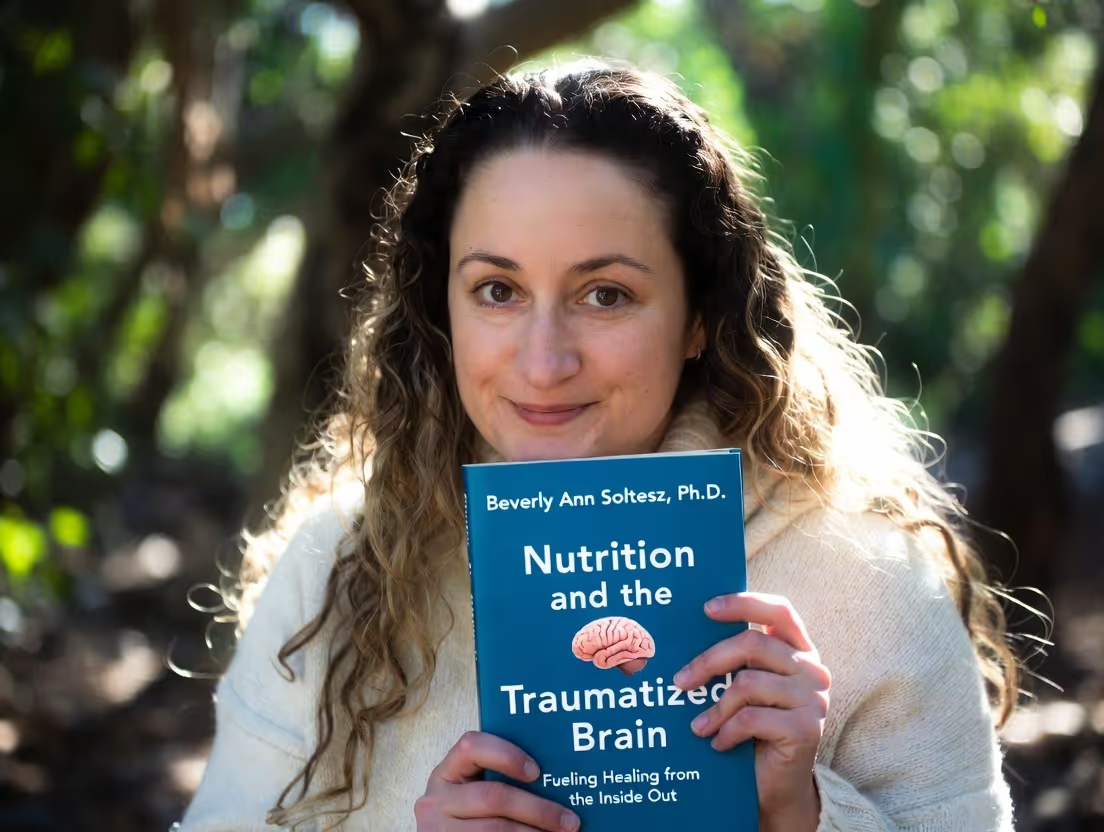
The conversation about trauma healing has long been dominated by psychology, but a silent, powerful player has been overlooked: the gut-brain axis. The food we consume does far more than fuel our bodies; it directly influences the inflammation, neurotransmitter production, and gut microbiome that govern our mood, cognition, and stress resilience. For a trauma survivor operating with a sensitive, dysregulated nervous system, diet can either be a source of constant agitation or a foundational tool for stabilization and repair.
Trauma creates a state of chronic physiological stress, which depletes essential nutrients, disrupts digestion, and promotes systemic inflammation. This inflammation is not just in the joints or muscles; it's in the brain ("neuroinflammation"), exacerbating symptoms of anxiety, depression, and brain fog. Therefore, healing nutrition focuses on reducing inflammation, supporting neurotransmitter balance, and healing the gut.
Key Nutritional Principles for Trauma Recovery:
1. Stabilize Blood Sugar: The Foundation of Mood Regulation
Blood sugar swings are a primary trigger for anxiety, irritability, and panic—mimicking and worsening the physiological symptoms of trauma. The goal is to avoid spikes and crashes.
2. Support Neurotransmitter Production: Building Blocks for Calm and Focus
Key neurotransmitters like serotonin (for mood), GABA (for calm), and dopamine (for motivation) are synthesized from nutrients in our food.
3. Heal the Gut-Brain Axis: Addressing the "Second Brain"
Chronic stress and trauma damage the gut lining ("leaky gut") and disrupt the delicate balance of gut bacteria (the microbiome). This disruption directly communicates distress to the brain via the vagus nerve.
4. Reduce Inflammatory Culprits
Certain foods act as neurological irritants, amplifying the inflammatory fire lit by trauma.
A Trauma-Informed Approach to Eating:
It is critical to approach nutrition without adding a layer of shame or rigid control, which can be re-traumatizing. This is not about a perfect diet, but about nourishment as a form of self-compassion.
Healing the body through nutrition is a slow, steady process of providing the biochemical support the brain needs to do its plastic rewiring. It’s creating an internal environment conducive to calm rather than crisis. For many, tracking how dietary changes correlate with objective measures like sleep quality, resting heart rate, and HRV can be illuminating. Noticing that on days you eat a balanced, anti-inflammatory meal, your Oxyzen sleep score is higher and your stress readings are lower, turns nutrition from a theoretical concept into a direct lever you can pull to influence your own well-being. It is a profound act of agency: using your fork to build a more resilient brain.
Your Trusted Sleep Advocate: Sleep Foundation — https://www.sleepfoundation.org
Discover a digital archive of scholarly articles: NIH — https://www.ncbi.nlm.nih.gov/
39 million citations for biomedical literature :PubMed — https://pubmed.ncbi.nlm.nih.gov/
Experts at Harvard Health Publishing covering a variety of health topics — https://www.health.harvard.edu/blog/
Every life deserves world class care :Cleveland Clinic - https://my.clevelandclinic.org/health
Wearable technology and the future of predictive health monitoring :MIT Technology Review — https://www.technologyreview.com/
Dedicated to the well-being of all people and guided by science :World Health Organization — https://www.who.int/news-room/
Psychological science and knowledge to benefit society and improve lives. :APA — https://www.apa.org/monitor/
Cutting-edge insights on human longevity and peak performance:
Lifespan Research — https://www.lifespan.io/
Global authority on exercise physiology, sports performance, and human recovery:
American College of Sports Medicine — https://www.acsm.org/
Neuroscience-driven guidance for better focus, sleep, and mental clarity:
Stanford Human Performance Lab — https://humanperformance.stanford.edu/
Evidence-based psychology and mind–body wellness resources:
Mayo Clinic — https://www.mayoclinic.org/healthy-lifestyle/
Data-backed research on emotional wellbeing, stress biology, and resilience:
American Institute of Stress — https://www.stress.org/


