


How Your Wellness Ring's Morning Data Shapes Daily Energy Management
Budgeting your energy effectively using insights from your ring.
Budgeting your energy effectively using insights from your ring.
%402x.svg)
The alarm clock sounds. Before your eyes even flutter open, a cascade of decisions begins: Should I hit snooze? Can I face that 7 AM meeting? Do I have the energy for a workout, or will coffee be my lifeline? For generations, we’ve answered these questions with guesswork, relying on the foggy feeling of being "tired" or a vague sense of readiness. But what if you could start your day not with a guess, but with a precise, personalized energy forecast?
Welcome to the dawn of quantified mornings. The unassuming wellness ring on your finger has been working through the night, compiling a confidential report on the most important infrastructure project of your life: your body. It’s not just tracking sleep; it’s auditing your biological systems, measuring your physical restoration, and calculating your metabolic balance. This isn't about steps or calories burned; it's about understanding your fundamental human battery—its current charge, its integrity, and its projected drain rate for the day ahead.
This article is your master guide to decoding that morning data and transforming it into a strategic blueprint for daily energy management. We will move far beyond simply checking a "readiness score." We'll dive into the physiology behind each metric, teach you how to interpret the subtle conversations between your body's systems, and provide actionable frameworks to align your daily demands with your true biological capacity. This is the art and science of moving from being passively tracked to becoming actively empowered, using your wellness ring as the ultimate translator of your body's silent language.
Imagine knowing, with confidence, that your nervous system needs a gentle morning, that your muscles are primed for performance, or that your cognitive fuel is best spent on deep work before noon. This is the promise of proactive energy management. It turns reactive survival into intentional thriving. By the end of this guide, you will not just read your data—you will have a conversation with it, using its insights to craft days that are not only productive but sustainable and aligned with your deepest well-being. Let’s begin by understanding the first and most crucial report of the day: your overnight restoration.
Your day does not begin when you wake up. It begins hours earlier, in the silent, subterranean processes of sleep. This is when your body transitions from executive boardroom to maintenance warehouse, from energy expenditure to deep repair and restoration. Your wellness ring acts as the night-shift foreman, logging every critical task. To manage your energy, you must first become fluent in this report of renewal.
The cornerstone of this audit is Heart Rate Variability (HRV). Often misunderstood, HRV is not about your heart rate itself, but the delicate, millisecond variations between each heartbeat. Think of it as your nervous system’s dial tone. A high, robust HRV indicates a flexible, resilient system—one that can efficiently switch between the energy-conserving "rest and digest" (parasympathetic) mode and the energy-mobilizing "fight or flight" (sympathetic) mode. A low or depressed HRV suggests a system stuck in a state of stress, fatigue, or overload, struggling to recover. Your morning HRV reading is arguably the single most telling biomarker for your systemic recovery and stress load. It’s your body’s honest answer to the question, "Did last night’s sleep actually recharge me?"
Closely tied to HRV is your Resting Heart Rate (RHR). While HRV speaks to nervous system flexibility, RHR speaks to cardiovascular efficiency. A well-rested body typically shows a lower RHR, as the heart doesn’t need to work as hard to pump blood. A spike in your morning RHR—especially when viewed against your personal baseline—can be a red flag. It often signals that your body is fighting something: it could be dehydration, the onset of an illness, lingering inflammation from a hard workout, or high psychological stress. It’s your body diverting resources to a problem, making your heart engine rev a little higher even at idle.
Then comes the architecture of sleep itself: Sleep Stages. Your ring breaks down the night into light, deep, and REM sleep. Each stage has a non-negotiable job. Deep sleep is the physical restoration phase, where tissue growth and repair occur, and energy is restored. REM sleep is the mental and emotional processing phase, crucial for memory consolidation and mood regulation. The balance and sufficiency of these stages are paramount. You can log 8 hours in bed, but if deep sleep was fragmented or REM was cut short, you wake up feeling physically drained or mentally foggy, regardless of the clock time.
Finally, consider Skin Temperature and Breathing Rate. Nocturnal skin temperature trends can reveal circadian rhythm alignment and hormonal fluctuations. A stable, slightly cooler core temperature is optimal for sleep. Elevated nighttime temperature can disrupt sleep cycles. Similarly, a calm, regular breathing rate is a sign of parasympathetic dominance and true rest. Erratic or elevated breathing during sleep can indicate disturbances, from sleep apnea to stress dreams.
This overnight audit is not a judgment; it’s a diagnosis. It tells you what resources you have in the bank as you start your day. A high HRV, low RHR, balanced sleep stages, and stable biomarkers mean you have a fully charged, high-capacity battery. Deviations are not failures—they are critical feedback. They tell you your battery is at 70% charge, or that there’s a background process (stress, immune response, poor recovery) draining power. To go deeper into what each specific metric means, you can explore our comprehensive health metrics explained in our complete ring data dictionary.
Armed with this report, you are no longer walking blind into your day. You are informed. The next step is learning to interpret the deeper conversation these metrics have with each other—a skill known as interoceptive awareness.
In our quest for optimization, it’s easy to become fixated on a single number—a "Readiness" or "Recovery" score. But this score is a summary, a headline. The true wisdom lies in reading the full article. This is where your wellness ring transforms from a data reporter into a training tool for interoceptive awareness: your conscious perception of sensations from inside your body. It bridges the gap between what the data says and what you feel.
Think of a time you felt inexplicably drained, anxious, or off your game. Often, the body sent subtle signals—a tightness in the chest, a shallow breath, a sense of heaviness—that you may have ignored or rationalized away. Your ring provides an objective, quantifiable mirror to these subjective feelings. It validates your intuition. That feeling of being "wired but tired"? Your ring might show a high resting heart rate coupled with a low HRV—a classic sign of sympathetic nervous system overdrive masking fatigue. That sense of mental fog? It could correlate with a night of insufficient REM sleep.
The process of checking your morning data should be a mindful practice of cross-referencing. Don’t just glance at the score. Pause. Breathe. Scan your body. How do you actually feel? Energized or sluggish? Calm or jittery? Then, look at the data. Does it confirm or contradict your felt sense?
This daily practice of correlation is a workout for your nervous system. It turns abstract data points into lived, somatic understanding. You start to develop a personalized lexicon. You learn that your version of "stress" manifests as a specific pattern in your breathing rate. You discover that your ideal "recovery" feels like a specific quality of calm, mirrored by a particular HRV trend.
The goal is to use the ring’s data to calibrate your internal sensors until, eventually, your own awareness becomes so sharp that the data serves merely as confirmation. It moves you from external dependency to embodied wisdom. For a foundational guide on starting this practice, our complete guide to body awareness basics using wellness rings offers a step-by-step approach. This skill of listening is the prerequisite for the next critical step: translating your overnight audit into a strategic plan for the waking hours ahead.
With your overnight audit in hand and your interoceptive senses engaged, you now face the pivotal moment of translation: turning insight into action. This is where energy management becomes a deliberate practice, not a haphazard reaction. We call this your Morning Energy Blueprint—a flexible, personalized plan for the day, built on biological fact, not just ambition.
The first decision in your blueprint revolves around Activity Intensity. Your HRV and RHR are your primary guides here.
Next, design your Cognitive Schedule around your sleep data.
Finally, integrate Supporting Behaviors based on all metrics.
Your Morning Energy Blueprint is not a rigid prison; it’s a dynamic map. It empowers you to make intentional choices that honor your body’s true state, leading to more sustainable productivity and well-being. This strategic alignment is the essence of understanding your body's daily signals through body awareness basics. With a plan in place, we can examine the primary engine that dictates this entire system: your sleep.
Society has long been obsessed with the "8-hour" rule, but duration is merely the container. The quality of what fills that container—the structure and continuity of your sleep cycles—is what truly determines the grade of your foundational fuel. Your wellness ring provides the X-ray to see inside the container, revealing whether you had a night of superficial slumber or deep, restorative renewal.
The critical concept here is sleep architecture—the cyclical progression through light, deep, and REM sleep stages throughout the night. Each cycle lasts roughly 90 minutes, and a full night involves several of these cycles. The proportion of each stage is non-negotiable for specific functions:
Your ring also tracks sleep latency (how long it takes to fall asleep) and sleep disturbances (awakenings during the night). Consistently long latency can point to circadian misalignment or pre-sleep stress. Frequent disturbances fragment your sleep architecture, preventing you from spending adequate time in the deeper, more restorative stages.
So, how do you move from decoding to improving? Your data provides clues:
By focusing on sleep quality metrics, you stop chasing arbitrary hours in bed and start engineering nights that deliver the specific type of restoration you need. This deep dive into the mechanics of rest is a core part of developing body awareness basics focused on the sleep-body connection. The quality of your sleep sets the baseline voltage for your entire system. Now, let’s look at the master regulator of that system: your nervous system, through the lens of HRV.

If your body is a complex city, your autonomic nervous system (ANS) is the power grid and traffic control center combined. It manages everything you don’t consciously think about: heartbeat, digestion, breathing, and stress response. Heart Rate Variability (HRV) is the most accessible, real-time readout of this command center’s operational state. It tells you who’s in charge: the calming, restorative "Rest and Digest" crew (parasympathetic), or the alert, energy-burning "Fight or Flight" team (sympathetic).
A high HRV indicates a balanced, adaptable system. It means the parasympathetic nervous system is strong and can efficiently apply the brakes after a stressor, bringing the body back to baseline quickly. This is resilience. An athlete at rest, a seasoned meditator—they often show high HRV. Their system is like a powerful sports car: it can accelerate (handle stress) impressively and then brake (recover) efficiently.
A low HRV suggests the sympathetic nervous system is dominant, or that the parasympathetic system is weak and overwhelmed. The body is stuck in a state of high alert, like an idling engine revving too high. This is common under chronic stress, during overtraining, in poor health, or with lack of sleep. The system has lost its flexibility; it’s all gas, no brakes.
Your morning HRV is particularly valuable because it’s measured under standardized conditions (upon waking, before movement or caffeine). It reflects the net balance of recovery and stress from the previous 24 hours. It answers: "After all the demands of yesterday, did my system manage to reset overnight?"
But HRV isn't just a morning metric to file away. It’s a dynamic dashboard you can consult throughout the day, especially in response to interventions. This is where you move from passive tracking to active biofeedback:
By treating HRV as a dashboard, you learn what truly stresses your unique system and what truly restores it. You move from generic wellness advice to a personalized owner’s manual for your resilience. This practice of using data to understand internal states is a perfect example of how smart rings teach body awareness through objective data. With a handle on your nervous system's state, we can now explore the physical engine it controls: your cardiovascular system, via Resting Heart Rate.
While HRV listens to the nervous system's whispers, Resting Heart Rate (RHR) measures the cardiovascular engine's idle speed. It’s a powerful, straightforward metric: the number of times your heart beats per minute while you are completely at rest. For most adults, a "normal" RHR ranges from 60 to 100 bpm, but well-conditioned athletes can have RHRs in the 40s. The key is not the number in isolation, but your personal baseline and the daily deviations from it.
A lower RHR generally indicates greater cardiovascular fitness and more efficient heart function. Each beat pumps more blood, so the heart doesn’t need to work as hard. However, the magic of RHR for daily energy management lies in its sensitivity to acute stressors. Your morning RHR can spike due to factors that have nothing to do with fitness:
Therefore, a sudden increase in your morning RHR (e.g., +5-10 bpm above your 7-day rolling average) is a clear, early-warning signal. It’s your body saying, "Heads up, I'm dealing with something extra here." It often precedes the feeling of being unwell or overly fatigued.
The powerful synergy between RHR and HRV: These two metrics should be interpreted together for the full picture.
Tracking your RHR trend teaches you about your body's response to lifestyle. It makes the invisible cost of choices visible. You learn that your RHR is particularly sensitive to poor sleep, or that your body needs extra hydration to keep its idle smooth. This is a fundamental aspect of understanding your body's language through body awareness basics. Now that we understand the core systems, let's examine the subtle thermal signals your body sends throughout the night.
Your body is a furnace, and its temperature is not a fixed setting but a carefully orchestrated rhythm directed by your circadian clock. Core body temperature dips to its lowest point about two hours before you typically wake up, facilitating deep sleep, and then begins to rise to promote alertness in the morning. Your wellness ring, measuring skin temperature (a proxy that follows core temperature trends), gives you a front-row seat to this metabolic dance.
Nocturnal skin temperature data is less about a single number and more about the trend and stability throughout the night. A smooth, declining temperature curve into the early morning hours typically indicates good circadian alignment and uninterrupted sleep. Disturbances in this rhythm are highly informative:
Beyond illness, the temperature rhythm is a profound window into metabolic health and circadian alignment. A consistently dysregulated temperature rhythm can be an early indicator of metabolic issues or a misalignment between your lifestyle and your internal clock (like social jetlag from weekend sleep-ins).
For daily energy management, your morning temperature review helps you calibrate your day:
This ability to read the body's thermal signals is a sophisticated form of body awareness basics related to the temperature-health connection. Alongside temperature, another automatic process holds a wealth of information: your breath.
Breathing is unique—it’s an automatic function we can also consciously control. This dual nature makes it a perfect bridge between the conscious and unconscious mind, and a fantastic barometer for the state of your autonomic nervous system. Your Respiratory Rate (RR)—the number of breaths you take per minute—is a remarkably stable metric in healthy, rested individuals, typically ranging from 12 to 20 breaths per minute at rest. Your wellness ring tracks this rate passively throughout the night, providing a pure reading of your autonomic "set point" during rest.
Why is nighttime respiratory rate so telling? During the day, your breathing is easily influenced by talking, sighing, emotional reactions, and posture. At night, it’s stripped back to its autonomic baseline. A low, stable breathing rate (especially at the lower end of the range) is a hallmark of parasympathetic dominance and true physiological rest. It indicates your body feels safe and is in a state of repair.
Conversely, an elevated or erratic nighttime respiratory rate is a significant signal:
For your morning energy blueprint, the respiratory rate offers a nuanced layer of confirmation:
Perhaps the most powerful application of understanding your RR is using it for active biofeedback. Since you can control your breath, you can use it as a direct lever to influence your HRV and RHR. Practicing slow, diaphragmatic breathing (e.g., 5-6 breaths per minute) with an extended exhale is a proven method to stimulate the vagus nerve and shift the nervous system into a parasympathetic state. You can literally "breathe yourself" into a more recovered state.
Monitoring this metric cultivates a keen awareness of the breath-body connection, a cornerstone of body awareness basics focused on the breath-body connection. Now, let’s synthesize all these individual metrics into a coherent narrative by examining the most telling patterns that emerge over time.
A single day's data is a snapshot. The true transformational power of your wellness ring lies in the time-series narrative—the story told by trends and the relationships between metrics over days, weeks, and months. Isolating metrics is like listening to individual instruments; observing composite patterns is hearing the full symphony of your health. This is where you move from data points to profound personal insight.
Let’s examine some of the most critical composite patterns for energy management:
1. The "Overreaching vs. Overtraining" Signal:
2. The "Impending Illness" Pattern:
Often, your body knows you’re getting sick before you feel symptoms. A classic early-warning pattern is a sudden, unexplained spike in RHR coupled with a drop in HRV, even if sleep duration appears normal. Your skin temperature might also begin an upward trend. This is your immune system activating, diverting energy and increasing metabolic rate to fight off invaders. Spotting this pattern allows you to prioritize rest, hydration, and nutrition, potentially mitigating the severity of the illness.
3. The "Stress Container" Visualization:
Imagine your resilience as a container. Good sleep, nutrition, and relaxation fill the container. Stressors—work, emotional drama, poor food, intense exercise—drain it. Your composite data shows the container's level.
By watching these three together, you can see if your drains are outpacing your fills. A pattern of poor sleep with stable life stress will slowly lower HRV and raise RHR. This composite view is the ultimate tool for understanding your body's energy patterns through body awareness basics.
Identifying these patterns requires consistent tracking and a curious mind. It turns your wellness ring into a diagnostic partner, helping you distinguish between normal fatigue and something more systemic. With this pattern-recognition skill, you can proactively manage not just daily energy, but long-term health trajectory. Next, we'll apply all this knowledge to the real-world challenge of planning your most important activity: exercise.

For anyone invested in their fitness, few things are more frustrating than showing up for a planned workout only to feel flat, weak, or at risk of injury. Conversely, missing a workout when your body was actually primed for performance feels like a wasted opportunity. Your morning data solves this dilemma by providing an objective, personalized movement prescription. It shifts exercise from a rigid schedule to a dynamic dialogue with your body.
Here’s how to use your Morning Energy Blueprint to tailor your movement:
Green Zone Days (High Readiness):
Yellow Zone Days (Moderate Readiness):
Red Zone Days (Low Readiness):
Special Considerations:
This data-informed approach prevents the boom-bust cycle of overtraining and injury. It maximizes the return on investment from your training time and turns exercise into a sustainable, lifelong practice that respects your body’s ever-changing needs. This is the essence of an intelligent body awareness approach to exercise and movement. But energy isn't just for physical output; it's the currency of your mind. Let's explore how to manage your cognitive budget.
Your brain is the most energy-hungry organ in your body, consuming roughly 20% of your daily calories despite being only 2% of your body weight. Just like your muscles, your cognitive faculties have a finite daily capacity—a "cognitive budget." Spending this budget wisely is the key to sustained mental performance, creativity, and emotional balance. Your morning data provides the balance statement for this mental bank account.
Your sleep architecture is your cognitive fuel refinery. Deep sleep restores physical energy, but REM sleep is directly tied to cognitive function. It's when memories are consolidated, emotional experiences are processed, and neural connections are pruned and strengthened. A night rich in REM sleep leaves you with a full tank of high-octane mental fuel: better focus, sharper memory, and enhanced problem-solving abilities. A REM-deficient night leaves you running on mental fumes, prone to brain fog, irritability, and poor decision-making.
Here’s how to allocate your cognitive budget based on your morning audit:
High Cognitive Fuel Days (Strong REM, High HRV):
Moderate Cognitive Fuel Days (Moderate REM, Moderate HRV):
Low Cognitive Fuel Days (Poor REM, Low HRV):
The Role of HRV in Mental Resilience: Your HRV isn't just about physical stress; it's a direct readout of emotional and cognitive flexibility. A high HRV is associated with better emotional regulation, the ability to adapt to changing cognitive demands, and resilience in the face of frustration. A low HRV correlates with cognitive rigidity, anxiety, and being easily overwhelmed.
By aligning your mental work with your biological capacity, you stop fighting against your own physiology. You stop trying to brainstorm when your brain is in maintenance mode, and you stop wasting your peak creative windows on administrative trivia. This practice of cognitive budgeting, guided by your ring's data, is a powerful form of body awareness that supports mental health. It ensures your most valuable mental energy is spent on what matters most.
Burnout rarely arrives as a sudden catastrophe. It creeps in—a slow drip of fatigue, cynicism, and dwindling efficacy that eventually floods the engine. Traditional markers for burnout are subjective and often recognized too late: feeling exhausted, detached, and ineffective. Your wellness ring, however, functions as an early-warning Recovery Radar, detecting the physiological precursors to burnout long before your conscious mind sounds the alarm. It shifts the intervention from crisis management to proactive prevention.
The path to overstrain follows a predictable, measurable biological sequence. It begins not with how you feel, but with how your body functions under accumulating load.
Phase 1: The Stress Response & Recovery Lag
You take on a challenge—a new project, increased training volume, family demands. Initially, your body responds robustly. You might see a temporary dip in HRV after a stressful day, followed by a rebound after good sleep. This is normal adaptation. The danger sign is a recovery lag. Instead of rebounding to baseline, your morning HRV begins a slow, downward trend over 3-5 days, even if sleep duration looks okay. Your RHR may start to creep up by 1-2 beats per minute each day. This is your radar's first blip: your body is spending more energy than it's replenishing, and your nervous system is losing its flexibility. At this point, you may still feel "fine" or even energized by the challenge (the "wired" feeling of sympathetic overdrive).
Phase 2: The Sleep Architecture Breakdown
As the strain continues, your sleep—the primary recovery tool—starts to fail. This isn't just about less sleep; it's about worse sleep. You may see:
Phase 3: The Metric Convergence (The Red Flag Triad)
The unmistakable warning siren is the convergence of three key metrics in a sustained pattern:
Using Your Radar Proactively:
The power of this data is in creating "circuit breakers"—pre-defined actions you take when you see these patterns.
This radar transforms you from a passive passenger of your health to an active pilot, navigating around storms before you're in them. It provides the objective validation needed to grant yourself permission to rest, a critical skill in a culture that often glorifies overwork. This process of recognizing early strain is fundamentally about recognizing your body's stress signals early through body awareness basics. Now, let's apply this awareness to the very foundation of energy: what you put into your body.
You wouldn't pour low-grade fuel into a high-performance engine and expect it to run smoothly. Your body is no different. Yet, we often make dietary choices in an information vacuum, gauging their impact by fleeting taste or transient fullness. Your morning data closes this feedback loop, turning your body into a precise bioassay lab. It provides clear, objective feedback on how your nutrition and hydration choices from the previous day either fueled your recovery or hampered it.
Your overnight metrics are a direct reflection of your digestive and metabolic workload from the past 12-16 hours. Here’s how to decode the correlations:
The Hydration Signal:
Dehydration is one of the most common and easily corrected drags on recovery. Even mild dehydration has measurable effects:
The Meal Timing & Composition Effect:
Your evening meal is a major player in your overnight audit.
The Positive Feedback Loop:
Conversely, you can use your data to identify what truly nourishes you. After a day of eating whole, nutrient-dense foods at appropriate times, staying well-hydrated, and avoiding inflammatory triggers, note your morning report. You’ll likely see the opposite trends: a lower RHR, a higher or stable HRV, and better sleep scores. This positive feedback is incredibly motivating. It turns abstract concepts of "eating clean" into a tangible, personal experience of enhanced recovery and vitality.
By treating your morning data as a fuel gauge, you move away from restrictive dieting and towards strategic nourishment. You learn that for you, a heavy meal after 8 PM costs you 15 minutes of deep sleep. You discover that for you, adequate electrolyte intake is the key to a low morning heart rate. This is the practice of understanding your body's language of hunger and fullness through body awareness elevated by data. It fosters a collaborative, curious relationship with food, where every meal is an experiment in fueling your best recovery.
The modern 9-to-5 workday is a societal construct, but your energy levels are governed by an ancient, individual biological construct: your chronotype. Your chronotype is your innate predisposition for sleep and wake times—whether you're a natural early riser (lark), a night owl, or somewhere in between. Fighting your chronotype is like swimming against a tidal current; it's exhausting and inefficient. Your wellness ring data, particularly temperature and sleep-wake patterns, provides the empirical evidence to identify your chronotype and align your schedule with it for effortless energy.
Your nocturnal skin temperature minimum is a key circadian marker. As discussed, body temperature dips to its lowest point in the second half of the night and then begins to rise, prompting wakefulness. The timing of this nadir is genetically influenced. "Larks" tend to have an earlier temperature minimum (e.g., 4 AM), while "owls" have a later one (e.g., 6 AM). Your ring's temperature graph over weeks can reveal this pattern.
Furthermore, your consistent sleep onset and wake times (when you naturally fall asleep and wake without an alarm) are strong chronotype indicators. Do you reliably feel sleepy at 10 PM and awake at 6 AM? Or do you toss until midnight and struggle before 8 AM?
Aligning Your Energy Management with Your Chronotype:
For the Morning Type (Lark):
For the Evening Type (Owl):
The Data-Driven Advantage:
Your ring provides the proof to advocate for your biology. If you see that your best sleep and highest HRV occur on weekends when you follow your natural owl schedule, but your weekdays show poor sleep and low recovery, you have data-backed evidence of "social jetlag." This misalignment is a chronic stressor. You can use this information to:
By scheduling your life's demands in harmony with your internal clock, you reduce friction and waste. Tasks require less effort, your mood improves, and your overall stress load decreases. This is the pinnacle of personalized energy management: not just managing your energy within a fixed schedule, but designing your schedule around your energy's natural flow. This deep understanding of your rhythmic self is a critical component of understanding your body's circadian signals through body awareness basics.
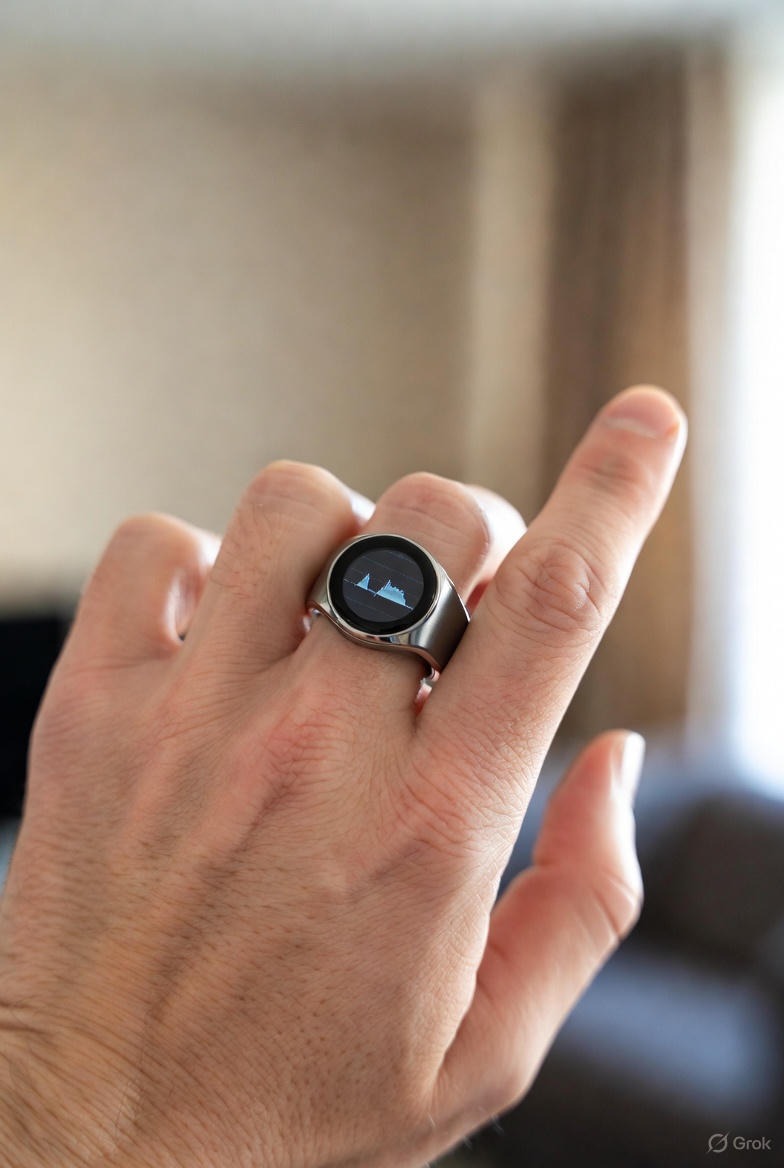
Beneath the surface of your heart rate, temperature, and sleep lies the master control system: your endocrine system. Hormones like cortisol, melatonin, growth hormone, and sex hormones (estrogen, progesterone, testosterone) orchestrate your energy, mood, metabolism, and recovery in a complex, pulsating dance. While wellness rings don't directly measure hormone levels, they provide a brilliant, real-time readout of the physiological effects of these hormonal rhythms. Your data is the shadow cast by the hormonal puppeteer.
Cortisol & The Stress-Energy Axis:
Cortisol, your primary stress hormone, has a healthy diurnal rhythm: it should spike sharply within 30-60 minutes of waking (the cortisol awakening response, or CAR), providing alertness and energy, and then gradually decline throughout the day to reach its lowest point at night.
Melatonin & The Sleep Signal:
Melatonin, the "darkness hormone," rises in the evening to induce sleepiness and falls in the morning to promote wakefulness. It is the primary driver of your core temperature drop.
Growth Hormone & Physical Repair:
The majority of human growth hormone (HGH), crucial for tissue repair, muscle growth, and metabolism, is released during deep sleep (slow-wave sleep).
Sex Hormones & Cyclical Patterns:
For women, the menstrual cycle is a powerful 28-day hormonal rhythm that profoundly affects physiology. Your ring is exceptionally adept at tracking these changes objectively.
Tracking these patterns demystifies your body's experience. That week of low energy and irritability isn't a character flaw; it's a predictable hormonal phase where your body needs more rest. By seeing the data, you can plan for it—scheduling harder workouts in your high-HRV follicular phase and granting yourself grace for more recovery-focused activities in the luteal phase. This is invaluable for understanding the hormone-body connection through body awareness basics.
Your ring doesn't diagnose hormonal disorders, but it provides an unparalleled longitudinal record of your body's response to its own hormonal landscape. It empowers you to work with your rhythms, not against them.
We often think of health as purely internal—what we eat, how we move, how we sleep. But our biology exists within an ecosystem: our environment. Light, noise, temperature, and our daily routines form the crucible in which our energy is forged. Your wellness ring acts as a personal environmental auditor, quantifying the impact of your surroundings on your physiology. This turns home and workspace optimization from guesswork into a data-driven science.
Light: The Master Zeitgeber
Light is the most powerful cue for your circadian rhythm. Your ring's sleep and temperature data reveal how well your light environment supports your biology.
Temperature & Thermoregulation
Your sleep environment temperature is critical. The body needs to drop its core temperature to initiate and maintain sleep.
Noise & Sleep Fragmentation
Unexpected noises, even those that don't fully wake you, can cause micro-arousals, fragmenting your sleep architecture.
Routine & Predictability
Your body craves rhythm. Inconsistent bedtimes, meal times, and wake times are a form of biological chaos.
By conducting these mini-audits, you become the architect of your own microenvironment. You stop blaming yourself for poor sleep and start fixing the room. You stop wondering why you're tired and start controlling the light you're exposed to. This empirical approach to your surroundings is a powerful extension of building body awareness habits using smart ring feedback. It empowers you to create a world that supports, rather than sabotages, your energy.
Our mental and emotional worlds are not ephemeral; they have a direct, measurable physiology. Anxiety, rumination, excitement, and contentment each produce a distinct fingerprint on your nervous system. The gap between how we think we're handling stress and how our body is actually processing it can be vast. Your wellness ring serves as a bridge across this gap, correlating your subjective "emotional weather" with the objective "biometric climate." This turns introspection into a science and emotional regulation into a skill.
The Physiology of Mental Load:
Mental work—solving complex problems, managing multiple projects, making constant decisions—is cognitively taxing but often physically sedentary. This can create a dissonance where you feel mentally exhausted but physically restless. Your ring captures this perfectly:
Emotional Stress vs. Eustress:
Not all stress is bad. "Eustress" is positive stress—the challenge of a exciting project, a competitive game, a passionate conversation. Distinguishing eustress from distress (debilitating anxiety, worry, fear) is crucial, and your data helps.
Using Data for Emotional Regulation:
This correlation is transformative for emotional intelligence. Here’s how to apply it:
This practice dissolves the mind-body dualism. It proves that calming the mind calms the body, and caring for the body steadies the mind. It is the ultimate practice in emotional and somatic awareness through body awareness basics. By tracking this mind-body dialogue, you cultivate the ability to course-correct your emotional state before it derails your entire day or recovery.
The true genius of continuous biometric tracking is not in managing a single day, but in revealing the story of your life in data. A single point is noise; a trend line is truth. By stepping back from the daily fluctuations and observing the long-term trends in your wellness ring data, you transition from a tactical energy manager to a strategic health architect. You begin to see the impact of seasons, life phases, and habitual choices on your fundamental resilience.
Observing Macro-Cycles:
Identifying Slow Erosions or Improvements:
The most powerful insights come from slow, subtle trends that are invisible on a day-to-day basis.
Proactive Health Forecasting:
Long-term data empowers you to be predictive, not just reactive.
This longitudinal view fosters a profound sense of body literacy and self-trust. You are no longer a stranger in your own skin. You have a historical record of how your body responds to everything life throws at it. This is the culmination of the journey: using data not to obsess over a single score, but to write a new, healthier story for your life, one informed by the patterns your wellness ring reveals that you can't feel. It is the foundation of a truly proactive, personalized, and empowered approach to lifelong well-being.
Your Trusted Sleep Advocate: Sleep Foundation — https://www.sleepfoundation.org
Discover a digital archive of scholarly articles: NIH — https://www.ncbi.nlm.nih.gov/
39 million citations for biomedical literature :PubMed — https://pubmed.ncbi.nlm.nih.gov/
Experts at Harvard Health Publishing covering a variety of health topics — https://www.health.harvard.edu/blog/
Every life deserves world class care :Cleveland Clinic - https://my.clevelandclinic.org/health
Wearable technology and the future of predictive health monitoring :MIT Technology Review — https://www.technologyreview.com/
Dedicated to the well-being of all people and guided by science :World Health Organization — https://www.who.int/news-room/
Psychological science and knowledge to benefit society and improve lives. :APA — https://www.apa.org/monitor/
Cutting-edge insights on human longevity and peak performance:
Lifespan Research — https://www.lifespan.io/
Global authority on exercise physiology, sports performance, and human recovery:
American College of Sports Medicine — https://www.acsm.org/
Neuroscience-driven guidance for better focus, sleep, and mental clarity:
Stanford Human Performance Lab — https://humanperformance.stanford.edu/
Evidence-based psychology and mind–body wellness resources:
Mayo Clinic — https://www.mayoclinic.org/healthy-lifestyle/
Data-backed research on emotional wellbeing, stress biology, and resilience:
American Institute of Stress — https://www.stress.org/


