


How Smart Rings Teach You Body Awareness Through Data
How smart ring data teaches you to be more aware of your body.
How smart ring data teaches you to be more aware of your body.
%402x.svg)
For centuries, the quest for self-knowledge has turned inward—through meditation, journaling, and mindful reflection. We’ve sought to understand the rhythms of our bodies and minds through subjective feeling alone. But what if the whispers of our physiology, the subtle signals that precede burnout, illness, or peak performance, were speaking a language we simply didn’t have the tools to hear?
Enter the smart ring: an unassuming piece of wearable technology that is quietly revolutionizing the concept of body awareness. This isn’t about replacing intuition with data; it’s about augmenting it. It’s about translating the cryptic, internal dialogs of your heart rate, nervous system, temperature, and movement into a clear, actionable narrative. We are moving from an era of guessing about our health to an era of knowing.
The modern wellness journey is often plagued by vague goals: "sleep better," "be less stressed," "have more energy." Without objective feedback, these goals are like navigating a complex landscape without a map. You might feel you’re moving, but are you moving in the right direction? A smart ring provides that topographical map of your own biology. It reveals the hidden connections between your afternoon coffee and that night’s restless sleep, between a stressful work meeting and a elevated resting heart rate hours later, between a strenuous workout and your body’s prolonged need for recovery.
This article is your guide to a new kind of literacy: body data literacy. We will explore how these discreet devices gather their insights, demystify the key metrics they track, and, most importantly, illustrate how you can move from passively collecting data to actively engaging in a conversation with your own body. This is the beginning of a journey toward profound body awareness—not through abstraction, but through evidence. Let’s begin by understanding the silent language your body is already speaking, and how a smart ring learns to interpret it.

Your body is a symphony of continuous communication. Every heartbeat, every breath, every fractional change in skin temperature is a data point in the complex story of your well-being. Long before you consciously feel fatigued, stressed, or unwell, your autonomic nervous system (ANS)—the unconscious control center for vital functions—has already begun broadcasting signals. The problem is, we’re rarely fluent in this silent language.
Consider your heart rate. Most people know their resting heart rate as a simple number. But the true story lies in the spaces between the beats. Heart Rate Variability (HRV), the subtle variation in the time interval between consecutive heartbeats, is a direct window into your ANS. A higher HRV typically indicates a resilient, adaptable nervous system, one that can smoothly shift between states of stress (sympathetic activation) and recovery (parasympathetic activation). A consistently low HRV can be a canary in the coal mine, signaling chronic stress, poor recovery, or impending illness. Before the age of continuous biometric monitoring, accessing this data required clinical equipment. Now, it’s available on your finger overnight.
Similarly, your core body temperature follows a delicate circadian rhythm, dipping at night to initiate sleep and rising in the morning to promote wakefulness. Deviations from this rhythm can signal everything from metabolic changes and hormonal fluctuations to the onset of infection or disrupted sleep patterns. Skin temperature, as measured by a smart ring, serves as a reliable proxy for these core shifts.
Then there’s your movement—or lack thereof. Prolonged stillness during sleep is a marker of deep, restorative rest, while constant tossing and turning tells a tale of fragmented sleep. Respiratory rate, the number of breaths you take per minute, is another critical vital sign that fluctuates with stress, effort, and sleep stage.
Individually, these metrics are informative. Together, they form a correlated, multi-dimensional picture. A smart ring’s primary function is to become a constant, gentle listener to this physiological whisper. It collects thousands of these data points daily, creating a personalized biometric baseline. This baseline is your unique "normal." Once it’s established, the ring can then help you understand deviations—why you woke up feeling drained despite eight hours in bed, or why you feel unusually reactive to minor stressors on a particular afternoon. It makes the silent language of your ANS visible, transforming vague feelings of "being off" into a specific, data-informed understanding. For instance, you can learn more about how smart rings measure sleep quality more accurately to see this multi-metric approach in action.
Raw data is noise. Insight is a story. This is the fundamental leap that separates a simple tracker from a true tool for body awareness. A smart ring doesn’t just report that your HRV was 45 ms last night and your skin temperature was 34.1°C. It synthesizes these data points, along with movement and respiratory rate, to construct a coherent narrative about your state.
This process is known as sensor fusion. Imagine each sensor—the optical heart rate monitor, the temperature sensor, the 3D accelerometer—as a single instrument in an orchestra. Alone, a violin or a flute plays a single line of music. But when combined under the direction of a sophisticated algorithm (the conductor), they create a rich, layered symphony. The algorithm’s job is to find the patterns and correlations that a human eye might miss.
Let’s build a story from data:
Viewed in isolation, each point is a clue. Sensor fusion weaves them into a likely narrative: "You experienced poor sleep onset and fragmented sleep due to a dysregulated circadian rhythm (indicated by the high temperature), which placed increased stress on your nervous system (resulting in low HRV)." The ring might then prompt you: "Consider avoiding bright lights and heavy meals closer to bedtime to help your body cool down for sleep."
Another powerful example is recovery scoring. After an intense workout, you might feel fine. But your ring’s data could tell a different story: your resting heart rate is elevated 10 bpm above baseline 12 hours later, your HRV has plummeted, and your temperature is slightly elevated. The algorithm correlates these signals to generate a "Readiness" or "Recovery" score, advising you that your body is still in a state of repair and might benefit from a light activity day instead of another punishing session. This prevents you from blindly following a rigid workout schedule and instead teaches you to listen to what your body is demonstrably capable of handling.
This correlative power extends to lifestyle triggers. By logging daily activities (like alcohol consumption, caffeine intake, or late work hours) and reviewing your biometric trends, you begin to see cause and effect. You might discover that your morning signs of good sleep quality—like feeling refreshed and alert—only appear on nights when your sleep data shows high stability and strong temperature drops. Conversely, you can identify the 10 factors that destroy sleep quality most people ignore, from subtle environmental cues to dietary habits, by seeing their direct impact on your graphs. The ring transforms from a reporter into a teacher, showing you the tangible physiological cost or benefit of your daily choices.
If you learn only one metric from your smart ring, let it be Heart Rate Variability. HRV is arguably the most profound and insightful biomarker available from a consumer wearable. Contrary to intuitive thinking, a healthy heart is not a perfectly metronomic one. It’s dynamically irregular. The milliseconds between your heartbeats should vary, reflecting the constant, subtle tug-of-war between the "gas pedal" (sympathetic) and "brake pedal" (parasympathetic) branches of your ANS.
A high HRV indicates a heart and nervous system that are responsive and resilient. It suggests your body can efficiently ramp up to meet a challenge and then powerfully downshift to recover. Think of it as a wide emotional range for your physiology. A low HRV suggests a nervous system that is stuck—often in a state of chronic low-grade stress, fatigue, or inflammation. It has a narrower range of motion, less adaptable to life’s demands.
Your smart ring, particularly through overnight tracking, captures your HRV in its most stable state, free from the noise of daily movement and digestion. This provides a clean, daily reading of your recovery status. The true power of HRV for body awareness, however, lies not in any single number, but in the trend.
By paying attention to HRV, you stop guessing about your stress and recovery. You start to develop an intimate, data-backed understanding of what truly drains you and what truly restores you. It moves stress management from a generic concept ("I should relax more") to a personalized science ("My data shows that 30 minutes of reading before bed improves my HRV by 15%, so that’s a high-value activity for me"). It directly connects to your sleep, as explored in the hidden link between sleep quality and mental health, where poor sleep often manifests first as a depressed HRV.
For generations, sleep was measured in duration. "I got my eight hours" was the gold standard. We now know this is a drastic oversimplification. You can spend eight hours in bed and still wake up feeling like you’ve been run over by a truck. Why? Because sleep is architecturally complex, composed of multiple cycles of light, deep, and REM sleep, each serving distinct restorative functions.
The smart ring has become a pivotal tool in the sleep revolution by shifting the focus from quantity to nuanced quality. By tracking movement, heart rate, and HRV throughout the night, it can estimate your sleep stages with impressive accuracy. This reveals your personal sleep architecture.
But the ring’s analysis goes beyond stages. It calculates a holistic Sleep Score by synthesizing multiple factors:
This score isn’t a judgment; it’s a feedback loop. A low score prompts investigation. Was it the late-night screen time that delayed your sleep onset? Was it the spicy meal that caused the mid-night wake-up indicated by a movement spike? The ring helps you move from knowing you slept poorly to understanding the "why" behind it. You can use this data to work through a sleep quality checklist to systematically improve your environment and habits. This granular understanding is key, as research shows how poor sleep quality affects your health in profound ways, from cognitive decline to metabolic dysfunction.
While heart rate and movement are dynamic, changing by the second, body temperature tells a slower, but equally vital, story. Smart rings with skin temperature sensors are detecting minute changes—often as small as 0.1°C—that reveal patterns invisible to the touch.
The most significant pattern is your circadian temperature rhythm. A healthy rhythm shows a clear dip as you approach bedtime, aiding sleep initiation. It reaches its nadir in the middle of your sleep and then begins a steady rise in the early morning hours, promoting alertness upon waking. When this rhythm is flattened or erratic, it’s a strong indicator of circadian misalignment, which can stem from irregular sleep schedules, jet lag, or excessive blue light exposure at night. Seeing your temperature fail to drop can explain why you struggled to fall asleep, even if you felt tired.
Beyond daily rhythms, temperature tracking is powerful for identifying long-term trends in women’s health. For those who menstruate, basal body temperature (BBT) tracking has long been used to pinpoint ovulation (a sustained temperature rise after ovulation occurs). A smart ring automates this with unparalleled convenience and accuracy, as it takes measurements continuously throughout the night, eliminating user error from morning oral thermometers. This data can illuminate the entire menstrual cycle, helping users understand phases of higher energy, potential metabolic changes, and the impact of the cycle on sleep and recovery metrics.
Perhaps one of the most practical applications is in illness prediction. A sustained elevation in your nightly temperature baseline—even if you still feel well below a clinical fever—can be one of the earliest signs your body is fighting something off. Coupled with a rising resting heart rate and lowered HRV, it forms a powerful triage of data suggesting your immune system is activated. This early warning system can empower you to make proactive choices: scaling back on intense activities, prioritizing hydration and rest, and maybe even avoiding that big social gathering, potentially shortening the illness’s duration or mitigating its severity.
Finally, temperature is a key component of the sleep quality formula, where it interacts directly with light exposure and timing. A cool sleeping environment is not just a comfort preference; it’s a biological requirement for initiating and maintaining quality sleep, and your ring’s temperature graph proves it.
In a culture obsessed with pushing harder and doing more, the smart ring introduces a revolutionary concept: quantifiable restraint. The Readiness Score (sometimes called Recovery Score or Body Battery) is the ultimate synthesis of your biometric data into a single, actionable piece of guidance for the day ahead. It answers the fundamental question: "Based on how my body recovered last night, how much stress can I healthfully take on today?"
This score is not a measure of your motivation or your mental desire to conquer the world. It is a measure of your physiological capacity. It is calculated by weighing several key overnight metrics:
A high Readiness Score (e.g., 85-100) is a green light. It suggests your body is resilient, well-recovered, and primed to handle physical, mental, and emotional stress effectively. It’s an ideal day for that intense workout, important presentation, or big social event.
A medium score (e.g., 70-84) is a yellow light. You’re functional, but not at your peak. Your body may be dealing with residual fatigue, mild stress, or suboptimal recovery. The guidance here might be to proceed with a moderate workout instead of a peak one, or to be mindful of stacking too many high-stress tasks.
A low score (e.g., below 70) is a red light—a clear suggestion from your body to prioritize rest. This isn’t about laziness; it’s about strategic recovery. Pushing through on a low score often leads to diminished returns, increased injury risk, and digging a deeper recovery hole. It’s the day to choose gentle movement, hydration, good nutrition, and early bedtimes.
The profound body awareness lesson here is learning to dissociate effort from effectiveness. You learn that the most productive day isn’t always the one where you grind the hardest; it’s the one where your effort is aligned with your body’s actual readiness. It teaches periodization in daily life, balancing stress and recovery to avoid burnout and achieve sustainable high performance. This is especially crucial for understanding why you wake up tired—a low Readiness Score often provides the "why" behind that groggy feeling, pointing directly to the quality of your previous night's restoration.

One of the most transformative aspects of smart ring data is its ability to turn you into a scientist of your own life. The ring provides the objective results; you provide the potential variables. This creates a powerful feedback loop for identifying personal triggers—the unique foods, behaviors, and situations that positively or negatively impact your physiology.
This process turns abstract wellness advice into personalized truth. General health guidelines say "alcohol disrupts sleep." Your ring data shows you that for you, two glasses of red wine after 8 PM reduces your deep sleep by 40% and drops your HRV by 25 points, leading to a low Readiness Score. That’s a personalized, quantifiable cost-benefit analysis you can now make consciously.
Here’s how to leverage your ring for trigger identification:
This empirical approach cuts through the noise of conflicting health advice. It reveals what your body needs, not what a generic article says. For example, you can test common sleep quality myths against your own data. Does "8 hours is always enough" hold true for you? Your sleep score and Readiness data will tell you. This method is also the backbone of successful experiments, like trying to improve sleep quality in just one week, by measuring the impact of specific changes night-by-night.
Stress is not a binary switch—on or off. It’s a wave, with peaks of activation and troughs of recovery that ebb and flow throughout your day. Without awareness, we can accumulate stress (high waves) without sufficient recovery (deep troughs), leading to a state of chronic sympathetic overdrive. A smart ring, through continuous daytime heart rate and HRV monitoring, makes these invisible waves visible.
While overnight data measures broad recovery, daytime data captures acute stress and micro-recovery. Many rings now offer a "Stress" or "Body Battery" feature that estimates your nervous system load in near real-time.
This visibility teaches you the critical skill of active recovery. It shows you that recovery isn’t just something that happens when you sleep; it’s something you can cultivate throughout the day. You learn which activities truly downshift your nervous system (a short walk, listening to music, deep breathing) and which ones keep it subtly engaged (doomscrolling, multitasking, noisy environments).
By observing these waves, you can start to intentionally design your day for better balance. You might schedule a 5-minute breathing exercise after a known stressful event to force a recovery trough. You might learn that your energy crashes at 3 PM are preceded by a high-stress wave all morning without a break, prompting you to schedule a proper lunch break. This granular understanding of daily stress and recovery is foundational for managing long-term health, as it directly influences the surprising connection between sleep quality and weight, where daily stress hormones can disrupt metabolic processes.
In the fitness world, more is often seen as better. But optimal health and performance live at the intersection of effective strain and adequate recovery. Smart rings bring crucial balance to this equation by providing a dual lens: they measure your activity output, but also monitor your body’s response to that activity.
Most rings track daily steps, active minutes, and estimate calorie expenditure. This is useful for ensuring you meet general movement goals and avoid excessive sedentariness. However, the more advanced insight comes from how your activity impacts your recovery biomarkers.
The body awareness lesson here is to let your recovery metrics guide your activity, not just your calendar or ambition. A high Readiness Score might encourage you to go for that personal record. A low score, even if you’re scheduled for a hard training day, might prompt you to swap it for gentle mobility work or a walk. This creates a responsive, sustainable fitness practice that builds resilience instead of breaking it down. It helps you find the optimal dose of activity for your body on that specific day, considering all other life stresses. This principle is key for anyone, especially shift workers seeking strategies that actually work, as their activity needs must be carefully balanced against irregular recovery windows.
Data alone is inert. The transformation occurs when you close the loop, turning information into insight, and insight into action. This is the feedback loop of body awareness, and the smart ring is the facilitator.
Step 1: Observe (The Data)
This is the passive collection phase. Your ring gathers biometrics 24/7, presenting them as scores, graphs, and trends.
Step 2: Reflect (The Insight)
This is the critical thinking phase. You look at your low sleep score and ask "Why?" You see a week-long HRV dip and correlate it with your work deadlines. You notice your temperature rhythm is flatter on weekends when you sleep in. You read about the science of what happens when you sleep well and compare it to your own best data.
Step 3: Experiment (The Action)
This is the active phase. Based on your reflection, you design a small, testable change.
Step 4: Integrate (The Habit)
This is the learning phase. If the experiment shows a clear benefit (e.g., 20% more deep sleep), you integrate the change as a new habit. If it shows no change or a negative effect, you discard it and test something else. You have now learned something definitive about your body.
This iterative loop—Observe, Reflect, Experiment, Integrate—is the engine of personalized body awareness. It turns you from a passenger into the pilot of your health. The ring provides the instrument panel, but you are learning to fly. This process demystifies wellness. It allows you to measure sleep quality without a sleep lab and become your own expert. You learn that improvement is not about dramatic overhauls, but about consistent, small, data-validated tweaks.
The final, and perhaps most profound, layer of awareness a smart ring provides is the tangible, quantifiable link between your mental/emotional state and your physical biology. We’ve long accepted the concept of the mind-body connection in theory. Now, we can see it in high-resolution graphs.
Consider a day of anxiety. Subjectively, you feel "wound up" or "on edge." Your ring’s data might show:
The data validates your subjective experience, but it also adds depth. It shows you the physiological cost of that anxiety—how it taxes your nervous system and impairs recovery. Conversely, consider a day after a meaningful meditation session or a connecting conversation with a loved one. Your subjective feeling of "calm" might be mirrored by a smoother stress graph, a quicker return to baseline heart rate after minor stressors, and a higher overnight HRV.
This visibility serves two powerful purposes:
By making the mind-body connection visible, the smart ring bridges the gap between psychological well-being and physical health. It allows you to manage your mental state not just for subjective peace, but for measurable physiological resilience. This is crucial, as the interplay between stress, sleep, and mood is complex; understanding the sleep quality and mental health link through your own data is a powerful step toward holistic well-being. It completes the picture, showing that body awareness isn't just about sleep and steps—it's about how your thoughts and feelings literally shape your physiology, moment by moment.
We stand at the end of the era of generic health advice. The old paradigms—"everyone needs 8 hours," "drink 8 glasses of water," "exercise 5 times a week"—are crumbling under the weight of a simple truth: we are all biochemically and physiologically unique. What energizes one person may deplete another. What constitutes recovery for a 25-year-old athlete is vastly different from a 50-year-old executive or a new parent. Smart rings are the key that unlocks the door to true hyper-personalization, moving us from population-level averages to an understanding of what optimal looks like for you, and you alone.
This personalization operates on three levels:
1. Personal Baselines and Ranges:
Your smart ring doesn’t judge you against a global average. Its first and most important task is to learn your normal. It establishes your personal baseline for every metric over an initial period (typically 7-14 days). This is revolutionary. A resting heart rate of 55 might be normal for a trained endurance athlete but a sign of bradycardia for someone else. An HRV of 35 ms might be a dangerously low reading for one person but a sign of peak resilience for another with a different autonomic makeup. Your ring’s insights only become meaningful in the context of your own trends. It flags deviations from you, not from a textbook.
2. Life-Stage and Circumstantial Awareness:
Your body’s needs are not static. They change with age, training cycles, menstrual phases, periods of high work stress, grief, travel, and illness. Hyper-personalized tracking means your ring’s data helps you adapt your expectations and behaviors to your current life chapter. For instance, you can explore how sleep quality and aging interact, using your own data to see what "good sleep" means for you now versus a decade ago. It can show a woman how her recovery capacity and temperature rhythm shift predictably across her cycle, allowing her to plan demanding tasks for high-energy phases and self-care for more vulnerable ones. It helps the frequent traveler understand their unique pattern of disruption and create a personalized jet-lag protocol based on how their temperature and sleep data actually respond to time zone changes, as detailed in strategies for maintaining sleep quality during travel.
3. Personalized Intervention Testing:
This is the active frontier of body awareness. When your data shows a problem—like consistently poor sleep efficiency—you are empowered to test solutions that are realistic for your lifestyle. The advice isn’t just "improve sleep hygiene." It becomes a targeted experiment: "For me, does wearing blue-light blocking glasses after 8 PM increase my deep sleep percentage more effectively than a 60-minute pre-bed digital detox?" or "Does a 10-minute evening meditation improve my sleep-onset HRV more than a warm bath?" The ring provides the objective outcome measure, allowing you to curate a toolkit of interventions that are proven to work for your unique physiology.
This shift from generic to hyper-personalized is the ultimate goal of body awareness data. It fosters self-compassion (your body is working by its own rules) and precision (your efforts are directed where they will have the highest impact). It means you’re no longer chasing an abstract, external ideal of health, but instead nurturing your own system toward its personal peak state of resilience and vitality.

Data-inspired awareness is meaningless if it doesn’t spark change. The final step in this journey is translating your hard-won insights into a sustainable, living protocol—a set of habits and guidelines that dynamically support your body. This isn’t a rigid set of rules, but a flexible framework informed by continuous feedback. Think of it as your personal operating manual, co-authored by you and your biometric data.
Here’s how to build it:
1. Establish Your Non-Negotiable Fundamentals:
These are the pillars that your data consistently shows are foundational for you. They are unique to you but are often revealed through patterns. For one person, the fundamental might be "Caffeine cutoff at 10 AM" because later consumption reliably destroys sleep depth. For another, it might be "Minimum 7.5 hours in bed" because anything less leads to a 30-point drop in Readiness. For a third, it could be "A 20-minute afternoon walk" because it’s the most reliable way to lower evening resting heart rate. Use your trigger identification work to find 2-3 of these high-impact, non-negotiable habits.
2. Create Your Dynamic Decision Framework:
This is where you use your daily scores (Readiness, Sleep) to make choices, rather than a pre-set schedule.
3. Design Your Tiered Recovery Toolkit:
Not all recovery is equal, and not all recovery strategies work for everyone. Build your personalized menu:
4. Implement a Weekly Review Ritual:
Set aside 20 minutes each week (Sunday evening works well) to review your data trends. Look at your weekly averages for Sleep Score, HRV, and Readiness. Note any correlations with your logged activities. Ask: What worked well? What drained me? Is there a new experiment I want to run next week? This ritual solidifies the learning and ensures your protocol evolves with you.
By creating this protocol, you move from being a passive observer of your data to an active architect of your well-being. The ring provides the compass, but you are charting the course. This actionable framework is the tangible payoff for all the learning, turning the abstract concept of "body awareness" into a daily practice of intelligent, responsive self-care. For those ready to begin, this is the essence of knowing where to start for maximum sleep quality improvement results—using your own data to identify your most leveraged first step.
The journey of learning body awareness through data is just beginning. The current capabilities of smart rings—tracking HRV, temperature, movement, and sleep—represent a powerful first generation. But the horizon holds even more transformative possibilities that will deepen our self-knowledge to levels previously confined to medical labs.
1. Continuous Glucose Monitoring (CGM) Integration:
The next frontier in personalized nutrition is understanding individual glycemic responses. Future wearables may incorporate non-invasive or minimally invasive glucose monitoring. Pairing this data with HRV and activity would reveal how different foods uniquely impact your energy, focus, inflammation (via HRV), and sleep. You wouldn’t just know a donut is "unhealthy"; you’d see that for you, it causes a glucose spike that crashes your energy 90 minutes later and raises your resting heart rate overnight, impairing recovery.
2. Advanced Stress Biomarkers:
Beyond heart rate-derived stress, future sensors may measure cortisol levels (the primary stress hormone) through interstitial fluid or sweat, or analyze heart rate patterns for more nuanced signatures of different stress types (emotional, cognitive, physical). This could differentiate between the stimulating stress of a creative challenge and the depleting stress of anxiety, guiding more precise interventions.
3. Electrodermal Activity (EDA) & Sympathetic Tone:
Some advanced rings already include EDA sensors, which measure tiny changes in skin sweat associated with sympathetic nervous system arousal. Future iterations will use this data more sophisticatedly to detect moments of high focus, emotional arousal, or unconscious stress, providing a second-by-second map of your nervous system's excitatory state.
4. Predictive Health & Early Warning Systems:
As algorithms mature with larger, longitudinal datasets, their predictive power will grow. The goal will shift from telling you what happened last night to forecasting what might happen next week. An AI coach might analyze a week-long trend of rising resting heart rate, lowered HRV, and temperature dysregulation and say: "Your cumulative stress load is high. Statistical models suggest a 70% probability of catching a common cold in the next 5 days if you don't prioritize recovery. Recommend: two early nights, hydration, and consider reducing social commitments."
5. Deeper Ecosystem Integration:
Your ring will not be a lonely data silo. It will seamlessly integrate with your smart home to adjust lighting and temperature based on your circadian rhythm, with your calendar to suggest optimal times for deep work versus meetings based on your energy patterns, and with other health platforms to provide a unified health dashboard. It will act as the central hub for your physiological data, interpreting it within the full context of your life.
This future points toward a new era of participatory preventive medicine. Instead of visiting a doctor only when sick, you’ll maintain a continuous flow of personalized health data, allowing for early, proactive interventions and truly collaborative care with health professionals. The smart ring will evolve from a teacher of body awareness into a lifelong partner in health optimization, making the language of our bodies ever clearer and more actionable.
Adopting a smart ring and learning to interpret its data is not a quick fix or a 30-day challenge. It is the beginning of a lifelong practice—a continuous, compassionate dialog with your physical self. This journey has distinct phases, each with its own lessons and potential pitfalls.
The Phase of Discovery (Months 1-3):
This is the exciting honeymoon period. You’re fascinated by the numbers, learning what they mean, and making obvious connections ("Wow, that late-night wine really ruined my sleep graph!"). The data feels empowering. The key here is to avoid becoming obsessive. Don’t check your scores incessantly. Let the data accumulate and focus on weekly trends, not minute-by-minute fluctuations.
The Phase of Integration (Months 4-12):
The novelty wears off, and the practice deepens. You start to internalize the learnings. You don’t need to check the app to know that a second cup of coffee in the afternoon is likely a bad idea; your body’s subtle signals, now better understood, start to align with what the data taught you. Your personalized protocol becomes second nature. This is where true body awareness blossoms—the data has trained your innate perception.
The Phase of Mastery & Fluency (Year 1 and Beyond):
The ring becomes a trusted guide, not a crutch. You look at data less frequently, perhaps only during your weekly review or when something feels "off" and you need objective insight. You have a deep understanding of your unique patterns and how to navigate life’s disruptions—travel, stress, illness—with minimal fallout. You’ve achieved data-backed body literacy.
Throughout this journey, it is critical to remember two things:
Embracing this as a practice, not a project, transforms the smart ring from a mere tracking device into a catalyst for a more attuned, responsive, and vibrant life. It fosters a relationship with your body based on curiosity and collaboration rather than criticism and control. This is the profound gift of modern biometric awareness: the opportunity to become the expert on the one subject that matters most—yourself.
As you embark on this journey of biometric self-discovery, a crucial challenge emerges: the potential for data to become a source of anxiety rather than liberation. The constant stream of scores, graphs, and alerts can lead to a phenomenon known as "quantified-self anxiety" or "analysis paralysis," where the tool designed to reduce stress paradoxically becomes a new stressor. Learning to navigate this noise is an essential component of developing healthy, sustainable body awareness.
Recognizing the Signs of Data Anxiety:
Strategies for Healthy Data Engagement:
1. Adopt a Trend-Based Mindset, Not a Point-in-Time Fixation.
Your health is a river, not a snapshot. A single day of poor data is a ripple, not the river's entire character. Train yourself to look at weekly and monthly averages. Is your average HRV trending upward over the last quarter? That’s a huge win, even if yesterday’s reading was low. Focus on the direction and shape of the line, not the individual dots. This broader view helps contextualize off-days within a positive overall trajectory, much like understanding the difference between a single night's data and your overall sleep quality.
2. Implement Designated "Data Check" Times.
Create a ritual, not a reflex. Decide on specific, limited times to engage with your data. For most people, twice a day is sufficient:
Prohibit yourself from opening the app outside these times. This breaks the compulsive cycle and allows you to live your life in your body, not just through the data.
3. Practice Data-Informed, Not Data-Driven, Decision-Making.
The data is an advisor, not a dictator. It provides critical intel, but you remain the CEO of your health. If your Readiness Score is low but you have a critical, energizing event (your best friend’s wedding, a once-in-a-lifetime hike), you can choose to participate—just do so wisely. Use the data to plan your recovery: "My score is low, so I'll prioritize a nap beforehand, stay extra hydrated, and ensure I have a very light schedule the next day for recovery." This approach honors the information without letting it strip away life's spontaneity and joy.
4. Cultivate "Body-First, Data-Second" Awareness.
Each morning, before you look at your phone, pause. Ask yourself: "How do I feel?" Note your energy, mood, and physical sensations. Then look at the data. Does it align? If it does, your internal awareness is sharpening. If it doesn’t, get curious, not critical. "I feel energetic, but my HRV is low. That’s interesting. Maybe I’m running on adrenaline. I’ll monitor my energy levels this afternoon." This practice keeps you connected to your subjective experience, using data as a complementary layer of insight.
5. Embrace the "Why" Over the "What."
When you see a negative trend, shift your mindset from "This is bad" to "This is information. What is my body trying to tell me?" A low Sleep Score isn't a grade; it's a diagnostic clue. It prompts the investigative work that leads to true understanding, like exploring the hidden factors that destroy sleep quality. This reframes data from a source of judgment to a partner in problem-solving.
By implementing these strategies, you harness the power of biometric data without being enslaved by it. The goal is a balanced partnership where technology enhances your innate wisdom, creating a calm, confident, and truly aware relationship with your own body.
To see the principles of body awareness in action, let’s follow a hypothetical but data-informed case study: "Alex," a 38-year-old knowledge worker and parent.
The Baseline (Week 0):
The Intervention & Data Dialogue:
Week 1-2: Observation & One Change
Alex commits to no changes initially, just consistent tracking and logging. The data reveals a clear pattern: on days with the 2 PM coffee, sleep onset is delayed by 40 minutes and deep sleep is reduced. A small experiment is run: Caffeine cutoff at 12 PM.
Week 3: Building on Success
With the caffeine habit shifted, the next obvious data clue emerges: the nights with alcohol, even just one glass, show a sharp spike in heart rate around 3 AM and a 30% reduction in REM sleep. Experiment: No alcohol on school nights (Sun-Thurs).
Week 4: Addressing Activity & Recovery
With sleep improving, the focus shifts to the constant low-grade fatigue and workout recovery. The data shows Alex’s Readiness Score is consistently lowest the day after two consecutive days of high-intensity workouts. The body is not getting enough recovery. Experiment: Implement a structured 3-days-on, 1-day-off workout schedule, with the "off" day being true active recovery (walking, stretching).
The One-Month Transformation:
Key Takeaway: Alex’s journey wasn’t about a drastic life overhaul. It was about three sequential, data-informed tweaks to caffeine, alcohol, and training schedule. Each change was validated by the biometric feedback, creating a powerful reinforcement loop. This is the essence of using a smart ring not as a fitness tracker, but as a system for sustainable energy management. It mirrors the process of running a targeted experiment to improve sleep quality in just one week, but over a longer, more sustainable horizon.
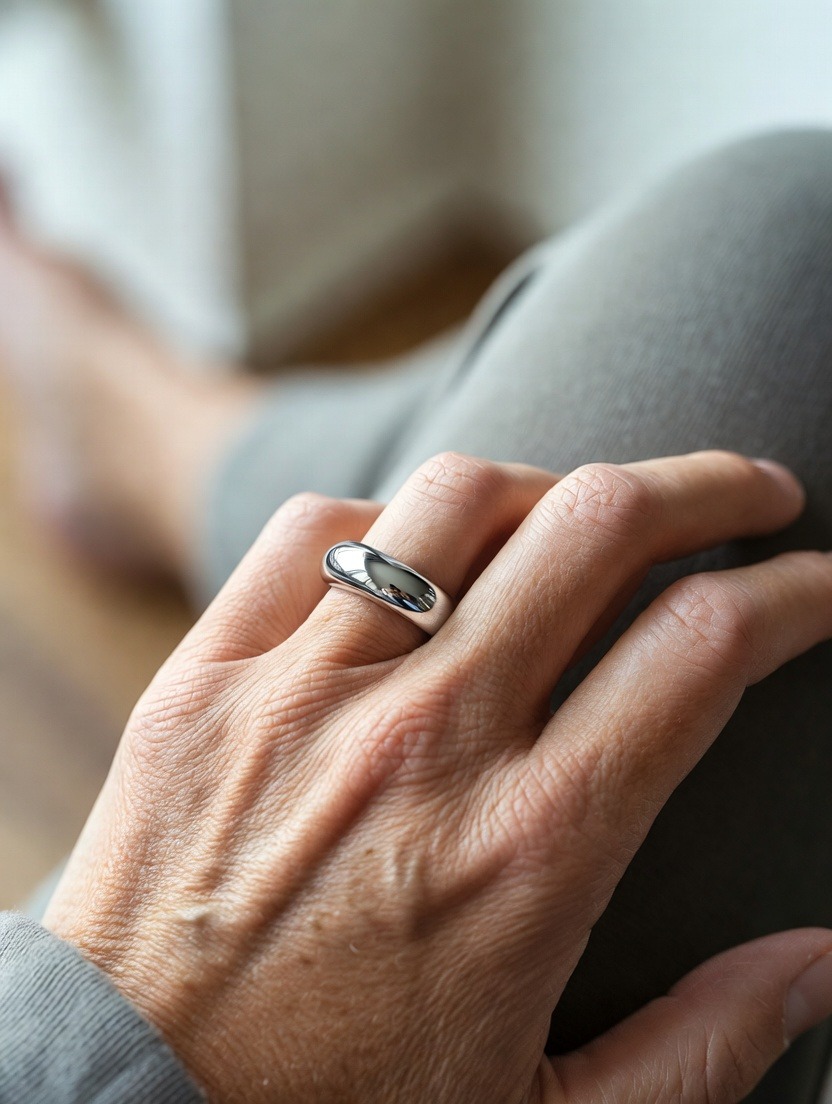
The wearable market is crowded: wrist-based smartwatches and fitness bands, chest-strap heart monitors, clip-on devices, and even smart clothing. Each has strengths, but the smart ring occupies a unique and powerful niche for continuous, unobtrusive biometric monitoring, particularly for body awareness. Here’s why the finger is an ideal vantage point.
1. The Physiological Advantage: A Rich Vascular Signal.
The finger, specifically the base of the finger where rings sit, contains dense networks of capillaries (tiny blood vessels). This allows photoplethysmography (PPG) optical sensors to get a strong, clean blood flow signal with less motion noise than the wrist, which is dominated by larger tendons and bones. This is crucial for accurate HRV measurement, as the algorithm needs to detect the precise timing between heartbeats. A cleaner signal means more reliable data, especially during sleep.
2. The Behavioral Advantage: Unobtrusive and Consistent Wear.
For 24/7 body awareness, consistency is everything. A ring is:
3. The Data Integrity Advantage: A Superior Window into Sleep and Recovery.
This is the most significant differentiator. Because it’s worn consistently through the night and provides a strong signal, the smart ring excels at measuring the metrics that matter most for recovery and awareness:
Comparison at a Glance:
For the specific goal of developing deep body awareness through recovery, sleep, and nervous system trends, the smart ring’s design is purpose-built. It prioritizes the quality and consistency of the fundamental biomarkers over the breadth of smart features. It is the dedicated tool for understanding your body’s internal state, while a watch might be the tool for managing your external activity. For those comparing options, understanding the best sleep quality tracking methods compared for beginners can highlight why the ring's form factor is so advantageous.
Your smart ring’s companion app presents clean, simple scores—Sleep 85, Readiness 90, HRV 42 ms. But behind these numbers lie complex algorithms making interpretations. Understanding the logic—and the limitations—of these algorithms prevents misinterpretation and builds smarter trust in your data.
How a Sleep Score is Typically Calculated:
It’s not a single measurement, but a weighted composite. While each brand has its own secret sauce, a common model includes:
What a Sleep Score Tells You: It’s a holistic grade on the effectiveness of your sleep period. An 85 means your sleep was highly effective for recovery. A 65 indicates there were multiple compromised areas.
What a Sleep Score Doesn’t Tell You: It doesn’t diagnose sleep disorders like apnea (though severe fragmentation might be a clue). It doesn’t capture subjective quality perfectly—you might have a decent score but still feel unrested due to factors like pain or noise, which is why integrating your personal feeling is key. To dive deeper, you can explore what your specific sleep quality score really means.
How a Readiness/Recovery Score is Typically Calculated:
This algorithm synthesizes last night’s recovery with recent strain.
What a Readiness Score Tells You: It’s a prediction of your physiological capacity to handle stress today. It answers: "How resilient is my system right now?"
What a Readiness Score Doesn’t Tell You: It doesn’t measure your motivation, skill, or willpower. It doesn’t account for acute psychological stressors happening right now that aren't yet reflected in your overnight physiology. It’s a starting point for the day, not an absolute fate.
The Golden Rule of Algorithm Interpretation:
Look for consensus. When multiple data points align, you have a strong signal.
By peeking behind the algorithmic curtain, you move from being a passive consumer of scores to an informed interpreter. You understand that a score is a summary, and you know where to look in the detailed data to investigate its meaning. This empowers you to make nuanced decisions, especially when the summary score doesn’t quite match how you feel.
While body awareness is an intimate, personal journey, it doesn’t have to be a solitary one. The rise of biometric wearables is creating new, data-informed social dynamics that can enhance motivation, provide context, and foster shared understanding. This represents a fascinating new frontier in how we connect around health.
1. Shared Context in Relationships:
Imagine a couple both wearing smart rings. Instead of a vague "I'm tired," one partner can say, "My data shows my nervous system is really depleted today; my HRV is in the tank. I might need a quiet evening." This provides objective context that can reduce conflict and increase empathy. It shifts the conversation from blame ("You're always tired!") to collaborative problem-solving ("Your data is low; what can we do to help you recover?"). It can also help partners synchronize habits for mutual benefit, like agreeing on a shared wind-down time to improve both their sleep environments.
2. The Coach-Athlete (or Professional-Client) Feedback Loop:
For coaches, trainers, therapists, or functional medicine practitioners, client-shared biometric data is transformative. Instead of relying solely on subjective check-ins ("How did you sleep?"), the professional can see objective trends. A therapist can see how a client's HRV responds to different therapeutic techniques. A fitness coach can precisely tailor training loads based on a client’s recovery scores, preventing overtraining and optimizing results. This creates a powerful, evidence-based partnership.
3. Community and "Norm-Referencing" (The Right Way):
While comparing your absolute numbers to others is generally unhelpful (due to personal baselines), participating in anonymized group data can be enlightening. Some platforms show how your sleep or activity compares to age/sex-matched cohorts. Seeing that your declining deep sleep in your 40s is part of a common age-related change in sleep quality can be reassuring. Online communities allow users to share experiments and insights: "Has anyone found a way to improve REM sleep when traveling?" This collective intelligence accelerates individual learning.
4. Family Health Awareness:
For families, especially those with teenagers or aging parents, shared, respectful awareness can be powerful. A parent might notice a teen’s sleep schedule has become wildly inconsistent and their resting heart rate is elevated—a potential sign of anxiety or poor habits—opening a data-informed, non-judgmental conversation about stress management. For an aging parent, a child might notice a gradual change in activity levels or resting heart rate that could warrant a check-in with a doctor.
Important Boundaries for Shared Data:
This social dimension requires clear boundaries and consent. Data should be shared voluntarily, not demanded. The purpose should be support and understanding, not surveillance or control. The focus must remain on trends and patterns that facilitate conversation, not on judgment of daily scores.
When used ethically, shared body awareness data can deepen our most important connections, creating a common language for well-being and turning personal health into a supported, collective endeavor.
Your Trusted Sleep Advocate: Sleep Foundation — https://www.sleepfoundation.org
Discover a digital archive of scholarly articles: NIH — https://www.ncbi.nlm.nih.gov/
39 million citations for biomedical literature :PubMed — https://pubmed.ncbi.nlm.nih.gov/
Experts at Harvard Health Publishing covering a variety of health topics — https://www.health.harvard.edu/blog/
Every life deserves world class care :Cleveland Clinic - https://my.clevelandclinic.org/health
Wearable technology and the future of predictive health monitoring :MIT Technology Review — https://www.technologyreview.com/
Dedicated to the well-being of all people and guided by science :World Health Organization — https://www.who.int/news-room/
Psychological science and knowledge to benefit society and improve lives. :APA — https://www.apa.org/monitor/
Cutting-edge insights on human longevity and peak performance:
Lifespan Research — https://www.lifespan.io/
Global authority on exercise physiology, sports performance, and human recovery:
American College of Sports Medicine — https://www.acsm.org/
Neuroscience-driven guidance for better focus, sleep, and mental clarity:
Stanford Human Performance Lab — https://humanperformance.stanford.edu/
Evidence-based psychology and mind–body wellness resources:
Mayo Clinic — https://www.mayoclinic.org/healthy-lifestyle/
Data-backed research on emotional wellbeing, stress biology, and resilience:
American Institute of Stress — https://www.stress.org/


