


Body Awareness Basics: How Your Smart Ring Enhances Intuition
How a smart ring improves your innate sense of your body's state.
How a smart ring improves your innate sense of your body's state.
%402x.svg)
Have you ever had a gut feeling about a decision that turned out to be right, even when logic pointed elsewhere? Or sensed your energy dipping hours before you actually felt tired? This subtle, often-overlooked intelligence isn't magic—it's body awareness. It's the ability to listen to and interpret the continuous stream of physiological data your body produces. For centuries, tuning into this internal feedback system required years of meditation practice, disciplined mindfulness, or simply extraordinary natural sensitivity. Most of us stumble through our days disconnected from these signals, reacting to our bodies only when they scream in protest through pain, burnout, or illness.
But what if you could understand your body's whispers before they become screams? Welcome to the era of quantified self-awareness, where a revolution in wearable technology is bridging the ancient wisdom of intuition with the precision of modern science. At the forefront of this movement is the smart ring—a sleek, unobtrusive piece of technology worn on your finger that acts as a 24/7 personal biometrist.
This isn't just about tracking steps or counting hours of sleep. The latest generation of smart rings goes far deeper, measuring physiological markers like heart rate variability (HRV), skin temperature, blood oxygen saturation, and respiratory rate. They provide a continuous, objective readout of your nervous system's state, translating the cryptic language of your body into clear, actionable insights. In essence, a smart ring doesn't replace your intuition—it augments it. It gives you the data to validate your hunches, understand your energy patterns, and connect your physical state to your mental and emotional world. It turns vague feelings of "being off" into specific knowledge: your nervous system is in overdrive, your recovery is lagging, or your body is fighting an incoming virus.
This article explores the fascinating synergy between innate body awareness and advanced biometric technology. We will journey through the science of your body's internal communication systems, uncover how a smart ring captures this data, and provide a practical framework for using this information to enhance your decision-making, optimize your performance, and cultivate a profound, data-informed intuition. This is about moving from living in your body to collaborating with it.

We live in a world of overwhelming external stimuli. From the moment we wake to the ping of a notification to the constant barrage of digital media, work demands, and environmental noise, our attention is pulled relentlessly outward. This chronic outward focus has a profound cost: it severs our connection to the internal landscape of our own bodies. We've largely forgotten how to speak—or even listen to—our body's native language of sensation, rhythm, and subtle signal.
This disconnection is a modern epidemic with ancient roots. While past survival often depended on acute physical awareness—sensing changes in weather, reading animal signs, feeling one's own fatigue on a long hunt—modern survival is cognitive and digital. We prize mental output over physical feeling, often treating our bodies as mere vehicles for our brains. We ignore hunger cues until we're "hangry," push through exhaustion with caffeine, and override stress signals until we crash. The body's communication system is analog, gentle, and persistent, but we're tuned to a digital, loud, and immediate frequency.
The consequences are everywhere. Stress manifests as mysterious aches, poor sleep becomes a norm we medicate rather than understand, and we make decisions about our health, relationships, and work based on cognitive reasoning alone, sidelining the wisdom of our physiological state. We might feel a tightness in our chest before a big meeting and label it "anxiety" without investigating if it's linked to shallow breathing from hours at a desk. We might feel irritable in the afternoon and blame our workload, missing the connection to a blood sugar crash or cumulative sleep debt.
Re-learning this lost language doesn't mean rejecting modern life. It means integrating a new tool for translation. This is where objective biometric data becomes revolutionary. When you can see a graph showing your resting heart rate is 10 BPM higher than usual, or that your HRV—a key indicator of nervous system resilience—has plummeted, a vague sense of "feeling off" transforms into a concrete fact. The data doesn't tell you why you feel that way, but it validates the feeling and prompts a curious investigation. It's the first step in rebuilding the bridge between your conscious mind and the intelligent, chattering system that is your body. It’s a critical foundation for everything else, including understanding the profound impact of rest, as explored in our analysis of what sleep quality really is and why it matters more than hours logged.
Your body is not a passive vessel; it is a dynamic, intelligent system constantly generating data and sending reports to your brain. This "somatic intelligence" operates through a complex network of sensors (interoceptors and proprioceptors), hormones, neurotransmitters, and the two primary branches of your autonomic nervous system (ANS): the sympathetic ("fight or flight") and parasympathetic ("rest and digest").
At the heart of this system's communicable output is Heart Rate Variability (HRV). HRV is the subtle, millisecond variation in the time interval between consecutive heartbeats. Contrary to popular belief, a healthy heart is not a metronome; it's a jazz musician, constantly adapting its rhythm in response to signals from the brain. High HRV indicates a flexible, resilient nervous system that can efficiently switch between stress and recovery modes. Low HRV suggests a stressed, fatigued, or inflexible system stuck in a state of high alert or exhaustion.
Other key biomarkers include:
For generations, accessing this data required clinical visits or bulky laboratory equipment. Now, advanced photoplethysmography (PPG) sensors in devices like smart rings can measure these metrics passively and continuously. By wearing a ring, you gain a objective dashboard for your somatic intelligence. You're no longer guessing if you're "run down"; you can see the quantitative evidence in your recovery metrics. This scientific feedback loop is what transforms vague body awareness into precise body literacy.
So how does a piece of jewelry on your finger unlock this deep physiological insight? The magic lies in miniaturized medical-grade sensor technology and sophisticated algorithms. The primary sensor is a PPG optical sensor, typically using green LED light. Here’s the simple brilliance of it: Blood absorbs green light. As your heart pumps, blood volume in the capillaries of your finger changes with each pulse. The sensor detects these minute changes in light absorption, creating a precise waveform—a pulse plethysmograph—from which your heart rate, heart rate variability, and even respiratory rate (through a technique called modulation analysis) can be derived.
Because the finger has dense capillary beds and is less prone to motion artifacts during sleep than a wrist (which can tuck under your head or pillow), smart rings are particularly adept at capturing accurate nocturnal data. This is where they shine, offering a lab-like window into your sleep architecture without the awkward headgear.
Beyond the optical sensor, advanced rings incorporate a 3D accelerometer for movement and activity tracking, and some include skin temperature sensors. The raw data from these sensors is a torrent of numbers. The true value is created by the onboard and cloud-based algorithms that analyze patterns over time. They establish your personal baselines—what "normal" looks like for you—and then flag meaningful deviations. This is the cornerstone of insight: the ring doesn't just show you a snapshot; it shows you your trend. It tells you when your body is deviating from its own unique healthy pattern, whether that's a temperature spike suggesting immune activation or a dip in HRV indicating you haven't recovered from a tough workout. To see this technology in action for one of its most powerful applications, learn how smart rings measure sleep quality more accurately than other wearables.

Intuition is often described as "knowing without knowing why." But what if the "why" is buried in the biometric data your conscious mind hasn't yet processed? This is the core premise of enhanced intuition through a smart ring. Your gut feeling—that unease about a commitment, that sense you're coming down with something, that inkling you need a rest day—is frequently your subconscious mind integrating subtle physiological cues that haven't yet broken through to conscious awareness.
A smart ring makes the subconscious conscious. It provides a tangible, objective correlate to those fuzzy feelings.
Scenario 1: The Business Decision. You have a major partnership meeting. Logically, the deal looks sound. But you feel a knot in your stomach. You check your ring's data and notice your HRV has been in a steady decline for three days and your resting heart rate is elevated—clear signs of accumulated stress and a nervous system on edge. The data doesn't tell you to reject the deal, but it does tell you your capacity for clear, rational judgment under stress may be compromised. It validates the "knot" and prompts you to either delay the meeting, enter it with explicit stress-mitigation strategies, or at least view the terms with extra caution.
Scenario 2: The Wellness Hunch. You're scheduled for a hard gym session but feel unusually heavy and lethargic. Your workout buddy says, "You're just being lazy, push through!" You check your recovery score on your ring app and see it's a "Poor" 45/100, with low HRV and elevated skin temperature. The data confirms this isn't mental laziness; it's a physiological state of needing recovery. Heeding this data-informed intuition prevents overtraining and potential injury.
In this way, the ring acts as an intuition amplifier. It reduces the noise of doubt and societal pressure ("just push through!") and amplifies the signal from your body. It turns "I feel like I should..." into "My biometric data indicates I need to..." This builds self-trust. Over time, as you repeatedly see the data validate your hunches, you begin to trust those feelings earlier and more confidently, even before you check the app.
Body awareness isn't just about managing stress; it's about optimizing your energy. We all experience natural fluctuations in energy, focus, and mood throughout the day—our circadian rhythms. Yet, most of us live by the clock on the wall, not the clock in our cells. We drink coffee at a scheduled time even if our body is signaling for a walk in natural light, or we try to tackle deep work during our biological afternoon slump.
Smart ring data, particularly temperature and HRV trends, provides a personalized map of your chronobiology. Over weeks and months, patterns emerge:
This data allows you to align your life with your biology, not fight against it. Instead of forcing yourself into a generic "productivity hack," you can create a schedule that rides the waves of your natural energy. This is the essence of sustainable high performance: working with your body's rhythms, not against them. When you align your sleep with these deep rhythms, the benefits are profound, as detailed in the science of what happens in your body and brain when you achieve truly good sleep quality.
Heart Rate Variability is the crown jewel of biomarkers for body awareness. It is the single best non-invasive window into the state of your autonomic nervous system and, by extension, your resilience. Think of HRV as your body's "stress buffer" or "recovery capacity." A high HRV means you have a wide emotional and physiological bandwidth; you can handle stress effectively and bounce back quickly. A low HRV means your bandwidth is narrow; you're closer to your limits and more vulnerable to burnout, illness, or poor performance.
A smart ring tracks your HRV continuously, especially during sleep when external干扰 are minimal, giving you a pure read of your recovery state. Learning to read your HRV trends is like learning a new dialect of your body's language.
What the Patterns Tell You:
By watching HRV, you make proactive choices. A low morning score might lead you to swap an intense workout for yoga, schedule a light workday, or say no to an extra commitment. This is resilience management in real-time, allowing you to regulate your energy output before your body forces a shutdown.
While HRV speaks the language of your nervous system, skin temperature tells the story of your metabolism, circulation, and immune response. A smart ring with a temperature sensor tracks subtle fluctuations—often fractions of a degree—that are meaningful signals.
Decoding the Temperature Data:
Temperature data adds a crucial layer to the body awareness picture. It turns the vague sense of "feeling feverish" or "cold all the time" into a trackable trend, empowering you to take context-specific action for your health.

You cannot talk about body awareness without addressing its foundation: sleep. Sleep is not downtime; it is your body's essential maintenance window, when repair, memory consolidation, and metabolic cleanup occur. Poor sleep scrambles all your body's signals. It lowers HRV, elevates RHR, dysregulates temperature, and blunts your emotional and cognitive perception. Your intuition on four hours of poor sleep is like a radio tuned to static.
A smart ring provides the most comprehensive sleep analysis available outside a lab. It goes far beyond "8 hours in bed" to analyze:
This data transforms sleep from a black box into a transparent process. You can run experiments: see how a late coffee affects your deep sleep, how alcohol destroys your REM sleep, or how a cooling mattress pad improves your efficiency. Most importantly, your Sleep Score or Readiness Score (which integrates sleep data with HRV and RHR) becomes your daily intuition calibration metric. A high score means your internal radio is tuned to a clear frequency; you can likely trust your gut feelings and cognitive decisions. A low score is a warning that your system is offline for maintenance; your perceptions may be biased toward negativity and stress, and major decisions should be postponed if possible. If you consistently wake up tired despite being in bed long enough, the ring's data can help you uncover the reasons, as we break down in why you wake up tired—the hidden sleep quality connection.
The single most important concept in using a smart ring for enhanced body awareness is this: All data is meaningless without your personal baseline. Your healthy, normal HRV of 60 ms is someone else's sign of overtraining, and vice versa. The ring's power isn't in comparing you to population averages; it's in tracking you against yourself.
Establishing a baseline takes time—typically 2-4 weeks of consistent wear, especially during sleep. During this period, the algorithms learn your unique rhythms: what your average HRV is, your typical temperature curve, your normal resting heart rate. Once this baseline is set, the magic begins. The app will highlight meaningful deviations—when you are significantly outside your normal range.
This personalization is what prevents data anxiety. You're not chasing an arbitrary "perfect" score; you're maintaining your own equilibrium. A "good" day is one where your data aligns with your baseline, indicating you are in your personal zone of balance. This framework fosters self-compassion and curiosity instead of comparison and judgment. It teaches you what optimal looks like for you, which is the ultimate goal of body awareness.
Technology is only as useful as the behavior it inspires. The final step in this first portion of our exploration is integrating these data streams into daily life without becoming a slave to the numbers. The goal is to use the ring as a training tool for your own innate perception.
A Simple Daily Practice: The 3-Minute Check-In
This practice creates a continuous dialogue. Over time, you'll need to check the app less frequently because you've internalized the correlations. You'll feel your low HRV as a sense of fragility. You'll sense a temperature rise as a slight, achy warmth. The ring trains your interoception, and eventually, the technology fades into the background, leaving you with a sharper, clearer, and profoundly more trustworthy connection to the wisdom of your own body. To begin this journey of integration, a great starting point is our guide on where to start for maximum sleep quality improvement results.
The transition from simply having data to developing a refined, instinctual understanding of that data is where true body literacy flourishes. This stage moves beyond reacting to daily scores and into the realm of proactive communication with your physiology. It’s about learning to ask your body questions and using the biometric feedback as answers, thereby cultivating a sophisticated mind-body dialogue.
Think of it this way: In the beginning, the smart ring shouts clear alerts—“LOW HRV!” “HIGH TEMP!” This is vital, but it’s a monologue. The next evolution is to learn its quieter language so you can have a conversation. You start to pose questions through your actions: “If I meditate for 20 minutes instead of scrolling, how does my nervous system respond?” “If I eat a heavy meal at 8 PM, what is the cost in my sleep architecture?” “When I have a difficult conversation, can I see the physiological arc of preparation, engagement, and recovery?”
This dialogue hinges on pattern recognition over time. The smart ring’s app becomes a journal of experiments. You log not just your workouts and sleep, but also subjective notes: “Felt incredibly focused today,” “Argument with partner this morning,” “Ate out at new restaurant,” “Drank two glasses of wine.” Weeks later, you can look back at your data trends and see the undeniable correlations. Perhaps you’ll discover that your “incredibly focused” day was preceded by a night with a high proportion of deep sleep, or that the argument triggered a three-day suppression of your HRV, impacting your patience with your children. This is awareness with cause and effect. It transforms you from a passive recipient of health data into an active investigator of your own well-being.
This investigative process naturally enhances your predictive intuition. Just as a sailor learns to read the wind and waves to anticipate weather changes, you learn to read your physiological precursors to anticipate your own states. You might notice that a specific, subtle feeling of restlessness in the evening consistently correlates with poor sleep later that night, prompting you to initiate your wind-down routine earlier. The external data validates the internal cue, reinforcing your trust in it. This is the “intuition algorithm” in practice: a continuous feedback loop where subjective feelings and objective data inform and refine each other, leading to more precise and trustworthy self-knowledge.
Stress is not monolithic. While the biological cascade of cortisol and adrenaline is universal, how it manifests in your unique physiology—your Stress Signature—is highly personal. One person under pressure may experience a racing heart and sweaty palms (a strong cardiac response). Another might get a tense jaw and headaches (a muscular-skeletal response). A third might shut down with fatigue and brain fog (a nervous system exhaustion response). Most of us only recognize our primary stress response when it’s at its peak, missing the earlier, subtler signals.
A smart ring helps you map your Stress Signature from the inside out. By observing your biometric data during both calm and challenging periods, you can identify your body’s first, most sensitive responders.
Common Stress Signatures Revealed by Biometrics:
Knowing your Stress Signature is empowering. If you’re a “Cardiac Climber,” you can use a quick RHR check as a real-time stress barometer during the day. If you’re an “HRV Plummet” person, seeing that number dip can be your cue to employ a vagus nerve stimulation technique (like deep, slow breathing) to restore flexibility. This knowledge allows you to intervene earlier in the stress cycle, moving from management to prevention. It also helps you identify which relaxation practices are most effective for your biology. You might find that yoga nidra dramatically improves your HRV but does little for your RHR, while a brisk walk is what truly calms your cardiac response.

Modern culture, especially in fitness and business, glorifies the “grind”—pushing through pain, ignoring fatigue, and treating rest as a reward for exhaustion. This mindset is biologically backwards and is the fast track to burnout, injury, and diminished returns. The smart ring introduces a powerful, data-driven counter-narrative: Strategic non-doing is the ultimate performance enhancer.
This is the Recovery Paradox: By heeding your body’s signals to slow down, you enable it to rebuild stronger, adapt more effectively, and perform at a higher peak when it’s time. The ring provides the unambiguous evidence needed to overcome our cultural and internalized resistance to rest.
How the Ring Guides Intelligent Recovery:
Embracing this paradox requires a shift in identity: from someone who is strong because they never rest to someone who is smart and resilient because they rest precisely when needed. The data gives you permission to listen to the soft “no” from your body, transforming it from a sign of weakness into the most sophisticated piece of performance intelligence you possess. This principle is intimately connected to sleep, where the quality of your rest is the single biggest determinant of your recovery; understanding the hidden link between sleep quality and mental health reveals just how deep this recovery process goes.
Our bodies are deeply social organs. Our physiological states co-regulate with those around us—we catch stress or calm from our partners, our heart rates can synchronize during close conversation, and conflict can trigger a cascade of defensive biology. A smart ring can make this invisible social-emotional layer startlingly visible, providing a “relationship biometrics” that enhances emotional intelligence (EQ).
Applications in Social Awareness:
This isn’t about becoming robotic or over-analyzing every interaction. It’s about using the internal data to inform your external behavior. For example, if you see your stress levels remain elevated for hours after a weekly team meeting, it’s a signal to investigate the dynamics of that meeting or to implement a stronger post-meeting recovery ritual. It turns vague social fatigue into actionable insight, allowing you to better protect your energy in relational contexts.
The ultimate promise of deep body awareness is shifting from reactive healthcare to proactive health creation. By understanding your body’s normal patterns, you can detect anomalies that precede clinical symptoms, sometimes by days. This is the frontier of predictive personal health, and the smart ring is a key tool in this paradigm.
Predictive Pathways Enabled by Continuous Monitoring:
This approach transforms you from a passenger in your health journey to the pilot with an advanced instrument panel. You’re no longer waiting for a doctor to tell you something is wrong; you’re noticing when your own systems are moving away from optimal and taking subtle, early corrective actions. It’s the embodiment of the adage, “The best time to fix the roof is when the sun is shining.” The ring shows you the first few clouds on the horizon. For a clear example of this, consider how optimizing one key area—sleep—has cascading benefits; research backs up exactly how poor sleep quality affects everything from your hormones to your long-term disease risk.
A smart ring is a powerful, self-contained device, but its insights are magnified when integrated into a holistic view of your wellness. The most advanced body awareness comes from correlating its physiological data with other key metrics and practices. This is about creating a unified dashboard for your well-being.
Key Integration Points for a 360-Degree View:
This integrated approach prevents “ring tunnel vision,” where you focus solely on one metric. It reinforces that body awareness is multifaceted—what you eat, how you move, what you think, and how you connect all weave together to create the physiological output the ring measures. The ring isn’t the answer; it’s the question-asker that guides you to the answers that lie in your holistic lifestyle choices.
A legitimate concern with any biometric tracking is the potential for obsession, anxiety, or orthorexia—where the quest for perfect data becomes a source of stress itself. This is counterproductive, as stress from tracking negates the benefits of awareness. Cultivating a healthy, balanced relationship with your smart ring data is a crucial skill.
Principles for Balanced Biohacking:
The goal is for the ring to become like a trusted advisor who occasionally offers insights, not a micromanaging boss who dictates your every move. When used with this mindset, it liberates you from guesswork and anxiety about your health, providing peace of mind through clarity. This is especially important in the nuanced world of sleep, where common sleep quality myths can lead to unnecessary frustration and poor habits.
As we invite these devices deeper into our lives, collecting our most intimate data—our heart’s rhythm, our sleep’s depth, our stress levels—ethical considerations must be part of the body awareness conversation. Who owns this data? How is it secured? How could it be used?
Key Considerations for the Conscious User:
Using a smart ring with ethical awareness means being a consumer who demands transparency and a user who maintains sovereignty. Your biometric story belongs to you. The ring is merely the scribe.
Body awareness is not a static skill you master once; it’s a lifelong dialogue that evolves as you do. Your body’s needs, rhythms, and signals change dramatically across decades. A smart ring provides a consistent measurement tool to navigate these transitions with grace and intelligence, helping you adapt your self-care in real-time.
Awareness Through the Seasons of Life:
Across all ages, the ring provides continuity. It teaches you what “normal for you” looks like at each stage, reducing anxiety about natural changes. It empowers you to be an informed participant in your healthcare conversations, bringing hard data about your daily life to annual check-ups. This longitudinal self-knowledge is perhaps the most profound gift of continuous biometric tracking—a mirror that reflects not just your daily state, but the evolving narrative of your physical life. This narrative is deeply interwoven with sleep, and understanding how sleep quality changes with aging, and what you can control, is a perfect example of this empowering knowledge.
Mastering the fundamentals of heart rate variability, temperature, and sleep scores is just the beginning. The true artistry of body awareness lies in interpreting the subtle interplay between these metrics, understanding their dynamic relationships, and discerning the story they tell together. This is where you move from reading individual words to understanding the full sentence of your physiology.
Consider the following nuanced scenarios that basic scores might miss:
This level of interpretation transforms your ring from a reporter into a strategist. You learn to ask combinatorial questions: "What is my HRV doing in relation to my temperature?" "Is my RHR elevation confined to sleep, or is it all day?" You start to see constellations in the data, not just isolated stars. This skill is honed by consistent observation and note-taking, building your personal library of cause-and-effect. It’s the difference between having a thermometer and being a meteorologist.
At the heart of your body's communication system lies the vagus nerve—the longest cranial nerve, a superhighway connecting your brain to your heart, lungs, gut, and other major organs. It is the primary conductor of your parasympathetic nervous system, responsible for calming, restoring, and digesting. High "vagal tone" is associated with high HRV, resilience, and emotional regulation. A smart ring, by giving you a real-time proxy for vagal tone via HRV, turns you into an active trainee of your own nervous system.
You can move from passively observing your stress state to actively engineering your calm state. This is biofeedback of the highest order.
Becoming a Vagus Nerve Virtuoso:
The goal is autonomic flexibility: the ability to ramp up sympathetic energy when needed for performance and efficiently drop back into parasympathetic recovery afterward. The ring is your flexibility gauge, making you the virtuoso of your own inner orchestra.
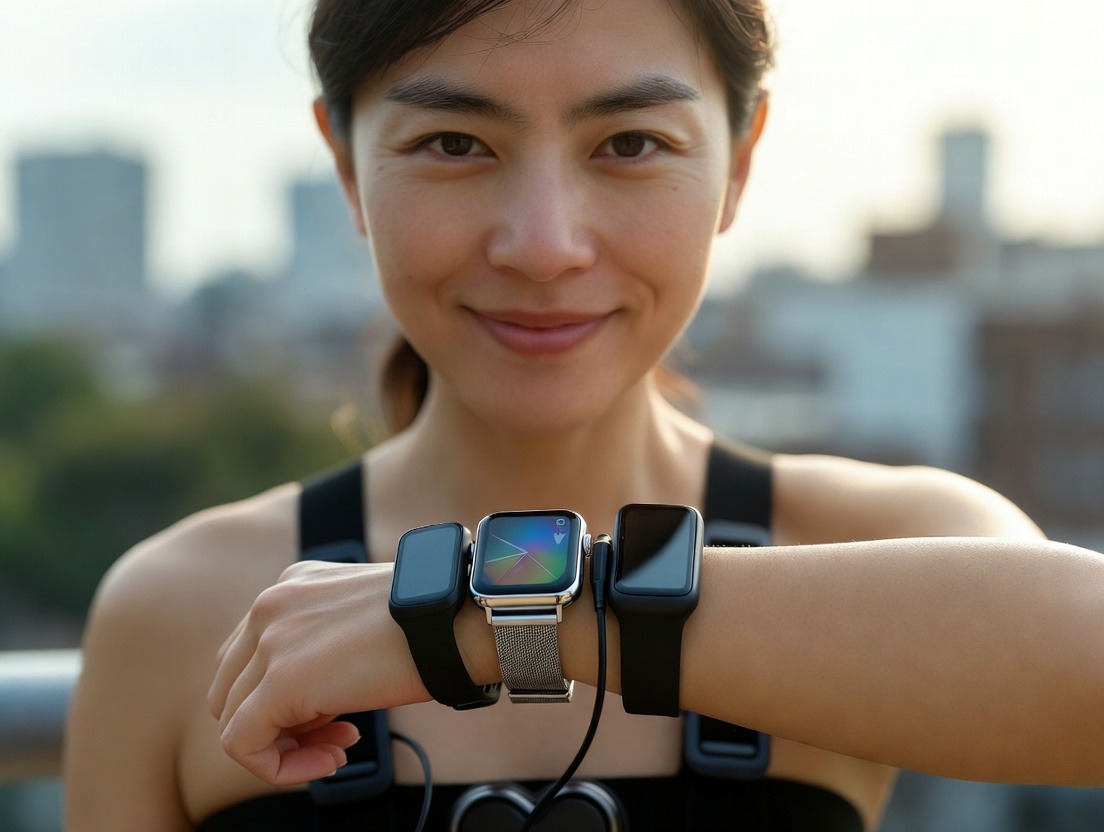
Your circadian rhythm is far more than a sleep-wake cycle. It is a 24-hour master program that governs everything from hormone release (cortisol, melatonin) and metabolism to cognitive function and cell repair. Living against this rhythm—known as social jetlag—is a major source of poor health and low energy. Your smart ring, through temperature and HRV data, provides you with a personalized Circadian Compass to navigate back into alignment.
Your core body temperature rhythm is one of the most reliable markers of your circadian phase. It reaches its lowest point in the second half of your sleep and begins to rise in the morning, promoting wakefulness. By tracking skin temperature trends, the ring can help you pinpoint key phases:
Using Your Circadian Compass:
By following your Circadian Compass, you stop forcing your biology to conform to an arbitrary schedule and start designing a schedule that conforms to your biology. This is the essence of sustainable energy management, and its success is directly measurable in your sleep data, where you can track the morning signs of good sleep quality as proof of proper alignment.
The current suite of metrics—HRV, HR, temperature, SpO2—is powerful, but it represents just the first chapter in biometric sensing. The frontier of smart ring technology is expanding into biomarkers that will deepen body awareness into realms previously inaccessible outside of clinics. Understanding this horizon prepares you for the future of intuitive health.
Emerging and Future Biomarker Capabilities:
The integration of these new data streams will create a multidimensional avatar of your health. The challenge and opportunity will remain the same: to integrate this flood of information into a coherent, actionable narrative without becoming overwhelmed. The foundational skills you build today—interpreting relationships, understanding context, and focusing on trends—will be the very skills that allow you to harness the power of tomorrow's biomarkers with wisdom and calm.
For body awareness to be genuine, it must include an honest assessment of technology's limits. A smart ring is a phenomenal tool, but it is not a medical device, a psychic, or a replacement for professional care. Navigating its use with a critical eye prevents disillusionment and maximizes its utility.
Key Limitations to Acknowledge:
Setting Realistic Expectations:
This clear-eyed perspective ensures the technology remains in service to your humanity, not the other way around. It also highlights that while the ring is a powerful tool for measuring sleep, it is your behavior that creates it; debunking common sleep quality myths is a crucial part of this realistic foundation.

To weave theory into practice, let’s follow "Alex" through a week, observing how biometric data influences micro and macro decisions.
This narrative illustrates the seamless integration of data into a fluid, responsive life. The ring doesn't dictate; it informs. Alex remains the author, but now writes with a sharper pencil.
Body awareness, while deeply personal, need not be solitary. The rise of smart rings has fostered communities—from dedicated subreddits and Discord channels to couples and families—who share and discuss their biometric data. This "Community of Awareness" offers a powerful new dimension: collective wisdom and shared accountability.
The Power of Shared Data (With Consent):
This social layer transforms body awareness from a private optimization project into a shared human experience. It normalizes biological fluctuations, reduces anxiety around "weird" data, and provides a support network for behavioral change. Of course, this requires strong boundaries and consent—sharing must always be voluntary and within contexts of trust. But when done right, it represents a new frontier of health-conscious community, where the common language is the objective, compassionate understanding of our human physiology. This collective journey often starts with mastering the fundamentals individually, such as using a sleep quality checklist to ensure you're getting truly restful sleep.
We have journeyed from the initial spark of reconnection, through the science and art of interpretation, to the frontiers of community and future innovation. The path of body awareness, augmented by the smart ring, is revealed not as a destination but as a continuum—a lifelong practice of deepening embodied knowledge.
It begins with external quantification, where the ring provides the startling, objective truth of your internal state. This phase is about building literacy and trust in the data. It then progresses to integrated interpretation, where you weave data streams together and correlate them with your lived experience, becoming the expert of your own patterns. The next stage is intuitive application, where the data recedes into the background, having trained your subconscious to recognize the felt-sense of high HRV, the pre-illness ache, or the need for recovery. The technology becomes a periodic check-in, a calibration tool for your now-heightened innate senses.
Finally, the practice evolves into wisdom sharing, where your personal knowledge contributes to a collective understanding of human physiology and resilience. Your journey informs others, and theirs informs you.
This continuum transforms your relationship with yourself from one of mystery and reaction to one of familiarity and partnership. You are no longer a passenger in your body, subject to its unexplained storms and calms. You are the co-pilot, with a sophisticated instrument panel that speaks your body's native language. The smart ring is the catalyst for this transformation, but the transformation itself is profoundly human. It is the reclaiming of an ancient birthright—the unbroken conversation between your conscious mind and the intelligent, whispering, endlessly communicative vessel that carries you through life. The goal was never to live by the numbers. The goal is to live so fully, so attuned, that the numbers simply become a quiet affirmation of the harmony you have learned to feel within.
Your Trusted Sleep Advocate: Sleep Foundation — https://www.sleepfoundation.org
Discover a digital archive of scholarly articles: NIH — https://www.ncbi.nlm.nih.gov/
39 million citations for biomedical literature :PubMed — https://pubmed.ncbi.nlm.nih.gov/
Experts at Harvard Health Publishing covering a variety of health topics — https://www.health.harvard.edu/blog/
Every life deserves world class care :Cleveland Clinic - https://my.clevelandclinic.org/health
Wearable technology and the future of predictive health monitoring :MIT Technology Review — https://www.technologyreview.com/
Dedicated to the well-being of all people and guided by science :World Health Organization — https://www.who.int/news-room/
Psychological science and knowledge to benefit society and improve lives. :APA — https://www.apa.org/monitor/
Cutting-edge insights on human longevity and peak performance:
Lifespan Research — https://www.lifespan.io/
Global authority on exercise physiology, sports performance, and human recovery:
American College of Sports Medicine — https://www.acsm.org/
Neuroscience-driven guidance for better focus, sleep, and mental clarity:
Stanford Human Performance Lab — https://humanperformance.stanford.edu/
Evidence-based psychology and mind–body wellness resources:
Mayo Clinic — https://www.mayoclinic.org/healthy-lifestyle/
Data-backed research on emotional wellbeing, stress biology, and resilience:
American Institute of Stress — https://www.stress.org/


