


The Nature Immersion Method: Forest Bathing for Stress Reduction
Cognitive reframing involves consciously changing your interpretation of a stressful situation to reduce its emotional impact.
Cognitive reframing involves consciously changing your interpretation of a stressful situation to reduce its emotional impact.
%402x.svg)
We live in a world of relentless notifications, digital saturation, and artificial light. Our nervous systems, evolved over millennia to thrive in natural environments, are now subjected to a constant, low-grade hum of technological stress. This disconnect—this “nature deficit disorder,” as some researchers call it—has tangible consequences: soaring rates of anxiety, burnout, insomnia, and a pervasive sense of being overwhelmed. We seek solutions in productivity apps, meditation subscriptions, and wellness supplements, often overlooking the most profound, accessible, and scientifically validated therapy available: nature itself.
Enter Shinrin-yoku, a term coined in Japan in the 1980s that translates to “forest bathing” or “taking in the forest atmosphere.” This is not hiking, nor is it exercise with trees as a backdrop. Forest bathing is a mindful, sensory immersion in a living forest. It is the deliberate practice of being present with nature, not just in it—of opening our often-dormant senses to the subtle language of leaves, light, scent, and sound.
This is more than a poetic notion. Over the past four decades, a robust field of scientific research has emerged from Japan, South Korea, Scandinavia, and beyond, forming a discipline known as Forest Medicine. The findings are staggering. Regular, mindful immersion in forests has been shown to significantly lower cortisol (the primary stress hormone), reduce blood pressure and heart rate, improve mood and focus, boost immune function via increased Natural Killer (NK) cell activity, and enhance creativity. It is a multi-sensory, physiological reset button.
The Nature Immersion Method is a structured yet flexible framework for translating these powerful findings into a consistent, modern practice. It moves beyond the anecdotal “just go for a walk” advice to provide a science-backed pathway for harnessing nature’s restorative power. This method teaches you how to engage your senses intentionally, cultivate eco-mindfulness, and integrate micro-doses of nature into even the most urban lifestyle.
And in our data-driven age, we can now understand this internal shift with unprecedented clarity. This is where technology, rather than pulling us away, can deepen our connection. Wearable devices, like the advanced smart rings from Oxyzen.ai, allow us to quantify the invisible. By tracking physiological markers like Heart Rate Variability (HRV), sleep quality, and resting heart rate, we can move from feeling less stressed to seeing the objective, biometric proof of nature’s impact. It turns a subjective experience into an empowering, personalized wellness journey. For a deeper look at how this technology complements holistic practices, you can explore our blog for related articles on biohacking and wellness.
This article is your comprehensive guide to The Nature Immersion Method. We will explore its ancient roots and modern science, deconstruct the practice into actionable sensory exercises, and provide practical strategies for making forest bathing a cornerstone of your mental and physical resilience. We will journey from the cellular level—where phytoncides (essential wood oils) boost our immunity—to the philosophical, exploring how deep nature connection can re-enchant our daily lives and combat eco-anxiety. This is an invitation to slow down, tune in, and let the oldest therapy on earth heal your modern mind.

To understand the profound healing potential of forest bathing, we must first diagnose the ailment. The stress we experience today is fundamentally different from the acute, life-preserving stress responses our ancestors faced. Their stress was a saber-toothed tiger—a short, intense burst of adrenaline and cortisol that prompted a fight-or-flight reaction, followed by resolution and recovery. Our stress is a persistent, low-grade drip. It’s the 2 AM email from a boss, the endless social comparison on screens, the noise pollution of city life, and the cognitive overload of managing a thousand digital inputs.
This state of chronic, sympathetic nervous system dominance has dire physiological consequences. Our bodies are not designed to sustain elevated cortisol levels indefinitely. This hormonal imbalance leads to systemic inflammation, a weakened immune system, digestive issues, weight gain (particularly visceral fat around the organs), and an increased risk of heart disease. Neurologically, it shrinks the prefrontal cortex—the area responsible for executive function, decision-making, and emotional regulation—while enlarging the amygdala, the brain’s fear center. This creates a vicious cycle: we become more reactive, less resilient, and more prone to anxiety.
Our environment exacerbates this. We spend approximately 90% of our lives indoors, bathed in artificial light that disrupts our circadian rhythms. The average person checks their phone over 150 times a day, each notification a micro-interruption that fractures attention and spikes dopamine in a way that is ultimately depleting. This phenomenon, termed “technostress,” leaves us in a perpetual state of alertness without a clear threat to resolve.
Furthermore, we suffer from what philosopher David Abram calls a “perceptual isolation from the living land.” Our senses, which evolved to parse the nuanced details of a natural landscape—the direction of the wind, the rustle of a potential predator, the scent of water—are now bombarded by artificial, overwhelming stimuli. The subtle green of new leaves is replaced by the harsh blue light of a LED screen. The complex symphony of a forest is swapped for the monotonous hum of traffic and HVAC systems. This sensory impoverishment leaves us feeling oddly numb, even as we are overstimulated.
The result is a pervasive sense of dis-ease: a mental fatigue that sleep doesn’t fix, an emotional flatness or irritability, and a physical restlessness. We try to medicate this dis-ease with more stimulation—scrolling, shopping, binging—only to find it deepens the void. We are, quite literally, homesick for a world we’ve walled ourselves off from. The Nature Immersion Method is not an escape from reality, but a return to our fundamental biological reality. It is the antidote to the pathology of perpetual partial attention, offering a complete sensory engagement that guides the nervous system back into its natural state of balance—the rest-and-digest parasympathetic mode.
The formal practice of forest bathing was born not from rustic idealism, but from governmental necessity. In the early 1980s, Japan was grappling with a national crisis of karoshi—death from overwork. As the nation sprinted into its economic miracle, the human cost became undeniable: skyrocketing rates of stress-related illness, burnout, and suicide. In response, the Japanese Ministry of Agriculture, Forestry, and Fisheries launched a national health program in 1982, giving it the name Shinrin-yoku. The goal was explicit: to encourage citizens to spend leisure time in forests to improve health and well-being.
The term was carefully chosen. “Shinrin” means forest, and “yoku” means bath. The imagery is crucial: one is to bathe in the forest atmosphere as they would in a life-giving spring, immersing all five senses. This was a call for receptive, slow immersion, not conquest or distance-covering. It was a radical re-framing of the forest from a timber resource or recreational trail into a therapeutic landscape.
Dr. Qing Li, a medical doctor at Tokyo’s Nippon Medical School and now the world’s foremost researcher in Forest Medicine, took this concept into the laboratory. His pioneering studies in the 2000s provided the hard science behind the intuition. In one landmark experiment, subjects spent three days and two nights in a forest. Blood tests revealed a staggering 50% increase in the activity and number of Natural Killer (NK) cells, a type of white blood cell that attacks virus-infected and cancerous cells. This boost lasted for more than 30 days after the trip. The cause? Li identified volatile organic compounds called phytoncides—antimicrobial essential oils emitted by trees as a defense mechanism. When we breathe them in, our bodies respond with a powerful immune enhancement.
Subsequent research by Li and others expanded the proven benefits. Studies using salivary cortisol, blood pressure monitors, and heart rate sensors consistently showed that forest bathing, compared to equivalent time in an urban setting, led to:
The Japanese government has since certified over 60 “Forest Therapy Bases” and “Forest Therapy Roads”—carefully curated trails with proven physiological benefits, often staffed with trained guides. Doctors in Japan now write “forest bathing prescriptions” as a legitimate part of preventive medicine. This institutional embrace shows a profound understanding: public health is environmental health. The story of how a deep commitment to well-being can shape a brand’s journey is also central to the philosophy behind innovative wellness tools; you can learn more about this connection in our story about founding a mission-driven wellness company.
Shinrin-yoku offers a powerful model. It demonstrates that when we approach nature with intentionality and reverence—not as a backdrop for exercise, but as the primary actor in a healing process—the benefits are measurable, significant, and far-reaching. It provides the foundational principle for The Nature Immersion Method: that the forest itself is an active, healing agent.

The benefits of forest bathing are not a placebo effect; they are the result of specific, measurable physiological mechanisms. Understanding this science transforms the practice from a pleasant pastime into a targeted biohacking protocol for nervous system regulation. Let’s deconstruct the primary pathways through which nature immersion works its magic.
1. The Phytoncide Effect & Immune Function:
As discovered by Dr. Qing Li, phytoncides (like alpha-pinene and limonene) are more than just pleasant scents. When inhaled, these compounds trigger several responses. They increase the number and activity of NK cells and anti-cancer proteins. They also lower stress hormone production. Essentially, trees are communicating with our immune system through the air, signaling our bodies to bolster its defenses. This is a profound form of interspecies biochemistry, where the defensive chemicals of plants become prophylactics for humans.
2. The Visual Pathway: Fractals & Soft Fascination
Our visual cortex consumes a massive amount of neural processing power. In urban environments, it’s taxed by straight lines, sharp edges, chaotic advertisements, and glaring lights. Natural landscapes, however, are dominated by fractal patterns—complex, repeating, self-similar shapes found in tree branches, river networks, fern fronds, and cloud formations. Studies using fMRI scans show that viewing fractals induces alpha brain waves, associated with wakeful relaxation and a state of “quiet mind.” This is termed “soft fascination”—the environment holds our attention effortlessly, without cognitive strain, allowing the brain’s directed-attention networks (fatigued by modern work) to recover.
3. The Auditory Reset: From Noise to Soundscape
Chronic exposure to anthropogenic noise (traffic, machinery) is linked to cardiovascular disease and impaired cognition. Natural sounds—bird song, wind in leaves, water flowing—have the opposite effect. Research published in Scientific Reports found that listening to natural sounds physically alters the connectivity in our brain’s Default Mode Network (involved in mind-wandering and stress), reducing the body’s fight-or-flight response. The irregular rhythms and specific frequency profiles of nature sounds promote psychological and physiological restoration.
4. The Grounding (Earthing) Hypothesis:
While more research is needed, a growing body of evidence suggests that direct physical contact with the Earth’s surface (walking barefoot on soil, grass, or sand) allows for the transfer of free electrons into the body. This is thought to have an antioxidant effect, reducing inflammation and improving sleep by synchronizing cortisol secretion to its natural circadian rhythm. Forest bathing often incorporates this naturally, through touch and barefoot practices.
5. The Polyvagal Theory Lens:
From a nervous system perspective, forest bathing is a potent catalyst for ventral vagal state activation—the state of social engagement, safety, and restoration. The combination of safe, rhythmic sensory input (fractals, sounds), deep diaphragmatic breathing (encouraged by clean air), and the absence of social threat signals allows the sophisticated vagus nerve to downregulate the defensive sympathetic and dorsal vagal states. We move from “fight-or-flight” or “shutdown” into “rest-and-digest” and “connect.”
Quantifying this shift is where modern technology shines. A device like the Oxyzen smart ring acts as a personal science lab, tracking the downstream effects of these mechanisms. By monitoring HRV—the subtle variation in time between heartbeats, which is a direct proxy for autonomic nervous system balance—you can see in real data how a forest bath shifts you from sympathetic to parasympathetic dominance. Tracking sleep architecture after a nature immersion day often shows increased deep sleep, a tangible metric of recovery. This biometric feedback loop is powerful; it turns an ancient practice into a personalized, data-informed pillar of health. For those curious about how such devices measure these subtle changes, our FAQ page provides detailed explanations on sensor technology and metrics.
The Nature Immersion Method is more than a prescription to “go to the woods.” It is a framework of principles that can be applied anywhere—from a deep wilderness to a city park or even a room with a single plant. These principles guide the how, transforming a simple walk into a therapeutic practice.
Principle 1: Intentionality Over Activity
The primary shift is in intent. The goal is not distance, speed, or calorie burn. It is sensory reception and presence. You might cover less than a mile in two hours. The success metric is not steps counted, but senses engaged. This deliberate slowing down is the first signal to the nervous system that there is no threat, no performance required.
Principle 2: Sensory Gateway
Our over-reliance on vision and thought (the “monkey mind”) is bypassed by consciously opening the other, often-neglected senses. The method provides specific “invitations” for each sense:
Principle 3: Invitation, Not Instruction
The method uses open-ended prompts called “invitations.” An invitation is not a command; it’s an offer. “You might find a comfortable place to sit and see what comes into your awareness.” This non-directive language reduces performance anxiety and allows for a personal, authentic experience.
Principle 4: Reciprocity and Relationship
Forest bathing is not an extraction. It is based on the understanding that we are in relationship with the more-than-human world. The practice includes moments of gratitude and offering—a silent thank you, a careful clearing of a trail, a mindful observation that honors the life around us. This shifts the experience from consumeristic (“what can nature do for me?”) to relational (“how can I be a respectful guest here?”).
Principle 5: The Guide Within and Without
While trained guides can be invaluable for beginners, the ultimate goal is to cultivate your own “inner guide.” The method teaches you to listen to your body’s impulses—the desire to sit, to touch, to follow a butterfly. It builds confidence in your innate ability to connect without an intermediary.
Principle 6: Integration is Key
The final, and perhaps most important, principle is that the calm and clarity found in the forest must be gently carried back into daily life. The method includes simple “transition rituals” for the journey home and practices for bringing micro-moments of nature connection into your office, home, and commute. This ensures the practice is not a temporary escape, but a sustainable rewiring of your default state. Discovering how others have integrated these principles with technology to enhance their daily wellness can be inspiring; you can read real user experiences and testimonials here.
By adhering to these principles, you cultivate a way of being with nature that is sustainable, respectful, and profoundly healing. It turns any green space into a potential portal for restoration.
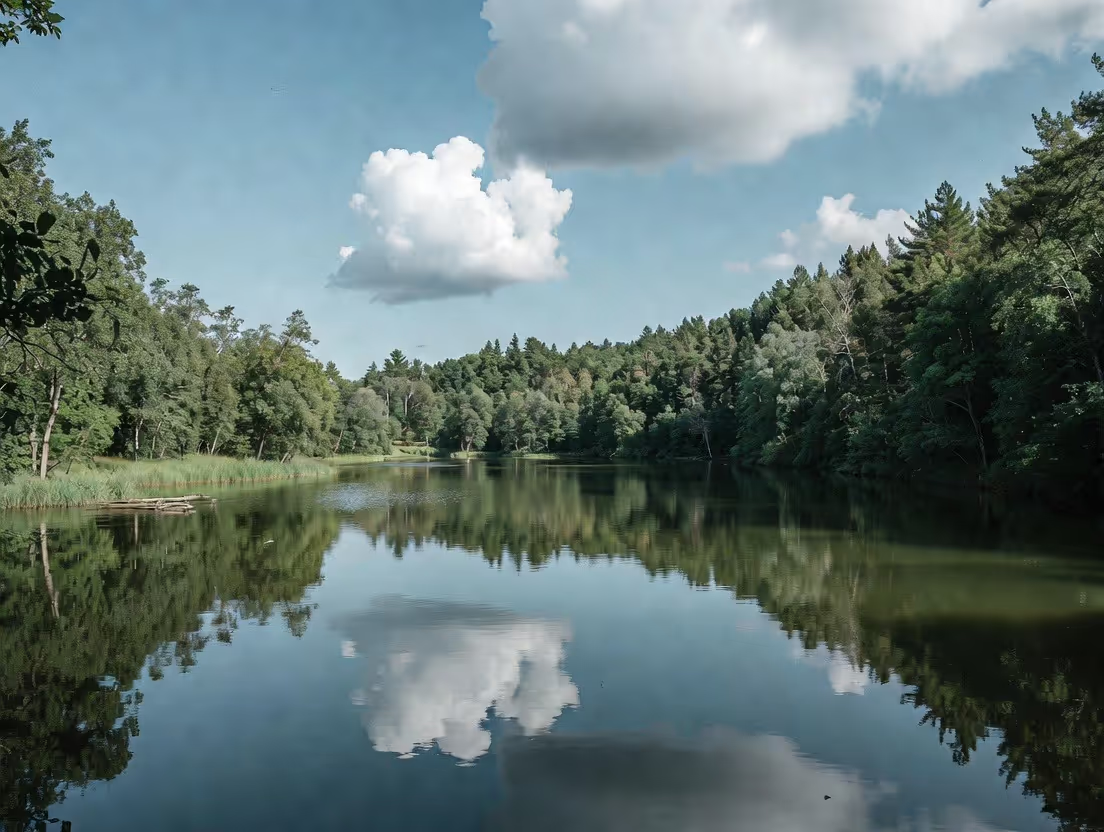
Now, let’s translate these principles into actionable practice. Here is a sequence of sensory invitations you can use on your next nature immersion. Remember, there is no right or wrong way to experience these; they are simply doors to open.
The Arrival & Transition (5-10 minutes):
Find a trailhead or entry point. Stop. Take three conscious breaths. Set a simple intention: “For this time, I am here to be present with this place.” Silently acknowledge you are crossing a threshold from the human-built world into the more-than-human world. Power down your phone or leave it in the car. Begin to walk slowly, almost ceremonially, noticing the change underfoot and in the air.
Invitation 1: What is Moving? (Sight)
Find a place to stand comfortably. Allow your gaze to soften, using peripheral vision. Don’t search. Simply ask, “What is moving?” Notice the grand movements of clouds and tree crowns, then the medium movements of branches, then the subtle movements: a spider web trembling, a leaf twirling on a thread, light dappling shifting on the forest floor. Spend 5-7 minutes here. This practice effortlessly induces a state of soft fascination.
Invitation 2: The Symphony of Sounds (Hearing)
Close your eyes if it feels safe. Cup your hands behind your ears and gently push them forward—this mimics animal ears, funneling sound. Listen as if you are a sound receiver. Don’t label or judge. Just receive. After a few minutes, try to isolate individual “instruments” in the symphony: a bird’s call, wind as a bass note, insect buzz, rustling leaves. Notice the silence between sounds. This deeply calms the auditory cortex and reduces physiological stress.
Invitation 3: The Breath of the Forest (Smell)
Move to a new spot, perhaps near a different type of tree or a damp area. Inhale slowly through your nose. What do you smell? Is it sweet, damp, spicy, green? Try to detect layers. The sun-warmed pine, the cool mineral scent of soil, the faint floral note from a hidden blossom. Breathe in the phytoncides consciously, imagining them fortifying your immune system with each breath.
Invitation 4: Skin to Bark (Touch)
Find a tree that calls to you. Approach it respectfully. First, observe its texture and color from a short distance. Then, place your palms flat against its bark. Close your eyes. Feel its temperature, its ridges and valleys. Is it vibrating with life? Lean your back against it. Notice the transfer of weight, the feeling of being supported by a living being that has stood here for decades. This grounds the body and fosters a profound sense of connection and stability.
Invitation 5: The Taste of the Air (Taste & Interoception)
This is a subtle invitation. Find a clean spot to sit. Take a slow sip of water if you have it. Then, simply notice the taste of the air on your tongue and in your throat. After rain, it might taste clean and mineral-like. On a dry day, it might be crisp. This connects you to the immediate atmospheric qualities and turns breathing into a full sensory act.
The Tea Ceremony (Integration of Senses):
A classic forest bathing practice. Find a comfortable seat. Using a thermos of hot water (brought with you) and a foraged, safe, non-toxic item like a few pine needles, a spruce tip, or a mint leaf, prepare a simple “forest tea.” Engage all senses in the process: the sound of pouring water, the visual of steam rising, the smell of the infusion, the warmth of the cup in your hands, and finally, the taste. Sip slowly, with gratitude. This ritual anchors the experience and symbolizes receiving the forest’s gifts.
The Closing Circle & Offering:
Before you leave, take a moment of silence to internally thank the place, the trees, and yourself for taking this time. You might leave a simple, biodegradable offering—a strand of hair for a bird’s nest, a careful arrangement of fallen pine cones. This practice of reciprocity closes the relational loop and honors the exchange.
Remember, you don’t need to do all invitations in one session. Even one, practiced deeply for 20 minutes, can initiate a powerful shift. For more structured guides and variations of these practices, you can always explore our blog for additional resources and sequences.
Not everyone has immediate access to a pristine forest. The good news is that The Nature Immersion Method is scalable and adaptable. The core principles can be applied anywhere life grows, allowing you to cultivate “vitamin N” (for Nature) in micro-doses throughout your day. This transforms urban living from a nature-deprived state into one punctuated with moments of connection and reset.
The 5-5-5 Urban Reset:
This is a rapid sensory immersion you can do in any small green space—a pocket park, a cemetery, a tree-lined street, or even a balcony garden.
Commuting with Consciousness:
Transform your daily travel into a sensory scavenger hunt.
The Biophilic Workspace:
Bring nature indoors to reduce cognitive fatigue and stress during the workday.
The Micro-Forest Bath:
Even a single tree can be a portal. Find a “sit spot”—a specific place near a tree or in a small garden you can visit regularly, ideally daily. Visit for just 10 minutes. Don’t do anything. Just sit and observe. Over time, you’ll notice the subtle changes—the tree’s growth, the insects that frequent it, the play of light at different hours. This builds a deep, personal relationship with a non-human being, fostering a profound sense of place and continuity.
Digital Nature: A Bridge, Not a Destination:
While no substitute for the real thing, high-definition nature videos (of forests, oceans, rivers) on a large screen, paired with spatial audio, have been shown in studies to lower stress markers. Use them as a 5-minute visual reset between meetings or as a background during a lunch break. Consider it a “bridge” practice to remind your senses of what to seek outdoors.
The key is consistency, not duration. A three-minute pause to truly feel the sun on your skin and listen to birdsong is more therapeutic than a two-hour distracted walk while glued to a podcast. It’s about the quality of attention. These micro-practices weave a thread of nature connection through the fabric of your urban life, preventing the total disconnection that leads to burnout. For a deeper understanding of the mission behind creating tools that support these daily micro-habits, you can learn more about our company’s philosophy and values here.
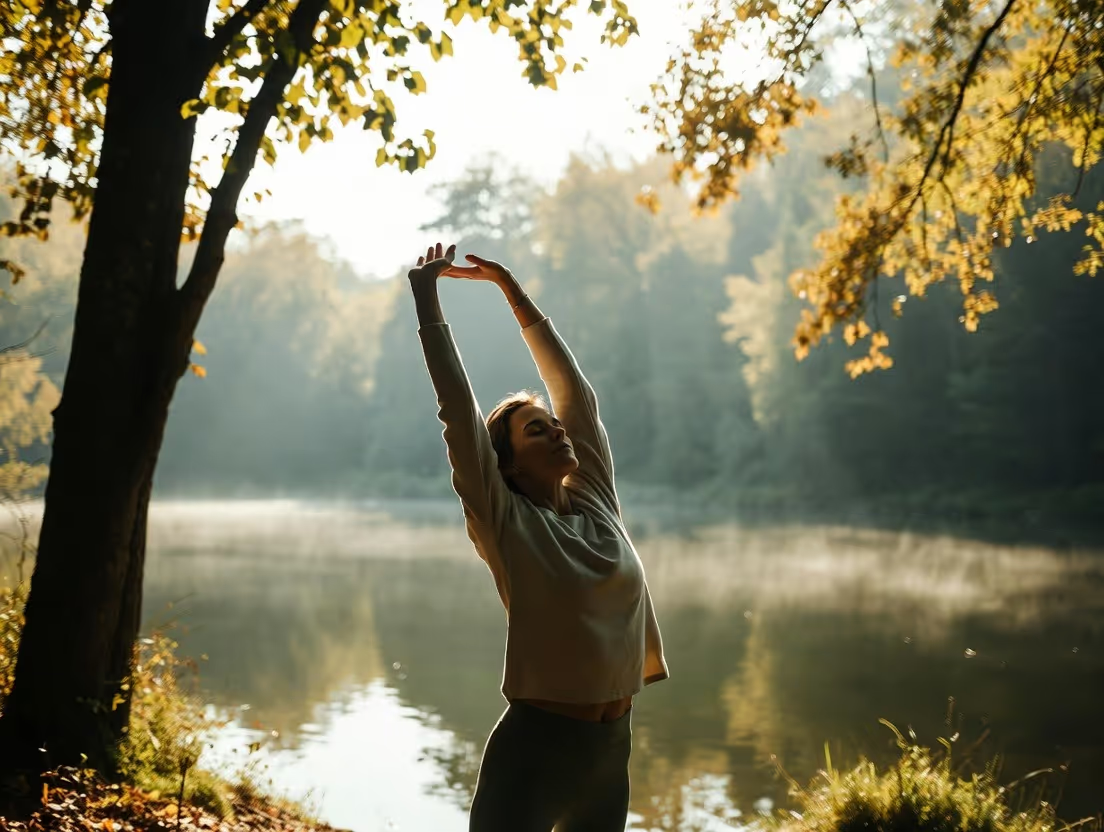
In the journey of The Nature Immersion Method, subjective feeling—“I feel calmer”—is the primary goal. However, in our data-aware world, objective validation can be a powerful motivator and a guide for personalization. This is where modern wearable technology, specifically advanced smart rings like those developed by Oxyzen, forms a synergistic partnership with ancient practice. It closes the biofeedback loop, turning the forest into a living laboratory for your own well-being.
Seeing the Invisible: Key Biometric Markers
Wearables track the downstream physiological effects of nature immersion, providing a clear picture of your nervous system state.
The Pre- and Post-Immersion Experiment:
Try this simple data-driven protocol:
The comparison is often stark. You’ll have a graph or number showing the literal “calming” of your system. This transforms an ephemeral feeling into a tangible result, reinforcing the habit.
Personalizing Your Practice:
Data reveals your unique response patterns. You might discover:
This moves you from generic advice to a personalized Nature Immersion Protocol. The technology isn’t replacing the feeling; it’s validating it and helping you refine it. It answers the question, “What specific type of nature connection works best for my biology?” For technical questions on how these devices capture and interpret such precise data, our comprehensive FAQ section offers detailed support.
The deepest layer of The Nature Immersion Method is not sensory or physiological, but psychological. It’s the cultivation of a specific state of mind: eco-awareness, or ecological mindfulness. This is the practice of extending the non-judgmental, present-moment awareness of traditional mindfulness to include the entire web of life of which we are a part. It’s feeling yourself not as a separate observer in the forest, but as a node within the forest’s network.
From Separation to Interbeing:
Our dominant cultural narrative is one of human separation from and superiority over nature. Eco-awareness dismantles this. In the forest, you practice seeing the tree not as an object, but as a subject—a living being with its own experience. You notice the interdependence: the fungi connecting tree roots, the insects pollinating flowers, the decomposition feeding new growth. You feel the air on your skin and recognize it as the breath of the plants. This shift in perspective, from “I-It” to “I-Thou” (as philosopher Martin Buber put it), is profoundly healing. It alleviates the existential loneliness of the separate self and replaces it with a sense of belonging.
Working with the “Monkey Mind”:
A common barrier to immersion is the persistent chatter of the thinking mind. “I should be working.” “What’s that rash?” “I need to plan dinner.” This is normal. The method doesn’t seek to eliminate thought, but to change your relationship to it.
Navigating Emotional Discomfort:
Sometimes, in the stillness, suppressed emotions—sadness, grief, anxiety—may surface. The forest provides a safe, non-judgmental container for this. You can cry, and the trees won’t flinch. You can feel anger, and the earth will absorb it. The practice is to feel these emotions in the company of nature, allowing its stable, cyclical presence to hold your human turbulence. This can be incredibly cathartic and integrative.
Combatting Eco-Anxiety with Active Connection:
Paradoxically, as we become more connected to nature, we may feel more acute pain about its destruction—a phenomenon known as eco-anxiety. The Nature Immersion Method addresses this not by turning away, but by leaning in. The practice of reciprocity—offering thanks, caring for a trail, picking up litter—transforms anxiety into agency. You move from passive worry to active, loving responsibility for your small corner of the world. This “active hope” is a critical component of long-term resilience in the face of global challenges. The journey of developing solutions for modern well-being often starts with confronting these complex emotional landscapes; you can read about the vision behind this approach in our story of building a brand around holistic wellness.
By cultivating this eco-aware mind, you transform forest bathing from a stress-reduction technique into a spiritual-ecological practice. It becomes a way of re-inhabiting your place in the living world, with all the humility, wonder, and responsibility that entails.
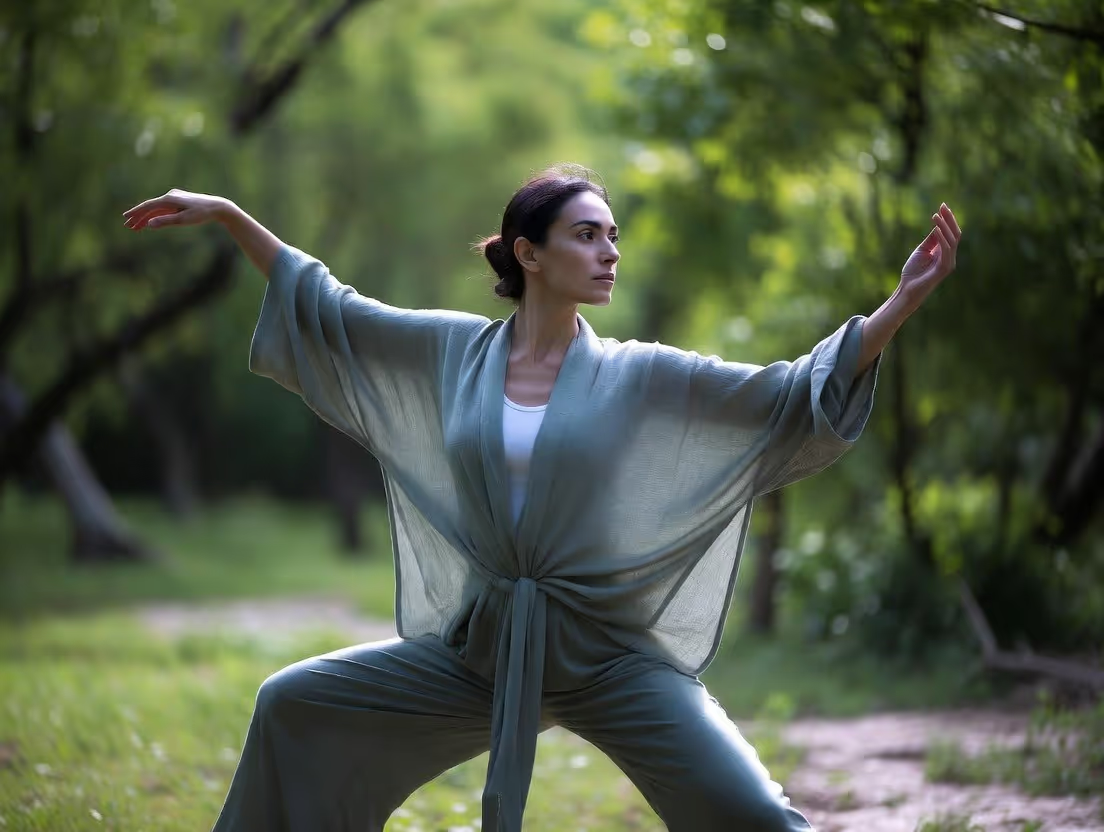
The forest is not a static backdrop; it is a dynamic, ever-changing teacher. Each season offers unique sensory experiences, metaphors, and healing qualities. Adapting your Nature Immersion practice to the rhythm of the year deepens your relationship with place and aligns your own cycles with those of the natural world.
Spring: Practice of Renewal & Beginner’s Mind
Spring is the season of emergence, tender green, and palpable vitality. Your practice should mirror this.
Summer: Practice of Abundance & Full-Body Immersion
Summer is lush, green, and full. The forest canopy provides deep shade, and life is at its peak.
Autumn: Practice of Release & Impermanence
Autumn is a visually stunning teacher of letting go. The vibrant colors are a death song, a beautiful release.
Winter: Practice of Stillness, Resilience & Introspection
The bare forest reveals its architecture—the bones of the land. It is a season of quiet, inward focus.
By consciously shifting your practice with the seasons, you root yourself in real-time cyclical awareness. This prevents the practice from becoming routine and instead makes it a lifelong dialogue with the living world. Each visit offers a new lesson, if you know how to listen. For more inspiration on seasonal wellness rituals and how to track their effects, our blog features ongoing content on harmonizing with natural cycles.
While forest bathing requires minimal gear compared to hiking, thoughtful preparation sets the stage for a deep and uninterrupted experience. The goal is to support your immersion, not complicate it.
The Minimalist Gear List:
The Digital Detox: The Most Important “Gear” Shift
This is non-negotiable. Your phone should be on silent, in airplane mode, or preferably left in the car. If you must bring it for safety (e.g., for GPS on a remote trail), put it in a sealed bag at the bottom of your pack. The constant potential for interruption is the death of immersion. The wearable tech for biometrics should be set and forgotten—data is reviewed after, not during.
Mindset Preparation: Setting Your Intention
Before you even leave your home, begin the transition.
Safety & Etiquette:
With this simple preparation, you remove logistical distractions and create a container of safety and respect. This allows your mind to fully surrender to the experience that awaits. Having the right tools and mindset is something we value deeply, whether for a nature practice or for choosing a wellness device; for common questions on getting the most out of supportive technology, our FAQ resource is always available.
The true power of The Nature Immersion Method is not confined to the hours spent beneath the canopy. Its ultimate goal is a lasting shift in your baseline state—a rewiring of your nervous system and a reorientation of your perception that endures long after you've returned home. This is the phase of deepening and integration, where the echoes of the forest begin to shape your daily life, relationships, and even your sense of self. It’s where forest bathing transitions from a discrete wellness activity to an embodied philosophy of being.
Integration is the conscious process of carrying the qualities of the forest—its pace, its presence, its interconnectedness—into your human-built world. It’s about creating a osmotic relationship between your inner landscape and the outer natural world, so that one continually nourishes the other. Without integration, the forest bath risks becoming a compartmentalized escape, a temporary balm that doesn’t address the source of the daily friction. With integration, you begin to build a life that is inherently less stressful and more resonant with your biological design.
This stage involves both internal practices and external adjustments. Internally, it’s about cultivating an “inner grove”—a psychic sanctuary of calm and sensory awareness you can access amidst chaos. Externally, it’s about designing your environments and routines to include regular, nourishing contact with living systems. It’s in this sustained practice that the most profound, long-term benefits for mental clarity, emotional regulation, and physiological health are cemented. The data from consistent practice becomes incredibly compelling, showing not just acute dips in stress, but a gradual, permanent uplifting of your vital signs. Users of holistic tracking systems often find this long-term trend data to be the most motivating proof of their journey; seeing a chart of your HRV baseline climb over months is a story of resilience written in your own biology. To see how others have documented this transformation, you can explore real customer reviews and long-term experiences.
The following sections will guide you through this deepening process. We’ll explore how to work with challenges, build a community of practice, understand the science of long-term change, and ultimately, use your nature connection as a foundation for a more purposeful and engaged life. This is where the path unfolds from a trail in the woods to a way of walking in the world.
Even with the best intentions, sustaining a Nature Immersion practice invites friction. Modern life is engineered for distraction and speed, not for mindful slowness. Recognizing and skillfully working through these common obstacles is essential for making the practice resilient and sustainable.
“I Don’t Have Time”: The Myth of the Grand Expedition
This is the most pervasive barrier. The solution is to dismantle the belief that only a three-hour weekend hike “counts.”
Weather Woes: “It’s Too Hot/Cold/Rainy”
Adverse weather is not an obstacle; it’s a feature. Each condition offers unique sensory gifts.
Mental Chatter and Boredom: “I Can’t Turn My Brain Off”
A restless mind is not a failure; it’s the default setting of the modern brain. The practice is to gently return, not to achieve perfect silence.
Access and Location: “I Live in a Concrete Jungle”
Lack of immediate wilderness access is a real constraint, but not a prohibitive one.
Physical Limitations: “I Can’t Walk Far or Sit on the Ground”
The practice is universally adaptable.
By anticipating these challenges and having compassionate, practical strategies for them, you build a practice that is robust and flexible enough to survive the ebbs and flows of real life. The goal is not perfect adherence, but a gentle, persistent return to connection.
While forest bathing is often portrayed as a solitary, introspective practice, there is immense power in shared, silent immersion. Practicing with others—in a specific, intentional way—can deepen the experience, provide accountability, and combat the social isolation that often accompanies modern stress. Building or finding a community of practice transforms a personal wellness habit into a cultural ritual.
The Unique Container of a Group Forest Bath
A guided group session, led by a certified Forest Therapy guide, is fundamentally different from a social hike. The group moves slowly, in silence for large portions, following invitations from the guide. This creates a powerful field of shared, non-verbal intention. There is a palpable sense of safety and permission to be slow and quiet, which can be hard to give oneself alone. The shared experience, processed briefly at the end over tea, often leads to profound, unexpected insights and a sense of deep human connection that feels natural and unforced.
Starting Your Own Pod: Guidelines for Peer Practice
You don’t need a certified guide to benefit from group practice. Forming a small “Nature Immersion Pod” with friends, family, or colleagues can be incredibly rewarding.
The Family Forest Bath: Reconnecting Across Generations
Children are natural forest bathers; they just call it “playing outside.” The practice can be a beautiful way to connect with family away from screens.
Community and Eco-Action: From Connection to Stewardship
A community that practices together often naturally evolves into a stewardship community. The love for a local place motivates action. Your pod might:
In a digitally connected yet often lonely world, a community of practice provides the human connection that is as vital as our connection to nature. It reminds us that we are not alone in our longing for a slower, more meaningful pace, and it creates a supportive culture that normalizes and values time spent in restorative awareness.
The acute effects of a single forest bath are impressive, but the truly transformative potential lies in the cumulative, long-term changes to your physiology and nervous system architecture. Just as consistent exercise reshapes your muscles and cardiovascular system, consistent Nature Immersion reshapes your stress response, immune vigilance, and cognitive function. This is the domain of neuroplasticity and allostatic load—your body’s ability to rewire itself and the cumulative toll of chronic stress.
Reducing Allostatic Load: The Body’s Wear and Tear
Allostatic load is a measure of the physiological consequences of chronic stress. It includes high resting cortisol, elevated blood pressure, imbalances in cholesterol, and systemic inflammation. It’s the “weathering” of the body. Long-term forest bathing practice has been shown in longitudinal studies to directly reduce this load.
Strengthening the Parasympathetic Nervous System: Building Vagal Tone
The vagus nerve is the command center of the parasympathetic (rest-and-digest) system. Its “tone”—its strength and reactivity—is a key indicator of resilience. High vagal tone is associated with better emotional regulation, faster recovery from stress, and greater social connection.
Enhanced Immune Surveillance: The Phytoncide Dividend
Dr. Qing Li’s research showed that a monthly weekend forest trip could maintain elevated Natural Killer (NK) cell activity. Think of it as a regular booster shot for your innate immune system. In the long term, this heightened surveillance may contribute to a reduced incidence of viral infections and potentially play a role in cancer prevention. While not a guarantee, it represents a significant shift in your body’s defensive preparedness.
Cognitive Reclamation: Restoring Attention and Creativity
The prefrontal cortex (PFC), responsible for focused, effortful attention, is depleted by modern multitasking. Nature’s soft fascination allows it to rest.
Tracking these long-term shifts is where wearable technology becomes a powerful journal of transformation. Reviewing months of data, you don’t just see a good day; you see a new trend line for your health—a story of a nervous system learning a new, more peaceful baseline. This objective evidence is a profound motivator to continue the practice through the inevitable busy or challenging periods. For a deeper understanding of the technology that can help you visualize this journey, learn more about how advanced sensing works.
This long-term biometric shift is the ultimate promise of The Nature Immersion Method: not just to manage stress, but to fundamentally alter your physiological predisposition to it, building a body and mind that are inherently more resilient, resourceful, and at ease.
The core principles of forest bathing are universal, but their application can and should be tailored to meet the unique needs, challenges, and strengths of different populations. A one-size-fits-all approach misses the opportunity for profound, targeted healing. Here we explore how the method can be adapted for specific groups, from corporate teams to those navigating trauma.
For Corporate Teams & Leaders: Combating Burnout and Fostering Innovation
The modern workplace is a primary source of chronic stress. Implementing nature immersion as a team practice is a powerful antidote to collective burnout.
For Healthcare Workers & First Responders: Processing Stress and Preventing Compassion Fatigue
Those in caregiving and emergency roles are exposed to high levels of traumatic stress and vicarious trauma. Nature immersion offers a non-verbal, non-clinical space for processing.
For Individuals with Anxiety, PTSD, or Depression: A Somatic Grounding Tool
For those whose nervous systems are locked in hypervigilance (anxiety, PTSD) or hypoarousal (depression), nature can provide a gentle, graded exposure therapy.
For Educators and Students: Enhancing Focus and Reducing Hyperactivity
Schools are often nature-deficient, sensory-overloaded environments.
For Seniors: Promoting Mobility, Memory, and Social Connection
Nature immersion addresses key challenges of aging: isolation, cognitive decline, and reduced mobility.
By thoughtfully adapting the practice, we honor the fact that wellness is not a monolithic goal. The forest, in its infinite variety, has medicine for every kind of human condition. Sharing these diverse applications and success stories is a core part of our content; you can find more case studies and tailored guides on our blog.
A truly holistic Nature Immersion practice must make space for the full spectrum of human experience, not just peace and joy. Sometimes, in the quiet container of the forest, what arises is not calm, but sorrow, anger, fear, or a profound grief for the world—a phenomenon known as eco-grief or solastalgia (homesickness while still at home). This is not a failure of the practice; it is a sign of its depth. The forest, as a stable, accepting presence, can become a sacred space to honor and process these difficult emotions.
Why Difficult Emotions Surface in Nature
In our daily hustle, we often suppress or numb difficult feelings. The silence and sensory engagement of forest bathing remove these distractions. The mind and body, finally feeling safe and held, may begin to unpack what has been stored away. Furthermore, as our connection to the natural world deepens, our pain for its suffering—deforestation, species loss, climate chaos—becomes more personal and acute. This eco-grief is a natural, healthy response of a caring heart.
Practices for Holding Eco-Grief and Personal Sorrow
Navigating Fear and Anxiety in Natural Spaces
For some, especially those with trauma or little outdoor experience, nature can feel intimidating, not peaceful.
The Forest as Co-Therapist
In this context, the practitioner is not using the forest to escape difficult emotions, but to meet them in a supportive container. The forest doesn’t offer advice or platitudes. It simply offers its presence, its cycles of life-death-rebirth, and its immense, non-judgmental scale. This can help you see your own emotional weather as natural, temporary, and part of a vast, enduring whole. Working through these complex layers of connection and emotion is part of a larger journey of holistic well-being, a journey we are deeply committed to supporting, as detailed in our founding story and vision.
By welcoming the “dark forest” of our inner world, we engage in the deepest form of integration. We acknowledge that healing is not always about light; sometimes, it’s about finding the courage to sit in the dark with a compassionate companion—and the ancient forest is the most compassionate companion of all.
The Nature Immersion Method does not exist in a vacuum. It is a profoundly complementary practice that can enhance, and be enhanced by, other pillars of a holistic wellness regimen. When combined intentionally, these modalities create a powerful synergy, accelerating nervous system regulation and deepening mind-body awareness. Think of forest bathing as the foundational “reset” that makes other practices more effective.
Forest Bathing + Mindfulness Meditation: The External and Internal Anchor
Forest Bathing + Yoga/Tai Chi/Qigong: Movement in Awareness
Forest Bathing + Digital Detox & Tech Hygiene: The Essential Counterbalance
Forest Bathing + Sleep Hygiene: Preparing for Deep Restoration
Forest Bathing + Nutritional Awareness: The Connection to Food Sources
By weaving forest bathing into your existing wellness tapestry, you create a self-reinforcing system. Each practice supports the other, making the entire routine more resilient and effective. The forest becomes not just a destination, but a lens through which you view all aspects of caring for your body, mind, and spirit.
The field of nature therapy is at a thrilling inflection point. No longer a fringe “nice-to-have,” it is being validated by rigorous science, accelerated by innovative technology, and adopted by forward-thinking institutions in healthcare, urban planning, and corporate culture. The future points toward a world where contact with nature is recognized as a non-negotiable human design requirement, seamlessly integrated into our lives.
Cutting-Edge Research Frontiers
Current research is moving beyond proving that nature helps, to understanding precisely how, for whom, and in what doses.
Technology as a Bridge, Not a Barrier
The right technology, used wisely, will deepen—not dilute—our nature connection.
The Rise of Forest Therapy in Public Health and Urban Design
Governments and city planners are taking note.
A Global Cultural Shift: Re-wilding Our Lives
The ultimate future is cultural. It’s a shift from seeing nature as a resource or a weekend recreation to understanding it as our fundamental home and health infrastructure. It’s about:
This movement is growing from the ground up, through individual practitioners, and from the top down, through science and policy. We are proud to be part of this shift, developing tools that help people see and feel their own integration into these healthy rhythms. To follow the latest developments at the intersection of well-being and technology, our blog is regularly updated with insights and research.
The future of wellness is not in a pill or a perfect app; it is in remembering our oldest habitat and learning, with the help of both ancient wisdom and modern science, how to come home to it.
Your Trusted Sleep Advocate: Sleep Foundation — https://www.sleepfoundation.org
Discover a digital archive of scholarly articles: NIH — https://www.ncbi.nlm.nih.gov/
39 million citations for biomedical literature :PubMed — https://pubmed.ncbi.nlm.nih.gov/
Experts at Harvard Health Publishing covering a variety of health topics — https://www.health.harvard.edu/blog/
Every life deserves world class care :Cleveland Clinic - https://my.clevelandclinic.org/health
Wearable technology and the future of predictive health monitoring :MIT Technology Review — https://www.technologyreview.com/
Dedicated to the well-being of all people and guided by science :World Health Organization — https://www.who.int/news-room/
Psychological science and knowledge to benefit society and improve lives. :APA — https://www.apa.org/monitor/
Cutting-edge insights on human longevity and peak performance:
Lifespan Research — https://www.lifespan.io/
Global authority on exercise physiology, sports performance, and human recovery:
American College of Sports Medicine — https://www.acsm.org/
Neuroscience-driven guidance for better focus, sleep, and mental clarity:
Stanford Human Performance Lab — https://humanperformance.stanford.edu/
Evidence-based psychology and mind–body wellness resources:
Mayo Clinic — https://www.mayoclinic.org/healthy-lifestyle/
Data-backed research on emotional wellbeing, stress biology, and resilience:
American Institute of Stress — https://www.stress.org/


