


Nighttime Routine and Technology: What to Use and Avoid
Use technology to automate lights and sounds, but avoid interactive screens; consider e-readers with warm light if reading digitally.
Use technology to automate lights and sounds, but avoid interactive screens; consider e-readers with warm light if reading digitally.
%402x.svg)
The final hour of dusk fades, and the world outside your window softens into darkness. Inside, however, a different story often unfolds. The glow of a smartphone illuminates your face as you scroll through a final feed. A laptop sits humming on the duvet, casting a blueish pallor over the bedroom. The smartwatch on your wrist buzzes with a late-night notification. We’ve meticulously optimized our days with technology for productivity, connection, and fitness, yet we routinely invite these same tools into the sacred transition to sleep—our most vital biological reset.
This paradox lies at the heart of the modern sleep crisis. We are more connected than ever, yet more disconnected from the fundamental rhythms of our own biology. The very devices engineered to improve our lives are, when used indiscriminately at night, sabotaging our sleep architecture, hormonal balance, and cognitive function. The consequence is a society running on a compounding sleep deficit, mistaking fatigue for normalcy.
But this isn’t a call to Luddite extremism. The answer isn't to throw your devices out the window. It’s about cultivating intentionality—a "Digital Sunset." Just as we admire the natural sunset as a cue to wind down, we must create a personal ritual that signals to our brain and body that the active day is over. This involves making strategic choices about the technology we use and, more importantly, the technology we avoid in the 60-90 minutes before sleep.
The goal of this exploration is not just to help you sleep better, but to transform your relationship with technology from one of passive consumption to one of empowered partnership. We will dissect the science of how screens and devices impact your physiology, identify the worst offenders in your nightly routine, and curate a list of technologies that can genuinely enhance your sleep hygiene. We’ll move from understanding the problem to building a personalized, tech-savvy nighttime protocol that turns your bedroom from a secondary office into a true sanctuary for restoration. The journey to reclaiming your sleep begins with a single, conscious decision: to power down, tune in, and let the digital world wait until dawn.

To understand why our nighttime tech habits are so destructive, we must first appreciate the exquisite biological ballet that is sleep. Sleep is not a passive state of unconsciousness; it is a highly active, curated process essential for every system in your body. When you drift off, your brain enters a complex cycle of distinct stages, each with a non-negotiable job description.
The journey begins with Non-REM (Rapid Eye Movement) Stage 1 and 2, the light sleep phases where you transition from wakefulness and your body starts to decelerate—heart rate slows, body temperature drops, muscles relax. Then comes Non-REM Stage 3, known as slow-wave or deep sleep. This is the physical restoration phase, crucial for tissue repair, immune function, and energy recharge. Hormones like growth hormone are released, targeting cell regeneration and muscle growth. Finally, you enter REM sleep, the stage most associated with vivid dreams. Here, your brain is almost as active as when you’re awake. This phase is the master editor of your mind, essential for memory consolidation, learning, emotional processing, and creativity. A full sleep cycle lasts about 90 minutes, and a healthy night’s sleep involves four to six of these cycles.
The conductor of this entire orchestra is your circadian rhythm—your internal 24-hour biological clock. This rhythm is primarily set by light exposure, with the suprachiasmatic nucleus (SCN) in your hypothalamus acting as the master pacemaker. When light, especially blue-wavelength light, hits your retina in the morning, it signals the SCN to suppress melatonin production, boost cortisol, and tell your body it’s time to be alert. As daylight fades, the SCN triggers the pineal gland to release melatonin, the "hormone of darkness," which makes you feel drowsy and prepares your body for sleep.
This is where technology becomes the rogue musician, playing out of tune. The blue light emitted by LEDs in smartphones, tablets, TVs, and even energy-efficient lightbulbs has a wavelength eerily similar to morning sunlight. When it hits your eyes in the evening, it tricks your SCN. The brain receives a false dawn signal, halting melatonin production sometimes by over 50%. A 2014 study in the Proceedings of the National Academy of Sciences found that participants reading on a light-emitting device before bed took longer to fall asleep, had reduced REM sleep, and felt groggier the next morning compared to those reading a printed book.
Beyond light, technology disrupts sleep through cognitive and emotional arousal. Scrolling through stressful work emails, engaging in heated social media debates, or watching an intense thriller activates the sympathetic nervous system—the "fight or flight" response. This releases cortisol and adrenaline, hormones designed for alertness and action, directly opposing the calm, parasympathetic state required for sleep onset. Furthermore, the variable reward schedule of notifications and feeds—the "what will I see next?" dopamine hit—creates a psychological addiction that makes disengaging mentally difficult, a phenomenon researchers term "sleep procrastination."
In essence, using stimulating technology before bed is like pouring a potent chemical cocktail of alertness signals over your brain’s natural sleep preparations. It delays the start of the performance, ruins the flow between acts, and ensures the final curtain call—waking up feeling restored—never quite happens. To protect this delicate process, we must learn to activate our brain’s true "offline" mode, a task that begins with identifying the prime disruptors in our nightly environment.
We often dismiss the advice to avoid screens before bed with a casual, "I use night mode." But the impact of artificial blue light at night is a deep, systemic issue that goes far beyond temporary eyestrain or making it slightly harder to fall asleep. It strikes at the core of our hormonal regulation and long-term health.
Blue light itself is not inherently evil. During daylight hours, it is beneficial: it boosts attention, reaction times, and mood. The problem is one of timing and dosage. Our ancestors' light exposure came from the sun—intense blue-rich light during the day, followed by the warm, red-heavy glow of firelight after sunset. Our modern environment is a perpetual, chaotic summer afternoon. We are flooded with blue light from dawn (checking our phones first thing) until well past dusk.
The mechanism is straightforward yet profound. Photoreceptor cells in our retina, called intrinsically photosensitive retinal ganglion cells (ipRGCs), are specifically tuned to detect blue light (around 480 nanometers). They send this signal directly to the SCN, our master clock. When exposed to blue light in the evening, the SCN’s message is clear: "It's daytime. Suppress melatonin. Be alert."
The consequences of this chronic mistiming are extensive:
"Night Shift," "Blue Light Filter," or "Dark Mode" settings on our devices are a step in the right direction, but they are a compromise, not a solution. These features typically reduce blue light emission by adding an amber tint, but they do not eliminate it. The content itself—the stimulating social feed, the stressful email—is still present and activating. Furthermore, the overall brightness of the screen, even when warmed, still sends a significant light signal to the ipRGCs if used in a dark room.
Think of it this way: if someone were shining a bright amber flashlight in your eyes while you were trying to sleep, you’d still find it disruptive, even if it wasn't a blue flashlight. The true goal is to eliminate unnecessary, bright, close-range light sources altogether as bedtime approaches. This means re-evaluating not just our phones and laptops, but also our ambient lighting. Switching from cool-white LED bulbs to warm-white or dimmable, low-color-temperature bulbs in bedrooms and living rooms after sunset can create an environment that supports, rather than fights, your natural physiology.
Understanding the blue light menace is the first critical step in taking back control. It moves the conversation from a vague "screens are bad" to a specific, science-based understanding of how and why they interfere. With this foundation, we can begin to audit the specific devices and habits that constitute the greatest threats to our digital sunset.
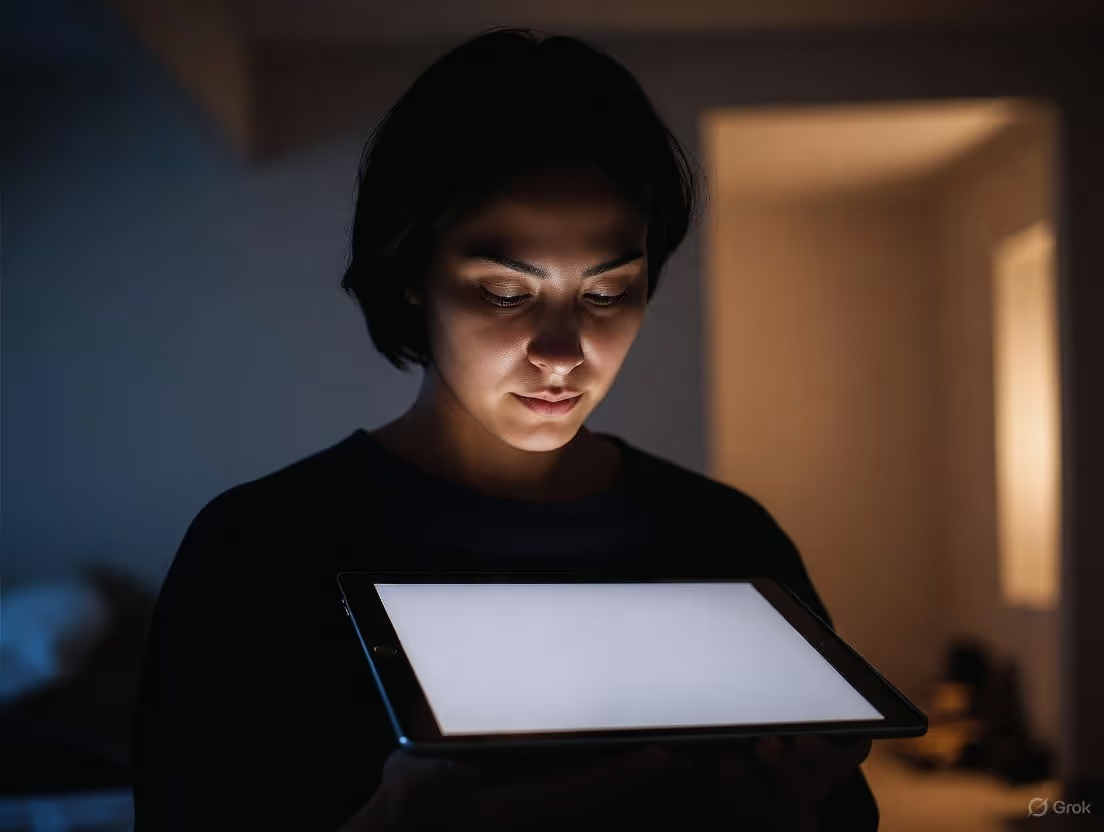
Armed with the science of circadian disruption and cognitive arousal, we can now identify the specific technological culprits that most aggressively sabotage sleep. Banishing these from your bedtime routine is non-negotiable for a true Digital Sunset. Consider this your official eviction notice for the following devices and activities.
1. Smartphones and Tablets: The Ultimate Sleep Saboteurs
The smartphone is the worst offender, and for multiple reasons. It combines high-intensity blue light emitted directly into your eyes at close range with the most potent psychological engagement algorithms ever designed. Scrolling through social media (Instagram, TikTok, Twitter/X) before bed is a triple threat: it exposes you to blue light, delivers emotionally charged or FOMO-inducing content, and operates on a variable reward system that hijacks your dopamine pathways, making it incredibly hard to put down. Similarly, checking work email or messaging apps like Slack activates problem-solving brain networks and introduces stress, pulling you mentally back into the day’s demands. The constant potential for a notification—a buzz or ping—also creates a state of low-grade anxiety and anticipation, preventing full mental relaxation.
2. Televisions and Laptops: The Covert Disruptors
Many of us rationalize watching TV or a movie in bed as "winding down." While it may feel passive compared to scrolling, it is still highly disruptive. Modern TVs and laptops are large sources of bright, blue-rich light that fill your visual field, suppressing melatonin. Furthermore, content matters intensely. A tense crime drama, a thrilling action movie, or even the distressing nightly news triggers emotional and physiological arousal, raising cortisol levels. The continuous narrative also keeps your cognitive engines idling, whereas the goal of a bedtime routine is to let them cool down completely. Using a laptop in bed is particularly harmful, as it often blurs the line between relaxation and work, psychologically cementing your bedroom as an extension of your office.
3. Smartwatches and Fitness Trackers (When Misused)
These devices, which we will later explore as potential sleep aids when used correctly, can easily become sources of sleep anxiety. Constantly checking your sleep score in the middle of the night or first thing in the morning can lead to orthosomnia—an unhealthy preoccupation with achieving perfect sleep data, which ironically creates more anxiety and worsens sleep. Furthermore, if your watch is set to deliver notifications (calls, texts, apps), every buzz on your wrist is a micro-disturbance. Having email buzz on your wrist while you're trying to sleep is like having a miniature boss in your bed.
4. Video Games and Immersive Interactive Media
Gaming before bed is perhaps one of the most stimulating activities you can do. It combines intense visual stimulation (flashing lights, rapid scene changes), cognitive engagement (problem-solving, strategy, reaction time), and often social or competitive emotional arousal. This puts your nervous system into a heightened state of alertness that can take hours to dissipate, severely delaying sleep onset and reducing sleep quality.
5. Overhead Bright Lights and Cool-Temperature LEDs
The environment matters as much as the devices. Remaining under bright, cool-white or blue-enriched LED lighting in your home after sunset is like bathing your brain in a perpetual late-afternoon glow. This includes kitchen lights, bathroom vanity lights, and living room overhead fixtures. They provide a constant, ambient signal that contradicts the impending need for sleep.
Creating a "Tech Curfew":
The most effective strategy is to institute a firm, non-negotiable tech curfew 60 to 90 minutes before your target bedtime. This is the cornerstone of your Digital Sunset. Physically remove these prime suspects from your bedroom. Charge your phone and laptop in another room. Use an old-fashioned alarm clock instead of your phone. This single act of physical separation performs a powerful psychological function: it draws a clear boundary between the connected, stimulated day and the quiet, private night. It declares that for the next several hours, your time and your mind are your own. For those seeking guidance on implementing such boundaries and building better digital habits, our resource library at the Oxyzen.ai/blog offers practical, step-by-step strategies.
By identifying and eliminating these prime suspects, you clear the disruptive noise from your evening environment. This creates a blank canvas—a quiet, dark, and calm space—upon which you can intentionally paint a routine that supports, rather than hinders, your journey into restful sleep. The next step is to choose the right tools for the job.
The narrative so far may seem anti-technology, but that’s only half the story. The goal is intelligent curation, not elimination. Just as a craftsman selects specific tools for a delicate task, you can choose technologies designed to support, not sabotage, your sleep. When used with intention, these tools can become powerful allies in crafting your perfect Digital Sunset.
1. Dedicated E-Readers (Front-Lit or E-Ink)
Not all screens are created equal. Dedicated e-readers like those from Kindle (without a blue-light-rich LCD tablet screen) that use E-Ink technology are a notable exception. E-Ink mimics the appearance of paper and reflects ambient light; it does not emit light directly into your eyes. Many models now have built-in front lights for reading in the dark, but these can be adjusted to a very warm, amber tone. Reading a relaxing, non-stimulating book on such a device is a world apart from reading on a smartphone or tablet. It provides the cognitive wind-down of reading without the melatonin-suppressing backlight.
2. Smart Lighting Systems: Programming Your Environment
This is where modern technology shines in sleep support. Smart lighting systems (like Philips Hue, Lifx, or Nanoleaf) allow you to program your home’s lighting to follow the sun. You can schedule lights to automatically shift to warmer, dimmer tones in the evening and even simulate a sunset in your living room or bedroom—gradually dimming over 30-60 minutes. This provides a powerful external cue to your circadian rhythm, reinforcing that the day is ending. In the morning, they can simulate a sunrise, gently waking you with light—a far more natural alarm than a jarring sound.
3. White Noise Machines and Smart Soundscapes
Consistent, calming sound can mask disruptive environmental noises (traffic, a snoring partner, household creaks) that can fragment light sleep. Traditional white noise machines are excellent. Smart speakers (like Amazon Echo or Google Nest) can also be used for this purpose, but with caution: set up a specific, automated routine that plays a soundscape (e.g., brown noise, rain, ocean waves) on a timer and then turns the device’s lights and microphone completely off for the night to avoid any unwanted interactions or lights. The key is to use them as a single-purpose sleep aid, not as an interactive gadget in bed.
4. Meditation and Relaxation Apps (Used Early)
Apps like Calm, Headspace, or Insight Timer offer superb guided sleep meditations, body scans, and breathing exercises. These can be invaluable tools for quieting a racing mind. The critical rule is to use them early in your routine, not in bed. Listen to a 20-minute meditation on the couch with warm, dim lights, then go to bed. Avoid using your brightly-lit phone in the dark to start a meditation, as this reintroduces the blue light problem at the worst possible moment.
5. Climate Control Technology
Sleep is initiated in part by a drop in core body temperature. Smart thermostats (like Nest or Ecobee) can be programmed to lower the bedroom temperature by 1-3 degrees Fahrenheit (around 18-20°C is ideal) in the hour before your bedtime. This environmental cue powerfully supports your body’s natural thermoregulation process for sleep. Similarly, smart ceiling fans or bed-cooling systems can maintain this optimal temperature throughout the night.
6. Smart Rings for Passive, Insightful Tracking
This is where a category of device like the Oxyzen smart ring becomes a game-changer. Unlike a smartwatch you interact with, a smart ring is designed for passive, non-intrusive biometric tracking. Worn overnight, it can monitor key sleep metrics like Sleep Stages (light, deep, REM), Heart Rate Variability (HRV)—a powerful indicator of recovery and nervous system balance—Resting Heart Rate, and Blood Oxygen Saturation. The profound value isn't in obsessing over a single night’s score, but in observing long-term trends. Over weeks and months, you can see, for example, how a consistent tech curfew correlates with increased deep sleep, or how late alcohol consumption spikes your resting heart rate. This turns sleep from a subjective feeling ("I slept okay") into an objective, data-informed pillar of health. You can learn more about how this passive, insight-driven technology works by visiting Oxyzen.ai.
The philosophy with these ally technologies is automation and passivity. Set them up once to work for you, then let them run in the background. Your evening should not be spent interacting with gadgets, but enjoying the serene environment they help create. This seamless support is a core part of the vision you can discover in our story at Oxyzen.ai/our-story.

Knowing what to avoid and what to embrace is the theory. Now, let’s build the practice. Your Digital Sunset is a personalized ritual, a series of intentional actions that transition you from the stimulated, outward-focused day to the calm, inward-focused night. It should be something you look forward to—a gift to yourself, not a chore. Here is a flexible, 60-90 minute blueprint you can adapt.
Phase 1: The Shutdown Signal (60-90 mins before bed)
Phase 2: The Mental and Physical Unwind (45-60 mins before bed)
Phase 3: The Final Descent (Last 15-30 mins in bed)
Personalization is Key:
Your blueprint will be unique. Maybe your unwind phase includes a cup of caffeine-free herbal tea and quiet conversation with a partner. Perhaps it involves a specific skincare routine that acts as a sensory cue. The principles are universal: eliminate disruptive tech, introduce calming cues, and follow a consistent sequence. For more inspiration and personalized routine ideas, our blog is a dedicated resource. Test different elements for a week at a time and note how you feel. Does reading fiction work better than meditation? Does a 10-minute stretch make a noticeable difference? Tune into your own responses.
Your bedroom should be a temple dedicated to sleep. Every element within it should whisper "rest," not shout "productivity" or "entertainment." Technology, when chosen wisely, can be the silent custodian of this sanctuary, optimizing the physical conditions for perfect sleep without demanding your attention.
The Lighting Masterplan:
Light is your most powerful environmental cue. The goal is total darkness during sleep and only warm, dim light beforehand.
The Soundscape Strategy:
Noise disruption is a major cause of fragmented sleep.
The Thermal Regulation System:
Your body needs to cool down to initiate and maintain sleep.
The Air You Breathe:
Air quality is a forgotten component of sleep health. Poor ventilation, allergens, or dry air can lead to congestion, snoring, and restless sleep.
The One Device That Belongs: The Passive Sleep Tracker
In this optimized sanctuary, the only wearable tech that earns its place is one that demands nothing from you. A smart ring, resting passively on your finger, becomes the silent guardian of your sleep, measuring the outcome of all your environmental optimizations. It doesn’t buzz, light up, or require you to look at it. It simply gathers the data—how long it took you to fall asleep, how much deep and REM sleep you achieved, how steady your heart rate was—providing the feedback loop to prove your sanctuary is working. This commitment to non-intrusive, insightful technology is central to the mission behind Oxyzen.ai.
By thoughtfully applying technology in this way, your bedroom ceases to be just a room with a bed. It becomes a bio-hacked sanctuary, an environment meticulously engineered for one purpose: to facilitate the deepest, most restorative sleep possible. This sets the stage for understanding the treasure trove of data that such an environment can produce.
For decades, we measured sleep in one dimension: time. "I got 8 hours" was the gold standard. But we now know that duration is only one piece of the puzzle. The quality and architecture of those hours are what truly determine restoration. This is where advanced sleep tracking technology transforms subjective feeling into objective insight, moving us from counting sheep to understanding sleep.
Key Sleep Metrics and What They Truly Mean:
The Power of Trends Over Isolated Scores:
Never judge your sleep by a single night’s data. Life happens: a late dinner, a stressful day, a celebratory drink. The magic lies in the trend line. By wearing a device like the Oxyzen ring consistently, you build a personal baseline. You can then observe with clarity:
This transforms sleep from a passive state you hope for into an active pillar of health you can manage. It provides the "why" behind the "how you feel." It answers questions like, "Why do I feel drained despite sleeping 8 hours?" (Poor sleep architecture, low HRV). This data-driven approach to wellness is what allows for truly personalized optimization, a topic we frequently explore for those looking to learn more on our blog.
Your physical environment can be perfect, but if your mind is a roaring engine, sleep will remain elusive. The final frontier of the Digital Sunset is cultivating internal calm. Fortunately, technology can serve as a skilled guide here too, providing structure and instruction for age-old relaxation practices that directly counter the hyper-aroused state induced by our digital days.
1. Guided Meditation and Mindfulness Apps:
For beginners, the silence of their own mind can be intimidating. Apps like Calm, Headspace, or Ten Percent Happier offer structured pathways in. The critical rule, reiterated: use them before getting into bed. Dedicate a comfortable chair or spot on the floor 30-45 minutes before bed. Follow a guided "Sleep Story," "Body Scan," or "Wind Down" meditation. These narratives or instructions give your busy mind a gentle task—focusing on a story or physical sensations—which naturally crowds out anxious thoughts and activates the parasympathetic nervous system. The progressive relaxation of a body scan, where you mentally relax each body part in sequence, is particularly effective at releasing physical tension you may not even realize you're holding.
2. Biofeedback and HRV Training:
This is where technology moves from guide to real-time coach. Biofeedback devices, some of which are integrated into advanced wearables or standalone sensors, measure physiological signals like heart rate, skin temperature, or muscle tension and display them back to you. The goal is to learn to consciously influence these normally involuntary processes. HRV Coherence Training, for example, uses your breath to guide you into a state where your heart rate rhythm becomes smooth and wave-like, indicating optimal nervous system balance. Apps like Elite HRV or hardware like the Inner Balance sensor provide real-time feedback, showing you when your breathing pattern is effectively raising your HRV and promoting calm. Practicing this for 10-15 minutes in the evening can create a profound carryover effect of relaxation into the night.
3. Binaural Beats and Isochronic Tones:
These are auditory illusions created by playing two slightly different frequencies in each ear. Your brain perceives a third, "phantom" frequency (the mathematical difference between the two). Different frequencies are associated with different brainwave states. For sleep, frequencies in the Delta (1-4 Hz) or Theta (4-8 Hz) ranges are used to gently encourage the brain to transition into the slow-wave states of deep sleep and drowsiness. While research is still evolving, many users report significant effects. These can be found on YouTube channels, Spotify, or dedicated apps, and should be listened to with headphones during your relaxation phase.
4. Breathing Exercise Pacers:
Controlled breathing is the most accessible tool for instant nervous system regulation. The 4-7-8 technique or box breathing (4-in, 4-hold, 4-out, 4-hold) are powerful, but it can be hard to maintain the rhythm. Apps like Pranayama or simple visual pacer videos provide a gentle, animated guide for your breath, taking the mental effort out of counting and allowing you to simply follow and relax.
Integrating Techniques into Your Blueprint:
Choose one or two techniques that resonate with you. Perhaps you start your wind-down with a 10-minute HRV coherence session, followed by a 15-minute guided body scan. The combination of physiological biofeedback and cognitive distraction is potent. The key is consistency and early application. These are tools to decelerate your mind before you attempt to sleep, not emergency buttons to press when you’re already in bed staring at the ceiling. By making tech-assisted relaxation a dedicated part of your ritual, you train your mind to associate the evening with a gradual, controlled power-down, leaving the frantic processing of the day behind.

Even with the best intentions and a beautifully crafted blueprint, life intrudes. Travel, social events, stress, and sheer habit can derail your Digital Sunset. Anticipating these pitfalls and having a plan to navigate them is what separates a sustainable practice from a short-lived experiment. Here’s how to troubleshoot the most common challenges.
Pitfall 1: "I need my phone for my alarm / I might get an emergency call."
Pitfall 2: "My partner has different habits / won’t participate."
Pitfall 3: "I travel frequently, and my routine gets completely disrupted."
Pitfall 4: "I slip up and scroll in bed, then feel guilty, which makes it worse."
Pitfall 5: "I become obsessed with my sleep data, checking it constantly."
Pitfall 6: "Weekends are for staying up late; the routine feels too rigid."
Navigating these pitfalls requires a blend of preparation, communication, and self-forgiveness. The goal is progress, not perfection. Every night you successfully execute your Digital Sunset is a win for your nervous system. For additional support and community insights from others on the same journey, our FAQ and customer stories can be a valuable resource. By anticipating these challenges, you build resilience into your practice, ensuring it can withstand the realities of modern life.
We live in a culture obsessed with hacks and overnight transformations. Yet, the most profound changes in human physiology and behavior are never the result of a single action, but of countless repeated ones. This is especially true for sleep. A perfect Digital Sunset one night is a pleasant reset; a consistent practice over months is a life-altering upgrade. The true power of your nighttime routine isn't unlocked in the first week—it’s compounded over the long game.
The Neuroscience of Habit Formation and Sleep:
Every time you execute your tech curfew, dim the lights, and engage in a relaxing activity, you are not just performing tasks—you are strengthening neural pathways. The brain’s basal ganglia, the center of habit formation, thrives on repetition. A consistent pre-sleep ritual becomes a cue-induced routine that automatically triggers a craving for the resulting reward: the feeling of calm and, ultimately, restorative sleep. Over time, the effort required to choose your routine over mindless scrolling diminishes. It becomes your new default, your autopilot setting for evening.
This consistency does more than build habit; it reinforces your circadian rhythm. Your body’s internal clock is a predict-aholic. It loves reliable signals. When you provide the same, repeated cues every evening—light dimming, activity slowing, digital disconnection—your SCN can more accurately and powerfully orchestrate the hormonal symphony of sleep. Melatonin release becomes stronger and timelier. Core body temperature drops more efficiently. The transition into sleep becomes smoother, like a well-rehearsed dance rather than a clumsy stumble.
The Compounding Benefits of Consistent Sleep Hygiene:
The rewards of this consistency extend far beyond feeling less tired. They compound across every dimension of your life:
The Role of Data in Validating Consistency:
This is where the feedback loop from a passive sleep tracker becomes invaluable for motivation. In the first week, you might see little change. But after 30, 60, or 90 days of consistent practice, reviewing your trends reveals an undeniable story. You’ll see your Sleep Score or Sleep Consistency metric climb. Your HRV baseline may show a gradual, meaningful increase—a direct biomarker of improved nervous system resilience. You might observe your resting heart rate trending downward. This objective data transforms an abstract feeling (“I think this is helping”) into a concrete, visual confirmation of progress. It provides the hard evidence that your efforts are paying dividends on a physiological level, turning discipline into discovery. You can explore real user experiences and the long-term trends they’ve observed on our testimonials page.
Embracing the long game means releasing the pressure for perfection and embracing the power of showing up, night after night. It means trusting the process even when immediate results are subtle. The cumulative effect of hundreds of restful nights is a different version of you—one with sharper focus, steadier emotions, and a deeper reservoir of energy. This foundation of consistent, technology-respectful sleep prepares you to tackle a more specific and insidious modern challenge: the relationship between our work lives and our rest.
The smartphone didn’t just put the world in our pocket; it put the office there, too. The boundary between "work" and "home," already porous, has dissolved for many into a constant state of "work-life seepage." This always-on, always-available professional culture is one of the most potent enemies of sleep, creating a state of chronic low-grade anxiety and cognitive entanglement that follows us right into bed.
The Psychology of "Completion Bias" and the Infinite To-Do List:
Our brains have a powerful drive for completion. It’s called the Zeigarnik Effect—the tendency to remember uncompleted or interrupted tasks better than completed ones. The modern knowledge worker’s to-do list is, by design, infinite. Checking email at 9 PM doesn’t clear the deck; it simply reveals ten more tasks, triggers thoughts of tomorrow’s meetings, and activates problem-solving networks. When you then try to sleep, your brain, seeking closure, continues to loop on these unfinished threads. The blue light from your laptop suppresses melatonin, but the psychological activation from the work itself suppresses your mind’s ability to disengage.
The High Cost of "Just One More Email":
That quick check you rationalize as "getting a head start on tomorrow" has a disproportionate cost. It:
Building a Digital Moat: Strategies for Digital Boundary-Setting
To protect your sleep, you must build a literal and figurative "digital moat" around your evening and your bedroom. This is proactive defense.
Reframing Sleep as a Non-Negotiable Performance Metric:
The most powerful mindset shift is to stop viewing sleep as downtime that competes with work, and to start viewing it as the most critical performance session of your day. You would not skip preparing for a major client presentation. Prioritizing sleep is preparing your brain to be sharper, more creative, and more emotionally intelligent for tomorrow’s challenges. It is the ultimate strategic advantage in a competitive professional landscape. By protecting your sleep from work seepage, you aren’t being less dedicated to your job; you are ensuring you can perform it at your absolute best, sustainably. For professionals looking to dive deeper into this performance-focused mindset, we’ve compiled further reading on our blog dedicated to wellness optimization.
Mastering this boundary is a declaration that your time to restore is sacred. It’s an acknowledgment that to be truly productive and creative during the day, you must be utterly disengaged and restorative at night. Once you’ve fortified this boundary against professional encroachment, you can turn your attention to another common, yet equally disruptive, evening companion: entertainment media.
Having silenced the pings of work, we often turn to entertainment to unwind. Yet, not all media is created equal when it comes to preparing the mind for sleep. The stories we ingest in the hours before bed become the raw material for our thoughts in the quiet moments before sleep and can significantly influence our nervous system state. Choosing your evening content wisely is a critical, and often overlooked, component of the Digital Sunset.
The Physiology of Storytelling: Why Content is a Drug
When we watch or read a story, we don’t just observe it—we inhabit it. Our brains mirror the emotions, conflicts, and arousal states of the characters. Functional MRI studies show that when we see a character experience fear, our own amygdala can light up. A tense thriller, a gripping political drama, or even a distressing news segment doesn’t just entertain; it induces a low-grade stress response. Cortisol rises, heart rate can increase, and the sympathetic nervous system is engaged. This is the exact opposite state required for sleep initiation.
Similarly, interactive content like video games or engaging in intense social media debates creates cognitive and emotional arousal. You’re solving puzzles, managing resources, or defending a viewpoint—all high-energy cognitive tasks that leave your mental engines running hot.
Curating a "Sleep-Friendly" Media Diet:
The guiding principle for evening media should be "De-escalation, not Escalation." Aim for content that soothes, distracts in a gentle way, or inspires calm—not content that thrills, agitates, or demands intense cognitive processing.
Implementing a "Content Buffer Zone":
Establish a rule: for the final 60 minutes before sleep, consume only the most deliberately calm media from the "Embrace" list. The first part of your evening can include slightly more engaging content, but it should still trend toward calm. This buffer zone allows the cognitive and emotional arousal from any earlier, more stimulating content to dissipate fully before you attempt to sleep.
The Power of the Physical Book (or Dedicated E-Reader):
Returning to the act of reading a physical book, or a book on a warm-lit E-Ink device, deserves special emphasis. Reading is a linear, patient, and cognitively singular activity. Unlike video, it doesn’t bombard you with rapid cuts, sound effects, and music designed to manipulate emotion. It requires your brain to actively construct the world from words, which is engaging enough to ward off intrusive thoughts but not so stimulating as to prevent the onset of drowsiness. It is the perfect bridge activity for the final stage of your wind-down.
By becoming a conscious curator of your evening media, you take control of the final, influential input to your mind before sleep. You choose to feed it calm, not chaos. This deliberate choice, combined with your tech boundaries and environmental optimizations, creates a holistic pre-sleep ecosystem. But our environment isn't just about what we see and hear; it's also about what we consume. The final piece of the pre-sleep puzzle lies in our evening nutrition and the substances we too often rely on.
You can have the perfect dark, cool, quiet bedroom and a flawless tech curfew, but if you introduce the wrong chemicals into your system in the evening, you can undermine the entire operation. Sleep is a biochemical process, and what you eat and drink plays a starring role in the production of sleep-friendly and sleep-hostile neurotransmitters and hormones.
The Great Deceiver: Alcohol
Perhaps the most misunderstood substance in relation to sleep is alcohol. It’s a sedative, so it helps you fall asleep, right? Wrong. Alcohol is a sedative hypnotic, meaning it knocks your cortex out, but it utterly disrupts sleep architecture. Here’s what happens after that nightcap:
The Stealth Stimulant: Caffeine
Caffeine’s half-life is about 5-6 hours. That means if you have a coffee at 4 PM, at 10 PM, 50% of that caffeine is still active in your system, antagonizing adenosine receptors and blocking the sleep-pressure signal. For sensitive individuals, even a morning coffee can impact sleep quality. A good rule is a caffeine curfew of at least 10 hours before bedtime. Be mindful of hidden sources: tea, dark chocolate, soda, and some medications.
The Heavy Meal Problem:
Digestion is an active process that raises core body temperature and requires energy. A large, rich, or spicy meal within 3 hours of bedtime forces your body to focus on digestion when it should be focusing on cooling down and powering down. This can lead to discomfort, acid reflux, and fragmented sleep.
Sleep-Supportive Nutrition:
Conversely, certain foods can gently support the sleep process by providing precursors to sleep-regulating neurotransmitters like serotonin and melatonin.
The Hydration Balance:
Dehydration can lead to cramps and dry mouth, disrupting sleep. But overhydration right before bed guarantees disruptive nocturia (nighttime urination). The key is to hydrate consistently throughout the day and taper off water intake 60-90 minutes before bed, taking only small sips if needed.
Using Your Tracker to See the Direct Impact:
This is another area where passive biometric tracking provides undeniable, personalized feedback. After a night with alcohol, check your data the next morning. You will likely see:
By managing your evening’s chemical landscape, you ensure that your internal biochemistry is aligned with your external environment and behavioral routine. You become the master of your own neurochemistry, setting the stage for sleep instead of throwing obstacles in its path. With our personal ecosystem fully optimized, we can now turn our attention outward, to the broader social and relational dynamics that influence our sleep.
Sleep is often portrayed as a solitary pursuit, but for most adults, it’s a team sport. Sharing a bed with a partner, managing different chronotypes (night owls vs. morning larks), or navigating a partner’s disruptive sleep habits like snoring can be one of the biggest challenges to achieving consistent, high-quality rest. A successful Digital Sunset must often be a collaborative, or at least coordinated, effort.
The Chronotype Clash:
You’ve done everything right: tech is away, lights are dim, you’re drifting off… and your partner climbs into bed, phone in hand, screen blazing, ready to watch a video or scroll. This mismatch in sleep-wake timing is a common source of tension. The key is communication and compromise, not demanding conformity.
The Tech Treaty:
A joint "Digital Sunset" agreement is powerful. Sit down and discuss the science. Agree on a household tech curfew time, after which phones are charged in a common area outside the bedroom. Make the bedroom a screen-free zone by mutual consent. This removes temptation and creates a unified front against digital intrusion.
Managing Disruptive Sleep Behaviors (Snoring, Restlessness):
These are medical and comfort issues that require empathy and proactive solutions.
When to Consider Separate Sleep Spaces:
This is a taboo topic, but for some couples, it is the ultimate act of love and respect for each other’s health. If one partner has severe, untreated sleep apnea, is an extreme night-shift worker, or if the sleep disruption is causing significant health issues and resentment, sleeping in separate rooms is a valid and healthy choice. It is not a sign of a failing relationship, but a pragmatic strategy to ensure both parties get the restorative sleep they need to be healthy, happy individuals and better partners during waking hours. Frame it as "We sleep apart so we can be better together all day."
Using Shared Data for Shared Goals:
If both partners use sleep trackers, comparing data can be a neutral, fact-based starting point for conversations. "Look, on nights when we both put our phones away by 9:30, our average sleep scores are 15% higher" is more persuasive than a nagging "your phone is keeping me up." It turns sleep into a collaborative optimization project.
Navigating social sleep requires moving from a mindset of "my sleep vs. your habits" to "our shared goal of rest." It involves negotiation, empathy, and sometimes, creative technological or spatial solutions. By addressing these interpersonal dynamics, you ensure your personal sleep sanctuary is a harmonious one. Finally, we must address the most pervasive and normalized disruptor of all—one that sits in our pockets and demands our constant attention, day and night.
We’ve touched on the smartphone as a prime suspect, but its impact is so profound and its presence so normalized that it warrants a dedicated manifesto for its removal. The argument for evicting your smartphone from the bedroom is the simplest, most effective, and most transformative single change you can make to your sleep hygiene. It is the linchpin of the entire Digital Sunset philosophy.
The Bedroom is for Two Things (and Scrolling Isn’t One of Them):
Psychologically, our environments should have clear purposes. The kitchen is for cooking and eating. The office is for work. The bedroom should be for sleep and intimacy. When you bring your smartphone into bed, you are violating this psychological boundary. You are importing the chaos of the world—work, social drama, news, endless entertainment—into the space designed for quiet and connection. This creates cognitive association: your brain starts to link being in bed with being stimulated and alert, rather than with being calm and dormant.
The Myth of the "I Need It" Excuses—Debunked:
The "First 15 and Last 15" Rule:
If total eviction feels too drastic, start with the "First 15 and Last 15" rule. Do not look at your phone for the first 15 minutes after you wake up, or the last 15 minutes before you go to sleep. This tiny buffer protects the most vulnerable transitions of your day. You’ll quickly find that the world does not collapse, and the peace you gain will likely motivate you to extend those buffers to 30, then 60 minutes, and eventually, to a full eviction.
The Transformative Results of Eviction:
Those who make the leap report a cascade of benefits:
Making the Change Stick:
Evicting your smartphone is the ultimate declaration of sovereignty over your sleep and your mind. It is the physical enactment of the belief that your right to restore is more important than your fear of missing out. It is, without hyperbole, a revolutionary act in the modern world. This bold step, combined with all the strategies we’ve built, culminates in a holistic philosophy—a new way of being with technology that serves us, rather than enslaves us.
Throughout this exploration, a consistent theme has emerged: the problem is not technology itself, but our relationship with it. For decades, personal tech has been designed to capture attention, to demand interaction, to keep us engaged. It shouts for our focus from our wrists and our pockets, especially when we need quiet most. At Oxyzen, we believe it’s time for a new paradigm: technology as a silent, passive partner in well-being. This philosophy is the culmination of every principle discussed—and it’s embodied in the very design of a device like a smart ring.
From Intrusive to Invisible: A Design Revolution
Compare the experience of a smartwatch to a smart ring. A watch sits on your wrist, in your line of sight. It buzzes with notifications, lights up with messages, and requires you to look at it to tell the time or see your stats. It is, by nature, interruptive and attention-seeking. A ring, however, is worn on your finger, out of your direct sight. It has no screen to check. It doesn’t buzz with calls or texts. Its entire purpose is to gather data silently while you live your life—and sleep your sleep. It is designed for passive insight, not active interruption. This fundamental shift in design philosophy mirrors the shift we must make in our own habits: from being reactive to technology’s demands to being proactive about our own health.
Data as a Guide, Not a God
The second pillar of this philosophy is a healthy relationship with data. Biometric data should empower, not enslave. The goal is not to achieve a perfect "100" sleep score every night—that way lies orthosomnia and anxiety. The goal is to observe meaningful trends that inform smarter lifestyle choices. It’s about noticing that your HRV dips when you travel, so you pack your sleep kit. It’s about seeing the correlation between a 9 PM tech curfew and increased deep sleep, reinforcing the value of that habit. The data should work for you in the background, providing a gentle nudge toward better self-awareness, not a nightly judgment. We’ve built our entire approach around this idea of empowering without overwhelming, which you can read more about in our company's story and values.
Creating Ecosystems, Not Adding More Devices
True wellness technology shouldn’t feel like another task on your to-do list. It should integrate seamlessly into the healthy ecosystems you’re already building. The Oxyzen ring doesn’t ask you to log meals or start a workout; it observes the outcomes of your choices. It complements your warm lighting, your white noise machine, your caffeine curfew. It validates your Digital Sunset. It’s the final, silent piece that confirms your environment and behaviors are working in harmony.
The Future of Restorative Tech
Looking forward, the most impactful health technologies will be those that get out of our way. They will be ambient, weaving well-being tracking into our environments (like smart lighting and climate control) and our personal items (like rings or other jewelry). They will use artificial intelligence not to shout more notifications at us, but to provide personalized, gentle insights: "Based on your elevated resting heart rate and low HRV this week, your body is signaling for more recovery. Consider an earlier bedtime or a lighter workout tomorrow."
This philosophy—of technology that serves our deep human need for rest rather than exploiting our shallow cravings for distraction—is what guides us. It’s a belief that the best technology doesn’t make more noise; it helps you find more silence. It doesn’t keep you connected to the world at all hours; it helps you reconnect with yourself.
Embracing this philosophy allows you to move from a state of constant defense against digital disruption to a state of empowered partnership. You learn to wield technology with intention, making it an ally in the pursuit of what is perhaps our most ancient and vital need: truly restorative sleep. This journey doesn’t end with understanding; it continues with daily practice, curiosity, and a commitment to putting your rest first. For continued support, research, and community on this journey, we invite you to explore the resources and conversations on our blog.
Your Trusted Sleep Advocate: Sleep Foundation — https://www.sleepfoundation.org
Discover a digital archive of scholarly articles: NIH — https://www.ncbi.nlm.nih.gov/
39 million citations for biomedical literature :PubMed — https://pubmed.ncbi.nlm.nih.gov/
Experts at Harvard Health Publishing covering a variety of health topics — https://www.health.harvard.edu/blog/
Every life deserves world class care :Cleveland Clinic - https://my.clevelandclinic.org/health
Wearable technology and the future of predictive health monitoring :MIT Technology Review — https://www.technologyreview.com/
Dedicated to the well-being of all people and guided by science :World Health Organization — https://www.who.int/news-room/
Psychological science and knowledge to benefit society and improve lives. :APA — https://www.apa.org/monitor/
Cutting-edge insights on human longevity and peak performance:
Lifespan Research — https://www.lifespan.io/
Global authority on exercise physiology, sports performance, and human recovery:
American College of Sports Medicine — https://www.acsm.org/
Neuroscience-driven guidance for better focus, sleep, and mental clarity:
Stanford Human Performance Lab — https://humanperformance.stanford.edu/
Evidence-based psychology and mind–body wellness resources:
Mayo Clinic — https://www.mayoclinic.org/healthy-lifestyle/
Data-backed research on emotional wellbeing, stress biology, and resilience:
American Institute of Stress — https://www.stress.org/


