


Personal Health Insights: Your Unique Stress Response Profile
Your unique profile of how you respond to stress.
Your unique profile of how you respond to stress.
%402x.svg)
In a world that never stops moving, stress has become the unwelcome companion of modern life. Yet, for decades, we’ve treated this complex, deeply personal experience as a monolithic enemy. We’ve been handed generic advice: “just breathe,” “get more sleep,” “exercise regularly.” While well-intentioned, this one-size-fits-all approach misses a fundamental truth: stress is not a universal condition—it is a uniquely individual experience.
Your body’s reaction to a looming deadline, a difficult conversation, or even a joyful surprise is as distinctive as your fingerprint. It’s a symphony of physiological signals—heart rate variability shifting, body temperature fluctuating, sleep architecture changing—that tells the story of your personal resilience. Until now, decoding this biological narrative was confined to clinical labs. But a new era of personalized health intelligence has arrived, shifting the paradigm from generic guesswork to precise, personal insight.
Welcome to the frontier of understanding Your Unique Stress Response Profile. This isn't about merely counting steps or tracking sleep cycles; it’s about mapping the intricate landscape of your autonomic nervous system—the unconscious control center for your stress, recovery, and overall vitality. It’s the difference between knowing you’re “stressed” and understanding how you stress, when you are most resilient, and what truly helps you recover.
This deep dive marks the beginning of a comprehensive journey into the very fabric of your personal well-being. We’ll move beyond surface-level metrics to explore the science of your individual stress signatures, how cutting-edge technology like the Oxyzen smart ring illuminates them, and why this knowledge is the most powerful tool you can possess for mastering your health, performance, and life. For a deeper look at how this technology personalizes your health journey, you can explore the mission behind Oxyzen.
For most, the concept of stress is synonymous with the "fight-or-flight" response—a primal, dramatic surge of adrenaline readying us for confrontation or escape. While this is a crucial survival mechanism, it represents only one note in a vast and nuanced symphony of physiological communication. Your body is speaking to you in a silent language of data 24/7, telling you not just when you’re in acute danger, but when you’re thriving, straining, recovering, or teetering on the edge of burnout.
This silent language is governed by your Autonomic Nervous System (ANS), the master regulator that operates below the level of conscious thought. The ANS has two primary branches that act like a seesaw, constantly balancing your state of being:
Your Unique Stress Response Profile is essentially the story of how your personal ANS balance shifts throughout your day, your week, and your life. A healthy, resilient system is not one that never activates the SNS, but one that can mount an effective response to a stimulus and then swiftly, efficiently return to a baseline of calm via the PNS. It’s the flexibility and strength of this balance—known as autonomic flexibility—that defines your capacity to handle life’s pressures.
Consider two colleagues facing the same high-pressure project:
Both felt "stressed," but their bodies told entirely different stories of impact and resilience. This is the precision we've been missing. Without insight into this biological dialogue, we are navigating our health in the dark. The modern solution lies in continuous, non-invasive biometric monitoring—technology that listens to your body's silent language and translates it into a personal guidebook for well-being. To understand how this is put into practice, you can read about real user experiences with this approach.
We live in a culture obsessed with averages. We compare our sleep duration to the "recommended 8 hours," our resting heart rate to population norms, and our stress levels to a standardized scale. This framework is fundamentally flawed when applied to the deeply personal realm of stress physiology. There is no "average" stress response, just as there is no "average" person.
Generic wellness advice fails because it ignores three critical pillars of individuality:
Take the ubiquitous advice to "meditate for 20 minutes a day." For someone with a hyperactive SNS and low vagal tone, a focused breathing meditation might initially increase anxiety—a physiological mismatch. Their unique profile might first benefit more from somatic practices or gentle movement to regulate the nervous system. Conversely, a person already high in parasympathetic activity but struggling with lethargy might need stimulating, sympathetic-engaging activity, not more calm.
The classic "one-size-fits-all" sleep trackers that only measure duration and movement are a prime example of this limitation. They might tell you you slept 7.5 hours and give you a "good" score, while completely missing that your heart rate was elevated all night and your HRV was suppressed—clear biometric indicators of poor recovery and systemic stress that your conscious mind is unaware of.
This pursuit of the average leads to what experts call the "prevention paradox": interventions that work for the population do little for the individual. The path forward requires a shift from population-based norms to person-specific baselines. It’s about discovering your normal, your triggers, and your most effective recovery modalities. This is the core of building a truly personalized health strategy. For those curious about the technical specifics of how devices establish these personal baselines, our FAQ section provides detailed insights.
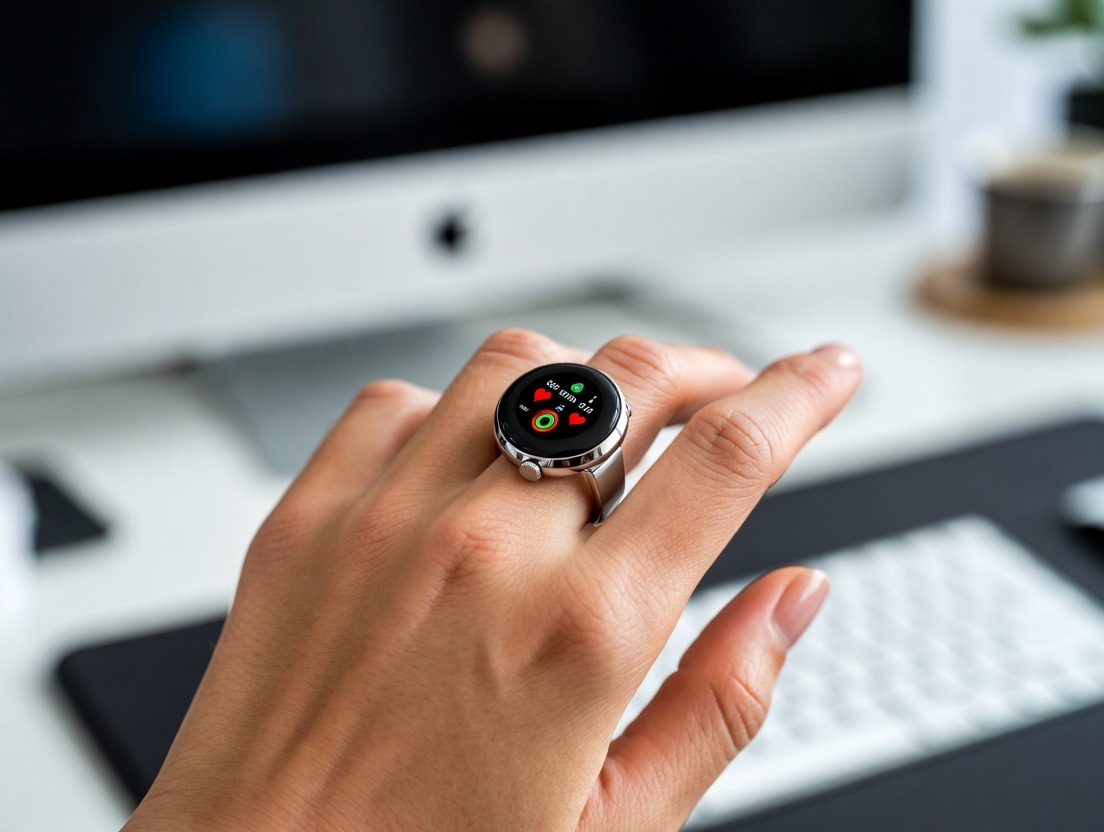
To decode your unique stress language, you need a translator that is always present, unobtrusive, and clinically precise. Enter the modern smart ring—a device category that has evolved from a simple activity tracker into a powerful, continuous health biomarker lab worn on one of the body’s most vascular fingers.
Why the finger? The arteries in your finger (the palmar digital arteries) provide a rich, direct source of photoplethysmogram (PPG) data—a measurement of blood volume changes with each heartbeat. This positioning, coupled with the natural form factor of a ring, solves the major pitfalls of other wearables:
At the forefront of this personalized health revolution is technology like the Oxyzen smart ring. It acts not as a judge, but as a translator and guide. By gathering billions of data points over time, it learns the subtle contours of your personal physiology. It establishes your baseline HRV, your typical sleep-stage architecture, and your normal temperature cycle. It then identifies meaningful deviations—the nights your HRV dips before you feel sick, the afternoons your stress load accumulates, the moments your body is truly ready for peak performance or in desperate need of rest.
This device is the bridge between the complex science of stress and your daily lived experience. It turns abstract concepts like "autonomic tone" into clear, actionable charts and insights on your phone. It empowers you to move from asking "Am I stressed?" to investigating "How is my body responding to this specific challenge, and what does it need to recover?" To learn more about the technology that makes this possible, discover how Oxyzen works.
If you could choose only one number to represent the functional state of your nervous system and your resilience to stress, it would be Heart Rate Variability (HRV). Contrary to what the name might imply, a higher HRV (within your normal range) is generally better. It is the single most powerful non-invasive window into the balance and flexibility of your ANS.
What is HRV? It is the subtle, millisecond variation in the time intervals between consecutive heartbeats. It is not arrhythmia; it is a sign of a healthy, responsive heart. When your parasympathetic (rest) branch is dominant, it sends slow, subtle signals to your heart to speed up and slow down, creating more variability—a wavy, adaptable rhythm. When your sympathetic (stress) branch takes over, it sends strong, uniform signals to pump faster and more consistently, reducing variability—a straighter, more rigid rhythm.
Think of it as the difference between an expert driver on a winding mountain road (high variability, adapting to each turn) and a novice slamming the gas on a straightaway (low variability, rigid and strained).
What Your HRV Tells You:
Personalization is Key: There is no "good" HRV number for everyone. A value of 60 milliseconds might be excellent for one person and low for another. Age, fitness, genetics, and gender all influence it. The critical insight comes from tracking your trends over time. Your smart ring monitors this continuously, especially during deep sleep, to establish your personal baseline and highlight significant deviations. Seeing a week-long downward trend in your HRV is a powerful, objective alert from your body to prioritize recovery, perhaps before your mind has even registered feeling tired.

While HRV measures the variability between beats, your Resting Heart Rate (RHR) and its daily patterns provide a direct readout of cardiovascular effort and systemic strain. Your RHR is the minimum number of times your heart needs to beat per minute to sustain your body at complete rest. Like HRV, it is deeply personal, but trends are profoundly informative.
The Stress-Heart Rate Connection: When your sympathetic nervous system is activated, it releases catecholamines (like adrenaline) that directly increase heart rate to pump more blood to muscles and the brain. Therefore, a chronically elevated RHR, or unusual spikes at rest, can be a clear sign of persistent stress load, inadequate recovery, or impending illness.
Beyond the Single Number: Diurnal Rhythm
The most insightful way to view heart rate is not as a single daily number, but as a 24-hour waveform with a healthy diurnal rhythm:
A disrupted pattern—such as a high nighttime heart rate that doesn’t drop sufficiently, or a morning RHR that is elevated from your baseline—is one of the clearest biometric flags of a stressed, overworked system. It’s your body working overtime, even when it should be at rest. Your smart ring tracks this rhythm effortlessly, giving you a visual graph of your daily cardiovascular strain and recovery, and alerting you when your pattern is chronically out of sync.
Your body's core temperature follows a delicate, predictable circadian rhythm, dropping as you approach sleep to initiate drowsiness and reaching its nadir in the middle of the night. This cycle is governed by your hypothalamus, the body's master clock, which is highly sensitive to stress and inflammation.
Why Nighttime Temperature Matters for Stress:
A smart ring, with its constant skin contact, is ideal for tracking this subtle metric. By understanding your personal temperature curve, you gain insight into your circadian health—a foundational pillar of stress resilience. A week of elevated nocturnal temperature might prompt you to investigate hidden stressors, improve sleep hygiene, or simply allow yourself more downtime.

Sleep is not a uniform state of unconsciousness. It's a meticulously orchestrated series of cycles through light, deep, and REM (Rapid Eye Movement) stages. Each stage serves a distinct recovery purpose:
Stress is the arch-nemesis of deep sleep. When your sympathetic nervous system is overactive, it becomes physiologically harder to descend into the profound relaxation of deep sleep. You may spend more time in light, fragmented sleep. Your biometrics tell this story vividly: reduced deep sleep percentage, more awakenings, elevated nighttime heart rate, and lowered sleep HRV.
Generic sleep trackers that only guess at "restlessness" miss this nuanced picture. A detailed analysis of your sleep architecture—provided by advanced PPG and accelerometer data from a smart ring—shows you not just how long you slept, but how well you recovered. It answers: Did my body achieve the physiological state of deep repair? Was my nervous system calm enough to benefit from sleep? This moves sleep tracking from a simple duration score to a true recovery audit.
Individually, these biomarkers are powerful. Together, they form an interconnected tapestry—your Unique Stress Response Profile. They cross-validate and tell a cohesive story.
A Real-World Example:
Let’s follow "Sam" through a stressful work week.
Without this data, Sam only knows he feels "burnt out" by Friday. With it, he could have seen the warning signs on Wednesday and taken proactive steps to mitigate the strain. He learns his personal threshold and effective recovery tactics. This is the power of an integrated profile. For more examples of how these insights transform daily life, you can browse related stories on our blog.

With continuous data flowing in, the next step is pattern recognition. This is where your unique profile comes into sharp focus. You begin to move from seeing data points to understanding your personal Stress Signatures—the predictable, repeatable ways your body reacts to different types of challenges.
Common Signatures to Discover:
By tagging your daily activities (e.g., "big presentation," "hard workout," "family dinner," "poor sleep") in your companion app, you start to correlate subjective experiences with objective data. You answer questions like: "Do my workouts energize or deplete my system?" "How long does it take my body to recover from a stressful event?" "What time of day is my nervous system most resilient?" This process transforms data into self-knowledge. The founding vision behind creating tools for this kind of deep self-knowledge is detailed in our brand's story and journey.
Armed with your unique profile and signatures, you can graduate to conducting a daily Personalized Stress Audit. This is a proactive practice, not a passive review. The goal is to balance your "Stress Load" with your "Recovery Capacity."
The Audit Framework:
This audit turns stress management from a reactive, feelings-based endeavor ("I feel overwhelmed") into a proactive, data-informed practice ("My recovery metrics are down 15%, I need to prioritize light activity and an early bedtime tonight"). It empowers you to make micro-adjustments that prevent macro-breakdowns.
Knowing your Unique Stress Response Profile is not an academic exercise—it is the foundational map for redesigning your life with intention and precision. We move now from insight to application, from understanding to action. This is the art of Precision Lifestyle Design, where every choice, from your morning coffee to your evening routine, can be informed by the objective feedback of your physiology.
The old model of wellness was based on rigid prescriptions: "Everyone must drink 8 glasses of water," "Never drink coffee after 2 PM," "Do 150 minutes of cardio per week." The new model, empowered by your biometric data, is flexible, curious, and personal. It asks: "What happens to my HRV when I drink coffee?" "Does a 6 AM workout energize my day or deplete my system?" "What type of evening activity truly helps me detach from work stress?"
This process begins with what we call N-of-1 Experiments. You are the primary researcher in the single-subject study of your own life. Your smart ring provides the lab equipment. Here’s how to start:
For example, you might test "no caffeine after 12 PM." Your data may reveal that this simple change leads to a 10% increase in your deep sleep and a more pronounced drop in your nocturnal heart rate. Conversely, you might find it makes no difference for you, but that a 4 PM coffee actually causes no sleep disruption. The power is in the personal result. You are no longer following rules; you are following data specific to your body’s responses. To see how others have conducted their own experiments and transformed their routines, you can explore community stories and testimonials.
High achievers often live by a dangerous binary: "push harder" or "crash." This cycle leads to the all-too-common burnout. Your Unique Stress Response Profile introduces a third, sustainable path: Strategic Stress. This is the understanding that stress is not inherently bad; it is a stimulus for growth—but only if it is properly dosed and followed by adequate recovery. It’s the principle of hormesis—the biological phenomenon where a beneficial effect results from exposure to low doses of an agent that is otherwise toxic at high doses.
Think of physical training. You intentionally stress your muscles (lifting weights), causing micro-tears. Then, with proper nutrition and rest, they repair to become stronger. Your nervous system operates on the same principle.
How to Apply Strategic Stress:
If stress is the load, recovery is the repair. Society has glorified "the grind" but neglected the essential art of recovery. With your profile in hand, you can transform recovery from a passive hope into an active, skilled practice. You will learn which recovery modalities work for you, and when to deploy them.
Building Your Toolkit Based on Your Data:
The key is to test, not guess. Your biometric feedback will clearly show which tools belong in your personal first-aid kit for stress. You’ll learn that maybe meditation doesn’t calm your system, but a slow walk does. Or that an ice bath is invigorating for you, while for your partner it’s overly stressful. This personalized toolkit becomes your greatest asset for maintaining equilibrium in a chaotic world. For a deeper library of recovery techniques and science, our blog is a continually updated resource.
One of the most profound applications of your stress profile is optimizing the timing of your life. Chronobiology is the study of your body's natural rhythms, most importantly your circadian rhythm. Fighting this internal clock is a tremendous, often invisible, source of stress. Aligning with it is a free performance enhancer.
Your smart ring data—specifically your body temperature rhythm and daily heart rate patterns—paints a vivid picture of your personal circadian biology.
How to Use Your Data for Chrono-Alignment:
By aligning your schedule with your internal rhythm, you reduce the friction of daily life. Tasks require less effort, sleep comes more easily, and your system operates efficiently. It’s like swimming with the current instead of against it.
Our relationships are among our greatest sources of joy and, often, our most significant stressors. From a difficult conversation with a partner to the draining effect of a negative coworker, social interactions have a direct and measurable impact on our nervous system. Your stress profile gives you physiological intelligence to navigate your social world with greater awareness and agency.
Understanding Your Social Stress Signatures:
Applying This Intelligence:
This isn't about becoming antisocial; it's about becoming selectively social with wisdom. It’s about choosing interactions that are sustainable and nurturing for your unique system.
The connection between your gut and your brain—the gut-brain axis—is a two-way street heavily influenced by stress. Chronic stress can disrupt gut motility, increase intestinal permeability ("leaky gut"), and alter your microbiome. Conversely, an unhappy gut can send inflammatory signals to the brain, exacerbating stress and anxiety. Your smart ring, while not a digestive monitor, can catch the peripheral echoes of this conversation.
Biometric Clues to Digestive and Dietary Stress:
Your ring provides the "when" and the "how bad," which empowers you to identify the "what." It turns nutrition from dogma ("carbs are bad") into a personal investigation ("How does my body respond to sweet potatoes versus bread?"). This data-driven approach helps you eat for your unique metabolism and stress tolerance. For support in interpreting these kinds of data patterns, our FAQ has helpful guidance.
The ultimate goal of understanding your Unique Stress Response Profile transcends daily management. It is about compounding resilience over a lifetime to extend your healthspan—the number of years you live in good health, free from chronic disease. Chronic, unmanaged stress is a primary accelerator of aging at the cellular level, contributing to telomere shortening, chronic inflammation, and mitochondrial dysfunction.
Your profile is an early-warning system for the insidious creep of allostatic load—the cumulative wear and tear on the body from chronic stress.
From Stress Management to Resilience Banking:
In this long-term view, your smart ring and profile become your personal longevity dashboard. It shifts the healthcare model from reactive (treating disease after it appears) to proactive (building resilience to prevent it). You are no longer just tracking steps; you are tracking the vitality of your autonomic nervous system—the very engine of your life.
Let's synthesize everything into a narrative. Here is a day in the life of "Taylor," who uses their Unique Stress Response Profile not as a dictator, but as a wise advisor.
6:30 AM – Wake-Up: Taylor's smart ring vibrates gently at the optimal time in their sleep cycle. The first action is not reaching for the phone, but checking the companion app's Morning Report.
7:00 AM – Morning Routine: Based on their chronotype data (a moderate morning person), Taylor gets 15 minutes of morning sunlight to anchor their circadian rhythm, followed by a brief mobility session. They skip intense exercise because their data has shown that fasted AM workouts lead to an afternoon energy crash for them.
9:00 AM – 12:00 PM – Deep Work Block: Taylor's temperature and heart rate data indicate their biological peak is late morning. They block this time for their most demanding analytical work. The ring sits quietly, gathering data.
1:00 PM – Post-Lunch Dip: Feeling the natural circadian trough, Taylor doesn't fight it with caffeine. Instead, they take a 20-minute walk outside (noting a nice bump in their live HRV reading post-walk). This is a strategic recovery micro-dose.
3:00 PM – High-Stakes Meeting: A scheduled difficult conversation. Taylor feels the anxiety rise. A quick glance at the live stress graph on their phone shows a rising heart rate. They excuse themselves for two minutes, practice a specific breathing pattern they've tested (4-second inhale, 6-second exhale), and watch their heart rate drop 8 BPM on the screen. They re-enter the meeting more regulated.
6:30 PM – Evening Wind-Down: The app sends a notification: "Your body temperature is starting its evening decline. A great time to begin reducing stimulation." Taylor dims the smart lights and puts their phone on grayscale.
8:00 PM – Recovery Toolkit in Action: Tonight's recovery score was slightly lower than yesterday. Taylor opts for a tool from their proven kit: a 15-minute guided NSDR session. They feel calm afterward, and their overnight data will confirm its effectiveness.
10:00 PM – Sleep Preparation: Two hours after their light dinner (timed to not disrupt sleep based on past experiments), Taylor gets into bed. Their ring will track the success of their wind-down via a steady drop in heart rate and the onset of deep sleep.
Taylor’s day wasn't ruled by data; it was informed by it. Decisions were made with a combination of subjective feeling and objective insight. This is the seamless integration of your Unique Stress Response Profile into a life of empowered, intelligent living. This integrated approach is at the heart of our product's design philosophy, which you can learn more about here.
The journey we've outlined represents the current state of the art in personalized health intelligence. But this is only the beginning. Your Unique Stress Response Profile is the foundational layer of a much broader personal health ecosystem that is rapidly emerging.
The Evolving Landscape:
The smart ring is the perfect, unobtrusive hub for this coming revolution. It provides the continuous, foundational ANS data upon which all other layers can be integrated. By starting to build your profile today, you are not just optimizing your current well-being; you are future-proofing your health, preparing to plug into a world of healthcare that is finally, truly, about you.
The journey to mastering your Unique Stress Response Profile requires more than just technology; it demands a fundamental mindset shift. For years, we’ve outsourced our health authority—to generic magazine articles, to fleeting social media trends, to the well-intentioned but often irrelevant advice of friends. The data from your profile returns that authority to its rightful place: within you.
This shift moves you from seeking external validation ("Am I doing this wellness trend right?") to cultivating internal authority ("What does my body's data say about what I need?"). It's the difference between chasing a universal "biohacker" ideal and becoming the world's leading expert on your own biology.
Cultivating Your Internal Authority:
This mindset is the bedrock of sustainable change. When you operate from internal authority, wellness is no longer a destination defined by others, but a continuous, compassionate dialogue with yourself. It’s the ultimate form of self-respect. This principle of empowered self-knowledge is central to our mission at Oxyzen, which you can read more about here.
As with any powerful tool, there are potential pitfalls. The path of biometric self-knowledge can sometimes veer into unhelpful territory if we’re not mindful. Awareness of these traps is the first step to avoiding them.
1. Data Anxiety (The "Ring of Fear"):
This occurs when the device itself becomes a source of stress. You might anxiously check your live HRV during a meeting, or feel dread before looking at your sleep score. This is counterproductive.
2. The Comparison Trap:
It’s tempting to compare your HRV of 45ms to a friend’s boast of 100ms. This is as meaningless as comparing your shoe size. Your baseline is unique to you. The only valid comparison is you vs. you yesterday, and you vs. your own rolling baseline.
3. The Perfection Trap:
The pursuit of "perfect" scores—a flawless sleep graph, an ever-rising HRV trend—can become a new form of stressful striving. Biology is not linear. Life has ups and downs. A "perfect" life devoid of stress would also be devoid of growth and joy.
4. Over-Attribution:
It’s easy to blame a single factor ("that glass of wine ruined my sleep!") when biology is multivariate. Perhaps it was the wine plus the late meal plus the stressful day.
Navigating these pitfalls successfully keeps your journey grounded, compassionate, and ultimately, more effective. For community support and shared experiences on maintaining a healthy relationship with data, our user testimonials often touch on this balance.
As we invite these intimate devices into our lives, recording our heartbeats, our sleep, and our stress, profound ethical questions arise. Your biometric data is arguably the most personal data that exists—a direct readout of your subconscious life. Navigating this new terrain with wisdom is crucial.
Core Ethical Principles for the User:
As a user, you have power. Choose companies whose values align with these principles—those that treat your data not as a commodity, but as a sacred trust. Ask these questions. The future of health technology must be built on a foundation of user sovereignty and ethical integrity. The founding vision behind Oxyzen was built with these very ethical considerations at its core, as detailed in our story and values.
Armed with the deep self-knowledge of your profile, you become more than just a healthier individual; you can become an agent of cultural change. Our collective understanding of stress is dangerously outdated, fueling stigma, burnout, and poor health outcomes. You now have the language and evidence to advocate for a smarter approach.
How to Be an Advocate:
Your personal journey thus ripples outward. As more people understand their unique physiology, we can build workplaces, schools, and communities that are designed for human flourishing, not just human endurance.
The scope of this knowledge can feel vast. The key is to begin simply. Here is a practical, 30-day plan to start building and using your Unique Stress Response Profile without overwhelm.
Week 1-2: The Observation Phase
Week 3: The First Experiment
Week 4: Integrate One Insight
Throughout this month, remember the mindset: curiosity over judgment. You are a scientist in your own life lab. For answers to common technical or interpretive questions during this phase, our FAQ is a great support resource.
We began this exploration by challenging the monolithic view of stress. We’ve journeyed through the science of your autonomic nervous system, the technology that illuminates it, and the profound personal application of that knowledge. What emerges is a clear, compelling truth: Understanding your Unique Stress Response Profile is the ultimate investment in your most valuable asset—you.
This is not a pursuit of optimization for its own sake. It is a pursuit of freedom.
Your body has been speaking its silent language for your entire life. Now, you have the means to listen, to understand, and to respond. This is the dawn of a new relationship with yourself—informed, compassionate, and powerfully intelligent.
The path forward is personal, it is data-informed, and it is yours to walk. Your unique story of stress and recovery is waiting to be told. All you have to do is start listening. To begin that journey of discovery with a tool designed for this purpose, you can learn more about Oxyzen here.
Your Trusted Sleep Advocate: Sleep Foundation — https://www.sleepfoundation.org
Discover a digital archive of scholarly articles: NIH — https://www.ncbi.nlm.nih.gov/
39 million citations for biomedical literature :PubMed — https://pubmed.ncbi.nlm.nih.gov/
Experts at Harvard Health Publishing covering a variety of health topics — https://www.health.harvard.edu/blog/
Every life deserves world class care :Cleveland Clinic - https://my.clevelandclinic.org/health
Wearable technology and the future of predictive health monitoring :MIT Technology Review — https://www.technologyreview.com/
Dedicated to the well-being of all people and guided by science :World Health Organization — https://www.who.int/news-room/
Psychological science and knowledge to benefit society and improve lives. :APA — https://www.apa.org/monitor/
Cutting-edge insights on human longevity and peak performance:
Lifespan Research — https://www.lifespan.io/
Global authority on exercise physiology, sports performance, and human recovery:
American College of Sports Medicine — https://www.acsm.org/
Neuroscience-driven guidance for better focus, sleep, and mental clarity:
Stanford Human Performance Lab — https://humanperformance.stanford.edu/
Evidence-based psychology and mind–body wellness resources:
Mayo Clinic — https://www.mayoclinic.org/healthy-lifestyle/
Data-backed research on emotional wellbeing, stress biology, and resilience:
American Institute of Stress — https://www.stress.org/


