


The Power of Personal Health Insights From Your Wellness Ring
The valuable insights about your health that come from a wellness ring.
The valuable insights about your health that come from a wellness ring.
%402x.svg)
In an age of information overload, we paradoxically know less about the most important system we’ll ever manage: our own body. We track our finances, our social media metrics, and our career milestones with precision, yet our personal health often remains a mystery, governed by vague feelings of being “tired” or “stressed.” What if you could access a continuous, objective, and deeply personal stream of data about your physical and mental well-being? Not from a invasive test, but from a device you wear every day. This is the revolutionary promise of the modern wellness ring—a discreet piece of technology that transforms your finger into a window to your wellness.
Moving beyond the step-counting limitations of earlier wearables, the latest smart rings like those developed by innovators such as Oxyzen are sophisticated health hubs. They leverage advanced sensors to monitor core physiological signals—heart rate, heart rate variability (HRV), blood oxygen saturation, skin temperature, and sleep architecture—24 hours a day. The true power, however, lies not in the raw data, but in the personal health insights derived from it. This is about context, trends, and actionable intelligence unique to you. It’s the difference between knowing your heart rate is 65 BPM and understanding that your resting heart rate trends upward after poor sleep, signaling your body’s strain. It’s the shift from guessing you slept “okay” to seeing how your deep sleep duration directly correlates with your next-day focus and energy.
This article is your deep dive into this new frontier of personalized health. We will explore how the continuous, passive data collection of a wellness ring builds a comprehensive digital portrait of your baseline—your body’s unique “normal.” We’ll decode the critical biomarkers it tracks, demystifying the science behind the metrics. Most importantly, we’ll chart the journey from scattered data points to profound, life-changing insights: optimizing sleep, managing stress before it manages you, refining recovery, personalizing fitness, and even anticipating health shifts. This is more than tracking; it’s about unlocking a proactive, evidence-based dialogue with your own body, empowering you to make informed decisions that enhance your daily life and long-term vitality. To explore the full potential of this technology, you can discover how Oxyzen works at the forefront of this personal health revolution.

Imagine a brilliant health consultant who shadows you 24/7, never judges, never interrupts, and meticulously records the subtle whispers of your body’s systems. This is the fundamental role of a wellness ring. Unlike a smartphone app you must remember to open or a smartwatch that requires you to initiate a workout, the ring operates as a silent observer. Its power is rooted in passivity and continuity. By being worn consistently—often charged while you shower—it eliminates the “user error” of forgotten tracking and gathers data in your most authentic states: during deep sleep, in moments of calm, and amidst daily stress.
This continuous data collection is the bedrock of personalization. A single day’s data is a snapshot; a week’s data is a pattern; a month’s data begins to tell your story. The ring’s algorithms work to establish your personalized health baseline. What is your normal resting heart rate? What is your typical HRV range, indicating your nervous system’s resilience? What does your optimal sleep cycle look like? These aren’t numbers compared to population averages; they are your unique biometric signature. For instance, while the textbook “good” resting heart rate might be under 70 BPM, your personal baseline could be 58. Seeing it climb to 68 for several consecutive nights becomes a meaningful alert—a deviation from your normal that warrants attention, perhaps indicating onset of illness, dehydration, or excessive strain.
The process is elegantly simple yet profoundly insightful:
This establishment of a baseline transforms health from a reactive to a proactive pursuit. You’re no longer waiting for a symptom to become a problem. You are equipped with a digital mirror reflecting the consequences of your lifestyle choices on your physiology. As you continue your journey to understand these metrics, a wealth of information is available to you. You can explore our blog for more wellness tips and detailed breakdowns on how to interpret your personal data streams. The silent observer thus becomes your most trusted health confidant, providing the evidence you need to champion your own well-being.
The dashboard of a wellness ring can seem like a cockpit of unfamiliar metrics. But each one is a vital signpost, a direct communication from your autonomic nervous system and cardiovascular system. Understanding them is key to wielding their power. Let’s decode the primary biomarkers and translate them from medical jargon into actionable wellness language.
Heart Rate Variability (HRV): The Gold Standard for Recovery and Resilience
HRV is arguably the most important metric tracked by advanced wellness rings, and often the most misunderstood. Contrary to intuition, a healthy heart does not beat with the monotonous regularity of a metronome. The time interval between beats is constantly, minutely fluctuating. HRV measures the variation in these milliseconds between heartbeats. A higher HRV generally indicates a more resilient, adaptable nervous system. Think of it as your body’s “buffer” against stress. When your parasympathetic (“rest-and-digest”) system is dominant, your HRV is higher. When stress, fatigue, or illness trigger the sympathetic (“fight-or-flight”) system, HRV drops.
Resting Heart Rate (RHR): Your Metabolic and Cardiovascular Whisperer
Your resting heart rate is the number of times your heart beats per minute while you are completely at rest—optimally measured during deep sleep or immediately upon waking. While a “normal” range is 60-100 BPM, a lower RHR (within a healthy context) typically indicates more efficient heart function and better cardiovascular fitness.
Sleep Architecture: Beyond Just Hours in Bed
Modern wellness rings move far beyond simple sleep duration. They analyze sleep architecture—the cyclical stages of Light, Deep, and REM (Rapid Eye Movement) sleep. Each stage serves a distinct purpose: physical restoration and cellular repair in Deep sleep, memory consolidation and learning in REM sleep, and transitional phases in Light sleep.
Blood Oxygen (SpO2) and Skin Temperature: The Subtle Alerts
By learning this language of your body, you graduate from a passive data viewer to an active health interpreter. You begin to see the interconnected story these metrics tell—how yesterday’s stress lowered your HRV, which fragmented your sleep, which raised your RHR today. This holistic view is at the core of the philosophy behind leading devices, a philosophy deeply rooted in a mission to empower individuals. To understand the vision driving this technology, you can learn more about our mission and values.

For decades, the cultural mantra around sleep has been simplistic: “Get 8 hours.” But anyone who has slept for 8 restless hours and woken feeling drained knows the formula is flawed. The wellness ring dismantles this one-size-fits-all approach, providing a data-driven sleep revelation. It shifts the focus from arbitrary duration to the multifaceted pillars of quality, timing, and consistency.
The ring’s sensors act as a personal sleep lab, revealing what was previously invisible. It doesn’t just know when you’re asleep; it knows how you’re sleeping. This reveals powerful personal patterns:
The Impact of Evening Routines: You can run personalized experiments. One week, you implement a strict “no screens 90 minutes before bed” policy. The next, you try a hot bath 60 minutes before sleep. The ring provides quantifiable feedback: Did your deep sleep increase? Did your sleep latency decrease? You might find that a late, heavy meal doesn’t just feel uncomfortable—it objectively reduces your sleep score by elevating your nighttime heart rate and reducing HRV.
Circadian Rhythm Alignment: Your ring tracks your sleep and wake times, helping you visualize your natural rhythm. You may discover that your body consistently prepares for sleep around 10:30 PM (indicated by a dip in heart rate and a rise in skin temperature) and is primed to wake naturally around 6:15 AM. Fighting this rhythm by scrolling until midnight creates what scientists call “social jetlag,” a mismatch the ring clearly shows in reduced sleep efficiency and next-day readiness scores.
Recovery vs. Regeneration: Two nights of 7-hour sleep can be radically different. One might be rich in deep and REM sleep, resulting in a high readiness score. The other might be fragmented with high restlessness, leading to a low score despite the same duration. The ring quantifies this difference, teaching you that it’s not just about being unconscious; it’s about providing your body the right conditions for restoration.
This empirical approach turns sleep from a passive state into an active pillar of health you can optimize. It answers questions like:
Armed with these answers, you can craft a sleep protocol that is uniquely effective for your physiology. This moves you from guessing to knowing, from feeling tired to understanding precisely why, and from chasing an arbitrary number of hours to pursuing genuinely restorative sleep. For those curious about real-world applications of these insights, countless users have shared their transformative experiences. You can read real customer reviews and sleep journey testimonials to see how this data has changed lives.
We’ve all experienced it: the end of a chaotic day where we declare, “I’m so stressed.” But stress is a notoriously slippery concept to quantify. Was it a “5” or a “9”? Did you recover from the morning’s tension, or is it still lingering in your physiology? Our subjective feelings can be unreliable, colored by our mood, perspective, and even caffeine intake. The wellness ring cuts through this fog, offering an objective, physiological unmasking of stress. It measures not your perception of stress, but your body’s actual response to it.
The primary tool for this is, once again, Heart Rate Variability (HRV). When your sympathetic nervous system is activated by a stressor—be it an angry email, a hard workout, or an emotional conversation—your HRV typically dips. The ring tracks these dips throughout the day, correlating them with timestamps. You can review your day and see the exact moment your physiology was impacted. This creates a powerful form of biofeedback.
The Stress Timeline: You might look at your data and see a pronounced HRV dip at 10:15 AM. Reflecting, you remember the tense team meeting that started at 10:00. The data confirms what you felt. More importantly, you might see a dip at 3:00 PM that you didn’t consciously register. Upon reflection, you realize that’s when you were multitasking, juggling Slack messages, emails, and a project deadline. The ring reveals this “hidden stress” of cognitive overload.
Recovery Rate: Objective data also measures your resilience—not just how stressed you get, but how quickly you bounce back. After that 10:15 AM meeting, does your HRV recover to baseline within 30 minutes, or does it stay suppressed for hours? A fast recovery indicates good stress resilience. A slow recovery can be a sign of chronic stress load or poor recovery habits, signaling a need for better breaks, breathing exercises, or other stress-management techniques.
The Calibration of Self-Awareness: This is where the magic happens. By repeatedly comparing your subjective feeling (“I feel a bit on edge”) with the objective data (a 20% drop in HRV), you begin to calibrate your internal awareness. You learn to recognize the subtle, early physical signs of stress in your body before it escalates into anxiety or overwhelm. This empowers you to intervene proactively: a two-minute breathing exercise when you see a dip begin, or a short walk to clear your head.
The ring transforms stress from an abstract, overwhelming force into a measurable, manageable physiological process. It helps you identify your unique stress triggers, understand your personal recovery patterns, and develop evidence-based strategies to build resilience. This journey from subjective to objective is a cornerstone of modern wellness technology, a journey that began with a clear vision to bridge this gap. To understand the origins of this approach, you can delve into the founding story and brand journey behind Oxyzen.
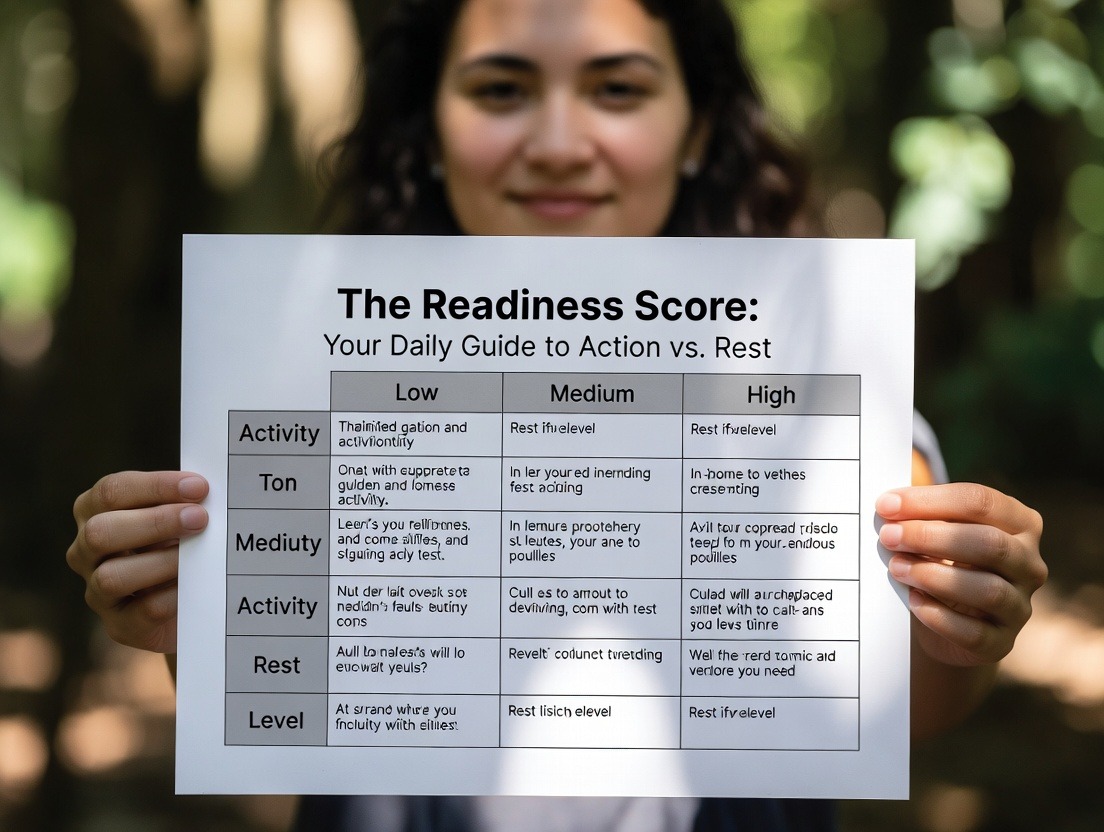
Each morning, after a night of silent observation, your wellness ring delivers a verdict: your Readiness Score (sometimes called a Recovery Score). This single, composite number is the culmination of all the biomarkers we’ve discussed. It’s not a judgment, but a data-driven recommendation on how to approach your day. Should you attack that high-intensity workout, tackle a demanding project, or prioritize gentle movement and restoration? The readiness score is your daily guide, turning personal insight into clear, actionable direction.
This score is typically calculated from a weighted algorithm that considers:
A high readiness score (e.g., 85-100) is a green light. Your body is signaling that it has recovered well, is resilient, and is primed to handle stress (physical or mental) effectively. This is the day to schedule that intense training session, lead the big presentation, or embark on a demanding creative task. Your body has the resources to perform and adapt.
A moderate score (e.g., 70-84) suggests caution. You may be adequately recovered but not at your peak. It’s a yellow light. The recommendation might be to proceed with your planned workout but perhaps at a moderated intensity, or to be mindful about piling on extra stress. It’s a day for focused, steady work rather than heroic efforts.
A low readiness score (below 70) is a clear red light—a strong suggestion to prioritize recovery. Your body is showing signs of strain: poor sleep, low HRV, high RHR. Ignoring this and pushing through with intense exercise or high stress can lead to diminished returns, increased injury risk, and prolong the recovery period. This is the day for a walk, yoga, mobility work, meditation, and extra hydration. It’s an investment in bouncing back stronger tomorrow.
The profound psychological impact of this cannot be overstated. It removes the guilt from rest. Instead of an internal debate (“I should work out, but I feel tired”), you have an objective partner saying, “The data shows your system is under strain; the most productive thing you can do for your long-term health today is to recover.” It teaches you to listen to your body’s signals with precision, fostering a sustainable, balanced approach to performance and health. For those with questions about how these scores are generated or how to best use them, a comprehensive resource is available. You can find detailed support and answers in our FAQ.
The fitness industry is saturated with generic plans: “Couch to 5K,” “Hypertrophy in 12 Weeks,” “Marathon Training Block.” While these can provide structure, they operate on a critical assumption: that your body will respond and recover on their predetermined schedule. This one-size-fits-all approach is why so many people experience burnout, injury, or plateaus. Your wellness ring changes this paradigm, enabling a shift from generic programming to biologically informed training.
This is the essence of autoregulation—letting your body’s daily state dictate the workout, not the calendar. Your readiness score is the primary gatekeeper. But the personalization goes deeper:
Optimizing Workout Intensity: On a high-readiness day, you can confidently push for a new personal record or complete a high-volume session. On a low-readiness day, you might switch a planned interval run to a Zone 2 steady-state jog or a strength session to a technique-focused, lower-weight workout. This ensures you are applying stress when your body is best prepared to absorb it and grow stronger, not when it is vulnerable.
Tracking Training Load and Adaptation: Rings track your heart rate during activity, providing data on workout intensity and estimated exertion. Over time, you can see if you are in a productive training “zone”—applying enough stress to drive adaptation (rising fitness) while maintaining adequate recovery (stable or improving readiness). You can spot the warning signs of overtraining syndrome early: a persistent decline in HRV, a creeping rise in RHR, and consistently poor sleep despite fatigue.
The Role of HRV in Periodization: For the serious athlete, HRV data can guide weekly and monthly periodization. A trend of rising HRV suggests positive adaptation—you’re recovering well and getting fitter. A stable trend indicates maintenance. A downward trend is a red flag to incorporate a deload week, reduce intensity, or focus on recovery before continuing to push.
Beyond the Workout – The 23 Hours: The ring reinforces that fitness isn’t built in the 1-hour workout; it’s built in the 23 hours of recovery that follow. It shows you how last night’s sleep quality directly impacts today’s performance heart rate. It reveals how a stressful workday (evident in your daytime HRV) can make a evening workout feel harder and less productive. This holistic view encourages you to see lifestyle—sleep, nutrition, stress management—as integral parts of your fitness regimen.
By integrating this biometric feedback, your training becomes a dynamic, responsive dialogue with your body. You stop blindly following a plan and start executing a strategy that is continuously optimized for your current physiological reality. This leads to more consistent progress, fewer setbacks, and a healthier, more sustainable relationship with exercise. The pursuit of this kind of personalized health intelligence is what drives continuous innovation in the field, an effort you can learn more about on our homepage.

Nutrition has long been a realm of dogma and anecdote. “This diet worked for me!” “I feel bloated when I eat that.” The wellness ring introduces an objective third party to this conversation, allowing you to connect the dots between what you consume and how your body responds at a physiological level. It turns nutritional experimentation from guesswork into a science.
The Nightly Report Card: The most powerful link is between evening intake and sleep/next-morning metrics. The ring provides quantifiable feedback on how different foods and drinks affect your restoration.
Individual Food Sensitivities: While not a diagnostic tool, the ring can help identify potential non-allergic food sensitivities. If you notice a pattern where your sleep is consistently fragmented, your morning RHR is elevated, or your HRV is depressed after eating certain foods (e.g., dairy, gluten, high-histamine foods), it provides a data-driven reason to consider an elimination test under the guidance of a healthcare professional.
Fueling for Performance: For active individuals, the ring can inform nutrition timing. You might see that a small, balanced meal 2-3 hours before a workout leads to better performance metrics (lower exercise heart rate for a given pace) compared to training fasted or too soon after a large meal. Post-workout, a quick recovery in HRV and RHR can indicate that your refueling strategy is effective.
This creates a powerful feedback loop. You no longer have to rely solely on subjective feelings of “heaviness” or “energy.” You have data. You learn that for your body, a 7 PM cutoff for food optimizes sleep. You see that a glass of wine with dinner has a measurable cost. This empowers you to make informed trade-offs and develop a nutritional approach that genuinely supports your health and performance goals, tailored uniquely to your physiology. For deeper dives into topics like sleep nutrition, stress-eating connections, and personalized wellness strategies, a wealth of curated knowledge awaits. You can explore our blog for more wellness tips and research-backed articles.
The ultimate power of continuous monitoring lies in the macro view—the long-term trend. While daily and weekly data guides immediate behavior, the aggregate data over months and years becomes an invaluable health journal. This longitudinal perspective allows you to spot gradual shifts in your baseline, serving as an early warning system for potential issues and a positive reinforcement tool for healthy changes.
The Early Detector: Our bodies often send subtle, gradual signals long before a full-blown symptom appears. A wellness ring can detect these whispers.
Documenting Lifestyle Interventions: The trend data powerfully validates positive changes. When you commit to a new routine—prioritizing 8-hour sleep windows, starting a meditation practice, improving your diet—you can see the results in your biometric trends. Your HRV baseline may rise. Your average RHR may fall. Your sleep scores may become more consistent. This tangible proof is incredibly motivating, reinforcing that your efforts are paying off in measurable physiological ways.
Aging with Awareness: As we age, our physiology naturally changes. Having years of personal baseline data allows you to understand your normal aging process. You can distinguish between a natural, gradual shift and an abnormal, sudden deviation. This empowers proactive aging—using data to inform lifestyle choices that support vitality and healthspan.
This long-term dataset transforms your relationship with your doctor. Instead of describing how you’ve “felt tired for a few months,” you can present a graph showing a 15% decline in your average HRV over the last quarter, coupled with a documented rise in resting heart rate. This objective evidence facilitates more productive, targeted conversations and can lead to earlier interventions. Building this long-term partnership with your own data is a journey, and many have found it transformative. You can read real customer reviews and long-term user experiences to see this power in action.

The power of personal health insights doesn’t have to be solitary. The future of health is collaborative, and wellness ring data is poised to play a pivotal role in fostering deeper connections between individuals, their healthcare providers, and even their coaches or wellness teams. This represents a move from episodic, symptom-driven care to continuous, data-informed collaboration.
Empowering the Patient-Provider Dialogue: Imagine walking into your doctor’s or therapist’s office with a quarterly report of your key health metrics. You could show them:
This shifts the dynamic. You become an engaged, data-literate partner in your care. The provider gets context that is impossible to capture in a 15-minute appointment—a view of your health in your natural environment. This can lead to more accurate diagnoses, better-tailored treatment plans (e.g., using sleep data to inform depression or anxiety treatment), and more effective monitoring of chronic conditions.
Coaching and Accountability: For personal trainers, nutritionists, and wellness coaches, this data is gold. A client can share relevant trends, allowing the coach to adjust training loads in real-time based on recovery scores, tailor nutrition advice based on sleep responses, and provide objective accountability. The ring data becomes the shared “scoreboard,” making progress tangible and guidance precise.
Community and Shared Learning (Anonymously): On an aggregate, anonymized level, this data holds immense potential for public health and product development. Understanding how large populations sleep, recover, and respond to stress can lead to better workplace wellness programs, urban design, and health policy. For companies like Oxyzen, this anonymized data fuels the iterative improvement of algorithms and features, ensuring the technology becomes more intelligent and helpful for everyone. The commitment to advancing this collaborative, data-driven future is rooted in a clear vision. To understand the principles guiding this work, you can learn more about our mission and values.
This collaborative horizon expands the ring’s value from a personal tool to a connective node in a larger ecosystem of health and performance. It promises a future where health management is seamless, informed, and deeply integrated into our lives and our support networks. As this technology evolves, staying informed is key. For the latest developments, research, and thought leadership in this space, you can explore our blog for more wellness tips and updates.
With a firehose of data available, a common pitfall is analysis paralysis—becoming overwhelmed by the metrics and not knowing how to act. The final, crucial step is translating these powerful insights into simple, sustainable daily habits. The goal is not to become a slave to the data, but to use it as a compass, guiding you toward routines that become automatic and life-enhancing.
Start with One Metric: Don’t try to optimize everything at once. Begin by focusing on a single area that resonates most. For most, sleep is the highest-impact starting point. For one month, make your primary goal to improve your sleep score. Use the ring’s data to experiment with one change at a time: setting a consistent bedtime, creating a dark/cool sleep environment, or implementing a digital curfew. Observe the effect on your score and how you feel.
Let Readiness Guide Your Week: Make a habit of checking your readiness score each morning. Use it as a non-negotiable input for planning your day. A low score means scheduling a walk instead of a gym session, blocking time for a proper lunch break, or committing to an early bedtime. This practice builds intuitive listening.
Create Data-Triggered Rituals: Link specific data patterns to simple actions.
Embrace the Trends, Not the Dots: Avoid fixating on a single day’s bad score. Look at the 7-day and 30-day trends. This provides perspective. A low score after an intentionally hard training block is expected. The trend should show recovery afterwards. This prevents unnecessary anxiety about normal fluctuations.
Periodic Review, Not Constant Checking: Designate a time—perhaps every Sunday evening—for a 10-minute weekly review of your trends. Look at your average sleep, readiness, and activity. What went well? What pattern needs attention? This structured reflection is far more productive and less obsessive than constantly checking the app throughout the day.
By integrating insights in this way, the technology fades into the background, and the improved habits come to the foreground. The ring’s ultimate success is when its data has helped you internalize such a keen sense of your body’s needs that you make positive choices instinctively, using the device merely for confirmation and long-term tracking. It becomes a silent partner in a healthier, more conscious life. For anyone starting this journey, common questions arise. A great place to find clear guidance is to find detailed support and answers in our FAQ.
Peering into a wellness ring, one sees a simple band of titanium or ceramic. But housed within its sleek form is a marvel of micro-engineering—a miniature laboratory designed to capture the faintest signals of life. Understanding this technology isn't just about gadget appreciation; it's about trusting the source of your insights and appreciating the sophisticated translation of light and electrical impulses into a story of your health.
At its core, the technology operates on two pillars: Sensor Hardware that captures raw physiological signals, and Proprietary Algorithms that clean, interpret, and contextualize that data into meaningful metrics.
The Sensor Suite:
The Intelligence Layer: Algorithms and Machine Learning
Raw sensor data is messy. Motion artifact, a loose fit, or cold fingers can create interference. This is where the algorithms—the true "secret sauce" of companies like Oxyzen—come in.
This synergy of hardware and software transforms your finger into a potent health sensing platform. The ring’s form factor is ideal: the finger has rich capillary beds for PPG, and we rarely remove rings, enabling true 24/7 monitoring. For those fascinated by the engineering and science that makes this possible, deeper resources are available. You can explore our blog for more wellness tips and technical deep dives on sensor innovation.
In the crowded ecosystem of wearables, from smartwatches to fitness bands to medical devices, the wellness ring carves out a distinct and compelling niche. Its value becomes clearest when compared directly to these alternatives. It’s not about declaring one universally superior, but about matching the right tool to the right goal: continuous, passive, physiological insight versus connected functionality or acute medical diagnosis.
vs. Smartwatches (e.g., Apple Watch, Garmin, Samsung Galaxy Watch):
vs. Fitness Bands (e.g., Fitbit, Whoop Strap):
vs. Chest Strap Monitors (e.g., Polar H10):
vs. Medical/Clinical Devices (e.g., Holter Monitor, Pulse Oximeter, PSG):
The wellness ring, therefore, occupies a unique and powerful position. It is the optimized tool for the quantified self at rest. It sacrifices the screen and direct connectivity of a watch to achieve superior wearability and focus, providing an unmatched window into the 95% of your life you spend not exercising. It’s the background monitor of your body’s operating system. For a comprehensive comparison of how leading devices stack up, including detailed analyses of different form factors, explore our blog for more wellness tips and gear reviews.
In an era of digital footprints, the intimacy of biometric data raises critical questions. Your wellness ring collects your heart’s rhythm, your sleep patterns, your stress responses—a digital twin of your physiology. Who owns this data? Where is it stored? How is it used? Addressing these concerns is not a sidebar to the technology; it is foundational to trust.
Data Ownership and Control: Reputable companies operate on the principle that you own your data. You are lending it to their platform for processing and display under clear terms of service. The best providers give you granular control. You should be able to:
Security Protocols: This data is highly personal and must be protected with bank-level security. Look for:
The Business Model and Incentives: This is crucial. Consider the incentive structure:
Your Role as a Data Steward: Ultimately, you are the steward of this information. This means:
The most profound insights require deep trust. Choosing a partner whose privacy and security practices are as robust as its sensor technology is paramount. A company’s commitment to this trust is often reflected in its core values and operational transparency. You can learn more about our mission and values regarding data stewardship and user privacy.
Abstract concepts of "insights" and "optimization" come alive through real stories. While individual results vary, the following anonymized case studies illustrate the profound, practical impact of having a continuous physiological dialogue with your body.
Case Study 1: The Overtraining Executive (Michael, 42)
Case Study 2: The Sleep-Stressed New Parent (Sofia, 34)
Case Study 3: The Migraine Sufferer (David, 29)
These stories underscore a common theme: the ring provides objective evidence that cuts through subjective fog, enabling targeted, personal experimentation and fostering a sense of agency and control over one's health. For a broader collection of such transformative experiences, you can read real customer reviews and user experiences from a diverse community.
The application of wellness ring insights extends far beyond the gym and the sleep lab. It is becoming an invaluable tool in the more nuanced realms of mental health, chronic condition support, and the overarching goal of healthspan extension.
Mental Well-being and Emotional Resilience: Stress, anxiety, and mood are deeply physiological. The ring offers tangible metrics for the intangible.
Chronic Condition Management Support: While not a treatment, the ring can be a powerful companion for those managing chronic conditions.
The Longevity and Healthspan Angle: The ultimate goal for many is not just a longer life, but a longer healthy life. The biomarkers tracked by a wellness ring—HRV, RHR, sleep quality—are themselves strong predictors of morbidity and mortality risk.
This expansion of scope demonstrates that the wellness ring is not a niche fitness gadget but a general-purpose health sensing platform. Its value grows as our understanding of the deep interconnectivity between lifestyle, physiology, and long-term health outcomes deepens. For ongoing exploration of these advanced applications and the latest research, a curated resource is available. You can explore our blog for more wellness tips on mental well-being and chronic health.
As with any technology promising health benefits, thoughtful skepticism is healthy. It's crucial to address the limitations, understand the boundaries of accuracy, and scrutinize the potential psychological effects to maintain a balanced, effective relationship with the device.
Understanding the Limitations:
Accuracy vs. Precision (and Why Trends Matter More): A key concept is the difference between accuracy (closeness to a gold-standard truth) and precision (consistency of measurement). Consumer wearables may not be 100% accurate compared to a $100,000 clinical polysomnogram. However, they are typically highly precise. This means that even if the ring says you got 60 minutes of deep sleep and the true value was 70 minutes, it will consistently measure you in a similar way. Therefore, when it shows your deep sleep dropped from your usual "60" to "40," that trend is real and meaningful, even if the absolute numbers have a margin of error. The trend is the insight.
The "Placebo of Tracking" and Behavioral Nudges: Is some of the benefit simply from paying more attention? Possibly—and that's not necessarily a bad thing. This is known as the "Hawthorne Effect" or the "placebo of tracking." The mere act of observing a behavior often changes it. Knowing your sleep is being tracked makes you more likely to go to bed on time. Seeing a low readiness score gives you "permission" to rest without guilt. This nudge effect is a feature, not a bug; it uses behavioral psychology to help you act in your long-term interest.
Avoiding Orthosomnia: A potential pitfall is orthosomnia – an unhealthy preoccupation with achieving perfect sleep data. This can ironically create anxiety that worsens sleep. The remedy is to use the data as a guide, not a gospel. If a poor sleep score creates more stress, it’s time to put the app away for a few days and simply practice good sleep hygiene based on what you've already learned.
The Verdict: A wellness ring is a powerful tool for those seeking to understand their body’s language and optimize their lifestyle. Its greatest strength is revealing personalized trends and correlations. Its responsible use requires understanding its scope, focusing on long-term patterns over daily scores, and integrating its insights into a balanced life, not letting them dominate it. For common questions on these topics—from accuracy details to tips for healthy engagement—find detailed support and answers in our FAQ.
The current capabilities of wellness rings are impressive, but they represent merely the first chapter. The convergence of sensor miniaturization, advanced biomaterials, and AI is propelling these devices toward a future where they will become even more integrated, predictive, and comprehensive health partners. Here’s a glimpse at the horizon.
Non-Invasive Blood Glucose Monitoring (NIBGM): This is the "holy grail" for many in the wearable space. The goal is to use advanced optical sensors (e.g., Raman spectroscopy) or bioimpedance in a ring form factor to estimate glucose trends without a finger prick. While significant technical hurdles remain for consumer-grade accuracy, progress is rapid. This would be transformative for metabolic health management and general wellness, providing insights into how diet, sleep, and stress affect glucose variability.
Continuous Blood Pressure Monitoring: Research is underway to derive blood pressure estimates from PPG pulse wave analysis and pulse arrival time. A ring that could track blood pressure trends passively throughout the day and night would provide unparalleled insight into cardiovascular load and the impact of daily activities on this critical vital sign.
Advanced Metabolic and Hydration Markers: Future sensors may estimate levels of lactate (a marker of metabolic fatigue and exercise intensity), electrolytes, and hydration status through spectroscopic or bioimpedance methods. This could revolutionize athletic performance and daily wellness hydration strategies.
Electrodermal Activity (EDA) for Stress: Some prototypes already include EDA sensors, which measure tiny changes in skin sweat, a direct indicator of sympathetic nervous system ("fight-or-flight") arousal. Integrating this with HRV would provide a multi-dimensional picture of stress response and recovery.
Enhanced AI and Predictive Health: As datasets grow from millions of users over years, AI models will move from describing the present to predicting the future. Imagine a notification: "Based on your declining sleep quality and rising RHR trend, your model suggests a 65% probability of onset of seasonal cold symptoms in 36-48 hours. Recommended action: Increase sleep by 90 minutes tonight and prioritize hydration." This shift from retrospective to prospective insight is the ultimate goal.
True Medical Device Integration: The line between wellness and medical devices will blur. We may see rings that are both FDA-cleared for specific monitoring (e.g., post-op afib detection) while also providing all the lifestyle insights discussed. This "dual-use" model would facilitate a seamless flow of data from daily life into clinical care with proper user consent.
The driving force behind these innovations is a deep commitment to expanding human potential through understanding. The companies leading this charge, including Oxyzen, are investing heavily in R&D to turn these possibilities into realities. To follow the progress of these cutting-edge developments and the vision guiding them, you can learn more about our mission and ongoing research.
We have journeyed from the silent collection of light pulses on a fingertip to the profound revelation of personal health narratives. The power of the wellness ring is not in its silicon or its algorithms alone, but in the dialogue it enables—a continuous, evidence-based conversation between you and the complex, intelligent system that is your body.
This technology demystifies the inner workings of your health. It translates the vague language of "feeling off" into the specific dialect of elevated resting heart rates, suppressed HRV, and fragmented sleep. It replaces guilt-driven "shoulds" with data-informed "coulds." It turns recovery from an abstract concept into a quantifiable state, guided by a readiness score. It reveals the hidden costs of a late-night meal or the tangible benefits of a mindfulness practice.
Yet, for all its sophistication, the ring’s ultimate purpose is profoundly human: to grant you agency. Agency to make informed choices about your sleep, your stress, your training, and your recovery. Agency to see the long-term arc of your health and intervene early. Agency to partner more effectively with healthcare professionals. It empowers you to become the author of your wellness story, not just a passive character subject to unseen forces.
The insights gleaned are not meant to be a source of anxiety or a new standard to rigidly obey. They are a compass, a source of feedback, a personal science experiment where you are both the researcher and the subject. The goal is to use this knowledge to build sustainable habits, to understand your unique rhythms, and to foster a deeper, more respectful relationship with your physical and mental self.
As this field accelerates, with new sensors and smarter AI on the horizon, the core promise remains constant: to illuminate the path to a healthier, more vibrant life with objective light. It is an invitation to move from wellness as an aspiration to wellness as a practiced, understood, and lived reality.
Your data is your story. Start listening to it. To begin this journey of discovery and see how this technology can integrate into your own narrative, the first step is to discover how Oxyzen works and explore the tools designed to unlock these personal health insights.
Your Trusted Sleep Advocate: Sleep Foundation — https://www.sleepfoundation.org
Discover a digital archive of scholarly articles: NIH — https://www.ncbi.nlm.nih.gov/
39 million citations for biomedical literature :PubMed — https://pubmed.ncbi.nlm.nih.gov/
Experts at Harvard Health Publishing covering a variety of health topics — https://www.health.harvard.edu/blog/
Every life deserves world class care :Cleveland Clinic - https://my.clevelandclinic.org/health
Wearable technology and the future of predictive health monitoring :MIT Technology Review — https://www.technologyreview.com/
Dedicated to the well-being of all people and guided by science :World Health Organization — https://www.who.int/news-room/
Psychological science and knowledge to benefit society and improve lives. :APA — https://www.apa.org/monitor/
Cutting-edge insights on human longevity and peak performance:
Lifespan Research — https://www.lifespan.io/
Global authority on exercise physiology, sports performance, and human recovery:
American College of Sports Medicine — https://www.acsm.org/
Neuroscience-driven guidance for better focus, sleep, and mental clarity:
Stanford Human Performance Lab — https://humanperformance.stanford.edu/
Evidence-based psychology and mind–body wellness resources:
Mayo Clinic — https://www.mayoclinic.org/healthy-lifestyle/
Data-backed research on emotional wellbeing, stress biology, and resilience:
American Institute of Stress — https://www.stress.org/


