


Ring vs Watch for CrossFit and HIIT Athletes: Workout Tracking
Which device is better for tracking CrossFit or HIIT workouts.
Which device is better for tracking CrossFit or HIIT workouts.
%402x.svg)
In the high-octane world of CrossFit and HIIT, every second, every rep, and every heartbeat matters. The difference between a personal record and a plateau often lies in the data. For years, the chunky smartwatch has been the default wrist-mounted coach for athletes. But a new contender has quietly entered the ring—literally. The sleek, unobtrusive smart ring is now vying for the title of the ultimate workout tracking companion. This isn't just a debate about where you wear your tech; it’s a fundamental clash of philosophies in fitness technology. Does the traditional, screen-dominated smartwatch still reign supreme for tracking burpees, kettlebell swings, and AMRAPs? Or does the minimalist, sensor-packed smart ring offer a more intuitive, accurate, and athlete-friendly path to peak performance? For the athlete who thrives on intensity, functional movement, and raw data, choosing the right tool is a critical piece of the performance puzzle. This definitive guide dives deep into the sweat, impact, and physiology of high-intensity training to answer one question: Which device truly deserves a place in your training arsenal?
To understand which device excels, we must first appreciate the brutal, beautiful chaos of CrossFit and HIIT. These are not sanitized, predictable forms of exercise. A typical workout can vault from heavy barbell cleans to gymnastics rings to a punishing rowing sprint—all within minutes. The environment is one of constant variability and high intensity, placing unique demands on any piece of wearable technology.
First, consider impact and range of motion. During a set of handstand push-ups or kipping pull-ups, the wrist is in extreme flexion. A bulky watch can impede movement, dig into the wrist, or simply fail to maintain consistent skin contact for heart rate monitoring. Olympic lifts like the snatch require a secure, unimpeded wrist position for a proper hook grip and turnover. A device that gets in the way isn’t just annoying; it can affect technique and safety. Similarly, kettlebell workouts, particularly snatches and cleans, involve a forceful "punch-through" at the top of the movement where the kettlebell rotates around the wrist. A watch face is vulnerable to direct impact from the iron handle, risking damage to both the device and your wrist.
Second, the physiological profile of these workouts is distinct. Heart rate doesn’t just elevate; it rockets into anaerobic zones and experiences violent fluctuations. A tracker must have a sensor capable of capturing rapid heart rate variability (HRV) changes, accurate peak heart rates, and reliable data during explosive movements where blood flow and muscle contraction patterns are extreme. The recovery metric is equally critical. The real training effect of HIIT happens after the workout, as your body repairs and adapts. A device that can precisely track your autonomic nervous system's recovery status—through heart rate variability, resting heart rate, and sleep data—is providing intelligence for your next training decision.
Finally, there’s the environment. These workouts are sweaty, grimy, and physical. Equipment like barbells, rigs, and ropes can scratch, snag, and shock a device. A tracker must be durable, with a form factor that reduces the risk of collision. It also needs to be secure; the last thing you want mid-WOD is to be adjusting a slipping watch strap or, worse, having a device go flying during a box jump or double-under.
The ideal tracker for this world must be a rugged, unintrusive data scientist—tough enough to survive, smart enough to understand the context of the effort, and discreet enough to forget it’s even there. This is the high bar against which both rings and watches must be measured. For a deeper look at how technology adapts to extreme fitness, our blog features ongoing analysis of wearable performance in athletic environments. You can explore our blog for more insights on wearable tech and high-intensity training.
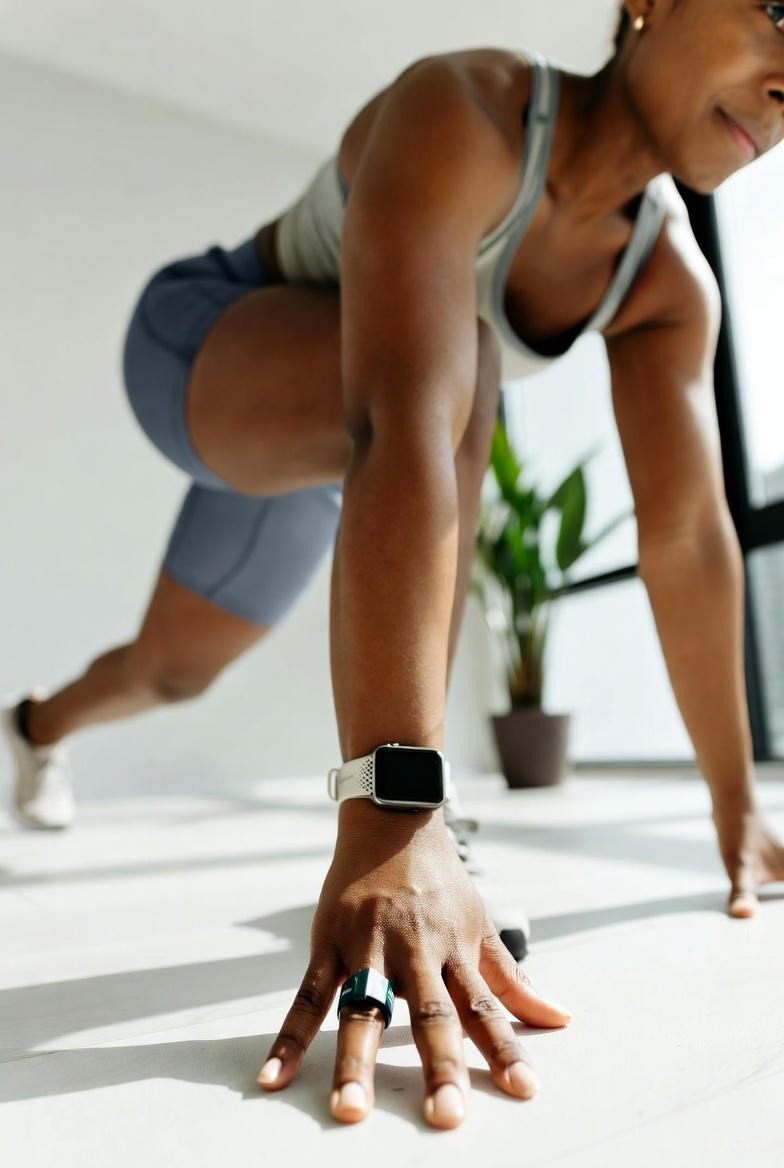
To see where we're going, it's essential to understand where the smartwatch came from. Its dominance in fitness tracking wasn't an accident; it was a convergence of technological capability and consumer familiarity. The journey began not with smart features, but with basic digital timing. In the 1970s, the calculator watch hinted at the wrist's potential as a tech platform. For athletes, the 1980s brought the first heart rate monitor watches, though they required bulky chest straps. The wrist was a logical place for a display—it was always in sight.
The real fitness revolution started in the early 2000s with companies like Polar, Suunto, and Garmin. These devices were dedicated sports watches: rugged, water-resistant, with GPS for runners and cyclists, and improved optical heart rate sensors. They were tools for specific athletic pursuits. The paradigm shift arrived with the "smart" in smartwatch. Apple, Samsung, and Fitbit transformed the device from a dedicated tool into a general-purpose lifestyle computer. The screen became the centerpiece, a portal for notifications, music control, and apps. Fitness tracking became one feature among dozens.
For CrossFit and HIIT athletes, this evolution brought mixed blessings. The benefits were clear: Larger batteries allowed for continuous all-day and workout tracking. Bigger screens provided at-a-glance metrics like heart rate zones, timer functions, and rep counting (in some models). The integration of third-party apps like Strava, MyFitnessPal, and dedicated WOD timers created a versatile ecosystem. The wrist location also made interaction easy—you could start/stop a timer or check your heart rate mid-workout with a glance.
However, the compromises grew with the feature set. To house larger batteries and bright displays, watches became bigger and heavier. The focus shifted from pure athletic performance to a blend of lifestyle and fitness. The most accurate heart rate sensors were often found in chest straps, not watches, but the convenience of the wrist won out, sometimes at the cost of precision during dynamic movement. The watch also created a psychological signal. Its presence on the wrist constantly buzzed with notifications, turning a tool for focus into a source of distraction.
Today's high-end fitness watches are marvels of engineering, with ECG sensors, blood oxygen monitors, and advanced training load metrics. Yet, their fundamental form—a screen-dominated slab on the wrist—remains rooted in a pre-smartwatch era, adapted for a world of notifications. The question for the modern athlete is whether this evolutionary path has diverged from the core needs of functional fitness. It’s a story of innovation meeting inertia, and understanding this history is key to evaluating its future role. For a perspective on how we approach device design with a focus on human performance over distractions, you can read about our vision and values at Oxyzen.
While watches were capturing the spotlight on the wrist, a quiet revolution was being forged on a different finger. The smart ring, emerging from the realms of early adopters and niche tech, has steadily marched into the center of the performance arena. Its rise is not merely a trend but a response to the specific gaps left by wrist-worn devices, particularly for athletes engaged in complex, physical training.
The concept is elegantly simple: condense the core biometric sensors of a advanced health tracker into a form factor that has existed for millennia—the ring. This isn't about adding a screen to your finger; it's about removing distraction entirely and focusing purely on measurement. The ring's prime location on the finger provides access to some of the body's richest vascular data. The palmar digital arteries, which run along the fingers, are closer to the surface and can provide a strong, clear signal for photoplethysmography (PPG) sensors, the technology used to measure heart rate and blood oxygen.
For the CrossFit or HIIT athlete, the ring’s advantages are immediately apparent the first time they put it on for a workout. Unobstructed movement is the most obvious benefit. There is no device to interfere with wrist wraps, gymnastic grips, or the barbell's knurling during a front rack position. The ring sits passively, out of the way of impact zones during box jumps, burpees, or dumbbell snatches. Its low profile dramatically reduces the risk of it catching on equipment or being damaged.
Furthermore, the ring champions continuous, passive monitoring. Because it is so comfortable and forgettable, athletes are more likely to wear it 24/7. This is crucial. The true power of biometric data isn't in a single workout snapshot, but in the longitudinal story it tells: how your body responds to stress overnight, how your resting heart rate trends over a training cycle, how your heart rate variability (HRV) indicates readiness or fatigue. A ring naturally facilitates this always-on approach, building a comprehensive picture of your physiology that a watch—often removed at night or during specific activities—might miss.
The rise of the smart ring signals a shift in philosophy: from interactive tracking to ambient sensing. It asks the athlete to go about their training with full focus, trusting that the data is being collected faithfully in the background, to be reviewed and acted upon later. This aligns perfectly with the mindset of serious athletes who need tools that support, not interrupt, the flow state of a intense workout. The ring isn't trying to be your coach during the WOD; it's aiming to be your most trusted analyst afterward. To see how real athletes are integrating this technology into their rigorous routines, you can discover authentic user experiences in our testimonials.
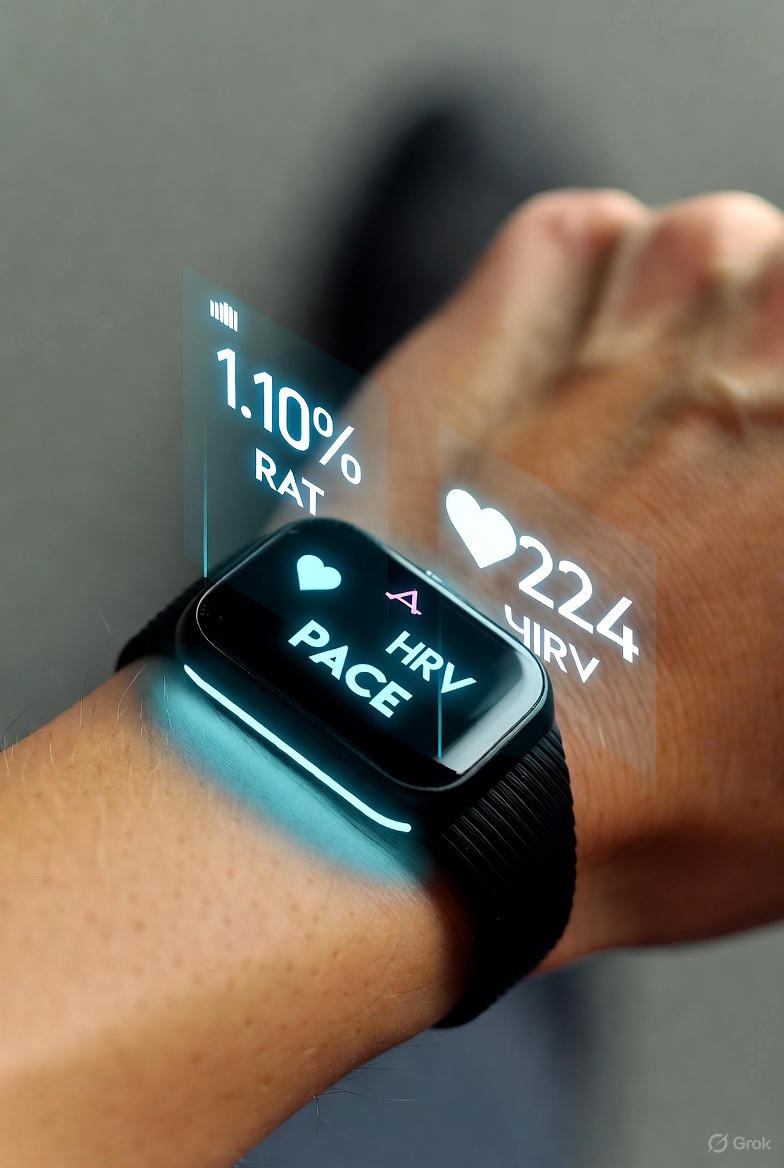
This is the battleground where claims are tested against reality. For an athlete, inaccurate data isn't just useless—it's misleading. It can lead to incorrect training zone assumptions, poor recovery decisions, and a flawed understanding of progress. So, when the body is a whirlwind of jumping, swinging, and lifting, which form factor delivers the truth?
The Smartwatch Challenge: Wrist-based optical heart rate sensors work by shining LED light into the skin and measuring the amount of light reflected back by blood flow. During high-intensity, dynamic movements, a phenomenon called "motion artifact" becomes the primary enemy. The watch can shift minutely on the wrist, breaking optimal skin contact. More importantly, the muscles and tendons in the forearm are contracting violently, changing the underlying tissue density and blood flow patterns beneath the sensor. This can cause the watch to "lock onto" the cadence of the movement (like the rhythm of a pull-up) rather than the actual heart rate, a common issue known as cadence locking. While algorithms have improved, sudden, erratic movements—think double-unders or kettlebell swings—can still confuse the sensor, leading to gaps or spikes in the data.
The Smart Ring Advantage: The finger presents a different physiological landscape. The vascular density is high, and the bones provide a stable platform, reducing the "muscle noise" that plagues the wrist. A properly fitted ring maintains consistent contact and pressure. During gripping actions—a fundamental part of weightlifting and gymnastics—the ring can actually achieve a more secure fit. The result is a cleaner, more stable signal. Studies and user-reported data consistently show that during activities involving significant arm movement, finger-based PPG sensors can provide more reliable and consistent heart rate readings with fewer dropouts.
Where the ring truly begins to pull ahead for the serious athlete is in the measurement of Heart Rate Variability (HRV). HRV is the tiny variation in time between each heartbeat and is a gold-standard, non-invasive measure of autonomic nervous system function. It's incredibly sensitive to motion artifact. For an accurate reading, you need a near-perfect signal. The stable, vascular-rich environment of the finger is inherently better suited for capturing the fine-grained data needed for HRV calculation. This makes the ring's overnight HRV readings—a critical metric for tracking recovery and training readiness—typically more reliable than those from a wrist.
For the CrossFit athlete doing "Fran" (thrusters and pull-ups), the watch might struggle as heart rate skyrockets and the arms pump violently. The ring, secured on the finger, is more likely to continue capturing a true cardiac signal amidst the storm. This accuracy under fire transforms the data from a rough estimate into a trusted metric for pacing and post-workout analysis. If you have questions about how specific metrics like HRV are captured and used, our resource center provides clear explanations. You can find answers to common questions in our detailed FAQ.
The gym—or "box" in CrossFit parlance—is a playground of iron, concrete, and sweat. It's a torture test for gear. Your tracker isn't just an electronic device; it's a piece of workout equipment that must withstand the same punishment you do.
The Smartwatch: Modern fitness watches are built to military-grade durability standards (like MIL-STD-810G), with sapphire crystal glass and reinforced polymer cases. They are water-resistant to significant depths. This is not insignificant. They can survive sweat, rain, and being banged against a rig. However, their vulnerability is in their profile and their most prominent feature: the screen. A scrape across concrete during a bear crawl or a direct hit from a dropping kettlebell handle can crack or shatter the display. The watch band is another point of failure. Silicone bands can tear, while metal or nylon bands can loosen or snag. Furthermore, the large surface area makes it a magnet for scratches from barbell knurling during front squats or cleans.
The Smart Ring: Durability here is approached from a minimalist angle. By reducing surface area, you inherently reduce the target for impact. High-end smart rings are crafted from materials like titanium, which offers an exceptional strength-to-weight ratio and high corrosion resistance. The sensing surface is often a scratch-resistant ceramic dome. This compact, monolithic design has fewer moving parts (no band attachments) and no screen to crack. It is designed to be worn 24/7, through showers, sleep, and everything in between, with a high level of water and dust resistance (commonly IP68 or similar).
For the activities that define CrossFit and HIIT, the ring's durability shines in specific scenarios:
The trade-off is that a ring, while tough, is not indestructible. A severe, direct impact with a weight plate on the exact spot of the ring could potentially damage it—a risk that also exists for a watch. However, the probability of such a direct hit is lower due to its size and placement. Ultimately, the ring’s form factor is its armor, trading a large, interactive display for a near-invisible, resilient sensor that is built to endure the environment for which it is designed. For an example of a device engineered with this philosophy of resilient, focused performance, you can learn more about the Oxyzen smart ring's design and build.
In the mental trenches of a HIIT session or a timed CrossFit WOD, focus is currency. The mind-body connection—feeling the movement, controlling the breath, pushing through the burn—is paramount. Here, the design philosophy of a device directly impacts your psychological state and, by extension, your performance.
The Smartwatch as an Interruption: The smartwatch is, by design, an interactive portal. Its glowing screen is a beacon for your attention. During a workout, this can manifest in several detrimental ways:
This constant potential for interaction creates a low-level cognitive load. Your brain is partially allocated to managing the device, not fully immersed in the task.
The Smart Ring as a Background Analyst: The ring operates on a principle of silent observation. It has no screen, no notifications (beyond perhaps a silent vibration for an alarm). It cannot provide live feedback during the workout. This is its core strength. It forces you, the athlete, to be present. You must learn to interpret your body's internal signals—the roar of your heartbeat in your ears, the pace of your breath, the burn in your muscles. This cultivates a more intuitive and resilient athletic mindset.
The feedback comes later, in the calm after the storm. You review your heart rate graph, see how long you spent in each zone, analyze your recovery timeline, and correlate that with how you felt. This reflective analysis is often more valuable than real-time data for long-term development. It helps you build a better internal gauge. You start to know what 90% of your max heart rate feels like without needing to look at a watch.
For community-driven workouts like a CrossFit class, the ring's invisibility is another benefit. Your interaction is with the coach, the whiteboard, and your fellow athletes—not with a piece of personal tech on your wrist. It supports the communal, analog spirit of the box while still providing the digital insights for personal optimization. It’s a tool that respects the sanctity of the workout itself. For more on cultivating a focused, technology-supported wellness practice, our blog offers strategies and insights.
An athlete's life doesn't fit neatly into charging schedules. Between early morning sessions, work, and evening activities, a tracker that dies mid-day is a useless tracker. The "always-on" athlete needs a device that can keep up with a 24/7 lifestyle of movement, recovery, and sleep tracking without becoming a logistical burden.
The Smartwatch Battery Paradigm: Battery life is the eternal compromise of the smartwatch. The large, bright display is the single biggest power drain. A full-featured smartwatch like an Apple Watch or Samsung Galaxy Watch typically requires daily charging. Fitness-focused watches from Garmin, Coros, or Suunto fare much better, often lasting 5-7 days or even weeks in some basic modes, but this extended life usually comes with reduced smart features or screen brightness. GPS usage, especially during long outdoor running or cycling sessions, drastically reduces battery. For the athlete who trains multiple times a day or travels, remembering the charger and finding time to charge is a non-negotiable part of the routine. The watch must be removed for charging, creating gaps in your continuous health data.
The Smart Ring Battery Advantage: With no power-hungry screen to illuminate, the smart ring's entire design is optimized for efficiency. Its small form factor is dedicated almost entirely to its sensor array and a modest battery. Despite this, leading smart rings consistently achieve 5-7 days of battery life on a single charge, with some pushing beyond a week. This includes 24/7 heart rate, HRV, sleep, and activity tracking, plus multiple workout sessions.
The convenience factor is profound:
For the CrossFit athlete who may do a morning strength session and an evening metcon, or who goes on weekend hiking adventures, the ring's endurance means one less thing to worry about. It reliably tracks sleep, daily activity, and workouts without demanding constant attention. It functions like a utility—always there, always working. This aligns with the goal of passive, holistic health monitoring, where the device fades into the background of your life, not the foreground of your attention. To understand how we prioritize seamless integration into an active lifestyle, you can discover more about the Oxyzen approach to product design.
Raw biometric data is just noise without context and analysis. The true value of a tracker is unlocked by the software that interprets the data, presents it meaningfully, and integrates it into the other digital tools an athlete uses. This is the ecosystem, and it's a area where the smartwatch has long held a dominant position.
The Mature Smartwatch Ecosystem: Platforms like Apple Health, Google Fit, Garmin Connect, and Fitbit are vast, mature ecosystems. They act as central hubs that can pull in data from a myriad of third-party apps. For the athlete, this is powerful:
The Growing Smart Ring Ecosystem: The ring ecosystem is different. It is typically more closed and focused. A ring like Oura, Ultrahuman, or Circular has its own dedicated, proprietary app that is finely tuned to the specific data the ring collects. The strength here is curation and focus. Instead of an overwhelming dashboard of 100 metrics, the app highlights the 5-10 that are most actionable for recovery and readiness: Sleep Score, Readiness Score, HRV balance, and Body Temperature trends. The interpretation is done for you, with clear, simple recommendations: "Your recovery is low; consider a lighter day."
For integration, the landscape is evolving rapidly. Leading smart rings now offer health platform synchronization, pushing their core data to Apple Health, Google Fit, and Samsung Health. This is a critical bridge. It means your ring's superior sleep and recovery data can populate your Apple Health dashboard, and from there, can be read by select third-party training apps. The ecosystem is becoming less of a walled garden and more of a specialized boutique that exports its best goods to the larger market.
For the data-driven CrossFit athlete, the choice is between breadth and depth. The watch offers a broad toolkit where you can build your own data narrative from many sources. The ring offers a deep, opinionated, and focused analysis on the fundamentals of strain and recovery, which can then be fed into your broader health data universe. The most advanced athletes may use both, letting the ring handle 24/7 biometrics and recovery, and the watch handle GPS for outdoor sessions or specific workout app interactions. Understanding how data integrates into a holistic health picture is a core part of our mission. You can explore our resources to learn more about building a data-informed wellness practice.
In the philosophy of CrossFit and HIIT, the workout is the stressor, but the adaptation is the progress. That adaptation happens during recovery, primarily sleep. Therefore, tracking the quality of your recovery is not a supplemental metric; for the serious athlete, it is as important as tracking the workout itself. This is the domain where the smart ring is widely acknowledged to set the gold standard.
Why Recovery Metrics Matter: High-intensity training breaks down muscle tissue and depletes energy systems. Sleep is when growth hormone is released, tissue is repaired, and the nervous system resets. Heart Rate Variability (HRV) is a direct window into your autonomic nervous system. A higher HRV generally indicates a more resilient, recovered body ready for stress. A lower HRV suggests fatigue, incomplete recovery, or potential illness. Nighttime HRV, measured during deep sleep, is considered the most reliable. Resting Heart Rate (RHR) is another key indicator; a elevated RHR can signal that your body is still under stress.
Smartwatch Recovery Tracking: Most advanced fitness watches now offer recovery metrics, stress scores, and sleep stage tracking. They use a combination of overnight heart rate, HRV samples, and movement data. The accuracy of these metrics is entirely dependent on the quality of the overnight heart rate/HRV signal. As discussed, wrist-based sensors can struggle with consistent contact overnight, especially for side sleepers whose wrist may be bent. This can lead to gaps in data or less reliable HRV calculations. Furthermore, the watch's focus is often split between many features, and its recovery advice can sometimes feel like an afterthought compared to its workout tracking prowess.
The Smart Ring's Recovery Prowess: The ring is purpose-built for this. Its 24/7 wearability means it never misses a night. The finger-based sensor provides a more stable signal for the critical nighttime HRV reading. Because recovery is its primary raison d'être, the entire device and app experience is architected around it. You don't just get raw data; you get a synthesized, easy-to-understand Readiness or Recovery Score.
This score typically amalgamates:
For the athlete staring at the whiteboard at 6 AM, this score is actionable intelligence. A high readiness score tells you to attack the heavy cleans and benchmark WOD with confidence. A low score is a objective warning to scale the weight, reduce the volume, or prioritize mobility and technique. It removes guesswork and ego from daily training decisions, guiding you to train smarter and avoid overtraining. This focus on what happens between workouts is arguably the most valuable contribution a wearable can make to an athlete's long-term progress and health. For a deeper understanding of how these metrics guide training decisions, our FAQ section covers recovery science in detail.

Investment in performance gear is a calculated decision for athletes. A tracker is a significant purchase, and its value must be measured not just in upfront cost, but in durability, feature utility, and the tangible benefit it brings to training outcomes over time.
Smartwatch Pricing Spectrum: The range here is vast.
Smart Ring Pricing: The market is more consolidated, with rings generally occupying the premium segment.
Long-Term Value Breakdown:
For the CrossFit/HIIT athlete, the question is: "What am I primarily paying for?"
The most performance-driven athletes might find the highest value in a combination: using a ring for 24/7 biometrics and recovery, and a more basic watch (or a dedicated gym timer) for live workout timing and outdoor GPS activities. This represents the ultimate in data coverage but at the highest combined cost. To understand the philosophy behind our value proposition and the technology inside the device, you can learn more about Oxyzen's mission and build.
We've dissected the technology, the data, and the designs. Now, it's time to synthesize this into a clear, actionable framework. Choosing between a ring and a watch isn't about which is objectively "better"; it's about which is better for you, your training style, and your goals. Ask yourself these pivotal questions:
1. What is Your Primary Training Goal?
2. What Activities Dominate Your Training?
3. How Do You Relate to Data and Distraction?
4. What is Your Tolerance for Charging and Device Management?
Profile Examples:
Ultimately, the landscape is moving toward specialization. The watch is your interactive training computer. The ring is your ambient recovery consultant. For the specific, demanding world of CrossFit and HIIT—where the body is both the machine and the wrecking ball—the ring's unique advantages in accuracy, durability, and recovery intelligence make it a compelling, and for many, a superior choice. To see how this decision plays out in the real world and learn from others who have made the switch, you can read detailed user experiences and testimonials.
Choosing a device is one thing; living with it is another. The true test of any piece of tech is how seamlessly it integrates into your daily rhythm, from the unboxing to the 500th workout. The user experience (UX) of a ring versus a watch diverges dramatically, reflecting their core philosophies.
The Smartwatch Onboarding: Setting up a modern smartwatch is a familiar process for anyone with a smartphone. You pair via Bluetooth, log into an account, and step through a series of prompts: set goals, configure notifications, choose watch faces. The initial experience is engaging and visual. The watch encourages customization—swapping bands, arranging app complications, adjusting settings. Daily wear, however, can involve more management. You must remember to put it on after charging (often in the morning). During the day, you interact with it frequently, dismissing notifications, starting workouts, checking stats. At night, many users remove it to charge, breaking the continuous data loop. For workouts, you proactively start a "strength" or "HIIT" activity mode, and the device switches into a focused tracking state. The experience is active and participatory.
The Smart Ring Onboarding: The unboxing of a smart ring is a more intimate, precise affair. The first and most critical step is sizing. Companies send out sizing kits with plastic replicas to ensure a perfect, comfortable fit—snug enough for sensor contact but loose enough to slide over the knuckle with mild resistance. This process requires patience but is non-negotiable for accuracy and comfort. Once your correctly sized ring arrives, setup is minimalist: pair via Bluetooth, install the app, and you’re essentially done. There are no screens to configure, no notification settings to tweak. The ring’s companion app becomes the entire interface. Daily wear is passive. You put it on and, after a day, forget it’s there. It requires no daily interaction. It tracks your workouts automatically through advanced algorithms that detect elevated heart rate and sustained movement, labeling them as "Moments" or "Active" periods. You can also tag them later (e.g., "CrossFit," "Running"). The post-workout and morning ritual involves opening the app to review your scores and insights. The experience is passive and retrospective.
For the athlete, this difference in UX is profound. The watch becomes a taskmaster and a companion, demanding interaction. The ring becomes a silent biographer, documenting your physiology's story for you to read at your leisure. The former can feel empowering but also burdensome; the latter can feel almost magical in its simplicity but may lack the immediacy some athletes crave. The choice hinges on whether you want to manage your data or have it presented to you.
Fitness, especially in domains like CrossFit, is intensely social. The community provides motivation, accountability, and shared suffering. How does your choice of tracker facilitate or hinder this social dimension?
The Smartwatch as a Social Hub: Smartwatches, particularly those integrated with platforms like Strava, Garmin Connect, or Apple Fitness+, are built for sharing. They make it effortless to broadcast your achievements. After a workout, a few taps can post your route, heart rate graph, and performance stats to your feed. You can give kudos to friends, join challenges, and compete on leaderboards. Features like Garmin's "LiveTrack" allow loved ones to follow your outdoor session in real-time for safety. In the gym, comparing stats post-WOD with a training partner is easy—you can both glance at your wrists and share your average heart rate or max HR. The watch facilitates a digital extension of the gym's communal spirit. However, this can also foster a culture of comparison, where the focus shifts from personal progress to public validation through metrics.
The Smart Ring and the Private Journey: The smart ring ecosystem is inherently more private. There is no built-in social feed, no leaderboard within the app. The data is presented as a personal dialogue between you and your body. The "sharing" that exists is typically more nuanced—you might export a PDF of your sleep trends to show a coach, or discuss your readiness score with your training partner to decide how to approach the day's session. The value is in intimate insight, not public bragging rights. This aligns with a more introspective approach to training, where the primary competition is with yourself. The ring doesn't help you compete with others online; it helps you understand if you are recovered enough to compete with your own previous best.
For the community-oriented athlete, this is a key differentiator. If your motivation is fueled by group challenges and the digital camaraderie of shared activities, a smartwatch's integrated social features are powerful tools. If your journey is more personal, and you use the community for in-person motivation while relying on data for private optimization, the ring's focus won't feel like a limitation. Some athletes navigate both worlds, using a ring for private recovery data and a watch (or a separate app like SugarWOD) to log workout scores and engage with the CrossFit community. Understanding how technology can support both personal and community goals is part of our broader discussion on wellness. For more perspectives on balancing tech with human connection, our blog explores this evolving relationship.
While heart rate and HRV are the headline acts, modern wearables pack a suite of sensors that paint a more complete physiological picture. The capabilities and accuracy of these ancillary sensors further differentiate rings and watches, especially for athletes.
Smartwatch Sensor Arsenal:
Smart Ring Sensor Focus: Rings operate with a more curated, but deeply implemented, sensor set:
The Athletic Implications: For the CrossFit/HIIT athlete, the ring's sensor strengths are powerfully aligned with recovery. Nighttime SpO2 and respiratory rate can reveal if intense training is impacting sleep quality. Skin temperature trends are a silent alarm for overreaching. The watch's GPS and rep-counting are workout-focused, while the ring's sensor fusion is health- and recovery-focused. An athlete concerned with endurance performance outside the gym needs GPS. An athlete focused solely on optimizing their response to gym-based intensity will find more actionable insights from the ring's deep health metrics. It’s a matter of what kind of intelligence you need: intelligence about your activity or intelligence about your body's response to that activity. To dive deeper into the science behind these measurements and what they mean for you, our FAQ section breaks down the technology in plain language.
A wearable isn't just a tool; it's an accessory that becomes part of your personal identity. In the aesthetic-conscious world of fitness, where apparel is both functional and expressive, how a tracker looks and feels matters.
The Smartwatch Statement: A watch is a visible declaration. It says, "I track my fitness," or "I'm tech-savvy." The market offers endless customization: metal bands for a professional look, colorful nylon for sport, titanium cases for luxury. You can match it to your outfit or your gym kit. However, its visibility is a double-edged sword. It can clash with formal wear, drawing attention under a dress shirt cuff. In some social or professional settings, constantly glancing at or interacting with a watch can be perceived as rude or distracted. It is, by design, a piece of tech that you and everyone else can see.
The Smart Ring Discretion: The ring is the definition of stealth wealth in the fitness tech world. To the untrained eye, a titanium smart ring is indistinguishable from a simple piece of jewelry—a wedding band, a signet ring, a modern minimalist accessory. It doesn't scream "tech." This allows it to cross social boundaries effortlessly. It's appropriate in the box, at the office, at a formal event, and in bed. It becomes a truly personal device; its significance is known only to you. For athletes who don't want to define themselves by their gadgetry, or who prefer a more subtle aesthetic, this is a major benefit. The ring integrates into your life, not the other way around.
This extends to the psychological aspect. The invisible tracker can reduce obsessive data checking. Without a screen constantly tempting you, you're less likely to develop a compulsive relationship with your metrics. The data becomes a periodic check-in, not a constant fixation. For an athlete working on mental toughness and presence, removing the visual cue on your wrist can be a surprisingly liberating step toward being more in the moment during training and in life. The ring supports a philosophy where technology serves you discreetly, without demanding your identity or attention. To see how a focus on discreet, human-centric design informs a product's creation, you can read about the journey and ethos behind Oxyzen.
We live in an age of rapid technological iteration. Investing in a wearable means facing the inevitability that a newer, better model will emerge. The rate of this cycle and the nature of the upgrades differ between form factors, impacting the long-term value of your investment.
The Smartwatch Treadmill: The smartwatch market, particularly the consumer segment led by Apple and Samsung, operates on a near-annual upgrade cycle. New models boast brighter screens, faster processors, slightly better battery life, and one or two new sensors (e.g., temperature, advanced ECG). For fitness-focused brands like Garmin, cycles are longer (18-24 months), but the pattern is similar. This creates pressure to upgrade to access the latest metrics or improved accuracy. Furthermore, software support for older models typically lasts 3-4 years, after which you may stop receiving new features or security updates. The watch, with its screen and processor, feels more like a smartphone—subject to planned obsolescence.
The Smart Ring's Evolutionary Path: The smart ring category is younger, but its upgrade dynamic is different. Because the core value is in the biometric algorithms and the longitudinal health data it builds, the hardware itself can have a longer useful life. A ring's sensors (PPG, accelerometer, temperature) are mature technologies. The big leaps come in the software—the algorithms that interpret sensor data to provide better sleep staging, more accurate HRV analysis, and more insightful readiness scores. These improvements are delivered via app updates and are often backward-compatible with hardware that is several years old, provided the sensors are capable.
Your data also becomes more valuable over time. A ring that has learned your 6-month, 1-year, or 2-year baseline is significantly more insightful than a new one. This creates a powerful incentive to stay with the same platform. When hardware upgrades do occur, they tend to focus on battery life, material refinements, and slight sensor improvements, not wholesale re-inventions.
For the athlete, this means:
The choice here is between participating in a fast-paced hardware cycle or investing in a longer-term, software-driven health platform. The latter often aligns better with the mindset of an athlete in it for the long haul, where progress is measured in years, not quarters.
After this exhaustive comparison, a compelling third path emerges: the hybrid approach. Why choose one when, budget allowing, the combination of a smart ring and a smartwatch (or a dedicated fitness watch) could provide the most comprehensive coverage? Let's explore the logic and the logistics.
The "Best of Both Worlds" Scenario: Imagine this setup:
How It Works in Practice: You wake up and check your ring's app for your readiness score and sleep data. That informs your training intention for the day. You go to the box. You put on your watch for the workout. You start a "Strength" or "HIIT" activity on the watch. During the WOD, you use the watch's timer and may glance at your live heart rate. Post-workout, the watch provides a detailed summary of the session's heart rate zones, calories, etc. Critically, both devices sync their data to a common health platform like Apple Health or Google Fit. The ring contributes your recovery and 24/7 baseline. The watch contributes the detailed workout data. A third-party app (like Athlytic or Training Today) can then combine these data streams, using your ring's superior recovery metrics to contextualize the strain from your watch-tracked workout, creating an incredibly nuanced picture.
The Challenges:
Who is This For? The hybrid approach is for the data-obsessed performance athlete or coach who leaves no stone unturned. It's for the person who does CrossFit but also trains for marathons and needs GPS. It's for the biohacker who wants the absolute best recovery metrics and the most detailed workout analytics. It is the pinnacle of personal quantified self, but it comes with commensurate cost and complexity.
For most athletes, choosing one primary device that aligns with their dominant need—either deep recovery (ring) or interactive workout tracking (watch)—is the sensible path. But for those who want the ultimate fusion of ambient body intelligence and active workout data, the hybrid path exists as the technological zenith. Exploring these kinds of advanced integrations is part of our commitment to understanding the full spectrum of athlete needs. For more on combining data sources for optimal performance, our blog features guides and discussions on integrated fitness tech.
You've made your decision. Now, it's time to execute the purchase and integration. The processes for a ring and a watch are distinct, and navigating them correctly is crucial for long-term satisfaction.
Purchasing and Setting Up a Smartwatch:
Purchasing and Setting Up a Smart Ring (The Critical Path):
Pro-Tip for Athletes: Regardless of your choice, commit to wearing the device consistently for at least one full month before passing judgment. It takes time to understand the data language and for the device to learn your unique physiology. The first week's data is not representative of your long-term reality.
Theory and specs are one thing; lived experience is another. Here are anonymized composites based on countless testimonials from CrossFit and HIIT athletes who have navigated this choice:
Case Study 1: Maria, CrossFit Coach & Competitor
Case Study 2: Ben, HIIT Studio Devotee & Runner
Case Study 3: Alex, Corporate Athlete & Weekend Warrior
These stories highlight a common thread: the transition from active, sometimes distracting tracking to passive, insightful monitoring often leads to more intelligent and sustainable athletic progress. To read a wider array of experiences from individuals who have integrated this technology into their lives, visit our collection of user testimonials.
We have journeyed through the fundamental clash between two technological paradigms on the battlefield of high-intensity fitness. We've examined the smartwatch: the versatile, interactive veteran of the wrist, powerful in its breadth and immediacy, yet sometimes cumbersome and distracting. And we've explored the smart ring: the sleek, focused newcomer on the finger, a master of recovery intelligence and unobtrusive design, yet lacking in live feedback and outdoor navigation.
For the CrossFit and HIIT athlete, the core of the decision crystallizes around a simple question: Do you need a device primarily to track and guide your workout execution, or to track and guide your body's recovery from those workouts?
If the former, a robust fitness watch remains a powerful ally. If the latter, the smart ring presents a compelling, often superior, alternative. For those who refuse to compromise, the hybrid path exists at the intersection of cost and complexity.
But this is only the foundation. Understanding what to track and which device to use is just the first step. The true mastery lies in knowing how to use this avalanche of data. How do you translate a readiness score into tomorrow's training plan? How do you correlate heart rate zones with specific WOD formats? How do you use longitudinal trends to periodize your training and peak for competition?
In the next portion of this guide, we will dive into the advanced application of this data. We will move beyond the device comparison and into the realm of data-driven athletic mastery. We will explore how to build a personal biomarker baseline, interpret complex metrics, and create actionable feedback loops that turn raw numbers into personal records and sustainable progress. The tracker is just the tool. You are the athlete. Let's learn how to build the perfect partnership.
To continue your journey into optimizing performance with technology, explore our comprehensive blog for deep dives into data interpretation, recovery protocols, and advanced training strategies.
Your Trusted Sleep Advocate: Sleep Foundation — https://www.sleepfoundation.org
Discover a digital archive of scholarly articles: NIH — https://www.ncbi.nlm.nih.gov/
39 million citations for biomedical literature :PubMed — https://pubmed.ncbi.nlm.nih.gov/
Experts at Harvard Health Publishing covering a variety of health topics — https://www.health.harvard.edu/blog/
Every life deserves world class care :Cleveland Clinic - https://my.clevelandclinic.org/health
Wearable technology and the future of predictive health monitoring :MIT Technology Review — https://www.technologyreview.com/
Dedicated to the well-being of all people and guided by science :World Health Organization — https://www.who.int/news-room/
Psychological science and knowledge to benefit society and improve lives. :APA — https://www.apa.org/monitor/
Cutting-edge insights on human longevity and peak performance:
Lifespan Research — https://www.lifespan.io/
Global authority on exercise physiology, sports performance, and human recovery:
American College of Sports Medicine — https://www.acsm.org/
Neuroscience-driven guidance for better focus, sleep, and mental clarity:
Stanford Human Performance Lab — https://humanperformance.stanford.edu/
Evidence-based psychology and mind–body wellness resources:
Mayo Clinic — https://www.mayoclinic.org/healthy-lifestyle/
Data-backed research on emotional wellbeing, stress biology, and resilience:
American Institute of Stress — https://www.stress.org/


