


Your Body's Recovery Trajectory: Long-Term Trends in Smart Ring Data
How to trust your body's recovery signals over fixed, arbitrary schedules.
How to trust your body's recovery signals over fixed, arbitrary schedules.
%402x.svg)
The human body is a story, written night after night, beat by beat, breath by breath. For decades, the chapters of our internal recovery—the silent, nightly repair of muscle, the consolidation of memory, the rebalancing of hormones—were a mystery, inferred only by how we felt in the morning. We gauged our recovery by the absence of soreness, by a vague sense of readiness, or more often, by our ability to push through fatigue. This was guesswork. Today, that story is no longer hidden. It is being translated, in high-definition, by a device worn on a single finger: the smart ring.
Welcome to a new era of self-knowledge, where continuous, non-invasive biometric monitoring is revealing the long-term narrative of your body’s recovery trajectory. This isn't about a single night's sleep score or yesterday's step count. This is about the trend—the slow, powerful currents beneath the daily waves of data. It's about seeing how your body adapts to a new training regimen over six months, how your nervous system calms after a year of meditation, or how your deep sleep architecture subtly shifts as you age. This is the profound power of longitudinal data, and it’s reshaping our understanding of personal wellness.
Platforms like Oxyzen are at the forefront, turning raw photoplethysmography (PPG) signals, skin temperature readings, and accelerometer data into a coherent, ongoing biography of your health. By moving beyond the snapshot, we can now identify patterns, predict setbacks, and validate the efficacy of our lifestyle choices with a clarity that was previously the domain of elite sports laboratories. This article is your guide to that biography. We will delve deep into what your long-term smart ring data reveals about your recovery trajectory, teaching you to read the trends that truly matter and to harness this knowledge for a more resilient, optimized, and insightful life.
Before we can interpret the long-term story, we must understand the vocabulary. Recovery is not a single metric; it is a symphony of physiological processes, each contributing a vital part to the whole. A smart ring listens to this symphony by tracking key biomarkers 24/7.
Heart Rate Variability (HRV) is the maestro, a direct window into your autonomic nervous system. It measures the subtle variations in time between each heartbeat. A higher HRV generally indicates a more resilient, relaxed, and recovered state—your body is adaptable and ready for stress. A lower, less variable pattern suggests your system is under strain, perhaps from physical overtraining, emotional stress, or illness. Crucially, it’s the trend in HRV that speaks volumes. A gradual upward trajectory over months is a powerful sign of improved fitness and resilience.
Resting Heart Rate (RHR) is the steady bassline. During deep sleep and true recovery, your RHR should reach its lowest point. A creeping elevation in your nightly RHR over several days or weeks is one of the clearest early warnings your body can give—it’s often the first sign of impending illness, overreaching in training, or chronic stress.
Skin Temperature is the ambient tone. Your distal (extremity) temperature, which a ring measures exquisitely well, follows a circadian rhythm. A typical pattern shows a drop as you fall asleep and a rise toward morning. Deviations from your personal norm—like a significantly elevated nighttime temperature—can signal inflammation, the onset of infection, or a disruption in circadian biology.
Respiratory Rate is the rhythm of the breath, often overlooked but critically important. Your breathing rate during sleep is remarkably stable. A sustained increase can be a sensitive indicator of respiratory issues, metabolic stress, or even sleep disturbances like sleep apnea.
Finally, Sleep Staging—particularly the amount of Deep (Slow-Wave) Sleep and REM sleep—provides the structure of the night’s restorative work. Deep sleep is for physical repair and immune function, while REM is for cognitive and emotional processing. Tracking the proportion and consistency of these stages over time, which you can learn more about in our guide on deep sleep tracking and what your numbers should look like, is fundamental to understanding your recovery quality.
Individually, these metrics are insightful. Together, woven across weeks, months, and years, they form an irrefutable narrative. They move us from asking "How did I sleep last night?" to asking "How is my recovery capacity evolving?" This shift from static data points to a dynamic trajectory is the cornerstone of modern, personalized health optimization. To truly grasp this shift, a deeper look at the technology enabling it is essential, which you can find in our explainer on how sleep trackers actually work.
The allure of the daily score is strong. A "Readiness" or "Recovery" score of 85 feels good; a 62 gives us pause. But fixating on these daily numbers is like trying to understand a novel by analyzing the frequency of the letter "E" on a single page. It’s technically relevant but misses the entire plot, character development, and themes. The true transformative insight lies in the moving averages and long-term charts.
Daily scores are profoundly influenced by acute, often mundane factors: a late meal, a stressful work conversation, a single glass of wine, or a poorly timed workout. These cause natural, healthy fluctuations. If you react to every dip by drastically changing your behavior—skipping a planned workout after one low score, for instance—you may never build the consistent adaptive stress that leads to long-term improvement. You become a prisoner of noise.
The 30-day rolling average, however, smooths out that noise and reveals the signal. It shows you the direction of your recovery capacity. Is your baseline HRV gently climbing over the last month? That’s a signal of positive adaptation. Is your 30-day average deep sleep duration slowly declining despite your best efforts? That’s a clear mandate to investigate further—perhaps it’s related to your age and how to compensate for natural changes.
The 90-day view is even more powerful, revealing seasonal patterns, the full impact of a lifestyle change, or the long recovery arc from a major event like surgery or a marathon. Perhaps you see a clear pattern of lower recovery metrics every January (post-holiday stress, less sunlight) or every August (high pollen counts, summer social disruptions). This macro-view allows for proactive, strategic planning rather than reactive daily scrambling.
Example in Action: Imagine two users, Alex and Sam. Alex checks their app daily, sees a low recovery score after a hard workout, and decides to take an unplanned rest day, disrupting their training consistency. Sam, however, reviews their weekly and monthly trends. They see that despite the occasional low day, their 30-day HRV trend is up 8% and their deep sleep average is stable. Sam completes their planned light active recovery session, trusting the long-term trend. Over a season, Sam builds greater fitness and resilience, while Alex’s progress is fragmented. Sam is reading the trajectory; Alex is reading the weather report.
Embracing the long view requires a shift in mindset, from performance-driven to curiosity-driven. It’s about collecting data to understand your unique patterns, not to judge your daily worth. For those wondering if this depth of tracking is worthwhile, a balanced perspective can be found in our article discussing the honest pros and cons of sleep tracking.
Of all the long-term trends, the Heart Rate Variability (HRV) trajectory is perhaps the most significant and personal. It is your physiological fingerprint of adaptability. While comparing your HRV to others is pointless (due to massive individual variation), comparing your present self to your past self is incredibly meaningful.
The Upward Trajectory: Signs of Positive Adaptation. A gradual, sustained increase in your HRV baseline over months is a golden signal. It typically indicates that your body is effectively managing the stressors you are applying and growing more resilient. This could be the result of:
Seeing this upward line is the ultimate positive feedback, validating that your holistic efforts are paying off at the deepest physiological level.
The Plateau: Finding Your New Baseline. After a period of increase, HRV will often plateau. This is not failure; it's homeostasis. Your body has adapted to the new level of stress. To see another jump, you may need to change a variable—alter your training stimulus, focus on a new recovery modality, or address another area of your lifestyle. The plateau is a data-driven prompt for your next evolution.
The Downward Trend: The Red Flag of Accumulated Stress. A persistent decline in HRV is your body’s most sophisticated distress signal. It suggests the sum total of your stressors—physical, psychological, environmental—is exceeding your current capacity to recover. This trend often appears before you feel overtly fatigued or notice a performance drop. Causes can be multifaceted:
The corrective action for a downward HRV trend isn't always "rest more." It requires detective work. The trend directs you to ask the right questions: Has my work stress spiked? Did I just increase my training volume too quickly? Has my sleep quality been slipping?
Case Study: The Marathon Training Cycle. A runner using a smart ring starts a 16-week marathon plan. For the first 8 weeks, their HRV trend gently climbs—they are adapting beautifully. In week 10, they aggressively increase mileage and intensity. Over the next two weeks, their HRV trendline inflects and begins to drop, while their resting heart rate trend creeps up. The ring data, viewed longitudinally, provides an objective warning of overreaching. The runner heeds the signal, inserts a deload week, prioritizes sleep and nutrition, and avoids what could have been a performance-crushing injury or illness. The ring didn't run the marathon, but it guided the training to ensure the runner could.
While HRV monitors your nervous system's readiness, deep sleep (slow-wave sleep) is the direct biomarker of physical restoration. This is when growth hormone is released, tissue repair is accelerated, and the brain’s glymphatic system performs a deep clean. Tracking the amount and quality of your deep sleep over the long term is like auditing your body's nightly repair shop.
Establishing Your Personal Baseline. The first step is to establish what "normal" is for you. Using 30-60 days of data, you can determine your average deep sleep duration and its typical range. Forget generic percentages; this is about your physiology. For a deeper dive into what constitutes healthy deep sleep at different stages of life, our guide on the ideal deep sleep duration by age provides an excellent reference point against which to compare your personal trends.
Trends That Tell a Tale:
The Fragmentation Factor. It's not just about duration. The continuity of deep sleep is paramount. A trend showing increased "fragmentation" (more awakenings or light sleep intrusions during your deep sleep periods) can be just as detrimental as losing minutes. This trend might point to environmental factors (noise, partner disturbance), pain, or sleep apnea.
A Longitudinal View on Aging. It's well-established that deep sleep percentage naturally decreases with age. However, longitudinal data empowers you to separate this natural decline from an accelerated one caused by modifiable factors. If your data shows a steeper drop than expected, it's a powerful motivator to double down on sleep-protective habits, ensuring you preserve as much of this critical restorative stage as possible throughout your life.
If HRV is the sophisticated signal of nervous system balance, Resting Heart Rate is the straightforward, stalwart gauge of your body's overall workload. Measured at its lowest point during sleep, your RHR is a beautifully simple metric: a lower RHR generally indicates greater cardiovascular fitness and a more efficient heart. But in the long-term trajectory, small changes are profoundly meaningful.
The Downward Drift of Fitness. When you begin a consistent cardio-focused training regimen, one of the clearest signs of improvement is a gradual, sustained decrease in your sleeping RHR over 8-12 weeks. Your heart muscle becomes stronger, pumping more blood with each beat, so it needs to beat fewer times per minute at rest. This trend is a classic, powerful validation of improved aerobic capacity.
The Upward Creep: A Canonical Warning Signal. A trend of increasing RHR is one of the most reliable harbingers in all of biometrics. Unlike the daily noise of a slightly higher RHR after a hard workout, a sustained upward drift over 5-7 days or more is a major red flag. It can indicate:
The Power of Correlation: The most insightful analysis often comes from viewing RHR in tandem with HRV. A trend where HRV is dropping and RHR is rising is a nearly unequivocal sign of accumulating systemic stress and a high risk of burnout or illness. Conversely, a trend of rising HRV and falling RHR is the hallmark of peak fitness and resilience.
Practical Application: A user notices their 7-day average RHR has increased by 4 beats per minute from their personal baseline. Instead of ignoring it, they use this trend as a cue. They prioritize hydration, ensure they get to bed 30 minutes earlier for a few nights, and maybe swap a high-intensity workout for a gentle walk or yoga session. By responding to the trend, they often avert a full-blown cold or a state of excessive fatigue. This proactive approach is what turns data into actionable health intelligence.
While HRV and RHR often take center stage, skin temperature and respiratory rate are the quiet, observant sentinels in the background. Their long-term trends are less about fitness and more about homeostasis, inflammation, and metabolic health. Because they are so stable in healthy individuals, even minor sustained shifts can be highly significant.
Skin Temperature: The Circadian Rhythm and Inflammation Gauge. Your body follows a core temperature rhythm, which is mirrored in your skin temperature. It typically drops as you initiate sleep (aiding the release of melatonin) and begins to rise in the early morning hours to help prepare you for wakefulness. A smart ring tracks this distal temperature rhythm with high precision.
Respiratory Rate: The Metric of Metabolic Calm. Your breathing rate during sleep is remarkably stable, typically between 12-20 breaths per minute for adults. Unlike during the day, it's not consciously controlled, making it a pure reflection of metabolic and cardiorespiratory demand.
The key with both temperature and respiratory rate is their stability. They are not metrics you want to see change dramatically. Therefore, their long-term trends are about monitoring for deviations from your personal norm. A stable line is a good line. A slowly shifting line is a prompt for reflection and, if persistent, a discussion with a healthcare professional. Understanding these subtler signals is part of becoming an expert interpreter of your own data, a journey supported by resources like the Oxyzen blog.
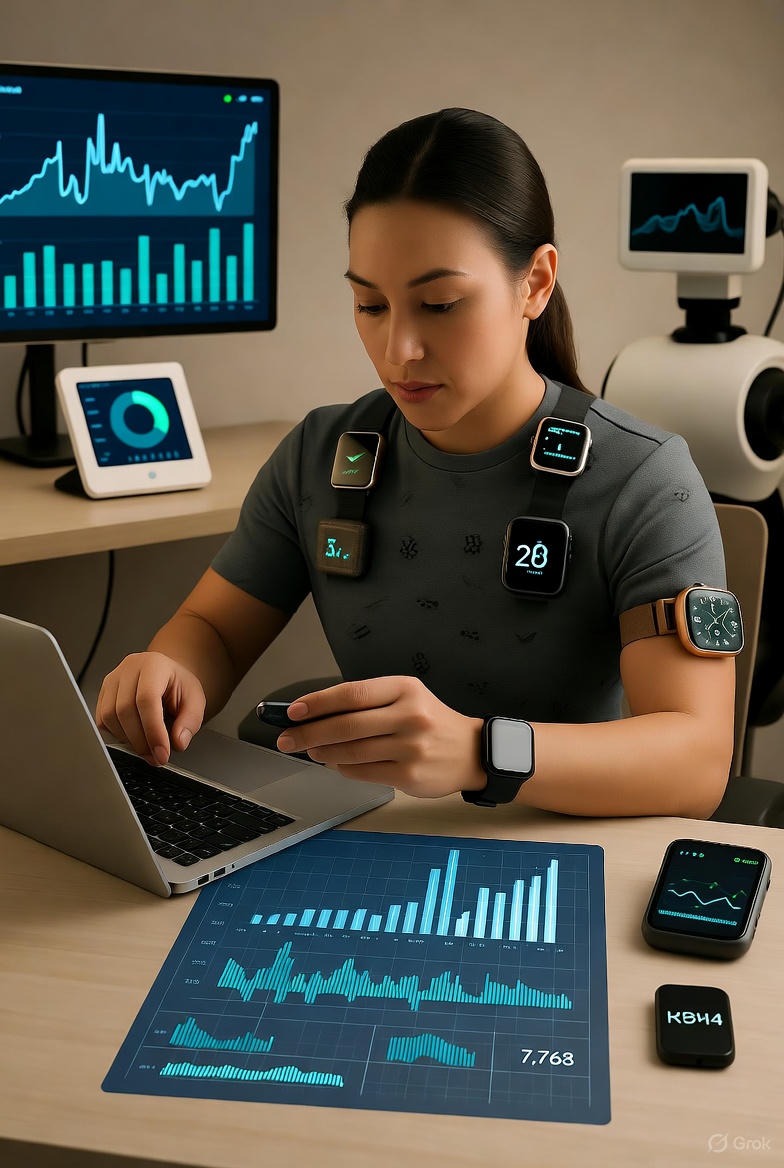
With an understanding of individual metrics, we can now synthesize them to understand the grand narrative: the biological cycle of stress and adaptation. This is the fundamental law of fitness, resilience, and growth. Smart ring data, viewed longitudinally, provides a perfect visual model of this cycle, moving it from theory to visible, personal reality.
The Four-Phase Cycle, Visualized in Your Data:
What Your Trends Reveal About Your Cycle:
Practical Use Case: Periodization. An athlete can use long-term trends to visually confirm their training periodization is working. During a "loading" microcycle, they see a controlled decline in HRV and rise in RHR. During a planned "deload" or recovery week, they watch for the expected robust rebound, confirming they timed the deload correctly. If the rebound is weak, they know they need more recovery time before the next loading phase. This transforms training from a pre-written plan into a dynamic, data-informed dialogue with your body.
Raw biometric trends are powerful, but they exist in a vacuum without context. The numbers on their own can tell you what is happening, but you must provide the why. This is where the practice of logging life events transforms smart ring data from a curious graph into a rich, explanatory diary of your life's impact on your biology.
The Art of the Log: Consistently tagging your data is the single most important habit for deriving long-term insight. This includes:
Connecting the Dots Over Time: After 3-6 months of consistent logging, you can begin powerful retrospective analysis.
Example: A user logs "Started 10-minute daily meditation" on January 1st. They don't feel dramatically different in the first week. However, by reviewing their 90-day HRV trend in April, they see a clear, steady upward inflection point beginning in mid-January. The correlation doesn't prove causation, but it provides a highly compelling, personalized argument that the practice is benefitting their nervous system resilience. This turns a subjective feeling into a data-supported lifestyle pillar.
This practice of contextualization is where the journey becomes truly personal. It answers the ultimate question: "What works for me?" For those ready to start their own journey of discovery, exploring a tool designed for this depth of insight is the next step, which begins at the Oxyzen shop.
Collecting longitudinal data is one thing. Acting on it wisely, without becoming anxious or obsessive, is the ultimate goal. The shift from data-driven to wisdom-driven is crucial for sustainable health optimization.
1. Focus on Direction, Not Perfection. Your goal is not to have a perfect, upward-sloping line every day. Your goal is to influence the general direction of the trend over quarters and years. A 5% improvement in your average HRV over a year is a massive success. A 10% reduction in your time spent awake at night over six months is transformative. Celebrate these macro-wins, and don't fret the micro-dips.
2. Use Trends to Inform, Not Dictate, Decisions. Your morning readiness score should not have veto power over your day. But your two-week trend should have a strong advisory vote. If your trendlines are consistently depressed, it's wisdom to schedule a deload week, prioritize sleep, and say no to extra commitments. If your trends are strong, it's a green light to confidently push yourself in a workout or tackle a challenging project.
3. Practice "Trend-Based Tuning," Not Overhauls. When you see an unfavorable trend, don't immediately dismantle your entire life. Make one or two small, sustainable adjustments. If your deep sleep is trending down, first ensure your bedroom is cool and dark, or try moving your last caffeine intake earlier. Wait 2-3 weeks, then check the trend again. Small, consistent tweaks based on long-term feedback are far more effective than dramatic, unsustainable changes based on a single bad night.
4. Embrace the "Why" Behind the "What." When you see a negative trend, pair it with curiosity, not criticism. Instead of "My HRV is terrible, I'm failing," ask, "What has been different over the last two weeks that might explain this trend?" This shifts you from a judgmental mindset to a detective mindset, which is both more productive and kinder to yourself.
5. Know When to Ignore the Ring (and Listen to Your Body). The data is a guide, not a god. If your trends look great but you feel utterly exhausted and run-down, listen to your subjective feeling. The ring may not have captured a specific psychological or emotional stressor. Conversely, if you feel sluggish but all your trends are strong and you've been recovering well, it might be a mental health day, not a physical one. Use the data as one input among many, including your own intuition.
The pinnacle of using this technology is reaching a state of integrated awareness, where the data silently informs a subconscious understanding of your body. You start to feel the low HRV trend as a subtle background tension. You sense the good recovery trend as a reservoir of steady energy. The ring becomes less of a daily crutch and more of a periodic check-in system, a validation tool for the life you're already adeptly living. This journey from obsession to intuition is the final, and most rewarding, trend of all.
Having decoded the long-term trends in your biometric data, we arrive at the pivotal question: What do you do with this knowledge? Information without action is merely trivia. The true power of longitudinal tracking lies in its capacity to inform a strategic, dynamic, and deeply personal blueprint for lifestyle design. This is where we move from passive observation to active co-authorship of your health narrative.
For the first time, you have a continuous feedback loop. You can test hypotheses about your own biology with the rigor of a single-subject study. Does a 7-day digital detox improve your sleep stability? Does switching to morning workouts affect your afternoon HRV? Does a new supplement move the needle on your recovery metrics, or is it just placebo? Your long-term data trends provide the answers, allowing you to invest your time, money, and energy into the interventions that yield the highest, most verifiable return for you.
This section explores how to use your recovery trajectory as a foundational map to design your days, weeks, and seasons. We’ll examine how to align your training, nutrition, stress management, and sleep not with generic advice, but with the clear signals from your own body. This is personalized optimization at its most practical. Whether you are an entrepreneur building a company, an athlete chasing a podium, or simply someone seeking more resilient energy, this data-driven blueprint is your guide to building a life that sustainably supports high performance and deep well-being. As you consider implementing these strategies, you might explore tools designed for this purpose at the Oxyzen shop, where technology meets personalized insight.

The concept of periodization—systematically varying training stress to maximize adaptation and avoid overtraining—is gospel in athletic coaching. Your long-term smart ring data now brings this powerful framework out of the gym and into every aspect of your life. It allows you to periodize not just your exercise, but your cognitive work, creative projects, and social calendar in harmony with your body’s natural recovery rhythms.
Identifying Your Personal Cycles: Through long-term trend analysis, you may discover you have natural bi-weekly or monthly cycles in your baseline resilience. Some people find their HRV trends predictably higher in the first two weeks of their menstrual cycle (follicular phase) and lower in the latter two (luteal phase), indicating a natural rhythm in energy and recovery capacity. Others might see a 3-week adaptation cycle to a training load. Your data reveals your unique cadence.
Designing Microcycles (Weekly Planning): Use your weekly trend view to plan your upcoming week.
Mesocycles (Monthly/Quarterly Seasons): Look at your 90-day trends to plan broader seasons of life.
Real-World Application: A freelance software developer uses their ring data to periodize their work. During a "building phase" for a new client project, they work intense, focused 8-hour days. They watch their sleep and HRV trends closely. When they see a two-week downward trend, they schedule a "transition week": they work only 4-5 hour days, tackle backlogged emails, and do no new deep work. By the week’s end, their metrics have rebounded. They then enter a "peaking phase" to push the final product over the line, feeling fresh and focused. Their work output and well-being both improve dramatically by aligning their effort with their biological capacity.
Nutrition is the fuel for recovery, but generic meal plans ignore individual digestive, metabolic, and inflammatory responses. Long-term biometric trends offer a revolutionary way to n=1 test dietary choices, moving beyond weight and calories to how food directly impacts your physiological recovery state.
The Post-Prandial Impact, Measured Overnight: The acute effect of a large, late, or inflammatory meal is often visible in your sleep data that same night: reduced HRV, elevated resting heart rate, less deep sleep, and more fragmentation. But the real insight comes from tracking the cumulative effect of dietary patterns.
Alcohol as a Recovery Disruptor – Quantified: The impact of alcohol is perhaps the most starkly visible in recovery data. Even moderate consumption can devastate HRV, spike RHR, suppress REM sleep, and increase nighttime awakenings. The longitudinal view is sobering: a trend analysis might show that your average weekly HRV is 10% lower on weeks you have 2-3 drinks versus weeks you have none. Seeing this objective, personal data often provides a more powerful motivation to moderate consumption than any general health warning.
Hydration and Electrolytes: Chronic, low-level dehydration can masquerade as general fatigue and poor recovery. A trend of subtly elevated RHR and lower HRV, especially in combination with exercise, can be a clue. Experimenting with systematically increasing your water and electrolyte intake (particularly magnesium and sodium) for a few weeks while watching these trends can reveal if hydration was a limiting factor in your recovery.
Fasting and Meal Timing: Intermittent fasting works wonderfully for some and terribly for others. Your recovery metrics are the judge. If an 16:8 fasting protocol leaves you with high afternoon stress (low HRV) and poor sleep, it may be increasing your cortisol load too much. Your data might show you do better with a 12-hour feeding window or with a small, protein-rich meal before bed to stabilize blood sugar overnight. The trend doesn’t lie.
Creating Your Personal "Fuel Map": After 6-12 months of consistent tracking and logging, you can create a powerful personal guide:
We often think of recovery as purely physical, but psychological stress activates the same physiological pathways: the sympathetic nervous system and the HPA (hypothalamic-pituitary-adrenal) axis. The brilliance of HRV and RHR trends is that they measure the output of this system, giving you an objective readout of your total stress load—both physical and mental. This allows you to practice "stress inoculation": deliberately managing your load to build greater resilience over time.
From Subjective Feeling to Objective Metric: You may feel stressed, but is it impacting your biology? Conversely, you may feel fine, but is chronic, low-grade worry silently depressing your recovery capacity? Your trends provide the ground truth. This objectivity removes the guilt or denial often associated with stress. You can’t argue with a 3-week downward trend in your HRV.
Identifying Stress Signatures: Different types of stress can have different biometric signatures. A day of intense, focused work might cause a minor HRV dip but a quick rebound. A day of unresolved interpersonal conflict or anxiety might cause a deeper, more prolonged suppression. Tracking and tagging these events helps you identify your most potent psychological stressors.
Testing Stress-Reduction Interventions: This is where the data becomes empowering. You can test the physiological efficacy of any stress-management technique.
The Concept of "Stress Budgeting": Your recovery metrics define your daily and weekly "stress budget." If you have a week packed with unavoidable high-stress work commitments (draining your budget), your data will guide you to consciously "spend" less in other areas: opting for gentle yoga instead of CrossFit, saying no to a social commitment, or strictly enforcing a digital curfew. This proactive budgeting, informed by your trends, prevents the catastrophic overdraft we call burnout.
Building Resilience Through Graded Exposure: Just like lifting weights to build muscle, you can strategically expose yourself to manageable psychological stressors to build resilience. You might take on a slightly uncomfortable public speaking opportunity, then watch your recovery metrics. A quick rebound shows you handled it well and grew. If your metrics crash for days, it suggests the stressor was too large a dose. Next time, you might choose a smaller challenge. This methodical approach builds genuine, physiological toughness.
"Sleep hygiene" is often presented as a static list: keep it dark, cool, and quiet. But what is the ideal temperature for you? Does reading a physical book before bed help more than listening to a podcast? Your long-term sleep architecture data—the trends in your deep sleep, REM, awakenings, and sleep latency—provides the feedback to evolve your sleep hygiene from a generic checklist into a dynamic, personalized sleep optimization protocol.
The Temperature Sweet Spot: The advice is to keep your bedroom cool. But is 67°F (19.4°C) better for you than 65°F (18.3°C)? Your data can find your personal Goldilocks zone. Over a few weeks, experiment within a range. Track which temperature leads to the highest percentage of deep sleep, the least fragmentation, and the most stable skin temperature curve. You might discover that a slightly warmer temperature than recommended actually helps you fall asleep faster without compromising sleep quality, or vice versa.
Wind-Down Rituals, Quantified: Does a hot bath 90 minutes before bed improve your deep sleep? Does using blue-light blocking glasses after sunset reduce your sleep latency? Don't just guess. Implement one change at a time for 2-3 weeks and look at the trend in your relevant sleep metric. This turns your pre-bed routine into a constantly refined science for your own body.
The Impact of "Sleep Debt" and "Sleep Banking": Long-term data vividly illustrates the concept of sleep debt. A single bad night may show a mild dip in next-day HRV. But a week of even 30-60 minutes of lost sleep per night creates a clear downward trend in recovery metrics and cognitive readiness. Conversely, you can also see the effect of "sleep banking"—getting extra sleep for a few nights before a known stressful event. Your trends will show a higher baseline going into the event, giving you a larger reservoir to draw from.
Aligning Sleep with Chronotype: Your data can help you confirm your natural chronotype (early bird, night owl, or in-between). Do you consistently get more deep sleep and higher HRV on nights you fall asleep later and wake later, even if you get the same duration? This trend is a powerful argument for adjusting your schedule, if possible, to work with your biology rather than against it. Fighting your chronotype is a surefire way to depress your long-term recovery trends.
Addressing Sleep Disorders: A long-term trend showing consistently high resting heart rate during sleep, elevated respiratory rate, or excessive movement/awakenings—especially if correlated with daytime fatigue—is a powerful, objective piece of evidence to take to a sleep specialist. It can accelerate the path to a diagnosis for conditions like sleep apnea or periodic limb movement disorder. For a comprehensive look at what your sleep tracker can and cannot diagnose, our article on sleep tracking accuracy provides crucial context.
By treating your sleep environment and habits as a laboratory, with your long-term sleep architecture as the outcome measure, you become the architect of your own restoration. Every percentage point increase in deep sleep or reduction in wake time after sleep onset (WASO) is a tangible victory, contributing to your overarching recovery trajectory.
Aging is the ultimate longitudinal trend. It is not a sudden event but a gradual process of change. While a decline in recovery capacity is a recognized part of aging, it is not a uniform, uncontrollable slope. Smart ring data provides the granular view needed to separate inevitable, gentle declines from accelerated ones caused by modifiable factors. This empowers you to implement targeted, data-informed strategies to preserve function and resilience across decades.
Benchmarking the Natural Decline: In your 20s and 30s, you may see high deep sleep percentages and rapid rebounds from stress. As you enter your 40s, 50s, and beyond, long-term trends will likely show some gradual shifts:
Key Insight: The rate of this decline is where you have immense influence. Your data allows you to track this rate. If your metrics are falling faster than expected for your age (compared to population averages or your own past trajectory), it’s a critical alert to investigate lifestyle factors.
Data-Driven Compensation Strategies:
By observing your personal aging trajectory through data, you move from a passive, fearful relationship with aging to an active, strategic one. You are not fighting time; you are optimizing your function within it. Every positive intervention shows up as a flatter, more favorable slope on your long-term charts, proving that resilience is a skill that can be cultivated for life.

Your body does not exist in a vacuum. It is in constant dialogue with its environment. Long-term smart ring data acts as a translator, revealing how macro-factors like seasons, travel, air quality, and even your home environment imprint themselves on your recovery biology. Recognizing these patterns allows you to anticipate challenges and adapt proactively.
The Seasonal Signature: For many, recovery metrics follow a seasonal rhythm.
Actionable Insight: Knowing your personal seasonal pattern, you can pre-emptively adjust. In winter, you might prioritize a sunrise-simulating alarm light, supplement with Vitamin D, and be more vigilant about infection prevention. In summer, you might invest in superior bedroom cooling and air purification. You align your lifestyle with the seasonal demands on your biology.
Travel and Circadian Disruption: Jet lag is a brutal assault on your circadian system, and your data maps the recovery journey in exquisite detail. You’ll see your skin temperature rhythm, sleep stages, and HRV become chaotic. The longitudinal view post-travel shows you exactly how many days it takes your body to fully resynchronize. This knowledge helps you plan important events upon returning, giving yourself adequate time to regain baseline performance.
The Indoor Environment:
Social and Community Rhythm: Humans are social creatures, and our rhythms are contagious. Your recovery trends may subtly synchronize with your partner or close family. You might also see predictable dips after highly social weekends (due to later bedtimes, alcohol, and rich food) and rebounds during quieter, more routine weeks. Understanding this allows you to enjoy social periods without anxiety, knowing a gentle recovery-focused week will follow.
By expanding your analysis to include these environmental tags, you transform your smart ring from a personal health monitor into an environmental sensor for your own biology. You learn to thrive not just by managing your internal state, but by skillfully curating your external world. For those interested in the stories of others who have used technology to navigate their wellness journeys, real user testimonials can provide relatable context and inspiration.
The depth of insight offered by longitudinal biometric tracking comes with a potential shadow: obsession, anxiety, and a phenomenon sometimes called "orthosomnia" – an unhealthy preoccupation with perfect sleep data. The goal is to use data as a tool for empowerment, not as a source of stress or a yardstick for self-worth. Cultivating a wise, balanced relationship with your metrics is the final, critical skill in this journey.
Pitfall 1: Chasing Daily Perfection. This is the most common trap. The daily score is a useful prompt, but it is not a final grade on your life. A low score after a hard, productive training day is a sign of effective work, not failure. Fixating on a perfect score every day is counterproductive and can lead to avoiding the very stressors (like exercise) that drive long-term adaptation.
Antidote: The Weekly Review. Instead of checking your scores anxiously each morning, commit to a single, reflective weekly review. Look at your 7-day and 30-day trends. Ask: "What is the overall direction?" This habit creates psychological distance, reduces anxiety, and forces you to engage with the meaningful signal (the trend) rather than the noise (daily fluctuations).
Pitfall 2: Misinterpreting Variability. A healthy body is a variable body. Natural fluctuations in HRV, sleep duration, and RHR are signs of a responsive, adaptive system. A flat, unchanging line in your metrics can sometimes indicate a lack of stimulus or even underlying pathology (like an overtrained system that can no longer mount a stress response).
Antidote: Appreciate Your Range. Learn to appreciate your personal range of variation. What’s your typical high and low HRV? How much does your sleep duration naturally vary from night to night? Healthy variability is a sign of resilience, not inconsistency.
Pitfall 3: Data Overrides Intuition ("The Ring is Always Right"). If you feel fantastic—energized, strong, joyful—but your readiness score is low, trust your feeling. The algorithms are based on population averages and physiological markers, but they cannot capture your subjective psychological state, motivation, or joy. Conversely, if the ring says you’re 90% ready but you feel drained, honor that. Use data as one advisor in your inner council, not as a dictator.
Antidote: Practice Mind-Body Check-Ins. Before you look at your data each morning or during your weekly review, take 60 seconds to check in with yourself. How do you feel? Energetic or sluggish? Optimistic or dull? Sore or supple? Write down a word or two. Then look at the data. This practice keeps you connected to your lived experience and prevents the numbers from overwriting your innate bodily wisdom.
Pitfall 4: Comparison and "Bio-Jealousy". Comparing your HRV or deep sleep to a friend, partner, or online influencer is a recipe for frustration. Biology is wildly individual. Genetics, age, lifestyle history, and even the size of your finger (affecting PPG signal) create unique baselines. Their 70ms HRV average is not "better" than your 45ms average.
Antidote: Embrace Your Own Trajectory. Your only meaningful comparison is you-last-month or you-last-year. The question is never "Am I good enough compared to them?" The question is always "Am I trending in a direction I feel good about?" This shifts the focus to personal growth and self-care.
The Ultimate Goal: Informed Intuition. The highest level of mastery is when the data begins to fade into the background. You’ve internalized the lessons. You know that when you feel a certain type of fatigue, your HRV is likely low. You know that a poor night's sleep after a late meal is predictable. The ring becomes a periodic validation tool, a check-in system, and a guide for fine-tuning. You live from a place of informed intuition, using data to confirm what you’ve already learned to sense. This is the harmonious integration of technology and self-awareness.
By navigating these pitfalls, you ensure that your journey with biometrics remains one of curiosity, self-compassion, and empowerment. The data serves you; you do not serve the data. This balanced approach is what turns a powerful tool into a lifelong partner in well-being. For common questions on getting the most from such technology, our FAQ is always a helpful resource.
After months of collecting data, identifying trends, and running personal experiments, you will amass a wealth of personal insight. The final step of this foundational portion of our exploration is to synthesize this knowledge into a usable, living system: your Personal Recovery Dashboard and Action Plan. This is your operational manual, derived from your unique biology, that guides your daily choices and long-term strategy.
Building Your Dashboard (The "What"): This is a simplified, at-a-glance view of your key long-term trends. You can create this mentally or in a simple document.
Creating Your Tiered Action Plan (The "So What" and "Now What"): This plan dictates what to do based on the state of your dashboard. It turns insight into immediate behavior.
Tier 1: Baseline Maintenance (All trends stable or positive)
Tier 2: Early Warning (One key trend dips for 3-5 days, e.g., HRV down, RHR up)
Tier 3: Corrective Action (Multiple trends down for 5+ days, clear signs of accumulating stress)
Tier 4: Reset & Rebuild (Post-illness, post-major life event, or after a period of severe burnout)
The Living Document: This dashboard and action plan are not static. Every 3-6 months, during a quarterly review, revisit them. Update your Top 3 Promoters/Disruptors based on new experiments. Adjust your tiered actions based on what you’ve learned works for you. This document becomes the crystallized wisdom of your personal recovery journey, ensuring that the thousands of data points collected translate into a simple, clear path toward sustained vitality.
By integrating your data into this personalized system, you complete the loop. You move from observer to architect, from analyst to empowered actor in your own health story. You have a map drawn from the terrain of your own body, and a compass calibrated to your unique north star of well-being. This is the promise of understanding your body's long-term recovery trajectory: not just more data, but more freedom, more resilience, and a deeper, more trusting relationship with the incredible biological system that carries you through life.
Having established a robust framework for interpreting and acting upon long-term recovery trends, we now venture into deeper waters. The foundational knowledge of your HRV, sleep architecture, and physiological rhythms is the map. Now, we explore the uncharted territories this map reveals: the profound connection between recovery and cognitive performance, the intricate dance of recovery across different life stages, the social and ethical dimensions of owning such intimate data, and the emerging technologies that will redefine the very concept of biometric monitoring.
This section is for those who have moved beyond the basics and seek to integrate recovery optimization into every facet of a high-functioning life. We will examine how compromised recovery silently erodes decision-making and creativity, and how strategic restoration can become a competitive advantage in knowledge work. We'll look at the unique recovery demands of parenthood, career peaks, and retirement. Furthermore, we'll confront important questions about data ownership, privacy, and the psychological impact of constant self-quantification. Finally, we'll peer into a near future where smart rings evolve from trackers to diagnostic partners and predictive health guardians.
The goal here is synthesis and foresight—to use your understanding of your body's trajectory not just to feel better, but to think clearer, live more fully, and navigate the future of personal health with wisdom and agency. This journey of optimization is supported by platforms dedicated to this depth of understanding, like Oxyzen, which provide the tools for such advanced personal exploration.
We often accept brain fog and diminished focus as inevitable parts of a busy life. However, long-term smart ring data provides the missing link, clearly illustrating that compromised recovery isn't just a physical issue—it's a cognitive tax. The brain, arguably the organ most demanding of energy and most sensitive to waste accumulation, is profoundly dependent on the restorative processes tracked by your ring.
The Deep Sleep-Memory Consolidation Link, Quantified: The science is clear: deep sleep is critical for declarative memory (facts and events) consolidation, while REM sleep is essential for procedural memory (skills) and emotional processing. Your long-term trends offer a personal validation of this.
HRV as a Proxy for Prefrontal Cortex Function: Your HRV is not just a heart metric; it's a brain metric. High HRV is associated with stronger executive function—the cognitive skills that include focus, impulse control, emotional regulation, and flexible thinking. A stressed, low-HRV state correlates with prefrontal cortex impairment.
The Innovation-Recovery Connection: Creativity and innovative problem-solving don't thrive on forced effort. They emerge from a relaxed, associative state often linked to strong parasympathetic (rest-and-digest) tone—the state reflected by higher HRV. Furthermore, the cognitive pruning and connecting that occurs during REM sleep is fertile ground for "aha!" moments.
By viewing your recovery trends through a cognitive lens, you stop seeing sleep and rest as downtime, and start seeing them as essential, active phases of intellectual and creative production. Optimizing recovery becomes synonymous with optimizing your mind.

The long-term recovery trajectory is not a single, smooth curve. It is a series of distinct chapters, each with its own unique challenges, stressors, and opportunities for optimization. Smart ring data provides the personalized guidebook for navigating each stage effectively, allowing you to adapt your strategies to your life's current demands.
Chapter 1: The Student-Athlete & Young Adult. This stage is often characterized by high physical resilience but chaotic schedules, social pressure, and financial stress.
Chapter 2: The Climbing Professional & New Parent. This is often the most recovery-deprived chapter, with competing demands from career growth and family.
Chapter 3: The Peak Performer & Mid-Life Manager. With career stability often comes greater control over schedule but also greater responsibility, mental load, and the early whispers of physiological aging.
Chapter 4: The Empty Nester & Pre/Post-Retirement. This chapter offers a renaissance of time and autonomy but may come with new health considerations and the need to rebuild a social recovery structure.
In each chapter, the smart ring is not judging your life choices; it is reflecting their physiological cost and benefit. It allows you to meet each stage with appropriate strategies, from the damage control of new parenthood to the precision optimization of peak career, ensuring that your recovery trajectory supports your life's narrative, no matter the chapter. For those navigating the specific challenges of maintaining deep sleep through these life stages, our article on how age affects deep sleep and how to compensate offers targeted guidance.
We have journeyed from the fundamentals of interpreting a nightly HRV reading to the frontiers of AI-driven predictive health, all through the lens of the long-term recovery trajectory. This exploration underscores a central, powerful truth: your body is not a static machine to be judged, but a dynamic, adaptive system with a story to tell. The smart ring is simply the translator.
The ultimate goal of engaging with this depth of data is not to achieve a state of perfect, flat-line metrics. That state does not exist in a vibrant, engaged human life. The goal is to develop biometric literacy—the ability to understand the language of your own body. It is to recognize the difference between the healthy fatigue of growth and the ominous fatigue of depletion. It is to see the subtle signs of resilience being built, and the early warnings of a system nearing its limit.
This literacy empowers you to have a collaborative relationship with your biology. You learn to press the accelerator when the road is clear and your fuel is high (as indicated by strong trends), and you learn to gently brake and refuel when the curves get sharp and the engine warns of strain. You move from being a passenger in your body to a skilled pilot, equipped with the most sophisticated instrument panel ever devised for personal use.
Your recovery trajectory is your story of adaptation. It’s the story of how you weathered a global pandemic, built a business, raised a child, ran a marathon, or simply learned to find more peace in a noisy world. The data points are the punctuation; the trends are the narrative arcs. By learning to read this story, you claim authorship over it. You can write chapters of resilience, vitality, and sustained performance, using the feedback from your own physiology to edit and improve the draft in real-time.
As you continue this journey, remember that the data serves the life, not the other way around. Let the trends inform you, not define you. Use them to cultivate curiosity, not criticism. Share the insights to build empathy in your relationships. And look forward to a future where this knowledge becomes even more seamless and powerful, a quiet background intelligence dedicated to helping you live your fullest, healthiest life.
Your Trusted Sleep Advocate (Sleep Foundation — https://www.sleepfoundation.org/)
Discover a digital archive of scholarly articles (NIH — https://www.ncbi.nlm.nih.gov/
39 million citations for biomedical literature (PubMed — https://pubmed.ncbi.nlm.nih.gov/)
experts at Harvard Health Publishing covering a variety of health topics — https://www.health.harvard.edu/blog/)
Every life deserves world class care (Cleveland Clinic -
https://my.clevelandclinic.org/health)
Wearable technology and the future of predictive health monitoring. (MIT Technology Review — https://www.technologyreview.com/)
Dedicated to the well-being of all people and guided by science (World Health Organization — https://www.who.int/news-room/)
Psychological science and knowledge to benefit society and improve lives. (APA — https://www.apa.org/monitor/)
Cutting-edge insights on human longevity and peak performance
(Lifespan Research — https://www.lifespan.io/)
Global authority on exercise physiology, sports performance, and human recovery
(American College of Sports Medicine — https://www.acsm.org/)
Neuroscience-driven guidance for better focus, sleep, and mental clarity
(Stanford Human Performance Lab — https://humanperformance.stanford.edu/)
Evidence-based psychology and mind–body wellness resources
(Mayo Clinic — https://www.mayoclinic.org/healthy-lifestyle/)
Data-backed research on emotional wellbeing, stress biology, and resilience
(American Institute of Stress — https://www.stress.org/)


