Sleep Stage Anomalies: When Something Doesn't Look Right
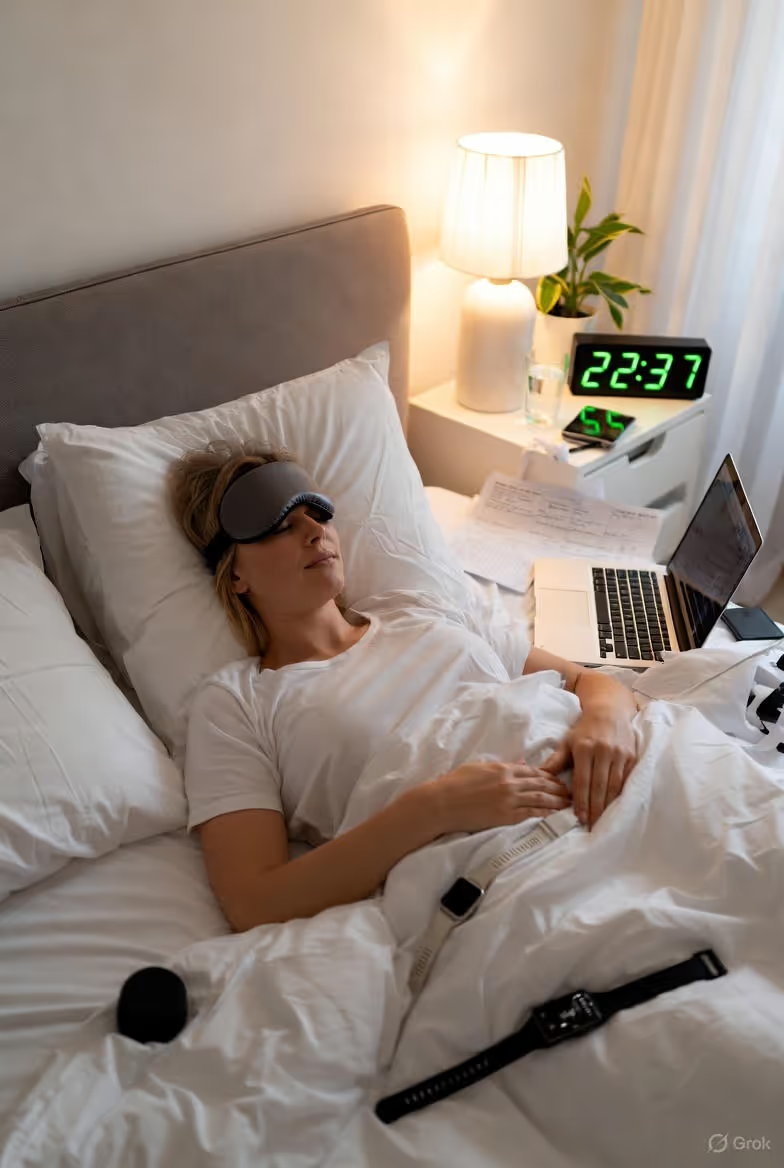
Sleep stage anomalies, like excessive awakenings or lack of deep sleep, can indicate underlying sleep disorders.
Sleep Stage Anomalies: When Something Doesn't Look Right
For years, we believed sleep was a passive void, a nightly concession to fatigue. Today, we understand it as a complex, architecturally precise series of stages—a nightly symphony of brainwaves, heartbeats, and breaths that dictate our mental clarity, physical health, and emotional resilience. With the advent of consumer sleep technology, particularly advanced smart rings like those pioneered by Oxyzen, we now have a front-row seat to this intimate biological performance. We can track our light sleep, deep sleep, REM, and awake periods with astonishing granularity.
But what happens when the data tells a confusing story? When your nightly report shows abrupt awakenings, prolonged periods of “light” sleep with no depth, or a complete absence of the dream-rich REM stage? These are not mere glitches. They are sleep stage anomalies—deviations from the expected, healthy progression of the sleep cycle. They are the cryptic signatures of underlying disturbances, whispers from your nervous system that something is amiss.
This article is your essential guide to deciphering these whispers. We will move beyond the basic sleep score and dive deep into the world of anomalous sleep architecture. You’ll learn to interpret the strange patterns on your data dashboard, understand their potential physiological and psychological roots, and discover actionable strategies to guide your sleep back into a restorative rhythm. This journey is not about fostering anxiety over imperfect data, but about cultivating empowered awareness. By learning what “doesn’t look right,” you take the first, most crucial step toward making it right.
The Blueprint of Normal: Understanding Healthy Sleep Architecture
Before we can identify an anomaly, we must first establish the blueprint of normal, healthy sleep. Think of a perfect night's sleep not as a flat line of unconsciousness, but as a rhythmic journey through a multi-story building, with elevators moving between floors in a predictable, repeating pattern.
The Four Stages of Sleep: A Nightly Odyssey
Sleep is categorized into two primary types: Non-Rapid Eye Movement (NREM) sleep and Rapid Eye Movement (REM) sleep. NREM is further divided into three stages, often now consolidated into N1, N2, and N3.
N1 (Light Sleep - 5% of the night): This is the doorway between wakefulness and sleep, lasting only a few minutes. Your brain produces alpha and theta waves, muscle activity slows, and you can be easily awakened. It’s a transitional phase.
N2 (Baseline Sleep - 45-55% of the night): You are now officially asleep. Your heart rate slows, body temperature drops, and brain waves show distinctive bursts of activity called sleep spindles and K-complexes, which are believed to play a role in memory consolidation and sensory disconnection from the environment.
N3 (Deep Sleep or Slow-Wave Sleep - 15-25% of the night): This is the most physically restorative phase. Characterized by slow, rolling delta brainwaves, this stage is crucial for tissue repair, immune function, growth hormone release, and energy restoration. It is very difficult to wake someone from deep sleep.
REM Sleep (20-25% of the night): This is the stage of vivid dreams. Your brain becomes highly active, nearly mirroring wakefulness, while your voluntary muscles are temporarily paralyzed (a state called atonia) to prevent you from acting out your dreams. Your eyes dart rapidly beneath closed lids. REM is essential for emotional processing, memory integration, and cognitive function.
The Sleep Cycle: The Nightly Rhythm
These stages do not occur in a random order. They form a sleep cycle that repeats approximately every 90 to 110 minutes throughout the night.
You descend from wakefulness through N1 and N2 into N3 (deep sleep).
You then ascend back through N2 before entering your first REM period, which is typically short (maybe 10 minutes).
The cycle repeats. However, the architecture changes as the night progresses. In the first half of the night, cycles are dominated by deep N3 sleep. As the night continues, deep sleep periods shorten, and REM periods lengthen, with the longest and most vivid REM episodes occurring in the final hours before waking.
A healthy adult typically experiences 4 to 6 of these complete cycles per night. This elegant, oscillating structure is what we mean by "sleep architecture." Devices like the Oxyzen smart ring use sophisticated sensors—tracking heart rate variability (HRV), skin temperature, and movement—to model this architecture and present it to you in an intuitive graph.
Understanding this blueprint is foundational. It allows you to look at your own data and see if the basic structure is intact. Is there a clear, rhythmic cycling? Is deep sleep concentrated early? Does REM build toward morning? When this pattern is distorted, we enter the realm of anomalies. For a deeper dive into how this technology interprets your physiology, you can explore our blog on the science of sleep tracking.
The Red Flags: Common Sleep Stage Anomalies and What They Look Like
Now, equipped with the blueprint of normalcy, we can identify the red flags. These are the patterns that, when seen consistently over multiple nights, signal a potential disruption to your sleep’s restorative power. Let’s examine the most common anomalies you might encounter on your sleep report.
1. The Absent or Severely Reduced Deep Sleep Phase This is one of the most concerning anomalies for physical recovery. Your graph may show very thin slivers or a complete absence of the “deep sleep” bars, especially in the first half of the night. Instead, the night might appear as a choppy sea of light and awake periods. What it feels like: Waking up utterly unrefreshed, with body aches, persistent fatigue, and a weakened immune response (you get sick more easily).
2. REM Sleep Suppression or Delay Here, the dream stage is either drastically shortened or pushed very late into the night. You might see almost no REM in the first few cycles, or your total REM duration might be well below the 20% benchmark. What it feels like: Brain fog, difficulty concentrating, emotional volatility, and trouble remembering dreams or consolidating new information.
3. Sleep Cycle Fragmentation (Excessive Awakenings) The architecture isn’t completely missing, but it’s constantly being interrupted. The graph shows frequent, sharp spikes into “awake” or “light sleep” that break up the natural flow of cycles. These are not always consciously remembered. What it feels like: Never feeling like you sink into truly deep, continuous sleep, leading to daytime irritability and fatigue.
4. Stage Reversals or Inverted Architecture In rare but notable cases, the expected order gets scrambled. You might see a long REM period very early in the night (a common feature in conditions like narcolepsy) or deep sleep clusters appearing in the later cycles instead of the earlier ones. This represents a significant dysregulation of the sleep-wake system.
5. Abnormally Prolonged Light Sleep The entire night seems dominated by N1 and N2 sleep, with minimal descent into deeper stages. The graph looks “flat” or uniformly shallow. What it feels like: A sense of having been “half-awake” all night, leading to non-restorative sleep and persistent tiredness.
It’s critical to remember that a single night with odd data is not an anomaly—it’s a bad night. Stress, a late meal, or an unusual event can temporarily disrupt architecture. An anomaly is a persistent pattern over weeks. Furthermore, while smart ring data is incredibly insightful, it is not a medical diagnostic device. These red flags are prompts for investigation and awareness, not clinical diagnoses. If you consistently see these patterns and feel unwell, it’s a signal to look deeper, perhaps starting with the resources in our comprehensive FAQ on data interpretation.
Beyond the Ring: Physiological & Psychological Root Causes
When your sleep data shows persistent anomalies, the next logical question is: Why? The disturbance on your graph is a symptom; the root cause lies in your body and mind. Let’s explore the primary culprits that can dismantle healthy sleep architecture.
The Stress & Cortisol Cascade This is arguably the most common disruptor of modern sleep. Chronic stress keeps your sympathetic nervous system (“fight-or-flight”) subtly activated. This leads to elevated cortisol levels, a hormone that should be low at night. High nighttime cortisol directly antagonizes deep sleep (N3) and can suppress REM sleep. It’s like having a silent alarm system constantly pinging your brain, preventing it from descending into truly restorative states. Your data may show prolonged sleep onset, fragmented deep sleep, and early morning awakenings.
Circadian Rhythm Disruptions Your body operates on a master clock in the brain, the suprachiasmatic nucleus, which aligns your sleep-wake cycle with the 24-hour day. This rhythm dictates the optimal timing for deep sleep (earlier in the night) and REM (later). Disruptions like:
Jet Lag: Rapidly crossing time zones.
Social Jet Lag: Drastically different sleep schedules on weekends vs. weekdays.
Shift Work: Working overnight or rotating shifts.
Blue Light Overload: Excessive screen time before bed suppressing melatonin. These forces misalign your internal clock, leading to a scrambled architecture where stages occur at the wrong biological time.
Sleep Disorders: The Primary Architects of Chaos Certain medical conditions are defined by their impact on sleep architecture:
Sleep Apnea: Repeated breathing pauses cause micro-arousals (often unremembered) that fragment the sleep cycle, severely cutting into deep and REM sleep. The graph often shows a "sawtooth" pattern of constant awakenings.
Restless Legs Syndrome (RLS): Uncomfortable sensations and an urge to move the legs can delay sleep onset and cause frequent awakenings, preventing sustained deep sleep.
Narcolepsy: Characterized by a complete breakdown of boundary between wake, NREM, and REM, often featuring "sleep onset REM periods" (SOREMPs)—jumping directly into REM sleep, which is a classic architectural anomaly.
Mental Health & Neurological Factors Anxiety and depression are powerfully linked to sleep anomalies. Anxiety often manifests as difficulty falling asleep (prolonged N1) and maintaining sleep (fragmentation). Depression is famously associated with REM sleep alterations—specifically, shortened REM latency (entering REM too quickly after sleep onset) and more intense, earlier REM periods. Furthermore, neurological conditions like Parkinson’s or Alzheimer’s disease can profoundly degrade sleep architecture as part of their pathology.
Lifestyle & Environmental Saboteurs Sometimes the causes are more immediate: alcohol consumption (which sedates but obliterates REM sleep later in the night), caffeine too late in the day, an irregular sleep schedule, a room that’s too warm, or excessive noise and light pollution. Each of these can selectively target and disrupt specific sleep stages.
Understanding these root causes transforms your anomalous data from a mystery into a map. It points you toward the areas of your life—be it stress management, schedule consistency, or a conversation with a healthcare provider—that require attention. For many, the journey to better sleep begins with understanding their own biology, a principle at the heart of Oxyzen’s mission to personalize wellness.
The Data Dive: How to Analyze Your Own Sleep Reports Like a Pro
Armed with knowledge of anomalies and their causes, you can now move from passive viewer to active analyst of your own sleep data. Here’s a step-by-step guide to conducting a meaningful review of your sleep reports, turning raw data into actionable insight.
1. Adopt the Longitudinal View (The 30,000-Foot Perspective) Never diagnose a trend from a single night. Open your app and look at the data over two to four weeks. Enable the trend view for key metrics:
Deep Sleep Duration: Is it consistently below 15-20% of your total sleep time?
REM Sleep Duration: Is it consistently below 20%?
Sleep Latency: Is it taking you over 20-30 minutes to fall asleep most nights?
Sleep Efficiency: Is your time asleep vs. time in bed consistently below 85%?
Resting Heart Rate & HRV: Are there notable, sustained spikes in RHR or drops in HRV, indicating systemic stress or recovery issues?
Looking at the forest, not just the trees, helps you differentiate a bad night from a problematic pattern.
2. Correlate with Your Daily Log (Context is King) The most powerful analysis happens when you merge quantitative data with qualitative context. Most advanced apps allow you to tag your days.
Correlate high-stress days: Did a difficult workday precede a night of fragmented sleep or low deep sleep?
Track exercise timing: Did a late-evening workout correlate with a longer sleep onset or restless night?
Note alcohol consumption: Did a few drinks lead to a deceptively fast sleep onset but then a plunge in REM sleep and early awakening?
Observe weekend patterns: Does “social jet lag” from staying up late on Friday cause a visible architectural shift on Saturday night?
This practice of correlation turns your data into a personal sleep experiment, revealing your unique triggers and tolerances.
3. Decipher the Nightly Graph (Read the Story) Now, examine individual night graphs with a critical eye:
Check the Cycle Rhythm: Do you see 4-6 clear “hills” (cycles)? Are they grossly irregular?
Deep Sleep Placement: Is your deep sleep (often dark blue bars) clustered in the first third to half of the night? If it’s scattered or absent, flag it.
REM Buildup: Do your REM periods (often green or purple bars) get progressively longer as the night goes on? A lack of buildup is noteworthy.
Awake Spikes: How many red or orange “awake” spikes are there? More than a few brief ones per cycle may indicate fragmentation.
4. Establish Your Personal Baselines Forget population averages for a moment. What is your normal? After a few weeks of observation during a relatively stable, healthy period, note your typical ranges for deep sleep, REM, and HRV. This personal baseline is your most important reference point. An anomaly for you might be a 10% drop in your personal deep sleep average, even if that number still looks “normal” on a population chart.
5. When to Dig Deeper If your longitudinal analysis reveals persistent, unexplained anomalies that correlate with poor daytime functioning, it’s time to escalate your investigation. This could mean:
Conducting a more rigorous sleep hygiene experiment for 2 weeks.
Using your neatly correlated data as a discussion starter with a healthcare provider or sleep specialist.
Remember, the goal of this analysis is not to achieve a “perfect” graph every night—that’s an unrealistic and stressful target. The goal is to understand the language of your body, to identify disruptive patterns, and to use that knowledge to make informed choices that support your systemic well-being.
Stress & Hyperarousal: The Silent Architect of Disrupted Sleep
We’ve mentioned stress as a primary cause, but it deserves its own deep exploration due to its pervasive and insidious role. Chronic stress doesn’t just make your mind race at bedtime; it fundamentally rewires your nervous system’s relationship with sleep, creating a state of hyperarousal that is the antithesis of restorative rest.
The Neurobiology of a Noisy Brain Under chronic stress, the brain’s fear center, the amygdala, becomes overactive and hypersensitive. It constantly scans for threat, even in the safe silence of your bedroom. This activity suppresses the deactivating signals from the prefrontal cortex and keeps the hypothalamic-pituitary-adrenal (HPA) axis engaged, leading to the persistent cortisol drip mentioned earlier. Neurochemically, this means an excess of arousing neurotransmitters like norepinephrine and glutamate, and a deficit of calming ones like GABA and serotonin.
How This Manifests as Sleep Anomalies This hyperaroused state directly sculpts the anomalous patterns on your sleep graph:
Prolonged Sleep Latency: The "engine" of the brain simply won't shut off. Descending from wakefulness (N1) into true sleep (N2) becomes a struggle.
Suppressed Deep Sleep (N3): Deep sleep requires a profound lowering of the brain's metabolic rate and a strong, coordinated slow-wave signal. The chaotic, high-frequency "noise" of a stressed brain directly interferes with the generation of these slow, synchronized delta waves. Your sleep remains in the shallows.
Fragmented Sleep & Early Morning Awakening: The hypervigilant brain is easily triggered—by a slight sound, a movement, or even its own thoughts—causing micro-awakenings. Furthermore, as cortisol naturally begins to rise in the early morning hours (around 4-5 AM), an already overactive HPA axis can overdo it, jolting you awake prematurely and making it impossible to fall back asleep.
The Vicious Cycle: Poor Sleep Fuels More Stress Here lies the cruel feedback loop. Stress causes poor sleep, characterized by these anomalies. Poor sleep, particularly the loss of deep sleep, then impairs the brain's ability to regulate emotional responses the next day. It reduces prefrontal cortex function (making you more impulsive and less resilient) and increases amygdala reactivity (making you more anxious and reactive). Thus, you face the next day’s stressors with a brain already primed for overwhelm, which in turn sets the stage for another night of disrupted architecture.
Breaking the Cycle: Calming the Hyperaroused System The intervention must target the nervous system itself:
Daytime Down-Regulation: Practices like mindful breathing, meditation, and gentle yoga aren’t just “relaxing”—they are direct training for your parasympathetic (“rest-and-digest”) nervous system, teaching it to counterbalance the hyperarousal.
The Wind-Down Ritual: A consistent 60-90 minute buffer before bed without work, intense conversations, or stimulating content is non-negotiable. This allows the neurochemical tide of arousal to recede.
Cognitive Unloading: Journaling or making a simple “to-do” list for the next day can help offload the cognitive chatter that fuels nighttime rumination.
HRV Biofeedback: Using your smart ring to track Heart Rate Variability provides a direct window into your autonomic nervous system balance. A low HRV indicates sympathetic dominance (stress). Observing how specific practices (like deep breathing) improve your HRV can be a powerful motivator and guide.
Tackling sleep anomalies rooted in stress is less about forcing sleep and more about systematically calming the awake state. It’s about proving to your amygdala, through consistent ritual and evidence, that the night is safe for descent. The stories of users who have used data to break this very cycle are some of the most compelling you’ll find in our user testimonials.
The Diet & Lifestyle Connection: Fueling and Derailing Sleep Stages
What you do during the day, and what you put into your body, are powerful levers on your sleep architecture. While stress operates from the top-down (brain to body), diet and lifestyle factors often work from the bottom-up, directly influencing the biochemical environment necessary for stable sleep stages.
Nutritional Influences on Sleep Neurochemistry The building blocks of your sleep-wake neurotransmitters come from your diet.
Tryptophan & Serotonin: This amino acid (found in turkey, milk, oats, nuts) is a precursor to serotonin, which is then converted into melatonin, the sleep hormone. Inadequate protein or specific nutrient cofactors (like B6, magnesium) can hamper this pathway.
Magnesium & Glycine: Magnesium, the "relaxation mineral," supports GABA function, the brain's primary inhibitory neurotransmitter that quietens neural activity for sleep. Glycine (found in collagen) has been shown to lower core body temperature and improve sleep quality. Deficiencies can contribute to hyperarousal.
Blood Sugar Dysregulation: A large spike and subsequent crash in blood sugar during the night, caused by a high-sugar or high-carb meal before bed, can trigger a release of cortisol and adrenaline to stabilize levels, causing a fragmentation or early awakening.
The Double-Edged Sword of Alcohol & Caffeine
Alcohol: It is a sedative, so it may hasten sleep onset. However, as the body metabolizes it, it becomes a potent REM sleep suppressant. The second half of the night becomes fragmented, with more awakenings and very little restorative REM or deep sleep. Your graph may show a solid first half (due to sedation) and a chaotic, shallow second half.
Caffeine: This adenosine antagonist blocks sleep-promoting receptors in the brain. Its 5-6 hour half-life means an afternoon coffee can significantly delay sleep onset and reduce deep sleep quantity. It can also increase nighttime anxiety and fragmentation.
Exercise: Timing is Everything Regular exercise is one of the most powerful promoters of deep N3 sleep, as it increases sleep pressure (adenosine buildup) and helps regulate circadian rhythms. However, high-intensity exercise too close to bedtime (within 1-2 hours for most people) raises core body temperature and stimulates cortisol and epinephrine release, which can delay sleep onset and disrupt early cycle architecture. Evening gentle movement like walking or stretching, however, can be beneficial.
The Thermoregulation Factor Your body needs to drop its core temperature by about 1-2 degrees Fahrenheit to initiate and maintain sleep. This is why your Oxyzen ring tracks skin temperature—it’s a key proxy for this process.
A Hot Room or Heavy Bedding: Can prevent the necessary temperature drop, leading to restlessness, more awakenings, and less deep sleep.
A Late Hot Shower or Bath: While counterintuitive, raising your core temperature slightly 60-90 minutes before bed can enhance the cool-down process afterwards, potentially improving sleep onset and depth.
Practical Application: The 3-Day Sleep Log Experiment To identify your personal triggers, try this:
For three "typical" days, log everything: meal times/content, alcohol/caffeine intake, exercise timing/type, and evening environment (room temp, light).
On the fourth morning, correlate this log with the three corresponding sleep graphs.
Look for patterns. Does pizza at 9 PM correlate with a low deep sleep score? Does a 4 PM coffee correlate with a long sleep latency? Does a 7 PM workout correlate with better sleep efficiency?
This self-experimentation empowers you to make precise, personalized adjustments rather than following generic advice. For more personalized strategies on aligning lifestyle with sleep, our team has compiled extensive resources you can discover in our help center.
Circadian Rhythm Disruptions: When Your Internal Clock is Out of Sync
Your circadian rhythm is the master conductor of your sleep-wake cycle, orchestrating the precise timing of hormone release, body temperature fluctuations, and, crucially, the architecture of your sleep stages. When this 24-hour internal clock is misaligned with your external environment or behavior, it doesn’t just make you sleepy at the wrong time—it systematically distorts the quality and structure of your sleep.
The Mechanics of the Master Clock The suprachiasmatic nucleus (SCN) in your hypothalamus is your body’s primary pacemaker. It is set primarily by light exposure, especially the blue-wavelength light of morning sun. Light hitting the retina signals the SCN to suppress melatonin and promote alertness. As darkness falls, the SCN triggers the pineal gland to release melatonin, initiating the cascade toward sleep. This rhythm also governs the nightly drop in core body temperature and the timing of cortisol’s lowest point (around midnight).
Types of Circadian Disruption and Their Anomalous Signatures Different disruptions create different fingerprints on your sleep data:
Delayed Sleep-Wake Phase Disorder (The Night Owl Syndrome):
Cause: A genetically or behaviorally shifted clock where the natural sleep onset time is significantly later (e.g., 2 AM or later).
Anomaly Signature: When forced to sleep earlier for work/school, the graph shows very long sleep latency and a severe suppression or delay of deep sleep and REM, as the body is trying to sleep at the wrong biological time. Sleep efficiency is low until the later, preferred hours.
Advanced Sleep-Wake Phase Disorder (The Early Bird Syndrome):
Cause: The opposite shift—the clock runs early, with strong evening sleepiness and very early morning awakenings (e.g., 3-4 AM).
Anomaly Signature: Sleep may initiate normally but is truncated on the back end. The long morning REM period is often cut short or missed entirely, and total sleep time is reduced.
Social Jet Lag:
Cause: The chronic discrepancy between your biological clock (e.g., night owl tendency) and your social/work schedule. You might stay up late and sleep in on weekends, then force an early wake-up on Monday.
Anomaly Signature: A weekly pattern of instability. Sunday night often shows terrible sleep architecture (long latency, low efficiency) as the body’s clock is still set for a later schedule. The entire week’s data may show a gradual “recovery” toward a mid-week normal, only to be disrupted again on Friday.
Shift Work Disorder:
Cause: Working overnight or rotating shifts forces sleep to occur during the biological daytime, when cortisol is high and melatonin is low.
Anomaly Signature: Daytime sleep is typically shortened (by 1-4 hours) and highly fragmented, with severely reduced deep sleep. The sleep graph often looks shallow and choppy, reflecting the profound conflict between internal rhythm and external behavior.
The Architectural Consequences of Mistiming When you sleep at the wrong circadian phase:
Deep Sleep Suffers Most: The window for optimal slow-wave sleep generation is closely tied to the circadian drop in core body temperature and low cortisol, typically in the first half of your biological night. Sleeping outside this window means missing this crucial restorative period.
REM Gets Compressed or Displaced: REM propensity is highest in the hours leading up to your natural wake time. A misaligned schedule can cut this stage short.
Sleep Fragmentation Increases: The opposing drive for wakefulness from the circadian system creates more frequent arousals and awakenings during the sleep period.
Resetting the Clock: Light, Dark, and Consistency The most powerful tool for correcting circadian-based anomalies is light management.
Morning Light: Getting bright light exposure (preferably sunlight) within 30-60 minutes of your target wake time is the strongest signal to advance or delay your clock to the correct time.
Evening Darkness: Avoiding blue light from screens 2-3 hours before your target bedtime is equally critical. Use blue-light blockers or night modes.
Iron-Clad Consistency: Waking up at the same time every single day, even on weekends, is the single most effective behavioral intervention to anchor a wayward circadian rhythm. It is more important than a consistent bedtime.
By treating your circadian rhythm with the respect it deserves, you create the stable temporal framework within which healthy, architecturally sound sleep can reliably occur. It’s a cornerstone of the holistic approach to wellness that guides our philosophy at Oxyzen.
The Role of Environment: How Your Bedroom Sabotages or Supports Sleep Stages
Your bedroom is not just a place where sleep happens; it is the carefully designed (or accidentally neglected) ecosystem that either facilitates the smooth progression of sleep stages or actively works against it. Many anomalies can be traced back to environmental factors that disrupt the delicate physiological processes required for deep sleep and REM.
Light: The Arch-Nemesis of Melatonin Even small amounts of light—the glow from a charger, light under the door, or streetlights through a crack in the blinds—can be detected by your photoreceptors (even through closed eyelids) and suppress melatonin production.
Impact on Architecture: This can delay sleep onset, reduce overall melatonin levels, and increase sleep fragmentation, particularly in the lighter stages of sleep. It can also blunt the depth of deep sleep.
The Fix: Absolute darkness is the goal. Use blackout curtains, cover or remove all electronic LEDs, and consider a comfortable sleep mask. For night lights, use dim red bulbs, which have the least impact on melatonin.
Temperature: The Goldilocks Principle in Action As noted, a drop in core body temperature is a key sleep initiator. An environment that is too warm prevents this drop; one that is too cold can cause awakenings as your body struggles to thermoregulate.
Impact on Architecture: A hot room is strongly associated with increased wakefulness, reduced deep sleep, and more stage shifts. It prevents the descent into the most restorative phases. Data from a smart ring often shows more movement and higher resting heart rate in overly warm conditions.
The Fix: The ideal bedroom temperature for most people is between 60-67°F (15.5-19.5°C). Use cooling mattress pads, breathable (natural fiber) bedding, and fans or air conditioning. The Oxyzen ring’s skin temperature trend can be a great guide to finding your personal ideal.
Noise: The Unseen Fragmenter Unexpected or variable noises—traffic, a snoring partner, a dripping tap—don’t necessarily wake you fully but can cause micro-arousals, shifting you from a deeper stage to a lighter one without conscious awareness.
Impact on Architecture: This is a primary driver of sleep cycle fragmentation. Your graph may show frequent, brief spikes into "light sleep" or "awake" throughout the night, severing the continuity needed for sustained deep and REM sleep.
The Fix: Use white noise or pink noise machines, fans, or earplugs to create a consistent, masking sound barrier. Consistency is key—it allows the brain to filter out the noise as non-threatening.
Comfort & Association: The Psychology of the Sleep Sanctuary Your brain forms powerful associations. If your bedroom is a place of work, stress, or entertainment, it becomes cognitively associated with alertness, not rest.
Impact on Architecture: This can contribute to the hyperarousal discussed earlier, manifesting as prolonged sleep onset and difficulty achieving deep sleep because the environment subconsciously signals "wakefulness."
The Fix: Make your bedroom a sanctuary for sleep and intimacy only. Remove TVs, laptops, and work materials. Invest in a comfortable, supportive mattress and pillows. This strengthens the mental association between the room and unconsciousness.
The Cumulative Effect It’s rarely one factor alone. A slightly warm room with occasional car headlights and a faint buzzing from an old refrigerator creates a cumulative burden on your sleep architecture. Optimizing your environment is one of the most direct and controllable interventions you can make. It removes external obstacles, allowing your innate sleep drive and circadian rhythm to operate unimpeded. For many, creating this perfect sanctuary is a journey of trial and error, a process well-documented by others in the community who share their experiences and successes.
When to Seek Professional Help: Red Flags and Next Steps
Self-analysis and lifestyle optimization are powerful first lines of defense against sleep anomalies. However, there are clear signals that indicate the need to involve a healthcare professional. Distinguishing between a self-correctable pattern and a potential medical condition is a critical step in your sleep health journey.
The Unmistakable Red Flags The following symptoms, especially when paired with anomalous data, should prompt a consultation with your primary care physician or a sleep specialist:
Loud, Chronic Snoring Gasping, or Choking Sounds: Reported by a partner, this is the hallmark symptom of obstructive sleep apnea (OSA), a condition that causes hundreds of micro-awakenings per night and devastates sleep architecture.
Uncomfortable Urges to Move Legs at Rest (RLS): A creepy-crawly, itchy, or painful sensation in the legs that is relieved only by movement, significantly delaying sleep onset and causing fragmentation.
Acting Out Dreams: Physically punching, kicking, or yelling during vivid dreams. This can be a sign of REM Sleep Behavior Disorder (RBD), where the muscle paralysis of REM sleep fails.
Overwhelming Daytime Sleepiness: Falling asleep uncontrollably during quiet activities like reading, driving, or in meetings. This is a key symptom of narcolepsy or severe sleep apnea.
Waking with Headaches or Dry Mouth: Common indicators of breathing difficulties and oxygen desaturation during the night.
Cognitive or Mood Deterioration: Significant, persistent memory issues, concentration problems, or depressed mood that correlates with poor sleep data.
Preparing for the Professional Consultation: Become a Data-Informed Patient Walking into a doctor’s appointment with months of correlated data transforms the conversation from “I’m tired” to “Here is the objective evidence of my disturbance.”
Bring Your Trends: Show your 4-week trends of low deep sleep, high awake time, or elevated resting heart rate.
Show Correlated Graphs: Present specific nights that illustrate your concern: “On nights where I snore, my deep sleep is near zero. On quiet nights, it’s better.”
Describe the Anomaly: Use the language you’ve learned: “My sleep architecture is fragmented,” or “My REM sleep is consistently suppressed.”
Share Your Sleep Log: Include your notes on diet, stress, and environment.
This evidence can be pivotal in justifying a referral for a clinical sleep study (polysomnography). This gold-standard test uses EEG electrodes to directly measure your brainwaves, along with breathing, heart rate, and limb movement, providing a definitive diagnosis of sleep apnea, narcolepsy, PLMD, and other disorders.
The Path Forward: From Diagnosis to Management A professional diagnosis is not an endpoint; it’s the beginning of targeted management.
For Sleep Apnea: Treatment like CPAP therapy is often life-changing, restoring sleep architecture almost immediately by eliminating the breathing disruptions.
For RLS/PLMD: Medications and iron supplementation (if deficient) can drastically reduce symptoms.
For Circadian Disorders: Light therapy and chronotherapy under professional guidance can systematically reset your clock.
For Insomnia: Cognitive Behavioral Therapy for Insomnia (CBT-I) is the first-line treatment, more effective and durable than medication, and focuses on correcting the behaviors and thoughts that perpetuate poor sleep.
Seeking help is a sign of proactivity, not weakness. Your smart ring data is a powerful screening tool and monitoring device, but it works best in partnership with professional medical insight. For questions on how your device data can complement professional care, you can always refer to our support resources.
The Technology of Detection: How Smart Rings Model Your Sleep Architecture
The journey from the silent, internal rhythms of your body to the colorful, informative graph on your smartphone is a marvel of modern bio-sensing and algorithmic intelligence. Unlike polysomnography (PSG)—the clinical gold standard with its wires and electrodes—a smart ring like Oxyzen uses a minimalist form factor to perform a continuous, nightly act of physiological deduction. Understanding this process demystifies the data, helping you appreciate its strengths and acknowledge its limitations.
The Sensor Suite: Your Body's Nightly Narrator Tucked inside the sleek band of a modern smart ring are sophisticated sensors that act as proxy reporters for your brain and nervous system.
Photoplethysmography (PPG): This is the core technology. A tiny green LED light shines into the capillaries of your finger, and a photodetector measures the amount of light reflected back. With each heartbeat, blood volume in the capillaries pulses, changing the light absorption. This allows the ring to track:
Heart Rate (HR): Beats per minute.
Heart Rate Variability (HRV): The millisecond variations between heartbeats, a direct window into autonomic nervous system balance (sympathetic "fight-or-flight" vs. parasympathetic "rest-and-digest").
3-Axis Accelerometer: This measures movement, including gross body movements and subtle micro-movements. It's essential for distinguishing wakefulness from sleep and identifying periods of restlessness.
Skin Temperature Sensor: Continuously monitors the temperature at your skin's surface, which is a key proxy for core body temperature drop—a critical signal for sleep onset and circadian phase.
Blood Oxygen Saturation (SpO₂) Sensor: Some advanced rings, like Oxyzen, use red and infrared LEDs to estimate the oxygen level in your blood, a crucial metric for detecting breathing disturbances.
From Pulses to Stages: The Algorithmic Alchemy Raw sensor data—a stream of light pulses, movement vectors, and temperature points—is meaningless on its own. This is where proprietary algorithms, often developed using machine learning models trained on massive datasets of PSG-verified sleep, perform their magic.
The algorithm synthesizes the data streams in real-time:
Step 1: Sleep vs. Wake Classification. The accelerometer is primary here. Prolonged stillness suggests sleep onset. Significant movement suggests wakefulness. The PPG confirms: during wake, heart rate is more variable and responsive; during sleep, it becomes slower and more regular.
Step 2: Sleep Stage Estimation. This is the complex part. The algorithm looks for signature patterns in the combined data:
Light Sleep (N1/N2): Characterized by a declining heart rate and the onset of regular breathing. Movement is minimal. The algorithm may also look for brief, transient patterns in the PPG signal that correlate with sleep spindles and K-complexes.
Deep Sleep (N3): The clearest fingerprint. Heart rate reaches its lowest, most regular point of the night. HRV shows a predictable, sinusoidal pattern indicative of strong parasympathetic dominance. Movement is virtually absent. Skin temperature is typically at its stable, lowered state.
REM Sleep: The paradox. Heart rate and breathing become variable and irregular, similar to wakefulness. However, the accelerometer shows muscle atonia—a profound lack of movement (save for occasional tiny twitches). This combination of a "wake-like" heart in a "paralyzed" body is the key signature the algorithm detects.
Step 3: Cycle Construction & Scoring. The algorithm stitches these classified periods into the classic 90-110 minute cycles, applying rules of sleep biology (e.g., you typically go from light to deep to light to REM, not straight from deep to REM).
Understanding Accuracy & Limitations It’s vital to understand that a smart ring is not a medical-grade EEG. It cannot "see" your brainwaves.
It’s a Highly Educated Estimate: Its stage detection accuracy (especially differentiating between light and REM, which can have similar heart rate patterns) is probabilistic, not absolute. Most studies show consumer wearables are about 80-90% accurate at distinguishing sleep from wake and can reliably detect broad patterns (deep sleep presence, REM timing), but can mis-score specific minutes within a stage.
What It Excels At: Tracking longitudinal trends (Is my deep sleep decreasing over two weeks?), measuring physiological markers (HRV and resting heart rate are direct, highly accurate measurements), and detecting macro-anomalies (complete absence of a stage, severe fragmentation).
Where It Can Be Fooled: Lying perfectly still while awake (meditating, reading) can sometimes be scored as light sleep. Certain medications, alcohol, or medical conditions that alter heart rate patterns can confound stage detection algorithms.
This knowledge empowers you to be an informed interpreter. You look at your "REM" block and understand it represents a period of high heart rate variability coupled with physical stillness—a very good proxy. You see your "Deep Sleep" and know it corresponds to a time of ultra-low, stable heart rate and high HRV—a strong indicator of physiological rest. This bridge between technology and biology is at the core of what makes devices like Oxyzen powerful tools for self-awareness, a principle you can learn more about in our company's vision.
Beyond the Basics: Advanced Markers—HRV, Temperature, and Respiratory Rate
While sleep stages provide the architectural map, the true depth of insight from a advanced smart ring comes from the underlying physiological metrics that power those estimates. These are not estimates; they are direct, continuous measurements that offer a profound look into your nervous system's state during sleep. Interpreting these can often explain why your architecture looks anomalous.
Heart Rate Variability (HRV): The Gold Standard for Recovery & Stress Load HRV is not your heart rate; it's the variation in the milliseconds between successive heartbeats. A higher HRV generally indicates a healthy, resilient autonomic nervous system with strong parasympathetic (rest-and-digest) tone. A low HRV suggests sympathetic (fight-or-flight) dominance, often due to stress, illness, or overtraining.
The Nightly Pattern: In healthy sleep, HRV should rise significantly during deep N3 sleep, reflecting maximal parasympathetic recovery. It then becomes highly variable during REM, mirroring the brain's activity.
Anomaly Indicators:
Blunted or Low Nightly HRV: If your HRV trendline is flat or consistently low throughout the night, it indicates your body is not entering a true state of physiological recovery, regardless of what the stage graph says. This is a classic sign of chronic stress or incomplete recovery.
Missing the Deep-Sleep HRV Peak: If your deep sleep periods don't correspond with a clear spike in HRV, it suggests that sleep is not restorative—you may be physically still, but your nervous system is still on alert.
High HRV during Awake Periods: Paradoxically, a spike in HRV during a noted "awake" period could indicate a moment of calm, mindful wakefulness, rather than stressful rumination.
Skin Temperature: The Circadian & Metabolic Signal Your skin temperature is a window into thermoregulation, a process intimately tied to sleep initiation and circadian rhythm.
The Normal Pattern: To fall asleep, your core body temperature must drop, which is achieved by increasing blood flow to the extremities (like your hands), releasing heat. Your ring should show a noticeable rise in skin temperature as you fall asleep, followed by a stable, elevated plateau throughout the night, before dropping upon waking.
Anomaly Indicators:
Delayed or Absent Temperature Rise: If your skin temperature stays low at bedtime, it signals your body isn't initiating the cooling process, often linked to circadian misalignment, late-night exercise, or a sleep-conducive environment.
Erratic Temperature Swings: Large fluctuations during the night can correlate with awakenings, sleep stage transitions, or environmental factors (kicking off blankets).
Elevated Baseline Over Time: A trend of gradually higher nighttime skin temperature can be associated with inflammation, metabolic issues, or hormonal changes.
Respiratory Rate (Breaths Per Minute): The Silent Metric of Stability The ring derives this from the subtle, rhythmic patterns in the PPG signal correlated with breathing.
The Normal Pattern: Respiratory rate slows and becomes very regular during deep sleep. It becomes faster and irregular during REM.
Anomaly Indicators:
High or Erratic Baseline Rate: A consistently high average nighttime respiratory rate (e.g., above 16-18 bpm) can be a sign of stress, anxiety, or an underlying cardiorespiratory condition.
Sudden Spikes or Dips: These can correspond with apneas (pauses) or hypopneas (shallow breathing), even if not severe enough to be diagnosed as sleep apnea. They often precede or accompany a micro-arousal visible on the graph.
Synthesizing the Story: A Case Example Imagine a report showing:
Graph: Fragmented sleep with low deep sleep.
HRV: Flatlined at a low level all night.
Temperature: Normal rise.
Respiratory Rate: Slightly elevated and variable.
Interpretation: The environment (temperature) is fine. The primary issue is autonomic nervous system hyperarousal (low, flat HRV) likely driving the fragmentation and preventing deep sleep. The elevated respiratory rate supports the stress/anxiety hypothesis. The intervention, therefore, shifts from optimizing the bedroom to managing daytime stress and nervous system regulation.
By learning to read these advanced markers, you move from simply observing what your sleep looks like to understanding how your body is functioning during it. This is the frontier of personalized wellness tracking. For those interested in the nuances of these metrics, we regularly publish detailed analyses and guides on our blog.
Case Studies in Anomalies: Interpreting Real-World Sleep Data
Theory comes to life through practical examples. Let's examine three anonymized, composite case studies that illustrate how different root causes manifest as distinct patterns across sleep stages and physiological metrics. These examples will help you practice the analytical skills we've been building.
Case Study 1: The Stressed Executive
Presenting Complaint: "I sleep 7 hours but wake up exhausted. My mind won't shut off."
Two-Week Data Trends:
Sleep Stages: Reduced deep sleep (averaging 12%). Increased awake time (6%). Sleep latency prolonged to 45 minutes.
HRV: Consistently low (bottom 25th percentile for age/sex). No clear nighttime peak.
Resting Heart Rate: Elevated by 8-10 bpm above personal baseline.
Temperature: Normal pattern.
Graph Signature: Sleep onset is a jagged descent. The first deep sleep period is short and shallow. Frequent, brief awake spikes throughout the night.
Analysis: This is a textbook hyperarousal profile. The elevated RHR and low HRV confirm a heightened sympathetic tone. The brain's alertness is preventing the descent into deep, restorative sleep and causing frequent micro-arousals. The architecture is fragmented because the nervous system is.
Actionable Insight: Interventions must target nervous system down-regulation, not just sleep hygiene. This individual would benefit from daytime meditation, a strict digital curfew, and potentially CBT-I to address sleep-related anxiety. Tracking HRV response to these changes would be a key success metric.
Case Study 2: The Shift Worker with Social Jet Lag
Presenting Complaint: "I can never sleep well, whether it's day or night. I'm in a constant fog."
Data Patterns (Comparing Work Nights vs. Off Nights):
Day Sleep (After Night Shift): Graph shows severe fragmentation. Deep sleep is minimal (<10%). Total sleep time is only 5 hours. Efficiency is 70%.
Night Sleep (On Days Off): Sleep latency is very long. Deep sleep is better (18%) but occurs later in the night. REM sleep is abundant but also delayed. A clear "delayed phase" pattern.
Circadian Markers: Skin temperature rhythm is completely out of sync with actual sleep times, rising during daytime sleep attempts.
Analysis: This shows the brutal impact of circadian misalignment. The body is fighting sleep during the day (low sleep drive, wrong circadian phase), resulting in short, poor-quality sleep. On days off, the internal clock has drifted to a late schedule, making it hard to fall asleep at a "normal" time. The architecture is displaced and compressed.
Actionable Insight: The goal is to stabilize the clock, even if it can't be fully normalized. Using bright light therapy strategically (using it to stay alert at the end of a night shift, avoiding it before daytime sleep) and maintaining a consistent sleep-wake time 7 days a week (even if it's a non-traditional schedule) is more important than forcing 8 hours at the wrong time. Melatonin supplementation before daytime sleeps may be considered under medical guidance.
Case Study 3: The Partner Who Snores
Presenting Complaint: "My partner says I snore and stop breathing. I have no energy."
Data Patterns:
Sleep Stages: The graph has a distinctive "sawtooth" appearance—dozens of brief awakenings. Deep sleep is almost absent. REM sleep is also severely reduced.
Physiological Metrics: Resting Heart Rate is erratic, with sudden spikes corresponding to probable arousals. Blood Oxygen (SpO₂) graph, if available, shows repetitive, cyclical dips (desaturations).
Movement: May show increased movement during events.
Analysis: This pattern is highly suggestive of Obstructive Sleep Apnea (OSA). Each breathing pause causes a micro-arousal (a spike in heart rate and often movement) to restart breathing. This fragments the sleep cycle every few minutes, utterly destroying the ability to maintain deep or REM sleep. The heart and brain are under repeated stress all night.
Actionable Insight: This is a clear medical red flag. This data is powerful evidence to bring to a doctor. A sleep study is strongly indicated. Successful treatment with CPAP would likely result in a dramatic, almost overnight normalization of the sleep architecture graph, a transformation that users often describe as life-changing, similar to stories shared in our user testimonials.
These cases illustrate that while the symptom—daytime fatigue—is common, the data fingerprints are distinct. The stressed executive has low HRV and fragmentation. The shift worker has timing and consistency issues. The potential sleep apnea patient has a sawtooth pattern with physiological disturbances. Learning to differentiate these patterns turns your smart ring from a simple tracker into a sophisticated diagnostic aid for your personal wellness investigation.
Navigating the Noise: Differentiating Anomalies from Normal Variability
A critical skill in sleep self-analysis is avoiding the trap of "orthosomnia" – an unhealthy preoccupation with achieving perfect sleep data. Not every deviation is an anomaly; much of it is normal biological variability. The key is to discern the signal of a true problem from the background noise of life.
Sources of "Normal Noise" in Sleep Data:
The First-Night Effect: Even at home, sleeping with a new device can subtly disrupt your sleep, leading to lighter sleep and more awakenings. Always disregard the first 2-3 nights of data when establishing a baseline.
Sleep After Intense Physical Training: After a day of heavy exercise, particularly endurance sports, your body prioritizes physical repair. Your graph may show increased deep sleep and possibly slightly reduced REM sleep in the early part of the night. This is a normal, adaptive response.
The REM Rebound: After a night of sleep deprivation or significant alcohol consumption (which suppresses REM), you may experience a REM rebound on a recovery night. This shows as a large increase in REM percentage, particularly early in the night. It's the brain's way of catching up on a vital process.
Natural Aging Changes: Sleep architecture evolves over a lifetime. In healthy aging:
Deep sleep (N3) gradually decreases as a percentage of total sleep time. This is normal and not inherently an anomaly if daytime functioning remains good.
Sleep becomes more fragmented with more frequent and longer awakenings.
Total sleep time often decreases. Basing your expectations on age-appropriate norms, not the sleep of a 20-year-old, is crucial.
Hormonal Fluctuations: The menstrual cycle, pregnancy, and menopause cause significant shifts in body temperature and neurochemistry that directly affect sleep.
Luteal Phase (post-ovulation): Progesterone raises core body temperature, which can make it harder to fall asleep and reduce sleep efficiency. Data may show more restlessness and slightly lighter sleep.
Menopause: The decline in estrogen is associated with increased sleep latency, more awakenings (often from hot flashes visible as temperature spikes), and reduced sleep efficiency.
The 80/20 Rule for Healthy Concern Apply this heuristic: Focus on trends that persist for 80% of your nights and correlate with 80% of your daytime impairment. If you feel great but your deep sleep is 18% instead of 20%, that's noise. If you feel terrible and your deep sleep is consistently below 10% for three weeks, that's a signal.
Questions to Ask When You See a Strange Night:
Was there an obvious trigger? (Late coffee, argument, unfamiliar bed, illness onset)?
Does this fit a known pattern for me? (e.g., poor sleep before a work presentation).
What do my physiological markers say? Was my HRV still high despite low deep sleep? That suggests my nervous system was recovering even if the algorithm scored it "lightly."
How do I feel today? Rate your energy, mood, and cognition on a 1-10 scale. Data without subjective context is incomplete.
This balanced approach prevents the tool from becoming a source of anxiety. The goal is to use data to support well-being, not undermine it. The ring is a guide, not a judge. For common questions about data fluctuations and what they mean, many users find clarity in our detailed FAQ section.
Strategic Interventions: Tailored Approaches for Specific Anomalies
Once you've identified a persistent anomaly and hypothesized its root cause, you can move from observation to targeted action. Here are strategic interventions, mapped to the specific architectural disruptions we've discussed.
For Deficient or Absent Deep Sleep (N3):
Prioritize Sleep Consistency: Deep sleep is most robust in the first half of the night when aligned with your circadian rhythm. A consistent, early-enough bedtime is non-negotiable.
Maximize Sleep Pressure: Ensure sufficient wakefulness during the day. Avoid long naps (>30 minutes), especially late in the day. Engage in moderate to vigorous physical activity, but finish 2-3 hours before bed.
Cool the Core: Take a warm bath 90 minutes before bed to initiate the cooldown reflex. Keep the bedroom cold (65°F/18°C). Use light, breathable bedding.
Nutritional Support: Ensure adequate intake of magnesium (leafy greens, nuts, seeds) and consider a glycine supplement (3g before bed), which has evidence for enhancing deep sleep.
Minimize Deep Sleep Disruptors: Alcohol, late-night eating, and sleeping in a warm room are particularly damaging to N3.
For Suppressed or Irregular REM Sleep:
Protect Sleep Duration: REM sleep predominates in the final cycles of the night. Cutting your sleep short (e.g., with a very early alarm) disproportionately robs you of REM. Prioritize getting a full 7-9 hours.
Strictly Limit Alcohol & Cannabis: These are potent REM suppressants. For healthy REM architecture, avoid them, especially within 3-4 hours of bedtime.
Manage Antidepressant Medications: Some SSRIs/SNRIs suppress REM. If this is a concern, discuss the sleep architecture impact with your prescribing doctor—never adjust medication on your own.
Support Emotional Processing: Since REM is linked to emotional regulation, daytime practices like journaling or therapy can indirectly support healthy REM function by reducing the "emotional load" processed at night.
Ensure Adequate Choline: This nutrient (found in eggs, liver, soy) is a precursor to acetylcholine, a neurotransmitter vital for REM sleep. A balanced diet is usually sufficient.
For Severe Sleep Fragmentation (Frequent Awakenings):
Optimize the Environment for Silence & Darkness: As detailed in Section 8, use white noise, blackout curtains, and eye masks. This reduces sensory-triggered arousals.
Rule Out Sleep Apnea & RLS: If fragmentation is severe and unexplained, these medical conditions must be investigated.
Bladder-Friendly Hydration: Stop fluid intake 90 minutes before bed and empty your bladder right before lights out.
The "Get Out of Bed" Rule: If you are awake for more than 20 minutes, get out of bed. Go to a dimly lit room and do a quiet, boring activity (no screens). Return to bed only when sleepy. This strengthens the association between bed and sleep, not bed and wakefulness.
Address Pain: Chronic pain is a major fragmenter. Optimize pain management before bed with heat, medication (as prescribed), or strategic positioning.
For Circadian-Based Anomalies (Delayed/Advanced Phase, Social Jet Lag):
Light Therapy with Military Precision:
For Delayed Phase (Night Owl): Get bright light exposure immediately upon your target wake time. Use a 10,000-lux light box for 20-30 minutes. Avoid evening light.
For Advanced Phase (Early Bird): Get bright light exposure in the early evening to delay the clock. Avoid bright morning light.
Anchor Your Wake Time: Wake up at the exact same time every single day, no exceptions. This is the strongest zeitgeber (time-giver) for your internal clock. The bedtime will gradually follow.
Strategic Melatonin: For phase shifting, low-dose (0.3-1 mg) melatonin taken 4-5 hours before your current sleep onset can help advance a delayed clock. Consult a doctor for guidance.
Commit to Schedule Stability: The cure for social jet lag is to reduce the weekend discrepancy to under one hour. Social life may need to adapt to protect your sleep biology.
For Stress/Hyperarousal-Driven Anomalies:
Implement a Digital Sunset: 90 minutes of screen-free time before bed is critical to lower cognitive and neurological arousal.
Practice Physiological Sighs: A double-inhale through the nose followed by a long, slow exhale through the mouth. Doing this for 1-2 minutes at bedtime can rapidly reduce acute arousal.
Schedule "Worry Time": Designate 15 minutes in the late afternoon to write down worries and potential solutions. When worries arise at night, remind yourself it's not the time—it's been scheduled.
Track HRV Trends: Use your ring's HRV data to objectively measure the impact of your stress-management practices (meditation, yoga, nature walks). This biofeedback is powerfully motivating.
Remember, implement changes one at a time for at least a week while monitoring your data. This allows you to see what actually moves the needle for your unique physiology. The journey to better sleep is a personal experiment, and the Oxyzen ring provides the lab notebook. For a community of people engaged in similar experiments, you can read about their journeys and insights.
The Long Game: Tracking Progress and Maintaining Sleep Health
Correcting sleep anomalies is rarely a quick fix. It is a gradual process of recalibrating a complex biological system. The final piece of the puzzle is learning to track your progress effectively and adopt a mindset of long-term sleep health maintenance, using your data as a compassionate guide rather than a daily report card.
Setting Realistic Expectations and Goals
Focus on Trends, Not Daily Scores: Your sleep score will fluctuate. The goal is to see the moving average of your key metrics (Deep Sleep %, REM %, HRV, Sleep Efficiency) improve over 4-8 weeks.
Process Over Outcome Goals: Instead of "I will get 90 minutes of deep sleep tonight," set goals like "I will be in bed with lights out by 10:30 PM," or "I will do 10 minutes of breathwork before bed." These are actions within your control that influence the outcome.
Celebrate Non-Linear Progress: Improvement is often two steps forward, one step back. A bad night after a string of good ones isn't failure; it's data. Look for the trigger and move on.
Creating a Personal Sleep Dashboard Go beyond the app's default view. Create a weekly or monthly review ritual where you note:
Metric Trends: What are the 2-week averages for your 3 most important metrics (e.g., Deep Sleep, HRV, Latency)?
Subjective Feeling Correlation: On a scale of 1-10, what was your average energy/mood/cognition this period? Does the data trend align?
Intervention Log: What specific change did you implement this period (e.g., "started magnesium," "enforced 10:30 bedtime")?
One Key Insight: What is one thing the data taught you this period? (e.g., "Alcohol cuts my REM in half," "Morning walks improve my sleep efficiency.")
This dashboard turns raw data into a strategic personal health document.
Knowing When to Take a Break from Tracking Paradoxically, sustained sleep health sometimes requires stepping away from the data. If you find yourself:
Feeling anxious at bedtime about "what the ring will say."
Obsessively checking the app in the middle of the night.
Making unhealthy choices to "game" your score (e.g., lying perfectly still while awake)... ...it's time for a tracking holiday. Put the ring in a drawer for a week. Reconnect with your natural sleep intuition. Use the time to practice good sleep habits without the pressure of measurement. Often, people return to find their data has improved precisely because they removed the performance anxiety.
The Pillars of Lifelong Sleep Health Ultimately, the ring is a tool to help you internalize the pillars of good sleep, so they become automatic:
Rhythm: Consistency in sleep and wake times.
Ritual: A wind-down routine that signals safety to the nervous system.
Environment: A cool, dark, quiet, and comfortable sanctuary.
Mindset: Viewing sleep as a non-negotiable, sacred investment in every other aspect of your life, not an inconvenience.
Awareness: Using tools not for obsession, but for occasional check-ins, like a regular health audit.
Your sleep architecture is a living, dynamic reflection of your life. It will change with stress, age, health, and season. The goal is not to lock it into a perfect, immutable pattern, but to understand its language, respond to its needs, and nurture its capacity for restoration. This philosophy of empowered, data-informed self-care is what drives our work at Oxyzen, and we invite you to learn more about the vision behind it.



%402x.svg)