


Smart Ring Features Explained: Data Export and Portability
Explains how you can access, export, or share your raw health data from the ring's ecosystem.
Explains how you can access, export, or share your raw health data from the ring's ecosystem.
%402x.svg)
In the quiet revolution of personal technology, a subtle shift is occurring—from our wrists to our fingers. Smart rings, sleek and unassuming, are becoming the cornerstone of a new, intimate form of bio-data tracking. They monitor our sleep with the precision of a sleep lab, gauge our readiness for the day, and map our stress levels through the subtle rhythms of our heart. But this constant, silent observation raises a crucial, often overlooked question: What happens to all that deeply personal data? Who truly owns the intricate story of your body that is being written in bits and bytes every second?
This article isn’t just about the features you see on the surface—heart rate, step count, or sleep scores. It’s about the foundational right of data portability, the power to export, own, and use your wellness data beyond the walled garden of any single app. In an era where health insights are fragmented across devices and platforms, the ability to consolidate your biometric history is not just a convenience; it’s a necessity for holistic care, longitudinal analysis, and true personal sovereignty over your wellbeing. It transforms your smart ring from a closed gadget into an open platform for your lifelong health journey.
We are going to dissect the what, why, and how of smart ring data export and portability. You will learn the critical differences between raw data access and polished dashboard metrics, how to navigate the technical formats from JSON to CSV, and strategies for building a future-proof, integrated health ecosystem with your data at its core. Whether you're a quantified-self enthusiast, someone managing a chronic condition, or simply a person who believes your health data belongs to you, this deep dive will equip you with the knowledge to demand more from your devices and take full command of your digital self.

Let's begin with a fundamental principle: If you can't export it, you don't own it. When you purchase a smart ring, you’re buying a sophisticated sensor. The insights it generates, however, are a product of your life—your movements, your rest, your physiological responses to the world. The manufacturer provides the lens, but you are the subject. Viewing your data solely through their app is like a photographer only being allowed to see their photos through the camera's tiny viewfinder, never able to print, edit, or share them.
Data portability is the bridge between passive tracking and active insight. Consider Sarah, a fitness enthusiast who uses her smart ring to track recovery. She’s considering switching to a new ring model from a different brand, but faces a dilemma: five years of sleep trends, heart rate variability (HRV) baselines, and activity histories are locked in the old ecosystem. Without export, she must start from zero, losing the invaluable context that shows how her body has changed over time. This “data lock-in” is a strategic business model for companies, but it’s a significant loss for the individual.
Beyond device loyalty, data export enables true integrative health analysis. Your smart ring data in isolation is powerful. But when combined with data from your nutrition app, your blood work from annual physicals, your meditation app logs, and even your personal journal notes, patterns emerge that are invisible in silos. Perhaps a sustained dip in your readiness score, as tracked by your ring, consistently follows periods of high work stress you’ve documented, or correlates with dietary changes you’ve logged. This holistic view is the pinnacle of personalized wellness, and it is only possible when you can freely move your data.
Furthermore, export capability is a cornerstone of privacy and trust. A company that offers transparent, user-controlled data export is one that acknowledges your ownership. It allows you to back up your data independently, to share specific datasets securely with healthcare providers on your terms, and to audit what information is being collected. In a world where data breaches are common, having a personal, encrypted copy of your health data is not paranoid—it’s prudent. It empowers you to be an active participant in your health, rather than just a data subject.
This foundational right is what turns a wellness gadget into a legitimate health tool. As we explore the specific mechanics, formats, and strategies, remember this core ethos: your data is your narrative. The ability to export it is your pen.
To master export, you must first understand what you're exporting. Smart ring data exists in two primary layers, each with distinct value and complexity.
Layer 1: The Raw Sensor Stream. This is the foundational, unfiltered data captured directly by the ring's hardware. Think of it as the digital equivalent of a raw, unedited film negative. Key streams include:
Exporting raw data is less common in consumer apps but is the holy grail for researchers and advanced users. It allows for re-analysis with different algorithms, custom artifact detection, and deep signal processing. For instance, while your ring's app may use a specific method to calculate HRV (like rMSSD), having the raw PPG signal lets you explore other HRV metrics (like SDNN or LF/HF ratio) that might be more meaningful for your specific health inquiries.
Layer 2: The Processed Metrics & Scores. This is the data you are most familiar with in the app dashboard—the digested, interpreted, and packaged insights. This includes:
Exporting this layer is more user-friendly and immediately actionable. It’s your history of nightly HRV, your monthly sleep consistency, your trendlines. The critical thing to understand is that these are interpretations. A "Sleep Score" of 82 is not a direct measurement; it's the ring's algorithm's opinion based on its analysis of duration, disturbances, timing, and composition. When you export this data, you are getting the conclusion, not the evidence.
Why does this distinction matter for portability? If you export only processed scores to a new platform, you are transferring conclusions. If you can export the underlying raw or high-resolution data, you are transferring evidence that can be re-evaluated. For long-term health tracking, evidence is king. It ensures that as science evolves and new analytical methods emerge, your historical data can be re-examined in light of new knowledge, keeping your personal health record perpetually current and valuable.
When you hit the "export data" button, you’ll likely be faced with a choice of formats. These aren't just technical file types; they represent different levels of access, structure, and potential use. Let's demystify them.
CSV (Comma-Separated Values): The Universal Translator.
This is the most common and accessible export format. A CSV file is essentially a well-organized table, like a spreadsheet without the formatting. Each row represents a time period (a night's sleep, a day's activity, a minute-by-minute log), and each column represents a metric (heart rate, steps, sleep stage).
JSON (JavaScript Object Notation): The Programmer's Powerhouse.
JSON is the language of the web and modern applications. It structures data in a hierarchical, flexible format of nested "objects" and "arrays." While it looks like a wall of bracketed text to the untrained eye, it is incredibly powerful.
The API (Application Programming Interface): The Live Data Pipeline.
An API is not a file you download; it's a live, permission-based gateway. Think of it as a dedicated phone line between your data account and another application you authorize. When a third-party app like Apple Health, Google Fit, or Strava connects to your smart ring via its API, it can request specific data in real-time or at regular intervals.
Practical Advice: For most users seeking to build a personal health record, starting with regular CSV exports (monthly or quarterly) is a perfect first step. Create a dedicated folder on your computer or secure cloud drive and build your archive. For those with more technical ambition or specific research goals, exploring JSON exports or even requesting raw data access from the manufacturer opens a world of deeper analysis. The API is your tool for daily convenience and ecosystem flow, while file-based exports are your tool for long-term ownership and archival.
To ground our discussion in reality, let’s examine one of the market's most prominent players: Oura Ring. Oura has set a high standard for both data richness and user accessibility, making it an excellent case study.
Oura provides user data access through two primary channels, catering to different user needs.
1. The Oura API: Ecosystem Integration Power.
Oura maintains a robust, developer-friendly API. This is what allows dozens of third-party apps—from nutrition platforms like Cronometer to wellness hubs like Human Design and even Apple’s own Health app—to seamlessly import Oura data. When you connect Oura to Apple Health, for instance, you’re granting Apple Health permission to use the Oura API to fetch your sleep analysis, heart rate, and respiratory rate data nightly. This API is the engine behind the "connected wellness" experience, allowing your ring data to inform other contexts. For example, seeing your Oura readiness score alongside your planned workout in your fitness app provides powerful context for whether to push hard or take an active recovery day.
2. The "Download Your Data" Tool: For Complete Ownership.
In your Oura account on the web, you can find the "Download your data" function under settings. This is your full-archive export tool. Crucially, Oura offers your choice of format:
What makes Oura’s approach noteworthy is the granularity of temporal data. You can export not just daily aggregates, but intraday timelines. This means you can chart how your heart rate dipped into deep sleep at 2:13 AM or see the precise spike in your resting heart rate that occurred two days before you came down with a cold—a phenomenon many users notice and document. This level of detail transforms data from a summary into a story.
However, even Oura has limitations. As of now, it does not provide a direct export of the absolute raw PPG signal. The highest-resolution data available is the processed minute-by-minute heart rate and motion. This is a common commercial compromise, balancing user utility with proprietary algorithm protection and data volume management. The lesson here is that even the best commercial systems involve trade-offs. Understanding these trade-offs allows you to make informed choices and advocate for the data access you need, perhaps by engaging with user communities or providing direct feedback to the company.
For many, the ultimate goal of data portability is to centralize everything in a universal hub. On iOS, that’s Apple Health; on Android, it’s Google Fit. These platforms are designed to be the single source of truth for your health data, pulling from all your connected devices and apps.
Apple Health: The Walled Garden with an Open Door.
Apple Health is a sophisticated, privacy-centric repository. Its strength is its ability to not just store data from disparate sources (your ring, your scale, your blood glucose monitor, your hospital’s patient portal), but to correlate it. When your smart ring writes sleep data and HRV to Apple Health, and your meditation app writes mindfulness minutes, Apple Health can display them on the same timeline, helping you see the connection between evening meditation and improved deep sleep.
The process is typically automatic: You enable the connection in your smart ring app (e.g., Oura, Circular, RingConn) to "write" data to Apple Health. From then on, it syncs seamlessly in the background. You can also set Apple Health to "read" data to your ring’s app, such as feeding your weight from a smart scale into the ring’s algorithm for better calorie estimation.
The critical portability feature within Apple Health is its own export function. You can go into the Apple Health app, tap your profile, and select "Export All Health Data." This creates a massive, sprawling XML file (a format similar to JSON) containing everything—every step, every heartbeat, every clinical record from every source that has ever written to it. This is the nuclear option for true data sovereignty. You own your complete, multi-source health timeline. You can back it up, or—with some technical effort—parse it for your own mega-analysis.
Google Fit: The Cloud-Centric Connector.
Google Fit operates on a similar principle but with Google’s cloud-first, API-driven philosophy. It uses two primary metrics—"Heart Points" and "Move Minutes"—as its motivational backbone, but stores all the granular sensor data underneath. Connecting your smart ring usually involves using the ring’s app to sign into your Google account and grant permissions via OAuth, a standard web security protocol.
Google Fit’s API is generally more open and accessible for developers, which can lead to a wider variety of integrations. Its export capabilities are also robust, allowing you to download your data via Google Takeout, a unified tool for downloading all data Google has on you across services. This download will include your Google Fit data, again providing a consolidated archive, albeit one you must carefully filter to separate your ring data from your search history and YouTube watches.
The Hub Strategy’s Value: Using Apple Health or Google Fit as your central repository solves several portability problems at once. It provides a vendor-neutral backup of your key metrics. It decouples your historical data from the fate of any single device company. If your smart ring company goes out of business or you decide to switch brands, your core health history remains intact in your hub, ready to be compared with data from your new device. It is the single most effective step a non-technical user can take to ensure long-term data portability and holistic insight.
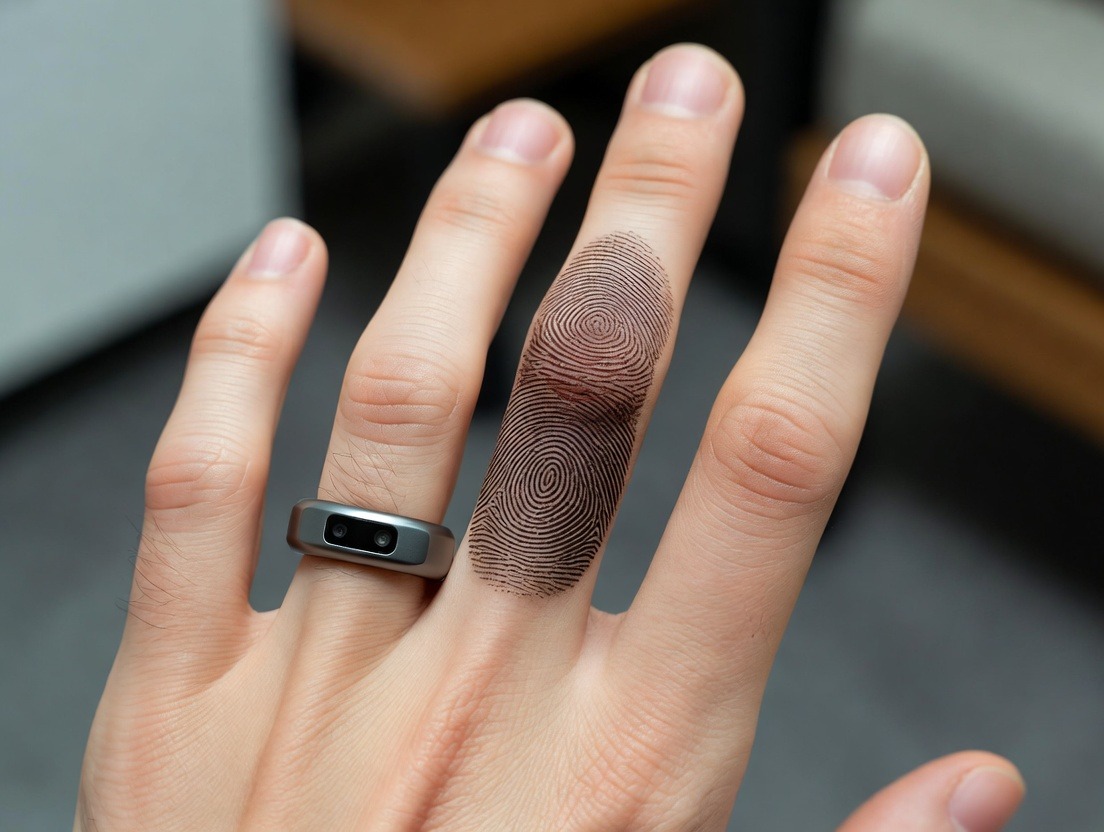
The smart ring market is no longer a one-horse race. New entrants like Circular, RingConn, and Ultrahuman are pushing innovation, and their approaches to data portability are a key part of their competitive appeal. Let's compare.
Circular Ring: The App-Centric Powerhouse.
Circular has made a splash with its feature-packed app and subscription-like "Circular+ Premium" service. Its data export philosophy appears to be evolving. Currently, user access leans heavily on its API integrations with Apple Health and Google Fit for daily syncing. For bulk export, users may need to rely on the capabilities of those hubs or request data directly from Circular support, which is a common but less ideal model for proactive data owners. The company emphasizes real-time alerts and coaching within its own ecosystem, which is a compelling value proposition, but users should be mindful to ensure their historical data remains accessible outside that ecosystem for long-term tracking.
RingConn: The Value Proposition with Promised Openness.
RingConn, often positioned as a cost-effective alternative, has garnered attention. In its communications, RingConn has emphasized user data ownership and has stated intentions to provide robust export options, including raw data access. This is a significant promise that, if fulfilled, would appeal directly to the quantified-self and biohacking communities. The model seems to be: buy the hardware, own all the data it generates. For users prioritizing ultimate control and cost, this is a compelling angle, though it's essential to verify the current state of these export tools at the time of purchase, as early-stage hardware companies can have shifting priorities.
Ultrahuman: The Metabolic Fitness Focus.
Ultrahuman takes a different tack, focusing intensely on metabolic health and glucose response (often integrated with continuous glucose monitors). Its data portability is strategically linked to this focus. It offers strong API integrations, particularly with Apple Health, to bring in activity and sleep data from other sources and to export its own unique metrics, like its "Metabolic Fitness" score. The portability here is less about giving you a raw dump and more about ensuring its specialized insights play nicely within a broader health stack. For someone using a CGM and a smart ring to manage metabolic health, this focused interoperability can be more valuable than a generic CSV file.
The Takeaway: The market is differentiating not just on hardware specs, but on data philosophy. Some treat data as a service to be managed within their walls, others as a product to be owned by the user. When choosing a ring, you must align with this philosophy. Ask the questions: Can I download all my data, on-demand, in a standard format? Is there a documented API for developers? Your choice will determine whether your ring is a partner in your health journey or a gatekeeper.
Now that we understand the sources and formats, let's get practical. How do you move from scattered exports to a cohesive, lasting Personal Health Record (PHR)? This is your private, longitudinal database of wellness, and building it is a proactive step towards empowered health management.
Step 1: Establish Your Repository.
Choose where your master health record will live. For security and control, a dedicated, encrypted folder on your computer (backed up to a secure cloud service like a encrypted drive) is ideal. Name it clearly, e.g., "Personal Health Archive." Within it, create a logical folder structure by year and data type: 2024 > Sleep_Data, 2024 > Activity_Data, 2024 > Medical_Records.
Step 2: Implement a Regular Export Ritual.
Consistency is key. Set a calendar reminder for the first day of each month. On that day, log into your smart ring’s web dashboard and download the previous month’s data in both CSV (for easy viewing) and JSON (for future-proofing) if available. Do the same for any other major data source—your Apple Health/Google Fit export (quarterly or bi-annually, as these files are huge), your workout app, your nutrition tracker. Save these files directly into your structured folders.
Step 3: Enrich and Correlate Your Data.
This is where the magic happens. Your smart ring data provides the physiological "what." To understand the "why," you must add context. Maintain a simple log—a note-taking app or even a spreadsheet—where you make brief daily or weekly notes on factors that influence your metrics:
By periodically reviewing your ring data alongside this log, you move from observation to understanding. You might discover that your HRV consistently drops after late-night social dinners, or that your sleep score improves markedly during periods when you maintain strict work-life boundaries, a concept detailed in restful living boundaries for protecting your energy.
Step 4: Visualize for Insight.
Use simple tools to see the big picture. Import your monthly CSV files into Google Sheets or Excel. Create a master dashboard sheet that charts your key metrics over time: Resting Heart Rate (RHR), HRV, Sleep Duration, and Readiness Score. Add a column for your personal notes. A simple line chart spanning months or years can reveal trends more powerfully than any daily app notification. For instance, you might see a gradual, seasonally-linked decline in sleep quality, prompting you to adapt your approach through the seasons.
Step 5: Secure and Share Strategically.
Encrypt your health archive folder. When sharing with a professional—a functional medicine doctor, a nutritionist, or a coach—be selective. You don’t need to send five years of raw JSON. Export a specific, relevant timeframe of processed data (CSV) and pair it with your contextual notes. This targeted sharing turns a data dump into a concise, powerful clinical or coaching asset.
Building a PHR is an act of health sovereignty. It ensures that your data outlives your devices, survives company closures, and serves you for a lifetime.
Amidst the empowerment of data portability, we must confront the sobering realities of privacy and security. The very act of collecting, transmitting, and storing such intimate biometric data creates a significant attack surface and raises profound ethical questions.
What Are You Really Agreeing To?
When you set up your smart ring, you blithely tap "Agree" to a lengthy Terms of Service and Privacy Policy. Buried within may be clauses that grant the company broad rights to use your anonymized and aggregated data for research, product development, or even to share with "trusted partners." While your name is removed, the uniqueness of your biometric pattern combined with other data points can sometimes lead to re-identification. It’s crucial to understand: exporting your data gives you a copy, but it does not necessarily delete the master copy from the company's servers or revoke the usage rights you already granted.
The Security of Your Data Pipeline.
Consider the journey of a single heartbeat reading:
Each of these seven steps is a potential vulnerability. Is the Bluetooth transmission encrypted? Is the data encrypted at rest on the company's servers? Is the download link you receive for your export secure and time-limited? A company's commitment to security is as important as its commitment to data access. Look for mentions of end-to-end encryption and adherence to standards like HIPAA (in the US) or GDPR (in the EU), which impose strict rules on health data handling.
The Portability Paradox.
Here’s the ironic risk: In your quest to own your data, you might make it less secure. Downloading a CSV full of your health history and emailing it to yourself, storing it on an unencrypted USB drive, or uploading it to a random online analysis tool you found can expose your data far more than leaving it in the company's (hopefully) secured cloud. Portability requires heightened personal responsibility. You become your own Chief Security Officer for your most sensitive data.
Mitigation Strategies:
Data ownership is a double-edged sword. It confers great power but also demands great vigilance. A truly restful relationship with technology, as explored in the context of digital detox, includes knowing where your data lives and who has access to it, allowing you to track without anxiety.
For the majority, exporting data is about ownership and basic trend-spotting. But for a growing community of biohackers, researchers, and technologists, portable smart ring data is the fuel for groundbreaking advanced applications. This is where the true frontier of personal wellness technology lies.
Citizen Science and N-of-1 Research.
The gold standard of medical research is the double-blind, randomized controlled trial. But what about research on you? Portable data enables rigorous N-of-1 experiments. You can design a personal trial: for four weeks, you follow a specific intervention—perhaps adopting a restful living diet focused on calming foods—while meticulously tracking the inputs and exporting your ring’s physiological outputs. Using simple spreadsheet statistics or more advanced tools, you can determine if the intervention had a statistically significant effect on your sleep latency, your HRV, or your resting heart rate. This is personalized evidence-based wellness.
Feeding Personalized AI and Machine Learning Models.
This is the cutting edge. By exporting your historical data (the more, the better), you can train simple machine learning models to make predictions for you. For example, you could create a model that takes your previous day's activity, sleep data, and morning readiness score to predict your likelihood of sticking to your workout plan that evening. More advanced applications could use long-term data to build an early warning system for illness, spotting the subtle physiological deviations (like a creeping rise in resting heart rate) that often precede symptoms.
Integration with Clinical and Digital Therapeutics (DTx).
The future of medicine is digital and data-informed. Imagine your cardiologist being able to import a year of your high-resolution heart rate and HRV data ahead of your appointment, providing a picture of your autonomic nervous system function far richer than a single EKG in the clinic. Or, a prescribed Digital Therapeutic app for insomnia or anxiety that directly ingests your sleep and stress data from your ring via an API, tailoring its nightly meditation or cognitive behavioral therapy (CBT) sessions based on your physiological state. Portability is the bridge that makes this interdisciplinary care possible.
Creating a Unified "Body Dashboard."
Advanced users are building custom dashboards using tools like Grafana, Python (with libraries like Pandas and Plotly), or even advanced spreadsheet platforms like Airtable. They pipe in data from their ring export, their CGM, their weight scale, their workout tracker, and their calendar. The result is a single, real-time cockpit showing their holistic health status. This dashboard can automate alerts: "HRV has been 15% below baseline for 3 days. Consider a rest day and review sleep hygiene," echoing principles from a structured weekly rest plan.
These use cases move far beyond checking a sleep score. They represent the transition from being a user of a wellness product to being the architect of your own deeply quantified, intelligently analyzed, and proactively managed wellbeing system. Your exported data is the foundational code for this personal operating system.
Data portability isn't just a nice-to-have feature from enlightened companies; in many parts of the world, it is a legal right. Understanding these rights arms you with the language to make requests that companies are obligated to fulfill.
GDPR (General Data Protection Regulation - European Union):
The GDPR is the world's strongest data privacy and security law. For smart ring users in the EU (and often, because of its global reach, users elsewhere), it provides two powerful tools:
CCPA/CPRA (California Consumer Privacy Act / California Privacy Rights Act - California, USA):
California's laws provide similar, though slightly different, rights for its residents.
Practical Application: Making a Subject Access Request (SAR).
If your smart ring company does not have a self-service export tool, you can exercise these rights. Draft a formal email to the company's privacy officer or support team (find the address in their privacy policy). Clearly state:
Companies are legally bound to respond within a set timeframe (one month under GDPR, 45 days under CCPA). This formal approach often unlocks data that is not available through the standard user interface.
Knowing your rights transforms you from a passive consumer into an empowered data subject. It ensures that the principle of data ownership is not just a marketing slogan, but a legally enforceable standard.
Technology is transient. The smart ring you wear today will be obsolete in 3-5 years. The company that makes it may be acquired, change its business model, or simply shut down. Your wellness journey, however, is lifelong. The strategies you employ today will determine whether your data remains a valuable asset or becomes a digital fossil trapped in an unreadable format.
Embrace the "Librarian" Mindset.
Think of yourself as the archivist of your own health. Your primary goals are preservation and accessibility over decades.
Plan for Ecosystem Migration.
Assume you will change devices. Your portability strategy should include a "data onboarding" plan for your next device.
Advocate for Open Standards.
The ideal future is one of interoperable health data. Support and advocate for industry-wide adoption of standards like FHIR (Fast Healthcare Interoperability Resources), which is becoming the norm for clinical data exchange. While consumer wearables are not there yet, user demand can push the industry. Ask companies on their forums or in feedback surveys: "Do you plan to support the FHIR standard for data export?" This signals that you value true portability, not just vendor-controlled access.
The Ultimate Future-Proofing: Knowledge.
The most resilient data is data you understand. By engaging deeply with your exports, analyzing them, and learning what the metrics mean in the context of your life, you internalize the insights. The numbers on the screen become a felt sense of your body's rhythms. This embodied knowledge—knowing how you feel when your HRV is high versus low, or what truly restful sleep feels like in your data—is the one thing no company can take away, no format can corrupt, and no device can replace. It is the culmination of a practice that merges technology with self-awareness, leading to a more restful and connected way of living.
As we move beyond the foundational principles of data ownership, we arrive at the practical heart of the matter: what to do with all this data you’ve so diligently exported and archived. Possessing a digital folder of CSV files is one thing; transforming that raw information into actionable wisdom that tangibly improves your life is another. This next phase is about moving from data hoarding to data alchemy—turning the lead of raw numbers into the gold of personalized insight.
The true promise of the smart ring is not in its nightly sleep score, but in its ability to reveal the hidden patterns and subtle connections that govern your wellbeing. It’s about understanding the story your body is telling you through its physiological language. To become fluent in that language, you need more than just a dictionary of terms; you need the analytical tools and frameworks to construct meaning. Whether your goal is to optimize athletic performance, manage chronic stress, improve sleep, or simply cultivate a deeper mind-body connection, the methodology that follows will provide the roadmap.
We will transition from theory to hands-on practice. You will learn how to set up a simple yet powerful personal analytics dashboard, perform your own N-of-1 experiments with statistical rigor, and safely integrate your data with third-party tools and AI. We'll also confront the nuanced ethical landscape of sharing this deeply personal data with others, from partners to professionals. Finally, we’ll gaze into the near future to see how trends like decentralized identity and blockchain could revolutionize personal health data sovereignty. This is where your role evolves from passive tracker to active scientist and architect of your own health.
A dashboard is your mission control. It’s a single, visual interface where trends become clear, correlations jump out, and your health narrative unfolds over time. You don’t need to be a data scientist to build one. Here’s how to create a functional, insightful dashboard using tools you likely already have.
Phase 1: Choosing Your Platform.
For most users, the sweet spot of power and simplicity is Google Sheets or Microsoft Excel (especially with Power Query). Their cloud nature (for Sheets) and robust charting capabilities make them ideal. For a more visually polished and database-like experience, Airtable is exceptional. For the technically inclined, a Python script using libraries like Pandas and Plotly, visualized in a Jupyter Notebook or a free tier of Grafana, offers limitless customization.
Phase 2: The Master Data Table.
Start in a new sheet or workbook. Create a Master Table where each row is one day, and each column is a key metric. You will manually or semi-automatically populate this table.
Phase 3: Importing and Automating Data Entry.
Manually typing data is unsustainable. Here’s how to automate:
Phase 4: Visualization – Creating Your Charts.
Select your entire Master Table and create several key charts on a separate "Dashboard" tab:
Phase 5: Deriving Your "Personal Normal" and Setting Alerts.
Calculate 30-day rolling averages for your key metrics (RHR, HRV). This is your dynamic baseline—your "personal normal." Then, set up simple conditional formatting rules: if today’s HRV is more than 20% below your rolling average, highlight the cell in red. If your RHR is 5+ bpm above average, highlight it in orange. These visual alerts help you spot deviations early, perhaps signaling an oncoming illness or a state of overreaching, allowing for proactive rest, a concept crucial for high-achievers seeking performance through rest.
This dashboard becomes your most powerful wellness tool. It demystifies the data, reveals your unique patterns, and turns abstract numbers into a clear guide for daily decision-making.
Your dashboard provides observation. The N-of-1 experiment provides causation. This is the scientific method applied personally: you hypothesize, intervene, measure, and conclude. It’s how you move from "I think X affects my sleep" to "The data shows X worsens my sleep latency by an average of 22 minutes."
Step 1: Formulate a Precise, Testable Hypothesis.
Vague: "Meditation helps me sleep better."
Precise: "Performing a 10-minute guided breathing meditation (like the ones supporting restful living) within one hour of bedtime will increase my deep sleep duration by at least 10% and lower my morning resting heart rate by 2-3 bpm, compared to nights when I do not meditate."
Step 2: Design the Experiment Protocol.
Step 3: Execute and Log Meticulously.
This is the discipline phase. Follow your protocol. In your dashboard’s "Notes" column, mark each day clearly: "INTERVENTION - Day 3" or "CONTROL - Day 7." Also log any protocol breaks: "Had to work late, meditated at 11 PM."
Step 4: Analyze the Results.
At the experiment’s end, filter your Master Table to show only Intervention days and calculate the average for your outcome metrics (Deep Sleep minutes, Morning RHR). Do the same for Control days.
Step 5: Draw a Conclusion and Iterate.
Did the data support your hypothesis? If yes, you have evidence to adopt this intervention. If not, maybe the hypothesis was wrong, the intervention needs tweaking (e.g., 20 minutes instead of 10, or done earlier), or other variables drowned out the signal.
Powerful Experiment Ideas:
Through N-of-1 experiments, you become the world’s leading expert on one subject: you. You build a personalized playbook of what truly works for your unique physiology.
Your smart ring data gains exponential value when it can converse with other parts of your digital wellness ecosystem. This integration allows for automated workflows, enriched context, and powerful external analysis. However, opening data pipelines requires a security-first mindset.
The "Why" of Integration:
Safe Integration Best Practices:
A Safe Integration Workflow Example:
Goal: Use an AI service to analyze your sleep data for patterns.
By integrating thoughtfully, you can leverage the best specialized tools without compromising your data’s security or your personal privacy, maintaining the calm and control essential for a restful approach to technology.
The decision to share your biometric data is deeply personal. It can be an act of vulnerability that leads to better support and understanding, but it also carries risks. Navigating this requires clear intention, informed consent, and robust tools.
Sharing with Health Professionals: A New Paradigm.
Gone are the days of describing your sleep as "okay." You can now show your doctor a 90-day trend of your resting heart rate and sleep fragmentation.
Working with a Wellness or Fitness Coach:
Coaches often thrive on data. Sharing can supercharge their ability to guide you.
Sharing with a Partner or Family: Intimacy and Boundaries.
Sharing data with a loved one can foster empathy and teamwork ("I see you had a terrible sleep, let me handle the kids this morning") but can also lead to unintended surveillance or pressure.
Sharing is a powerful tool that, when wielded with respect and clear boundaries, can deepen support systems and accelerate progress. The key is to always remain in the driver’s seat of your own data journey.
Artificial Intelligence is no longer the exclusive domain of tech giants. With the proliferation of user-friendly tools and cloud services, you can apply basic AI and machine learning (ML) techniques to your personal health dataset to uncover non-obvious patterns and generate personalized predictions.
Understanding the Opportunity: From Description to Prediction.
Your dashboard describes the past. ML models can predict the future (or classify the present). For example:
Getting Started: No-Code and Low-Code Platforms.
You don't need to write Python code from scratch (though you can if you wish).
A Simple Project: Building a "Recovery Day" Classifier.
The Ethical Guardrails:
By engaging with AI personally, you demystify it and harness it as a powerful magnifying glass for your own unique biological patterns.
Beyond commercial apps and solo analysis lies a vibrant world of open-source software and passionate communities dedicated to health data interoperability and user sovereignty. This ecosystem is where the most cutting-edge personal science happens and where the future of portable data is being built.
Open-Source Platforms for Health Data:
The Power of Communities:
How to Engage and Contribute:
Engaging with these platforms and communities transforms you from a consumer into a citizen of the quantified-self world. You gain access to tools and collective intelligence that far surpass what any single company can provide, all while advocating for a more open, user-centric future for health data. This collaborative, knowledge-sharing approach is itself a form of restful living, where you are supported by a community rather than navigating your health journey alone.

Even with the best intentions and tools, you will inevitably hit snags. Files won’t download, formats will be confusing, APIs will change. This section is your troubleshooting manual for the most common data portability roadblocks.
Problem 1: The "Download Your Data" Button is Missing or Broken.
Problem 2: The Exported File is Unreadable or Garbled.
Problem 3: Data Gaps or Inconsistencies in the Export.
Problem 4: Third-Pool App Integration Suddenly Stops Working.
Problem 5: You're Switching Devices and Want to Maintain Baselines.
Persistence is key. Viewing these hurdles as solvable puzzles rather than dead ends is part of the mindset of the empowered data owner. Each problem solved deepens your understanding and control.
We are on the cusp of a tectonic shift in how personal data is stored and controlled. Current models, even with good export tools, are still centralized: your data resides on a company’s server, and you ask for a copy. The future is decentralized, where you hold your data in a personal vault and grant temporary, revocable access keys to services that need it. Two leading concepts are paving this way.
Self-Sovereign Identity (SSI) and Solid PODs:
Pioneered by Tim Berners-Lee (inventor of the web), the Solid (Social Linked Data) project envisions everyone having a "Personal Online Datastore" or POD. Think of it as your secure, personal cloud server for all your data—health, social, financial. You control it completely.
Blockchain and Health Data: Beyond Cryptocurrency.
Blockchain’s immutable, verifiable ledger technology offers solutions for health data integrity and access logging.
The Realistic Timeline and Current Steps:
This decentralized future is in early stages, but projects are live. You can sign up for a Solid POD today from providers like Inrupt. Some early-adopter wellness apps are beginning to offer Solid integration.
This future promises to solve the core tension of modern digital health: the desire for rich, integrated services and the imperative of privacy and ownership. It envisions a world where you can pursue a deeply connected wellness life without sacrificing the sovereignty of your most personal information. The journey to that future starts with understanding and demanding the export capabilities we have today.
Data portability is not a one-time event; it’s an ongoing practice—a stewardship of your digital self. Without a plan, your carefully exported files will become a disorganized digital attic, useless when you need them most. Here is a framework for creating a sustainable, lifelong data stewardship practice.
The Annual Health Data "Spring Cleaning" Ritual:
The "In Case of Emergency" (ICE) Data Packet.
Prepare a small, immediately accessible dataset for critical situations. This is a 1-page PDF that includes:
Planning for Digital Legacy: Beyond Your Lifetime.
Your health data could be a priceless legacy for your family, offering insights into genetic predispositions and family health patterns.
Your Trusted Sleep Advocate: Sleep Foundation — https://www.sleepfoundation.org
Discover a digital archive of scholarly articles: NIH — https://www.ncbi.nlm.nih.gov/
39 million citations for biomedical literature :PubMed — https://pubmed.ncbi.nlm.nih.gov/
Experts at Harvard Health Publishing covering a variety of health topics — https://www.health.harvard.edu/blog/
Every life deserves world class care :Cleveland Clinic - https://my.clevelandclinic.org/health
Wearable technology and the future of predictive health monitoring :MIT Technology Review — https://www.technologyreview.com/
Dedicated to the well-being of all people and guided by science :World Health Organization — https://www.who.int/news-room/
Psychological science and knowledge to benefit society and improve lives. :APA — https://www.apa.org/monitor/
Cutting-edge insights on human longevity and peak performance:
Lifespan Research — https://www.lifespan.io/
Global authority on exercise physiology, sports performance, and human recovery:
American College of Sports Medicine — https://www.acsm.org/
Neuroscience-driven guidance for better focus, sleep, and mental clarity:
Stanford Human Performance Lab — https://humanperformance.stanford.edu/
Evidence-based psychology and mind–body wellness resources:
Mayo Clinic — https://www.mayoclinic.org/healthy-lifestyle/
Data-backed research on emotional wellbeing, stress biology, and resilience:
American Institute of Stress — https://www.stress.org/


