


The Quick Nighttime Routine for Unexpected Early Bedtimes
For unexpected early bedtimes, have a go-to quick ritual: wash face, put on pajamas, do 2 minutes of breathing, and into a dark room.
For unexpected early bedtimes, have a go-to quick ritual: wash face, put on pajamas, do 2 minutes of breathing, and into a dark room.
%402x.svg)
Life has a way of throwing curveballs just as you're winding down. You've finally closed your laptop, convinced the day is done, when an alert flashes: a 7 a.m. client call tomorrow, a child who suddenly spikes a fever, or an urgent project deadline moved up. That planned leisurely evening vanishes, replaced by the urgent need to be asleep within the hour. The panic sets in—not just about the early morning, but about the looming specter of a night spent staring at the ceiling, your mind racing as your body refuses to cooperate.
This is the modern sleep paradox: the more desperately we need quality rest, the more elusive it becomes. We've all been there, caught in the frustrating cycle where stress about not sleeping enough becomes the very thing that prevents sleep. But what if you could short-circuit that cycle? What if you possessed a reliable, sub-60-minute protocol to transition from "fully awake and stressed" to "deeply and restfully asleep," even when bedtime arrives hours earlier than expected?
This article is your definitive guide to mastering the unexpected early bedtime. We’re moving beyond generic "sleep hygiene" tips that require weeks of consistency. Instead, we’re building a tactical, rapid-response routine grounded in chronobiology, nervous system regulation, and data-driven personalization. This isn't about perfection; it's about efficacy under pressure. By leveraging modern understanding of sleep science and innovative tools like the Oxyzen smart ring, which offers profound insights into your personal sleep architecture and recovery metrics, you can reclaim control and ensure that even your most disrupted nights contribute to your overall wellness.
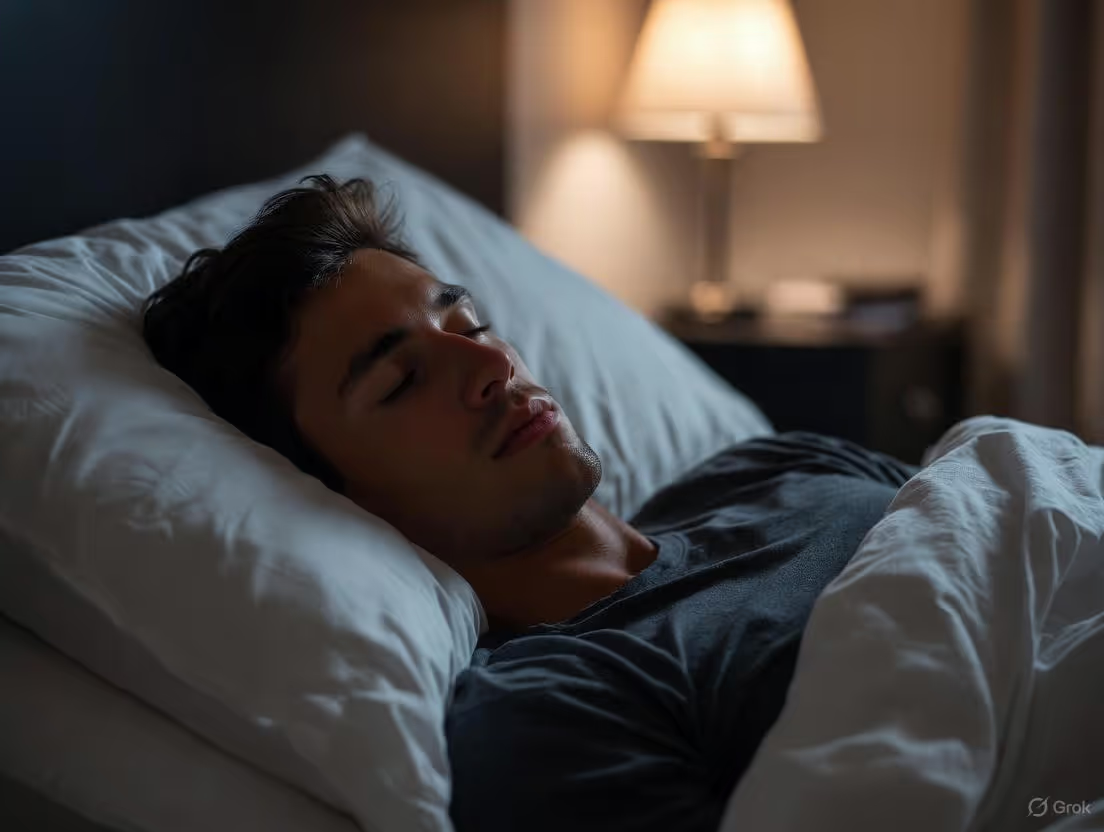
You can't simply command your brain to sleep. Sleep is governed by two primary, immutable biological systems: your circadian rhythm (your internal 24-hour clock) and sleep-wake homeostasis (often called "sleep pressure").
Your circadian rhythm is orchestrated by a master clock in your brain's suprachiasmatic nucleus. It uses environmental cues like light, temperature, and meal timing to regulate cycles of alertness and sleepiness, programming you to feel tired at roughly the same time each night. When you try to sleep earlier, you're essentially asking your body to ignore this deeply ingrained schedule.
Sleep pressure, on the other hand, is like a sand timer. The longer you've been awake, the more adenosine (a neurotransmitter) accumulates in your brain, creating a drive for sleep. After 16 hours of wakefulness, sleep pressure is high. But if you've only been awake for 12 hours when an early bedtime is forced upon you, your sleep pressure may not be sufficient to override a circadian rhythm that's still signaling "alert."
This clash is why you lie in bed feeling wide awake. Your mind is anxious about the early wake-up, but your biology is screaming that it's not time yet. The resulting stress floods your system with cortisol and adrenaline, further pushing sleep out of reach. The key to a quick nighttime routine, therefore, is to artificially and safely accelerate the build-up of sleep pressure while simultaneously convincing your circadian clock that night has arrived. It’s a deliberate, multi-sensory override of your biology for a single night, not a permanent change.
This is where personalized data becomes invaluable. A device like the Oxyzen smart ring tracks your heart rate variability (HRV) and resting heart rate (RHR) in real-time, giving you a direct window into your autonomic nervous system. Before you even begin your routine, you can assess your stress level. Is your RHR elevated by 10-15 beats per minute above your baseline? Is your HRV suppressed? This biofeedback tells you just how "amped up" you are and helps you tailor the intensity and focus of your wind-down ritual. You're not guessing; you're responding to your body's actual state. For a deeper exploration of how this technology translates data into actionable insights, you can explore our blog for more wellness tips and detailed explanations.

When time is of the essence, a structured, non-negotiable sequence is your best ally. This 60-minute protocol is divided into four 15-minute blocks, each with a specific physiological goal. The aim is progression: from shutting down external chaos, to calming the body, to quieting the mind, and finally, to embracing sleep.
Minutes 0-15: The Digital Sunset & Environmental Triage
The moment you know sleep must come early, start the clock. This quarter-hour is about creating immediate physical and digital boundaries.
Minutes 16-30: Somatic Settling & Breathwork
With the environment set, turn your focus inward to your nervous system.
Minutes 31-45: Cognitive Containment & Mental Offloading
A racing mind is the most common sleep thief. This block is about parking your thoughts.
Minutes 46-60: The Final Descent & Sleep Cue Alignment
The final stretch is about associating your bed with nothing but sleep.
By segmenting the hour this way, you move from an external to an internal focus, systematically dismantling the barriers to sleep. The story of Oxyzen, which began with a focus on making advanced biometrics accessible and intuitive for everyday wellness, aligns perfectly with this philosophy of using structured, informed actions to hack challenging situations. You can read more about our founding vision and mission on our brand journey page.
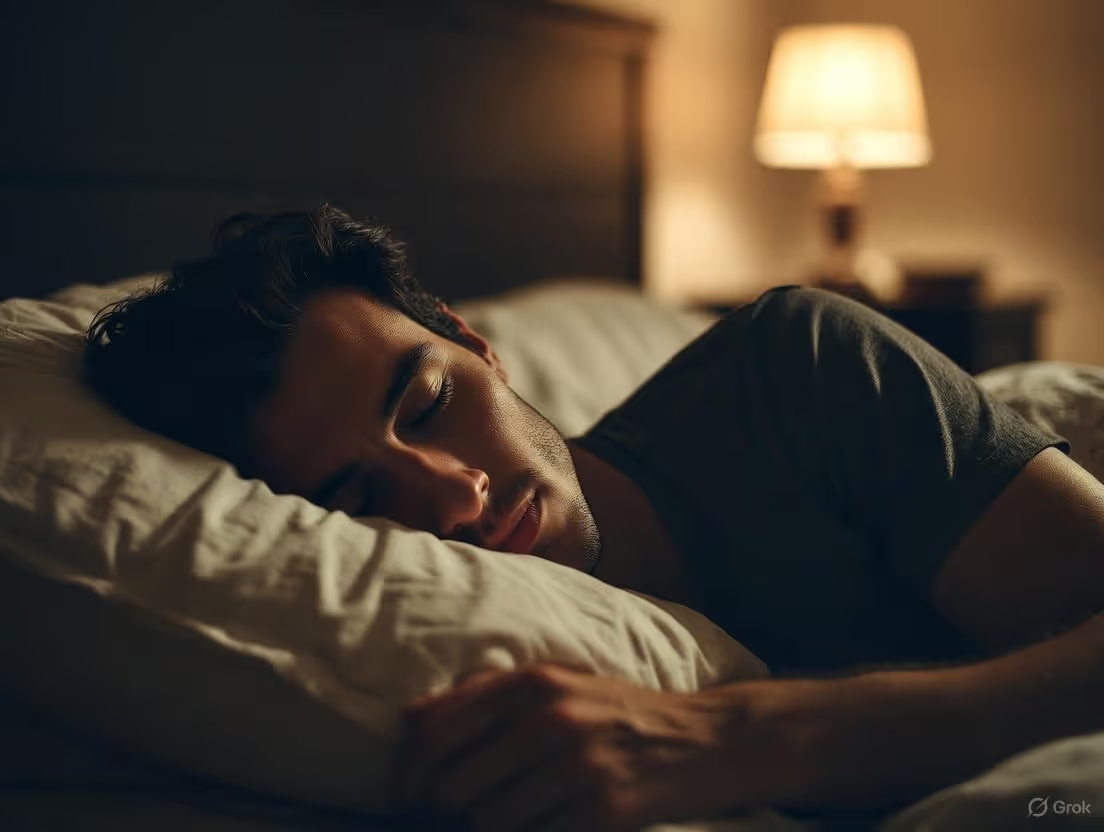
A generic routine is good; a personalized routine is transformative. This is where a sophisticated wellness wearable like the Oxyzen smart ring shifts from being a passive tracker to an active sleep coach. Unlike wrist-based devices that can be inaccurate due to arm movement, a ring on your finger provides medical-grade, continuous data from a vascular-rich location, capturing the subtle nuances of your physiology throughout your wind-down routine and the night itself.
As you execute your 60-minute protocol, your Oxyzen ring is working in the background, quantifying your progress. Watch your real-time heart rate graph. Are your PMR and 4-7-8 breathing actually lowering your BPM? Is your HRV beginning to climb, indicating a shift into a recovery state? This immediate feedback is empowering. It turns abstract concepts like "calm down" into tangible, measurable goals.
But the real magic happens in the morning. After an unexpected early bedtime, the critical question is: "Was it enough?" Your Oxyzen ring provides the answer through three key metrics:
This data-driven approach removes the guesswork and anxiety from imperfect sleep. You move from feeling like a victim of a bad night to being an informed manager of your own recovery. For those curious about the specifics of how these metrics are calculated and what they mean for long-term health, a wealth of information is available in our comprehensive FAQ section.

Sometimes, you have mere minutes, not a full hour. A delayed flight lands at midnight with a 5 a.m. start, or a crisis resolves just before bed. In these extremes, you need a nuclear option—a hyper-condensed routine that delivers maximum neurological impact in minimal time. This is less about ideal sleep and more about triggering a "system shutdown" to capture whatever restorative fragments are possible.
The 3-Step 10-Minute Drill:
This drill is an emergency brake. It may not lead to 8 hours of perfect sleep, but it will help you salvage the night and achieve some core restorative function. As many of our users at Oxyzen have shared in their real customer reviews, having a reliable, ultra-short protocol can be the difference between a disastrous next day and a manageable one, a testament to the power of a prepared mind and the right tools.
Your bedroom environment isn't just a backdrop; it's an active participant in your sleep chemistry. For an unexpected early bedtime, optimizing light and temperature isn't a luxury—it's a non-negotiable biological lever.
Light: The Master Zeitgeber
Light is the most powerful regulator of your circadian rhythm. Melanopsin, a photopigment in your eye's retinal ganglion cells, is exquisitely sensitive to short-wavelength (blue) light. Exposure to it in the evening suppresses melatonin production for up to 90 minutes.
Temperature: The Goldilocks Principle
The sleep-initiation process is intrinsically linked to a drop in core body temperature. Your body achieves this by increasing blood flow to your extremities, releasing heat.
Mastering this micro-environment turns your bedroom into a sleep sanctuary. It’s a deliberate engineering of your surroundings to work in concert with your biology, a principle central to the design and vision & values behind Oxyzen's approach to holistic wellness tracking.
What you consume in the hours before an early bedtime can either be a potent sleep aid or a guaranteed saboteur. The goal is to stabilize blood sugar, provide sleep-supportive nutrients, and avoid anything that triggers alertness or digestion.
The Strategic Snack (90-60 Minutes Before Bed):
Going to bed too hungry can cause a blood sugar dip that wakes you up. A small, balanced snack combining complex carbohydrates with a bit of protein or healthy fat can promote tryptophan uptake and stabilize blood sugar throughout the night.
The Beverage Protocol:
Supplement Considerations (Use with Caution):
Your Oxyzen ring can help you experiment with and validate these nutritional choices. Notice how your Sleep Score or Recovery Score changes after trying tart cherry juice versus a heavier snack. This biofeedback allows you to build a personalized "sleep fuel" strategy that actually works for your unique physiology.
The "monkey mind" doesn't care about your 5 a.m. alarm. Its job is to churn through the day's events, tomorrow's worries, and random fragments of song lyrics. Quieting it requires techniques that are more engaging than anxious thinking, but less engaging than anything that would keep you awake.
The "Worry Window" Technique:
Earlier, we mentioned the brain dump. The Worry Window formalizes this. In your notebook, draw two columns. In the first, list every worry. In the second, next to each item, write the next single, concrete, physical action required to address it, and when you will do it (e.g., "Project deadline" -> "Draft email to team requesting data - Tomorrow at 9:30 a.m."). This transforms nebulous anxiety into a manageable plan, convincing your brain it can safely let go until the appointed time.
Body Scan Meditation vs. Sleep Stories:
The Paradoxical "Stay Awake" Game:
Also known as Paradoxical Intention, this cognitive trick involves gently trying to keep your eyes open (in the dark) while lying perfectly still and telling yourself you must stay awake. The effort to resist sleep often removes the performance anxiety around trying to sleep, allowing it to come naturally. It reframes the goal from success/failure ("I must sleep") to a neutral task ("I will rest with my eyes open").
Intense exercise too close to bedtime is arousing due to the release of stimulants like epinephrine and the core temperature spike. However, deliberate, gentle movement can be a powerful tool to release physical tension—the somatic manifestation of stress.
Yoga Nidra ("Psychic Sleep"):
This is not a physical yoga practice. Yoga Nidra is a guided meditation done lying down in savasana (corpse pose). It systematically rotates consciousness through different parts of the body and breath, inducing a state of conscious deep relaxation akin to the hypnagogic state between wakefulness and sleep. A 10-20 minute session can be more restorative than hours of fitful sleep.
Gentle, Restorative Stretching:
Focus on stretches that promote a sense of safety and release in the areas where we hold stress: the hips, lower back, shoulders, and neck.
This movement is about signaling safety to your body. It tells your nervous system, via physical sensation, that the day's work is done and it is safe to enter a vulnerable, restorative state. The data from your Oxyzen ring can beautifully illustrate this shift, as you'll likely see a tangible dip in heart rate and a rise in HRV during and after these practices. You can discover how Oxyzen works to track these subtle physiological changes in real-time.
You might wonder: how can you have consistency when bedtime is unexpected? The consistency isn't in the timing, but in the sequence and ingredients. Think of your 60-minute protocol as a portable ritual. Whether you start it at 9 p.m. or 11:30 p.m., the steps remain the same. This turns the routine itself into a powerful sleep cue.
The Power of Anchors:
Each step becomes a conditioned anchor. The smell of lavender on your pillow, the feeling of the weighted blanket, the sound of your specific brown noise track, the taste of chamomile tea—these repeated sensory experiences, when consistently paired with the subsequent state of sleep, begin to trigger drowsiness on their own through classical conditioning. You are Pavloving yourself to sleep.
The Non-Negotiables vs. The Flexibles:
In your protocol, identify your 2-3 non-negotiables—the steps that give you 80% of the benefit. For one person, it's darkness and the 4-7-8 breathing. For another, it's the brain dump and a hot shower. On nights where even 60 minutes feels impossible, you default to just these core actions. This builds resilience and prevents an "all-or-nothing" mentality that leads to skipping the routine entirely.
This commitment to self-care under pressure is a cornerstone of modern wellness. It reflects a proactive, rather than reactive, relationship with your health. To learn more about our philosophy of empowering individuals with the data and structure to navigate life's unpredictability, you can visit our company information page, which details our mission to make personalized health insights accessible and actionable for everyone.
Waking up after an unexpected early bedtime can feel like emerging from a fog. The alarm feels more aggressive, your body feels heavier, and your mind struggles to find its usual clarity. This moment is critical. How you handle the first 60-90 minutes after waking will determine whether you crash by mid-afternoon or successfully navigate the day with resilience. This isn't about pretending you got eight hours; it’s about strategically managing your energy, cognition, and physiology to mitigate the impact of sleep debt.
The No-Snooze Rule: Your First Crucial Decision
The temptation to hit snooze is almost primal after a short night. Resist it with every fiber of your being. Fragmented, light sleep obtained in 9-minute snooze intervals is non-restorative and can leave you with greater sleep inertia—that groggy, disoriented feeling—than simply getting up at the first alarm. When the alarm sounds, practice a "5-4-3-2-1" launch sequence: *5*: Acknowledge you’re tired. *4*: Throw the covers off. *3*: Sit up. *2*: Place feet on the floor. *1*: Stand up. This simple, behavioral sequence overrides the paralysis of fatigue by focusing on micro-actions.
Immediate Light Exposure: Resetting Your Circadian Clock
Within the first 15 minutes of waking, seek out bright light. This is the most powerful signal you can send to your suprachiasmatic nucleus to halt melatonin production and kickstart cortisol (in its healthy, diurnal rhythm) and other alertness-promoting neurotransmitters. If it’s daylight, go outside for 10 minutes—even if it's cloudy, natural light is exponentially brighter than indoor lighting. If it’s still dark, use a bright light therapy lamp (10,000 lux) at your breakfast table for 20-30 minutes. This single action helps anchor your rhythm for the day and the following night, making it less likely that one early bedtime spirals into a disrupted sleep pattern. As discussed on our blog for more wellness tips, light is the fundamental lever for circadian health, and its strategic use is non-negotiable for recovery.
Strategic Hydration and Nutrition
Your body is mildly dehydrated after a night of sleep (through respiration and transpiration). This dehydration exacerbates feelings of fatigue and brain fog.
Assessing Your True State with Data
Before you charge into your day, take two minutes for a biofeedback check-in. Put on your Oxyzen ring if you took it off for charging and glance at your Sleep and Recovery Scores. This is not to judge or lament a poor score, but to inform your strategy.
Caffeine is the world's most popular psychoactive drug, and after a short night, reaching for it is instinctive. Used poorly, it creates a cycle of jitters, crashes, and further sleep disruption. Used strategically, it can be a powerful ally in navigating a sleep-deprived day.
The 90-Minute Delay Rule
Do not drink caffeine within the first 90 minutes of waking. Why? Your body has a natural cortisol awakening response (CAR) that helps you become alert. Introducing caffeine during this peak can blunt your natural rhythm and lead to greater tolerance, requiring more caffeine for less effect. Furthermore, adenosine receptors are freshly cleared after sleep. By waiting, you allow any residual morning grogginess (sleep inertia) to clear naturally, then use caffeine to target the mid-morning energy dip.
The Dose & Cutoff Calculation
L-Theanine Synergy
Consider pairing your coffee with a source of L-Theanine, an amino acid found in green tea (or available as a supplement, typically 100-200 mg). L-Theanine promotes alpha brain wave activity (associated with relaxed focus) and can smooth out the sharp edges of caffeine, reducing jitters and anxiety while enhancing concentration. This combination can be particularly helpful for maintaining calm, focused energy on a sleep-deprived day, rather than frantic, scattered energy.
When sleep has been truncated, the body will inevitably crave a reset. The strategic power nap is a way to satisfy this craving without entering deep sleep cycles that can cause grogginess or interfere with nighttime sleep. It’s a precision tool for cognitive and physical restoration.
The Goldilocks Window: 10-20 Minutes
This is often called the "NASA nap." Research, including studies on pilots and astronauts, shows that a nap of 10-20 minutes provides significant benefits for alertness and performance without sleep inertia. You primarily stay in Stage 1 and 2 (light) sleep, which is restorative for cognitive functions like memory consolidation, reaction time, and logical reasoning. It’s a "coffee nap" without the caffeine crash.
The Timing Imperative: Early Afternoon
The ideal nap window is between 1 p.m. and 3 p.m. This aligns with the natural post-lunch dip in alertness (the "circadian nadir" of the early afternoon). Napping after 4 p.m. risks borrowing from your sleep pressure for the night, making it harder to fall asleep later. Set an alarm without fail. The fear of oversleeping can prevent you from relaxing enough to nap, so trust the timer.
Optimizing the Nap Environment
Don’t just slump at your desk. To maximize the benefit of a short window:
Listening to Your Data
Your Oxyzen ring can guide your napping strategy. If your morning Recovery Score was very low, a nap may be a high-yield investment. After your nap, note how you feel and how it impacts your afternoon metrics. Over time, you can correlate nap timing and duration with your evening readiness for sleep, building a personal playbook for recovery. Many users share in their real customer reviews how tracking recovery data helped them optimize daytime rest for better overall performance.
Sleep deprivation hits the prefrontal cortex (PFC) hardest. This is the brain's "CEO," responsible for executive functions: decision-making, complex planning, emotional regulation, focus, and impulse control. After a short night, your PFC is running on fumes. A day that requires constant high-stakes decisions and focused deep work will lead to cognitive exhaustion, mistakes, and irritability. The solution is to deliberately manage your cognitive load.
The "Most Important Task First" Principle
Your willpower and focus are at their highest in the morning, even on reduced sleep. Identify the single most cognitively demanding task of your day—the one that requires the clearest thinking—and tackle it within the first 90 minutes of your work block. Do not check email or social media first. Protect that fresh, albeit limited, cognitive resource for what matters most.
Batch Processing & Minimizing Context Switching
Every time you switch tasks—from writing a report to answering a Slack message to checking the news—you incur a "context-switching penalty." Your brain must unload the rules of one task and load the rules of another, depleting glucose and neurotransmitters. This cost is magnified under sleep deprivation.
Delegation and the "Good Enough" Standard
This is a day to practice radical prioritization. Ask yourself: "What can only I do?" and "What must be done today versus can wait?" Delegate or defer anything that falls outside the critical path. Furthermore, lower your standard from "perfect" to "good enough and complete" for non-essential tasks. The goal for today is effective navigation, not peak performance.
Energy Mapping
Use a simple hourly log for one day. Rate your energy and focus on a scale of 1-5 every hour. After a few days, especially following poor sleep, you'll see your personal energy rhythms. You may find you have a reliable 10 a.m. focus window and a 2 p.m. slump. Schedule your demanding work during your personal peaks and administrative tasks or meetings during your troughs. This respectful alignment with your own biology, informed by tools that track your daily readiness, is at the heart of a modern, sustainable approach to productivity. You can learn more about smart ring technology and how it facilitates this kind of personal energy mapping on our main site.
The last thing you may feel like doing after a short night is exercising. However, strategic movement is one of the most effective ways to combat fatigue, improve mood, and enhance cognitive function. The key is to choose the right type, intensity, and timing of movement to serve as a stimulant, not a stressor.
The Morning Movement Catalyst
A short, gentle movement session upon waking or after your morning routine can be more effective than caffeine for shaking off sleep inertia. It increases heart rate, oxygenates the brain, and releases endorphins.
Respecting Your Recovery Metrics
This is where your Oxyzen data is indispensable. Check your morning Recovery Score and HRV trend. If your scores are significantly depressed, this is a clear signal from your autonomic nervous system that it is under stress. On such days, a high-intensity interval training (HIIT) session or heavy lifting would be an additional physiological burden, potentially impairing immune function and deepening fatigue.
The Afternoon Energy Booster
If you experience the classic 3 p.m. slump, instead of reaching for sugar or another coffee, try a "movement snack."
Movement on a sleep-deprived day is about stewardship of your energy. It’s a dialogue with your body, using objective data and subjective feeling to choose activities that support, rather than sabotage, your recovery journey. This principle of listening to the body's signals is foundational to our mission at Oxyzen—to provide the clarity needed to make these informed daily choices.
The evening following your short night is arguably more important than the night itself. Your actions in these hours will determine whether you recover smoothly or begin a cycle of accumulated sleep debt. The goal is to rebuild sufficient sleep pressure and honor your circadian rhythm to enable a full, restorative night's sleep.
Honoring Sleep Signals
After a night of deficit, you will likely feel sleepy earlier in the evening. This is your homeostatic sleep pressure talking. Listen to it. If you normally go to bed at 11 p.m. but feel drowsy at 9:30 p.m., do not fight it by turning on a stimulating show or scrolling endlessly. This is a golden opportunity to "repay" some of the debt. Starting your wind-down routine at the first signs of sleepiness is the single best thing you can do for recovery.
The Wind-Down Extension
Even if you're not ready for full sleep, begin your evening wind-down routine earlier than usual. Dim the lights, put screens away, and engage in calm activities like reading a physical book, light stretching, or having a calm conversation. This extended period of low stimulation allows sleep pressure to build naturally and sends a clear, sustained signal to your brain that the day is ending.
The Next-Day Nutrition Strategy
Your evening meal should be easily digestible to prevent your gut from working hard overnight. Avoid heavy, rich, or spicy foods. Include sleep-supportive nutrients: a small portion of complex carbs (sweet potato, quinoa) can aid tryptophan uptake, and magnesium-rich foods (leafy greens, nuts, seeds) support muscle and nerve relaxation. Stay hydrated but taper liquid intake 60-90 minutes before bed.
Avoiding the "Second Wind" Trap
Sometimes, intense fatigue is followed by a surge of alertness in the late evening—a "second wind" caused by a cortisol pulse. This is a trap. Do not interpret this as newfound energy to start a project or watch another episode. Recognize it for what it is: a temporary hormonal fluctuation. Stick to your wind-down plan. If you must do something, make it deliberately boring.
This disciplined evening is an act of investment. You are sacrificing late-night leisure to invest in the quality of the next 24 hours and beyond. It requires viewing sleep not as a passive state, but as the most active recovery therapy you have. For more on building sustainable, long-term rituals that support this mindset, you can explore related articles and resources on our blog.
The ultimate goal is not to become a master of crisis management, but to build a foundation of sleep resilience so that the occasional unexpected early bedtime is a minor detour, not a derailment. This involves using data and reflection to understand your unique sleep architecture, stressors, and recovery patterns.
Establishing Your Baselines
You cannot know what "off" looks like unless you know what "on" looks like. Use your Oxyzen ring consistently for at least two weeks during a period of relatively stable sleep and low stress. Note your average Sleep Score, Recovery Score, resting heart rate, HRV, and the breakdown of your sleep stages. This is your personal biometric baseline—your "zone of resilience."
Identifying Your Personal Triggers & Buffers
Keep a simple sleep journal alongside your ring data. Note:
Over time, patterns emerge. You might learn that you are exquisitely sensitive to evening blue light but resilient to occasional late caffeine. This knowledge is power. It allows you to prioritize the wind-down elements that have the highest ROI for you.
The Weekly Review
Once a week, spend 10 minutes reviewing your sleep and recovery trends. Look at your weekly averages and variations. Ask: What was my best night this week and what did I do? What was my worst night and what preceded it? Is my baseline HRV trending up (a sign of improving resilience) or down (a sign of accumulating stress)? This macro view prevents you from overreacting to a single bad night and helps you spot chronic issues before they become problems.
Stress Stacking Awareness
Sleep resilience is not just about night-time habits; it's about total life load. Recognize that sleep debt stacks with other life stressors—work deadlines, emotional conflicts, intense training, poor nutrition. When multiple stressors are high, your tolerance for a disrupted sleep schedule plummets. In these periods, your commitment to your wind-down routine and your respect for your recovery data must be paramount. The story of how we designed Oxyzen to surface these interconnected insights—between sleep, activity, stress, and readiness—is part of our core founding story, born from the belief that true wellness requires a holistic, data-aware approach.
By building this profile, you transition from a passive recipient of sleep to an active architect of your own recovery. You develop an intuitive sense of what your body needs and the tools to provide it, turning sleep from a source of anxiety into a pillar of predictable strength. This journey of self-discovery and optimization is supported by a community of users; you can read about their experiences and insights in our collection of real customer reviews.
While the unexpected early bedtime is a reactive scenario, true mastery lies in cultivating a physiology that is inherently more adaptable. You can train your nervous system and circadian system to be more resilient to shifts, much like an athlete trains for endurance. This isn't about living in chaos, but about building a robust system that can handle life's inevitable disruptions without collapsing. The goal is "sleep agility."
Circadian Rhythm Fortification
The stronger and more regular your core circadian rhythm, the better it can withstand a temporary shift. Consistency is the training stimulus.
Autonomic Nervous System (ANS) Resilience
Your ability to fall asleep quickly is largely a function of your ability to shift from sympathetic (fight-or-flight) to parasympathetic (rest-and-digest) dominance. This shift can be trained.
Strategic Sleep Compression (Advanced Practice)
This is a deliberate, occasional practice, not a lifestyle. Once every week or two, when your schedule allows, practice going to bed 60-90 minutes earlier than usual while using your full wind-down routine. The goal isn't just to sleep, but to teach your body that it can successfully initiate sleep outside its strict window when the conditions are expertly set. This "trains" the sleep initiation process itself, making it more flexible. Monitor your Oxyzen data closely the next day to see how your body responds. This practice builds confidence and physiological adaptability. For more advanced techniques on sleep optimization, our blog frequently covers cutting-edge protocols and user experiences.
In our quest for sleep resilience, we are fortunate to have access to tools that go far beyond a traditional alarm clock. This "technology stack" for sleep is about creating an environment and feedback system that actively works for you. It layers passive environmental control with active biometric feedback.
The Environmental Layer: Automating Your Sanctuary
The Biometric Feedback Layer: Your Personal Sleep Lab
This is where a device like the Oxyzen smart ring moves from tracker to coach.
The Integration Layer: Making It All Work Together
The future of sleep tech is interoperability. Imagine a scenario: Your Oxyzen ring detects your heart rate dropping and HRV rising as you read in bed—a sign of drowsiness. It then sends a signal to your smart lights to dim to their lowest setting and your thermostat to drop another degree. This seamless, responsive environment is the pinnacle of a supportive sleep technology stack. While we're not fully there yet, choosing devices with open APIs (Application Programming Interfaces) moves you in that direction. Learning about how Oxyzen is designed to be part of this integrated future is part of understanding our product's full potential on the about-us page.
Your beliefs about sleep are as powerful as any supplement or routine. A catastrophic mindset ("I only got 5 hours, my day is ruined") creates a self-fulfilling prophecy of poor performance and anxiety. A resilient mindset ("My body is efficient, and I have tools to manage this") empowers adaptive action. Cognitive reframing is the psychological core of sleep resilience.
De-Catastrophizing Short Sleep
Humans are remarkably resilient. One night of short sleep does not destroy your health, ruin your immune system, or erase your gains. It's a single data point. Historical and anthropological studies suggest that segmented and variable sleep was more common before the industrial era. View the occasional short night not as a failure, but as an opportunity to test your recovery protocols and appreciate your baseline sleep when you return to it.
The Placebo Effect of Confidence
Believing in your routine is potent. If you know you have a 60-minute protocol that works, the anxiety of an early bedtime diminishes. This reduction in anticipatory stress alone makes sleep more likely. The ritual itself becomes a psychological anchor of control in an uncontrollable situation. This confidence is built through repeated success, documented and reinforced by your biometric data. Seeing that your HRV recovers well after executing your protocol builds a powerful evidence-based belief in your system.
Separating Fatigue from Performance
After a short night, you will feel tired. That is a subjective sensation. Your objective performance, however, may not be as impaired as you fear. Research on sleep deprivation shows that while mood and subjective energy plummet first, certain cognitive and physical metrics can remain relatively intact for a single night. Don't let the feeling of fatigue convince you that you are incapable. Trust your systems—your strategic caffeine, your movement snacks, your prioritized task list. You can still have a productive, effective day while acknowledging you don't feel your best.
Practicing Self-Compassion
Berating yourself for not being able to fall asleep instantly or for feeling groggy is counterproductive. It adds a layer of emotional stress atop the physiological stress. Instead, practice self-compassion. Acknowledge, "This is difficult. I'm tired, and it's hard to focus. That's okay. I'm doing my best with the tools I have." This gentle internal dialogue lowers cortisol and creates a mental environment more conducive to both daytime focus and eventual sleep. This philosophy of gentle, data-informed self-awareness is woven into the user experience we strive to create, as reflected in many of the stories shared in our testimonials.
A one-size-fits-all approach to sleep fails to account for the unique physiological and lifestyle demands of different groups. The core principles of light, temperature, routine, and nervous system regulation remain, but their application must be tailored.
For Shift Workers
This population faces the greatest circadian challenge, essentially requiring a state of perpetual jet lag. The protocol must be more aggressive and consistent.
For Parents of Young Children
Here, sleep disruption is unpredictable and often outside one's control. The focus shifts to maximizing the quality of every sleep opportunity and managing cumulative debt.
For High-Performance Athletes & Fitness Enthusiasts
Sleep is their primary recovery modality. An unexpected early bedtime before a training day requires careful management.
For Chronic Insomniacs or Highly Anxious Sleepers
For this group, the pressure to sleep is the primary obstacle. The protocol must be adapted to reduce performance anxiety.
This portion of the article has laid the critical groundwork for understanding not just how to execute a quick nighttime routine, but why it works from a scientific, technological, and psychological perspective. We've explored the emergency protocol, the day-after recovery, and the long-term strategies for building a resilient system. In the final portion, we will synthesize this into actionable systems, explore advanced biohacking techniques, and provide a comprehensive resource guide for building your own personalized sleep resilience toolkit.
Your Trusted Sleep Advocate: Sleep Foundation — https://www.sleepfoundation.org
Discover a digital archive of scholarly articles: NIH — https://www.ncbi.nlm.nih.gov/
39 million citations for biomedical literature :PubMed — https://pubmed.ncbi.nlm.nih.gov/
Experts at Harvard Health Publishing covering a variety of health topics — https://www.health.harvard.edu/blog/
Every life deserves world class care :Cleveland Clinic - https://my.clevelandclinic.org/health
Wearable technology and the future of predictive health monitoring :MIT Technology Review — https://www.technologyreview.com/
Dedicated to the well-being of all people and guided by science :World Health Organization — https://www.who.int/news-room/
Psychological science and knowledge to benefit society and improve lives. :APA — https://www.apa.org/monitor/
Cutting-edge insights on human longevity and peak performance:
Lifespan Research — https://www.lifespan.io/
Global authority on exercise physiology, sports performance, and human recovery:
American College of Sports Medicine — https://www.acsm.org/
Neuroscience-driven guidance for better focus, sleep, and mental clarity:
Stanford Human Performance Lab — https://humanperformance.stanford.edu/
Evidence-based psychology and mind–body wellness resources:
Mayo Clinic — https://www.mayoclinic.org/healthy-lifestyle/
Data-backed research on emotional wellbeing, stress biology, and resilience:
American Institute of Stress — https://www.stress.org/


