


Wearable Health Tech Guide: Sizing and Fit Considerations
A guide to getting the right size and fit for your wearable.
A guide to getting the right size and fit for your wearable.
%402x.svg)
In the quiet hum of our daily lives, a revolution is unfolding on our fingers. Smart rings and advanced health wearables have evolved from curious novelties into profound, personal health guardians. They track our sleep’s deepest rhythms, map the subtle terrain of our stress, and whisper insights about our heart that were once locked away in clinical labs. We scrutinize the data dashboards, aiming for that perfect sleep score or optimal readiness metric, believing the truth lies solely in the algorithm.
But what if the most critical factor for accuracy isn't in the cloud, but on your hand? What if the gateway to this world of intimate data is a physical one—a matter of millimeters, skin contact, and consistent placement? The uncomfortable, often overlooked secret of wearable health tech is this: Garbage in, garbage out. Flawed fit doesn't just cause discomfort; it corrupts the very data you rely on, rendering sophisticated sensors nearly useless.
This guide isn't just about avoiding a tight ring. It's a deep exploration into the fundamental engineering and physiological principles that tie your body to the device. We will dismantle the myth that sizing is a mere afterthought and rebuild it as the essential first step in your health-tracking journey. From the anatomy of your finger to the physics of photoplethysmography (PPG) sensors, from seasonal swelling to nocturnal movements, we will cover every consideration. Whether you're considering the advanced wellness tracking of a ring like Oura, the comprehensive ecosystem of Apple, or exploring innovative options like those we champion at Oxyzen.ai, the principles of perfect fit are universal. Your journey to true, actionable health insight starts here, with the perfect union of device and body.

You wouldn't trust a blood pressure cuff that slid loosely down your arm, or an ECG electrode that only made partial contact. Yet, when it comes to wearable tech, we often compromise on fit for style or make guesses that feel "good enough." This foundational error undermines the entire premise of continuous health monitoring. The accuracy of every heartbeat, every oxygen saturation reading, and every stress indicator hinges on one irreplaceable factor: consistent, optimal sensor-to-skin contact.
At the core of most health wearables, especially smart rings, is a technology called photoplethysmography (PPG). In simple terms, PPG sensors use tiny light-emitting diodes (LEDs) to shine light into the skin and measure the amount of light reflected back by blood flow. Your pulse is a wave of blood volume; with each heartbeat, slightly more light is absorbed, creating a detectable signal. This same principle, with different light wavelengths, is used to estimate blood oxygen levels (SpO2). For this to work with clinical-grade reliability, the sensors must be positioned stably against the skin, with minimal external light interference (known as optical noise) and no movement artifacts.
A ring that is too loose will shift, twist, and even spin on your finger. Every movement creates "noise"—false signals that the algorithms must try to filter out. This can lead to missed heartbeats, incorrectly calculated heart rate variability (HRV), and completely invalid SpO2 readings during sleep. A ring that is too tight, on the other hand, can actually impede proper blood flow, creating a different kind of corrupted signal and, more importantly, posing a genuine health risk. The goal is a "Goldilocks fit": snug enough for unwavering sensor contact during all activities—typing, sleeping, exercising—but with enough ease to allow for natural finger flexion and minor physiological changes.
The implications of poor fit extend beyond bad data. They can lead to misguided decisions. You might see an artificially elevated resting heart rate and assume you're stressed or getting sick. You might see poor sleep stage tracking because the ring lost contact mid-night. You're then left acting on a fiction, not a fact. Investing in a device like those reviewed on our blog means investing in self-knowledge; that investment is only protected by taking the time to ensure a perfect fit. It is the silent, unseen foundation upon which all your insights are built.
Choosing a ring size seems deceptively simple. We're accustomed to a single number, like a US size 9 or a European size 60. However, this number is a gross oversimplification of the complex, dynamic structure that is your finger. To achieve a true health-tech fit, you must think like a jeweler and an anatomist combined.
First, recognize that your finger is not a uniform cylinder. It is a tapered, jointed structure with distinct contours. The most critical measurement point for a smart ring is at the proximal phalanx—the section between the knuckle and the first joint. This is typically the widest part of the finger that the ring must pass over to sit at its base. The ring's internal diameter must be large enough to slide over this knuckle comfortably but not so large that it spins freely around the narrower base. This "knuckle rule" is paramount.
But the anatomy lesson doesn't stop there. Consider these often-ignored factors:
Furthermore, your finger is in constant motion. Tendons flex and extend with every keystroke and gesture. A well-fitting ring must accommodate this gliding motion of the underlying structures without binding or creating pressure points. The goal is for the ring to feel like a secure, unobtrusive part of your body—an extension of you, not an accessory clamped on. This harmonious relationship is what enables 24/7 wear, which is, in turn, the key to capturing meaningful longitudinal health trends, a philosophy central to the mission at Oxyzen.ai.

With an understanding of finger dynamics, we can now intelligently navigate the sizing tools provided by manufacturers. Reputable smart ring companies invest significant resources into developing accurate sizing systems because they know their product's efficacy depends on it. Dismissing these tools in favor of a guess is the single biggest mistake a prospective buyer can make.
1. The Physical Sizing Kit (The Gold Standard):
This is the most reliable method and should be used whenever available. Companies like Oura ship free plastic or silicone sizing rings in a full range of sizes prior to purchase.
2. The Printable Sizing Gauge:
A good backup option, but with caveats.
3. The Existing Ring Method:
If you have a well-fitting ring that you wear on the same target finger, you can measure its internal diameter.
4. The At-Home "String Test" (Last Resort):
Take a non-stretchy string or a strip of paper about 1cm wide. Wrap it snugly around the base of your finger. Mark where the end meets the length. Measure that length in millimetres. Divide by 3.14 (π) to get the diameter. Crucially: The "snug" wrap should replicate the pressure of a ring you want to stay in place. Do not pull tight.
No matter the method, document your measurements over several days. Your body is a fluid system, and your size is a range, not a fixed point. Choosing the best size means accommodating the upper end of that range for comfort and safety. For a deeper dive into comparing specific brand sizing approaches, our comprehensive FAQ addresses many common user questions and dilemmas.
Once you have a size number, you must translate it into a real-world experience. A perfect health-tech fit rests on four interdependent pillars. All four must be present for the device to function as intended.
Pillar 1: Snug for Sensor Contact.
This is the non-negotiable technical requirement. The inner surface of the ring, where the sensors are housed, must maintain full, uninterrupted contact with the skin. You should not be able to see a gap of light between the sensor bulge and your skin when looking from the side. When you gently try to twist the ring, the skin should move with it, not slide underneath it. This snugness ensures the PPG sensor has a clear, stable "view" of your capillary blood flow.
Pillar 2: Stable Against Rotation.
The ring should sit firmly on the finger without spinning around its axis. Why? Because sensor placement matters. If the ring spins 180 degrees, the sensors may now be on the top of your finger where there is less vascularization and more bone, or misaligned from optimal measurement points. Stability is achieved through the correct internal diameter and, sometimes, internal contouring of the ring. A slight resistance when trying to spin it is ideal.
Pillar 3: Comfortable for 24/7 Wear.
Comfort is not a luxury; it is a prerequisite for compliance. You cannot get continuous data if you remove the ring because it's annoying. The ring should cause no pinching, pressure points, or hot spots. When you make a tight fist, you should feel the ring's presence, but it should not dig in or restrict movement. The edges should be smooth and rounded. The ring should feel, as much as possible, like nothing at all. This commitment to user-centric design is part of the story behind thoughtful wearable development.
Pillar 4: Consistent Across Conditions.
A fit that is perfect at noon but painful by 9 PM is a failed fit. The ring must accommodate your body's natural rhythms:
Achieving all four pillars is the art and science of sizing. It often means selecting a size that feels slightly larger than your instinct for a traditional fashion ring, to account for the sensor module's protrusion and 24/7 wear. When in doubt between two sizes, the larger one is almost always the safer choice for health, safety, and long-term wearability.
The metal or material of your smart ring is not merely an aesthetic choice; it is an integral part of the fit, feel, and functional equation. Different materials have distinct weights, thermal properties, durability, and interactions with the skin. Understanding these differences is key to selecting a ring that you can forget you're wearing, which is the ultimate goal.
Titanium (The Standard-Bearer):
Cobalt Chrome / Ceramic (The Durable Alternatives):
Inner Liner Materials (The Hidden Hero):
Pay close attention to the material that sits against your skin. It is often different from the outer casing.
The Sensor Bump:
This is the most significant material consideration. The module containing the LEDs and photodiodes typically protrudes slightly from the inner band.
The choice of material influences long-term fit, too. A scratched and scuffed outer surface is a cosmetic issue, but degradation of the inner liner or sensor window can affect comfort and function. Investing in a quality material from a reputable brand, whose journey you can trust like the one detailed in our story, is an investment in the longevity of your device and the consistency of your data.
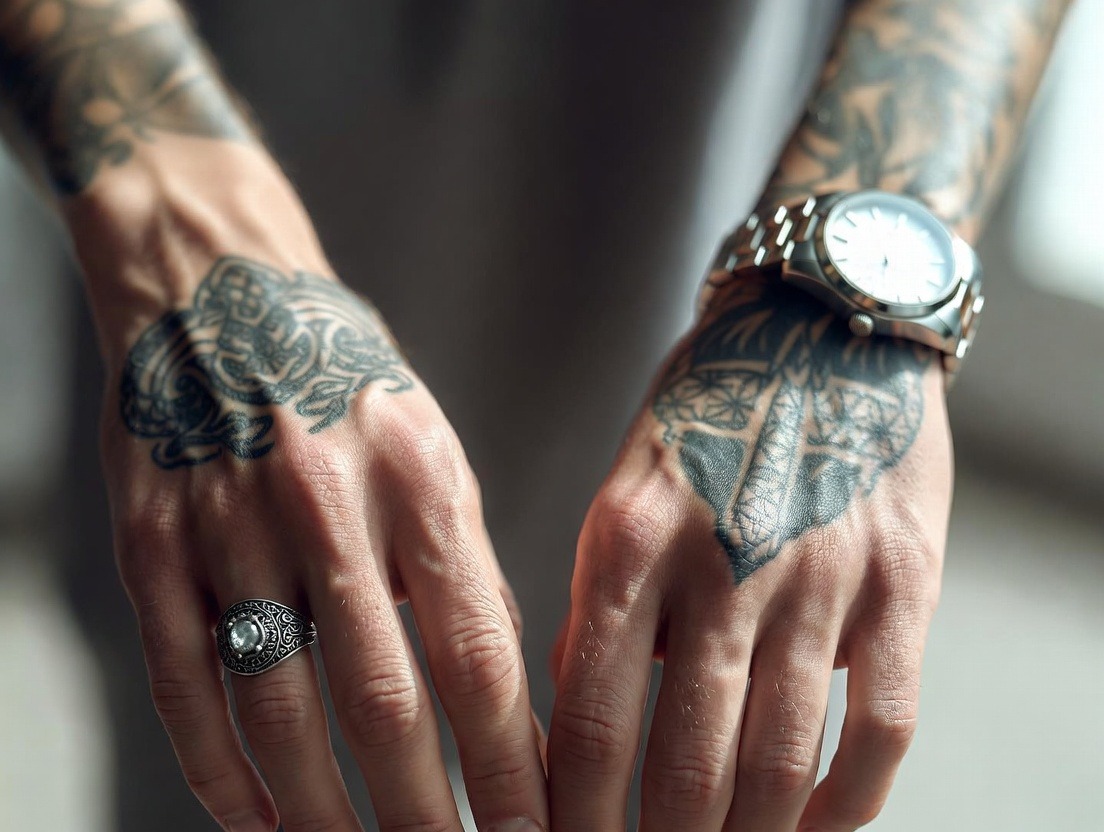
You've chosen your size and material. Now, which finger gets the honor? This is not a trivial decision. Each finger offers a unique physiological profile, lifestyle compatibility, and data potential. There is no universally "best" finger, only the best finger for you based on your anatomy, habits, and goals.
The Index Finger:
The Middle Finger:
The Ring Finger:
The Little Finger (Pinky):
The Thumb:
Dominant vs. Non-Dominant Hand:
The Golden Rule: You must size for the specific finger on the specific hand. A size 9 on your left middle finger is not necessarily a size 9 on your right ring finger. Let your sizing kit journey guide you. Try the sizer on 2-3 candidate fingers over several days each. Observe which one allows the ring to be forgotten during your most common activities. Real-world experiences from other users, like those shared in our testimonials, can offer helpful anecdotal guidance, but your own anatomy is the final judge.
Your body is not a static mannequin; it is a dynamic, fluid-filled system that responds to its environment and internal rhythms. A ring that fits perfectly under one set of conditions may become problematic under another. Anticipating and planning for this flux is the mark of a savvy wearer. Ignoring it is a recipe for a drawer-bound device.
The Diurnal Cycle (Day vs. Night):
It is completely normal for fingers to be at their smallest first thing in the morning after a night of horizontal rest and mild dehydration from breathing. As you become hydrated and upright, gravity pulls fluid into your extremities. Fingers can swell measurably by late afternoon or evening. This is why sizing should always be done in the evening, at the peak of daily swelling. A ring sized in the morning will almost certainly be too tight later.
Thermal Expansion and Contraction:
Physics applies to your fingers, too.
Hydration and Sodium Intake:
What you consume has a direct and rapid effect.
The Hormonal Influence (Particularly for Women):
The menstrual cycle drives substantial fluid retention shifts. Many women report needing a slightly larger ring size in the days leading up to their period due to increased progesterone and related edema. This is a critical factor to consider during the sizing process—try to test the sizer during this phase of your cycle.
Long-Term Changes:
Weight loss, weight gain, aging (which can change joint structure), and pregnancy can permanently alter finger size. A ring fit should be re-evaluated if you undergo any significant body composition change.
The strategic takeaway is to size for your worst-case (largest) scenario. It is far easier to add a temporary, removable spacer (like a small ring adjuster or even a piece of tape) on a slightly loose ring on cold, morning days than it is to cut off a ring that has become a tourniquet on a hot, swollen evening. Your fit should be judged at its tightest, not its loosest. For more personalized advice on managing these fluctuations, the support resources in our FAQ can provide additional tips and community wisdom.
Your ring will accompany you through every facet of life. Each activity presents unique challenges for fit, sensor contact, and device safety. A ring optimized solely for desk work may fail during your workout or distort your sleep data. Let's break down the key scenarios.
Sleep (The Critical Data Collection Window):
Keyboarding & Desk Work (The Endurance Test):
Strength Training & Weightlifting:
Running & Cardio:
Water Exposure (Swimming, Showering):
The common thread across all activities is testing. During your sizing period, simulate these activities. Type for an hour. Go for a run. Simulate a sleeping position. Your goal is to identify any point of friction, pressure, or instability before you commit to the final device. This proactive approach is the hallmark of a user who is truly invested in the data, a topic we frequently explore for various lifestyles on our blog.
Even with meticulous sizing, you may encounter issues. The human body is unpredictable, and manufacturing tolerances, while small, exist. Before you resign yourself to a poor fit or consider an expensive exchange, let's troubleshoot the most common complaints.
Problem 1: The Spinner.
Problem 2: The Pinchy/Pressure Point.
Problem 3: The Nocturnal Slip-Off.
Problem 4: The Persistent Red Mark/Indentation.
When troubleshooting, remember that the device's primary function is health monitoring, not health compromising. Your comfort and safety are paramount. If an issue persists, leverage the company's customer support. A quality brand, committed to its users like we are at Oxyzen.ai, will have processes to help you achieve a workable fit, as your success is their success.
Securing the perfect fit is a victory, but it's not a permanent one. Your body and the ring itself will undergo subtle changes over months and years of continuous use. A proactive approach to long-term care will preserve both your comfort and the device's functionality, protecting your investment and your data stream.
Skin Health and Hygiene:
The number one rule of 24/7 wear is cleanliness. Sweat, skin oils, lotions, and soap residue can accumulate between the ring and your skin, leading to irritation, odor, and even bacterial or fungal growth.
Monitoring for Long-Term Size Drift:
Seasonal Adaptation Strategies:
Accept that one perfect fit may not feel perfect 365 days a year. Have a plan:
Physical Protection of the Device:
A damaged ring can affect fit. A deep dent could create a pressure point; a scratched sensor window could interfere with light transmission.
Long-term care is a partnership between you and the technology. By treating the ring as the precision health instrument it is, you ensure it delivers reliable, actionable data for years to come. For ongoing tips, community experiences, and updates on best practices for wearable care, our blog serves as a continually updated resource for enthusiasts and beginners alike. The journey to profound self-knowledge through technology is a marathon, not a sprint, and it begins with this foundational, physical connection.
With a deep understanding of the pillars of fit, the tools to measure, and the strategies to troubleshoot, you are now equipped to make an informed decision. But the journey doesn't end with the unboxing. The arrival of your smart ring is the beginning of a new phase—one of calibration, adaptation, and deepening understanding. This section of our guide bridges the gap between theory and practice, guiding you through the initial setup, the critical breaking-in period, and the process of syncing your physical comfort with the digital dashboard of your health.
Think of this not as receiving a piece of electronics, but as beginning a dialogue with a new health partner. The first few weeks are a mutual adjustment period. Your body adapts to the constant, gentle presence of the ring, and the ring's algorithms learn your unique baselines—your personal "normal" for heart rate, temperature, and movement. A perfect fit is the essential enabler of this dialogue, ensuring the conversation is clear, consistent, and free from static.

The moment your smart ring arrives is exciting, but resist the urge to judge the fit or the data immediately. The first two weeks are a dedicated calibration window, a concept emphasized by all major wearable health companies for good reason. During this time, both you and the device are in a learning phase.
Physical Adaptation: The "Ring Awareness" Phase
Even with a perfect fit, you will be hyper-aware of the ring on your finger. This is normal neural adaptation. Your brain is processing a novel, constant tactile stimulus. This feeling typically diminishes significantly after 3-7 days as your sensory system filters it out as non-threatening background information.
Physiological Baseline Establishment: How Algorithms Learn "You"
Your ring’s app isn't just collecting data; it’s building a model of your physiology. It needs to understand your personal ranges.
Data Interpretation in Week 1: Patience is Key
Do not make health decisions based on data from the first 3-4 days. The numbers may look strange—an HRV that seems too low, sleep scores that are poor despite you feeling rested. This is often the algorithm calibrating. The scores and insights will become significantly more reliable and personalized after the baseline period is complete. Companies design their software with this in mind, which is why you often see a "Learn more about your baselines" message upon setup, similar to the educational resources we provide at Oxyzen.ai.
The Fit Re-Assessment at Day 7
After a full week of 24/7 wear, including sleep and various activities, conduct a formal fit re-assessment. Ask yourself:
Once the baseline period is over, you shift from calibration to validation. Now is the time to build trust in the data stream by correlating it with your subjective experience and, where possible, other metrics. A perfect fit is the foundation of accuracy, but how can you know it's accurate?
The Subjective-Objective Correlation Test
This is your most powerful tool. Start a simple journal (even mental notes work) for one week.
The Manual Pulse Check (The Gold Standard Validation)
This is a direct way to validate heart rate accuracy.
Cross-Validation with Other Devices (With Caution)
You can compare metrics with a chest strap HR monitor (the most accurate consumer HR device) or a medical-grade pulse oximeter.
The No-Data Gap Test
Check your app's data timeline. Are there unexplained gaps in your heart rate or "body signal" graphs, especially during sleep? Gaps often occur when the ring loses contact or cannot get a clean signal due to excessive movement. Frequent gaps are a hallmark of a loose fit. As shared in user experiences on our testimonials page, overcoming these data gaps is often the first win after achieving a proper fit.
If, after these validation steps, you have high confidence in the data's face validity, you can trust that your fit is doing its job. You have successfully created the stable physical conduit through which your body's signals can flow clearly into the digital realm of insight.
While this guide focuses on the unique challenges and opportunities of the ring form factor, it is valuable to understand how the principles of fit translate to the broader ecosystem of wearables. Many users employ a multi-device strategy, using a smartwatch for daytime notifications and activity tracking and a smart ring for continuous, unobtrusive night-time biometrics. Understanding their different fit paradigms is key.
Smartwatches and Fitness Bands: The Strap Dilemma
The primary fit challenge for a wrist-worn device is the strap.
The Wrist vs. Finger Physiology
The wrist presents a different vascular landscape. It has larger arteries (radial and ulnar) but also more tendons and bone, with less consistent soft tissue. This can make consistent PPG readings more challenging than on the finger, which has dense capillary beds directly under the skin. This is a fundamental reason why some studies suggest fingers can provide more reliable PPG signals, particularly for metrics like SpO2.
Chest Strap Monitors: The Unbeatable Benchmark
The chest strap remains the gold standard for heart rate accuracy during dynamic exercise because it uses Electrocardiography (ECG), measuring the heart's electrical activity directly, rather than inferring it from blood flow. Its fit is binary: it must be moist (with water or electrode gel) and snug against the skin directly below the pectoral muscles. Fit is less about subtlety and more about ensuring consistent electrode contact.
The Synergy of Multi-Device Wear
This is where understanding fit pays dividends. You might wear:
A wearable is a piece of technology, but wearing it is a human behavior. The success of your health-tracking journey depends as much on your psychological relationship with the device as it does on its technical specifications. A perfect physical fit enables wearability, but a positive psychological fit enables adherence and meaningful insight.
Overcoming "Quantification Anxiety"
The constant stream of data can be empowering, but for some, it becomes a source of stress—anxiety over a lower sleep score, obsession over a dipping HRV, or frustration over a missed activity goal. This is sometimes called "quantification anxiety" or "wearable stress."
The Ritual of Charging: Integrating Care into Routine
Since smart rings typically need charging every 4-7 days, this becomes a built-in break. Use this time proactively.
Building Trust Through Consistency
The behavioral magic of a perfectly fitted, comfortable ring is that it disappears from your consciousness. This invisibility is the gateway to the most accurate data because you are living your natural life, not altering your behavior for the device. You're not fidgeting with it, removing it, or changing your sleep position to accommodate it. This consistency builds a robust, trustworthy dataset that truly reflects you.
The ultimate goal is for the wearable to become a seamless extension of your body and mind—a silent partner in your wellness. It should feel less like a piece of tech you "use" and more like a innate sense you've always had, now finally quantified. This journey from conscious device to unconscious companion is the pinnacle of successful integration, a journey we are passionate about supporting, as reflected in our story of exploring human-tech symbiosis.
Theory and instruction are vital, but nothing illuminates like real-world examples. Let’s walk through several hypothetical but common user profiles, detailing their fit challenges and the solutions that align with the principles we’ve established. These stories highlight how individual physiology and lifestyle converge at the point of wear.
Case Study 1: The Active Professional with Tapered Fingers
Case Study 2: The Perimenopausal Woman Expercing Fluid Fluctuation
Case Study 3: The Side Sleeper with Hand-Clenching
These cases illustrate there is no one-size-fits-all answer, but there is always a logic-driven path to a solution. For a wider collection of such real-life integration stories, you can explore the community experiences shared in our testimonials section.
Despite your best efforts with sizing kits and self-assessment, some situations call for expert intervention. Knowing when and who to ask is a sign of a responsible wearer, ensuring both your health and your investment are protected.
Consulting a Professional Jeweler
A skilled jeweler is a master of metal, fit, and finger anatomy. Their expertise can be invaluable, but you must proceed with extreme caution and clear communication.
Consulting a Medical Professional
Your physical health always comes first.
Leveraging Manufacturer Customer Support
This should always be your first line of defense. A reputable company stands behind its product and its fit.
The thread connecting all these professional resources is proactive care. Don’t wait for a minor irritation to become a major problem. Don’t struggle with confusing data alone. The ecosystem exists to support you. Engaging with it, especially the dedicated support from your device's maker, is the final step in securing a partnership that works seamlessly for years, a commitment to customer success that aligns with the values at Oxyzen.ai.
The world of wearable health tech is not static. As sensors become more sophisticated and manufacturing more advanced, the very concept of "fit" is evolving from a passive requirement to an active, intelligent feature. The future points toward hyper-personalization, where the device adapts not only to your data but to your body's shape and state in real time.
Biometric Locking and Dynamic Fit Sensing
Future iterations may move beyond assuming good contact to actively verifying it.
Advanced Materials and Morphing Structures
Material science will drive the next leap in comfort and customization.
True Mass Customization via 3D Scanning and Printing
The "one-size-fits-most" approach of numbered sizing could become obsolete.
Integrated Health Ecosystems and Contextual Awareness
Fit won't be an isolated variable. It will be part of a contextual health model.
These innovations point toward a future where the barrier between device and body dissolves entirely. The goal is a wearable so personalized, comfortable, and intuitive that it feels less worn and more grown. This relentless pursuit of better human-tech integration is at the heart of the innovation we track and celebrate, a vision you can explore further on our blog as these technologies emerge from lab to fingertip.
We have journeyed from the fundamental physics of sensor contact, through the intricate anatomy of the finger, across the practical landscape of sizing tools and troubleshooting, and into the behavioral and future-looking horizons of wearable tech. This comprehensive exploration underscores one undeniable truth: in the realm of health wearables, fit is not a feature; it is the foundation.
The perfect fit is the silent, unseen conduit. It is the difference between noise and signal, between guesswork and insight, between a gadget that lives in a drawer and a tool that becomes a part of you. By investing the time and attention to master the principles laid out in this guide, you have done more than ensure comfort—you have calibrated the primary instrument in your personal health observatory.
You are now prepared to move from theory to practice, from sizing to insights. The next phase of your journey involves leveraging this perfect fit to unlock the profound potential of your data: interpreting sleep architecture, optimizing training through recovery metrics, managing stress via your nervous system's signals, and detecting early signs of physiological shifts. With a stable, accurate data stream secured by a perfect fit, you can trust the insights that follow.
Your path to deeper understanding and optimized well-being is now clear. The foundation is set. The conversation between you and your body, mediated by technology, can begin in earnest.
Your Trusted Sleep Advocate: Sleep Foundation — https://www.sleepfoundation.org
Discover a digital archive of scholarly articles: NIH — https://www.ncbi.nlm.nih.gov/
39 million citations for biomedical literature :PubMed — https://pubmed.ncbi.nlm.nih.gov/
Experts at Harvard Health Publishing covering a variety of health topics — https://www.health.harvard.edu/blog/
Every life deserves world class care :Cleveland Clinic - https://my.clevelandclinic.org/health
Wearable technology and the future of predictive health monitoring :MIT Technology Review — https://www.technologyreview.com/
Dedicated to the well-being of all people and guided by science :World Health Organization — https://www.who.int/news-room/
Psychological science and knowledge to benefit society and improve lives. :APA — https://www.apa.org/monitor/
Cutting-edge insights on human longevity and peak performance:
Lifespan Research — https://www.lifespan.io/
Global authority on exercise physiology, sports performance, and human recovery:
American College of Sports Medicine — https://www.acsm.org/
Neuroscience-driven guidance for better focus, sleep, and mental clarity:
Stanford Human Performance Lab — https://humanperformance.stanford.edu/
Evidence-based psychology and mind–body wellness resources:
Mayo Clinic — https://www.mayoclinic.org/healthy-lifestyle/
Data-backed research on emotional wellbeing, stress biology, and resilience:
American Institute of Stress — https://www.stress.org/


