


The Wearable Wellness 101 Guide to Workout Optimization
A guide to using wearable data to fine-tune workout intensity, duration, and recovery.
A guide to using wearable data to fine-tune workout intensity, duration, and recovery.
%402x.svg)
In a world obsessed with pushing harder, running faster, and lifting heavier, we've lost touch with the most sophisticated piece of fitness technology we will ever own: our own bodies. We crush hour-long HIIT sessions while running on four hours of poor sleep. We chase personal bests while our nervous systems are frayed from constant stress. We log miles while ignoring the whispers of inflammation and fatigue. This disconnect between effort and true physiological readiness isn't just inefficient—it’s a recipe for burnout, injury, and stalled progress.
Enter the era of the intelligent workout. Gone are the days of guesswork and generic plans. The fusion of advanced biometric sensors, elegant wearable design, and actionable AI insights has given rise to a new paradigm in personal fitness. At the forefront of this quiet revolution is a device so seamless it fits on your finger: the smart ring. This unassuming piece of technology is becoming the central hub for a holistic, data-informed approach to exercise, one that harmonizes exertion with recovery, and effort with true capacity.
This comprehensive guide is your master key to unlocking that potential. We will move beyond counting steps and tracking heart rate in isolation. Instead, we will explore how continuous, nuanced biometric data—from heart rate variability (HRV) and resting heart rate to skin temperature and blood oxygen—paints a dynamic, real-time picture of your body’s internal state. This is the foundation of workout optimization: the art and science of aligning your training intensity, volume, and type with what your body is genuinely prepared to handle today.
Forget one-size-fits-all training plans. This is about building a responsive, living fitness strategy that adapts to your sleep, your stress, your life. Whether you’re a marathoner, a weightlifter, a weekend warrior, or someone just beginning their wellness journey, the principles of biometric optimization will transform your relationship with exercise. You will learn to distinguish between productive strain and harmful stress, to see rest as a critical component of growth, and to finally achieve the sustainable results that have always felt just out of reach.
Let’s begin by understanding the powerful, silent signals your body is sending you every moment—and how to listen.

Before you can optimize, you must measure. But not all measurements are created equal. The modern fitness tracker popularized the step count and the workout heart rate, valuable but surface-level metrics. To truly optimize, we must dive deeper into the autonomic nervous system (ANS)—the control center for your stress, recovery, and readiness. This is where biometrics like Heart Rate Variability (HRV), Resting Heart Rate (RHR), and Respiratory Rate become your most trusted coaches.
Heart Rate Variability (HRV): The Gold Standard of Recovery
If you only track one advanced metric, let it be HRV. Contrary to what the name implies, HRV is not about the heart rate itself, but the subtle, millisecond variations in the time intervals between each heartbeat. A higher, more variable HRV typically indicates a resilient, adaptable nervous system—one where the "rest-and-digest" (parasympathetic) branch is strong, allowing for efficient recovery and readiness for challenge. A lower, less variable HRV often signals a dominance of the "fight-or-flight" (sympathetic) branch, due to stress, fatigue, illness, or overtraining.
Think of it as your body's internal "readiness to perform" score. Monitoring your HRV trend—best done with a wearable that takes continuous overnight readings, like a smart ring—allows you to answer the critical question: "Is my body prepared for a hard workout today, or does it need a gentler approach?" It provides an objective check against your subjective feeling, preventing you from pushing too hard on a day your body is struggling to recover.
Resting Heart Rate (RHR) and Its Trends
While your absolute RHR (often between 50-70 bpm for adults) gives a baseline, its trend is where the intelligence lies. A consistently elevated RHR—say, 5-10 beats above your normal average—can be an early warning sign. It often indicates that your body is under some form of systemic stress: it could be fighting off an oncoming illness, dealing with dehydration, processing a poor night's sleep, or struggling with cumulative training load. Noticing this trend allows you to pivot, perhaps swapping a sprint session for mobility work or prioritizing hydration and sleep.
The Synergy of Signals: Skin Temperature & Blood Oxygen
No single metric tells the whole story. That’s why the power of wearable technology lies in sensor fusion. Nocturnal skin temperature deviations can signal the onset of illness, menstrual cycle phases, or poor circulation. Consistently low overnight blood oxygen saturation (SpO2) can point to sleep-disordered breathing, which drastically impairs recovery. A smart ring that tracks these metrics in concert creates a holistic dashboard of your physiological baseline.
When your HRV is high, your RHR is low and stable, your skin temperature is normal, and your SpO2 is optimal, you have a green light for intensity. When one or more of these signals are off, it’s a yellow or red light, urging caution. This is the essence of listening to your body’s silent language. It’s a language of nuance, not brute force. To effectively interpret this language daily, establishing a baseline is non-negotiable. This is where the concept of the restful living assessment becomes your foundational first step, allowing you to understand your calm, recovered baseline before layering on exertion.
The fitness wearable market has long been dominated by the wristwatch. It’s a familiar form factor, but it comes with significant limitations for capturing the precise, continuous data required for true optimization. The smart ring emerges not as an alternative, but as a superior form factor for the discerning athlete and wellness enthusiast. Its advantages are rooted in physiology, physics, and practicality.
The Power of the Finger: A Superior Vascular Window
The arteries in your finger, particularly the palmar digital arteries, are rich and close to the surface. This provides an exceptionally strong and consistent photoplethysmogram (PPG) signal—the optical measurement of blood volume changes used to track heart rate, HRV, and SpO2. The wrist, by comparison, has smaller capillaries and more bone, leading to a noisier signal that is highly susceptible to motion artifacts. During sleep or daily activity, a ring on your finger experiences less disruptive movement than a watch on a bony wrist, resulting in cleaner, more reliable data, especially for the critical overnight readings that form your recovery baseline.
Unobtrusive, Always-On Tracking
A smart ring eliminates the "wearability" problem. It’s lightweight, unnoticeable during sleep, and doesn’t get in the way during weightlifting, yoga, or typing. This seamless integration encourages 24/7 wear, which is essential for building a complete picture of your circadian rhythms, stress patterns, and recovery cycles. You get data during all of life’s contexts, not just during workouts. This continuous data stream is what enables the AI behind the device to learn your unique patterns and provide personalized insights, rather than generic averages.
From Data to Actionable Wisdom
The best smart rings don’t just collect data; they synthesize it into a simple, actionable readiness or recovery score. By weighing your overnight HRV, RHR, temperature, and sleep data, these devices give you a clear morning report: a number or color indicating your body’s preparedness for the day. This transforms complex biometrics into a daily decision-making tool. Should you go for a PR attempt or focus on technique? Is today a day for a long, slow run or a brisk walk? Your readiness score provides the objective guidance.
This constant, gentle feedback loop also cultivates a deeper mind-body connection. You begin to notice how a late meal affects your sleep and next-day HRV. You see the tangible impact of a stressful work meeting on your stress metrics. The ring becomes a tool not just for workout optimization, but for holistic life optimization, teaching you how daily choices cascade into physiological outcomes. For those building a life of sustainable performance, understanding this holistic impact is key, which is why exploring principles of restful living for entrepreneurs can provide crucial strategies for managing the unique stresses of business building.
You cannot optimize what you do not understand. Jumping into advanced workout adjustments based on a day or two of data is like navigating a new city without a map. The first month with a sophisticated wearable like a smart ring is not about changing everything; it’s about observing, learning, and establishing your unique, personal biometric baseline. This period of mindful observation is the cornerstone of all future optimization.
The Observation Protocol: Consistency is Key
For 30 days, focus on consistency in three areas:
Identifying Your Personal Norms
After 2-3 weeks, patterns will emerge. You’ll identify:
This process moves you from abstract concepts to personal knowledge. You learn, for instance, that your body needs two full nights of sleep to recover from a maximal strength session, or that your HRV is naturally lower in the second half of your menstrual cycle—knowledge that empowers intelligent planning.
The Danger of Misinterpretation
A common mistake is obsessing over a single day’s score. Biometrics are about trends, not snapshots. A single low HRV reading might be due to a single bad night. Three consecutive low readings indicate a trend that needs addressing. Your baseline establishes the "normal band" for your body, making true deviations clearly visible. This foundational month of learning is essentially a deep dive into the restful living measurement, teaching you to track your calm and understand your body's unique language of stress and recovery before you ask more of it.

After establishing your baseline, your wearable’s morning readiness or recovery score transforms from a curious number into your most valuable daily decision-making tool. This score (often on a 1-100 scale or color-coded) is the AI’s synthesis of your overnight biometrics. Learning to interpret and act on it is the first major step in workout optimization.
The Green Light (High Readiness): The Day for Challenge
A high score indicates your autonomic nervous system is balanced and resilient. You’ve recovered well from previous stress (both training and life), and your body has resources to spare. This is your signal to go for it.
The Yellow Light (Moderate Readiness): The Day for Finesse
A middling score suggests your body is in a state of equilibrium—not fully depleted, but not fully recovered. It’s managing some residual load. Pushing too hard here can tip you into the red.
The Red Light (Low Readiness): The Day for Restoration
A low score is a clear message: your body’s resources are depleted. This could be from training overload, poor sleep, illness, or high life stress. Ignoring this signal is the fastest route to overtraining, injury, and burnout.
Context is King: Integrating the Subjective
Your readiness score is powerful, but it’s not an autopilot. Always cross-reference it with your subjective feelings. Do you feel energetic despite a moderate score? Maybe you can push a little. Does a high score coincide with unusual muscle soreness or mental fatigue? Perhaps you still choose a moderate session. The score is your compass, but you are still the navigator. This intelligent responsiveness to your body's signals is what ultimately leads to enhanced physical health markers, creating a positive feedback loop of sustainable improvement.
Heart rate zone training has been a staple of endurance coaching for decades. The classic model uses formulas like "220 minus your age" to set generic zones. The problem? These formulas are wildly inaccurate for most individuals. Your true maximum heart rate and your lactate threshold are unique to your physiology, fitness level, and even your sport. Wearing a device that provides continuous heart rate data allows you to move beyond guesswork and establish your personal heart rate zones, revolutionizing the effectiveness of your cardio training.
Finding Your True Zones: The Functional Threshold
The most actionable method is to identify your Functional Threshold Heart Rate (FTHR)—the highest heart rate you can sustain for approximately one hour. This can be estimated through a guided test (like a 20-minute or 30-minute time trial) while wearing your tracker. Once you have your FTHR, you can calculate personalized zones that reflect how your body actually responds to exercise intensity:
The 80/20 Rule and the Power of Zone 2
Research, notably by Dr. Stephen Seiler, champions the 80/20 principle: for most endurance athletes, 80% of training should be at low intensity (Zone 1-2), and only 20% at moderate to high intensity (Zone 3-5). This is where personalized zones are critical. Many athletes unknowingly run, bike, or row in "Zone X"—a gray area between easy and hard (Zone 3) that is too taxing to allow proper recovery but not intense enough to drive high-end adaptations. It’s the junk mileage of heart rate training.
A smart ring or chest strap helps you stay disciplined. Seeing your heart rate creep into Zone 3 during a long run intended to be in Zone 2 forces you to slow down, building your aerobic engine without undue fatigue. This disciplined approach to low-intensity volume is one of the most potent yet underutilized tools in workout optimization.
Dynamic Zone Adjustments
Your zones aren’t set in stone. As you get fitter, your FTHR may increase slightly, or you’ll be able to hold a higher power output at the same heart rate. More immediately, your readiness score interacts with your zones. On a low-readiness day, your heart rate may drift upward more easily at a given pace—a phenomenon called "cardiac drift." Your personalized zones, interpreted through the lens of daily readiness, tell you that today’Zone 2 might require a slower pace than usual, and that’s perfectly fine. It’s about respecting the cardiovascular strain, not the speed on your watch. This nuanced understanding of effort and recovery is deeply connected to broader concepts of balance, such as those explored in restful living for students, where managing cognitive and physical energy is paramount for sustained success.
While HRV is famously linked to endurance, its implications for strength, power, and hypertrophy training are equally profound but less discussed. Strength training imposes a massive systemic load—it disrupts muscle fibers, floods the system with metabolic byproducts, and stresses the central nervous system (CNS). How you recover from that load determines your ability to adapt and grow stronger. HRV is your direct window into that recovery process.
HRV as a CNS Barometer
Heavy lifting, particularly maximal and near-maximal efforts, places significant demand on your CNS. A depressed HRV following a heavy squat or deadlift session can indicate high CNS fatigue. While some dip is normal, a prolonged suppression suggests you may need more time before another high-intensity neural-driven session. Conversely, a quick rebound in HRV indicates good recovery and CNS resilience.
Practical Application for Lifters
The Muscle Recovery vs. Systemic Recovery Distinction
It’s crucial to understand that muscle soreness (local recovery) and systemic/neural recovery (reflected in HRV) are different. You might feel muscle soreness but have a high HRV, meaning your nervous system is recovered and you could train other muscle groups or engage in light cardio. Conversely, you might not be sore but have a low HRV, indicating your body is still dealing with the systemic stress of prior training and needs more global recovery. This insight prevents the common mistake of training through systemic fatigue just because muscles aren’t sore. Managing this kind of deep, systemic recovery is a skill that extends beyond the gym, much like the strategies needed for the restful living weekend to achieve true psychological and physiological reset.

You can have the perfect training plan, impeccable nutrition, and the most advanced wearable, but if your sleep is poor, your optimization efforts are built on sand. Sleep is the ultimate performance-enhancing drug. It’s when growth hormone is released, muscles are repaired, memories (including muscle memory) are consolidated, and the brain clears metabolic waste. Your wearable’s sleep tracking is not a nice-to-have feature; it’s the core module of the entire system.
Beyond Duration: The Architecture of Quality Sleep
While total sleep time matters, the quality and structure of that sleep are paramount. Advanced wearables now track sleep stages (light, deep, REM) with reasonable accuracy, providing insight into your sleep architecture.
Correlating Sleep Data with Readiness
The interplay is direct. A night with abundant deep sleep often correlates with a lower morning RHR and a higher HRV. A night fragmented with awakenings or lacking in deep/REM sleep will typically manifest as a poor readiness score. This data allows you to play detective:
Actionable Sleep Hygiene from Your Data
Your sleep data informs a personalized sleep hygiene protocol:
When you prioritize sleep, you are directly priming your body for better workouts, faster recovery, and higher readiness scores. It is the flywheel that drives the entire optimization engine. For a comprehensive approach to building these habits, the restful living checklist offers a daily framework of non-negotiables that support superior sleep and recovery.
Your body does not differentiate between the stress of a 5K race and the stress of a tight work deadline, a difficult conversation, or financial anxiety. It all flows through the same physiological pathways, primarily by activating the sympathetic nervous system and releasing cortisol. This "life stress" consumes your recovery budget just as surely as a workout does. A smart wearable that tracks all-day stress (through metrics like heart rate variability and pulse rate variability) makes this invisible load visible.
The All-Day Stress Score: Seeing the Invisible
Modern algorithms can detect periods of physiological stress throughout your day by analyzing the balance of your nervous system. You’ll see spikes during your commute, a presentation, or after drinking coffee. You’ll also see dips during moments of calm, meditation, or a walk in nature. This dashboard reveals your total stress landscape.
The Cumulative Load Concept
Optimization requires viewing your training stress and life stress as a single, cumulative load. You may be perfectly periodized in your training plan, but if you launch into a high-volume training block during your busiest, most stressful month at work, you are likely to exceed your capacity. The result? Stalled progress, illness, or injury. Your daily readiness score already incorporates this, as high life stress will degrade your sleep and overnight recovery metrics.
Strategic De-Stressing as Active Recovery
Once you see your stress patterns, you can actively manage them. This isn’t just about feeling better mentally—it’s a direct performance intervention.
By honoring life stress as part of your training load, you create a sustainable, resilient system. You learn that sometimes the most optimized workout on a high-stress day is a walk in the park or a mindfulness session. This holistic approach to managing energy is especially critical for high-stress roles, where the strategies in restful living for remote workers can help transform the home into a true sanctuary for recovery.
Traditional periodization is a top-down, pre-planned model dividing training into macrocycles, mesocycles, and microcycles. It’s effective, but it’s static. It assumes your life, stress, and recovery will align perfectly with the plan’s assumptions. We know this is rarely true. Biometric data enables adaptive periodization—a fluid, responsive approach where the plan respects the real-time state of the athlete.
The Framework: Plan, Execute, Assess, Adjust
You still start with a traditional plan as your framework—a 12-week marathon plan or an 8-week strength cycle. But instead of rigidly following it day-by-day, you use it as a guide, modifying it based on your daily readiness and weekly trends.
Practical Rules for Adaptive Training
Long-Term Trend Analysis for Macro Planning
Over months and years, your biometric data becomes a treasure trove. You can analyze it to answer big-picture questions:
This transforms you from a passive follower of a plan to an active co-creator of your training, in partnership with the objective feedback from your body. This level of self-knowledge and adaptive control is the ultimate goal of workout optimization, leading to lifelong progress and fewer setbacks. The same principle applies to non-physical goals, where understanding how restful living changes your relationship with time can create a more adaptive and productive approach to daily life.
You are what you eat, and your biometrics will faithfully report on the meeting. While wearables don’t (yet) directly track glucose or macronutrients, they provide powerful indirect feedback on how your fueling and hydration strategies support—or sabotage—your recovery and performance.
The Nightly Report Card on Your Diet
Your evening meal and hydration habits write a report that your body submits overnight. Consistently poor scores after certain meals are clear indicators.
Timing and Performance
While harder to isolate, you can experiment and observe. Do you perform better (higher heart rate reserve for intensity, better recovery scores) with a specific pre-workout meal timing or composition? Does intra-workout hydration with electrolytes help you maintain lower heart rate drift on long sessions? Your performance data (heart rate at a given pace/power) combined with your subsequent recovery data creates a feedback loop for nutritional experimentation.
Using Data to Fuel Recovery
Post-workout, the goal is to shift from a catabolic (breakdown) to an anabolic (rebuild) state. A quick rebound in HRV and a lowering of RHR after a workout can be indicators of effective recovery nutrition (i.e., timely intake of protein and carbohydrates). If your metrics stay depressed for an unusually long time after training, it might signal that your post-workout fueling is insufficient or that your overall daily calorie/nutrient intake is too low for your activity level.
This biometric feedback turns nutrition from a dogma of "shoulds" into a personalized exploration. It helps you identify foods and patterns that make you resilient and avoid those that leave you physiologically stressed. This journey of connecting fuel to feeling is part of a larger picture of holistic wellness, where managing financial stress, for example, as discussed in restful living and financial wellness, can remove a major source of systemic anxiety that disrupts healthy eating habits.
Physical metrics are only half of the optimization equation. The mind drives the machine, and its state—be it focused, fatigued, motivated, or distracted—profoundly influences workout quality, adherence, and risk. Emerging insights from wearable technology are beginning to quantify this cognitive dimension, offering a more complete picture of your readiness to train not just your body, but your will.
Cognitive Load and Its Physical Toll
Every decision you make, every hour of focused work, and every moment of anxiety depletes finite cognitive resources. This "neural fatigue" manifests physiologically. Studies show that prolonged periods of intense cognitive work can elevate cortisol, increase sympathetic nervous system activity, and—as detected by advanced wearables—suppress Heart Rate Variability (HRV) and elevate resting heart rate (RHR) in a manner similar to light physical exercise. Your device, therefore, is not just tracking physical stress; it's tracking total stress load. Attempting a demanding, technique-heavy workout like Olympic lifting or a complex gymnastics WOD after a day of high mental strain is akin to doing it on tired legs—your form and safety will likely suffer.
Motivation Metrics and Behavioral Nudges
While no ring can read your thoughts, it can identify patterns that correlate with motivation. Consistently skipping workouts or logging shorter sessions on days following poor sleep or high life-stress scores reveals your personal motivational triggers. Advanced platforms use this data to provide intelligent nudges. Instead of a generic "Time for your workout!" alert, you might receive a softer suggestion on a low-readiness day: "Your body signals show you're carrying fatigue. Consider a 20-minute mobility flow instead of your planned run." This respectful, data-informed guidance supports adherence by meeting you where you are, preventing the all-or-nothing mindset that derails fitness journeys.
Focus and Flow State Detection
The holy grail of athletic performance is the flow state—a period of intense, effortless focus where performance peaks. Preliminary research using HRV and heart rate patterns suggests that entry into flow is characterized by a specific, harmonious state of the autonomic nervous system: a calm yet alert physiological signature. While still an emerging field, the continuous data from a smart wearable holds the potential to one day identify when you are primed to enter a flow state or, conversely, when your mental chatter is too high for optimal focus. For today, simply noticing that your pre-workout stress score is low can be your cue to minimize distractions and set an intention for a focused, mindful session.
Training your mental resilience is as critical as training your muscles. The practice of deliberately managing cognitive load and creating space for mental recovery is a cornerstone of sustainable performance. This aligns perfectly with strategies to prevent decision fatigue, a key concept in managing daily cognitive resources for both life and sport.
Injuries are the ultimate derailment of any fitness optimization plan. They are often preceded by subtle, accumulating signals that we ignore until they scream. While a smart ring is not a medical device, its longitudinal tracking of systemic metrics provides a powerful early-warning system for overuse and imbalance, acting as a biomechanical watchdog.
Asymmetry and Unilateral Stress
Persistent pain or injury often stems from asymmetry—one side of your body working harder than the other. While a ring on one finger can't measure limb-specific load, it can detect the systemic stress caused by compensating for an imbalance. If you consistently see worse recovery metrics (lower HRV, higher RHR) after workouts that heavily emphasize one side (e.g., racquet sports, single-leg training cycles), it could indicate that the asymmetry is creating disproportionate systemic fatigue. This data can prompt you to incorporate more balanced, unilateral accessory work or seek a gait/movement analysis.
The Inflammation Signature
Acute inflammation from a tough workout is normal and is part of the adaptation process. However, chronic, low-grade inflammation from excessive training load or poor recovery impedes progress and increases injury risk. Biometric markers can hint at this state:
Recovery Deficit as a Precursor
Injury rarely occurs in a vacuum. It typically happens when a tissue is stressed beyond its capacity during a state of recovery deficit. Your wearable’s low readiness score is the quantification of that deficit. Pushing intense, high-impact, or heavy load training when your body is signaling a recovery deficit significantly raises the risk of acute injury or the manifestation of an overuse injury. Learning to treat a low readiness score as an "injury prevention alert" is one of the most valuable behavioral changes you can make.
This proactive, listening-based approach transforms your relationship with your body from adversarial to collaborative. It encourages you to address niggles with mobility and rest before they become full-blown injuries. This philosophy of preemptive care extends to all aspects of wellness; just as you would design a workspace to prevent strain, designing your restful living workspace for focus and calm prevents the cognitive injuries of burnout and chronic stress.
For nearly half the population, a critical, rhythmic variable has been conspicuously absent from traditional sports science: the menstrual cycle. The hormonal fluctuations of the cycle are not a bug in the system; they are a fundamental feature that dramatically impacts energy, recovery, injury risk, and performance. Wearable technology is finally providing the tools to personalize training around this cycle, moving from a male-default model to truly female-informed optimization.
Mapping Your Phases to Biometric Patterns
A smart ring tracking skin temperature and resting heart rate becomes an excellent tool for predicting and confirming cycle phases, often with greater ease than manual tracking.
Performance Expectations and Fueling
Understanding these phases allows you to align expectations. Feeling sluggish and heavy during a hard workout in the luteal phase is not a lack of willpower; it's physiology. Your heart rate may be higher at a given pace. Instead of fighting it, you can adapt your fueling—ensuring adequate carbohydrate intake around workouts during this phase—and adjust your pace or weight selection. This prevents frustration and reduces the risk of training burnout.
Beyond the Cycle: Perimenopause and Menopause
The principles of biometric listening become even more critical during the menopausal transition, where hormones fluctuate wildly and then decline. The resulting changes in metabolism, sleep, and recovery capacity can be tracked and managed. A persistent rise in baseline skin temperature and more volatile HRV can inform a new, adaptive training approach focused on bone health (strength training), metabolic flexibility (Zone 2), and stress management, all supported by data. This holistic understanding of hormonal impact underscores the deep connection between restful living and hormone balance, where managing stress and recovery is essential for navigating these powerful physiological transitions.
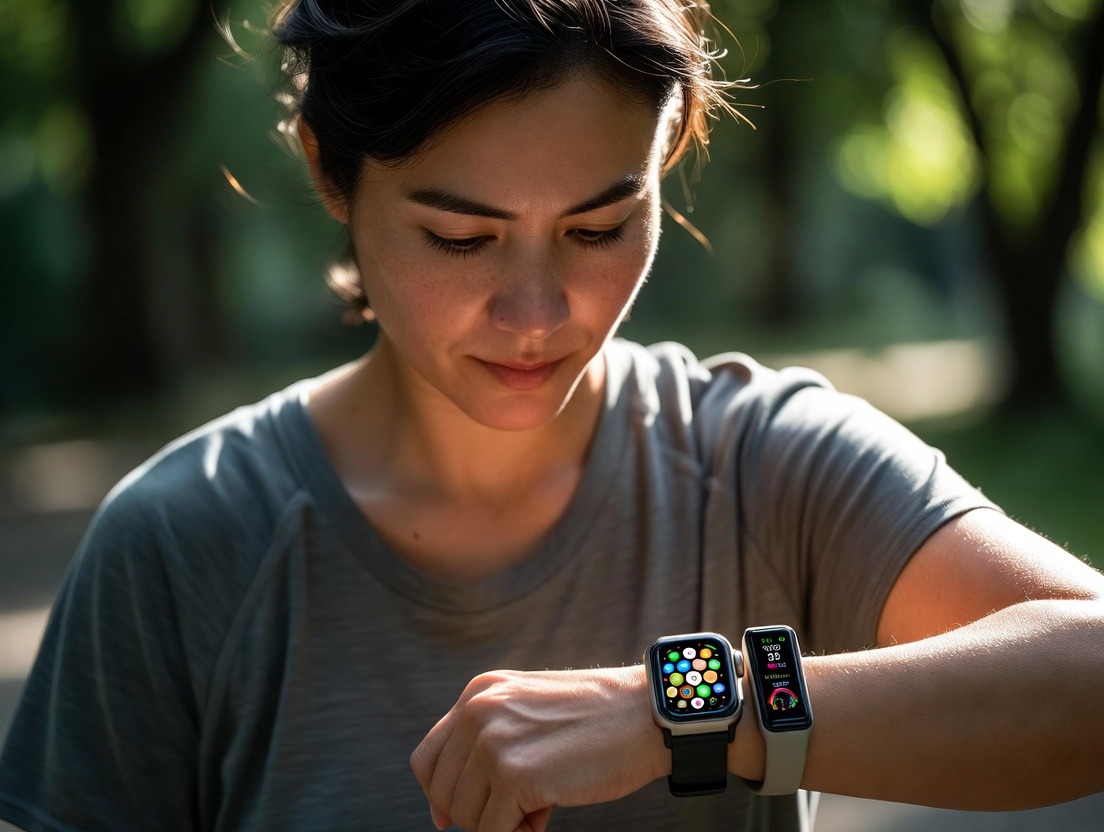
Optimization is not solely for the young or the elite; it is perhaps most valuable for the aging athlete. The goal gracefully shifts from peak performance to sustained performance—maintaining strength, mobility, and vitality for decades. Here, the smart wearable transitions from a performance coach to a longevity guardian, providing insights crucial for navigating the natural physiological changes that come with age.
Recovery as the Supreme Priority
The most significant age-related change is a lengthening of the required recovery time. A hard workout that a 25-year-old rebounds from in 24 hours might take a 55-year-old 48-72 hours to fully process. Your biometric data provides an objective, personalized measure of this timeline. Tracking how many nights it takes for your HRV and RHR to return to baseline after various training stimuli teaches you your personal recovery rhythm, allowing you to space intense sessions appropriately and avoid chronic under-recovery, which accelerates sarcopenia (muscle loss) and increases injury risk.
The Vital Signals of Healthspan
For the longevity-focused athlete, certain metrics take on elevated importance:
Training Emphasis: Quality Over Quantity, Strength Over Soreness
The data guides a shift in philosophy. High-impact, high-volume workouts that generate excessive systemic fatigue and muscle damage become less favorable. The optimized plan emphasizes:
This approach ensures that fitness enhances your life for the long run. It embodies a lifestyle where recovery is honored, and effort is applied precisely where it yields the greatest return for healthspan. Building this sustainable practice is akin to finding your restful living community—it’s about creating an environment and support system that prioritizes lasting well-being over short-term extremes.
A smart ring or wearable is not an island. Its true power is unleashed when it seamlessly integrates into your broader digital and human ecosystem—sharing data with other apps, informing your coach, and consolidating a holistic view of your health. This interoperability turns scattered data points into a coherent, actionable story.
The Central Hub Concept
Think of your wearable as the central hub collecting core physiological data. Through open APIs (Application Programming Interfaces), this data can flow to other specialized platforms:
The Human-in-the-Loop: Empowering Your Coach
For those working with a coach, biometric data transforms the relationship. Instead of weekly check-ins based on subjective feeling ("I'm tired"), you provide objective trends. A coach can see that your HRV has been trending down for five days despite reduced training volume, pinpointing life stress as the likely culprit. They can then proactively adjust your plan, perhaps inserting a recovery week or swapping a session. This creates a true partnership, where the coach is an interpreter of your body's data, leading to more personalized and effective programming.
Visualizing the Big Picture
The most profound insights often come from long-term trend views. Modern apps allow you to overlay multiple data streams: plot your training volume against your HRV trend, or your sleep duration against your resting heart rate. You might visually discover that your sweet spot for weekly training hours is 6, beyond which your recovery metrics consistently degrade. Or you might see that getting at least 7.5 hours of sleep keeps your RHR below a specific, healthy threshold. This macro-view is essential for intelligent long-term planning and for celebrating the positive trends that day-to-day fluctuations can obscure.
By integrating your wearable data into your life's digital fabric, you create a responsive, intelligent health management system. This system supports you in making daily choices that compound into extraordinary long-term results. This comprehensive, integrated approach mirrors the mindset needed for academic success through balance, where students must learn to manage various inputs (study, sleep, social life) to achieve sustainable performance.
While the core principles of biometric optimization are universal, their application demands nuance based on the unique physiological and biomechanical demands of your primary sport. A runner’s needs differ from a powerlifter’s; a swimmer’s recovery signals may manifest differently than a cyclist’s. Let’s translate the data into actionable protocols for four major athletic domains.
For the Runner: Tuning the Endurance Engine
Running is a high-impact, weight-bearing sport that places significant stress on the musculoskeletal system and demands exceptional cardiovascular efficiency.
For the Cyclist: Powering the Pedal Stroke
Cycling is a low-impact, high-power-output sport where cardiovascular and muscular endurance meet. It allows for very high training volumes with relatively low systemic damage compared to running.
For the Swimmer: Navigating the Aquatic Stress
Swimming is a full-body, low-impact yet highly technical sport where breathing is constrained and the autonomic nervous system is uniquely engaged.
For the Strength Athlete (Lifters, CrossFit): Mastering Neural Load
Strength and power training place supreme demands on the central nervous system (CNS) and connective tissues, with muscular damage being a secondary effect for hypertrophy.
The unifying thread across all sports is that your biometric readiness score dictates the type of stress you can productively apply. It guides you to the right tool for the day’s job, ensuring every workout contributes positively to your long-term athletic development. This mindful, responsive approach is the antithesis of rigid, grind-it-out culture and is a practical application of giving yourself permission to rest as a strategic advantage.
Your body does not train in a laboratory. The external environment acts as a powerful modulator of physiological stress, directly impacting your heart rate, perceived exertion, and recovery needs. A wearable provides the objective data to separate environmental strain from fitness, allowing you to adjust your expectations and strategy in real-time.
Heat and Humidity: The Cardiovascular Tax
Exercising in the heat forces a dual demand: fueling working muscles and shunting blood to the skin for cooling. This increases cardiovascular strain, elevates heart rate, and accelerates dehydration.
Cold and Dry Air: The Respiratory and Metabolic Shift
Cold environments can increase metabolic rate to maintain core temperature and constrict airways, making breathing feel more difficult.
Altitude: The Oxygen Challenge
At altitude, the reduced partial pressure of oxygen forces your body to work harder to deliver O2 to muscles. This impacts both performance and recovery profoundly.
Travel and Time Zones: Disrupting Your Circadian Rhythm
Travel is one of the greatest physiological disruptors, combining stress, dehydration, poor sleep, and circadian misalignment (jet lag).
Mastering these environmental adjustments turns challenges into opportunities for resilience. It teaches you to work with your environment, not against it, using data as your translator. This skill of adaptation is crucial not just for athletes, but for anyone navigating a demanding life, much like remote workers must learn to design their home as a sanctuary to optimize performance amidst environmental distractions.
With a market flooded by options, choosing the right wearable is critical. Each form factor has strengths and weaknesses for the workout optimizer. The "best" device depends on your primary goals, sport, and lifestyle. Let’s break down the contenders.
The Smart Ring: The Recovery & Readiness Specialist
The Sports Watch: The On-Wrist Workout Computer
The Chest Strap (ECG): The Gold Standard for Accuracy
The Hybrid Strategy: The Optimal Data Stack
For the dedicated optimizer, the most powerful approach is a combination:
This stack gives you the best of all worlds: deep recovery intelligence from the ring, impeccable workout heart rate data from the strap, and convenient outdoor tracking from the watch. Your investment is in a cohesive data ecosystem, not a single device.
Choosing your tools is about aligning technology with your personal workout optimization goals. It’s a decision that should reduce friction and increase insight, much like how incorporating gratitude practices into your routine is a tool choice that directly supports a calmer, more resilient mindset for training and life.
Theory is meaningless without action. This 4-week starter plan is designed to help you systematically integrate biometric optimization into your existing routine, moving from observation to confident application. It's a framework, not a rigid prescription—your data will guide the adjustments.
Week 1: The Observation & Baseline Week
Week 2: The Introduction of the "Pivot"
Week 3: The Integration of Life Stress
Week 4: The Holistic Adjustment Week
This protocol builds the habit of listening and responding. It transforms your wearable from a passive tracker to an active guide in your fitness journey. The ultimate goal is to internalize this process so it becomes second nature, a part of your daily non-negotiables for a high-performance, sustainable lifestyle.
The lessons learned from biometric workout optimization don’t stay confined to the gym or track. The framework of measuring, listening, and adapting creates a mindset and skill set that profoundly enhances your cognitive performance, emotional resilience, and overall quality of life. The ring on your finger becomes a lens for holistic self-management.
Cognitive Performance and Decision-Making
You quickly learn that a low recovery score isn’t just about physical fatigue; it’s about depleted cognitive resources. On a low-readiness morning, you now understand that your willpower, focus, and decision-making capacity are also diminished.
Emotional Regulation and Stress Resilience
Seeing a spike in your stress graph after a difficult interaction provides objective detachment. It’s not "just in your head"; it’s a measurable physiological event. This data helps you develop meta-awareness, allowing you to observe your stress response without being fully consumed by it.
The Art of Strategic Energy Allocation
Athletic optimization teaches you that energy is finite and must be budgeted. You stop seeing a day as a blank slate to be filled, but as a portfolio of energy investments.
Creating a Culture of Sustainable Performance
In team or workplace settings, this data-informed language creates a new paradigm. Instead of boasting about how little sleep you got or how hard you’re grinding, the focus shifts to sustainability. "I’m prioritizing recovery this week to be sharp for the project deadline" becomes a respected, intelligent statement.
By extending the principles of biometric optimization to your entire life, you stop compartmentalizing "fitness" and "life." You become the CEO of your own human performance, using data to drive decisions in every domain. This integrated approach is the future of holistic well-being, where the tools we wear empower us to live with more vitality, purpose, and calm. It completes the circle, showing that true fitness is not just about a stronger body, but about building a more resilient, focused, and balanced human being.
Your Trusted Sleep Advocate: Sleep Foundation — https://www.sleepfoundation.org
Discover a digital archive of scholarly articles: NIH — https://www.ncbi.nlm.nih.gov/
39 million citations for biomedical literature :PubMed — https://pubmed.ncbi.nlm.nih.gov/
Experts at Harvard Health Publishing covering a variety of health topics — https://www.health.harvard.edu/blog/
Every life deserves world class care :Cleveland Clinic - https://my.clevelandclinic.org/health
Wearable technology and the future of predictive health monitoring :MIT Technology Review — https://www.technologyreview.com/
Dedicated to the well-being of all people and guided by science :World Health Organization — https://www.who.int/news-room/
Psychological science and knowledge to benefit society and improve lives. :APA — https://www.apa.org/monitor/
Cutting-edge insights on human longevity and peak performance:
Lifespan Research — https://www.lifespan.io/
Global authority on exercise physiology, sports performance, and human recovery:
American College of Sports Medicine — https://www.acsm.org/
Neuroscience-driven guidance for better focus, sleep, and mental clarity:
Stanford Human Performance Lab — https://humanperformance.stanford.edu/
Evidence-based psychology and mind–body wellness resources:
Mayo Clinic — https://www.mayoclinic.org/healthy-lifestyle/
Data-backed research on emotional wellbeing, stress biology, and resilience:
American Institute of Stress — https://www.stress.org/


