


How to Get Accurate Fitness Data Without Manual Logging
Provides accurate data without requiring manual log entries.
Provides accurate data without requiring manual log entries.
%402x.svg)
Remember the last time you tried to “get serious” about your health? You downloaded an app, bought a notebook, and swore you’d track every morsel of food, every sip of water, and every step. For a few days, maybe a week, you were a model of diligent data entry. Then, life happened. A busy day at work meant a forgotten lunch log. A social outing made step counting impossible. The manual logging that promised clarity became just another chore, another source of guilt, another system that ultimately failed you.
This experience is the single greatest roadblock to sustainable wellness in the modern age. We know data is power. We know that “what gets measured gets managed.” But the friction of manual logging is simply too high. It’s tedious, it’s disruptive, and critically—it’s often inaccurate. When you have to stop your life to record it, you’re no longer living it authentically. The data becomes a curated highlight reel, not a true reflection of your physiology.
But what if you could access a continuous, precise, and deeply personal stream of health data without ever having to manually log a single thing? What if your body could tell its own story, 24/7, in the background of your life? This is not a futuristic fantasy. It’s the reality made possible by the latest generation of autonomous health technology, led by intelligent devices like smart rings. This marks a fundamental shift from reactive tracking to passive sensing. We are moving from an era of guesswork and guilt into an era of effortless insight.
This comprehensive guide is your roadmap to that future. We will dismantle the myth that effortful logging equals better results and unveil the science, strategy, and tools that deliver supreme accuracy, automatically. You will learn how your body’s most reliable signals are captured, how modern algorithms transform raw data into actionable wisdom, and how to leverage this silent flow of information to make profound, lasting changes to your health. The goal is liberation: freedom from the logbook, armed with data so accurate and contextual it feels like a superpower.
We’ve been culturally conditioned to believe that hard work equals good results. In fitness, this has translated to a dogma of diligence: the more meticulously you log, the better your outcomes will be. Unfortunately, this well-intentioned principle is built on a foundation of cognitive biases and practical flaws that actively corrupt the data you’re trying to collect.
The primary villain here is recall bias. Human memory is not a high-fidelity recorder. When you sit down at the end of the day to log your meals or your afternoon walk, you’re not reporting events—you’re reconstructing them. Studies in nutritional journaling show that people routinely underreport caloric intake (often by 20% or more) and overestimate healthy behaviors. Your brain, seeking a coherent and positive self-narrative, conveniently forgets the handful of snacks, the cooking oil used, or the exact duration of that “quick break” you took during your workout.
Then there’s the observer effect, a principle from physics that applies perfectly to human behavior: the act of observing a phenomenon changes it. When you know you have to log a cookie, you might not eat it. When you know you’re counting steps, you might take the long way. This sounds positive, but it distorts your baseline. You’re not collecting data on your normal life; you’re collecting data on your performance for the logbook. This makes it impossible to establish a true benchmark or to identify subtle, unconscious patterns that govern your everyday health.
Furthermore, manual logging is inherently discontinuous. It creates massive data gaps. What happens between your logged gym session and your logged bedtime? What about your stress levels during your commute, your heart rate variability while you read a book, or your body temperature fluctuations throughout the night? These interstitial moments hold immense biological significance, yet they are completely invisible to a stop-start logging system. You’re trying to understand a cinematic film by looking at a few random still frames.
The final, often overlooked, flaw is contextual blindness. A logged item of “30-minute run” tells you very little. Was it in 90-degree heat or 40-degree cold? Was it on hilly terrain or flat ground? Was your heart rate abnormally elevated because of fatigue, or was it a great performance? Was it preceded by poor sleep? Manual logs are data orphans, stripped of the rich environmental and physiological context that gives them meaning. You’re left with numbers without a story, which is precisely why they so often fail to inspire lasting change.
The promise of moving beyond this broken model is not about laziness; it’s about pursuing a higher standard of truth. It’s about trading the curated performance for the authentic portrait. To understand how this is possible, we must first explore the gold standard of passive data: the signals your body broadcasts every second of every day.
Imagine your body is a sophisticated command center, constantly sending out status reports on every system. Your conscious mind—the part of you that decides to log a salad—is just the CEO in the corner office. Beneath the surface, an entire autonomous network is humming along, generating a real-time data stream of staggering complexity. This is your autonomic nervous system (ANS), and learning to listen to it is the key to unlocking effortless, accurate fitness intelligence.
The ANS governs the processes you don’t think about: your heartbeat, digestion, respiration, and hormonal secretions. It operates in two main modes: the sympathetic (“fight or flight”) and the parasympathetic (“rest and digest”). The balance between these two, and the subtle interplay of their signals, creates a unique biometric signature for every moment of your life. Unlike a manually logged workout, these signals cannot lie, exaggerate, or be forgotten.
So, what are these signals, and how can we measure them without intrusion?
The revolutionary idea is this: if we can continuously and passively capture these autonomic signals, we have a complete, objective, and impossibly detailed picture of your body’s response to everything in your life. This is the foundation of true biohacking. It moves us from asking “What did I do?” to understanding “How did my body react to what I did?” This shift is powered by a new class of wearable technology designed for seamless, always-on data collection.
The journey to passive data collection has been a story of miniaturization and human-centered design. The early fitness trackers and smartwatches brought awareness to step counts and logged workouts, but they came with compromises. They were bulky, required daily charging, and were often worn on the wrist—a highly mobile joint that is suboptimal for certain physiological measurements, especially during sleep.
The quest for accuracy, comfort, and continuous wear led to a paradigm shift: the smart ring. By moving the sensor suite to the finger, designers tapped into a superior anatomical location. The finger has a rich capillary bed, providing a strong and consistent signal for optical sensors measuring heart rate, HRV, and SpO2. It’s less prone to motion artifacts during sleep compared to a wrist. Perhaps most importantly, a ring is psychologically and physically unobtrusive. You forget you’re wearing it. It doesn’t buzz with notifications, it doesn’t require you to look at a screen, and it becomes a part of you.
This evolution from a “device you wear” to a “part you embody” is critical. For data to be truly passive and continuous, the technology must disappear into your life. A smart ring achieves this. You wear it to bed, to the gym, to the office, and in the shower. It doesn’t interfere with your clothing, your activities, or your sleep. This 24/7 wearability closes the data gaps that plagued manual logging and even watch-based tracking (which many people remove at night or while charging).
Companies at the forefront of this shift, like Oxyzen, have focused on this principle of seamless integration. A device like the Oxyzen ring is engineered not as a piece of consumer electronics, but as a wellness companion. Its goal is to fade into the background while performing its most important job: listening intently to your body’s autopilot signals, day in and day out. You can explore the design philosophy behind this approach on the Oxyzen About Us page.
But a discreet form factor is only half the battle. The raw biometric signals are just that—raw. The true magic, the transformation of pulses and temperature points into life-changing insights, happens in the computational engine behind the scenes. This is where artificial intelligence steps in to play the role of a personal biometric interpreter.

Collecting terabytes of raw physiological data is one thing. Deriving meaningful, personalized, and actionable insight from it is an entirely different challenge—one that is perfectly suited to modern artificial intelligence and machine learning. Think of the sensors in your smart ring as a world-class microphone, recording the symphony of your body. The AI is the brilliant conductor and composer, identifying the melodies, harmonies, and dissonances within that complex noise.
This process happens in sophisticated layers:
This AI-driven interpretation is what turns a ring full of sensors into a personalized health dashboard. It answers the “so what?” for every data point. Instead of you staring at a graph of your heart rate, the system tells you: “Your recovery score is 85% today. Your body is well-rested and ready for a challenging workout.” Or, conversely, “Your stress load has been high for 48 hours and your sleep depth has decreased. A light activity or recovery day is recommended.”
The result of this silent, always-on collaboration between your body’s signals and intelligent algorithms is a comprehensive, multi-dimensional picture of your health. One of the most profound and accurately captured dimensions is your sleep—a domain almost impossible to self-report with any accuracy.
Ask anyone how they slept last night, and you’ll get a subjective, impressionistic answer: “Okay, I guess.” “Not great.” “Really deeply!” These perceptions are often wildly disconnected from physiological reality. You might feel you slept poorly after 8 hours of high-quality sleep, or think you slept fine after a night riddled with undetected awakenings and minimal deep sleep. Subjective sleep logging is perhaps the least reliable form of manual tracking.
Passive, sensor-based sleep tracking creates a laboratory on your finger, generating the first objective record of your sleep architecture. Here’s how it captures what you simply cannot:
The power of this data is not in the single night’s snapshot, but in the trend. Passive tracking shows you how your sleep changes in response to your life. Did your deep sleep increase after you started a new meditation practice? Did your sleep efficiency plummet during a week of late work dinners? Did your resting heart rate creep up while you were fighting off a cold?
This creates a feedback loop of unparalleled accuracy. You can experiment with evidence. Try a new bedtime routine, a different room temperature, or avoiding blue light—and see the direct, numerical impact on your sleep architecture the very next morning. For those looking to start this journey of discovery, our Sleep Tracking 101: Everything Beginners Need to Know guide is the perfect primer. And if you’re wondering about the real-world value of this approach, our honest breakdown in Is Sleep Tracking Worth It? Honest Pros and Cons for 2025 weighs the benefits against the potential pitfalls.
Sleep is the cornerstone of recovery, but the body doesn’t stop talking when you wake up. The same passive system that decodes your night becomes an invaluable coach for your day, particularly when it comes to managing the invisible tax of modern life: stress.
The fitness paradigm of the past decade was built on output: steps taken, calories burned, miles run. These are output metrics. But they tell you nothing about the cost of that output to your system, or the unseen burdens you carry between workouts. Your body’s number one priority is not fitness; it’s homeostasis—maintaining internal balance. The greatest threat to that balance in the 21st century is chronic stress, and passive tracking is uniquely equipped to measure it.
This is where the autonomic signals, especially Heart Rate Variability (HRV) and Resting Heart Rate (RHR), shift from sleep indicators to real-time stress barometers.
This creates a revolutionary approach to training and daily life: autonomic-guided scheduling. Instead of blindly following a pre-written workout plan, you let your body’s real-time data dictate the day’s intensity. A high recovery score means go hard. A low score means prioritize mobility, walking, meditation, or complete rest. This is how you avoid overtraining, burnout, and injury. It’s the epitome of training smart, not just hard.

By capturing this stress-recovery continuum passively, you gain a form of bodily self-awareness that was previously reserved for elite athletes with access to sports science labs. It democratizes the concept of “listening to your body,” giving you a clear, quantitative voice to listen to. For those curious about how this data looks in practice, you can see real user experiences and transformations on the Oxyzen Testimonials page.
Armed with this 24/7 stream of honest data—from precise sleep analysis to real-time stress mapping—we arrive at the most practical application: using it to fuel intelligent, automatic goal setting. The era of arbitrary targets is over.
Traditional goal setting in fitness is static and often arbitrary. “Lose 10 pounds.” “Run a 5K in under 30 minutes.” “Get 8 hours of sleep.” While well-intentioned, these goals suffer from two major flaws: they ignore your current physiological state, and they create a pass/fail dynamic that can be demoralizing. A goal of “8 hours of sleep” is meaningless if you’re a parent of a newborn, or if you need 8.5 hours but your lifestyle only permits 7. It sets you up for failure.
Passive data enables a shift to dynamic, adaptive goal setting. Here, the system doesn’t hold you to a rigid, external standard; it helps you optimize against your own personal baseline and daily context.
How It Works:
This creates a system of effortless accountability. The accountability partner isn’t your willpower; it’s the calm, consistent stream of data reflecting your choices back to you. Did you stay up late scrolling? Your sleep depth graph will show the consequence. Did you manage your stress well before a big meeting? Your stable HRV will validate your technique. It turns every day into a gentle, informative experiment in living better.
For those ready to explore the full potential of this data-driven lifestyle, from understanding your sleep numbers to optimizing every habit, a wealth of detailed guidance awaits on the Oxyzen Blog. It’s a resource dedicated to turning these insights into action.
With this framework for dynamic goals in place, we must address the most common and valid concern surrounding any health technology: the question of precision. Can you truly trust the numbers you never had to input?
The promise of effortless, abundant data is compelling, but a critical question remains: Can you trust it? If you didn’t manually log it, if you didn’t start and stop a timer, how can you be sure the numbers reflecting your sleep, stress, and recovery are accurate? This skepticism is healthy and essential. In the world of health technology, not all data is created equal. Trust is not given; it is earned through transparency, validation, and consistent performance.
The gold standard for validating consumer health sensors is comparison against clinical-grade or research-grade equipment. The leading devices in the passive tracking space, particularly advanced smart rings, undergo rigorous third-party testing. Their photoplethysmography (PPG) sensors for heart rate and HRV are validated against medical-grade ECG (electrocardiogram) monitors. Their accelerometers and algorithms for sleep staging are tested against polysomnography (PSG)—the multi-wire clinical sleep study conducted in labs.
For instance, a ring’s ability to measure nocturnal heart rate and HRV often shows a correlation of over 99% with ECG. Its sleep stage detection (light, deep, REM) can achieve agreement rates in the high 80% range with PSG, which is remarkable for a device you simply wear to bed. This level of validation is what separates credible health tools from glorified step counters. When researching a device, look for published validation studies or white papers—this is a sign the company prioritizes scientific rigor.
However, even the most accurate sensor is useless if it’s not worn consistently. This is where the form factor of a smart ring delivers its second major advantage: user compliance. The single biggest factor in data accuracy for passive tracking is continuous wear. A device left on a charger for half the day creates gaps that break the story. A ring, by virtue of being comfortable, durable, and easy to forget you’re wearing, achieves near-perfect compliance. You sleep in it, shower with it, and live your life. It collects the complete narrative, not just chapters.
Furthermore, intelligent algorithms provide a layer of internal data validation. The system doesn’t just take every heart rate reading at face value. It cross-references it with skin temperature, movement, and signal quality. If the data from a particular period is noisy or unreliable (e.g., during an intense rock-climbing session where the ring is gripping a hold), the system can tag it as such or discard it, rather than presenting potentially flawed information. It tells you not just the “what,” but often the “confidence level” of the measurement.
Ultimately, trust is built over time through personal correlation. The most powerful validation happens when you see the data mirror your lived experience with uncanny precision. You feel groggy and slow, and your readiness score is 45%. You feel incredible after a week of good habits, and your HRV graph shows a steady upward trend. You sense you’re coming down with something, and you check your data to see your resting heart rate has been elevated for two days. This repeated, personal confirmation—where the objective data finally gives language to your subjective feelings—is what transforms a gadget into an indispensable health partner. For answers to common technical and usage questions that build this understanding, our comprehensive FAQ is an excellent resource.
Once you’ve established trust in the data stream, you possess something truly powerful: a continuous feedback loop. This sets the stage for the most advanced application of passive tracking—moving from insight to automated, intelligent action.
This is the culmination of the silent revolution: a closed-loop health system. We’ve moved from manual logging (open loop, prone to error) to passive data collection (closed observation loop). Now, we take the final step—using that data to automatically modulate your environment and behaviors to optimize outcomes, creating a true closed-loop intervention system.
Imagine your body’s data not just informing you, but talking directly to the world around you to serve your well-being. This is no longer speculative; it’s the leading edge of integrated smart wellness. Here’s how it works in practice:
1. Smart Home Integration:
Your sleep data indicates you are consistently entering deep sleep later than optimal. The closed-loop system can communicate with your smart thermostat to begin cooling your bedroom an hour earlier, as a slight drop in core temperature is a key signal for sleep onset. Conversely, in the morning, as it detects the rise in your heart rate and movement signaling wakefulness, it can gradually increase light in your room with smart bulbs to support a natural cortisol awakening response.
2. Digital Environment Modulation:
Your stress sensor (via HRV and EDA) detects a prolonged period of sympathetic arousal while you’re working at your computer. Instead of just notifying you, the system could automatically:
3. Personalized Fitness Equipment Control:
You start a workout on a connected treadmill or stationary bike. Your passive recovery score from that morning is fed to the machine. If your score is high, the workout automatically adjusts to a more challenging preset. If your score is low, it defaults to a recovery-focused, lower-intensity session. The equipment responds to your body’s readiness in real-time.
4. Nutritional & Supplement Prompting:
While true automated nutrition is complex, a closed-loop system can provide highly contextual prompts. If your data shows a pattern of poor sleep following late-evening workouts, it might automatically queue a reminder: “Consider a post-workout protein shake with magnesium tonight to aid muscle recovery and sleep quality.” The suggestion is triggered not by time, but by your physiological and behavioral pattern.
The underlying principle is contextual automation. The system uses your biometric state as the primary input to make micro-adjustments to your environment, removing the need for you to constantly monitor and manually intervene. It turns your living space into an extension of your wellness regimen.
Companies building ecosystems for this future, like Oxyzen, envision a world where your wellness device is the central hub of your health-aware environment. It’s the bridge between your inner state and your outer world. To understand the vision driving this kind of innovation, you can delve into Our Story, which outlines the journey toward creating these seamless, human-centric health solutions.
This level of integration represents the pinnacle of effortless data utilization. But to harness it fully—whether in a basic or advanced form—requires a strategic approach. It’s about building a sustainable system around the data, not being overwhelmed by it.
Embarking on a journey of passive health tracking is exciting, but without a thoughtful protocol, it’s easy to succumb to “data fatigue”—the paradox of having too much information and not knowing what to do with it. The goal is not to become a full-time data analyst, but to let the data work for you as a quiet advisor. Here’s how to build a sustainable, lifelong system.
Phase 1: The Observation Month (Weeks 1-4)
Phase 2: The Connection Phase (Weeks 5-8)
Phase 3: The Integration Phase (Ongoing)
Sustainable Mindset Rules:
By following this phased protocol, you integrate passive data into your life as a powerful background ally. It provides the clarity to understand your body’s language, freeing you from guesswork and empowering you to make informed choices that compound into lifelong health. This foundational knowledge allows us to finally tackle the most pervasive and data-resistant aspect of modern health: chronic stress and burnout.
Burnout doesn’t happen overnight. It’s a slow leak, not a sudden blowout. It’s the cumulative tax of chronic sympathetic nervous system activation without adequate parasympathetic recovery. The insidious nature of modern stress is that it’s often psychological and constant—email notifications, financial worries, social pressures—making it easy to ignore until you crash. Subjective feelings (“I’m fine, just busy”) are terrible gauges for this physiological debt. Passive data, however, shines a brilliant, unforgiving light on this invisible drain.
Your autonomic nervous system, through metrics like HRV and RHR, keeps a precise ledger of your stress deposits and recovery withdrawals. Here’s how to use that ledger to preempt burnout:
1. Identify Your Personal Stress Signatures:
Passive tracking reveals not just that you’re stressed, but how you stress. Does your HRV plummet during long meetings but recover quickly after a walk? Does your resting heart rate climb steadily throughout a high-workload week? By observing these patterns, you can identify your most damaging stressors. The data provides objective evidence, moving the conversation from “I think my job is stressful” to “My physiological data shows a 40% increase in sympathetic load every Tuesday and Wednesday, with incomplete overnight recovery.”
2. Quantify Your Recovery Deficit:
Burnout is a recovery deficit. Passive sleep tracking quantifies this deficit with precision. It’s not just about hours in bed. You might be in bed for 8 hours, but if your data shows consistent sleep fragmentation (many awakenings), low deep sleep, and a high resting heart rate throughout the night, you are not recovering effectively. This quantitative recovery score is a direct measure of your buffer against burnout. Articles like Deep Sleep Deprivation: Silent Signs You’re Not Getting Enough can help you decode these silent signals.
3. Implement Data-Driven Recovery Protocols:
With clear signals, you can deploy targeted countermeasures.
4. Track the Efficacy of Your Interventions:
Trying to manage stress without data is like navigating in fog. Passive tracking clears the fog. When you start a new practice—whether it’s mindfulness, yoga, or setting firmer work boundaries—you can see its direct impact on your physiological baseline. Does your weekly average HRV improve after a month of meditation? Does your sleep efficiency go up after banning devices from the bedroom? This tangible proof builds motivation and helps you double down on what truly works for your system.
The ultimate power here is proactive prevention. Instead of waiting for exhaustion, irritability, or illness to tell you you’re burned out, you can see the storm forming on the biometric horizon and adjust your course. You can take a “data-driven mental health day” when your recovery score hits a critical low, preventing a full-scale crash. This transforms stress management from a vague concept of “self-care” into a precise, personalized science of system maintenance. For athletes and active individuals, this science of recovery is absolutely critical, as explored in Deep Sleep Optimization for Athletes: Recovery While You Rest.
Understanding and managing your stress load is perhaps the highest-value application of passive data. Yet, this technology’s potential extends even further, into one of the most complex and individual aspects of human health: the unique biological pathways of men and women.

For decades, health research and fitness technology operated on a default male model. Women’s physiology, with its intricate hormonal cycles, was treated as a complication rather than a core feature. Passive, continuous tracking is finally changing that, offering unparalleled insight into the cyclical nature of female health and providing more nuanced data for men as well. This is about moving from a one-size-fits-all dashboard to a biologically contextualized view.
For Women: Mapping the Infradian Rhythm
A woman’s menstrual cycle is not just a reproductive event; it’s a monthly metabolic, neurological, and immune system cycle—an infradian rhythm. Passive data captures the profound physiological shifts across its phases with stunning clarity:
For Men: Understanding the Ultradian and Circadian Tides
While men don’t experience a monthly cycle to the same degree, their physiology is far from static. Passive data reveals the daily (circadian) and multi-day (ultradian) rhythms in testosterone, cortisol, and recovery.
The Unifying Principle: Bio-Individuality
The core lesson is that there is no “normal” day, only your normal for this day of your cycle or rhythm. Passive tracking educates you about your personal physiological calendar. It helps women understand PMS not as a mystery but as a predictable phase with specific physiological markers. It helps men understand why some weeks they feel strong and others feel drained, beyond just sleep or diet.
This depth of insight allows for truly personalized health optimization that respects, rather than ignores, our fundamental biology. It turns the tracker into a tool for body literacy. For a deeper exploration of how these needs change over a lifetime, our article How Age Affects Deep Sleep and How to Compensate connects these biological rhythms to the broader arc of aging.
Having established a deep, personalized, and trustworthy data foundation, we now look forward. The journey of passive health tracking is not static; it is accelerating into a future where this data becomes the cornerstone of truly predictive and preventative medicine.
We have arrived at a pivotal frontier: moving from understanding your present state to anticipating your future one. This is the shift from descriptive analytics (“This is how you slept”) to predictive and even prescriptive analytics (“Based on your current stress load and sleep debt, you have a high likelihood of catching a cold in the next 48-72 hours. Prioritize rest, hydration, and vitamin C.”). Passive, continuous data is the fuel for this leap, turning your wearable from a historian into a health forecaster.
The predictive power lies in deviations from personal baselines. Because your device knows your unique, finely-tuned normal, it can detect subtle, early-warning anomalies that presage larger health events.
Predictive Insights in Action:
This predictive capacity transforms health management from reactive to proactive. You are no longer waiting for your body to break down to pay it attention. You are engaging in preventative maintenance, addressing small imbalances before they become full-blown problems. The science behind this, particularly how deep sleep serves as a foundational pillar for these predictive insights, is explored in The Science of Deep Sleep: What Happens to Your Body.
To make these predictions actionable, the data must be synthesized into a clear, forward-looking directive. This is where the concept of a Health Forecast emerges—a personalized, daily or weekly report that doesn’t just tell you where you are, but where you’re likely headed and what to do about it.
A flood of raw data—graphs, numbers, percentages—can be paralyzing. The true value of a passive system is its ability to synthesize this complexity into a simple, clear, and actionable output: your personal health forecast. Think of it as your internal weather report, guiding how you should dress and plan your day.
A well-designed health forecast typically features three core components:
1. The Readiness / Recovery Score (Your "Today" Forecast):
This is a composite score (often 0-100) that integrates your sleep data, previous day’s stress, HRV, and RHR. It answers the fundamental question: "What is my body's capacity for stress today?"
2. The Sleep Analysis & Recommendation (Your "Last Night's Weather" Report):
This goes beyond a simple sleep score. It should explain the why and offer a so what.
3. The Stress Load Trend & Prescription (Your "Pressure System" Forecast):
This looks at your sympathetic nervous system activation over the past 24-72 hours.
Implementing Your Forecast:
The key is to let this forecast guide, not govern, your choices. It provides a data-backed suggestion, but you remain the decision-maker. This system cultivates a deeper intuition—you start to feel the “red zone” before you check the score, and the data simply confirms it. This feedback loop refines your ability to listen to your body’s subtle language. For a comprehensive collection of strategies that turn these forecasts into results, the Oxyzen Blog is continually updated with research-backed guidance.
This daily, synthesized insight represents the pinnacle of personal use. Yet, the future of this technology points toward even deeper integration, where passive data connects with advanced, at-home lab testing to create a complete picture of your internal biochemistry.
While PPG sensors and accelerometers are powerful, they are proxies. They measure the effects of internal biochemistry on your autonomic nervous system and behavior. The next evolution in effortless health intelligence is the fusion of continuous passive data with periodic, discrete biomarker testing. This creates a hybrid model: the constant stream of "how you're functioning" is contextualized by the precise "why" revealed through blood, saliva, or urine biomarkers.
Imagine a holistic dashboard that combines:
The Synergistic Power:
This integrated approach is the future of precision wellness. It moves us from generalized health advice (“get more sleep, eat well, manage stress”) to a precise, biomarker-supported protocol: “To correct your low morning cortisol and high inflammation, implement lights-out by 10:30 PM (supported by your sleep data), introduce 10 minutes of morning mindfulness (tracked by HRV improvement), and supplement with 5000 IU Vitamin D and 400mg of Magnesium Glycinate (dosage informed by your blood test), retesting in 90 days.”
This level of personalization represents a profound shift in agency over our health. As this ecosystem grows, another powerful force emerges: the community of individuals on the same journey, using shared data for motivation and insight.
Humans are social creatures, and motivation is often contagious. One of the most underutilized superpowers of passive tracking is its potential to foster positive, supportive communities—not of competition, but of shared discovery and accountability. This moves the journey from a solitary data analysis exercise to a connected, human experience.
The New Social Currency: Empathy Through Data.
Instead of just saying “I’m tired,” you can share (if you choose) a context: “My readiness score has been in the red for two days because my newborn is keeping me up. Focusing on gentle recovery.” This creates empathy and support rooted in understanding, not just sympathy. In a community of users, people can share not just outcomes, but the process and the physiological data behind it.
Data-Driven Group Challenges:
Move beyond step challenges. Imagine challenges based on:
In these communities, the question isn’t “Who burned the most calories?” It’s “Who found the most effective personal strategy for improving their recovery?” This flips the script from performance to sustainable well-being.
Crowdsourced Biohacking:
Communities can become citizen-science hubs. Users can voluntarily and anonymously contribute their data to research specific questions: “What’s the average impact of alcohol consumption on deep sleep for our user group?” or “How does a 10-minute evening meditation affect next-morning HRV across different age groups?” This collective intelligence accelerates discovery for everyone.
Shared Journeys and Social Proof:
Seeing others’ honest journeys—their struggles with poor sleep, their triumphs in improving HRV, their data-backed transformations—provides powerful social proof and motivation. It normalizes the ups and downs of health optimization. Reading about real experiences, like those shared on the Oxyzen Testimonials page, can inspire newcomers and provide relatable context for the data they’re starting to see.
This social layer adds a dimension of warmth and humanity to the cool precision of numbers. It reminds us that the goal is not a perfect graph, but a healthier, more vibrant life shared with others. As we embrace this powerful, connected future, we must also navigate it with wisdom, addressing the critical ethical and practical considerations that accompany deep personal data.
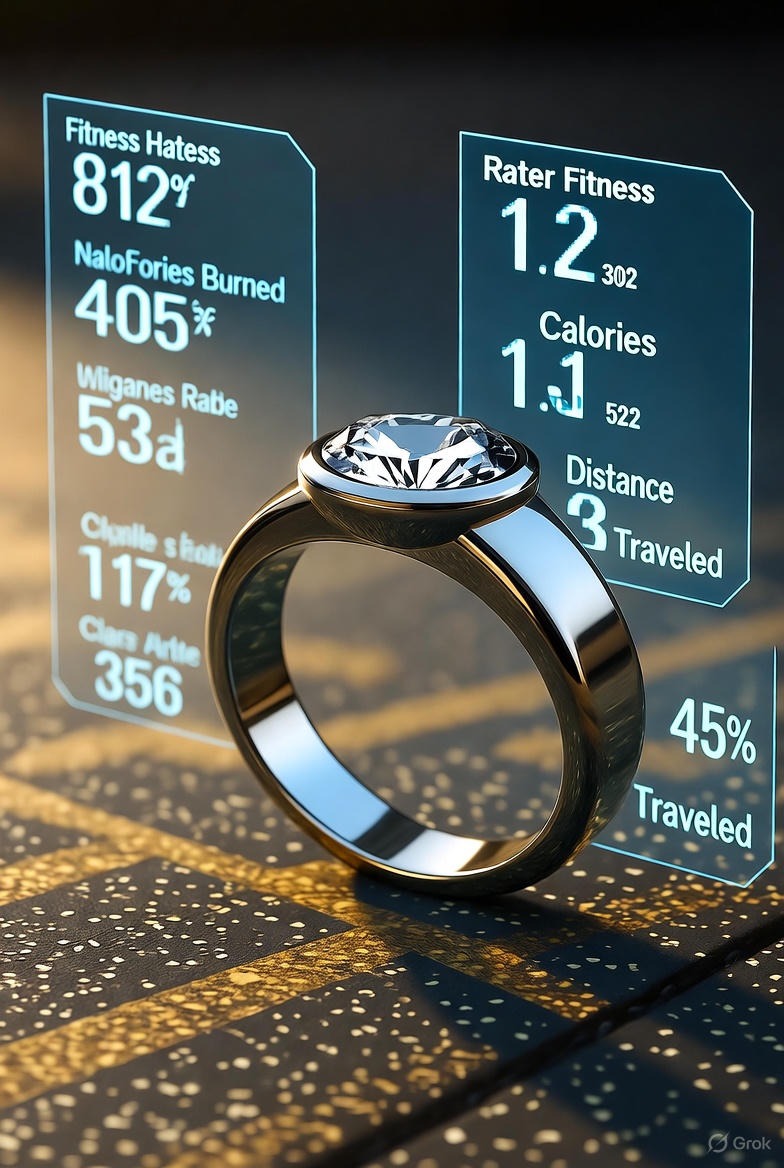
With great data comes great responsibility—both for the companies that collect it and the individuals who own it. Entrusting a device with your most intimate physiological details, 24/7, necessitates a clear-eyed look at privacy, security, and ethical use. An informed user is an empowered user.
The Non-Negotiable Pillars of Trust:
Your Role as a Data-Savvy User:
Choosing a company that aligns with these ethical principles is paramount. A brand’s commitment to your well-being should extend beyond the features of its product to its stewardship of your information. Learning about a company’s mission and values, such as those outlined on Oxyzen’s About Us page, can provide insight into its foundational principles.
By navigating these considerations thoughtfully, you secure the benefits of passive tracking while mitigating the risks. This allows you to fully embrace the final, and most rewarding, stage of this journey: the long-term transformation that occurs when data fades into the background and informed living becomes second nature.
The ultimate goal of any tool is to become so integrated into your life that you no longer consciously need it. This is the paradox of mastery. The final phase of engaging with passive health data is not lifelong dependency on an app, but the cultivation of embodied wisdom—the internalization of the insights so you can sense what the data once told you.
Phase 1: Data Dependence (Months 1-3)
You check the app frequently. You rely heavily on the readiness score to tell you how you feel. You are learning the language. The data is the primary authority.
Phase 2: Data Dialogue (Months 4-12)
You start to predict what the data will show. You wake up feeling drained and think, “My HRV probably took a hit last night.” You then check and confirm. The dialogue begins. Your subjective feelings and the objective data are in conversation, each refining the other. You use the data to run experiments and build personal rules of thumb: “When I eat late, my deep sleep drops by 20%.”
Phase 3: Embodied Wisdom (Year 1 and Beyond)
This is the destination. The data has trained your interoception—your sense of the internal state of your body. You no longer need to see a red readiness score to know you need a rest day; you feel the subtle heaviness in your limbs and the mental fog. You don’t need a sleep graph to know you slept poorly; you sense the lack of refreshment. The device becomes a validation tool and an early-warning system for subtle deviations, but your primary dashboard is your own cultivated awareness.
In this stage, you live by principles informed by thousands of data points:
The device hasn’t made you a slave to numbers; it has made you fluent in the language of your body. You wear it not out of need, but for assurance and for the continued, quiet audit that ensures you stay on track. You might review your data just once a week, looking at trends to confirm you’re living in alignment with your goals.
This is the true promise of accurate fitness data without manual logging: Liberation. Liberation from guesswork, from generic advice, from the tyranny of the logbook. It is the freedom to live your life fully, with the quiet confidence that you are making choices informed by the deepest possible understanding of your one and only body.
Your Trusted Sleep Advocate (Sleep Foundation — https://www.sleepfoundation.org/)
Discover a digital archive of scholarly articles (NIH — https://www.ncbi.nlm.nih.gov/
39 million citations for biomedical literature (PubMed — https://pubmed.ncbi.nlm.nih.gov/)
experts at Harvard Health Publishing covering a variety of health topics — https://www.health.harvard.edu/blog/)
Every life deserves world class care (Cleveland Clinic -
https://my.clevelandclinic.org/health)
Wearable technology and the future of predictive health monitoring. (MIT Technology Review — https://www.technologyreview.com/)
Dedicated to the well-being of all people and guided by science (World Health Organization — https://www.who.int/news-room/)
Psychological science and knowledge to benefit society and improve lives. (APA — https://www.apa.org/monitor/)
Cutting-edge insights on human longevity and peak performance
(Lifespan Research — https://www.lifespan.io/)
Global authority on exercise physiology, sports performance, and human recovery
(American College of Sports Medicine — https://www.acsm.org/)
Neuroscience-driven guidance for better focus, sleep, and mental clarity
(Stanford Human Performance Lab — https://humanperformance.stanford.edu/)
Evidence-based psychology and mind–body wellness resources
(Mayo Clinic — https://www.mayoclinic.org/healthy-lifestyle/)
Data-backed research on emotional wellbeing, stress biology, and resilience
(American Institute of Stress — https://www.stress.org/)


