


How Your Wellness Ring Makes Daily Health Optimization Effortless
How a wellness ring simplifies the process of daily health optimization.
How a wellness ring simplifies the process of daily health optimization.
%402x.svg)
In the relentless pursuit of optimal health, we’ve often been our own greatest obstacle. The sheer volume of data, the conflicting advice, and the Herculean effort required to track, analyze, and act on our body’s signals can be paralyzing. For decades, health optimization felt like a part-time job—a constant cycle of guesswork, journaling, and hoping we were getting it right. We knew sleep mattered, but was six hours enough? We understood stress was damaging, but how could we quantify its toll? Exercise was vital, but were we recovering properly? This fog of uncertainty made genuine, personalized well-being feel like a distant summit, reserved for those with endless time and resources.
Enter the modern wellness ring—a paradigm shift so profound it’s redefining our relationship with our own biology. This isn’t just another gadget to wear; it’s a silent, intelligent health partner engineered to make the complex effortless. Imagine a world where your body’s most subtle whispers—the dip in heart rate variability signaling oncoming stress, the disruption in sleep architecture hinting at illness, the metabolic shift indicating perfect training readiness—are not only heard but translated into clear, actionable guidance. The wellness ring dissolves the friction between insight and action. It moves health optimization from a conscious, taxing effort to a seamless, integrated aspect of daily living. This technology delivers what we’ve always needed: a continuous, objective, and deeply personal health narrative, without requiring us to become data scientists. It is the end of guessing and the beginning of knowing.
This article will explore the sophisticated mechanics and profound implications of this silent health revolution. We’ll journey through the effortless optimization of sleep, stress, activity, and recovery, demonstrating how a simple band on your finger is unlocking a future where living well is not a chore, but a natural, intuitive, and beautifully supported state of being.
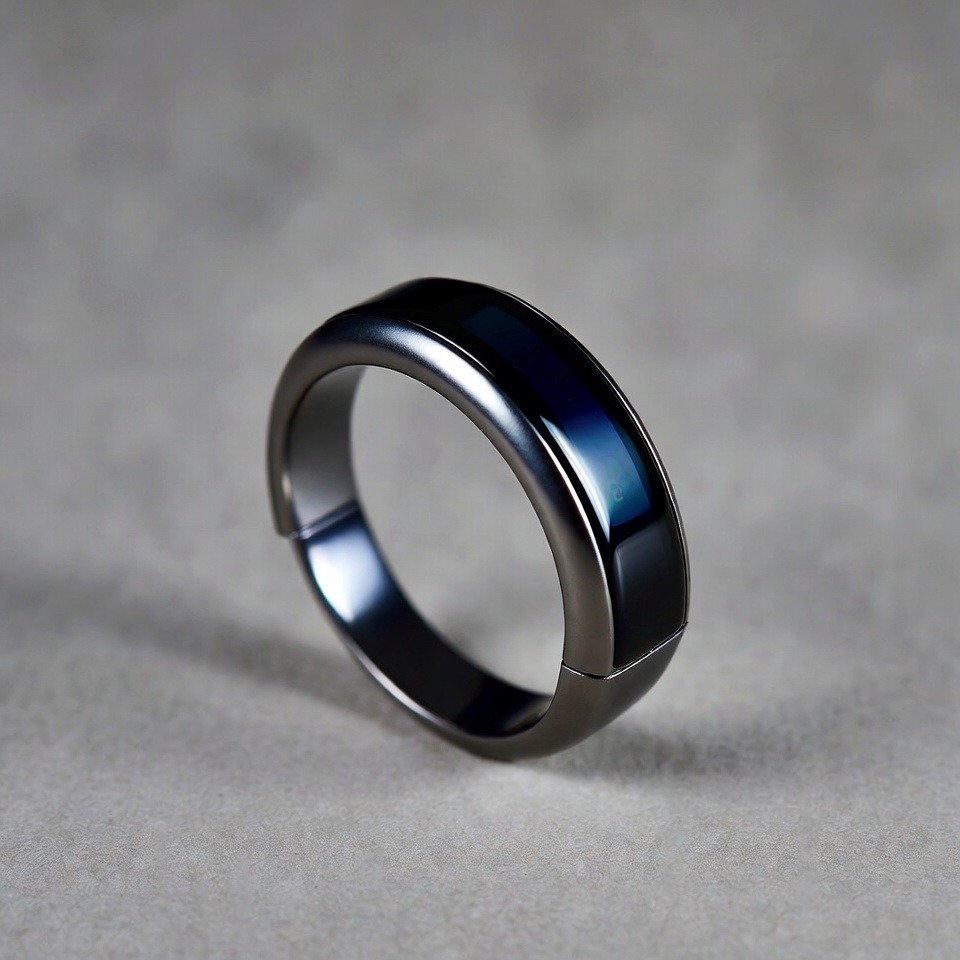
At its core, a wellness ring is a masterpiece of miniaturized biosensing. Unlike a smartwatch that shouts for attention from your wrist, the ring operates on a philosophy of subtlety and profound intimacy. Its position on your finger is strategic: it sits atop a rich network of capillaries, allowing its sensors to capture pulsatile blood flow with exceptional clarity. This vantage point is the key to its silent, continuous dialogue with your autonomic nervous system—the master regulator of your stress, recovery, and overall vitality.
The magic begins with Photoplethysmography (PPG) sensors. These tiny LEDs emit light into the skin, and photodiodes measure the amount of light reflected back. As your heart beats, blood volume in the capillaries changes slightly, modulating the light absorption. This data stream is the raw pulse wave, a treasure trove of information. Advanced algorithms then perform a feat of digital alchemy, extracting not just heart rate, but its nuanced rhythm—Heart Rate Variability (HRV). HRV, the millisecond variation between beats, is your body’s most honest stress and recovery metric. High HRV indicates a resilient, adaptable system (parasympathetic dominance, or “rest and digest”); low HRV signals a stressed, taxed one (sympathetic dominance, or “fight or flight”).
But the ring doesn’t stop there. A 3-axis accelerometer detects the faintest movements, differentiating between the gross motor activity of a workout and the micro-movements of sleep cycles. A temperature sensor, often on the inner band, tracks subtle changes in peripheral skin temperature, a key biomarker for circadian rhythm, ovulation, and the onset of illness. Some models even include SpO₂ sensors to monitor blood oxygen saturation during sleep, identifying potentially disruptive events like sleep apnea.
The true genius, however, lies in the sensor fusion. No single data point tells the full story. By fusing PPG, accelerometer, and temperature data in real-time, the ring’s proprietary algorithms create a multidimensional picture of your physiological state. It can distinguish between the elevated heart rate from a stressful meeting and one from climbing stairs. It can tell if you’re lying still but awake in bed versus in deep, restorative sleep. This context is everything. It transforms raw data into actionable insight.
Finally, this continuous stream of processed biometrics is seamlessly synced to a companion app, where machine learning models—often trained on vast, anonymized datasets—compare your patterns to normative baselines and, more importantly, to your own personal baseline. This is where the language of your body becomes clear. The ring isn’t just collecting data; it’s learning your unique physiological dialect—what “normal” looks like for you, so it can instantly flag meaningful deviations. This seamless, 24/7 translation of your body’s signals into a coherent health narrative is the silent revolution, making profound self-awareness not an effort, but a simple fact of wearing a ring.
The raw physiological data collected by a wellness ring is vast—amounting to millions of data points per day. For a human, this would be an indecipherable deluge, a digital heartbeat that offers no inherent wisdom. This is where Artificial Intelligence (AI) and machine learning step in, acting as your personal health cryptographer. The AI is the indispensable bridge between mere tracking and genuine optimization, effortlessly finding patterns and correlations invisible to the naked eye.
Think of the AI as a brilliant, hyper-observant health detective living in your app. It doesn’t just look at last night’s sleep score in isolation. It cross-references it with the previous week’s HRV trend, your daytime stress levels, your evening skin temperature, and even the duration of your afternoon workout. It asks: What combination of factors preceded my best nights of sleep? What was different on the nights I tossed and turned? By analyzing these multidimensional relationships over time, the AI builds your unique Personalized Health Model.
This model enables proactive insight, not reactive reporting. Instead of you wondering, “Why do I feel drained today?” the system might deliver a notification: *“Your recovery score is lower than usual today. This is likely linked to your elevated stress markers yesterday afternoon and the 30-minute delay in your bedtime. Consider a lighter workout and an earlier wind-down tonight.”* The AI has connected the dots for you, transforming disconnected events (a tough workday, a late night) into a causal health narrative.
The learning is continuous and adaptive. As you go through life’s changes—starting a new training regimen, managing a busy period at work, or even adjusting to a new time zone—the AI recalibrates. It learns what “strained” looks like for you versus “overtrained.” It identifies your personal precursors to a common cold, often a subtle rise in resting heart rate and a dip in HRV before symptoms appear. This predictive capacity is the cornerstone of effortless optimization. It shifts health management from a rear-view mirror activity to a forward-looking guide.
For example, the system might learn that for you, consuming caffeine after 2 PM has a statistically significant correlation with a 15% reduction in deep sleep, but only on weekdays. Or that a 20-minute mindfulness session in the afternoon reliably improves your next-morning HRV by an average of 8%. These are not generic health tips; they are your personal, data-driven health laws.
By offloading the complex analysis to AI, the wellness ring eliminates the need for manual journaling, spreadsheet tracking, and frantic internet searches to explain how you feel. The insight comes to you, contextualized and clear. It turns the overwhelming task of understanding your own body’s complex systems into a simple, daily conversation with an expert that knows you better than you know yourself. This is the effortless insight that makes sustainable health optimization finally achievable.
Sleep is the non-negotiable foundation of health, impacting everything from cognitive function and immune resilience to emotional stability and metabolic efficiency. Yet, for most, optimizing sleep has been a frustrating game of trial and error. The wellness ring transforms this critical pillar from a mystery into a managed, effortless process, putting your sleep quality on autopilot.
The ring’s comprehensive sleep analysis goes far beyond simplistic duration tracking. While you sleep, it meticulously charts your journey through the night’s architecture: light sleep, deep sleep (slow-wave sleep), REM sleep, and awakenings. It scores each stage based on duration, timing, and continuity, providing a holistic Sleep Score each morning. But the true optimization begins with the granular biomarkers underpinning that score:
With this data, the ring and its app become your personal sleep coach. It doesn’t just tell you your sleep was “poor”; it explains why. “Your deep sleep was reduced by 25% last night, coinciding with a higher-than-average resting heart rate. This pattern is often linked to late-day stress or evening alcohol consumption.” This precise feedback loop allows you to test interventions with clarity.
The system then offers personalized, actionable recommendations. Based on your consistent sleep latency, it might suggest beginning your natural sleep preparation and perfect evening wind-down 45 minutes earlier. If it detects frequent awakenings, it could guide you to learn how to sleep through the night naturally, ending those 3am wake-ups. For those struggling with initial relaxation, integrating natural breathing techniques to improve sleep quality can be a game-changer.
Perhaps most powerfully, the ring enables proactive sleep scheduling. By analyzing your historical data, the AI can predict your ideal bedtime window for optimal recovery based on your upcoming morning alarm. It can even analyze how factors like daytime activity, stress, and diet correlate with your sleep scores, helping you build days that naturally lead to better nights. This transforms sleep from a passive, hoped-for outcome into an actively managed, effortlessly optimized component of your daily health strategy, ensuring you wake up refreshed, every single day.

In our always-on culture, stress is a constant, but our awareness of its physiological toll is often shockingly low. We power through fatigue, ignore irritability, and wonder why we eventually hit a wall. The wellness ring changes this dynamic by making your stress and recovery status objectively visible in real-time, serving as an impartial guide to sustainable energy management.
The ring’s primary tool for this is the continuous monitoring of Heart Rate Variability (HRV) and resting heart rate (RHR). As mentioned, HRV is the ultimate biomarker of your autonomic nervous system’s balance. Throughout the day, the ring tracks these metrics, not as averages, but as responsive signals. A sudden dip in HRV accompanied by a rise in heart rate during a meeting is a clear, quantifiable sign of acute stress—not just a feeling, but a measurable physiological event.
This objective feedback is revolutionary. It allows you to connect internal states with external triggers with precision. You might discover that your “afternoon slump” is consistently preceded by a specific type of task or interaction. This awareness is the first, critical step toward regulation. The app often translates this data into a simple, intuitive metric like a “Stress” or “Readiness” score available at a glance each morning. A low readiness score isn’t a judgment; it’s a data-driven recommendation to prioritize recovery.
The system then guides you from awareness to action with effortless, integrated tools:
The ring turns the abstract concept of “balance” into a tangible, daily practice. It teaches you the rhythm of strain and recovery, helping you strategically apply stress (through good workouts, challenging work) and then proactively and effectively recover. This prevents burnout by design. It moves you from wondering why you’re tired to knowing exactly how to restore your energy, making sustained vitality an effortless, guided journey rather than a cycle of boom and bust.

The era of rigid, one-size-fits-all workout plans is over. Exercising based solely on a calendar—pushing through a scheduled HIIT session when your body is pleading for rest—is a recipe for injury, burnout, and suboptimal results. The wellness ring ushers in a new paradigm of truly personalized, responsive fitness by using your body’s own biomarkers to dictate daily exercise prescription.
This is known as autoregulation—allowing your daily physiological readiness to auto-regulate your training load. The ring provides the data to make this not just a theory, but a practical daily reality. Your morning readiness or recovery score, derived from sleep, HRV, RHR, and temperature, becomes your most important piece of workout equipment.
Here’s how effortless optimization unfolds:
Beyond the morning score, the ring provides invaluable intra-workout and post-workout feedback. During activity, it tracks heart rate zones and exertion, helping you stay in your intended zone for optimal results (e.g., staying in Zone 2 for base building). Post-workout, it measures the magnitude of the stressor by tracking how long your heart rate and HRV take to return to baseline—a direct metric of workout impact and your current fitness level.
The long-term trend data is where profound insights emerge. You can see your fitness improve as your resting heart rate trends downward and your HRV baseline rises. You can identify if you’re successfully balancing stress and recovery, or if you’re accumulating fatigue. This data allows you or your coach to periodize your training not around arbitrary weeks, but around your body’s actual adaptation cycles.
This approach makes exercise optimization effortless. You no longer waste energy guessing, debating, or pushing pointlessly. You simply check your status and follow the objective guidance from your own physiology. It ensures every ounce of effort you expend in the gym or on the road is effective, timely, and supportive of your long-term health, turning exercise from a potential source of stress into a perfectly harmonized component of your wellness symphony.
Nutrition advice is notoriously contradictory and generic. What works brilliantly for one person can be ineffective or detrimental for another. The wellness ring cuts through the noise by providing direct, personalized feedback on how your metabolism and systems respond to your dietary choices, transforming nutrition from a game of dietary dogma to a personalized science experiment.
While rings don’t directly track calories or macros, they monitor the downstream physiological effects of your meals with remarkable acuity. The primary metrics here are resting heart rate (RHR), heart rate variability (HRV), and peripheral body temperature.
This biofeedback loop creates effortless, conscious eating. You learn which foods are truly “energy foods” for your unique biology (supporting stable metrics) and which are “stress foods” (disrupting them). You can experiment with intermittent fasting windows and see how they affect your energy and focus biomarkers. The ring provides the “why” behind dietary principles, allowing you to craft a natural sleep diet focused on foods that help you sleep deeper or an overall eating pattern that supports sustained energy and low inflammation.
This approach liberates you from rigid diets. Instead of following external rules, you are guided by your body’s internal communication, making nutritional optimization a intuitive, personalized, and effortless journey toward what truly fuels you best.
Your circadian rhythm is the master internal clock that governs nearly every physiological process—from hormone release and metabolism to cellular repair and cognitive function. Living out of sync with this rhythm, a state known as circadian misalignment, is linked to poor sleep, weight gain, impaired immunity, and low mood. The wellness ring acts as a precise chronometer for your personal rhythm, providing the tools to effortlessly align your life with your biology.
The ring tracks two of the most reliable external outputs of your internal clock: body temperature and heart rate dynamics. Your core body temperature follows a distinct 24-hour wave, peaking in the late afternoon and reaching its nadir in the early morning hours, typically around 4-5 AM. This temperature minimum is a critical marker of your circadian phase. The ring’s overnight temperature tracking allows it to pinpoint this reliably.
Similarly, your resting heart rate and HRV follow a predictable circadian pattern, influenced by cortisol, melatonin, and autonomic tone. By modeling these daily and nightly patterns, the ring establishes your personal circadian baseline.
With this baseline understood, the ring helps you optimize timing for everything:
By making your invisible circadian rhythm visible and understandable, the wellness ring empowers you to structure your day in harmony with your internal clock. This alignment reduces physiological stress, improves energy efficiency, and enhances overall well-being, making optimal timing an effortless, data-driven component of daily life.
The most profound power of continuous biometric monitoring is not in describing the present, but in forecasting the future. By analyzing long-term trends, your wellness ring transitions from a historical reporter to a predictive health guardian. It can identify subtle, negative patterns long before they manifest as noticeable symptoms, and equally, confirm that positive changes are taking root at a physiological level.
This predictive capacity lies in the analysis of baseline shifts and trend lines. Your daily scores (sleep, readiness, stress) are useful, but the real story is told in how your underlying biomarkers—like your nightly HRV average, your resting heart rate trend, and your temperature rhythm—move over weeks and months.
This forward-looking perspective is the essence of effortless optimization. It moves health from a reactive “fix-it” model to a proactive “prevent-and-optimize” model. The ring quietly watches the horizon of your health, allowing you to make small, effortless course corrections today to ensure smooth sailing tomorrow, empowering you to act not on how you feel, but on what your body’s data predicts is coming.
For any tool to be effective in long-term health optimization, it must be frictionless. A device that is cumbersome to wear, difficult to charge, or siloed from your other tech will inevitably end up in a drawer. The modern wellness ring is designed from the ground up for seamless integration, becoming an invisible yet indispensable part of your daily life and digital ecosystem.
Physical & Aesthetic Effortlessness:
The ring itself is the pinnacle of unobtrusive design. Crafted from lightweight, hypoallergenic materials like titanium or ceramic, you quickly forget you’re wearing it. It’s shower-proof, swim-proof, and sleep-proof, requiring zero daily thought about removal. The minimalist, jewelry-grade aesthetic means it fits with any style, from workout gear to formal wear. Unlike a watch, there’s no screen to light up or distract; it simply works in the background. Battery life of 5-7 days means charging is a brief, weekly ritual, not a daily hassle.
Digital Ecosystem Integration:
This is where the magic of automation truly shines. Through open APIs and partnerships, leading wellness rings sync effortlessly with the health and fitness apps you already use.
Actionable Notifications & Gentle Nudges:
Instead of bombarding you with data, the integrated system provides gentle, context-aware nudges. A notification might pop up: “Your body temperature suggests your circadian rhythm is primed for sleep. Consider starting your wind-down.” Or, *“You’ve been sedentary for 90 minutes. A 5-minute walk would help stabilize your glucose metabolism.”* These aren’t interruptions; they are timely, intelligent suggestions woven into the flow of your day.
This seamless integration dissolves the boundary between “health tracking” and “living.” The ring and its ecosystem work so quietly and effectively in the background that you stop “using” a device and start simply experiencing the benefits of a life that is continuously, intelligently, and effortlessly optimized in harmony with your body’s needs.
For centuries, practices like meditation and breathwork were considered subjective arts, their benefits attested to by feeling but difficult to measure. The wellness ring changes this by providing objective, real-time validation of these mind-body interventions. It turns the subtle internal shifts of mental training into visible, gratifying data, transforming practice from an act of faith into a science of self-regulation.
This is achieved by using HRV as a direct window into autonomic nervous system state. When you engage in a calming practice, the goal is to increase parasympathetic (“rest and digest”) activity, which is reflected in an increase in HRV (specifically, the high-frequency component of HRV).
The Biofeedback Loop:
Long-Term Resilience Tracking:
Beyond acute sessions, the ring measures the cumulative impact of a consistent mind-body practice on your baseline physiology. Over months, practitioners often see their nocturnal HRV average trend upward and their resting heart rate trend downward. This indicates a fundamental increase in autonomic resilience—your default state becomes more calm and adaptable. You’re not just calming down in the moment; you’re rewiring your nervous system for greater durability.
This quantification demystifies mental fitness and makes its cultivation effortless and rewarding. It provides the motivation to practice consistently because you see the tangible results. It bridges the gap between the mental and the physical, proving that calming the mind directly heals and optimizes the body. For those exploring this connection, techniques outlined in our resource on natural ways to combat sleep deprivation starting today often incorporate these measurable breathwork fundamentals. The ring makes the profound connection between mind and body not just a concept, but a visible, optimizable reality.
The ultimate goal of any technology designed for self-improvement is not to create a new dependency, but to enhance and educate your own innate abilities. This is the transformative journey a wellness ring facilitates: from being a novel wearable you check, to becoming an indispensable health partner you trust, and finally, to functioning as an extension of your own refined intuition. It cultivates a deeper, more attuned relationship with your body, making conscious health optimization feel less like a technical process and more like a natural, intuitive way of being.
In the initial weeks, the relationship is data-centric. You are a student, and the ring is the teacher. You learn the language of your biomarkers—what a “good” HRV looks like for you, how your temperature dips before sleep, how your heart rate responds to different stressors. This phase is about building literacy. You check the app frequently, curious about the score after a good night’s sleep or a hard workout. The ring provides the objective truth that overrides your subjective (and often inaccurate) perceptions. You might feel fine, but the data shows you’re under-recovered, prompting you to rest. This external validation is crucial for breaking unproductive habits.
Over months, a shift occurs. You internalize the patterns. You start to feel the subtle signs of a dipping HRV—perhaps a slight irritability or mental fog—before you even check the app. When you do check, the data confirms your nascent intuition. The ring is now a validation tool. This is where trust solidifies. You no longer debate its recommendations; you follow them because its track record proves it knows your body’s responses better than your conscious mind does. You begin to make choices proactively: “I have a big day tomorrow, so I’ll skip that second glass of wine tonight to protect my deep sleep,” a decision now informed by data-backed cause and effect you’ve witnessed dozens of times.
Finally, after sustained use, the ring transitions into the background as your own bio-intuitive sense comes to the foreground. The constant feedback loop has trained you. You’ve learned the precise feeling of optimal readiness, the bodily sensation of rising stress before it becomes overwhelming, and the early whispers of fatigue. The ring becomes a silent partner, a safety net that continuously monitors in the background, only surfacing with an alert when it detects a significant deviation you might have missed. You are now operating with a heightened, educated awareness of your physiology. The optimization becomes effortless because it’s woven into your decision-making fabric. You’re not “tracking your health”; you’re simply living in intelligent harmony with your body, with the ring as a seamless, confirming extension of your self-awareness. This journey from external data to internal wisdom is the most profound optimization of all.

While the ring provides unparalleled personal data, human connection and expert interpretation can amplify its value exponentially. The most advanced wellness ecosystems understand this, offering integrated layers of community and coaching that transform solitary data points into shared journeys and professionally-guided transformations. This layer turns the ring from a personal dashboard into a portal for support, accountability, and accelerated learning.
The Power of Shared Insights:
Many platforms feature anonymized, opt-in community benchmarking. Seeing how your sleep duration or workout recovery compares to a cohort of peers in your age and gender group provides invaluable context. Is your 85% sleep efficiency stellar or average? This normative data helps calibrate your expectations and goals. More importantly, community forums or groups allow users to share strategies. You might discover a collection of 10 natural sleep hacks that busy professionals swear by from someone who used their ring data to identify the most impactful ones. This crowd-sourced wisdom helps you solve problems faster than you could alone, applying others’ successful experiments to your own unique data set.
Algorithmic AI Coaching:
The first level of coaching is built into the AI. As discussed, it provides daily recommendations: “Train lighter today,” or “Prioritize sleep.” This is 24/7 automated guidance based on your metrics. Some systems are evolving to offer more conversational AI, where you can ask, “Why is my HRV trending down this week?” and receive an analysis based on your correlated data (e.g., “Your alcohol consumption has increased on 3 of the last 7 nights, which correlates with your lower scores”).
Human Expert Integration – The Ultimate Leverage:
The true frontier is the seamless integration of human health professionals into the data stream.
This layer of community and coaching solves the “So what?” problem that often plagues data collection. It provides the “Now what?” The ring gives you the what (your data); the community offers shared hows; and the coach provides the personalized why and plan. Together, they create a supportive ecosystem that makes achieving your health goals less isolating, more informed, and significantly more effortless. You’re no longer navigating your health journey with just a map; you have fellow travelers and expert guides to help you interpret the terrain and choose the best path forward.
With great data comes great responsibility. The depth and continuity of insight provided by a wellness ring can, for some, become a source of anxiety rather than liberation. The pursuit of perfect scores can turn into a new kind of stress, ironically undermining the very optimization you seek. Therefore, using this powerful tool wisely is paramount. The goal is not to become a slave to the metrics, but to use them as a guide to cultivate a healthier, more balanced relationship with your body.
The Pitfalls of Perfectionism:
It’s easy to fall into the trap of chasing a perfect 100 Sleep Score or a perpetually high Readiness score. This can lead to:
Principles for Wise Interpretation:
Setting Healthy Boundaries:
The wellness ring is a mirror, not a master. Its purpose is to empower you with knowledge, not to imprison you with metrics. By approaching your data with curiosity, context, and compassion for your human variability, you avoid obsession and instead cultivate a balanced, intelligent, and truly effortless path to well-being, where technology serves you, not the other way around.
The current capabilities of wellness rings are impressive, but they represent merely the first chapter in a story of continuous innovation. The convergence of sensor miniaturization, advanced AI, and integrative health science is propelling this technology toward a future where the ring will become an even more proactive, predictive, and comprehensive health guardian. The trajectory points toward a device that doesn’t just track your health, but actively collaborates with you and your healthcare providers to manage it.
Next-Generation Sensing:
Future iterations will incorporate new, non-invasive sensors that expand the biometric palette.
AI Evolution: From Descriptive to Prescriptive & Predictive:
The AI will become exponentially more sophisticated.
Deeper Ecosystem Integration & Medical Adoption:
In this near future, the concept of “effortless optimization” will reach its zenith. The ring will evolve from a insightful observer to a collaborative health partner, anticipating needs, preventing setbacks, and providing a level of personalized, pro-active health management that makes thriving the default state. The journey from tracking to true partnership is just beginning.
We stand at an inflection point in the history of personal health. For too long, the pursuit of well-being has been fragmented, guesswork-driven, and burdened by overwhelming complexity. The modern wellness ring, with its elegant fusion of advanced biosensing, artificial intelligence, and human-centered design, decisively ends that era. It heralds a new standard for living well—one defined not by effortful striving, but by intelligent, seamless support.
This technology demystifies the human body. It translates the opaque language of fatigue, stress, and recovery into a clear, actionable dialect we can all understand. It transforms health from a destination we sporadically work toward into a continuous, guided journey we experience every day. By making the invisible visible—your sleep architecture, your nervous system balance, your circadian rhythm—the ring empowers you with self-knowledge that was previously accessible only in specialized labs.
The true breakthrough, however, is in the elimination of friction. Optimization becomes effortless because the ring handles the heavy lifting: the 24/7 monitoring, the complex data analysis, the pattern recognition, and the personalized recommendation engine. It offloads the cognitive burden, freeing you to simply live your life, supported by insights that help you live it better. You are no longer a passive recipient of your health; you are an informed, intuitive participant, co-piloting your well-being with a partner that knows you intimately.
As we have explored, this journey encompasses every pillar of vitality: sleep that is understood and enhanced, stress that is managed before it accumulates, training that aligns perfectly with readiness, nutrition that is personally validated, and a mind-body connection that is quantified and strengthened. The ring weaves these threads into a single, coherent tapestry of health.
Looking ahead, this is more than a product category; it is a foundational shift toward proactive, personalized, and participatory healthcare. It places unparalleled power for prevention and optimization directly on your finger. The promise is a future where we spend less time and energy worrying about our health and more time enjoying the vitality that comes from living in effortless sync with our own biology. This is not just a new way to track; it is a new, smarter, and profoundly effortless way to live.
The ultimate goal of any technology designed for self-improvement is not to create a new dependency, but to enhance and educate your own innate abilities. This is the transformative journey a wellness ring facilitates: from being a novel wearable you check, to becoming an indispensable health partner you trust, and finally, to functioning as an extension of your own refined intuition. It cultivates a deeper, more attuned relationship with your body, making conscious health optimization feel less like a technical process and more like a natural, intuitive way of being.
In the initial weeks, the relationship is data-centric. You are a student, and the ring is the teacher. You learn the language of your biomarkers—what a “good” HRV looks like for you, how your temperature dips before sleep, how your heart rate responds to different stressors. This phase is about building literacy. You check the app frequently, curious about the score after a good night’s sleep or a hard workout. The ring provides the objective truth that overrides your subjective (and often inaccurate) perceptions. You might feel fine, but the data shows you’re under-recovered, prompting you to rest. This external validation is crucial for breaking unproductive habits.
Over months, a shift occurs. You internalize the patterns. You start to feel the subtle signs of a dipping HRV—perhaps a slight irritability or mental fog—before you even check the app. When you do check, the data confirms your nascent intuition. The ring is now a validation tool. This is where trust solidifies. You no longer debate its recommendations; you follow them because its track record proves it knows your body’s responses better than your conscious mind does. You begin to make choices proactively: “I have a big day tomorrow, so I’ll skip that second glass of wine tonight to protect my deep sleep,” a decision now informed by data-backed cause and effect you’ve witnessed dozens of times.
Finally, after sustained use, the ring transitions into the background as your own bio-intuitive sense comes to the foreground. The constant feedback loop has trained you. You’ve learned the precise feeling of optimal readiness, the bodily sensation of rising stress before it becomes overwhelming, and the early whispers of fatigue. The ring becomes a silent partner, a safety net that continuously monitors in the background, only surfacing with an alert when it detects a significant deviation you might have missed. You are now operating with a heightened, educated awareness of your physiology. The optimization becomes effortless because it’s woven into your decision-making fabric. You’re not “tracking your health”; you’re simply living in intelligent harmony with your body, with the ring as a seamless, confirming extension of your self-awareness. This journey from external data to internal wisdom is the most profound optimization of all.
While the ring provides unparalleled personal data, human connection and expert interpretation can amplify its value exponentially. The most advanced wellness ecosystems understand this, offering integrated layers of community and coaching that transform solitary data points into shared journeys and professionally-guided transformations. This layer turns the ring from a personal dashboard into a portal for support, accountability, and accelerated learning.
The Power of Shared Insights:
Many platforms feature anonymized, opt-in community benchmarking. Seeing how your sleep duration or workout recovery compares to a cohort of peers in your age and gender group provides invaluable context. Is your 85% sleep efficiency stellar or average? This normative data helps calibrate your expectations and goals. More importantly, community forums or groups allow users to share strategies. You might discover a collection of 10 natural sleep hacks that busy professionals swear by from someone who used their ring data to identify the most impactful ones. This crowd-sourced wisdom helps you solve problems faster than you could alone, applying others’ successful experiments to your own unique data set.
Algorithmic AI Coaching:
The first level of coaching is built into the AI. As discussed, it provides daily recommendations: “Train lighter today,” or “Prioritize sleep.” This is 24/7 automated guidance based on your metrics. Some systems are evolving to offer more conversational AI, where you can ask, “Why is my HRV trending down this week?” and receive an analysis based on your correlated data (e.g., “Your alcohol consumption has increased on 3 of the last 7 nights, which correlates with your lower scores”).
Human Expert Integration – The Ultimate Leverage:
The true frontier is the seamless integration of human health professionals into the data stream.
This layer of community and coaching solves the “So what?” problem that often plagues data collection. It provides the “Now what?” The ring gives you the what (your data); the community offers shared hows; and the coach provides the personalized why and plan. Together, they create a supportive ecosystem that makes achieving your health goals less isolating, more informed, and significantly more effortless. You’re no longer navigating your health journey with just a map; you have fellow travelers and expert guides to help you interpret the terrain and choose the best path forward.
With great data comes great responsibility. The depth and continuity of insight provided by a wellness ring can, for some, become a source of anxiety rather than liberation. The pursuit of perfect scores can turn into a new kind of stress, ironically undermining the very optimization you seek. Therefore, using this powerful tool wisely is paramount. The goal is not to become a slave to the metrics, but to use them as a guide to cultivate a healthier, more balanced relationship with your body.
The Pitfalls of Perfectionism:
It’s easy to fall into the trap of chasing a perfect 100 Sleep Score or a perpetually high Readiness score. This can lead to:
Principles for Wise Interpretation:
Setting Healthy Boundaries:
The wellness ring is a mirror, not a master. Its purpose is to empower you with knowledge, not to imprison you with metrics. By approaching your data with curiosity, context, and compassion for your human variability, you avoid obsession and instead cultivate a balanced, intelligent, and truly effortless path to well-being, where technology serves you, not the other way around.
The current capabilities of wellness rings are impressive, but they represent merely the first chapter in a story of continuous innovation. The convergence of sensor miniaturization, advanced AI, and integrative health science is propelling this technology toward a future where the ring will become an even more proactive, predictive, and comprehensive health guardian. The trajectory points toward a device that doesn’t just track your health, but actively collaborates with you and your healthcare providers to manage it.
Next-Generation Sensing:
Future iterations will incorporate new, non-invasive sensors that expand the biometric palette.
AI Evolution: From Descriptive to Prescriptive & Predictive:
The AI will become exponentially more sophisticated.
Deeper Ecosystem Integration & Medical Adoption:
In this near future, the concept of “effortless optimization” will reach its zenith. The ring will evolve from a insightful observer to a collaborative health partner, anticipating needs, preventing setbacks, and providing a level of personalized, pro-active health management that makes thriving the default state. The journey from tracking to true partnership is just beginning.
We stand at an inflection point in the history of personal health. For too long, the pursuit of well-being has been fragmented, guesswork-driven, and burdened by overwhelming complexity. The modern wellness ring, with its elegant fusion of advanced biosensing, artificial intelligence, and human-centered design, decisively ends that era. It heralds a new standard for living well—one defined not by effortful striving, but by intelligent, seamless support.
This technology demystifies the human body. It translates the opaque language of fatigue, stress, and recovery into a clear, actionable dialect we can all understand. It transforms health from a destination we sporadically work toward into a continuous, guided journey we experience every day. By making the invisible visible—your sleep architecture, your nervous system balance, your circadian rhythm—the ring empowers you with self-knowledge that was previously accessible only in specialized labs.
The true breakthrough, however, is in the elimination of friction. Optimization becomes effortless because the ring handles the heavy lifting: the 24/7 monitoring, the complex data analysis, the pattern recognition, and the personalized recommendation engine. It offloads the cognitive burden, freeing you to simply live your life, supported by insights that help you live it better. You are no longer a passive recipient of your health; you are an informed, intuitive participant, co-piloting your well-being with a partner that knows you intimately.
As we have explored, this journey encompasses every pillar of vitality: sleep that is understood and enhanced, stress that is managed before it accumulates, training that aligns perfectly with readiness, nutrition that is personally validated, and a mind-body connection that is quantified and strengthened. The ring weaves these threads into a single, coherent tapestry of health.
Looking ahead, this is more than a product category; it is a foundational shift toward proactive, personalized, and participatory healthcare. It places unparalleled power for prevention and optimization directly on your finger. The promise is a future where we spend less time and energy worrying about our health and more time enjoying the vitality that comes from living in effortless sync with our own biology. This is not just a new way to track; it is a new, smarter, and profoundly effortless way to live.
Your Trusted Sleep Advocate: Sleep Foundation — https://www.sleepfoundation.org
Discover a digital archive of scholarly articles: NIH — https://www.ncbi.nlm.nih.gov/
39 million citations for biomedical literature :PubMed — https://pubmed.ncbi.nlm.nih.gov/
Experts at Harvard Health Publishing covering a variety of health topics — https://www.health.harvard.edu/blog/
Every life deserves world class care :Cleveland Clinic - https://my.clevelandclinic.org/health
Wearable technology and the future of predictive health monitoring :MIT Technology Review — https://www.technologyreview.com/
Dedicated to the well-being of all people and guided by science :World Health Organization — https://www.who.int/news-room/
Psychological science and knowledge to benefit society and improve lives. :APA — https://www.apa.org/monitor/
Cutting-edge insights on human longevity and peak performance:
Lifespan Research — https://www.lifespan.io/
Global authority on exercise physiology, sports performance, and human recovery:
American College of Sports Medicine — https://www.acsm.org/
Neuroscience-driven guidance for better focus, sleep, and mental clarity:
Stanford Human Performance Lab — https://humanperformance.stanford.edu/
Evidence-based psychology and mind–body wellness resources:
Mayo Clinic — https://www.mayoclinic.org/healthy-lifestyle/
Data-backed research on emotional wellbeing, stress biology, and resilience:
American Institute of Stress — https://www.stress.org/


