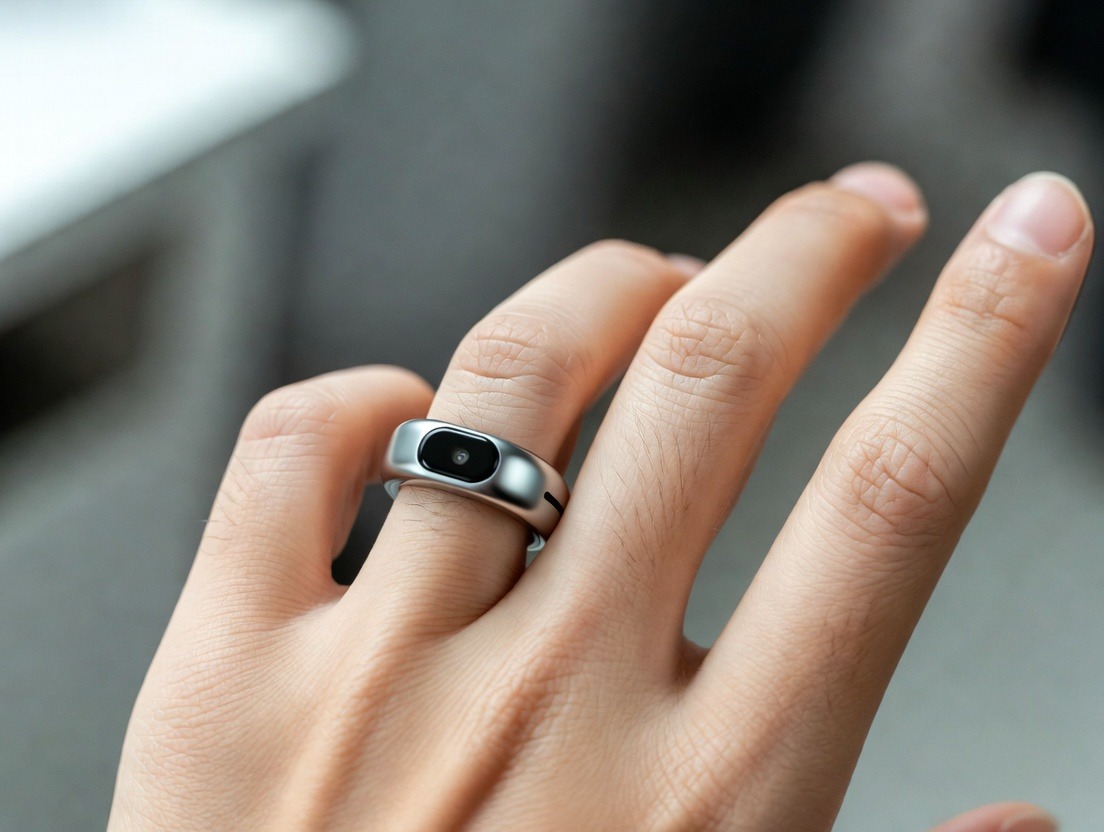
The Complete Beginner-Friendly Guide to Building Habits Your Ring Measures
A complete beginner's guide to building habits that are directly measurable by your ring.
The Complete Beginner-Friendly Guide to Building Habits Your Ring Measures
We’ve all been there. You buy a sleek new piece of technology—a smart ring that promises to unlock the secrets of your health—and for the first week, you’re a model of wellness. You check your sleep score religiously, marvel at your heart rate variability, and feel a surge of motivation. But then, life happens. The novelty fades. The ring becomes just another piece of jewelry, and the grand plans for transformation quietly gather digital dust.
This isn’t a failure of willpower; it’s a design flaw in our approach. We treat these powerful devices like passive report cards, waiting for them to tell us we’ve done poorly, rather than using them as the ultimate coaches for building the life we want. The truth your smart ring knows, but you might not yet realize, is this: You cannot manage what you do not measure, but measurement without meaningful action is just data for data’s sake.
This guide bridges that critical gap. We’re moving beyond simply tracking biometrics to architecting a life where your daily habits naturally cultivate the stellar readings you see on your app. This is not about chasing a perfect sleep score or an ideal resting heart rate. It’s about building a foundational system of habits that make those numbers the inevitable byproduct of a life well-lived.
Think of your smart ring not as a judge, but as a translator. It’s translating the silent language of your nervous system—your stress, your recovery, your energy expenditure—into a visual dashboard you can understand. Your job is to learn to speak back. To take that data and craft daily conversations, through your actions, that tell your body a story of support, resilience, and health.
Whether your ring is from Oura, Circular, Ultrahuman, or another pioneer in this space, the principles are universal. These devices measure the core pillars of your well-being: Sleep, Readiness, and Activity. Our mission is to build habits that directly and positively influence each pillar, creating a virtuous, self-reinforcing cycle. Better habits lead to better data. Better data provides the feedback and motivation to strengthen those habits further.
Welcome to a new way of thinking. This is your beginner-friendly blueprint for constructing habits that are so seamlessly integrated into your life, your ring simply becomes a quiet, confirming witness to your success. Let’s begin building from the ground up.
What Your Smart Ring Actually Measures (And Why It Matters)
Before we can build habits that move the needle, we need to understand what the needle is actually pointing to. Your smart ring is far more than a sleep tracker; it’s a continuous, non-invasive window into your autonomic nervous system (ANS). The ANS is the control center for all the automatic functions you don’t think about: your heartbeat, digestion, breathing, and the critical balance between stress and recovery.
The most advanced rings use a combination of sensors—photoplethysmography (PPG) for blood flow, a 3D accelerometer for movement, a gyroscope, and often temperature sensors. Together, they don’t just count steps; they interpret the quality of your biological state. Let’s break down the core metrics and translate them from data points into actionable insights.
Sleep: The Foundation of Everything Your ring’s sleep analysis is its most sophisticated feature. It’s not just tracking duration, but dissecting the architecture of your night:
Sleep Stages: It estimates time spent in Light, Deep, and REM sleep. Deep sleep is for physical restoration and immune function, while REM is crucial for memory consolidation and emotional processing. A habit that improves your sleep quality will shift this architecture for the better.
Resting Heart Rate (RHR): Measured during your deepest sleep, this is a gold-standard indicator of cardiovascular fitness and recovery. A lower RHR generally suggests a more efficient heart. Stress, illness, overtraining, or poor sleep can raise it.
Heart Rate Variability (HRV): This is the star metric for many biohackers. HRV is the subtle variation in time between each heartbeat. A higher HRV indicates a resilient, adaptable nervous system that can switch smoothly between stress (sympathetic mode) and rest (parasympathetic mode). It’s a direct readout of your body’s readiness to perform and recover. You can explore the foundational role of sleep in these metrics in our guide, The Foundation of Good Sleep Health: Core Principles.
Respiratory Rate: The number of breaths you take per minute during sleep. Significant deviations can signal the onset of illness, stress, or respiratory issues.
Body Temperature: Tracking subtle changes in your nocturnal temperature can reveal cycles, predict illness, and indicate metabolic health.
Readiness/Recovery: Your Daily Green Light This composite score (often called Readiness, Recovery, or a similar term) is your body’s daily performance review. It synthesizes your sleep data, previous day’s activity, and sometimes temperature trends to answer one question: How much stress can your body handle today? A high score suggests you’re primed for intense workouts, challenging projects, or social engagements. A low score is a clear signal to prioritize rest, gentle movement, and stress management. Ignoring this score is like ignoring a low-fuel light in your car.
Activity: Beyond the Step Count While rings count steps, the smart ones focus on balancing activity with recovery. They track:
Active Calories & METs: Your total energy expenditure.
Activity Goals: Often personalized, encouraging you to move enough, but not too much.
Recovery Time: After intense sessions, some rings will suggest how long to rest before another hard effort.
Why This Matters for Habit Building: You cannot build an effective fitness habit if your Readiness score is perpetually in the red from poor sleep. You cannot force a stellar sleep score if your daytime habits are flooding your system with stress hormones. The ring shows the interconnectedness of your systems. Therefore, the habits we build must be synergistic. A calming bedtime ritual (supporting Sleep) might involve gentle yoga (low-impact Activity), which in turn improves your HRV (boosting Readiness). This holistic feedback loop is your ultimate advantage. For a deeper dive into how these sleep metrics manifest in your waking life, consider reading How Poor Sleep Health Shows Up in Your Daily Life.
The Psychology of Habit Formation: The Loop That Beats Willpower
Armed with knowledge of what we’re measuring, we now turn to the engine of change: habit formation. Relying on motivation and willpower is a losing strategy. They are finite resources that deplete like a battery throughout the day. Habits, however, are the brain’s way of automating behavior to save cognitive energy. Once formed, they run on autopilot, requiring little to no willpower.
The cornerstone of modern habit science is the Habit Loop, a concept popularized by Charles Duhigg. It consists of three components:
Cue: The trigger that initiates the behavior. It can be a location, time of day, emotional state, preceding action, or person.
Routine: The behavior itself—the action you want to habitualize.
Reward: The benefit you gain from doing the behavior. This is what teaches your brain to remember the loop for the future.
Where most people fail is in misunderstanding the reward. The reward must be immediately satisfying to the primitive brain. “Better health in 10 years” is not a compelling reward. “Feeling a sense of accomplishment,” “enjoying a delicious post-workout smoothie,” or “the pleasant feeling of calm after meditation” are.
This is where your smart ring becomes a habit-formation powerhouse. It provides two critical elements often missing from traditional habit-building:
An Unmistakable Cue: Your daily Readiness score or Sleep report is a concrete, data-driven cue. A low score can be the cue to initiate a “recovery day” habit stack. A high score can be the cue to confidently tackle a hard workout.
A Powerful, Intrinsic Reward: The data itself becomes the reward. Seeing your Sleep Score improve, your HRV trend upward, or your RHR dip after consistently practicing your new habits delivers a potent hit of satisfaction. This is the digital-age equivalent of checking something off a list. It turns abstract health into a tangible, winnable game. For those starting out, establishing this feedback loop is key, as outlined in Sleep Health for Beginners: Your First 30 Days.
The process of change, according to Stanford behavior expert B.J. Fogg, is about aligning Motivation, Ability, and a Prompt. Your ring supercharges the prompt and boosts motivation through instant feedback. Our job in the following sections is to design routines that are so simple (high ability) they are almost impossible not to do, and to attach them to the right cues in your day and on your dashboard.
Hacking Your Environment: The Invisible Hand That Shapes Your Habits
You are not a lone actor fighting against temptation. You are a product of your environment. The most effective habit strategy is to stop fighting yourself and start designing your surroundings to make the right action the easiest action. This is “choice architecture,” and it’s your secret weapon.
Your environment includes your physical space, your digital space, and your social sphere. Let’s design it for ring-friendly habits.
Physical Space Design for Sleep & Recovery:
The Bedroom Sanctuary: This is non-negotiable. Your bedroom’s primary purpose is sleep. Make it pitch dark (use blackout curtains or a sleep mask). Make it cool (aim for 65-68°F or 18-20°C). Make it quiet (use white noise or earplugs). Banish screens. Your ring’s temperature and sleep depth sensors will thank you.
Pre-Sleep Ritual Zone: Create a physical “launching pad” for your wind-down routine. A specific chair with a book and a amber-reading light. A corner with your yoga mat unrolled. A bathroom counter with your skincare products laid out. The visual cue of this prepared space makes the routine effortless.
Activity Gear Readiness: Lay out your workout clothes and shoes the night before. Fill your water bottle and put it in the fridge. Have your gym bag packed and by the door. When the cue hits (your morning alarm, a calendar reminder), the friction to act is nearly zero.
Digital Environment Design:
Notification Triage: Your ring tracks stress. Constant pings from email and social media are micro-stressors that spike cortisol and wreck HRV. Use Do Not Disturb schedules aggressively. Turn off non-essential notifications. Your “Readiness” for the day depends on a calm nervous system.
App Optimization: Move your ring’s app to your home screen. Make checking your Sleep and Readiness scores the first thing you do on your phone in the morning (after a few moments of quiet, perhaps). This makes the data your guide for the day.
Blue Light Discipline: Install blue light filtering software (like f.lux) on all computers and enable Night Shift on phones at least 2 hours before bed. Better yet, use app timers to lock you out of social media after a certain hour. Protecting your sleep is the highest-leverage habit you can build.
Social Environment Design:
The Accountability Partner: Share your habit goals and ring data with a trusted friend or partner. A simple text like “My readiness is 85 today, going for a PR!” or “Sleep score was rough, taking it easy tonight” creates social accountability and support.
Community Immersion: Join online communities related to your ring (subreddits, Facebook groups, Discord servers). Seeing others interpret data and share habits normalizes the journey and provides a wealth of ideas.
By intentionally designing these three layers of your environment, you expend less mental energy resisting temptation and more energy simply flowing into positive, data-reinforcing behaviors. It’s the ultimate form of self-kindness. For a practical toolkit to start optimizing your environment, our Beginner's Sleep Health Toolkit: What You Actually Need offers a great starting point.
The Morning Anchor: Building a Routine That Sets Your Daily Data
How you start your day sets the biological tone for the next 16 hours. A chaotic, stressful morning can send your nervous system into sympathetic overdrive, making it harder to focus, manage emotions, and ultimately, to wind down at night. A grounded, intentional morning acts as a buffer against daily stress and directly contributes to a higher Readiness score tomorrow.
Your goal is not a rigid 2-hour protocol. It’s to create a short, non-negotiable “anchor” routine that you can accomplish even on your worst days. This routine should serve three masters: Hydration, Mindfulness, and Light Exposure.
1. Hydration Before Caffeination (The 5-Minute Habit): Overnight, you lose significant water through respiration. Starting the day dehydrated thickens blood, raises heart rate, and stresses the system. Before you reach for coffee:
Action: Drink 16-20 oz (500ml) of water immediately upon waking.
Ring Connection: Consistent hydration improves blood plasma volume, which can positively influence HRV and help regulate body temperature. It’s a direct input for physiological resilience.
Hack: Keep a full glass or bottle of water on your nightstand. The visual cue is right there when you open your eyes.
2. Mindful Awakening (The 3–5 Minute Habit): Resist the “panic grab” for your phone. Checking email or news bombards your prefrontal cortex with demands and potential stressors before it’s fully online. Instead, give your nervous system a gentle wake-up call.
Action: Practice a short mindfulness exercise. This could be:
Box Breathing: Inhale for 4, hold for 4, exhale for 4, hold for 4. Repeat 5 times.
Gratitude: Mentally note 3 specific things you’re grateful for.
Simple Meditation: Just sit and focus on the sensation of breath for a few minutes.
Ring Connection: This practice starts your day in a parasympathetic (rest-and-digest) state, lowering cortisol. A calmer baseline heart rate in the morning is a gift that keeps giving, reducing overall stress load, which your ring tracks all day.
3. Seek Morning Light (The 10-Minute Habit): This is arguably the most powerful single habit for regulating your circadian rhythm, which governs your sleep-wake cycle.
Action: Within 30-60 minutes of waking, get 10-15 minutes of direct, outdoor sunlight (without sunglasses if safe). Cloudy days still work—the light intensity is still far greater than indoors.
Ring Connection: Morning light halts melatonin production and sets your internal clock. A well-set circadian rhythm leads to faster sleep onset, more stable sleep stages, and better overall sleep architecture—everything your ring measures. It’s the most natural sleep aid available.
Putting It All Together (A Sample 15-Minute Anchor):
Cue: Alarm goes off.
Routine: Sit up, drink your pre-placed water (3 min). Perform a box breathing sequence (3 min). Walk outside with your coffee/tea and soak in the light (10 min).
Reward: Feeling physically awake, mentally calm, and aligned with the day. The secondary, powerful reward comes later: observing more consistent sleep data and higher daytime Readiness scores in your ring’s app.
This anchor doesn’t require heroic effort. It requires intentional design. By nailing these three fundamental inputs—water, calm, and light—you build a day that is far more likely to generate the kind of biometric data you want to see.
Daytime Dynamics: Fuel, Movement, and Stress Management for Optimal Metrics
Your day is a series of inputs. Every meal, every movement, every moment of stress or calm is a data point your ring will synthesize. The habits you build here don’t just affect your energy now; they are the primary determinants of your Sleep and Readiness scores tonight and tomorrow. We’ll focus on three pillars: Nutritional Timing, Strategic Movement, and Stress Interception.
Nutritional Timing: Eating for Stable Energy (Not Just Calories) What and when you eat has a profound impact on heart rate, HRV, and sleep.
The Caffeine Cutoff Habit: Caffeine has a half-life of 6-8 hours. Consuming it too late can fragment sleep and reduce Deep Sleep.
Action: Set a firm caffeine cutoff time, ideally 8–10 hours before your bedtime. If you sleep at 10:30 p.m., your last coffee should be before 2:30 p.m.
Ring Connection: You’ll likely see improvements in sleep latency (time to fall asleep) and sleep stability.
The Evening Meal Margin Habit: A large, heavy, or spicy meal right before bed forces your digestive system to work hard, raising core body temperature and heart rate during the night.
Action: Finish your last major meal at least 2-3 hours before bedtime. If you need a snack, make it light, balanced, and easily digestible (e.g., a small handful of almonds, some Greek yogurt).
Ring Connection: This can lead to a lower resting heart rate during sleep and less nocturnal wakefulness, reflected in a higher sleep efficiency score.
The Hydration Horizon Habit: While morning hydration is key, flooding your system right before bed guarantees disruptive bathroom trips.
Action: Taper fluid intake in the last 90 minutes before bed. Sip small amounts if thirsty.
Strategic Movement: Using Your Ring as a Pace Car This is where your Activity and Readiness data have a direct dialogue.
The “Readiness First” Check Habit: Before deciding on your workout intensity, check your recovery score.
Action: If score is High (e.g., 85+): It’s a green light for high-intensity interval training (HIIT), heavy strength training, or a long endurance session.
If score is Moderate (e.g., 70-84): Opt for moderate work—a steady-state run, a circuit training session, or a vigorous yoga class.
If score is Low (e.g., <70): This is a mandatory recovery day. Your habit is to actively recover: a leisurely walk, gentle stretching, yoga nidra, or foam rolling. The habit is to move, not to strain.
The Non-Exercise Activity Thermogenesis (NEAT) Habit: Your ring tracks all-day movement. Combat sedentary stagnation with micro-habits.
Actions: Set a reminder to stand/walk for 2 minutes every 30 minutes. Take walking meetings. Park farther away. Pace while on the phone. These small bursts keep metabolism active and prevent the energy slumps that lead to poor choices.
Stress Interception: The Art of the Micro-Recovery Chronic, unmanaged stress elevates cortisol and crushes HRV. The key is to intercept stress waves throughout the day before they become a tidal wave.
The Breathing Reset Habit: When you feel tension rising—before a meeting, after a difficult call—don’t reach for your phone. Reach for your breath.
Action: Perform a 60-second breathing reset. Inhale deeply for a count of 4, exhale slowly for a count of 6. The extended exhale triggers the parasympathetic nervous system.
The Digital Boundary Habit: The constant context-switching of modern work is a huge cognitive stressor.
Action: Use the Pomodoro Technique: work in focused, 25-minute blocks with a strict 5-minute break (no screens!). This gives your brain predictable recovery.
These daytime habits are the levers you pull to directly influence the data your ring collects overnight. They turn passive tracking into active biofeedback. You eat earlier, see a lower sleep-time heart rate. You take a breathing break, see a slight HRV boost. This is the conversation with your body, translated by your ring.
The Evening Wind-Down: Engineering the Perfect Prelude to Sleep
If the morning routine sets the day’s tone, the evening wind-down is the sacred process of lowering the curtain on wakefulness and inviting sleep. This is not passive relaxation; it is the active undoing of the sympathetic nervous system’s daily activation. A consistent wind-down ritual is the single most effective habit you can build for improving every metric your ring measures about your sleep.
The goal is to create a gradual, 60-90 minute “ramp” into sleep, moving from high stimulation to deep calm. Think of it like dimming the lights in a theater.
Phase 1: The Digital Sunset (60-90 mins before bed) This is the non-negotiable starting gun for your wind-down.
The Habit: Set a recurring alarm labeled “Digital Sunset.” When it sounds, you engage your phone’s Do Not Disturb mode and plug it in to charge outside the bedroom. The same goes for laptops and tablets.
Why It Works for Your Ring: Blue light from screens suppresses melatonin production by up to 50%. The mental stimulation of social media, email, or news creates cognitive arousal and emotional charge—the antithesis of sleep readiness. Removing this input is the most significant step you can take to improve sleep latency (time to fall asleep) and sleep stability. For a clear explanation of why this distinction matters, see Sleep Health vs. Sleep Hygiene: Understanding the Difference.
Phase 2: The Environmental Transition (60 mins before bed) Now, shape your physical environment to whisper “sleep.”
The Dimming Lights Habit: Overhead bright lights signal “daytime” to the brain. In the last hour, use only low, warm lamps, salt lamps, or candlelight. If possible, use smart bulbs that automatically dim and shift to red/orange tones in the evening.
The Temperature Drop Habit: A drop in core body temperature is a key sleep signal. You can facilitate this.
Action 1: Take a warm bath or shower 60-90 minutes before bed. As you exit, your body’s dilated blood vessels release heat, causing your core temperature to drop—a clear sleep cue.
Action 2: Set your bedroom thermostat to 65-68°F (18-20°C). Your ring’s temperature sensor will show you the stability this provides.
Phase 3: The Nervous System Shift (30-45 mins before bed) This is where you directly engage your parasympathetic system.
The Gentle Body Scan Habit: Instead of vigorous exercise, engage in gentle, restorative movement.
Action: A 10-15 minute routine of gentle yoga stretches (like legs-up-the-wall, child’s pose, seated forward folds) or using a foam roller. The focus is on release, not exertion.
The Mental Dump Habit: A racing mind is the enemy of sleep.
Action: Practice “Worry Time” or a “Brain Dump.” Take 5-10 minutes to write down everything on your mind—tasks, anxieties, ideas—in a notebook. The physical act of writing gets it out of your cyclical thoughts and onto the page, where it can wait until tomorrow. This is profoundly effective for reducing sleep-onset anxiety.
Phase 4: The Final Anchor (15 mins before bed) Create a tiny, super-consistent final ritual that becomes the ultimate cue for sleep.
The Habit: This could be applying a specific lavender-scented moisturizer, drinking a sip of herbal tea (like chamomile or passionflower), reading 5 pages of a physical (not digital) book under a warm reading light, or listening to the same 5-minute sleep meditation track.
The Ring Connection: This highly specific routine creates a powerful Pavlovian response. Your body learns that “lavender + book + bed” = sleep is now. Over time, this can dramatically shorten the time it takes to fall asleep.
By treating your wind-down with the same respect as an important meeting, you are not just “going to bed.” You are conducting the complex physiological orchestra of sleep onset. Your ring will reflect this meticulous preparation with higher scores for Sleep Latency, Sleep Stability, and overall Sleep Score. It’s the ultimate reward for a habit well-executed.
Interpreting Your Data: From Numbers to Narrative
You’ve built the habits. You’ve executed the routines. Now, the data flows in. This is the moment of truth—or rather, the moment of curiosity. Most beginners make two critical mistakes: they either obsess over daily fluctuations, seeing each dip as a failure, or they ignore the trends entirely, missing the story their body is telling. Your goal is to become a compassionate detective, not a harsh critic.
The Golden Rule: Trend is Your Friend; Daily Numbers are Noisy. Your HRV dropped 10 points from yesterday. Your sleep score is 5 points lower. Before you panic, remember: single-day data is subject to immense noise—a hard workout, a slightly later meal, a stressful work conversation, even your menstrual cycle. The true power lies in the trend line. Look at your data over weeks and months.
How to Read the Key Signals:
Sleep Score Trends: Don’t fixate on hitting 90 every night. Look for consistency. Is your average score over the last two weeks higher than it was a month ago? That’s a win, even if last night was an outlier. A rising trend means your habits are working.
HRV: The North Star of Resilience: This is the metric to watch over the long term. A gently rising trend line over months is a spectacular sign of improved nervous system health and better adaptation to stress. A sustained downward trend, however, is a bright red flag signaling chronic stress, overtraining, illness, or poor recovery. It’s your body’s most honest plea for rest. For a comprehensive look at how to evaluate your starting point, our Sleep Health Assessment: Rating Your Current Sleep is an excellent resource.
Resting Heart Rate (RHR): Like HRV, watch the trend. A gradual decrease suggests improving cardiovascular fitness. A sustained increase of 5-7+ beats per minute above your baseline can be an early sign of impending illness, dehydration, or excessive fatigue.
Body Temperature: For those with rings that track it, a sustained elevation (especially for women) can pinpoint cycle phases or the very earliest signs of infection, sometimes before you feel symptoms.
Creating Your Personal Baseline & Context: The numbers are meaningless without context. A “good” HRV for you could be “poor” for someone else. This is why the first month of wearing your ring is a baseline period. Don’t try to change everything at once. Just live normally and let the ring learn you.
The Habit of Journaling (The Missing Context): This is the master habit for interpretation. Your ring measures the what, but you need to log the why.
Action: Keep a simple note on your phone or in a notebook. Each morning, after checking your data, jot down 2-3 lines of context from the previous day:
“60-min intense spin class at 6pm.”
“Had a big team presentation at 3pm, felt very stressed.”
“Ate pizza late, around 9:30pm.”
“Went for a gentle 30-min walk and did my full wind-down.”
The Power: After two weeks, you’ll have powerful correlations. “Every time I work out after 7pm, my Deep Sleep % drops.” *“On days I meditate, my HRV is consistently 5-10% higher.”* This turns data into personalized, actionable wisdom. It moves you from “My sleep is bad” to “Late meals disrupt my sleep.”
By learning to interpret the narrative in your numbers, you complete the feedback loop. The data stops being a report card and becomes a conversation guide. It tells you what habits are serving you and which ones you might need to adjust. This is the essence of being the CEO of your own health.
Starting Small: The Atomic Habit Method for Ring Users
Armed with all this knowledge, the temptation is to overhaul your entire life tomorrow. This is the most common and fatal mistake in habit building. Ambition crushes consistency. The key to lasting change is to start so small that the new behavior feels laughably easy. This is the core of James Clear’s “Atomic Habits” philosophy: tiny changes, remarkable results.
For the ring user, this method is perfectly suited because the ring provides the immediate, positive feedback that reinforces even the tiniest action.
The Two-Minute Rule and Habit Stacking:
The Two-Minute Rule: When starting a new habit, scale it down to take two minutes or less.
Want a morning meditation habit? Start with “I will sit still and take three deep breaths after I turn off my alarm.” That’s it.
Want an evening reading habit? Start with “I will read one paragraph of my book after I plug my phone in.”
The goal is to master the habit of showing up. The ring’s daily check-in becomes the reward for showing up.
Habit Stacking: This is the secret weapon. You don’t build new habits in isolation; you attach them to existing, automatic habits you already have. The formula is: “After/Before [CURRENT HABIT], I will [NEW TINY HABIT].”
Building Your Ring-Centric Habit Stacks: Let’s construct atomic habit stacks using your ring’s natural data as the anchor.
Morning Stack (Cue: Waking up and checking your ring’s sleep data):
Existing Habit: I open my ring’s app to see my Sleep Score.
New Atomic Habit: After I note my score, I will take one big sip of water from the bottle on my nightstand.
Advanced Stack: After I take that sip, I will step outside my front door and take three deep breaths of fresh air.
Evening Wind-Down Stack (Cue: Your “Digital Sunset” alarm):
Existing Habit: I hear my 9:00 p.m. alarm.
New Atomic Habit: After I hear the alarm, I will plug my phone into its charger in the kitchen (not the bedroom).
Advanced Stack: After I plug in my phone, I will dim the overhead lights and turn on the living room lamp.
Activity Stack (Cue: A low Readiness score):
Existing Habit: I see my Readiness score is 65.
New Atomic Habit: Because my score is low, I will change my planned run to a 10-minute walk.
Advanced Stack: After my walk, I will do 2 minutes of gentle quad and calf stretching.
The Ring as the Ultimate Reinforcer: Here’s the magic. When you do your tiny habit—drink that sip of water, take those three breaths, go on that short walk—you are not just doing the habit. You are also checking your ring data. The act of checking becomes a reward in itself, especially as you start to see positive trends. The data provides the “satisfaction” the habit loop craves.
Start with one stack. Master it for two weeks. Don’t add anything else until that two-minute action is automatic. The compound effect of these atomic habits, tracked and validated by your ring, is far greater than any failed, dramatic overhaul you’ve attempted in the past. Small hinges swing big doors.
Troubleshooting Common Data Pitfalls & Plateaus
Even with perfect habits, you will face puzzling data. Your sleep score might plummet for no clear reason. Your HRV might hit a plateau. This is not failure; it’s a deeper layer of the conversation. Learning to troubleshoot is what separates a beginner from a proficient user of this technology.
Pitfall 1: The “Perfect Habit, Poor Score” Paradox. You did everything right—early dinner, digital sunset, meditation—and your sleep score is 72. Frustration ensues.
Investigate:
Look Beyond Habits: Are you coming down with a cold? Is it a hot, humid night? Did you have an emotionally intense conversation earlier? Your body’s immune or stress response can override perfect habits.
Check the Details: Dive into the sub-scores. Was your latency good but you had high restlessness? Maybe an underlying stressor you didn’t journal. Was your deep sleep low? Maybe you over-trained two days ago (this is a common delayed effect).
The Mindset Shift: Accept that 20-30% of your scores are outside your direct control. Your habit’s job is to raise your floor, not guarantee a perfect score every night. A “bad” night with good habits is still far better than a bad night with poor habits.
Pitfall 2: The HRV or Sleep Score Plateau. After months of improvement, your numbers stall. This is normal in any fitness or wellness journey.
Strategies to Break Through:
Change Your Stimulus: If your activity has become routine, your body has adapted. Introduce a novel form of movement—try swimming, rock climbing, or a new yoga style.
Double Down on Recovery: A plateau can be a sign you’ve reached a new level of stress adaptation and need more sophisticated recovery. Consider adding a weekly massage, float tank session, or focus on improving the quality of your weekend rest.
Nutritional Audit: Could there be a subtle food sensitivity (e.g., gluten, dairy) or a micronutrient deficiency (like magnesium) that’s now becoming a limiting factor? Experiment cautiously or consult a professional.
Emotional & Mental Load: Are you carrying a new, chronic mental burden—a work project, family stress? Your ring is likely reflecting this systemic load. The solution may not be more physical habits, but addressing the source of stress or improving cognitive recovery through more digital detachment. Understanding the long-term journey can help contextualize plateaus; learn more in The Sleep Health Journey: What to Expect in Year One.
Pitfall 3: Data Obsession & Anxiety. The ring can sometimes create orthosomnia—an unhealthy preoccupation with perfect sleep data.
The Warning Signs: Feeling anxious before checking your score. Changing enjoyable behaviors (like a night out with friends) out of fear it will ruin your data. Feeling your day is “ruined” by a low Readiness score.
The Antidote Habits:
Scheduled Checks: Only check your data at specific times (e.g., once in the morning, once in the evening). Don’t refresh the app constantly.
The “Ring Holiday”: Once every quarter or during a true vacation, take 2-3 days off from wearing the ring. Reconnect with how you feel intuitively, without the numbers. This breaks the anxiety loop and reminds you that the ring is a tool, not a judge.
Reframe the Question: Instead of “What’s my score?” ask “What is my body telling me today?” This shifts you from performance to partnership.
Pitfall 4: Major Life Events & Travel. Your data will go haywire during travel, illness, or periods of intense stress (like a move or a new job).
The Strategy: Abandon your normal metrics and switch to “Damage Control” mode. Your only goal during these times is to support your system as best you can.
Travel: Use the ring to manage jet lag. Seek morning light in the new time zone aggressively. Stay extra hydrated. Use the data to know when you’re truly recovered.
Illness: Let the data confirm you need rest. A plummeting HRV and rising RHR are your permission slips to cancel everything and recover.
Stressful Periods: Focus on the non-negotiable anchors of your wind-down and morning light. Forgive the dips in data. The habit of sticking to your anchors during chaos is a victory in itself.
Troubleshooting is where you graduate from following a plan to developing wisdom. Your ring and your journal become diagnostic tools, helping you listen to the nuanced story of your body over time.
Building Your Custom Habit Blueprint: A 30-Day Action Plan
Knowledge without a plan is merely trivia. This section transforms everything we've discussed into a progressive, manageable 30-day action plan designed to build habits that your ring will immediately begin to validate. We're not changing everything at once; we're building a pyramid, one brick per week, with each layer supporting the next.
The Philosophy: Progressive Overload for Your Nervous System Just as you wouldn't walk into a gym and try to deadlift 300 pounds on day one, you shouldn't try to overhaul your entire lifestyle overnight. We use the principle of progressive overload—applying a slightly greater stimulus over time—to your habit formation. Each week, we add one new, small habit domain while solidifying the previous week's gains.
Week 1: The Foundation Week — Master the Morning Anchor & Evening Wind-Down
Primary Focus: Sleep Chronology. We are fixing the "bookends" of your day.
Atomic Habit to Install:
Morning: "After I turn off my alarm, I will sit up and drink the full glass of water on my nightstand." That's it. Don't worry about light or meditation yet. Just master hydration upon waking.
Evening: "When my 9:00 p.m. phone alarm sounds, I will plug my phone into its charger in the kitchen (or outside my bedroom)." Master the digital sunset. Everything else can follow later.
Ring Data to Watch: Don't expect dramatic changes. Simply observe your sleep latency (time to fall asleep) and sleep timing consistency. The goal is to build the framework. Journal your consistency in performing these two tiny habits.
Week 2: The Light & Dark Week — Regulate Your Circadian Rhythm
Primary Focus: Reinforcing your body's natural sleep-wake clock.
New Habit to Add & Stack:
Morning Stack: "After I drink my water, I will step outside my front door (or onto my balcony) and stand in the natural light for one minute while taking three deep breaths."
Evening Stack: "After I plug in my phone, I will dim all the overhead lights in my living area and turn on my warm lamp."
Consolidate: Continue Week 1's water and phone charging habits. They should be becoming automatic.
Ring Data to Watch: Look for subtle improvements in your Sleep Score and the consistency of your sleep start time. Your ring may start to show a more regular "bedtime" in your sleep history.
Week 3: The Fuel & Recovery Week — Intelligent Energy Management
Primary Focus: Using nutrition and activity to support, not sabotage, recovery.
New Habit to Add & Stack:
Caffeine Cutoff: "I will not consume any caffeine after 2:00 p.m." (Adjust based on your target bedtime).
The Readiness Check: "Before I decide on my workout, I will open my ring app and check my Readiness/Recovery score." Your habit is to check, not necessarily to act perfectly on it yet.
Consolidate: Maintain your Morning Anchor (water + light) and Evening Wind-Down (phone charge + dim lights).
Ring Data to Watch: Observe your resting heart rate (RHR) during sleep. The earlier caffeine cutoff may lead to a lower, more stable RHR. Notice if there's a correlation between your Readiness score and how you feel for your workout.
Week 4: The Integration & Reflection Week — Creating Your Personal Protocol
Primary Focus: Synthesizing learnings and building your first complete "perfect day" blueprint.
New Habit to Add:
The 5-Minute Journal: "After I check my ring data in the morning, I will write down my Sleep Score and one sentence about what might have affected it." In the evening, "After I dim the lights, I will write down one thing I did well for my recovery today."
Activity Alignment: "If my Readiness score is below 70, I will replace my planned workout with a 20-minute walk or gentle yoga." Now you act on the data.
Consolidate: All previous weeks' habits should now be operating with minimal mental effort.
Ring Data to Watch: This is your first full-cycle analysis. Look at your average Sleep Score and HRV for Week 4 compared to Week 1. The trend is your report card. Review your journal notes to see your most powerful personal correlations.
By the end of 30 days, you will have built a robust, personalized habit system. You are no longer "trying to be healthier"; you are systematically executing a series of small, automatic behaviors that your ring confirms are moving your physiology in the right direction. This creates a powerful, self-reinforcing loop of success.
The Synergy of Sleep, Activity, and Readiness: Creating a Virtuous Cycle
Modern fitness culture often pits activity against rest, framing them as opposites. Your smart ring reveals the profound truth: they are partners in a dance. One cannot excel without the other. The ultimate goal is to create a virtuous cycle where quality sleep enhances readiness for activity, and appropriate activity promotes deeper sleep, which in turn boosts readiness again.
Let's map this cycle and identify the specific habits that fuel each transition:
Phase 1: Sleep → Readiness This is the most direct relationship. Your overnight data determines your morning Readiness score.
Habit Leverage Point: Everything in your Evening Wind-Down is an investment in tomorrow's Readiness. The digital sunset, the temperature drop, the mental dump—each habit is a deposit into your recovery bank account, yielding a high Readiness dividend the next morning.
The Data Link: High Deep Sleep and REM sleep, low and stable RHR, and high HRV directly translate into a high Readiness score. This is your body saying, "I have repaired and restored; I am prepared for challenge."
Phase 2: Readiness → Activity This is where intelligent decision-making comes in. Your Readiness score is your guide for dosing stress (exercise).
Habit Leverage Point: The "Readiness First" Check Habit. This simple act of consulting your data before exercising prevents you from digging a deeper recovery hole on days your body needs rest. It transforms activity from a rigid schedule into a responsive dialogue.
The Data Link: On high-readiness days, you can safely engage in high-stress activities (heavy strength training, HIIT) that provide a strong stimulus for adaptation. On low-readiness days, the habit of opting for restorative movement (walking, yoga, mobility) provides beneficial circulation without overtaxing the system, actively aiding recovery.
Phase 3: Activity → Sleep This is where the type and timing of your activity directly feedback into the quality of your next sleep cycle.
Habit Leverage Point: Strategic Timing and "Exercise Snacks."
Morning/Midday Intensity: Scheduling harder workouts earlier in the day gives your body time to metabolize exercise-induced cortisol and adrenaline before bed.
Evening Gentle Movement: A relaxing walk or stretching session in the evening can actually lower cortisol and promote parasympathetic activation, aiding sleep onset.
NEAT Throughout the Day: Consistent, low-grade movement (taking the stairs, walking calls) regulates blood sugar and energy levels, preventing afternoon crashes that can disrupt evening wind-down.
The Data Link: Appropriately timed, intense activity can increase slow-wave (Deep) sleep drive. Conversely, intense activity too close to bedtime can elevate core temperature and RHR, disrupting sleep latency and stability. Your ring will show you your personal cutoff time.
Breaking a Vicious Cycle: The opposite of this is a vicious cycle: Poor sleep → Low Readiness → You ignore it and push through a hard workout → This further depletes you → Leading to even worse sleep. The habit that breaks this chain is respecting a low Readiness score. It takes more discipline to rest than to strain.
By understanding and nurturing this three-phase cycle, your habits stop being isolated tasks and become strategic moves in an ongoing game of optimizing your human biology. Your ring is the scoreboard for this game. For a detailed exploration of how sleep serves as the base of this pyramid, see The Sleep Health Pyramid: Building from the Bottom Up.
Advanced Biohacks: Using Your Ring to Test and Refine
Once your foundational habits are solid, your ring becomes a personal science lab. You can move from "what works for people" to "what works for me." This is the realm of advanced biohacking—running gentle, self-experiments to optimize further. The key is to change only one variable at a time and observe the data over at least 3-7 days.
Experiment 1: The Caffeine Fine-Tune.
The Question: "What is my ideal caffeine cutoff time?"
The Protocol: For one week, stick to your current cutoff (e.g., 2 p.m.). Log your sleep data. The next week, move your cutoff to 12 p.m. Keep all other habits (diet, exercise, wind-down) as consistent as possible.
Data to Analyze: Pay closest attention to Sleep Latency (did you fall asleep faster?) and Sleep Restfulness (did you wake up less during the night?). A successful experiment will show a clear improvement in one or both metrics.
Experiment 2: The Meal-Timing Window.
The Question: "How does eating close to bed affect my sleep?"
The Protocol: For three nights, finish your last meal 4 hours before bed. For the next three nights, finish a similar-sized meal 2 hours before bed. Keep the meal composition relatively similar.
Data to Analyze: Look at Resting Heart Rate during sleep and HRV. A later meal often causes a higher, more variable RHR and a suppressed HRV as your body works to digest instead of fully rest.
Experiment 3: The "Active Recovery" Validation.
The Question: "Does a true rest day or an active recovery day serve me better when my Readiness is low?"
The Protocol: The next time your Readiness score is low (below 70), take a complete rest day—minimal steps, no formal exercise. Note how you feel and check the next day's score. The following time your score is low, do 30 minutes of very gentle movement (leisurely walk, restorative yoga). Compare the subsequent Readiness scores and your subjective feeling.
Data to Analyze: The next-day Readiness score is your key metric. Does gentle movement help you rebound faster? For many, light activity improves circulation and recovery.
Experiment 4: The Temperature Hack.
The Question: "Can I use temperature to improve my sleep depth?"
The Protocol: If your ring tracks temperature, use it to validate the warm bath/shower hack. For one week, take a warm bath 90 minutes before bed. The next week, skip it. Observe your temperature curve and your Deep Sleep percentage. Does the pre-cooling from the bath correlate with more deep sleep?
The Rules of Self-Experimentation:
One Variable: Only change the thing you're testing.
Baseline First: Always collect a few days of "normal" data before you start.
Measure Objectively & Subjectively: Use your ring data and a simple 1-10 scale for energy, mood, and focus.
Be Patient: Give each experiment condition enough time (at least 3 days, preferably a week) to account for natural variability.
Accept the Outcome: The result is information, not a moral judgment. If eating late doesn't disrupt your sleep, that's valuable personal knowledge!
This process turns you from a passive consumer of health advice into an active investigator of your own physiology. It’s empowering and eliminates guesswork. To learn more about common misconceptions you might be testing, review Sleep Health Myths Every Beginner Needs to Unlearn.
Habit Stacking for Specific Goals: Weight Management, Athletic Performance, and Stress Resilience
While the foundational habits benefit everyone, you can tailor your habit stacks to support specific life goals. Your ring provides the perfect feedback mechanism to ensure your habits are actually moving you toward your target.
Goal: Sustainable Weight Management The focus here is on habits that regulate metabolism, appetite hormones, and energy balance, not just calorie counting.
Key Ring Metrics: Sleep Score, HRV, RHR, Temperature Trends.
Specialized Habit Stacks:
Sleep for Leptin/Ghrelin: "After I finish my evening tea, I will ensure my bedroom is completely dark and cool (65-68°F)." Prioritizing sleep quality helps regulate leptin (satiety hormone) and ghrelin (hunger hormone), reducing cravings.
NEAT Maximization: "After every 50 minutes of seated work, I will stand and walk for 5 minutes." This habit directly increases non-exercise activity thermogenesis (NEAT), a major component of daily calorie expenditure.
Stress-Eating Intercept: "When I feel a non-hunger craving, I will first check my ring's stress metric (or HRV trend) and do 2 minutes of box breathing." This creates a pause to distinguish between emotional stress and true hunger.
Data Validation: Improved sleep and lower stress (higher HRV) should correlate with more stable energy levels and fewer impulsive food choices, even before the scale moves.
Goal: Enhanced Athletic Performance & Recovery Here, the ring is your daily coach for balancing training stress with recovery to maximize adaptation and avoid overtraining.
Key Ring Metrics: Readiness/Recovery Score, HRV, RHR, Sleep (especially Deep Sleep), Nightly Body Temperature.
Specialized Habit Stacks:
Pre-Workout Readiness Ritual: "Before my workout, I will check my Readiness score. If it's green (>80), I will proceed with my high-intensity plan. If it's yellow or red, I will switch to a mobility or technique session."
Post-Workout Nutritional Timing: "Within 45 minutes of finishing my workout, I will consume a protein-rich snack or shake." This habit supports muscle repair, which is reflected in better overnight recovery metrics.
Electrolyte Hydration: "On heavy training days, I will add a pinch of salt and lemon to my post-workout water." Optimal hydration with electrolytes improves nerve function and can positively impact HRV.
Data Validation: A successful habit set will show a "sawtooth" pattern: hard training causes a temporary dip in HRV/Readiness, but it rebounds to a higher baseline after recovery days, indicating supercompensation. Consistently low scores indicate unsustainable overreaching.
Goal: Building Stress Resilience & Mental Clarity The target is a calm, adaptable nervous system that can handle stress without crashing.
Key Ring Metrics: HRV (the North Star), Sleep Restlessness, Resting Heart Rate.
Specialized Habit Stacks:
The HRV-Boosting Breath Break: "After any meeting that feels tense, I will close my eyes and practice 4-7-8 breathing (inhale 4, hold 7, exhale 8) for one minute." This directly stimulates the vagus nerve.
Digital Minimalism Blocks: "Between 9-11 a.m., I will work in full-screen mode with all notifications disabled." This creates a sanctuary for deep work, reducing cognitive fragmentation and stress.
Nature Connection: "After lunch, I will spend 10 minutes sitting or walking in a park or green space." Exposure to nature is proven to lower cortisol and increase parasympathetic activity.
Data Validation: The primary signal of success is a rising HRV trend line over weeks and months. You may also see a lower and more stable resting heart rate and improvements in your Sleep Score as your nervous system learns to disengage from stress more effectively. For a broader view on how sleep impacts this area, read How Sleep Health Affects Every Aspect of Your Life.
By aligning your habit stacks with specific goals and using your ring to validate progress, you move from generic wellness to targeted optimization. The ring provides the objective proof that your subjective efforts are working where it matters most—inside your body.
The Long Game: Maintaining Momentum and Avoiding Burnout
The initial 30-90 days of any new endeavor are fueled by novelty and early wins. The real challenge—and the real success—lies in the months and years that follow. How do you turn these new behaviors into a permanent, identity-level part of your life? How do you prevent the very tools of optimization from becoming a source of obsessive stress? This is the art of the long game.
Strategy 1: Embrace Seasonality and Cycles Your body is not a machine; it's an ecosystem that changes with seasons, life phases, and hormonal cycles. A habit maintained at 80% consistency year-round is worth more than a habit pursued with 100% intensity for three months before burning out.
The Habit of Periodization: Apply the athlete's concept of periodization to your habits. Plan 6-8 week "blocks" with a specific focus (e.g., "Sleep Optimization Block," "Stress Resilience Block"). After each block, take a "deload week" where you maintain the non-negotiables (morning water, digital sunset) but relax on the more rigorous edges. This prevents monotony and systemic fatigue.
Honoring Your Cycle: For those who menstruate, your ring data (temperature, RHR, HRV) will clearly show your cycle phases. Build cycle-synced habit flexibility. The week before your period, your HRV may drop and RHR rise. Your habit is to observe this without judgment and adjust—perhaps swapping HIIT for walking, or adding an extra 15 minutes of sleep. Fighting your physiology is counterproductive; flowing with it is the ultimate biohack.
Strategy 2: Cultivate Identity-Based Habits The most durable habits are those linked not to an outcome ("I want a higher HRV"), but to an identity ("I am the kind of person who prioritizes recovery").
The Reframe: Shift your internal dialogue.
Instead of "I have to go for a walk," think "I'm the kind of person who gets outside every day."
Instead of "I can't have coffee after 2 p.m.," think "I'm someone who protects my sleep."
Instead of "I need to check my ring data," think "I'm someone who listens to my body's signals."
The Ring's Role: Your ring data provides evidence for this new identity. Seeing your consistent sleep scores is proof that you are a person who prioritizes sleep. This reinforcement loop is incredibly powerful for long-term adherence.
Strategy 3: Implement Strategic "Ring Holidays" To prevent data obsession and reconnect with intuition, schedule regular breaks.
The Protocol: One weekend per quarter, or during a true vacation, take off your ring for 2-3 full days. Do not check the app.
The Purpose: This break:
Breaks the anxiety loop of daily scoring.
Allows you to practice listening to your body's innate signals (feeling tired, feeling energetic) without external validation.
Renews your appreciation for the tool when you put it back on.
The Mindset: A ring holiday is not a failure or a break from health; it's a sophisticated meta-habit for sustainable engagement.
Strategy 4: Build a "Minimum Viable Day" Protocol There will be days when life explodes—sick children, work crises, travel chaos. On these days, your 20-habit perfect routine is impossible. If you have an all-or-nothing mindset, you'll do nothing and feel like you've failed, making it harder to restart.
The Solution: Define your Minimum Viable Day (MVD). These are the 2-3 non-negotiable habits that, no matter what, you will do. They are your lifeline.
Example MVD: 1) Drink water upon waking. 2) Get 5 minutes of morning light. 3) Do the digital sunset and get to bed within a 1-hour window of normal.
The Power: Completing your MVD on a terrible day is a massive win. It preserves the chain of identity, prevents the "what the hell effect" (where one missed day leads to abandoning everything), and makes it trivially easy to ramp back up to your full protocol when life calms down.
Playing the long game is about flexibility, self-compassion, and identity. Your smart ring is a companion on this journey, not a taskmaster. Its data over years will tell a story of resilience, adaptation, and a life well-lived, not just a series of perfect daily scores. To understand how your needs will evolve, explore How Sleep Health Changes Throughout Your Life.
Integrating with Other Health Tech: Creating a Cohesive Ecosystem
Your smart ring is a phenomenal device, but it is not omniscient. It excels at measuring systemic, continuous physiological outputs (sleep, recovery, all-day stress). By intelligently integrating it with other pieces of health technology, you can create a more complete and actionable picture of your well-being. The key is to avoid data overload and focus on synergistic connections.
Pairing 1: Ring + Fitness Tracker/Smartwatch for Activity Detail While rings measure general activity and recovery, dedicated fitness watches often excel at in-workout metrics.
The Synergy: Use your ring for the macro view (overall readiness, sleep quality, all-day stress) and your watch for the micro view (precise heart rate zones during a run, GPS mapping, lap times, rep counting in the gym).
The Habit Stack: "After my workout, I will sync my watch data and compare my perceived effort with my ring's readiness score from that morning." This teaches you to correlate how your body felt during exertion with its pre-workout recovery state.
Avoiding Overlap: Turn off duplicate notifications. Let the ring handle sleep/recovery alerts and the watch handle fitness/activity alerts.
Pairing 2: Ring + Continuous Glucose Monitor (CGM) for Metabolic Insight This is a powerhouse combination for understanding energy, nutrition, and sleep.
The Synergy: Your CGM shows the input (how food affects your blood glucose), and your ring shows the downstream output (how those glucose spikes and crashes affect your stress, sleep, and recovery).
The "Aha!" Moment: You may see that a late-evening glucose spike from a snack correlates with a higher resting heart rate and lower HRV that night. Or that afternoon crashes lead to high-stress readings and poor workout readiness.
The Habit Link: This data can refine your nutritional timing habits from "eat 3 hours before bed" to "avoid high-glycemic foods in the evening and pair carbs with fat/protein to stabilize glucose for better sleep."
Pairing 3: Ring + Meditation App for Quantified Calm Meditation apps provide guided content; your ring quantifies the physiological effect.
The Synergy: Use the meditation app for the practice and your ring's HRV and RHR data to validate its impact over time.
The Experiment: Do a 10-minute meditation session. Check your ring's "stress" or "momentary HRV" feature (if it has one) immediately before and after. Many users see a noticeable, immediate shift toward a more relaxed state. Over weeks, look for a rising HRV trend.
The Habit Stack: "After my evening digital sunset, I will do a 10-minute 'sleep' meditation on my app." The ring data will reinforce the value of this habit, making it more sticky.
Pairing 4: Ring + Smart Scale for Body Composition Trends A smart scale measures inputs (weight, muscle mass, body fat %), while the ring measures functional outputs (how that body composition affects your recovery and performance).
The Synergy: You might be losing weight, but if your ring shows a plummeting HRV and rising RHR, you're likely in too aggressive a calorie deficit and are overly stressed. Conversely, building muscle while maintaining or improving HRV is a sign of sustainable, healthy progress.
The Holistic View: Weigh yourself weekly, not daily. Look at the trends together. Is your body fat trending down while your HRV is stable or rising? That's an excellent sign. The ring provides context the scale cannot.
The Golden Rule of Integration: Less is More. Start with your ring alone for the first 60-90 days. Then, add one other device or app to answer a specific question you have. The goal is insight, not a dashboard with 100 confusing metrics. Let your ring be the central hub of your physiological data, the other tools its specialized satellites. For a foundational toolkit that doesn't require extra gadgets, refer back to The Beginner's Sleep Health Toolkit: What You Actually Need.
From Beginner to Connoisseur: Evolving Your Practice
Your journey with your smart ring and your habits will evolve through distinct stages. Recognizing these stages helps you meet yourself where you are and know what to focus on next.
Stage 1: The Novice (Months 0-3)
Focus: Learning the interface and basic metrics. Building 3-5 foundational atomic habits. Establishing a personal baseline.
Mindset: Curiosity and experimentation. "What does this number mean?" "Can I actually improve my sleep?"
Key Action: Consistent journaling to find your first personal correlations.
Stage 2: The Practitioner (Months 3-12)
Focus: Habit solidification and stacking. Beginning to troubleshoot and run simple self-experiments. Observing longer-term trends.
Mindset: Confidence and routine. "My evening wind-down is automatic." "I know a low readiness score means I should walk, not run."
Key Action: Starting to use the ring for specific goal support (e.g., training for a race, managing a stressful project).
Stage 3: The Integrator (Year 1-2)
Focus: Synergy. Seeing the deep interconnections between habits, metrics, and life. Integrating with other tech thoughtfully. Developing personal protocols for travel, illness, and stress.
Mindset: Holistic and flexible. "My sleep, diet, and exercise are one system." "I can adapt my habits to any situation."
Key Action: Periodization of habits and taking strategic ring holidays.
Stage 4: The Connoisseur (Year 2+)
Focus: Refinement and intuition. You can often predict what your ring will show based on how you feel. Your habits are a seamless part of your identity. You use data for fine-tuning, not for basic direction.
Mindset: Wisdom and calm. The data is a gentle check-in, not a source of anxiety. You trust the process you've built.
Key Action: Mentoring others. Using your long-term data to understand your body's unique, multi-year rhythms.
Signs You're Progressing:
You worry less about daily scores and more about monthly trends.
You feel your body's signals (tiredness, stress) more acutely before checking your ring.
Your habits feel less like chores and more like privileges—things you get to do for yourself.
You recover faster from life's disruptions because your "Minimum Viable Day" protocol keeps you anchored.
This evolution is natural and rewarding. The ring accelerates the journey from novice to connoisseur by providing immediate, objective feedback that books or advice alone cannot match. You are not just building habits; you are building a profound, data-informed relationship with yourself.



%402x.svg)