


The Complete Beginner-Friendly Guide to Movement Habits Your Smart Ring Tracks
A complete beginner's guide to small movement habits throughout the day that your ring tracks.
A complete beginner's guide to small movement habits throughout the day that your ring tracks.
%402x.svg)
Your journey to better health is written in motion. Every step you take, every flight of stairs you climb, and every moment of stillness while you sleep tells a story about your body, your habits, and your overall wellness. For centuries, we’ve had to guess at this narrative, relying on vague feelings of fatigue or inconsistent energy levels. Today, a silent, intelligent companion on your finger can read this story for you, translating your daily movement into actionable, life-changing insights.
This is the promise of the modern smart ring: a continuous, personalized wellness coach that understands you not through questionnaires, but through the objective language of your own physiology and activity. It tracks the subtle rhythms of your body, the energetic bursts of your day, and the quiet restoration of your night. But for many beginners, this wealth of data can feel overwhelming. What do these numbers mean? And more importantly, how can you use them to build sustainable habits that enhance your life rather than adding digital clutter?
This guide is designed to demystify the movement metrics your smart ring tracks, transforming raw data into a roadmap for personal improvement. We’ll move beyond simply counting steps and delve into the why and how of movement as a pillar of holistic health. You’ll learn not just to read the numbers, but to listen to the story they tell about your readiness, recovery, and metabolic vitality. From the foundational daily step count to the nuanced dance of activity and rest, we’ll explore how to align your natural movement with your body’s innate needs, creating a sustainable, data-informed path to feeling and performing your best.
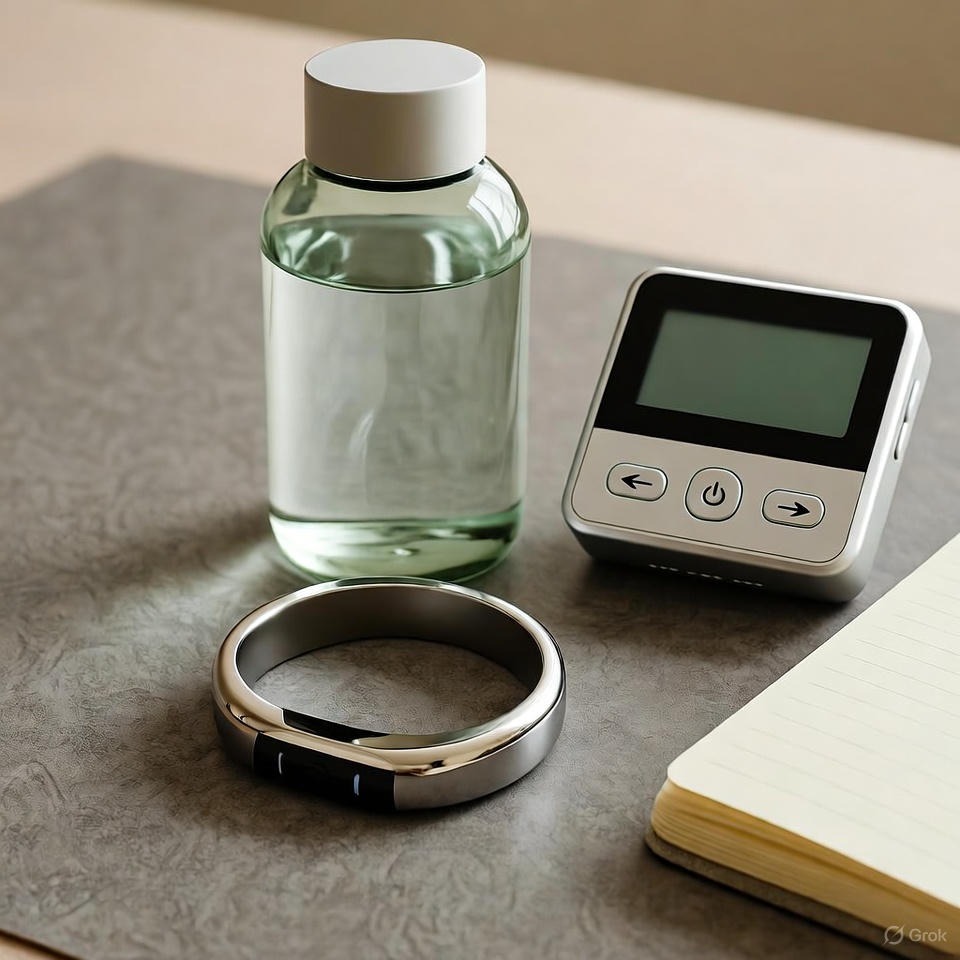
For decades, the pedometer reigned supreme. The 10,000-step goal became a global mantra, a simple, round number that promised better health. But wellness is rarely simple. While moving more is unequivocally good, the story of our physical health is written in more complex chapters: intensity, variety, recovery, and consistency. This is where the smart ring transitions from a basic tracker to an intelligent mentor.
Unlike a wrist-worn device that primarily interprets motion from your arm swing, a smart ring, worn on your finger, offers a unique and powerful vantage point. Its placement provides a strong, consistent signal for accelerometer and gyroscope data, capturing the full-body movement initiated from your core. More importantly, its access to the vascular beds in your finger allows for continuous, medical-grade physiological monitoring—heart rate, heart rate variability (HRV), and blood oxygen saturation. This fusion of motion data and physiological response is revolutionary. It means your ring doesn't just see you moving; it understands how your body is handling that movement. It knows if your morning run was invigorating or overly stressful. It can tell if your "rest day" was truly restorative or secretly fraught with anxiety.
Think of it this way: a basic tracker tells you the plot of your day (you walked 8,000 steps). Your smart ring provides the commentary and character development (you walked 8,000 steps with strong, steady cardiovascular efficiency, followed by a deep, recovery-promoting sleep, indicating excellent readiness for tomorrow's workout). This shift from quantity to quality is the cornerstone of modern, personalized health optimization.
This guide will help you become fluent in this new language. We’ll start with the foundational metrics—steps, distance, and active minutes—but quickly build to interpreting the rich context provided by your heart rate, sleep data, and recovery scores. You’ll learn that a "good" day isn't defined by a single number, but by a harmonious balance across multiple metrics, a concept often visualized in tools like The Sleep Health Pyramid: Building from the Bottom Up. By the end, you'll be equipped to set meaningful goals, interpret feedback from your body, and build movement habits that are sustainable, enjoyable, and perfectly tailored to you.
Let’s start with the most familiar metric: your step count. It’s the universal currency of activity tracking, and your smart ring records it with precision. But to build intelligent habits, we must first move past the one-size-fits-all 10,000-step myth and understand what steps actually represent.
The 10,000-step target originated not from medical research, but from a 1960s Japanese marketing campaign for a pedometer called the manpo-kei, which literally translates to "10,000-step meter." It was a catchy, round number that stuck. Modern research confirms that more steps are better, but the optimal number is personal and the benefits begin well before 10,000. A landmark study published in JAMA found that mortality risk decreased significantly with as few as 4,400 steps per day for older women, with benefits leveling off around 7,500 steps.
Your smart ring helps you find your baseline. For the first week, don’t try to hit any target. Simply wear your ring normally and observe your average daily step count. This is your personal baseline—your body’s current normal. From here, you can apply the "10% Rule," a fundamental principle in sustainable habit formation: aim to increase your average daily steps by no more than 10% per week. If your baseline is 3,000 steps, aim for 3,300 next week, then 3,630 the following week. This gradual progression builds capacity without injury or burnout.
But steps are just the skeleton of your activity story. Your smart ring adds crucial flesh and blood through two key concepts:
Actionable Insight: Stop fixating on 10,000. Use your ring’s weekly average to find your true baseline. Set a micro-goal to increase it by 10% this week, not by walking more in addition to your day, but by weaving movement into it. Take a 5-minute walking break every hour, pace during calls, or park farther away. Watch how these small changes, reflected in your NEAT and active minutes, create a powerful cumulative effect without the need for a grueling gym session.
If steps are the "what" of your movement, your heart rate is the "how." It reveals the intensity of your effort and how your cardiovascular system is responding. This is where your smart ring’s PPG (photoplethysmography) sensor becomes your personal cardiologist, teaching you to train by feel and physiology, not just by distance or time.
Your heart rate zones are percentages of your maximum heart rate (HR max). While formulas exist (like 220 - your age), the most accurate picture comes from your ring’s data over time, observing your peak heart rates during intense efforts. Most systems break down into five zones:
For the beginner, the revelation is this: Not all beneficial exercise is painful. In fact, spending significant time in Zone 2 is arguably more important for general health and longevity than constantly pushing into the red zones. It builds a resilient cardiovascular system with less systemic stress and injury risk.
Your smart ring visualizes how much time you spend in each zone during a workout. A common beginner mistake is living in Zone 3—too hard to be easy, too easy to be hard. It’s the "junk miles" zone that leads to fatigue without optimal adaptation.
Actionable Insight: For your next walk, run, or cycle, use your ring’s live heart rate feedback. Aim to keep your effort in Zone 2 for at least 20-30 minutes. Notice the pace and feel associated with that zone. This is your aerobic foundation. Separately, understanding how your body recovers from different intensities is vital, which is closely linked to your sleep quality. You can learn more about this foundational relationship in Sleep Health 101: Everything Beginners Need to Know. By training with heart rate zones, you move from arbitrary workouts to precise, purposeful sessions that build fitness efficiently.
Perhaps the most sophisticated and insightful metric your smart ring provides is Heart Rate Variability (HRV). It is the ultimate indicator of your body’s readiness and resilience, and it requires a smart ring’s continuous, sensitive monitoring to track accurately.
HRV measures the tiny, millisecond variations in the time intervals between your heartbeats. Contrary to intuition, a higher HRV is generally better. It indicates a strong, adaptable autonomic nervous system. Think of it like a skilled drummer: a perfect, robotic metronome beat is a sign of stress or illness (low HRV), while a skilled, expressive drummer with subtle rhythmic variations (high HRV) indicates health, adaptability, and resilience.
Your HRV is influenced by everything: physical training, stress, diet, hydration, alcohol, and, most profoundly, sleep. It’s your body’s integrated scorecard. A rising HRV trend suggests you are recovering well and adapting positively to your lifestyle. A sudden or sustained drop is a red flag—your body is signaling undue stress, impending illness, or insufficient recovery.
For movement habits, HRV is your guiding star. It answers the critical question: "Should I push hard today, or should I prioritize recovery?"
Actionable Insight: Don’t check your HRV in isolation. Look at the trend over weeks and months, not the daily number. Most apps provide a morning average. Before planning your day’s movement, glance at your HRV trend. Is it balanced, high, or low relative to your baseline? Let this data inform your choice. A low HRV day isn’t a failure; it’s valuable intel to train smarter. This holistic view is part of a larger wellness picture, much like How Sleep Health Affects Every Aspect of Your Life. By honoring your HRV, you learn to work with your body, not against it.

In our achievement-oriented culture, rest is often seen as the absence of work. Your smart ring reframes this entirely: Recovery is an active, measurable, and essential component of your fitness. It’s when the magic of adaptation happens—when muscles repair, energy systems rebuild, and the nervous system resets.
Your ring synthesizes multiple data streams—HRV, resting heart rate (RHR), sleep quality, and activity load—to generate a daily Recovery or Readiness Score. This single number or color-coded indicator (e.g., green = go, yellow = caution, red = rest) is your cheat sheet for the day.
Actionable Insight: Make it a daily habit to check your recovery score before you decide on your workout. If your score is low:
Learn to see a "Red" or "Yellow" recovery day not as a lost day, but as a strategic investment in future performance. By respecting recovery, you build a more durable, injury-resistant body capable of greater long-term progress.
Your smart ring’s app homepage isn’t just a dashboard; it’s a storybook of your day. The central feature is often a 24-hour timeline graph, merging every metric into a single, visual narrative. Learning to read this graph is like learning to read a vital sign monitor for your life.
The graph typically shows:
The story isn’t in the peaks, but in the patterns. Here’s what to look for:
Actionable Insight: For one week, don’t change anything. Just spend 60 seconds each evening reviewing your 24-hour graph. Ask: "What story does this tell?" Did my heart rate ever truly come down today? When were my longest sedentary periods? Then, introduce one tiny pattern interrupt:
These small, pattern-based changes, informed by your graph, are far more powerful than blindly following generic "move more" advice.
One of the most humble yet powerful features of your smart ring is the sedentary or inactivity alert. It’s the gentle (or not-so-gentle) buzz reminding you that you’ve been still for too long. While sometimes annoying, these alerts are addressing a critical health risk independent of exercise: prolonged, uninterrupted sitting.
Research has coined the phrase "sitting is the new smoking." Prolonged sedentary time is linked to increased risks for cardiovascular disease, diabetes, and all-cause mortality, even among people who get regular exercise. The harm is in the unbroken periods.
Your smart ring helps you break the cycle. The goal isn’t to never sit, but to interrupt sitting frequently.
The 20-8-2 Rule is a fantastic framework to pair with your ring’s alerts:
Actionable Insight: Don’t just dismiss the alert. Use it as a trigger for a specific, beneficial micro-habit:
The metric to watch here is not your step count, but the frequency of your activity bursts. Over time, you’ll see your 24-hour graph transform from long, flat plains of inactivity into a rolling landscape of small, healthy peaks. This consistent momentum keeps your metabolism engaged, your circulation flowing, and your energy levels more stable throughout the day, preventing the kind of fatigue that can be mistaken for poor sleep, a confusion addressed in Sleep Health vs. Sleep Hygiene: Understanding the Difference.
The "Calories Burned" metric is alluring but notoriously tricky. Your smart ring provides an estimate, usually broken into Resting Calories (energy burned just to keep you alive) and Active Calories (energy burned through movement and digestion). It’s crucial to understand the limitations to use this data wisely.
Your ring calculates this using your personal data (age, sex, height, weight) combined with real-time motion and heart rate. Heart rate is a strong proxy for metabolic output, making this estimate far superior to devices that use only motion. However, it remains an estimate, not a medical measurement. Error margins of 10-20% are common.
Therefore, the true power of this metric is not in absolute numbers, but in relative trends and comparisons.
Actionable Insight: Stop using the calorie burn as a license to eat. This often leads to overestimation and frustration. Instead, use it as a gauge of metabolic activity and workout intensity.
Data is useless without direction. Now that you understand the key metrics, it’s time to use them to build your unique Movement Identity—a sustainable set of habits that align with your goals, lifestyle, and physiology. This is where SMART goals meet smart ring data.
SMART goals are: Specific, Measurable, Achievable, Relevant, and Time-bound. Your ring provides the "Measurable" component for almost anything.
Poor Goal: "I want to get in shape."
SMART Goal with Ring Data: "I will increase my weekly average time in Heart Rate Zone 2 from 30 to 45 minutes per week over the next 4 weeks by adding three 15-minute brisk walks to my schedule on Monday, Wednesday, and Friday."
Here are examples of ring-informed SMART goals for different priorities:
For General Health & Longevity:
For Stress Management & Recovery:
For Building an Exercise Habit:
Actionable Insight: Choose ONE primary focus area for the next month. Create a single, specific SMART goal that uses 1-2 of your ring’s metrics. Write it down. Each week, review your ring’s weekly summary to assess progress. Did you hit it? Why or why not? The data provides non-judgmental feedback to adjust your plan. Remember, the goal is progress, not perfection. This methodical approach helps avoid the common pitfalls beginners face, similar to the lessons in Sleep Health Mistakes Beginners Make and How to Avoid Them.
Movement and sleep are not separate wellness categories; they are two sides of the same coin, engaged in a continuous, intimate dialogue. Your smart ring is the only device that tracks this entire feedback loop seamlessly, providing the ultimate holistic view.
How Movement Affects Sleep:
How Sleep Affects Movement:
Your ring shows you this loop in real time. A hard workout may lead to increased deep sleep that night. That great sleep leads to a high recovery score, allowing for another quality workout. Conversely, a poor night’s sleep suggests you should dial back intensity, which then helps protect your sleep the following night.
Actionable Insight: Use the "Weekly Summary" in your app. Look at the correlation. Do your higher-activity days predict better sleep scores? Do poor sleep nights predict lower HRV and poorer workout performance the next day? Start viewing your day not as isolated events, but as a cycle: Sleep → Readiness → Activity → Recovery → Sleep. To dive deeper into optimizing the sleep side of this equation, The Beginner's Guide to Understanding Sleep Health is an excellent resource. By nurturing this cycle, you create a self-reinforcing system for sustainable health.

This is the most important lesson for any beginner: Your smart ring is a tool, not a tyrant. It provides objective data, but you are the subjective, living, breathing expert on you. The data must be interpreted through the lens of your own feelings. There will be days when the numbers and your feelings disagree.
When your ring says "Green" but you feel terrible: You slept well, HRV is high, but you woke up with a headache, low energy, or general malaise. This is where you trust your instinct. The ring measures physiological markers, but it can’t measure everything (like an oncoming virus, mental fatigue, or emotional stress). Use the "Green" score as information, not permission to override your body’s clear signals. Opt for a lighter day.
When your ring says "Red" but you feel great: Maybe you had a late night, your HRV is low, but you woke up feeling surprisingly refreshed and energetic. This can happen. Perhaps the score is catching up to stress from two days ago. You can cautiously test the waters. Start your planned activity at a very low intensity. See how you feel 10 minutes in. If you still feel good, you can proceed, but stay mindful and be prepared to cut it short. The ring is advising caution, not issuing a command.
The goal is to use the data to enhance your body awareness, not replace it. Over time, you’ll start to predict what your ring will show based on how you feel, sharpening your intrinsic connection to your body’s signals. This mindful approach is the essence of sustainable wellness, ensuring your smart ring remains a powerful guide on your journey, not a digital overseer dictating your every move.
Data is most powerful when it prompts action, and action is most sustainable when it becomes ritual. The true transformation from a beginner to a savvy user of your smart ring happens when you move from passive observation to active, daily rituals built around your data. This isn’t about adding more to your to-do list; it’s about weaving insights into the existing fabric of your day to create automatic, healthy responses.
Your smart ring provides the perfect feedback loop for habit formation. Every habit has a cue, a routine, and a reward. Your ring can enhance all three:
Building Your Core Movement Rituals:
Actionable Insight: Choose one ritual to implement this week. Attach it to an existing habit (e.g., "After I pour my morning coffee, I will check my recovery score"). Keep it incredibly small and specific. The goal is consistency, not complexity. Over time, these tiny rituals, reinforced by the clear data from your ring, will solidify into the bedrock of your movement identity, creating a lifestyle where healthy choices feel automatic and informed.
We touched on heart rate zones earlier, but Zone 2 deserves its own deep dive. For beginners focused on fat loss, energy, and long-term health, mastering Zone 2 training might be the single most impactful habit you can build. It’s often called "conversational pace" exercise—intense enough to provide benefit, but gentle enough to sustain for a long time and recover from quickly.
Why Zone 2 is a Metabolic Powerhouse:
At this intensity (60-70% of your max heart rate), your body primarily burns fat for fuel in an efficient, aerobic process. It:
The Beginner’s Challenge: Finding your true Zone 2. The age-based formula is a rough guess. Your smart ring, with its continuous heart rate tracking, is the perfect tool for precision.
The "Talk Test" Protocol with Ring Verification:
Actionable Insight: Schedule two dedicated Zone 2 sessions this week. Use the talk test and your ring’s heart rate display to lock in the correct intensity. Don’t worry about speed or distance; focus solely on maintaining that steady heart rate. Note how you feel during and after—you should feel energized, not wiped out. This is the work that builds the engine for a lifetime of activity. For your body to fully reap these metabolic rewards, quality rest is non-negotiable, which is why Why Sleep Health Matters More Than You Think is such a critical read.
In our pursuit of high-tech fitness, we often overlook the most fundamental, accessible, and profoundly effective movement humans possess: walking. Your smart ring elevates walking from a mundane activity to a strategic, measurable wellness tool. It’s the perfect entry point for absolute beginners and a cornerstone habit for elite athletes.
What Your Ring Reveals About Your Walk:
Advanced Walking Protocols (No Gym Required):
Actionable Insight: Commit to one intentional walk per day for the next week. It doesn’t have to be long. Use your ring to make it purposeful. Try a post-meal metabolic walk one day, and a Zone 2 heart-rate-focused walk the next. Observe the different impacts on your daily graph and how you feel. Celebrate walking as a powerful, data-backed pillar of health.
A critical limitation of step-counting is its blindness to non-step-based movement. Strength training, yoga, Pilates, swimming, and cycling may not generate high step counts, but they are essential for holistic health. Your smart ring, primarily through heart rate and active calorie estimates, helps ensure these vital activities get the credit they deserve and guides you in balancing them.
Why Variety is Non-Negotiable:
How Your Ring Tracks These Activities:
While it may not count reps or recognize a yoga pose, it excels at measuring the physiological cost and benefit.
Actionable Insight: Aim for a balanced "Movement Portfolio" each week. Use your ring’s data to plan and assess:
Look at your weekly summary. Is it all cardio? Or all low-intensity? Use the data to intentionally add what’s missing. This balanced approach prevents overuse injuries, promotes all-around fitness, and ensures you’re not just a proficient stepper, but a resilient, capable human. Just as a balanced movement portfolio is key, so is a balanced approach to rest, as outlined in Sleep Health for Beginners: Your First 30 Days.
Your movement performance and recovery don’t exist in a vacuum. They are profoundly influenced by the other pillars of wellness: stress management, hydration, and nutrition. Your smart ring, particularly through metrics like resting heart rate (RHR) and heart rate variability (HRV), acts as a sensitive barometer for these lifestyle factors.
1. Stress: The Invisible Load
Mental and emotional stress triggers the same "fight or flight" physiological response as physical stress. Your ring sees it all as stress.
2. Hydration: The Fluid of Performance
Even mild dehydration increases cardiovascular strain.
3. Nutrition: Fuel and Recovery
The timing, quantity, and quality of your food directly impact your movement data.
Actionable Insight: For one week, become a detective. When you see a dip in HRV or a spike in RHR, ask "why?" before asking "what workout?" Could it be that stressful work meeting? Did I drink enough water today? Was my dinner very late or heavy? This holistic view turns your ring into a complete lifestyle guide, helping you understand that movement is just one part of the wellness equation. Sometimes, the best thing you can do for your movement goals is to manage stress or prioritize sleep, a connection detailed in How Poor Sleep Health Shows Up in Your Daily Life.
For many, the primary goal of movement is weight management. Yet, the scale is a fickle, often demotivating metric that doesn’t distinguish between fat, muscle, and water. Your smart ring provides a treasure trove of Non-Scale Victories (NSVs)—objective, positive signs of improvement that have nothing to do with your weight.
These NSVs are powerful motivators because they reflect real, functional improvements in your health and fitness.
Key Non-Scale Victories to Celebrate:
Actionable Insight: At the end of each month, instead of just checking your weight, review your ring’s monthly trends. Write down 2-3 Non-Scale Victories you can see in the data. "My average RHR dropped by 3 bpm." "I had 5 more green recovery days this month." "My daily step average increased by 1,200." This reframes success from a single, stubborn number to a portfolio of meaningful, health-positive achievements. For a comprehensive way to assess your starting point and track progress, a framework like How to Assess Your Current Sleep Health: Simple Self-Test can be applied to movement as well.
"Periodization" sounds like a complex concept for elite athletes, but at its core, it simply means intentionally varying your training over time to maximize adaptation and prevent plateaus or burnout. As a beginner, your smart ring gives you the tools to apply a simplified, personalized form of periodization, ensuring you keep making progress without overdoing it.
The basic principle is to cycle through periods of stress (loading) and recovery (deloading).
Without a smart ring, a beginner might push too hard for too long (leading to injury or a plateau) or not push hard enough to create change. With your ring, you have the data to guide these cycles intelligently.
How to Implement a Simple 3-Week Cycle:
Actionable Insight: Plan your next month using this simple structure. Mark Weeks 1 & 2 as "Build" and Week 3 as "Recover" on your calendar. Set specific, slightly higher targets for your build weeks and easy, intentional targets for your recovery week. Use your ring’s daily recovery score as your permission slip to truly take it easy during the deload. You’ll likely find that after a recovery week, you feel stronger and more energetic, ready to build again—a positive cycle guided by data, not guesswork.
As you live with your ring, you’ll encounter puzzling data days. Here’s a guide to interpreting some common scenarios.
Scenario 1: "I had a great workout, but my sleep score was terrible."
Scenario 2: "I did nothing all day (rest day), but my recovery score is still low/red."
Scenario 3: "My heart rate is really high during a normal, easy activity."
Scenario 4: "I got 8 hours of sleep, but my sleep score is low."
Actionable Insight: When data puzzles you, don’t ignore it. Use it as a prompt for curiosity. Cross-reference metrics (sleep vs. recovery, activity vs. HRV). Remember, your body is a complex system. The ring shows the output; your job is to be the detective on the inputs. This investigative process itself builds profound self-awareness.
With a dozen metrics available, it’s easy to suffer from data overload. The key is to know which metrics to glance at daily for guidance, which to review weekly for trends, and which to assess monthly for big-picture progress.
Your Daily Glance (30 seconds each morning):
Your Weekly Review (5-10 minutes each weekend):
Your Monthly Audit (15 minutes at month’s end):
Actionable Insight: Set calendar reminders for your Weekly Review and Monthly Audit. This turns data from a passive stream into an active tool for course correction. It prevents you from mindlessly collecting data and instead fosters a proactive, reflective practice of self-improvement. This structured approach mirrors the journey of building lasting wellness, similar to the path described in The Sleep Health Journey: What to Expect in Year One.
Your smart ring is a powerful central hub, but it doesn’t have to be an island. Strategic integration with other apps can create an even more comprehensive and motivating ecosystem. The key is to integrate purposefully, not compulsively.
Useful Integrations:
The Golden Rule of Integration: Your ring’s native app should remain your "source of truth" for readiness, recovery, and 24/7 physiology. Use other apps as specialized tools for specific tasks. Avoid having five different apps giving you conflicting scores; it will lead to confusion and fatigue.
Actionable Insight: If you’re new, spend your first month solely in your ring’s native app. Build your foundational understanding. In month two, consider one integration based on your primary goal. Are you a runner? Sync with Strava. Struggling with stress? Pair with a meditation app for a month to see the data connection. Add tools intentionally, not compulsively.
Your movement journey is not static. What you need as a beginner—and what your data means—will evolve over months and years. Embracing this evolution is key to lifelong adherence. Your smart ring will be your companion through all these phases, its meaning shifting as you do.
Phase 1: The Foundation (Months 0-6)
Phase 2: Optimization (Months 6-18)
Phase 3: Mastery & Personalization (Year 2+)
The Ultimate Goal: To reach a state where you and your ring are in a seamless dialogue. You feel tired, and it shows a low HRV. You feel amazing, and it shows a high recovery score. The data stops being something you check and becomes something you know, freeing you to live actively and fully, with the ring as a trusted, silent advisor ensuring you stay on the path of sustainable health for decades to come.
To truly trust and interpret your smart ring’s data, a basic understanding of its underlying technology is invaluable. It demystifies the process, helps you understand its limitations, and allows you to wear the device optimally for the best readings. At its core, your ring is a fusion of two primary technologies: Photoplethysmography (PPG) and a 3-axis accelerometer.
1. Photoplethysmography (PPG): The Light-Based Life Reader
This is the technology that reads your pulse, heart rate variability (HRV), and blood oxygen (SpO2) from your finger.
2. The 3-Axis Accelerometer and Gyroscope: The Motion Mappers
This is essentially a tiny, sophisticated movement detective.
The Magic is in the Fusion: Alone, an accelerometer can guess you’re running. Alone, PPG can see your heart is at 160 bpm. Together, they know you’re running and that your heart rate response is appropriate for that effort, allowing for accurate calorie estimation, workout detection, and understanding of physiological strain.
Actionable Insight for Better Data:
Beyond steps and heart rate, modern smart rings track environmental and passive physiological metrics that provide crucial context for your movement habits. Two of the most important are skin temperature and blood oxygen.
1. Skin Temperature Tracking: Your Body’s Silent Alarm
Your ring tracks the temperature at the surface of your skin, looking for deviations from your personal baseline.
2. Blood Oxygen (SpO2) During Sleep: A Window into Respiratory Health
While daytime SpO2 is generally stable, monitoring it during sleep is powerful.
3. The Power of Nighttime Data Synthesis:
Your ring creates a holistic overnight report by fusing:
Actionable Insight: Don’t just check your sleep score. Once a week, delve into the details of your nightly report. Look at your temperature trend line. Are you seeing a gradual rise? Maybe it’s time to prioritize rest. Check your SpO2 graph. Are there frequent, shallow dips? Consider your sleep position or if you’ve been congested. This deeper investigation turns your ring into a preventative health tool, ensuring the foundation (your sleep and health) is solid for optimal movement. This is a critical part of a holistic self-assessment, akin to the approach in Sleep Health Assessment: Rating Your Current Sleep.
Humans are social creatures, and motivation often flourishes in community. While your smart ring journey begins as a personal dialogue with your data, leveraging social features can add a powerful layer of accountability, inspiration, and fun. However, it must be done with intention to avoid comparison and burnout.
Positive Uses of Social and Community Features:
Pitfalls to Avoid:
Actionable Insight: If you feel your motivation waning, dip one toe into the social pool. Join a 7-day "Step-Boost" challenge in your app with a few friends. Set a personal goal within it (e.g., "I will beat my personal weekly step average by 10%"). Use the group energy for a short-term boost, then return to your personal data-driven practice. Keep the focus on self-improvement, not leaderboard position.
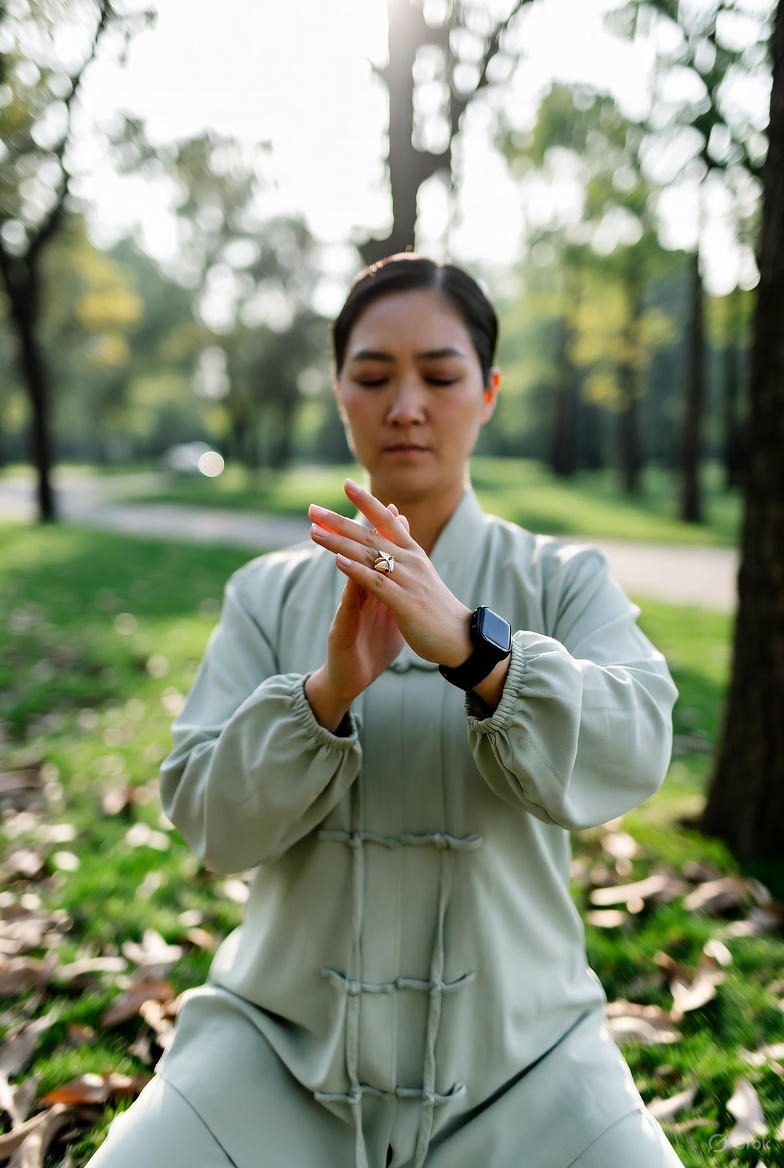
Not all beneficial movement spikes your heart rate or racks up steps. Mindful movement practices like yoga, Tai Chi, and dedicated breathwork are essential for building mind-body connection, reducing stress, improving flexibility, and balancing the nervous system. Your smart ring is a brilliant tool for quantifying the often-subjective benefits of these practices.
How Your Ring Tracks and Validates Mindful Movement:
Using Your Ring as a Biofeedback Tool During Practice:
Actionable Insight: This week, schedule one session of mindful movement. It could be a 10-minute guided breathwork video on YouTube or a 20-minute gentle yoga routine. Use your ring to track it. Afterward, don’t just ask "How do I feel?" (which is important), but also look at the data: "What did my heart rate do?" Over time, you’ll begin to crave not just the feeling of calm, but the data that proves you’ve effectively down-regulated your nervous system, creating a powerful positive reinforcement loop. This mind-body connection is a cornerstone of holistic health, complementing the physical foundations covered in The Sleep Health Pyramid: Building from the Bottom Up.
Travel is one of the most common disruptors of healthy habits. Changes in routine, time zones, unfamiliar food, and long periods of sitting can wreak havoc on your movement patterns and physiological metrics. With forethought, your smart ring can be your anchor, helping you navigate disruption and bounce back faster.
Pre-Travel Preparation (The Day Before):
During Travel (The Strategy):
The Recovery Phase (First 3-5 Days Back):
Actionable Insight: Before your next trip, formulate a simple travel movement plan: "I will get up and move for 3 minutes every hour of transit. My first two days back, I will only walk or do yoga, and I will not judge my recovery scores." This plan, supported by your ring’s objective data, turns a disruptive event into a manageable experiment in resilience.
One of the most valuable applications of a smart ring is in the realm of injury prevention and the delicate process of returning from one. It shifts the process from subjective pain to objective physiological markers.
Prevention: Early Warning Signs in Your Data
An injury rarely appears out of nowhere. It’s often the result of chronic overreaching. Your ring can spot the systemic signs before local pain sets in:
Actionable Prevention: If you see 2+ of these signs for 3+ days, it’s time for an unplanned deload week. Cut volume and intensity by 50-60%. Prioritize sleep, nutrition, and stress management. This proactive rest can avert a month-long injury.
Management & Return from Injury:
If injured, your ring’s role changes from performance optimizer to recovery guardian.
Actionable Insight: If you are managing a niggle or returning from injury, set a goal like: "I will keep my average HRV stable or rising during my return-to-run program." This shifts your focus from "Can I run 3 miles today?" to "Is my body handling the load in a healthy way?" This data-driven patience is the key to a durable, lasting comeback.
As you evolve beyond the beginner stage, your ring’s app may present composite scores like Training Load, Daily Strain, or a Fitness Score. These are advanced algorithms that synthesize multiple data points into a single, actionable overview. Understanding them prevents them from being black-box numbers.
1. Training Load (or Acute Load):
2. Daily Strain or Body Battery-Type Scores:
3. Fitness/VO2 Max Estimates:
Actionable Insight: This week, find one of these advanced scores in your app. Don’t worry about changing anything. Just observe it for a week. How does it change after a hard day? After a rest day? Simply building awareness of these higher-order metrics prepares you to use them strategically in your next training cycle, moving from a beginner to an intermediate user who balances load, strain, and fitness intelligently.
Cultivating a healthy relationship with any tracking technology requires understanding its boundaries. A smart ring is a powerful tool, but it is not a medical device, a mind reader, or a substitute for lived experience. Recognizing its limits prevents misuse and data anxiety.
1. It Measures Correlation, Not Always Causation.
Your ring shows that your HRV dropped and your sleep was poor. It can’t tell you why. Was it the glass of wine, the stressful argument, the late workout, or an oncoming cold? You are the detective who must interpret the data within the context of your life.
2. It’s an Estimator, Not a Divine Oracle.
3. It Can’t Measure Everything Important.
4. It Should Not Dictate Your Life.
The most important limit is behavioral. The ring is a guide, not a god. You must remain the executive decision-maker.
Actionable Insight: Practice data mindfulness. Once a month, consider taking a full 24-48 hours off from checking your app. Just wear the ring. Reconnect with how you feel in your body without the numbers. Then, look at the data afterward. This practice ensures you stay in charge, using the ring as a tool for self-connection, not self-alienation. This balanced perspective is crucial, much like the practical advice found in How to Prioritize Sleep Health When Life Gets Busy.
The ultimate goal of this entire journey is not to become dependent on a device, but to use the device to cultivate embodied wisdom—a deep, intuitive understanding of your body’s signals, needs, and rhythms. The ring is the training wheels; the aim is to ride freely, with the knowledge internalized.
The Evolution of a User:
How to Foster This Evolution:
The Final Vision: Imagine a future where you move through your days with grace and energy. You sense when to push and when to rest. You recover from setbacks quickly. You sleep deeply and wake refreshed. Your smart ring made this possible by giving you a decade’s worth of self-knowledge in a year. It taught you the language of your body. Now, you are fluent. The device may still be on your finger, quietly guarding your health, but the true tracker—the wise, responsive guide—is now firmly within you.
Your Trusted Sleep Advocate: Sleep Foundation — https://www.sleepfoundation.org
Discover a digital archive of scholarly articles: NIH — https://www.ncbi.nlm.nih.gov/
39 million citations for biomedical literature :PubMed — https://pubmed.ncbi.nlm.nih.gov/
Experts at Harvard Health Publishing covering a variety of health topics — https://www.health.harvard.edu/blog/
Every life deserves world class care :Cleveland Clinic - https://my.clevelandclinic.org/health
Wearable technology and the future of predictive health monitoring :MIT Technology Review — https://www.technologyreview.com/
Dedicated to the well-being of all people and guided by science :World Health Organization — https://www.who.int/news-room/
Psychological science and knowledge to benefit society and improve lives. :APA — https://www.apa.org/monitor/
Cutting-edge insights on human longevity and peak performance:
Lifespan Research — https://www.lifespan.io/
Global authority on exercise physiology, sports performance, and human recovery:
American College of Sports Medicine — https://www.acsm.org/
Neuroscience-driven guidance for better focus, sleep, and mental clarity:
Stanford Human Performance Lab — https://humanperformance.stanford.edu/
Evidence-based psychology and mind–body wellness resources:
Mayo Clinic — https://www.mayoclinic.org/healthy-lifestyle/
Data-backed research on emotional wellbeing, stress biology, and resilience:
American Institute of Stress — https://www.stress.org/


