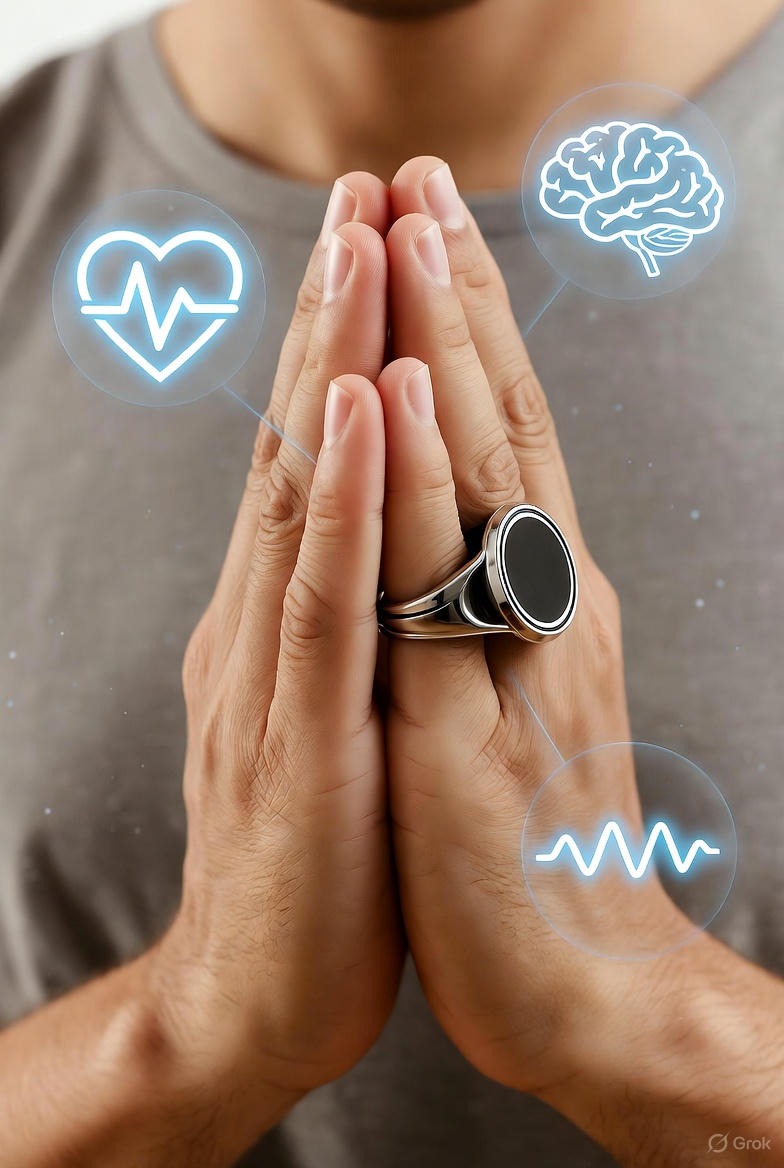
The Health Tracking Technology That Makes Rings Better Than Watches
Argues the advantages of rings over watches for certain types of continuous health monitoring.
The Health Tracking Technology That Makes Rings Better Than Watches
For decades, the wristwatch was the undisputed champion of personal timekeeping. Then, it evolved, becoming a digital dashboard for our lives—a smartwatch. It promised a revolution in health awareness, putting heart rate, steps, and notifications on our wrists. Yet, for all its intelligence, a fundamental problem remained: it was bulky, obtrusive, and often, inaccurate at the very thing we needed most: understanding our body’s true, uninterrupted state of health.
Enter the smart ring. Sleek, minimalist, and deceptively simple, it represents not just a shift in form factor, but a paradigm shift in health tracking philosophy. This isn't about shrinking a watch. This is about leveraging unique, advanced technology to access a richer, more intimate, and more accurate stream of physiological data than a wrist-bound device ever could.
The core argument is clear: for continuous, medical-grade health and wellness monitoring, the finger is a superior biometric site to the wrist. The technology packed into these tiny bands of titanium or ceramic isn't just impressive—it's transformative, enabling insights that are closer to clinical truth and more actionable for daily life. This is the story of that technology, the silent revolution happening not on your wrist, but at your fingertip. We’ll explore the precise engineering, the superior data, and the profound implications for restful living and proactive wellness, demonstrating why the future of personal health insights is worn on a ring finger.
The Unbeatable Biometric Advantage: Why Your Finger Is a Goldmine of Data
The first and most critical technological advantage of a smart ring lies not in its chips or algorithms, but in its location. The finger, specifically the base of the finger where a ring sits, offers a unique vascular and physiological landscape that the wrist simply cannot match.
On the wrist, sensors must contend with a complex anatomy of bones (ulna and radius), tendons, and a relatively sparse network of superficial capillaries. The primary artery, the radial artery, is deep and often obscured, especially during movement. This is why optical heart rate sensors on watches can struggle—they’re trying to read a faint signal through a crowded biological “noise floor.” They are easily disrupted by motion, loose fitting, and even skin tone.
The finger, however, is a vascular endpoint. It contains a dense, rich bed of capillaries—the smallest blood vessels—right under the skin. The palmar digital arteries run along the bones of the fingers, providing a strong, pulsatile blood flow that is exceptionally easy for optical sensors to detect. This translates to a cleaner, stronger, and more consistent photoplethysmogram (PPG) signal—the foundational waveform from which heart rate, heart rate variability (HRV), blood oxygen saturation (SpO₂), and even respiration rate are derived.
Think of it like listening to a conversation. A wrist-based sensor is like trying to hear someone speak from across a noisy, crowded room. A finger-based sensor is like having that person speak directly into a high-quality microphone. The signal is inherently purer.
This anatomical advantage is monumental for two key metrics:
Heart Rate Variability (HRV): HRV, the subtle variation in time between heartbeats, is a gold-standard non-invasive marker of autonomic nervous system balance and recovery. It is exquisitely sensitive to noise. The cleaner PPG signal from the finger allows for far more accurate detection of each individual heartbeat (R-R interval), making HRV readings from a ring consistently more reliable than those from most wrist devices. This is crucial for anyone using data to guide their restful living practices, as HRV is a direct window into your body’s stress and recovery state.
Blood Oxygen (SpO₂): Medical pulse oximeters clip onto the fingertip for a reason. The capillary density provides an optimal path for light absorption to measure oxygen saturation. A ring, sitting snugly at the base of the finger, replicates this clinical environment far more effectively than a watch on the bony wrist, especially during sleep—the most critical time to monitor for events like sleep apnea.
This fundamental biometric superiority is the bedrock upon which all other smart ring advantages are built. It’s not a matter of better software alone; it’s about having better raw data from the very start.
Beyond the Pulse: The Sensor Fusion Powering 24/7 Insight
A modern smart ring is a masterpiece of miniaturized sensor fusion. It’s not just one sensor, but a symphony of them working in concert to paint a holistic picture of your physiology. While a PPG sensor is the star, its performance is amplified and contextualized by its supporting cast.
The Multi-LED PPG Array: Unlike the often single or dual-LED setups in watches, advanced rings use a ring-shaped array of multiple LEDs (green, red, and often infrared). This multi-wavelength approach allows the device to penetrate different depths of tissue and capture different aspects of blood flow. Green LEDs are excellent for surface-level heart rate; red and infrared are essential for accurate SpO₂ and deeper perfusion monitoring. The circular arrangement ensures that regardless of the ring’s minor rotation on your finger, sensors are always optimally aligned with the blood vessels below.
The 3D Accelerometer & Gyroscope: These are the workhorses of movement and sleep tracking. They measure orientation, acceleration, and rotation. In a ring, their data is uniquely valuable. On the finger, movement is often more subtle and directly tied to whole-body motion (like typing, gesturing, or tossing in sleep) rather than the isolated wrist-flicking that can confuse a watch. This allows for more nuanced activity classification and, crucially, far more precise sleep stage detection. The finger’s movement during sleep is a better proxy for overall sleep arousal and REM cycles than the wrist.
The Skin Temperature Sensor: This is a game-changer. A precise, calibrated sensor constantly monitoring the temperature of your finger pad provides a basal metabolic signal of immense value. Wrist temperature can fluctuate wildly with ambient air and device fit. The finger’s core temperature, especially during sleep when the environment is stable, offers a stable baseline. Nightly temperature trends can reveal the onset of illness (a fever spike), predict ovulation with high correlation to basal body temperature methods, and indicate changes in metabolic health and circulation.
The Impedance Sensor (In Some Models): The cutting edge of ring technology includes bio-impedance sensors. By sending a tiny, imperceptible electrical current between two points on the ring, they can measure the body’s resistance to that current. This data can be used to estimate stress levels (via electrodermal activity, a component of the “fight or flight” response) and even provide trends in relative body composition, like hydration levels.
The magic is in the fusion. The algorithm doesn’t just read heart rate and movement and temperature separately. It cross-references them. For example: a spike in heart rate (PPG) accompanied by a temperature rise and no movement (accelerometer) could signal a fever or a stress response. The same heart rate spike with movement is simply exercise. This contextual intelligence, built on a superior signal, is what transforms raw data into meaningful, actionable insight.
The Sleep Revolution: Unlocking the Secrets of Your Night
If the smart ring has a “killer app,” it is unequivocally sleep tracking. This is where the technological advantages compound to create a level of insight that leaves wrist-based devices far behind.
Sleep is the ultimate restful living activity. It’s when the body repairs, the mind consolidates, and the nervous system resets. Yet, for years, consumer sleep tracking has been an approximation—a best guess based on limited data. Smart rings change the equation.
Comfort & Compliance: The most accurate sleep tracker is the one you actually wear. A lightweight, smooth ring is almost imperceptible during sleep. There’s no bulky face to dig into your wrist, no screen lighting up, and no need to take it off to charge every night (most rings have 5-7 day battery life). This guarantees continuous data, which is essential for spotting trends.
Superior Sleep Staging: Sleep is not a binary state of “asleep” or “awake.” It’s a cyclical journey through light, deep, and REM (rapid eye movement) sleep. Rings excel at differentiating these stages because they use a more comprehensive data set. The clean PPG provides steady heart rate and HRV, which drop in deep sleep and become variable in REM. The finger-based accelerometer detects the characteristic muscle atonia (paralysis) of REM sleep and the subtle movements of light sleep. The temperature sensor adds another layer, as core body temperature drops during sleep initiation and rises toward morning. Combining these signals yields a sleep stage analysis that closely mirrors the gold-standard polysomnography done in sleep labs.
Detecting Sleep Disruptions: Beyond stages, rings are exceptionally good at identifying disturbances. They can detect sleep apnea events by spotting repeated, characteristic dips in blood oxygen saturation (SpO₂) followed by a heart rate spike as the body startles awake to breathe. They can identify periods of restlessness (increased movement and heart rate) and even estimate the time it takes you to fall asleep (sleep latency) with high accuracy because they know when you became truly still and your physiology began to wind down.
This isn’t just about getting a “sleep score.” It’s about providing a clinical-grade map of your night. You can see if your restful living diet or evening breathwork practice actually translated into more deep sleep. You can identify if late-night screen time sabotaged your REM sleep. You can get early warnings of potential sleep disorders. This depth of understanding empowers you to make tangible, data-driven improvements to your most important recovery period. For those seeking to master their rest, understanding the science of sleep is foundational, much like understanding how digital detox enhances restful living by removing the blue light and mental stimulation that disrupts our natural wind-down process.
The Continuous Core: Stress and Recovery Monitoring in Real Time
The promise of wearable technology has always been to move healthcare from reactive to proactive. Smart rings make this tangible by offering a window into your body’s stress and recovery status not just during a workout or a meditation session, but continuously, throughout the entire day and night.
This is the concept of “always-on” wellness monitoring, and it’s powered by the ring’s unique ability to measure two key biomarkers with high fidelity: Heart Rate Variability (HRV) and skin temperature.
HRV as Your Nervous System Dashboard: As mentioned, the ring’s clean PPG signal allows for accurate, on-demand or periodic HRV readings. But the real power is in the trend. Your nightly average HRV, measured during stable, undisturbed sleep, is one of the single best indicators of your overall recovery status. A downward trend over several days can signal accumulated stress, impending illness, or overtraining. An upward trend suggests you are well-recovered and resilient. This allows you to adjust your day proactively—perhaps opting for a gentle walk instead of an intense workout, or prioritizing a restful living evening routine to recharge.
Temperature as a Metabolic Beacon: Continuous skin temperature tracking is akin to having a constant check on your body’s inner workings. A sustained elevated temperature could be the very first sign of an oncoming cold or flu, sometimes 24-48 hours before symptoms appear. For women, the temperature curve can accurately pinpoint ovulation and map the menstrual cycle phases with cycle-tracking app reliability. More broadly, temperature trends can reflect metabolic efficiency and circadian rhythm health.
The “Readiness” or “Recovery” Score: Most ring platforms synthesize this data—sleep data, HRV trend, temperature deviation, resting heart rate, and recent activity—into a single, simple score each morning. This isn’t a gimmick; it’s a data-driven recommendation engine for your day. A low score doesn’t chastise you; it informs you. It tells your body’s truth, cutting through the noise of how you think you feel (“I’m fine on coffee!”) with the data of how your body actually recovered.
This continuous core monitoring transforms the ring from a fitness tracker into a true lifestyle advisor. It helps you identify your personal stress triggers, understand your unique recovery patterns, and ultimately, build a more sustainable, balanced life. It provides the hard data to support the soft skills of restful living, proving that sometimes, the most productive thing you can do is truly rest. This is especially critical for high-achievers who often mistake burnout for badge of honor, not realizing that strategic rest is the engine of sustained performance.
The Form Factor Freedom: Invisibility as a Feature
Technology is most powerful when it seamlessly integrates into our lives, not when it demands our constant attention. This is where the smart ring’s design philosophy delivers a profound experiential advantage over the smartwatch.
A smartwatch is, by nature, a display. It is meant to be looked at, interacted with, and noticed. It buzzes, beeps, and lights up. It is an extension of your smartphone, a satellite of notification anxiety on your wrist. Even in “Do Not Disturb” mode, its presence is visually and tactilely prominent.
A smart ring embraces a doctrine of minimalist, passive intelligence. Its goal is to gather data without gathering your attention. It is jewelry-first, tech-second. Made from materials like titanium, ceramic, or tungsten carbide, it is designed to be durable, hypoallergenic, and aesthetically neutral or even stylish. It disappears into your personal identity.
This “invisibility” confers several key benefits:
Social & Professional Neutrality: You can wear a smart ring in a business meeting, at a formal event, or on a date without it signaling “tech gadget.” It doesn’t glow or distract. It doesn’t create a social barrier the way glancing at a watch screen mid-conversation can.
Reduced Digital Triggers: By lacking a screen, the ring physically cannot barrage you with notifications, emails, or social media pings. This enforced separation is a built-in digital detox mechanism. It allows the device to serve your health without hijacking your focus, a critical alignment for mental well-being. This passive approach to data collection supports a calmer, more present state of mind, a core tenet of restful living that prioritizes being over doing.
Unobtrusive 24/7 Wear: The comfort and low profile ensure you never feel the need to take it off, except perhaps to charge briefly once a week. This guarantees the continuous data stream that is so valuable for accurate trends in sleep, recovery, and menstrual cycles. You can wear it while swimming, playing sports, or sleeping without any discomfort or concern about damaging a large screen.
Battery Life Revolution: Free from the massive power drain of a bright, always-on display, smart rings can achieve 5 to 7 days of battery life on a single charge. This eliminates the daily “charge your tracker” chore and removes a major point of failure for continuous monitoring. You’re not losing a night of sleep data because you forgot to plug in your watch.
In essence, the smart ring’s form factor is a feature, not a compromise. It represents a maturity in wearable design: the technology respects the user’s life and psychology, prioritizing deep, uninterrupted insight over superficial, disruptive engagement.
Medical-Grade Accuracy in a Consumer Device
The conversation around wearable accuracy has often been fraught with caveats: “good for trends,” “estimates only,” “not a medical device.” While smart rings are still consumer products and not FDA-approved diagnostic tools, the gap between their data and clinical-grade measurements is narrowing dramatically, thanks to their technological foundation.
The finger’s vascular advantage and multi-sensor fusion create a data environment that is inherently more robust for specific key metrics:
Resting Heart Rate (RHR) & Heart Rate (HR): Due to the superior PPG signal, rings consistently show high correlation with chest-strap ECG monitors during rest and daily activities. During sleep, when motion artifact is minimal, the ring’s RHR measurement is considered exceptionally reliable.
Blood Oxygen (SpO₂): As established, the finger is the clinical standard site. Studies comparing ring-based SpO₂ readings to medical pulse oximeters show very high agreement at rest and during sleep, making them a powerful tool for spotting potential nocturnal hypoxemia (low blood oxygen), a hallmark of sleep apnea.
Respiratory Rate: This metric, derived from the subtle modulation of the PPG waveform by breathing, is often more accurate on the finger than the wrist. It’s a critical vital sign, and tracking it overnight can reveal breathing irregularities.
Skin Temperature: The accuracy here is relative, but the precision is what matters. Rings are calibrated to track changes of 0.1°C or less. This high-resolution trend data is more valuable for health insights than an absolute temperature reading that might be offset by a degree.
The pursuit of medical-grade validation is a hallmark of the leading smart ring companies. They actively partner with university research institutions and hospitals to conduct validation studies, publishing their methods and correlation coefficients. This transparency builds trust. It moves the device from the realm of “fitness accessory” into the category of “personal health observatory.”
For the user, this means you can have greater confidence in the data informing your decisions. When your ring shows a dip in HRV, you can trust it’s likely a real physiological shift. When it flags a night of poor oxygen saturation, it’s a meaningful prompt to consult a healthcare professional. This bridges the gap between everyday wellness and proactive health management.
The Personalization Engine: AI and Your Unique Baseline
Raw data, no matter how accurate, is just noise without interpretation. The final, and perhaps most sophisticated, layer of technology in a smart ring is its artificial intelligence and machine learning platform. This is the “brain” that transforms biometric signals into personal health intelligence.
Unlike watches that often use population-based averages, advanced ring algorithms focus intensely on building your unique, personal baseline. Over the first week or two of wear, the system isn’t just collecting data; it’s learning you. It learns your normal nightly temperature, your typical HRV range, your individual sleep architecture, and your personal activity patterns.
This personalized baseline is everything. It allows the system to:
Detect Meaningful Deviations: An HRV of 50 might be excellent for you but low for someone else. The AI knows what’s normal for you and can alert you to significant deviations that matter in your context. It can tell if your temperature is 0.5°C above your personal norm, which is a significant metabolic event.
Provide Contextualized Insights: The AI doesn’t work in silos. It connects dots. It might surface an insight like: “On days after you log 8+ hours of sleep, your daytime resting heart rate is 3 BPM lower.” Or, “Your deep sleep was lower than usual last night, which correlated with a late evening meal.” These are personalized, actionable findings.
Adapt to Your Life Phases: Your baseline isn’t static. The AI can recognize and adapt to longer-term shifts, such as changes in fitness level, the different phases of a woman’s menstrual cycle, or the effects of aging. It can even help you adapt your restful living approach through different seasons of life and weather, noting how your sleep and recovery metrics change with colder nights or longer days.
Power Predictive Suggestions: The most advanced systems move from descriptive (“this happened”) to mildly prescriptive (“try this”). Based on your low recovery score, the app might suggest a guided breathing exercise or recommend an earlier bedtime. It might notice that a daytime nap consistently improves your sleep latency and gently encourage the practice.
This personalized AI turns the ring from a data recorder into a digital companion for self-awareness. It helps you understand your body’s unique language, creating a feedback loop where you make a change (like improving your diet to calm your nervous system) and can clearly see the physiological result in your data the next day.
The Activity Intelligence: Moving Beyond Step Count
When people think of fitness wearables, they think of step counts. This is a gross oversimplification of human movement, and smart rings, with their different form factor and sensor suite, are pioneering a more intelligent approach to activity tracking.
The goal is not to glorify arbitrary 10,000-step goals, but to quantify the quality, impact, and physiological effect of your movement.
Movement That Matters: A ring’s accelerometer, positioned on the finger, is excellent at detecting non-step-based movement: typing, gardening, weightlifting, cycling, swimming. Advanced algorithms classify these activities based on movement patterns and heart rate response. The focus shifts from “steps” to “active calories” and “metabolic equivalent of task (MET)” minutes—measures that truly reflect energy expenditure.
The Rise of “Non-Exercise Activity Thermogenesis” (NEAT): NEAT is the calories you burn through everything that isn’t sleeping, eating, or sports-like exercise. It’s fidgeting, pacing, standing, and daily chores. This is a huge component of total daily energy expenditure. A ring, worn continuously, is ideal for capturing this subtle, all-day movement that a watch might miss if you take it off for typing or manual work.
Workout Detection & Heart Rate Zones: While not as instantly interactive as a watch for workout tracking (no screen to glance at), rings automatically detect sustained periods of elevated heart rate and movement, logging them as workouts. Their superior HR tracking provides accurate zone training data (time in zone 2, zone 5, etc.) for post-workout analysis. For the mindful athlete, this data integrates with recovery metrics to prevent overtraining.
The Recovery-Activity Balance: This is the core of the ring’s activity intelligence. It doesn’t just shout “MOVE MORE!” It frames activity within the context of your readiness. Your daily “activity goal” might be dynamically adjusted based on your recovery score. On a high-readiness day, it might encourage a vigorous workout. On a low-readiness day, it might celebrate a gentle walk or stretching session as a perfect, restorative activity. This creates a sustainable, body-led fitness practice that enhances, rather than depletes, your long-term health and connection between restful living and longevity.
The ring’s philosophy is that all movement is valid and should be understood in the full context of your body’s state. It’s about building a compassionate and intelligent relationship with your physical activity.
The Silent Guardian: Long-Term Health Trend Analysis
The ultimate value of any health monitoring tool isn’t in the daily notification, but in the long-term trend line. This is where the smart ring’s continuous, comfortable wear and multi-parameter tracking create an unparalleled health journal. It becomes a silent guardian, logging the subtle story of your body over months and years.
This longitudinal data set is a treasure trove for both personal awareness and, potentially, for your healthcare provider.
Chronic Condition Management: For individuals managing conditions like hypertension, anxiety, or insomnia, long-term trends in resting heart rate, HRV, and sleep quality provide objective feedback on how lifestyle interventions or medications are working. Seeing a gradual improvement in your sleep oxygen levels after using a CPAP machine, or a stabilization of your nighttime heart rate after starting a meditation practice, is powerfully motivating.
Aging and Metabolic Health: Gradual, age-related changes in metabolism, circulation, and sleep architecture happen slowly. A ring can document these shifts, providing an early alert to changes that might warrant a lifestyle adjustment or medical consultation. A creeping rise in resting heart rate or a decline in deep sleep percentage over a year could be a prompt to focus on cardiovascular health or sleep hygiene.
The “Health Span” Dashboard: The convergence of all this data—consistent sleep scores, stable HRV, healthy activity levels, normal temperature rhythms—paints a picture of your “health span”: the period of life spent in good health. The ring helps you quantify and potentially extend this period by giving you the tools to maintain balance. It aligns perfectly with the principle that protecting your energy through restful living boundaries is an investment in your future vitality.
Data for Your Doctor: When you do visit a healthcare professional, having 6 months of nightly SpO₂ graphs, sleep stage distributions, and resting heart rate trends is far more valuable than saying “I feel tired.” It provides objective, quantifiable evidence that can lead to faster, more accurate diagnoses and personalized treatment plans.
The smart ring shifts the focus from episodic, sick-care to continuous, health-care. It empowers you to be the expert on your own body’s patterns, fostering a proactive partnership with your long-term well-being.
The Minimalist’s Dream: Technology That Serves, Not Demands
In a world of digital overload, the design and interaction philosophy of the smart ring is a breath of fresh air. It embodies a minimalist approach to technology, one where the device’s value is in the profound insights it provides, not in the amount of your attention it can capture.
This philosophy extends through every aspect of the experience:
The App as the Sanctuary: Since the ring itself has no screen, the companion smartphone app becomes the dedicated space for reflection and insight. You don’t check it constantly; you visit it intentionally, perhaps once in the morning to check your readiness and once in the evening to reflect on your day. This turns health review into a mindful ritual, not a distracted glance.
Curated, Not Constant Notifications: A good ring platform will send only the most critical, actionable notifications: a significant deviation in a key metric, a battery low warning, or a gentle nudge based on a goal you’ve set. It doesn’t buzz for every milestone. The silence is a feature.
Aesthetic Durability: Made from premium, scratch-resistant materials, a high-end smart ring is designed to last for years, both in terms of hardware and software support. This counters the throwaway culture of fast-tech and aligns with sustainable, intentional consumption. It’s a piece of technology that integrates into your life as seamlessly as a wedding band or a favorite piece of jewelry.
This minimalist, background operation is perhaps the smart ring’s greatest psychological benefit. It allows you to engage with your health data on your own terms, reducing the anxiety and compulsive checking that can sometimes accompany wearable tech. It supports a lifestyle where technology is a tool for restful living, not an obstacle to it. This approach is essential for maintaining calm in our always-on world, whether at home or while maintaining calm on the go during travel.
The Future on Your Finger: Emerging Frontiers in Ring Tech
The current capabilities of smart rings are impressive, but they are merely the foundation. The unique form factor and superior data access position rings at the forefront of several exciting health tech frontiers. Research and development are pushing the boundaries of what’s possible from a device this small.
Non-Invasive Blood Glucose Trends: This is the holy grail of continuous health monitoring. Several companies are deep in R&D, exploring methods like using specific wavelengths of light in the PPG array to estimate glucose levels indirectly through optical scattering. While a true, diagnostic-grade non-invasive glucometer is still on the horizon, rings are a leading candidate to achieve it first due to their optimal vascular access.
Advanced Stress & Emotional AI: Beyond HRV, future sensors may better capture electrodermal activity (skin conductance) and pulse wave velocity (the speed of the pressure pulse through your arteries, a marker of arterial stiffness and stress). Coupled with AI, this could lead to more nuanced emotional state recognition, helping users identify triggers for anxiety or moments of flow and calm.
Enhanced Women’s Health & Fertility: The combination of continuous temperature, HRV, and sleep data creates the most comprehensive natural cycle tracking tool ever available in a consumer device. Future iterations could predict cycle phases with extreme accuracy, provide insights into hormonal health conditions like PCOS, and offer detailed support through perimenopause by tracking symptom correlations with physiological data.
Medication & Intervention Response: As rings become more clinically validated, they will be used to monitor patient response to new medications, dietary changes, or therapeutic interventions in real-world settings. Did a new blood pressure medication lower nighttime heart rate? Did a cognitive behavioral therapy for insomnia improve sleep efficiency? The ring can provide the continuous, at-home data to answer these questions objectively.
The smart ring platform is inherently adaptable. Its circular form is an ideal host for new, miniaturized sensors. As these technologies mature, the ring on your finger will quietly evolve, offering ever-deeper insights without ever needing to change its fundamental, unobtrusive presence in your life. It represents not just a better watch, but a new, more intimate, and more intelligent paradigm for understanding ourselves.
Integration and Ecosystem: From Isolated Data to Holistic Health
The true potential of personal health technology is not realized in a vacuum. A device can generate the most accurate data in the world, but if that information exists in a silo, its power is drastically limited. The next frontier for smart rings—and a key area where their philosophy diverges from the walled-garden approach of many smartwatch ecosystems—is intelligent, open integration. This is the process of transforming isolated biometric readings into a holistic, contextualized picture of your well-being by connecting with the other digital and physical facets of your life.
Think of your health as a complex, interconnected web. Your sleep is affected by your day’s stress, which is influenced by your work calendar, which is impacted by your morning nutrition, which is tied to your exercise habits. A smart ring can sense the physiological outcomes of this web—the elevated cortisol, the restless sleep—but to understand the causes, it needs context. This is where integration becomes transformative.
Modern smart ring platforms act as a central hub, using secure APIs to pull in data from a wide array of sources:
Fitness Apps (Strava, Peloton, Apple Health, Google Fit): This allows your ring’s recovery data to directly inform your workout plans and vice-versa. A run logged in Strava isn’t just steps; it’s a specific cardiovascular stressor that your ring’s readiness score can now account for with precision.
Nutrition Trackers (MyFitnessPal, Cronometer): By correlating your macronutrient intake, caffeine consumption, or meal timing with your sleep quality, nighttime heart rate, and next-day energy levels, you can move beyond generic diet advice to personalized nutritional insights. You might discover that a diet aimed at calming your nervous system directly improves your deep sleep metrics.
Calendar and Productivity Tools (Google Calendar, Apple Calendar, Todoist): Imagine your ring understanding that a 3-hour block of back-to-back meetings represents a cognitive load. It can then analyze how that load impacted your stress biomarkers and subsequent recovery, providing concrete data on the cost of different work patterns. This is critical for building restful living practices at work.
Mindfulness and Meditation Apps (Calm, Headspace): When you complete a meditation session, that event can be timestamped in your health hub. The ring can then show you the direct, physiological impact: did your heart rate drop more rapidly afterward? Did your HRV show a boost that evening? This turns a subjective feeling of calm into a measurable, reinforcing outcome.
Smart Home Devices: In the future, integration could extend to your environment. Your ring detecting poor sleep due to a too-warm room could automatically adjust your smart thermostat the following night.
This ecosystem approach moves health tracking from descriptive analytics to prescriptive and diagnostic intelligence. The ring is no longer just saying, “Your sleep was poor.” It’s saying, “Your sleep was poor, and it correlates with your late-afternoon coffee logged in your nutrition app and the high-stress work block in your calendar. Consider rescheduling that coffee and adding a buffer after intense work periods.” This is actionable, personalized wisdom that acknowledges the complex system that is your life.
The Privacy Paradigm: Safeguarding Your Most Sensitive Data
With great data comes great responsibility. A device that sleeps with you, detects your ovulation, knows your stress levels in a meeting, and charts your nightly breathing is collecting the most intimate portrait of your life possible. Therefore, the technological architecture surrounding data privacy and security is not just an add-on for smart rings; it is a foundational pillar, arguably more critical than for any other consumer wearable.
The leading players in the ring space understand that their value proposition hinges on trust. They employ a multi-layered approach to data stewardship that often exceeds industry standards:
On-Device Processing & Encryption: The most sensitive raw data processing happens directly on the ring itself or on your smartphone during sync, using local algorithms. What is transmitted to the cloud is often heavily encrypted, anonymized aggregate data or derived metrics (like “sleep score” or “recovery index”), not the raw PPG waveform from your finger. This minimizes the exposure of your fundamental biometric signature.
End-to-End Encryption (E2EE): For data that must traverse the internet to be synced across devices or to power cloud-based AI insights, true end-to-end encryption is essential. This means the data is encrypted on your device and only decryptable by your authorized devices (your phone, your laptop). Not even the company’s servers can read it in plain text. Look for companies that are transparent about their use of E2EE.
User-Centric Data Control: Robust platforms give you clear, granular control. You can often choose what data is processed in the cloud versus kept locally, set automatic data deletion timelines, and download a complete archive of all your data in standardized formats. This empowers you to own your information and share it selectively, for example, with a researcher or a new doctor.
The "No-Screen" Privacy Bonus: The ring’s form factor again provides a subtle benefit. Because it has no display, it cannot inadvertently leak private information by lighting up with a notification in a public space. Your health alerts and status remain private between you and your app.
Transparent Policies and Independent Audits: Trust is built on transparency. Leading companies publish detailed whitepapers on their data practices, undergo independent security audits by third-party firms, and often have advisory boards that include experts in digital ethics and medical data privacy.
This rigorous approach addresses the paramount question: “Who owns my body’s data?” The answer, from a technological and philosophical standpoint, must be you. The ring is a custodian, not an owner. This ethical framework is crucial for adoption, as users will only embrace deep, continuous monitoring if they feel confident their most personal information is protected with the highest standards. This peace of mind is itself a cornerstone of restful living in a digital age, where concerns over data exploitation are a significant source of anxiety for many.
The Power of Invisibility in Social and Professional Settings
We’ve touched on the comfort of a ring, but its social and professional implications deserve deeper exploration. In a world where personal technology often creates barriers, the smart ring’s design works to remove them. Its “invisibility” is a sophisticated social technology in itself.
Consider the modern smartwatch. In a business negotiation, a glance at its screen can be interpreted as disinterest or distraction. Its vibration during a presentation can break the flow. It marks the wearer as someone who is, at least partially, connected to another digital world. The smart ring eliminates these friction points entirely.
The Uninterrupted Conversation: Because it provides no visual feedback, you remain fully visually engaged with the people around you. There is no screen to pull your gaze away. This fosters deeper presence, a quality that improves relationships and emotional connection. You are listening with your whole being, not waiting for a buzz on your wrist.
Professional Neutrality and Elegance: A well-designed smart ring in brushed titanium or black ceramic is indistinguishable from high-quality modern jewelry. In conservative professional environments where smartwatches might be viewed as too casual or techie, a ring passes without comment. It allows executives, doctors, lawyers, and creatives to benefit from advanced health monitoring without compromising their professional aesthetic or being perceived as distracted by gadgets.
The Psychological Freedom of Disconnection: The absence of a screen provides a tangible psychological break. You are not subconsciously training yourself to respond to every haptic notification. This reduces what psychologists call “anticipatory anxiety”—the low-level stress of expecting an interruption. The ring collects data for you, not from you. This passive role allows your mind to stay focused on the task or person at hand, reinforcing the mental habits of calm and focus that are central to a restful mindset.
Inclusive and Universal Design: Rings are inherently less gendered in design than watches and come in a wider range of sizes to fit different fingers. This makes the technology more accessible and appealing across a broader demographic. Furthermore, for individuals with certain disabilities or sensory sensitivities who find wrist-worn devices uncomfortable or overwhelming, a smooth, lightweight ring can be a more viable option.
This social invisibility is a profound feature. It allows the technology to serve the individual’s health without imposing on their social identity or interactions. It respects the context of human relationships, making it a tool for enhanced living rather than a potential social hindrance.
Battery Life and Sustainability: The Unseen Engine of Continuity
One of the most underrated technological triumphs in smart rings is their battery life. Achieving 5 to 7 days—and in some models, up to 10 days—on a single charge is not a trivial feat. It is the result of deliberate engineering choices that prioritize continuity and user experience over flashy, power-hungry features. This endurance is the unseen engine that makes all other insights possible.
Let’s break down why this matters:
The Gold Standard of Continuous Data: For trends to be meaningful, they must be unbroken. A nightly gap in data because you had to charge your device corrupts your sleep trend analysis and can invalidate your recovery score algorithm, which relies on consecutive nights. Weekly charging, often while you shower or have a morning coffee, ensures near-100% data continuity. You can literally wear it for months without missing a night of sleep.
Eliminating “Chore Anxiety”: The daily or every-other-day charging ritual of a smartwatch becomes a minor but persistent cognitive task—one more cord to remember, one more device at 10%. By moving to a weekly rhythm, the ring disappears from your mental checklist. You use it, and about once a week, a gentle app notification reminds you to charge it at your convenience. This reduces digital clutter and hassle.
The Engineering Behind the Endurance:
No Power-Hungry Display: This is the single biggest factor. An always-on or frequently lit OLED display is a massive battery drain.
Efficient Sensor Polling: Instead of running all sensors at maximum frequency constantly, advanced rings use intelligent, adaptive polling. During the day, they might take frequent but short readings. During sleep, they shift to a comprehensive, continuous monitoring mode. When you’re completely still, they might power down certain sensors entirely.
Low-Power Bluetooth Chipsets: Data is synced via Bluetooth Low Energy (BLE) only when your phone is in proximity, using protocols designed for minimal power draw.
Optimized Data Processing: More processing is done on the device itself using efficient, specialized chips, reducing the amount of raw data that needs to be transmitted and processed in the cloud.
The Sustainability Angle: A device that lasts 5-7 days on a charge and is built from durable, long-lasting materials like titanium has a longer functional lifespan and a lower overall environmental footprint than a device requiring daily charging and more frequent replacement due to scratched screens or outdated tech. It aligns with a philosophy of buying well-made things that last, a key aspect of mindful consumption that supports a less cluttered, more restful living environment.
Superior battery life is more than a convenience; it’s a prerequisite for reliable, long-term health monitoring. It ensures the device works for you on your schedule, not the other way around, making the integration of health tracking into your life seamless and sustainable.
The Accuracy Underpinning: Clinical Validation and Real-World Testing
For a health tool to be trusted, its claims must be substantiated. The marketing term “clinical-grade” is thrown around loosely, but for leading smart rings, it is backed by a rigorous process of third-party validation and real-world testing. This scientific rigor is what separates credible health tools from fitness gadgets.
The process typically involves several layers:
Benchmarking Against Gold Standards: Companies partner with independent research institutions (universities, hospitals) to conduct controlled studies. In these studies, participants wear the smart ring while simultaneously being monitored by medical-grade equipment. For sleep, this is polysomnography (PSG) in a lab. For heart rate and HRV, it’s an electrocardiogram (ECG) chest strap. For blood oxygen, it’s a hospital-grade fingertip pulse oximeter. The data is then compared using statistical methods like Bland-Altman plots and correlation coefficients to quantify agreement.
Publishing the Science: Transparency is key. The results of these studies are often published in peer-reviewed scientific journals or as pre-prints. This subjects the methodology and findings to scrutiny by the scientific community. When you read that a ring’s sleep staging is “90% accurate compared to PSG,” that statement should be traceable to a published study.
Real-World, Longitudinal Validation: Lab conditions are perfect. Life is not. Beyond the lab, ongoing real-world validation is crucial. This involves large-scale studies with thousands of users over long periods, analyzing how the metrics perform across diverse populations, skin tones, ages, and health conditions. This ensures the algorithms are robust and equitable.
Focus on Specific, Meaningful Metrics: The validation isn’t just about step count. It focuses on the metrics that matter for health:
Sleep Stage Detection (Light, Deep, REM): Accuracy here is paramount, as misclassifying sleep has downstream effects on recovery scoring.
Nocturnal Heart Rate & HRV: Validating that the ring can accurately capture the subtle beat-to-beat intervals during the dynamic state of sleep.
Blood Oxygen Dips: Specifically validating the ring’s ability to detect clinically relevant desaturation events (e.g., drops below 90%) that may indicate sleep-disordered breathing.
Skin Temperature Trends: Validating the precision of relative changes, which are more important than absolute accuracy.
This commitment to validation does two things. First, it builds user trust—you know the insights are based on real science. Second, it paves the way for future medical device clearance from bodies like the FDA or CE. Some ring features are already pursuing this path, which could eventually allow data to be used by clinicians for remote patient monitoring. For the consumer, it means you are investing in a platform that is serious about truth in data, providing a solid foundation for making informed decisions about your long-term health and longevity strategies.
User Experience and App Design: The Gateway to Understanding
The smart ring is the sensor, but the smartphone application is the interpreter, the teacher, and the guide. Its design philosophy is arguably as important as the hardware’s. A confusing, data-dense, or judgmental app can undermine the entire experience, turning insightful awareness into anxiety-inducing noise. The best ring platforms embrace principles of calm technology and behavioral psychology in their app design.
The Morning Report: Clarity, Not Clutter: Instead of dumping 50 graphs on you, a well-designed app presents a simple, visual “Morning Readiness” or “Sleep Score” as the landing page. This high-level score is a synthesis, not a simplification. With a single tap, you can drill down: “Why is my score 72?” The app might show: “Your score is good. Your sleep was efficient (88%), but your resting heart rate was 5 BPM higher than your baseline, likely due to later alcohol consumption.” This is educational and non-shaming.
Data Visualization for Humans: The graphs are clean, intuitive, and focused on trends over daily noise. A 30-day trend line of your deep sleep percentage is more valuable than yesterday’s number in isolation. Visual correlations are powerful—e.g., overlaying your stress event log (which you manually input) on your HRV graph to see the direct impact.
Actionable Insights, Not Just Observations: The app moves from “what” to “so what” to “now what.” An insight might say: “You’ve had three nights of declining HRV. This often precedes feeling run down. Consider prioritizing recovery this week.” It might then offer a curated list of actions: a link to a guided breathwork session, a suggestion to review your weekly plan for sustainability, or a reminder about the importance of protecting your energy with boundaries.
Positive Reinforcement and Gentle Guidance: The tone is supportive, not punitive. It celebrates consistency—like a 7-day streak of meeting your sleep goal—more than it chastises for a single bad night. This positive feedback loop encourages long-term engagement and fosters a healthier, more curious relationship with your own body.
Customizable Goals and Focus Areas: You can tell the app what matters to you. Is your primary goal stress management? Improved athletic performance? Better sleep? The app can then surface the most relevant metrics and insights for your journey, making the experience personally meaningful.
The app is the bridge between cold data and warm, human understanding. It turns photons of light absorbed in your capillaries into a narrative about your life. When done right, it feels less like a tech dashboard and more like a personal health coach—informed, attentive, and always on your side.
The Competitive Landscape: How Different Rings Leverage the Technology
While they share a common form factor and core advantages, the smart ring market is not monolithic. Different companies leverage the underlying technology in distinct ways, prioritizing different features, algorithms, and philosophical approaches to health. Understanding these differences is key to choosing the right tool for your personal goals.
Here’s a look at how key players differentiate themselves through technology and focus:
The Recovery & Performance Specialists (e.g., Oura Ring, Whoop Strap 4.0 as a non-ring example informing the category): These are the pioneers. Their entire platform is built around the readiness/recovery score. They invest heavily in sleep and HRV algorithm accuracy. Their app is designed for athletes and high-performers who need to optimize training to avoid overtraining. They often provide detailed “strain” or “activity” scores to balance against recovery. The focus is on performance through managed stress and rest, making them ideal for those who see their data as a tool for achieving more through strategic rest.
The Broad Health & Wellness Ecosystems (e.g., Samsung Galaxy Ring): Backed by tech giants, these rings focus on deep integration within a pre-existing ecosystem (smartphones, watches, earbuds, TVs). Their strength is in creating a seamless flow of data across devices to power a holistic digital health profile. They might prioritize features like fertility tracking, meditation integration, and “boosts” (short, guided wellness actions). The technology is leveraged for everyday wellness management and convenience within a branded universe.
The Medical & Longevity Frontiers (e.g., Movano Ring, upcoming products from startups): These companies are explicitly targeting FDA clearance for specific metrics. They often use unique radio frequencies (like RF sensing) in addition to optical sensors, aiming for medical-grade accuracy in blood oxygen, continuous glucose trend monitoring, and blood pressure estimation. Their design and marketing are more clinical, appealing to users with specific health conditions or those deeply focused on longevity biomarkers. The technology is pushed to its absolute limits to bridge the consumer-medical device gap.
The Minimalist & Design-Focused Contenders: Some brands prioritize aesthetics and simplicity above all else. They may offer a more limited set of core features (sleep, activity, basic HR) but deliver them in a package that is indistinguishable from high-fashion jewelry. Their technology is about elegant sufficiency, providing key insights without overwhelming the user. The app is extremely simple. This approach is for those who want the benefits without feeling like a “quantified self” biohacker.
The choice isn’t about which ring has the “best” technology in a vacuum, but about which company’s application of that technology aligns with your personal health philosophy and goals. Do you want a recovery coach, an ecosystem concierge, a health sentinel, or a beautiful minimalist tracker? The underlying tech empowers all these visions.
Case Studies and User Stories: The Technology in Real Life
The true test of any technology is not in its specifications, but in its impact on human lives. Smart ring data moves from abstract graphs to profound meaning when we see it interwoven with personal stories. These case studies illustrate how the unique technological advantages of rings translate into actionable insight, early warning, and transformed habits.
Case Study 1: The Overtrained Executive Sarah, 42, a tech startup CFO and amateur marathoner, noticed her running times were plateauing and she felt constantly fatigued. Her smartwatch showed she was hitting her sleep and step goals, but she felt worse. Upon switching to a smart ring, the data told a different story.
The Data: Her ring revealed a chronically low Heart Rate Variability (HRV) score, a resting heart rate that was trending 8 BPM above her personal baseline, and a near-total absence of deep sleep—despite 7.5 hours in bed. The temperature sensor showed minor but consistent nighttime elevations.
The Insight: The ring’s recovery score was persistently in the “red” zone, indicating her body was under sustained stress and not recovering. The clean PPG signal from her finger was accurately capturing her autonomic nervous system’s distress, which her wrist-based device had missed due to motion artifact and less precise HRV tracking.
The Action & Outcome: Sarah used this data to have a informed conversation with her coach. They replaced two high-intensity runs per week with Zone 2 cardiovascular work and yoga. She instituted a strict digital curfew using the principle of digital detox for restful living. Within three weeks, her HRV trend began to climb, her deep sleep percentage increased, and her subjective energy returned. The ring’s accurate physiological data helped her see that more training was not the answer; better recovery was. This aligns perfectly with the philosophy of performance through rest for high-achievers.
Case Study 2: The Sleep Apnea Detection Mark, 58, was told by his partner that he snored loudly and sometimes gasped at night. He felt tired during the day but attributed it to age. A sleep study was expensive and had a long waitlist. He began wearing a smart ring with advanced SpO₂ monitoring.
The Data: Over two weeks, the ring’s nightly reports consistently flagged “multiple significant blood oxygen dips.” The graphs showed clear, repeated patterns where his oxygen saturation would drop from a normal 95-97% down to the low 80s, followed by a heart rate spike and a micro-movement—classic signs of an apnea event. His sleep architecture was severely fragmented, with almost no continuous deep or REM sleep.
The Insight: The ring’s clinical-grade optical sensors on his finger, replicating a pulse oximeter, provided objective evidence of nocturnal hypoxemia. The data wasn’t just “poor sleep”; it was a specific, measurable pathology.
The Action & Outcome: Mark took the PDF reports from his ring’s app to his primary care physician. This concrete data expedited a referral for a home sleep study, which confirmed moderate obstructive sleep apnea. He was prescribed a CPAP machine. Subsequent ring data showed the oxygen dips vanished and his deep sleep rebounded. His daytime fatigue lifted. The ring acted as an accessible, first-pass screening tool, providing the evidence needed to seek and validate medical care.
Case Study 3: The Hormonal Cycle Mapping Leena, 31, struggled with irregular cycles and severe PMS, but standard hormone panels came back “within normal range.” She felt her doctor wasn’t seeing the full picture. She started using a ring with continuous temperature and HRV tracking.
The Data: Over three months, the ring built a stunningly clear picture. It detected a subtle but clear biphasic temperature pattern, confirming she was ovulating, but the luteal phase (post-ovulation) was highly variable and often short. Her HRV would reliably crash in the week before her period, and her resting heart rate would rise by 10-15%. She also noted her sleep was significantly lighter during this phase.
The Insight: The ring provided a continuous, functional readout of her hormonal state, far more detailed than a single-day snapshot from a blood test. It showed her body was under immense inflammatory and nervous system stress during the luteal phase. The precision of the finger-based temperature sensor was key to tracking the tiny shifts indicative of ovulation and phase changes.
The Action & Outcome: Armed with this detailed cycle map, Leena consulted a reproductive endocrinologist who specialized in holistic care. They correlated her ring data with targeted, cycle-timed saliva hormone testing, which revealed a cortisol and progesterone imbalance. Interventions included targeted supplements, dietary changes focusing on foods to calm the nervous system during her luteal phase, and stress-management techniques. Her cycles became more regular, and her PMS symptoms diminished dramatically. The ring gave her the language of her own body.
These stories underscore a central theme: smart ring technology provides a biometric narrative. It connects dots over time, offering not just data points, but a story about stress, recovery, and health that is deeply personal and immensely powerful for guiding both lifestyle and clinical decisions.
Potential Pitfalls and Ethical Considerations
With great insight comes great responsibility—for both the user and the manufacturer. The intimate nature of smart ring data creates a new set of potential pitfalls and ethical dilemmas that must be acknowledged and navigated thoughtfully.
1. Data Anxiety and Orthosomnia:
The Pitfall: The pursuit of perfect data can become a source of stress itself—a condition sometimes called “orthosomnia” (an unhealthy preoccupation with perfect sleep scores). A user might become obsessed with achieving a “green” readiness score every day, interpreting natural biological fluctuations as failures. This can lead to compulsive behavior and ironically, worse sleep due to performance anxiety.
The Mitigation: App design must emphasize trends over daily scores and use supportive, not punitive, language. Companies should educate users on natural variability. The goal should be to foster a curious, not anxious, relationship with data. Users must remember the ring is a tool for restful living, not a judge of it. It’s information, not an indictment.
2. The Accuracy Expectation Gap:
The Pitfall: While highly accurate, consumer devices are not infallible medical instruments. A user might forgo a doctor’s visit because their ring shows “normal” oxygen levels, or panic because of a single anomalous reading. Misinterpreting data can lead to false reassurance or unnecessary anxiety.
The Mitigation: Clear, ongoing user education is vital. Apps should include disclaimers: “This device is not intended to diagnose, treat, or prevent any disease.” Insights should be framed as “consider discussing this trend with your healthcare provider.” The technology is best used as a conversation starter with professionals, not a replacement for them.
3. Privacy and Data Exploitation:
The Pitfall: The business model of some tech companies involves monetizing user data. The most intimate health data imaginable—your sleep, your stress, your reproductive cycle—could be aggregated, anonymized, and sold to third parties like insurers, pharmaceutical companies, or advertisers. There is also a risk of data breaches.
The Ethical Imperative: As discussed, robust privacy must be non-negotiable. Companies must adopt a “privacy-by-design” approach, with transparent policies, local processing, and E2EE. Users should have true ownership and deletion rights. The ethical line is clear: health data should be used to benefit the individual who generated it, not to exploit them.
4. Algorithmic Bias and Health Inequity:
The Pitfall: AI algorithms are trained on datasets. If those datasets are not diverse (skewed toward certain ages, ethnicities, body types, or health statuses), the algorithms may be less accurate for underrepresented groups. For example, early PPG technology struggled with accuracy on darker skin tones.
The Ethical Imperative: Companies must invest in diverse clinical and real-world validation studies. They must actively recruit participants of all skin tones, ages, and health backgrounds to ensure their technology is equitable and effective for everyone. Inclusivity in development is a moral and technological necessity.
5. The Digital Divide and Accessibility:
The Pitfall: This advanced technology comes with a significant price tag, potentially exacerbating health inequities. Those who could benefit most from early health insights—individuals in lower socioeconomic brackets—may be least able to afford it.
The Consideration: While currently a premium product, the long-term hope is that as technology matures and scales, costs will come down. Some forward-thinking employers or health plans may subsidize rings as preventive health tools. The industry should also explore scalable, lower-cost models to broaden access.
Navigating these pitfalls requires a partnership of informed, mindful users and ethically rigorous companies. The ultimate goal is to wield this powerful technology with wisdom, using it to enhance well-being without creating new forms of anxiety or inequity.
The Future Horizon: Where Ring Technology Is Heading
The current capabilities of smart rings are impressive, but they represent just the first chapter. The convergence of miniaturization, new sensor modalities, and advanced AI is poised to unlock even more profound capabilities, further blurring the line between consumer wellness and clinical healthcare.
1. Non-Invasive Metabolic Monitoring:
The Goal: Continuous, non-invasive tracking of biomarkers like blood glucose trends, hydration levels, lactate, and even certain electrolytes.
The Technology: This moves beyond optical PPG. Techniques like multi-spectral spectroscopy (using a broader range of light wavelengths), NIR (Near-Infrared) spectroscopy, and bio-impedance spectroscopy are being researched. These methods analyze how light or electrical currents interact with different compounds in the tissue and blood. The finger, with its high perfusion, is again the ideal testbed. A ring that could provide trend data on glucose would be revolutionary for metabolic health, prediabetes management, and athletic performance.
The Impact: This would transform the ring into a true metabolic health monitor, providing real-time feedback on how food, exercise, and stress affect your inner chemistry.
2. Advanced Cardiovascular and Nervous System Insights:
The Goal: Moving beyond heart rate to measures of vascular health and autonomic nervous system (ANS) balance with clinical precision.
The Technology: Analyzing the pulse wave velocity (PWV) and pulse wave analysis (PWA) from the PPG signal. PWV is a marker of arterial stiffness, a key indicator of cardiovascular aging and health. PWA can provide insights into cardiac output and vascular resistance. Furthermore, more granular analysis of the PPG waveform could lead to better stress state differentiation—distinguishing between cognitive anxiety, physical exertion, and inflammatory stress.
The Impact: This turns the ring into a preventive cardiology tool, spotting early signs of vascular aging. It also enables more nuanced mental health support by identifying specific stress signatures.
3. Seamless Integration with Telehealth and Clinical Pathways:
The Goal: For ring data to become a standardized, trusted source of Patient-Generated Health Data (PGHD) that integrates directly into electronic health records (EHRs) and is used by clinicians for remote patient monitoring (RPM).
The Technology: This requires pursuing regulatory clearance (like FDA 510(k) for specific metrics) and developing secure, HIPAA-compliant data pipelines and clinician dashboards. The data formats must be standardized (e.g., using FHIR - Fast Healthcare Interoperability Resources).
The Impact: A doctor could “prescribe” a smart ring to a patient with hypertension to monitor sleep and nighttime heart rate, or to a post-operative patient to track recovery at home. This enables proactive, data-driven care outside the clinic walls and reduces burdens on the healthcare system.
4. Enhanced Women’s Health and Lifespan Tracking:
The Goal: To become the definitive digital companion for women’s health across the entire lifespan—from puberty through menopause and beyond.
The Technology: Combining existing temperature and HRV data with new sensors to estimate key hormone metabolites or inflammatory markers through sweat or interstitial fluid analysis (a major research frontier). AI models will become exquisitely tuned to predict menstrual cycles, fertility windows, perimenopausal transitions, and correlate symptoms with physiological data.
The Impact: It demystifies hormonal health, provides personalized predictions, and offers evidence-based guidance for symptom management, filling a massive gap in the current healthcare landscape.
5. Environmental and Contextual Intelligence:
The Goal: For the ring to understand not just your body’s response, but the external triggers causing it.
The Technology: Integrating with other IoT (Internet of Things) devices via hubs like smartphones. Your ring could connect to your home air quality monitor, your wearable UV sensor, or your smart light system. It could use your phone’s microphone (with permission) to assess ambient noise levels during sleep, or its GPS to log location-based stress.
The Impact: Insights become hyper-contextual. “Your sleep was restless because the noise pollution in your neighborhood spiked after midnight.” Or, “Your stress biomarkers peak in your open-plan office, but calm in meeting room B.” This empowers you to engineer a healthier environment, a key pillar of creating calm in stressful environments.
The smart ring of the future is not a single device, but a platform for lifelong health intelligence. It will be less about counting and more about understanding; less about logging and more about predicting and preventing. It promises a future where we are no longer passive passengers in our bodies, but informed pilots, guided by a continuous, gentle stream of truth from our own physiology.
Making the Choice: How to Select the Right Smart Ring for You
With the market expanding, choosing a smart ring is no longer a binary decision. It’s about matching a device’s technological strengths and philosophical approach to your individual needs, lifestyle, and goals. This decision-making framework will help you navigate the choice.
Step 1: Define Your Primary "Why"
For The Recovery-Obsessed Athlete & Performer: Prioritize devices with the most scientifically validated sleep staging, HRV accuracy, and a robust Readiness/Recovery score algorithm. Look for companies that publish their validation studies and focus on athletic performance. Battery life and durability for 24/7 wear are non-negotiable.
For The Holistic Wellness Seeker: Look for a ring that balances good core metrics with a well-designed, calming app that offers integrative insights. Features like meditation guidance, period tracking, and a focus on sustainable weekly planning within the app may be important. Ecosystem integration (with your existing phone or apps) might be a higher priority.
For The Health-Condition Navigator: If you have a specific concern like suspected sleep apnea, insomnia, or are managing a chronic condition like POTS or Long COVID, prioritize clinical-grade accuracy in specific metrics. Look for rings that are pursuing or have obtained medical clearances, and those with the most advanced SpO₂ and temperature sensors. The ability to generate clear, printable PDF reports for your doctor is crucial.
For The Design-Conscious Minimalist: If aesthetics and subtlety are paramount, focus on the form factor, material options (titanium, ceramic, gold), and overall finish. Ensure it provides the basic insights you want (sleep, activity) without an overwhelming data dump. The app should be simple and elegant.
Step 2: Evaluate the Key Technical Specs Through Your Lens
Battery Life & Charging: 5+ days is standard for premium rings. Consider how often you’re willing to charge. Does it have a convenient docking method?
Water Resistance: Most are swim-proof (ATM 5-10+). If you’re a swimmer or use water extensively, confirm the rating.
Sizing & Comfort: This is critical. Most require a detailed sizing kit. Consider your finger’s tendency to swell (heat, exercise, menstruation). A good fit should be snug but not tight, with consistent skin contact for sensors.
App & Ecosystem: Download the app (if possible) before you buy. Does its design and tone resonate with you? Does it integrate with the other apps you use (Apple Health, Google Fit, Strava, etc.)? Is it focused on trends or daily scores?
Subscription Model: Be aware that some rings lock advanced analytics and historical data behind a monthly subscription fee. Factor this into the total cost of ownership. Decide if you prefer an upfront purchase or an ongoing service model.
Step 3: Consider the Long-Term View
Company Roadmap & Philosophy: Research the company. Do they have a clear vision for the future? Are they investing in clinical research and new sensor development? Do their privacy policies align with your comfort level? A company focused on medical applications will evolve differently than one focused on fashion-tech.
Durability & Warranty: Premium materials like titanium are more scratch-resistant. Check the warranty period and what it covers.
Your smart ring will be your constant companion, collecting your most personal data. Choosing the right one is an investment in a long-term relationship with your own health. Take the time to align the technology with your personal narrative.
The Philosophical Shift: From Quantified Self to Qualified Self
The rise of the smart ring signifies something deeper than a new gadget category. It marks an evolution in the “Quantified Self” movement. The first wave was about measurement—collecting as much data as possible: steps, calories, hours slept. It was often characterized by a focus on optimization and gamification, sometimes leading to compulsive tracking and a disconnect from bodily intuition.
The smart ring, by virtue of its passive, continuous, and intimate design, fosters a new paradigm: the Qualified Self.
From Quantity to Quality: It’s less about how many steps, and more about the quality of your recovery. It’s not just sleep duration, but sleep architecture and restoration. The data shifts from external outputs to internal states.
From Optimization to Understanding: The goal isn’t necessarily to “hack” your sleep to be 2% more efficient. It’s to understand the natural rhythms of your body—what supports them and what disrupts them. It’s about listening, not forcing.
From Judgment to Curiosity: A well-designed ring platform doesn’t judge you for a bad night’s sleep; it invites you to explore the context. It fosters a mindset of gentle inquiry: “I wonder why my nervous system was so active last night? Was it the late news, the spicy food, or that difficult conversation?”
From Isolation to Integration: The Qualified Self uses data not as an end in itself, but as a tool for integrating body and mind. It helps you see the direct link between protecting your energy with clear boundaries and your improved HRV. It shows how a seasonal adjustment to your routine affects your resilience.
This philosophical shift is the ultimate promise of the technology. The ring becomes a mirror, reflecting not just your physiology, but the impact of your choices, your environment, and your mindset. It empowers you to qualify your life—to make it richer, calmer, and more aligned with your true needs. It is a tool not for biohacking, but for bio-awareness, supporting a journey towards a more restful, sustainable, and fulfilling life.
Final Conclusion: The Unobtrusive Revolution on Your Finger
We began this exploration with a simple premise: that for true, continuous health insight, the finger is a superior site to the wrist. Through a journey into vascular anatomy, sensor fusion, AI personalization, and ethical design, that premise has been substantiated by a compelling array of technological and experiential advantages.
The smart ring is not merely a smaller alternative to the smartwatch. It is a different class of device, born from a different intention. The watch is an interface—a screen on your body designed for interaction. The ring is a sensor—a discreet listener designed for understanding. It forsakes the immediate, often distracting, engagement of a display for the deeper, quieter power of continuous, accurate insight.
Its revolution is unobtrusive. It works in the background, gathering the story of your nights and days with a fidelity that wrist-worn devices struggle to match. It turns your finger into a window to your autonomic nervous system, your metabolic state, and your recovery capacity. It provides the hard data to support the soft, essential skills of modern well-being: setting boundaries, managing stress, prioritizing sleep, and living in rhythm with your body.
This technology empowers a more proactive, personalized, and preventive approach to health. It gives you a language to describe your internal state to healthcare providers. It offers a feedback loop for experimenting with lifestyle changes, from breathwork to digital minimalism. And as it evolves, it will open new frontiers in metabolic monitoring, women’s health, and integrated telehealth.
The choice to wear one is a choice for greater self-knowledge. It is an agreement to listen, closely and continuously, to the subtle signals of the body that so often get drowned out by the noise of modern life. In a world that pulls our attention outward, the smart ring is a gentle, persistent tug back inward—a reminder that the most important dashboard for a life well-lived is not on your wrist or in your phone, but in the quiet, intelligent pulse of blood at your fingertip.
The future of health tracking is not about bigger screens or more notifications. It is about better data, gathered more intimately, and presented more wisely. It is about technology that serves our health without demanding our attention. That future has arrived. And it fits perfectly on a ring finger.



%402x.svg)