


How Your Smart Ring Shows Evening Routine Consistency Compounds
Consistency in your evening routine has compounding benefits, revealed by ring trends.
Consistency in your evening routine has compounding benefits, revealed by ring trends.
%402x.svg)
You know the feeling. That familiar, gentle vibration on your finger as you settle into the couch after a long day. A glance at your smart ring’s companion app confirms what your body already whispered: your readiness score is low, your heart rate variability is dipping, and the subtle uptick in your skin temperature signals a system winding down. This isn't just data; it's a nightly report card on your life's rhythms. But what if these discrete data points are more than a snapshot? What if they are the individual brushstrokes of a much larger masterpiece—evidence of a profound, often overlooked truth about human potential?
Your evening routine is not merely a series of tasks before bed. It is the keystone habit, the foundational ritual that architecturally supports every aspect of your waking life. And for the first time in history, technology worn seamlessly on your body—the smart ring—is providing irrefutable, granular proof of a powerful principle: Evening routine consistency doesn't just add up; it compounds.
Like interest in a savings account or the steady growth of a bamboo forest, the benefits of a stable, intentional pre-sleep ritual multiply over time. A single early night might offer a 10% boost in morning focus. But seven consistent nights? That could unlock a 50% improvement in cognitive resilience. Thirty nights? You’re not just recovering; you’re rebuilding. Your smart ring moves beyond counting steps and tracking sleep stages to become a quantifiable witness to this compounding effect. It shows you the direct, data-driven line between the book you read instead of scrolling, the consistent time you dim the lights, the five minutes of breathwork, and the metrics that define your quality of life: deep sleep duration, resting heart rate, stress resilience, and next-day performance.
This article is a deep exploration into the silent conversation between your habits and your physiology, as translated by the most intimate wearable device you own. We will decode how the smart ring’s sensors capture the ripple effects of your nightly choices, transform them into actionable insight, and ultimately guide you to harness the exponential power of consistency. The journey to a better life doesn't start with a revolutionary morning; it starts by mastering the quiet, consistent revolution of your evening.
Most of us think of a smart ring as a sleep tracker. But to label it as such is to profoundly underestimate its role as a biometrical historian of your pre-sleep ritual. While you’re consciously performing your evening routine—sipping tea, stretching, journaling—the ring is engaged in a sophisticated, multisensory audit of your nervous system’s response. It’s measuring not just the outcome (sleep), but the process of the transition from sympathetic dominance ("fight or flight") to parasympathetic dominance ("rest and digest").
Core Physiological Signals Captured:
Beyond Raw Data: The Derived "Readiness" or "Recovery" Score
This is where the magic of algorithmic synthesis happens. Platforms like Oura, Circular, and Ultrahuman don’t just present raw data. They combine these nocturnal physiological signals into a single, digestible score—a "Readiness" or "Recovery" score. This score is the first, most accessible indicator of compounding. A single high score after a perfect evening is nice. But a trendline of steadily climbing baseline scores over weeks and months? That’s compounding in a graph. It means your body isn't just recovering from yesterday; it's building a deeper foundation of resilience for tomorrow.
This data becomes the unarguable mirror. You can feel like your routine is working, but the ring proves it. It connects the abstract "I should meditate" to the concrete "My HRV increased by 12ms post-meditation, correlating with 22 more minutes of deep sleep." This objective feedback loop is the essential first step in building a routine so rewarding that consistency becomes self-reinforcing. For those beginning this journey, understanding the foundational emotional regulation skills everyone should learn in school can provide the behavioral framework to engage with this data constructively, rather than obsessively.
The concept of compounding is revered in finance. A small, consistent investment grows not linearly, but exponentially, as returns generate their own returns. Human biology operates on remarkably similar principles, particularly within the domains of circadian biology, neuroplasticity, and allostatic load. Your smart ring is the portfolio manager, showing you the daily dividends of your habitual "investments" in rest.
Circadian Rhythm Entrainment: The Body's Master Clock
Your circadian rhythm is a 24-hour internal clock governing everything from hormone release (cortisol, melatonin) to digestion and cellular repair. It thrives on predictability. Every consistent element of your evening routine—light exposure, meal timing, activity cessation—is a "zeitgeber" (German for "time giver") that reinforces this rhythm.
Allostatic Load and Recovery Debt
Allostatic load is the cumulative wear and tear on the body from chronic stress. A chaotic evening routine—stressful news, work anxiety, poor sleep hygiene—adds to this load. A consistent, calming routine does the opposite: it promotes allostatic recovery. The compounding effect here is in debt reduction. One good night pays down a little stress debt. But a string of them reduces the principal, so your body becomes more resilient to future stressors. Your smart ring's stress score (often derived from night-time HRV and body temperature variability) visually charts this decreasing load. You’ll see fewer "high stress" spikes and a lower overall baseline, indicating a system that is no longer perpetually on the back foot.
Neuroplasticity of Relaxation
We often think of neuroplasticity in terms of learning a language or an instrument. But the brain also rewires itself based on our habitual emotional and physiological states. A nightly practice of mindfulness or gratitude literally strengthens the neural pathways associated with calm and positive reflection, while weakening those tied to anxiety and rumination.
The compounding isn't mystical; it's mechanical. Each consistent evening gently tunes your biological systems. The first week might bring slightly better sleep. The first month improves morning energy. By the third month, you may notice a newfound emotional steadiness, a resilience that feels embedded. Your smart ring validates this not as a feeling, but as a trend: a resting heart rate that drifts downward by beats per minute over quarters, not days. This is the exponential curve of biological capital, built one quiet evening at a time.
With an ocean of data at your fingertips, the key is knowing which waves to watch. Your smart ring’s app is filled with subtle indicators of whether your routine is compounding or merely repeating. Let’s translate the key graphs and scores that separate transient success from transformational habit formation.
1. The Trendline is King (Ignore the Daily Spike)
The single most important visual is the long-term trend view (often toggled to "Week," "Month," or "Quarter"). Daily scores will inevitably fluctuate due to life events—a sick child, a work deadline, a social evening. These are noise. The trendline is the signal.
2. Sleep Timing Consistency vs. Sleep Duration
Most people fixate on total hours slept. While important, sleep timing consistency (the standard deviation of your bedtime and wake time) is a more powerful predictor of routine strength and circadian health.
3. HRV Baseline: The North Star of Resilience
Your nightly HRV is your physiological fingerprint for recovery. While the daily number matters, its baseline (usually calculated as a 7-day rolling average) is the critical metric.
4. The Onset Latency & Efficiency Duo
Two underrated sleep metrics are direct proxies for routine effectiveness:
5. Correlating "Tags" with Metrics
Use the app’s tagging feature (e.g., "Meditated," "Late Meal," "Alcohol," "Evening Workout") not as a diary, but as a scientist. Tag your routine elements and life events for 2-3 weeks, then look for correlations. Does the "Meditated" tag consistently correlate with a +5% Sleep Score? Does "Late Screen Time" correlate with reduced deep sleep? This personal experimentation turns data into personalized wisdom, showing you exactly which elements of your routine yield the highest return on investment for your unique biology.
For a routine to compound, it must be built on stable, evidence-based pillars. These are the non-negotiable elements that create the physiological conditions for recovery to occur and accrue. Your smart ring will thank you for each one, reflecting their impact in clearer data.
1. Light Hygiene: Master Your Melatonin
Light is the most potent circadian signal. Managing evening light exposure is the single most effective thing you can do to reinforce your rhythm.
2. The Digital Sunset: Creating Cognitive Closure
A compounding routine requires a hard stop on cognitive labor and digital agitation. This isn't just about blue light; it's about ceasing the consumption of novel, stimulating, or stressful information.
3. The Thermal Ritual: Leveraging Temperature
As mentioned, the core body temperature drop is a key sleep signal. You can harness this deliberately.
4. The Stress Buffer: Active Decompression
Passively watching TV is not decompression; it's often just distraction. A compounding routine includes an active practice to metabolize the day's mental and emotional residue.
5. Consistency of Timing: The Habit Loop Anchor
The when can be as important as the what. Performing these pillars at roughly the same time each night (even on weekends) is the glue that holds the compounding effect together. It reduces decision fatigue and strengthens the associative cue for your brain and body: "This sequence of events means sleep is coming."
A generic routine is a fragile routine. The true power of the smart ring lies in its ability to help you conduct a personalized, lifelong experiment on yourself. The data provides the feedback to move from following prescribed rules to engineering a ritual uniquely calibrated to your physiology, lifestyle, and goals.
Step 1: Establish a Biometric Baseline
Before overhauling everything, spend 1-2 weeks simply wearing your ring and observing your natural, unforced patterns. Note your average sleep scores, HRV baseline, and typical pre-sleep activity (as inferred from movement and heart rate). This is your control group data.
Step 2: Introduce Single Variables & Isolate Effects
The biggest mistake is changing five things at once. You won't know what worked. Use the scientific method.
This slow, iterative approach reveals your personal leverage points. Perhaps light hygiene moves your metrics dramatically, while a warm bath only offers a slight boost. Or maybe journaling is transformational for your sleep continuity. Your data will tell you.
Step 3: Listen to Contradictions & Your Body's Wisdom
Sometimes, the data will contradict "best practice." Perhaps a very light, specific evening workout (contrary to common advice) actually improves your sleep depth. Maybe you discover that reading fiction on a dim e-ink reader doesn't disrupt your sleep like scrolling does. Your ring provides objective evidence to challenge or validate these personal quirks. This process builds a deep sense of interoceptive awareness—learning to trust the conversation between your felt experience and the biometric evidence.
Step 4: Adjust for Life Seasons
Your perfect routine is not static. It must adapt to travel, stress periods, illness, and different life chapters. The ring becomes your guide through these transitions.
Personalization is the journey from being a passenger in your health to being the pilot. The smart ring is your instrument panel, providing the real-time feedback needed to navigate toward your destination of compounded well-being.
The benefits of a compounding evening ritual do not remain confined to the night. They create a powerful domino effect, systematically enhancing the quality and potential of your entire following day. Your smart ring’s "Readiness" or "Daytime" metrics begin to tell this story of forward momentum.
Cognitive Clarity & Decision Fatigue
A brain that has undergone full, restorative sleep and entered the day from a state of physiological calm (low resting heart rate, high HRV) operates differently. Prefrontal cortex function—responsible for executive functions like focus, decision-making, and impulse control—is significantly enhanced.
Emotional Regulation & Stress Resilience
The emotional center of the brain, the amygdala, is finely tuned by sleep quality. A night of deep, consistent sleep following a calm routine dampens amygdala reactivity, making you less prone to knee-jerk stress, anxiety, or irritability.
Physical Energy & Motivation
The compounded recovery from consistent sleep improves mitochondrial function (cellular energy production) and glycogen restoration. This translates to higher perceived energy levels and a greater willingness to engage in physical activity.
The "Evening Anchor" Effect
Knowing you have a reliable, rewarding evening routine to return to changes your relationship with the day’s stresses. It acts as a psychological anchor—a guaranteed haven of recovery. This knowledge alone can reduce allostatic load during the day, because the stress is no longer perceived as endless. There is a defined finish line and a known path to restoration.
In essence, a masterful evening doesn't just end your day well; it purchases a high-performance voucher for the next one. The smart ring quantifies this purchase, showing you the direct ROI of your nightly investment in terms of daytime resilience, vitality, and calm. It closes the loop, making the purpose of the evening routine viscerally clear: it is the launchpad for tomorrow’s potential.
Consistency is not perfection. Life is a series of planned celebrations and unforeseen disruptions—travel, illness, social obligations, stress spikes. A brittle routine shatters at the first disruption, leading to an "all-or-nothing" mentality and abandonment. A resilient, compounding routine, however, has elasticity. It can bend under pressure and snap back, protecting the hard-earned progress you’ve made. Your smart ring is the perfect tool for managing this elasticity.
The 80/20 Rule of Compounding Routines
Adhere to your foundational pillars 80% of the time. The 20% deviation is not just allowed; it’s necessary for sustainability. The ring’s long-term trend data is your safety net. One "red" recovery score after a late night out is a blip on a quarter-long upward trend. The compounding momentum you’ve built provides a buffer.
The "Minimum Viable Routine" (MVR)
For nights when your ideal routine is impossible, have a pre-defined, non-negotiable MVR. This is the absolute bare minimum that signals closure to your brain and protects your circadian rhythm.
The Intelligent Recovery Day
When your ring shows a low readiness score after a disruption (e.g., poor sleep, high stress), use that data as a prescription, not a punishment. This is a day for active recovery.
Managing the Feedback Loop: Avoiding Data Anxiety
A critical warning: The smart ring’s data must be a guide, not a gospel. Obsessing over daily scores creates a new form of performance anxiety that can sabotage the very relaxation you seek. This is where the dialectical approach of accepting and changing emotions is vital. Accept the low-score day without self-criticism ("This is my body's valid response to a hard day"), while also using it to inform positive change ("I will prioritize my thermal ritual tonight").
By planning for disruptions and using your data wisely, you transform setbacks from routine-killers into integral parts of the long-term compounding journey. The ring teaches you resilience, not just rigidity.

The true testimony of the compounding effect is not visible in days or weeks, but in months, quarters, and years. This is where the smart ring transitions from a habit tracker to a life-long health dashboard, revealing transformations that are easy to miss in the daily grind. It provides the longitudinal data that turns anecdotes about "feeling better" into undeniable evidence of systemic change.
Biomarker Evolution: The Story in Your Baselines
Lifecycle Transitions and Your Data
Your smart ring becomes an invaluable companion through major life chapters, providing objective feedback during times of subjective turmoil.
The "Before and After" Snapshot
There is profound motivational power in comparing your biometric profile from a year ago to today. That snapshot might show:
This isn't just "feeling a bit better." This is quantitative, life-changing progress. It is the graph of compounded effort. It proves that the hundreds of small, quiet choices to honor your evening ritual have silently rebuilt aspects of your physiological foundation.
An impeccable evening routine can be undermined by chaotic days. The final stage of mastery is understanding how daytime habits and evening rituals form a symbiotic, closed-loop system. Your smart ring’s daytime metrics (activity, stress) and nighttime metrics (recovery) should be in constant conversation, each informing and optimizing the other.
Fueling the Evening Wind-Down with Daytime Choices
The Evening Routine as Preparation for the Next Day
This is the flip side of the synergy. Your evening ritual isn't just about recovery; it's also about intentional preparation.
The Smart Ring as the Loop's Integrator
The ring sits at the center of this full-circuit system. It shows you the direct lines:
By paying attention to these correlations, you stop seeing your day and night as separate. You start engineering a 24-hour cycle of energy, performance, and recovery where each phase thoughtfully sets up the next. This is the pinnacle of using technology for holistic well-being—not just tracking disparate parts, but optimizing the integrated whole.
We've established that consistency compounds. But the "how" is where the true magic lies. This isn't just about behavior modification; it's about physiological and neurological reprogramming. Your smart ring is uniquely positioned to illuminate this intimate dialogue—showing you how your conscious evening actions send direct commands to your unconscious nervous system, and how that system, in turn, reports back its state of readiness. This creates a powerful biofeedback loop that can fundamentally rewire your stress response.

At its core, a consistent evening routine is a sophisticated form of classical conditioning for your nervous system. Just as Pavlov's dogs learned to associate a bell with food (triggering salivation), your body learns to associate specific, repeated pre-sleep cues with the state of safety and relaxation required for sleep.
Cue (The Bell): Dimming lights, a specific scent (lavender, chamomile), a warm cup of herbal tea, 10 minutes of reading the same book, a series of gentle stretches.
Response (The Salivation): A drop in cortisol, a rise in melatonin, a decrease in heart rate, an increase in HRV, the initiation of the core temperature drop.
Your smart ring captures this learned response in data. Over time, with consistency, you'll see the physiological shift (the "response") begin earlier in your routine. Perhaps your heart rate starts its descent as soon as you dim the lights, not 30 minutes later when you're in bed. This is your body learning. It's anticipating the state of rest because the cues have become reliable predictors. The routine itself becomes a powerful signal of safety, lowering what is known as "sleep effort" or performance anxiety around sleep—a common cause of insomnia.
The master regulator of this wind-down is the vagus nerve, the longest cranial nerve, which forms the primary component of the parasympathetic nervous system. It's the "brake" on your stress response. Many elements of an effective evening routine are, in fact, vagus nerve stimulants.
Vagus-Stimulating Rituals and Their Data Correlates:
By tracking your body's response to these specific practices, your smart ring helps you identify which are your most potent vagal tonics. You move from guessing to knowing which part of your routine delivers the biggest physiological return on investment for calm.
For many, the biggest barrier to evening calm isn't external stimulation, but internal noise—the endless loop of rumination, worry, and mental replay. An effective routine must include a "circuit breaker" for this cognitive chaos. The smart ring can show you when this breaker is thrown.
How Rituals Interrupt Anxiety Loops:
Rumination is often a hyper-aroused, frontal-lobe dominant state. Rituals that engage the body, the senses, or a different cognitive channel can disrupt it.
The Ring's Validation:
When your rumination circuit breaker works, it shows. You'll see:
This data proves that the ritual isn't just a "nice thing to do"; it's a functional tool that directly alters your neurophysiological state from one of threat to one of safety.
Allostatic load, the cumulative burden of chronic stress, is measured by the dysregulation of multiple biological systems: hormonal, cardiovascular, metabolic, and neurological. A chaotic life with no recovery period constantly adds to this load. A compounding evening routine is a daily, scheduled period of allostatic restoration.
Each night, as you successfully down-regulate your nervous system, you are:
The Ring as an Allostatic Load Dashboard:
Your smart ring doesn't measure cortisol directly, but it provides brilliant proxies for the systemic effects of allostatic load and its reduction:
As your consistent evening routine compounds over months, you should witness a positive shift in all these metrics. This is the quantifiable evidence that you are not just managing stress, but actively unloading it from your biology, layer by layer, night by night. For individuals recovering from significant life stress, this process is integral to the journey of restoring emotional balance after trauma.
Let's make this concrete. Meet "Alex," a self-proclaimed night owl whose default evening involved work until 9 PM, followed by scrolling and Netflix until collapsing into bed around 1 AM, mind racing. Alex’s Oura Ring data showed:
Alex decided to run a 90-day self-experiment, using the ring's data to guide changes.
Phase 1 (Weeks 1-3): The Digital Sunset. Alex instituted a non-negotiable "all screens off" rule at 10:30 PM, replacing it with reading a novel under a warm lamp.
Phase 2 (Weeks 4-6): Adding a Thermal Cue. Alex added a 15-minute warm shower at 10 PM.
Phase 3 (Weeks 7-9): The Vagus Nerve Intervention. At 9:45 PM, Alex began a 5-minute guided diaphragmatic breathing exercise using a meditation app.
Phase 4 (Weeks 10-12): Consistency & Refinement. Alex maintained the routine, even on weekends (with a 60-minute flexible buffer). The ring's tagging feature confirmed the breathing + shower combo had the highest correlation with top-tier sleep scores.
Alex’s story isn't about brute-force willpower. It's about using objective, personal biometric feedback to make incremental, evidence-based changes. Each positive data point reinforced the new behavior, creating its own momentum. The ring provided the map and the mile markers, showing Alex that the path was working long before the subjective feeling of being a "morning person" fully set in. This process of building self-knowledge is a foundational emotional regulation skill that extends far beyond sleep.
The most profound personal insights come from marrying the ring's objective data with your subjective experience. This practice, known as developing interoceptive awareness, fine-tunes your ability to listen to your body's signals. Your ring can accelerate this skill.
Creating a Simple Subjective-Objective Log:
Beyond the app's tags, keep a brief nightly note (even in the app's comment section) with two scales:
After a few weeks, look for patterns.
Identifying Your Unique "Tells":
Everyone has unique physiological signatures for states like anxiety, excitement, or impending illness. Your ring can help you discover yours.
By correlating how you feel with what the data says, you move from being a passive recipient of biometrics to an expert on your own body. This mastery allows you to use your evening routine proactively—not as a one-size-fits-all prescription, but as a flexible toolkit. On a day your data and feelings suggest high anxiety, you might emphasize 10 minutes of breathing. On a day of physical fatigue, you might emphasize gentle stretching and an earlier thermal ritual. This is personalized medicine at its most immediate and powerful. To deepen this skill, explore the interoceptive awareness method.
Your evening routine does not happen in a vacuum. It occurs within a physical space (your home) and often a social context (living with others). Optimizing these dimensions is crucial for removing friction and making consistency effortless. Your smart ring can even help you diagnose environmental disruptors.
The Sleep Sanctuary Audit:
Use a night of poor sleep data as a detective's clue to audit your environment.
The Social Synchronization Challenge:
If you share your life and space with a partner, family, or roommates, mismatched routines can be a significant hurdle.
The "Pre-Routine" Routine:
The environment preparation itself can be a ritual. Tidying the living space, washing your face, preparing your bedroom—these are all behavioral cues that signal the transition. A clean, ordered space reduces cognitive clutter, which your ring may reflect as a calmer pre-sleep heart rate. This act of preparation is a form of self-soothing, creating external order to promote internal calm.
By engineering your environment to support your goals, you reduce the need for willpower. The path of least resistance becomes the path of your healthy routine. Your smart ring provides the after-action reports, helping you fine-tune your habitat for optimal recovery night after night.
While improved sleep is the most immediate and obvious benefit, the compounding effect of a rock-solid evening routine extends its tendrils into domains of long-term health that may surprise you. The consistent down-regulation of stress and up-regulation of repair processes has systemic consequences, some of which your smart ring can hint at, and others that are well-supported by broader health research.
Metabolic Health & Glucose Regulation:
Chronic sleep disruption and evening stress (high cortisol) are major contributors to insulin resistance. By ensuring deep, consistent sleep, you improve your body's ability to manage blood sugar.
Immune Function:
Sleep is non-negotiable for immune competence. Deep sleep is when the immune system releases cytokines, proteins that fight infection and inflammation. Fragmented sleep reduces this activity.
Cognitive Decline & Brain Health:
During deep sleep, the brain's glymphatic system activates, clearing out metabolic waste products like beta-amyloid, which is associated with Alzheimer's disease. A consistent routine that promotes deep, uninterrupted sleep is essentially a nightly brain cleanse.
Emotional & Mental Health Resilience:
This is perhaps the most profound ripple effect. The nightly reset provided by a proper routine prevents the accumulation of emotional residue. It's a daily practice of returning to baseline, which over time raises that baseline. This is fundamental for managing conditions like anxiety and depression and for building general emotional durability. The routine becomes a protective factor, a keystone habit that supports other positive mental health practices, such as those needed for emotional balance in high-stress professions or during periods of grief.
Your smart ring, therefore, becomes more than a sleep coach; it's a long-term health sentinel. The daily and weekly scores are the tactical feedback. The quarterly and yearly trends in these fundamental biomarkers (HRV, RHR, Deep Sleep) are the strategic report on your overall health trajectory. Investing in your evening is, quite literally, investing in a healthier, more resilient future self.
The final, and most sustainable, transformation facilitated by a data-backed evening routine is psychological. Initially, building the routine requires discipline. You are acting on logic and external feedback (the ring's scores). But as the compounding benefits accrue—both in the data and in your lived experience—a profound shift occurs. The routine stops being something you should do and becomes something you crave and look forward to.
The Formation of a Positive Identity:
Each night you complete your ritual, you are not just performing tasks; you are casting a vote for a new identity. You are reinforcing the self-concept of "I am someone who prioritizes recovery and calm." "I am someone who listens to my body's needs." This identity, reinforced by positive biometric feedback, becomes stronger than fleeting motivation or willpower.
The Ring as a Reinforcing Mirror:
This is where the smart ring's positive feedback loop is most powerful. On a night you skip your routine, you might still get decent sleep. But on a night you honor it, you see the payoff. That +10 on your Sleep Score, that spike in HRV, that notification praising your "optimal timing"—these are digital pats on the back that make the desired behavior feel rewarding. Over time, the ritual itself becomes intrinsically rewarding because your brain has learned to associate it with the positive feeling of seeing good data and the subsequent feeling of waking up refreshed.
Reducing Decision Fatigue & Creating Flow:
A fully ingrained routine operates on autopilot. You no longer debate whether to scroll or read. The cues trigger the sequence automatically. This eliminates a swath of trivial decisions from your evening, preserving mental energy. The routine becomes a comforting, predictable flow state—a pocket of calm in an uncertain world. This predictability is itself a powerful anxiolytic.
The Data-Backed Confidence:
Perhaps the greatest psychological benefit is confidence. When life throws a curveball—a period of intense work, travel, personal stress—you no longer panic about your health crumbling. You have a proven, personal toolkit. You have months of data showing your resilience. You know that if you return to your foundational pillars, your body will respond and recover. This confidence reduces anxiety about stress itself, creating a virtuous cycle of greater calm. This is the essence of the dialectical approach—accepting the stress while trusting in your ability to navigate and change your response to it.
In the end, the smart ring’s greatest gift may not be the data it provides, but the self-knowledge and agency it fosters. It transforms the abstract pursuit of "wellness" into a tangible, personal engineering project. It shows you, beyond a shadow of a doubt, that the small, consistent investment you make in your evenings is not just a line item in your day. It is the compound interest account where you deposit the currency of calm, and from which you withdraw a lifetime of resilience, vitality, and peace.

We’ve journeyed through the mechanics of habit formation, the neuroscience of wind-down, and the systemic health benefits. But mastery is not a destination; it's a dynamic process of attentive maintenance. A routine that compounds for years, rather than months, requires a nuanced understanding of adaptation. It must evolve with your changing biology, your shifting life circumstances, and even the seasons themselves. This is where you transition from following a routine to becoming the curator of your own well-being, with your smart ring as your most trusted advisor.
Human beings are not separate from the natural world; our physiology is deeply attuned to its cycles. The length of daylight, ambient temperature, and even societal rhythms change with the seasons. A rigid, year-round routine fights against these currents. A wise, compounding routine flows with them, making subtle adjustments that keep your recovery on track.
Winter: The Season of Deep Restoration & Light Prioritization
Summer: The Season of Extended Energy & Thermal Management
Spring & Fall: The Seasons of Transition
By syncing your personal routine with the seasonal one, you reduce friction. You work with your biology, not against it, ensuring that the compounding effect continues smoothly throughout the year. This external awareness complements internal awareness, a skill honed through practices like interoceptive awareness.
A routine's true test comes during life’s major transitions. These events can dismantle even the best-laid plans through sheer logistical and emotional upheaval. The goal here is not to maintain perfection, but to preserve the core essence of your routine, allowing it to be a stabilizing force amidst the chaos.
Parenthood (The Ultimate Sleep Disruptor):
Career Changes & High-Stress Periods:
Grief and Loss:
In every transition, the smart ring shifts from being an optimizer to being a compassionate biographer and a boundary guardian. It provides the unemotional truth about your physiological state, helping you make compassionate, evidence-based decisions about your own care when your judgment may be clouded by stress, joy, or sorrow.
This is a critical juncture. The very tool that empowers can also ensnare. Orthosomnia is a newly recognized condition where individuals become so preoccupied with achieving perfect sleep data that their anxiety about sleep worsens their actual sleep. The pursuit of a compounding routine can veer into obsessive optimization, which destroys the very calm you seek.
Warning Signs of Toxic Tracking:
How to Use the Ring Wisely & Avoid the Trap:
This balanced approach is a practical application of the dialectical approach to emotions: you can accept and validate what the data says, while also choosing not to be ruled by it. The ring is a tool for empowerment, not for self-judgment.
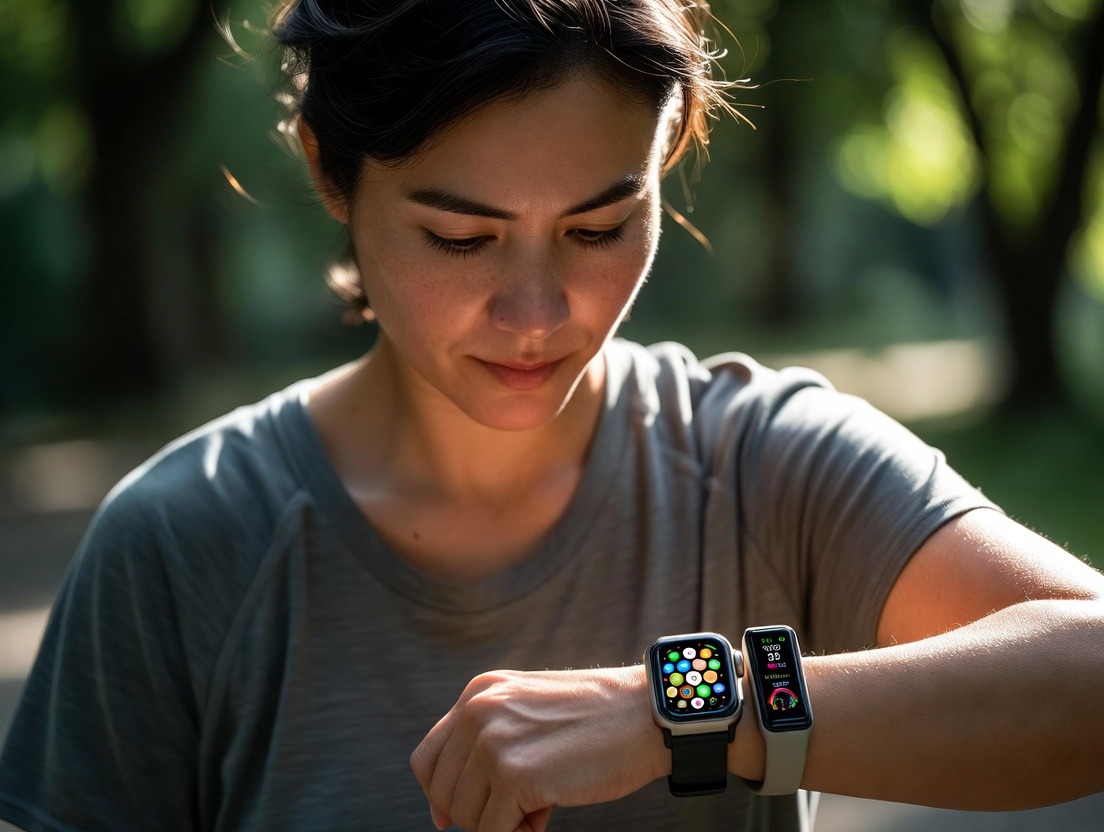
Your smart ring is a powerhouse, but it is not an island. When integrated thoughtfully with other wellness technologies, it becomes the central processing unit of a holistic health dashboard, providing context that makes data from other devices even more meaningful.
Fitness Trackers & Smartwatches:
Continuous Glucose Monitors (CGMs):
Smart Home Ecosystems:
Meditation & Mindfulness Apps:
By creating this ecosystem, you allow each piece of technology to do what it does best, while your smart ring serves as the unifying interpreter, showing you how strain, nutrition, environment, and mental practice all converge to create—or hinder—your nightly recovery. This is systems-thinking for personal health.
The current generation of smart rings is impressive, but it is merely the foundation. The future promises even deeper, more seamless, and more proactive insights that will make the compounding effect easier to achieve and understand.
Non-Invasive, Multi-Marker Sensing:
Future rings may incorporate spectroscopic sensors to estimate key biomarkers like blood oxygen saturation (SpO2) more reliably, blood glucose trends (through optical sensors), and even electrodermal activity (EDA) for more direct stress response tracking. This would give a near-complete picture of metabolic and nervous system status overnight.
Advanced Predictive Analytics & True AI Coaches:
Beyond telling you what happened, future algorithms will get better at telling you why it might have happened and what to do about it tomorrow.
Deeper Integration with Medical & Health Data:
With proper user consent and privacy safeguards, the future may allow your ring data to be integrated into electronic health records. A doctor could review your longitudinal HRV, sleep, and temperature trends alongside standard lab work, getting a dynamic picture of your health not possible from a single annual check-up. This could revolutionize preventive care.
Emotional State Inference:
While controversial and complex, future sensors and AI may attempt to infer broad emotional states (calm, agitation, focus) from the confluence of heart rate, HRV, temperature, and movement patterns. This could provide fascinating feedback on how your evening routine is affecting not just your sleep, but your emotional baseline, tying directly into the pursuit of emotional granularity and balance.
The constant will remain: the device that lives on your finger, gathering data without intrusion, will become ever more adept at showing you the invisible connections between your daily choices and your long-term well-being. The principle of compounding will remain, but the maps and tools to navigate it will become astonishingly precise.
We’ve covered the theory, the science, the pitfalls, and the future. Now, let’s distill it into a concrete, actionable blueprint you can start implementing tonight. This is your personalized plan to harness the compounding power of your evening routine, guided by your smart ring.
Phase 1: The Foundation (Weeks 1-2) – Observe & Benchmark
Phase 2: The First Intervention (Weeks 3-4) – Introduce & Measure
Phase 3: The Stacking Phase (Weeks 5-8) – Build Your Pillars
Phase 4: The Personalization Phase (Month 3+) – Optimize & Systemize
Phase 5: The Maintenance & Adaptation Phase (Ongoing) – The Long Game
This blueprint is not a rigid cage, but a scaffold. It provides structure as you build the habit, with the flexibility to make it uniquely yours. Your smart ring is the foreman on this construction site, providing the daily reports that ensure the foundation of your compounded well-being is being poured correctly, one evening at a time.
We have traversed the landscape where technology meets timeless human need. We’ve seen how a silent ring on your finger can translate the subtle poetry of your evening rituals into the hard mathematics of health—beating heart rates, variable intervals, and temperature gradients becoming the verses of a story about recovery.
The central thesis is now clear: Evening routine consistency is the most powerful, under-leveraged compound interest account for human well-being. Each night you honor your wind-down, you make a deposit. The returns are not linear; they are exponential. A deposit of calm tonight yields interest in the form of resilience tomorrow, which creates the principal for greater creativity and vitality the next day, and so on, in an ever-ascending spiral.
Your smart ring is the bank statement for this account. It shows you the balance. It shows you the growth rate. It alerts you to withdrawals. It turns the abstract concept of "self-care" into a tangible, manageable, and profoundly rewarding practice of self-architecture.
This journey is not about chasing perfect scores or biohacking yourself into a state of sterile optimization. It is about building a relationship of trust with your own body. It is about learning its language—a language of heartbeats and breaths, of warmth and rest—and responding with kindness and consistency. It is about creating a sacred, predictable space at the end of each day where you can shed the accumulated stress of living and return to your baseline, a baseline that slowly, surely, rises over time.
As you move forward, remember that the data is a guide, not a god. The ultimate metric is the quality of your life—your energy, your focus, your emotional peace, your capacity for joy and connection. Let the ring illuminate the path, but let your own lived experience be the destination.
The next portion of this deep dive will explore the interconnected morning routine that capitalizes on this nightly investment, the social dynamics of shared rituals, and the advanced biohacking strategies for those looking to push the boundaries of recovery and performance. But for now, tonight, simply begin. Dim the lights. Breathe. Listen. And let your journey of a thousand compounding nights begin.
Your Trusted Sleep Advocate: Sleep Foundation — https://www.sleepfoundation.org
Discover a digital archive of scholarly articles: NIH — https://www.ncbi.nlm.nih.gov/
39 million citations for biomedical literature :PubMed — https://pubmed.ncbi.nlm.nih.gov/
Experts at Harvard Health Publishing covering a variety of health topics — https://www.health.harvard.edu/blog/
Every life deserves world class care :Cleveland Clinic - https://my.clevelandclinic.org/health
Wearable technology and the future of predictive health monitoring :MIT Technology Review — https://www.technologyreview.com/
Dedicated to the well-being of all people and guided by science :World Health Organization — https://www.who.int/news-room/
Psychological science and knowledge to benefit society and improve lives. :APA — https://www.apa.org/monitor/
Cutting-edge insights on human longevity and peak performance:
Lifespan Research — https://www.lifespan.io/
Global authority on exercise physiology, sports performance, and human recovery:
American College of Sports Medicine — https://www.acsm.org/
Neuroscience-driven guidance for better focus, sleep, and mental clarity:
Stanford Human Performance Lab — https://humanperformance.stanford.edu/
Evidence-based psychology and mind–body wellness resources:
Mayo Clinic — https://www.mayoclinic.org/healthy-lifestyle/
Data-backed research on emotional wellbeing, stress biology, and resilience:
American Institute of Stress — https://www.stress.org/


