


How Modern Health Monitoring Makes Healthcare More Accessible
Discusses how personal health monitors can make basic healthcare insights more accessible to underserved populations.
Discusses how personal health monitors can make basic healthcare insights more accessible to underserved populations.
%402x.svg)
For centuries, healthcare has been a reactive institution. You feel a symptom—a pain, a fatigue, a persistent cough—and you seek out a gatekeeper: the doctor. In their office, often after a long wait, you describe a fleeting moment of discomfort, hoping they can decipher a diagnosis from a snapshot of your life. This model, while responsible for miraculous advances, is fundamentally limited. It operates on sporadic data points, subjective reports, and a system that is, for many, prohibitively expensive, geographically distant, and psychologically intimidating.
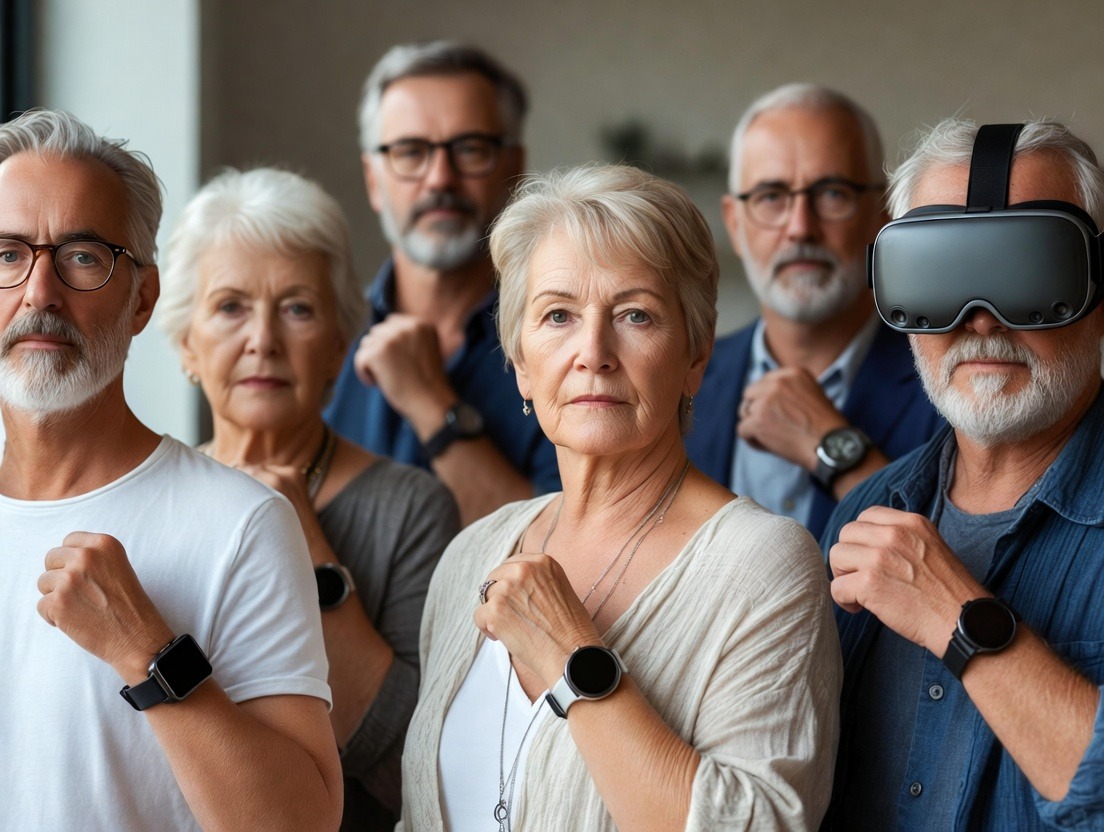
But a quiet, profound revolution is underway. It’s not happening in sprawling hospitals or pharmaceutical labs first. It’s happening on your wrist, on your finger, and in your pocket. Modern health monitoring, powered by wearable technology like smartwatches and smart rings, artificial intelligence, and consumer-focused digital health platforms, is shattering the old paradigm. We are transitioning from reactive, episodic care to proactive, continuous, and personalized health management. This shift isn't just about convenience; it's fundamentally about accessibility.
Accessibility in healthcare is multi-faceted. It’s about geographic access, breaking down the barrier of distance for rural communities. It’s about financial access, reducing the crushing cost of constant medical supervision. It’s about temporal access, providing insights when you need them, not weeks after an appointment. And it’s about psychological access, demystifying your own body’s signals and empowering you with knowledge.
This article explores how the seamless integration of modern health monitoring technology into our daily lives is democratizing wellness and medical insight. We will journey through the data-driven transformation of personal health, examine the specific technologies making it possible, and understand how this new accessibility is preventing crises, personalizing medicine, and placing the individual firmly at the center of their own health journey. The future of healthcare is no longer just in the clinic; it's in the continuous, gentle pulse of data from a device you wear every day.

Imagine two different patients with atrial fibrillation (AFib), a common heart rhythm disorder. Patient A, under the traditional model, might experience occasional palpitations. They schedule an appointment, wait three weeks, and by the time they see their physician, their heart rhythm is normal. The doctor orders a 24-hour Holter monitor—another device, another appointment. The monitor might catch an episode, or it might not, leading to a frustrating cycle of “wait and see.”
Patient B wears a smart ring. Using photoplethysmography (PPG) sensors, the device continuously monitors heart rate and rhythm in the background. One evening, while reading, the device detects an irregular rhythm consistent with AFib. It logs the exact time, duration, and contextual data (the user was at rest). A subtle notification suggests reviewing the data. Patient B opens the accompanying app, sees the clear anomaly, and can generate a PDF report of the event to share instantly with their cardiologist via a secure portal. The doctor now has actionable, objective data from the patient’s real life, not just a subjective recollection.
This is data democratization. It’s the process of taking information that was once exclusively gathered and interpreted by medical professionals in clinical settings and placing the tools to collect and understand it directly into the hands of individuals.
The Pillars of Democratization:
The barrier to entry for this level of self-knowledge has plummeted. You no longer need a referral for a sleep study to understand your sleep architecture; a device worn nightly can provide profound insights. This democratization is making preventive health—the most effective and affordable form of healthcare—accessible to millions.
The journey began with the humble pedometer, evolved into the step-obsessed fitness tracker, and has now matured into a comprehensive health and wellness platform. Today’s leading wearables, particularly the discreet and powerful smart ring category, are sophisticated biometrical data hubs.
Beyond the Wrist: The Smart Ring Advantage
While smartwatches dominate visibility, smart rings represent the cutting edge of seamless, clinical-grade monitoring. Their form factor is their superpower.
Key Metrics Modern Wearables Decode:
This evolution from “step counters” to “health guardians” signifies a broader shift. The goal is no longer just to move more but to understand more—about your stress, your recovery, your readiness to perform, and the subtle whispers of your body long before they become cries for help.
Telehealth exploded out of necessity but is now cemented as a permanent pillar of accessible care. It solves the geographic barrier brilliantly, allowing a patient in a rural community to consult with a specialist hundreds of miles away. However, telehealth’s initial weakness was the “data gap.” A video call alone often lacks the objective, clinical data a physician needs for confident diagnosis and management.
This is where modern health monitoring seamlessly integrates to create a powerful synergy. Wearables provide the missing objective data stream, transforming a remote consultation into a data-rich virtual visit.
The Integrated Virtual Care Scenario:
A patient managing hypertension has a smart ring. During their telehealth check-in, their physician doesn’t have to rely solely on the patient’s memory of occasional home cuff readings. Instead, the patient shares:
The physician can now make adjustments based on a holistic, longitudinal view of the patient’s life. This model is transformative for chronic disease management (diabetes, COPD, heart failure), post-operative monitoring, and mental health follow-ups. It reduces unnecessary in-person visits, saves patients time and travel costs, and allows clinicians to monitor more patients effectively. The geographic barrier dissolves, replaced by a continuous, data-enabled connection.

The economic argument for modern health monitoring is staggering. The global healthcare system is financially crippled by the cost of treating advanced, preventable chronic diseases and managing acute crises. The U.S. Centers for Disease Control and Prevention states that 90% of the nation’s $4.1 trillion in annual healthcare expenditures are for people with chronic and mental health conditions. Prevention is not just better for health; it’s the only sustainable economic model.
How Wearables Shift the Cost Curve:
For the individual, the cost of a sophisticated wearable (a few hundred dollars) is a one-time or annual expense that replaces countless co-pays, specialist fees, and diagnostic tests. It makes the once-unaffordable luxury of frequent health insight available to the masses, turning prevention from a theoretical ideal into a daily, affordable practice.
Perhaps the most profound impact of accessible health data is psychological. The traditional medical model can be inherently disempowering. You are the “patient”—literally, one who endures suffering passively. You present your symptoms to an expert who holds the knowledge and authority. This dynamic, while sometimes necessary, can foster anxiety, dependency, and a sense of detachment from one’s own body.
Modern health monitoring flips this script. It fosters a mindset of agency and self-efficacy.
This psychological shift reduces the intimidation factor of healthcare. You walk into a doctor’s office not as a blank slate, but as a partner with a logbook of your life. You ask better questions, understand the rationale behind recommendations, and are more likely to adhere to treatment plans you helped co-create.
The shortage of specialists—endocrinologists, cardiologists, neurologists—and the long wait times to see them is a critical choke point in healthcare accessibility. For the millions managing chronic conditions, this gap can be life-threatening. Modern monitoring acts as a “force multiplier” for specialists, allowing them to extend their reach and provide higher-quality care to more people.
Use Cases in Chronic Care:
In this model, the specialist’s time is used for high-value interpretation and decision-making, not for gathering basic data. Routine monitoring is handled automatically in the patient’s home, freeing up the system for those who need urgent, hands-on care. This makes specialist-level insight accessible to those who would otherwise be on a waiting list for months.
The most compelling narratives in modern health monitoring are stories of silent, early detection. These are not anecdotes of tracking fitness goals, but of averting medical crises. The power lies not in diagnosing a disease, but in detecting a meaningful deviation from a personal baseline.
Your wearable learns your normal. It knows your typical nighttime temperature, your average resting heart rate on a good night, your normal respiratory rate. It is looking for anomalies—sustained shifts that signal your system is under unusual stress.
Real-World Detection Scenarios:
This function transforms the wearable from a tracker into a guardian. It provides a constant, passive check on your systems, something neither an annual physical nor your own conscious awareness can provide. This early-warning capability is arguably the most life-changing aspect of accessible health technology, making preventive insight available 24/7/365.
The sheer volume of data generated by continuous monitoring—heartbeat-by-heartbeat, breath-by-breath—is impossible for a human to parse. This is where artificial intelligence and machine learning become the essential translators, turning raw data into personalized, actionable insights.
AI does not just collect data; it finds patterns invisible to the naked eye.
This marks the end of the generic health magazine article. Your health insights become as unique as your fingerprint, guided by an algorithm that knows your body’s rhythms better than you ever could on your own. This level of personalization was once the purview of elite athletes with a team of sports scientists; it is now accessible to anyone with the right device.
Modern health monitoring’s greatest strength is its refusal to compartmentalize. The body is an integrated system, and the best platforms reflect this. They synthesize data from various biomarkers to produce composite scores that tell a holistic story about your readiness to take on the day or your need for recovery.
The Core Triad: Sleep, Stress, and Activity
These three pillars are in constant dialogue. You cannot understand one without the others.
Practical Application of Holistic Scores:
A user wakes up and checks their wellness app. Their Sleep Score is 85/100 (good), but their Recovery/Readiness Score is only 42/100. Drilling down, they see their HRV plummeted in the middle of the night and their resting heart rate was 10 bpm above normal. The insight: “You slept soundly, but your body was under high metabolic or immune stress during the night. Prioritize rest today.” This prevents the user from pushing through a hard workout that could lead to injury or illness.
This integrated view stops us from optimizing in silos. It teaches us that drinking a kale smoothie after 4 hours of fragmented sleep and a sky-high stress score is not “healthy.” It makes true, sustainable wellness accessible by showing the interconnected levers we can pull. For busy individuals trying to balance these pillars, insights from nighttime wellness for busy professionals' realistic routines can be invaluable.
A common and valid criticism of the quantified-self movement is that it can lead to “analysis paralysis” or orthosomnia—an unhealthy obsession with perfect sleep data. Accessibility isn’t just about providing data; it’s about providing understandable, actionable knowledge without inducing anxiety.
The best health platforms are solving this by focusing on trends over absolutes, insight over raw data, and simplicity over complexity.
Principles of Effective Data Presentation:
By curating the data into a narrative, technology overcomes its own potential to overwhelm. It turns a firehose of numbers into a calm, daily conversation with your body, making advanced health literacy accessible to everyone, not just data scientists.

As we stand at this inflection point, the trajectory is clear. The convergence of sensor miniaturization, battery innovation, AI sophistication, and user-centric design is creating a future where sophisticated health monitoring will be as ubiquitous, unobtrusive, and essential as the smartphone.
The Horizon of Accessibility:
The ultimate goal is to make the proactive management of one’s health the default, easy path. To make the knowledge required to live a longer, healthier life not something you have to seek painfully from an overburdened system, but something that flows gently and continuously from the technology that already surrounds you.
This is the promise of modern health monitoring: a world where healthcare is not a place you go, but a continuous, supportive, and deeply personal process that empowers you to live your healthiest life. It is dismantling barriers of geography, cost, knowledge, and psychology, one data point at a time. The revolution is not coming; it is already here, quietly humming on the finger of anyone who chooses to listen.
The accessibility of modern health monitoring extends beyond the individual to reshape society's relationship with health itself. By making physiological processes visible and understandable, these technologies are fostering a new era of public health literacy. This is not about making everyone a doctor, but about creating a foundational understanding of how the body works, how it responds to lifestyle, and what true "health" signals look like. This collective understanding is a powerful tool for community well-being and effective public health communication.
From Abstract Concepts to Tangible Reality:
Consider common public health messages: "Manage your stress," "Get quality sleep," "Stay active." For decades, these have been well-intentioned but abstract slogans. Modern monitoring gives them tangible, personal meaning.
This shift creates a common language. When a colleague says, "My readiness score is low today, I need to focus on recovery tasks," it conveys a specific, understood state. This shared literacy makes it easier for communities, workplaces, and families to support healthy behaviors in an evidence-based, non-judgmental way.
Implications for Public Health Initiatives:
Imagine a community-wide "Metabolic Health Month" where participants use wearables to track sleep, activity, and resting heart rate. Instead of generic tips, public health officials could share data-backed insights like, "Our community's aggregate data shows a strong link between finishing dinner before 8 PM and higher sleep scores. Try it this week!" This transforms public health from a top-down lecture into a participatory, data-informed community experiment. It builds a culture where health is seen as a dynamic, measurable asset to be cultivated, not merely the absence of disease.
As we herald this new age of accessibility, we must confront its significant challenges with clear eyes. The very technologies that democratize health data also generate incredibly intimate information—a continuous digital transcript of your body's inner state. Ensuring this revolution is equitable and ethical is not an add-on; it is the foundation of its long-term success.
The Paramount Concern: Data Privacy and Security
The data from a modern health monitor is arguably more sensitive than your financial records. It can reveal when you sleep, when you are stressed, potential illness, and even infer activities. The ethical responsibility of companies in this space is immense.
The Critical Challenge: The Digital Divide
Technology-driven accessibility can inadvertently create a new form of inaccessibility: the health data divide. If advanced health insights become a privilege of those who can afford the latest wearables and premium subscription apps, we risk exacerbating existing health disparities.
The path forward requires a collaborative model: technologists building with privacy-by-design, policymakers creating strong legal frameworks (akin to GDPR for health data), and healthcare providers advocating for equitable access. The goal is a future where the benefits of monitoring are a rising tide that lifts all boats, not a new walled garden for the affluent.
The adoption of consumer health technology has not been a smooth ride within the medical establishment. Initial skepticism from clinicians was understandable—confronted with a flood of patient-generated data of variable quality, often presented without context, and sometimes driving anxiety ("Dr. Google" on steroids). However, a significant transformation is underway as the clinical utility of this data becomes undeniable, and the tools to manage it improve.
Evolving the Doctor-Patient-Data Relationship:
The new model is a triad: the clinician, the patient, and the curated data stream. For this to work, both sides are adapting.
The Rise of Digital Biomarkers and Remote Patient Monitoring (RPM):
The medical field is formally embracing these tools through the validation of digital biomarkers—measures of physiology derived from device sensors. The FDA's clearance of algorithms for AFib detection on smartwatches is a prime example. Furthermore, structured Remote Patient Monitoring (RPM) programs are being reimbursed by insurers. In these programs, a clinic provides a patient with a FDA-cleared device (e.g., a blood pressure cuff, scale, or pulse oximeter) that automatically transmits data to a care team dashboard. This formalizes the process, making continuous monitoring a billable, integrated component of chronic care management.
The clinician of the future will be adept at interpreting these continuous data streams, using them to build a richer picture of the patient's life between appointments. This doesn't replace clinical judgment; it informs it with unprecedented depth, making every minute of the clinical encounter more valuable and precise.
We are currently in the era of descriptive and diagnostic analytics: your device tells you what happened (you slept poorly) and may suggest why (late caffeine). The next leap, already beginning, is into predictive and prescriptive analytics. This is where AI, fed by vast longitudinal datasets, begins to forecast health trajectories and suggest highly personalized interventions to alter them.
From Insight to Foresight:
Predictive models don't just report on last night's sleep; they forecast your susceptibility to illness, burnout, or a metabolic slump next week based on your current recovery trajectory, environmental factors (e.g., local pollen count), and historical patterns.
Prescriptive Personalization:
The ultimate goal is a closed-loop system that not only predicts but also helps prescribe micro-adjustments to your daily life. This moves us from generalized wellness to precision prevention.
This frontier represents the full flowering of accessible healthcare: a system that learns your unique physiology, anticipates your needs, and guides you with gentle, data-driven nudges to stay on the path of optimal health. It is healthcare that is not only accessible but also anticipatory and exquisitely personal.
To ground this expansive discussion, let's examine a specific product category that epitomizes the principles of seamless, accessible monitoring: the smart ring. Devices like the Oura Ring, Ultrahuman Ring Air, and others are not merely smaller wearables; they represent a philosophical shift towards effortless, clinically-grounded self-knowledge.
The Design Philosophy of Unobtrusive Monitoring:
The smart ring's success is rooted in a key insight: for monitoring to be truly continuous and lifestyle-integrated, it must fade into the background. Its design advantages are direct responses to accessibility barriers:
Bridging the Gap to Medical-Grade Insights:
Smart rings are increasingly acting as a bridge, bringing insights once confined to sleep labs and sports science facilities into daily life.
The smart ring, in its elegant simplicity, demonstrates that the most accessible health technology is the one you forget you're wearing, yet provides insights you can't afford to ignore. It is a concrete example of how design thinking is removing friction from the path of proactive health management.
Data alone does not create change. A graph showing poor sleep does not automatically induce better sleep hygiene. The final, and perhaps most human, layer of accessibility is behavioral change. Modern health platforms are increasingly integrating principles from behavioral psychology and neuroscience to help users bridge the "intention-action gap." This is where accessible data transforms into accessible action.
The Mechanics of Habit Formation with Technology:
Effective platforms use several key strategies to encourage sustainable habit formation:
Overcoming the Pitfalls: Avoiding Obsession and Burnout
A critical role of these platforms is to prevent the data from becoming a source of anxiety. This is done by:
By intelligently applying behavioral science, health technology moves from being a passive reporter to an active coach. It makes the process of building a healthier lifestyle less about willpower and more about designed feedback loops and intelligent support, making lasting change more accessible than ever before.
As we have explored, modern health monitoring is not a single gadget or app; it is a rapidly maturing ecosystem. This ecosystem includes the hardware (wearables, smart scales, CGMs), the software (AI platforms, health apps), the data pipelines, the clinical integration tools (RPM, EHR connectors), and the ethical frameworks that must guide it all. Together, they are constructing a new layer of healthcare infrastructure that is decentralized, personal, and proactive.
This first portion of our exploration has laid the groundwork by detailing how this ecosystem:
The accessible health ecosystem is transforming a fragmented, reactive, and often intimidating system into a continuous, supportive, and empowering partner in our daily lives. It acknowledges that health is not a destination reached in a doctor's office, but a dynamic journey lived every minute—and now, that journey can be navigated with more light, more guidance, and more personal agency than at any point in human history.
This is only the beginning. As this ecosystem evolves, its integration into our lives will become deeper, its insights sharper, and its impact on global health outcomes more profound. The goal is within reach: a world where everyone has the accessible tools to understand, manage, and optimize their own health, creating a future of wellness that is not only longer, but fuller and more vibrant.
The current paradigm of health monitoring, even at its most seamless with smart rings, still requires a conscious choice to wear a device. The next evolutionary leap is toward ambient and implantable sensing—technologies that disappear into our environment or our bodies, creating a continuous health data field without any active user compliance. This represents the ultimate form of accessibility: effortless, invisible, and always-on.
Ambient Sensing: The Environment as a Diagnostic Tool:
Imagine a home where health monitoring is baked into the infrastructure. This is not science fiction; it's the logical endpoint of the Internet of Things (IoT) applied to wellness.
The power of ambient sensing lies in its passive, zero-effort nature. It is particularly transformative for aging in place, pediatric monitoring, and for individuals with cognitive or physical impairments who cannot reliably use wearables. The home itself becomes a caring, diagnostic environment.
Implantables and Ingestibles: The Data Stream from Within:
Going a step further, the most intimate form of monitoring comes from inside the body.
The ethical and privacy considerations here are monumental, demanding the highest levels of security and user control. However, the potential for managing complex chronic diseases, ensuring treatment efficacy, and providing unprecedented biological insight is staggering. This represents accessibility not just to data, but to the very chemical and electrical language of the body itself.
While much of the discussion centers on individual consumers in developed nations, perhaps the most profound impact of accessible health technology lies in its potential to revolutionize global public health and care delivery in low-resource settings. Here, the challenge is not convenience, but survival. Modern monitoring, when appropriately adapted, can be a lifeline.
The Smartphone as a Clinic:
In many parts of the world, the penetration of smartphones far outpaces that of hospitals or even clinics. Leveraging this existing hardware for health monitoring is a paradigm-shifting strategy.
Epidemiology and Disease Surveillance:
Aggregated, anonymized data from wearables and apps can serve as an early-warning system for public health crises on a global scale.
This global application flips the script. It's not about optimizing the wellness of the already healthy; it's about delivering the most fundamental elements of diagnostic care to those who have never had it. It makes the health system itself accessible where no physical system exists.
As the health monitoring ecosystem matures, its most exciting applications will be in hyper-personalizing the three pillars of daily wellness: what we eat, how we move, and how we manage our minds. The era of generic diet plans, workout programs, and meditation apps is ending.
Precision Nutrition: Fueling Your Unique Metabolism:
The combination of continuous glucose monitors (CGMs), microbiome analysis, and wearable data is revealing that there is no universally "healthy" food.
Adaptive Fitness: Your Body's Daily Blueprint:
The future of fitness is autoregulation—allowing your body's daily physiological state to dictate your workout.
Mental Wellness and the Quantified Mind:
Mental health is the next frontier for biometric personalization, moving beyond mood journals to objective correlates.
This level of personalization makes wellness truly accessible by meeting each individual at their unique biological starting point, with recommendations that are proven to work for them. It turns self-care from a guessing game into a precise science.
The ultimate goal of all this technology is not simply to add years to life, but to add life to years—to extend healthspan, the period of life spent in good health, free from chronic disease and disability. Modern health monitoring is the foundational tool for the emerging field of precision longevity.
Tracking the Rate of Aging:
Aging is not just a chronological number; it's a biological process that occurs at different rates in different people (and different organ systems within one person). New "aging clocks" use combinations of biomarkers—many now accessible via wearables and lab tests—to calculate your biological age.
Interventions to Slow Aging:
With a reliable way to measure the rate of aging, individuals can experiment with interventions and see their impact.
This shifts healthcare's goal from treating end-stage diseases of aging to actively managing the aging process itself. It makes the science of longevity not just an academic pursuit, but an accessible, daily practice for anyone motivated to invest in their future vitality.
As we stand on the brink of this deeply integrated, data-saturated health future, we must collectively steer its development with wisdom. The challenges are not merely technical; they are social, philosophical, and existential. Embracing this future requires not just better gadgets, but a better framework for living with them.
The Challenge of Algorithmic Bias and Equity (Revisited):
If AI is to be our personal health guide, we must ensure it is trained on diverse datasets. Most clinical and consumer health data to date comes from populations that are wealthy, white, and Western. Algorithms built on this data may fail or provide less accurate insights for people of color, different genders, or those with non-standard physiologies. Actively building inclusive datasets and auditing algorithms for bias is a non-negotiable ethical imperative to ensure this future is accessible to all.
The Risk of Medicalization of Everyday Life:
When every heartbeat is quantified, there is a danger of pathologizing normal human variance. A temporary dip in HRV becomes "poor recovery," a night of less sleep becomes "sleep debt." We must guard against a culture where we are constantly "sick" or "deficient" according to our devices. The technology must be designed to promote health optimization, not health anxiety. It should celebrate normalcy and resilience, not just highlight deviation. Part of this is learning to structure our relationship with technology, much like how successful people structure their nighttime routines to include digital disconnection.
The Need for Digital Detox and Embodied Wisdom:
Paradoxically, to benefit fully from technology, we must know when to ignore it. The goal of all this data is to eventually cultivate a richer, more trustworthy embodied awareness—to feel what a high HRV state is like, to sense the need for sleep before the device reminds us. We must design our lives and our tech to include mandatory periods of disconnection, where we live in our bodies, not on our dashboards. The data should serve our lived experience, not replace it.
The Evolution of Responsibility: Individual vs. Collective:
In a world where we have immense personal health data, where does individual responsibility end and societal support begin? If an algorithm predicts a high diabetes risk based on your data, is it your sole responsibility to change your life, or does your employer have a duty to provide healthier food, or your city a duty to build safer parks? The technology will force us to have deeper conversations about the social determinants of health and the shared responsibility for creating a world that makes healthy choices the easy choices.
The journey we have traced is one of profound democratization. We have moved from a model where health knowledge was guarded, episodic, and reactive, to one where it is flowing, continuous, and proactive. Modern health monitoring, in all its forms—from the smart ring on your finger to the ambient sensors in your home, from the AI in your phone to the global health networks spanning continents—is dismantling the old barriers of geography, cost, expertise, and time.
This is not merely a technological shift; it is a humanistic one. It is about restoring agency and understanding to the individual. It is about catching illness in its whispers, not its screams. It is about making the science of well-being a participatory, daily practice rather than an intimidating, institutional mystery.
The accessible health ecosystem promises a future where:
This future is being built now. It is being built by the engineers designing more sensitive sensors, by the data scientists creating more intuitive algorithms, by the clinicians integrating this stream into compassionate care, and by every individual who chooses to engage with their own data curiously and compassionately.
The path forward requires vigilance—vigilance for privacy, for equity, for psychological well-being, and for the preservation of our unquantified human spirit. But if navigated wisely, this revolution offers our greatest opportunity yet to create a world where healthcare is not a service we struggle to access, but a state of being we are all empowered to cultivate. The ultimate accessibility is the power to understand and nurture your own life. That power is now, quietly and continuously, at hand.
Citations:
Your Trusted Sleep Advocate: Sleep Foundation — https://www.sleepfoundation.org
Discover a digital archive of scholarly articles: NIH — https://www.ncbi.nlm.nih.gov/
39 million citations for biomedical literature :PubMed — https://pubmed.ncbi.nlm.nih.gov/
Experts at Harvard Health Publishing covering a variety of health topics — https://www.health.harvard.edu/blog/
Every life deserves world class care :Cleveland Clinic - https://my.clevelandclinic.org/health
Wearable technology and the future of predictive health monitoring :MIT Technology Review — https://www.technologyreview.com/
Dedicated to the well-being of all people and guided by science :World Health Organization — https://www.who.int/news-room/
Psychological science and knowledge to benefit society and improve lives. :APA — https://www.apa.org/monitor/
Cutting-edge insights on human longevity and peak performance:
Lifespan Research — https://www.lifespan.io/
Global authority on exercise physiology, sports performance, and human recovery:
American College of Sports Medicine — https://www.acsm.org/
Neuroscience-driven guidance for better focus, sleep, and mental clarity:
Stanford Human Performance Lab — https://humanperformance.stanford.edu/
Evidence-based psychology and mind–body wellness resources:
Mayo Clinic — https://www.mayoclinic.org/healthy-lifestyle/
Data-backed research on emotional wellbeing, stress biology, and resilience:
American Institute of Stress — https://www.stress.org/


