


Natural Energy Boosters Through Proper Recovery: Ring-Monitored Rest
Proper recovery as a natural energy booster, monitored by your ring.
Proper recovery as a natural energy booster, monitored by your ring.
%402x.svg)
For generations, we've chased energy in all the wrong places. We've reached for the third cup of coffee by 10 AM, succumbed to the sugary afternoon crash, and glorified the "hustle" that leaves us perpetually drained by 8 PM. We've treated our bodies like machines that can run indefinitely on willpower and caffeine, ignoring the fundamental biological truth: energy isn't created; it's restored. True, sustainable, vibrant energy isn't found in a can, a pill, or a motivational quote. It’s forged in the quiet, unseen hours of proper recovery. It's the direct, measurable output of a body and nervous system that have been given what they need to repair, rebuild, and recharge.
Yet, "recovery" has remained the most nebulous, overlooked pillar of health. We vaguely know we need "good sleep," but we've had no objective way to measure its quality, only the foggy, subjective feeling upon waking. We push through workouts without understanding if our muscles have truly healed. We endure stress without quantifying its cumulative toll on our resilience. This has changed. We are no longer flying blind in the dark landscape of our own restoration.
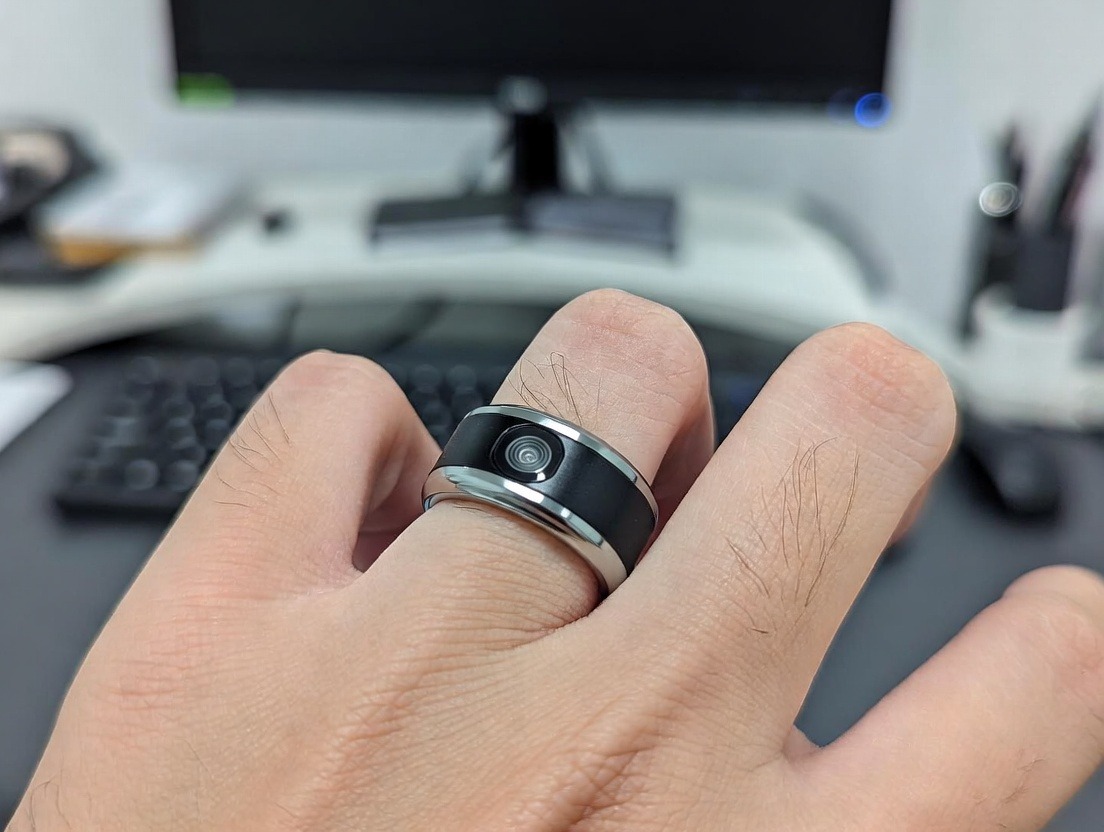
Enter the era of the smart ring—an unassuming, always-on guardian of your most fundamental health metrics. This technology moves wellness from abstract concept to tangible data, specifically illuminating the critical pillar of recovery. By continuously monitoring your heart rate variability (HRV), resting heart rate, skin temperature, and sleep architecture, a smart ring transforms rest from a passive state into an active, optimizable process. It answers the questions we’ve never been able to accurately ask: Did that extra hour of sleep actually help? How recovered am I really from yesterday's stress? Is my body fighting an illness before I even feel symptoms?
This article is your definitive guide to harnessing this new frontier of bio-data. We will dismantle the myth that more activity equals more energy and build, in its place, a science-backed philosophy: that intelligent, data-informed recovery is the ultimate, natural energy booster. We will explore how the metrics from your finger provide a real-time blueprint for your body’s needs, allowing you to tailor your rest, nutrition, movement, and mindset to fuel your life from a deep, renewable well. This is not about doing more; it's about recovering smarter. It's about unlocking the boundless energy that was inside you all along, simply waiting for the right conditions to be released.
We live in a culture that venerates output. We wear busyness as a badge of honor and often view rest as the enemy of productivity—a necessary evil at best, laziness at worst. This mentality has spawned a colossal misunderstanding of human physiology, creating what we call the Recovery-Energy Paradox. The paradox is this: the more you strategically prioritize recovery, the more energy and productive capacity you generate. Conversely, the more you neglect recovery in pursuit of output, the less energy and capability you ultimately possess.
Think of your energy not as an endless reservoir, but as a battery. Every cognitive task, emotional stressor, physical workout, and digestive process draws a charge. Sleep and deep rest are the charging cycles. The problem for most people isn't that their battery is small; it's that they never allow it to reach a full charge. They live in a state of chronic partial depletion, perpetually running on 60% capacity, wondering why they feel slow, foggy, and fatigued. They then attempt to "jump-start" this undercharged system with stimulants, which only creates more internal stress and drains the battery further.
True biological energy—the ATP generated in your mitochondria, the neural readiness in your brain, the hormonal balance in your endocrine system—is a product of anabolism: the building, repairing, and synthesizing phase of your metabolism. Anabolism occurs only when your body is in a state of "rest and digest," governed by the parasympathetic nervous system. The stress-and-output state ("fight or flight," governed by the sympathetic nervous system) is catabolic: it breaks down tissue and burns resources. You cannot be in both states simultaneously. Therefore, without sufficient, high-quality parasympathetic recovery time, your body cannot perform the essential repair work that creates lasting energy.
This is where the old advice of "get 8 hours of sleep" fails us. Duration is a poor proxy for quality. You can be in bed for 8 hours but spend most of it in light sleep with elevated heart rate due to undetected stress, poor temperature regulation, or sleep apnea. You wake up having logged the time but having missed the essential, restorative deep sleep (N3) and REM cycles. Your battery is maybe 40% charged. The smart ring cuts through this guesswork. By tracking your Sleep Score—a composite of duration, efficiency, timing, and the all-important stages of deep and REM sleep—it tells you not just how long you were charging, but how effective that charge was.
The strategic shift happens when you start using this data. Instead of forcing a workout on a morning when your ring reports a low recovery score and high resting heart rate, you might opt for gentle movement or meditation. This isn't skipping; it's intelligent energy management. You’re respecting your body’s need for repair so that when you do train, you do so at 100% capacity, yielding better results with less risk of injury or burnout. You begin to see that the most productive thing you can do for your career, your relationships, and your goals is to sometimes do less. You master the paradox: intentional rest becomes the engine of exceptional energy.
To build this foundational understanding of how all these core principles interconnect, a systematic approach is invaluable. For those seeking a comprehensive framework, the guide on Daily Health Optimization Mastery: The Complete System for Thriving provides a powerful, structured methodology that complements the data-driven insights from your ring.
The fitness tracker revolution started with a simple premise: count what you do. Steps, calories burned, active minutes—these are metrics of output. They tell the story of your exertion. The smart ring represents the next, more profound evolution: it measures how you recover from that exertion. It shifts the focus from the external act to the internal response, providing a continuous, passive stream of data about your body's readiness and resilience.
Unlike a wrist-worn device, a ring offers unique advantages for biomarker accuracy. The finger hosts rich vascular beds, providing a strong signal for photoplethysmography (PPG) sensors to measure heart rate and, crucially, Heart Rate Variability (HRV). HRV is the gold-standard, non-invasive metric for assessing autonomic nervous system balance—the seesaw between your stress (sympathetic) and recovery (parasympathetic) states. A higher HRV generally indicates greater resilience and better recovery capacity; a lower or dipping HRV can signal stress, fatigue, or impending illness. The ring's constant wear, especially during sleep (when external variables are minimized), provides the perfect, consistent conditions to establish your personal HRV baseline and track meaningful deviations.
Let's break down the core recovery metrics a modern smart ring monitors and what each one tells you about your energy-generating capacity:
Together, this data suite forms your Recovery Score—a single, actionable number each morning that synthesizes these complex biological signals. It answers the fundamental question: "Is my body ready to perform, or does it need a more careful day?" This transforms your approach from a rigid, calendar-based schedule ("I lift every Monday, Wednesday, Friday") to a dynamic, responsive practice ("My readiness is high today, so I'll go for a PR. My readiness is low, so I'll focus on mobility and hydration"). This is the pinnacle of listening to your body, with technology providing the translation. It makes mastering the fundamentals of wellness not just a concept, but a quantified, daily practice, as explored in depth in the article Wellness Fundamentals 101: What a Smart Ring Teaches You.
If you were to choose one metric from your smart ring to pay closest attention to for optimizing energy through recovery, it should be Heart Rate Variability. HRV is not just another data point; it's a direct, real-time window into the conversation between your heart and your brain—specifically, the autonomic nervous system (ANS) that controls all your unconscious bodily functions. Understanding HRV is the key to unlocking a personalized, dynamic approach to energy management.
Physiologically, HRV is the variation in the time interval between successive heartbeats, measured in milliseconds. Contrary to what one might assume, a healthy heart does not beat with the metronomic regularity of a drum machine. It has subtle, moment-to-moment accelerations and decelerations. This variability is a sign of health and adaptability. When your parasympathetic ("rest and digest") system is dominant, it gently applies the brakes, causing more variability. When your sympathetic ("fight or flight") system kicks in, it hits the gas, creating a more regular, rigid heart rate pattern to prepare for action. Therefore, a higher HRV indicates a strong parasympathetic tone and better recovery status, while a lower HRV suggests sympathetic dominance and accumulated stress.
The power of HRV lies in its trend analysis, not in any single daily number. Your ring establishes a personalized baseline (typically a rolling average over 2-4 weeks). The critical insights come from observing deviations from this baseline:
How do you use this in real life? This is where the smart ring transitions from a tracker to a coach. Each morning, you check your HRV reading in context with your recovery score. If your HRV is at or above your baseline, you have the green light for a demanding day. You can train hard, tackle complex projects, and engage socially. If your HRV is notably depressed, you have a yellow or red light. This is your cue for a "Recovery Day." This doesn't mean doing nothing; it means engaging in activities that promote parasympathetic activation: gentle walks in nature, yoga, meditation, foam rolling, a long bath, or extra time in bed. It means saying no to extra commitments and yes to an early, screen-free evening.
This practice, known as HRV-guided training or autonomic flexibility training, is the ultimate biohack for sustainable energy. It prevents you from digging a deeper recovery debt on days your body can't afford it and empowers you to push appropriately on days you're truly ready. It turns the abstract concept of "listening to your body" into a precise, data-driven dialogue. For a foundational look at the core pillars this data supports, the Complete Guide to Wellness Fundamentals in 2025 elaborates on how metrics like HRV fit into the bigger picture of lifelong health.
We've established that sleep is the primary charging cycle for your energy battery. But not all sleep is created equal. Sleeping for eight hours of fragmented, light sleep is like trying to charge a modern smartphone with a faulty, low-power charger—it takes forever and never reaches full capacity. The quality of your charge is determined by your sleep architecture: the cyclical journey through light sleep (N1 & N2), deep sleep (N3), and REM (Rapid Eye Movement) sleep. Your smart ring's ability to estimate these stages revolutionizes your understanding of what truly restful sleep means.
Each stage serves a distinct, irreplaceable role in physical and mental recovery:
The problem for most people is that modern life actively sabotages these cycles. Blue light from screens delays melatonin production, pushing back your sleep onset. Alcohol, while sedating, dramatically suppresses REM sleep. Late-night eating can raise core body temperature, interfering with the cooling process needed for deep sleep. Inconsistent sleep schedules confuse your circadian rhythm, fragmenting the architecture.
Your smart ring’s sleep stage analysis is the diagnostic tool you need to fight back. By reviewing your nightly breakdown, you can start to connect the dots:
This data empowers you to conduct personalized experiments. Try a week of a strict 10 PM digital curfew and note the change in your deep sleep percentage. Experiment with a magnesium supplement or a cool bedroom temperature and observe the impact on your sleep efficiency. The goal is to move from guessing to knowing, optimizing your behaviors to maximize the yield of your body's most potent energy-renewing process: a night of architecturally sound sleep. Building this foundational habit is a cornerstone of sustainable well-being, a concept detailed in Wellness Fundamentals: Building a Foundation for Lifelong Health.

One of the most profound, almost prescient capabilities of continuous biometric monitoring is early illness detection. Long before a sore throat emerges, a cough develops, or fatigue sets in, your body mobilizes its immune defenses. This mobilization has a clear metabolic and physiological signature—a pattern your smart ring is uniquely positioned to detect. This isn't about predicting the future with mystic certainty; it's about observing the early-warning signals your body is already broadcasting. Harnessing this advantage is a game-changer for energy preservation, as getting sick is one of the most catastrophic drains on your physical and mental reserves.
The immune response is energetically expensive. When your body detects a pathogen (a virus or bacteria), it initiates an inflammatory cascade. This process requires resources and creates systemic changes that your ring tracks:
When two or more of these markers align in a negative direction without an obvious reason (like a brutal workout or high-stress event), it's your ring's version of a "check engine" light. This is your biological window of opportunity.
Instead of ignoring subtle cues and powering through until you collapse, you can take proactive recovery action:
By acting on these data-driven early warnings, you can often mitigate the severity of an illness, shorten its duration, or in some cases, prevent its full manifestation altogether. You have effectively defended your energy reserves from a massive, unplanned withdrawal. This transforms you from a passive victim of seasonal bugs to an active guardian of your internal environment. It exemplifies how a device like a smart ring allows you to track and validate the core practices that prevent major health disruptions, as discussed in How a Wellness Ring Tracks Core Wellness Fundamentals.
Your body is not designed to be a static machine. It operates on a finely tuned, 24-hour internal clock known as your circadian rhythm. This rhythm, governed by a master clock in your brain (the suprachiasmatic nucleus), orchestrates the ebb and flow of nearly every physiological process: hormone release, body temperature, digestion, cognitive function, and, most importantly for energy, your sleep-wake cycle. You can have perfect sleep hygiene in a dark, cool room, but if you're trying to sleep against your circadian grain, your recovery and energy will suffer. Smart ring data provides the clearest possible mirror to see if your lifestyle is in sync with this innate biological tempo.
The most powerful zeitgeber (time-giver) for your circadian rhythm is light, specifically natural sunlight. Morning light exposure signals your brain to suppress melatonin (the sleep hormone) and boost cortisol (your natural, gentle wake-up signal). This sets a countdown timer for melatonin release roughly 14-16 hours later. When this cycle is aligned, you feel alert in the morning and naturally drowsy in the evening. Your ring metrics will reflect this: a lower resting heart rate during sleep, a higher HRV, and a sleep timeline that shows you falling asleep and waking at consistent times.
Modern life is a circadian disruptor. Artificial light at night (especially blue light from screens) blurs the lines between day and night, delaying melatonin production. Irregular sleep schedules on weekdays versus weekends create "social jet lag," forcing your body to constantly readjust. Late-night eating signals to your liver and digestive system that it's still "daytime," confusing peripheral clocks throughout your body.
Your smart ring helps you diagnose and correct misalignment through several key metrics:
To use your ring to optimize your circadian rhythm, follow this data-informed protocol:
When your external habits align with your internal clock, recovery becomes exponentially more efficient. You fall asleep faster, achieve more deep and REM sleep, and wake up feeling genuinely refreshed. Your energy levels throughout the day become stable and predictable, no longer reliant on caffeine spikes. You are working with your biology, not against it. This rhythm is one of the essential, non-negotiable wellness fundamentals that supports every aspect of health. To understand the full scope of these critical pillars, the article on The 7 Wellness Fundamentals Everyone Should Master by Age 30 provides an excellent framework.
Nutrition is typically framed in the context of energy input: calories for fuel, protein for muscle. But from a recovery-centric, energy-optimization perspective, nutrition must be reframed as a critical tool for energy restoration. What you eat, and crucially when you eat it, directly influences your sleep architecture, inflammation levels, hormonal balance, and nervous system state—all of which are measured by your smart ring. This creates a powerful feedback loop: your ring data tells you how well your nutrition strategy is supporting recovery, and you can adjust your food choices accordingly to boost your energy-generating capacity.
Let's explore how key nutritional strategies interact with your recovery biomarkers:
The Post-Stress/Workout Refuel: After physical or mental exertion, your body is in a catabolic (breakdown) state and is dehydrated. The goals are to replenish glycogen stores, provide amino acids for repair, reduce inflammation, and rehydrate.
The Evening Wind-Down Meal: Your last meal of the day sets the stage for sleep quality. A large, heavy, or spicy meal too close to bedtime forces your digestive system to work overtime, raising core body temperature and potentially causing reflux, which fragments sleep.
Anti-Inflammatory Nutrition: Chronic, low-grade inflammation is a silent energy thief. It stresses the immune system, disrupts hormonal signaling, and impairs cellular energy production.
Hydration as a Recovery Pillar: Dehydration thickens your blood, forcing your heart to work harder (elevated RHR). It also impairs cellular function, waste removal, and thermoregulation.
By treating food as recovery medicine and using your biometrics as a guide, you move beyond generic dietary rules. You learn what your body needs to recover optimally from your unique life stressors. This personalized, data-informed approach to nutrition is a cornerstone of building sustainable energy from the ground up, a principle explored in the context of beating fleeting trends in Wellness Fundamentals: The Basics That Beat All Biohacking Trends.
Recovery is not synonymous with inactivity. Lying on the couch scrolling through your phone may be passive, but it's often not restorative. In fact, it can be subtly stressful (blue light, information overload, social comparison). True recovery involves actively engaging your parasympathetic nervous system—the "rest and digest" state where healing and energy restoration occur. This is where the concepts of Active Recovery and Non-Sleep Deep Rest (NSDR) become essential, and your smart ring is the perfect tool to validate their effectiveness.
Active Recovery refers to low-intensity movement performed on days following strenuous exercise or during periods of high life stress. Its purpose is not to build fitness but to promote blood flow, which delivers nutrients to muscles and flushes out metabolic waste, reducing soreness and speeding repair. Examples include walking, light cycling, swimming, yoga, or mobility flows.
Non-Sleep Deep Rest (NSDR) is a term popularized by Dr. Andrew Huberman for protocols that deliberately induce a state of deep relaxation and parasympathetic dominance while you are awake. These practices are powerful tools for reducing cumulative stress, calming an overactive mind, and boosting energy without sleeping. Key practices include:
By scheduling Active Recovery and NSDR sessions based on your ring's readiness score, you take a proactive, rather than reactive, approach to managing your energy debt. On a low-recovery day, a 20-minute yoga nidra session might be more valuable than an extra hour of poor, stressed sleep. This level of granular, responsive self-care is what transforms recovery from a hope into a science, making the fundamentals of wellness not just theoretical but measurable, as highlighted in How Smart Rings Have Made Wellness Fundamentals Measurable.
We cannot discuss physical energy without addressing its most common predator: psychological stress. Mental and emotional strain—deadlines, conflicts, financial worries, information overload—activates the exact same physiological stress response as a physical threat: the sympathetic nervous system fires, cortisol and adrenaline flood your bloodstream, your heart rate increases, and your digestion halts. This is catabolic and incredibly energetically expensive. Chronic unmanaged stress creates a leak in your energy bucket that no amount of sleep can fully compensate for. Therefore, mental recovery is not a luxury; it is a critical component of the energy restoration equation. Your smart ring provides the otherwise-missing objective link between your inner state and your physical readiness.
Your ring quantifies the impact of stress through several key channels:
The goal of mental recovery is to break the cycle of rumination, downregulate the nervous system, and create psychological safety—the feeling that you are not under immediate threat. This allows the body to re-enter the energy-restoring parasympathetic state. Here’s how to use your ring data to build better mental recovery habits:
The profound realization here is that managing your mind is not separate from managing your energy; it is central to it. By using your ring’s data to connect mental habits to physical outcomes, you gain a powerful incentive to prioritize psychological well-being. You learn that saying no to an extra commitment, taking a mental health day, or spending 10 minutes in meditation isn't being soft—it's performing essential maintenance on your energy generation system. It underscores the principle that Wellness Fundamentals Matter More Than Any Advanced Tactic, because without a solid mental and emotional foundation, advanced biohacks are built on sand.
Knowledge without application is merely trivia. The true power of ring-monitored recovery lies in synthesizing all these principles into a personalized, dynamic protocol—a set of rules and guidelines you follow based on the data your body provides each day. This isn't a rigid, one-size-fits-all plan, but a flexible framework that respects your biology's daily fluctuations. Below is a template for a 7-day practice that leverages your smart ring's insights to maximize natural energy restoration.
The Daily Morning Ritual (Upon Waking):
The 7-Day Dynamic Protocol Template:
Weekly Review (Sundays):
Spend 15 minutes reviewing your ring's weekly summary. Answer:
This protocol turns your smart ring from a passive observer into the core of your personal energy management system. It creates a continuous feedback loop where your actions influence your data, and your data informs your future actions. This is the essence of modern, personalized wellness—a practice perfectly aligned with the interconnected approach detailed in The Wellness Fundamentals: Sleep, Movement, Recovery, Stress.

The journey to boundless, natural energy is not forged in grand, sweeping gestures, but in the quiet accumulation of small, daily recovery wins. This is the principle of Recovery Compounding, a concept as powerful as financial compounding but applied to your biological capital. Just as investing a small amount of money consistently over time yields exponential growth, investing small, consistent actions into your recovery generates exponential returns in energy, resilience, and vitality. Your smart ring is the ledger where this compounding interest is tracked and displayed, transforming subtle daily choices into a visible, upward trajectory of well-being.
Consider the compounding effect of a single, high-quality sleep night. It doesn't just make you feel good for one day. It sets off a chain reaction:
Conversely, a single night of poor recovery also compounds, but negatively:
The smart ring makes this compounding effect unmistakable. You don't just see yesterday's sleep score; you see the trend line. You witness how three consecutive green recovery days push your HRV baseline up a few points. You observe how a week of consistent 10:30 PM bedtimes steadily improves your sleep efficiency percentage. This visual proof is profoundly motivating. It turns abstract health advice into a tangible game where the score is your energy, and the rules are written in your own biometric data.
To harness recovery compounding, focus on keystone recovery habits—small, foundational actions that have a disproportionate positive impact on multiple metrics. For example:
By tracking these small wins with your ring, you build not just a log of data, but a narrative of success. You prove to yourself that you have agency over your energy levels. This builds the most important compound interest of all: self-efficacy. The belief that you can influence your health becomes the driving force behind sustainable change, enabling you to Master Wellness Fundamentals Using Your Smart Ring as a true partner in your journey.
Our physiology did not evolve for the modern environment. We are paleolithic bodies in a digital world, and this mismatch is a primary source of our recovery debt. While we can't return to a simpler time, we can use technology and data to intentionally engineer our personal environments—our sleep sanctuary, our workspace, our daily routines—to passively support recovery, rather than constantly undermine it. This is Environmental Optimization, and your smart ring provides the empirical evidence to guide your modifications, showing you which changes actually move the needle on your recovery metrics.
Let's deconstruct the key environments and how to optimize them, guided by data:
1. The Sleep Sanctuary: Your Recovery Chamber
This is the most critical environment to engineer. The goal is to create a cave: cool, dark, and quiet.
2. The Digital Environment: Managing Your Information Diet
Your screens are a constant source of cognitive stress and circadian disruption.
3. The Daytime Environment: Integrating Recovery into Your Flow
By treating your environment as a system to be engineered for recovery, you reduce the willpower needed to make healthy choices. The right choice becomes the easy, default choice. Your smart ring data provides the A/B testing results, showing you conclusively which environmental tweaks are worth keeping. This systematic approach turns your daily life into a platform for effortless energy restoration. For a practical, day-to-day guide on implementing these environmental and behavioral fundamentals, the Wellness Fundamentals Checklist for Daily Health offers a structured starting point.
Human beings are social creatures, and our behaviors—including our health habits—are profoundly influenced by those around us. Attempting to optimize recovery in a vacuum is an uphill battle against social norms that often celebrate burnout and deprioritize rest. This is where the power of community and shared accountability becomes a force multiplier for your ring-monitored recovery journey. By connecting with others who value data-driven wellness, you create a supportive ecosystem that normalizes recovery, provides motivation, and turns personal insights into collective wisdom.
Your smart ring can be the centerpiece of this social wellness strategy. Many ring platforms offer features that, when used intentionally, transform personal tracking into a connective, accountable practice:
Beyond the ring's platform, seeking community can take many forms:
The psychological impact of this social reinforcement is powerful. It counteracts the loneliness that can come with making different health choices. It provides encouragement on days your data is low, reminding you that trends matter more than single data points. It turns the sometimes-solitary practice of self-tracking into a connected, human experience. This social layer is essential for making the fundamentals of wellness sustainable for decades, a perspective explored in the context of Lifelong Health Strategies: Building Habits That Last 50 Years.
The insights gleaned from a smart ring extend far beyond daily workout decisions or sleep tweaks. Over months and years, the aggregated data paints a high-resolution portrait of your unique physiology and its interaction with your lifestyle. This longitudinal perspective empowers a more profound level of life design—making intentional choices about career, relationships, location, and routine that are in harmony with your biological needs for energy and health. This is the move from symptom management to system optimization.
Your ring's data trends allow you to answer fundamental lifestyle design questions with evidence, not guesswork:
1. Work & Career Design:
2. Relationship & Social Dynamics:
3. Geographical & Seasonal Considerations:
4. Long-Term Health Trajectory:
In this way, the smart ring transitions from a fitness device to a life design tool. It provides the objective feedback needed to align your external world with your internal biology, reducing friction and maximizing your natural energy flow. It empowers you to build a life that doesn't just fit societal expectations, but one that is fundamentally designed for your sustainable thriving. This holistic, data-informed approach to designing a health-supportive life is the ultimate goal, a concept that aligns with the strategies in Lifelong Health Strategies Using a Smart Ring for Decades.
Your Trusted Sleep Advocate: Sleep Foundation — https://www.sleepfoundation.org
Discover a digital archive of scholarly articles: NIH — https://www.ncbi.nlm.nih.gov/
39 million citations for biomedical literature :PubMed — https://pubmed.ncbi.nlm.nih.gov/
Experts at Harvard Health Publishing covering a variety of health topics — https://www.health.harvard.edu/blog/
Every life deserves world class care :Cleveland Clinic - https://my.clevelandclinic.org/health
Wearable technology and the future of predictive health monitoring :MIT Technology Review — https://www.technologyreview.com/
Dedicated to the well-being of all people and guided by science :World Health Organization — https://www.who.int/news-room/
Psychological science and knowledge to benefit society and improve lives. :APA — https://www.apa.org/monitor/
Cutting-edge insights on human longevity and peak performance:
Lifespan Research — https://www.lifespan.io/
Global authority on exercise physiology, sports performance, and human recovery:
American College of Sports Medicine — https://www.acsm.org/
Neuroscience-driven guidance for better focus, sleep, and mental clarity:
Stanford Human Performance Lab — https://humanperformance.stanford.edu/
Evidence-based psychology and mind–body wellness resources:
Mayo Clinic — https://www.mayoclinic.org/healthy-lifestyle/
Data-backed research on emotional wellbeing, stress biology, and resilience:
American Institute of Stress — https://www.stress.org/


