


How Smart Ring Features Differ Between Brands in 2025
A comparison of how features, accuracy, and algorithms differ between major ring brands.
A comparison of how features, accuracy, and algorithms differ between major ring brands.
%402x.svg)
Remember when a smartwatch was a novelty? A chunky device that told you the time and, maybe, counted your steps? The evolution of personal technology has taken a more intimate, more continuous, and profoundly more insightful turn. We’ve moved from our wrists to our fingers, entering the era of the smart ring—a minimalist piece of wearable tech that promises not just to track our lives, but to understand them. As we stand in 2025, the smart ring market is no longer a niche playground for early adopters. It’s a booming, competitive landscape where tech giants, wellness startups, and luxury designers are all vying for a spot on your finger. But here’s the critical question every potential buyer now faces: with so many sleek rings claiming to unlock the secrets of your health, how do you possibly choose?
The truth is, the differences between brands in 2025 are not just skin-deep. They are foundational. Choosing a smart ring is no longer about picking the "best" one in a generic sense; it's about aligning a deeply personal piece of technology with your unique physiology, lifestyle, and goals. One brand’s algorithm might label you as "stressed" while another, analyzing the same biometric data, might suggest you're "focused and engaged." One ring might excel as a silent guardian of your long-term health trends, while another acts as a real-time coach for your next athletic PR. The core sensors—optical heart rate, skin temperature, accelerometers—may look similar on a spec sheet, but the magic, and the monumental variation, lies in the data processing, the software intelligence, the ecosystem, and the philosophical approach to what that data means.
This guide is designed to be your definitive compass. We will move beyond marketing gloss and dive into the granular, technical, and experiential distinctions that separate the leading brands of 2025. We’ll dissect their unique approaches to sleep analysis, stress monitoring, athletic performance, and predictive health insights. We’ll explore how a ring designed for a professional athlete differs from one built for a corporate executive seeking restful living at work, and how another might cater to those pursuing a philosophy of minimalism that enables restful living. By the end, you won't just see a list of features. You'll understand the DNA of each major player, empowering you to select the ring that doesn't just fit your finger, but truly fits your life.
Before we examine specific sensors or battery life, we must understand the primary philosophical schism defining the 2025 smart ring market. This isn't about specs; it's about purpose. Brands have largely bifurcated into two distinct camps: the Health Archivists and the Real-Time Coaches.
Health Archivists are the longitudinal scientists. Their primary value proposition is the accumulation of precise, long-term biometric data to establish your personal baselines. Rings in this category prioritize absolute sensor accuracy, especially during sleep, and robust, research-backed algorithms for trend analysis. They are less concerned with buzzing your finger in the moment and more focused on providing a weekly or monthly report that reveals subtle shifts. Did your resting heart rate trend up by 3 BPM over the last two weeks? Has your nighttime heart rate variability (HRV) been on a steady decline? Did your skin temperature elevate slightly two days before you felt flu symptoms? The goal here is pattern recognition for preventive health. The interface is often a comprehensive dashboard, best viewed on a larger screen, filled with charts and timelines. The user is a detective of their own body, using the ring’s data as clues to make proactive lifestyle adjustments. Think of it as a private, continuous 24/7 health study you’re conducting on yourself.
Real-Time Coaches, on the other hand, live in the present. They are interactive and interventionist. While they also collect long-term data, their software is engineered for immediate feedback and actionable nudges. This category heavily emphasizes features like on-the-fly stress detection with guided breathing exercises, live workout intensity metrics, real-time recovery alerts during a training session, and smart alarm systems that wake you at the optimal light sleep phase. The ring and its app are designed to be in a constant, gentle dialogue with you. If it detects signs of elevated stress, it might vibrate and suggest a one-minute breathing exercise—a direct tool for how breathwork supports restful living. If you’re in the gym, it might tell you your current cardio zone. The value is in its immediacy and its ability to change behavior right now.
Why does this divide matter? Because your choice here dictates your entire user experience. If you are a data-driven person who loves deep analysis and wants to understand the macro-trends of your health for the connection between restful living and longevity, an Archivist brand will feel like a revelation. If you are someone who needs gentle, in-the-moment guidance to manage daily stress or optimize workouts, a Coach brand will feel more like a supportive partner. Some brands in 2025 are attempting to bridge this gap, but their core architecture and user interface inevitably lean toward one paradigm. Recognizing which one resonates with you is the first and most critical step in your selection journey.
At a glance, most smart rings look like simple bands of titanium or ceramic. But beneath that sleek exterior lies a micro-universe of sensors. In 2025, while all major players use a similar suite, the quality, quantity, and—most importantly—the integration of these sensors create stark performance differences.
The Photoplethysmogram (PPG) sensor is the heart of the ring (pun intended). This is the green LED light that measures blood flow to calculate heart rate. The difference in 2025 isn't the presence of the PPG, but its configuration and sampling rate. Entry-level rings might use a single-channel PPG. Premium brands now employ multi-path PPG arrays with sensors on multiple inner surfaces of the ring. This isn't just for redundancy; it’s for combating the "motion artifact"—the bane of all optical wearables. When your finger moves, the sensor can lose its reading. A multi-array system can switch between sensors, ensuring continuous data capture whether you’re typing, gripping a steering wheel, or sleeping in an odd position. Furthermore, brands focused on athletic performance utilize PPGs with incredibly high sampling rates (upward of 32Hz) to capture the nuanced, beat-to-beat intervals needed for accurate Heart Rate Variability (HRV) and real-time exertion metrics.
Skin Temperature Sensors have evolved from simple thermistors to calibrated, medical-grade sensors. The key differentiator is placement and calibration. A single-point sensor can be thrown off by ambient room temperature. Advanced rings now use a dual-sensor system: one directly against the skin and another slightly recessed or on an opposite surface to measure ambient temperature. The ring’s algorithm then calculates the differential, providing a far more stable and accurate core skin temperature reading. This is crucial for tracking the subtle circadian rhythm dips and rises, as well as the more pronounced shifts that can indicate illness, ovulation, or metabolic changes. Brands in the "Health Archivist" camp invest heavily in the long-term stability of these sensors, as a drift of even 0.1°C over months can corrupt trend data.
The 3-axis Accelerometer & Gyroscope are the workhorses for movement and sleep tracking. In 2025, the sophistication lies in sensor fusion. It’s no longer about just counting steps; it’s about classifying activity context. A basic accelerometer can tell you you’re moving. A advanced inertial measurement unit (IMU), fused with PPG data and processed by a machine-learning model, can distinguish between typing, brushing your teeth, doing yard work, and performing specific exercise forms like squats vs. deadlifts. For sleep, this fusion is vital. It’s not just about gross body movement; the gyroscope detects the subtle rotations of your finger during different sleep stages, helping to differentiate between light, deep, and REM sleep more accurately than movement alone.
Emerging in 2025 as a key differentiator is the Electrodermal Activity (EDA) or Galvanic Skin Response (GSR) sensor. This measures microscopic changes in the sweat on your skin, which is a direct correlate of sympathetic nervous system arousal—a core component of the stress response. Not all rings have this. For brands positioning themselves as "Real-Time Coaches" for stress management, the EDA sensor is non-negotiable. It provides the immediate, physiological data needed to prompt a breathing exercise or a mindfulness moment. However, its implementation varies. Some use a simple "point-in-time" check when you place a finger on the ring’s exterior. The most seamless (and impressive) implementations have conductive electrodes built into the inner band, allowing for passive, continuous EDA monitoring without any user interaction. This creates a rich, continuous stress-readiness landscape throughout your day and night.
Finally, battery technology and power management are unsung sensors in themselves. A larger battery allows for more frequent sensor polling and richer data sets, but at the cost of ring size and comfort. The leading brands in 2025 have mastered ultra-low-power sensor hubs—dedicated microprocessors that run the basic sensors without waking the main chip. This allows a ring to collect foundational sleep and activity data for weeks on a single charge, only engaging the more power-hungry systems (like continuous EDA or high-frequency PPG) during specific, algorithm-determined periods or user-initiated sessions. This intelligent power allocation is a major behind-the-scenes differentiator between a ring that lasts three days and one that lasts seven.
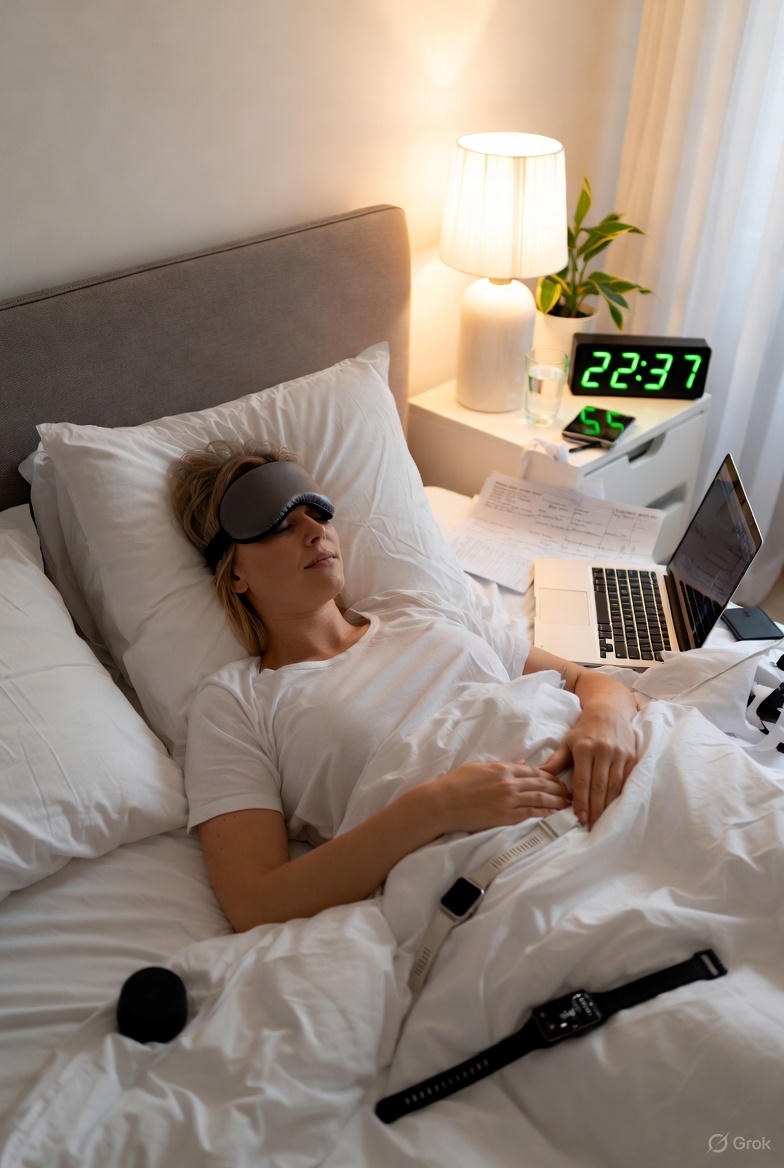
Sleep is the undisputed killer app for smart rings. Their form factor provides a comfort and consistency that wrist-worn devices simply cannot match for 8+ hours of continuous data collection. In 2025, every brand touts advanced sleep analysis, but their methodologies and outputs reveal profoundly different approaches. Understanding these differences is key to finding a ring that doesn't just tell you how you slept, but helps you understand why and what to do about it.
Sleep Stage Algorithm Divergence: All rings claim to track light, deep, and REM sleep. However, the "gold standard" for this analysis is a clinical polysomnogram (PSG), which uses brain waves (EEG), eye movements (EOG), and muscle tone (EMG). Rings, of course, lack these direct neural sensors. They must infer sleep stages from movement (accelerometer/gyro), heart rate, HRV, and breathing rate (derived from the PPG). This is where proprietary algorithms become the ultimate differentiator. Brand A’s algorithm, trained on one dataset, might interpret a specific combination of low heart rate and high HRV as deep sleep. Brand B, trained on a different clinical dataset, might classify the same signals as late-stage REM. In 2025, the leading brands are transparent about their validation. Some publish white papers showing 80-90% agreement with PSG on 30-second epoch-by-epoch comparisons, while others rely on more opaque "internal validation." For the consumer, this means two rings on the same finger on the same night can yield meaningfully different stage breakdowns. The key is not which one is "right" in an absolute sense, but which one provides trends that are consistent and actionable for you.
Beyond Stages: The Micro-Metrics of Sleep Quality: The frontier of sleep tracking has moved past simple stage percentages. Cutting-edge rings in 2025 analyze what happens within those stages. This includes:
Actionable Insights vs. Raw Data: This is where the Archivist vs. Coach divide plays out dramatically in the sleep domain. An Archivist-brand ring will present you with a breathtakingly detailed hypnogram (sleep stage chart) and a dashboard of all the micro-metrics. It will show you correlations: "On nights your respiratory rate was below 13.5, your deep sleep was 15% higher." It empowers you to be your own sleep scientist, perhaps cross-referencing data with your weekly restful living plan.
A Coach-brand ring will synthesize that data into a simple score and a few targeted recommendations. It might say: "Your sleep was restless due to elevated nighttime heart rate. Try finishing your last meal 3 hours before bed tomorrow," or "Your data suggests you're in a high recovery need state. Consider a light workout instead of high-intensity today." It might directly integrate with smart home devices, gradually dimming your lights as your wind-down time begins, supporting restful living through the seasons by adjusting for changing daylight.
The Smart Alarm & Wake-Up Experience: A feature that highlights brand philosophy. Some rings offer a simple vibration alarm at a set time. The most advanced analyze your sleep phases in real-time during a predefined "window" (e.g., 30 minutes before your desired wake time). They aim to wake you during a period of light sleep, making the transition to consciousness feel more natural. The implementation varies in sensitivity and reliability, with some brands excelling at this gentle, intelligent awakening more than others.
In our perpetually "on" world, the ability to quantify stress and recovery is a superpower. Nearly every smart ring in 2025 offers some form of a "Stress Score" or "Readiness Score." However, these single-number summaries are perhaps the most misleading point of comparison, as they are computed from wildly different ingredient lists and based on contrasting physiological models.
The Ingredients of a Score: What goes into the calculation?
A brand focused on athletic readiness will weight nightly HRV, sleep quality, and activity balance most heavily. Its score answers: "Is my body physically prepared to perform today?" A brand focused on daily stress management will give more weight to continuous EDA, daytime HRV trends, and RHR. Its score answers: "Is my nervous system in a balanced or reactive state today?"
The Philosophical Output: Let's take two fictional rings, the "Ring A" (Archivist) and "Ring C" (Coach), and imagine they collect identical data on a user.
Both are valuable. One is a diagnostic, trend-based health report. The other is an interventionist, behavioral tool. One helps you understand your restful living boundaries over time, while the other helps you enact them in a stressful moment.
The "Body Battery" vs. "Stress Continuum" Models: Some brands use a "bucket" or "battery" model (e.g., a score from 1-100 that depletes with stress and fills with rest). This is intuitive and motivating for many. Others use a "continuum" model, showing your position on a spectrum from "Calm" to "Stressed" or "Balanced" to "Strained" throughout the day. The latter often provides more nuanced, real-time context but can feel less like a clear directive. Your preference for a simple number versus a contextual graph speaks volumes about which system will keep you engaged.

The smart ring's role in fitness has evolved from basic step counting to sophisticated strain and recovery management. In 2025, brands differentiate themselves not by whether they track activity, but by how they interpret it and integrate it into the broader picture of health.
Activity Recognition & Automatic Tracking: Basic rings count steps and estimate calories. Advanced rings in 2025 automatically detect and classify activities. The sophistication varies widely. Lower-tier rings might distinguish "walking" from "running." High-tier rings can differentiate between cycling, elliptical training, swimming (for water-resistant models), and even resistance training sessions. The most impressive implementations use the sensor fusion mentioned earlier to estimate sets and repetitions during weight training by analyzing the specific motion patterns of your hand. This automatic logging is a major convenience factor, removing the friction of manually starting and stopping workouts.
The Move to "Strain" & "Training Load": The concept of "steps" is increasingly seen as crude. The leading athletic-focused rings now calculate a proprietary Strain Score or Exertion Score. This is a composite metric that factors in workout duration, your heart rate zones (both absolute and relative to your personal maximum), and sometimes even HRV dynamics during the activity. The goal is to quantify the physiological cost of the activity, not just its output. A 30-minute HIIT session and a 30-minute walk may both log 3,000 steps, but their strain scores will be worlds apart. This allows for true Training Load tracking—the cumulative strain over days and weeks—which is essential for preventing overtraining and scheduling effective deload periods.
Real-Time Workout Feedback: This is the hallmark of the "Coach" category in the fitness realm. During a workout, these rings can provide live haptic or auditory (via connected phone) feedback. Examples include:
Recovery-Based Recommendations: Post-workout, the data integration shines. A sophisticated ring won't just say "Good workout!" It will synthesize the workout strain with your sleep data and readiness score to provide a personalized recovery prescription. It might say: "High strain workout detected. Your current recovery metrics are moderate. For optimal adaptation, prioritize 8+ hours of sleep tonight and consider a digital detox to lower nervous system load before bed." This closes the loop between activity and rest, embodying the principle of performance through rest.
The "Active" vs. "All-Day" ATP Energy Model: Some brands, particularly those with roots in sports science, use an energy model that separates "Activity" from everything else. Your "readiness" is primarily about recovering from physical strain. Other brands, often those with a holistic wellness focus, model your energy as a single pool drained by all stressors—physical, mental, and emotional. A stressful work meeting and a hard workout both draw from the same "bucket" in this model. This fundamentally changes the interpretation of your data and the recommendations you receive, making it crucial to understand which philosophy aligns with your view of your own energy systems.
One of the most significant and welcome advancements in the 2025 smart ring market is the maturation of female health tracking. Moving far beyond simplistic period logging, the best rings now offer comprehensive, cycle-synced insights that leverage their unique, continuous data capture.
Basal Body Temperature (BBT) & Ovulation Prediction: This is where rings have a monumental advantage over traditional oral thermometers. Oral BBT requires measurement at the exact same time every morning, before any movement or speech. A smart ring measures nocturnal skin temperature continuously throughout the night, automatically identifying the lowest, most stable point that correlates with true basal temperature. This eliminates user error and inconsistency. In 2025, leading algorithms don't just chart temperature; they identify the subtle post-ovulatory rise with high confidence and can predict fertile windows and ovulation days with increasing accuracy over a few cycles as they learn an individual's pattern. This provides invaluable data for both fertility planning and natural cycle awareness.
Cycle-Centric Readiness & Insights: The most sophisticated feature sets now fully integrate the menstrual cycle into all other metrics. The ring’s algorithm learns how your resting heart rate, HRV, skin temperature, and sleep patterns naturally fluctuate across your follicular, ovulatory, and luteal phases. This allows for two revolutionary adjustments:
Symptom Logging & Correlation: While logging cramps, mood, or energy levels is not new, smart rings elevate this by automatically showing correlations. You can see on a graph that on months you reported severe cramps, your nighttime HRV was significantly lower in the days leading up to menstruation. Or that your skin temperature trend predicts the onset of your cycle. This turns subjective experience into objective, correlated data, facilitating more productive conversations with healthcare providers.
Pregnancy & Postpartum Tracking: Forward-thinking brands are developing dedicated modes for pregnancy, tracking the expected physiological changes in heart rate, HRV, and temperature, and providing tailored insights for each trimester. Postpartum, the ring can be a crucial tool for monitoring recovery, sleep deprivation, and the return of cycle regularity, all while caring for a newborn. The continuous, passive nature of the ring is a particular benefit during this demanding life phase.
The depth of investment in this area varies tremendously by brand. Some treat it as a checkbox feature, while others have dedicated research teams and partnerships with female health experts, making their offering a primary reason for purchase for a significant segment of users.
Battery life is a headline spec, but in 2025, it represents a complex engineering trade-off between size, sensor capability, and convenience. The stated "days of battery life" only tells part of the story.
The Size-Power-Sensor Triangle: You cannot have a tiny, lightweight ring that runs power-hungry continuous EDA and high-frequency PPG 24/7 and still lasts a week. Brands must choose their corner of this triangle.
Charging Solutions as a Brand Statement: How you charge your ring has become a point of differentiation.
Battery Health & Longevity: A ring is a device you might plan to wear for years. How the battery degrades over 500 charge cycles is a critical, often overlooked question. Premium brands use higher-quality lithium-ion cells and sophisticated power management circuits to minimize degradation. Their apps might even include a "battery health" percentage, similar to smartphones. Cheaper rings may see significant capacity drop-off within 18-24 months. This makes the charging ecosystem and battery replacement policy (if one exists) an important long-term consideration.
In 2025, your biometric data is your most personal asset. Smart ring brands handle this treasure with varying levels of transparency, security, and ambition. Their policies and practices form a critical, ethical differentiator.
The Privacy Spectrum: Where does your data live, and who can see it?
Data Portability & Ownership: Can you take your data with you? The most user-centric brands provide robust export options—CSV files, PDF reports, or even API access—allowing you to download your complete historical record. This empowers you to share it with a doctor, use it with third-party analysis tools, or simply maintain ownership if you switch platforms. Brands that lock your data into their silo create a form of vendor lock-in that can be frustrating.
The Rise of On-Device AI: The most significant technical leap in 2025 is the integration of dedicated, low-power neural processing units (NPUs) inside the ring itself. This enables on-device AI, with profound implications:
Brands investing in on-device AI are betting on a future of hyper-personalized, private, and proactive health management. This architectural choice is a major differentiator separating the forward-thinking leaders from the followers still relying entirely on cloud-based algorithms.

A smart ring fails if you don't want to wear it. In 2025, design is not an afterthought; it's a core engineering and brand identity challenge. The balance between technological guts and aesthetic appeal defines wearability.
Material Science for Sensor Performance: The ring's inner band must be a biocompatible material that maintains consistent skin contact for sensors. Common choices are titanium (lightweight, hypoallergenic, durable) and ceramic (scratch-resistant, hypoallergenic, premium feel). New composites are emerging that optimize for both sensor transparency (for the PPG light) and comfort. The outer shell is where brands express themselves: brushed titanium, polished gold or platinum coatings, matte black ceramic, or even embedded materials like carbon fiber.
Form Factor & Comfort: The "fit" is multidimensional.
Sizing Precision & Flexibility: The single most common point of failure is an incorrect size. The best brands offer comprehensive, at-home sizing kits with multiple full rings or detailed sizing gauges. Some are innovating with adjustable bands or rings with a slight flex, accommodating natural finger swelling due to heat, salt, or hormonal changes. This attention to fit detail is a strong indicator of a brand focused on real-world usability.
Customization & "Jewelry-ification": The market is splitting. On one end, pure tech brands offer a few classic colors (silver, black, gold). On the other, luxury and fashion collaborations are creating rings that are indistinguishable from high-end jewelry, with diamonds, intricate engravings, and bespoke finishes. There's also a middle ground of brands offering interchangeable outer shells or engraving services. This spectrum asks the user: Is this primarily a health device, or is it also a piece of personal jewelry? The answer significantly narrows the field.
The ring is just the hardware; the smartphone app is the cockpit. Its design, clarity, and connectivity define the utility of the entire system. In 2025, app philosophy varies as much as the hardware's.
The Dashboard Dichotomy: Open the app of an Archivist brand, and you're greeted by data density: multiple graphs, timelines, granular metrics, and correlation tools. It can feel overwhelming to a novice but empowering to a data enthusiast. Open a Coach brand app, and you'll likely see a single, clear score or state, with one or two primary recommendations front and center. Navigation is simple, focused on "what should I do now."
Actionable Insights vs. Data Dumps: This is the crux of the app experience. A poor app shows you numbers: "HRV: 45ms." A good app interprets: "Your HRV is in your normal range, indicating good recovery from yesterday." A great app prescribes: "Your high HRV and good sleep indicate peak readiness. It's a great day for that intense workout you have planned." The level of synthesis and actionable language is a major differentiator.
Ecosystem Lock-in vs. Openness: Does the ring play nicely with others?
Third-Party App Partnerships: The most dynamic apps in 2025 are those forming partnerships. Imagine your ring data automatically adjusting the difficulty of your meditation app (Calm, Headspace), suggesting specific audio content based on your stress level, or integrating with telehealth platforms to provide your doctor with objective longitudinal data ahead of a consultation. These partnerships exponentially increase the value of the ring, moving it from an island of data into a connected web of wellness tools.
With prices in 2025 ranging from under $100 to over $1,000, understanding what you're paying for is essential. The cost is not arbitrary; it reflects choices in sensors, materials, software R&D, privacy, and support.
The Budget Tier (<$200): At this level, you are getting basic activity and sleep tracking, likely with less accurate sensors and simpler algorithms. Data may be processed in a less private manner. The app experience will be basic. These are often generic OEM rings white-labeled by various companies. They can provide a taste of the category but lack the nuance, accuracy, and long-term insight of higher-end models.
The Mainstream Premium Tier ($250-$450): This is the competitive heart of the market. Here you find the established leaders and aggressive newcomers. Expect:
The Luxury & Specialized Tier ($500+): At this apex, you pay for one of three things:
The Subscription Model Question: Some brands are adopting a lower hardware cost coupled with a mandatory software subscription to access advanced analytics and insights. Others sell the ring at a higher upfront cost with all features included forever. Evaluating the total cost of ownership over 2-3 years is crucial. The subscription model can make sense if it funds continuous algorithm updates and new feature development, but it can also feel like paying rent on your own data.
As we conclude this foundational third of our exploration, it’s clear the smart ring is not a static product. The trajectory from here points toward even deeper integration into our healthcare and daily lives. The rings of late-2025 and 2026 are already hinting at features like non-invasive blood glucose trend monitoring via advanced spectral analysis, blood pressure estimation via pulse wave velocity, and even early-stage emotional state recognition through a fusion of all biometrics. The ultimate goal is a true personal health guardian—a device that not only reports but predicts, prevents, and guides with a level of personalization we are only beginning to imagine. The differences between brands will only widen as they choose which of these future frontiers to invest in, solidifying their unique identities in our pursuit of understood, optimized, and restful living that improves our very relationships and mood. The journey to find your perfect ring is, therefore, a journey to find the technology partner that best speaks your body's language.

The quest for accuracy is the silent war being waged inside every smart ring. In 2025, a critical and often misunderstood distinction has emerged: the difference between Medical-Grade Validation and Lifestyle-Grade Accuracy. This is not marketing fluff; it's a fundamental design choice that dictates a brand's target audience, its feature set, and its place in your healthcare journey.
What "Medical-Grade" Actually Means in 2025: This term is frequently misused. True medical-grade validation means a device or its specific metrics have undergone rigorous clinical trials, comparing its readings directly against gold-standard medical equipment in controlled settings. The results are published in peer-reviewed journals with clear statistical agreements (e.g., "mean absolute error of ±3 BPM for heart rate against ECG"). For smart rings, certain metrics are now achieving this status. Nocturnal heart rate and respiratory rate are commonly validated. More advanced rings are pursuing validation for:
Brands investing in this path are aligning themselves with the Health Archivist philosophy and are often pursuing regulatory clearances (like FDA 510(k) in the US or CE marking as a Class IIa medical device in Europe). This opens doors for use in remote patient monitoring and gives consumers and healthcare professionals higher confidence in trend data. However, this pursuit often comes at the cost of slower feature iteration and a more conservative, less "coachy" app experience.
Lifestyle-Grade Accuracy: The Power of Precision, Not Perfection. The vast majority of smart rings operate in this domain, and that's not a bad thing. Lifestyle-grade accuracy focuses on precision (consistency in its own measurements) and actionable trends rather than absolute, clinically-certified accuracy. The question shifts from "Is this heart rate exactly what an ECG would show?" to "Is the heart rate data consistent enough to reliably show me my trends, my reactions to stress, my workout intensity, and my sleep/wake cycles?"
For 95% of users, this is not only sufficient but preferable. This paradigm allows for faster innovation, more personalized algorithms, and features like stress scores and readiness metrics that are valuable indicators but not diagnosable conditions. A brand focused here might have a slightly noisier raw data signal but a far more sophisticated and user-friendly algorithm for turning that data into a daily "Energy Map" or a recovery prescription. Their value is in pattern recognition and behavioral nudges, not in providing a doctor-ready report.
The Sensor Fusion Advantage: Accuracy in 2025 is less about a single perfect sensor and more about sensor fusion—the art of combining multiple, imperfect data streams to create a highly accurate inference. A ring might use its PPG for heart rate, its accelerometer to confirm you're at rest, its temperature sensor to account for vasodilation/constriction, and its gyroscope to filter out motion artifacts. The algorithm weights these inputs in real-time to produce a cleaner, more reliable heart rate reading than any single sensor could. Brands differentiate themselves in the sophistication of this fusion engine. Some use simple rule-based filtering, while others employ machine learning models trained on millions of hours of biometric data to become exceptionally good at knowing when to trust which sensor.
The "Personal Baseline" Revolution: The most significant accuracy breakthrough for the end-user isn't about beating a clinical machine; it's about knowing yourself. Advanced rings now spend the first week or two in a "learning phase," not just to set up averages, but to understand your unique biological signatures. What does your "calm" HRV look like? How much does your skin temperature fluctuate nightly? This personalized baseline transforms the data. A generic algorithm might flag an HRV of 35ms as "low." But if your personal baseline is 32ms, that 35ms reading is actually a sign of great recovery. This shift from population norms to personal norms is arguably more valuable than any clinical validation for day-to-day wellness management, as it directly supports a restful living approach tailored uniquely to you.
The pinnacle of smart ring utility in 2025 is moving from descriptive analytics ("how did you sleep?") to predictive insights ("you might be getting sick"). This is where the continuous, passive nature of the ring creates its most profound value, acting as a silent guardian of your well-being.
The Illness Prediction Algorithm: Several leading brands now offer features with names like "Sickness Alert" or "Immune Boost Monitoring." The science behind this is elegant in its simplicity. Before you feel symptoms—often 24-48 hours in advance—your body initiates an immune response. This "acute phase reaction" causes subtle but detectable changes:
A ring collecting these data points 24/7 is uniquely positioned to spot this confluence of deviations. The most effective systems don't cry wolf with a single metric spike; they use a composite algorithm that looks for a sustained, multi-parameter shift outside your normal range. The alert isn't a diagnosis; it's a nudge: "Your body is showing signs of physiological stress. Consider rest, hydration, and easing your schedule." This allows you to proactively support your immune system, potentially shortening the severity or duration of an illness.
Long-Term Trend Detection for Chronic Issues: Beyond acute illness, the ring's longitudinal data is a treasure trove for spotting slow-moving trends that could indicate underlying issues. This is the ultimate "Health Archivist" power.
The app's role is to surface these trends in an understandable way, perhaps with a "Health Trends" report that highlights significant deviations over 3, 6, or 12 months. This transforms the ring from a fitness gadget into a lifelong health diary, empowering you with concrete data for conversations with your doctor.
Recovery Forecasting for Athletes: For the performance-focused user, predictive analytics are about readiness forecasting. Advanced systems don't just tell you how recovered you are today; they attempt to forecast how you will recover tomorrow based on today's planned activity, current metrics, and sleep projections. This allows for dynamic training plan adjustments. If the forecast shows poor recovery tomorrow, the app might suggest moving a high-intensity session to later in the week. This creates a closed-loop system where the ring isn't just assessing the past but actively planning for a healthier, more optimized future—a key principle for restful living for high achievers.
A ring that only vibrates for an alarm is wasting half of its interface potential. In 2025, leading brands have developed sophisticated haptic languages—patterns of vibration that communicate specific information without needing to look at a phone. This tactile layer is crucial for the "Real-Time Coach" paradigm.
Beyond Buzzes: Coding Vibration Patterns. Simple on/off buzzes are being replaced by nuanced sequences:
This language allows for discrete, immediate intervention. You can be guided through a stress-management technique in the middle of a meeting, or kept in your ideal training zone during a run, all through touch. The best systems allow you to customize these patterns or turn specific ones off, giving you control over this silent dialogue.
Smartphone Notification Curation: Some rings offer call, text, and app notification forwarding to your finger. The 2025 evolution is intelligent curation. Rather than mirroring every phone buzz, the ring's app learns which notifications are truly important to you—perhaps only calls from specific contacts, calendar alerts for key meetings, or messages from your family group. This reduces digital distraction, supporting a conscious digital detox by keeping your phone in your pocket while ensuring critical alerts still get through. The haptic pattern can even differ for a call versus a text, letting you know at a touch whether to reach for your phone.
Safety & Location Features: A niche but growing application is personal safety. Some rings integrate with smartphone apps to allow discreet triggering of an SOS alert to emergency contacts with a specific finger gesture or long-press on the ring. Others can share live location data during workouts like solo runs. While not a primary feature for most, for some users—particularly those who travel frequently or exercise alone at odd hours—this transforms the ring into a personal safety device, aiding in maintaining calm and security on the go.
The "Do Not Disturb" Syncing: Advanced ecosystem integration allows the ring to sync its "focus" or "sleep" mode with your phone and even other smart devices. When you activate "Wind Down" mode on the ring, it can automatically silence non-critical phone notifications and dim your connected smart lights, creating a unified environment conducive to rest.
The initial purchase price is no longer the full story. In 2025, many smart ring brands have adopted a Software-as-a-Service (SaaS) model, where a monthly or annual subscription unlocks the most advanced features. This creates a fundamental fork in the road: pay more upfront for a "complete" product, or pay less initially but commit to an ongoing fee to access the ring's full potential.
What's Typically Behind the Paywall? Subscription tiers usually gate access to:
The argument for subscriptions is compelling when done right. They fund continuous software development, algorithm updates, and new feature rollouts long after you've bought the hardware. They turn the ring from a static product into a service that evolves. A brand might use subscription revenue to fund the clinical studies needed for medical-grade validations, ultimately improving the product for all subscribers.
The "One-Time Purchase" Counter-Movement: A significant contingent of brands and consumers push back against subscriptions, viewing them as a "tax" on your own health data. These brands charge a higher upfront cost but promise all current and future software features are included. Their business model relies on selling new hardware every few years and cultivating brand loyalty. This model appeals to users who want simplicity, predictability, and full ownership.
Evaluating the Value: Choosing between these models requires a cost-benefit analysis.
The rise of subscriptions is forcing consumers to decide: is the smart ring a product you buy, or a health partner you invest in over time?
To crystallize the distinctions we've explored, let's examine how these philosophies and technologies manifest in fictional but representative profiles of leading 2025 brand archetypes. These are composites based on real market trends.
Archon Ring: The Clinical Archivist
VitaCirclet: The Holistic Life Coach
PeakPerform Ring: The Athletic Scientist
Luna & Sol: The Female Health Specialist
With this deep understanding of the landscape, how do you actually choose? Follow this framework to move from overwhelm to clarity.
Step 1: Define Your "Primary Why." Be brutally honest. What is the #1 problem you want this ring to solve or insight you want to gain? Is it:
Your Primary Why will point you to the key feature sets and brand philosophies (Archivist vs. Coach) that matter most.
Step 2: Audit Your Lifestyle & Aesthetics. Be practical.
Step 3: Set Your Budget & Model Preference. Decide your stance on subscriptions. Calculate the 2-year TCO for any option. Determine if you're comfortable with a larger, more feature-rich ring or demand a minimalist design.
Step 4: Dive into Reviews & Community. Look beyond the marketing. Find long-term (6+ month) reviews that discuss battery degradation, software update consistency, and customer support experiences. Join brand-specific Reddit communities or forums; real-user discussions reveal recurring bugs, praises, and workarounds.
Step 5: Prioritize Fit & Comfort. Nothing else matters if you don't wear it. If possible, use a brand's sizing kit meticulously. Read about their return/swap policy. Remember, your finger size changes; a slight wiggle room is better than a tight fit.
Final Mindset: In 2025, there is no "best" smart ring. There is only the best smart ring for you. It is a deeply personal tool that should align with your physiology, your goals, and your life. The right choice won't feel like a piece of tech you have to manage; it will feel like a seamless, insightful extension of your own body's wisdom, quietly supporting your journey toward a more balanced, understood, and restful life that enhances every relationship and mood. The journey continues as we explore the cutting-edge integrations and future visions that will define the next generation of this intimate technology.
In 2025, the standalone smart ring is a powerful tool, but its true potential is unlocked when it becomes the central, communicating node in a broader ecosystem of devices, apps, and services. This is the integration frontier, and it’s where brands fiercely differentiate themselves not just on hardware, but on their vision of a connected, responsive, and automated wellness environment.
The Smart Home Symphony: The most visceral integration is with your living space. Leading rings now act as biometric remote controls for your home’s environment. Through partnerships with platforms like Apple HomeKit, Google Home, Samsung SmartThings, or proprietary brand ecosystems, your ring’s data can trigger real-time adjustments.
This transforms the ring from a passive monitor into an active orchestrator of your environment, using your physiology as the control input. Brands with their own smart home product lines have a distinct advantage here, offering seamless, low-latency automation that third-party integrations can sometimes struggle to match.
The Third-Party App Galaxy: No app can be everything to everyone. The most versatile rings embrace this by offering robust API access and deep integrations with best-in-class wellness apps. This is the “open vs. closed” ecosystem choice in action.
Wearable Synergy: The Ring as the Missing Piece. The ring isn’t meant to replace all other wearables; it’s meant to complement them. Its unique, continuous data fills in the gaps left by other devices.
This synergy positions the smart ring as the constant, the foundational biometric layer upon which other, more episodic measurements can be contextualized.
As consumers become more aware of the lifecycle of their technology, the sustainability and ethical practices of smart ring brands have emerged as a key differentiator in 2025. This is no longer a niche concern but a mainstream expectation for a product meant to be worn for years on the body.
Material Sourcing & Longevity: The choice of materials speaks volumes.
Battery Technology & End-of-Life: The lithium-ion battery is the environmental Achilles’ heel of all wearables.
Carbon-Neutral Operations & Packaging: Consumers now look for commitments beyond the product itself. Brands are achieving carbon-neutral certifications for their manufacturing and shipping processes. Packaging has shifted from plastic clamshells to 100% recycled and biodegradable materials—often elegant, felt-lined boxes that feel premium while minimizing environmental impact. Some brands even plant a tree for every ring sold, offsetting the carbon footprint of production.
The Ethical Labor Imperative: A wellness device should not come at the cost of another’s well-being. Discerning buyers investigate supply chain transparency. Brands are responding with published audits of their manufacturing facilities, ensuring fair labor practices and safe working conditions. Certifications like Fair Trade for sourced metals, while rare, are the gold standard toward which the industry is slowly moving.
Choosing a brand with strong sustainability credentials is a way to align your personal wellness journey with planetary health—a holistic approach to feeling good that extends beyond your own biometrics.
The smart ring arena of 2025 is a dynamic battleground shaped by two powerful forces: agile, focused startups and deep-pocketed, ecosystem-rich tech titans. Their strategies, strengths, and weaknesses define the choices available to consumers.
The Startup Agitators: These are typically the brands that created the modern smart ring category (Oura, Circular, etc.) and new challengers emerging yearly.
The Tech Titan Incumbents: These are the Apples, Samsungs, and Googles (potentially through Fitbit) entering or rumored to be entering the ring space.
The Hybrid "Scale-Up": A third category has emerged: startups that have secured significant venture funding and are scaling rapidly. They aim to blend startup agility with titan-like resources. They can invest in medical validations, expand their material offerings, and build out robust customer service networks. They are the most dangerous competitors to the incumbents and the most likely to be acquired by them.
The Luxury & Fashion Collaborators: This is a wildcard segment. High-end watchmakers (e.g., TAG Heuer) or jewelry houses (e.g., Cartier) are partnering with tech firms or building their own rings. Here, the technology is secondary to design, materials, and brand prestige. The features might be limited to discreet activity tracking and basic sleep metrics, but the ring is first and foremost a luxury accessory. This opens the market to a demographic that would never wear a “tech gadget” but will wear a beautiful piece of jewelry that happens to provide insights.
For the consumer, this competition is beneficial. It drives innovation, improves quality, and expands price points. Your choice may hinge on whether you value deep integration into a specific tech ecosystem (favoring a titan) or a best-in-class, specialized health tool (favoring a focused startup).
We have now journeyed through the intricate landscape of the 2025 smart ring market, moving from foundational philosophies to granular sensor details, from sleep algorithms to predictive health, and from ecosystem integrations to ethical manufacturing. The sheer depth of differentiation is staggering. What began as a simple alternative to the smartwatch has matured into a sophisticated category with distinct paths tailored to different human needs and desires.
The central theme is intentionality. The ring you choose is a statement about how you want to engage with your own body. Do you seek the quiet, objective wisdom of an Archivist, building a long-term health log to inform macro-decisions about your lifestyle and longevity? Or do you crave the interactive, guiding hand of a Coach, offering real-time tools to navigate daily stress and optimize your energy? Perhaps your need is highly specific: a Female Health companion, an Athletic Performance lab, or a discreet Safety Guardian.
The choice is no longer about specs on a page. It’s about aligning with a brand’s philosophy, trusting its privacy stance, valuing its ecosystem, appreciating its design, and believing in its long-term support. It’s about finding the device that will not end up in a drawer, but that will become a seamless, insightful part of your daily life, supporting you in building a more resilient, balanced, and restful existence that enhances every facet of your being.
In the next and final portion of this comprehensive guide, we will peer into the crystal ball. We’ll explore the cutting-edge prototypes and future technologies that will define the rings of 2026 and beyond—from non-invasive blood glucose monitoring to true emotional AI. We will provide a definitive, brand-by-brand comparative analysis for 2025, summarizing the leaders in each category. Finally, we will leave you with a final checklist and decision matrix to cut through the complexity and confidently select the ring that is destined for your finger. The future of personal health is not on your wrist; it’s on your hand, and it’s more personal and powerful than ever before.
Your Trusted Sleep Advocate: Sleep Foundation — https://www.sleepfoundation.org
Discover a digital archive of scholarly articles: NIH — https://www.ncbi.nlm.nih.gov/
39 million citations for biomedical literature :PubMed — https://pubmed.ncbi.nlm.nih.gov/
Experts at Harvard Health Publishing covering a variety of health topics — https://www.health.harvard.edu/blog/
Every life deserves world class care :Cleveland Clinic - https://my.clevelandclinic.org/health
Wearable technology and the future of predictive health monitoring :MIT Technology Review — https://www.technologyreview.com/
Dedicated to the well-being of all people and guided by science :World Health Organization — https://www.who.int/news-room/
Psychological science and knowledge to benefit society and improve lives. :APA — https://www.apa.org/monitor/
Cutting-edge insights on human longevity and peak performance:
Lifespan Research — https://www.lifespan.io/
Global authority on exercise physiology, sports performance, and human recovery:
American College of Sports Medicine — https://www.acsm.org/
Neuroscience-driven guidance for better focus, sleep, and mental clarity:
Stanford Human Performance Lab — https://humanperformance.stanford.edu/
Evidence-based psychology and mind–body wellness resources:
Mayo Clinic — https://www.mayoclinic.org/healthy-lifestyle/
Data-backed research on emotional wellbeing, stress biology, and resilience:
American Institute of Stress — https://www.stress.org/


