


The Smart Ring Features That Enable Silent Alarm Functions
Describes the feature that uses vibration to wake you silently at an optimal time in your sleep cycle.
Describes the feature that uses vibration to wake you silently at an optimal time in your sleep cycle.
%402x.svg)
Have you ever woken up to the soul-jarring screech of a traditional alarm? That moment of sheer panic, the adrenaline spike that colors your entire morning with a hue of stress before you’ve even opened your eyes. For decades, we’ve accepted this abrasive start as a necessary evil—the price of punctuality in a demanding world. But what if your first conscious moment of the day could be one of gentle transition, a silent nudge from within rather than a blaring assault from without?
This is the promise and profound power of the silent alarm, a feature rapidly becoming the cornerstone of modern smart ring design. Far more than a simple vibrating timer, the silent alarm represents a philosophical shift in how we interact with technology and manage our most precious resource: our attention and energy. It’s a feature born from a deep understanding of restful living, recognizing that how we begin and end our days is intrinsically linked to our overall well-being and cognitive performance.
Imagine being guided from sleep by a subtle, pulsating rhythm on your finger, felt but not heard. Or receiving a discreet, tactile reminder during a crucial meeting to take a deep, centering breath. Envision a device that can wake you at the optimal point in your sleep cycle, not with noise, but with a gentle vibration that leaves you feeling refreshed, not frazzled. This is the new frontier of personal technology—one that respects context, protects your focus, and seamlessly integrates into the fabric of a mindful life.
In this deep exploration, we’ll unravel the sophisticated ecosystem of features that make this silent communication possible. From the precision haptic engines and advanced sleep staging algorithms to the intricate dance of sensor fusion and power management, we’ll discover how a device small enough to wear on your finger is accomplishing what your smartphone’s loudest alarm cannot: intelligent, personalized, and profoundly peaceful wakefulness.
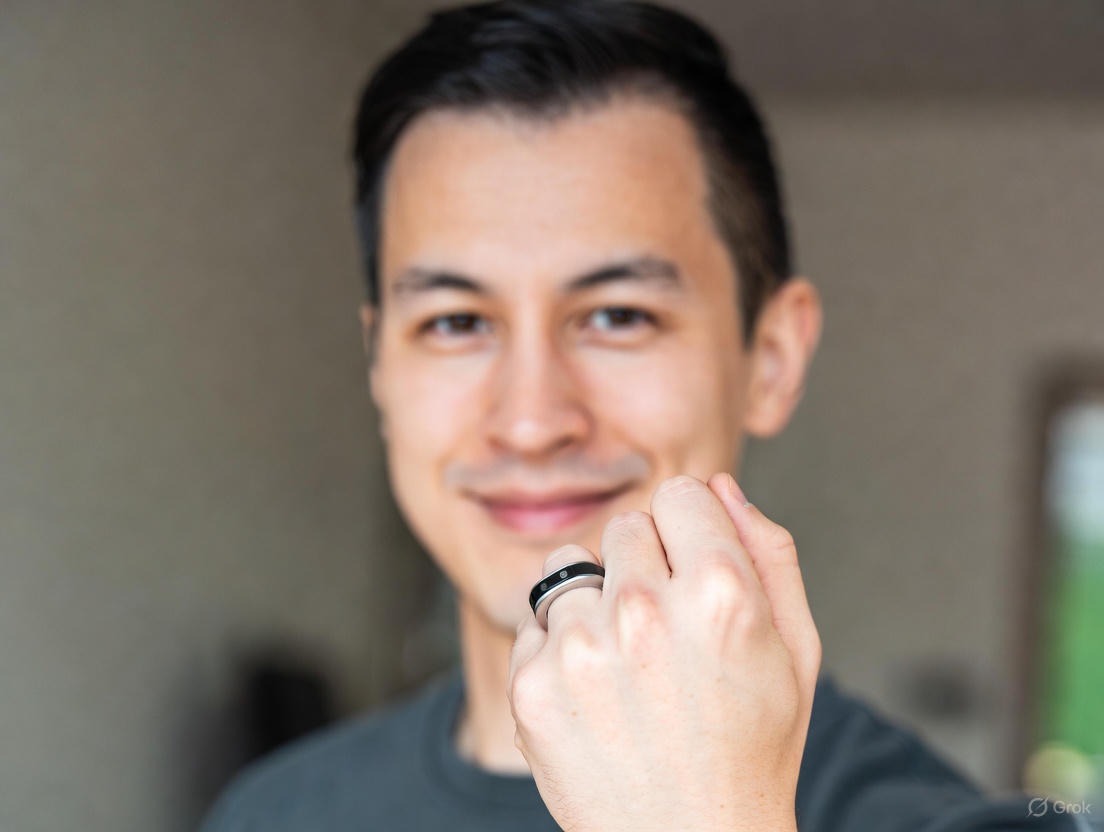
At the heart of every silent alarm is the hardware—the silent orchestra of micro-components that translates a digital command into a physical sensation you can feel. This isn't the crude, buzzing vibration of an early pager or a smartphone on a wooden table. The vibration in a premium smart ring is a nuanced language, and its clarity depends on a symphony of specialized parts working in concert.
The Haptic Engine: The Voice of the Ring. The star of the show is the haptic feedback motor, or ERM (Eccentric Rotating Mass). In advanced rings, this is often a linear resonant actuator (LRA), a more precise and efficient component. Think of the difference between a clunky rotary phone dial and a smooth smartphone touchscreen. An LRA moves in a single, controlled plane, allowing for cleaner, sharper, and more varied vibrations. This enables the ring to distinguish between the long, slow pulse of a "wake-up" alert and the short, urgent tap of a "time-to-leave" reminder. The quality of this motor determines everything from the intensity to the battery life; a poorly implemented haptic system can feel like a vague rumble or drain power excessively.
The Battery: The Unsung Hero of Stealth. Silent alarms must work reliably, even after a 7-day battery life. This demands a battery that is not only energy-dense and long-lasting but also capable of delivering quick, high bursts of power to drive the haptic motor without warning lag. Lithium-polymer batteries are the standard, but their integration is key. Engineers must balance capacity with size, creating a power source that fits the ring’s curved, miniature form factor. Intelligent power gating—where power is routed to the haptic engine only when absolutely needed—is crucial. After all, a silent alarm that fails because the battery died overnight is worse than a noisy one that always works.
The Sensor Suite: Contextual Intelligence. While not directly causing the vibration, the ring’s array of sensors provides the critical context that makes a silent alarm smart. The 3-axis accelerometer detects motion. Is the wearer in deep, still sleep or already stirring? This data can be used to slightly modulate the vibration intensity. The infrared photoplethysmography (PPG) sensor, which monitors heart rate and blood oxygen, works in tandem with the accelerometer for sleep staging. This sensor fusion is what enables the crown jewel of silent alarms: smart wake-up technology. By analyzing your sleep phases in real-time, the ring can aim to wake you during a period of light sleep within a predefined window (e.g., 30 minutes before your set time), making the gentle vibration alarm more effective and the wake-up experience more natural.
The Microcontroller & Antenna: The Brain and Nervous System. Finally, the ultra-low-power microcontroller unit (MCU) acts as the ring’s brain, processing sensor data and executing the command to trigger the haptic engine at the exact millisecond. The Bluetooth antenna is its connection to the outside world, receiving the alarm settings from your paired smartphone. Advanced chipsets allow for a stable, low-energy connection, ensuring your 6:00 AM alarm set from your phone at 10:00 PM is faithfully received and stored in the ring’s memory, even if your phone is in another room or out of battery when the time comes.
This hardware foundation transforms the smart ring from a passive tracker into an active, tactile communicator. It’s the prerequisite for all the sophisticated software and wellness applications that follow, enabling a form of notification that respects your environment and your nervous system.
Why does a gentle vibration feel so different from a loud sound, even when conveying the same basic message ("wake up" or "pay attention")? The answer lies in the distinct neural pathways they activate and the subsequent physiological responses they trigger. Understanding this is key to appreciating the silent alarm’s transformative potential for restful living at work and beyond.
The Stress Pathway of Sound. An auditory alarm is a blunt instrument. It engages your auditory cortex, but its primary target is your amygdala, the brain's fear and threat center. A sudden, loud noise is processed as a potential danger, triggering an immediate fight-or-flight response. Your body releases a flood of cortisol (the stress hormone) and adrenaline. Your heart rate spikes, blood pressure rises, and muscles tense. This is biologically useful if you need to jump away from a falling tree, but it’s a catastrophic way to start a typical Tuesday. This "cortisol awakening response" can set a jittery, anxious tone for hours, undermining focus and emotional regulation.
The Somatic Pathway of Touch. Tactile alerts, by contrast, engage the somatosensory cortex. This is the part of the brain that processes touch, pressure, and proprioception (your sense of body position). The sensation is inherently more personal and integrated; it feels like a signal from within your own sphere rather than an external assault. There is no inherent "threat" coded into a gentle vibration. Therefore, it bypasses the amygdala’s panic button. The heart rate may rise slightly due to the novelty of the sensation, but without the accompanying cortisol surge. The wake-up is physiological (you’re alerted) without being psychologically traumatic.
Cognitive Load and Focus. The benefits extend beyond wake-up routines. Throughout the day, auditory notifications are major sources of cognitive load and context switching. A phone’s "ding" pulls your attention away from your current task, forcing your brain to disengage and then re-engage. Each switch carries a mental "tax," draining energy and reducing deep work capacity. A silent, tactile alert on your ring, however, can be configured as a simple, binary nudge. It can remind you of a scheduled task or prompt a mindfulness check-in without derailing your cognitive flow. You acknowledge the signal, act if needed, and continue, maintaining a state of calm productivity that is essential for high performers seeking performance through rest.
Sleep Inertia and Morning Performance. Studies on sleep inertia—that groggy, disoriented feeling upon waking—show that being roused from deep sleep (slow-wave sleep) results in more severe and longer-lasting impairment than waking from lighter sleep stages. The jarring nature of a loud alarm can worsen this effect. A silent alarm, especially when paired with smart wake-up technology that avoids deep sleep phases, can significantly reduce sleep inertia. The result? You achieve cognitive clarity faster, making your morning routine more effective and setting a positive trajectory for the entire day. It’s a small hardware feature with profound implications for daily performance, proving that true productivity is built on a foundation of respectful, intelligent technology.

The ultimate evolution of the silent alarm is not just about replacing sound with vibration; it’s about replacing arbitrary timing with biological intelligence. This is the domain of Smart Wake-Up, a feature that leverages the ring’s continuous sleep tracking to find your optimal awakening moment. It represents a fundamental shift from clock-based awakening to cycle-based awakening.
The Science of Sleep Architecture. Human sleep is not a monolithic state. Throughout the night, we cycle through distinct stages: Light Sleep (N1 & N2), Deep Sleep (N3 or Slow-Wave Sleep), and REM (Rapid Eye Movement) sleep. Each cycle lasts roughly 90 minutes. Waking up is easiest and leaves you feeling most refreshed when you are in a period of Light Sleep, near the natural end of a cycle. Being shocked out of Deep Sleep is what leads to that heavy, groggy feeling, as your brain is pulled abruptly from its most restorative phase.
How the Ring Knows: Sensor Fusion in Action. Your smart ring acts as a vigilant sleep lab on your finger. All night long, its PPG sensor monitors heart rate variability (HRV) and pulse rate, while the accelerometer detects micro-movements. Deep sleep is characterized by a slow, steady heart rate and very little physical movement. REM sleep, while the body is paralyzed, shows a faster, more variable heart rate similar to wakefulness. Light sleep is a mix. By fusing this data with sophisticated algorithms—often validated against clinical polysomnography—the ring can make a highly accurate estimation of your current sleep stage in near real-time.
The Grace Period: A Window of Opportunity. When you enable Smart Wake-Up, you don’t set a single alarm time. You set a window (e.g., 6:00 AM to 6:30 AM). The ring’s algorithm monitors your sleep in the final stretch of the night. It waits for a period of light sleep within that window. When it detects one, it triggers the silent alarm. If you drift back into deep sleep, it may wait for the next light phase. If no optimal moment is detected by the end of the window, it will vibrate at the final deadline, ensuring you’re not late. This "grace period" is the feature's core, allowing your biology to dictate the precise moment of awakening.
The Result: A Day Built on Better Foundations. The impact of being nudged awake at your body’s preferred moment cannot be overstated. Users consistently report:
This aligns perfectly with the principles of restful living through the seasons, where adapting to your body's natural rhythms is paramount. By honoring your sleep architecture, the smart ring’s Smart Wake-Up function does more than improve your morning; it potentially improves the quality of your sleep itself, as you learn to trust a system that works with your physiology, not against it.
A one-size-fits-all buzz is not a language; it’s a monotone. The power of a silent alarm is unlocked through deep customization, allowing you to create a personal lexicon of tactile signals. This turns the ring from a simple notifier into an intuitive extension of your intentions, a tool for minimalism in your digital interactions by replacing noisy, distracting alerts with purposeful, quiet ones.
Pattern Crafting: The Rhythm of Reminders. The most basic level of control is defining the vibration pattern itself. Advanced companion apps offer a library or custom creator for this. Is your wake-up alarm a series of three long, gentle pulses? Is your "stand up and move" reminder a quick, double tap? Is your "focus session starting" signal a single, solid, 2-second vibration? By assigning distinct patterns to different alerts, you can understand the nature of the notification without even looking at your phone. This is akin to recognizing a caller by their ringtone, but entirely private and non-disruptive.
Intensity Scaling: From a Whisper to a Nudge. Not all alerts are created equal. A reminder to drink water in a quiet office doesn’t need the same force as an alarm to wake you from a deep sleep. Granular intensity control is essential. Users should be able to adjust the strength of the haptic motor on a per-alarm basis. A "meditation time" alert might be set to 20% intensity—a mere whisper on the skin. A critical timer for medication or a cooking alarm might be set to 100% to ensure it’s felt even during activity.
Scheduling and Automation: The Proactive Ring. True customization moves beyond manual triggers into the realm of automation. This is where the ring’s silent alarms become a proactive wellness coach.
Creating Rituals. This level of control allows you to build daily rituals. A soft vibration at 10 PM could be your cue to start your digital detox and bedtime routine, directly supporting how digital detox enhances restful living. A specific pattern at 1 PM could signal your post-lunch walk. By outsourcing these cues to a consistent, silent signal, you conserve the mental energy typically spent on remembering and deciding, creating a structured yet fluid day. The ring becomes the conductor of your daily rhythm, using a language of touch that only you understand.
One of the most immediately appreciated virtues of the silent alarm is its social discretion. In a world where our personal technology often intrudes on collective spaces, the silent alarm is a feature of remarkable courtesy and personal empowerment. It allows you to manage your time and commitments without broadcasting them to everyone around you.
The Shared Space Dilemma. Consider the common, noise-polluted environments of modern life:
In each scenario, the traditional alarm creates a conflict between personal necessity and social responsibility. The silent alarm dissolves this conflict entirely.
Stealth and Self-Management. The vibration is perceptible only to the wearer. You can receive a critical time-sensitive alert during a negotiation, a reminder to take medication in a movie theater, or a prompt to leave for your next appointment in a quiet cafe—all without a single audible peep. This isn’t about secrecy; it’s about maintaining a seamless flow in shared environments. It allows you to be punctual and responsible without being disruptive, a key element of maintaining calm while on the go.
Partner-Friendly Sleep. For couples with different sleep or work schedules, the silent alarm is a relationship-saver. The early riser can be awakened for a dawn workout or shift work without disturbing their partner’s precious sleep. The difference in waking mood and energy between two people who have slept soundly versus one who was startled awake by the other's alarm is significant, impacting morning interactions and overall household harmony. This directly supports how restful living improves relationships and mood by removing a common, daily source of friction.
Professional Poise. In professional settings, the ability to discretely manage your time projects competence and respect. A silent vibration prompting you to wrap up a meeting or move to your next commitment allows for a smooth, controlled transition. There’s no fumbling to silence a noisy phone, no awkward explanations. The ring empowers you to uphold your schedule while remaining fully present in the current interaction. It’s a tool for boundary-setting that operates invisibly, allowing you to protect your time and energy without public confrontation—a principle core to setting restful living boundaries.
By internalizing your alerts, the smart ring transforms time management from a public, often stressful, event into a private, smooth orchestration. It grants you autonomy over your schedule while gifting peace to those around you.
The application of silent alarms extends far beyond the bedside table. When viewed through a wellness lens, the programmable, tactile alert becomes a versatile tool for building and sustaining health-promoting habits throughout the day. It acts as a gentle, ever-present coach, guiding you toward a more balanced physiology and a calmer nervous system.
Circadian Rhythm Support. Our bodies thrive on rhythm. Silent alarms can be powerful anchors for reinforcing your natural circadian clock.
Mindfulness and Breathwork Integration. The ring can be your anchor to the present moment. You can set periodic "check-in" alarms (e.g., every 3 hours) that vibrate with a unique pattern. When you feel it, you pause for 60 seconds to observe your breath, scan your body for tension, or simply be still. This breaks the cycle of autopilot living. Furthermore, the ring can be used to guide structured breathwork sessions. Imagine setting a 5-minute meditation where a short pulse cues an inhale, a pause, and then a different pulse cues the exhale—a completely silent, tactile-guided breathing exercise that can lower stress anytime, anywhere. This embodies the concept of how breathwork supports restful living daily.
Hydration and Nutrition Reminders. While simple, consistent reminders to drink water are incredibly effective for many. A silent, hourly nudge is far less annoying and more actionable than a pop-up on your computer screen. You can also program pre-meal alarms to encourage mindful eating—a vibration five minutes before lunch to prompt you to slow down, appreciate your food, and eat without distraction, which can improve digestion and satisfaction. This connects to the foundations of a restful living diet, where calm intention around eating is as important as the food itself.
Movement and Posture Breaks. For the desk-bound, prolonged sitting is a major health risk. A silent alarm set to vibrate every 50 minutes is the perfect prompt to stand, stretch, walk for two minutes, or correct your posture. Because it’s private, it doesn’t draw attention in an office setting. This micro-habit, repeated throughout the day, improves circulation, reduces musculoskeletal pain, and boosts energy levels, combating the physical stagnation that contradicts a restful, healthy life.
Medication and Supplement Adherence. For anyone managing a health condition or a daily supplement regimen, a reliable, discreet reminder is invaluable. The tactile alert ensures privacy and is harder to ignore than a notification that gets lost in a sea of apps. This functional use case highlights the silent alarm’s role not just in optimization, but in essential health management.
By weaving these silent prompts into the fabric of your day, the smart ring transitions from a sleep tracker to a holistic wellness companion. It provides the subtle, consistent scaffolding needed to turn health intentions into automatic, daily actions.
The magic of the silent alarm is conjured on your finger, but it is orchestrated from the palm of your hand. The companion smartphone app is the indispensable command center, the interface where abstract wellness goals are translated into precise, executable tactile commands. A well-designed app doesn’t just allow customization; it inspires and simplifies it, making the powerful features of the ring accessible and intuitive.
Intuitive Alarm Creation and Management. The core functionality is, of course, setting alarms. A superior app will offer a clean, visual interface where you can:
Sleep Data Visualization and Alarm Optimization. The app is where the data from the night becomes insight. A detailed sleep analysis chart—showing your cycles of light, deep, and REM sleep—should be prominently displayed. Crucially, it should show exactly where within your sleep cycle your silent alarm fired. This visual feedback is educational. You can see if you were woken from light sleep (optimal) or if the algorithm had to wake you at your hard deadline. Over time, this data can help you adjust your bedtime to better align with your natural cycle length, making the Smart Wake-Up feature even more effective. This turns the app into a partner in your sleep hygiene journey.
Wellness Program Integration. Beyond manual alarms, advanced apps offer pre-configured wellness programs that automatically schedule silent alerts. You might select a "7-Day Stress Reset" program that schedules three daily breathwork reminders and a sunset wind-down alert. Or a "Hydration Challenge" that sets gradual, increasing water reminders throughout the day. These programs lower the barrier to entry, providing expert-guided structures that leverage the ring’s silent prompting capability. This concept of a structured approach is central to building a sustainable weekly restful living plan.
Notification Syncing and Filtering (The Future Frontier). While currently limited by smartphone operating system restrictions, the ideal future state of the partner app involves deep notification management. Imagine being able to select which app notifications from your phone are allowed to trigger a silent vibration on your ring. Only messages from "Family" group chats, calendar alerts, and your task manager—filtering out social media pings and promotional emails. This would create the ultimate minimalist notification system: only the alerts that truly matter earn the right to touch your awareness.
Firmware and Feature Updates. The app is the gateway for the ring to improve over time. Regular firmware updates delivered through the app can refine haptic patterns, improve sleep staging algorithms, and introduce new silent alarm features. This ensures your hardware investment grows smarter and more capable, adapting to new wellness insights and user needs.
The partner app is the bridge between human intention and silicon execution. Its design determines whether the silent alarm feature feels like a technical chore or a graceful extension of your will. A great app makes the complex simple and turns data into actionable wisdom, fulfilling the promise of a truly intelligent wearable.

A feature is only as good as its reliability. For a silent alarm, failure is absolute—you oversleep, miss a critical reminder, or break a nascent habit streak. Therefore, the engineering marvel of the silent alarm isn't just in creating the vibration; it's in guaranteeing that the vibration will happen as commanded, days or even a week after the last charge. This is a relentless challenge of power management, efficient software, and robust connectivity.
The Battery Life Equation. Smart ring batteries are tiny, typically ranging from 15 to 30 milliampere-hours (mAh). For context, a smartphone battery is 3,000-5,000 mAh. Every component must be ruthlessly efficient. The haptic motor, while small, is a relative power hog when active. Therefore, the system is designed for ultra-low-power dormancy. When an alarm is set, the ring’s main powerful processor goes to sleep. A dedicated, minuscule low-power co-processor keeps track of time. This co-processor draws a microscopic amount of current—it’s essentially a sophisticated, programmable watch movement inside the ring.
The Trigger Sequence. When the target time arrives, the low-power co-processor sends a wake-up signal to the main processor and the haptic driver circuit. Power floods to these components just in time to execute the vibration pattern. The moment the sequence is complete, everything powers down again. This precise, on-demand power gating is what makes multi-day battery life possible despite the presence of a "power-hungry" alert feature.
Sensor Duty Cycling for Smart Wake-Up. Smart Wake-Up adds another layer of complexity. To monitor sleep stages, the PPG sensor and accelerometer must be active throughout the night. Running them continuously at full sampling rate would demolish battery life. The solution is adaptive duty cycling. During periods of deep, stable sleep, the sensors may sample less frequently (e.g., once every 10 seconds). As you approach your wake-up window, or if the accelerometer detects movement indicating a possible sleep stage transition, the sampling rate intelligently increases (e.g., to once per second) to capture the high-resolution data needed for an accurate phase prediction. This dynamic balancing of data fidelity and power draw is a key algorithmic achievement.
Connectivity and Data Integrity. The alarm settings are stored in the ring’s non-volatile memory, so a Bluetooth disconnection from your phone after you go to bed is irrelevant. However, robust connectivity beforehand is crucial for syncing new alarms and updating sleep algorithm parameters. Advanced rings use Bluetooth Low Energy (BLE) protocols that maintain a stable link with minimal power. The app must also have clear battery state indicators and proactive low-battery warnings (e.g., "Ring battery at 10% - charging recommended to ensure alarm reliability") to prevent user error.
The Fail-Safe Design. Despite all this, a fail-safe mentality is essential. What if the battery dies at 5:55 AM for a 6:00 AM alarm? The best systems incorporate a final, hardware-level fail-safe: as the battery voltage drops to a critical threshold, the ring can trigger one last, distinct "dying battery" vibration pattern hours in advance, giving the user ample time to charge. This final consideration underscores that reliability isn't just an engineering spec; it's a core part of the user experience and trust relationship with the device.
The utility of a private, tactile cue extends into specialized domains, transforming the smart ring from a general wellness device into a targeted tool for cognitive performance, athletic training, and healthcare management. In these contexts, the silent alarm’s discretion and precision become not just convenient, but critically functional.
Focus and Productivity: The Pomodoro Partner. The Pomodoro Technique—working in focused 25-minute intervals separated by 5-minute breaks—is a proven productivity method. A smart ring is its perfect enforcer. You can program a silent alarm for the end of each focus session and each break. Unlike a phone or computer timer, the ring’s vibration:
Fitness and Training: The Tactile Coach. For athletes, cues and timing are everything. A smart ring can be programmed for interval training.
This hands-free, eyes-up guidance keeps you locked into your physical activity, enhancing both safety and performance by allowing you to maintain proper form and awareness of your surroundings.
Medical Adherence and Remote Care. This is perhaps the most impactful advanced application. For patients managing chronic conditions, medication adherence is the single biggest determinant of outcomes.
In these advanced use cases, the silent alarm transcends "convenience." In fitness, it becomes a coach; in healthcare, it becomes a adherence tool and a potential bridge to better care. It demonstrates how a simple, well-executed feature can scale in utility to meet highly specific and important human needs.
A silent alarm that can’t be felt reliably is worse than useless—it erodes trust. Ensuring consistent, perceptible haptic feedback is not just a software or motor problem; it is fundamentally a hardware design and materials science challenge. Every layer between the LRA motor and your skin must be engineered to transmit, not dampen, the intended sensation.
The Internal Architecture: A Rigid Foundation. The haptic motor must be mounted to a rigid internal chassis or frame within the ring. If the motor is simply embedded in a soft or flexible material, much of its kinetic energy will be absorbed by the ring’s body itself, resulting in a muted, muddy vibration. The internal frame acts as a sounding board, allowing the motor’s precise movements to translate into clear, directional force. This chassis must be incredibly light and compact, yet strong enough to withstand daily impacts and flexing.
Material Selection: The Conduit of Sensation. The ring’s exterior material plays a decisive role. Dense, conductive materials like titanium are excellent for vibration transmission. They carry the mechanical wave efficiently from the internal chassis to the entire ring body, making the alert feel crisp and full. Some ceramics also perform well. Materials like surgical-grade stainless steel are good but may dampen frequencies slightly more. Newer composites and advanced polymers are being developed to offer a balance of lightness, durability, and haptic fidelity. A poorly chosen material can act like an acoustic foam, swallowing the vibration.
Fit and Ergonomics: The Final Interface. The most perfectly engineered ring will fail if it doesn’t fit correctly. For a silent alarm to be felt consistently:
Balancing Act: Durability vs. Comfort. The ring must be robust enough for 24/7 wear, including during sleep, workouts, and handwashing. This demands water resistance (IP68 or equivalent) and scratch-resistant coatings. However, the materials and shape must also be comfortable for perpetual wear, with smoothed edges and a weight that doesn’t feel burdensome. It’s a constant trade-off: a heavier, denser material may transmit vibration better but could be less comfortable for sleep; a lighter material may be more comfortable but require more motor power (and thus battery) to achieve the same perceived intensity.
The silent alarm, therefore, is a feature that cannot be bolted on. It must be baked into the ring’s design from the first CAD sketch. It necessitates a holistic view where industrial designers, materials scientists, and firmware engineers collaborate to ensure that the promise of a private, perceptible nudge is delivered with unwavering consistency, no matter which model you wear or on which hand you wear it.
The silent alarm feature, as it exists today, is likely just the first verse in a longer story of tactile communication. As sensor technology, machine learning, and material science advance, the potential for what our wearables can "say" to us through touch is boundless. We are moving from simple, scheduled vibrations to dynamic, context-aware, and even expressive haptic languages.
Advanced Haptics: Texture and Emotion. Future haptic engines may move beyond simple "buzz" to simulate textures. Imagine a silent alarm that doesn't just pulse, but feels like a gentle ripple of water across your skin, or a warming sensation that mimics sunlight to support a natural wake-up. Researchers are experimenting with arrays of tiny micro-actuators that can create moving wave patterns, offering a more nuanced and even calming tactile experience. This could revolutionize relaxation prompts or guided meditation features.
Biometric-Responsive Alerts. The next generation of silent alarms won't just fire on a schedule; they will fire in response to your body's state. Using real-time data from the ring’s own sensors, algorithms could trigger a calming vibration pattern when they detect a spike in stress (via elevated heart rate and lowered HRV). Conversely, a "focus" vibration could engage when the system notices the physiological signs of attention lag during a work session. The alarm becomes an intelligent, closed-loop biofeedback system.
Contextual and Environmental Awareness. With more sensors—perhaps incorporating ambient light, skin temperature, or even simple audio cue detection (through bone conduction)—the ring’s silent alarms could become environmentally aware. Your "leave for your appointment" alarm could automatically check real-time traffic data and adjust its timing. Your "wind down" alarm could trigger only if the ring senses you’re still in a brightly lit environment past a certain hour. It would move from a pre-programmed tool to an ambient, intelligent agent.
Inter-Ring Communication and Social Haptics. A fascinating frontier is wearables communicating with each other. Partners could send a gentle, pre-agreed "thinking of you" vibration pattern to each other's rings—a silent digital touch across distance. In a professional setting, a presenter could discreetly signal a colleague with a time cue. This creates a new, intimate channel for non-verbal communication that is private and immediate.
Integration with the Broader IoT Ecosystem. The silent alarm will not live in isolation. It will be a primary output method for the Internet of Things. Your ring could vibrate when your smart lock detects your front door opening, when your laundry cycle finishes, or when your glucose monitor (if future non-invasive tech permits) alerts to a trend. The ring becomes your body’s primary, silent notification hub for your entire digital life, filtering the world’s data through a layer of tactile relevance.
The trajectory is clear: from scheduled timer to biological interface to ambient communication channel. The silent alarm is the foundational proof that wearables can interact with us in ways that are more human, more respectful, and more integrated than the screens that currently dominate our attention. It points toward a future where technology supports our well-being not by shouting for our focus, but by speaking quietly to our senses.
In the realm of silent communication, nuance is everything. A single, generic vibration is a blunt instrument, easily confused or ignored. The true sophistication of a smart ring’s silent alarm system lies in its ability to speak a rich, tactile language—a vocabulary of vibrations where each pattern conveys a distinct message, intention, or level of urgency without a single decibel of sound. This is the art and science of haptic feedback design.
Building a Tactile Alphabet. The foundation of this language is the haptic pattern library. Engineers and user experience designers work to create a set of distinctive vibration signatures that are intuitively distinguishable. This isn't random; it's based on principles of human tactile perception. Common pattern archetypes include:
User Customization and "Muscle Memory." While pre-sets are essential, the power deepens with user customization. Allowing individuals to create, assign, and name their own patterns fosters a deep, personal connection to the device. You might assign a specific, custom rhythm to "meditation start" and another to "call mom." Over time, your brain builds a direct association—a form of haptic muscle memory. You no longer need to think, "What does that mean?" You know. This personalization turns the ring into a true extension of your cognitive process, a tool for minimalism in technology by replacing visual clutter with clear, somatic cues.
Contextual Pattern Modulation. Advanced systems can add a layer of intelligence by slightly modulating a base pattern based on context. For instance, your standard "move reminder" might be a double tap. But if the ring’s accelerometer detects you’ve been immobile for an exceptionally long period, it might deliver that double tap with 30% greater intensity, adding a layer of persuasive emphasis without changing the core message. Similarly, a Smart Wake-Up alarm might begin with an ultra-gentle crescendo if you’re in REM sleep, but start slightly stronger if you’re already in light sleep, adapting its "volume" to your state of consciousness.
The Role of the Companion App in Haptic Literacy. The phone app is where this language is taught. High-quality apps don't just list pattern names; they let you preview the vibration on your phone (which typically has a similar motor) before assigning it to the ring. This is crucial for building the mental link. Visual waveforms or animations that mirror the pulse sequence further reinforce learning. The app becomes the dictionary for your new tactile language, ensuring you are fluent in the signals your ring will use to guide you.
This nuanced approach transforms the ring from a mere notifier into a communicative partner. By leveraging the brain's remarkable ability to differentiate subtle tactile sequences, it creates a private, efficient, and deeply integrated channel for information—a cornerstone for managing a complex life with a sense of calm and control, essential for maintaining restful living amidst chaos.
The "smart" in Smart Wake-Up is not marketing hyperbole; it is a complex, data-driven decision-making process happening in real-time on a device the size of a large berry. This intelligence is powered by sleep staging algorithms—sophisticated software that interprets raw sensor data to paint a picture of your sleep architecture. The silent alarm is the precision tool that acts upon this picture's conclusion.
From Raw Data to Sleep Stages: The Translation Layer. All night, the ring collects two primary streams of data:
The algorithm’s first job is to clean this data, filtering out noise (like a sudden car passing outside) and artifacts (like tossing over). Then, it looks for signatures:
Machine Learning and Validation. Modern algorithms are not simple rule-based "if-then" trees. They are typically built using machine learning models trained on massive datasets where ring sensor data was collected simultaneously with gold-standard clinical polysomnography (PSG) in sleep labs. The model learns to correlate specific combinations of motion and heart rate patterns with the expert-scored sleep stages from the PSG. The larger and more diverse the training data, the more robust and generalizable the algorithm becomes across different body types, ages, and sleep habits.
Real-Time Analysis and the Optimal Wake Window. As you sleep, the algorithm is constantly updating its estimate of your current stage. When you enable a Smart Wake-Up with a 30-minute window, the ring doesn't just wait until the last moment. In the final hour of sleep, it enters a state of heightened analysis. It is essentially predicting your sleep cycle trajectory. The goal is to find a period of light sleep that is likely to persist long enough for you to wake naturally from it. It’s not just identifying a light sleep moment; it’s making a probabilistic judgment that this moment is part of a transitioning phase out of deep or REM sleep, not just a fleeting micro-arousal.
The Final Decision: To Vibrate or to Wait. Let's say your window is 6:00–6:30 AM. At 5:50 AM, the algorithm detects you are in deep sleep. It waits. At 6:05 AM, it sees the signature of a transition to light sleep: a slight increase in HRV and a minor body movement. It continues monitoring. By 6:10 AM, the light sleep signature is strong and stable. This is the trigger. The ring sends the command to the haptic engine, and your silent alarm begins its gentle crescendo. If, however, you fell back into deep sleep at 6:12 AM, the algorithm might have held off, seeking the next opportunity before the 6:30 AM hard deadline.
Feedback Loop for Personalization. The best systems learn from you. If you consistently dismiss your smart alarm within 10 seconds and report feeling "refreshed" in the app’s morning check-in, the algorithm reinforces that its prediction was good. If you consistently snooze or report grogginess, it may subtly adjust its parameters for your physiology, becoming more personalized over time. This closed-loop learning is what transforms a generic health device into a true personal sleep advisor, a key component for long-term sustainable restful living practices.
This intricate dance of sensing, interpreting, predicting, and acting is what separates a silent alarm from a Smart Wake-Up. It’s a feature that embodies the promise of wearable technology: to use objective data to subjectively improve a fundamental human experience, all while you’re peacefully unaware.
The most elegantly designed haptic pattern and the most accurate sleep algorithm are meaningless if the device is dead. For a feature as critical as a silent alarm—especially one intended to wake you—absolute reliability is non-negotiable. This demands an obsessive, system-wide focus on power management, ensuring the ring is always alert, even when you are not. Achieving multi-day battery life while maintaining 24/7 sensor readiness is the defining engineering challenge of the modern smart ring.
The Hierarchy of Power States. A smart ring operates in distinct power modes, meticulously architected to minimize energy waste:
Strategic Sensor Duty Cycling. Continuous sensor operation is a battery killer. The solution is adaptive duty cycling, where the frequency of sensor measurement changes based on the inferred activity.
Haptic Engine Efficiency. The linear resonant actuator (LRA) is tuned for efficiency. Its design ensures it moves quickly to its resonant frequency with minimal energy input. The driver circuit is optimized to deliver a sharp, clear pulse with a quick cut-off, preventing energy-wasting "ringing" after the signal stops. The firmware ensures the motor is never active a microsecond longer than the defined pattern requires.
Bluetooth Low Energy (BLE) as a Event-Driven Service. Bluetooth is often a primary drain in wearables. Advanced rings use BLE in a highly constrained manner. They do not maintain a constant, high-bandwidth connection. Instead, they advertise their presence in short, infrequent bursts. When your phone needs to sync data or send a new alarm setting, it connects during one of these advertising windows. For alarm reliability, this is key: alarm settings are written directly to the ring's memory. Once set, the alarm is entirely independent of the phone and Bluetooth. The ring does not need to "check in" to execute it.
User-Facing Power Guardians. Reliability is a partnership. The companion app provides clear, proactive battery management:
This relentless pursuit of efficiency is what makes the silent alarm a trustworthy companion. It allows the ring to fulfill its core promise: to be an unseen, ever-ready guardian of your rhythm, supporting your journey toward longevity through restful living without becoming another high-maintenance device in your life.

A powerful feature locked behind a confusing interface is a feature that goes unused. The adoption and effectiveness of silent alarms depend entirely on the user's ability to easily understand, configure, and trust them. Therefore, the user experience (UX) and interface (UI) design of the companion app is not a secondary concern—it is the gateway to the feature's value. Excellent design makes the complex feel simple, empowering, and even delightful.
The Principle of Progressive Disclosure. A well-designed alarm setup flow does not present every advanced option upfront. It starts with the simple, universal need: "Wake me up at 7 AM." The initial screen might have a large time picker and a toggle for "Smart Wake-Up." Tapping that toggle might reveal a simple slider for the "wake-up window" (e.g., 30 minutes before) with a concise, friendly explanation: "Wakes you during light sleep for a fresher feel." Advanced options—like custom vibration patterns, intensity, or skip days—are accessible via a secondary "Advanced Settings" button. This approach prevents overwhelming new users while giving power users the control they seek.
Visual and Haptic Preview. Before you commit to an alarm, you should be able to experience it. The app should provide:
Contextual Help and Education. The interface should educate as it configures. Instead of a technical term like "PPG-based sleep staging," a toggle for Smart Wake-Up might have a brief, helpful tagline: "Uses your sleep data to find the best time to wake you." Tapping an info icon could expand to a short, illustrated explanation of sleep cycles. This builds user trust in the "magic" of the feature by demystifying it, aligning with the educational aspect of a holistic restful living approach.
Managing Multiple Alarms with Clarity. As users embrace the feature, they may create a suite of alarms: wake-up, medication, focus sessions, wind-down. The app's alarm management screen must be a model of clarity. Each alarm should be displayed as a distinct card or row showing:
This at-a-glance view allows users to audit and manage their daily tactile schedule effortlessly.
Integration with Wellness Programs. For users who want guidance, the app can offer pre-built "Alarm Packs" or wellness programs. A "Mindful Morning" pack might automatically create a sunrise alarm, a 10-minute-post-wakeup meditation reminder, and a hydration cue. A "Deep Work" pack might set a series of Pomodoro timers. This reduces the friction of building a system from scratch and demonstrates the potential of sequenced silent alarms, much like following a structured weekly plan for wellness.
Feedback and Confirmation. Every action should have a clear reaction. When an alarm is saved, a confirmation message appears. When Smart Wake-Up is activated, a brief note might say, "Ready to find your best wake-up time tonight." This positive feedback loop reinforces that the system is working and the user's intent has been registered, building confidence in the technology that will gently intervene in their sleep.
Ultimately, brilliant UX/UI design for silent alarms is about building a bridge of trust. It translates the ring's technical capabilities into simple, human-centric choices. It empowers the user to become the architect of their own daily rhythm, using silent vibrations as their tools, all through an interface that feels less like a settings menu and more like a conversation with a helpful guide.
On the surface, a vibration is a vibration. Both smart rings and smartwatches can deliver silent, tactile alerts. However, the form factor, placement, and primary use case of each device lead to significant differences in the implementation, effectiveness, and overall experience of their silent alarm functions. Understanding these distinctions is crucial for choosing the right tool for your silent communication needs.
The Perception Factor: Finger vs. Wrist. This is the most fundamental difference. The density of touch receptors (Meissner's corpuscles) is far higher in the fingertips than on the wrist. This means a ring can deliver a clearer, more distinct, and perceptible vibration with less power than a watch. The vibration on a wristwatch can feel more diffuse, especially if the band is loose. For a wake-up alarm, the ring's placement on the finger—a more sensitive, neurologically "noisy" area—makes it more likely to rouse you from sleep without needing excessive intensity that could disturb a partner.
Sleep-Time Wearability and Comfort. The smart ring's core advantage is its unobtrusiveness. It is designed for 24/7 wear, including during sleep. Its small, smooth profile presents no pressure points or bulk that can interfere with comfort. A smartwatch, while sleep-capable, is a larger, heavier object on the wrist. Some users find it uncomfortable to sleep with, leading them to remove it—which, of course, renders its silent alarm useless for waking. The ring’s always-on nature guarantees the alarm feature is always armed.
Sensor Accuracy for Sleep Staging. For Smart Wake-Up functionality, sensor placement is critical. The finger is a superior location for photoplethysmography (PPG) than the wrist. The finger has richer capillary beds and less signal-disrupting tissue between the skin and arteries. This often results in more reliable and higher-fidelity heart rate and HRV data, which is the foundation of accurate sleep stage estimation. While wrist-based algorithms have improved dramatically, the ring’s anatomical advantage can translate into more precise sleep staging and, consequently, more optimal Smart Wake-Up timing.
Battery Life and Reliability. Here, the ring often holds a decisive edge. With no energy-hungry display and a smaller form factor forcing extreme power efficiency, leading smart rings boast 5-7+ days of battery life. Most smartwatches require daily or every-other-day charging. The longer battery life of a ring directly contributes to alarm reliability; there is a smaller daily risk of forgetting to charge and having the device die overnight. The ring’s power management is singularly focused on sensor and alert functions, not on powering a screen.
Notification Overload vs. Focused Alerts. Smartwatches are often designed as secondary screens for your smartphone, buzzing with every email, social media like, and news alert. This can lead to "haptic spam," where the vibration becomes a constant, meaningless irritant. Users often disable it. Smart rings, in their current iteration, are typically more focused on health and intentional alerts. Their silent alarms are more likely to be user-scheduled wellness prompts or filtered, critical notifications. This preserves the sanctity and meaning of the vibration—when the ring buzzes, you know it’s likely something important you chose, not a digital distraction. This selective approach is core to protecting your energy with boundaries.
The Aesthetic and Social Dimension. A ring is often perceived as jewelry. Its silent operation aligns with a minimalist, discreet aesthetic. In a meeting or social setting, checking or interacting with a watch screen can be seen as rude or inattentive. A silent alarm on a ring is utterly invisible; there is no gesture, no glance at a device. It is the ultimate in discreet personal time management.
In summary, while both devices offer silent alerts, the smart ring’s design philosophy—centered on continuous wear, superior biometric sensing, extreme battery life, and minimalist interaction—makes its silent alarm function particularly reliable, comfortable, and integrated into a lifestyle focused on uninterrupted well-being. It is a tool for those who want the technology to recede into the background, acting as a silent partner rather than a conspicuous manager.
Even the most elegantly engineered system can encounter hiccups. For a feature as relied upon as a silent alarm, any failure—real or perceived—can severely undermine trust. Proactively addressing common user concerns with clear information and troubleshooting steps is essential. This not only solves problems but also educates users on how to get the most from their device, reinforcing its role as a reliable tool for restful living on the go and at home.
Concern 1: "I didn't feel the alarm. I slept right through it."
Concern 2: "The Smart Wake-Up alarm went off at the very end of the window, not earlier."
Concern 3: "The vibration feels weak or 'buzzy,' not crisp."
Concern 4: "My alarm didn't go off at all."
Concern 5: "The alarms are inconsistent; sometimes they work, sometimes they don't."
By empowering users with this knowledge, the relationship with the device matures from one of mystery to one of partnership. Users learn that reliability is a combination of sophisticated technology and simple, correct use—a collaboration that ensures the silent alarm remains a steadfast pillar of their daily routine, supporting everything from punctuality to a deeply restful nervous system.
We have journeyed through the micro-components, algorithms, and design philosophies that transform a simple vibration into a sophisticated tool for well-being. It becomes clear that the silent alarm is far more than a feature; it is the philosophical heartbeat of the modern smart ring. It represents a fundamental shift in human-computer interaction—away from disruptive, attention-demanding alerts and toward respectful, somatic integration. In this final analysis, we position the silent alarm as the cornerstone of what can truly be called "restful technology."
Technology That Serves, Not Shouts. The prevailing tech paradigm is one of interruption. Notifications compete for our visual and auditory attention, fracturing focus and elevating stress. The silent alarm, by contrast, operates on a paradigm of somatic suggestion. It makes its presence known through the private channel of touch, leaving your eyes, ears, and conscious focus untouched. It is a technology that knows its place: on the periphery, ready to assist when called upon, but never commanding the center stage of your awareness. This aligns perfectly with the goal of a digital detox, where the aim is to reduce digital intrusions, not amplify them.
Enabling Intentionality Over Reactivity. By allowing users to program purposeful, proactive alerts—for waking, moving, breathing, or disconnecting—the silent alarm flips the script. Instead of technology pulling you into its agenda (another email, another post), you program technology to support your agenda. You become the architect of your daily flow, using the ring as a tool to reinforce your chosen rhythms for work, health, and rest. This cultivates a sense of agency and calm, a stark contrast to the reactive, dopamine-driven loop of standard notifications.
The Bridge Between Data and Action. Wearables collect vast amounts of biometric data, but this data is useless if it doesn't lead to positive behavior change. The silent alarm is the critical actuation mechanism. It turns insight (e.g., "you're sedentary," "your HRV indicates stress," "you're in light sleep") into immediate, gentle intervention. It closes the loop, making the ring an active coach rather than a passive data logger. This transforms the device from a curiosity into a catalyst for tangible improvements in daily life, supporting the journey toward longevity through mindful living.
Respecting Social and Inner Space. As we've explored, the silent alarm's discretion is a form of social courtesy and personal empowerment. It allows for self-management without public performance. This external courtesy mirrors an internal one: by not triggering a stress response, it shows courtesy to your own nervous system. It respects your inner biological space, allowing transitions to happen without a fight-or-flight cascade. This is technology designed for human biology, not against it.
A Foundation for Future Innovation. The successful implementation of reliable, nuanced silent alarms establishes a trusted tactile communication channel. This channel is the foundation upon which more advanced applications can be built—bio-responsive stress interventions, immersive meditation guides, or seamless IoT interactions. It proves that our wearables can "speak" to us in a language that is personal, immediate, and calm.
In conclusion, the smart ring features that enable silent alarm functions collectively articulate a new vision for wearable tech. They demonstrate that the most powerful technology may not be the loudest or most visually dazzling, but the one that integrates so seamlessly, so respectfully, that it feels less like technology and more like a natural extension of our own intention. It is a quiet guardian for a noisy world, a tool not for optimizing busyness, but for cultivating the profound focus, rest, and presence that define a truly well-lived life. By mastering the silent alarm, the smart ring earns its place not just on your finger, but as a valued partner in your pursuit of sustainable well-being and performance through genuine rest.
Your Trusted Sleep Advocate: Sleep Foundation — https://www.sleepfoundation.org
Discover a digital archive of scholarly articles: NIH — https://www.ncbi.nlm.nih.gov/
39 million citations for biomedical literature :PubMed — https://pubmed.ncbi.nlm.nih.gov/
Experts at Harvard Health Publishing covering a variety of health topics — https://www.health.harvard.edu/blog/
Every life deserves world class care :Cleveland Clinic - https://my.clevelandclinic.org/health
Wearable technology and the future of predictive health monitoring :MIT Technology Review — https://www.technologyreview.com/
Dedicated to the well-being of all people and guided by science :World Health Organization — https://www.who.int/news-room/
Psychological science and knowledge to benefit society and improve lives. :APA — https://www.apa.org/monitor/
Cutting-edge insights on human longevity and peak performance:
Lifespan Research — https://www.lifespan.io/
Global authority on exercise physiology, sports performance, and human recovery:
American College of Sports Medicine — https://www.acsm.org/
Neuroscience-driven guidance for better focus, sleep, and mental clarity:
Stanford Human Performance Lab — https://humanperformance.stanford.edu/
Evidence-based psychology and mind–body wellness resources:
Mayo Clinic — https://www.mayoclinic.org/healthy-lifestyle/
Data-backed research on emotional wellbeing, stress biology, and resilience:
American Institute of Stress — https://www.stress.org/


