


Smart Ring Features Explained: Calorie and Energy Expenditure
Explains how rings estimate calories burned and overall energy expenditure.
Explains how rings estimate calories burned and overall energy expenditure.
%402x.svg)
For decades, the quest to quantify our daily movement and its metabolic cost has been a driving force in personal technology. From the first clunky pedometers that simply counted steps to the sophisticated wrist-worn fitness trackers of the 2010s, we've sought a number—a definitive measure of our effort. This number, most often presented as calories burned or energy expenditure, has become a central pillar of health consciousness, weight management, and athletic training. But for all its importance, it has also been a source of immense frustration. How accurate are these figures? Why does my watch tell me I burned 300 calories on a run, while my friend’s device reports 450 for the same activity? The gap between the simplistic data we receive and the complex physiological reality has been vast.
Enter the smart ring. This unassuming piece of jewelry represents a fundamental shift in the paradigm of personal biometrics. By moving from the wrist to the finger, it taps into a richer, more consistent source of data: the vasculature at the base of your finger. This location provides a superior signal for core metrics like heart rate, heart rate variability, and blood oxygen saturation—the very building blocks for calculating energy expenditure with a new degree of precision and personalization. The smart ring isn't just another gadget; it's a miniaturized metabolic lab, offering 24/7 insight into how your body truly consumes energy, both in motion and at rest.
This article will delve deep into one of the most critical yet misunderstood features of modern wearable technology: the calculation of calorie and energy expenditure. We will move beyond the generic, one-size-fits-all formulas of the past and explore how next-generation devices, particularly smart rings, are building a more nuanced, dynamic, and ultimately actionable picture of your metabolism. From the silent, constant burn of your basal metabolic rate to the explosive output of a high-intensity workout, we will demystify the science, explain the technology, and show you how to leverage this data not just for weight loss, but for optimizing energy, performance, and overall well-being. By understanding the "why" and "how" behind the number, you can transform a simple metric into a powerful tool for a more intentional and energized life. This journey into your own metabolic furnace begins with a fundamental question: what are we actually measuring?

Before we can appreciate the technological advancements of a smart ring, we must first establish a clear understanding of the terms themselves. "Calories burned" and "energy expenditure" are often used interchangeably, but in the realm of physiology and precise tracking, they represent related yet distinct concepts. Unpacking this distinction is the first step toward interpreting your data intelligently.
Energy expenditure is the broad, total measure of the energy your body uses to sustain itself over a given period, typically expressed in kilocalories (kcal) or kilojoules (kJ). It is the sum total of all metabolic processes required to keep you alive and functioning. This total energy expenditure (TEE) is the gold standard metric, and it is composed of three primary components:
A calorie, specifically a kilocalorie (the "Calorie" with a capital C on food labels), is a unit of energy. It is defined as the amount of heat energy required to raise the temperature of one kilogram of water by one degree Celsius. When a device tells you that you've "burned 500 calories," it is providing an estimate of a portion of your total energy expenditure, usually focused on the AEE component during a tracked activity, plus your BMR over that time.
The critical insight here is that your wearable isn't directly measuring calories; there is no "calorie sensor." Instead, it is estimating energy expenditure by measuring physiological proxies (like heart rate and movement) and plugging them into complex metabolic equations. The accuracy of this estimate hinges entirely on the quality of the input data and the sophistication of the algorithm.
Traditional wrist-based devices have relied heavily on accelerometer data (movement) paired with basic user demographics (age, weight, height, sex). This approach is notoriously flawed, as it struggles to differentiate between types of movement (is that arm swing from running or driving on a bumpy road?) and cannot account for individual variations in metabolic efficiency. This is where the smart ring paradigm changes the game. By providing a more medically valid, consistent heart rate signal—a direct correlate of metabolic work—and combining it with movement and personalized biometric baselines, it builds its estimates on a firmer physiological foundation. To understand how it does this, we must first look at the cornerstone of your daily energy use: your resting metabolism.
While workouts and daily steps capture our attention, the silent, constant hum of your basal metabolic rate is the true workhorse of energy expenditure. Your BMR is the minimum number of calories your body needs to perform its life-sustaining functions in a neutrally temperate environment, while in a state of complete physical and psychological rest, and after a 12-hour fast. It's the energy cost of simply existing.
In practice, most wearables, including smart rings, actually measure or estimate your Resting Metabolic Rate (RMR), which is very similar to BMR but measured under less strict conditions (often not a 12-hour fast). For most people, RMR is about 10-20% higher than BMR, but the terms are frequently used interchangeably in consumer technology. This is your metabolic baseline, the number from which all other expenditure is added.
What determines this baseline? It's a deeply personal equation, influenced by factors that are often outside of our immediate control:
Historically, getting an accurate RMR required a lab test using indirect calorimetry, where the volume of oxygen you consume and carbon dioxide you produce is analyzed. Smart rings are now bringing a form of this concept into daily life. By continuously monitoring your resting heart rate (HR) and heart rate variability (HRV)—which reflect the work your heart is doing and the state of your autonomic nervous system—the ring can detect subtle shifts in your metabolic baseline.
For instance, if your ring notes a sustained elevation in your resting heart rate over several days, it could indicate your body is under physiological stress (fighting an illness, experiencing poor recovery, or dealing with dehydration), which often raises RMR. Conversely, certain states of deep relaxation or metabolic efficiency might be reflected in a lower resting heart rate. The ring learns your personal patterns, creating a dynamic, living baseline rather than relying on a static, population-average formula.
This has profound implications. By understanding your true resting energy needs, you can tailor your nutritional intake with far greater precision. It also reframes the goal of fitness: building lean muscle isn't just about aesthetics; it's about upgrading your body's 24/7 energy-burning engine. This personalized baseline becomes the critical platform upon which all other activity is measured. Speaking of activity, the energy we expend through movement is far more than just formal exercise—it's the cumulative power of a thousand tiny movements throughout the day, a concept known as NEAT.
If BMR is the constant background hum of your metabolism, then Non-Exercise Activity Thermogenesis (NEAT) is the dynamic, fluctuating melody played over it. NEAT encompasses all the energy you expend for everything that is not sleeping, eating, or sports-like exercise. This includes walking to work, typing at your desk, washing dishes, cooking, gardening, fidgeting, and even maintaining posture. For the average person, NEAT can account for 15% to 50% of their total daily energy expenditure, making it the most variable and malleable component.
The power of NEAT lies in its cumulative, subconscious nature. A single hour at the gym might burn 400-600 calories, but the remaining 15-16 waking hours offer a massive opportunity for energy expenditure through low-grade, sustained movement. Someone with a "high-NEAT" lifestyle—a mail carrier who walks all day, a barista constantly on their feet, or simply a person who paces during phone calls and takes the stairs—can burn hundreds, even thousands, more calories per day than a sedentary person of identical size and BMR, without ever setting foot in a gym.
This is where traditional accelerometer-based trackers have often failed. They excel at counting steps and recognizing predefined exercises but are poor at quantifying the metabolic cost of non-step-based activities like standing, lifting objects, or cycling. They frequently miss the small, isometric movements that contribute to NEAT.
Smart rings, with their superior physiological sensing, offer a more holistic view. By correlating heart rate elevation with movement data, they can more accurately attribute energy expenditure to these non-exercise activities. For example:
By making NEAT visible, the smart ring empowers you to harness its power intentionally. It turns abstract advice like "move more" into concrete, data-driven feedback. You might see that taking two walking meetings instead of sitting at your desk adds 180 kcal to your daily expenditure. You learn that an evening of gardening is not just a hobby but a meaningful metabolic activity. This awareness can be transformative for weight management and overall health, proving that the path to a higher metabolism isn't solely paved with intense workouts, but with consistent, all-day movement. Cultivating a high-NEAT lifestyle is a powerful strategy for restful living at work, creating calm in stressful jobs, as it breaks up sedentary stress and promotes circulation without requiring a full workout. Of course, while NEAT is the unsung hero, the star of the show for most fitness enthusiasts remains the calorie burn from structured exercise.
When you engage in a dedicated workout, your energy expenditure can skyrocket to 5-10 times your resting rate. Accurately capturing this surge is a prime function of any fitness wearable. The process of estimating exercise calories is a sophisticated dance between hardware sensors and software algorithms, and smart rings approach this dance with a unique advantage.
The core principle is that energy expenditure during physical activity is proportional to the volume of oxygen your body consumes (VO2). Since we can't all have a metabolic cart with us on a run, devices use proxies. The most important of these is heart rate (HR). There is a well-established, though individually variable, linear relationship between heart rate and oxygen consumption (and thus calorie burn) during steady-state aerobic exercise. The higher the heart rate, the greater the metabolic demand.
Here is how a modern smart ring builds its exercise calorie estimate:
The smart ring's edge lies in the quality and consistency of its heart rate signal. The vascular-rich finger often provides a stronger, less noisy PPG signal than the wrist, especially during activities involving significant wrist movement or gripping (like cycling or weight training), where wrist-based optical sensors can suffer from "motion artifact." A more accurate heart rate reading directly leads to a more accurate calorie estimate.
Furthermore, by learning your individual heart rate response to different intensities over time, the ring can personalize these equations. It moves from population averages ("a 35-year-old male at 150 bpm burns X calories") to a personalized model ("You, at 150 bpm during running, burn Y calories").
Understanding this process demystifies the number on your screen. It’s not a direct measure, but a highly informed estimate built on a pillar of physiological data. This accuracy is paramount, as it directly informs the next critical metric for anyone managing their weight or energy: the daily energy balance.

The principle of "Calories In, Calories Out" (CICO) is the foundational concept of body weight regulation. It states that to lose weight, you must consume fewer calories than you expend (a deficit); to gain weight, you must consume more (a surplus); and to maintain weight, the two must be in equilibrium. While the quality of calories and hormonal responses play crucial roles in health and satiety, the energy balance equation remains a thermodynamic reality.
This is where the data from your smart ring transitions from interesting information to a powerful management tool. By providing a daily total for your Calories Out (Total Energy Expenditure, or TEE), it gives you one half of the critical equation. You now have a data-driven estimate of your metabolic output, inclusive of your BMR, NEAT, and exercise.
How to Use Smart Ring Data for Energy Balance:
It’s vital to remember that the "Calories In" side requires honest manual logging using a reputable nutrition app for full precision. However, the smart ring solves the historically murky "Calories Out" side with unprecedented personalization. This data empowers you to move away from restrictive, generic diets and toward a managed, data-informed approach to nutrition that aligns with your unique metabolic engine. However, the body is not a simple furnace; it's a complex, adaptive system. Your metabolic rate is not a fixed number, and understanding its fluctuations is key to long-term success.
One of the most significant revelations from continuous metabolic tracking is that your body is not a static machine with a fixed fuel consumption rate. It is a dynamic, adaptive system that responds to changes in energy intake, output, and overall stress. This phenomenon, often oversimplified as "metabolic adaptation" or "starvation mode," has profound implications for interpreting your smart ring data and managing your long-term health.
When you create a sustained calorie deficit for weight loss, your body, perceiving a potential threat to energy availability, initiates compensatory adaptations to conserve energy and defend its current weight. These adaptations include:
How Your Smart Ring Reveals This Adaptation:
This is where a passive, 24/7 wearable becomes a crucial biofeedback tool. You can see these adaptations in your data:
Seeing this data is not a cause for frustration, but for strategic adjustment. It means the "calories out" side of your equation has changed, and your "calories in" may need recalibration. It also underscores why aggressive, prolonged deficits are counterproductive—they trigger stronger adaptive responses and are difficult to maintain.
The solution lies in metabolic flexibility and periodization. This involves:
By understanding adaptation, you move from a short-term "diet" mindset to a long-term "metabolic health" mindset. Your smart ring is the dashboard for this journey. But metabolism isn't just about movement and food; its deepest rhythms are tied to the most fundamental restorative process: sleep.
Sleep is often mistakenly viewed as a passive, metabolically quiet period. In reality, it is a dynamic state of intense physiological activity—tissue repair, memory consolidation, hormone regulation, and, yes, significant energy expenditure. Understanding how your metabolism functions during sleep, and how your smart ring tracks it, is critical for a complete energy picture.
Your sleeping metabolic rate (SMR) is roughly equivalent to your Basal Metabolic Rate (BMR), accounting for the vast majority of calories burned during the night. While it's slightly lower than your true BMR (as you are perfectly still and in a fasted state), it still represents a substantial portion of your 24-hour energy use. For an average adult, this can be between 400-700 calories per 8-hour sleep period.
However, the story is more nuanced than a single number. Sleep architecture—the cyclical progression through different sleep stages—has distinct metabolic signatures:
How Your Smart Ring Tracks Sleep Metabolism:
The ring doesn't have a "sleep calorie" sensor. Instead, it uses its continuous monitoring to estimate your overnight energy expenditure:
Why This Matters for Your Energy Goals:
Prioritizing sleep, therefore, is not separate from managing your metabolism; it is a direct metabolic intervention. A smart ring quantifies this connection, showing you that investing in the connection between restful living and longevity starts with honoring the metabolic work of a good night's sleep. The calming practices that support sleep, like those found in how breathwork supports restful living daily, have a direct, measurable impact on your metabolic health.
The most significant leap forward offered by advanced wearables like smart rings is the move from population averages to true personalization. Generic formulas that ask only for age, weight, height, and sex provide a rough starting point, but they fail to account for the vast individual differences in human physiology that determine how we burn energy. Your smart ring's value grows over time because it learns these unique aspects of you.
Let's examine the key personalization factors and how the ring accounts for them:
1. Body Composition:
As discussed, muscle mass is metabolically hungry. Two people with the same scale weight can have a BMR difference of hundreds of calories based on their body fat percentage. While a smart ring cannot directly measure body composition, it infers metabolic efficiency through proxies.
2. Fitness Level & Metabolic Efficiency:
Through consistent wear, the ring builds a history of your activity and physiological responses. It learns your personal heart rate zones, your typical calorie burn rates for different activities, and your recovery patterns. This historical data is used to refine future estimates, making them more accurate for you than any formula based on a first-time user.
3. Sex and Hormonal Cycles:
Biological sex influences average BMR, but for women, the menstrual cycle adds a powerful layer of metabolic fluctuation. During the luteal phase (after ovulation and before menstruation), core body temperature rises slightly, and BMR can increase by 5-10% (roughly 100-200 calories per day). Progesterone, the dominant hormone in this phase, is thermogenic. A smart ring tracking your temperature and resting metrics can detect this shift, helping to explain changes in appetite, energy levels, and the number on the scale. This allows women to contextualize weekly data within their cycle, reducing frustration and promoting a harmonious approach to body awareness.
4. Age:
While age is a fixed input, its effect on metabolism is mediated through changes in body composition and hormone levels. The ring’s continuous tracking effectively captures the result of aging on your physiology—the gradual creep of resting heart rate, changes in HRV, and shifts in activity patterns—and adjusts its metabolic modeling accordingly in real-time.
By synthesizing all these data streams, the smart ring creates a personalized metabolic avatar. It answers the question, "What is my body doing right now?" rather than, "What does a textbook say a body like mine should be doing?" This level of personalization is what transforms data from a vague indicator into a precise management tool, empowering you to make decisions that are perfectly aligned with your unique biology. Yet, to make those decisions wisely, we must understand the limits of the technology itself.
Embracing the power of smart ring data requires an equally clear understanding of its limitations. No consumer wearable, regardless of its sophistication, is a medical-grade calorimeter. The calorie burn figure you see is an estimate, not a measurement. Being an informed user means knowing where the technology excels, where it may falter, and how to interpret the data within a reasonable margin of error. This builds trust and prevents the frustration of over-relying on a single, potentially imperfect number.
Where Smart Rings Excel (High Confidence Estimates):
Known Challenges and Sources of Error (Areas for Cautious Interpretation):
Practical Guidance for the Informed User:
By acknowledging both the power and the limits, you become a scientist of your own body, using the smart ring as your primary—but not infallible—instrument. This thoughtful approach to data prevents obsession and promotes a sustainable, healthy relationship with tracking. With this foundational understanding of calories and energy expenditure now complete, we can explore how this data integrates with the other profound metrics a smart ring provides to paint a complete picture of your vitality.
A calorie burn figure in a vacuum is a statistic without a story. It tells you the "what" but not the "why" or the "so what." The transformative potential of a smart ring is realized when you cross-reference your energy expenditure data with the other core metrics it tracks: sleep quality, Heart Rate Variability (HRV), resting heart rate, body temperature, and activity balance. This integrated view creates a narrative about your body's current state—its readiness for stress, its need for recovery, and its overall metabolic efficiency.
Consider this scenario: Your ring reports you burned 3,200 calories yesterday, a high number for you. In isolation, you might think, "Great! Big deficit for weight loss." But now, integrate the other data:
The integrated story is completely different. Your high calorie burn likely came from a state of physiological stress, not productive activity. The body was inefficient, perhaps fighting the beginning of an illness, burdened by emotional stress, or crushed under the load of poor recovery. Burning calories in this state is catabolic and unsustainable; it's like burning the furniture to heat the house instead of using the properly-stocked furnace. Your body's signal is clear: it needs rest and resources, not further deficit.
The Holistic Triad: Expenditure, Recovery, and Fuel
A sustainable, healthy metabolism operates in a virtuous cycle. Your smart ring data helps you visualize and manage this cycle:
By viewing your calorie burn through this integrated lens, you shift from a simplistic "more is better" mentality to a sophisticated "context is everything" approach. You learn to distinguish between the productive burn of a challenging workout on a recovered body and the stressful burn of a weary system running on fumes. This wisdom is the key to sustainable progress and avoiding burnout.
With an integrated understanding of your data, you can now build personalized frameworks to achieve specific goals. The one-size-fits-all diet or training plan is obsolete. Your smart ring provides the feedback loop to create a dynamic, adaptive plan that works for your unique physiology and lifestyle.
Framework 1: Intelligent Weight Management & Body Recomposition
Goal: Lose body fat while preserving or building lean muscle mass.
Framework 2: Athletic Performance & Training Optimization
Goal: Improve performance metrics (speed, power, endurance) without overtraining.
Framework 3: Sustainable Energy Optimization
Goal: Maintain consistent, high energy levels throughout the day without crashes.
These frameworks are not rigid rules but flexible guides, with your smart ring data serving as the continuous feedback mechanism. They empower you to be the CEO of your own health, making data-informed decisions in real time.

While weight management is a common driver for tracking calories, the implications of your metabolic health and energy expenditure patterns extend far beyond the scale, touching the very core of long-term vitality and disease prevention. A robust, well-regulated metabolism is a hallmark of healthy aging.
Metabolic Health & Chronic Disease Prevention:
Metabolic health is defined by optimal levels of blood sugar, triglycerides, HDL cholesterol, blood pressure, and waist circumference, without medication. Your daily energy expenditure patterns are intimately linked to these markers.
The Longevity Connection: Energy Flux
Emerging research in the science of longevity points to the importance of high energy flux. This is a state where both energy intake and energy expenditure are high, but balanced. It's not about restriction; it's about abundant, high-quality fuel matched with abundant, purposeful activity. Think of a hummingbird: incredibly high metabolism, incredible vitality.
A smart ring facilitates a high-energy flux lifestyle by:
In this context, tracking energy expenditure becomes less about "burning off dinner" and more about building metabolic resilience. It's about investing in the healthspan of your cells. This perspective aligns perfectly with a philosophy of how minimalism enables restful living—not just minimizing possessions, but minimizing metabolic clutter and inefficiency, creating a clean, high-functioning physiological system. This proactive approach to health, supported by data, builds a foundation for a longer, more vibrant life.
The wealth of data provided by a smart ring is empowering, but it can also become a source of anxiety, confusion, and counterproductive behavior if not approached with the right mindset. Awareness of these common pitfalls is the first step to avoiding them.
Pitfall 1: Obsessive Micromanagement of Daily Numbers
Pitfall 2: Equating "Calories Burned" with "Workout Quality"
Pitfall 3: Ignoring the "Calories In" Side of the Equation
Pitfall 4: Misinterpreting Adaptation as "Broken Metabolism"
Pitfall 5: Neglecting Subjective Feelings
By navigating these pitfalls, you cultivate a healthy, balanced relationship with your biometric data. It becomes a source of insight and empowerment rather than anxiety, guiding you toward a more attuned and sustainable lifestyle. This balanced approach is essential whether you are at home or away, as maintaining metabolic rhythm during travel presents its own unique set of challenges.
Travel—whether for work or pleasure—is a classic disruptor of metabolic rhythm. Changes in time zones, sleep schedules, food availability, and routine can send your carefully tracked metrics into disarray. Your energy expenditure data during travel tells a fascinating story of adaptation and stress, and your smart ring can be an invaluable tool for navigating this transition smoothly and minimizing the negative impacts on your health.
How Travel Affects Your Metabolic Metrics:
Strategies for Using Your Smart Ring to Navigate Travel:
The travel scenario beautifully illustrates that metabolism is not just about food and exercise; it's deeply entwined with circadian biology and the stress response. Your smart ring becomes a travel compass, helping you navigate the metabolic turbulence of time zones and routine disruption and guiding you back to homeostasis.
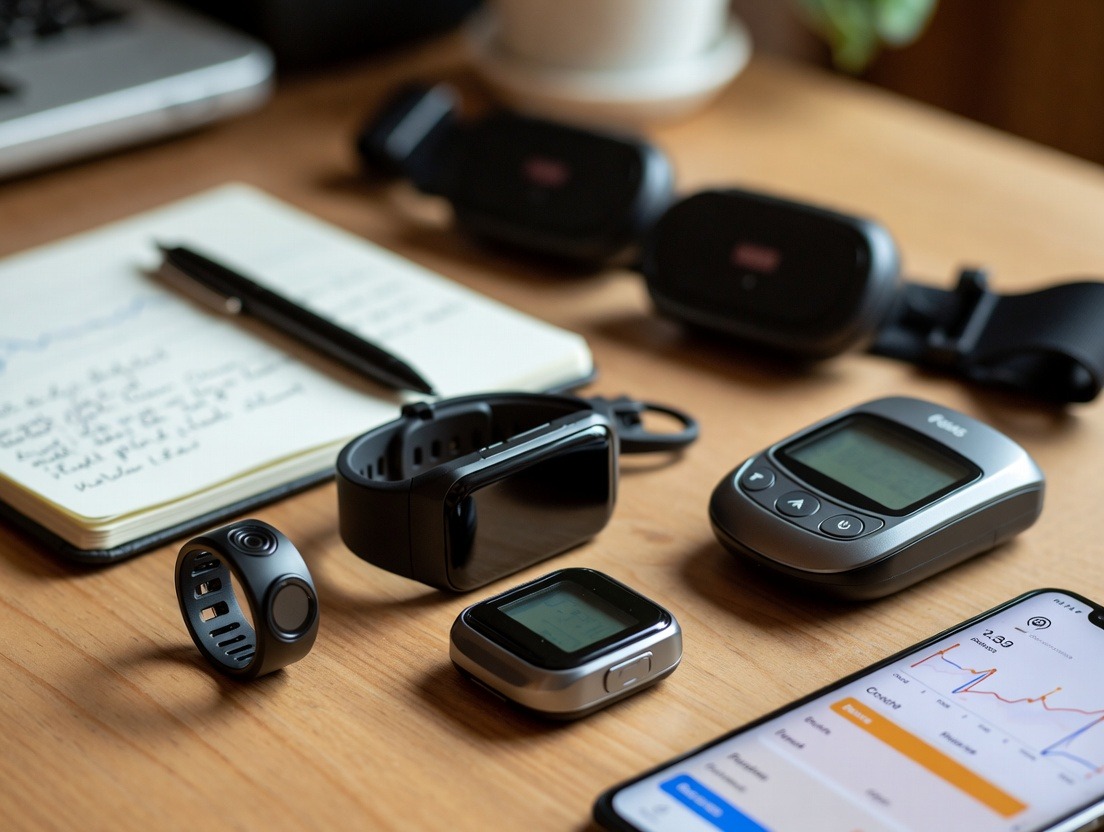
The technology behind smart rings and metabolic estimation is not static; it is accelerating at a remarkable pace. The current state-of-the-art, which we have detailed, is merely the foundation for a future where our wearables will become true health guardians, offering not just retrospective data but predictive and prescriptive insights powered by artificial intelligence (AI).
The Next Frontier in Metabolic Tracking:
This evolution will transform wearables from fitness trackers into continuous metabolic health monitors. The goal will shift from simply reporting a calorie number to providing a dynamic, actionable map of your metabolic landscape, guiding you toward optimal energy, resilience, and longevity. This future is one where technology doesn't just quantify our biology but helps us harmonize with it, creating a true partnership for well-being. As we conclude this comprehensive exploration, it's time to synthesize the key lessons and reflect on the profound shift this technology represents.
The journey through the science, technology, and application of calorie and energy expenditure tracking via smart rings reveals a profound shift in our relationship with personal health data. We have moved from the era of vague guesses and generic formulas into an age of personalized, physiological insight. The humble calorie burn figure, once a simplistic and often inaccurate metric, has been reborn as a dynamic node in a rich network of biometric intelligence.
The core revelation is this: Your metabolism is a story, not a statistic. It is a narrative written by your genetics, your daily choices, your sleep, your stress, and your movement. A modern smart ring provides the translation for this story, turning silent physiological processes into a language you can understand and act upon. It teaches you that:
This technology, when used wisely, fosters a deeper connection to your body's signals. It replaces obsession with awareness, and frustration with understanding. It empowers you to make informed, intentional choices that align with your unique physiology and your goals, whether that's achieving a specific body composition, optimizing athletic performance, or simply waking up every day with vibrant, sustained energy.
As you move forward with your smart ring, let it be a guide, not a dictator. Use the data to build a more restful living practice, where activity, nutrition, and recovery exist in harmonious balance. Let it illuminate the connections between how you move, how you rest, and how you feel. In doing so, you are not just tracking calories; you are engaging in the most important project of all: cultivating a thriving, resilient, and energetic life.
Your Trusted Sleep Advocate: Sleep Foundation — https://www.sleepfoundation.org
Discover a digital archive of scholarly articles: NIH — https://www.ncbi.nlm.nih.gov/
39 million citations for biomedical literature :PubMed — https://pubmed.ncbi.nlm.nih.gov/
Experts at Harvard Health Publishing covering a variety of health topics — https://www.health.harvard.edu/blog/
Every life deserves world class care :Cleveland Clinic - https://my.clevelandclinic.org/health
Wearable technology and the future of predictive health monitoring :MIT Technology Review — https://www.technologyreview.com/
Dedicated to the well-being of all people and guided by science :World Health Organization — https://www.who.int/news-room/
Psychological science and knowledge to benefit society and improve lives. :APA — https://www.apa.org/monitor/
Cutting-edge insights on human longevity and peak performance:
Lifespan Research — https://www.lifespan.io/
Global authority on exercise physiology, sports performance, and human recovery:
American College of Sports Medicine — https://www.acsm.org/
Neuroscience-driven guidance for better focus, sleep, and mental clarity:
Stanford Human Performance Lab — https://humanperformance.stanford.edu/
Evidence-based psychology and mind–body wellness resources:
Mayo Clinic — https://www.mayoclinic.org/healthy-lifestyle/
Data-backed research on emotional wellbeing, stress biology, and resilience:
American Institute of Stress — https://www.stress.org/


