


The Smart Ring Features That Support Meditation and Breathwork
Describes features that guide or track meditation and breathing exercises, often linking to HRV.
Describes features that guide or track meditation and breathing exercises, often linking to HRV.
%402x.svg)
You settle into your favorite chair, close your eyes, and take what you intend to be a deep, calming breath. In your mind, you’re picturing a serene lake, your thoughts as gentle ripples. But internally, the dialogue persists: “Am I doing this right? Is my heart still racing? Was that breath deep enough, or was it just my chest tightening?” For centuries, the journey inward has been a blind one, guided only by subjective feeling. We’ve been meditating in the dark.
But what if you had a guide? Not a guru on a mountaintop, but a silent, intelligent companion that could illuminate the hidden landscape of your own physiology—showing you the real-time connection between a deliberate breath and a slowing heart, between a focused mind and a nervous system slipping into genuine calm. This is no longer the realm of fantasy; it’s the reality ushered in by the latest generation of smart rings.
Forget step counts and sleep scores for a moment. We are on the cusp of a new era in personal well-being, where wearable technology moves from passive tracking to active coaching. The smart ring, sitting unobtrusively on your finger, is uniquely positioned to become the most intimate tool in your mindfulness toolkit. It has direct, 24/7 access to a wealth of physiological data that forms the very bedrock of meditative and breathwork practice: heart rate, heart rate variability (HRV), respiratory rate, skin temperature, and even blood oxygen levels.
This article is your deep exploration into how these sleek, powerful devices are transforming ancient practices with modern science. We will dissect the specific features that matter, move beyond the marketing gloss, and provide you with the knowledge to harness this technology not as a distraction, but as a profound facilitator of inner peace. This is about moving from guessing to knowing, from practicing to progressing, and ultimately, from stress to serenity.

Before we delve into the specific features, it’s crucial to understand why the form factor of a ring is a quantum leap for mindfulness practice compared to watches, headphones, or other wearables. The answer lies in intimacy, unobtrusiveness, and physiological access.
A smart watch is a screen on your wrist—a constant source of notifications, a device you interact with, a conscious piece of technology. It can feel like a taskmaster. A ring, by contrast, disappears. Once you’ve worn it for a day, you forget it’s there. This is paramount for meditation and breathwork, where the goal is to reduce external stimulation and turn attention inward. A silent, smooth ring doesn’t buzz against your desk during a work meditation, doesn’t light up in a dark room, and doesn’t create a physical barrier between you and your experience. It is a true background observer.
More importantly, the finger provides exceptional vascular access. The capillaries in your finger are rich with pulse data, allowing for highly accurate and continuous photoplethysmography (PPG) sensor readings. This means the ring can track your heart rate and HRV—the golden metric for nervous system balance—with remarkable fidelity, all day and all night. While you sleep, it learns your baseline resilience. While you meditate, it captures the subtle shifts that your conscious mind might miss.
This continuous, passive data collection builds a unique physiological fingerprint. Your ring comes to know what “calm” looks like for your body, not a population average. It understands how your heart responds to a stressful email versus a guided visualization. This foundational knowledge turns generic mindfulness apps into personalized training programs. The ring provides the objective truth of your body’s state, cutting through the stories your mind tells you. You may feel anxious, but is your HRV high, indicating your nervous system is actually resilient? You may think you’re relaxed, but is your heart rate still subtly elevated?
This objective feedback is the first and most powerful feature: The Truth-Teller. It removes the ego and guesswork from practice, creating a solid starting point from which all other techniques flow. By establishing this unvarnished baseline, you can begin to experiment with practices like those explored in our guide on how breathwork supports restful living daily, and see their direct, measurable impact.
If you only pay attention to one metric on your smart ring for mindfulness, it should be Heart Rate Variability. HRV is not your heart rate. While your heart rate counts the number of beats per minute, HRV measures the subtle, millisecond variations in the time intervals between each heartbeat. Paradoxically, a higher HRV is generally better. It indicates a flexible, responsive, and resilient autonomic nervous system—your body’s ability to adapt to stress, recover, and maintain balance.
Think of it like a skilled driver on a winding road. A low HRV is like driving rigidly, barely turning the wheel—you’re unstable and likely to go off track with any curve (stress). A high HRV is like smooth, anticipatory steering—you navigate life’s twists and turns with grace and adaptability. In the context of meditation and breathwork, HRV is the ultimate biofeedback signal.
When you engage in coherent breathing (like breathing at 5-6 breaths per minute) or enter a deep meditative state, you often see HRV increase. This is a sign that your parasympathetic nervous system (the “rest and digest” branch) is becoming more dominant, easing you out of the sympathetic “fight or flight” state. Your smart ring tracks this shift in real-time and over time.
How to Use This Feature:
By making the invisible visible, HRV tracking transforms meditation from a vague “feeling” into a tangible, trainable skill.
Breath is the bridge between the conscious and the autonomic. We can control it voluntarily, yet it runs on its own. This makes it the most powerful direct lever we have to influence our nervous system state. Every breathwork tradition, from Pranayama to the Wim Hof Method, is built on this principle. But are you executing the technique correctly? Your smart ring knows.
The continuous respiratory rate sensor measures how many breaths you take per minute, not just during dedicated sessions, but all day long. Your resting respiratory rate is a key vital sign; a rate consistently above ~20 breaths per minute can be a subtle indicator of chronic stress or anxiety.
How to Use This Feature:
This feature turns your ring into a personal breathwork coach, ensuring your practice is precise and effective.
Building on HRV and respiratory data, advanced smart rings synthesize multiple metrics to create composite scores for stress and recovery. Often displayed as a simple number (e.g., 1-100) or a state label (“Balanced,” “Stressed,” “Recovering”), this is the ring’s holistic interpretation of your nervous system’s current status.
This Stress/Recovery Score is like having a compass for your internal weather. It doesn’t just tell you it’s raining (you’re stressed); it gives you a directional reading to find calm.
How to Use This Feature:
The best smart rings are not just sensors; they are platforms. They integrate directly with or contain built-in libraries of guided audio content specifically designed to leverage the ring’s live data. This is where the magic of biofeedback truly comes alive.
Imagine launching a “Evening Calm” session on your phone. As the guide’s voice begins, your ring starts feeding your real-time heart rate to the app. The guide might say, “Now, let’s begin to slow the breath… notice your heart rate beginning to settle…” and you can see it happening on the screen in sync with the instruction. This creates a powerful, closed-loop learning system for your body.
How to Use This Feature:
Your meditation and breathwork do not exist in a vacuum. They are deeply intertwined with your sleep quality, physical activity, and daily strain. A smart ring’s comprehensive sleep tracking—measuring duration, stages, disturbances, and overall score—provides the essential context for your daily practice.
Practicing mindfulness on a foundation of poor recovery is like trying to build a house on sand. The ring’s “Readiness” or “Recovery” score (often derived from sleep quality, HRV, resting heart rate, and body temperature) tells you what your system can handle today.
How to Use This Feature:
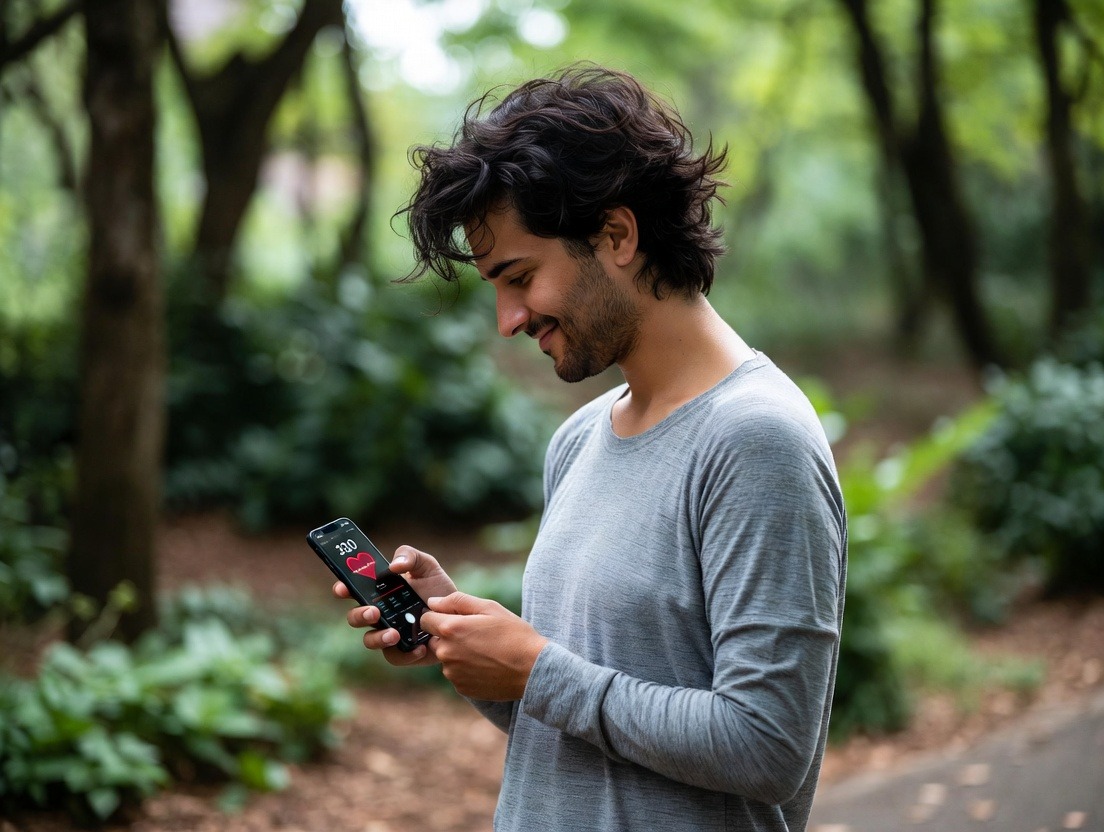
While less direct than HRV, skin temperature variation tracked by a smart ring can offer fascinating supplementary insights for the mindful practitioner. As you enter a deep state of relaxation, blood flow often shifts toward your core, potentially causing a slight drop in peripheral (finger) temperature.
More importantly, tracking your temperature trend can help you understand your circadian rhythm and overall physiological balance, which are critical for sustainable energy and mood—key components of how restful living improves relationships.
How to Use This Feature:
The silent, subtle haptic motor in a smart ring is a potent tool for focus. Instead of using vibrations for notifications from the outside world, you can repurpose them for gentle guidance from within.
How to Use This Feature:
The true power of a smart ring for mindfulness isn’t in any single feature, but in the synergistic story the data tells. It’s the correlation. It’s seeing that when you practice gratitude meditation in the morning, your afternoon stress scores are 30% lower. It’s noticing that 4-7-8 breathing before bed consistently shaves 10 minutes off your time to fall asleep. It’s the realization that on days you skip your practice, your HRV trend dips and your readiness suffers.
This holistic view moves you from generic advice (“meditate for lower stress”) to personalized prescription (“A 12-minute HRV-coherence session at 4 PM, followed by a digital detox after 8 PM, optimizes your sleep and next-day resilience”).
This data-driven personalization is the key to sustainable habit formation. It shows you, in black and white, what works for you. It turns mindfulness from a nice-to-have wellness accessory into a non-negotiable pillar of your daily operating system, as foundational as the food you eat. Speaking of which, understanding how nutrition impacts your nervous system can further enhance this synergy, as detailed in our exploration of the restful living diet.
Your mindfulness practice begins before you even sit down. The environment and your preparatory state are half the battle. Your smart ring can inform and enhance these rituals.
How to Use This Feature:
Perhaps the most profound feature is one that requires no active engagement at all: the ring’s 24/7 passive monitoring. This builds a longitudinal dataset that reveals patterns you are completely blind to.
You may not realize that your nervous system is on high alert every Tuesday afternoon after your weekly planning meeting. Your ring’s stress graph will show it. You may not connect that on days you have a light, plant-based lunch, your afternoon focus meditations are deeper. Your recovery score might indicate it.
How to Use This Feature:
This foundation of deep, personalized awareness sets the stage for the next critical phase of the journey: moving from insight to integration, from tracked practice to transformed life. In the following sections, we will explore how to build sustainable rituals, overcome plateaus, and use this powerful technology to cultivate a mind that is not just temporarily calm, but fundamentally resilient.
Armed with the rich, continuous data from your smart ring, the next step is to move from passive observation to active protocol design. This is where your mindfulness practice evolves from a generic habit into a bespoke wellness strategy. A "one-size-fits-all" approach to meditation is as outdated as a paper map; your biometric data provides the real-time GPS for your inner journey.
The goal is to create a flexible, responsive routine that honors your body's current state, not an idealized calendar. Your ring's daily Readiness or Recovery score should be the first thing you check, acting as the cornerstone for your day's intentional practices. Think of it as consulting the weather before choosing your outfit.
Building Your Dynamic Practice Framework:
By letting your biometrics guide your practice intensity, you create a sustainable, injury-free path to growth. You learn to work with your physiology, not against it.
This is the crown jewel of smart ring-enabled mindfulness: the closed-loop biofeedback system. It turns abstract practice into a tangible, interactive game of regulating your own nervous system. The principle is simple: you see a real-time metric (like heart rate or HRV), and you use your breath and focus to directly influence it.
Setting Up a Biofeedback Session:
The Profound Impact of Visual Feedback:
This loop accelerates learning like nothing else. It demystifies the mind-body connection, showing you that you are not at the mercy of your stress; you have the tools to directly command your inner state.

The ultimate aim of any mindfulness technology should be to help you live more mindfully, not just meditate more effectively. The smart ring excels here by enabling the seamless integration of "micro-moments" of practice throughout your chaotic day. These are brief, intentional pauses that use your biometrics as a trigger or a guide, preventing stress from accumulating and fostering a state of continuous presence.
Data-Triggered Mindfulness:
The Power of the "Mindful Breath" Reminder:
Even without live data, a simple, randomized vibration reminder set for 2-3 times a day can work wonders. When you feel the buzz, your task is simple: stop whatever you’re doing (if safe) and take one single, full, conscious breath. This isn't about a long session; it's about repeatedly punctuating your day with presence, weaving mindfulness into the fabric of your life. These micro-moments collectively build a mindset of restful living for high achievers, where performance is fueled by pockets of deliberate pause, not relentless push.
Motivation in meditation often wanes because progress is subtle and subjective. Your smart ring provides the objective, long-term metrics that reveal the profound, systemic changes occurring beneath the surface of your daily experience. This transforms your practice from a "wellness chore" into a fascinating journey of self-discovery and measurable growth.
Key Long-Term Trends to Monitor:
Creating Your Progress Dashboard:
Dedicate time once a month to review these trends in your app. Look for correlations. Did a month of consistent evening meditation coincide with a 5% increase in average deep sleep? Did a challenging work project fail to crater your HRV trend line, whereas a similar project six months ago caused a major dip? This data-driven narrative is the most powerful motivator to continue. It shows you are fundamentally changing your operating system.
Every practitioner hits plateaus. The initial novelty wears off, sessions feel stale, and it’s easy to fall into the trap of "going through the motions." Worse, resistance and frustration can arise, making you want to quit. This is where your smart ring shifts from being a reporter to a compassionate coach.
Using Data to Diagnose a Plateau:
A true plateau will show up in the metrics. Your HRV trend has flatlined. Your sleep scores aren't improving. Your stress recovery speed is static. The data confirms the feeling, but it also removes the emotional sting. It’s not a personal failure; it’s a system in need of a new stimulus.
Data-Informed Strategies to Break Through:
When Resistance Strikes: On days you simply don't want to practice, let the data be a gentle guide, not a taskmaster. Check your recovery score. If it's low, give yourself permission to do a radically short, 3-minute practice or none at all. The act of checking the data and making a conscious choice is mindfulness. It reinforces that the practice serves you, not the other way around.
Sleep and meditation are two sides of the same coin: restoration. Your smart ring, tracking both, illuminates their powerful synergy in exquisite detail. They feed each other in a virtuous cycle that your data can clearly map.
How Meditation Improves Sleep (As Seen in Your Data):
How Sleep Informs Your Meditation (The Next-Day Impact):
By tracking this bidirectional relationship, you learn to see your 24-hour cycle as an integrated system. You stop optimizing sleep or meditation in isolation and start orchestrating your entire day and night for holistic recovery, following principles that can be structured into a sustainable weekly plan.
With great data comes great responsibility. A significant pitfall of biometric tracking is the potential to swap one form of anxiety (stress) for another (performance anxiety about your stress metrics). You can become attached to a high HRV score or distressed by a low sleep score, ironically creating the very stress you're trying to alleviate. This is where mindful awareness of the technology itself becomes part of the practice.
Principles for Ethical, Balanced Use:
The current capabilities are just the beginning. The frontier of smart ring technology for mindfulness lies in sensor fusion—the integration of multiple data streams to create even more nuanced and predictive insights.
On the Horizon:
This evolution will further blur the line between technology and human intuition, creating tools that don't just track our path to peace but actively illuminate it with unprecedented clarity.
Having established a comprehensive framework for using your smart ring as a meditation and breathwork ally—from understanding core features to integrating practice into life and navigating the ethical landscape—we now turn to the tangible outcomes. How does this integrated, data-informed approach manifest in your real-world experience? The final portion of our exploration will examine the transformative effects on focus, emotional regulation, creativity, and relationships, providing a vision of the life that awaits when you harness this powerful synergy of ancient practice and modern science.

The true measure of any practice lies not in the metrics it generates, but in the life it creates. After months of using your smart ring as a guide for meditation and breathwork, the changes stop being just numbers on a screen and start becoming palpable qualities in your daily existence. This is where the abstract becomes concrete. You move from managing stress to cultivating a different kind of presence that reshapes your interactions, your work, and your very sense of self.
The data from your ring provides the objective proof of this shift, but you feel it in quieter ways: in the space between a triggering event and your response, in the sustained clarity of an afternoon's work, in the ease of a difficult conversation. Let's explore the key domains where this transformation becomes most evident.
One of the first and most celebrated benefits of mindfulness is improved focus. But without data, it's easy to dismiss this as placebo or to become discouraged on days when your mind feels like a browser with 100 tabs open. Your smart ring brings a new level of understanding to this process by linking cognitive states to physiological ones.
The Physiology of Focus:
Optimal focus isn't a state of tense concentration; it's a state of relaxed alertness. Your ring's data reveals this beautifully. During deep, "flow state" work, you may notice your heart rate becomes steady, your HRV remains moderate-to-high (indicating a resilient but engaged system), and your respiratory rate is slow and even. You are physiologically calm yet fully present.
How the Ring Helps Cultivate This State:
The result is a work life that feels less like a frantic scramble and more like a series of intentional, productive engagements. You learn that clarity isn't something you force, but a state you create by first calming the physiological storm.
Emotional reactivity is often a physiological process that hijacks the thinking brain. Anger spikes your heart rate. Anxiety tightens your chest and speeds your breath. Sadness can lower your HRV. Your smart ring acts as an early-warning system for these emotional tsunamis, giving you precious seconds to respond wisely instead of reacting blindly.
From Reaction to Response: The Data Bridge:
The process looks like this:
This skill—the ability to decouple the physiological arousal from the behavioral reaction—is the essence of emotional resilience. Your ring provides the objective feedback that makes this skill trainable. You're not just telling yourself to "calm down"; you're using a biofeedback protocol to make yourself calm down, and seeing the evidence that it worked.
This newfound stability has a profound ripple effect, directly contributing to how restful living improves relationships and mood. You become less reactive with loved ones, more patient, and more present.
We touched on this synergy earlier, but its depth warrants further exploration. The relationship between nightly restoration and daily practice isn't just additive; it's multiplicative. Your ring’s data allows you to become a master architect of this cycle.
Evening Practice Optimized for Sleep Architecture:
Not all evening mindfulness is equal. Your ring helps you pinpoint what your body needs tonight to sleep well.
Morning Insights Informing the Day:
Your sleep data is your post-game report. A night of poor sleep (low scores, high restlessness) isn't just a bad night; it's a directive for the following day.
Mindfulness isn't confined to a cushion. Movement practices are powerful ways to unite body and mind awareness. Your smart ring adds a fascinating layer of biofeedback to these activities, transforming them into live explorations of the mind-body connection.
Yoga & Tai Chi as Biofeedback Sessions:
Walking Meditation and Natural Rhythm:
A simple walking meditation becomes a rich data experience. Sync your breath with your steps (e.g., inhale for 3 steps, exhale for 4). Your ring can track the coherence this creates in your heart rhythm. Furthermore, by leaving your phone behind and simply wearing the ring, you can later see how a mindful walk in nature lowered your stress score more effectively than a distracted walk while listening to a podcast. This quantifies the value of presence, encouraging you to make digital detox a part of your active life.
Our physiological states are contagious—a phenomenon known as "limbic resonance." When you are physiologically regulated (high HRV, calm heart rate), you literally foster a calmer environment for those around you. Your smart ring, in cultivating your own regulation, indirectly enhances your relationships.
Preparing for Difficult Conversations:
Before an important or potentially tense discussion, take two minutes for coherence breathing. Use your ring to achieve a physiologically calm state. Entering the conversation from this grounded place prevents you from being pulled into the other person's emotional field. You are more likely to listen deeply, respond thoughtfully, and de-escalate conflict.
The Data of Connection:
Curiously, you might start to notice data patterns related to socializing. Do dinners with certain friends leave you with a high HRV and positive mood (reflected in journal notes you correlate), while others leave you physiologically drained? This isn't about judgment, but about awareness. It empowers you to make conscious choices about how you spend your social energy, investing it in connections that are truly restorative and aligning with a lifestyle of minimalism in relationships as well as possessions.
Inevitably, life brings periods of high stress, grief, or physical illness. During these times, a rigid mindfulness practice can feel impossible or even cruel. Your smart ring becomes a tool for radical self-compassion, helping you navigate darkness with grace instead of guilt.
Redefining "Practice" During Crisis:
In this way, the technology supports not just peak performance, but holistic human resilience. It teaches you that the path isn't linear, and that true wellness includes the capacity to be with difficulty, informed by data but guided by heart.
Ultimately, the journey with a mindfulness-supportive smart ring leads you toward a broader philosophy: Restful Living. This is not a life of inactivity, but a life of intentional rhythm, where effort and ease, engagement and rest, are in conscious balance. Your ring provides the diagnostic tools to build this life.
It helps you architect your days by identifying your personal ultradian rhythms—the 90-120 minute cycles of focus and fatigue—so you can work with them, not against them.
It helps you design your environment by revealing how factors like temperature, noise, and even light exposure affect your nervous system, allowing you to create spaces that genuinely support calm.
It helps you curate your diet by showing how different foods and meal times impact your sleep and next-day readiness, adding a data layer to the concept of foods that calm your nervous system.
It helps you protect your energy by making invisible drains visible, giving you the conviction to set the boundaries necessary for sustained well-being.
Your ring becomes the central hub in a personalized science of self-care. Meditation and breathwork are no longer isolated activities; they are the keystone habits that regulate the entire system, and the data confirms their pivotal role.
This brings us to the culmination of our exploration: a vision for the future and a practical guide to beginning your own journey. How do you choose the right tool? How do you start without overwhelm? And what does a life, truly harmonized by this fusion of ancient wisdom and modern insight, ultimately look and feel like? The final portion of this guide will provide the actionable roadmap to make this transformative practice your own.
You are now armed with a comprehensive understanding of how a smart ring can transform meditation and breathwork from abstract practices into precise, personalized protocols for well-being. The vision is clear: a life of enhanced focus, emotional resilience, and deep-seated calm, all guided by the intimate data from a device on your finger. The inevitable question arises: How do I begin?
This final section is your actionable roadmap. We’ll move from theory to practice, covering how to select the right smart ring for your mindfulness journey, how to structure your first weeks without overwhelm, and how to cultivate a sustainable, lifelong practice that evolves with you. The goal is not to add another complicated project to your life, but to simplify and illuminate your path to inner peace.
Not all smart rings are created equal, especially when your primary focus is meditation, breathwork, and nervous system health. While many tout sleep and activity tracking, you must look deeper. Here is a focused checklist for your evaluation:
1. Sensor Accuracy & Sampling Rate (The Non-Negotiables):
2. The App Ecosystem & Biofeedback Capabilities (The Mindfulness Engine):
3. Form, Fit, and Battery Life (The Practicalities):
When researching, frame your questions around these mindfulness-specific needs. Contact customer support and ask: “How does your device support real-time breathwork practice?” or “Can I see a sample of the HRV trend graph in your app?”
Starting with a new technology can be exciting but paralyzing. Avoid the temptation to obsess over every data point from day one. Follow this phased approach to build a solid, sustainable foundation.
Week 1-2: The Observation Phase – Establish Your Baseline
Week 3-4: The Introduction Phase – Connect Action to Outcome
Month 2 Onward: The Exploration Phase – Personalize Your Protocol
To avoid data overload, create a simple, weekly review ritual. Dedicate 15 minutes each Sunday to look at three key things:
This ritual turns raw data into a meaningful story of your resilience, helping you make empowered choices for the week ahead. It embodies the structured yet flexible approach of a weekly restful living plan.
Your smart ring is a powerful tool, but it exists within a broader ecosystem of well-being. To maximize its effectiveness, consider it the central node in a network of supportive habits:
So, what does life on the other side of this integrated practice look like? It is not a life of perfect calm or the elimination of stress. That is neither possible nor desirable. Stress is a part of a life fully lived.
Instead, it is a life of masterful navigation.
You wake up and glance at your readiness score, not with anxiety, but with curiosity. It informs whether you choose an energizing or gentle practice. You move through your day with an unseen ally on your finger, its silent haptic nudge reminding you to breathe when your physiology hints at rising tension. You enter challenging situations grounded, because you spent 90 seconds beforehand in coherence breathing, watching your heart rate settle on your phone. You end your day with a wind-down ritual informed by what your body actually needs, leading to sleep that truly restores.
The constant internal chatter—“Am I doing this right? Why can’t I calm down?”—fades away, replaced by the quiet confidence of self-knowledge. You understand your rhythms, respect your limits, and celebrate your resilience with objective proof. You have moved from being passively buffeted by your biology to being an active, compassionate steward of your own nervous system.
This is the promise of merging ancient contemplative practices with modern biometric technology: not to create a generation of people staring at their heart rate, but to foster a generation more in tune with their hearts. It’s a tool that, when used wisely, doesn’t distance us from our humanity but helps us reclaim it—with more clarity, compassion, and calm.
Your journey begins not with mastering the technology, but with a single, intentional breath. Let the ring be the gentle guide that shows you, beyond any doubt, the profound power that has always resided within you, waiting to be measured, understood, and unleashed.
Your Trusted Sleep Advocate: Sleep Foundation — https://www.sleepfoundation.org
Discover a digital archive of scholarly articles: NIH — https://www.ncbi.nlm.nih.gov/
39 million citations for biomedical literature :PubMed — https://pubmed.ncbi.nlm.nih.gov/
Experts at Harvard Health Publishing covering a variety of health topics — https://www.health.harvard.edu/blog/
Every life deserves world class care :Cleveland Clinic - https://my.clevelandclinic.org/health
Wearable technology and the future of predictive health monitoring :MIT Technology Review — https://www.technologyreview.com/
Dedicated to the well-being of all people and guided by science :World Health Organization — https://www.who.int/news-room/
Psychological science and knowledge to benefit society and improve lives. :APA — https://www.apa.org/monitor/
Cutting-edge insights on human longevity and peak performance:
Lifespan Research — https://www.lifespan.io/
Global authority on exercise physiology, sports performance, and human recovery:
American College of Sports Medicine — https://www.acsm.org/
Neuroscience-driven guidance for better focus, sleep, and mental clarity:
Stanford Human Performance Lab — https://humanperformance.stanford.edu/
Evidence-based psychology and mind–body wellness resources:
Mayo Clinic — https://www.mayoclinic.org/healthy-lifestyle/
Data-backed research on emotional wellbeing, stress biology, and resilience:
American Institute of Stress — https://www.stress.org/


