


How Smart Rings Bridge Data and Body Awareness
How smart rings connect concrete data with subjective body awareness.
How smart rings connect concrete data with subjective body awareness.
%402x.svg)
We live in an era of quantification. From our daily steps counted by our phones to the hours of deep sleep logged by our watches, we have become collectors of the self. Numbers, graphs, and charts promise a map to a better, healthier, more optimized version of us. Yet, for many, a profound disconnect remains. The data pours in—resting heart rate is 52, sleep score is 78, stress level is "elevated"—but what does it mean? How does the cold, objective metric of a "low HRV" translate to the warm, subjective feeling of being utterly drained? We are data-rich and insight-poor, staring at dashboards that feel more like a foreign language than a mirror.
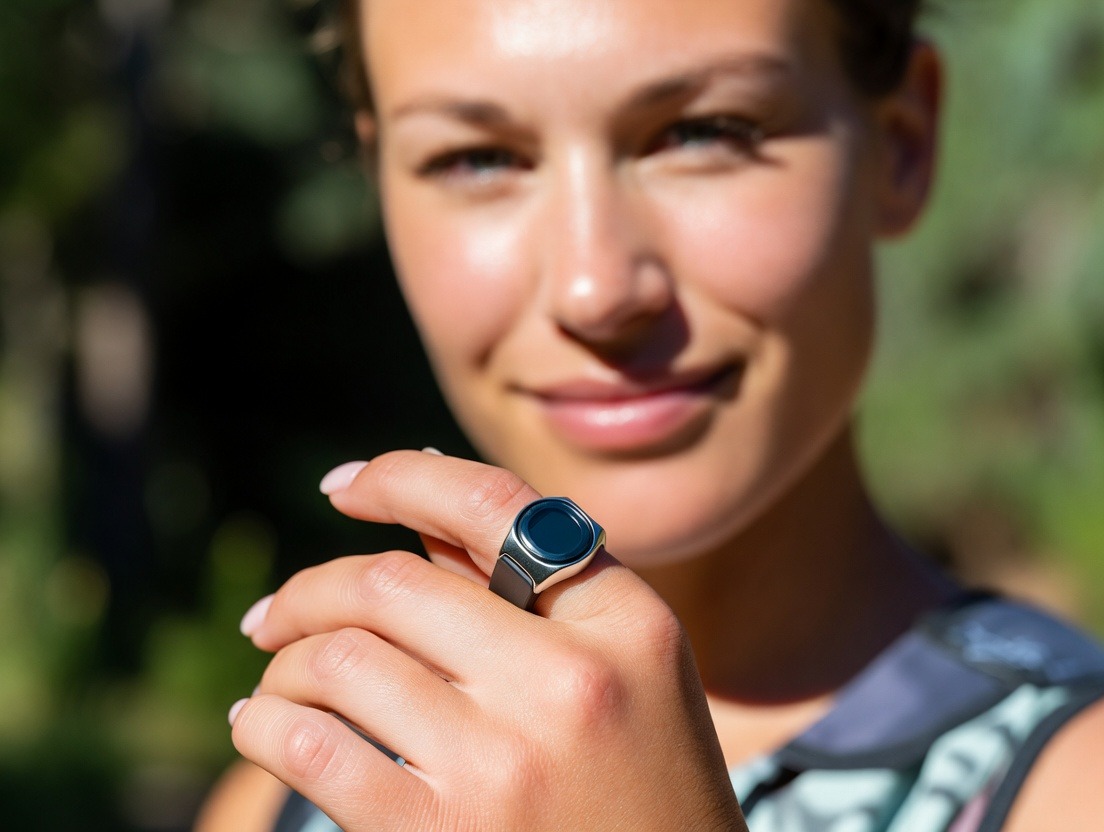
Enter the smart ring: an unassuming, elegant piece of wearable technology that is quietly revolutionizing the landscape of personal wellness. Unlike its wrist-worn counterparts, which often prioritize notification bombardment and constant screen interaction, the smart ring operates on a different philosophy. It is designed not to distract, but to listen. To act as a silent, continuous translator between the intricate, unseen language of your autonomic nervous system and your conscious mind. This isn't just another gadget for tracking; it's a tool for understanding. It is the key bridge between the world of hard data and the subtle, often-ignored realm of body awareness.
The central promise of the smart ring is intimacy through design. Worn on the finger, it taps into the rich vascular bed at the base of your digit, allowing for remarkably precise, 24/7 physiological sensing—from heart rate and heart rate variability (HRV) to blood oxygen saturation (SpO2) and skin temperature. Its form factor encourages constant wear, especially during sleep, where it becomes a powerful sleep lab on your finger, capturing the nuances of your nightly restoration without the bulk or discomfort of a watch. This continuous, passive data collection creates a holistic baseline, a "digital twin" of your physiology that reacts to everything: the late-night meal, the stressful meeting, the intense workout, the restorative vacation.
But data alone is just noise. The true magic, the bridge-building, happens when this rich physiological stream is synthesized into actionable narratives. The smart ring doesn't just tell you your sleep was "fair." It reveals that while your total sleep time was adequate, your deep sleep was fragmented due to a spike in skin temperature after midnight, and your resting heart rate was 8 beats per minute higher than your baseline, suggesting your body was fighting something or processing undue stress. This moves you from a generic score to a specific, physical story—a story that connects directly to how you felt when you dragged yourself out of bed.
This article is a deep exploration of that bridge. We will journey from the origins of quantified self to the neuroscience of interoception—our sense of our internal state. We will dissect how smart rings capture the body’s silent signals and transform them into a language of self-knowledge. This is about moving from passive tracking to active listening, from external validation to internal wisdom. The smart ring is not here to tell you who to be; it is here to help you hear what your body has been trying to say all along.
The journey to today’s smart ring began with a simple, almost obsessive question: "What gets measured, gets managed." This mantra fueled the early "Quantified Self" movement, a community of hobbyists, hackers, and health enthusiasts dedicated to self-tracking through any means necessary. In the 2000s and early 2010s, this meant spreadsheets, manual logs, and clunky, single-purpose devices. People tracked their time, their caffeine intake, their mood, their steps—collecting data points like digital magpies, often without a clear blueprint for what to build.
The first major leap toward mainstream adoption came with the advent of the fitness tracker and, subsequently, the smartwatch. These devices democratized self-tracking, making it effortless to count steps, monitor heart rate during a run, and estimate calories burned. They successfully turned complex biometrics into consumer commodities. However, in this democratization, a significant dilution occurred. The focus shifted overwhelmingly toward output and activity: closing rings, beating yesterday’s step count, and achieving arbitrary exercise goals. The narrative became one of external accomplishment, often broadcasted to social networks for validation.
This created a critical gap. Our bodies are not just engines for output; they are complex, adaptive systems that require balance, recovery, and listening. The relentless focus on activity metrics ignored the other, more subtle half of the equation: readiness. How prepared is your body for that next workout? How well did it recover from the last one? The data from your wrist could tell you you’d burned 800 active calories, but it couldn’t tell you if doing so had drained your resilience for the next three days.
The limitations of wrist-based wearables also became apparent. Optical heart rate sensors on the wrist are prone to "motion artifact"—significant noise during movement. For sleep tracking, a device on the wrist can be uncomfortable, leading to removal, and its location is less than ideal for capturing precise cardiac data compared to the finger. Furthermore, the smartwatch’s primary function as a notification center and mini-smartphone often works at cross-purposes with wellness. The very device meant to improve your health constantly pulls your attention outward, increasing cognitive load and potential stress.
The smart ring emerges as the philosophical and practical answer to these shortcomings. It represents the evolution from the Quantified Self to the Qualified Self. It’s not about collecting more data points; it’s about collecting the right data points and qualifying what they mean for you as an individual. Its design philosophy is inherently introspective. By moving to the finger and shedding the screen, it prioritizes the inward gaze. It measures what your body is experiencing before you decide to act—your baseline stress, the quality of your restoration, the subtle shifts in your readiness. It shifts the paradigm from "How active was I?" to "How is my system responding?" This is the foundational step in building a bridge: choosing to measure the pillars of internal state, not just the flags of external achievement.
To understand how a smart ring builds its bridge of awareness, we must look under the hood. This isn't magic; it's sophisticated biosensing miniaturized into a ring-sized form factor. Each metric it captures is a direct line into a different aspect of your autonomic nervous system (ANS)—the autopilot that controls your heartbeat, digestion, respiration, and stress response. Unlike a watch that you look at, a ring is a device you look through—it provides a window into this hidden, regulatory world.
Core Biometrics and Their Stories:
The genius of the smart ring is sensor fusion. It doesn’t view these metrics in isolation. By combining HRV trends, temperature deviations, respiratory rate, and movement, it creates a multi-dimensional picture. For example, it can distinguish between a night of poor sleep caused by a late-night workout (elevated temperature and heart rate) versus one caused by alcohol (fragmented sleep architecture and respiratory disruption) versus one caused by an incoming cold (rising temperature and resting heart rate). This fusion turns isolated data points into a coherent, physiological narrative—the first translation on the bridge from raw data to bodily understanding.
We’ve explored the ring’s ability to capture data. Now, we must travel to the other side of the bridge: our internal, subjective experience. This is the domain of interoception—our sense of the internal state of our body. It’s the nervous system’s process of sensing, interpreting, and integrating signals originating from within, like heartbeat, breath, hunger, fullness, temperature, and muscle tension. Think of it as your brain’s internal dashboard, but one that is often on mute or mis-calibrated.
Interoception is the foundation of self-awareness. It underpins everything from knowing you’re thirsty and need water, to recognizing the flutter of anxiety in your chest before a presentation, to feeling the deep satisfaction of physical exhaustion after a good effort. It is the biological basis for the oft-cited advice to "listen to your body." But for many in the modern world, this channel is full of static. We are conditioned to override bodily signals: we drink caffeine to push through fatigue, ignore hunger cues during a busy workday, and use screens to numb ourselves away from feelings of stress or discomfort. This leads to interoceptive dysfunction—a disconnect between what our body is signaling and what our conscious mind perceives.
Poor interoception is linked to a host of issues. It can manifest as:
The bridge that a smart ring builds is, at its core, an interoceptive feedback tool. It acts as an external, objective mirror for our internal, subjective state. For the person with blunted interoception, the body’s whisper of "you're overreaching" might be inaudible. But the ring can translate that whisper into a clear, visual alert: a 30% drop in your HRV baseline and a rising resting heart rate. This external data doesn't replace interoception; it trains it. By repeatedly correlating the objective data ("my readiness score is low") with a moment of mindful, internal check-in ("how do I actually feel? Tired, heavy, irritable"), we begin to re-calibrate our internal sense. The data validates the subtle feeling, teaching us to trust it more next time.
This is where the shift from tracking to awareness occurs. The ring’s value isn't in making you a slave to its scores, but in using those scores as a prompt for a mindful conversation with yourself: "The ring says my recovery is poor today. Let me pause and scan my body. Do I feel drained? Is my mind fuzzy? Maybe I should prioritize a walk over a heavy weight session." Over time, this practice strengthens the neural pathways of interoception. The bridge becomes less necessary because you've learned the language yourself. The data trains the felt sense.

If the bridge of awareness has a central support pillar, it is sleep. This non-negotiable period of offline maintenance is when the body performs its most critical restorative work: memory consolidation, metabolic repair, hormonal regulation, and cerebrospinal fluid flushing to clear neural waste. It is also the most fertile ground for smart ring data collection, as prolonged stillness allows for pristine, uncontaminated physiological readings. The ring’s ability to transform our understanding of sleep is perhaps its most powerful bridge-building function.
Traditional sleep tracking focused on a single, blunt metric: duration. "I got 8 hours" was the badge of honor. But we now know that sleep quality is the far more significant determinant of how restored you feel and how well your body functions. You can be in bed for 9 hours and still wake up exhausted if the architecture of that sleep—the cycling between light, deep, and REM stages—is fragmented or shallow. This is precisely where smart rings excel, moving far beyond simple motion-based sleep detection.
By leveraging its suite of sensors, a smart ring constructs a detailed hypnogram—an estimated map of your sleep stages. It does this by analyzing:
The ring synthesizes these signals to provide a nuanced sleep quality score, which is a far more meaningful metric than time alone. This score considers not just duration, but sleep efficiency (percentage of time in bed actually asleep), the balance of stages, and disruptions. For a deep exploration of what constitutes true restorative sleep, our article what is sleep quality and why does it matter more than hours breaks down the science.
The ring becomes a personal sleep detective, identifying invisible saboteurs. It can show you the tangible impact of habits you might otherwise dismiss:
This data transforms sleep from a black box into a transparent process. You are no longer guessing. You can run experiments: see how your sleep score changes when you stop caffeine after 2 PM, install blackout curtains, or practice a wind-down routine. The ring provides the objective feedback, creating a direct line between behavior and physiological outcome. This is the bridge in action: turning the mysterious, subjective experience of "I slept poorly" into a specific, actionable insight: "My deep sleep was fragmented because my skin temperature was elevated by 0.7°C after that late, heavy meal."
In our perpetually "on" culture, stress has become a background hum, so constant that we often fail to recognize its volume until it screams. We normalize feeling perpetually wired, irritable, or fatigued. The problem with chronic, low-grade stress is that it operates largely beneath the level of conscious awareness, quietly draining our resilience. This is where the smart ring shifts from a sleep tracker to a real-time stress and resilience monitor, making the invisible visible.
Stress, at its biological core, is a cascade of hormonal and neurological events orchestrated by the ANS. The sympathetic ("fight-or-flight") branch releases cortisol and adrenaline, increasing heart rate, blood pressure, and alertness. The ideal is a flexible system that can mount an appropriate stress response when needed (a work deadline, a physical challenge) and then swiftly return to a calm, parasympathetic-dominant ("rest-and-digest") state afterward. Chronic stress erodes this flexibility, leaving the system stuck in a sympathetically-driven high-idle.
The smart ring’s primary tool for measuring this is, once again, Heart Rate Variability (HRV). Think of HRV as the measure of your nervous system's agility. A resilient, recovered system has high HRV—it can swiftly modulate heart rate up and down in response to demands. A stressed, fatigued, or overtrained system shows low HRV—it's rigid, stuck in high gear, and lacks suppleness. By tracking your HRV trend over time (not a single point-in-time measurement), the ring establishes your personal baseline. Deviations from this baseline become your early-warning system.
How the Ring Translates Daily Life into Stress Data:
This capability transforms the ring into a biofeedback device for modern life. Instead of waiting for burnout to announce itself with exhaustion or illness, you can see the creeping depletion in your trends. It answers questions like: "Was that 'productive' 14-hour workday actually productive for my system?" or "How long does it really take me to recover from a red-eye flight?"
Seeing your stress response quantified creates a powerful moment of mindfulness. It externalizes the internal cost. You might think you "handled" a stressful event fine, but if your physiology tells a different story, it’s an invitation to investigate: Do I need better boundaries? More intentional recovery practices? This bridges the gap between the story we tell ourselves ("I'm fine") and the reality our body is living (elevated allostatic load). It empowers you to make proactive choices—to schedule a break, say no to an extra commitment, or prioritize sleep—before your body forces you to stop. For those in high-demand roles, understanding how to manage this load is critical; our guide on sleep quality for shift workers offers targeted strategies.
The fitness world has long been dominated by prescriptive, often punitive, logic: "You should work out 5 times a week." "You should hit 10,000 steps." "You should close your activity ring every day." This external, one-size-fits-all mandate completely ignores the most important variable: the individual's current physiological state. Exercising when your body is already in a state of strain or deep recovery is not productive; it can be counterproductive, leading to injury, illness, and burnout. The smart ring introduces a paradigm-shifting concept: Readiness.
A readiness score (or recovery score) is the culmination of the ring’s night-time physiological analysis. By weighing factors like last night’s HRV, resting heart rate, sleep quality, and temperature deviation, it provides a daily recommendation on your system’s capacity for stress—be it physical, mental, or emotional. This isn't about being lazy; it's about being strategic. It shifts the question from "What should I do today?" to "What could I do today, based on my body's actual resources?"
Decoding the Readiness Feedback Loop:
This approach, often called autoregulation, is a cornerstone of elite athletic training. Professional athletes don't train on a fixed schedule; they adjust daily based on biomarkers. The smart ring brings this principle to everyday life. It helps you distinguish between beneficial stress (eustress) that leads to growth, and harmful distress that leads to breakdown.
The bridge built here is between arbitrary fitness dogma and personalized, sustainable practice. It quiets the external "should" and amplifies the internal "could." For example, you might plan a hard workout, but wake up with a low readiness score due to poor sleep. Instead of pushing through and risking a poor performance or prolonged fatigue, the data gives you "permission" to adapt. You learn that consistent, intelligent training that respects recovery yields better long-term results than sporadic, grind-it-out efforts that lead to frequent setbacks. The ring becomes your coach, advocating not for the workout you planned, but for the workout—or rest—you need.

In the age of social fitness leaderboards and average health ranges, one of the most damaging misconceptions is that biometric data is universally comparable. We look at a friend's step count, a public figure's sleep routine, or a population-average HRV chart and immediately judge ourselves as falling short or exceeding expectations. This is a fundamental error that leads to frustration and misguided goals. The smart ring’s most profound lesson is the establishment of your personal baseline.
Your physiology is as unique as your fingerprint. Your normal resting heart rate, your typical HRV range, your optimal sleep duration, and your body's response to stress are all shaped by a complex interplay of genetics, age, lifestyle, training history, and even personality. What is a "low" HRV for one person might be a "high" HRV for another. A sleeping heart rate of 50 might be normal for a well-trained athlete but cause for concern for someone else. The absolute number is almost meaningless without the context of your own trends.
The smart ring’s algorithm spends the first weeks (often up to a month) of wear in a learning phase. It is not judging you against a database of millions; it is listening intently to you. It’s learning:
Once this baseline is established, the ring’s primary mode of analysis becomes deviation from your personal norm. This is where the insights become powerful and personalized. The system isn't telling you that an HRV of 45 ms is "bad." It’s alerting you that your HRV, which usually averages 65 ms, has dropped to 45 ms—a 30% decline from your normal. That deviation is a significant signal, regardless of how 45 ms compares to anyone else.
This focus on the personal baseline builds a bridge of self-compassion and precision. It turns wellness from a competitive sport into a personal science. You stop chasing someone else's "perfect" score and start understanding your own unique patterns and levers. You might discover that you thrive on 7 hours of sleep, not 8. That your HRV is naturally lower in the luteal phase of your menstrual cycle. That a glass of wine affects your sleep architecture more dramatically than your partner's.
Embracing your personal baseline also helps you interpret the data correctly. A single "bad" night of sleep or a low readiness score is just a data point; it's the trend that matters. The ring helps you see the forest, not just the trees. This is critical for avoiding health anxiety from over-interpreting daily fluctuations. The goal is not to optimize every single metric to a perfect score every day—an impossible and stressful endeavor in itself. The goal is to understand your ranges, notice significant and sustained deviations, and use that knowledge to support your system. For a practical guide on starting this journey of self-measurement, our comparison of the best sleep quality tracking methods is an excellent resource.
A stream of raw data, even personalized data, is not yet wisdom. The bridge from data to awareness requires a final, human component: interpretation and contextualization. The smart ring provides the translation, but you must provide the story. It gives you the "what"—your HRV dropped. Your job is to explore the "why." This is where the device transitions from a passive tracker to an active partner in self-discovery.
The most advanced smart rings don't just spit out scores; they offer a space for manual logging or tagging. This feature is the keystone of the bridge. It allows you to overlay the objective physiological data with your subjective experience and environmental factors, creating a rich, multidimensional journal.
How to Contextualize Your Data:
This practice turns correlation into insight. You move from "My sleep was bad" to "My sleep score drops 15 points every time I have alcohol within 3 hours of bed" or "My HRV reliably dips the day after high-stress meetings, so I need to schedule a recovery activity afterwards."
This is also where you learn to triage the data. Not every low score requires a major life adjustment. You ask yourself: Is this a one-off deviation (a single bad night after travel)? Or is this part of a concerning trend (a week of declining HRV during a period of overwork)? The former might just require observation; the latter demands action.
The ring facilitates a structured, curious dialogue with yourself. It provides the objective evidence to challenge assumptions ("I sleep fine after wine") and confirm hunches ("I feel worse when I skip my morning walk"). This process of active interpretation is the final step across the bridge. The data becomes not a master to be obeyed, but a knowledgeable consultant offering evidence-based feedback. You remain the CEO of your health, making informed decisions with a deeper understanding of your body's unique language. For those beginning this journey of interpretation, knowing where to start for maximum results can help focus your efforts.
We have established that data can train interoception. Now, let's examine the virtuous cycle this creates: the Mind-Body Feedback Loop. This is the dynamic process where objective data informs conscious practices (like meditation, breathwork, or yoga), and those practices, in turn, produce measurable improvements in the physiological data. The smart ring sits at the center of this loop, providing the real-time or retrospective feedback that validates and refines your efforts.
For centuries, contemplative and somatic practices have claimed benefits for stress and health. Now, with a smart ring, you can see those benefits inscribed in your nervous system. This turns an abstract practice into a tangible, rewarding experiment.
Case Studies in the Feedback Loop:
This feedback loop is incredibly empowering. It moves wellness from a faith-based system ("I hope this is good for me") to an evidence-based practice ("I know this lowers my physiological stress because I can see it"). It also allows for personal optimization. Maybe 10 minutes of meditation works for you, but 20 minutes provides a diminishing return. Maybe evening breathwork is more impactful for your sleep than morning meditation. The ring helps you find your personal "dose" for each practice.
Ultimately, this loop closes the bridge. The data inspires a mindful action (practice). The practice alters your internal state. The altered state is captured as new data. This continuous conversation fosters a deep, integrated form of body literacy where technology and consciousness work in harmony, each elevating the other.
The bridge from data to awareness is only valuable if it leads somewhere—to a tangible, positive change in how we live. The true test of a smart ring's utility is not in the sophistication of its sensors, but in its ability to foster sustainable lifestyle evolution. This is the integration phase, where insights crystallize into habits, and habits, reinforced by positive feedback, become automatic pillars of a healthier life. The smart ring acts as both compass and accountability partner on this journey, transforming ephemeral motivation into structured, data-informed behavior modification.
The classic model of behavior change often fails because it relies on sheer willpower and abstract goals ("get healthier," "sleep better"). The smart ring introduces a more effective model: context-aware, feedback-driven micro-adjustments. Instead of overhauling your life overnight, you use the daily data stream to make small, intelligent pivots that compound over time.
The Integration Loop in Action:
This loop can be applied across domains:
The ring’s power here is in its neutrality and objectivity. It doesn't judge; it reports. This removes the emotional guilt or shame often associated with "falling off the wagon." A low score isn't a failure; it's information. It shifts the internal narrative from "I have no willpower" to "Let's see what we can learn from this data point." This fosters a curious, scientific mindset towards self-improvement, which is far more sustainable than a punitive one.
For all its benefits, building a bridge to heightened body awareness carries a risk: you might never want to leave it. The constant stream of data, the daily scores, the minute fluctuations can become a source of preoccupation rather than liberation. This is the dark side of the quantified self—orthosomnia (an unhealthy preoccupation with achieving perfect sleep data) and bio-data anxiety. When the tool designed to reduce stress becomes a source of it, the bridge has turned into a cage.
It's crucial to establish a healthy relationship with your biometric data from the outset. The goal is informed awareness, not obsessive control. Here are key principles to avoid the pitfalls:
The bridge must have guardrails. The smart ring is a tool for enhancing life, not for auditing it. Its highest purpose is to help you develop such a strong internal sense of awareness that you eventually rely on the data less and your own calibrated intuition more. It should graduate you from dependence to empowered independence. To maintain perspective, it helps to be aware of common sleep quality myths—what you think you know is wrong.
The current generation of smart rings excels at descriptive analytics ("what happened") and diagnostic insights ("why it might have happened"). The next frontier, already being pioneered, is predictive and prescriptive analytics. This is where the bridge becomes not just a translator of the present, but a guide to the future. By applying machine learning to longitudinal, multi-metric data, the ring of tomorrow will move from telling you how you are to suggesting what you might need.
The Emerging Capabilities:
This future hinges on data sovereignty and ethical AI. Users must have absolute control over their sensitive biometric data and clear transparency about how it is used. The value of these predictive systems will depend on vast, diverse datasets and sophisticated algorithms built with a deep understanding of human physiology, free from the biases that can plague health tech.
The bridge is evolving from a simple span into an intelligent pathway, illuminated by the light of personalized prediction. It promises a world where our technology doesn't just track our health but actively collaborates with us to protect and enhance it, creating a seamless, anticipatory partnership between human intuition and machine intelligence.
With the market for smart rings expanding rapidly, choosing the right one is crucial. This isn't a casual purchase; you're selecting a long-term partner in self-discovery. The "best" ring isn't the one with the most features; it's the one that best aligns with your goals, lifestyle, and values, and that you will actually wear consistently. Here is a framework to guide your decision, focusing on the pillars that matter most for building an effective bridge to body awareness.
1. Sensor Accuracy and Biometric Breadth:
This is the foundation. A ring must measure core metrics reliably.
2. The Algorithm & Insights (The "Brain"):
Hardware collects data; software turns it into wisdom. This is where brands differentiate themselves.
3. Design, Comfort, and Battery Life:
If the ring isn't comfortable, you won't wear it. If the battery life is poor, you'll have gaps in your data.
4. Ecosystem and Privacy:
5. Your Primary "Why":
Align your choice with your goal.
Choosing your ring thoughtfully ensures the bridge you build is sturdy, reliable, and perfectly suited to carry you toward your destination of deeper self-knowledge.

The theoretical framework of how smart rings build a bridge is compelling, but its true power is revealed in the lived experiences of individuals. These are not just stories of data; they are narratives of reconnection, empowerment, and sometimes, profound transformation. By examining specific user archetypes and journeys, we can see the bridge in action, translating abstract biometrics into concrete changes in quality of life.
The High-Performing Professional on the Brink of Burnout:
*Meet Elena, a 38-year-old tech startup executive.* Her life was a series of back-to-back Zooms, late-night strategy sessions, and constant adrenaline. She prided herself on running on caffeine and willpower, but began experiencing unexplained fatigue, irritability, and a creeping sense of detachment. Her Apple Watch showed she was "closing her rings," but she felt increasingly hollow. Upon wearing a smart ring, the data told a stark story her mind had been rationalizing away: her resting heart rate averaged 68 bpm (high for her), her HRV was chronically in the "low" zone, and her sleep, while often 7 hours in duration, showed almost no deep sleep and a heart rate that never truly dropped into a restorative range. The "Aha!" moment came when she tagged an exceptionally stressful board meeting and saw her physiological stress response—elevated heart rate and suppressed HRV—last for over 48 hours. The bridge had been built: the subjective feeling of "dread" was now objectively linked to a tangible, prolonged biological cost.
The Impact: For Elena, the ring became a boundary-setting tool. She used the readiness score as a non-negotiable guide. On low-readiness days, she delegated, said "no" to non-essential meetings, and instituted a strict digital sunset. She experimented with brief midday breathing exercises and saw her real-time heart rate dip in the app, proving she could down-regulate her nervous system. Within three months, her average resting heart rate dropped by 6 bpm, her HRV trend began to climb, and she reported feeling "in control" of her energy for the first time in years. The data didn't add stress; it provided the external validation she needed to prioritize recovery without guilt.
The Endurance Athlete Navigating Overtraining:
*Meet David, a 45-year-old marathoner.* His training was dictated by a rigid plan: high mileage, come what may. He often felt flat, struggled with minor recurring injuries, and had trouble hitting his target paces. His sports watch told him about his VO2 Max and pace, but not about his body's capacity to absorb the training. The smart ring introduced a foreign concept: readiness. He discovered that his HRV would often plummet after two hard days in a row, and his resting heart rate would stay elevated. The ring clearly flagged days when his body was still repairing, not ready for another stressor. One pivotal week, despite feeling "okay," his readiness score was very low for three consecutive days. He overrode the data and did his scheduled tempo run anyway. He felt terrible during it and developed tendonitis the next day, sidelining him for two weeks.
The Impact: This experience was a paradigm shift. David moved from a fixed, linear training plan to an autoregulated one. He now uses his morning readiness score to decide between a hard session, an easy recovery run, or complete rest. He tags his workouts and can see exactly how different types of sessions (long runs vs. intervals) affect his recovery metrics. The ring has helped him periodize his training more effectively, leading to fewer injuries, more consistent performance, and a greater sense of partnership with his body rather than a mindset of domination.
The Individual Seeking Answers for Unexplained Fatigue:
*Meet Sam, a 29-year-old who struggled with persistent "non-restorative" sleep.* They would sleep 8-9 hours but wake up feeling as tired as when they went to bed. Doctors found no clear medical cause. A smart ring provided the first tangible clues. While their sleep duration was long, the ring revealed severely fragmented sleep architecture, with almost no consolidated deep sleep blocks. Furthermore, it showed significant, repeated dips in blood oxygen saturation (SpO2) throughout the night—patterns suggestive of mild sleep-disordered breathing they were wholly unaware of. The bridge here connected the subjective feeling of unrefreshing sleep to objective, specific physiological disruptions.
The Impact: Armed with this data, Sam sought a consultation with a sleep specialist. The ring data provided a powerful pre-screening tool, making the conversation far more specific. They underwent a sleep study, which confirmed mild sleep apnea. With treatment (a mandibular advancement device), Sam’s ring data transformed: SpO2 dips vanished, deep sleep increased dramatically, and their sleep quality score improved by 40%. The morning fatigue lifted. For Sam, the ring was a diagnostic ally, turning a vague health complaint into a solvable problem. This journey underscores the importance of looking beyond simple duration, as explored in our article on sleep quality vs. sleep quantity: which should you prioritize?
The Person Navigating Hormonal Health and Cycle Awareness:
*Meet Priya, a 33-year-old who experienced significant monthly fluctuations in energy, mood, and focus.* She knew it was cycle-related but felt at the mercy of her hormones. Her smart ring, worn continuously, began mapping her cycle with stunning physiological clarity. She observed a predictable pattern: a steady rise in her resting heart rate and a dip in HRV in the week before her period (luteal phase), with both metrics returning to baseline shortly after menstruation began. Her skin temperature also showed a clear biphasic pattern, confirming ovulation. This data provided a powerful framework for self-compassion and planning.
The Impact: Priya no longer pathologizes her low-energy days. She uses her physiological data to plan her month. She schedules important presentations and intense workouts during her follicular phase when her data indicates higher resilience. She blocks her calendar for more administrative tasks and self-care during her luteal phase. The ring has given her an evidence-based language for communicating her needs to her partner and employer. She has moved from feeling hijacked by her cycle to working in harmony with it, a profound form of body literacy that extends far beyond fitness.
These narratives illustrate that the bridge built by a smart ring is not uniform; it is uniquely constructed for each traveler. It can be a guardrail against burnout, a coach for athletic performance, a diagnostic compass for health mysteries, or a roadmap for hormonal harmony. In every case, it fulfills the same core function: translating the silent, often-ignored language of the body into a clear, actionable dialect the mind can understand and respect.
The bridge built by smart rings doesn't end with the individual user. It is extending into the realm of professional healthcare, creating a new, data-informed channel between patients and clinicians. This represents a shift from episodic, snapshot medicine—based on how a patient feels during a 15-minute appointment—towards continuous, real-world evidence. For clinicians, this longitudinal physiological data is like being given a flashlight to see what happens in the dark: the 99% of a patient's life that occurs outside the clinic walls.
Revolutionizing Sleep Medicine and Pulmonology:
This is perhaps the most immediate and impactful application. Instead of relying solely on patient recall ("I sleep about 7 hours, I think") or expensive, one-night-in-lab polysomnography (PSG), clinicians can now have patients wear a smart ring for two weeks. This provides:
Enabling Remote Patient Monitoring (RPM) and Chronic Disease Management:
For conditions like hypertension, heart failure, and metabolic syndrome, continuous data is invaluable.
The Challenges and the Future of "Clinician-Grade" Data:
For this integration to mature, significant hurdles must be cleared:
The potential, however, is transformative. It fosters a collaborative model where the patient is an engaged data-collector and the clinician is a sophisticated interpreter and guide. The bridge extends from the individual's finger to the clinician's screen, creating a continuous feedback loop that makes healthcare more proactive, personalized, and precise. This is the frontier where consumer wellness tech converges with professional medicine, democratizing access to deep physiological insights.
For those who have crossed the initial bridge and wish to go deeper, a new landscape opens up: the practice of personal science. This moves beyond relying on an app's proprietary scores and into the realm of analyzing raw data trends, conducting structured n-of-1 experiments, and becoming truly fluent in the language of your own body. The smart ring is your data-logger in this intimate laboratory of the self.
Moving Beyond the Proprietary Score:
While readiness and sleep scores are helpful summaries, they are black boxes. To gain true mastery, learn to look at the component parts.
Designing and Running N-of-1 Experiments:
This is the core of personal science. You hypothesize, intervene, and measure.
Correlation Hunting with Tags:
The logging feature is your most potent tool. Tag everything of interest: meals, alcohol, supplements, stress events, social interactions, workout types, travel. After a month, look for patterns. Does logging "high stress workday" correlate with a specific change in your data 24-48 hours later? You might discover that certain social interactions are energizing (good HRV the next day) while others are draining, or that a particular probiotic affects your temperature rhythm.
Understanding Longitudinal Patterns and Seasonality:
Over a year or more, you may discover macro-patterns. Do your HRV and sleep quality dip in the dark winter months (Seasonal Affective patterns)? How does summer heat affect your resting heart rate? Do you have an annual cycle of performance and recovery tied to your work or personal calendar? This long-view turns the ring into a biography of your body, revealing the rhythmic arcs of your health across seasons and life phases.
This advanced practice represents the full internalization of the bridge. You are no longer a passenger receiving translations; you are the navigator, charting the course yourself. The technology recedes into the background, and your own cultivated awareness, informed by data literacy, takes center stage. It is the ultimate goal: to use technology not as a crutch, but as a catalyst for a deeper, more authentic, and self-directed embodiment.
As we integrate these devices more deeply into our lives, we arrive at a critical juncture not just of technology, but of ethics and philosophy. The bridge built by a smart ring carries incredibly sensitive traffic: the continuous story of our most intimate biological processes. This raises profound questions about autonomy, identity, and the future of human experience.
Data Sovereignty and Privacy: The Most Personal Data
Your step count is one thing. Your minute-by-minute heart rate variability, a direct proxy for your emotional and stress state, is something else entirely. Your sleep architecture reveals your vulnerability. Who owns this data? The current model for most companies is that you grant them a license to use your aggregated, anonymized data to improve their algorithms. This is reasonable. However, the specifics matter enormously.
The Risk of Biomedicalization and External Validation
There is a danger that in our quest for optimization, we outsource the authority of our bodily experience to an algorithm. This is the biomedicalization of everyday life—turning normal human fluctuations (a tired day, a restless night) into pathologies to be solved by data. The philosophical question emerges: Are we using data to enhance our subjective well-being, or are we allowing data to define what well-being is?
The Algorithm as an Invisible Narrator
The scores and insights presented to you are not pure facts; they are interpretations shaped by the priorities and biases of the engineers who designed the algorithms. An algorithm that prioritizes sleep duration over sleep depth tells a different story about your health than one that weights HRV most heavily. The "readiness" concept itself implies a purpose—readiness for what? For productivity? For athletic performance? This embedded narrative can subtly shape your behavior and self-perception. We must remain conscious that we are not just reading our bodies; we are reading a particular model of our bodies.
The Future of Augmented Embodiment
Looking further ahead, the integration may become even more seamless. Imagine a world where your ring’s data gently influences your environment: your smart lights dim as your temperature begins to drop for sleep; your calendar automatically blocks focus time when your data shows peak cognitive resilience; your car plays a calming audio track if it detects high stress biomarkers during your commute.
This path of ambient biomodulation is fascinating but requires careful ethical navigation. At what point does supportive technology become a form of paternalistic control? The principle must always be user agency. The human must remain in the loop, with the ability to override, ignore, or disconnect from the suggestions. The bridge must have an "off-ramp" back to unmediated experience.
Ultimately, navigating this crossroads requires a new kind of literacy: biometric mindfulness. It is the practice of engaging with your data from a place of conscious choice, curiosity, and sovereignty. It means using the bridge to visit the land of objective insight, but always choosing to return home to the rich, messy, subjective reality of your lived experience. The smart ring’s greatest promise may not be in the data it provides, but in the deeper conversation it prompts us to have with ourselves about who we are, who we want to be, and how technology can—and cannot—help us on that journey. For a foundational understanding of what this data represents at its core, the science of sleep quality: what happens when you sleep well provides essential context.
Your Trusted Sleep Advocate: Sleep Foundation — https://www.sleepfoundation.org
Discover a digital archive of scholarly articles: NIH — https://www.ncbi.nlm.nih.gov/
39 million citations for biomedical literature :PubMed — https://pubmed.ncbi.nlm.nih.gov/
Experts at Harvard Health Publishing covering a variety of health topics — https://www.health.harvard.edu/blog/
Every life deserves world class care :Cleveland Clinic - https://my.clevelandclinic.org/health
Wearable technology and the future of predictive health monitoring :MIT Technology Review — https://www.technologyreview.com/
Dedicated to the well-being of all people and guided by science :World Health Organization — https://www.who.int/news-room/
Psychological science and knowledge to benefit society and improve lives. :APA — https://www.apa.org/monitor/
Cutting-edge insights on human longevity and peak performance:
Lifespan Research — https://www.lifespan.io/
Global authority on exercise physiology, sports performance, and human recovery:
American College of Sports Medicine — https://www.acsm.org/
Neuroscience-driven guidance for better focus, sleep, and mental clarity:
Stanford Human Performance Lab — https://humanperformance.stanford.edu/
Evidence-based psychology and mind–body wellness resources:
Mayo Clinic — https://www.mayoclinic.org/healthy-lifestyle/
Data-backed research on emotional wellbeing, stress biology, and resilience:
American Institute of Stress — https://www.stress.org/


