


How to Use Your Smart Ring to Master Wellness Fundamentals
How to use a smart ring to master the basics of wellness.
How to use a smart ring to master the basics of wellness.
%402x.svg)
For decades, wellness was a guessing game. We chased vague feelings of being "off," relied on guesswork about our sleep quality, and measured stress by the sheer volume of our mental to-do lists. We had intuition, but we lacked insight. The advent of the smart ring has quietly ushered in a new era—one where the most fundamental pillars of our health are no longer mysteries, but measurable, manageable metrics.
This sleek piece of wearable technology is more than a gadget; it’s an unseen compass, continuously charting the subtle biometric tides of your body. It sleeps with you, works with you, and recovers with you, gathering a rich, 24/7 stream of data on your heart rate, heart rate variability (HRV), body temperature, blood oxygen, and movement. But data alone is just noise. The profound power lies in the translation—in learning to interpret these signals and use them to build an unshakeable foundation of wellness.
This guide is your masterclass in that translation. We will move beyond simply wearing the ring to truly wielding it. We will explore how to transform raw numbers into actionable wisdom, turning your smart ring into a personal health consultant that guides you toward better sleep, managed stress, optimized recovery, and ultimately, a more vibrant, intentional life. The journey to mastering wellness fundamentals starts not with a drastic overhaul, but with understanding the language your body is already speaking. Your smart ring is the interpreter. Let’s begin.
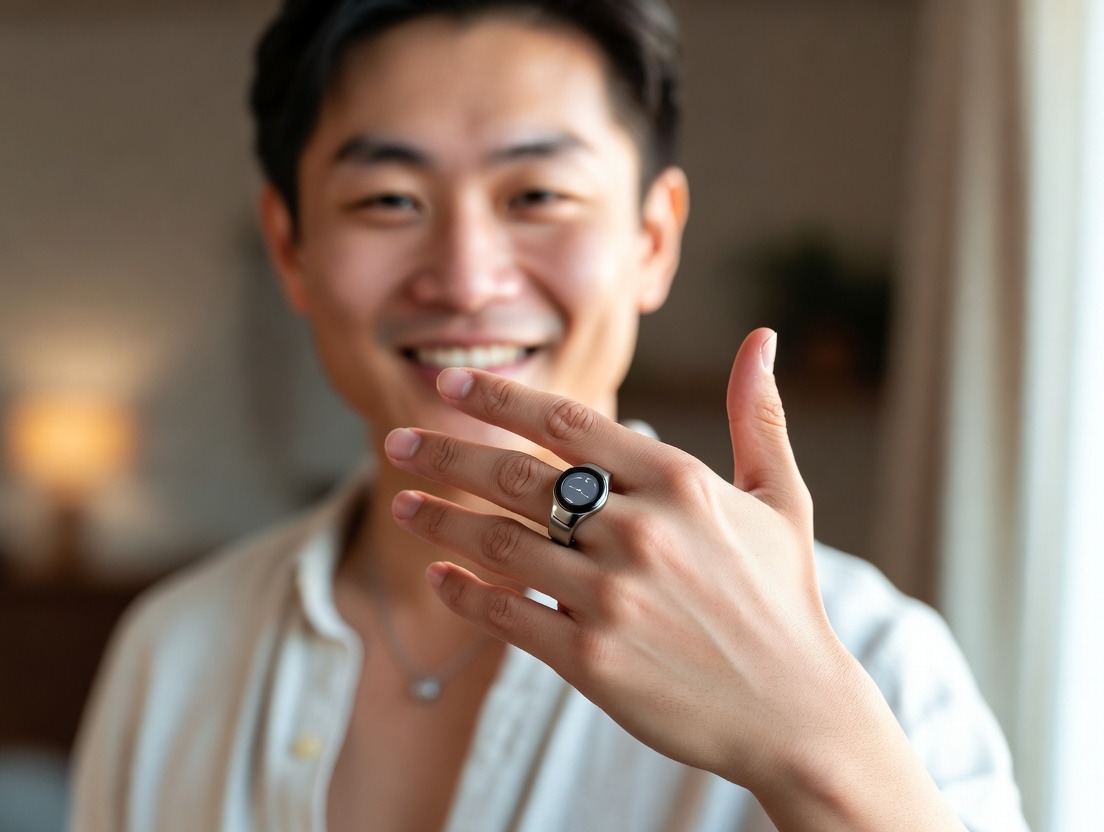
Your smart ring speaks in a lexicon of biometrics. To command it, you must first understand this language. Each metric is a vital signpost, pointing to different aspects of your internal state. Think of them not as isolated numbers, but as instruments in an orchestra, each contributing to the symphony of your overall well-being.
Heart Rate (HR): The Rhythm of Life
Your resting heart rate (RHR) is your body’s idling speed. A lower RHR typically indicates a more efficient cardiovascular system and better fitness. Your smart ring tracks this around the clock, but pay closest attention to your sleeping RHR—your body’s most honest, at-rest measurement. A sudden, sustained increase in your sleeping RHR can be one of the earliest whispers of oncoming illness, elevated stress, or insufficient recovery from training. It’s your body raising a quiet hand to say, "Something is requiring more energy."
Heart Rate Variability (HRV): The Master Metric of Resilience
If there’s one metric to crown as the most insightful, it’s HRV. Contrary to what the name suggests, a higher HRV is generally better. It measures the subtle, millisecond variations between each heartbeat. A high, resilient HRV indicates a body that is well-recovered, adaptable, and has a strong balance between your "fight-or-flight" (sympathetic) and "rest-and-digest" (parasympathetic) nervous systems. A low or dipping HRV is a clear signal from your autonomic nervous system that it is under strain—from physical training, mental stress, poor sleep, or illness. Tracking your HRV trend over time is like having a direct line to your nervous system’s capacity to handle life’s demands.
Skin Temperature: The Body’s Internal Thermostat
Your ring tracks subtle changes in your peripheral skin temperature. For women, this is a cornerstone for cycle tracking, as temperature shifts reliably indicate different menstrual phases. For everyone, a significant deviation from your personal baseline—especially a spike—can be a precursor to fever or a sign of disrupted sleep architecture. It’s a key piece of the puzzle when cross-referenced with other data.
Blood Oxygen (SpO2): The Fuel Gauge
This measures the saturation of oxygen in your blood. While it’s typically stable in healthy individuals, your ring monitors it throughout the night. Persistent dips below your normal range (nocturnal desaturation) can point to issues with breathing during sleep, making it a critical, non-invasive screening tool for sleep quality far beyond simple duration.
Movement and Sleep Stages: The Architecture of Rest
Using accelerometers and the biometrics above, your ring pieces together your sleep architecture—the cyclical journey through light, deep, and REM sleep. Each stage serves a vital purpose: physical repair in deep sleep, memory consolidation and learning in REM. Understanding your personal patterns here is the first step to improving them. If you’re new to this data, our Sleep Tracking 101: Everything Beginners Need to Know is the perfect primer to build your foundation.
By learning what each of these metrics represents, you shift from being a passive observer to an active investigator of your own health. The next step is to build a consistent ritual around this data, turning daily check-ins into a powerful wellness habit.
The single most important habit you can build with your smart ring is the Morning Review. This is not a frantic, 30-second glance between sips of coffee. It’s a mindful, 2–5 minute ritual that sets the tone for your entire day by translating last night’s data into today’s actionable intelligence.
Resist the urge to open social media first. Let your wellness data be your initial input. Open your ring’s companion app and focus on two primary elements: your Sleep Score and your Readiness or Recovery Score.
Deconstructing Your Sleep Score
Your Sleep Score is a composite grade based on multiple factors: duration, efficiency (time asleep vs. time in bed), restfulness (movements/awakenings), and the balance of your sleep stages. Don’t just see an 85/100 and move on. Tap into the details.
The Wisdom of Your Readiness Score
This is where your smart ring earns its keep as a wellness advisor. Your Readiness Score synthesizes last night’s sleep data with your day-time recovery metrics (like HRV and RHR) to answer one critical question: What is my body’s capacity to perform, manage stress, and take on challenges today?
The Art of Correlation
The final step in your Morning Ritual is correlation. Ask yourself: "What did I do yesterday that led to this score?" Was the high readiness preceded by an early dinner, no alcohol, and a relaxing evening? Did the low score follow a late work night, a stressful argument, or a hard workout? This practice of linking cause and effect is what turns data into lasting behavioral change. It empowers you to repeat what works and adjust what doesn’t.
We often think of nutrition in terms of calories and macros, but its most profound impact is on our internal biomarkers. Your smart ring provides a real-time, physiological report card on how your food and drink choices are actually affecting you. This moves you from following generic diets to creating a personalized "fuel plan" based on your body’s unique responses.
The Nightly Audit: How Food Impacts Your Sleep
Your ring provides the most direct feedback on your nutritional choices through the lens of sleep. Pay close attention to these patterns:
Hydration: The Silent Driver of Metrics
Even mild dehydration can significantly skew your data. It can increase your resting heart rate, lower your HRV, and make you feel more fatigued—all of which your ring will pick up. If you see an unexplained dip in recovery metrics, your first question should be: "Did I drink enough water yesterday?" Use your ring’s data to build a habit of consistent, daily hydration, observing how stable, well-hydrated days lead to more resilient biomarkers.
Using Data for Intelligent Experimentation
Move beyond observation and into experimentation. Use a 1–2 week period to test a change.
This biofeedback loop turns your body into the ultimate guide. You’re no longer following a one-size-fits-all plan; you’re engineering a nutrition and hydration strategy that directly supports better sleep, lower stress, and higher daily readiness. This personalized approach is fundamental to building lasting wellness, much like establishing the Natural Sleep Foundation: Building Blocks of Great Rest.
The "no pain, no gain" mentality is obsolete in the era of biometric tracking. Overtraining is just as detrimental as undertraining. Your smart ring’s genius is its ability to help you find the sweet spot—the perfect balance between exertion and recovery that leads to sustainable progress and avoids burnout or injury.
Listening to Your Readiness Score for Workout Intensity
This is the most practical application of your daily data. Let your Readiness Score guide your exercise modality.
Tracking the Impact, Not Just the Output
Instead of just logging miles lifted or miles run, use your ring to log the physiological cost of your workouts. After a training session, observe:
Finding Your Personal Recovery Rhythm
Everyone’s recovery curve is different. Your ring helps you discover yours. Perhaps you thrive on two intense days followed by a full recovery day. Maybe you do better with daily, moderate movement. The data removes the guesswork, allowing you to craft a fitness regimen that builds you up consistently, rather than breaking you down intermittently. This intelligent approach to movement ensures your fitness journey supports your overall wellness, rather than competing with it.

We often recognize stress only when it becomes overwhelming—the clenched jaw, the short temper, the feeling of being "wired and tired." Your smart ring, through the lens of Heart Rate Variability (HRV), allows you to detect and manage stress proactively, at a subtler, physiological level long before it becomes debilitating.
HRV: Your Direct Stress Barometer
Think of your HRV trend as a live dashboard for your nervous system. When life’s demands—deadlines, emotional conflicts, poor sleep, overtraining—accumulate, your sympathetic ("fight-or-flight") system becomes dominant. This directly suppresses your HRV. A sustained low HRV trend is a quantifiable signal that your stress buffer is depleted. You may still be functioning, but your resilience is low, making you more reactive and less adaptable.
From Detection to Intervention: Data-Driven De-Stressing
Once you see your HRV dipping, you can move from being a victim of stress to being an active manager of it. Use the data to test which interventions work best for you.
Building Your Personalized Stress-Resilience Toolkit
By correlating activities with positive HRV responses, you build a toolkit of proven, personal stress shields. Your data might reveal that for you, 10 minutes of meditation is more effective than a 30-minute jog for nervous system recovery. It might show that a weekly social connection reliably boosts your weekend HRV baseline. This moves stress management from a list of "should-dos" to a curated set of "evidence-based-for-me" practices. This proactive approach is a cornerstone of maintaining balance, similar to the principles of Natural Sleep Maintenance: Staying Asleep All Night Long.
You can have the best bedtime routine in the world, but if your sleep environment is working against you, your smart ring will show the proof in poor scores. This is about moving beyond general advice ("keep your room cool") to precision-tuning your sanctuary based on your unique physiological feedback.
Temperature: The Goldilocks Zone
Skin temperature data is key here. Most people sleep best in a cool room (around 65-68°F or 18-20°C), but your ring can help you find your personal ideal.
Light & Sound: The Guardians of Sleep Stages
Environmental disruptions fragment sleep, pulling you out of precious deep and REM cycles. Your ring’s "restlessness" metric and sleep stage graph are your auditors.
The Pre-Bed Ritual: Calibrating Your Wind-Down
Your body needs a signal to transition from wakefulness to sleep. Use your readiness and sleep scores to refine your ritual.
By methodically testing and refining these environmental factors, you engineer a sleep sanctuary that is uniquely calibrated to support your physiology. You’re not just creating a nice bedroom; you’re building a bio-hacked recovery pod optimized by your own data.
Your body operates on a master 24-hour internal clock known as your circadian rhythm. This rhythm governs not just sleepiness and wakefulness, but also hormone release, digestion, cell repair, and cognitive function. When your lifestyle is misaligned with this rhythm—a state known as "social jet lag"—your wellness suffers. Your smart ring provides the clearest possible evidence of this misalignment and guides you back to sync.
Using Data to Find Your Chronotype
Are you a natural early bird or a night owl? Your ring data, especially your sleep tendency graphs and your most restful sleep periods, will reveal your innate chronotype. Fighting against it is a losing battle for wellness.
The Power of Consistent Timing
The most powerful cue for your circadian rhythm is light, but the second most powerful is consistency. Your ring loves routine. Look at your highest sleep scores: are they on weekends when you sleep in, or on weekdays with a fixed schedule? You’ll likely see that consistent bed and wake times—even on weekends—lead to higher, more stable HRV and better sleep efficiency. The data makes the case for regularity.
Meal Timing & The Metabolic Clock
Your body expects food at predictable times. Erratic eating can disrupt your circadian rhythm. Use your ring to observe:
By aligning your sleep, light exposure, and eating windows with your body’s natural clock, you reduce internal friction. Your systems work in harmony, leading to better energy, sharper focus, improved metabolic health, and of course, rock-solid sleep data. This holistic alignment is a lifelong practice, akin to following a Better Sleep Naturally: Your 12-Week Transformation Plan.
For women, the monthly hormonal cycle is not a bug in the system; it’s a powerful, dynamic feature. A smart ring transforms this cycle from a source of mystery and frustration into a predictable, manageable, and even optimizable 28-day blueprint for living. It provides objective data to replace subjective guesswork.
Basal Body Temperature & Confirmed Ovulation
The gold-standard feature here is continuous temperature tracking. A smart ring detects the subtle, sustained rise in basal body temperature (BBT) that occurs after ovulation with far more reliability than a manual morning thermometer, as it captures your true nocturnal low.
Performance & Recovery Across Phases
Your hormones dramatically influence your physiology, and your ring quantifies it.
Nutrition & Cravings, Decoded
A sudden craving or a dip in energy isn't a lack of willpower; it’s a hormonal signal. Use your ring to connect the dots.
By following this data-backed, cyclical blueprint, women can work with their biology, not against it. They can schedule important presentations during their high-resilience follicular phase, plan deload weeks in their luteal phase, and understand that a low readiness score at a certain time of the month is perfectly normal and should be honored. This is empowerment through information.
The magic of a smart ring isn’t confined to the night. Its 24/7 wear provides a live stream of data you can use to optimize your waking hours for sustained energy and laser focus, preventing the afternoon crash before it happens.
Identifying Your Personal Energy Rhythms
We all have natural energy peaks and troughs, often following a 90-120 minute ultradian rhythm. Your daytime heart rate and HRV can reveal yours.
Strategic Breaks & Movement Snacks
Use your ring’s data or simple timers to work with these rhythms, not against them.
Caffeine & Nutrition Timing
That 4 PM coffee might be hijacking your evening. Use your ring to investigate.
By checking in with your data a few times during the day, you move from being reactive to proactive. You learn to deploy focus when your biology is primed for it, and to take restorative breaks when your body is asking for them. This turns the workday from a draining marathon into a series of sustainable, high-performance sprints.

The daily and weekly data is invaluable for immediate choices, but the true, transformative power of a smart ring is unlocked in the long-term view. By examining trends over months and seasons, you move from managing symptoms to understanding the deep, underlying patterns of your health and preventing major setbacks before they occur.
The Burnout Signature: A Pattern You Can Prevent
Burnout rarely happens overnight. It’s a gradual erosion of your physiological resilience, and your ring’s long-term trends chart this erosion with chilling clarity.
Seasonal Shifts & Your Biology
Your body responds to changes in light, temperature, and activity with the seasons.
The Power of the "Before and After"
Use long-term data to measure the impact of significant lifestyle changes.
This longitudinal view transforms your smart ring from a fitness tracker into a lifelong health diary. It provides undeniable, personal evidence of what truly works for your unique constitution, empowering you to make informed decisions that compound over a lifetime of wellness. This is the ultimate goal: not just to feel good today, but to build a body and mind that remain resilient for all your tomorrows.
The smart ring provides unparalleled insight, but the most sophisticated user knows it is an advisor, not an autocrat. Mastery lies in the art of intelligent adjustment—knowing when to heed its warnings with absolute seriousness and when to consciously, strategically override its suggestions based on broader life context. This is where data meets wisdom.
Respecting the Red Flags: Non-Negotiable Signals
Your ring is a brilliant diagnostic tool for detecting when your fundamental physiology is off-course. These signals should almost always be treated as non-negotiable mandates for rest.
The Contextual Override: Life Beyond the Ring
There are moments when the most wellness-optimizing choice is to temporarily accept a biometric deficit for a greater life benefit. The key is to do this consciously and with a plan for compensation.
The Principle of Compensatory Recovery
This is the rule that makes intelligent overriding sustainable. For every deliberate override, you schedule a compensatory action.
By viewing your data through this lens of context and compensation, you avoid the trap of becoming a slave to the scores. You use the ring to make informed choices across the full spectrum of a rich, human life—sometimes choosing optimal biology, and sometimes choosing meaningful experience, always with awareness of the trade-off.
Your smart ring is the cornerstone of your biometric data, but its power multiplies exponentially when integrated into a broader health ecosystem. By allowing it to speak to other apps and devices, you create a unified, holistic dashboard of your wellbeing, filling in gaps and creating a richer narrative than any single device could provide.
The Fitness Layer: Connecting to Strava, Apple Health, and Google Fit
This is the most common and powerful integration. When your ring syncs with fitness platforms, the story becomes complete.
The Mindfulness & Stress Layer: Bridging the Subjective and Objective
This integration is where you connect the feeling to the physiology.
The Smart Home Layer: Automating Your Wellness Environment
This is the frontier of integrated wellness. With platforms like IFTTT or proprietary brand ecosystems, you can create "if this, then that" rules based on your biometrics.
By thoughtfully building these connections, your smart ring transforms from a siloed data collector into the brain of a responsive, personalized wellness ecosystem. It doesn't just report on your state; it begins to actively orchestrate your environment to support it.
As with any powerful tool, a smart ring can be misused or misunderstood. Developing true data literacy means not just reading numbers, but understanding their limitations, recognizing common errors, and avoiding the anxiety that can come from over-scrutinizing every blip. Let's normalize the learning curve.
Common User Errors That Skew Data
Understanding the Technology's Limits
No consumer wearable is a medical device. Informed use requires knowing what it can't do.
Avoiding Orthosomnia: When Tracking Harms Sleep
This is a critical modern phenomenon: becoming so anxious about achieving perfect sleep scores that the anxiety itself worsens your sleep. The ring is meant to reduce stress, not become a source of it.
By approaching your data with this balanced, literate perspective, you avoid the pitfalls and harness the profound, positive potential of the technology to guide, not govern, your wellness journey.

Humans are social creatures, and motivation often flourishes in community. The sharing and social features found in many smart ring apps can be powerful accelerants for your wellness journey—if used with intention and healthy boundaries. This dimension turns personal tracking into a shared experience.
The Power of Accountable Partnerships
Sharing your data with a trusted friend, partner, or coach can transform motivation from internal to mutual.
Community Wisdom and Norms
Seeing aggregated, anonymized data from users like you can be incredibly validating and informative.
The Critical Guardrails: Privacy and Healthy Boundaries
This power comes with a need for caution. The data is intimate.
Used wisely, the social dimension adds a layer of support, accountability, and shared discovery that can make the path to better wellness less solitary and more sustainable. It reminds us that while the data is individual, the pursuit of health is a human experience we all share.
Once you have mastered the fundamentals of tracking and basic interpretation, your smart ring becomes a laboratory on your finger. You can move from passive observation to active, n-of-1 experimentation—the core of true biohacking. This is about asking specific questions and using your biometrics to find personal, verified answers.
Structured Experimentation: The Scientific Method for Self
To move beyond guesswork, formalize your tests.
Sample Experiments You Can Run
The Principle of Singular Change
The golden rule of clean experimentation: only change one variable at a time. If you start meditating, cut caffeine, and buy a new mattress all in the same week, you’ll have no idea which change drove any improvement (or decline) in your data. Patience and isolation of variables are key to obtaining clear, actionable insights.
By adopting this experimental mindset, you graduate from following generic health advice to generating a personalized body of knowledge about what your unique system needs to thrive. Your smart ring is the measurement device in your personal lifelong study of you.
The world of wearable biometrics is evolving at a breakneck pace. Today's smart ring is already powerful, but understanding the trajectory of the technology helps you use your current device more effectively and anticipate how it will become an even more integrated partner in your health. This isn't science fiction; it's the near future of personalized wellness.
From Tracking to Predicting: The AI Health Coach
The next leap is from descriptive analytics ("this is how you slept") to prescriptive and predictive insights.
Multi-Sensor Fusion: A More Complete Picture
Future rings will incorporate additional, non-invasive sensors to close current data gaps.
Seamless Healthcare Integration
The ultimate frontier is bridging the consumer wellness and clinical healthcare worlds securely and effectively.
By understanding this trajectory, you see your current ring not as an endpoint, but as the foundation of a lifelong, evolving partnership with technology for health. It primes you to adopt new features critically and to always view the data as a means to the end of a healthier, more conscious life. The journey of mastering wellness fundamentals is, by its nature, a dynamic and ever-advancing pursuit.
You now possess the knowledge. You understand the metrics, have established rituals, run experiments, and integrated the data into the fabric of your life. The final stage of mastery is synthesis—weaving all these threads together into a cohesive, personalized Wellness Operating System (WOS). This isn't an app you download; it's a living framework you build, guided by your smart ring, that automates good decisions and makes thriving your default state.
The Four Pillars of Your WOS
Your personalized system rests on four dynamic pillars, continuously informed by your biometric data:
Your smart ring is the continuous feedback loop that calibrates this entire system. It tells you when a pillar is weakening and allows you to reinforce it proactively.
In the flow of daily life, you need a fast-reference guide—a cheat sheet for what each signal means and your pre-decided response. Laminate this, save it to your phone, and internalize it.
Metric
What a "Low" or "Poor" Signal Often Means
Your Tier 1 Action (Immediate)
Your Tier 2 Action (If Trend Continues)
Sleep Score
Insufficient or disrupted recovery.
Prioritize sleep hygiene tonight: cool, dark room, early wind-down.
Analyze weekly report: Is it duration, efficiency, or restfulness? Target the weak link.
Readiness Score
Body's capacity is depleted.
Swap planned intense activity for gentle movement or rest.
Audit previous 48 hours: Identify stressor (work, social, diet, overtraining). Address source.
HRV (Trend Down)
Nervous system is under sustained strain; low resilience.
Deploy acute de-stressor (breathing, walk in nature). Cancel optional obligations.
Enact a 3-day "recovery protocol": Extra 30 min sleep/night, super-nutritious food, no alcohol/caffeine.
Resting HR (Trend Up)
Body is working harder; possible illness, dehydration, or stress.
Increase hydration today. Consider an extra hour of sleep.
Take immune-supportive measures (zinc, vitamin C, rest). Rule out onset of illness.
Low Deep Sleep
Physical recovery is compromised.
Ensure pre-bed protein. Prioritize strength training recovery (foam roll, stretch).
Evaluate evening routine & environment: Cooler room? Less alcohol? Earlier dinner?
Low REM Sleep
Cognitive & emotional processing is compromised.
Protect wind-down time from stimulating content/screens. Practice gratitude or light journaling.
Assess daytime stress management. Increase activities that engage creativity or novel learning.
High Nighttime HR
Body is stressed during rest; digestion, inflammation, or apnea.
Firm 3-hour food cut-off before bed. Sleep on side if back-sleeper.
Consider logging dinner foods to identify inflammatory triggers. Discuss with doctor if persistent.
This guide turns anxiety into action. A low score isn't a judgment; it's a diagnostic code with a clear set of troubleshooting steps.

This is the most important chapter. Technology is a tool for human flourishing, not its replacement. The ultimate mastery of your smart ring is knowing when to look at it, and more importantly, when to look away from it, to fully engage with the irreducible, unquantifiable experience of being alive.
Embrace the "Good Enough" Zone
Wellness is not about perfection; it's about sustainable consistency within a healthy range. Obsessing over a 95 sleep score versus an 87 is a path to orthosomnia. If you feel refreshed, energized, and emotionally balanced, your scores are "good enough," even if they aren't personal bests. The ring should expand your awareness, not contract it into a prison of metrics.
Honor the Unquantifiable
Your ring cannot measure laughter, the awe of a sunset, the deep comfort of a hug, the flow state of a creative act, or the meaning derived from helping others. These are foundational to human wellness. There will be days you choose a late night of connection over a perfect sleep score, and that is the correct choice. The data should inform that choice, not forbid it. Remember the principle of compensatory recovery, and move on without guilt.
The Long Game: Trends Over Trivia
Fixate on the forest, not the trees. A single bad night, a wild HRV reading, one day of terrible food—these are trivia. The long-term trend is the truth. Is your 6-month average HRV gently sloping upward? Are you sleeping more soundly now than a year ago? Do you bounce back from stress faster? These macro-improvements are the real victories, the proof that your Wellness Operating System is working.
Your Body's Wisdom is the Final Arbiter
The ring provides external data, but you possess internal wisdom—interoception. Always cross-reference the numbers with how you feel. If your readiness score is high but you feel drained, rest. If your sleep score is mediocre but you spring out of bed, seize the day. The device is an advisor; you are the CEO of your own health. Use the data to enhance your self-knowledge, not to override it.
Your relationship with your smart ring will mature over months and years. It will move from a novel source of fascination, to a trusted advisor, and finally, to a subtle background partner—like a highly tuned sense you've developed.
Periodic Detoxes
Consider taking the ring off for a weekend or a week every few months. Reconnect with the pure, unfiltered experience of your body without any numerical validation. Do you still remember how to listen to its cues? This practice prevents dependency and reaffirms that you are in control.
Sharing Your Knowledge
As you become proficient, you become a resource for others. Share your insights not as dogma, but as your personal experience. Help friends and family interpret their own data with nuance and compassion. This reinforces your own understanding and contributes to a wiser, more data-literate wellness community.
Embracing the Evolution
The technology will change. New metrics, new insights, new form factors will emerge. As a master of the fundamentals, you will be equipped to evaluate these advances critically. You'll know the core questions to ask: Does this new feature provide actionable insight, or just more noise? Does it help me live better, or just track more?
You began this journey seeking to master wellness fundamentals. You end it realizing the most fundamental tool was always within you: your own conscious attention, now powerfully augmented by a stream of personalized, objective insight. Your smart ring is the compass, but you are the navigator, charting a course toward a life of resilience, vitality, and purpose. The data is the map; the lived experience is the territory. Go forth and explore both, with curiosity, wisdom, and grace.
Your Trusted Sleep Advocate: Sleep Foundation — https://www.sleepfoundation.org
Discover a digital archive of scholarly articles: NIH — https://www.ncbi.nlm.nih.gov/
39 million citations for biomedical literature :PubMed — https://pubmed.ncbi.nlm.nih.gov/
Experts at Harvard Health Publishing covering a variety of health topics — https://www.health.harvard.edu/blog/
Every life deserves world class care :Cleveland Clinic - https://my.clevelandclinic.org/health
Wearable technology and the future of predictive health monitoring :MIT Technology Review — https://www.technologyreview.com/
Dedicated to the well-being of all people and guided by science :World Health Organization — https://www.who.int/news-room/
Psychological science and knowledge to benefit society and improve lives. :APA — https://www.apa.org/monitor/
Cutting-edge insights on human longevity and peak performance:
Lifespan Research — https://www.lifespan.io/
Global authority on exercise physiology, sports performance, and human recovery:
American College of Sports Medicine — https://www.acsm.org/
Neuroscience-driven guidance for better focus, sleep, and mental clarity:
Stanford Human Performance Lab — https://humanperformance.stanford.edu/
Evidence-based psychology and mind–body wellness resources:
Mayo Clinic — https://www.mayoclinic.org/healthy-lifestyle/
Data-backed research on emotional wellbeing, stress biology, and resilience:
American Institute of Stress — https://www.stress.org/


