


Vitality and Wellness for Remote Workers: Ring-Monitored Home Health
For remote workers, monitoring home health and vitality with a ring.
For remote workers, monitoring home health and vitality with a ring.
%402x.svg)
The modern remote work revolution promised freedom: freedom from commutes, rigid schedules, and fluorescent-lit cubicles. But for millions, this newfound liberty has quietly birthed a new set of chains—sedentary marathons, blurred boundaries between work and life, and a profound isolation from our own bodily needs. The home office, intended to be a sanctuary of productivity, can often become a silent saboteur of our vitality. We trade the water cooler for a lonely coffee maker, the walk to the bus stop for a shuffle to the kitchen, and the communal lunch break for a sad desk salad eaten while staring at a screen. The result? A workforce that is digitally connected yet biologically adrift, struggling with disrupted sleep, creeping anxiety, physical stagnation, and a nagging feeling of depletion that no amount of Zoom calls can alleviate.
Enter the era of quantified self-care, powered not by bulky wearables or intrusive tech, but by a subtle, always-on guardian: the smart wellness ring. This unassuming piece of technology, worn on your finger, represents a paradigm shift in personal health management. It moves wellness tracking from the realm of occasional check-ins to a continuous, holistic conversation with your body. For the remote worker, it becomes more than a gadget; it’s a personal home health monitor, a silent coach, and an objective witness to the rhythms—and disruptions—of your daily life.
This article is your comprehensive guide to reclaiming your vitality from the unique challenges of remote work. We will delve deep into how a smart ring, by providing an unobtrusive, 24/7 stream of precise physiological data, can illuminate the hidden patterns shaping your well-being. We will move beyond simple step counting to explore the intricate symphony of your heart rate variability (HRV), sleep architecture, skin temperature, respiratory rate, and blood oxygen levels. This data becomes the foundational language for a new kind of body awareness—a crucial skill for anyone whose work life and personal life share the same four walls. By learning to interpret your body's signals, you can transform your home from a passive workspace into an active wellness ecosystem, fostering resilience, energy, and sustained focus.
Our journey will cover the science of key biomarkers, practical strategies for structuring your day, and the profound psychological shift that occurs when you begin to trust your body's wisdom with data-backed confidence. Welcome to the future of home health, where your most powerful tool for wellness fits perfectly on your finger.

To solve a problem, you must first understand its contours. The physiological impact of remote work is not merely the sum of less walking and more sitting; it's a complex, systemic shift that affects nearly every bodily system. Without the natural structures of an office environment—the commute, the walk to a meeting, the social interactions, the change of scenery—our biology can fall into dysregulated patterns.
At the core of this strain is the erosion of circadian rhythms. Our bodies thrive on predictable cycles of light, activity, and social cues. The remote work environment often blurs these lines. Variable wake-up times, exposure to artificial blue light late into the evening, irregular meal times, and a lack of daylight exposure can desynchronize our internal clock, or suprachiasmatic nucleus. This dysregulation doesn't just affect sleep; it cascades into hormone regulation (like cortisol and melatonin), digestion, immune function, and cognitive performance. You might feel "off" or persistently fatigued without knowing why.
Concurrently, the remote setup fosters a state of low-grade, chronic stress. The constant proximity to work, the "always-on" digital culture, the pressure to prove productivity, and the isolation can keep the sympathetic nervous system ("fight or flight") subtly engaged. This manifests not as acute panic, but as a background hum of anxiety, muscular tension (especially in the neck, shoulders, and jaw from poor ergonomics), and a heart rate that never fully settles into true rest. Over time, this depletes our resilience, making it harder to recover from daily challenges.
Furthermore, the sedentary nature of the work is metabolically toxic. Prolonged sitting reduces muscle contraction, which is essential for stabilizing blood sugar and clearing triglycerides from the bloodstream. It also compromises circulation and lymphatic drainage. Combined with the convenience of the home kitchen, this can lead to energy crashes, brain fog in the afternoon, and weight creep—a phenomenon so common it's been dubbed the "Quarantine 15" or "Remote Weight."
A smart wellness ring shines a light directly into these shadows. By tracking your nocturnal core body temperature, it provides one of the most direct proxies for your circadian rhythm's timing and stability. A shifted or flattened temperature curve is a clear signal of circadian misalignment. Simultaneously, by measuring Heart Rate Variability (HRV)—the subtle variation in time between heartbeats—the ring acts as a window into your autonomic nervous system. A higher HRV generally indicates a healthy, resilient system capable of smoothly transitioning between stress and rest. A consistently low or dipping HRV is a quantifiable red flag for accumulated stress and poor recovery, often felt before it's cognitively recognized.
This continuous monitoring allows you to move from a vague sense of being "burned out" to understanding the specific physiological underpinnings of your fatigue. It answers questions like: Was my poor sleep due to late screen time? Did that difficult project meeting cause a measurable stress response that lingered for hours? Is my body fighting off an illness before symptoms even appear? This is the first, critical step in moving from passive endurance to active management of your remote work health.
For years, fitness trackers have championed the step count as the holy grail of daily activity. While movement is vital, the remote worker's wellness demands a far more nuanced dashboard. The smart ring's power lies in its ability to monitor biomarkers that are foundational to resilience, cognitive function, and long-term health—metrics that are especially vulnerable in a home-based work life.
1. Heart Rate Variability (HRV): Your Resilience Dashboard
HRV is arguably the most critical single metric for the modern knowledge worker. It reflects your body's ability to adapt to stress. Think of it as your biological "buffer" or "margin." A high HRV suggests a robust, flexible nervous system; you can handle a stressful email, then smoothly return to a calm, focused state. A low HRV indicates your system is running on a tight margin, potentially overwhelmed, and at greater risk of burnout or illness. For remote workers, tracking HRV trends is essential. A sudden drop can signal overtraining, poor sleep, dehydration, or emotional stress. Observing your HRV can guide you to take a restorative day, prioritize sleep, or practice breathing exercises before you crash.
2. Sleep Architecture: The Foundation of Mental Performance
Sleep is non-negotiable for problem-solving, memory consolidation, and emotional regulation. The smart ring goes far beyond just tracking duration. It maps your sleep stages—light, deep, and REM sleep—throughout the night. Each stage serves a purpose: deep sleep is for physical restoration and immune function, while REM sleep is crucial for creativity and processing emotions. The remote worker's common enemies—late-night work, anxiety, irregular schedules—often steal deep and REM sleep. By seeing your personal sleep architecture, you can identify disruptions and correlate them with your daily habits, like evening caffeine or late-night screen exposure. Furthermore, tracking your resting heart rate (RHR) during sleep provides a clean baseline of cardiovascular health and recovery; a lowered nighttime RHR is a sign of good recovery.
3. Nocturnal Skin Temperature & Readiness
Your body's core temperature follows a circadian rhythm, dipping at night to initiate and maintain sleep. A smart ring tracks this nocturnal skin temperature trend. A disrupted pattern (e.g., a elevated temperature at night) can be an early sign of circadian misalignment, the onset of illness (as the body ramps up its immune response), or even hormonal fluctuations. Many rings synthesize these core metrics—HRV, RHR, sleep quality, and temperature—into a single "Readiness" or "Recovery" score. This score is your daily cheat sheet. A high score suggests your body is primed for a demanding, focused workday or a tough workout. A low score is your body's data-driven plea for a lighter day, more deliberate breaks, and self-care.
4. Respiratory Rate: The Silent Signal
The number of breaths you take per minute, especially during sleep, is a stable and informative vital sign. A elevated respiratory rate can be a subtle indicator of stress, anxiety, or even the early stages of a respiratory condition. Monitoring its baseline and noting deviations helps you understand the breath-body connection on a quantifiable level.
5. Activity & Movement: The Anti-Sedentary Guard
While not just about steps, the ring intelligently tracks overall movement and periods of prolonged inactivity. For the remote worker, this is a crucial reminder system. A gentle nudge after 50 minutes of sitting can be the prompt you need to stand, stretch, or take a brief walk—breaking the metabolic and postural stagnation of desk work.
To truly master this data, it's helpful to have a complete guide to the health metrics at your disposal. This deep understanding transforms raw numbers into a coherent story about your body's state, empowering you to make precise, effective adjustments to your daily routine.
Your home office is your cockpit for the remote work journey. Its design must support not just productivity, but physiology. This goes beyond buying a good chair (though that is important). It's about creating an environment that actively promotes vitality through intentional design choices informed by your body's data.
The Biophilic Workspace: Bringing the Outside In
Humans have an innate connection to nature—a concept known as biophilia. Remote work can sever this link. Integrate elements that engage your senses:
Movement-Forward Furniture
The goal is to make movement inevitable, not an afterthought.
The Tech Hygiene Protocol
Technology is the source of both our work and much of our strain. Manage it deliberately.
Energetic Boundaries: The "Commute" Ritual
One of the biggest losses in remote work is the psychological transition of a commute. Create your own rituals to bookend the day.
By aligning your environment with your physiological needs, you create a foundation that supports the insights from your wellness ring. The data might tell you your sleep was poor; your blackout curtains and phone-free bedroom are the physical solutions. It might show elevated stress; your biophilic, calming workspace is the preventative medicine. This synergy between data and design is where true home health thrives.
The traditional 9-to-5 schedule is an industrial relic, ill-suited for the nonlinear, creative, and cognitive demands of modern knowledge work. One of the supreme advantages of remote work is the potential to design your day around your unique ultradian rhythms—the 90-120 minute cycles of peak focus and natural troughs that our brains and bodies move through. Your smart ring provides the personal data to map these rhythms with stunning accuracy, allowing you to craft a truly bio-individual work schedule.
Identifying Your Personal Prime Time
We all have innate chronotypes—whether we're morning larks, night owls, or something in between. Your ring data, particularly trends in morning readiness scores and nocturnal temperature, will reveal your natural energy landscape. Do you wake with a high readiness score, alert and focused? That's your prime time for deep, demanding work—strategic thinking, writing, coding, or complex problem-solving. Is your energy and focus peaking in the late morning or afternoon? Schedule your most important tasks then. The key is to stop fighting your biology and start aligning your most demanding cognitive tasks with your personal peaks.
The Strategic Use of Troughs
The energy troughs between ultradian cycles are not failures; they are essential reset periods. Trying to power through them leads to diminishing returns, errors, and frustration. Instead, schedule deliberate, low-cognitive-load activities for these times:
The Power of the "Focus Block" and "Recovery Block"
Structure your day not in hours, but in blocks aligned with your rhythms.
Lunch as a Metabolic Reset, Not an Interruption
The remote worker's lunch is a pivotal metabolic event. Use it to break the sedentary spell and fuel sustained afternoon energy.
By the end of the day, this rhythmic approach prevents the common remote work pitfall of feeling "busy all day but accomplishing nothing." You've worked with your body, not against it. You’ve respected its need for focus and its equal need for recovery. The result is not just higher-quality output, but sustained energy that doesn’t leave you burned out by 5 PM. This practice is a cornerstone of developing body awareness through smart ring tracking, as you learn to anticipate your energy swings before they dictate your mood.
The notion that fitness requires a dedicated 60-minute gym session is a major barrier for busy remote professionals. The truth is, fragmented movement throughout the day—"movement snacks" and "micro-workouts"—is not only more feasible but may be more physiologically beneficial for counteracting the harms of prolonged sitting. This approach turns your workday itself into an opportunity for fitness, guided by the real-time feedback from your wellness ring.
The Science of Non-Exercise Activity Thermogenesis (NEAT)
NEAT refers to the calories burned through all physical activity other than deliberate exercise. This includes walking, fidgeting, standing, and gardening. For remote workers, NEAT plummets. Intentional movement snacks are the direct solution. They boost circulation, clear metabolic waste from muscles, improve posture, spike energy, and enhance mood by releasing endorphins. A smart ring tracks this cumulative activity, providing positive reinforcement for these small, consistent efforts.
A Menu of Movement Snacks (2-10 minutes)
Keep a list handy and choose one every 45-60 minutes.
Designing Effective Micro-Workouts (10-20 minutes)
These are slightly more structured sessions you can slot into a longer break or replace a commute.
Using Your Ring as a Movement Coach
Your wearable data turns exercise from a guessing game into a precision tool.
This paradigm shift—from monolithic workout blocks to distributed, intentional movement—makes fitness an integrated, sustainable part of your remote work life. It fights sedentariness at its source, boosts immediate cognitive function, and builds a foundation of strength and mobility that prevents the chronic pain so often associated with desk jobs. The ring provides the accountability and insight to make it stick.

The home kitchen, while a blessing, is a constant siren call for the remote worker. The proximity to food, combined with stress, boredom, and erratic schedules, can lead to grazing, poor meal choices, and energy rollercoasters that sabotage an afternoon of work. Nutritional intelligence isn't about restrictive dieting; it's about using timing and food as tools to stabilize energy, fuel the brain, and support your body's rhythms, with your ring data serving as objective feedback.
Hacking Your Metabolism for Steady Energy
The goal is to avoid massive spikes and crashes in blood sugar, which directly cause brain fog, irritability, and cravings.
Meal Timing and Circadian Rhythms
Your body metabolizes food differently depending on the time of day—a concept known as circadian nutrition.
Hydration: The Cognitive Elixir
Even mild dehydration (1-2%) impairs concentration, memory, and mood.
Using Your Ring to Connect Food and Feel
Become a detective of your own responses.
This approach moves nutrition from a realm of dogma to one of personal experimentation. You are not following a generic plan; you are designing a fuel protocol for your unique engine, using the quantifiable outputs of your energy, focus, and recovery as your guide. It’s a powerful step toward understanding your body's language of nourishment.
For the remote worker, stress is often chronic, ambient, and woven into the fabric of the day—a looming deadline, a chaotic home environment, the pressure of perceived surveillance, or social isolation. This chronic low-grade activation of the sympathetic nervous system is a primary driver of burnout, poor sleep, and diminished health. The smart ring's greatest gift may be its ability to make this invisible stress visible and to guide you toward tangible, data-validated recovery practices.
Quantifying the Stress Response
Your ring provides two primary windows into your nervous system state:
Seeing these metrics change in real-time—for example, a noticeable dip in HRV during a stressful week or a spike in RHR during a difficult conversation—builds profound emotional and somatic awareness. It validates your feelings with hard data and moves stress management from an abstract concept to a measurable physiological process you can influence.
Data-Informed Recovery Techniques
When your metrics indicate stress, deploy these evidence-based techniques:
Designing Your Daily Recovery Rituals
Recovery must be proactive, not just reactive.
By using your ring to identify your personal stress signatures and then employing targeted techniques, you build resilience. You learn that stress is not a life sentence but a wave you can learn to surf, with recovery as the board that keeps you afloat. This proactive body-awareness approach to stress management is the ultimate defense against remote work burnout.
In the quest for productivity, sleep is often the first sacrifice. For the remote worker, this is a catastrophic error. Sleep is not downtime; it is the most critical performance-enhancing, cognitive-consolidating, and health-sustaining activity you do. Poor sleep directly impairs focus, creativity, emotional regulation, and metabolic health. Your smart ring provides an unparalleled, personal audit of your sleep, transforming it from a black box into an engineering project for vitality.
Decoding Your Sleep Dashboard
Move beyond "I slept 7 hours" to understanding the architecture of those hours.
Creating the Ideal Sleep Sanctuary
Your bedroom environment should scream one thing: SLEEP.
The Pre-Sleep Protocol
The hour before bed determines the quality of your night.
Leveraging Data for Better Sleep
Use your ring's insights to troubleshoot and experiment.
By treating sleep with the strategic importance it deserves, you invest directly in your next day's energy, mood, and cognitive horsepower. You wake up not just rested, but truly recovered and ready. This focused effort on sleep is a masterclass in understanding the foundational sleep-body connection.
All the data in the world is useless without the wisdom to interpret it and the self-awareness to act on it. This is where the smart ring transcends being a mere tracking device and becomes a teacher for one of the most vital skills for modern life: interoception—the perception of sensations from inside the body. For the remote worker, disconnected from physical cues amidst digital demands, honing this skill is revolutionary. The ring provides the objective feedback loop that trains and validates your subjective inner awareness.
Bridging the Data-Feeling Gap
The process is a continuous dialogue:
Developing Your Inner Sense Through External Feedback
This feedback loop trains you to become more attuned to subtler signals over time.
From Tracking to Knowing
The ultimate goal is to internalize the lessons. Over months, you may find you need to check the app less. You've learned what high readiness feels like in your body. You can sense the early flickers of stress before your heart rate climbs. The ring has acted as a translator, helping you understand your body's language until you become fluent on your own.
This cultivated body awareness is the bedrock of sustainable wellness. It moves you from reactive healthcare ("I'm sick, I need a doctor") to proactive self-care ("My data shows I'm trending toward depletion, I need to rest"). It empowers you to make choices that are truly aligned with your body's state, turning your home office from a place of potential strain into a cockpit of conscious, embodied living.
Insight without action is merely interesting. The final, crucial step for the remote worker is translating the knowledge gained from their wellness ring into lasting, automatic habits that support vitality. This is where behavioral science meets biometric feedback, creating a potent formula for change. The ring provides the immediate, personal reinforcement that generic habit apps cannot, making the process of building a healthier remote work life not a struggle of willpower, but a guided journey of self-discovery.
The Feedback Loop of Habit Formation
Every habit follows a loop: Cue -> Craving -> Response -> Reward. The smart ring supercharges this loop, particularly the Reward stage, which is often missing in health behaviors where rewards are delayed (e.g., "lose weight in 3 months").
Leveraging Tiny Habits & Stacking
Start impossibly small to guarantee success and build momentum.
Using Ring Data for Accountability & Compassion
Designing Your Environment for Success (Revisited)
Habits are easier when your environment supports them. Use your insights to redesign your space.
By integrating the continuous, personalized feedback of your wellness ring with proven behavioral strategies, you build a system for health that is adaptive and resilient. You're not following a rigid plan imposed from the outside; you are engaging in a continuous conversation with your body, iterating and improving your daily routines based on what the data and your lived experience tell you. This is how the remote worker moves from surviving the work-from-home life to thriving in it, with a smart ring as a trusted guide on the journey toward enduring vitality.
The true transformative power of a smart wellness ring unfolds not in daily glances, but in the panoramic view of weeks, months, and years. For the remote worker, whose environment and routines are uniquely self-determined, this long-term data is a personal health oracle. It shifts the paradigm from managing acute symptoms—a bad night's sleep, a stressful day—to recognizing insidious patterns and intervening long before a minor issue becomes a chronic condition. This is the pinnacle of proactive, preventive self-care.
Identifying Your Personal Baselines
Every body is unique. What's a "low" HRV for one person is a normal baseline for another. The first critical function of long-term tracking is establishing your personal ranges. Over 30-90 days of consistent wear, the ring's algorithms learn your normal. It identifies your typical resting heart rate range, your average HRV, your standard sleep duration and quality, and your circadian temperature rhythm. These baselines are your health fingerprint. Any significant deviation from them is a meaningful signal, far more insightful than comparing your numbers to a generic population average.
The Power of Trend Analysis
Spotting trends allows you to connect dots that daily data obscures.
Predictive Insights and Early Warnings
This is where the technology moves from informative to potentially life-changing. By analyzing composite biomarkers, advanced algorithms can flag deviations that often precede noticeable illness.
Creating a Health Legacy
This longitudinal data set becomes one of the most valuable assets you own—a digital health journal far more precise than memory. It empowers conversations with healthcare providers with objective evidence. "Doctor, my data shows my resting heart rate has been trending up by 5 beats per minute over the last 6 months, and my deep sleep has decreased by 15%, despite no change in my routine." This level of detail facilitates faster, more accurate diagnoses and personalized treatment plans.
For the remote worker, mastering this long-term view means you are no longer a passive passenger in your health journey. You are the pilot, with a sophisticated dashboard showing not just your current altitude, but the weather patterns ahead and the long-range trajectory of your flight. It instills a profound sense of agency, turning health from a worry into a manageable, data-informed project.
One of the most profound losses in the shift to remote work is the incidental social fabric of an office—the shared coffee breaks, the post-meeting debriefs, the collective groan on a Monday. This isolation isn't just an emotional loss; it's a wellness deficit. Social connection is a fundamental human need that regulates our nervous system, reduces stress, and promotes longevity. The smart wellness ring, often perceived as a solitary tool, can paradoxically become a powerful catalyst for rebuilding community and creating a new form of social accountability tailored for the distributed workforce.
From Solo Tracking to Shared Journeys
The data from your ring need not exist in a vacuum. With privacy-controlled sharing features, it can become a language for connection.
Data-Informed Social Connection
Your biometrics can guide you toward the type of social interaction you need.
Workplace Integration: The Future of Team Health
Progressive remote-first companies are beginning to leverage aggregated, anonymized wellness data (with full employee consent) to build healthier team cultures.
This social layer transforms the smart ring from a personal dashboard into a node in a network of care. It helps rebuild the communal scaffolding that remote work dismantles, but in a more intentional, health-focused way. You move from isolated self-optimization to being part of a mutually supportive ecosystem, where your data helps you not only care for yourself but also show up more empathetically for others. This is the antidote to the lonely, siloed existence that can undermine remote work's benefits.
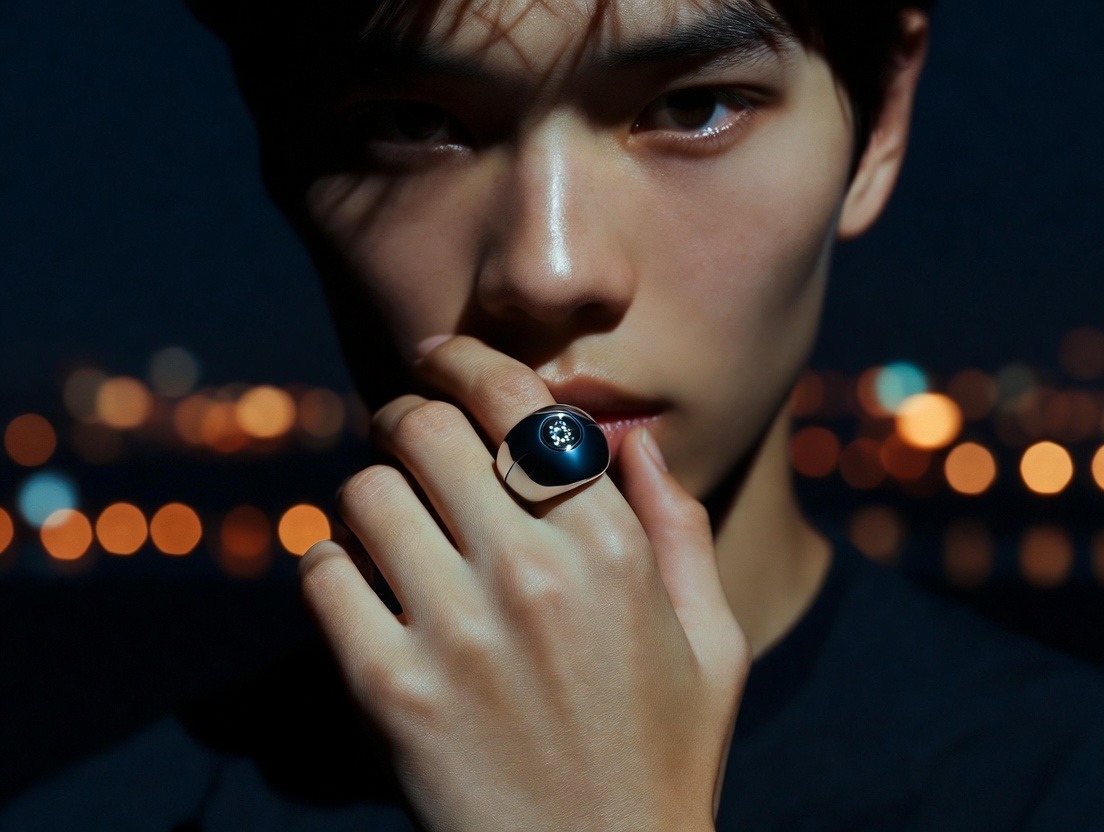
The remote worker's home is both office and sanctuary. The next frontier in ring-monitored wellness is seamlessly integrating this powerful biometric sensor with the other intelligent systems in your living space. This creates a truly responsive environment—a "wellness mesh" that automatically adjusts to support your body's needs in real-time, blurring the line between self-care and ambient care. This is where quantified self meets the quantified home.
Creating a Circadian-Aligned Light Environment
Light is the master regulator of your circadian rhythm. Your ring's data on sleep onset, wake time, and nocturnal temperature can inform your smart lighting system.
Climate Control for Optimal Performance & Recovery
Your body's thermal regulation is key to focus, sleep, and recovery.
Soundscapes for Focus, Relaxation, and Sleep
Audio environment has a profound impact on the nervous system.
The Automated "Recovery Ritual"
Imagine a single command or automated trigger that orchestrates your entire environment for recovery.
This integration represents the ultimate in personalized environmental design. Your home is no longer a static container for your work and life; it becomes an active partner in your well-being, dynamically responding to the subtle biological signals captured by your ring. It offloads the cognitive burden of constant self-regulation, allowing you to focus on your work and life, supported by an invisible lattice of wellness-focused automation. It’s a powerful step toward a future where our technology doesn't distract us from our health, but actively, unobtrusively cultivates it.
Even with the best systems in place, the remote worker's life is punctuated by disruptions—business travel, family responsibilities, and intense project cycles that threaten to derail hard-won wellness routines. These are the moments when a rigid approach fails, but a data-informed, flexible strategy shines. Your smart ring becomes your portable health anchor, providing continuity and guidance when your environment is in flux.
The Remote Worker on the Road
Business travel is a perfect storm for wellness: jet lag, disrupted sleep, unfamiliar food, and broken routines. Your ring is your travel health guardian.
The Integration of Family and Home Life
For remote workers with families, the home office is a shared space. Balancing focus time with family needs is a constant negotiation, and stress can spike during transitions.
Surviving (and Thriving Through) Project Crunches
Inevitable periods of intense workload need not lead to total burnout. A data-driven approach allows for strategic depletion and guided recovery.
In these challenging scenarios, the wellness ring transforms from a fair-weather friend to an essential first responder. It provides objective feedback in subjective, high-pressure situations, helping you make decisions that protect your long-term health without sacrificing short-term responsibilities. It teaches resilience not as the ability to endure endless stress, but as the skill to navigate disruption with awareness and return to equilibrium with speed and precision.
The current suite of biomarkers tracked by leading smart rings—HRV, HR, temperature, movement—is powerful, but it is only the beginning. The frontier of personal health monitoring is rapidly expanding, with new sensors and algorithms on the horizon that will offer even deeper, more granular insights into the remote worker's metabolic and physiological state. Understanding these future directions helps contextualize the journey we're on and the profound potential of truly continuous, holistic health intelligence.
The Centrality of Heart Rate Variability (HRV) Deep Dives
HRV is not a monolithic metric. Advanced analysis is moving beyond the simple "higher is better" paradigm.
The Coming Wave of Non-Invasive Metabolic Sensing
The holy grail for wellness optimization is real-time metabolic data, particularly glucose.
Advanced Sleep and Neurological Insights
The Promise of Multi-Modal Fusion and AI
The ultimate power lies not in any single sensor, but in the fusion of all data streams with contextual information.
For the remote worker, these advancements promise a future where the boundary between personal health monitoring and professional performance coaching dissolves entirely. Your wearable will become a true partner in designing a life that maximizes not just productivity, but sustained creativity, resilience, and joy. It will take the foundational body awareness skills you develop today and amplify them with predictive intelligence, creating a seamless tapestry of data-driven well-being.
As we enthusiastically embrace the detailed biometric surveillance of smart rings and integrated home systems, we must pause to navigate the complex ethical landscape they create. For the remote worker, whose health data could be intermingled with productivity data, the stakes are particularly high. This isn't about fostering paranoia, but about cultivating informed, intentional use. Owning your wellness means owning your data, understanding its power, and safeguarding its use.
The Privacy Paradox: Intimate Data in a Connected World
A smart ring collects the most intimate data possible: a continuous readout of your internal state. This data can reveal not just that you're sick, but that you're stressed, anxious, ovulating, or possibly developing a chronic condition.
The Employer-Employee Data Divide
This is the most sensitive frontier for the remote worker. The potential for employer misuse of wellness data is significant.
Psychological and Behavioral Risks
An over-reliance on data carries its own dangers.
Advocating for a User-Centric Model
As consumers and remote workers, we must advocate for an ethical framework:
By engaging with these ethical questions proactively, we ensure that the remarkable promise of ring-monitored home health leads to empowerment, not exploitation. It allows us to harness technology to deepen our body awareness and self-care foundation while standing firmly in our right to privacy and bodily autonomy. The goal is a future where technology serves human flourishing, on our own terms.
Your Trusted Sleep Advocate: Sleep Foundation — https://www.sleepfoundation.org
Discover a digital archive of scholarly articles: NIH — https://www.ncbi.nlm.nih.gov/
39 million citations for biomedical literature :PubMed — https://pubmed.ncbi.nlm.nih.gov/
Experts at Harvard Health Publishing covering a variety of health topics — https://www.health.harvard.edu/blog/
Every life deserves world class care :Cleveland Clinic - https://my.clevelandclinic.org/health
Wearable technology and the future of predictive health monitoring :MIT Technology Review — https://www.technologyreview.com/
Dedicated to the well-being of all people and guided by science :World Health Organization — https://www.who.int/news-room/
Psychological science and knowledge to benefit society and improve lives. :APA — https://www.apa.org/monitor/
Cutting-edge insights on human longevity and peak performance:
Lifespan Research — https://www.lifespan.io/
Global authority on exercise physiology, sports performance, and human recovery:
American College of Sports Medicine — https://www.acsm.org/
Neuroscience-driven guidance for better focus, sleep, and mental clarity:
Stanford Human Performance Lab — https://humanperformance.stanford.edu/
Evidence-based psychology and mind–body wellness resources:
Mayo Clinic — https://www.mayoclinic.org/healthy-lifestyle/
Data-backed research on emotional wellbeing, stress biology, and resilience:
American Institute of Stress — https://www.stress.org/


