


How Your Wellness Ring Validates Your Body Awareness Intuition
How your wellness ring confirms your intuitive sense about your body.
How your wellness ring confirms your intuitive sense about your body.
%402x.svg)
Long before Fitbits and sleep scores, humans possessed a sophisticated, internal navigation system. This body awareness, or interoception, is our ability to perceive the internal state of our own bodies. It’s the sense that tells you your heart is racing with excitement or anxiety, your stomach is tight with hunger or dread, and your muscles are heavy with fatigue. This isn’t mystical thinking; it’s a hardwired biological feedback loop crucial for survival and homeostasis.
Our ancestors relied on this intuition implicitly. A sense of lethargy might signal the need to conserve energy before an illness. A feeling of restlessness might indicate it’s time to move camp. This intuition was honed by millennia of listening to the body’s direct signals, undistracted by the constant noise of modern life. Today, that signal is often drowned out. We override fatigue with caffeine, ignore hunger cues with rigid diet schedules, and mask stress with constant stimulation. We’ve outsourced authority from our internal compass to external schedules, productivity apps, and generic health advice.
Yet, the compass still points. You still get those feelings. The problem is the erosion of trust. When you say, “I feel run down,” and someone (or your own inner critic) replies, “But you got eight hours of sleep,” the intuitive signal is invalidated. This creates a dissonance that weakens our connection to our most fundamental source of health intelligence. The wellness ring enters here, not as a replacement for this ancient compass, but as a calibrator. It provides the external corroboration needed in a world that often asks us to ignore our inner voice. By giving tangible form to our subjective feelings, it begins to rebuild that eroded trust, proving that the whisper was worth hearing all along.
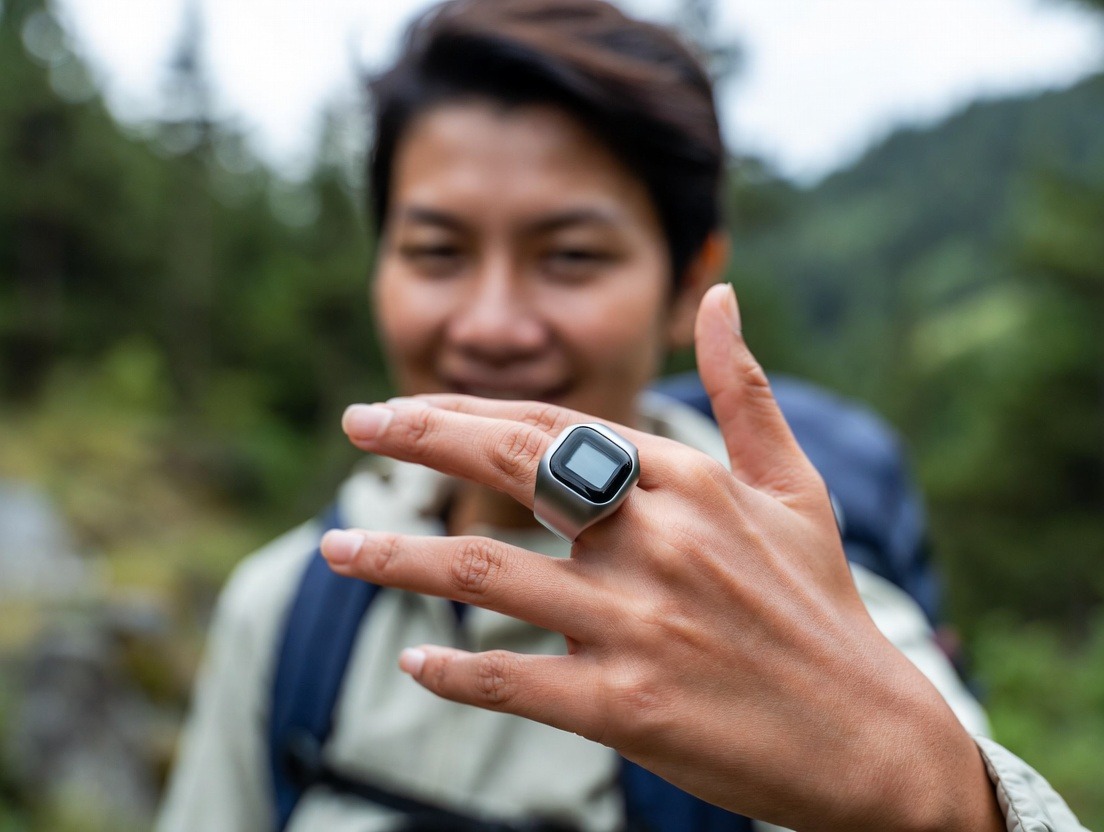
So how does a piece of jewelry on your finger translate a vague sense of being “off” into actionable insight? The magic lies in a suite of sensors continuously reading the physiological poetry your body writes every second.
Heart Rate Variability (HRV) is the superstar of this ensemble. Often mistaken for simple heart rate, HRV measures the subtle, millisecond variations in the time between each heartbeat. It’s not a metronome; it’s a jazz rhythm. A higher, more variable HRV generally indicates a resilient, adaptable nervous system—one that can smoothly shift from focused stress (sympathetic tone) to deep recovery (parasympathetic tone). When your intuition says, “I’m resilient today,” your HRV is likely higher. When you feel wired, fragile, or exhausted, your HRV is often suppressed. The ring quantifies this feeling of resilience or fragility.
Skin Temperature is another critical narrator. Its circadian rhythm and subtle fluctuations are powerful indicators. A consistently elevated nighttime temperature can signal inflammation, an oncoming illness, or a hormonal shift. That “feverish” feeling you sometimes have without a clinical fever? The ring’s temperature trend line often validates it, showing a deviation from your personal baseline days before you might have taken a thermometer under your tongue.
Resting Heart Rate (RHR) and Blood Oxygen (SpO2) complete the core story. A creeping rise in your RHR can be an early sign of dehydration, stress, or overtraining. A dip in overnight SpO2 can explain why you woke up feeling unrefreshed, pointing toward sleep disturbances like mild apnea you’d never otherwise detect.
Finally, activity and sleep analysis transforms subjective impressions into objective timelines. That “restless night” you experienced is displayed as a graph showing frequent awakenings and light sleep. The “deep, restorative nap” you felt is confirmed by a clear plunge into slow-wave sleep. This translation is profound. It moves you from saying “I slept poorly” to understanding how and when you slept poorly, which is the first step toward addressing it. For a deeper dive into what these sleep metrics actually mean, you can explore our guide on what your sleep quality score really means.
This is where the psychological transformation occurs: the Validation Loop. It’s a three-stage cycle that strengthens your mind-body connection with every revolution.
Stage 1: The Intuitive Signal. It’s 3 PM. You’ve hit a wall. Your mind is foggy, your energy is gone, and you have a faint headache. The old response might be guilt (“I shouldn’t be tired”) or force (“Another coffee will power me through”).
Stage 2: The Data Check. You glance at your ring’s app. The data reveals: your sleep last night showed unusually low REM sleep, your afternoon HRV has taken a sharp dip, and your stress markers have been elevated since a morning meeting. The data doesn’t judge; it simply reports. It validates that your “wall” has a physiological basis. It wasn’t laziness; it was a predictable outcome of poor recovery and high stress.
Stage 3: The Informed Response & Reinforcement. Empowered with this validation, you respond not with guilt, but with strategy. You might take a 15-minute walk instead of a coffee, do a short breathing exercise to nudge your nervous system, or decide to prioritize an early bedtime. The next day, when you feel better and see your metrics improve, the loop is reinforced. Your trust in both the data and your initial feeling grows.
This loop turns anecdote into evidence. It’s the difference between thinking, “I always feel bloated after eating bread,” and having data showing a correlated spike in skin temperature and resting heart rate after gluten ingestion, suggesting an inflammatory response. The hunch becomes a hypothesis, and the ring helps you test it. This process is particularly powerful for understanding the hidden link between sleep quality and mental health, as it can show you the direct physiological impact of a poor night on your next-day stress resilience.
Most people associate wellness rings with sleep tracking, and for good reason. The nocturnal window is a pristine laboratory for measuring recovery. But the true power of the device is in its 24/7 wear, enabling a continuous dialogue between you and your physiology across all aspects of life.
Your readiness or recovery score each morning is the opening statement of this dialogue. It synthesizes last night’s sleep data, HRV, temperature, and RHR into a single, personalized metric. A low score doesn’t just say “you slept badly"; it says, "Your body’s resources are depleted. Your nervous system is strained. Today, prioritize restoration over performance.” This objective nudge can guide you to swap an intense workout for gentle yoga, schedule difficult tasks for when you’re naturally more alert, or simply be more mindful of your stress thresholds.
Throughout the day, the ring monitors your stress through HRV and heart rate. That tense, hour-long meeting won’t just live in your memory; it will appear as a sustained period of high stress on your timeline. Seeing this can be revelatory. It helps you identify not just obvious stressors, but the subtle, chronic ones—a tedious commute, certain social interactions, or even specific times of day. This awareness allows you to build recovery into your day, perhaps with a post-meeting walk or a few minutes of meditation, actively managing your energy bank account rather than constantly overdrafting it. To understand the full picture of nightly recovery, it's essential to learn about how smart rings measure sleep quality more accurately than other consumer devices.
This 24/7 view reveals patterns invisible to the naked eye. You may discover your energy consistently slumps two hours after a particular lunch, or that your best cognitive focus follows mornings when your skin temperature dropped optimally overnight. The ring turns your life into a series of gentle, data-informed experiments in living better.

We often use the word “stress” as a monolithic villain. But your body—and a good wellness ring—draws a critical distinction. There is eustress (good, challenging stress that leads to growth, like a great workout or an engaging project) and there is distress (the chronic, draining stress that leads to burnout). Your intuition might feel the difference as “excited nerves” versus “dread,” but the ring quantifies it through the lens of your nervous system.
During a bout of eustress, your sympathetic (“fight or flight”) system activates appropriately. Your heart rate rises, but your HRV might show a dynamic, responsive pattern. Once the stressor is removed, your body should exhibit a strong “rebound” effect, with your parasympathetic (“rest and digest”) system quickly engaging to bring you back to baseline. This is visible in the data as a sharp V-shaped dip and recovery in your stress graph.
Chronic distress, however, paints a different picture. Your stress graph shows plateaus—long, sustained periods of elevated sympathetic tone with little recovery. Your nighttime HRV remains suppressed, meaning you’re not detoxifying from the stress even in sleep. Your resting heart rate trends upward. Your body is stuck in “on” position. Your intuition might manifest this as irritability, cynicism, or a feeling of being constantly “on edge.”
The ring’s role is to alert you to this pattern before your conscious mind has fully acknowledged burnout. It provides an early warning system, showing that while you may be coping mentally, your physiology is paying a steep price. Seeing a week of flatlined HRV and high nighttime heart rate is a powerful, undeniable prompt to intervene. It moves stress management from an abstract concept (“I should relax more”) to a tangible, urgent health priority (“My nervous system resilience is critically low and requires action”). This objective view is crucial for understanding why you wake up tired even after a full night in bed.
“Listen to your body” is common nutrition advice, but it’s hard to follow when the signals seem confusing. Is that craving for salt a mineral deficiency or a habit? Does that post-meal slump mean the food was wrong for you, or did you just eat too much? A wellness ring can bring remarkable clarity to this conversation by measuring your body’s inflammatory and energetic response to food.
The key metrics here are skin temperature and resting heart rate. After eating a meal that causes an inflammatory response or a significant blood sugar spike and crash, your body works harder. This effort can manifest as a rise in skin temperature (as your immune system activates) and an increase in resting heart rate (as your cardiovascular system labors). By tagging your meals in the app and observing these metrics in the hours that follow, you move from guesswork to guided insight.
For instance, you might have a “healthy” lunch of a large salad with a processed dressing and feel lethargic afterward. The data could show a 1.5-degree temperature spike and a 10-bpm rise in RHR over the next three hours—a clear sign of a stress response. Conversely, a balanced meal of protein, fat, and complex carbs might show minimal disturbance. This turns nutrition into a personalized N-of-1 experiment. It can validate suspicions about food sensitivities, highlight the impact of meal timing, and even reveal how stress digestion (eating while rushed or anxious) negatively impacts your physiology regardless of the food’s quality.
This isn’t about creating food fear; it’s about cultivating food awareness. It empowers you to make choices that align with your unique biology, reinforcing the intuition that told you, “This doesn’t feel right for my body,” with data that shows exactly why. This metabolic insight is closely tied to the surprising connection between sleep quality and weight management.
One of the most uncanny validations a wellness ring provides is in the realm of illness prediction. Often, our earliest intuition of getting sick is a vague, hard-to-define feeling of being “off” or “coming down with something.” The ring captures this pre-symptomatic phase with striking clarity through two primary markers: elevated skin temperature and elevated resting heart rate.
Your body begins fighting an invading pathogen long before you develop a sore throat or congestion. This immune activation increases metabolic rate, raises core temperature (even if it’s sub-fever), and elevates heart rate. Because the ring establishes your personal, nightly baselines for these metrics, it can detect even slight deviations. You might wake up feeling fine, but your app shows a notification: “Higher than usual resting heart rate and temperature detected last night. Consider prioritizing recovery.”
This early warning can be incredibly powerful. It’s your body’s intuition, amplified and translated into an alert. It allows you to act proactively—hydrating aggressively, getting extra sleep, reducing stress, and maybe even canceling non-essential plans—potentially mitigating the severity of the illness or avoiding it altogether. For frequent travelers, whose sleep and immunity are constantly challenged, this function is invaluable. Understanding how to maintain sleep quality during travel is a key part of staying healthy on the go.
This predictive capability rebuilds a profound trust in your body’s early warning signals. You learn that that faint ache or sense of malaise isn’t psychosomatic; it’s a real, measurable shift in your internal state. The ring becomes a partner in pre-emptive self-care, helping you honor your body’s request for resources before it has to scream for them with full-blown symptoms.
The fitness world has long been divided between two camps: those who train by rigid, pre-set plans and those who train “by feel.” The wellness ring creates a powerful synergy between these approaches, especially for endurance athletes, lifters, and serious fitness enthusiasts.
“Training by feel” relies on interoceptive cues: How heavy do my legs feel today? How’s my motivation? Do I have a spring in my step? These are valid signals, but they can be skewed by emotion, bias, or a simple desire to stick to a plan. Overtraining often creeps in when we ignore subtle “feel” cues of fatigue.
The ring provides an objective check on these subjective feelings. Your HRV trend is the ultimate guide. A consistently declining HRV trend over several days is one of the most reliable indicators of accumulating fatigue and insufficient recovery, signaling that your body is struggling to adapt to the training load. Even if you feel motivated, pushing through a hard workout during a low HRV period significantly increases injury risk and hampers progress.
Conversely, a high or rising HRV trend, paired with a low resting heart rate, validates that feeling of freshness and readiness. It tells you that your body has recovered and supercompensated, and it’s an optimal time for a peak performance or a challenging session.
This creates an intelligent, responsive training loop. The athlete wakes up, checks their readiness score (informed by HRV, RHR, and sleep), and then consults their planned workout. If the readiness is low, they can confidently swap the intense interval session for light mobility or active recovery, knowing the data supports the intuitive feeling of heaviness. This prevents digging a deeper recovery hole and leads to more consistent, sustainable progress. This principle extends beyond athletics; it's about respecting your body's need for restoration, as detailed in our analysis of the science of what truly happens when you sleep well.
Your intuition likely already knows if you’re a night owl or an early bird. But a wellness ring illuminates the profound depth and impact of your circadian rhythm—the 24-hour internal clock governing everything from hormone release and metabolism to cognitive function and cellular repair.
The primary metric here is core body temperature rhythm, derived from continuous skin temperature monitoring. A healthy, aligned circadian rhythm shows a clear wave: temperature drops in the evening to initiate sleep, reaches its nadir in the early morning hours, and then rises to promote wakefulness. The ring graphs this wave. When your lifestyle is misaligned with your rhythm—through late-night screen time, inconsistent bedtimes, or eating too late—the wave becomes blunted, erratic, or phase-shifted.
This data validates those intuitive feelings of being “out of sync.” That grogginess you feel when forced to wake early for a work schedule that doesn’t suit your chronotype? The data shows your temperature minimum was still two hours away, meaning you were wrenched from your deepest sleep. That inability to fall asleep despite being tired? The graph may show your temperature hasn’t begun its evening descent due to late light exposure.
By observing how specific behaviors (like morning light viewing, meal timing, and evening routines) shape your temperature curve, you can actively work to strengthen and align your rhythm. You move from knowing you “sleep better on a schedule” to understanding the precise physiological mechanism and optimizing for it. This is the cornerstone of true sleep health, moving far beyond simple duration. For a comprehensive look at the environmental factors, our sleep quality formula covering temperature, light, and timing provides an essential guide.

Perhaps the most significant, yet subtle, impact of intuition validation is psychological. For individuals with health anxiety, perfectionist tendencies, or a history of dismissing their own needs, the ring can act as a powerful mind-bridge.
Health anxiety often stems from catastrophic interpretations of ambiguous bodily sensations. A skipped heart beat becomes a sign of impending doom; fatigue signals a serious illness. The ring provides a grounded, objective context. That skipped beat? Your heart rate variability chart shows a healthy, resilient pattern overall. That fatigue? Correlated clearly with three nights of poor deep sleep. The data doesn’t promise immortality, but it does reframe sensations from “mysterious threats” to “explainable physiological events.” This can significantly reduce the spiral of anxious rumination.
For the high achiever who habitually overrides rest signals, seeing objective proof of strain is transformative. You can’t argue with a week of suppressed HRV. It forces a respectful conversation with your own limits, replacing self-criticism (“I’m lazy”) with self-compassion (“My system needs repair”). This builds a deeper, more trustworthy relationship with yourself.
The ring, in this sense, becomes a tool for cognitive behavioral therapy. It challenges distorted thoughts (“I’m fine, I can keep pushing”) with evidence (“My nervous system is signaling distress”). It reinforces positive behaviors (“I prioritized sleep and feel great”) with confirming data (“My recovery score jumped 15 points”). Over time, this external validation is internalized. You begin to trust your initial hunches more, because you have a history of them being proven correct by the data. The need to constantly check the app diminishes as your confidence in your own embodied wisdom grows. This journey often starts with identifying the problem, which is why recognizing the 7 signs your sleep quality is poor is a critical first step.
This partnership is not without its nuanced conversations. There will be times when your intuition and the data seem to disagree. This isn’t a failure of the technology or your body; it’s an invitation for deeper inquiry.
Scenario 1: You feel terrible, but the metrics are “good.” This is crucial. The ring measures specific physiological parameters, but it is not a complete picture of human health. It doesn’t measure emotional pain, spiritual malaise, or certain types of low-grade illness. If you feel unwell, honor that first. The data may simply be limited, or it may indicate that the source of your feeling is not captured by the ring’s sensors (e.g., a headache, emotional distress). Use the “good” data to rule out physiological strain, then look elsewhere for the cause.
Scenario 2: The metrics are “poor,” but you feel great. This is equally important. Sometimes, after a night of poor sleep metrics, you might experience a phenomenon called “sleep inertia” where you feel alert upon waking. Conversely, a night of intense REM or deep sleep (which is physiologically demanding) might leave you feeling physically heavy but mentally clear. Context matters. Are you riding an emotional high that’s masking fatigue? Or is your body uniquely adapted to a certain pattern? Don’t let a number override a strong, positive feeling. Use it as a cue for caution, not a command to shut down.
The goal is informed intuition, not data dictatorship. The ring is a counsel, not a commander. Its greatest gift is fostering a dialogue where you are the final decision-maker, equipped with both visceral feeling and empirical insight. This balanced approach helps you avoid common pitfalls, such as believing in widespread sleep quality myths that many people get wrong.
In a world obsessed with benchmarks and standardized scores, the wellness ring introduces a revolutionary concept: the only metric that truly matters is your own. Your personalized baseline—the unique, dynamic average of your physiology—becomes the foundational language for all intuition validation. This is the ultimate move from generic health advice to truly personalized understanding.
Think of population averages (like "normal" sleep being 7-9 hours, or "good" HRV being above a certain ms threshold) as a map of a continent. It’s useful for general orientation. Your personal baseline, however, is a high-resolution, street-by-street map of your own neighborhood. It knows the alleys, the quiet parks, and the traffic patterns of your body. A wellness ring spends its first weeks, and continuously thereafter, learning this intimate terrain.
This manifests in several ways. Your temperature baseline is unique. One person’s "elevated" reading might be another’s normal. The ring tracks deviations from your own norm, which is far more sensitive than comparing to a population average. That 0.5°C rise from your baseline is a significant signal for you, even if it’s still within the "normal" clinical range. Similarly, your HRV baseline is highly personal, influenced by age, fitness, genetics, and lifestyle. A score of 40ms might be low for an athlete but high for someone else. The ring’s insight comes from watching your trend—is your 40ms part of a rising, resilient trend, or is it a concerning drop from your usual 60ms?
Establishing this baseline validates the very core of body intuition: the knowledge of what "feels like me." When you say, "I don't feel like myself today," the ring can often show you the physiological signature of that feeling—a deviation from your harmonious, personal norm. It answers the question, "How far am I from my own optimal state?" This is critical for effective intervention, as detailed in our guide on where to start for maximum sleep quality improvement results.
For individuals with menstrual cycles, body awareness intuition is often deeply tied to hormonal ebbs and flows. The subtle (and sometimes not-so-subtle) signals—changes in energy, mood, temperature, sleep, and appetite—have traditionally been tracked with calendars and subjective symptom logging. The wellness ring adds a powerful, objective layer to this understanding, turning the hormonal symphony into a visible score.
The most direct validation comes from basal body temperature (BBT) tracking. By detecting the subtle shift in skin temperature that occurs after ovulation (a rise of about 0.3–0.5°C due to increased progesterone), the ring can confirm ovulation has occurred and delineate the phases of the cycle. This objectively validates feelings of increased warmth or changes in sleep patterns associated with the luteal phase.
Beyond temperature, the ring sheds light on the cyclical nature of recovery and resilience. Many users see clear patterns in their HRV and resting heart rate: a window of higher resilience and adaptability in the follicular phase (post-period, leading up to ovulation), and a natural dip in HRV and rise in RHR during the luteal phase. This data validates the intuitive sense of needing more rest or gentler exercise in the week before menstruation. It reframes what might be seen as a "bad" recovery day into a biologically normal and expected phase of the cycle.
Furthermore, the ring can illuminate how lifestyle factors interact with the cycle. It might show that caffeine in the luteal phase disrupts your sleep quality more severely, or that strength training yields better recovery metrics in the follicular phase. This moves cycle-syncing from a trend to a data-informed strategy, empowering individuals to work with their biology rather than fighting against it. For those navigating hormonal transitions, understanding how sleep quality changes with aging and what you can control becomes part of this informed journey.
While touched on earlier, the role of the wellness ring in sleep deserves its own deep exploration. It fundamentally shifts the conversation from sleep quantity (hours in bed) to sleep quality (what happens during those hours). This is the ultimate validation for anyone who has ever said, "I slept for eight hours but feel like I didn't sleep at all."
The ring’s multi-sensor approach—using accelerometry, heart rate, HRV, and temperature—allows it to estimate sleep stages (light, deep, REM) with impressive accuracy for a consumer device. This breakdown is revelatory:
Seeing your sleep architecture validates your subjective morning assessment. That groggy, confused feeling? The graph shows fragmented sleep with minimal deep sleep. That vivid, dream-rich night where you wake up with creative insights? The data shows ample REM periods. This allows you to connect causes and effects more precisely. For example, that late-night alcohol you consumed is visible not just as a sleep disruptor, but as a specific suppressor of REM sleep. To truly grasp the importance of this architecture, it's helpful to understand the difference between overall sleep quality and REM sleep specifically.
Beyond stages, the ring quantifies sleep disturbances—those micro-awakenings you may not remember. It can also track sleep latency (how long it takes to fall asleep) and sleep efficiency (percentage of time in bed actually spent sleeping). These metrics create a comprehensive picture of sleep health that a simple duration tracker never could. This objective analysis helps you identify and address the commonly ignored factors that destroy sleep quality.
Your body is constantly reacting to its environment, and your intuition often picks up on these reactions first. A stuffy room, a noisy street, an uncomfortable mattress—they all leave a physiological signature. The wellness ring helps you play detective, linking environmental factors to biometric outcomes.
While most rings don't have external environmental sensors (like a hygrometer or decibel meter), they measure your body's response to the environment, which is often more meaningful.
By tagging events (e.g., "stayed at hotel," "used new heater," "camping trip") and observing the corresponding biometrics, you build a powerful cause-and-effect understanding of your ideal environment. This turns home and workspace optimization from guesswork into a science. You can learn to engineer your surroundings for better recovery, a concept explored in our piece on measuring sleep quality without a sleep lab.
The true magic of intuition validation doesn't happen in a day or a week. It unfolds over months and years. This longitudinal view transforms the ring from a daily feedback tool into a lifelong health journal, revealing patterns and trends that are completely invisible in the short term.
Seasonal Patterns: You may discover your HRV naturally dips in the dark winter months (potentially linked to Seasonal Affective Disorder) or that your sleep is most efficient in the spring. This validates the intuitive sense of seasonal energy shifts.
Lifestyle Change Impact: Starting a meditation practice, changing your diet, beginning a new exercise regimen, or even undergoing therapy—all of these create slow, steady trends in your data. A gradual, months-long rise in your average HRV after starting mindfulness is a profound validation that the practice is improving your nervous system resilience at a biological level.
Aging and Health Trajectory: By establishing your personal baselines over time, you create a invaluable health record. You can see how your metrics naturally evolve with age, and more importantly, distinguish between normal, graceful changes and concerning deviations. This long-term data becomes an incredibly powerful tool for proactive health management, allowing you to see the research-backed effects of poor sleep on long-term health.
Predictive Personal Insights: With enough data, you can start to make personal predictions. "When my HRV drops below X for three days in a row, I have an 80% chance of catching a cold if I don't rest." Or, "If I get less than 45 minutes of deep sleep for two nights, I know I need to prioritize an early, cool, and dark sleep environment the next night." This is the pinnacle of informed intuition: using your historical data to predict and pre-empt your body's future needs.

Body awareness intuition is internal and subjective, which can make it difficult to communicate, especially when seeking support or understanding from others. The wellness ring can act as an "empathy engine," creating a bridge between your subjective experience and the objective world.
Consider scenarios that often lead to friction or misunderstanding:
This external validation can be profoundly affirming, reducing feelings of isolation or being "dramatic." It allows you to say, "I'm not just saying I'm exhausted; my body is showing clear signs of strain." For shift workers, whose internal rhythms are constantly battling external schedules, this data is crucial for advocating for healthier schedules and explaining the very real physiological cost of their work, as discussed in strategies that actually work for shift workers' sleep.
The validation power of the wellness ring is extending beyond personal use into professional realms, where it serves as a crucial tool for enhancing the practitioner-client relationship.
In Therapy and Mental Health: Therapists are beginning to use this data as an adjunct to talk therapy. A client reporting anxiety can show correlated spikes in daytime stress markers. More importantly, the ring can objectively demonstrate the physiological impact of therapeutic interventions like breathwork or EMDR, showing a calming of the nervous system in real-time. It provides hard evidence of progress when subjective feelings are still cloudy.
With Health Coaches and Nutritionists: Instead of relying solely on food logs and client recall, coaches can see the direct impact of dietary changes, meal timing, and hydration on HRV, RHR, and temperature. This turns coaching into a highly personalized, data-informed partnership where both parties can see what’s working.
In Clinical Sleep Medicine: While not a diagnostic device, the longitudinal sleep data from a ring can be invaluable for sleep specialists. It provides weeks of at-home sleep patterns prior to a consultation, far more informative than a two-week sleep diary. It can help triage patients, identify potential issues like circadian rhythm disorders, and track the effectiveness of treatments like CPAP for sleep apnea or cognitive behavioral therapy for insomnia (CBT-I). For those beginning their investigation into sleep, comparing the best sleep quality tracking methods for beginners is an excellent first step.
This professional use underscores the ring’s role as a translation device. It translates the client’s subjective experience into a objective language the practitioner can understand, fostering collaboration and enabling more precise, effective support.
As with any powerful tool, the partnership between intuition and data requires mindful use to avoid pitfalls. The primary risk is the shift from validation to validation-by-data, where you begin to distrust a feeling until the ring confirms it. This can lead to "data anxiety"—constantly checking the app, obsessing over scores, and allowing a number to override a strong, positive bodily sense.
Cultivating an ethical, healthy relationship involves a few key principles:
The ring's ultimate purpose is to make itself obsolete as a constant crutch. Its success is measured by how much you internalize its lessons and strengthen your own intuitive muscle, so you rely on it less for basic validation and more for exploring new edges of your well-being. This balanced approach helps you avoid the trap of focusing solely on sleep quantity, as we explain in our analysis of which to prioritize: sleep quality or sleep quantity.
We stand at the frontier of a new relationship between human consciousness and its own corporeal form. The wellness ring is an early prototype of a future where technology doesn't distract us from our bodies, but deepens our connection to them. The future of this synergy points toward even more profound integration.
Predictive Personalization: Soon, these devices won't just report data; they will offer predictive, personalized recommendations. "Based on your current HRV trend and tomorrow's calendar, we suggest a 20-minute nap at 2 PM to optimize your presentation performance." Or, "Your temperature rhythm suggests a delayed phase. Gradual light exposure at 6:45 AM for the next five days can help shift your schedule."
Multimodal Integration: The ring's data will seamlessly integrate with other sources—genetic profiles, continuous glucose monitors, epigenetic markers, and even emotional journaling apps—to create a holistic "digital twin" of your health. This model could run simulations to show how different lifestyle choices might impact your long-term health trajectory.
Passive, Ambient Validation: The technology will become even more seamless, embedded in our environments. The validation loop could become ambient—your lights subtly dimming when your biometrics indicate rising melatonin, or your thermostat adjusting in the night based on your real-time thermoregulation.
In this future, the goal remains unchanged: to close the loop between feeling and knowing, to heal the modern rift between mind and body. The wellness ring is the first tangible step in a journey back to ourselves, equipped not with less humanity, but with more understanding. It offers a compelling promise: that by listening to the data of our bodies, we might finally learn to hear ourselves. And as you learn to trust those morning feelings, you can start your day by checking these 5 signs of good sleep quality.
At the heart of intuition validation lies a profound neurological process: the somatic feedback loop. This is where the ring’s data doesn't just inform you—it actively helps retrain your nervous system's responses. By bringing unconscious physiological states into conscious awareness, you gain the power to intervene and reshape them, a concept central to biofeedback therapy.
The Principle of Neuroplasticity: Your nervous system is malleable. Repeated patterns of stress, poor recovery, and misalignment become default pathways. The ring shines a light on these patterns in real-time. For example, you might see your stress graph spike during your commute. Normally, this sympathetic activation and the subsequent cortisol release would happen automatically, below the level of conscious thought. But seeing the spike on your phone creates a moment of awareness—a "somatic intercept."
Conscious Intervention: This awareness creates a critical window for intervention. Instead of arriving at work already in a stressed state, you can use a brief breathing technique (like extended exhalation) to stimulate the vagus nerve and engage the parasympathetic system. Within minutes, you can often watch the stress graph begin to decline. This action—see the spike, intervene, see the drop—creates a powerful reinforced learning cycle for your brain. It learns that the stressor (traffic) does not have to dictate a prolonged physiological state. Over time, this can literally rewire your response, leading to lower baseline stress and faster recovery. This practice is a cornerstone of improving sleep, as calming the nervous system is the first step toward achieving truly restful sleep, outlined in our sleep quality checklist.
HRV Biofeedback Training: Some advanced apps use the ring's HRV data for structured biofeedback sessions. By following breathing pacer animations that synchronize with your real-time HRV, you can directly learn to increase your heart rate coherence—a state of smooth, rhythmic variability associated with peak resilience and calm focus. This turns the ring into a personal meditation coach, providing tangible proof that your mental focus is creating a measurable, positive physiological shift.
Beyond food reactions, your body has an intuitive sense of its own energy metabolism throughout the day. The "afternoon slump," the "second wind," the feeling of being "in the zone"—these are all metabolic events. While wellness rings don't measure blood glucose directly (yet), they provide powerful proxy metrics that validate these intuitive energy states.
Resting Heart Rate as a Metabolic Mirror: Your RHR isn't static. It naturally fluctuates with your digestion, activity, and stress. A pronounced, sustained rise in RHR 60-90 minutes after a meal can often signal a significant blood sugar spike and the subsequent insulin response. This validates that "heavy," sluggish feeling after a high-glycemic meal. Conversely, a stable RHR post-meal aligns with a feeling of sustained energy.
Temperature and Energy Expenditure: A slight dip in skin temperature can sometimes correlate with a drop in metabolic rate and the feeling of an energy lull. Observing this pattern can help you distinguish between true metabolic fatigue (which may require a protein-rich snack or movement) and mental boredom or dehydration.
Validating True Hunger vs. Hedonic Eating: Intuitive eating relies on distinguishing physical hunger from emotional or habitual cravings. By noting your physiological state when a craving hits, you can start to see patterns. Is the "hunger" accompanied by low energy (maybe a dip in HRV or rise in RHR from stress)? Or is your physiology stable, suggesting the craving is more psychological? This data supports the mindful pause, helping you respond to your body's actual needs rather than conditioned cues. Managing these daily energy cycles is foundational to long-term health, as chronic metabolic disruption from poor sleep is a key factor in weight management, detailed in the surprising connection between sleep quality and weight.
Human beings are socially wired. Our interactions—both positive and negative—trigger deep physiological responses. Your intuition often knows immediately after a conversation whether it was draining or uplifting. The ring quantifies this social cost or benefit, turning abstract feelings into concrete data.
The Physiology of Connection: Positive, warm social interactions—deep conversation with a friend, laughter with a partner, physical touch—can trigger a "calm-and-connect" response mediated by oxytocin. This often shows up as a gentle increase in HRV and a stabilization of heart rate post-interaction. Your body registers safety and connection.
The Cost of Conflict and Performance: Conversely, contentious meetings, difficult family dynamics, or even the performance anxiety of social media use can be starkly visible. A tense phone call may appear as a 30-minute plateau of high stress on your graph. The prolonged sympathetic activation from chronic social anxiety can manifest as a suppressed nightly HRV and elevated resting heart rate. This validates the feeling of being emotionally "drained" by certain people or situations, proving it's not just in your head—it's in your entire nervous system.
Digital Social Stress: The ring can even reveal the impact of our digital social lives. Doomscrolling through negative news or engaging in heated online debates often creates the same stress signature as a real-life argument. Seeing this can be a powerful motivator to set digital boundaries.
This "social biometric" feedback empowers you to protect your energetic boundaries. It helps you identify which relationships and activities are truly restorative and which are physiologically taxing, allowing you to make more informed choices about how you spend your social capital. Protecting this recovery time is non-negotiable, a principle that holds true even in challenging schedules, as explored in our guide for shift workers seeking actionable sleep strategies.
A fascinating and advanced nuance emerges for high performers: the paradox where pursuit of "perfect" biometrics can sometimes undermine the very intuition and performance they seek to enhance. This is the realm of over-quantification.
The Dangers of Metric Myopia: An athlete solely focused on achieving a certain HRV score may skip a spontaneous, joyful game of soccer with friends—an activity that, while not "optimized," provides immense psychological and social benefits that aren't captured by the ring. A professional may force an early bedtime to hit a sleep score, but lie awake anxious about the score itself, defeating the purpose.
Flow State vs. "In-The-Zone" Data: Flow states—those periods of effortless, peak performance—are often preceded by a specific physiological signature: a moderate elevation in arousal (sympathetic tone) coupled with focused calm. However, being hyper-focused on the data during an activity can pull you out of the flow state. The key is to use the data for preparation and recovery, not for real-time micromanagement of the experience itself.
Listening to the Positive Outlier: Sometimes, your best, most creative, or most connected days happen when your metrics are "sub-optimal." Maybe you slept less at a rewarding retreat, but your sense of joy and connection is sky-high. The ring’s data here serves not as a judge, but as a context provider. It says, "You operated outside your normal recovery parameters. Acknowledge that, and prioritize replenishment now." It validates the choice you made (the great night out, the intense project push) while giving you the information needed to recover intelligently afterward.
Navigating this paradox requires viewing the data as a guide for sustainability, not a dictator of every minute. It's about balancing the quantified self with the qualitative experience of being alive. This balance is key to avoiding burnout and understanding that sometimes, what you think you know about sleep quality might be wrong.
Not all validation feels good. In fact, some of the most powerful lessons come from "negative validation"—when the data confirms you've pushed too far, ignored your body, or made a poor choice. This "dark data" is not a failure; it's an essential part of the learning curriculum.
The Gift of the Crash: You ignore fatigue, push through a heavy workout on low recovery, and get injured. The ring’s data from the preceding days shows a clear, multi-day trend of declining HRV and rising RHR—the warning signs were there. This painful correlation is a potent teacher. It forges a stronger connection between action and consequence, making you more likely to heed the subtle warnings next time.
The Hangover Effect: The data after a night of heavy drinking is notoriously brutal: shattered sleep architecture (almost zero REM), sky-high resting heart rate, rock-bottom HRV, and elevated temperature. Seeing the physiological carnage objectively can reframe a "fun night out" in terms of its true recovery cost, potentially influencing future choices more than a subjective hangover alone.
The Stress Audit: A period of burnout often leaves a clear, ugly fingerprint in your longitudinal data: a flatlined HRV trendline, a staircase of increasing resting heart rate, and poor sleep scores for weeks. In retrospect, this "dark data" serves as an objective audit of a unsustainable lifestyle. It provides undeniable proof of the toll, which can be a catalyst for meaningful, permanent change rather than just a temporary break.
Embracing this dark data without self-flagellation is crucial. The mindset should be that of a scientist: "Fascinating. When I do X, my body responds with Y. That's good information to have." This objective perspective helps you understand the root causes of fatigue, moving beyond the simple question of why you wake up tired to the complex interplay of daily choices.
The end goal of intuition validation is not to become a slave to daily charts, but to develop your own set of personalized health heuristics—simple, internalized rules of thumb born from repeated patterns in your data. This is where data crystallizes into wisdom.
Developing Your Personal Rules: After months of observation, you might internalize rules like:
These aren't generic health tips; they are your body's unique operating codes, discovered through the partnership of feeling and measurement.
The Intuition Dashboard: Over time, you may find you no longer need to check every graph. You start to sense your approximate HRV, your readiness level, your temperature rhythm. The ring then becomes a tool for periodic calibration—a check-in to confirm your honed intuition or to investigate new, unexplained sensations. Its greatest success is making its constant use less necessary.
Wisdom in Context: These heuristics also teach you about context. The same 40ms HRV might mean something different in summer vs. winter, during a training block vs. a rest period, or during a busy work project vs. a vacation. You learn the nuanced language of your body across the seasons of your life. This contextual wisdom is what allows for true sleep quality improvement that delivers maximum results, because it's tailored to you.
In our quest for validation, we must consciously create space to honor the aspects of our health and humanity that exist outside the sensor array. The ring measures the body, but it cannot measure the soul. A truly integrated approach recognizes both the power of the data and its inherent limits.
Emotional and Spiritual Well-being: Profound joy, grief, love, awe, and spiritual connection have physiological correlates (tears, laughter, goosebumps, a feeling of expansion), but their meaning transcends their biometric signature. A day filled with purpose and connection might have "mediocre" metrics, yet be deeply fulfilling. Conversely, a day of "perfect" scores achieved in isolation may feel empty.
Creative and Intellectual Flow: The process of creation, deep thought, and problem-solving exists in a realm that data can only brush against. The ring might show you were in a calm state, but it cannot capture the spark of an idea or the satisfaction of a solution.
The Placebo and Nocebo Effect: The powerful belief that something will help or harm you can create real physiological changes. If you believe a ritual improves your sleep, it might, regardless of its direct mechanism. The data may validate the improved sleep, but it honors the belief as the true catalyst.
Somatic Practices That Defy Quantification: Certain practices like yoga, tai chi, or sensory deprivation floats work through subtle, complex channels that may not register as dramatic shifts in HRV or heart rate in the moment, yet contribute to a profound, long-term sense of embodied peace and integration.
Acknowledging the unmeasurable prevents the data from becoming a reductionist cage. It keeps the conversation between intuition and technology a dialogue, not a monologue. It reminds us that we are using the ring to serve our wholeness, not to reduce our wholeness to what it can measure. This holistic view is essential, as it encompasses the complete science of what happens when you sleep well—a process that involves both measurable repair and mysterious restoration.
The fitness world has long been divided between two camps: those who train by rigid, pre-set plans and those who train “by feel.” The wellness ring creates a powerful synergy between these approaches, especially for endurance athletes, lifters, and serious fitness enthusiasts.
“Training by feel” relies on interoceptive cues: How heavy do my legs feel today? How’s my motivation? Do I have a spring in my step? These are valid signals, but they can be skewed by emotion, bias, or a simple desire to stick to a plan. Overtraining often creeps in when we ignore subtle “feel” cues of fatigue.
The ring provides an objective check on these subjective feelings. Your HRV trend is the ultimate guide. A consistently declining HRV trend over several days is one of the most reliable indicators of accumulating fatigue and insufficient recovery, signaling that your body is struggling to adapt to the training load. Even if you feel motivated, pushing through a hard workout during a low HRV period significantly increases injury risk and hampers progress.
Conversely, a high or rising HRV trend, paired with a low resting heart rate, validates that feeling of freshness and readiness. It tells you that your body has recovered and supercompensated, and it’s an optimal time for a peak performance or a challenging session.
This creates an intelligent, responsive training loop. The athlete wakes up, checks their readiness score (informed by HRV, RHR, and sleep), and then consults their planned workout. If the readiness is low, they can confidently swap the intense interval session for light mobility or active recovery, knowing the data supports the intuitive feeling of heaviness. This prevents digging a deeper recovery hole and leads to more consistent, sustainable progress. This principle extends beyond athletics; it's about respecting your body's need for restoration, as detailed in our analysis of the science of what truly happens when you sleep well.
Your intuition likely already knows if you’re a night owl or an early bird. But a wellness ring illuminates the profound depth and impact of your circadian rhythm—the 24-hour internal clock governing everything from hormone release and metabolism to cognitive function and cellular repair.
The primary metric here is core body temperature rhythm, derived from continuous skin temperature monitoring. A healthy, aligned circadian rhythm shows a clear wave: temperature drops in the evening to initiate sleep, reaches its nadir in the early morning hours, and then rises to promote wakefulness. The ring graphs this wave. When your lifestyle is misaligned with your rhythm—through late-night screen time, inconsistent bedtimes, or eating too late—the wave becomes blunted, erratic, or phase-shifted.
This data validates those intuitive feelings of being “out of sync.” That grogginess you feel when forced to wake early for a work schedule that doesn’t suit your chronotype? The data shows your temperature minimum was still two hours away, meaning you were wrenched from your deepest sleep. That inability to fall asleep despite being tired? The graph may show your temperature hasn’t begun its evening descent due to late light exposure.
By observing how specific behaviors (like morning light viewing, meal timing, and evening routines) shape your temperature curve, you can actively work to strengthen and align your rhythm. You move from knowing you “sleep better on a schedule” to understanding the precise physiological mechanism and optimizing for it. This is the cornerstone of true sleep health, moving far beyond simple duration. For a comprehensive look at the environmental factors, our sleep quality formula covering temperature, light, and timing provides an essential guide.
Perhaps the most significant, yet subtle, impact of intuition validation is psychological. For individuals with health anxiety, perfectionist tendencies, or a history of dismissing their own needs, the ring can act as a powerful mind-bridge.
Health anxiety often stems from catastrophic interpretations of ambiguous bodily sensations. A skipped heart beat becomes a sign of impending doom; fatigue signals a serious illness. The ring provides a grounded, objective context. That skipped beat? Your heart rate variability chart shows a healthy, resilient pattern overall. That fatigue? Correlated clearly with three nights of poor deep sleep. The data doesn’t promise immortality, but it does reframe sensations from “mysterious threats” to “explainable physiological events.” This can significantly reduce the spiral of anxious rumination.
For the high achiever who habitually overrides rest signals, seeing objective proof of strain is transformative. You can’t argue with a week of suppressed HRV. It forces a respectful conversation with your own limits, replacing self-criticism (“I’m lazy”) with self-compassion (“My system needs repair”). This builds a deeper, more trustworthy relationship with yourself.
The ring, in this sense, becomes a tool for cognitive behavioral therapy. It challenges distorted thoughts (“I’m fine, I can keep pushing”) with evidence (“My nervous system is signaling distress”). It reinforces positive behaviors (“I prioritized sleep and feel great”) with confirming data (“My recovery score jumped 15 points”). Over time, this external validation is internalized. You begin to trust your initial hunches more, because you have a history of them being proven correct by the data. The need to constantly check the app diminishes as your confidence in your own embodied wisdom grows. This journey often starts with identifying the problem, which is why recognizing the 7 signs your sleep quality is poor is a critical first step.
This partnership is not without its nuanced conversations. There will be times when your intuition and the data seem to disagree. This isn’t a failure of the technology or your body; it’s an invitation for deeper inquiry.
Scenario 1: You feel terrible, but the metrics are “good.” This is crucial. The ring measures specific physiological parameters, but it is not a complete picture of human health. It doesn’t measure emotional pain, spiritual malaise, or certain types of low-grade illness. If you feel unwell, honor that first. The data may simply be limited, or it may indicate that the source of your feeling is not captured by the ring’s sensors (e.g., a headache, emotional distress). Use the “good” data to rule out physiological strain, then look elsewhere for the cause.
Scenario 2: The metrics are “poor,” but you feel great. This is equally important. Sometimes, after a night of poor sleep metrics, you might experience a phenomenon called “sleep inertia” where you feel alert upon waking. Conversely, a night of intense REM or deep sleep (which is physiologically demanding) might leave you feeling physically heavy but mentally clear. Context matters. Are you riding an emotional high that’s masking fatigue? Or is your body uniquely adapted to a certain pattern? Don’t let a number override a strong, positive feeling. Use it as a cue for caution, not a command to shut down.
The goal is informed intuition, not data dictatorship. The ring is a counsel, not a commander. Its greatest gift is fostering a dialogue where you are the final decision-maker, equipped with both visceral feeling and empirical insight. This balanced approach helps you avoid common pitfalls, such as believing in widespread sleep quality myths that many people get wrong.
In a world obsessed with benchmarks and standardized scores, the wellness ring introduces a revolutionary concept: the only metric that truly matters is your own. Your personalized baseline—the unique, dynamic average of your physiology—becomes the foundational language for all intuition validation. This is the ultimate move from generic health advice to truly personalized understanding.
Think of population averages (like "normal" sleep being 7-9 hours, or "good" HRV being above a certain ms threshold) as a map of a continent. It’s useful for general orientation. Your personal baseline, however, is a high-resolution, street-by-street map of your own neighborhood. It knows the alleys, the quiet parks, and the traffic patterns of your body. A wellness ring spends its first weeks, and continuously thereafter, learning this intimate terrain.
This manifests in several ways. Your temperature baseline is unique. One person’s "elevated" reading might be another’s normal. The ring tracks deviations from your own norm, which is far more sensitive than comparing to a population average. That 0.5°C rise from your baseline is a significant signal for you, even if it’s still within the "normal" clinical range. Similarly, your HRV baseline is highly personal, influenced by age, fitness, genetics, and lifestyle. A score of 40ms might be low for an athlete but high for someone else. The ring’s insight comes from watching your trend—is your 40ms part of a rising, resilient trend, or is it a concerning drop from your usual 60ms?
Establishing this baseline validates the very core of body intuition: the knowledge of what "feels like me." When you say, "I don't feel like myself today," the ring can often show you the physiological signature of that feeling—a deviation from your harmonious, personal norm. It answers the question, "How far am I from my own optimal state?" This is critical for effective intervention, as detailed in our guide on where to start for maximum sleep quality improvement results.


