


The Body Awareness Practices That Improve Health Outcomes
Body awareness practices that lead to better health results.
Body awareness practices that lead to better health results.
%402x.svg)
You wake up. You move through your day. You eat, work, socialize, and sleep. But how often are you truly inhabiting your body? For most, the body is a vessel on autopilot, a background hum occasionally pierced by hunger, pain, or fatigue. We’ve become experts at ignoring its whispers—the tight shoulders at 3 PM, the shallow breath during a stressful meeting, the restlessness that precedes another night of poor sleep.
This disconnection comes at a profound cost. A growing body of research reveals that a lack of body awareness, known as interoceptive deficit, is linked to a host of modern ailments: chronic stress, anxiety, burnout, poor sleep, unexplained pain, and a general sense of being unmoored from one’s own health. Conversely, cultivating a deep, nuanced connection with your physical self—your sensations, rhythms, and signals—isn’t just a wellness luxury; it’s a foundational pillar for measurable, sustainable health improvements.
This article is your comprehensive guide to rebuilding that connection. We’ll move beyond superficial “body scanning” to explore the sophisticated, evidence-based practices of body awareness that directly influence health outcomes. From regulating your nervous system and improving sleep architecture to enhancing metabolic function and emotional resilience, we will delve into how listening to your body’s language can become your most powerful health tool. In an age of external data from wearables and apps, we’re reclaiming the most ancient, accurate, and personal biofeedback device you own: your own conscious awareness.

In the clamor of modern life, we are drowning in information yet starved of wisdom—particularly the wisdom of the flesh. We track steps, calories, and hours in bed with religious fervor, often while completely missing the deeper narrative our body is trying to tell. That persistent fatigue isn’t just a “low step count” problem; it’s a story of poor sleep quality, chronic stress dysregulation, and perhaps nutritional gaps. The afternoon energy crash isn’t a simple coffee deficiency; it’s a signal about blood sugar balance, circadian rhythm, and mental overload.
This disconnect is more than a philosophical concern; it’s a physiological one. The brain and body are in constant, dynamic conversation via the nervous system, hormones, and cytokines. When we fail to attend to this conversation, the messages get louder and more destructive. A subtle sense of anxiety ignored can escalate into a panic attack. Low-grade inflammation, unheeded, can become a chronic condition. Restless, unrefreshing sleep night after night is a primary warning sign that your system is out of sync, a topic we explore in depth in our article on the 7 signs your sleep quality is poor and how to fix it.
Body awareness, or interoception, is the skill of perceiving the internal state of your body. It’s the felt sense of your heartbeat, breath, hunger, fullness, temperature, muscle tension, and emotional arousal. It’s the foundation upon which you can make conscious, health-promoting choices. Without it, you’re flying blind, reacting to crises rather than navigating with foresight.
The promise of this guide is to help you move from being a passive passenger in your body to becoming its skilled navigator. We’ll explore practices rooted in neuroscience, polyvagal theory, and somatic psychology that have been shown to lower cortisol, improve heart rate variability (HRV), enhance immune function, deepen sleep, and create a profound sense of embodied well-being. This isn’t about adding another chore to your list; it’s about shifting your relationship to the one constant in your life—your physical being—and in doing so, unlocking a new tier of health.
At its core, body awareness is a neurological process called interoception. Think of it as your brain’s internal monitoring system. Specialized nerve receptors throughout your body—in your organs, muscles, skin, and bones—constantly send signals to a region of the brain called the insula. The insula acts as a master integrator, creating your subjective sense of how you feel: Are you hungry or satiated? Calm or agitated? Energized or fatigued? In pain or at ease?
This interoceptive map is the bedrock of every decision you make, from the conscious (“I should eat something”) to the subconscious (a quickened heartbeat subtly prompting avoidance in a social situation). When this map is accurate and finely tuned, you are in a state of allostasis—efficiently regulating your internal systems to meet demands. You eat when you’re truly hungry, stop when full, recognize early signs of stress and take a breath, and feel the building wave of fatigue that tells you it’s time for bed.
However, for many, this map is distorted. Trauma, chronic stress, a culture of distraction, and even certain lifestyle factors can dull or scramble these signals. You might mistake anxiety for hunger, leading to emotional eating. You might ignore exhaustion and push through on adrenaline and caffeine, disrupting your circadian rhythm. You might be so disconnected from tension that you don’t realize your jaw is clenched or your shoulders are at your ears until a headache arrives.
The Health Outcome Connection: Research published in journals like Biological Psychology shows that high interoceptive awareness is linked to:
Cultivating interoception, therefore, isn’t navel-gazing; it’s neuroplasticity in action. You are literally strengthening the neural pathways that allow for smarter, healthier, and more responsive self-regulation. It is the prerequisite skill that makes all other health behaviors—like improving your sleep quality for maximum results—more effective because you can accurately sense what your body needs.
If interoception is the map, then the autonomic nervous system (ANS) is the vehicle it guides. The ANS controls the automatic functions of your body: heartbeat, breathing, digestion, and your stress response. It has two primary branches: the sympathetic (accelerator, fight-or-flight) and the parasympathetic (brake, rest-and-digest). Health thrives not in one state or the other, but in the fluid, dynamic balance between them—a quality known as autonomic flexibility.
Modern life, however, loves to stomp on the accelerator. Constant notifications, work pressures, and information overload can trap us in a low-grade, chronic sympathetic state. This isn’t the acute “run from a tiger” stress; it’s the simmering “always on” stress that dysregulates everything from sleep to digestion. The body’s whispers for rest (the parasympathetic brake) are overridden.
Body awareness practices are the primary tool for manually engaging that brake. They work by activating the vagus nerve, the longest cranial nerve and the command center of the parasympathetic system. When you consciously slow and deepen your breath, when you bring gentle attention to physical sensations without judgment, you send a direct signal via the vagus nerve to your heart, lungs, and digestive organs: “You are safe. You can rest. You can digest. You can repair.”
Dr. Stephen Porges’ Polyvagal Theory adds a critical layer: our nervous system’s primary goal is to ensure safety. Before we can be curious, connected, or creative, we must feel secure. Body awareness practices are essentially safety-establishing rituals. They move you out of a defensive state (sympathetic arousal or a dorsal vagal “shutdown” state) and into the ventral vagal state—the state of social engagement, calm, and optimal function.
Practical Application: You can’t think your way into a relaxed state. You must embody it.
By regularly practicing these micro-interventions, you increase your autonomic flexibility. You recover from stress faster, sleep more deeply because your nervous system can fully descend into rest, and create an internal environment where healing and health optimization are possible. It’s the reason why improving sleep isn’t just about darkness and timing; it’s about downregulating your nervous system before bed, a concept central to our sleep quality formula based on temperature, light, and timing.
Knowing the theory is one thing; feeling the shift is another. This section is a practical toolkit for sharpening your interoceptive sense. Start with small, manageable practices—even 60 seconds counts. The goal is consistent curiosity, not perfection.
Forget the generic “scan from head to toe” guidance. Let’s practice a targeted scan.
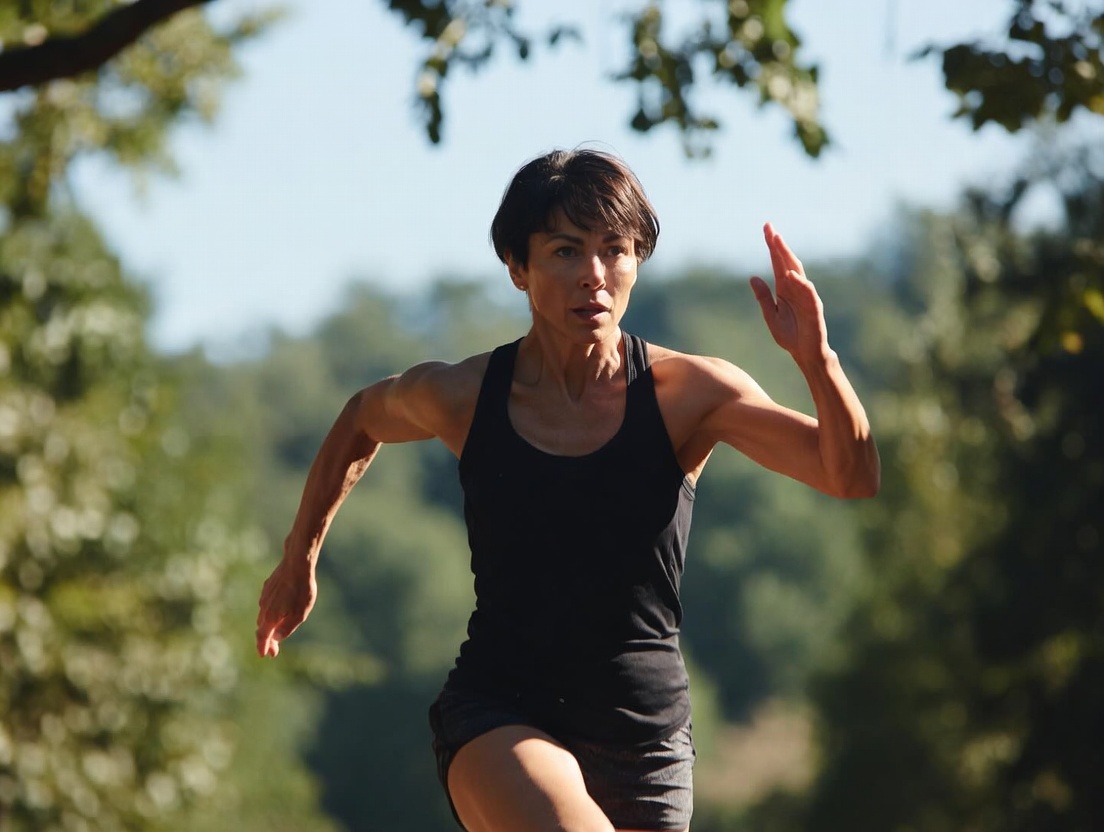
Static awareness is great, but movement reveals even more. Disciplines like yoga, tai chi, and qigong are essentially interoceptive training systems. They move you slowly and deliberately through shapes and postures, demanding constant attention to alignment, balance, muscle engagement, and breath.
This fusion of movement and awareness builds what somatic therapists call proprioception (sense of body position) and kinesthesia (sense of movement), which are intimately linked to interoception. It turns exercise from a purely external performance (burning calories, building muscle) into an internal dialogue, reducing injury risk and increasing mind-body integration.
Mealtime is a prime opportunity for interoceptive practice. Before eating, pause. Place a hand on your stomach. On a scale of 1 (ravenous) to 10 (painfully full), where are you now? Eat slowly, putting your utensil down between bites. Check in at the midpoint: Where is your scale now? The goal is to stop at a comfortable 6 or 7—satisfied, not stuffed. This simple practice recalibrates a system often hijacked by emotional eating, distracted eating, and external diet rules.
These gateways train you to catch the early signals—the first hint of stress, the initial pang of hunger, the subtle onset of fatigue. This early detection is the key to preventative health, allowing you to course-correct long before a minor issue becomes a major problem, such as preventing a poor night’s sleep by recognizing evening anxiety early, a strategy discussed in our piece on the hidden link between sleep quality and mental health.
Breathing is unique. It is an automatic function, yet instantly accessible to conscious control. This duality makes it the most powerful and direct bridge between the conscious mind and the autonomic nervous system. Every emotional and physical state has a corresponding breathing pattern: anxiety breeds short, chesty breaths; deep relaxation invites slow, diaphragmatic waves.
By changing your breath, you change your state. This isn’t metaphor; it’s biophysics. Slow, deep, rhythmic breathing with an extended exhale:
Most stressed adults are “chest breathers,” using accessory muscles in the neck and shoulders. Diaphragmatic breathing retrains this pattern.
This is not for during a panic attack (that’s a different skill). This is daily training, like going to the gym for your nervous system. A calm, resilient nervous system is the foundation for truly restful sleep, as a dysregulated system will struggle to achieve deep, restorative sleep stages, a fact confirmed by research on how poor sleep quality affects your health.
Discovered by researchers at Stanford, this is arguably the fastest chemical de-stressor available.
Used by Navy SEALs to stay calm under pressure, this technique equalizes all parts of the breath cycle.
Breath awareness teaches you that you are never helpless in the face of your physiology. You have a lever you can pull at any moment to shift your entire system toward equilibrium. This mastery directly translates to better sleep onset, as you can use the breath to quiet the mind and body at bedtime.

Sleep is not a passive state of unconsciousness. It is a highly active, orchestrated process of restoration, memory consolidation, metabolic cleanup, and neural repair. The quality of this process—your sleep architecture—is profoundly influenced by the state of awareness (or lack thereof) you carry from your waking life into bed.
If you spend your day disconnected, stressed, and “in your head,” you cannot simply flip a switch and enter deep, restorative sleep. Your nervous system is still revved, your mind racing. Body awareness practices are the essential winding-down protocol that bridges this gap.
Replace scrolling with sensing.
These rituals signal to your entire organism that it is safe to power down. They move awareness out of the cognitive brain and into the body, which is exactly where it needs to be for sleep initiation.
Your daytime body awareness directly predicts your night. By tuning in, you can identify and modify behaviors that sabotage sleep.
Ultimately, good sleep is the result of a day lived in relative balance, capped with a conscious transition into rest. It is the clearest feedback loop you have. A night of poor sleep is a message: something in your daily rhythm, stress management, or environment is off. Learning to decode this message through awareness, rather than just reaching for a sleep aid, is the path to sustainable sleep health. For a comprehensive look at what defines restorative rest, see our sleep quality checklist to see if you're getting truly restful sleep.
We are taught to think about our emotions, analyze them, talk about them. But we are rarely taught to feel them in the place they originate: the body. An emotion is, first and foremost, a physical event. Anger might be a hot face, clenched fists, and a pounding heart. Sadness might be a heavy chest, a lump in the throat, and tired limbs. Anxiety might be a fluttering stomach, tight shoulders, and shallow breath.
When we intellectualize emotions, we often get stuck in loops of rumination. When we feel them somatically, we allow them to move, change, and complete their natural cycle. This is emotional regulation at its most fundamental level.
When you notice a strong emotion arising, pause. Close your eyes if possible.
This practice builds distress tolerance—the ability to be with uncomfortable sensations without being overwhelmed by them. It prevents emotional suppression, which is a known contributor to both mental health issues and physical symptoms like pain and insomnia.
Chronic anxiety often correlates with a hyper-aware, but misinterpreted, interoceptive sense. A normal heart flutter is catastrophized as a heart attack. The physical sensations of excitement are mislabeled as fear. Body awareness practices, in this context, help you re-calibrate. You learn the landscape of your sensations so well that you can differentiate between a true threat and a benign, passing physiological event.
Depression, on the other hand, can be linked to interoceptive numbness—a disconnect from the body’s vitality. Gentle movement and sensation-focused practices can slowly reawaken the feeling of being alive, reconnecting you to sources of pleasure and agency that exist beneath the mood.
By becoming fluent in the physical language of your emotions, you reclaim agency over your inner world. This has a direct, positive knock-on effect on sleep, as pent-up, unprocessed emotional energy is a primary cause of nighttime rumination and waking up tired despite adequate hours in bed.
Chronic pain is one of the most complex challenges in modern medicine. Often, it persists long after tissue damage has healed. Why? Because the pain has become a learned pathway in the nervous system, amplified by stress, fear, and attention. Body awareness offers a revolutionary approach: changing your relationship to the sensation itself.
This is not about “mind over matter” or denying pain. It’s about sensory discrimination. Can you investigate the pain with curiosity? What is its precise location? Does it have a boundary? Is it throbbing, stabbing, aching, burning? Does it change with movement or breath?
This mindful investigation does two powerful things:
By learning to be with sensation without panic, you reduce the secondary suffering—the fear and tension about the pain—which often constitutes the majority of the misery. A calmer relationship with pain directly improves sleep, as pain-related anxiety is a major sleep disruptor. A quiet, observant mind is also better prepared for the descent into sleep, a state explored in our article on the science of sleep quality and what happens when you sleep well.
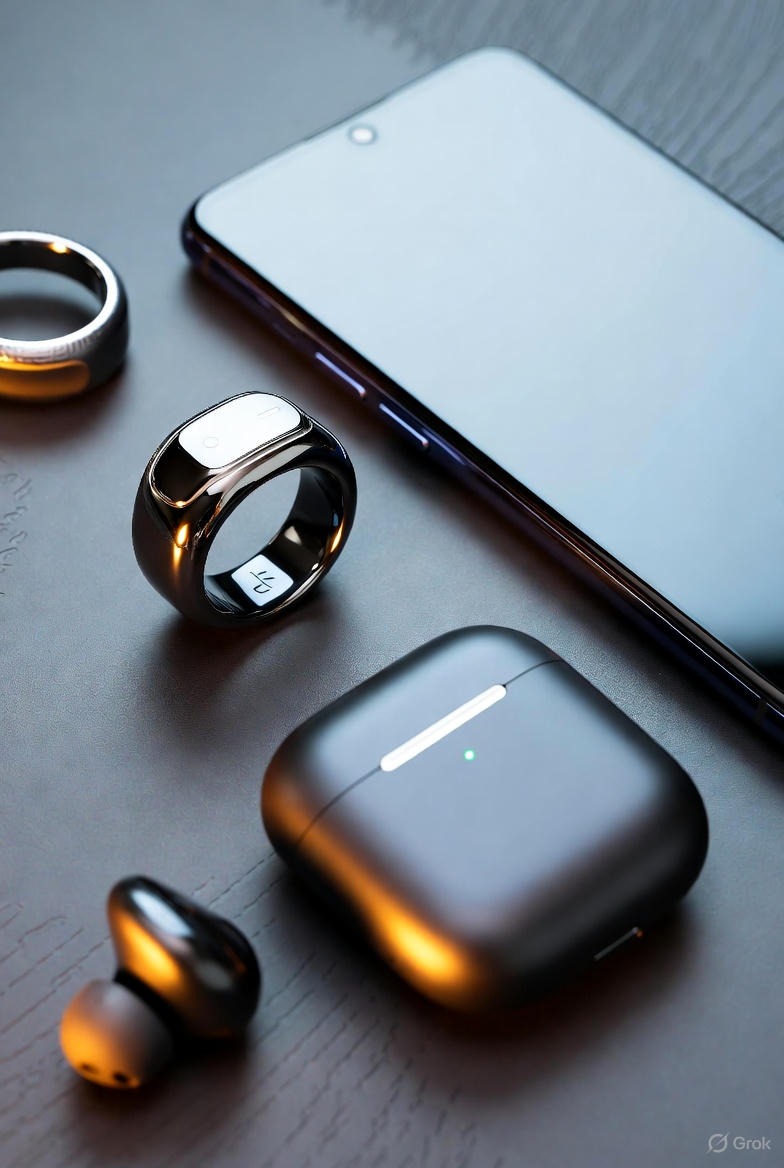
In our pursuit of quantified health, we risk outsourcing awareness to our devices. We check our smartwatch to see if we’re stressed, rather than noticing our clenched jaw. We look at a sleep score to know if we’re rested, rather than tuning into our own energy levels upon waking.
The key is to use technology as a mirror and validation tool, not an oracle. The most advanced wearables, like the latest generation of smart rings, provide objective data (HRV, skin temperature, movement) that can corroborate your subjective interoceptive insights.
This creates a powerful biofeedback loop:
Devices like smart rings are particularly powerful for this work because they are worn 24/7, capturing continuous physiological data without the need for active engagement (unlike a meditation app you must open). They can show you:
Technology, used wisely, closes the loop. It provides the “aha!” moments that validate and refine your inner sensing, accelerating the learning process. It turns abstract awareness into actionable insight.
The gut is often called the “second brain,” housing a vast network of neurons and producing a majority of the body’s serotonin. It communicates constantly with the brain via the vagus nerve. How you eat—with stress or with calm, in distraction or in attention—profoundly affects this communication and your overall health.
Transform one meal a day into an interoceptive ritual.
This practice improves digestion by activating the parasympathetic “rest and digest” state. It also builds an intuitive understanding of which foods truly nourish you versus which ones deplete you, going beyond generic diet rules.
While not a replacement for medical testing, heightened body awareness can be the first clue to food intolerances. Instead of vague “I don’t feel good,” you might notice: “Within 30 minutes of eating dairy, I feel mucus in my throat and my sinuses feel thick,” or “When I eat gluten, my joints feel achy and my brain gets foggy the next day.”
This detailed, sensation-based feedback is invaluable for personalizing your nutrition. It also highlights the gut-sleep connection: a digestive system working overtime at night can fragment sleep and reduce its restorative quality, a connection unpacked in our article on 10 factors that destroy sleep quality most people ignore.
The fitness industry often promotes a “no pain, no gain,” externally-focused mentality. Interoceptive exercise flips this script. The goal becomes moving in a way that feels good, sustainable, and aligned with your body’s needs on any given day, which maximizes benefits and minimizes injury.
Tune into your body’s signals, not just a target heart rate zone.
After a workout, instead of just checking calories burned, do a quick internal scan.
This feedback tells you if the type, intensity, and duration of your movement were truly beneficial for your whole system. It helps you design a movement practice that supports, rather than drains, your overall health and sleep quality.
We’ve covered a vast landscape of practices. The final step is integration—weaving these threads into the fabric of your daily life in a way that feels sustainable, not overwhelming. This is not about adding more to-dos; it’s about shifting the quality of attention you bring to existing activities.
Attach small awareness practices to established routines (a concept called “habit stacking”).
These micro-moments cumulatively rewire your brain for presence throughout the day.
Once a week, do a slightly longer review.
This cyclical practice of action, reflection, and gentle adjustment is the essence of embodied learning. It turns health from a fixed destination into a dynamic, intelligent conversation with yourself—a conversation that continuously optimizes your well-being, deepens your sleep, and enhances every health outcome that matters.
We are not islands of awareness. Our nervous systems are designed to be in dialogue with others—a process called co-regulation. From the moment an infant is soothed by a caregiver’s heartbeat to the calm we feel in the presence of a trusted friend, our physiological states are contagious. This isn’t just poetic; it’s a biological imperative rooted in the ventral vagal pathway of our social engagement system.
Body awareness, therefore, extends beyond the boundaries of our own skin. It involves tuning into the subtle, non-verbal cues of those around us and becoming aware of how our own embodied state affects the social field. This reciprocal attunement is a powerful, often overlooked, determinant of health.
When you sit with someone who is truly calm and present—their breath slow, posture open, gaze soft—your own nervous system begins to mirror that state. This is facilitated by mirror neurons, brain cells that fire both when we perform an action and when we observe someone else performing it. They apply to emotional states as well. By consciously cultivating a calm, grounded presence, you become a source of regulation for others, and in turn, their regulated state supports yours.
Practice: Attuned Listening. In your next conversation, shift your focus from just the words. Notice the other person’s body language, facial expressions, and tone of voice. Simultaneously, be aware of your own body. Are you leaning in or pulling away? Is your breath synchronized with theirs or held? Simply bringing this dual awareness to a social interaction transforms it from a cognitive exchange to a somatic, regulating experience. It deepens connection and reduces the physiological stress of social isolation.
Appropriate, consensual touch is one of the most potent forms of co-regulation. A hug from a loved one, a hand on the shoulder, or even a handshake can lower cortisol, increase oxytocin (the bonding hormone), and improve heart rate variability. In a touch-deprived culture, recognizing this need is a form of body awareness.
Practice: Conscious Connection. If you live with a partner, family, or close friend, introduce a simple ritual: a 20-second hug while both focusing on slow, synchronized breathing. This duration allows the body to shift into a parasympathetic state. For those without such contact, self-touch—like placing a hand over your heart or giving yourself a gentle arm squeeze—can activate similar pathways of self-soothing and safety.
Understanding co-regulation reframes health as a communal project. It highlights why loneliness is as damaging as smoking and why supportive relationships are a cornerstone of longevity. Your personal body awareness practices not only heal you but also equip you to be a healing presence in your wider circle.
A common fear is that turning attention inward during illness or pain will only amplify suffering. The opposite is often true. While body awareness is not a panacea, it transforms the experience of illness from one of helpless victimhood to one of participatory observation. It creates a critical distinction between the raw sensation and the secondary layer of fear, resistance, and story we add to it.
Instead of the instinctual “fight-or-flight” response to a symptom (“Oh no, this headache is ruining my day!”), you can practice “attend and befriend.”
This approach reduces the catastrophic thinking that exacerbates stress and can actually intensify pain perception. It allows you to make clearer decisions about self-care or seeking medical help from a place of calm discernment rather than panic.
For those with chronic illnesses like fibromyalgia, autoimmune disorders, or long-term pain, body awareness is a survival and thrival tool.
This nuanced self-knowledge is invaluable for managing health in partnership with medical professionals. You become a more accurate historian of your condition, providing clues that can lead to better treatment. Furthermore, the stress-reduction benefits of these practices directly support immune function and inflammation management, core factors in many chronic diseases.
Our environment and habits are often engineered to pull us out of our bodies. To cultivate awareness, we must first identify and mitigate these powerful forces.
Screens are the ultimate interoceptive interrupters. Endless scrolling traps us in a state of hyper-aroused cognitive processing while our bodies sit frozen, breath shallow. The constant barrage of notifications keeps our nervous system in a low-grade threat state, anticipating the next ping.
A mindset that values output over all else teaches us to override our body’s signals for rest, nourishment, and play. Pushing through fatigue with caffeine, ignoring hunger to meet a deadline, and glorifying sleeplessness are seen as badges of honor. This creates what researcher Emily Nagoski calls “human giver syndrome,” where we treat our body’s needs as an inconvenient obstacle to productivity.
Urban environments bombard us with noise, artificial light, and visual clutter. This sensory chaos makes it difficult to discern our internal state—it’s all just “noise.”
By strategically countering these saboteurs, you reclaim the cognitive and sensory space necessary for awareness to flourish. It’s an act of modern rebellion that yields ancient rewards: peace, presence, and health.
For those who have established a foundational practice, several advanced modalities can unlock deeper layers of healing and insight. These practices often work with the implicit memory stored in the body—patterns held from past experiences that influence present-day reactions.
Developed by Dr. Peter Levine, SE is based on the observation that animals in the wild discharge the massive energy of a life-threatening event through shaking, trembling, and deep breaths, thus avoiding trauma. Humans, with our advanced cognitive brains, often inhibit this discharge, leaving the energy trapped in the nervous system as PTSD, anxiety, or chronic pain.
The Feldenkrais Method uses slow, gentle, exploratory movements to bring awareness to habitual (and often inefficient) neuromuscular patterns. By moving in novel, non-habitual ways, you create new neural pathways, improving flexibility, coordination, and ease of movement.
This practice turns awareness inward to follow the body’s spontaneous impulses to move, sound, or rest. The mover closes their eyes and waits for an impulse arising from sensation, image, or emotion, then follows it without pre-planning. A witness holds compassionate space.
These advanced practices underscore that body awareness is a lifelong journey of discovery. They move beyond stress management into the realm of profound personal transformation and healing of entrenched patterns.
Our relationship with our body is not static. It evolves through life’s stages, each presenting unique opportunities and challenges for embodied awareness.
Children are naturally embodied—they live in their senses. However, modern childhood, with its increasing screen time and structured activities, can dull this innate gift. Parents and educators can foster interoception by:
Midlife often brings bodily changes—metabolic shifts, hormonal transitions (perimenopause, andropause), and the accumulation of physical stresses. This can trigger a sense of alienation from a body that no longer performs as it once did.
Aging inevitably involves loss: of strength, mobility, and sensory acuity. Fear of this decline can lead to a rejecting, fearful relationship with the body.
Across the lifespan, body awareness is the thread that allows us to meet each stage with responsiveness rather than resistance, adapting our self-care to our body’s current truth.
Returning to our theme of technology, the ultimate goal is to reach a state of informed intuition. Your wearable device and your interoceptive sense become collaborative partners in your health optimization.
The evolution looks like this:
Instead of a sleep score telling you “you slept poorly,” let it prompt a richer internal inquiry. “My deep sleep was low. Did I feel unrefreshed? (Yes). Did I drink alcohol or eat late? (Yes). Did I feel hot during the night? (Now that I think about it, yes).” This turns a simple score into a diagnostic dialogue between you and your body. For a detailed breakdown of what these scores mean, see our guide on understanding your sleep quality score.
This synergy is the future of personalized health: objective biometrics refining subjective awareness, and subjective awareness providing the context that makes raw data meaningful. It empowers you to move beyond generic health advice to a truly personalized protocol.
The benefits of a consistent practice extend far beyond traditional health metrics, seeping into every domain of human experience.
Burnout is, at its core, a profound disconnection from the body’s limits. Body awareness creates a sustainable rhythm.
Creativity doesn’t live solely in the mind; it emerges from the body. Writers get “gut feelings” about a story. Dancers and musicians know this intrinsically. For the rest of us, body awareness unlocks creative flow.
Empathy begins with interoception. To feel what another might feel (simulated in your own nervous system), you must first be able to feel yourself.
In these ways, body awareness stops being just a “health practice” and becomes a fundamental life skill—a way of inhabiting your humanity with more fullness, resilience, and connection.
The final, most important piece is sustainability. A practice that is rigid, guilt-driven, or overwhelming will fail. The goal is to weave awareness into your life with flexibility and kindness.
Anchor your day with tiny, non-negotiable rituals that serve as awareness checkpoints.
Your body has innate cycles. Fighting them drains energy; aligning with them conserves it.
You will forget. You will get lost in thought for days. You will ignore your body’s signals. This is not failure; it is part of the human experience. The practice is to notice this with kindness, not self-criticism.
Your body awareness journey is not a straight line to perfection. It is a spiral—sometimes you feel you’ve mastered a concept, only to encounter it again at a deeper, more challenging layer. This is progress. With each cycle, you strengthen your capacity to be present, to heal, and to thrive within the beautiful, complex, and wise vessel that is your body.
We have journeyed through the neuroscience of interoception, the regulation of the nervous system, practical toolkits for sensing, and the expansive ripple effects into sleep, emotion, pain, relationships, and creativity. Now, we step back to see the unified picture: Embodied Health is not a collection of isolated practices, but a dynamic, self-reinforcing ecosystem.
Imagine a triad. At one point is Awareness (the accurate perception of internal signals). At the second point is Regulation (the ability to skillfully respond to those signals to maintain equilibrium). At the third point is Expression (the outward flow of energy, creativity, and action from a regulated state). Health is the fluid movement between all three.
The practices we’ve detailed create virtuous cycles within this triad. Deepening awareness improves your regulatory capacity. Better regulation (e.g., a calm nervous system) sharpens awareness, as you’re not clouded by stress hormones. From this stable, aware center, expression becomes authentic, sustainable, and aligned. This is the state from which you can engage with life’s challenges without losing your center, enjoy deep, restorative sleep as a natural function, and experience vitality as your baseline.
This framework moves us beyond symptom-chasing. You’re not just “managing stress” or “trying to sleep better.” You are cultivating the fundamental operating system from which all health behaviors optimally emerge. It explains why simply being told to “get more sleep” often fails without the foundational capacity to down-regulate your nervous system at night, a principle we underscore in our guide on how to measure and improve sleep quality without a sleep lab.
Theory is essential, but integration is everything. Here is a flexible, non-prescriptive blueprint for weaving body awareness into the arc of your day, week, and month. Treat this not as a rigid schedule, but as a menu of options to experiment with.
Morning (Awakening & Anchoring):
Midday (Checking-In & Course-Correcting):
Evening (Unwinding & Integration):
Once a month, ask yourself bigger questions:
This cyclical approach ensures your practice evolves with you. It prevents it from becoming another static item on a to-do list and instead makes it a living dialogue with your changing self.
Even with the best intentions, you’ll encounter roadblocks. Here’s how to reframe and move through the most common ones.
Obstacle 1: “I don’t have time.”
Obstacle 2: “It’s selfish or self-indulgent.”
Obstacle 3: “I get distracted and then feel frustrated.”
Myth 1: “Body awareness means always feeling blissful and relaxed.”
Myth 2: “If I feel a negative sensation, focusing on it will make it worse.”
Myth 3: “This is just another form of navel-gazing that avoids real action.”
While the core practices are accessible to all, there are times when professional guidance is not just helpful, but essential. Seeking support is a profound act of body-aware self-care.
Seek a Somatic Therapist or Trauma-Informed Practitioner if:
Seek a Physical Therapist or Feldenkrais/Alexander Technique Practitioner if:
Seek a Certified Health or Wellness Coach if:
The right guide can help you navigate your unique inner landscape safely and effectively, accelerating your progress. They provide the co-regulation and expert perspective that can break through personal blind spots.
We stand at a fascinating crossroads in human health. On one path is external optimization: biohacking, nootropics, advanced wearables, and quantified self-metrics. On the other path is internal wisdom: ancient mindfulness, somatic practices, and intuitive living. The most profound future lies not in choosing one, but in their synthesis.
The Next Generation of Wearables: Future devices will move beyond simply reporting data to facilitating awareness. Imagine a smart ring that:
This turns the device from a passive reporter into an interactive awareness-training partner.
Personalized Medicine Meets Somatic Intelligence: As genetic testing and microbiome analysis become more sophisticated, the data they provide will be meaningless without the context of your lived, felt experience. Telling someone they have a genetic predisposition for anxiety is less helpful than teaching them to feel the early somatic signs of anxiety and regulate it. The future doctor or health coach will interpret your genetic and biometric data through the lens of your interoceptive reports.
The Cultural Shift: The hope is a broader cultural move away from “mind-over-matter” domination and toward “mind-with-matter” collaboration. This would value rest as much as productivity, sensing as much as thinking, and preventative self-care as much as reactive healthcare. It would reshape our workplaces, schools, and healthcare systems to support human biology rather than fight against it.
This extensive exploration boils down to a single, transformative invitation: Begin to relate to your body as your lifelong home, not as a machine you occupy or a project you need to fix.
A home requires attentive listening. You notice the subtle draft before the pipe freezes. You hear the creak on the stairs before the board breaks. You clean and maintain it not out of obligation, but out of care for your own safety and comfort. You decorate it to reflect who you are. You rest within its walls.
Your body is the same. The tight shoulder is the draft. The afternoon slump is the creak on the stair. The practice of body awareness is the ongoing, loving maintenance of your home. The breath is the fresh air you let in. The mindful movement is the respectful repair. The compassionate attention is the warmth that fills the rooms.
This shift in relationship—from adversary, object, or machine to home—changes everything. It transforms health from a battle to be won into a relationship to be nurtured. It turns practices from chores into acts of homecoming.
You will leave this home only once. For all the days until then, you have a choice. You can ignore its signals, let it fall into disrepair, and feel like a stranger within its walls. Or you can listen, care for, and cherish it. You can learn its unique language, its rhythms, its quirks, and its profound wisdom.
The practices, the science, the technology—all of it serves this one goal: to help you feel truly, vibrantly, and peacefully at home in yourself. That is the ultimate health outcome. From this embodied home, you can engage with the full spectrum of human experience—the joy, the challenge, the love, the loss—with resilience, grace, and an unshakable sense of being present for your own, precious life.
Start now. Not with an hour-long meditation, but with a single, conscious breath. Feel the air moving in. Feel it moving out. You have just taken the first step home.


