


Wearable Wellness 101: Common Mistakes to Avoid
Common pitfalls new users encounter with wearables and how to avoid them.
Common pitfalls new users encounter with wearables and how to avoid them.
%402x.svg)
In an age where we can quantify everything from our heart’s rhythm to our sleep’s deepest phases, wearable wellness devices—especially sleek, powerful smart rings—promise a revolution in personal health. They offer a crystal ball into our bodies’ inner workings, providing data to optimize sleep, manage stress, boost recovery, and unlock peak performance. The allure is undeniable: a personalized health dashboard, right on your finger.
But here’s the uncomfortable truth most marketing materials skip: Simply wearing a device doesn’t magically bestow wellness. In fact, without the right knowledge and approach, these powerful tools can lead to increased anxiety, misguided decisions, wasted money, and a phenomenon known as "data obsession fatigue." The path to empowered health is littered with the debris of good intentions gone wrong—a forgotten charger, a misunderstood heart rate variability (HRV) score, a relentless focus on a single metric that drowns out your body’s actual whispers.
This comprehensive guide is your map to navigating the pitfalls of the wearable wellness journey. We’ll move beyond the hype to explore the foundational principles of using a smart ring or similar device effectively. Whether you're a biohacker seeking an edge, a stressed professional chasing better sleep, or someone simply curious about their health trends, avoiding these common mistakes is the critical first step. This isn't just about what your ring can do; it's about how you can think, interpret, and act to create sustainable, restful living that the data merely reflects. Consider this your essential primer for transforming raw numbers into genuine, felt well-being.
The moment you sync your new smart ring and see the dashboard light up with graphs, scores, and percentages is exhilarating. There’s your Sleep Score: 82. Your Recovery Index: 76%. Your resting heart rate, HRV, respiratory rate, blood oxygen—it’s a flood of information. The first, and perhaps most seductive, mistake is to dive headfirst into this data ocean without a life vest, believing that more monitoring automatically equals better health.
We live in a culture that venerates metrics. We track steps, calories, likes, and productivity hours. It’s a short leap to believing our wellness can be wholly captured in a nightly readiness score. This is the Overload Obsession: the compulsive checking, the constant comparison (to your past self or, worse, to others online), and the subtle transfer of authority from your own bodily sensations to a numerical readout. You begin to feel tired only after your ring tells you your recovery is “low.” You dismiss a good day because your sleep score was 5 points below average.
The Data-Anxiety Loop
This obsession creates a neurotic feedback loop. Elevated stress from worrying about your data can actually worsen the very metrics you’re tracking. A poor night's sleep leads to anxiety about recovery, which spikes cortisol, which compromises the next night's sleep—a cycle perfectly documented, yet perpetuated, by your device. The tool designed to reduce stress inadvertently becomes its source.
From Information to Integration
The goal is not data collection; it’s data integration. Wisdom is the actionable insight derived from patterns over time, not the frantic daily fixation on single points. A single night of poor sleep is noise. A trend showing declining sleep quality over two weeks, correlated with increased work deadlines and late-night screen time, is a signal—that’s wisdom.
How to avoid this mistake:
Remember, a smart ring is a sophisticated mirror, reflecting your state. But staring endlessly at a reflection, analyzing every pore, doesn’t improve your skin. It’s the actions you take—the skincare, the nutrition, the restful living practices you adopt—that create the change the mirror then shows you. For a deeper understanding of moving from data to calm, our guide on tracking your calm offers a mindful framework.

Walk into any electronics store, and you’ll see it: the promise of effortless insight. "Just wear it!" the boxes proclaim. This leads to the second critical mistake: assuming the default settings and generalized algorithms of your wearable are perfectly tuned for you. You strap it on, sync it, and accept the one-size-fits-all health pronouncements it delivers. This is the "Set It and Forget It" Fallacy, and it guarantees you’re getting a generic, often inaccurate, picture of your unique physiology.
Smart rings and wearables are engineering marvels, but their initial algorithms are built on population averages. The "optimal" sleep window of 10 PM - 6 AM, the target of 10,000 steps, the blanket exercise recommendations—these are starting points, not holy writ. Your chronotype (night owl vs. early bird), your fitness level, your lifestyle, and your personal health history make you an outlier in the best possible way.
The Misleading Baseline
The first week of data a device collects is often used to establish your "baseline." But what if that week was atypically stressful, or you were on vacation, or fighting a cold? You’ve now anchored your "normal" to an abnormal period. Every subsequent measurement is compared to this flawed standard, potentially labeling normal days as "poor" and vice versa.
Personalization is Power
The true value of a wearable unlocks when you personalize it. This means:
Ignoring personalization turns your high-tech ring into a very expensive pedometer with a sleep guesser. By actively shaping its interpretation of your life, you transform it into a genuine partner in restful living. For those building a business around their passion, personalizing your recovery is non-negotiable; explore how entrepreneurs can sustainably build without burning out.
Your smart ring is a powerful sensor, but it is not omniscient. It captures a specific, albeit vital, slice of your biometric pie: primarily autonomic nervous system activity (through heart rate and HRV), movement, and sleep. The third major mistake is treating this data as the complete and final story of your health—a phenomenon we call The Silo Syndrome.
Imagine a farmer trying to predict the harvest by looking only at the rainfall gauge, ignoring sunlight, soil quality, and pest activity. He’d make poor decisions. Similarly, relying solely on your ring’s recovery score while ignoring nutrition, hydration, mental workload, and social connection gives you a dangerously incomplete picture. You might see a "High Readiness" score and push for a personal record in the gym, not realizing you’re emotionally drained from a relational conflict—a recipe for injury or illness.
The Holistic Health Ecosystem
True wellness exists at the intersection of multiple domains:
Your ring is blind to the pizza you ate at midnight, the crushing work presentation tomorrow, or the uplifting coffee chat with a friend. These factors, however, directly manipulate the metrics it does see.
Creating Your Integrated Dashboard
To avoid Silo Syndrome, you must become the integrator.
By breaking your wearable data out of its silo and integrating it into the full context of your life, you move from fragmented numbers to a coherent, actionable story of your well-being.
In the connected world of wearable tech, communities flourish. Online forums, social media groups, and leaderboards are filled with people sharing their impressive stats: "Hit a 90 Sleep Score for the first time!" or "My HRV is now consistently above 70ms!" While community support can be motivating, it dangerously fuels the fourth mistake: The Comparison Trap.
It’s human nature to compare, but in the realm of biometrics, it is scientifically meaningless and psychologically hazardous. Your HRV, resting heart rate, sleep architecture, and recovery metrics are as unique as your fingerprint. They are influenced by age, genetics, sex, fitness history, and even the size and placement of your heart. Comparing your numbers to someone else’s—especially influencers or elite athletes who may be the most vocal—is like comparing your home’s thermostat setting to your neighbor’s and wondering why your house feels different.
The Destructive "Why Not Me?" Cycle
Seeing others' high scores can trigger a demoralizing spiral: "Why is my deep sleep only 1.5 hours when theirs is 2.5? What am I doing wrong?" This mindset ignores foundational differences. A 25-year-old male triathlete will have a fundamentally different physiological profile than a 50-year-old female yoga practitioner. The trap makes you strive for an external, arbitrary standard that may be biologically inappropriate for you, leading to overtraining, anxiety, and disillusionment with your device.
Your Only Valid Benchmark: You
The only person you should be comparing yourself to is your past self. This is where wearables shine.
Escaping the Comparison Trap is fundamental to finding peace with your data. It transforms your wearable from a source of envy or insecurity into a private journal of your body’s unique language. It allows you to focus on your own journey toward restful living without the noise of external competition. For a powerful practice that shifts focus inward, see how gratitude can ground your perspective.
We want to believe our technology is infallible. The sleek, scientific interface of a smart ring app, with its precise-looking graphs to two decimal points, implies a level of accuracy akin to a hospital ECG machine. This belief leads to the fifth mistake: Accuracy Absolutism—taking every single data point as an unassailable truth and making drastic life changes based on a one-off reading.
It’s crucial to understand the fundamental technology. Smart rings use photoplethysmography (PPG)—flashing green LED light into your skin to detect blood volume changes—to derive heart rate, and from that, HRV and other metrics. This is ingenious, but it’s an estimate prone to more "noise" than a chest-strap ECG, which measures the heart's electrical activity directly. Factors like ring fit (too loose or too tight), skin temperature, tattoos, and even hand movement can introduce artifacts into the data.
The "Bad Night" Overreaction
A classic example: You wake up, check your app, and see a sleep score of 62 with very low deep sleep. You feel okay, but the data says you had a terrible night. You then cancel your morning workout, drink an extra coffee, and mentally prepare for a "rough day," all based on a potentially flawed reading. Perhaps the ring shifted during the night, or you slept in a position that compromised the signal. The device’s guess has now dictated your behavior and mood.
Adopting a Probabilistic Mindset
Treat your wearable data as a highly informed probability, not a certainty.
By relinquishing absolutism, you engage with your wearable as an intelligent guide, not an authoritarian oracle. This creates a flexible, responsive relationship with your data, preventing unnecessary anxiety and misguided actions. This balanced approach is a cornerstone of designing a life that avoids decision fatigue from information overload.

The wearable wellness world is intertwined with the biohacking community, where the allure of "biohacks"—ice baths, red light therapy, nootropic stacks, advanced sleep trackers—is powerful. This leads to the sixth, and perhaps most ironic, mistake: using a sophisticated device to chase complex interventions while blatantly ignoring the boring, foundational pillars of health. We call this The Neglect of the Fundamentals.
It’s like trying to fine-tune the fuel injection on a car that’s missing two tires and has no oil. Your smart ring will give you a mountain of data showing poor recovery, but if you’re chronically sleep-deprived, eating processed foods, and sedentary, no amount of magnesium threonate or morning sunlight will move the needle in a sustainable way. The device becomes a distraction from the obvious.
What Are the Non-Negotiables?
Your ring’s data is ultimately an output. The inputs that move it most reliably are profoundly simple:
Using Your Ring to Reinforce Basics, Not Replace Them
Your wearable’s true role here is as an accountability partner and feedback mechanism for these fundamentals.
Before you invest in another gadget or protocol, use your ring to audit and optimize these pillars. You’ll likely find that 80% of your results come from this 20% of effort. For a practical daily framework, our Restful Living Checklist outlines these essential, non-negotiable habits.
You wear the ring, you see the data, but what does it all mean? This is the core of the seventh mistake: The Misinterpretation Minefield. Without a basic understanding of the key biomarkers your device is tracking, you are navigating in the dark, likely drawing incorrect and sometimes harmful conclusions. Two metrics, in particular, are chronically misunderstood: Heart Rate Variability (HRV) and Sleep Stages.
Heart Rate Variability (HRV): The Stress Resilience Gauge
Sleep Stages: The Architecture of Restoration
Other Common Misreads:
Becoming a Literate User
To navigate this minefield:
Understanding these metrics transforms your ring from a confusing oracle into a clear communication device. It allows you to have a meaningful dialogue with your own body, a key step in achieving true **hormone balance and recovery](https://oxyzen.ai/blog/restful-living-and-hormone-balance-the-recovery-connection).
The data is only as good as the signal, and the signal requires consistent contact. The eighth mistake seems obvious but is incredibly common: Inconsistent Wear. You wear your ring religiously for a week, then forget it on the charger for a weekend trip. You take it off for sports, for washing dishes, or just because it feels odd some days. This sporadic usage creates a Swiss-cheese dataset that is worse than useless—it’s actively misleading.
Think of it like trying to understand a novel by reading only every third page. You’ll get fragments of plot, but you’ll miss character development, crucial twists, and the overarching narrative. Your body’s story is told in daily, weekly, and monthly rhythms. Gaps in data break those rhythms, making it impossible to see true trends or understand the cause and effect of your actions.
The Skewed Baseline Problem (Revisited)
Inconsistency exacerbates the personalization problem. If you only wear the ring on "good" days (when you remember, when you’re not too busy), your baseline becomes artificially inflated. The device thinks your normal is a series of perfect days, so when you finally wear it on a stressful, sleep-deprived day, it delivers a catastrophic score that may, in fact, be closer to your actual average under stress. This creates false panic and an inaccurate self-assessment.
The "Missing Context" Gap
Perhaps more importantly, the days you don’t wear it are often the most informative. That weekend of camping without electricity, the night out with friends, the day of a big presentation—these are high-impact events on your nervous system. By not wearing your device, you miss the opportunity to see how your body responds to and recovers from these real-life events, which is the entire point of having the tool.
Building the Habit of Consistency
Consistency turns anecdotes into evidence. It’s the commitment that allows your wearable to fulfill its promise: to show you the true, unfiltered story of your life’s impact on your body. For remote workers, making home a consistent sanctuary is part of this practice; learn how to design your space for focus and calm.
This mistake is the silent killer of wearable utility. You’ve avoided the traps: you wear it consistently, you understand the metrics, you don’t compare yourself. You have months of beautiful, consistent data painting a clear picture… and you do absolutely nothing with it. This is Action Paralysis: the state of being a passive archivist of your own health decline or stagnation.
The purpose of measurement is to inform change. If you see a three-month trend of decreasing sleep duration and increasing resting heart rate, that data is a call to action, not a museum exhibit. The ring is a compass, not the destination. Staring at a compass won’t get you anywhere; you must take a step.
Why We Freeze
Action Paralysis sets in for several reasons: overwhelm ("There’s too much to fix"), perfectionism ("I need the perfect plan"), fear of failure ("If I try to sleep more and fail, it’ll prove I’m broken"), or simple complacency ("Knowing is enough").
From Insight to Micro-Action
The antidote is the concept of micro-actions—small, almost laughably easy changes inspired by your data.
The "Experiment" Mindset
Frame every change as a two-week experiment, not a lifetime sentence. This reduces the psychological weight. "For the next 14 days, I will try drinking a large glass of water first thing in the morning and see how it affects my energy and afternoon alertness scores." You are now a scientist in your own life lab, with your ring as the primary measurement tool. This proactive, playful approach is what turns data into transformative habit change, helping to fundamentally change your relationship with time and productivity.
Beneath all the technical mistakes lies a deeper, philosophical one: wearing a device without a clear, personal Why. This is The Disconnection from Purpose. You got the ring because it was cool, because a friend had one, or because you vaguely want to "be healthier." Without a specific, emotionally compelling goal, your engagement will inevitably wane, and the device will become another discarded gadget in the drawer of good intentions.
"Why do I want this data?" is the most important question you can ask before and during use. The answer must be more profound than "to get a high score."
How Purpose Guides Use
Your "Why" dictates how you use the device and what you pay attention to.
When fatigue with the device sets in—and it will—reconnecting to your core purpose reignites motivation. It’s the difference between "Ugh, I have to wear this thing" and "I’m wearing this to gather information that helps me be the person I want to be."
Take time to write down your personal "Wearable Wellness Why." Revisit it monthly. Let it be the compass that ensures your journey with technology remains human-centered and meaningful. This alignment is especially vital when financial pressures mount; understanding the profound link between stress and money can clarify your purpose for seeking balance.
The final mistake in our exploration is a subtle, creeping danger for the dedicated wellness tracker: The Blind Spot for Joy. In the relentless pursuit of optimized scores—the perfect 90 sleep, the upward-trending HRV, the pristine daily step count—you can inadvertently engineer the spontaneity, pleasure, and occasional healthy wildness out of your life. You may skip a late-night conversation under the stars because it will "ruin your sleep score." You might avoid a spontaneous dance party or an extra glass of wine with a loved one because it doesn't fit the "protocol." This turns wellness from a path to a vibrant life into a rigid, joyless prison of metrics.
Your smart ring measures physiological states, but it cannot quantify laughter, connection, awe, or love. These experiences, while sometimes temporarily stressful to the nervous system (as joy can be arousing!), are fundamental to long-term health and resilience. A life perfectly optimized for biometric scores can be a lonely, monotonous one.
The Role of Planned Disconnection
To avoid this, you must sometimes choose to ignore the data in service of a richer life experience. This isn't negligence; it's wisdom.
The goal of wearable wellness should be to create a foundation of health that is robust enough to support a full, sometimes messy, and wonderfully spontaneous human life—not to create a brittle, optimized specimen that breaks at the slightest deviation from the plan. It’s about building capacity for both deep rest and deep engagement. For more on giving yourself permission for this balance, explore letting go of guilt around rest.
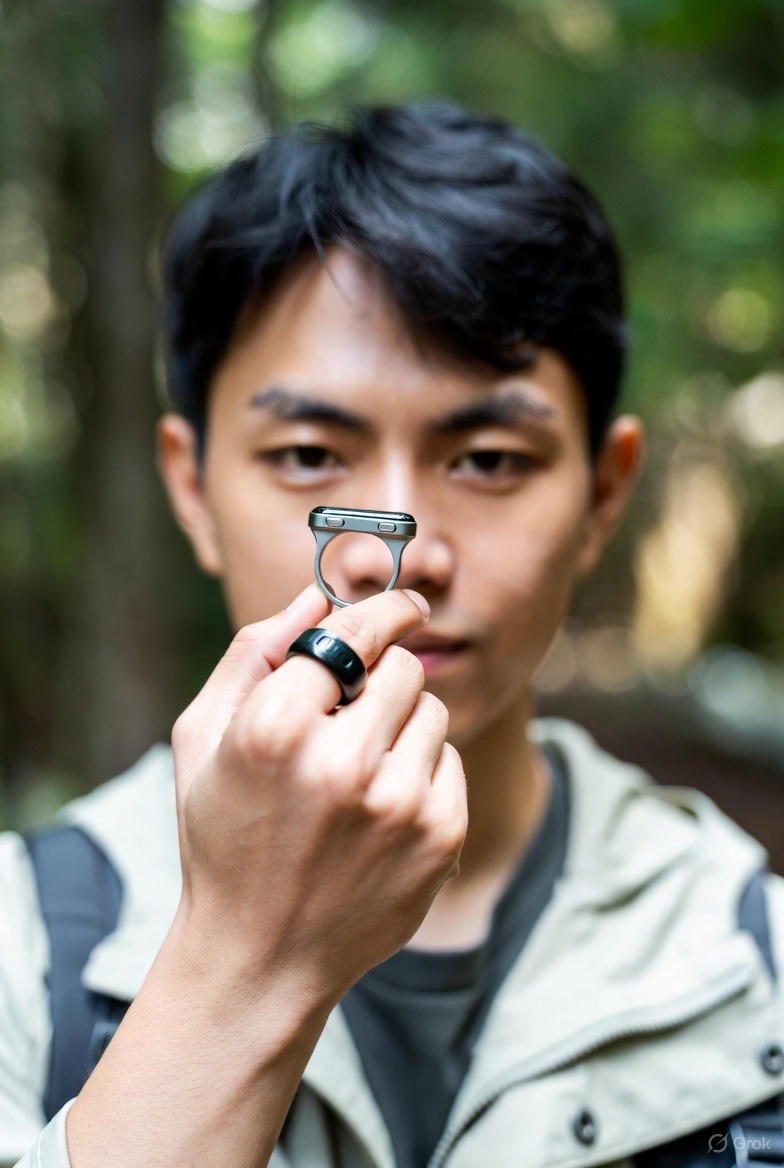
Your smart ring is a master of the internal landscape, diligently mapping your heartbeat, breath, and movement. But it is, by design, oblivious to the external world. The twelfth mistake is failing to manually input the critical Environmental Data that directly shapes your internal metrics. You become a passive recipient of scores without understanding the external forces acting upon you, leading to confusion and misattribution.
Think of your body as a ship and your ring as the instrument panel showing engine strain, fuel levels, and hull integrity. But if you don’t log the weather (a raging storm), the cargo load (a stressful project), or the port you just left (a conflict), the instrument readings are disembodied numbers. A spike in "engine strain" (elevated RHR) could be due to a storm (work crisis) or a mechanical fault (illness). Without context, you can’t respond correctly.
Key Environmental Factors Your Ring Can't Sense:
Becoming Your Own Biometric Detective
The tagging or journaling feature in your app is the bridge between your internal and external worlds. This is where you move from being a data subject to a data scientist.
By enriching your biometric data with this layer of subjective and environmental context, you solve mysteries. That "unexplained" dip in recovery is suddenly explained by the project kick-off meeting. This process cultivates profound self-awareness, a cornerstone of restful living, where you understand not just your state, but the triggers and supports for that state. For a structured way to assess your environmental and internal calm, our Restful Living Assessment can be a great starting point.
In the lexicon of wearable wellness, "Recovery" is a king metric. Most devices provide a daily Recovery or Readiness Score, synthesizing sleep, HRV, and RHR data into a single, tempting number. The mistake here is interpreting a high recovery score as a green light for maximum exertion and a low score as a mandate for total couch-bound inactivity. This binary view misses the nuanced, active nature of true recovery.
Recovery is not the absence of activity; it is the presence of positive, restorative processes. Your autonomic nervous system doesn't have an "on" switch (stress/sympathetic) and an "off" switch (rest/parasympathetic). It's a dial, and there are many positions between "sprint" and "coma."
The Spectrum of Recovery Activities:
Listening to the Nuance
A low score with high fatigue and muscle soreness screams for physical rest. A low score with mental exhaustion but physical freshness might benefit most from a nature walk and digital detox. Your subjective feelings are the essential decoder for the recovery score.
Using Your Ring to Practice Active Recovery
Let your device guide you toward restorative activities, not just away from destructive ones.
By redefining recovery as an active, intentional practice, you use your wearable to build a more resilient system, not just to avoid breaking it. This is the essence of building a lifestyle that prevents burnout and sustains performance, a key lesson in preventing decision fatigue through intelligent routine design.
We touched on misinterpretation earlier, but this mistake deserves its own spotlight due to its prevalence. Driven by the fascinating breakdown of light, deep, and REM sleep, users often fall into the trap of Sleep Stage Hyperfocus. They agonize over losing 10 minutes of deep sleep, obsess over achieving "perfect" stage percentages, and completely miss the larger, more impactful determinants of sleep health that their ring is also tracking.
Sleep stages, as estimated by a consumer wearable, are the output. Fixating on them is like trying to improve a factory's product by only polishing the finished items on the conveyor belt. The real leverage is in optimizing the factory's inputs and environment.
The Foundational Pillars (The Real Big Picture):
Your ring provides crucial, often under-noticed data on these pillars, which are more actionable and important than stage percentages:
A Better Use of Sleep Data:
By shifting focus from the fascinating but fickle details of stages to the robust architecture of sleep health, you make changes that have broad, reliable benefits. This approach fosters a healthier relationship with sleep itself, reducing performance anxiety around it and supporting the kind of **true weekend recovery](https://oxyzen.ai/blog/the-restful-living-weekend-true-recovery-in-two-days) that resets your system.
Your smart ring is a brilliant nocturnal device, but its insights are half-baked if you ignore the diurnal counterpart: your exposure to natural light and daily rhythm. This is a profound blind spot. The fifteenth mistake is using a wearable to analyze sleep and recovery while paying zero attention to the circadian rhythms that govern them. You're treating the symptom without addressing the root cause.
Your circadian rhythm is your body's 24-hour master clock, regulating sleep-wake cycles, hormone release (cortisol, melatonin), digestion, and even the expression of genes related to recovery. The primary "zeitgeber" (time-giver) that sets this clock is light, especially bright morning sunlight.
How Disrupted Rhythms Skew Your Data:
Using Your Wearable in Tandem with Circadian Hygiene:
You don't need your ring to measure light, but you can use its output to validate your circadian practices.
By syncing your lifestyle with natural light cycles, you align your biology with its evolutionary design. Your wearable will then reflect a body in harmony, not one fighting against its own rhythms. This synchronization is a fundamental principle for anyone, especially remote workers who can design their day around natural light.
In the age of social media, biometric data has become a new form of social currency. Sharing a screenshot of a perfect "90 Sleep Score" or a triumphant "HRV Personal Best" can garner likes, comments, and a sense of community validation. While sharing can be motivating, the sixteenth mistake is falling into The Oversharing & Under-Reflecting Trap, where the primary value of the data becomes external validation rather than internal insight.
This shifts the focus from self-improvement to performance for an audience. It can subtly:
From Broadcast to Journal
The most powerful conversations about your data should be with two people: yourself and, potentially, a trusted health coach or healthcare provider.
Your wearable journey is a intimate dialogue between you and your body. Turning that dialogue into a public monologue changes its nature. Protect the sanctity of that self-discovery process. For those seeking community, it's healthier to find one focused on shared practices and support rather than score-comparison; discover how to find your true support system.
The market is flooded with rings, watches, and bands promising similar insights. The seventeenth mistake is Blind Trust in Branding—assuming that because a device is popular, expensive, or well-marketed, its data is inherently accurate and its insights are valuable for your specific goals. Not all PPG sensors are equal. Not all algorithms are transparent. Not all devices are suited for all purposes.
Key Differentiators to Research:
Becoming an Informed Consumer
Making an informed choice prevents disillusionment. Investing in a device that aligns with your physiology and goals from the start sets you up for success, avoiding the frustration of inaccurate data or missing features. This prudent approach mirrors the wisdom in seeking financial wellness—making informed investments in your health today for long-term stability.
Fascinated by the data from your ring, you might be tempted to expand your quantified self-arsenal. A continuous glucose monitor (CGM), a whoop strap, an Oura ring, an Apple Watch, a dedicated HRV chest strap... The eighteenth mistake is "More Gadgets" Solutionism: the belief that adding more sensors and more data streams will solve the puzzle, when you haven't yet fully learned the language of your first and most important device.
This leads to "dashboard fatigue"—a cacophony of numbers from different ecosystems that may not even speak to each other. You spend more time syncing, charging, and comparing devices than you do integrating their insights into your life. The core principles of consistency, personalization, and action apply to one device or ten. If you haven't mastered them with one, adding more is just noise multiplication.
The Principle of Diminishing Returns
The first wearable (a good smart ring) gives you 80% of the actionable insights for 20% of the effort. It covers sleep, recovery, basic activity, and stress response. Each subsequent device adds incremental, niche data at the cost of significant complexity.
Mastery Before Expansion
Commit to a 90-180 Day Deep Dive with your primary wearable.
By mastering one tool, you develop the literacy and discipline to use additional tools effectively, integrating them into a coherent picture rather than a confusing pile of parts. This philosophy of depth over breadth is central to building sustainable habits, whether for entrepreneurs building a business or anyone crafting a life of calm effectiveness.
Algorithms are mathematical models of human physiology. You are a human. There will be times when your lived experience, intuition, and specific self-knowledge directly contradict what the algorithm declares. The nineteenth mistake is surrendering your autonomy to the machine—disregarding your capacity for Manual Override.
Your ring's algorithm doesn't know you broke up with your partner, are grieving a loss, are fighting off the onset of a cold, or are experiencing a hormonal shift. It only sees the physiological aftermath: elevated RHR, low HRV, restless sleep. It will dutifully give you a "Poor" recovery score. But you possess the context. You know that yesterday's "stress" was an emotional release, not a physiological drain. You might actually feel clearer and lighter, despite the data.
When to Override:
The previous section introduced the critical concept of Manual Override. Let's expand this into a full mindset, as it represents the culmination of wisdom in using wearable technology. The twentieth mistake is the failure to cultivate this mindset, remaining in a subservient, reactive relationship to your data.
Wearable data is a powerful input for decision-making, but it should never be the sole decider. You are the CEO of your health, and your ring is a trusted advisor—a brilliant, data-obsessed one—but an advisor nonetheless. The final responsibility for choices rests with you.
The Three-Step Override Protocol:
To formalize this, create a mental protocol when you see data that conflicts with your intuition.
1. The "Triangulate" Step: Don't look at a single metric. Gather multiple data points.
2. The "Contextualize" Step: Weave the data into the story of your life.
3. The "Execute & Observe" Step: Make your choice and use the device to learn from it.
Cultivating the Manual Override Mindset is the ultimate sign of maturity in your wearable journey. It means you have absorbed the lessons, understand the limitations, and are now using the tool to augment your innate body wisdom, not replace it. This empowerment is a direct path to a more restful relationship with time and your own decisions.
After the initial months of exciting discovery and rapid improvement, it happens: your graphs flatten. Your Sleep Score hovers around 78-82. Your HRV finds a comfortable range and stops climbing. Your resting heart rate bottoms out. This is the Plateau, and the natural but misguided reaction is Panic. The twenty-first mistake is interpreting this healthy stability as a failure or stagnation, leading to drastic, unnecessary interventions to "force" improvement.
In fitness, after newbie gains, progress slows. In wellness, after you address the low-hanging fruit (better sleep hygiene, consistent hydration, regular movement), your biomarkers reach a set point that reflects your current lifestyle, genetics, and age. This plateau isn't a problem; it's a success. It means you've built a stable, healthier baseline. The goal of wellness isn't infinite linear improvement—that's an impossible and stressful paradigm. The goal is to create a robust, resilient foundation and then maintain it amidst life's fluctuations.
The Wisdom of the Plateau:
What to Do On a Plateau:
Embracing the plateau with calm is a sign of advanced practice. It means you've moved beyond being driven by scores to being guided by them, using them as a steady compass rather than a carrot on a stick. This acceptance is a profound form of restful living without guilt.

This mistake is logistical but devastating to data quality. It’s the Charging & Care Chasm—neglecting the basic maintenance of your device, leading to poor performance, data gaps, and ultimately, device failure. A smart ring is a sophisticated piece of electronics constantly exposed to sweat, soap, impacts, and temperature changes. Treating it with casual disregard guarantees it will fail you.
The Pillars of Device Integrity:
The Cost of Neglect:
Respecting your device as a precision tool, not a disposable toy, is a non-negotiable part of the wearable wellness contract. This small discipline ensures the data you rely on is trustworthy, which is the first step in any meaningful measurement of your calm and progress.
Wearable wellness can feel like a solitary pursuit. You stare at your private data, make personal adjustments, and track your solo progress. The twenty-third mistake is keeping this journey entirely to yourself—the Solo Journey Fallacy. Your lifestyle, especially your sleep and stress, doesn't exist in a vacuum. It's deeply intertwined with the people you live with: partners, roommates, family.
Why Involving Others is Critical:
How to Integrate Your Wearable into Your Relationships:
By bringing your wearable journey into your social ecosystem, you create an environment that supports your goals. This transforms your personal optimization project into a shared investment in a healthier, more harmonious home life, which is perhaps the most powerful wellness intervention of all.
In the glow of the dashboard, it's easy to become digitally myopic. The twenty-fourth mistake is Neglecting Non-Digital Biomarkers—the ancient, analog signals your body has been sending you long before smart rings existed. These are the subtle cues that, when paired with your quantitative data, create an unparalleled level of body literacy.
Your ring can't measure these, but you can. They include:
Creating Your Integrated Health Journal:
Pair your app's data with a simple daily note on these analog biomarkers.
Honoring these non-digital signals ensures you remain the primary instrument of your health assessment. The wearable is a valuable satellite sensor, but you are the core mission control. This integrated awareness is key to understanding how restful living enhances broad physical health markers beyond just heart rate and sleep.
We are wired to seek progress. We love upward-trending lines. But biology, and life, are not linear. They are cyclical, seasonal, and responsive. The twenty-fifth mistake is the Expectation of Linearity—the belief that with consistent "good" behavior, your health metrics should improve in a smooth, unbroken upward trajectory. When they inevitably dip due to factors outside your control, this expectation leads to frustration and self-blame.
The Natural Cycles That Disrupt Linearity:
Adopting a Cyclical, Compassionate Mindset:
Letting go of linearity is an act of self-compassion. It allows you to work with your body's natural rhythms, not against them. You start to see your data as a dynamic, living map of your engagement with the world, full of meaningful peaks and valleys, rather than a report card. This acceptance is a masterclass in finding calm and support within a community that understands life's non-linear nature.
The mind-body connection is not a metaphor; it's a physiological reality. Your beliefs and expectations directly influence your biology. In the context of wearables, this manifests as powerful Placebo and Nocebo Effects, which constitute the twenty-sixth mistake if ignored.
Harnessing the Placebo, Disarming the Nocebo:
By understanding these psychological effects, you prevent your wearable from becoming a source of psychosomatic distress. You harness its power to motivate positive change while inoculating yourself against its potential to create negative outcomes. This mindful approach is central to using any tool for enhancing creativity and inspiration through balanced living.
We conclude this first third of our exploration with the ultimate goal and the final mistake to avoid: perpetual Device Dependence. The long-term aim is not to need your ring to tell you how you feel. The aim is to use it as a training tool to cultivate such sharp Embodied Wisdom that its readings become a periodic confirmation of what you already know, not a revelation.
The journey has stages:
Signs You're Cultivating Embodied Wisdom:
How to Foster This Integration:
This is the beautiful paradox of mastering wearable wellness: you use a piece of technology to ultimately transcend your need for it, arriving at a more intimate, trusting, and knowledgeable relationship with your own miraculous biology. This is the essence of a life lived not by numbers, but by nurtured, informed vitality—a true state of restful living, where your sanctuary is within and around you.
Your Trusted Sleep Advocate: Sleep Foundation — https://www.sleepfoundation.org
Discover a digital archive of scholarly articles: NIH — https://www.ncbi.nlm.nih.gov/
39 million citations for biomedical literature :PubMed — https://pubmed.ncbi.nlm.nih.gov/
Experts at Harvard Health Publishing covering a variety of health topics — https://www.health.harvard.edu/blog/
Every life deserves world class care :Cleveland Clinic - https://my.clevelandclinic.org/health
Wearable technology and the future of predictive health monitoring :MIT Technology Review — https://www.technologyreview.com/
Dedicated to the well-being of all people and guided by science :World Health Organization — https://www.who.int/news-room/
Psychological science and knowledge to benefit society and improve lives. :APA — https://www.apa.org/monitor/
Cutting-edge insights on human longevity and peak performance:
Lifespan Research — https://www.lifespan.io/
Global authority on exercise physiology, sports performance, and human recovery:
American College of Sports Medicine — https://www.acsm.org/
Neuroscience-driven guidance for better focus, sleep, and mental clarity:
Stanford Human Performance Lab — https://humanperformance.stanford.edu/
Evidence-based psychology and mind–body wellness resources:
Mayo Clinic — https://www.mayoclinic.org/healthy-lifestyle/
Data-backed research on emotional wellbeing, stress biology, and resilience:
American Institute of Stress — https://www.stress.org/


