


How Your Wellness Ring Helps You Identify Your Most Important Daily Habits
Explains how your ring helps you pinpoint which daily habits have the greatest impact on your health.
Explains how your ring helps you pinpoint which daily habits have the greatest impact on your health.
%402x.svg)
You slip it on in the morning, a sleek band of titanium or ceramic, and for the rest of the day, you barely notice it’s there. Yet, on your finger, a universe of data quietly hums to life. Your wellness ring—a device no larger than a piece of jewelry—is cataloging the subtle rhythms of your body: the steady drum of your heart, the rise and fall of your breath, the silent symphony of your nervous system. This isn't just another gadget; it's a personal biometrical historian, chronicling the story of your day long before you have the words to tell it.
For decades, the pursuit of better health has been shrouded in guesswork and generic advice. Drink eight glasses of water. Get eight hours of sleep. Exercise for 30 minutes. But what if your body’s ideal formula is uniquely yours? What if your optimal sleep isn’t eight hours, but seven hours and twenty-three minutes of specific sleep cycles? What if that afternoon slump isn’t about caffeine but a subtle imbalance in your heart rate variability? Generic advice fails because it ignores the individual—the unique biological fingerprint that dictates how you respond to stress, nutrition, movement, and rest.
This is the paradigm shift brought by the modern wellness ring. It moves us from prescription to discovery, from following rules to understanding patterns. The true magic isn't in the raw data it collects, but in its power to illuminate the hidden cause-and-effect relationships that govern your wellbeing. That third cup of coffee at 2 PM? Your ring might show you how it elevates your resting heart rate well into the evening, fragmenting your deep sleep. That intense workout you powered through on four hours of sleep? The data could reveal a prolonged recovery time and a compromised immune response, making you more susceptible to catching that office cold.
The journey to optimal health is not about monumental, overnight transformations. It is built, brick by brick, through the consistent repetition of daily habits. These habits are the architecture of our lives, yet so many of them operate beneath the threshold of our conscious awareness. We are creatures of routine, but often blind to the true impact of those routines. A wellness ring serves as your objective, 24/7 personal observer, cutting through perception and revealing the factual impact of your choices. It helps you transition from asking, “What should I be doing?” to asking the far more powerful question: “What is my body actually telling me?”
This article is your guide to becoming fluent in that language. We will embark on a deep exploration of how this discreet device on your finger can decode the most critical areas of your life. We will move beyond simple step counts and sleep scores, delving into how biometrics illuminate the connections between stress and digestion, activity and recovery, circadian rhythm and mental clarity. This is about empowering you to identify, refine, and master the daily habits that form the unshakable foundation of a vibrant, resilient, and thriving life. Let’s begin by understanding the very engine of this discovery: the sophisticated technology packed inside your ring.
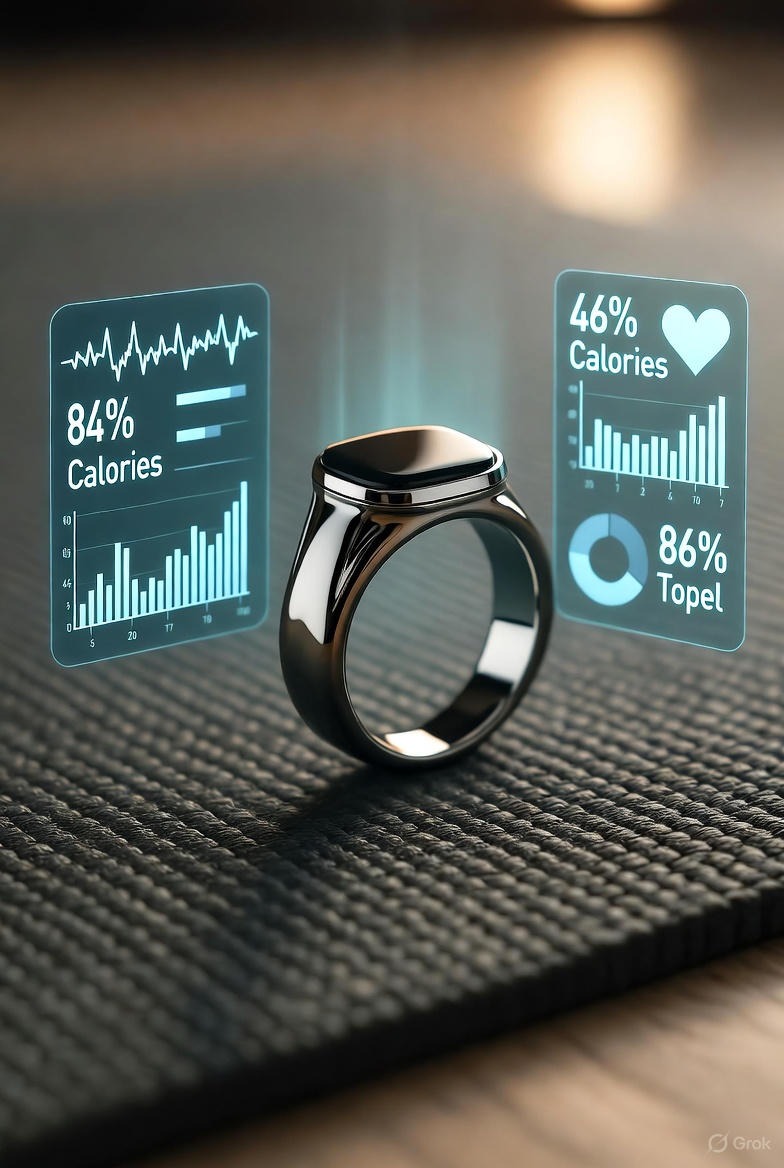
Before we can interpret the messages, we must understand the messenger. A wellness ring is a masterpiece of miniaturized engineering, a clinical-grade lab shrunk to fit comfortably on your smallest finger. Unlike a smartwatch that sits on the vascularly sparse wrist, the finger is home to rich, dense capillary beds. This prime location allows sensors to capture clearer, more medically accurate signals with less interference from motion—a critical advantage for 24/7 wear.
At its core are three primary technological pillars. First, Photoplethysmography (PPG) sensors pulse invisible green and infrared light into the skin. As your capillaries expand and contract with each heartbeat, they absorb and reflect this light differently. By measuring these minute changes thousands of times per second, the ring constructs a detailed waveform of your pulse, the foundational datastream from which nearly all other metrics are derived.
Second, a 3-axis accelerometer and gyroscope act as a precise motion detective. They don’t just track steps; they differentiate between typing, walking, running, and the micro-movements of sleep. They can discern the rhythmic breathing of meditation from the restless fidgeting of anxiety, and identify the specific phases of sleep based on your body’s complete stillness or subtle shifts.
Third, a skin temperature sensor monitors the subtle fluctuations of your peripheral temperature. This isn't about telling you if you have a fever. It’s about tracking your body’s circadian thermostat, which naturally dips at night to initiate sleep and rises in the morning to promote wakefulness. It can also reveal deviations caused by illness, intense stress, or hormonal cycles.
But raw data is just noise. The true genius lies in the fusion algorithm. This is the ring’s “brain,” where data streams from the PPG, accelerometer, and temperature sensor are woven together, cross-referenced, and cleaned of artifacts. It’s this synthesis that transforms a jumble of numbers into meaningful metrics: Heart Rate (HR), Heart Rate Variability (HRV), Respiratory Rate, Blood Oxygen Saturation (SpO2), and Body Battery or Readiness Scores.
HRV, perhaps the most insightful of these, deserves special attention. It measures the millisecond variations between your heartbeats. Contrary to intuition, a higher HRV is generally better—it indicates a resilient, adaptive autonomic nervous system. Your heart isn't a metronome; it’s a responsive conductor, subtly speeding up and slowing down in response to breath, thought, and stress. A high HRV suggests your body is well-recovered and ready for challenge; a low HRV can be a flag for overtraining, poor sleep, or elevated stress.
This continuous, multimodal tracking creates something revolutionary: your biological blueprint. It’s a dynamic, living map of your baseline and your deviations. Your ring learns your normal range for HRV, your typical sleep duration, your daily temperature curve. Once this personalized baseline is established (usually over 2-4 weeks), the ring becomes exquisitely sensitive to deviations. It can detect when you’re fighting off an infection before symptoms appear, see the impact of a stressful meeting on your nervous system, or confirm how a new bedtime ritual improves your sleep depth. It is this personalization that elevates it from a generic tracker to your unseen biological observer, silently compiling the evidence you need to identify your most transformative habits.
With an understanding of the technology, we can now learn to interpret its rich vocabulary. The dashboard of a wellness ring presents more than just numbers; it offers narratives about your physical and mental state. Let’s decode the key signals and understand the daily habits they influence.
Heart Rate Variability (HRV): The North Star of Recovery and Resilience. Think of HRV as your body’s readiness score. A strong, high HRV (relative to your personal baseline) is like a flexible bamboo tree bending in the wind—it signifies a robust and adaptive nervous system. It tells you your body is well-recovered, resilient to stress, and primed for physical or mental exertion. A dipping HRV, however, is a clear signal. It can indicate inadequate sleep, emotional strain, physical overtraining, or the onset of illness. For habit formation, tracking HRV teaches you what truly replenishes you. Does a 20-minute mindfulness session raise your next-morning HRV? Does a heavy evening meal lower it? It directly links daily choices to your systemic resilience.
Resting Heart Rate (RHR): Your Metabolic and Cardiovascular Barometer. Your RHR, best measured during deep sleep or just upon waking, is a profound indicator of cardiovascular fitness and metabolic efficiency. A downward trend over time is a classic sign of improved aerobic fitness. But daily spikes are equally telling. An elevated RHR can be your body whispering about dehydration, lingering inflammation from a tough workout, high stress levels, or even excessive alcohol consumption the night before. Monitoring RHR helps you identify habits that strain or strengthen your most vital muscle.
Respiratory Rate: The Window to Your Stress and Recovery State. Often overlooked, the number of breaths you take per minute is a vital sign. During the day, a elevated respiratory rate can be a pure, unmediated sign of stress or anxiety, often noticed even before you consciously feel “stressed.” During sleep, it’s a critical marker of quality. Irregular or increased breathing during sleep can point to disruptions like sleep apnea or restless sleep, directly impacting next-day fatigue. Noticing that your breathing rate settles after a walk outside can cement the habit of daily movement for mental calm.
Skin Temperature: Tracking Your Circadian Rhythm and Health Shifts. Your peripheral temperature follows a predictable circadian rhythm. By tracking its gentle nightly dip and morning rise, your ring can help pinpoint your ideal biological bedtime and wake window—a cornerstone habit for energy. Furthermore, a sustained elevation in your nightly temperature, even a fraction of a degree, is one of the earliest and most reliable biomarkers of an oncoming infection, immune activation, or a significant stress response. It’s an early-warning system, encouraging the immediate habit of rest and hydration.
Sleep Staging: The Architecture of Restoration. Modern wellness rings provide a nuanced analysis of your sleep architecture: Light, Deep, and REM sleep. Each stage serves a non-negotiable purpose. Deep sleep is for physical restoration and immune function; REM sleep is for memory consolidation and emotional processing. The ring doesn’t just give you a duration; it gives you a quality score. You can see how habits like late-night screen time truncate your REM sleep, or how consistent bedtimes increase your deep sleep percentage. This transforms the vague goal of “sleep better” into the specific habit of “protect my deep sleep window by finishing dinner three hours before bed.”
By learning to read these signals in concert, you stop chasing generic metrics. You start listening to a coherent story about your energy, stress, and recovery. This foundational knowledge is what allows you to move to the most critical application: using this data to conduct personalized experiments on your own life. For a deep dive into interpreting these nocturnal signals, our complete guide to understanding sleep health explores each stage in detail.
Armed with the ability to decode your body’s signals, you graduate from a passive subject of your habits to an active scientist of your own life. This is the essence of the Habit-Data Feedback Loop—a dynamic process of intervention, measurement, and refinement that turns intention into lasting, positive change.
The loop operates on a simple but powerful cycle: 1. Implement a Habit, 2. Measure the Biometric Impact, 3. Refine and Repeat. Traditional habit formation relies on willpower and vague feelings of success (“I feel better maybe?”). The feedback loop replaces ambiguity with objective evidence. It closes the gap between action and outcome, which is often too delayed or subtle for our conscious perception to notice.
For example, let’s say you decide to implement a new habit: “I will stop consuming caffeine after 12:00 PM.” You commit to this for two weeks. In the old model, you might think you sleep a bit better, but it’s subjective and easily dismissed. With your wellness ring, you enter an experiment. After the two-week period, you analyze the data. The results might show:
This is irrefutable, personal evidence. The data confirms the habit’s value, transforming it from a guess into a grounded, non-negotiable part of your routine. Conversely, you might test a habit like a 15-minute evening meditation. If the data shows no meaningful change in sleep quality or morning HRV, it doesn’t mean meditation is useless—it might prompt you to refine the experiment. Perhaps you try it in the morning instead, or switch to a gentle stretching routine, and then see a positive biometric shift.
This methodology applies to every domain:
The ring removes the dogma. It answers the perennial questions: “Is this working for me?” and “What is the optimal version of this habit for my body?” By engaging in this continuous loop, you cultivate a mindset of curious self-awareness. Your daily life becomes a living laboratory, and each day’s data is a result informing your next, better experiment. This process naturally leads you to the most fundamental layer of all health and habit formation: the irreplaceable role of sleep, which we will explore next. To assess where you’re starting from, you can use this simple self-test for your current sleep health.

If daily habits are the bricks of wellbeing, sleep is the unshakable foundation upon which they are all laid. There is no single daily habit with a more profound and far-reaching impact on every aspect of your physiology and psychology. Your wellness ring transforms sleep from a mysterious, passive state into a rich, analyzable performance—providing the ultimate feedback on how your waking hours either support or sabotage your restoration.
A sophisticated ring doesn't just tell you how long you slept; it dissects the architecture of that sleep. By analyzing movement, heart rate, and heart rate variability, it estimates time spent in Light, Deep, and REM sleep. Each phase is crucial. Deep sleep is your physical repair shop, when tissue growth and repair occur, and the immune system is fortified. REM sleep is your mental and emotional clean-up crew, essential for memory consolidation, learning, and processing emotions. Your ring shows you not just if you got these stages, but when and for how long, revealing patterns invisible to you.
One of the most critical metrics your ring provides is sleep consistency. Going to bed and waking up at wildly different times each day, even if you get the same total hours, is like giving your body constant jet lag—a state known as social jetlag. Your ring’s sleep timeline visually highlights this inconsistency, making a compelling case for the habit of a fixed sleep schedule, arguably more important than the duration itself.
Furthermore, your ring tracks key qualitative metrics:
But the most powerful insights come from correlation. Your ring allows you to see the direct lines drawn from your daytime choices to your nighttime data. That late-afternoon espresso? It might correlate with a lower deep sleep percentage. That difficult conversation before bed? It could show up as a elevated resting heart rate for the first half of the night. That 30-minute walk in nature? It might correlate with higher sleep efficiency and a more robust HRV during sleep.
This makes sleep the ultimate feedback mechanism for all other habits. You can literally see the cost of poor habits and the dividend of good ones paid out in the currency of your restoration. By focusing on sleep as your primary health habit, guided by data, you create a virtuous cycle: better sleep improves recovery, mood, and decision-making, which makes it easier to maintain other healthy habits, which in turn leads to even better sleep. To understand why this foundation is so critical, explore why sleep health matters more than you might think.
Stress is not a monolithic enemy; it’s a spectrum of physiological responses. Eustress (positive stress) motivates and energizes us, while chronic distress depletes and harms us. The challenge is that our perception of stress is often flawed—we might ignore simmering anxiety or misattribute feelings of exhaustion. Your wellness ring cuts through this subjectivity, providing an objective Stress Signature by primarily tracking your autonomic nervous system (ANS) balance through HRV and resting heart rate.
Your ANS has two branches: the sympathetic (fight-or-flight) and the parasympathetic (rest-and-digest). Chronic stress tips the scale toward sympathetic dominance, which manifests biologically as a suppressed HRV and an elevated resting heart rate. Your ring detects this imbalance in real-time. Many devices offer a continuous stress score throughout the day, a graph that shows your nervous system’s reactions to meetings, commutes, family time, and relaxation.
This objective data helps you identify your unique stress triggers with precision. You may feel that work is stressful, but your ring could reveal that your highest stress peaks actually occur during your unstructured weekend afternoons, or that a particular colleague’s name in your inbox causes a measurable dip in your HRV. Conversely, you might dread your weekly presentation, but the data could show you recover from it quickly, indicating it’s a manageable, eustress challenge.
More importantly, the ring illuminates your recovery patterns. What truly brings your nervous system back to balance? Does a 10-minute breathing exercise after work lower your stress score faster than scrolling through social media? Does a walk in the park shift your ANS into parasympathetic mode more effectively than watching TV? The data provides clear answers.
By analyzing your daily stress signature, you can build habits that act as preemptive strikes and strategic recoveries:
Understanding your stress signature allows you to move from being a victim of stress to being a manager of your nervous system. It turns the vague goal of “stress less” into specific, data-informed habits like “implement a 4-7-8 breathing protocol when my stress score exceeds 70 for more than 30 minutes.” This management of energy and recovery is directly tied to how you fuel your body, which is our next focus.
We often think of energy in terms of calories—a simple input/output equation. But true physiological energy, the kind that powers focus, resilience, and vitality, is a complex biochemical process. Your wellness ring acts as an external auditor for this internal energy economy, showing you how your inputs (food, drink, movement) directly affect your outputs (recovery, readiness, metabolic markers).
Nutrition’s Delayed Echo. The impact of a meal reverberates for hours. Your ring can capture this echo in several ways:
By tagging meals in your app and observing these biometric responses, you move from dieting by dogma to eating by effect. You learn that for your body, a breakfast high in protein leads to more stable energy (reflected in a steady stress score), while a carb-heavy lunch leads to a 3 PM crash and elevated evening heart rate.
Hydration: The Silent Catalyst. Even mild dehydration has a profound biometric signature. It increases heart rate (as your blood becomes thicker and your heart works harder), decreases HRV, and can elevate your body temperature. Your ring can serve as a powerful reminder. If you see an unexplained midday spike in your RHR or a drop in your HRV, your first intervention should be a large glass of water. Tracking the subsequent normalization of your metrics reinforces the habit of proactive hydration.
Activity: Strain vs. Gain. The relationship between exercise and recovery is not linear. More is not always better. Your ring’s activity and readiness scores are designed to illustrate this balance. A hard workout creates a positive strain, which should be followed by a period of recovery where your HRV dips and your RHR may slightly rise—this is normal. The problem arises when you impose another high strain before recovery is complete. The ring’s data helps you practice strategic variation. It can show you that a day of high activity is best followed by a day of active recovery (like walking or yoga) to see your metrics bounce back stronger, preventing the downward spiral of overtraining.
By observing the Energy Equation through your biometrics, you learn to fuel and move your body not based on a rigid schedule, but based on its real-time needs and capacity. This creates a harmonious cycle where nutrition and activity support recovery, and recovery enables higher-quality activity. This intricate dance is governed by a master clock that we will examine next: your circadian rhythm.
You have a master clock—a 24-hour biological timer known as your circadian rhythm—that governs nearly every process in your body: from hormone release and digestion to cell repair and cognitive function. Fighting this rhythm is like swimming against a powerful current; aligning with it is like catching the tide. Your wellness ring provides a stunningly clear window into this rhythm, primarily through the analysis of core body temperature and heart rate patterns.
Throughout a 24-hour cycle, your body temperature isn’t constant. It reaches its peak in the late afternoon and hits its lowest point in the early morning hours, typically around 4-5 AM. This temperature drop is critical for initiating and maintaining deep sleep. Your ring’s skin temperature sensor tracks this curve. A healthy, aligned rhythm shows a smooth, predictable wave. A disrupted rhythm appears jagged, flattened, or phase-shifted.
Your daily habits are the primary levers that set and reset this clock. The ring allows you to see their direct impact:
By analyzing your temperature and sleep data, your ring can help you identify your personal chronotype tendencies—whether you’re naturally more of a “lark” or a “night owl”—and suggest optimal windows for key habits. It might reveal that your biological prime time for focused work is from 10 AM to 12 PM, when your temperature is rising. It might show that your optimal workout window for strength is in the late afternoon when your body temperature, coordination, and reaction time peak. And it will certainly highlight your ideal wind-down and bedtime based on when your temperature naturally begins its descent.
Aligning your habits with this rhythm is the ultimate form of biohacking. It means scheduling your most demanding cognitive work, your exercise, your meals, and your relaxation at times when your biology is primed to support them. This alignment reduces systemic stress, improves metabolic health, and deepens sleep, creating a powerful, self-reinforcing cycle of vitality. As we align our days, we must also consider the critical process of unwinding, which leads us to the science of recovery.
In a culture that often glorifies “grinding” and constant output, the concept of strategic recovery is revolutionary. True fitness and resilience are not built during the stress of a workout or a busy workday; they are built during the recovery that follows. Your wellness ring provides an objective, daily Readiness or Recovery Score—a synthesized metric combining sleep, HRV, RHR, and activity data—that tells you one crucial thing: Is your body primed for challenge, or does it need restoration?
This score is your permission slip to listen to your body, not your ego. It transforms recovery from a passive state of “doing nothing” into an active, data-informed component of your health protocol.
A High Readiness Score indicates your body has effectively repaired itself. Your nervous system is resilient (high HRV), your cardiovascular system is rested (low RHR), and you are well-slept. This is the green light to engage in demanding activities: tackle that important project, go for a personal record in your workout, or engage in intense social situations. You are investing from a place of surplus.
A Low Readiness Score is a vital red flag. It signals accumulated strain. This could be from poor sleep, emotional stress, an intense prior workout, or an oncoming illness. Ignoring this score and pushing through is like withdrawing from an overdrawn bank account—it leads to debt in the form of injury, burnout, or sickness. A low score is an instruction to prioritize restorative habits: opt for gentle movement like walking or yoga, focus on hydration and nutrient-dense foods, incorporate meditation or naps, and protect your sleep above all else.
The power of this system lies in its prevention of the boom-and-bust cycle. Without data, many people train hard until they get sick or injured (bust), are forced to rest, then start the cycle over. The readiness score encourages periodization—a natural ebb and flow of stress and recovery—at a daily level. It helps you identify the subtle signs of overreaching before they become overtraining.
By honoring your readiness data, you cultivate the critical habit of flexible discipline. Your workout schedule or to-do list becomes a guide, not a dictator. You learn that skipping a planned intense workout in favor of recovery when your score is low is not a failure, but the smartest possible training decision. It ensures that every “push” is effective and sustainable. This mindful approach to exertion and rest has profound implications for your long-term physiological resilience, a key component of the aging process.
The true transformation powered by a wellness ring doesn’t happen in a day or a week. It unfolds over months and years, in the quiet accumulation of consistent, data-informed choices. While daily and weekly data is perfect for habit experiments and acute feedback, the ring’s greatest gift may be its ability to reveal longitudinal trends—the slow, powerful currents of change in your biological health.
Zooming out to a 90-day or yearly view in your companion app tells a story that daily fluctuations cannot. This macro perspective helps you answer the most meaningful questions:
This long-view data is the ultimate motivator for habit consistency. It provides objective proof that the small, daily habits—the earlier bedtimes, the managed stress, the consistent movement—are compounding into significant health capital. Seeing your Sleep Score Average climb from 72 to 84 over six months is a powerful reinforcement that your routines are working.
Furthermore, longitudinal tracking turns your ring into a preventive health tool. A sustained, gradual change in a baseline metric can be an early indicator of something that warrants a professional opinion. For instance, a creeping, unexplained rise in your resting heart rate over several weeks, despite good sleep and manageable stress, could be a prompt to check in with your doctor about thyroid or other metabolic factors.
By engaging with the long game, you shift from chasing daily scores to building a healthier biological baseline. You learn to weather daily stressors without derailing your overall trajectory. This builds a profound sense of agency and optimism about your healthspan—the quality and vitality of your years. It proves that through conscious, data-aware habit formation, you are actively writing the story of your future self. For a roadmap of what to expect in this long-term journey, the sleep health journey for the first year offers a parallel perspective.
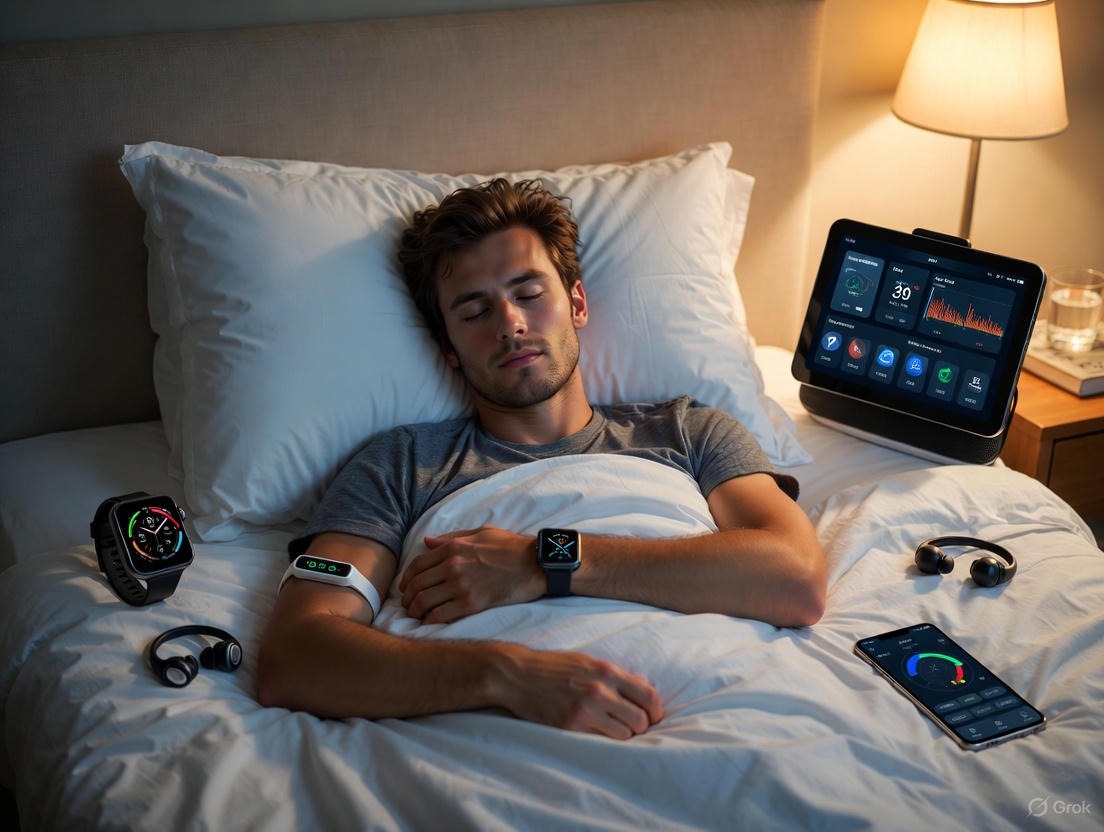
You now possess a powerful understanding of the individual signals: the story told by your sleep architecture, the narrative of your stress signature, the equation of your energy, and the rhythm of your days. The final, and most empowering, step is to synthesize these disparate data streams into a coherent, actionable plan. Your wellness ring provides the raw intelligence, but you must become the strategist. This is about moving from data collection to wisdom application—building your own Personalized Habit Hierarchy.
Not all habits are created equal, and their importance is not universal. For one person, fixing sleep may be the foundational lever that makes all other habits possible. For another, managing chronic stress might be the prerequisite for achieving quality sleep. Your longitudinal data reveals your unique bottlenecks and your most potent levers for change.
Start by conducting a Habit Impact Audit. Over a month, deliberately focus on one habit area at a time while monitoring the ripple effects across your biometric dashboard. For example:
Through this audit, you will discover which foundational habit, when solidified, creates the widest positive cascade across your entire system. This becomes the non-negotiable Tier 1 Habit in your hierarchy. The others become Tier 2 (essential supports) and Tier 3 (optimizations).
Your ring’s data is crucial for one more subtle aspect: identifying habit coupling and conflict. You may find that a morning workout (a positive habit) is fantastic, but only if you’ve slept well. If you slept poorly, the data may show that the workout becomes a net stressor, impeding recovery. This teaches you to couple the workout habit conditionally with a good sleep score. Conversely, you might find that your evening social media scrolling directly conflicts with your wind-down temperature drop, forcing you to choose which habit truly serves your hierarchy’s Tier 1 goal.
By building this hierarchy, you create a decision-making framework for real life. When faced with a choice—to stay up late for a movie, to skip your walk for more work, to have that second drink—you can contextualize it. You’re no longer just breaking a vague “health rule”; you’re understanding which tier of your personal hierarchy you are compromising, and what the likely biometric cost will be. This transforms health from a list of chores into a strategic, personalized project of self-optimization, where every choice is informed by the story your body has already told you.
For centuries, philosophy and medicine have spoken of the mind-body connection as an abstract concept. Your wellness ring makes this connection visible, quantifiable, and undeniable. It reveals that a worrying thought, a moment of joy, a period of focused flow, or a spike of anxiety are not just ephemeral mental events—they are full-body physiological experiences with distinct biometric signatures.
The primary channel for this is, once again, your autonomic nervous system. Mental and emotional states directly dictate the balance between your sympathetic (SNS) and parasympathetic (PNS) branches. Your ring’s HRV is the clearest readout of this balance in real-time.
Let’s examine the biometric signatures of different states:
By tagging your days with notes (“difficult conversation with boss,” “great dinner with friends,” “felt in the zone writing”), you start to build a library of your personal emotional biometrics. This cultivates interoceptive awareness—the ability to perceive the internal state of your body. Over time, you may begin to feel a dip in HRV or a rise in heart rate before you consciously label yourself as “stressed,” allowing for earlier intervention.
This data empowers you to manage your mental habits with the same rigor as your physical ones. You can test which mindfulness app most effectively lowers your stress score, whether journaling before bed improves your sleep-onset HRV, or how a weekly therapy session impacts your weekly average recovery. It proves that caring for your mind is not separate from caring for your body; it is the same thing, measured in millivolts and milliseconds. For a deeper look at how this nocturnal processing works, consider how sleep health affects every aspect of your life, including emotional regulation.
Your body does not exist in a vacuum. It is in constant dialogue with its environment. The temperature of your bedroom, the light hitting your eyes, the noise pollution in your city, even the air quality—all of these environmental factors act as inputs that your biology must process and adapt to. Your wellness ring captures the output of this adaptation: the strain on your system. By correlating environmental changes with biometric shifts, you can move from passively enduring your surroundings to actively optimizing them, creating a habitat that supports rather than challenges your health.
Light: The Master Zeitgeber. We’ve discussed light’s role in circadian rhythm, but the ring can quantify its impact with stunning clarity. Compare nights after days with ample morning sunlight exposure to days spent entirely indoors under artificial light. The data will likely show a steeper, more defined nighttime temperature drop and higher sleep scores on the “natural light” days. This turns the soft advice to “get morning sun” into a non-negotiable habit backed by personal data. Conversely, you can see the damaging effect of blue-light exposure after sunset, likely showing as increased sleep latency and reduced REM sleep.
Temperature and Thermoregulation. Your body needs to drop its core temperature to initiate sleep. A room that’s too warm is one of the most common, yet invisible, sleep disruptors. Your ring’s skin temperature data, combined with a room thermometer, can reveal your ideal sleeping climate. You might find that lowering your bedroom thermostat from 71°F to 67°F decreases nighttime awakenings by 30% and increases your deep sleep. The ring itself can even detect when you are overheating under your duvet.
Noise and Sleep Fragmentation. Even if you don’t fully wake up, ambient noise—a snoring partner, street traffic, a humming appliance—can cause micro-arousals, fragmenting your sleep architecture. Your ring’s sleep staging and restlessness score will show this as a choppy, inefficient sleep graph with reduced deep and REM sleep. This data provides the justification to invest in white noise, soundproofing, or earplugs, and you can verify their effectiveness the very next night.
Air Quality and Physiological Strain. Emerging research and next-generation sensors are beginning to link indoor air quality (VOCs, CO2, particulates) to reduced HRV, elevated resting heart rate, and poorer sleep. While most current rings don’t measure air directly, you can conduct experiments. Use an air purifier in your bedroom for a week and track changes in your overnight HRV and respiratory rate. The data may reveal that the air you breathe is a silent contributor to your daily stress load.
The Digital Environment. This is perhaps the most pervasive environmental factor. Your ring can show the physiological cost of constant connectivity. Does checking work email after 8 PM raise your stress score and delay your temperature drop? Does a “do not disturb” weekend lower your average resting heart rate? The data makes the case for digital boundaries not as a lifestyle preference, but as a biological necessity.
By using your ring as an environmental audit tool, you become an architect of your own wellbeing. You stop blaming yourself for poor sleep or low energy and start asking, “How can I change my surroundings to support my biology?” This leads to simple, high-impact habits: blackout curtains, a consistent cool bedroom temperature, morning light viewing, and designated digital sunset times—all validated by your own personal data. To build these environmental habits effectively, starting with a solid foundation is key, as outlined in the foundation of good sleep health core principles.
You have become fluent in the language of your biometrics. You understand your foundational rhythms, your stress signatures, and your environmental triggers. You’ve built a personalized hierarchy of what matters most. Now, we bridge the final, crucial gap: translating this profound self-knowledge into a sustainable, structured system for change—your Personal Habit-Change Protocol. This is where insight becomes ingrained behavior, guided by the continuous feedback of your ring.
A protocol is more than a to-do list; it’s an if-then rule set powered by your data. It moves you from reactive guessing to proactive, pre-programmed responses based on your body’s real-time state. The core of this protocol is establishing Data-Driven Decision Rules.
Here’s how to build it:
Step 1: Define Your "Green, Yellow, Red" Zones.
Using your established baselines, create clear zones for your key metrics, particularly your Readiness Score and Sleep Score.
Step 2: Create Habit Triggers Based on Data.
Link specific habits to specific data patterns.
Step 3: Implement Weekly Review & Planning Sessions.
Your protocol is dynamic. Dedicate 20 minutes each week (e.g., Sunday evening) to review your ring’s weekly report. Look for patterns:
Step 4: Embrace the "N of 1" Experiment Mindset.
Your protocol is a living document. Continuously run small, 2-3 week experiments to refine it. For example: *"For the next two weeks, I will take a 20-minute walk outside within 30 minutes of waking. I hypothesize this will increase my average sleep score by 3 points and my morning HRV by 5%."* Your ring provides the objective results. Success codifies the experiment into your permanent protocol; failure or neutral results prompt a new hypothesis.
This structured, yet flexible, approach removes the daily mental load of “What should I do for my health today?” The answer comes from your data and your pre-committed protocol. It turns wellness from a pursuit into a practiced, automated system, freeing your conscious mind to focus on living, not just tracking. For those beginning this structured journey, a quick-start guide to better sleep health offers parallel foundational steps.
The path of habit change is not a linear ascent. It is a series of peaks, valleys, and frustrating plateaus. This is where most people lose motivation, abandoning new habits when progress stalls or life interrupts. Your wellness ring is the ultimate tool for navigating these inevitable phases, transforming them from demoralizing failures into rich learning opportunities and essential parts of the process.
Understanding the Plateau. A plateau in your biometrics—where your sleep score, HRV, or readiness seems stuck for weeks—is not a sign that the system is broken. It’s often a sign of adaptation. Your body has acclimated to your current level of stress and recovery. The plateau is data telling you it’s time for a new stimulus or a deeper investigation. Instead of frustration, view it with curiosity. Analyze the data: Has your activity become monotonous? Has your sleep routine become stale? Are there creeping, unaddressed stressors? The plateau is your cue to run a new “N of 1” experiment, perhaps by introducing new training variables, adjusting your macronutrients, or testing a new relaxation technique.
Decoding the Setback. Life happens. A family emergency, a work deadline, travel, or illness will disrupt your best-laid protocols. The critical mistake is seeing the resulting dive in your metrics as a personal failure, leading to an "all-or-nothing" abandonment. Your ring encourages a compassionate, analytical response.
When you see a setback in your data:
Using Data for Self-Compassion. Often, we push through illness or extreme stress, criticizing ourselves for low productivity. Your ring’s data can be permission to rest. Showing yourself a sky-high resting heart rate and a crashed HRV is objective proof that your body needs attention, not more caffeine and willpower. It externalizes the need for recovery, making it easier to accept.
By learning to navigate plateaus and setbacks with data, you build meta-resilience—the resilience to handle dips in your own resilience. You understand that long-term progress is a trend line that smooths out short-term volatility. This mindset ensures that a bad week doesn’t derail a good year, keeping you consistently engaged in the lifelong process of refining your habits. When setbacks occur, knowing how to prioritize sleep health when life gets busy becomes an essential skill in your protocol.
Humans are social creatures, and our habits are profoundly influenced by our relationships and communities. While health is personal, it is rarely private. The rise of wellness rings introduces a new, data-informed layer to social connectivity: Shared Biometrics. This isn’t about competition; it’s about connection, shared understanding, and cooperative accountability.
When used thoughtfully with consent, sharing key wellness metrics with a trusted partner, close friend, or a dedicated accountability group can break down the walls of subjective experience and foster empathy.
Fostering Empathy Through Data. How many conflicts arise from mismatched energy or recovery states? One partner feels ready for a busy social outing, while the other is drained. Without data, this can be misinterpreted as disinterest or laziness. When both partners understand each other’s readiness scores, a new language emerges. “My score is a 42 today, I’m in my Red Zone, I need a quiet night” becomes a factual, non-accusatory statement that is easier to honor than “I’m just tired.” It replaces assumption with evidence, fostering patience and support.
Creating Cooperative Accountability. Sharing goals and data with a friend can transform habit change from a solitary grind into a team effort. You can set cooperative challenges: “Let’s both aim for a sleep consistency of 85% this week,” or “Let’s see who can get more ‘body battery’ recharge from their weekend.” The shared focus shifts from comparison to mutual encouragement. Seeing a friend consistently prioritize their sleep can be a powerful motivator, and you can celebrate each other’s green-zone days.
The Power of the "Habit Pod." Forming a small, trusted "Habit Pod" of 3-4 people using similar tracking can be revolutionary. Weekly check-ins can focus on data-driven insights: “I noticed my HRV tanks every Thursday after my back-to-back meetings. Has anyone found a good midday reset?” This turns the group into a collaborative research team, pooling insights and solutions. It also normalizes struggles; seeing that everyone has red-zone days reduces shame and isolation.
Important Boundaries and Ethics. This social dimension requires clear boundaries. Sharing should be opt-in, selective, and context-specific. It’s not about broadcasting scores on social media. It’s about creating private, safe spaces for support. The focus must remain on self-improvement and mutual aid, not competition or judgment. The goal is to use objective data to enhance subjective connection, creating relationships where health goals are understood and supported on a fundamental, biological level. This shared journey often clarifies the ultimate goal: not just adding years to your life, but life to your years.
Your wellness ring is a powerful consumer health tool, but it is not a medical device. Its proper role is that of a detailed, ongoing health diary and a conversation starter with licensed healthcare professionals. The most sophisticated habit-change protocol integrates this continuous, at-home biometric monitoring with the diagnostic expertise of doctors, dietitians, physical therapists, and mental health professionals.
Becoming an Informed Partner in Your Care. Walking into a doctor’s appointment with a month of granular data is transformative. Instead of vague complaints like “I’m tired all the time,” you can present evidence: “My average sleep score is 72, and my resting heart rate has trended up by 8 BPM over the last two months despite consistent exercise. Here’s a graph of my sleep stages showing frequent awakenings.” This objective data can help your provider narrow down potential causes—from sleep apnea and thyroid issues to anemia or chronic stress—much more efficiently, leading to more targeted testing and treatment.
Validating and Refining Treatment Plans. If a healthcare professional prescribes a treatment—a new medication, a dietary change, cognitive behavioral therapy for insomnia (CBT-I), or a physical therapy regimen—your ring provides objective feedback on its efficacy. Is the new anti-inflammatory diet reducing your resting heart rate? Is CBT-I improving your sleep efficiency score? This allows for dynamic, data-informed adjustments to your care plan in partnership with your provider.
Specific Use Cases:
The Critical Caveat: Avoiding Self-Diagnosis. The wealth of data can tempt users to play doctor. A low HRV does not automatically mean adrenal fatigue; a high resting heart rate does not guarantee a thyroid problem. The ring identifies deviations from your norm that may be worthy of investigation. It flags anomalies; it does not diagnose diseases. The integration is only powerful when the data is placed in the hands of a qualified interpreter who can contextualize it within a full medical history and clinical judgment.
By embracing this integrated model, you elevate the ring from a fitness gadget to a cornerstone of a modern, proactive healthcare strategy. You become the owner of your continuous health data, and your medical team becomes the expert interpreter, creating a powerful collaboration aimed at optimizing your long-term wellbeing.
The current capabilities of wellness rings are impressive, but they represent just the first chapter in the story of biometric-guided living. The near future promises a wave of innovation that will make our understanding of daily habits even more precise, predictive, and seamlessly integrated into our lives. We are moving from tracking to anticipating, from reporting to coaching.
Multimodal Sensor Fusion: The next generation of wearables will incorporate a wider array of sensors. Electrodermal Activity (EDA) sensors, already in some devices, measure minute changes in skin sweat, a direct indicator of sympathetic nervous system arousal, offering another layer to stress tracking. Continuous Glucose Monitoring (CGM) integration, though currently through separate devices, will become more seamless, providing a real-time view of metabolic health and how different foods uniquely affect your energy and focus. This creates a holistic dashboard: how your food (glucose) affects your energy (HRV/RHR) which impacts your sleep (architecture), and so on.
Advanced Biomarkers and Non-Invasive Blood Chemistry: Research is progressing on non-invasive ways to estimate key blood biomarkers like cortisol (the stress hormone), hemoglobin, and inflammatory markers like CRP through advanced optical sensors. Imagine your ring flagging a potential rise in inflammation or a cortisol dysregulation pattern before you feel overt symptoms, prompting preventative habit adjustments.
Contextual Awareness and AI-Powered Insights: Future devices will leverage more powerful onboard AI and better integration with your phone’s data (calendar, location) to add context. Instead of just saying “your stress spiked at 3 PM,” it could note: “Your stress spiked during your weekly cross-departmental meeting.” It could then suggest: “Based on past data, a 10-minute walk after this meeting improves your recovery. Would you like to schedule a reminder?” The device evolves from a historian to an intelligent habit coach.
Predictive Analytics and True Prevention: With enough longitudinal data, machine learning models will be able to predict your personal susceptibility to burnout, illness, or performance slumps. Your ring might alert you: “Your current data pattern resembles your pre-cold pattern from last winter. Consider increasing sleep and vitamin C,” or “Your recovery metrics suggest you are 70% likely to experience a motivation dip in 2 days. Schedule lighter work.”
Seamless Integration and Invisible Design: The ultimate goal is for the technology to fade into the background. Rings will become lighter, battery life will extend to weeks, and charging will be effortless. The focus will shift entirely to the insights, delivered at the right moment and in the right format, without requiring you to become a data analyst. The habit feedback loop will become almost subconscious.
This future is not about outsourcing our health to machines. It is about amplifying our own self-awareness and biological intuition with unprecedented clarity. The wearable will act as a canary in the coal mine of modern life and a compass for navigating it, empowering us to make not just informed choices, but predictive and preventative ones. It solidifies the wellness ring not as a fleeting gadget, but as an essential, evolving tool for human flourishing in the 21st century.
We have journeyed from the micro-sensors on your finger to the macro-implications for your life. We’ve explored how a tiny device can illuminate sleep, decode stress, balance energy, align your rhythm, and guide your recovery. But underlying all these technical discussions is a profound, human truth: the life you live a decade from now is being built by the small, repeated choices you make today. Your wellness ring provides the magnifying glass to see the true impact of those choices, transforming them from random actions into intentional investments in your future self.
This is about compound interest for your health. Just as small, regular financial investments grow exponentially over time, so do small, consistent positive habits. The difference is that the returns are paid in energy, clarity, resilience, and vitality. A 5% improvement in sleep quality doesn’t sound like much in a single night. But compounded over a year, it represents over 18 additional nights of high-quality restoration. A slightly higher average HRV translates to a more resilient nervous system better equipped to handle life’s inevitable stressors, year after year.
Your ring’s longitudinal data is the ledger where this compound interest is recorded. It shows you that the decision to walk instead of drive, to meditate for five minutes, to choose water over soda, to protect your bedtime—these aren’t isolated events. They are deposits into your biological bank account. The weekly and monthly trends are your balance statements, proving that your daily discipline is accruing value.
This perspective shifts the motivation from short-term aesthetics or performance to long-term healthspan and legacy. You are no longer just “getting in shape” or “sleeping better.” You are actively delaying the onset of chronic age-related decline. You are building a body and mind that will allow you to play with your grandchildren, pursue passions in retirement, and maintain your independence and curiosity for decades to come. You are crafting a legacy of vitality.
The ultimate habit your ring helps you identify, therefore, is the meta-habit of paying attention. It trains you to be curious about cause and effect, to respect your body’s signals, and to take ownership of your wellbeing. It turns you into the author of your health narrative, with data as your editor.
In closing this portion of our exploration, remember that the ring is a tool, but you are the craftsman. The data is the map, but you are the traveler. The habits are the bricks, but you are the architect. By combining the objective intelligence of technology with your subjective wisdom and intention, you embark on the most important project you will ever undertake: the optimal design of your own life, one data-informed day at a time. To continue building this life from a solid base, ensure you are not making common sleep health mistakes beginners make and how to avoid them.
Your Trusted Sleep Advocate: Sleep Foundation — https://www.sleepfoundation.org
Discover a digital archive of scholarly articles: NIH — https://www.ncbi.nlm.nih.gov/
39 million citations for biomedical literature :PubMed — https://pubmed.ncbi.nlm.nih.gov/
Experts at Harvard Health Publishing covering a variety of health topics — https://www.health.harvard.edu/blog/
Every life deserves world class care :Cleveland Clinic - https://my.clevelandclinic.org/health
Wearable technology and the future of predictive health monitoring :MIT Technology Review — https://www.technologyreview.com/
Dedicated to the well-being of all people and guided by science :World Health Organization — https://www.who.int/news-room/
Psychological science and knowledge to benefit society and improve lives. :APA — https://www.apa.org/monitor/
Cutting-edge insights on human longevity and peak performance:
Lifespan Research — https://www.lifespan.io/
Global authority on exercise physiology, sports performance, and human recovery:
American College of Sports Medicine — https://www.acsm.org/
Neuroscience-driven guidance for better focus, sleep, and mental clarity:
Stanford Human Performance Lab — https://humanperformance.stanford.edu/
Evidence-based psychology and mind–body wellness resources:
Mayo Clinic — https://www.mayoclinic.org/healthy-lifestyle/
Data-backed research on emotional wellbeing, stress biology, and resilience:
American Institute of Stress — https://www.stress.org/


