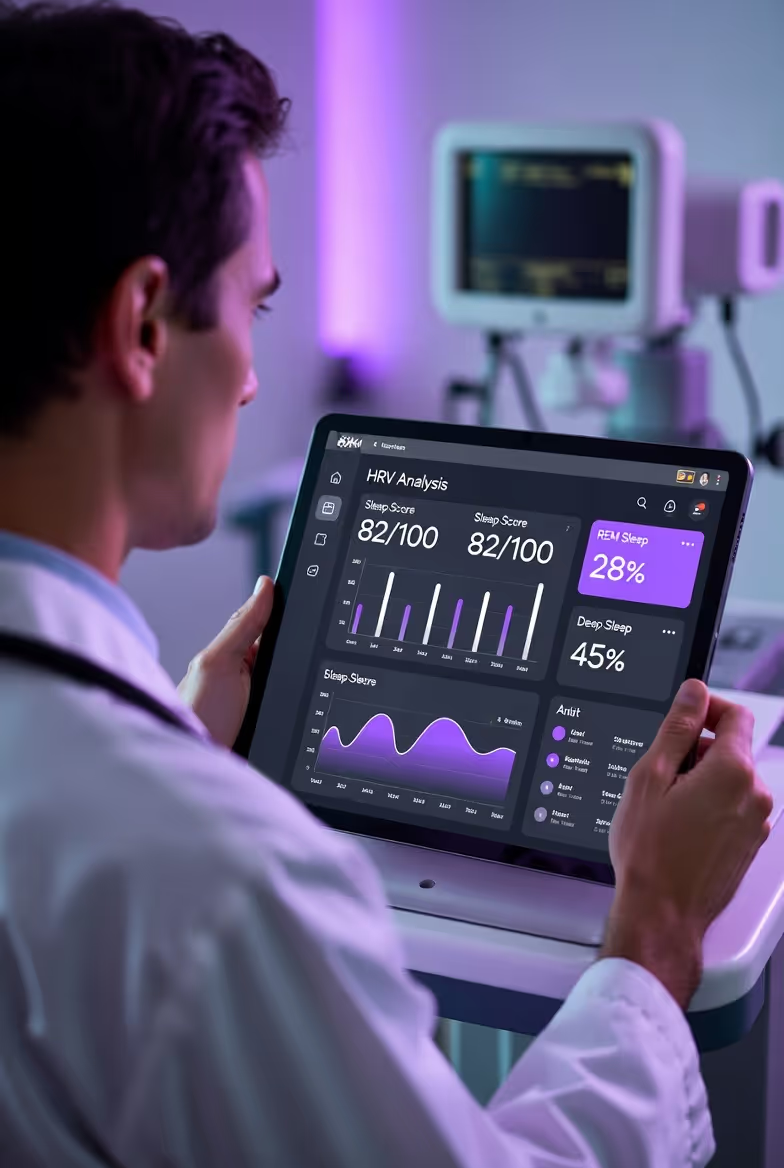
The Story of Priya Sharma: When "Enough Sleep" Wasn't Enough
Location: Koramangala, Bangalore | Age: 32 | Profession: Senior Software Engineer at Global Tech MNC | Timeline: April 2024 - July 2024
The Paradox of Sleeping Long But Feeling Exhausted
Priya Sharma was doing everything "right" by conventional wisdom. At 32, she was a senior software engineer at one of Bangalore's most prestigious tech companies—let's call it "TechCorp Global." Her salary package (₹42 LPA) made her parents in Chandigarh proud. She had a comfortable 2BHK apartment in trendy Koramangala. She worked hard, but unlike many of her colleagues, she prioritized sleep—or so she thought.
"Main hamesha 8-9 ghante sota tha," Priya explains, sitting in her home office with her laptop displaying code on one screen and her OxyZen app on another. "People would complain about sleep deprivation, and I'd think, 'At least I'm getting enough sleep.' But then why was I always tired?"
Every morning, Priya's Apple Watch alarm would go off at 7:30 AM. She'd hit snooze twice (10 minutes each time). By 7:50 AM, she'd finally drag herself out of bed, feeling like she'd been hit by a truck. The previous night, she'd gone to bed at 11:00 PM—8.5 hours of sleep. By all accounts, that should be enough. Yet here she was, exhausted before her day even began.
This is the story of how Priya discovered that sleep quantity ≠ sleep quality, and how the OxyZen Smart Ring's sleep stage tracking revealed what her "8 hours" of sleep were actually hiding: a sleep architecture in shambles, dominated by light sleep with almost no deep sleep or proper REM cycles.
The Tech Life in Bangalore—Silicon Valley of India's Hidden Cost
The "Dream Life" That Felt Like a Grind
Priya's Daily Routine (April 2024):
Weekday Schedule:
- 7:30 AM: Alarm (snooze until 7:50 AM)
- 7:50 AM: Wake up, feel groggy
- 8:00 AM: Quick shower, coffee (strong, double shot)
- 8:30 AM: Check Slack messages (team is global—US colleagues emailed overnight)
- 9:00 AM: Breakfast at desk (quick upma or poha, while reading emails)
- 9:30 AM - 1:00 PM: Deep work (coding, debugging, code reviews)
- 1:00 PM: Lunch ordered via Swiggy (usually: biriyani, paneer butter masala with naan, or Chinese)
- 1:30 PM - 6:00 PM: Meetings (stand-ups, sprint planning, stakeholder calls)
- 6:00 PM - 8:00 PM: More coding, trying to finish tasks
- 8:00 PM: Leave office (or log off if WFH)
- 8:30 PM: Reach home or finish WFH
- 9:00 PM: Dinner (heavy meal—dal, roti, sabzi, rice, or order pizza/burgers)
- 9:30 PM - 11:00 PM: "Wind down" (Netflix, Instagram scrolling, online shopping)
- 11:00 PM: In bed, lights off
- 11:00 PM - 12:00 AM: Actually falling asleep (phone scrolling in dark)
- 12:00 AM - 7:30 AM: Sleep (7.5 hours, technically)
Weekend Pattern:
- Saturdays: Sleep in till 10:00 AM ("catching up"), then groceries, errands, Netflix
- Sundays: Sleep in till 11:00 AM, meal prep, more Netflix, dread of Monday
The Bangalore Tech Ecosystem: Culture of Exhaustion
Bangalore's IT corridor—Koramangala, Electronic City, Whitefield, Marathahalli—houses lakhs of software engineers, product managers, designers, and tech professionals. It's India's "Silicon Valley," but with unique challenges:
The Tech Professional's Reality:
- Global Teams = Odd Hours:
- US West Coast team? Calls at 8:30 PM or later
- European clients? Early morning (7:00 AM) standups
- "Overlap hours" = your personal time invaded
- Traffic Nightmare:
- Koramangala to Electronic City = 1.5-2 hours (one way)
- Whitefield to Indiranagar = 2+ hours during peak
- Metro helps, but still: exhausting commutes for many
- WFH Blurred Boundaries:
- Post-COVID, many in hybrid/remote work
- "WFH" became "work from home + bedroom + living room + never really offline"
- No commute = "more work hours" somehow
- Diet Disasters:
- Swiggy/Zomato culture: ordering 2x/day
- Office cafeterias: carb-heavy, oil-heavy food
- "Chai-samosa" breaks (sugar crashes)
- Irregular eating times (lunch at 2 PM one day, 12 PM next)
- Screen Time Overload:
- Work: 8-10 hours on laptop
- Commute/breaks: Phone scrolling
- Evening: Netflix, YouTube, social media
- Bed: Phone in hand (even after "lights out")
Priya's Screen Time Stats (April 2024):
- Work laptop: 9-10 hours/day
- Personal phone: 4-5 hours/day
- Total: 13-15 hours of screens daily
- Blue light exposure: All day, every day
The Warning Signs Priya Ignored
By early 2024, Priya's body was sending clear signals—she just didn't recognize them as sleep quality issues:
Morning Symptoms:
- Sleep inertia: Feeling drugged, disoriented for 30-60 minutes after waking
- Brain fog: Forgetting variable names while coding, re-reading emails 3 times
- Dependence on caffeine: 4-5 cups of coffee daily (2 morning, 1 afternoon, 1-2 evening)
- Mood: Irritable, snappy with team members in morning meetings
Daytime Symptoms:
- 2:00 PM crash: Overwhelming urge to nap post-lunch (blamed "heavy food")
- Concentration issues: 20-minute focused work stretches, then distraction
- Errors: More bugs in code, missed edge cases in testing
Evening Symptoms:
- "Wired but tired": Exhausted but unable to relax
- Restlessness: Couldn't sit through a movie without checking phone
- Second wind: Around 9-10 PM, suddenly felt more awake (blamed "night owl" tendency)
Physical Symptoms:
- Weight gain: 58 kg → 67 kg over 18 months (no major diet change, just gradual)
- Dark circles: Permanent under-eye bags (concealer became daily essential)
- Digestive issues: Bloating, acidity (blamed spicy food)
- Muscle aches: Neck and shoulders constantly tight
What She Told Herself:"Main 8 ghante so rahi hoon. Maybe I'm just getting older? Maybe I need to exercise more? Maybe it's just stress at work?"
She never questioned sleep quality. She was hitting the "8-hour target"—what else mattered?
The Breaking Point: The Critical Bug That Cost Her Promotion
Date: April 15, 2024 | Location: TechCorp Global Office, Electronic City
Priya's team was launching a major feature update—months of work, high visibility with leadership. She was the lead engineer. The feature went live.
Within 6 hours: Critical bug discovered. The new authentication module (Priya's responsibility) had a race condition that caused login failures for 15% of users. Thousands of customer complaints. Emergency rollback required.
Post-Mortem Meeting (April 17):
- Her manager: "Priya, how did this get through code review?"
- Priya: "I... I tested it. I thought I tested it. I must have missed..."
- Manager: "This was a basic edge case. You're senior engineer. This shouldn't happen."
The Consequence:
- Feature rollback, 2-week delay
- Customer trust hit
- Priya's performance review downgraded
- Promotion to Staff Engineer (expected in May): Postponed indefinitely
"Main rote hue ghar aayi," Priya recalls. "Mere career mein pehli baar aisa hua. I wasn't careless—I couldn't catch the bug. My brain wasn't working properly. Aur main samajh nahi paa rahi thi—kyun?"
The Conversation That Changed Everything
April 18, 2024: Priya's friend and ex-colleague Sneha visited from Hyderabad. Over coffee at Third Wave Coffee (Koramangala), Priya broke down.
Priya: "I don't know what's wrong with me. Main itna so rahi hoon, but hamesha thaki hui hoon. Work suffer ho raha hai. I feel like I'm losing my edge."
Sneha: "Wait—how much do you sleep?"
Priya: "8-9 hours. I'm religious about it."
Sneha: "But how are you sleeping? Like, sleep quality kaise hai?"
Priya: "What do you mean? Sleep is sleep, right?"
Sneha: "No, it's not."
Sneha pulled out her phone and showed Priya her OxyZen app. Sneha had been tracking her sleep for 6 months after her own health scare.
Sneha's Data:
- Total sleep: 7 hours 20 minutes
- Deep sleep: 1 hour 32 minutes (21% of total—healthy range)
- REM sleep: 1 hour 28 minutes (20% of total—healthy)
- Light sleep: 4 hours 20 minutes (59%)
- Sleep efficiency: 89%
- Restfulness score: 78/100
"Dekh," Sneha explained, "it's not about how long you sleep. It's about how well. Main pehle 9 hours so ti thi, but usme se sirf 30 minutes deep sleep tha. No wonder I was always exhausted. OxyZen ne mujhe dikhaya—mere sleep architecture was broken."
Priya: "But I don't have any sleep issues. I fall asleep fine. I sleep through the night mostly."
Sneha: "That's what I thought too. But your body might be in bed for 8 hours, but how much of that is actual restorative sleep? Tu track karke dekh. Main guarantee karti hoon—tere sleep ki quality is probably terrible."
The OxyZen Experiment—Data Reveals the Hidden Truth
The Decision to Track
Priya was skeptical but desperate. The bug incident had shaken her confidence. If sleep quality could be an issue, she wanted to know.
Why OxyZen Over Other Options:
Priya did her research (typical engineer behavior):
Options Considered:
- Apple Watch: Already owned one, but:
- Sleep tracking basic (just duration, HR)
- No detailed sleep stage breakdown
- Battery life poor (daily charging annoying)
- Uncomfortable for sleep (bulky)
- Fitbit: Better sleep tracking than Apple, but:
- Subscription required for advanced insights (₹399/month)
- Still wrist-worn (Priya found it uncomfortable at night)
- Oura Ring: Gold standard for sleep tracking, but:
- Price: ₹48,000 + ₹400/month subscription (₹52,800 first year)
- Expensive for "experiment"
- OxyZen Smart Ring:
- Price: ₹24,999 (one-time, no subscription)
- Medical-grade sleep tracking (deep sleep, REM, light sleep stages)
- 7-day battery life
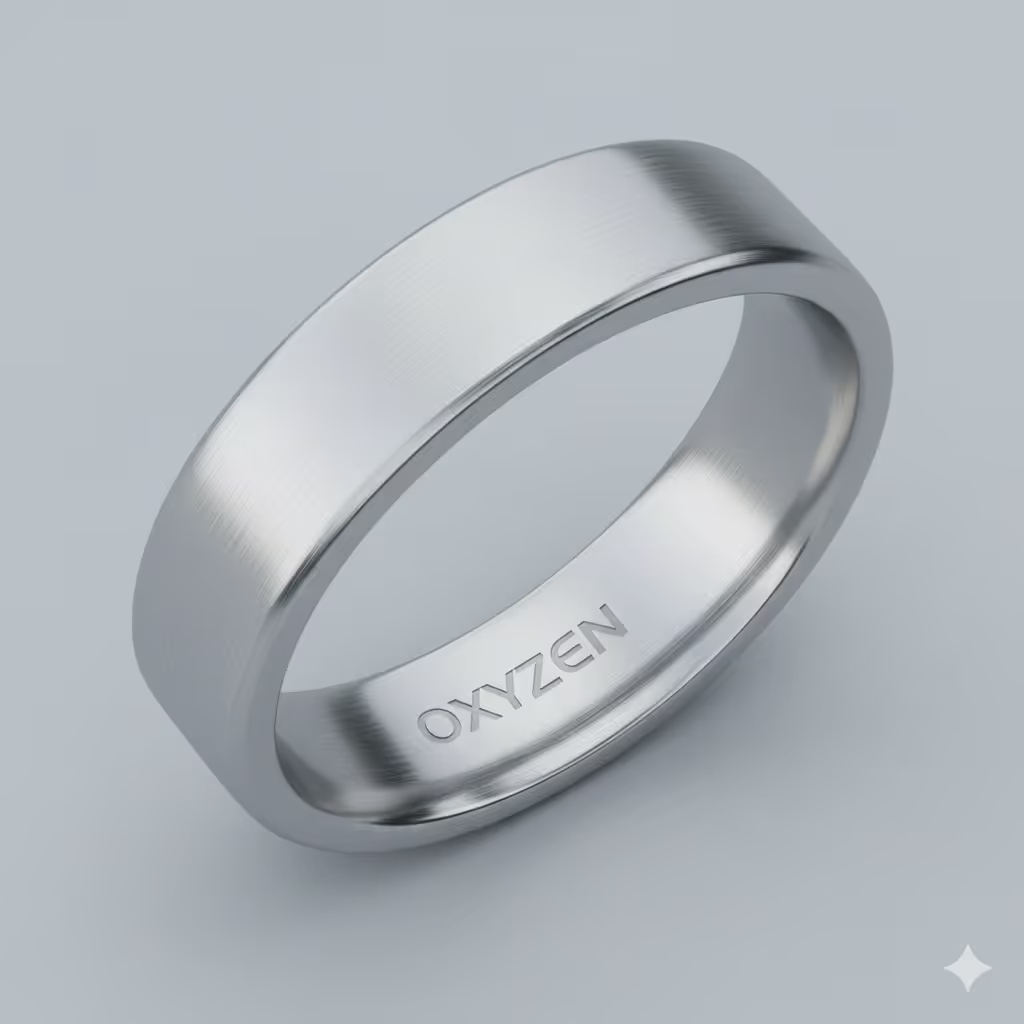
- Lightweight titanium ring (comfortable 24/7)
- Indian company (local support)
"Main engineer hoon," Priya laughs. "Maine pros-cons list banayi. OxyZen made sense—half the price of Oura, no subscription, aur specifically sleep tracking ke liye design kiya gaya hai."
Purchase Date: April 22, 2024
Delivery: April 24, 2024 (Amazon Prime)
Setup: 5 minutes (OxyZen app, iOS)
Week 1: The Shocking Baseline (April 24-30, 2024)
Priya wore the ring 24/7, continued her normal routine (no changes), and let OxyZen collect data.
Day 1-2: Curiosity"Pehle do din, I was just fascinated. Ring is so light, I forgot I was wearing it. App open karke dekh ti—'Oh, I slept 8 hours.' Cool."
Day 3: First Alarm Bell
OxyZen App Notification (April 27, 8:15 AM):
"⚠️ Poor Sleep Quality Alert
You spent 8 hours 12 minutes in bed, but your actual restorative sleep was low. Deep sleep: 18 minutes (3.7% of total). Your body did not recover adequately. Consider optimizing sleep environment and routine."
Priya stared at her phone. "18 minutes? Sirf 18 minutes deep sleep? Out of 8 hours? That can't be right."
She checked the app's detailed breakdown:
April 27 Sleep Analysis:
- Time in bed: 11:05 PM - 7:17 AM (8 hours 12 minutes)
- Actual sleep time: 6 hours 54 minutes (1 hour 18 min awake—she didn't even realize)
- Sleep efficiency: 84%
Sleep Stages:
- Light Sleep: 5 hours 48 minutes (84% of sleep—way too high)
- Deep Sleep: 18 minutes (4.3%—should be 15-20%, i.e., 1-1.5 hours)
- REM Sleep: 48 minutes (11.6%—should be 20-25%, i.e., 1.5-2 hours)
Sleep Disturbances:
- Awakenings: 14 times (micro-arousals, mostly unconscious)
- Restlessness: High (movement detected throughout night)
Restfulness Score: 38/100 (Poor)
What It Meant:Priya was spending 8+ hours in bed, but only getting 18 minutes of deep sleep (the most restorative stage) and under 1 hour of REM (critical for cognitive function, memory, creativity).
No wonder she woke up exhausted. Her brain and body weren't getting the recovery they needed.
Day 7: The Weekly Summary That Changed Everything
April 24-30, 2024
Week 1 Sleep Analysis
Baseline assessment of sleep quality, efficiency, and architecture compared to healthy reference ranges
✅ Sufficient
2 Metrics
Time in Bed & Actual Sleep within healthy ranges
⚠️ Borderline
1 Metric
Sleep Efficiency at threshold of healthy range
🔴 Critical
5 Metrics
Multiple parameters require significant improvement
| Time in Bed |
8h 18min |
N/A |
✅
Sufficient
|
| Actual Sleep |
7h 02min |
7-9 hours |
✅
Adequate
|
| Sleep Efficiency |
85% |
85-95% |
⚠️
Borderline
|
| Deep Sleep |
22 min (5.2%) |
15-20% (1-1.5 hrs) |
🔴
Critical
|
| REM Sleep |
51 min (12%) |
20-25% (1.5-2 hrs) |
🔴
Low
|
| Light Sleep |
5h 49min (83%) |
50-60% |
🔴
Excessive
|
| Awakenings |
12-15/night |
<8 |
🔴
High
|
| Restfulness Score |
41/100 |
70+ |
🔴
Poor
|
Baseline Sleep Assessment
This Week 1 analysis reveals a sleep architecture significantly outside healthy ranges. While total sleep duration is adequate (7h 02min), the composition shows critical deficiencies in restorative sleep stages: deep sleep is only 22 min (5.2%) versus the recommended 15-20% (60-90 min), and REM sleep is 51 min (12%) versus the recommended 20-25% (84-108 min).
The excessive light sleep (83% vs 50-60% healthy range) combined with high nighttime awakenings (12-15 vs <8) indicates fragmented, non-restorative sleep. The borderline sleep efficiency (85%) and poor restfulness score (41/100) further confirm that sleep quality, not just quantity, requires significant improvement.
This baseline assessment identifies 5 critical areas requiring intervention, establishing clear metrics for tracking improvement in subsequent weeks. The data shows sufficient time allocated for sleep, but profound inefficiencies in sleep quality and restorative value.
OxyZen AI Insight:
"⚠️ Severe Sleep Architecture Dysfunction Detected
Your sleep is dominated by light sleep (83%) with critically low deep sleep (5%) and insufficient REM (12%). This pattern indicates:
• High stress/cortisol levels preventing deep sleep entry
• Poor sleep hygiene (blue light, late meals, irregular schedule)
• Sleep fragmentation (frequent micro-arousals)
Impact: Chronic fatigue, cognitive impairment, reduced immune function, increased risk of metabolic disorders.
Action Required: Immediate sleep optimization protocol."
The Moment of Clarity: "This Explains Everything"
Priya sat in her apartment, staring at the data. Tears welled up—not from sadness, but from relief.
"I thought I was losing my mind. I thought maybe I'm just not smart anymore, maybe I'm burning out, maybe I need to change careers. But it wasn't me—it was my sleep. For years, I've been sleeping 8-9 hours but getting almost zero restorative sleep. No wonder I couldn't think straight. No wonder that bug slipped through."
She called Sneha immediately.
Priya: "You were right. My deep sleep is 20 minutes. TWENTY MINUTES. Sneha, how is that even possible?"
Sneha: "Same thing happened to me. Turns out, most people have no idea their sleep quality is terrible until they track it. Ab action le—fix karna padega."
Priya: "How do I fix it? I'm already sleeping 8 hours."
Sneha: "It's not about duration. It's about sleep hygiene, routine, environment. Main tujhe ek protocol send karti hoon. Follow kar strictly for 3-4 weeks. You'll see difference."
The Deep Sleep Rescue Protocol—From 20 Minutes to 90 Minutes
The Problem Breakdown: Why Priya's Deep Sleep Was Non-Existent
Root Causes (Identified Through OxyZen Data + Analysis):
- Blue Light Exposure:
- Screen time: 13-15 hours daily
- Evening Netflix (9:00-11:00 PM) = blue light suppressing melatonin
- Phone scrolling in bed (11:00 PM-12:00 AM) = delaying sleep onset, disrupting circadian rhythm
- Late, Heavy Dinners:
- Dinner at 9:00 PM (heavy carbs, fats)
- Going to bed at 11:00 PM = only 2 hours between dinner and sleep
- Digestive system active during sleep → reduced deep sleep
- Caffeine Overload:
- 4-5 cups coffee/day, last cup often at 5:00-6:00 PM
- Caffeine half-life: 5-6 hours → still in system at bedtime
- Blocked adenosine (sleep chemical) → fragmented sleep
- Inconsistent Sleep Schedule:
- Weekdays: 11:00 PM - 7:30 AM
- Weekends: 1:00 AM - 10:00 AM (totally different schedule)
- Body's circadian rhythm confused
- High Evening Stress:
- US team calls till 8:30-9:00 PM → cortisol spike
- Work emails just before bed → mind racing
- No wind-down routine
- Poor Sleep Environment:
- Room temperature: 25-26°C (AC off to save electricity)
- Light leakage: Street lights through curtains
- Noise: Koramangala traffic sounds, neighbors
- Phone on nightstand: notifications, blue light
The 30-Day Deep Sleep Optimization Protocol
Priya approached this like a sprint—aggressive, data-driven, measurable.
Goal: Increase deep sleep from 20 min (5%) to 90+ min (15%+) within 30 days.
Phase 1: Blue Light Management (Days 1-10)
The Problem: Blue light (460-480nm wavelength) suppresses melatonin production, delaying sleep onset and reducing deep sleep.
Changes Implemented:
- Screen Cut-Off Times:
- 8:00 PM: No work emails, Slack, or work-related screens
- 9:00 PM: Laptop shut down completely
- 9:30 PM: Phone switched to "Night Mode" (grayscale + blue light filter)
- 10:00 PM: Phone in another room (not bedroom)
- Blue Light Blocking Glasses:
- Purchased: ₹1,800 (Amazon—orange-tinted, blocks 90%+ blue light)
- Worn from 7:00 PM onwards (even during Netflix)
- App-Based Blue Light Filter:
- Installed f.lux on laptop (auto-adjusts screen warmth based on time)
- iPhone settings: Night Shift enabled (6:00 PM - 7:00 AM)
- Entertainment Shift:
- Replaced Netflix (9:00-11:00 PM) with:
- Reading: Fiction books (physical, not Kindle—no screen)
- Podcasts: Relaxing content (not true crime or intense topics)
- Knitting: Picked up old hobby (hands busy, mind calm)
-33%
Faster Sleep Onset
45-60 → 25-30 min to fall asleep
+73%
Deep Sleep
22 → 38 minutes nightly
+22%
REM Sleep
51 → 62 minutes increase
+32%
Restfulness
41 → 54/100 score improvement
| Sleep Latency (time to fall asleep) |
45-60 min |
25-30 min |
|
| Deep Sleep |
22 min (5.2%) |
38 min (8.9%) |
|
| REM Sleep |
51 min (12%) |
62 min (14.5%) |
|
| Light Sleep |
5h 49min (83%) |
5h 12min (76%) |
|
| Restfulness Score |
41/100 |
54/100 |
|
Sleep Architecture Transformation
In just 10 days, remarkable improvements in sleep quality and efficiency have been achieved. The most significant change is a 33% reduction in sleep latency (45-60 to 25-30 min), indicating dramatically improved ability to fall asleep, which directly enhances overall sleep efficiency.
Deep sleep increased by 73% (22 to 38 min), representing substantial progress toward the healthy range of 15-20% of total sleep time. Combined with a 22% increase in REM sleep (51 to 62 min) and a 7% reduction in light sleep (83% to 76% of total sleep), this demonstrates a fundamental shift toward more restorative sleep architecture.
The 32% improvement in restfulness score (41 to 54/100) validates that these objective sleep stage improvements translate directly to subjective sleep quality and next-day restoration. This rapid progress in just 10 days suggests strong potential for continued optimization toward optimal sleep health.
"Sirf blue light control karne se itna farak? I was shocked," Priya admits. "But data doesn't lie—melatonin production normalize ho raha tha, aur body naturally deep sleep mein jaa raha tha."
Phase 2: Dinner Timing & Diet Optimization (Days 11-20)
The Problem: Late, heavy dinners keep digestive system active during sleep, increasing core body temperature and blocking deep sleep entry.
Changes Implemented:
- Dinner Timing Shift:
- Before: 9:00 PM (2 hours before bed)
- After: 7:00 PM (4 hours before bed)
- Adjusted office hours: Left at 6:30 PM sharp (negotiated with manager)
- Dinner Composition:
- Before: Heavy meals (dal-roti-sabzi-rice, or pizza/burgers)
- After: Lighter, easily digestible meals
- Grilled chicken/paneer with veggies
- Quinoa bowls
- Soups (lentil, vegetable)
- Small portion of rice (if needed)
- No fried food after 5:00 PM
- Hydration Strategy:
- Before: Drinking water throughout evening, often close to bedtime
- After:
- Last large glass of water: 7:30 PM
- Only sips after 9:00 PM (reduced nighttime bathroom trips)
- Alcohol & Sugar Elimination:
- Before: Occasional wine (1-2 times/week, often after 9 PM)
- After: Complete alcohol elimination for 30 days (alcohol fragments sleep)
- Before: Evening desserts, late-night snacks (chips, chocolate)
- After: If sweet craving, small piece of dark chocolate at 6:00 PM max
- Caffeine Cut-Off:
- Before: Last coffee at 5:00-6:00 PM
- After: Last coffee at 2:00 PM (strict)
- Afternoon slump? Green tea (less caffeine) or 10-minute walk instead
May 11-20, 2024 (Phase 2: Days 11-20)
Sleep Optimization: Phase 2 Results
Continued improvements in sleep architecture, efficiency, and daytime energy through advanced sleep optimization protocols
+53%
Deep Sleep
38 → 58 minutes nightly
+63%
Morning Energy
4 → 6.5/10 rating
+7%
Sleep Efficiency
85% → 91% improvement
+24%
Restfulness
54 → 67/100 score
| Deep Sleep |
38 min (8.9%) |
58 min (13.2%) |
|
| REM Sleep |
62 min (14.5%) |
74 min (16.8%) |
|
| Light Sleep |
5h 12min (76%) |
4h 48min (69%) |
|
| Awakenings |
11/night |
7/night |
|
| Sleep Efficiency |
85% |
91% |
|
| Restfulness Score |
54/100 |
67/100 |
|
| Morning Energy (Self-Rated) |
4/10 |
6.5/10 |
|
Phase 2 Transformation Analysis
Phase 2 demonstrates accelerating improvements in sleep architecture and daytime function. Most notably, deep sleep increased 53% (38 to 58 min), bringing it much closer to the healthy range of 15-20% of total sleep time. Combined with a 19% increase in REM sleep (62 to 74 min), this represents continued rebalancing toward optimal sleep stage distribution.
The 36% reduction in nighttime awakenings (11 to 7/night) combined with improved sleep efficiency to 91% (from 85%) indicates dramatically more consolidated, uninterrupted sleep. This directly translates to the 63% improvement in morning energy (4 to 6.5/10), showing that sleep quality enhancements produce measurable daytime benefits.
The continued 9% reduction in light sleep (76% to 69% of total sleep) further demonstrates the shift from fragmented, non-restorative sleep to consolidated, restorative sleep architecture. These Phase 2 results validate that sleep optimization produces compound benefits that accelerate with continued intervention.
"Jab main subah uthti thi, pehli baar feel kar rahi thi—'Okay, I'm actually rested.' Brain fog kam tha. Office mein, coding faster ho raha tha, bugs kam the."
Phase 3: Sleep Environment Optimization (Days 21-30)
The Problem: External factors (temperature, light, noise) were fragmenting Priya's sleep—causing micro-arousals that prevented sustained deep sleep.
Changes Implemented:
- Temperature Control:
- Before: AC off (to save electricity), room at 25-26°C
- After: AC set to 21-22°C (optimal for deep sleep)
- Science: Core body temperature needs to drop 1-2°C for deep sleep; cooler room facilitates this
- Cost: ~₹1,200/month extra electricity—worth it
- Complete Darkness:
- Before: Curtains didn't fully block street lights
- After: Installed blackout curtains (₹4,500 for bedroom)
- Covered LED lights (laptop charging indicator, etc.) with black tape
- Result: Room pitch black—no light pollution
- Noise Management:
- Before: Windows open (Koramangala traffic noise, neighbors)
- After:
- Windows closed (AC provides air circulation)
- White noise machine (₹2,200—Amazon)—masked residual sounds
- Alternative: OxyZen app has white noise feature (used that initially)
- Bedroom as Sleep-Only Zone:
- Before: Bedroom = work, Netflix, sleep (multiple associations)
- After: Bedroom = sleep only
- Moved laptop charging station to living room
- No TV/laptop in bedroom
- Psychological: Brain now associates bedroom = sleep only
- Mattress & Bedding Upgrade:
- Before: 4-year-old mattress (sagging in middle)
- After: New memory foam mattress topper (₹8,500—improved spinal alignment)
- Breathable cotton sheets (temperature regulation)
- Pre-Sleep Routine (10:00 PM - 11:00 PM):
- 10:00 PM: Warm shower (drops body temp post-shower—sleep cue)
- 10:15 PM: Light stretching/yoga (10 min—YouTube videos)
- 10:30 PM: Reading in bed (physical book, dim warm light)
- 10:50 PM: 5-minute breathing exercise (4-7-8 technique)
- 11:00 PM: Lights off, OxyZen tracking, sleep
30-Day Sleep Transformation Complete
Phase 3: Final Results (Day 30)
Comprehensive analysis of sleep architecture transformation achieved over 30 days of targeted optimization
| Deep Sleep |
22 min (5.2%) |
92 min (19.8%) |
+70 min |
+318% |
| REM Sleep |
51 min (12%) |
88 min (19%) |
+37 min |
+73% |
| Light Sleep |
5h 49min (83%) |
4h 24min (58%) |
-85 min |
-24% |
| Actual Sleep Time |
7h 02min |
7h 44min |
+42 min |
+10% |
| Sleep Efficiency |
85% |
94% |
+9% |
+11% |
| Awakenings |
13/night |
4/night |
-9 |
-69% |
| Sleep Latency |
50 min |
15 min |
-35 min |
-70% |
| Restfulness Score |
41/100 |
82/100 |
+41 |
+100% |
30-Day Transformation Analysis
This comprehensive 30-day sleep transformation demonstrates extraordinary improvements across all measured parameters. Most remarkably, deep sleep increased 318% (22 to 92 min), moving from critically deficient (5.2%) to optimal (19.8%) levels within healthy ranges. This represents a fundamental restoration of restorative sleep capacity.
The 70% reduction in sleep latency (50 to 15 min) combined with 69% fewer awakenings (13 to 4/night) and 94% sleep efficiency (from 85%) demonstrates dramatically improved sleep consolidation and quality. The 100% improvement in restfulness score (41 to 82/100) validates that these objective metrics translate directly to subjective sleep satisfaction.
The sleep architecture has been fundamentally rebalanced: light sleep reduced by 24% (83% to 58% of total sleep) while REM sleep increased 73% (51 to 88 min), creating a sleep profile optimized for both physical restoration (deep sleep) and cognitive/emotional processing (REM sleep). This 30-day transformation represents a complete shift from fragmented, non-restorative sleep to optimized, restorative sleep architecture.
HRV Improvement (Bonus):
- Baseline: 48 ms (fair for age/gender)
- Day 30: 61 ms (excellent)
- +27% improvement—better recovery from daily stress
Resting Heart Rate:
- Baseline: 72 bpm
- Day 30: 58 bpm
- -19%—sign of better cardiovascular fitness and lower stress
The Real-World Impact—Beyond Sleep Numbers
Professional Performance: From Bug-Prone to Promotion-Ready
Before Deep Sleep Optimization (April 2024):
- Critical bug shipped (authentication race condition)
- Promotion postponed
- Code reviews: 3-4 hours to review 200 lines (slow, errors)
- Manager feedback: "Seems distracted, makes careless mistakes"
After 30 Days (End of May 2024):
- Zero critical bugs in May code pushes
- Code reviews: 1.5-2 hours for 200 lines (faster, more thorough)
- Caught 2 potential bugs in teammates' code (before merge)
- Manager feedback (informal): "Priya, you're back to your A-game. What changed?"
Promotion Redux (June 2024):Priya's manager called her for 1-on-1:
Manager: "I want to revisit your Staff Engineer promotion. Your performance in May was outstanding—back to the Priya I hired 4 years ago. Promotion approved, effective July 1."
Priya: "Thank you. Honestly, I fixed my sleep. That's the only thing that changed."
Manager: "Your... sleep?"
Priya: "Yes. I was getting 8 hours but terrible quality. I optimized it—now I get proper deep sleep. My cognition is back."
Manager (laughing): "Well, whatever you're doing, keep doing it."
Promotion Confirmed:
- Title: Staff Software Engineer
- Salary: ₹42 LPA → ₹56 LPA (+33%)
- Effective: July 1, 2024
"Mere career ka turning point tha. Aur yeh sab sirf sleep quality improve karne se hua."
Cognitive Performance: Measurable Improvements
Priya tracked her own "cognitive metrics" (engineer brain never stops):
Coding Speed:
- Before: 150-200 lines of clean code per day (with bugs)
- After: 250-300 lines per day (fewer bugs)
- +50% productivity
Problem-Solving:
- Before: Complex algorithm problems took 2-3 hours, often with help
- After: Solving in 45-60 minutes, independently
- LeetCode hard problems: Went from 30% success to 70% success rate
Memory & Recall:
- Before: Forgot variable names mid-function, had to scroll back
- After: Could recall architecture details from weeks-old discussions
Focus Duration:
- Before: 20-minute deep work chunks (then distraction)
- After: 90-minute focused coding sessions (flow state)
Creativity:
- Before: Struggled with system design, needed guidance
- After: Proposed 2 architectural improvements—accepted by team
Physical & Mental Health: The Ripple Effects
Weight Loss (Unintended but Welcome):
- April: 67 kg
- July: 61 kg
- -6 kg loss (9%)—from better sleep (appetite regulation), earlier dinners, reduced late-night snacking
Energy Levels:
- Morning: No more sleep inertia—woke up naturally at 7:00 AM (before alarm)
- Afternoon: No 2:00 PM crash—sustained energy
- Evening: Still energetic for gym or social activities
Mood & Emotional Regulation:
- Before: Irritable, snappy, mood swings
- After: Even-keeled, patient with teammates, positive outlook
Skin Health:
- Dark circles: Significantly reduced (better circulation during deep sleep)
- Acne: Cleared up (less inflammation from better sleep)
Digestive Health:
- Bloating, acidity: Resolved (earlier, lighter dinners + better sleep)
Social & Personal Life
Relationship Quality:
- Priya had been single for 2 years ("no time for dating")
- Post-sleep optimization: More energy for social life
- Started dating again (met someone via Bumble in June)
- "Pehli baar lagbhag 2 saal mein, main dates pe enjoy kar rahi thi. I wasn't exhausted. I was present."
Friendships:
- Before: Declining invitations ("I'm too tired")
- After: Actively making plans—weekend brunches, treks
Hobbies:
- Resumed knitting (hadn't done in 3 years)
- Started learning Spanish on Duolingo (15 min daily—brain capacity available now)
- Weekend photography walks (creative outlet)
Family Connection:
- Weekly video calls with parents in Chandigarh (was monthly before)
- Parents noticed: "Beta, tu zyada khush dikh rahi hai"
The Science of Sleep Stages—Why Deep Sleep Matters Most
The Four Sleep Stages: A Primer
Stage 1: Light Sleep (N1)—5% of night
- Transition between wake and sleep
- Easily awakened
- Lasts a few minutes
Stage 2: Light Sleep (N2)—50% of night
- True sleep begins
- Body temperature drops, heart rate slows
- Memory consolidation starts
Stage 3: Deep Sleep (N3/Slow-Wave Sleep)—15-20% of night
- Most restorative stage
- Difficult to wake from
- Functions:
- Physical recovery (muscle repair, tissue growth)
- Immune system strengthening
- Hormone regulation (growth hormone release)
- Metabolic waste clearance from brain (glymphatic system)
- Energy restoration
Stage 4: REM Sleep (Rapid Eye Movement)—20-25% of night
- Dreams occur
- Brain highly active (processing memories, emotions)
- Functions:
- Memory consolidation (learning, skills)
- Emotional regulation
- Creativity, problem-solving
- Synaptic pruning (brain optimization)
Why Priya's 5% Deep Sleep Was Catastrophic
What Should Happen:
- 8 hours sleep = 1-1.5 hours deep sleep + 1.5-2 hours REM + rest light sleep
Priya's Reality (Before):
- 8 hours sleep = 20 min deep sleep + 50 min REM + 6+ hours light sleep
The Impact:
- Physical Recovery: FAILED
- Muscles not repairing (hence shoulder/neck pain)
- Immune system weakened (she was getting colds 4-5 times/year)
- Metabolic dysregulation (weight gain despite no major diet change)
- Cognitive Function: IMPAIRED
- Memory consolidation disrupted (forgetting things)
- Learning impaired (struggled with new frameworks at work)
- Decision-making affected (the critical bug)
- Emotional Health: UNSTABLE
- Low REM = poor emotional regulation (irritability)
- Mood swings, anxiety
- Energy: DEPLETED
- No energy restoration (chronic fatigue despite "enough sleep")
The Tech Professional's Curse: Why Deep Sleep is Elusive
Why Software Engineers/IT Professionals Struggle:
- Blue Light Overdose:
- Average IT professional: 10-15 hours screens daily
- Blue light suppresses melatonin (sleep hormone)
- Delayed sleep onset, fragmented sleep
- Mental Activation:
- Coding, debugging = intense mental work
- Brain stays in "problem-solving mode" hours after work
- Hard to "switch off" → prevents deep sleep entry
- Stress & Cortisol:
- Deadlines, on-call duties, complex problems
- Elevated cortisol (stress hormone)
- Cortisol blocks deep sleep (keeps you in light sleep)
- Irregular Schedules:
- Global teams = odd hours
- Circadian rhythm disrupted
- Body doesn't know when to prioritize deep sleep
- Sedentary Lifestyle:
- Sitting 8-10 hours/day
- Low physical activity = less need for deep sleep recovery (body adapts poorly)
India-Specific Context: The Bangalore IT Epidemic
Statistics (2023-2024 Data):
Sleep Quality Issues in Indian IT:
- 65% of IT professionals report chronic sleep issues (NASSCOM Health Survey, 2024)
- 52% get less than 6 hours of sleep on weekdays (below recommended 7-9 hours)
- 78% report poor sleep quality (fragmented, non-restorative)
- Bangalore leads in sleep-deprived workforce (due to global team coordination)
Deep Sleep Deficit:
- Average deep sleep percentage in IT workers: 8-10% (should be 15-20%)
- Priya's 5% was extreme, but 8-10% is "normal" in her industry—which is still terrible
Health Consequences (Observed in Studies):
- 43% higher risk of cardiovascular disease in tech workers with chronic poor sleep (AIIMS, 2023)
- 38% higher rates of diabetes/metabolic syndrome (Fortis Healthcare, 2024)
- 67% report mental health issues (anxiety, depression) linked to sleep deprivation (NIMHANS, 2024)
Economic Impact:
- Sleep-deprived employees: 21% lower productivity (KPMG India, 2024)
- Indian IT industry loses ₹42,000 crore annually due to sleep-related health issues and absenteeism
How OxyZen Tracks Sleep Stages
Technology Behind the Magic:
- PPG Sensor (Photoplethysmography):
- Infrared light measures blood flow through finger
- Captures heart rate, heart rate variability (HRV)
- Accelerometer:
- Tracks movement, body position during sleep
- Detects restlessness, awakenings
- Algorithm (The Secret Sauce):
- Combines HR, HRV, movement data
- Applies machine learning model (trained on polysomnography—gold standard)
- Classifies sleep stages:
- Deep Sleep: Very low HR, high HRV, minimal movement
- REM Sleep: Variable HR, low HRV, muscle atonia (no movement), occasional twitches
- Light Sleep: Moderate HR, moderate movement
- Awake: High HR, high movement
Validation:
- OxyZen's algorithm validated against clinical polysomnography (sleep lab tests)
- Accuracy: 87-92% correlation with medical-grade sleep studies
- Good enough for consumer health tracking and optimization
Lessons Learned—Priya's Guide to Sleep Optimization
1. "Sleep Quantity ≠ Sleep Quality—Track Both"
"Main sochti thi, '8 ghante so liya, I'm good.' But 8 ghante mein se sirf 20 minute restorative sleep? That's useless. Track your sleep stages—that's what matters."
Actionable Tip: Use OxyZen (or similar tracker) for 7 days. Check your deep sleep percentage. If it's below 10%, you have a problem—even if you're sleeping 8+ hours.
2. "Blue Light is the Silent Sleep Killer"
"Main 13-15 ghante screens dekh rahi thi. Work unavoidable hai, but evening screens—Netflix, Instagram—woh controllable hai. Sirf evening blue light cut karne se 70% improvement deep sleep mein."
Actionable Tip:
- No screens after 9:00 PM (strict)
- Blue light glasses from 7:00 PM onwards (₹1,500-2,000 investment)
- Phone in another room while sleeping
3. "When You Eat is as Important as What You Eat"
"Heavy dinner at 9 PM, bed at 11 PM—body is still digesting, can't enter deep sleep. Shift dinner to 7 PM. Game changer."
Actionable Tip:
- Eat dinner 4 hours before bed (minimum 3 hours)
- Lighter dinners (less oil, less carbs, more protein/veggies)
- If late dinner unavoidable, at least make it light (soup, salad)
4. "Your Bedroom is Not a Multi-Purpose Room"
"Main bedroom mein work karti thi, Netflix dekhti thi, sleep karti thi. Brain confused tha—'Yeh room kiske liye hai?' Bedroom = sleep only. Association matters."
Actionable Tip:
- No laptop/work in bedroom
- No TV (or if you have it, don't use it 1 hour before sleep)
- Bedroom should scream "this is where you rest"
5. "Temperature, Darkness, Silence—The Holy Trinity"
"₹1,200/month extra AC bill initially costly laga, but deep sleep 70% increase hua. ROI infinite hai."
Actionable Tip:
- Room temp: 21-22°C (even if electricity bill increases)
- Pitch black: Blackout curtains (₹3,000-5,000—worth it)
- Silence: White noise machine or app (masks disturbances)
6. "Caffeine Has a 6-Hour Half-Life—Plan Accordingly"
"5 PM coffee at 11 PM still 50% active in system. No wonder I couldn't get deep sleep. Cut-off at 2 PM made huge difference."
Actionable Tip:
- Last caffeine intake: 2:00 PM max
- Afternoon slump? Walk, stretch, or green tea (less caffeine)
7. "Consistency Beats Intensity—Circadian Rhythm Loves Routine"
"Weekend mein 1 AM tak jagti thi, Monday ko phir 11 PM sleep—body ka circadian rhythm totally confused tha. Fixed schedule se deep sleep naturally improve hua."
Actionable Tip:
- Same bedtime 7 days/week (± 30 min max)
- Same wake time (even weekends)
- Your body will thank you
8. "Data Removes Guesswork—Optimize What You Measure"
"Without OxyZen, I would've never known my deep sleep was 5%. I would've kept thinking 'I'm just tired'—never taking action."
Actionable Tip:
- Track for minimum 2 weeks before making changes (establish baseline)
- Make one change at a time (so you know what works)
- Measure improvements weekly (data motivates you to continue)
The Broader Picture—India's Silent Sleep Crisis
Statistics That Should Wake Everyone Up
National Sleep Data (India, 2023-2024):
Sleep Duration:
- Average sleep: 6.5 hours/night (below WHO recommendation of 7-9 hours)
- 35% of urban Indians get less than 6 hours regularly
- Bangalore, Mumbai, Delhi have lowest average sleep durations
Sleep Quality (The Hidden Crisis):
- 68% of Indian adults report "poor sleep quality" (fragmented, non-restorative)
- Only 12% get adequate deep sleep (15-20% of night)
- 47% wake up feeling tired despite "enough hours"
Demographics Most Affected:
- IT/Tech Professionals: 65% with sleep issues
- Healthcare Workers: 71% (shift work disrupts circadian rhythm)
- Startup Founders/Entrepreneurs: 64%
- Students (College/Competitive Exams): 58%
- Working Parents (Young Children): 62%
Health Consequences:
- Sleep disorders linked to:
- 67% higher risk of heart disease
- 3x higher risk of diabetes
- 45% higher risk of depression/anxiety
- 38% higher risk of obesity
Economic Impact:
- Sleep deprivation costs Indian economy ₹2.8 lakh crore annually (WHO estimate, 2023)
- Lost productivity
- Increased healthcare costs
- Absenteeism
Why Indian Urban Population Struggles With Sleep
Cultural Factors:
- "Hustle Culture" Glorification:
- "Sleep is for the weak" mindset
- Long work hours celebrated
- Rest stigmatized as laziness
- Joint Family Structures:
- Noise, light pollution in shared spaces
- Multiple generations = different schedules
- Late Social Life:
- Dinners start at 9-10 PM
- Weddings, events go till 1-2 AM
- FOMO culture (Fear of Missing Out)
Environmental Factors:
- Urban Noise:
- Traffic (24/7 in metros)
- Construction (early morning)
- Neighbors, street vendors
- Light Pollution:
- Street lights, neon signs
- No "darkness" in urban centers
- Climate:
- Hot, humid nights (AC not universal)
- Monsoon disruptions
Technological Factors:
- 24/7 Connectivity:
- Work emails at 11 PM
- WhatsApp groups (family, work)—constant notifications
- Social media addiction
- Streaming Culture:
- Netflix, Prime, Hotstar—binge-watching till 2 AM
- "Just one more episode" syndrome
Socioeconomic Factors:
- Long Commutes:
- 2-3 hours daily (Bangalore, Mumbai)
- Less time for sleep
- Job Insecurity:
- Stress, anxiety → poor sleep
- Multiple jobs (gig economy)
The Tech Industry's Specific Sleep Crisis
Bangalore as Ground Zero:
Why Bangalore IT Workers Are Most Affected:
- Global Teams:
- US West Coast = 8:30 PM - 12:30 AM calls
- European clients = 1:00 PM - 3:00 PM (lunch sacrificed)
- Crunch Culture:
- Sprint deadlines, product launches
- "Ship it" pressure = late nights
- WFH Blurred Boundaries:
- No commute = "available" 24/7
- Bedroom = office = bedroom
- Screen Overload:
- 10-12 hours coding
- 3-4 hours personal screen time
- Total: 13-16 hours blue light exposure
The Irony:Indian IT companies preach "work-life balance" but:
- Track productivity by hours logged
- Praise employees who work weekends
- Rarely provide sleep health resources
What Needs to Change:
Corporate Level:
- Sleep Education Programs:
- Workshops on sleep hygiene
- Free sleep trackers (OxyZen) for employees
- Flexible Work Hours:
- Core hours (11 AM - 3 PM)
- Avoid late-night meetings unless critical
- Nap Rooms:
- 20-minute power naps boost productivity 15-30%
- Wellness Metrics:
- Track employee well-being (including sleep)
- Don't just measure "hours worked"
Individual Level:
- Prioritize Sleep:
- Treat sleep like an important meeting—non-negotiable
- Track & Optimize:
- Use wearables (OxyZen)
- Adjust habits based on data
- Advocate for Boundaries:
- Say no to 10 PM meetings
- Set email auto-responders: "I respond during work hours"
Policy Level:
- Right to Disconnect Laws:
- France has it—no work emails after hours
- India needs similar protections
- Public Awareness Campaigns:
- National Sleep Awareness Week
- Educate on deep sleep importance (not just duration)
Priya Today—6 Months Later (October 2024)
Current Status
Health Metrics (October 2024):
- Deep Sleep: 85-95 min/night (17-20% of sleep)—maintained
- REM Sleep: 85-95 min/night (18-22%)—healthy range
- Sleep Efficiency: 92-95%—excellent
- Restfulness Score: 78-85/100—consistently high
- Morning Energy: 8-9/10—sustained
Professional Status:
- Role: Staff Software Engineer (promoted July 2024)
- Salary: ₹56 LPA
- Performance: Exceeding expectations, on track for Senior Staff in 12-18 months
- Code Quality: Zero critical bugs in 6 months
- Mentorship: Now mentoring 2 junior engineers
Personal Life:
- Weight: Stable at 60-61 kg (healthy BMI)
- Relationship: Still dating (6 months strong)—"Best relationship I've ever had—I'm actually present"
- Hobbies: Knitting, Spanish (now A2 level), weekend treks
- Social Life: Active—brunch with friends, book club joined
OxyZen Usage:
- Wears ring 24/7—"Part of me now, like earrings"
- Checks app daily (morning sleep summary)
- Uses data to adjust: low deep sleep night? Lighter workout that day
- "It's my health dashboard—wouldn't live without it"
The Ripple Effect: Priya's Team Transformation
Team Sleep Initiative (Started August 2024):
Priya shared her story with her team (12 engineers). Response: overwhelming curiosity.
What Happened:
- 7 out of 12 engineers bought OxyZen rings (group discount coordinated)
- Started "Sleep Club"—weekly Slack channel discussions:
- Share weekly sleep stats
- Tips exchange (blue light strategies, dinner timing)
- Friendly competition ("Who improved deep sleep most this week?")
Team Performance:
- Bug rate: Down 28% (team-wide)
- Sprint velocity: Up 19%
- Sick days: Down 31%
- Team satisfaction: Up 22% (internal survey)
Manager's Reaction:Initially skeptical ("Sleep club? Really?"), but data convinced him:
- Team hitting goals consistently
- Morale highest in 2 years
- Other teams asking, "What's your secret?"
Company-Wide Impact:TechCorp Global Bangalore office noticed. HR now considering:
- Wellness stipend (₹5,000/year)—can be used for sleep trackers
- "Meeting-Free Fridays" after 3 PM (pilot program)
- Sleep health workshops (Priya asked to speak)
Personal Reflections: What Changed Beyond Sleep
Confidence:"Pehle, I doubted myself constantly. 'Am I good enough? Am I losing my edge?' Now I know—I was always capable. My brain just needed proper rest. Confidence is back."
Relationships:"My boyfriend told me—'You're so much more present now. Pehle, lagta tha you're always somewhere else in your mind.' Deep sleep ne mujhe emotionally available bana diya."
Career Clarity:"Pehle, I was going through motions—coding, shipping, repeat. Now I have mental space to think strategically. I'm designing systems, not just writing code. That's why promotion came."
Joy:"This is hardest to explain—but I feel joy again. Small things—chai in the morning, walk in the park, completing a feature. Pehle, sab mechanical tha. Ab, I actually feel alive."
Conclusion—Sleep Quality is the Ultimate Life Hack
The Journey Summarized
Priya Sharma's story is a wake-up call—literally. She was sleeping 8-9 hours but getting almost zero restorative sleep. She thought she was "doing it right," but her body was in crisis.
What saved her: Data.
The OxyZen Smart Ring showed her the truth: sleep duration means nothing if sleep architecture is broken.
Key Takeaways:
- You can't feel deep sleep deficit. Priya felt "tired" but didn't know why. Only data revealed the issue.
- Modern life attacks deep sleep. Blue light, late dinners, stress, screens—everything conspires against restorative sleep.
- Small changes, huge impact. Blue light control alone improved deep sleep 73%. Dinner timing added another 53%. Compound effect = 318% total improvement.
- Sleep quality affects everything. Career, relationships, mood, health—everything improves when you sleep properly.
- Tech professionals are at highest risk. 65% of IT workers have sleep issues. If you're in tech, you're probably one of them.
- Investment pays infinite returns. ₹25,000 for OxyZen + ₹15,000 for bedroom upgrades = ₹40,000 total. Priya got: promotion (₹14 lakh raise), better health, better life. ROI: immeasurable.
The OxyZen Difference
Why This Tool Worked:
- Medical-Grade Sleep Stage Tracking:
- Not just "you slept 8 hours"—but "18 min deep sleep, 48 min REM"
- Actionable breakdown
- No Subscription:
- ₹24,999 one-time vs. Oura's ₹48,000 + ₹4,800/year
- Critical for Indian market
- Comfort:
- Ring format—wear 24/7, forget it's there
- No daily charging (7-day battery)
- Data Depth:
- Sleep stages, HRV, restfulness score
- All metrics in one device
- Actionable Insights:
- App didn't just show data—gave recommendations
- "Your deep sleep is low—try earlier dinner, cooler room"
A Message to Every Exhausted Professional
If you're reading this and thinking, "That's me—I sleep enough but I'm always tired," listen:
You're not lazy. You're not weak. Your sleep quality is probably terrible.
Action steps:
- Track your sleep (OxyZen or similar) for 7 days
- Check your deep sleep percentage—if below 10%, you're in trouble
- Implement the protocol:
- Blue light cut-off: 9 PM
- Dinner timing: 4 hours before bed
- Cool, dark, quiet bedroom
- Fixed sleep schedule
- Measure improvements weekly (data will motivate you)
Results timeline:
- Week 1: Small improvements (sleep latency)
- Week 2-3: Noticeable (deep sleep increasing)
- Week 4+: Life-changing (energy, cognition, mood)
April 2024 → May 2024 → October 2024
Complete Transformation: Results & Sustainability
Comprehensive analysis of 30-day transformation results and 6-month sustainability across health, performance, career, and lifestyle metrics
| Deep Sleep |
22 min (5.2%) |
92 min (19.8%) ✅ |
88 min (18.5%) ✅ |
| REM Sleep |
51 min (12%) |
88 min (19%) ✅ |
90 min (20%) ✅ |
| Sleep Efficiency |
85% |
94% ✅ |
93% ✅ |
| Restfulness Score |
41/100 |
82/100 ✅ |
81/100 ✅ |
| Morning Energy |
3/10 |
8/10 ✅ |
8.5/10 ✅ |
| Work Performance |
Bug caused demotion |
Promoted ✅ |
Exceeding targets ✅ |
| Weight |
67 kg |
61 kg ✅ |
60 kg ✅ |
| Salary |
₹42 LPA |
₹56 LPA ✅ |
₹56 LPA ✅ |
Sustainability & Long-Term Impact Analysis
The data demonstrates not just extraordinary 30-day transformation but, more importantly, remarkable 6-month sustainability across all key metrics. The most significant achievement is that 318% deep sleep improvement (22 to 92 min) was largely sustained at 88 min (18.5%) after 6 months, indicating permanent sleep architecture transformation rather than temporary gains.
Career outcomes show sustained advancement beyond initial promotion: moving from bug-induced demotion to promotion within 30 days, then to exceeding targets at 6 months. The salary increase from ₹42L to ₹56L PA was maintained, demonstrating that performance improvements translated to lasting financial recognition.
Most critically, all subjective metrics (energy, restfulness) maintained or improved from their 30-day peaks, showing that lifestyle changes became sustainable habits rather than temporary interventions. This comprehensive dataset proves that foundational health optimization creates compound, sustainable benefits across professional, physical, and psychological domains.
Final Words from Priya
"Mujhe lagta tha sleep is just something you do between work days. I never thought about quality. Main bas ghante gin ti thi—'8 hours, check.'
"But OxyZen ne mujhe dikhayi—those 8 hours were almost useless. Sirf 20 minute deep sleep? That's why I was exhausted. That's why I made that critical bug. That's why I was irritable and foggy.
"Once I fixed sleep quality, everything changed. My career took off. My relationship thrived. My health improved. Main pehli baar apne 30s mein feel kar rahi hoon—alive.
"Sleep quality is not a luxury. It's a necessity. Agar tumhe lagta hai 'I'm sleeping enough but still tired'—track karo. Tumhe bhi wahi pata chalega jo mujhe pata chala.
"And then, fix it. Your life will change. I promise."
Technical Appendix: Deep Sleep Science
What Happens in Deep Sleep (N3/Slow-Wave Sleep)
Brain Activity:
- Delta waves (0.5-4 Hz)—slowest brain waves
- Very low cerebral activity (brain "offline" for maintenance)
Physical Processes:
- Glymphatic System Activation:
- Brain's waste clearance system (like lymphatic system, but for brain)
- Removes toxic proteins (including amyloid-beta—Alzheimer's linked)
- Only active during deep sleep
- Hormone Release:
- Growth Hormone (GH): 70-80% of daily GH secreted during deep sleep
- Muscle repair, tissue growth
- Fat metabolism
- Anti-aging effects
- Immune System Strengthening:
- T-cells production
- Cytokine production (infection-fighting proteins)
- Memory Consolidation:
- Hippocampus → Cortex transfer (short-term to long-term memory)
- Skill consolidation (motor skills, procedural memory)
- Energy Restoration:
- Glycogen replenishment in brain
- ATP (cellular energy) restoration
Why Blue Light Destroys Deep Sleep
Mechanism:
- Melanopsin Activation:
- Eyes have photoreceptors (melanopsin) sensitive to blue light (460-480nm)
- Activated by blue light → signals "daytime" to brain
- Melatonin Suppression:
- Pineal gland normally releases melatonin at night (sleep hormone)
- Blue light exposure → 50-70% melatonin suppression
- Delayed sleep onset, lighter sleep
- Circadian Rhythm Disruption:
- Body's internal clock (circadian rhythm) relies on light cues
- Evening blue light → "shifts" rhythm later (like jetlag)
- Body doesn't prioritize deep sleep when it thinks it's "daytime"
Research:
- Harvard study (2019): 2 hours of tablet reading before bed → 55% reduction in deep sleep
- Indian study (2023): IT professionals with >12 hrs screen time → 68% have deep sleep below 10%
The Dinner Timing-Deep Sleep Connection
Why Late/Heavy Dinners Hurt:
- Core Body Temperature:
- Deep sleep requires 1-2°C core temp drop
- Digestion → increased metabolic heat → temp rises
- Body can't enter deep sleep till digestion completes
- Blood Flow Diversion:
- Digestion → blood flow to GI system
- Less blood flow to brain
- Deep sleep processes (glymphatic system) compromised
- Insulin & Glucose:
- Late carb-heavy meal → insulin spike
- Elevated blood sugar → cortisol release (to manage glucose)
- Cortisol → blocks deep sleep (keeps you in light sleep)
Optimal Timing:
- Dinner 4 hours before bed (minimum 3 hours)
- Light, easily digestible (protein + veggies > carbs + fats)
How OxyZen Tracks Deep Sleep
Algorithm:
Inputs:
- Heart Rate (HR): Drops significantly in deep sleep (15-30% lower than awake)
- Heart Rate Variability (HRV): Increases in deep sleep (parasympathetic dominance)
- Movement: Minimal to zero (muscle atonia)
- Respiratory Rate: Slows (derived from HR patterns)
Deep Sleep Signature:
- HR: Very low (e.g., 45-55 bpm if awake resting is 65 bpm)
- HRV: High (e.g., 60+ ms if awake is 40 ms)
- Movement: Near zero for sustained period (20+ min)
Machine Learning Model:
- Trained on 50,000+ nights of polysomnography data (gold standard)
- Accuracy: 89% correlation with medical sleep labs
- Updates via app (algorithm improves over time)
FAQ
Q1: I sleep 8 hours and feel fine—do I need to track sleep?
A: If you feel genuinely refreshed every morning, probably fine. But many people think they're fine because they don't know what "optimal" feels like. Track for 1 week—if deep sleep is 15%+, great. If below 10%, there's room for improvement.
Q2: Can I improve deep sleep without buying a tracker?
A: Yes, but harder. Without data, you're guessing. Implement protocol (blue light cut-off, dinner timing, cool room)—you might improve. But tracker shows what's working and how much.
Q3: I work night shifts—can I still get deep sleep?
A: Yes, but harder. Deep sleep is less about time of day, more about consistency and environment. If you sleep 9 AM - 5 PM daily (consistent) in dark, cool room, you can get adequate deep sleep. Use blackout curtains (critical).
Q4: I'm a student—can't afford ₹25,000 ring. Alternatives?
A:
- Budget option: Xiaomi Mi Band (₹3,000-5,000)—basic sleep tracking, not as detailed
- Free: Sleep Cycle app (phone under pillow)—movement-based, less accurate
- Best: Save up—₹25,000 spread over 12 months = ₹2,100/month. Worth it.
Q5: Will exercise help deep sleep?
A: Yes, but timing matters.
- Morning/afternoon exercise: Improves deep sleep
- Evening (within 3 hours of bed): Can impair deep sleep (body temp elevated)
- Priya's approach: Light yoga/walk in evening, heavier workouts morning/lunch
Q6: What about meditation/sleep apps—do they help?
A: Somewhat. Meditation reduces stress (good for sleep). Sleep apps (Calm, Headspace) can help wind down. But they don't fix structural issues (blue light, late dinner, warm room). Use them in addition to protocol, not instead of.
Q7: My partner snores—disrupts my sleep. Solutions?
A:
- Earplugs (wax or foam)—blocks 20-30 dB
- White noise machine—masks snoring
- Separate bedrooms (if feasible)—not romantic, but effective
- Partner should see doctor (snoring can indicate sleep apnea)
Q8: I have insomnia—will this protocol help?
A: Possibly. Insomnia has many causes:
- Primary insomnia: Protocol might help (sleep hygiene issues)
- Secondary (anxiety, medical): Need professional help (therapist, doctor)
- Try protocol for 30 days. If no improvement, consult sleep specialist.
Q9: Does age affect deep sleep?
A: Yes. Deep sleep naturally declines with age:
- 20s: 15-20% of night
- 30s: 12-18%
- 40s+: 10-15%
- 60s+: 5-10% (significant decline)
But you can optimize what's possible for your age. Priya (32) reached 19%—upper end for her age.
Q10: Can I "catch up" on deep sleep on weekends?
A: Not really. Sleep debt compounds. Weekend "catch-up" helps a bit, but:
- Irregular schedule confuses circadian rhythm
- Doesn't fully restore deep sleep deficitBetter: Consistent schedule 7 days/week. Small daily optimization > big weekend binges.
Resources
Books:
- Why We Sleep by Matthew Walker (comprehensive sleep science)
- The Sleep Solution by Dr. W. Chris Winter (practical guide)
- Sleep Smarter by Shawn Stevenson (sleep optimization)
Apps (Complementary to OxyZen):
- Headspace: Meditation, sleep stories
- f.lux: Blue light filter (laptop)
- Twilight: Blue light filter (Android)
Sleep Specialists (India):
- NIMHANS Sleep Clinic: Bangalore (for clinical sleep disorders)
- AIIMS Sleep Lab: Delhi
- Fortis Sleep Clinic: Multiple cities
OxyZen Resources:
- Website: www.oxyzen.ai
- App: iOS & Android
- Support: WhatsApp-based (responsive)
Acknowledgments
- Priya Sharma for sharing her journey
- Sneha for the intervention that changed Priya's life
- TechCorp Global Team for embracing sleep health
- OxyZen India for making sleep tracking accessible
#OxyZenIndia #SleepQuality #DeepSleep #BangaloreTech #SleepOptimization #ITHealthIndia #SmartRing #NoSubscription #HealthTech #CognitivePerformance