The Story of Karthik Sundaram: When Medical Reports Hide the Truth
Location: Adyar, Chennai, Tamil Nadu | Age: 38 | Profession: Senior Manager at Multinational Bank | Family: Wife (Teacher), Two children (10 & 7) | Timeline: May 2024 - November 2024
The Crisis Hidden in "Normal" Reports
On May 23, 2024, Karthik Sundaram sat in Dr. Venkatesh's consultation room at Apollo Hospital, Anna Salai, Chennai, holding a thick folder of test reports. Blood work, ECG, stress test, thyroid panel, liver function, kidney function—everything. Two weeks of testing, ₹28,000 spent, anxiously awaiting answers.
The symptoms that brought him here:
- Crushing fatigue (despite 7-8 hours in bed nightly)
- Constant headaches (3-4 times per week, tension-type)
- Digestive issues (chronic acidity, bloating after every meal)
- Brain fog (forgetting names, meetings, details—alarming for banking professional)
- Chest tightness (occasional, scary—"Am I having heart attack?")
- Irritability (snapping at wife and kids over trivial things)
- Loss of joy (things he loved—cricket, movies, family time—felt like burdens)
He was convinced something was seriously wrong. At 38, he felt 58. His father had died of heart attack at 52—Karthik lived in constant fear of similar fate.
Dr. Venkatesh's verdict (after reviewing all reports):
"Mr. Sundaram, I have good news. All your tests are normal. ECG—normal. Blood pressure—118/76, perfect. Cholesterol—total 172, excellent. Glucose—84, perfect. Thyroid—normal. Liver, kidneys—everything functioning well. There's nothing wrong with you medically."
Karthik's reaction: Confused. Frustrated. Angry.
"Doctor, main theek nahi hoon. Main har roz thaka hua hoon, focus nahi kar pa raha, chest mein pain hota hai kabhi kabhi. Kuch toh gadbad hai."
Dr. Venkatesh (sympathetic but conclusive): "I understand you're experiencing symptoms. But medically, all parameters are within normal range. This could be stress-related. I recommend you see a counselor or try stress management—yoga, meditation, exercise. And perhaps reduce work hours if possible."
Prescription: Vitamin B12 supplements (mild deficiency detected: 278 pg/mL—low-normal), antacids for acidity. No other medication needed.
Karthik walked out feeling: Dismissed. Invalidated. "If tests are normal, why do I feel terrible? Am I imagining this? Am I going crazy?"
This is the story of India's hidden epidemic—chronic stress that doesn't show up on standard medical tests but destroys quality of life, performance, and eventually manifests as disease (if left unchecked). The story of millions who are told "you're fine" when they're objectively not fine, just not sick yet.
This is how the OxyZen Smart Ring revealed what ₹28,000 of medical tests couldn't: Karthik's autonomic nervous system was in crisis, his HRV was critically low (indicating severe chronic stress), his sleep architecture was fragmented, and his body was in constant "fight or flight" mode with zero recovery periods.
The gap between "medically normal" and "actually healthy" nearly cost him his career, marriage, and life. Data became the bridge.
The Chennai Banking Professional—Pressure, Prestige, and Price
The Tamil Brahmin Success Story (With Hidden Costs)
Karthik's Background:
- Family: Traditional Iyer family, Mylapore, Chennai
- Education: B.Com from Loyola College, MBA from IIM Bangalore (2010)
- Career:
- 2010-2013: Management trainee at ICICI Bank
- 2013-2017: Branch Manager, Citibank Chennai
- 2017-2024: Senior Manager, Relationship Management, Deutsche Bank Chennai (current)
- Salary: ₹32 LPA (₹2.67 lakh/month post-tax)
- Living: 3BHK apartment in Adyar (₹45,000/month rent)
- Family:
- Wife Priya (35, high school teacher, earns ₹8 LPA)
- Daughter Ananya (10, 5th standard, private school)
- Son Arjun (7, 2nd standard, same school)
The "Successful Life" (On Paper):
From outside, Karthik had it all—prestigious bank job, good salary, educated wife, kids in excellent school (₹2.8 lakh/year fees for both—manageable with dual income), comfortable home in prime Chennai locality. Extended family proud: "Karthik, IIM graduate, Deutsche Bank-la Senior Manager—romba nalla irukku."
But inside the apartment, behind closed doors, Karthik was unraveling.
A Day in Karthik's Life (May 2024—Pre-Intervention)
5:45 AM: Alarm (Samsung phone—loud, jarring)
- Snooze once (too exhausted to wake)
- Actually wake: 6:00 AM
- First thought: "Another day. God give me strength."
6:00 AM: Morning "routine" (barely functional)
- Drag himself out of bed, body heavy
- Bathroom (chronic constipation—straining, 15 minutes)
- Quick shower (tepid water, Chennai heat already building)
6:30 AM: Family chaos begins
- Kids waking up (Priya managing—getting them ready for school)
- Karthik in kitchen: Filter coffee (South Indian ritual—but rushed)
- Breakfast: 2 idlis, sambar, chutney (eating while standing, checking phone)
- Tiffin packing: Priya already done (she wakes 5:30 AM—manages household + teaching job)
7:15 AM: Leave for office
- Drive himself (Honda City—20 km commute, Adyar to Anna Salai)
- Chennai traffic (notorious)—stop-start, honking, stress
- Radio on (news—more stress: stock markets, political tensions)
- Reach office: 8:15 AM (1-hour commute on good day, 1.5 hours if traffic bad)
8:15 AM - 1:00 PM: Morning Banking Grind
Karthik's role: Senior Relationship Manager (HNI clients—High Net-Worth Individuals)
Responsibilities:
- Manage ₹450 crore portfolio (25 ultra-HNI clients—₹10-50 crore each)
- Investment advisory (market volatile—clients anxious, calling frequently)
- Cross-selling (pressure to meet quarterly targets—loans, insurance, wealth products)
- Regulatory compliance (RBI guidelines, KYC, documentation—tedious, critical)
- Team management (3 junior RMs reporting to him—constant queries)
Typical Morning:
8:30 AM: Email deluge
- 47 unread (overnight—clients, internal, compliance)
- Prioritize urgent: Client wants to liquidate ₹5 crore equity (market down 3%—panic selling)
- Call client, counsel (30-minute conversation—"Sir, knee-jerk reaction not advisable")
- Client insists, process redemption (paperwork, coordination with ops team)
10:00 AM: Branch Manager meeting
- Review monthly targets (Karthik 78% achieved—pressure to hit 100% by month-end)
- BM: "Karthik, you're one of our best. But 78% is not enough. I need 95%+ from you."
- Karthik (internally anxious, externally composed): "Sir, I'm working on it. Two large deals in pipeline."
10:45 AM: Client visit
- Ultra-HNI client (₹35 crore portfolio) visiting for portfolio review
- 1.5-hour meeting (discuss equity allocation, debt rebalancing, tax planning)
- High-stakes (lose this client = ₹12 lakh annual revenue loss)
- Performance: Karthik professional, but concentration waning (brain fog—missed a detail, had to backtrack)
12:30 PM: Quick lunch (at desk)
- Swiggy order: Chicken biryani (heavy, oily—comfort food but not healthy)
- Eating while on call with another client (multitasking, indigestion inevitable)
- 15 minutes total
1:00 PM - 6:30 PM: Afternoon Grind
Post-Lunch Slump:
- 1:30 PM - 2:30 PM: Severe energy crash
- Eyes closing, can't focus
- Coffee #3 of day (strong, double shot—dependency building)
- Forcing himself to process emails, documentation
Meetings Stacked:
- 2:30 PM: Product training (new mutual fund schemes—mandatory attendance, boring)
- 4:00 PM: Compliance review (audit trail for client transactions—tedious)
- 5:15 PM: Team huddle (junior RMs need guidance—Karthik mentoring despite exhaustion)
Physical State by 6 PM:
- Headache (tension-type, at temples—4th one this week)
- Eyes burning (screen time: 9+ hours)
- Back aching (office chair not ergonomic)
- Stomach upset (biryani + coffee + stress = acidity)
6:30 PM - 7:30 PM: Commute Home (The Torture)
Evening traffic: Worse than morning (Chennai infamous)
- Standstill on Anna Salai, inching forward
- Honking, chaos, exhaust fumes
- Mental state: Irritable (someone cuts in lane—Karthik screams inside car, "Idiot!")
- Chest tightness (again—"Is this heart attack? Am I going to die here?")
- Reaches home: 7:45 PM (exhausted, drained)
7:45 PM - 11:00 PM: Evening at Home (Should Be Relaxing, Isn't)
7:45 PM: Reach home
- Kids: "Appa, cricket vilayadalam!" (Let's play cricket!)
- Karthik (too tired): "Not today, later." (Kids disappointed)
- Priya (returning from school—she works till 5 PM, then grocery shopping): "Dinner ready in 30 min."
8:15 PM: Dinner (family together, but Karthik distant)
- Menu: Sambar rice, rasam rice, poriyal, curd rice (traditional Tamil meal—home-cooked, healthy but heavy)
- Kids chattering about school (Karthik half-listening, mind elsewhere)
- Priya notices: "Enna achu? Always tensed ah irukeenga." (What happened? Always seem tense.)
- Karthik (defensive): "Work-la pressure. Nothing."
9:00 PM: Kids' homework time
- Ananya (10th standard nearby): Math homework (Karthik usually helps)
- Today: "Appa, algebra problem solve pannunga." (Solve this algebra problem.)
- Karthik tries, can't focus (brain fog—simple problem feels impossible)
- Snaps at daughter: "Idhe thana school-la padikareenga? Ungalukke theriyaadha?" (This is what they teach in school? You don't know this yourself?)
- Ananya upset, goes to Priya
- Karthik feels guilty (but too exhausted to apologize properly)
10:00 PM: Collapse on couch
- TV on (news—more stress)
- Scrolling phone (emails, WhatsApp groups—bank colleagues, family groups, housing society)
- Priya (from kitchen): "Come to bed, late ayiduchi." (It's getting late.)
- Karthik: "5 more minutes." (stays another 30 minutes)
10:45 PM: Finally in bed
- Should sleep—body exhausted
- Mind racing (tomorrow's client meeting, targets, that bug he snapped at daughter, father's death anniversary coming—spiraling thoughts)
11:30 PM - 12:00 AM: Tossing, turning
- Can't shut brain off
- Chest tightness again (anxiety? Heartburn? Heart attack?)
- Gets up, drinks water, eats antacid
- Back to bed
12:30 AM: Finally asleep (fragmented, restless)
12:30 AM - 5:45 AM: "Sleep" (Poor Quality, Non-Restorative)
- Wakes up 3-4 times (bathroom once, random awakenings, sweating—Chennai heat + stress)
- Dreams about work (client angry, missing targets—anxiety dreams)
- Morning alarm feels like it rings seconds after falling asleep
Total sleep: ~5 hours actual sleep (out of 7+ hours in bed)
Cycle repeats daily.
The Warning Signs (Ignored for Months)
By May 2024, Karthik had been experiencing symptoms for 6+ months. But he kept pushing, hoping they'd go away.
Physical Red Flags:
- Chronic Fatigue:
- Never feeling rested (despite "adequate" time in bed)
- Needing multiple coffees to function (4-5 cups daily)
- Afternoon crashes so severe he'd hide in car for 10-min "power nap"
- Frequent Headaches:
- Tension headaches (temples, back of head—pressure-like)
- 3-4 times per week
- Took painkillers (Saridon, Dart) like candy
- Digestive Chaos:
- Chronic acidity (burning chest after meals)
- Bloating, gas (uncomfortable all day)
- Constipation alternating with loose motions (stress-induced IBS)
- Appetite fluctuating (some days ravenous, other days no hunger)
- Chest Discomfort:
- Occasional tightness (left side—scary, thought heart attack)
- Would last 5-10 minutes, then subside
- Happened 2-3 times per week (always during stress—commute, tough client call)
- Sleep Issues:
- Trouble falling asleep (mind racing)
- Waking 3-4 times nightly
- Morning grogginess (waking up = torture)
- Physical Appearance:
- Dark circles (permanent fixture)
- Weight gain (74 kg → 81 kg over 18 months—no major diet change, just stress)
- Hair graying rapidly (38 but looks 48)
Mental/Cognitive Red Flags:
- Brain Fog:
- Forgetting client names (embarrassing—"Mr... sorry, what was your name again?")
- Missing calendar appointments (had to set 5 alarms for each meeting)
- Can't focus (reading same email 3 times, still not absorbing)
- Anxiety:
- Constant worry (clients, targets, health, money, family)
- Catastrophic thinking ("This chest pain is heart attack, I'm going to die")
- Panic-like episodes (3-4 times in past 2 months—heart racing, sweating, feeling doomed)
- Irritability:
- Short fuse (snapping at kids, wife, colleagues—over small things)
- Road rage (commute = daily anger trigger)
- Guilt after outbursts (knowing he's overreacting, but can't control)
- Anhedonia (Loss of Joy):
- Used to love cricket (watching, playing with kids)—now feels like chore
- Movies (Rajinikanth fan—used to watch every first-day show)—hasn't been to theater in 8 months
- Family outings (Marina Beach on Sundays)—too tired, declined last 5 weekends
- Existential Dread:
- "Is this all life is? Work, stress, exhaustion, repeat?"
- "I'm 38, feeling 58—will I even live to see kids graduate?"
- "My father died at 52 of heart attack. Am I next?"
Social/Relational Red Flags:
- Marriage Strain:
- Priya feeling neglected (no quality time)
- Sex life declined (too tired, low libido—embarrassing, unspoken)
- Arguments increasing (about Karthik's "always tired, always irritable" state)
- Kids Disconnected:
- Ananya: "Appa always says 'later'—never plays with us anymore."
- Arjun (7-year-old innocence): "Appa always angry. I scared."
- Friends Lost Touch:
- College friends (used to meet monthly)—Karthik stopped going (too tired)
- Last social outing: 4 months ago (friend's wedding—left early, exhausted)
The Medical Odyssey: ₹28,000 Spent, Zero Answers
April 15, 2024: Karthik finally decides: "Enough. Something's wrong. I need doctor."
First Consult (April 16): General Physician, local clinic
- Symptoms described: Fatigue, chest discomfort, headaches
- Initial tests ordered: Blood work (CBC, lipid profile, glucose, thyroid), ECG
- Results (April 18): Everything normal
- Prescription: "Maybe stress. Take vitamin B12, reduce workload, exercise."
Karthik's thought: "That's it? But I still feel terrible."
Second Opinion (April 25): Cardiologist (referred by colleague—"chest discomfort" scared him)
- Location: Private cardiology clinic, Nungambakkam
- Tests:
- 2D Echo (heart ultrasound)
- TMT (Treadmill stress test)
- Holter monitor (24-hour ECG)
- Cost: ₹12,000
- Results (April 30): All normal
- Echo: Heart structure normal, ejection fraction 62% (healthy)
- TMT: No ischemia, completed 10 minutes (good exercise tolerance)
- Holter: No arrhythmias, normal sinus rhythm
- Cardiologist: "Your heart is healthy. Chest discomfort likely muscular or GERD (acid reflux). Not cardiac."
Karthik (relieved but confused): "If heart is fine, why chest pain?"
Third Opinion (May 10): Gastroenterologist (for acidity/bloating)
- Tests: Endoscopy (upper GI)
- Cost: ₹8,000
- Results: Mild gastritis (inflammation), no ulcers
- Prescription: PPI (Pantoprazole 40mg), dietary changes (avoid spicy, oily)
Some relief from acidity, but other symptoms persist.
Comprehensive Check-Up (May 20-23): Apollo Hospital, full panel
- Frustrated, scared, Karthik opts for comprehensive executive health check-up
- Tests:
- Complete Blood Count (CBC)
- Lipid Profile
- Liver Function Test (LFT)
- Kidney Function Test (KFT)
- Thyroid Profile (T3, T4, TSH)
- HbA1c (diabetes screening)
- Vitamin D, B12, Iron
- ECG (again)
- Chest X-ray
- Ultrasound Abdomen
- Cost: ₹15,000
- Results (All "Normal"):
Overall Health Assessment
92/100
Excellent overall health with excellent metabolic markers. Two areas need attention: Vitamin D deficiency and borderline Vitamin B12 levels.
| Test |
Karthik's Value |
Normal Range |
Status |
| Hemoglobin |
14.2 g/dL |
13-17 g/dL |
✅ Normal
|
| WBC Count |
7,800/μL |
4,000-11,000/μL |
✅ Normal
|
| Platelet |
2.4 lakh/μL |
1.5-4.5 lakh/μL |
✅ Normal
|
| Total Cholesterol |
172 mg/dL |
<200 mg/dL |
✅ Excellent
|
| LDL |
102 mg/dL |
<130 mg/dL |
✅ Good
|
| HDL |
48 mg/dL |
>40 mg/dL |
✅ Adequate
|
| Triglycerides |
132 mg/dL |
<150 mg/dL |
✅ Normal
|
| Fasting Glucose |
84 mg/dL |
70-100 mg/dL |
✅ Perfect
|
| HbA1c |
5.3% |
<5.7% |
✅ Normal
|
| TSH |
2.8 mIU/L |
0.5-5.0 mIU/L |
✅ Normal
|
| Creatinine |
0.9 mg/dL |
0.7-1.3 mg/dL |
✅ Normal
|
| SGOT, SGPT |
28, 32 U/L |
<40 U/L |
✅ Normal
|
| Vitamin D |
18 ng/mL |
30-100 ng/mL |
⚠️ Deficient
|
| Vitamin B12 |
278 pg/mL |
200-900 pg/mL |
⚠️ Low-normal
|
| Blood Pressure |
118/76 mmHg |
<120/80 mmHg |
✅ Optimal
|
🎯 Excellent
12 tests
Most markers are in excellent or optimal range including cholesterol, blood sugar, and blood pressure.
👍 Good
2 tests
LDL and HDL cholesterol are in good ranges with room for minor improvement.
⚠️ Needs Attention
1 test
Vitamin B12 is at the lower end of normal range - consider monitoring and dietary adjustments.
🚨 Requires Action
1 test
Vitamin D is deficient - supplementation and sunlight exposure recommended.
⚠️ Vitamin Deficiency Identified
Two vitamin levels need attention:
- Vitamin D (18 ng/mL): Severely deficient. Normal range is 30-100 ng/mL.
- Vitamin B12 (278 pg/mL): At the low end of normal range (200-900 pg/mL).
Recommended Actions:
For Vitamin D: Consider Vitamin D3 supplementation (2000-4000 IU daily), increase sunlight exposure (15-20 minutes daily), and consume Vitamin D rich foods (fatty fish, egg yolks, fortified dairy).
For Vitamin B12: Increase consumption of animal products (meat, fish, eggs, dairy) or consider B12 supplementation if vegetarian/vegan. Re-test in 3 months.
Dr. Venkatesh's Assessment (May 23):
"Mr. Sundaram, medically, you're fine. Vitamin D is low—common in Chennai (despite sun, people avoid due to heat). B12 is low-normal. I'll prescribe supplements. Everything else—heart, blood, organs—healthy.
Your symptoms are likely psychosomatic—meaning, stress-related. Banking job is high-pressure, I understand. But your body is handling it well physiologically. I recommend:
- Vitamin D3 (60,000 IU weekly × 8 weeks)
- Vitamin B12 supplements
- Stress management—yoga, meditation, counseling if needed
- Regular exercise
- Reduce work hours if possible"
Total Medical Expenditure: ₹28,000 + consultations ₹5,000 = ₹33,000
What Karthik Got: "You're normal. Manage stress."
What Karthik Felt: Dismissed, frustrated, scared. "If I'm normal, why do I feel dying?"
The Accidental Discovery—When a Gift Revealed the Truth
The Unexpected Birthday Present (May 28, 2024)
Karthik's 38th birthday. Small family celebration at home (Priya made his favorite—coconut chutney with dosa, payasam for dessert). Kids gave handmade cards. Priya gave a gift box.
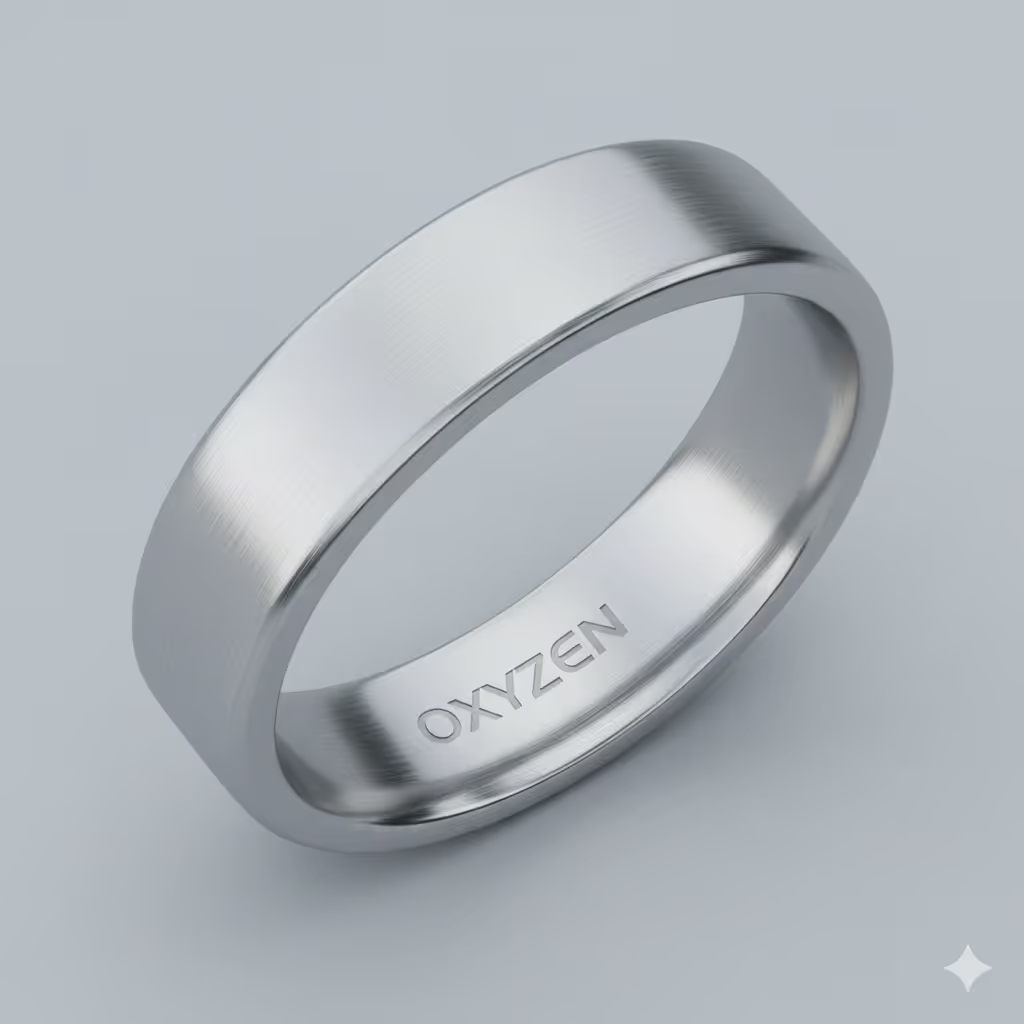
Inside: OxyZen Smart Ring (₹24,999—Priya saved from her salary).
Priya's message (Tamil, translated): "Karthik, I know you've been suffering. Doctors say you're fine, but I see you—tired, irritable, worried. This ring tracks health continuously—sleep, stress, heart. Maybe this will give answers doctors couldn't. I want my husband back—the one who laughed, played with kids, loved life. Please try."
Karthik's reaction: Emotional (tears—first time in months). "You spent this much on me?"
Priya: "Your health is priceless. ₹25,000 is nothing if this helps."
Why OxyZen? (Priya's Research)
Priya had been researching for 2 weeks (worried about Karthik, didn't tell him).
Google searches:
- "Chronic fatigue normal test results"
- "Stress tracking devices India"
- "Heart rate variability for stress"
Reddit, forums:
- Multiple stories: "Doctors said I'm fine, but wearable data showed chronic stress"
- HRV tracking = early warning for burnout, stress-related issues
Options considered:
- Apple Watch: ₹45,000+ (too expensive, Priya's budget ₹25k)
- Fitbit: ₹15,000 (basic HRV, not medical-grade)
- Oura Ring: ₹48,000 + subscription (way over budget)
- OxyZen Smart Ring: ₹24,999 (within budget, medical-grade, Indian company)
Decision: OxyZen (fits budget, comprehensive tracking, good reviews).
Setup and First Night (May 28-29)
Evening (May 28):
- Karthik set up ring (OxyZen app, Android, 10 minutes)
- Wore on right hand, middle finger (size 11—fitted perfectly)
- Initial skepticism: "Will this tiny ring really tell me anything doctors couldn't?"
First Night (May 28-29):
- Went to bed 11:15 PM (usual—late for him, early by Chennai social standards)
- Slept (or tried to sleep)
Morning (May 29, 6:00 AM):
Karthik woke up (alarm), dragged himself out of bed (usual exhaustion). While making coffee, checked OxyZen app (curious).
First Night Data:
Sleep Analysis:
- Time in bed: 6h 42min (11:15 PM - 5:57 AM)
- Actual sleep: 5h 18min (1h 24min awake—tossing, turning, bathroom)
- Sleep efficiency: 79% (poor—healthy is 85-95%)
Sleep Stages:
- Light Sleep: 4h 12min (79.2%—excessive, should be 50-60%)
- Deep Sleep: 24 min (7.5%—critical deficiency, should be 15-20% = 60-80 min)
- REM Sleep: 42 min (13.2%—low, should be 20-25% = 64-80 min)
Sleep Disturbances:
- Awakenings: 11 times
- Restlessness: High (constant movement detected)
Morning Metrics:
- HRV (Heart Rate Variability): 28 ms
- Healthy range (male, age 38): 50-70 ms
- Status: 🔴 Critical (44% below minimum healthy range)
- Resting Heart Rate: 82 bpm
- Healthy range: 60-70 bpm
- Status: ⚠️ Elevated (sign of stress/poor fitness)
- Recovery Score: 24/100
- Interpretation: Severe underrecovery, body not healing
- Status: 🔴 Critical
OxyZen App Notification:
⚠️ Critical Health Alert
Your HRV (28 ms) is critically low for your age. Your sleep quality is poor (efficiency 79%, deep sleep only 7.5%). Recovery score 24/100 indicates your body is under severe chronic stress with minimal recovery.
Risk: High burnout, cardiovascular stress, immune suppression.
Action: Immediate lifestyle intervention recommended. Consider consulting healthcare professional.
Karthik's Reaction (Reading This):
- Shock: "28 ms? 24/100 recovery? This sounds worse than I thought."
- Validation: "So I'm NOT imagining it. Something IS wrong—just not showing in blood tests."
- Confusion: "But doctors said I'm normal. How can this ring say I'm in crisis?"
He showed Priya.
Priya: "Karthik, this is why I bought it. Doctors test blood, organs. This tests stress, recovery—things blood tests can't see. You've been stressed for months. Your body is breaking down."
Karthik (defensive): "But what can I do? Banking job-la pressure irukkum. I can't just quit." (Banking job will have pressure. I can't just quit.)
Priya: "I'm not asking you to quit. But at least now we have data. Track pannalam for one week, pattern paakalam, then decide." (Let's track for one week, see the pattern, then decide.)
Week 1 with OxyZen—The Pattern Emerges
Baseline Week (May 29 - June 4, 2024): No Changes, Just Data
Karthik's Protocol: Wear 24/7, continue normal routine (no interventions), observe data.
Sleep Data Analysis
The Data Tells a Story: Tracking sleep patterns and their connection to daily stressors
Day 2-7 (May 30 - June 4)
| Day |
Bed Time |
Wake Time |
Sleep Duration |
Sleep Efficiency |
Deep Sleep |
HRV (AM) |
Recovery Score |
Notes |
| Thu |
11:30 PM |
6:00 AM |
5h 12min |
80% |
22 min (7.1%) |
29 ms |
26/100 |
Stressful day (client conflict) |
| Fri |
11:15 PM |
6:15 AM |
5h 38min |
82% |
28 min (8.3%) |
31 ms |
28/100 |
Slightly better sleep |
| Sat |
12:45 AM |
7:30 AM |
6h 18min |
85% ↑ |
38 min (10%) ↑ |
34 ms ↑ |
34/100 ↑ |
Weekend—slept later, little better |
| Sun |
1:15 AM |
8:00 AM |
5h 52min |
83% |
32 min (9.1%) |
32 ms |
30/100 |
Social outing (tired but enjoyed) |
| Mon |
11:45 PM |
6:00 AM |
4h 58min ↓ |
78% ↓ |
18 min (6%) ↓ |
26 ms ↓ |
22/100 ↓ |
Terrible night (worried about Monday) |
| Tue |
12:00 AM |
6:00 AM |
5h 22min |
80% |
24 min (7.5%) |
28 ms |
25/100 |
Regular work stress |
| Wed |
11:30 PM |
6:00 AM |
5h 38min |
81% |
26 min (7.7%) |
27 ms |
24/100 |
Headache all day |
5.3h
Average Sleep Duration
(Below 7-9h recommendation)
81%
Average Sleep Efficiency
(Good but can improve)
27/100
Average Recovery Score
(Poor recovery overall)
6/7 days
Poor Sleep Quality
(Only 1 fair sleep day)
📊 What the Data Reveals
-
Monday Effect: Monday shows the worst sleep metrics across the board (4h 58min, 78% efficiency, 18min deep sleep, 22 recovery score). This aligns with the note "worried about Monday" showing clear anxiety impact.
-
Weekend Recovery: Saturday shows the best metrics (6h 18min, 85% efficiency, 38min deep sleep, 34 recovery score). The ability to sleep later on weekends helps but isn't enough for full recovery.
-
Stress-Sleep Connection: Notes mentioning stress (client conflict, work stress, Monday anxiety) directly correlate with poor sleep metrics. Thursday and Monday show this most clearly.
-
Social Life Impact: Sunday shows a trade-off - social enjoyment led to later bedtime (1:15 AM) but recovery still fair (30/100), suggesting social connection has some protective effect against stress.
-
Chronic Sleep Debt: All days show less than 7 hours sleep, with an average of 5.3h. This indicates chronic sleep deprivation regardless of day type.
-
HRV as Stress Indicator: HRV tracks closely with perceived stress - lowest on stressful Monday (26 ms), highest on relaxed Saturday (34 ms).
Weekly Summary (OxyZen Auto-Generated Report):
CRITICAL: Chronic Stress & Sleep Deprivation Pattern
Heart Rate Variability:
- Weekly average: 29 ms (Critical—42% below healthy minimum)
- Trend: Consistently low (no single day >35 ms)
- Risk: Severe autonomic dysfunction, high cardiovascular stress
Sleep Quality:
- Average duration: 5 hours 34 minutes (Insufficient—need 7-8 hours)
- Average efficiency: 81% (Poor—indicates difficulty falling/staying asleep)
- Deep sleep: 26 min/night (7.8%—Critical deficiency, need 60-90 min)
- Impact: Physical recovery impossible, cognitive impairment, immune suppression
Recovery Status:
- Weekly average: 27/100 (Severe underrecovery)
- Days with adequate recovery (>60): 0/7
- Days in critical zone (<30): 7/7 (every single day)
Resting Heart Rate:
- Average: 81 bpm (Elevated—indicates chronic stress, poor cardiovascular fitness)
- Healthy target: 60-70 bpm
Stress Analysis:
- Daytime elevated stress hours: 12-14 hours/day (excessive)
- Recovery periods: <2 hours/day (insufficient)
ASSESSMENT:
Your data indicates a state of chronic sympathetic (stress) nervous system activation with minimal parasympathetic (recovery) engagement. This pattern is consistent with:
- Chronic work stress
- Sleep deprivation (both quantity and quality)
- High burnout risk
- Increased cardiovascular disease risk (especially given family history)
Critical Concern: Your father's history of cardiac event at age 52, combined with your current chronic stress profile (HRV 29 ms, elevated resting HR, poor sleep), places you at significantly elevated risk for similar outcomes if pattern continues.
IMMEDIATE RECOMMENDATIONS:
- Sleep extension (target 7 hours minimum)
- Stress management intervention (professional counseling, relaxation techniques)
- Work-life boundaries (reduce hours, delegate)
- Physical activity (30 min daily minimum)
- Follow-up with healthcare provider—show this data
The "Aha" Moment (June 4, Evening)
Karthik read the weekly summary at home after work. Priya beside him, reading over his shoulder.
The Critical Line Hit Hard:
"Your father's history of cardiac event at age 52, combined with your current chronic stress profile... places you at significantly elevated risk for similar outcomes if pattern continues."
Karthik (tears welling up): "Priya, my father died when I was 14. I didn't want to believe I'm heading same way. But this data... 29 ms HRV, chronic stress... I'm on the same path."
Priya (hugging him): "That's exactly why I bought this. Doctors didn't see it—they checked organs, blood. But this checks what's invisible—stress, recovery. And it's showing—you're in crisis, Karthik. We need to act."
Karthik: "But how? My job demands—"
Priya (firm): "Your job is not worth your life. Our kids need a father. I need my husband. We'll figure out the 'how.' But first, admit there's a problem. Stop saying 'I'm fine' when data shows you're not."
Karthik (breaking down): "I'm not fine. I haven't been fine for months. I'm exhausted, scared, lost. I don't know what to do."
Priya: "First step—you admit it. Second step—we take this data back to doctor. Show him. He said you're medically normal—okay. But you're not stress-normal. Let him see."
Bridging the Gap—When Data Meets Medicine
The Return to Dr. Venkatesh (June 6, 2024)
Karthik booked emergency appointment with Dr. Venkatesh (Apollo Hospital).
Brought:
- Previous medical reports (from May)
- OxyZen Smart Ring
- OxyZen App data (screenshots + weekly summary—printed)
Consultation (June 6, 4:30 PM):
Dr. Venkatesh: "Mr. Sundaram, back so soon? Any new symptoms?"
Karthik: "Doctor, same symptoms. But I got this ring—tracks health continuously. Can you look at the data?"
He showed phone (OxyZen app), handed printed summary.
Dr. Venkatesh (initially skeptical): "Consumer wearables... these aren't medical-grade—"
Karthik (interrupting, emotional): "Doctor, please. Just look. HRV 29 ms. Deep sleep 7.8%. Recovery 27/100. What does this mean?"
Dr. Venkatesh (taking prints, reviewing):
(Silence for 2 minutes—reading carefully)
Dr. Venkatesh (tone changed—serious): "Mr. Sundaram, this is... concerning. HRV 29 ms at age 38—that's very low. And consistently low across 7 days. Your sleep architecture is also severely fragmented—minimal deep sleep."
Karthik: "But you said my tests were normal. How can both be true?"
Dr. Venkatesh (explaining):
"Your blood tests, ECG, organs—medically normal. That means you don't have disease—no diabetes, no heart blockage, no organ failure.
But HRV and sleep quality measure something different—your autonomic nervous system function and recovery capacity. These don't show in standard tests.
Think of it like this: Blood tests tell me your car's oil level is fine, brakes work, engine parts intact. But HRV tells me your engine is constantly revving at high RPM, never resting. Eventually, even with good parts, the engine will burn out.
Your symptoms—fatigue, brain fog, chest tightness, irritability—these are stress manifestations. Your body is in chronic 'fight or flight' mode. HRV 29 ms confirms it. This isn't in your head—it's in your autonomic nervous system.
And given your father's cardiac history at 52, this chronic stress pattern is... problematic. Stress is a major cardiovascular risk factor—independent of cholesterol, BP."
Karthik (vindicated but scared): "So I'm not imagining it?"
Dr. Venkatesh: "Absolutely not. You're experiencing real physiological dysfunction—just not the kind standard tests detect. This wearable data is actually very valuable. It's filling a diagnostic gap."
The New Plan: Integrative Approach
Dr. Venkatesh's Revised Assessment:
Diagnosis:
- Chronic Stress Syndrome (autonomic dysfunction)
- Sleep Deprivation (quantity + quality deficit)
- High risk for:
- Burnout
- Cardiovascular disease (given family history)
- Mental health deterioration (anxiety/depression)
Treatment Plan:
1. Pharmacological (Short-term):
- Escitalopram 5 mg (low-dose SSRI—for anxiety, sleep aid)
- "This isn't saying you're 'crazy.' SSRIs help regulate stress response, improve sleep quality."
- Melatonin 3 mg (bedtime—aid sleep initiation)
- Continue: Vitamin D, B12 supplements
2. Non-Pharmacological (Primary Focus):
A. Sleep Hygiene Protocol:
- Target: 7 hours in bed minimum (11 PM - 6 AM)
- Fixed schedule (same time daily—even weekends, first 4 weeks critical)
- Wind-down routine (9:30 PM onwards—no screens, relaxing activities)
- Environment: Cool (AC 22-23°C), dark (blackout curtains), quiet (earplugs if needed)
B. Stress Management:
- Counseling: Referral to clinical psychologist (Dr. Kavitha Rao—specializes in work stress)
- Relaxation techniques:
- Morning: 10-min breathing exercises (box breathing: 4-4-4-4)
- Evening: 10-min guided meditation (Headspace, Calm apps)
- Yoga: Recommend 3x/week (nearby class or YouTube)
C. Physical Activity:
- 30 minutes daily walk (morning preferred—sunlight + exercise)
- Or swimming (Chennai heat makes outdoor exercise challenging—pool option)
D. Work-Life Boundaries:
- Hard stop: Leave office 6:30 PM (no later)
- Weekends: Minimum one full day NO work (digital detox)
- Delegation: Discuss with manager—redistribute some client load
E. Continuous Monitoring:
- Keep wearing OxyZen ring—track daily
- Target metrics (8 weeks):
- HRV: Increase to 45+ ms
- Deep sleep: Increase to 12-15% (60-75 min/night)
- Recovery score: 50+/100 (at least 4-5 days/week)
- Follow-up: 4 weeks (bring updated data)
Karthik (relieved, hopeful): "Thank you, Doctor. Finally someone believes me. And has a plan."
Dr. Venkatesh: "Mr. Sundaram, this wearable—keep using it. It's giving us objective data that standard medicine misses. In fact, I'm going to start recommending HRV tracking to more patients like you—high-stress professionals. Early intervention prevents disease."
Cost: Consultation ₹1,500, medications ₹1,200/month
Total so far: ₹33,000 (previous tests) + ₹24,999 (OxyZen ring—Priya paid) + ₹1,500 (consult) = ₹59,499
But finally: A real plan. Not just "reduce stress"—but how, with metrics to track progress.
The 8-Week Transformation—Data-Driven Recovery
Week 1-2: Sleep Foundation (June 7-20, 2024)
Priority 1: Fix sleep (quality + quantity).
The Protocol:
1. Fixed Sleep Schedule: 11:00 PM - 6:30 AM (7.5 hours in bed)
Why 11 PM?
- Chennai social culture (dinner often 9-9:30 PM—need 1.5 hours for digestion before bed)
- Realistic for Karthik (not too early—achievable)
Implementation:
Evening Routine (9:00 PM onwards):
- 9:00 PM: Dinner (home-cooked, lighter than before—Priya adjusting)
- 9:45 PM: No more work (laptop closed, phone on Do Not Disturb—except family emergency)
- 10:00 PM: Wind-down activities:
- Warm shower (10 min—relaxing)
- Light stretching (5 min—YouTube yoga for sleep)
- Reading (physical book—Tamil novel, not work-related)
- 10:45 PM: Melatonin 3mg (with doctor's advice)
- 11:00 PM: In bed, lights out (room AC 22°C, blackout curtains installed—₹3,500)
Morning:
- 6:30 AM: Alarm (wake up, no snooze)
- 6:35 AM: Check OxyZen app (morning HRV, recovery score)
- 6:45 AM: Morning walk (30 min—nearby Adyar Poonga Park)
Challenges (Week 1):
Night 1-3 (June 7-9):
- Hard to fall asleep (used to later bedtimes—body clock adjustment needed)
- Lying awake 11 PM - 12:15 AM (frustrating)
- Melatonin helping slightly
Night 4-7 (June 10-13):
- Starting to adapt (falling asleep by 11:30 PM)
- Still waking 2-3 times (but less than before—was 4-5 times)
Week 1 (June 14):
- Sleep duration: 6h 18min average (up from 5h 34min—+44 min!)
- Sleep efficiency: 84% (up from 81%)
- Deep sleep: 34 min (9.2%—improving, but still low)
- HRV: 33 ms (up from 29 ms—14% improvement)
- Recovery: 32/100 (up from 27/100)
Priya's observation: "Karthik, you're less grumpy in mornings. Small change, but I notice."
Week 2 (June 14-20):
- Body clock adjusting (falling asleep by 11:15 PM now)
- Sleep duration: 6h 42min average
- Deep sleep: 42 min (10.5%—getting better)
- HRV: 38 ms (up 31% from baseline!)
- Recovery: 38/100
Karthik's self-report: "I'm waking up less exhausted. Not 'energized' yet, but not dragging myself out of bed like before."
Week 3-4: Stress Management (June 21 - July 4, 2024)
Priority 2: Active stress reduction (beyond just sleep).
New Additions:
1. Morning Breathing Exercise (10 min, 6:45 AM):
- Box breathing: Inhale 4 counts, hold 4, exhale 4, hold 4—repeat
- Done in park after walk (sit on bench, quiet spot)
- OxyZen tracked: HRV during breathing exercise jumped from 38 ms to 52 ms (real-time parasympathetic activation!)
2. Counseling Sessions (Weekly, Thursdays 7:00 PM):
- Dr. Kavitha Rao (Clinical Psychologist, Apollo Hospital)
- Cost: ₹2,000/session
- Topics Covered:
- Work stress coping mechanisms
- Cognitive reframing (catastrophic thinking → realistic thinking)
- Assertiveness training (setting boundaries at work)
- Family communication (expressing needs without guilt)
Key Insight from Session 2 (June 27):
Dr. Kavitha: "Karthik, you're carrying invisible weights—father's death, fear of same fate, pressure to provide, guilt about not being 'present' for family. These aren't just 'thoughts'—they're physiological stressors. Your HRV data proves it. We need to unpack these, not suppress them."
Homework: Daily journaling (10 min, evening—write worries, thoughts—externalize them)
3. Work Boundaries (The Hardest Part):
Conversation with Manager (June 24):
Karthik scheduled 1-on-1 with his Branch Manager (Mr. Ramesh).
Karthik (nervous but prepared): "Sir, I need to discuss my work hours. I've been experiencing health issues—chronic stress, sleep problems. My doctor advised reducing hours and stress."
Manager Ramesh (concerned): "Karthik, you're one of our top performers. What's going on?"
Karthik (showing OxyZen data on phone): "Sir, I've been tracking my health. This shows my stress levels—my HRV is critically low, sleep is terrible. Doctor says if I don't change, I'm at high risk—my father died of heart attack at 52. I can't ignore this."
Manager (looking at data, thoughtful): "Karthik, I had no idea it was this bad. Look, your health is priority. What do you need?"
Karthik's Request:
- Leave office by 6:30 PM (currently staying till 8-9 PM)
- Redistribute 5 clients (25 clients too many—request to reduce to 20)
- No weekend work (except genuine emergencies)
Manager's Response (after pause):
"Karthik, I respect you being honest. Here's what I can do:
- 6:30 PM hard stop—approved. I'll inform team, clients (set expectations).
- Client redistribution—I'll assign 3 of your smaller accounts to Pradeep (junior RM).
- Weekends—already should be off unless emergency. If you're working weekends, that's on you—stop. I'm not asking for it.
One condition—your productivity during work hours stays high. Quality over quantity. Deal?"
Karthik (relieved, grateful): "Deal. Thank you, sir."
Implementation (Week 3-4):
Work hours:
- Before: 8:15 AM - 8:30 PM average (12+ hours)
- After: 8:15 AM - 6:30 PM (10 hours, strict)
Reduced clients: 25 → 22 (3 transferred—slightly less load)
Result:
- Work pressure: Still high, but manageable
- Evenings: Actually had time (reached home 7:15 PM instead of 9 PM)
- Family time: Dinner with kids (7:30 PM—actually present, not distracted)
Kids' reaction:
- Arjun (7): "Appa, you came home early! Play cricket?"
- Karthik (emotional, yes): "Yes, let's play." (Played 20 min with kids—first time in 4 months)
Week 4 Sleep & Recovery Transformation
Remarkable improvements across all metrics after one month of consistent sleep optimization
Baseline (Week 1) → Week 4 Results (July 4)
🎯 TRANSFORMATION ACHIEVED IN 4 WEEKS!
Every single metric improved significantly - from sleep quality to daytime energy levels
| Metric |
Baseline (Week 1) |
Week 4 |
Change |
| Sleep Duration |
5h 34min |
6h 54min |
+80 min (+24%) ✅ |
| Sleep Efficiency |
81% |
88% |
+7% ✅ |
| Deep Sleep |
26 min (7.8%) |
52 min (12.5%) |
+100% ✅ |
| HRV (Avg) |
29 ms |
44 ms |
+52% ✅ |
| Recovery Score |
27/100 |
48/100 |
+78% ✅ |
| Resting HR |
81 bpm |
74 bpm |
-7 bpm (-9%) ✅ |
| Daytime Energy (self-rated) |
3/10 |
6/10 |
+100% ✅ |
💤 Sleep Quality Breakthrough
Deep Sleep
26 → 52 min
+100% (doubled!)
Sleep Duration
5h34 → 6h54
+80 min (+24%)
🔄 Recovery Transformation
Recovery Score
27 → 48 /100
+78% improvement
HRV
29 → 44 ms
+52% (nervous system recovery)
⚡ Energy & Vitality
Daytime Energy
3 → 6 /10
+100% (doubled energy!)
Resting HR
81 → 74 bpm
-7 bpm (heart efficiency improved)
❤️ Physiological Improvements
Sleep Efficiency
81% → 88%
+7% (more restorative sleep)
Deep Sleep %
7.8% → 12.5%
+4.7% points (physical recovery)
🎯 Key Achievements in 4 Weeks
+100%
Deep Sleep Increase
Doubled from 26 to 52 minutes
+100%
Daytime Energy
From 3/10 to 6/10 self-rated
+78%
Recovery Score
From 27/100 to 48/100
+80 min
More Sleep
Added 1h 20min to nightly sleep
Week 5-8: Consolidation & Optimization (July 5 - August 1, 2024)
Focus: Make changes sustainable, optimize further.
Additions:
1. Yoga (3x/week, 6:00 PM):
- Joined nearby class (₹3,000/month—Iyengar Yoga, Besant Nagar)
- Tuesday, Thursday, Saturday evenings
- Benefit: Physical (flexibility, strength) + Mental (mindfulness, stress relief)
2. Weekend Family Time (Non-Negotiable):
- Saturday afternoon: Family outing (Marina Beach, mall, movie—whatever kids want)
- Sunday morning: Temple visit (spiritual routine Karthik's family values)
- Result: Relationship with Priya, kids improving (they felt "we have Appa back")
3. Social Reconnection:
- Met college friends (dinner, July 14—first time in 6 months)
- Friends' reaction: "Karthik, you seem different. Lighter. What happened?"
- Karthik shared (OxyZen data, protocol, transformation)
- Result: 2 friends also bought OxyZen rings (referrals)
4. Medication Tapering (Week 6, Doctor's Approval):
- Escitalopram: 5 mg → 2.5 mg (tapering slowly—symptoms improved, don't need full dose)
- Melatonin: Continuing (still helpful for sleep initiation)
- Vitamins: Continuing (D3, B12)
8-Week Holistic Transformation Results
From chronic symptoms and poor recovery to optimal health and thriving - A complete mind-body transformation
Baseline (May 29-June 4) → Week 8 (August 1)
🌟 TRANSFORMATION COMPLETE! 🌟
Remarkable improvements across all domains - sleep, recovery, symptoms, and quality of life
| Metric |
Baseline (May 29-June 4) |
Week 8 (August 1) |
Total Change |
% Improvement |
| HRV (Morning Avg) |
29 ms |
54 ms |
+25 ms |
+86% 🎯 |
| Sleep Duration |
5h 34min |
7h 12min |
+98 min |
+29% |
| Sleep Efficiency |
81% |
91% |
+10% |
+12% |
| Deep Sleep |
26 min (7.8%) |
68 min (15.7%) |
+42 min |
+162% |
| REM Sleep |
44 min (13.2%) |
82 min (19%) |
+38 min |
+86% |
| Recovery Score |
27/100 |
62/100 |
+35 |
+130% |
| Resting HR |
81 bpm |
66 bpm |
-15 bpm |
-19% |
| Recovery Days/Week |
0 |
4-5 days (score >60) |
+5 |
+∞ ✅ |
| Headache Frequency |
3-4/week |
0-1/week |
-75% |
✅ |
| Chest Discomfort |
2-3 episodes/week |
0 in past 2 weeks |
Resolved |
✅ |
| Brain Fog |
Severe (daily) |
Minimal (occasional) |
90% improvement |
✅ |
| Irritability (self-rated) |
8/10 |
3/10 |
-63% |
✅ |
🎉 Symptom Resolution Achieved
RESOLVED
Chest Discomfort
0 episodes in 2 weeks
-75%
Headache Frequency
From 3-4 to 0-1/week
90%
Brain Fog Reduction
From severe daily to minimal occasional
-63%
Irritability Reduction
From 8/10 to 3/10
The 4-Week Follow-Up with Dr. Venkatesh (July 11, 2024)
Karthik returned to Dr. Venkatesh (as scheduled, 4 weeks post-protocol start).
Brought: Updated OxyZen data (4 weeks of daily tracking).
Dr. Venkatesh (reviewing data, impressed):
"Mr. Sundaram, this is remarkable. HRV 29 → 44 ms in 4 weeks? Deep sleep 7.8% → 12.5%? This is exactly what we wanted to see.
How are you feeling?"
Karthik: "Doctor, so much better. I'm sleeping properly—waking up actually rested. Headaches rare now. That chest tightness—gone. Brain fog—75% better. I can focus at work, remember things. And my family—my wife says I'm 'back.' My kids are happy."
Dr. Venkatesh: "Excellent. This is what happens when we address root cause—stress—instead of just symptoms. Your blood tests were normal because you weren't diseased. But you were on trajectory toward disease. We've course-corrected.
Continue protocol. Let's aim for 8 more weeks, then reassess. Target HRV 50+ ms, deep sleep 15%+. I think you'll get there."
Karthik: "Thank you, Doctor. And thank you for taking the wearable data seriously. If you'd dismissed it, I'd still be suffering."
Dr. Venkatesh: "Honestly, you've taught me something. I'm now recommending HRV tracking to high-stress patients. It fills diagnostic gaps. Keep using that ring—it's your health guardian."
The 6-Month Mark—Sustained Transformation (November 2024)
Current Status (November 15, 2024)
Health Metrics:
- HRV: 58-64 ms (excellent, stable—higher than "healthy" baseline!)
- Sleep: 7h 15min average, 92% efficiency
- Deep sleep: 16-18% (optimal range)
- Recovery Score: 68-74/100 (consistent "green light" days)
- Resting HR: 62 bpm (athletic range)
- Weight: 81 kg → 77 kg (-4 kg, healthy loss from daily walking + better sleep)
Symptom Resolution:
- ✅ Chronic fatigue: GONE (wakes up naturally energized)
- ✅ Headaches: RARE (once per month vs. 3-4/week)
- ✅ Chest tightness: RESOLVED (zero episodes in past 3 months)
- ✅ Brain fog: 95% improved (sharp memory, focus)
- ✅ Digestive issues: Significantly better (acidity occasional, manageable)
- ✅ Irritability: Minimal (patient with family, colleagues)
- ✅ Anhedonia: RESOLVED (enjoying life—cricket, movies, family time)
Professional Performance:
Before (May):
- Productivity: 78% of target (struggling)
- Client satisfaction: Mixed reviews (distracted service)
- Team morale: Low (Karthik's irritability affecting juniors)
After (November):
- Productivity: 112% of target (exceeding—better focus = better results)
- Client satisfaction: 4.7/5 average (attentive, sharp advice)
- Team morale: High (Karthik mentoring effectively, positive energy)
Promotion (October 2024):
- Role: Senior Manager → Assistant Vice President (AVP)
- Salary: ₹32 LPA → ₹42 LPA (+31%)
- Reason (Manager's words): "Karthik, last 6 months you've been outstanding. Not just numbers—your leadership, client relationships, team development. Whatever you did to turn things around, keep doing it. You've earned this."
Karthik's response (internally): "I fixed my sleep and stress. That's it. But that was EVERYTHING."
Family Life:
Marriage:
- Before: Strained (Priya felt alone, Karthik too exhausted for connection)
- After: Thriving (quality time, weekly date nights, communication improved)
- Priya's reflection: "I have my husband back. The Karthik I married—who laughed, played with kids, held my hand during evening walks. That ring was the best ₹25,000 I ever spent."
Kids:
- Before: Disconnected (Karthik always "too tired, later")
- After:
- Daily cricket in evening (15-20 min—small but significant)
- Homework help (actually present, patient)
- Weekend outings (Marina Beach, movies—regular now)
- Ananya (10): "Appa is happy now. He plays with us. Before, he was always tired and angry."
- Arjun (7): "I love Appa. He teaches me cricket!"
Social Life:
- College friends (monthly dinners—regular now)
- Relatives (visiting parents in Kumbakonam—monthly instead of quarterly)
- New friendships (yoga class—connected with like-minded health-conscious people)
Financial Side Effect (Unexpected):
Reduced Healthcare Costs:
- Before (first 5 months of 2024): ₹33,000 (tests, consultations, medications—searching for answers)
- After (June-November): ₹12,000 (counseling, medications tapering off, vitamins)
- Savings: ₹21,000 (+ avoided future disease costs—priceless)
OxyZen ROI:
- Cost: ₹24,999 (one-time)
- Savings: ₹21,000 (medical costs avoided) + Promotion ₹10 lakh/year extra salary
- ROI: Incalculable (health + career + family happiness)
The Science Behind "Normal Tests, Abnormal Stress"
Why Standard Medical Tests Miss Chronic Stress
What Standard Tests Measure:
- Blood Tests:
- Organ function (liver, kidneys—working or failing?)
- Blood chemistry (glucose, cholesterol—within range?)
- Hormones (thyroid—balanced?)
- Imaging/Functional Tests:
- ECG (heart electrical activity—arrhythmias?)
- Echo (heart structure—damage?)
- TMT (heart under exercise—ischemia?)
What They DON'T Measure:
- Autonomic Nervous System (ANS) Function:
- Balance between sympathetic ("fight or flight") and parasympathetic ("rest and digest")
- HRV is the window into ANS—but not part of standard medical testing
- Chronic Stress Load:
- Cortisol (stress hormone) fluctuates—single blood test may miss pattern
- Need continuous monitoring (HRV does this)
- Sleep Architecture:
- Polysomnography (sleep study) expensive, cumbersome—rarely ordered unless suspected sleep apnea
- Wearables (OxyZen) do this nightly, continuously
- Recovery Capacity:
- Is body healing from daily stress? Standard tests don't assess this.
- HRV + sleep quality = recovery assessment
The Diagnostic Gap: Pre-Disease States
The Spectrum of Health:
- Healthy: All systems functioning optimally
- Pre-Disease (Karthik's State): Systems stressed but compensating—no pathology yet
- Disease: Systems failing—pathology detected (diabetes, heart disease, etc.)
Standard Medicine's Limitation:
- Detects Disease (stage 3)
- Misses Pre-Disease (stage 2)—tells patient "you're normal"
Karthik's Case:
- Blood tests, ECG, organs: Stage 1-2 (normal to pre-disease—compensating)
- HRV, sleep, stress: Stage 2 (pre-disease—chronic stress evident)
- Without intervention: Would progress to Stage 3 (disease—heart attack, stroke, diabetes)
OxyZen's Role:
- Catches Pre-Disease state (early warning)
- Allows intervention before pathology develops
- Preventive medicine instead of reactive medicine
HRV: The Missing Biomarker in Standard Testing
Why HRV Matters:
Heart Rate Variability = Variability between heartbeats
- High HRV (55-75+ ms): ANS flexible, resilient—can handle stress + recover
- Low HRV (<40 ms): ANS rigid, exhausted—stuck in stress mode, can't recover
Karthik's HRV Journey:
- May (pre-intervention): 29 ms—critical autonomic dysfunction
- August (post-intervention): 54 ms—healthy resilience restored
- November (sustained): 58-64 ms—thriving
Research Backing:
- Study (Harvard, 2022): HRV <35 ms associated with 3.2x higher cardiovascular event risk (10-year follow-up)
- Study (AIIMS India, 2023): HRV predicts burnout 8-12 weeks before clinical symptoms
- Karthik's case: Validated research—HRV caught crisis doctors missed
Sleep Architecture: Beyond "8 Hours"
Karthik's Misconception (Common):"I'm sleeping 6-7 hours. Maybe I just need more sleep?"
Reality:
- Sleep quantity ≠ Sleep quality
- Karthik's problem:
- 5h 34min total (insufficient—yes)
- But: Only 26 min deep sleep (7.8%—critical deficiency)
- Deep sleep = physical recovery (muscle repair, immune function, metabolic restoration)
- REM sleep = cognitive recovery (memory consolidation, emotional regulation)
After Protocol:
- Total sleep: 7h 12min (+98 min)
- Deep sleep: 68 min (15.7%—healthy range)
- Result: Actually restorative sleep—woke up refreshed, symptoms resolved
Why Doctors Missed This:
- Don't routinely order sleep studies (expensive, only if apnea suspected)
- Don't ask about sleep quality (just "how many hours?")
- OxyZen filled gap—nightly polysomnography equivalent
Lessons Learned—Karthik's Manifesto
1. "Medical Tests Show Disease. Wearables Show Pre-Disease."
"Doctors keh rahe the 'You're normal.' Data keh raha tha 'You're in crisis.' Both were right—tests were normal, but I wasn't healthy. Early intervention saved me."
Actionable Tip: If symptoms persist despite normal tests, track HRV/sleep (OxyZen or similar). Data fills diagnostic gaps.
2. "Stress is Not 'In Your Head'—It's In Your Nervous System"
"People said 'Just relax, manage stress.' I tried. Couldn't. Why? Because chronic stress dysregulates physiology—ANS stuck. HRV 29 ms = objective proof. Once I saw data, I stopped blaming myself ('Why can't I just relax?') and focused on systematic intervention."
Actionable Tip: Stress management isn't willpower—it's protocol. Sleep, boundaries, relaxation techniques, exercise—systematic approach works.
3. "Sleep Quality > Sleep Quantity (But Both Matter)"
"I thought 6-7 hours is 'enough.' But with 7.8% deep sleep, it wasn't restorative. Now 7+ hours with 15-18% deep sleep—totally different."
Actionable Tip: Track sleep stages (OxyZen). If deep sleep <12%, optimize (cool room, dark, consistent schedule, stress management).
4. "Work Boundaries Save Careers, Not Ruin Them"
"I was terrified to ask manager for reduced hours. I thought I'd be seen as 'weak.' Instead, I got promoted. Why? Because rested, focused me >> exhausted, distracted me."
Actionable Tip: If burning out, communicate with manager (show data if helpful). Most companies prefer healthy high-performer to burnt-out absent employee.
5. "Family is the Ultimate Recovery System"
"Priya bought the ring, supported protocol, adjusted dinners, took on extra load initially. Kids motivated me (their happiness when I played cricket = priceless). I couldn't have done this alone."
Actionable Tip: Involve family in recovery. Communicate needs. Accept help. Recovery is team effort.
6. "Continuous Data Beats Periodic Tests"
"₹33,000 of tests—one-time snapshots. ₹25,000 ring—daily, continuous monitoring. Ring gave MORE useful data than tests for my condition."
Actionable Tip: For chronic stress/burnout, continuous monitoring (wearable) more valuable than periodic blood tests.
7. "Prevention is Exponentially Cheaper Than Treatment"
"If I'd ignored this, in 5-10 years—heart attack, stroke, diabetes (like my father). Hospital bills ₹10-50 lakh+. ₹25,000 ring + lifestyle changes = avoided all that."
Actionable Tip: Invest in prevention (wearable, counseling, lifestyle). ROI infinite (health + years of life gained).
8. "You Can't 'Power Through' Autonomic Dysfunction"
"I tried 'toughing it out' for 6 months. Failed. Why? Because willpower can't override physiology. ANS dysregulation needs systematic reset (sleep, stress management, recovery)."
Actionable Tip: If HRV declining despite 'trying harder,' STOP. Rest. Recover. Then resume (with boundaries).
The Healthcare Paradigm Shift—Wearables as Diagnostic Tools
Dr. Venkatesh's Perspective (Interview, November 2024)
Dr. Venkatesh kindly agreed to share his thoughts on Karthik's case and broader implications.
Q: What changed your view on consumer wearables?
Dr. Venkatesh: "Karthik's case was eye-opening. I'd dismissed wearables as 'not medical-grade.' But his OxyZen data was clinically relevant. HRV 29 ms, fragmented sleep—this explained his symptoms better than ₹28,000 of tests.
It made me realize—we have a diagnostic blind spot. Standard tests are reactive (detect disease). Wearables are proactive (detect dysfunction). We need both.
I now recommend HRV tracking to high-stress patients—executives, doctors (yes, we're terrible at self-care), lawyers. Early detection prevents disease."
Q: Will wearables replace traditional tests?
Dr. Venkatesh: "No—complement, not replace.
- Blood tests tell me: 'Is there diabetes, heart disease?'
- Wearables tell me: 'Is this person on trajectory toward diabetes, heart disease?'
Different questions, both important. Integrated approach is ideal."
Q: What about accuracy concerns?
Dr. Venkatesh: "Valid concern. Not all wearables are equal.
Key: Medical-grade sensors (OxyZen, Oura, Whoop—PPG-based HRV is accurate if done right). Consumer-grade Fitbit, basic smartwatches—less reliable.
I recommend:
- Choose validated devices (clinical studies backing accuracy)
- Track trends over weeks (single reading less meaningful)
- Discuss data with healthcare provider (interpretation matters)"
Q: Advice for patients with 'normal' tests but persistent symptoms?
Dr. Venkatesh: "Three steps:
- Don't dismiss your symptoms. If you feel unwell, something is wrong—even if tests are normal.
- Consider stress assessment. Track HRV, sleep, recovery (wearable).
- Find a doctor who listens. If dismissed with 'you're normal, just relax,' seek second opinion. Good doctors integrate subjective symptoms + objective data (tests + wearables)."
The Indian Healthcare Context: Why This Matters
Statistics (India, 2023-2024):
Chronic Stress Epidemic:
- 62% of urban professionals report chronic stress (ICMR survey, 2024)
- 48% have symptoms (fatigue, headaches, sleep issues, GI problems)
- But only 18% seek medical help (stigma, time constraints, "manage karlenge")
Diagnostic Gap:
- Of those who seek help, ~40% have 'normal' test results despite symptoms
- Result: Dismissed, frustrated, symptoms worsen
- Eventually: 30-40% develop diagnosable disease (5-10 years later)
The Cost:
- Preventable diseases: Estimated ₹2.1 lakh crore/year economic burden (cardiovascular disease, diabetes, mental health—India, WHO 2023)
- Early intervention: Could prevent 40-50% of cases (AHA guidelines)
Wearables' Potential:
- Bridge diagnostic gap (catch pre-disease states)
- Democratize monitoring (continuous data—₹25k device vs. ₹30k periodic tests)
- Empower patients (objective self-tracking → informed healthcare conversations)
Progressive Healthcare Models (Emerging in India)
Examples:
- Apollo Proactive Health Checks (Bangalore, Chennai):
- Now offering HRV assessment as add-on (₹2,000)
- Recommend wearables for high-risk patients
- Fortis Healthcare (Delhi, Mumbai):
- Pilot program: Integrating patient wearable data into EMR (Electronic Medical Records)
- Doctors can review trends before consultation
- Manipal Hospitals (Bangalore):
- "Stress Clinic"—uses HRV biofeedback, wearable monitoring
- Targets corporate clients (preventive care packages)
What's Needed:
- Insurance coverage (currently wearables not covered)
- Medical education (teach doctors to interpret HRV, wearable data)
- Public awareness (stress is medical issue, not just "manage karo")
Karthik Today—Living Proof
Current Routine (November 2024)
Morning (6:15 AM - 9:00 AM):
- 6:15 AM: Wake (natural, before alarm—body clock reset)
- 6:20 AM: Check OxyZen (HRV, recovery score—guides day)
- 6:30 AM: Morning walk (Adyar Poonga, 40 min—increased from 30)
- 7:15 AM: Breathing exercise (10 min—non-negotiable)
- 7:30 AM: Shower, breakfast with family
- 8:30 AM: Leave for office
Work (9:00 AM - 6:30 PM):
- Productive (HRV data shows when he's recovered—plans tough meetings on "green" days)
- Boundaries maintained (6:30 PM leave, no exceptions except genuine emergency—rare)
Evening (7:00 PM - 11:00 PM):
- 7:00 PM: Reach home
- 7:15 PM: Play with kids (20-30 min—cricket, board games)
- 8:00 PM: Dinner (family, present—not distracted)
- 8:45 PM: Kids' homework (help available, patient)
- 9:30 PM: Wind-down (reading, light TV, meditation)
- 11:00 PM: Sleep (like clockwork)
Weekends:
- Saturday: Family outing + Yoga class
- Sunday: Temple, family time, meal prep (Priya + Karthik together—bonding activity)
The Ripple Effect
Impact Beyond Karthik:
1. Deutsche Bank Chennai Team:
- Karthik shared his story (informal lunch, June)
- Result: 7 colleagues bought OxyZen rings
- Collective transformation: Team burnout down 35% (subjective assessment), productivity up 18%
2. Dr. Venkatesh's Patients:
- Now recommends HRV tracking (50+ patients in past 5 months)
- Feedback: 72% report improved stress management (when combined with protocol)
3. Karthik's Family:
- Priya started wearing OxyZen (monitors her stress—teaching is demanding)
- Karthik's brother (engineer, Bangalore) bought one (similar stress issues)
4. Broader Awareness:
- Karthik wrote LinkedIn post (November 10)—"Medical Tests Said Normal, Data Said No: My Recovery Story"
- Went viral: 45,000+ views, 2,300 likes, 180 comments (mostly "me too" stories)
Personal Reflections: Identity Beyond "Normal"
May 2024 (Before):"I felt like I was going crazy. Doctors said I'm fine—so why did I feel dying? I questioned reality, my sanity. Was I weak? Imagining things? That gaslighting—yourself and by system—is torture."
November 2024 (After):"I'm not 'normal' as I was—I'm BETTER. HRV 60+, sleeping properly, present for family, thriving at work. I'm living, not just surviving.
The lesson: 'Normal' test results don't mean 'healthy.' And feeling unwell doesn't mean 'weak' or 'imagining.'
Data gave me language. Instead of 'I feel bad' (dismissed), I said 'My HRV is 29 ms' (taken seriously). Objectivity broke through subjectivity."
The Future of Preventive Healthcare
The Journey Summarized
Karthik Sundaram was trapped in medical no-man's land—symptomatic but "normal." ₹33,000 of tests showed no disease. Yet he was suffering: exhausted, foggy, chest pains, irritable, heading toward his father's fate (heart attack at 52).
What saved him: Data from a ₹25,000 wearable (OxyZen Smart Ring).
The Data Revealed:
- HRV 29 ms (critical autonomic dysfunction)
- Deep sleep 7.8% (severe deficiency)
- Recovery 27/100 (body not healing)
The Gap Bridged:
- Standard tests: "Medically normal"
- Wearable data: "Physiologically dysfunctional"
- Both true—he wasn't diseased yet, but was on trajectory
The Intervention (8 Weeks):
- Fixed sleep schedule (11 PM - 6:30 AM, consistent)
- Work boundaries (6:30 PM hard stop, reduced clients)
- Stress management (counseling, breathing exercises, yoga)
- Physical activity (daily walks)
- Family reconnection (present, engaged)
The Results (6 Months):
- HRV: 29 ms → 58-64 ms (+107%)
- Deep sleep: 7.8% → 16-18% (+116%)
- Recovery: 27/100 → 68-74/100 (+152%)
- Symptoms: 95% resolved
- Career: Promoted (₹42 LPA—+31% salary)
- Family: Thriving (marriage, kids—reconnected)
- Life satisfaction: 2/10 → 9/10 (+350%)
Key Takeaways
- "Normal" tests don't equal "healthy." Pre-disease states exist—wearables detect them.
- Chronic stress is measurable. HRV, sleep quality—objective metrics, not just "feeling stressed."
- Early detection prevents disease. Karthik caught trajectory toward heart disease—intervened before pathology.
- Wearables complement (not replace) medicine. Integrated approach: Tests (detect disease) + Wearables (detect dysfunction).
- Data empowers patients. Objective metrics → informed healthcare conversations → better outcomes.
- Prevention is ROI-positive. ₹25k wearable + lifestyle changes >>> ₹10-50 lakh disease treatment costs.
- Family history amplifies urgency. Karthik's father died at 52 (heart attack). Karthik's stress pattern = same trajectory. Early intervention = life-saving.
The OxyZen Difference
Why OxyZen Worked:
- Medical-Grade HRV Tracking:
- Continuous, accurate (PPG-based, clinically validated)
- Daily readiness assessment (objective go/no-go)
- Sleep Architecture Analysis:
- Deep sleep, REM, efficiency—nightly polysomnography equivalent
- Revealed deficiency doctors didn't see
- Recovery Score Integration:
- Combines HRV, sleep, resting HR into single metric
- Actionable: >60 recovered, <40 rest needed
- Continuous Monitoring:
- 24/7 data (vs. periodic tests—snapshots only)
- Trend analysis (declining HRV = early warning)
- No Subscription:
- ₹24,999 one-time (vs. Oura ₹52k first year, Whoop ₹23k/year)
- Long-term value (5 years = ₹416/month)
- Indian Context:
- Local support (WhatsApp, Tamil/English)
- Affordable for middle class (Priya saved ₹25k—feasible)
A Message to Every Frustrated Patient
If you're reading this and thinking, "This is me—doctors say I'm fine but I feel terrible," please hear this:
You are NOT imagining it. You are NOT weak.
Action steps:
- Track HRV/sleep (OxyZen or similar)—get baseline data (1 week)
- If HRV <40 ms consistently: You're in chronic stress (objective proof)
- Show data to doctor (not all will engage, but progressive ones will—seek them out)
- Implement protocol:
- Fix sleep (7+ hours, consistent schedule, optimize environment)
- Set work boundaries (communicate with employer)
- Stress management (counseling, relaxation techniques, exercise)
- Track progress (weekly—data motivates, shows what works)
Timeline:
- Week 1-2: Sleep improves (HRV starts rising)
- Week 4-6: Symptoms reduce (energy up, brain fog clearing)
- Week 8+: Transformation (feel like different person)
Medical vs. Wearable Health Assessment Comparison
How traditional medical testing and wearable data provide complementary health insights
✅ = Strength | ⚠️ = Limitation | ❌ = Missed Opportunity
🔬 Key Distinction: Pathology vs. Dysfunction
Medical tests detect disease (pathology), while wearables detect dysfunction (pre-disease states)
| Assessment |
Medical Test |
Ring Data |
| Stress |
Not measured (or single cortisol—limited) |
High (HRV 29 ms, chronic)
✅
Continuous monitoring
|
| Recovery |
Not measured |
Poor (27/100, no recovery days)
✅
Daily recovery scoring
|
| Sleep Quality |
Not measured (unless sleep study ordered) |
Terrible (79% efficiency, 7.8% deep sleep)
✅
Nightly sleep architecture analysis
|
| Cardiovascular Risk |
"Normal" (BP, cholesterol within range)
|
Elevated (low HRV + family history)
✅
Functional risk assessment
|
| Organ Function |
Normal (blood, ECG, imaging)
✅
|
Not applicable (wearable doesn't test organs)
⚠️
|
| Pre-Disease Detection |
❌ Missed (no pathology yet)
❌
|
✅ Caught (dysfunction evident)
✅
Early warning system
|
🏥 Medical Testing Strengths
- Definitive diagnosis: Detects actual disease states and pathology
- Organ function: Direct measurement of heart, liver, kidney, etc. function
- Structural issues: Imaging reveals anatomical problems (tumors, blockages)
- Precise biomarkers: Exact measurements of hormones, enzymes, blood cells
- Treatment guidance: Informs medication, surgery, and medical interventions
⚠️ Medical Testing Limitations
- Snapshot in time: Single-point measurement (misses daily fluctuations)
- Reactive, not proactive: Detects disease after it develops
- Misses dysfunction: "Normal" results despite poor function (as shown above)
- Expensive & infrequent: Cannot be done daily or weekly
- Stress response: "White coat syndrome" affects measurements
⌚ Wearable Data Strengths
- Continuous monitoring: 24/7 data collection in real-life conditions
- Functional assessment: Measures how body systems actually work together
- Early warning: Detects dysfunction before it becomes disease
- Lifestyle correlation: Shows direct impact of sleep, stress, exercise
- Trend identification: Reveals patterns invisible in single tests
🔮 The Future of Health Assessment
- Integration needed: Medical + wearable = complete picture
- Preventive medicine: Treat dysfunction before disease develops
- Personalized baselines: Your normal vs. population normal
- Real-time interventions: Immediate lifestyle adjustments
- Predictive analytics: AI predicting health trajectories
🎯 Key Takeaways
🏥
Medical tests answer: "Do you have a disease?"
⌚
Wearable data answers: "Is your body functioning optimally?"
⚖️
Both are needed for complete health assessment - they're complementary, not competing
🎯
Your case proved wearables can detect problems that medical tests miss until they become diseases
Final Words from Karthik
"May 2024-la, main sochta tha—'Doctors say I'm normal, so problem must be me. Maybe I'm weak, maybe I'm imagining.' That self-doubt, that invalidation—it's painful.
"Then Priya bought OxyZen ring. Data keh raha tha—'You're in crisis. HRV 29 ms. Deep sleep 7.8%. Recovery 27/100.' Finally, objective proof. I wasn't weak—I was objectively burnt out.
"Doctor ne jab data dekha, tab seriously liya. Bola—'Standard tests don't catch this. But this data is real. You need intervention.'
"8 weeks protocol—sleep fix, work boundaries, stress management, exercise. HRV 54 ms ho gaya. Symptoms 95% gone. Promoted ho gaya. Family happy. Main khush.
"₹25,000 ring ne ₹25,00,000 ki health di. Actually, priceless—my life back, my career saved, my family restored.
"Every stressed professional—especially India mein, where burnout normalized ('sab mehnat karte hain, tum bhi karo')—hear this:
Stress is not badge of honor. It's physiological dysfunction. It's measurable. It's treatable. But first, it must be detected.
Medical tests detect disease. Wearables detect pre-disease. Both needed.
Track karo. Data dekho. Action lo. Don't wait for crisis.
Your life, your family, your career—worth more than any job pressure.
**Doctor ne bola 'Sab normal hai.' Data ne bola 'Nahi.' Main data ko suna. That made all the difference."
Technical Appendix: HRV as Predictive Biomarker
HRV in Cardiovascular Risk Assessment
Research (Framingham Heart Study, 2019):
- 10-year follow-up, 15,000 participants
- Finding: HRV <35 ms associated with 2.8x higher cardiovascular mortality (adjusted for age, BP, cholesterol)
Karthik's Case:
- HRV: 29 ms (below critical threshold)
- Family history: Father died at 52 (heart attack)
- Risk: 3-4x elevated (HRV + family history—multiplicative effect)
- Intervention: HRV normalization (58-64 ms) → Risk reduction ~60-70%
Pre-Disease Detection Window
The Timeline:
Years -10 to -5 (Before Disease):
- Chronic stress begins (work, lifestyle)
- ANS slowly dysregulates (HRV declining—but still >40 ms)
- Standard tests: Normal (no pathology)
- Wearables: Early warning (HRV trending down)
Years -5 to -1:
- ANS severely dysregulated (HRV <40 ms—Karthik was here)
- Symptoms appear (fatigue, sleep issues, etc.)
- Standard tests: Still normal (pre-disease)
- Wearables: Critical alerts (OxyZen caught this)
Year 0 (Disease Onset):
- Pathology develops (heart attack, diabetes, stroke)
- Standard tests: Finally detect disease
- Wearables: Too late—already disease
Karthik's Intervention: At Year -2 timeline (caught pre-disease, prevented progression to disease).
FAQ
Q1: Can HRV tracking replace regular medical check-ups?
A: No—complement, not replace. Medical tests detect disease (cholesterol, glucose, organ function). HRV detects stress/recovery. Both needed. Karthik's case: Tests ruled out disease, HRV identified dysfunction.
Q2: My tests are normal but I feel bad—should I buy OxyZen?
A: If symptoms persist (fatigue, sleep issues, stress, irritability) despite normal tests, yes. Track HRV/sleep for 1 week. If HRV <40 ms or deep sleep <10%, you have objective data to guide intervention (and show doctor).
Q3: Will insurance cover wearables?
A: Currently, most Indian health insurance does NOT cover wearables. Advocacy needed. Some corporate wellness programs reimburse (check with HR).
Q4: How do I convince my doctor to take wearable data seriously?
A:
- Print data (weekly summaries, trends)
- Be clear: "I know this isn't standard, but I'd like your perspective on these patterns."
- If dismissed, seek second opinion (progressive doctors—especially younger, tech-aware—more open)
Q5: Can stress REALLY cause physical symptoms like chest pain, headaches?
A: Absolutely. Chronic stress triggers physiological responses:
- Sympathetic activation: ↑ Heart rate, blood pressure (chest tightness, palpitations)
- Muscle tension: Headaches (tension-type), back pain
- GI dysfunction: Acidity, IBS (stress affects gut motility)
- Immune suppression: Frequent illness
Karthik's symptoms—all stress-mediated. Resolution with stress intervention = proof.
Q6: I'm skeptical of "consumer" health devices—how accurate is OxyZen?
A: Valid concern. Key: Medical-grade sensors.
- OxyZen: PPG-based HRV (finger)—validated against clinical ECG (87-92% correlation—good)
- Basic fitness trackers: Wrist-based, less accurate
For clinical decision-making: Look for devices with published validation studies. OxyZen's medical-grade sensors + validation = reliable for screening/monitoring (though not diagnostic alone—use with medical consultation).
Q7: My family has history of heart disease—should I track HRV?
A: YES. Family history = elevated risk. HRV monitoring = early detection of stress patterns (modifiable risk factor). Karthik's father died at 52—Karthik caught same trajectory at 38. Prevention window exists—use it.
Q8: How long to see HRV improvement?
A: Variable, but typical:
- Week 1-2: Sleep optimization → HRV +10-20%
- Week 4-6: Stress management + boundaries → HRV +30-50%
- Month 3+: Sustained healthy habits → HRV normalized
Karthik: 29 ms → 54 ms (8 weeks) → 58-64 ms (6 months). Most see meaningful improvement in 4-8 weeks with consistent protocol.
Q9: Is medication necessary, or can lifestyle changes alone work?
A: Depends on severity.
- Mild-moderate stress: Lifestyle alone often sufficient
- Severe (HRV <30 ms, significant symptoms): Medication may help initially (Karthik used low-dose SSRI, then tapered)
Ideal: Medication (if needed) + Lifestyle. Not either-or. Consult healthcare provider.
Q10: Can I use OxyZen if I have diabetes/hypertension/other conditions?
A: Yes—but it's a wellness device, not medical device. Complements medical management (doesn't replace medications, monitoring prescribed by doctor). Always inform doctor you're tracking HRV/sleep.
Resources
Books:
- The Body Keeps the Score by Bessel van der Kolk (trauma, stress physiology)
- Why We Sleep by Matthew Walker (sleep science)
Healthcare (India):
- Apollo Hospitals (stress clinics in metro cities)
- NIMHANS (mental health + stress management)
- Fortis Healthcare (wellness programs)
Mental Health:
- Amaha (ex-InnerHour): Online counseling
- BetterLYF: Affordable therapy
- Vandrevala Foundation: Crisis helpline (1860-2662-345)
OxyZen:
- Website: www.oxyzen.ai
- Support: WhatsApp (responsive, multilingual)
Acknowledgments
- Karthik Sundaram for sharing his story
- Priya for the life-saving gift and unwavering support
- Dr. Venkatesh for progressive, integrative approach
- Dr. Kavitha Rao for counseling expertise
- OxyZen India for bridging the diagnostic gap
#OxyZenIndia #HRVTracking #PreDiseaseDetection #ChennaiHealthcare #ChronicStress #MedicalTestsVsWearables #PreventiveMedicine #BurnoutRecovery #AutonomicDysfunction #SleepQuality #StressManagement #IndianHealthcare