Aap thakey hue ho.
Sach batao.
Subah uthte ho — phone check karte hi heart thoda fast ho jata hai.
Emails, WhatsApp, family responsibility, kaam ka pressure, traffic, deadlines.
Raat ko sone jaate ho —
body bed par hoti hai, dimaag abhi bhi office mein hota hai.
Aur phir log bolte hain:
“Relax karo”
“Meditation try karo”
“Positive socho”
Par koi yeh nahi batata ke aapka body stress ko kaise process kar raha hai.
Stress sirf feeling nahi hoti.
Stress ek biological state hoti hai.
Aur jab tak aap usse measure nahi kar sakte —
aap usse manage bhi nahi kar sakte.
Welcome to OXYZEN Stress Management.
The Truth Nobody Tells You About Stress
Stress ka matlab sirf tension ya anxiety nahi hota.
Stress matlab:
- Aapka nervous system 24×7 fight-or-flight mode mein atka hua
- Aapka heart recovery mode mein ja hi nahi raha
- Aapki sleep deep nahi ho rahi
- Aapka body energy bachane ke bajaye energy burn kar raha hai
Aur yeh sab aapko pata bhi nahi chalta.
Kyuki stress:
- Silent hota hai
- Invisible hota hai
- Dheere-dheere damage karta hai
Result?
- You feel tired even after 7–8 hours of sleep
- Chhoti baaton pe irritation
- Focus kam
- Productivity down
- Mood swings
- Long term mein: burnout, hormonal imbalance, heart risk
Stress-Linked Health Conditions in India
Comprehensive analysis of stress-related health conditions with epidemiological data from national surveys (NFHS-5, NMHS, ICMR-INDIAB)
Data Sources: National Family Health Survey-5 (NFHS-5), National Mental Health Survey (NMHS), ICMR-INDIAB Study, WHO India Factsheets
| Elevated Blood Pressure / Hypertension |
BP spikes, headaches, poor sleep, irritability |
Hypertension → heart disease, stroke, kidney disease |
NFHS-5 (age 15+): Elevated BP or on BP meds: Women 21.3%, Men 24.0% |
Men higher than women on NFHS-5 national indicator |
NFHS-5 analyses show prevalence rises strongly with age |
ICMR-INDIAB summary: Hypertension prevalence ~35.5% and large interstate spread (Punjab high, Meghalaya low) [NMJI][2] |
High salt intake is a major dietary driver; Indian adult mean salt intake reported around 8g/day (men higher than women) [PubMed][3] |
| Elevated Blood Glucose / Diabetes risk |
Stress hormones increase glucose variability, cravings, fatigue |
Type 2 diabetes → CVD, kidney disease, neuropathy, eye disease |
NFHS-5 (age 15+): Blood sugar high/very high (>140 mg/dl) or on meds: Women 13.5%, Men 15.6% |
Men higher than women on NFHS-5 national biomarker indicator |
Diabetes prevalence increases with age (adult population) |
ICMR-INDIAB national estimate (2021): ~101M with diabetes; ~136M with prediabetes with strong state variation [The Lancet][4] |
Physical inactivity is high nationally (adult inactivity: 49.4% total; 42% men; 57.2% women) and is a major driver of diabetes risk |
| Overweight/Obesity (metabolic stress amplifier) |
Low energy, worse sleep, higher resting HR, mood swings |
Obesity → diabetes, hypertension, fatty liver, CVD |
NFHS-5: BMI overweight/obese: Women 24.0%, Men 22.9% |
Women slightly higher than men on NFHS-5 national BMI indicator |
Risk rises with age and urbanization patterns |
ICMR-INDIAB summary: Generalized obesity shows large state spread (Puducherry high vs Jharkhand low) [NMJI][2] |
Inactivity is widespread (adult inactivity 49.4%; female higher) and is a key obesity driver |
| Depression (Major Depressive Disorder) |
Low motivation, sleep disruption, emotional dysregulation |
Chronic depression → higher cardiometabolic risk, impaired work capacity |
NMHS (2015–16) summary: Current depression 2.7%; lifetime 5.2%; higher in females, peak 40–49, and higher in urban metros |
Depression higher in females (NMHS summary) |
40–49 highlighted as higher-prevalence category; elderly also noted (3.5%) |
Higher in urban metros vs rural in NMHS summary |
Strong interaction with sleep loss, work stress, inactivity; NMHS also notes links between common mental disorders and NCD burden |
| Overall "Mental Morbidity" (any diagnosable mental disorder) |
Reduced focus, burnout symptoms, irritability |
Long-term disability, productivity loss, comorbid chronic disease |
NMHS summary: Total mental morbidity 10.6%; common mental disorders about 10% |
Overall mental morbidity higher in males (13.9%) vs females (7.5%), but several mood/anxiety disorders higher in females |
Age-group prevalence peaks in midlife: 30–39 (14.6%), 40–49 (18.4%) in NMHS summary chart |
Urban metro has higher burden vs rural in NMHS summary |
Lifestyle stressors (alcohol/tobacco, inactivity) co-occur; NMHS frames CMDs as linked to NCD causation/consequences |
| Alcohol Use Disorder (AUD) |
Sleep fragmentation, anxiety rebound, BP spikes |
Liver disease, cancers, accidents, depression, hypertension |
NMHS summary: AUD 4.6% overall; and males ~9% vs females ~0.5% |
Very large male–female gap (NMHS) |
Higher in productive age groups; NMHS highlights working males 40–49 among higher categories |
NMHS also shows differences by residence type (urban/rural/metro) |
Alcohol often used as "stress coping," but increases stress load biologically; co-occurs with sleep problems and depression |
| Tobacco Use Disorder (high dependence) |
Restlessness, anxiety cycles, poor recovery, higher HR |
COPD, cancers, heart disease, stroke |
NMHS summary: Tobacco use disorder 20.9%; by gender: ~32.8% male vs ~9.8% female |
Much higher in males (NMHS) |
Chronic dependence tends to accumulate with age and stress exposure |
State/region patterns vary; NFHS state fact sheets track tobacco use |
Tobacco is a common stress coping behavior that worsens cardiovascular and sleep outcomes; synergistic with hypertension risk |
| Physical Inactivity (stress multiplier) |
Worse mood regulation, sleep quality drops, fatigue |
Increased risk of diabetes, stroke, heart disease, obesity, depression |
WHO India factsheet (2024): Adult physical inactivity: Total 49.4%; Male 42%; Female 57.2%. Adolescents: Total 74% (female higher) |
Women are more inactive than men (adult and adolescent) |
Youth inactivity is extremely high (11–17 years: 74%) |
Varies by urban design and culture; WHO cites national surveillance using GPAQ-based survey |
Inactivity increases stress vulnerability and cardiometabolic disease risk; WHO explicitly links PA to preventing NCDs and improving mental health |
| High dietary salt exposure (diet–BP pathway) |
Fluid retention, BP sensitivity, headaches |
Hypertension → stroke, heart disease, kidney disease |
One India adult study estimated mean salt intake ~8.0 g/day (men ~8.9; women ~7.1), above WHO recommended max [PubMed][3] |
Men higher intake than women in study [PubMed][3] |
Salt exposure accumulates across adulthood |
Higher salt patterns can differ by rural/urban and regional cuisine; study reported higher odds in rural and overweight/obese groups [PubMed][3] |
High salt is a key diet lever for BP; ties strongly to hypertension outcomes [AHA Journals][5] |
| Teen mental health vulnerability (13–17) |
Anxiety, sleep loss, exam stress, mood swings |
Risk of persistent mental disorders into adulthood |
NMHS summary: mental disorders in 13–17 years: 7.3%, nearly equal gender-wise; higher in urban metros (13.5%) vs rural (6.9%) |
Nearly equal by gender in 13–17 (NMHS summary) |
Explicitly measured in 13–17 group |
Metro vs rural gap is large (NMHS summary) |
Stressors include academic pressure, sleep restriction, screen time, inactivity; NMHS highlights need for active interventions |
Why Most Stress Advice Fails in India
India mein stress ka ek unique problem hai.
Yahan:
- Kaam zyada hai
- Support kam
- Rest ko guilt samjha jaata hai
- “Strong rehna” culture hai
- Log body signals ignore karna seekh jaate hain
Aur jo solutions milte hain:
- Generic meditation apps
- One-size-fits-all breathing exercises
- Random YouTube gyaan
Problem yeh hai:
Har body ka stress pattern alag hota hai.
Aapka stress:
- Aapke sleep se linked ho sakta hai
- Ya work calls se
- Ya caffeine se
- Ya emotional load se
- Ya overtraining se
Par bina data ke — sab andaza hai.
Stress Is a Nervous System Problem (Not a Mindset Problem)
Stress ka root cause hota hai:
👉 Autonomic Nervous System imbalance
Is system ke do modes hote hain:
- Sympathetic – Fight / Flight / Alert
- Parasympathetic – Rest / Repair / Recover
Healthy body dono ke beech smoothly move karti hai.
Stressed body:
- Fight mode mein hi fasi rehti hai
- Recover karna bhool jaati hai
Aur yahi cheez:
- Heart ko overwork karti hai
- Hormones bigaadti hai
- Sleep destroy karti hai
OXYZEN ka kaam yahi se shuru hota hai.
Introducing: Stress You Can Finally See
OXYZEN koi motivation tool nahi hai.
Yeh measurement tool hai.
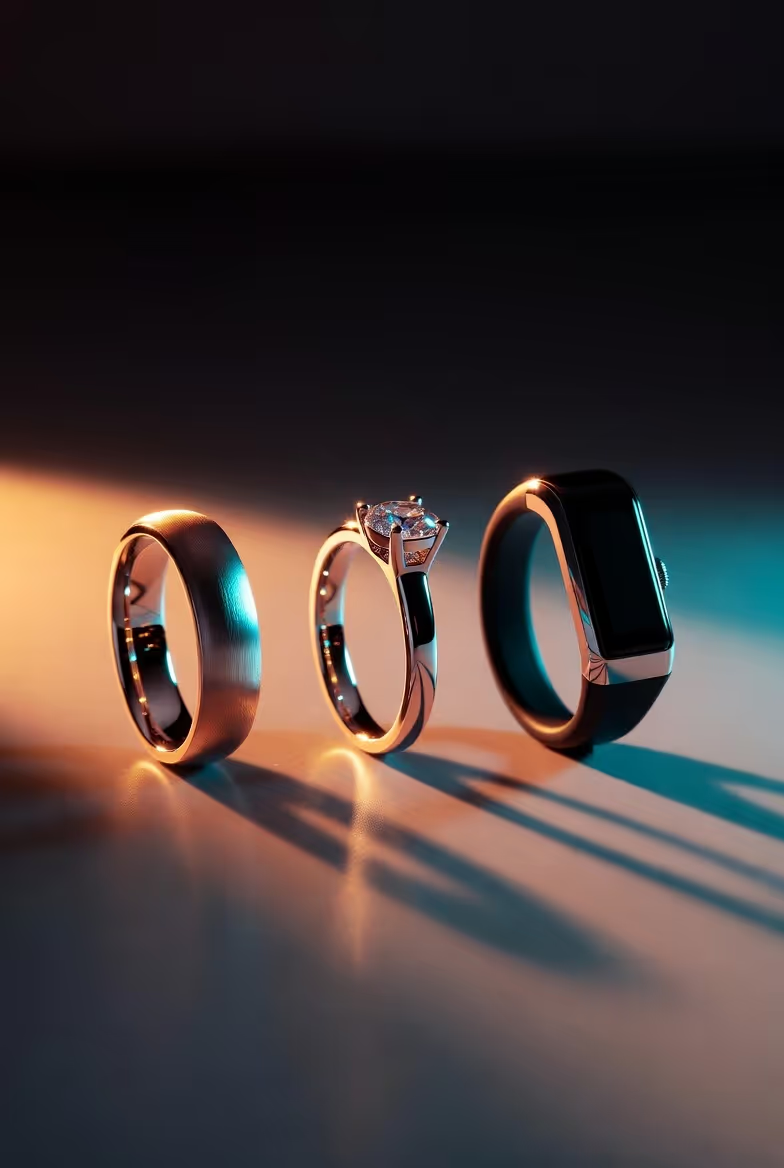
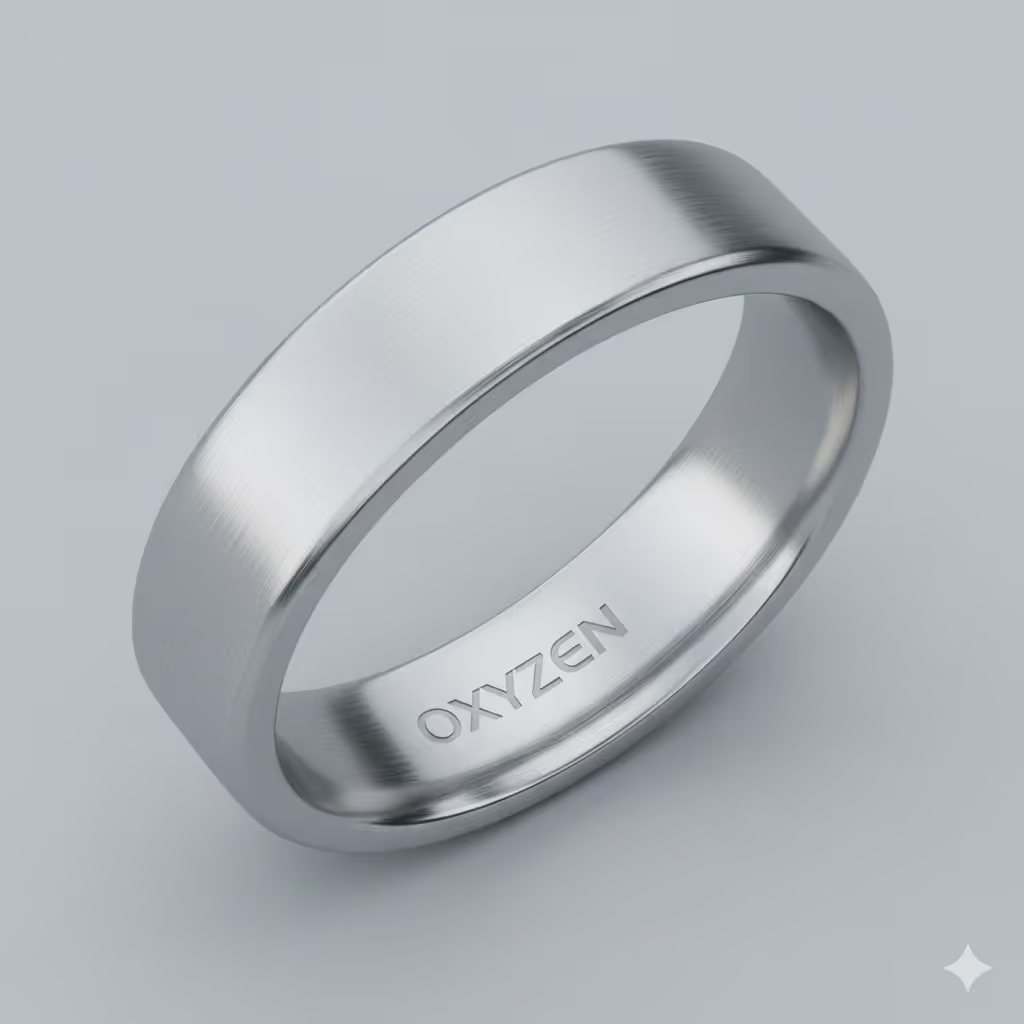
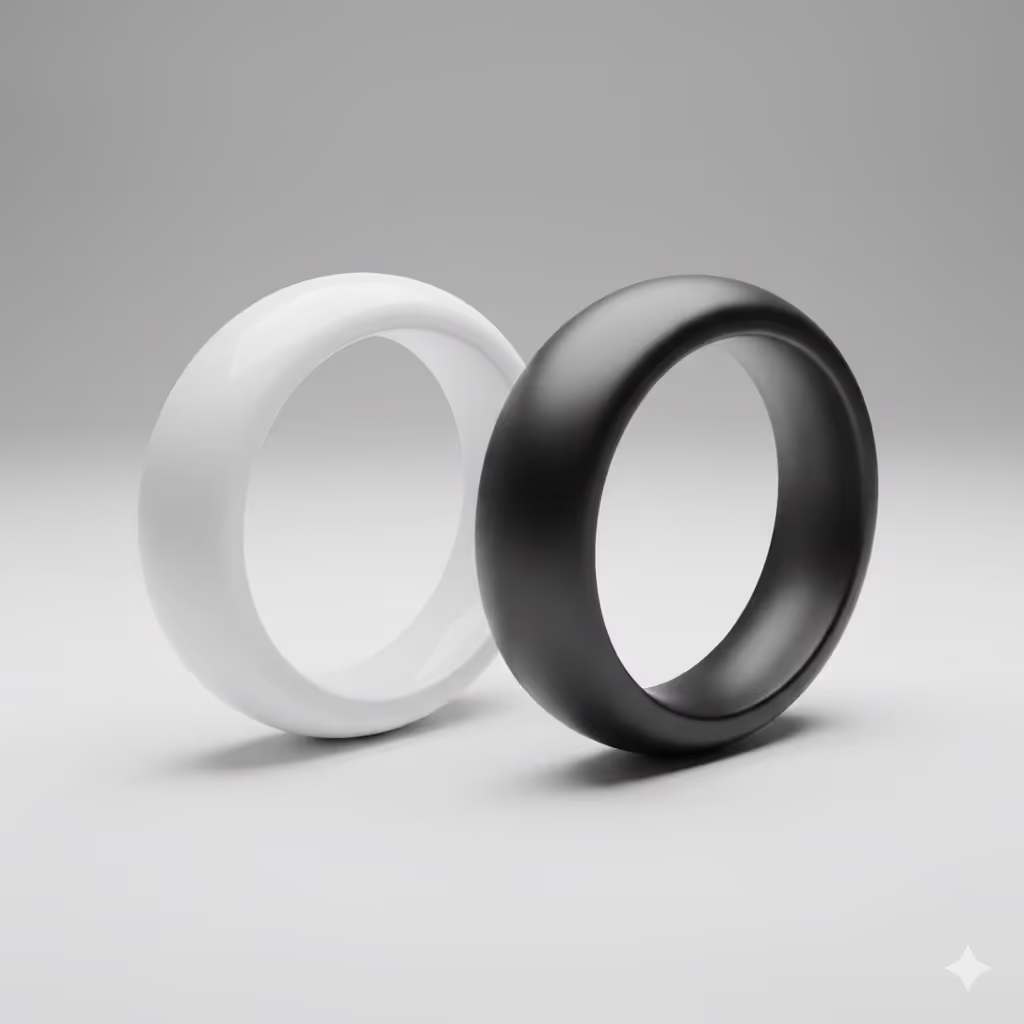
Ek smart wellness ring jo:
- Aapke body ke andar chal raha stress measure karta hai
- Guesswork hata deta hai
- Aapko clear signals deta hai
Without distractions.
Without screens.
Without subscriptions.
The Core Metric That Changes Everything: HRV
Stress management ka real hero hai:
❤️ Heart Rate Variability (HRV)
HRV matlab:
Heartbeats ke beech ka micro-time difference
Simple language mein:
- High HRV = body relaxed, resilient, recovered
- Low HRV = body stressed, overloaded, exhausted
Aur yahi metric duniya ke:
- Elite athletes
- CEOs
- Military pilots
- Performance doctors
use karte hain stress aur recovery track karne ke liye.
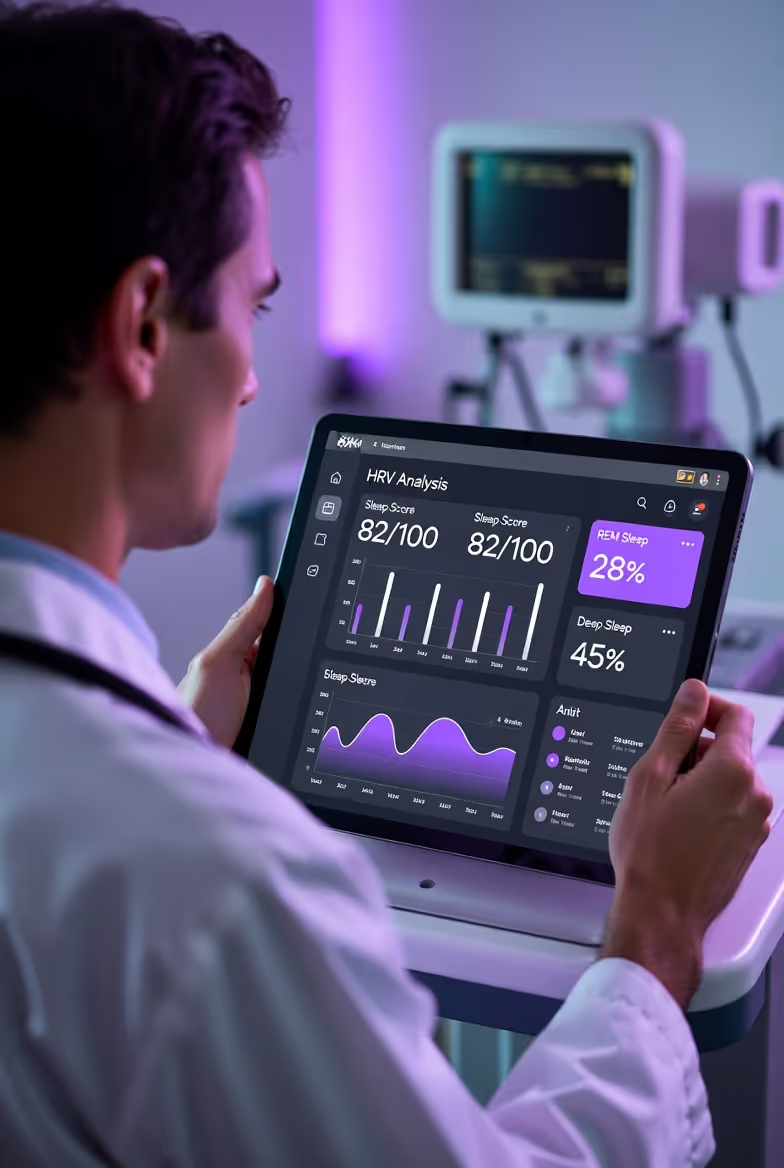
OXYZEN HRV ko 24×7 track karta hai
Bina aapko kuch karaye.
Stress Sirf Office Se Nahi Aata
OXYZEN users ek cheez quickly realise karte hain:
Stress sirf kaam se nahi aata.
Stress aata hai:
- Poor sleep se
- Late dinners se
- Alcohol se
- Excess caffeine se
- Emotional overload se
- Overthinking se
- Even social interactions se
Aur har cheez ka impact HRV mein dikhta hai.
No drama.
No judgement.
Bas data.
“Main Toh Theek Hoon” — The Biggest Lie We Tell Ourselves
Most Indians tab tak action nahi lete jab tak:
- Body breakdown na ho
- Doctor warning na de
- Panic attack na aaye
Par OXYZEN users often discover:
“Mujhe laga main theek hoon… par mera body recover hi nahi kar raha tha.”
Stress ka sabse dangerous part?
Aap usse normal samajhne lagte ho.
How OXYZEN Helps You Control Stress (Step by Step)
Step 1: Measure (Bina Effort)
- Ring pehno
- Bas
- Body ka data automatically record hota rahega
Step 2: Understand
OXYZEN app aapko dikhata hai:
- Aaj aapka stress level kaisa tha
- Recovery hui ya nahi
- Kaunsi cheez ne stress badhaya
- Kaunsi cheez ne calm kiya
Step 3: Adjust
Ab aap blindly advice follow nahi karte.
Aap dekhte ho:
- “Is routine se meri HRV better hoti hai”
- “Is habit se meri body crash karti hai”
Step 4: Build Stress Resilience
Stress khatam nahi hota.
Stress se recover karna seekhna padta hai.
Aur yahi real stress management hai.
Stress Management for Indian Professionals
Agar aap:
- Founder ho
- Corporate leader ho
- Doctor / CA / Consultant ho
- Remote worker ho
- Working parent ho
Toh stress aapka daily companion hai.
OXYZEN aapko batata hai:
- Kab push karna hai
- Kab slow hona hai
- Kab rest zaroori hai
Not emotionally.
Biologically.
Stress Management for Working Mothers
Indian working mothers ke liye stress:
- Visible nahi hota
- Acknowledge nahi hota
- Celebrate toh bilkul nahi hota
OXYZEN helps you:
- Understand invisible load
- Track recovery
- Protect health without guilt
Kyuki aapki body bhi system hai.
Aur har system ko maintenance chahiye.
Stress ≠ Weakness
Stress ka matlab yeh nahi:
- Aap kamzor ho
- Aap capable nahi ho
- Aap fail ho rahe ho
Stress ka matlab:
Aapka system overloaded hai.
Aur smart log system ko optimize karte hain — ignore nahi.
Why Ring, Not Watch?
OXYZEN ring:
- Light hai
- Comfortable hai
- Sleep ke waqt perfect
- Distraction-free
- Medical-grade sensors ke saath
Watch aap baar-baar check karte ho.
Ring silently kaam karti rehti hai.
Stress ke liye silence zyada powerful hoti hai.
No Subscription. No Data Selling. Ever.
India mein log already:
- Apps se thak chuke hain
- Subscriptions se irritate ho chuke hain
OXYZEN simple rule follow karta hai:
- Aapka data = aapka data
- Ek baar buy karo
- Lifetime access lo
No ads.
No selling your stress data.
Stress Management Is Not About Doing More
It’s about:
- Knowing when to stop
- Knowing when to rest
- Knowing when body is asking for help
OXYZEN aapko bolta nahi:
“Calm down”. OXYZEN aapko dikhata hai: “Aapka body kya bol raha hai”
Imagine This
- Aap subah uthte ho
- App kholte ho
- Clear signal milta hai: Recovered / Not recovered
Aur phir aap:
- Apna din plan karte ho
- Apni energy protect karte ho
- Stress ko intelligently handle karte ho
No guesswork.
No guilt.
This Is Not About Avoiding Stress
This Is About Mastering It
Stress hamesha rahega.
Par chronic stress aapki choice nahi hona chahiye.
OXYZEN gives you:
- Awareness
- Control
- Confidence
Final Truth
Agar aap stress ko measure nahi kar rahe,
toh aap sirf hope pe jee rahe ho.
Aur health hope pe nahi chalti.
Data pe chalti hai.
Start Your Stress Management Journey Today
With OXYZEN — Designed for Indian Lives, Global Standards
👉 Know your stress. Control your recovery. Protect your future.