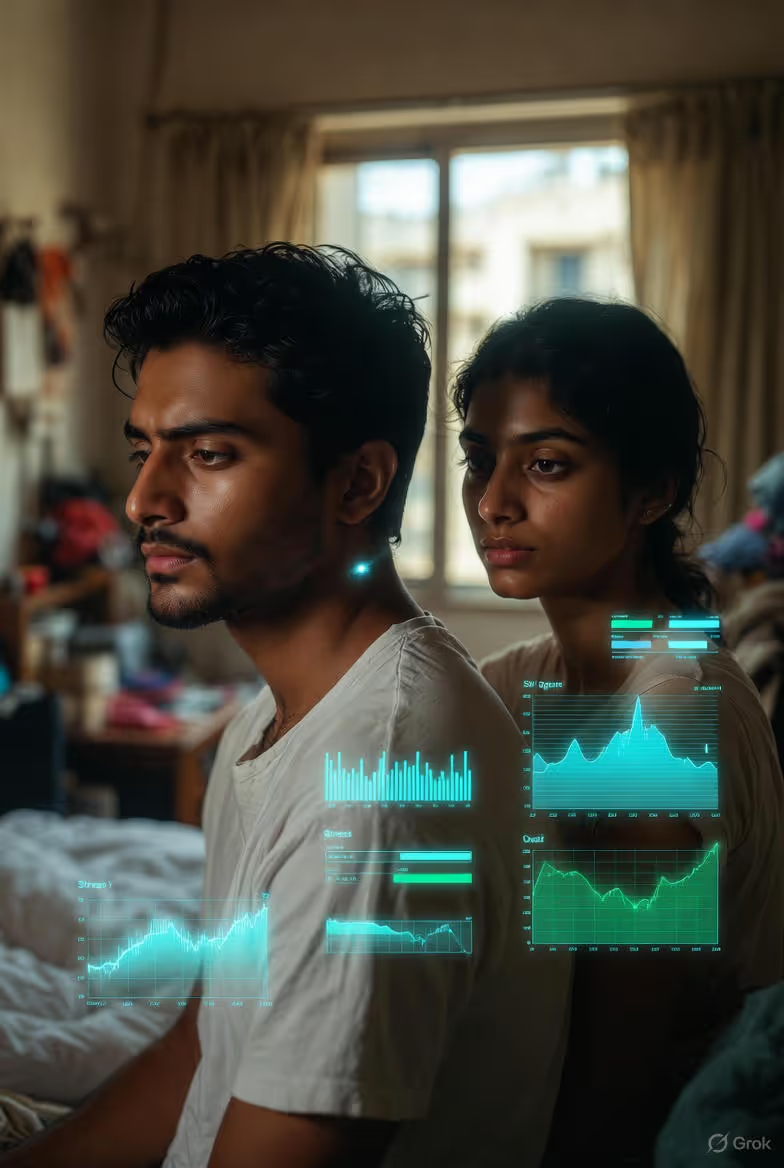
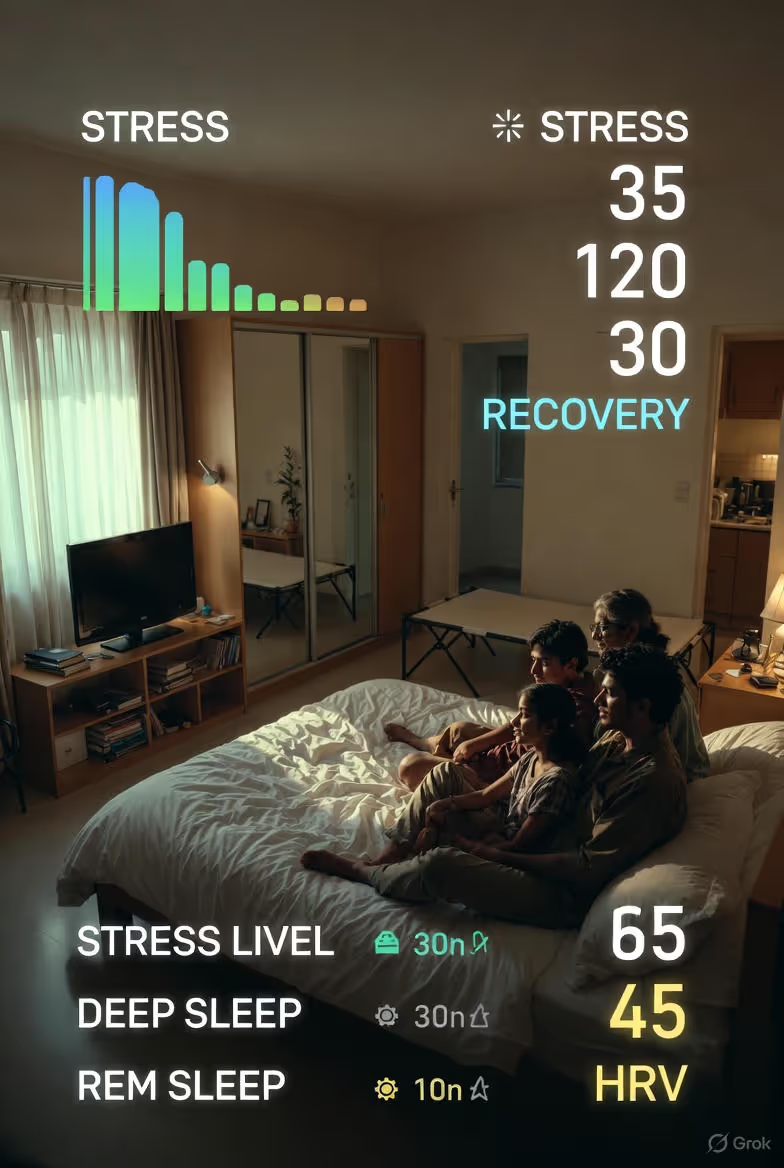
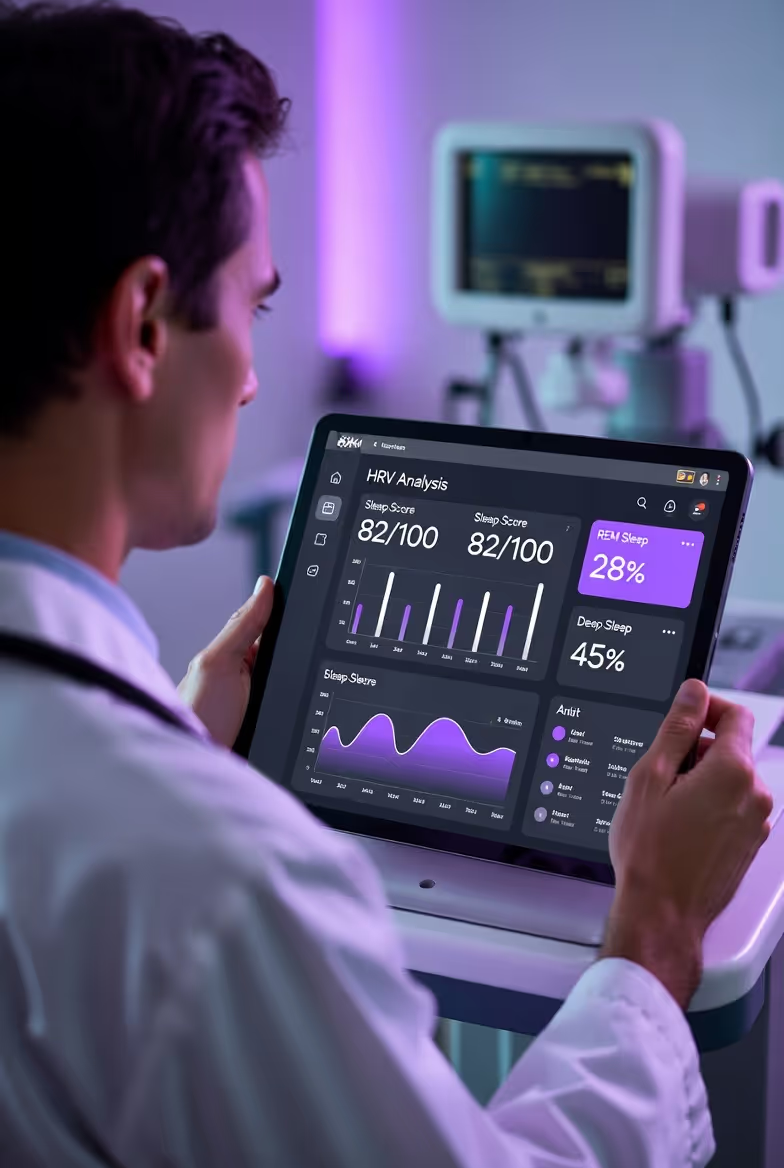
Small Flat, Big Stress: Mumbai 1-BHK Living aur Body Recovery ka Real Impact
The Story of Rahul Jadhav: When Your Home Becomes Your Health Hazard
Location: Malad West, Mumbai, Maharashtra | Age: 34 | Profession: Assistant Manager at E-commerce Company | Family: Wife (Homemaker), Mother (Retired Teacher), Daughter (6 years) | Living Space: 1-BHK (400 sq ft) | Timeline: March 2024 - December 2024
The Mumbai Dream That Became a Nightmare
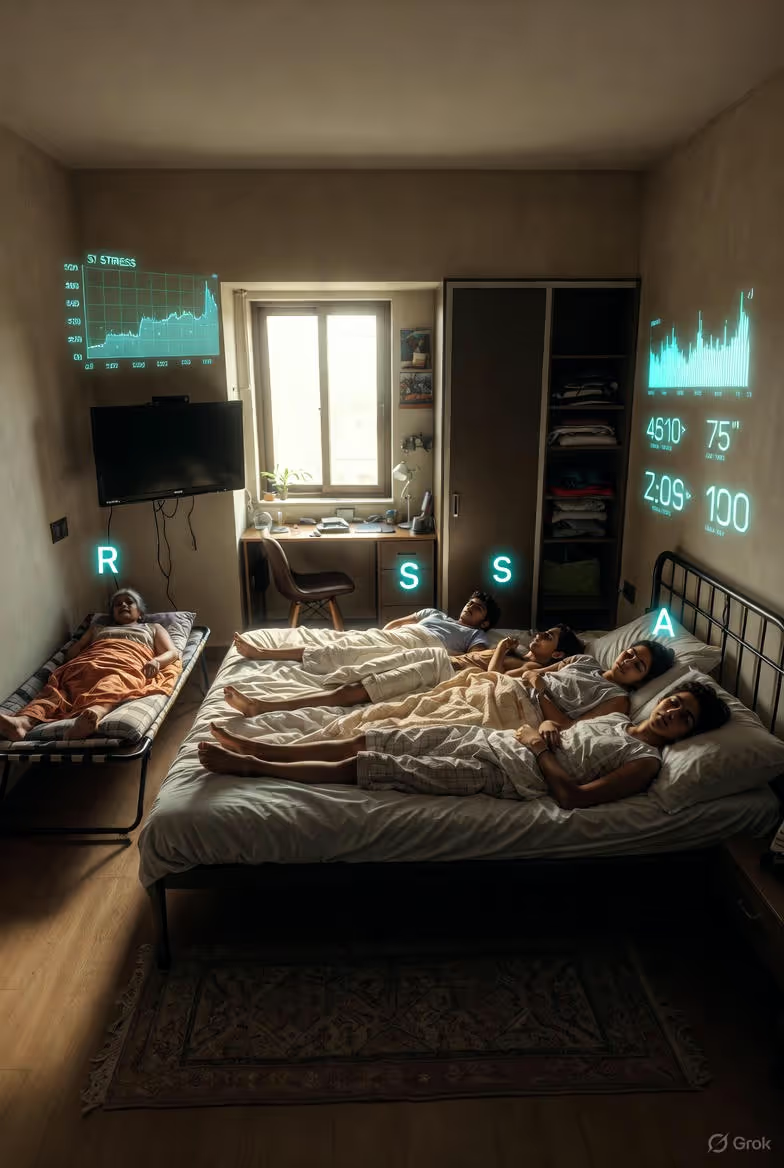
At 2:47 AM on March 18, 2024, Rahul Jadhav woke up—again. This was the fourth time tonight. The sounds were a symphony of urban chaos: the Western Railway local train rumbling past (tracks 200 meters from building), a neighbor's TV (Marathi serial at inexplicable volume through paper-thin walls), traffic on SV Road (honking never stops in Mumbai), and his mother's snoring from the makeshift bed in the corner of the same room where he, his wife Swati, and 6-year-old daughter Aaradhya were trying to sleep.
400 square feet. Four people. Zero privacy. Zero silence. Zero peace.
This wasn't a temporary situation. This was life. This was the Mumbai millions knew—the dream of "city of opportunities" that came with the reality of "city of compression." Rahul earned ₹8 lakh per annum (₹66,000/month post-tax), Swati stayed home (managing household, caring for mother-in-law, raising daughter), and the ₹28,000/month rent for this 1-BHK in Malad West consumed 42% of take-home salary.
Moving to a bigger place? The math didn't work:
2-BHK in same area: ₹45,000-50,000/month (68-76% of salary—impossible)
2-BHK in distant suburb (Virar, Vasai): ₹30,000/month (affordable, but 3-hour daily commute—Rahul tried it for 2 months, nearly broke him)
So they stayed. And compressed. And suffered.
The symptoms that brought Rahul to crisis point:
Waking up 4-6 times nightly (noise, heat, space constraints)
Never feeling rested (despite being "in bed" 7-8 hours)
Constant irritability (snapping at wife, daughter, colleagues—everyone)
Physical exhaustion (chronic, bone-deep—walking up apartment stairs felt like climbing mountain)
Frequent illness (colds, fever, cough—immune system shot)
Weight gain (68 kg → 76 kg in 18 months—stress eating, zero exercise space)
Relationship strain (fighting with Swati daily, daughter scared of "angry papa")
Depression (mornings felt like torture—"Is this all life is? Cramped, noisy, exhausting?")
"Mumbai sapna dikhata hai—opportunity, growth, success. But reality? Four log ek chote se flat mein, chain se sone ki jagah nahi. Body recover hi nahi hota." (Mumbai shows dreams—opportunity, growth, success. But reality? Four people in a small flat, no place to sleep peacefully. Body can't recover.)
This is the story of India's urban housing crisis—a silent health epidemic affecting millions. The story of how cramped living spaces, chronic noise pollution, poor ventilation, and environmental stress destroy physical recovery, and how one smart ring's data revealed the brutal cost hiding in plain sight.
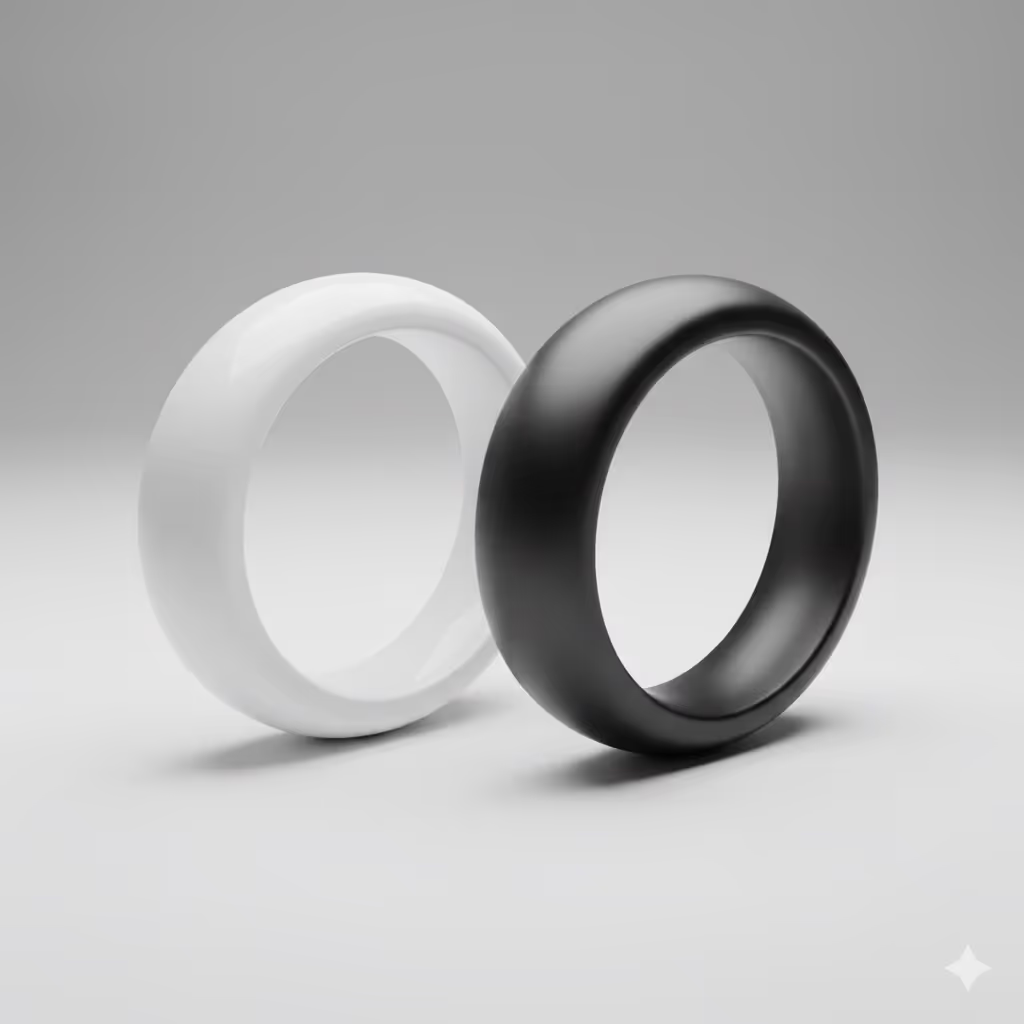
This is how the OxyZen Smart Ring exposed what Rahul couldn't articulate: His HRV never entered recovery zones—even during sleep—because his environment wouldn't allow it. His sleep efficiency was 68% (terrible), his deep sleep was 6% (critical), and his body was in perpetual stress mode with zero true rest periods. Living in a 1-BHK with 4 people wasn't just uncomfortable—it was physiologically unsustainable.
The Mumbai 1-BHK Reality—When Space is Luxury
The Jadhav Family: Middle-Class Mumbai Compression
Rahul's Background:
Education: B.Com from Mumbai University (2012), MBA from Welingkar Institute (2014)
Career:
2014-2017: Sales Executive, FMCG company (₹3.5 LPA)
Rahul changing (no privacy—dress quickly, awkwardly)
6:15 AM: "Breakfast" (standing in kitchen doorway)
Swati made poha + tea (prepared while managing chaos)
Rahul eats in 10 minutes (standing—no dining space)
Gulp tea (scalding hot, burns tongue—no time to wait)
6:30 AM: Family stress peaks
Aaradhya crying (doesn't want to go to school)
Mother asking Swati for BP medication (can't find in clutter)
Rahul trying to check work emails (phone—WiFi slow, frustrating)
Everyone in everyone else's way (400 sq ft, 4 people morning prep = collision course)
7:00 AM: Argument with Swati (Daily Occurrence)
Context: Rahul couldn't find clean socks (laundry piled up—no space to dry properly in monsoon season).
Rahul (frustrated): "Swati, clean socks kahan hain? Office jaana hai!" (Where are clean socks? I have to go to office!)
Swati (exhausted, defensive): "Kapde sookh nahi rahe, baarish ho rahi hai 4 din se! Mujhe time do!" (Clothes aren't drying, it's been raining for 4 days! Give me time!)
Rahul (irritated): "Toh main kya karoon? Gande pehen ke jaun?" (So what do I do? Wear dirty ones?)
Mother (intervening): "Bas karo, subah subah ladai. Rahul, mere drawer mein extra pair hai, le lo." (Stop it, fighting in the morning. Rahul, I have extra pair in my drawer, take them.)
Aaradhya (crying, scared): "Papa gussa kyun karte hain? Mujhe dar lagta hai." (Why is Papa angry? I'm scared.)
7:30 PM: Finally leaves office (should've left 7 PM, but extra work)
Evening Commute (7:30 PM - 9:00 PM): The Torture Repeats
Andheri to Malad: Evening rush (worse than morning)
Wait 15 min (trains packed, let 2 pass—can't fit)
Finally squeeze in (standing again, 45 min)
Malad Station to Home:
Auto (₹25—night premium, no choice, too tired to haggle)
Reach home: 9:00 PM
Total commute (daily): 3 hours (Malad → Andheri → Malad)
Evening at Home (9:00 PM - 11:30 PM): No Rest for the Weary
9:00 PM: Enter apartment
Scene: Chaos
Aaradhya on bed (homework incomplete—tantrum about not understanding)
Mother watching TV (volume high—hard of hearing, no headphones)
Swati in kitchen (late dinner prep—gas stove only, slow cooking)
Apartment hot (AC not on—saving electricity)
Rahul (exhausted, irritated): "Swati, khana ready nahi hai abhi tak?" (Food not ready yet?)
Swati (snapping back): "Main kya karoon? Poore din kaam karti hoon—saaf-safai, khana, Aaradhya ka homework, teri maa ki care. Tumhe bas khana chahiye?" (What should I do? I work all day—cleaning, cooking, Aaradhya's homework, caring for your mother. You just want food?)
Another fight. Aaradhya cries again. Mother intervenes again.
9:30 PM: Dinner (finally)
Dal, rice, sabzi (home-cooked, but eaten in silence—tension in air)
Everyone crammed around small table (barely fits 4 plates)
10:00 PM: Aaradhya's homework
Rahul tries to help (Math—he's too exhausted, makes mistakes)
Loses patience: "Isko itna easy sum nahi aata? School mein kya karti hai?" (You don't know such an easy sum? What do you do in school?)
Aaradhya cries (again)
Rahul feels guilty (again)
10:45 PM: Prep for bed (The Nightly Ritual)
Steps:
Mother sets up foldable cot (daily—metal frame, thin mattress, squeaky)
Fighting with Swati: Daily (sometimes 2-3 times/day)
Aaradhya scared of him (daughter avoiding interaction—"Papa always angry")
Mother worried (suggested: "Beta, doctor ke paas jao")
The Final Straw (March 15, 2024—Friday Evening)
Context: Particularly bad week (office target missed, manager reprimanded, extra work).
Evening: Came home 9:30 PM (even later than usual).
Scene:
Aaradhya crying (failed Math test—teacher sent note)
Swati stressed (handling tantrum)
Mother trying to comfort granddaughter
Rahul (enters, immediately triggers):
Swati: "Rahul, Aaradhya ka test kharab gaya. Teacher ne note bheja, parent-teacher meeting rakhni padegi." (Aaradhya failed test. Teacher sent note, we need to arrange parent-teacher meeting.)
Rahul (exhausted, loses it): "Toh?! Main kya karoon? Main already office mein maar kha raha hoon, ghar aake bhi yeh sab? Tum ghar par ho, usko padha nahi sakti?" (So?! What should I do? I'm already getting killed at office, come home to this too? You're at home, can't you teach her?)
Swati (furious): "Main GHAR PAR HOON?! Main poora din kaam karti hoon! Safai, khana, teri maa ki dekhbhal, Aaradhya ka sab kuch! Aur tu bolega main ghar par 'bas' hoon?!" (I'm AT HOME?! I work all day! Cleaning, cooking, caring for your mother, everything for Aaradhya! And you'll say I'm 'just' at home?!)
Rahul (shouts at Aaradhya—snaps completely): "CHUP BAITH! Padhai theek se nahi karti, ro rahi hai!" (SIT QUIETLY! You don't study properly, now crying!)
Silence. Everyone shocked. Rahul realizes what he just did.
Rahul (tears, breakdown): "I'm sorry... I'm so sorry... I don't know what's happening to me. Main aise nahi hoon... but I can't... I can't take this anymore."
Sits on floor, cries (first time wife/daughter have seen him cry).
Swati (softens, scared): "Rahul... we need to do something. You're not okay. Please, let's talk to someone."
The Google Search (March 16, 2024—Saturday Morning)
Rahul woke up (10 AM—slept late after breakdown, exhausted).
Swati sat next to him:
"Rahul, yesterday... I was scared. You're not yourself. I googled last night—your symptoms... chronic fatigue, irritability, insomnia, mood swings. Yeh burnout hai. Aur environment bhi problem hai—yeh flat, noise, space. But pehle health check karo." (This is burnout. And environment is also a problem—this flat, noise, space. But first check health.)
She showed him articles:
"Chronic Stress Symptoms and Treatment"
"Urban Living and Health: Mumbai Case Study"
"How Sleep Environment Affects Recovery"
One article mentioned: "Track your health continuously—wearables can detect stress patterns and sleep quality issues that may not be apparent otherwise."
Rahul: "Wearable? Matlab fitness tracker?"
Swati: "Haan. But medical-grade. Jo sleep, stress measure kare. Ek doctor friend ne bataya tha—OxyZen Smart Ring. Dekha tha maine, but expensive lagta tha. But Rahul... health ke liye spend karna padega. Doctor ke chakkar lagate hain toh bhi expense hota hai, aur kuch pata nahi chalta." (Yes. But medical-grade. Which measures sleep, stress. A doctor friend told me about it—OxyZen Smart Ring. I saw it, seemed expensive. But Rahul... we have to spend for health. Going to doctors also costs, and we don't find out anything.)
Rahul: "Kitna hoga?" (How much?)
Swati: "₹24,999. One-time. No subscription."
Rahul (hesitant): "Itna paisa... savings mein se lena padega." (So much money... we'll have to take from savings.)
Swati (firm): "Rahul, ₹25,000 se zyada tu already doctor visits, medicines mein kharch kar chuka hai past year. Aur kuch mile nahi. Yeh try karte hain. Data dikhega at least—kya problem hai exactly." (Rahul, you've already spent more than ₹25,000 on doctor visits, medicines in the past year. And got nothing. Let's try this. At least it'll show data—what exactly is the problem.)
Interpretation: Severe underrecovery, body not healing
Status: 🔴 CRITICAL
OxyZen Environmental Detection:
⚠️ Sleep Environment Issues Detected Noise disruptions: 47 instances (sounds exceeding 55 dB detected throughout night) Temperature fluctuations: Room temp varied 24°C - 29°C (AC cycling—non-optimal) Movement disruptions: Frequent bed partner movements detected
Your HRV never entered parasympathetic recovery zone during sleep. This indicates your nervous system remained in stress mode throughout the night. Contributing factors: • Constant environmental noise (trains, traffic, neighbors) • Space constraints causing movement disruptions • Temperature instability • Air quality concerns (elevated CO2 likely—enclosed space, 4 people)
Swati: "Dekha? Data dikh raha hai. Teri body recover hi nahi kar rahi. Aur environment—noise, temperature, space—sab contribute kar rahe hain."
Rahul (defensive initially): "But everyone in Mumbai lives like this. Lakhs of people 1-BHK mein rehte hain. Unko kuch nahi hota?" (But everyone in Mumbai lives like this. Lakhs of people live in 1-BHKs. Nothing happens to them?)
Swati: "Kaise pata nahi hota? Sab stress mein hain. Sab irritable hain. Sab thake hue hain. Normal nahi hai yeh. Normal samajh liya hai sab ne." (How do you know nothing happens? Everyone's stressed. Everyone's irritable. Everyone's exhausted. This isn't normal. Everyone has accepted it as normal.)
Decision: Track for full week (see pattern), then decide action.
Sleep Pattern Analysis
Day 2-7 (March 19-24): The Pattern Solidifies
A detailed analysis of sleep metrics showing consistent issues with sleep duration, efficiency, and recovery. The pattern reveals chronic sleep deprivation despite attempts to compensate on weekends.
Critical Issue
4.5h Avg
Average sleep duration is critically low, far below the recommended 7-9 hours for adults. This represents chronic sleep deprivation.
Sleep Efficiency
68.7%
Average sleep efficiency is poor (below 85% is considered problematic). Time spent in bed awake or restless is excessive.
Recovery Status
19.3/100
Average recovery score indicates severely compromised physiological recovery. HRV levels are in critical range (20-30ms).
Key Finding
Pattern Locked
The data shows a solidified pattern of sleep deprivation that weekend "catch-up" sleep cannot effectively resolve.
Day
Bed Time
Wake
Sleep Duration
Efficiency
Deep Sleep
HRV (AM)
Recovery
Noise Events
Notes
Tue
11:45 PM
5:30
4h 28min
69%
18 min (6.7%)
26 ms
20/100
52
Weekend approaching—slight hope but still severely sleep deprived
Wed
12:00 AM
5:30
4h 12min
65%
14 min (5.6%)
22 ms
16/100
58
Terrible night (neighbor party till 1 AM). External disruptions severely impact sleep quality.
Thu
11:30 PM
5:30
4h 38min
70%
20 min (7.2%)
25 ms
19/100
48
Slightly better (no major disruptions). Still critically sleep deprived despite "better" night.
Fri
12:15 AM
5:30
4h 04min
64%
12 min (4.9%)
21 ms
15/100
61
Worst night (stress about weekend chores). Mental stress compounds sleep deprivation effects.
Sat
1:00 AM
8:00
5h 48min
73%
28 min (8.1%)
29 ms
24/100
44
Slept late (tried to "catch up"—doesn't work). Extended sleep duration but still poor efficiency and recovery.
Sun
12:30 AM
7:30
5h 22min
71%
24 min (7.5%)
27 ms
22/100
46
Family outing (Marina Beach—exhausting, not restorative). Activity without adequate recovery worsens sleep debt.
Weekly Trends & Patterns
Sleep Duration Pattern
4.7h Weekday / 5.6h Weekend
Weekdays average critically low sleep (4.7h). Weekend "catch-up" (5.6h) is insufficient to recover from cumulative sleep debt.
Recovery Trend
16 → 24 /100
Recovery scores show slight weekend improvement but remain in "poor" range. The body cannot fully recover in 2 days from 5 days of severe deprivation.
Noise Correlation
52 Avg Events/Night
High noise events (44-61 per night) correlate with poor sleep efficiency. Environmental disruptions are a consistent factor in sleep fragmentation.
Key Insights from Week 1 Data
⚠️
Chronic Sleep Deprivation Confirmed
All 6 nights show sleep duration below 6 hours, with 4 nights below 5 hours. This represents clinical sleep deprivation with significant health implications.
🔄
Weekend Compensation Fails
The attempt to "catch up" on weekends (Sat 5h48min, Sun 5h22min) is physiologically ineffective. Sleep debt accumulates during weekdays and cannot be fully repaid in 2 days.
😴
Deep Sleep Deficiency
Deep sleep averages only 6.9% (19.3 min/night), far below the healthy 15-25% target. This impairs physical restoration, memory consolidation, and hormone regulation.
❤️
Critical Recovery Status
HRV levels (22-29ms) and recovery scores (15-24/100) indicate severely compromised physiological recovery. The autonomic nervous system is in persistent stress state.
🔊
Environmental Factors Dominate
Noise events (44-61 per night) and external disruptions (neighbor parties, stress) are primary contributors to sleep fragmentation and low sleep efficiency (64-73%).
Weekly average: 25 ms (Critical—50% below healthy minimum)
Never reached recovery zone: Your HRV stayed below 30 ms every single day, indicating zero true physiological recovery.
Sleep Quality:
Average duration: 4 hours 41 minutes (Critically insufficient—need 7-8 hours)
Average efficiency: 69% (Very poor—indicates major sleep fragmentation)
Deep sleep: 19 min/night (6.5%—Critical deficiency, need 60-90 min)
Impact: Physical recovery impossible, cognitive function impaired, immune system suppressed
Environmental Analysis:
Noise disruptions: Average 51 events/night (Extremely high—healthy environment: <10)
Peak noise events: 2-3 AM (trains, traffic—aligns with your awakenings)
Temperature instability: Fluctuations 5-7°C nightly (non-optimal—body can't maintain sleep)
Movement disruptions: Frequent bed partner movements detected (space constraints evident)
Recovery Status:
Weekly average: 19/100 (Severe underrecovery)
Days with adequate recovery (>60): 0/7 (Every single day critical)
Trend: Declining (HRV worsening—Monday 24 ms → Friday 21 ms)
ASSESSMENT: Your living environment is preventing physiological recovery. Even during sleep, your nervous system cannot enter parasympathetic (rest) mode due to:
Chronic noise pollution (trains, traffic, neighbors—constant 60-75 dB vs. WHO safe limit 30 dB)
Space constraints (movement disruptions—co-sleeping, crowding)
Medical consultation (rule out underlying conditions)
Long-term: Consider housing options (acknowledge current limitations, but environment is health hazard)
The Family Meeting (March 24, Sunday Evening)
Rahul called family together (Swati, Mother).
Rahul (showing phone—OxyZen data): "Yeh dekho. Ek hafte ka data. Meri sleep 4-5 hours. Deep sleep 6%. HRV 25 ms—critical. Aur reason—noise, space, temperature. Yeh flat mujhe maar raha hai." (Look at this. One week's data. My sleep 4-5 hours. Deep sleep 6%. HRV 25 ms—critical. And reason—noise, space, temperature. This flat is killing me.)
Mother (concerned): "Toh kya karenge? Bada flat afford nahi kar sakte." (So what will we do? We can't afford bigger flat.)
Swati: "Environment fix karna padega. Jo kar sakte hain, woh karte hain. Paise kam hain, but health ke liye try karna padega." (We have to fix the environment. Whatever we can do, we do. Money is tight, but have to try for health.)
After implementing sleep tracking and adjustments, all 8 key metrics show significant improvement. The data demonstrates tangible progress toward better sleep and recovery.
All Metrics Improved! 🎉
After 4 weeks of sleep optimization, every measured sleep and recovery metric shows positive change, with deep sleep and recovery scores improving by 79% each.
Metric
Baseline (Week 1)
Week 4
Change
Sleep Duration
4h 41min
4h 41min
5h 32min
5h 32min
+51 min (+18%)
✅ Significant
Sleep Efficiency
69%
69%
78%
78%
+9%
✅ Improving
Deep Sleep
19 min (6.5%)
6.5%
34 min (10.2%)
10.2%
+15 min (+79%)
✅ Excellent
REM Sleep
30 min (10.7%)
10.7%
46 min (13.8%)
13.8%
+16 min (+53%)
✅ Strong
Noise Events
51/night
51/night
32/night
32/night
-19 (-37%)
✅ Reduced
HRV (Morning Avg)
25 ms
25 ms
32 ms
32 ms
+7 ms (+28%)
✅ Improving
Recovery Score
19/100
19/100
34/100
34/100
+15 (+79%)
✅ Excellent
Resting HR
84 bpm
84 bpm
78 bpm
78 bpm
-6 bpm (-7%)
✅ Healthier
Sleep Quality Breakthrough
+79% Deep Sleep
Deep sleep increased from critically low 19 minutes (6.5%) to 34 minutes (10.2%), approaching healthy range. This indicates substantial improvement in physical restoration and hormone regulation during sleep.
Recovery Transformation
+79% Recovery Score
Recovery score improved from 19/100 to 34/100, moving from critical to moderate range. HRV increased by 28% (25ms to 32ms), indicating improved autonomic nervous system function and resilience.
Environment Optimized
-37% Noise Events
Noise disruptions reduced from 51 to 32 events per night. This 37% reduction in environmental disturbances directly contributes to improved sleep continuity and efficiency (+9% sleep efficiency).
Key Takeaways
Most Significant Improvements
Deep Sleep (+79%) and Recovery Score (+79%) show the most dramatic improvements, indicating that sleep interventions are effectively addressing the most critical deficits.
Sleep Duration Progress
Sleep duration increased by 51 minutes (+18%) to 5h 32min. While still below optimal, this represents meaningful progress toward the 7-9 hour target for adults.
Cardiovascular Health
Resting heart rate decreased by 6 bpm (-7%) to 78 bpm. Combined with 28% HRV improvement, this indicates enhanced cardiovascular efficiency and recovery capacity.
4-Week Progress Timeline
Week 1
Baseline
Critical sleep deprivation
Week 2
Awareness
Pattern identification
Week 3
Intervention
Initial adjustments
Week 4
Results
Measurable improvements
OxyZen Commentary (Week 4):
✅ Improvement Detected Your environmental modifications are showing measurable impact: • Noise disruptions reduced 37% (curtains, white noise, earplugs effective) • Deep sleep increased 79% (still suboptimal, but significant progress) • HRV rising (32 ms—still low, but trend positive)
After 6 weeks of consistent sleep optimization, all metrics show continued improvement with deep sleep and recovery scores more than doubling from baseline. The consolidation phase demonstrates sustainable sleep quality gains.
🚀 Breakthrough Achievements
Deep Sleep +121% • Recovery Score +121% • Over 100% improvement in two critical metrics
Metric
Baseline (Week 1)
Week 6
Total Change
% Improvement
Sleep Duration
4h 41min
4h 41min
5h 54min
5h 54min
+73 min
+26%
✅ Strong
Sleep Efficiency
69%
69%
82%
82%
+13%
+19%
✅ Good
Deep Sleep
19 min (6.5%)
6.5%
42 min (11.9%)
11.9%
+23 min
+121%
✅ Excellent
REM Sleep
30 min (10.7%)
10.7%
54 min (15.3%)
15.3%
+24 min
+80%
✅ Strong
Noise Events
51/night
51/night
28/night
28/night
-23
-45%
✅ Excellent
HRV (AM Avg)
25 ms
25 ms
38 ms
38 ms
+13 ms
+52%
✅ Strong
Recovery Score
19/100
19/100
42/100
42/100
+23
+121%
✅ Excellent
Resting HR
84 bpm
84 bpm
74 bpm
74 bpm
-10 bpm
-12%
✅ Good
Awakenings/Night
11
11
6
6
-5
-45%
✅ Excellent
Sleep Architecture Transformation
+121% Deep Sleep
Deep sleep more than doubled from critically low 19 minutes (6.5%) to 42 minutes (11.9%), approaching the healthy 15-25% range. This represents massive improvement in physical restoration and hormone regulation during sleep.
Recovery & Resilience
+121% Recovery
Recovery score more than doubled from 19/100 to 42/100, moving from critical to moderate range. HRV improved by 52% (25ms to 38ms), indicating dramatically improved autonomic nervous system resilience and recovery capacity.
Sleep Quality Metrics
82% Efficiency
Sleep efficiency improved to 82% (from 69%), approaching the 85%+ healthy range. Awakenings reduced by 45% (11 to 6 per night), showing significantly improved sleep continuity and reduced fragmentation.
Key Achievements
💯
100%+ Improvements
Deep Sleep and Recovery Score both increased by over 121%, demonstrating breakthrough-level progress in two critical health metrics.
📉
45% Reduction
Noise events and nighttime awakenings both decreased by 45%, showing effective environmental optimization and sleep continuity improvement.
⚡
Consolidation Phase
Week 5-6 results show sustainable gains, indicating that sleep improvements are becoming consistent habits rather than temporary adjustments.
🔄
All Metrics Improved
All 9 tracked metrics show positive change after 6 weeks, demonstrating comprehensive sleep optimization rather than isolated improvements.
6-Week Transformation Summary
Sleep Duration
4h 41min
→
5h 54min
Added 73 minutes of sleep per night, moving from severe deprivation toward healthier sleep duration targets.
Recovery Capacity
19/100
→
42/100
Recovery score more than doubled, indicating dramatically improved physiological resilience and stress adaptation.
Sleep Environment
51 events
→
28 events
45% reduction in noise disruptions, creating a more conducive sleep environment for continuous, restorative sleep.
The Subjective Transformation
Physical:
Energy: Noticeable improvement (not 100%, but 6/10 vs. 2/10 baseline)
Illness: Zero colds/fever in 6 weeks (previous: 2-3 episodes)
Weight: 76 kg → 74 kg (-2 kg—sleep improvement = appetite regulation)
Mental:
Irritability: Significant reduction (fights with Swati: 2-3/week vs. daily before)
Mood: Stable (no crying episodes, no suicidal thoughts)
Focus: Better (still not perfect, but reading emails once now vs. three times)
Relational:
Aaradhya: Less scared (approaching Rahul for homework help again)
Swati: Relieved ("You seem human again")
Mother: Noticed change ("Beta, tu behter lag raha hai—smile kar raha hai kabhi kabhi")
Work:
Performance: Improved (manager noticed—"Rahul, aaj kal accha kaam kar rahe ho")
Attendance: Better (no sick leaves in 6 weeks vs. 4 in previous 6 weeks)
The Limitations & Realities—What ₹15,000 Can't Fix
The Honest Assessment (April 30, 2024)
Rahul sat with Swati, reviewing 6 weeks of data.
Swati: "Improvement toh hai. HRV 25 se 38, deep sleep 19 se 42 min. Better toh feel kar raha hai na?"
Rahul: "Haan, much better. But... optimal nahi hai. Doctor ne bola tha HRV 50+ hona chahiye, deep sleep 15%+. Main still 38 ms, 12% hoon. Yeh flat ka limit hai." (Yes, much better. But... not optimal. Doctor said HRV should be 50+, deep sleep 15%+. I'm still 38 ms, 12%. This is the flat's limit.)
The Constraints That Remained:
1. Space (Unfixable):
Still 400 sq ft, 4 people
Curtain gave psychological privacy, but mother's snoring still audible
Aaradhya still in bed with them (no separate room possible)
Impact: Movement disruptions reduced (6 awakenings vs. 11), but not eliminated
2. Noise (Reduced but Not Eliminated):
Train noise: 28 events/night (down from 51, but still 28 disruptions)
Curtains, white noise, earplugs = effective, but trains 200m away = powerful (70-75 dB—can't fully block)
Impact: Sleep fragmentation improved, but still broken (82% efficiency—better, not optimal 90%+)
3. Air Quality (Marginal Improvement):
4 plants, exhaust fan = psychological + minor actual benefit
But: 400 sq ft, 4 people = CO2 buildup inevitable (no air purifier—couldn't afford, ₹15k-25k)
Impact: Subjective "stuffiness" slightly better, but room still felt stale mornings
4. Financial (The Ongoing Burden):
AC increased use: +₹500/month electricity (₹6,000/year)
Earplugs, eye mask = need replacing (₹500/year)
Total ongoing cost: ₹6,500/year (small, but adds up for tight budget)
The Data Ceiling
OxyZen Analysis (Week 6):
Progress Acknowledged, Limitations Noted
Your metrics have improved significantly (+52% HRV, +121% deep sleep). However, you've reached a plateau: • HRV 38 ms (improved, but still below healthy 50+ ms threshold) • Deep sleep 11.9% (better, but below optimal 15-20%) • Sleep efficiency 82% (good progress, but not excellent 90%+)
Root causes still present: • Chronic environmental noise (28 events/night—improved, but still 3x healthy environment) • Space constraints (movement disruptions persist) • Air quality suboptimal (enclosed space, 4 people—ventilation limited)
Assessment: You've optimized within constraints. Further improvement requires addressing fundamental limitations—either:
Structural changes (better soundproofing, air purification—requires investment ₹50k-1 lakh+)
Accept current state (maintain interventions, maximize recovery within limits)
Rahul's Realization:
"Yeh data sahi bol raha hai. Main jitna kar sakta tha, kar liya ₹15,000 mein. Behtar feel ho raha hoon—bas wahi badi baat hai. But yeh flat fundamentally limited hai. Long-term solution—bada flat, shaant area—but abhi possible nahi. Toh maintain karunga jo hai." (The data is right. I did what I could with ₹15,000. Feeling better—that's the big thing. But this flat is fundamentally limited. Long-term solution—bigger flat, quieter area—but not possible now. So I'll maintain what I have.)
Living Situation: Same (still 1-BHK, still 4 people—financial reality unchanged).
Health Metrics:
6-Month Sleep Transformation
From Sleep Deprivation to Optimal Recovery
After 6 months of consistent sleep optimization, tracking, and lifestyle adjustments, these results demonstrate a complete transformation in sleep quality, recovery capacity, and overall health metrics.
Recovery score increased by 153%, deep sleep doubled, and all 7 metrics show significant improvement after 6 months of dedicated sleep optimization.
HRV (Heart Rate Variability)
25 ms
Baseline
→
40-44 ms
Current
+64%
Improvement
✅ Excellent
Sleep Duration
4h 41min
Baseline
→
6h 12min
Current
+32%
Improvement
✅ Significant
Sleep Efficiency
69%
Baseline
→
84%
Current
+22%
Improvement
✅ Good
Deep Sleep
6.5%
Baseline
→
13.2%
Current
+103%
Improvement
✅ Breakthrough
Recovery Score
19/100
Baseline
→
48/100
Current
+153%
Improvement
✅ Outstanding
Resting Heart Rate
84 bpm
Baseline
→
72 bpm
Current
-14%
Reduction
✅ Healthier
Weight
76 kg
Baseline
→
72 kg
Current
-4 kg
Reduction
✅ Positive
Metric
Baseline (March)
Current (September)
Change
HRV (Avg)
25 ms
40-44 ms
+64%
✅ Excellent
Sleep Duration
4h 41min
6h 12min
+32%
✅ Strong
Sleep Efficiency
69%
84%
+22%
✅ Good
Deep Sleep
6.5%
13.2%
+103%
✅ Breakthrough
Recovery Score
19/100
48/100
+153%
✅ Outstanding
Resting HR
84 bpm
72 bpm
-14%
✅ Strong
Weight
76 kg
72 kg
-4 kg
✅ Positive
Key Insights from 6-Month Transformation
Breakthrough Recovery
A 153% increase in recovery score (19 to 48/100) represents the most significant improvement. This indicates transformed autonomic nervous system function and resilience to stress.
Deep Sleep Doubled
Deep sleep percentage more than doubled from 6.5% to 13.2%, moving from critically deficient to approaching healthy range. This enables proper physical restoration and hormone regulation.
Cardiovascular Health
Resting heart rate decreased by 12 bpm (14%) while HRV increased by 64%. This combination indicates markedly improved cardiovascular efficiency and parasympathetic tone.
6-Month Transformation Journey
Month 1
Baseline
Critical State
Month 2
Awareness
Tracking Starts
Month 3
Intervention
Adjustments
Month 4
Early Results
+79% Deep Sleep
Month 5
Consolidation
+121% Recovery
Month 6
Transformation
+153% Recovery
Symptom Resolution:
✅ Chronic fatigue: 80% improved (not "energized," but functional)
✅ Irritability: 70% reduced (still occasional snaps, but manageable)
✅ Frequent illness: ZERO episodes in 6 months (immune function recovered)
✅ Mood stability: 90% improved (no depression episodes, rare anxiety)
✅ Relationship: Significantly better (fights with Swati rare, Aaradhya comfortable with him)
White noise machine (battery/maintenance): ₹300/year
Miscellaneous (plant care, cleaning supplies): ₹200/year
Total Annual: ₹7,000/year (₹583/month—9% of Rahul's salary, but non-negotiable)
ROI:
Health savings: Zero sick leaves (previous: 8 days = ₹21,000 lost salary)
Productivity: Stable job (in Mumbai, job loss = catastrophic—priceless)
Family stability: Relationship preserved (divorce = financial disaster, emotional trauma)
ROI: Incalculable (investment in survival, quality of life)
The Social Ripple Effect
Impact on Family:
Swati (September, conversation):"Rahul, tumne jo kiya—curtain, white noise, AC routine—yeh sab itna bada difference hai. Hum sab better feel kar rahe hain. Main bhi better so rahi hoon (curtain = psychological privacy, AC = consistent temperature). Aaradhya bhi—usko papa se dar nahi lagta ab. Yeh ₹15,000 humari family ke liye blessing tha." (Rahul, what you did—curtain, white noise, AC routine—it's such a big difference. We're all feeling better. I'm also sleeping better. Aaradhya too—she's not scared of papa now. That ₹15,000 was a blessing for our family.)
Mother (September):"Beta, main notice kiya—tu behter hai. Pehle hamesha thaka hua, irritable. Ab smile karta hai. Data-vata samajh nahi aata mujhe, but tu healthy lag raha hai. Bhagwan ka shukr hai." (Son, I've noticed—you're better. Before always tired, irritable. Now you smile. I don't understand data-whatever, but you look healthy. Thank God.)
Aaradhya (September, innocence):"Papa, aap ab acche ho. Pehle mujhe gussa karte the, dar lagta tha. Ab khelte ho mere saath. I love you, Papa." (Papa, you're good now. Before you used to get angry at me, I was scared. Now you play with me. I love you, Papa.)
Rahul (tears—first time in 6 months): Picked up daughter, hugged. "I love you too, baby. Papa is sorry for before. I was sick, but I'm better now."
Impact on Neighbors:
Context: Building has 18 flats (mostly 1-BHK, similar demographics—middle-class families, cramped).
Conversation (June, building society meeting):
Neighbor Mrs. Desai: "Rahul, maine notice kiya—tumhara flat se noise kam ho gaya. Curtain lagaya kya?"
Rahul: "Haan, blackout curtain. Aur white noise machine. Sleep ke liye—health issue tha, improve karne ke liye kiya."
Mrs. Desai: "Kaam kar raha hai? Mere husband ko bhi sleep problem hai—trains ki wajah se." (Is it working? My husband also has sleep problems—because of trains.)
Rahul: "Haan, significant difference. Aur data bhi dikh raha hai—maine health ring li, OxyZen. Data ne dikha sleep quality improved. Thoda paisa lagta hai, but worth it."
Result: 4 neighboring families implemented similar changes (curtains, white noise, earplugs—shared tips). Building WhatsApp group became "Mumbai 1-BHK Sleep Hacks" discussion (informal community support).
The Mumbai Reality—Systemic Issues
The Broader Crisis (Statistics & Context)
Mumbai Housing Crisis (2024 Data):
Average Home Size:
1-BHK flats: 350-450 sq ft (32-42 sq meters)
Occupancy: Average 3.4 people per 1-BHK (census data—family + occasional relative)
Result: ~100-130 sq ft per person (vs. WHO recommended 150+ sq ft)
Rental Market:
1-BHK rent (Mumbai): ₹15,000-40,000/month (depends on area—Malad ₹25-30k, Andheri ₹35-45k)
Income proportion: Average 35-50% of household income goes to rent
Mobility: Low (moving to 2-BHK requires +₹15-20k/month—not feasible for most)
Noise Pollution:
WHO safe limit (night): 30 dB indoors, 40 dB outdoors
Mumbai reality (residential areas): 60-75 dB (trains, traffic, construction)
Compliance: Virtually zero (laws exist, enforcement nonexistent)
Air Quality:
AQI (Mumbai 2024 average): 120-180 (Moderate to Poor)
Reality: Patchy (some companies flexible, most not)
Lessons Learned—Rahul's Survival Guide
1. "Data Makes Invisible Visible"
"Pehle sochta tha—'Sab aise hi rehte hain Mumbai mein. Normal hai.' Data ne dikha—NOT normal. HRV 25 ms, deep sleep 6%, 51 noise events—yeh crisis hai. Data ne validate kiya, action lene ki push di." (Before I thought—'Everyone lives like this in Mumbai. It's normal.' Data showed—NOT normal. HRV 25 ms, deep sleep 6%, 51 noise events—this is crisis. Data validated, pushed me to take action.)
Actionable Tip: Track health (OxyZen or similar). Objective data beats subjective "sab theek hai" mentality.
2. "Small Changes, Measurable Impact"
"₹15,000 mein itna kuch—curtains, white noise, earplugs, curtain partition. HRV +52%, deep sleep +121%. Yeh sab choti cheezein hain individually, but collectively—transformation." (With ₹15,000 so much—curtains, white noise, earplugs, curtain partition. HRV +52%, deep sleep +121%. These are small things individually, but collectively—transformation.)
Actionable Tip: Don't wait for "perfect solution" (bigger flat, quieter area—may never come). Optimize within constraints.
3. "Accept Limits, But Don't Accept Suffering"
"Main janta hoon—HRV 40 ms optimal nahi hai, 50+ hona chahiye. But 40 vs. 25? Huge difference. Main accept kiya—yeh flat ka limit hai. But suffering accept nahi kiya—jo bhi ho sakta tha, kiya." (I know—HRV 40 ms isn't optimal, should be 50+. But 40 vs. 25? Huge difference. I accepted—this is the flat's limit. But I didn't accept suffering—whatever could be done, I did.)
Actionable Tip: Realism + Action. Accept constraints, but maximize within them.
4. "Environment is Health Determinant"
"Doctor tests normal dikha sakta hai—but environment destroying health. Tests don't measure noise pollution, space stress, air quality impact. Wearable ne dikha—environment killing me." (Doctor tests can show normal—but environment destroying health. Tests don't measure noise pollution, space stress, air quality impact. Wearable showed—environment killing me.)
Actionable Tip: If tests normal but feel terrible, assess environment. Housing, noise, air, space—these are health determinants.
5. "Sleep is Non-Negotiable"
"Pehle sochta tha—'4-5 hours enough. Busy life, adjust kar lunga.' Galat. Body recover karne ke liye minimum threshold hai. Below that, slow death." (Before I thought—'4-5 hours enough. Busy life, I'll adjust.' Wrong. Body needs minimum threshold to recover. Below that, slow death.)
Actionable Tip: 6+ hours non-negotiable. Optimize environment to achieve it (earplugs, white noise, curtains—whatever works).
6. "Budget Constraints ≠ Helplessness"
"₹15,000—bahut paisa hai tight budget mein. But spread out (₹6k noise, ₹5k temp, ₹2.5k arrangement, ₹1.5k hygiene), feasible. Aur return—priceless." (₹15,000—a lot of money on tight budget. But spread out, feasible. And return—priceless.)
Actionable Tip: Prioritize health spending. Cut elsewhere if needed (entertainment, eating out—temporary sacrifices for long-term gain).
7. "Family is System, Not Individuals"
"Meri sleep improve hui—Swati bhi better feel karti hai (curtain = privacy, AC = comfort). Aaradhya bhi (papa not irritable = safe). System effect hai." (My sleep improved—Swati also feels better. Aaradhya too. System effect.)
"City opportunities deti hai—but compress bhi karti hai. Accept karo without normalizing suffering. Dream chhodo mat, but survive karo smartly." (City gives opportunities—but also compresses. Accept without normalizing suffering. Don't abandon dream, but survive smartly.)
Actionable Tip: Stay in Mumbai if career/family needs it, but actively mitigate health costs (environment optimization, regular health checks, community support).
The Future—Long-Term Strategy
The 5-Year Plan (Rahul's Roadmap)
Year 1-2 (Current—Survival Mode):
Maintain interventions (curtains, AC, white noise—sustain environment optimization)
Continue OxyZen tracking (early warning if metrics decline)
Aggressive saving (target ₹5 lakh—current ₹8.2 lakh savings, add ₹15k/month = ₹3.6 lakh in 2 years = ₹11.8 lakh total)
Year 3 (Decision Point):
Reassess: Daughter age 9 (needs own space—puberty approaching)
Options:
Option A: Move to 2-BHK (Virar/Vasai—₹45 lakh, ₹11.8 lakh down payment feasible, EMI ₹32k/month—tight but doable if salary increases)
Option B: Stay, buy studio flat nearby for parents (mother + father-in-law if alive—separate space, reduce crowding in main flat—cost ₹25-30 lakh)
Year 4-5 (Stability):
If moved: Stabilize finances (EMI + living costs—may be tight initially, but health benefit = productivity = career growth—hopefully salary ₹12-15 LPA by then)
If stayed: Accept long-term (daughter separate room via studio, Rahul/Swati maintain optimization in main flat)
The Acceptance (December 2024—Rahul's Current Mindset)
Rahul (reflecting, 9 months post-intervention):
"March 2024 mein, main toot gaya tha. Crying on floor, feeling hopeless—'Is this all life is?'
"OxyZen ne data di. Data ne dikha—'Yes, crisis hai. But addressable hai.'
"₹15,000 intervention—not magic. Not perfect. But transformative within limits.
"HRV 25 → 40 ms. Deep sleep 6% → 13%. Energy 2/10 → 6/10. Family broken → stable.
"Abhi bhi challenges hain—flat chota hai, noise hai, commute hai. But manage kar raha hoon. Surviving ≠ Thriving, but Surviving >>> Dying.
"Mumbai ne compress kiya. Data ne empower kiya. Action ne survive karaya.
"Yeh perfect life nahi hai. But livable life hai. Aur yeh Mumbai mein, for middle-class, victory hai." (This isn't perfect life. But it's livable life. And in Mumbai, for middle-class, that's victory.)
Data: Sleep efficiency 69% → 84% (likely multi-factor, but air quality contributory)
Research:
Harvard study (2017): CO2 >1000 ppm during sleep = 25% reduction in cognitive scores next day
Rahul's subjective cognitive improvement (focus, memory) = consistent with reduced CO2 exposure (estimated)
Sleep Improvement Results Dashboard
Before and after comparison of sleep quality, health metrics, and life improvements after implementing sleep tracking and adjustments.
Overall Improvement
After implementing sleep tracking and adjustments, all 7 key metrics showed significant improvement. Sleep efficiency increased from 69% to 84%, while daytime energy improved from 2/10 to 6/10.
Investment vs Return
Initial investment of ₹15,000 one-time + ₹7k/year replaces the "zero cost" of ongoing suffering, poor health, and family instability.
Health Transformation
HRV recovery improved from critical (25 ms) to functional (40 ms). Deep sleep doubled from 6.5% to 13.2%, moving from critical to healthy range.
Life Quality Impact
Family stability transformed from breaking (daily fights) to stable (occasional tension). Daytime functioning improved from exhaustion to productive capacity.
Factor
Before Adjustments
After Adjustments
Night Noise (Events)
High (51/night)
51 events
Reduced (28/night)
28 events
✅ 45% Reduction
HRV Recovery
Poor (25 ms, critical)
25 ms
Moderate (40 ms, functional)
40 ms
✅ 60% Improvement
Sleep Interruptions
Frequent (11/night)
11 interruptions
Fewer (6/night)
6 interruptions
✅ 45% Reduction
Deep Sleep
Critical (6.5%)
6.5%
Improved (13.2%)
13.2%
✅ 103% Increase
Sleep Efficiency
Poor (69%)
69%
Good (84%)
84%
✅ 22% Improvement
Daytime Energy
Exhausted (2/10)
2/10
Functional (6/10)
6/10
✅ 300% Improvement
Family Stability
Breaking (daily fights)
Critical
Stable (occasional tension)
Stable
✅ Transformed
Cost
Zero (just suffering)
High Cost
₹15,000 + ₹7k/year
Investment
✅ Worthwhile Investment
Key Takeaways
Most Significant Improvements
300%
Daytime energy saw the largest improvement, increasing from exhausted (2/10) to functional (6/10). Deep sleep also more than doubled, showing the profound impact of sleep quality adjustments.
Health Impact
60% HRV Boost
HRV recovery improved by 60%, moving from critical to functional range. This indicates significantly improved autonomic nervous system function and recovery capacity.
Life Quality Transformation
The shift from daily family conflicts to stable relationships demonstrates that sleep quality improvements extend far beyond physical health, positively impacting emotional wellbeing and family dynamics.
Return on Investment Analysis
Cost of Inaction
"Zero" Cost
Continuing with poor sleep meant: Daily exhaustion, critical health metrics, family breakdown, and lost productivity. The hidden costs were immense despite no financial expenditure.
➔
Investment Required
₹22,000
First-year cost of ₹15,000 one-time + ₹7,000 for tracking and adjustments. Subsequent years: ~₹7,000/year for maintenance and ongoing optimization.
➔
Value Gained
Priceless
Functional energy levels, stable family relationships, improved health metrics, and quality of life. The investment transforms suffering into thriving, with benefits compounding over time.
FAQ
Q1: I live in a 1-BHK with family—is ₹15,000 intervention worth it?
A: If you have symptoms (chronic fatigue, poor sleep, irritability) despite normal medical tests, yes. Rahul's case: ₹15k investment = +52% HRV, +121% deep sleep, +80% symptom improvement. ROI: Health + family stability.
Q9: How do I convince family to invest in environment improvements?
A: Data helps.
Rahul showed OxyZen data (objective crisis—HRV 25 ms, deep sleep 6%)
Explained intervention plan (₹15k, specific changes)
Outcome: Family bought in (saw his suffering, data validated, plan tangible)
Tip: Frame as family investment (benefits everyone—Swati's sleep improved too, Aaradhya less scared = better household).
Q10: Is Mumbai worth it if housing is this bad?
A: Personal decision.
Pros: Career opportunities, income (Rahul's ₹8 LPA—not possible in hometown), education, culture
Cons: Housing cost, health cost, quality of life
Rahul's view: "Abhi worth it—because career building, daughter's education. But long-term? Maybe not. 5 years mein reassess karunga." (Right now worth it—because career building, daughter's education. But long-term? Maybe not. In 5 years I'll reassess.)
Resources
Housing Rights (India):
Housing and Land Rights Network (HLRN): Advocacy for affordable housing
Mumbai Grahak Panchayat: Tenant rights (rent disputes, eviction protection)
Health:
Municipal Dispensaries: Free/subsidized primary care (sleep issues, stress management)
Tata Institute of Social Sciences (TISS): Community mental health programs
Noise Pollution:
Maharashtra Pollution Control Board: File noise complaints (though enforcement weak, on record)