The Story of Rohan Malhotra: When Success Started Feeling Like Survival
Location: Andheri West, Mumbai | Age: 35 | Profession: Marketing Manager at a Leading FMCG Company | Timeline: January 2024 - March 2024
The Modern Mumbai Dream That Became a Nightmare
Rohan Malhotra's story is one that thousands of Mumbai professionals will instantly recognize. A middle-class boy from Nashik who made it big in Maximum City, Rohan had everything he'd dreamed of—a corner office in Lower Parel, a 2BHK flat in Andheri West, and a salary package that made his parents proud. But by January 2024, at just 35 years old, he was running on empty.
"Main subah uthta tha, aur pehla thought yahi hota tha—'Aaj kaise manage karunga?'" Rohan recalls, sitting in his living room on a rare Sunday afternoon off. "Not 'Good morning' ya 'Let's crush it today'—just pure survival mode."
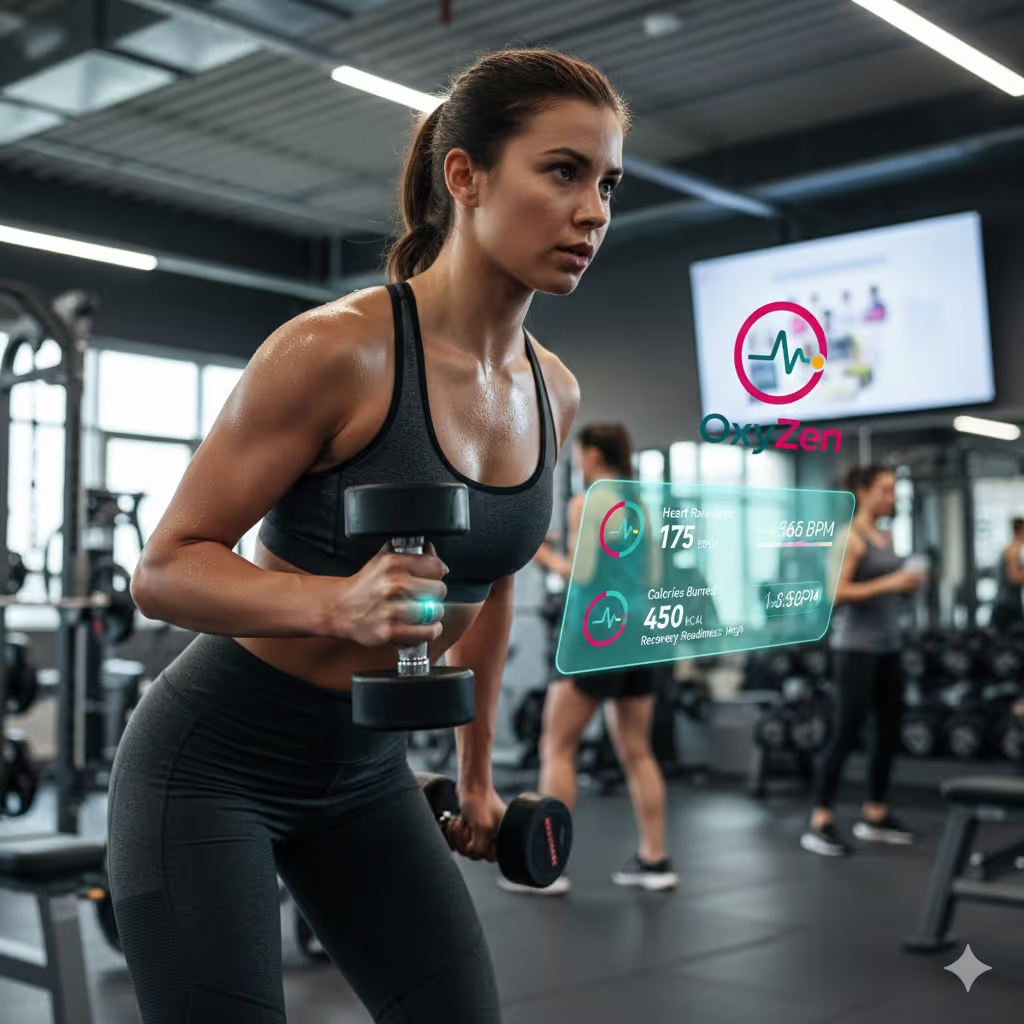
This is his journey from corporate burnout to measured recovery, tracked minute-by-minute through heart rate variability (HRV) monitoring on the OxyZen Smart Ring—a journey that reveals just how deeply India's urban workforce is suffering, and more importantly, how data-driven wellness can offer a way out.
The Corporate Pressure Cooker—Life in Mumbai's Fast Lane
The Daily Grind: 10-12 Hour Workdays That Never Really End
Rohan's alarm would go off at 6:30 AM in his Andheri flat. By 7:15 AM, he'd be navigating the notorious Western Express Highway traffic, often spending 90 minutes commuting to his Lower Parel office—a journey that locals call "the daily punishment."
Typical Workday Schedule:
- 6:30 AM: Wake up, scroll through work emails in bed
- 7:15 AM: Leave for office (Western Express Highway traffic nightmare)
- 8:45 AM: Reach office, already mentally exhausted from commute
- 9:00 AM - 2:00 PM: Back-to-back meetings, campaign reviews, client calls
- 2:00 PM: Quick lunch at desk (usually ordered in—paneer tikka wrap or biryani)
- 2:30 PM - 7:00 PM: More meetings, strategy sessions, "quick sync-ups"
- 7:00 PM - 9:00 PM: "Finishing pending work" that somehow never finishes
- 9:00 PM: Leave office (sometimes 10 PM or later)
- 10:30 PM: Reach home, dinner, collapse
- 11:30 PM: Finally in bed, but still checking work messages
- 12:30 AM: Actually trying to sleep, mind racing with tomorrow's to-dos
"Weekend bhi weekend nahi lagta tha," Rohan admits. "Saturday morning, boss ka message—'Quick call at 11?' Sunday evening, client emergency. It became normal. Everyone around me was doing the same. Hum log ek doosre se compete kar rahe the ki kaun zyada mehnat kar raha hai."
The Mumbai Lifestyle Tax: Where Does Health Go?
Mumbai's corporate culture comes with its own unique health challenges that Rohan experienced firsthand:
Diet Disasters:
- Breakfast: Usually skipped or chai-biscuit on the go
- Lunch: Desk lunch from office canteen or Swiggy/Zomato (high in oil, salt, refined carbs)
- Evening: Vada pav from roadside stall or office cafeteria samosas
- Dinner: Late-night home-cooked meals (when wife had energy) or more takeout
- Weekend binges: Compensatory eating at restaurants and malls
Exercise? What Exercise?
- Gym membership: ₹15,000/year at a nearby Gold's Gym—used maybe 4 times total
- Walking: From parking to office elevator
- Sports: Occasionally watching cricket on TV counted as "sports involvement"
Social Life Became Work Life:
- Client dinners with alcohol flowing freely
- Team celebrations at Bandra pubs (more drinking)
- Networking events that felt like extended work
- Actual friends? "I hadn't met my college friends in 8 months"
The Warning Signs Nobody Was Reading
By December 2023, Rohan's body was sending SOS signals:
- Constant fatigue: "Main 10 ghante so ke bhi uthta tha tired"
- Brain fog: Forgetting names, missing meetings, losing car keys
- Irritability: Snapping at wife Priya over small things
- Physical symptoms: Tension headaches 3-4 times weekly, lower back pain, acidity
- Weight gain: 78 kg to 89 kg in 18 months (no exercise + stress eating)
- Loss of joy: Things he loved—playing guitar, reading, Sunday drives—felt like chores
"Meri wife ne bola—'You've become a different person. Tum hamesha gussa mein rehte ho, humesha thake huwe. This isn't the man I married.'"
That hurt more than any performance review ever could.
The Breaking Point—When the Body Sends the Final Warning
The Panic Attack That Changed Everything
Date: January 8, 2024 | Time: 3:47 PM | Location: Conference Room 3, Lower Parel Office
Rohan was presenting a quarterly marketing strategy to the leadership team—VP of Marketing, CFO, and CEO. Twenty minutes into his PowerPoint presentation, it happened.
"Suddenly, mere chest mein pain shuru hua. Dil fast beat kar raha tha—I could hear it in my ears. Haath kaamp rahe the. Room ghoom raha tha. I thought—'This is it. Heart attack ho raha hai. I'm going to die in this conference room.'"
He excused himself, stumbled to the office clinic. The company doctor checked his vitals:
- Heart Rate: 142 bpm (resting)
- Blood Pressure: 158/96 (significantly elevated)
- O2 Saturation: 96% (normal)
- ECG: Conducted, came back normal
"Panic attack hai," the doctor said calmly. "You're not having a heart attack, but your body is under severe stress. You need rest."
Rohan took the rest of the day off—his first unplanned leave in 14 months.
The Medical Marathon: Normal Reports, Maximum Confusion
Over the next two weeks, Priya insisted Rohan get a complete health check-up. He visited multiple doctors, underwent numerous tests:
Tests Conducted at Lilavati Hospital:
- Complete Blood Count (CBC): Normal
- Lipid Profile: Slightly elevated LDL cholesterol (132 mg/dL)
- Fasting Blood Sugar: 106 mg/dL (pre-diabetic range—alarming)
- Liver Function Test: Normal
- Kidney Function Test: Normal
- Thyroid Profile: Normal
- Vitamin D: 18 ng/mL (deficient—common in Mumbai's office workers)
- Vitamin B12: 210 pg/mL (low-normal)
- ECG: Normal
- 2D Echo: Normal
- Stress Test (TMT): Passed without issues
Doctor's Verdict: "Aap physically fit ho. ECG normal hai, heart strong hai. Bas stress kam karo, better diet lo, exercise karo. Aur haan, ye multivitamin tablets lo."
Total medical bill: ₹42,000. Total answers received: Zero.
"Doctors keh rahe the main theek hoon, but main jaanta tha—I'm not okay," Rohan says, frustration still evident. "Reports normal hain, but main feel nahi kar raha normal. Where was the disconnect?"
The Indian Healthcare Gap: Why Traditional Tests Miss Modern Stress
This is where Rohan's story highlights a massive gap in Indian healthcare—one that affects millions:
What Traditional Tests Measure:
- Organ function (heart, liver, kidneys)
- Blood chemistry (sugar, cholesterol, vitamins)
- Structural issues (via ECG, echo, X-rays)
What They DON'T Measure:
- Autonomic nervous system balance (the stress control center)
- Recovery capacity (how well your body handles daily stress)
- Sleep quality architecture (deep sleep vs. light sleep vs. REM)
- Real-time stress patterns (what triggers your body's alarm system)
- HRV—Heart Rate Variability (the gold standard for measuring stress resilience)
According to a 2023 study by the Indian Council of Medical Research (ICMR), 59% of Indian corporate professionals report chronic burnout symptoms, yet only 12% receive any meaningful intervention beyond "reduce stress" advice. The problem? We're using 20th-century diagnostic tools for 21st-century stress diseases.
Rohan needed something different. He needed data. Continuous, actionable, personalized data.
Enter OxyZen—When a Smart Ring Became a Health Detective
The Chance Discovery: A Friend's Recommendation
Rohan's college friend Vikram, a fitness enthusiast living in Bangalore, visited Mumbai in late January. Over coffee at Starbucks Bandra, Vikram noticed Rohan's exhaustion.
"Bro, tu bahut thaka hua dikh raha hai. When did you last check your HRV?"
"My what?" Rohan had no idea what HRV meant.
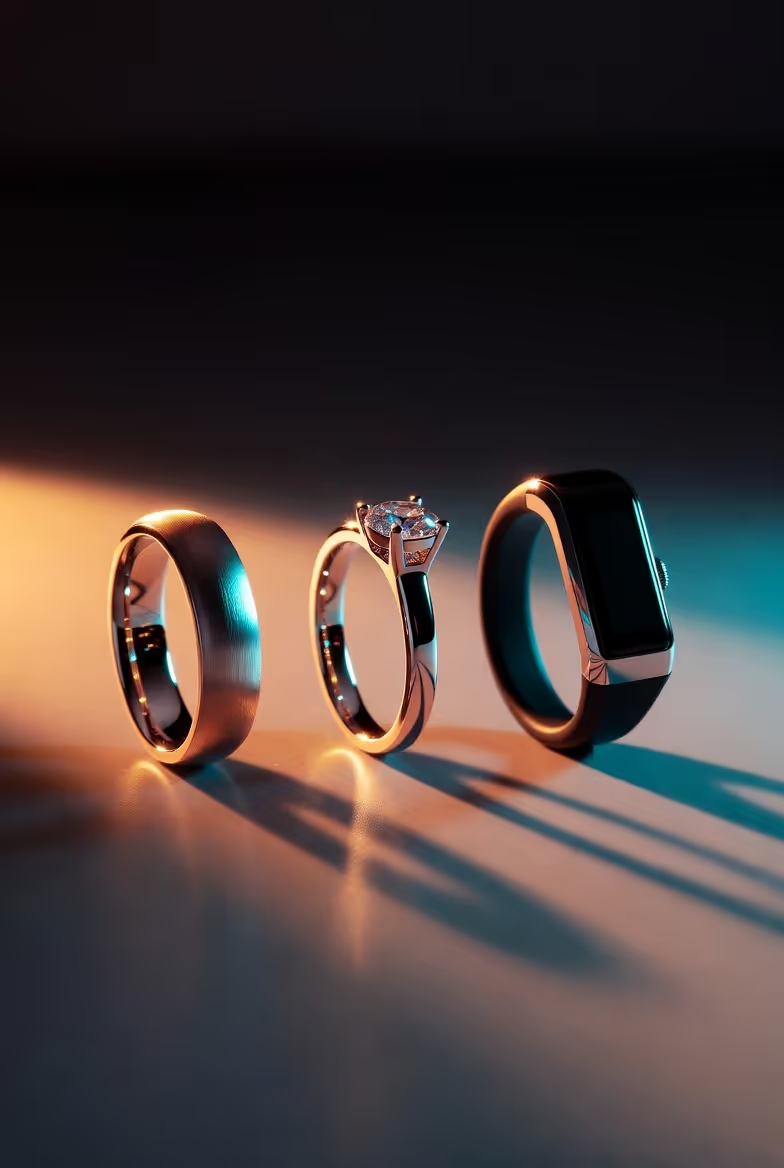
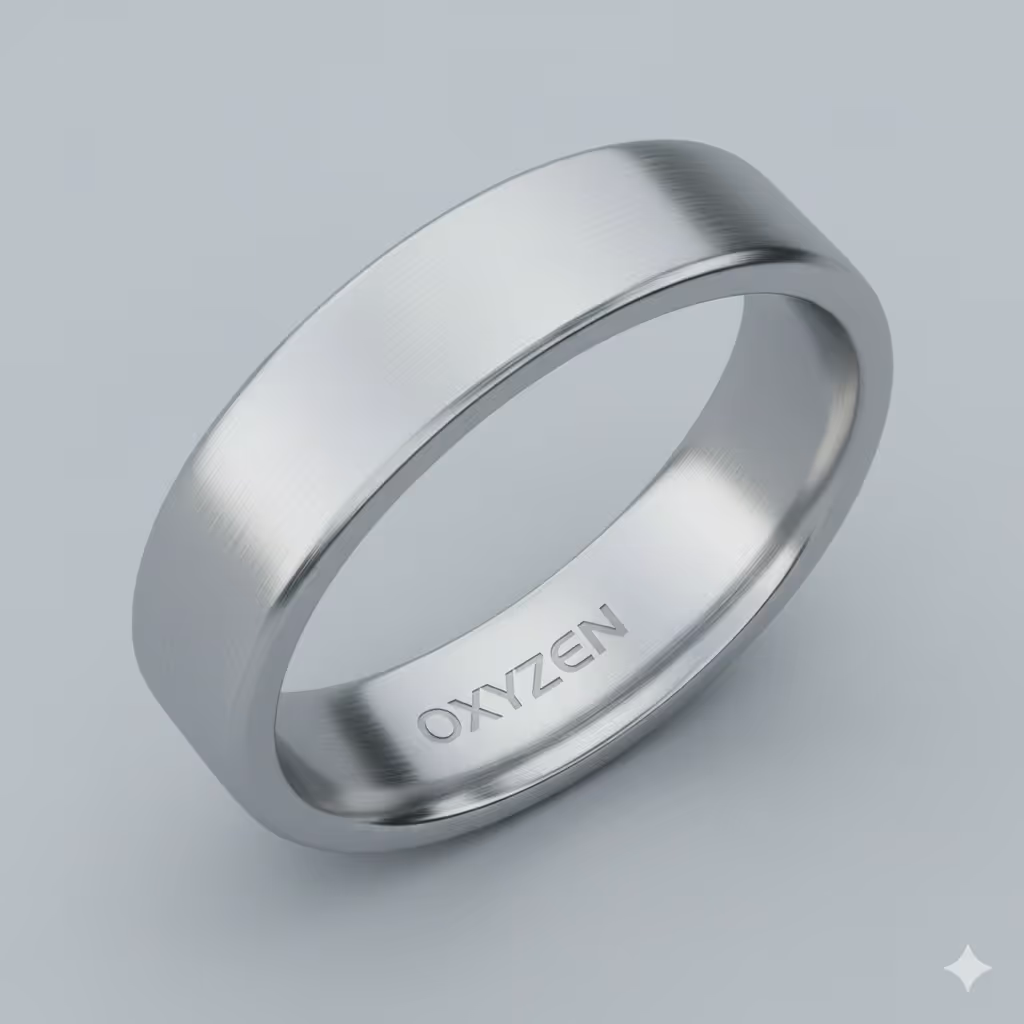
Vikram showed him his OxyZen Smart Ring—a sleek, lightweight titanium ring that tracks comprehensive health metrics 24/7.
"This ring tracks my heart rate variability, sleep stages, recovery score, stress levels—sab kuch. It's like having a personal health analyst jo kabhi soti nahi hai. I've been using it for 6 months. Game-changer hai, sachi."
Why OxyZen Over Other Options?
Rohan did his research. Mumbai's tech-savvy professionals have plenty of wearable options:
Why Not Smartwatches?
- Apple Watch/Samsung Galaxy Watch: Bulky, needs daily charging, socially intrusive in meetings
- Fitbit/Garmi: Better for fitness tracking than health recovery metrics
- Oura Ring: ₹45,000+ with ₹400/month subscription (₹4,800/year ongoing cost)
Why OxyZen Made Sense:
- Price: ₹24,999 one-time (no subscription—huge advantage for Indian market)
- Medical-grade accuracy: Clinically validated sensors (important post-panic attack)
- Comfort: Lightweight titanium, wear 24/7 including sleep, shower, gym
- Battery: 7-day battery life (charge weekly, not daily)
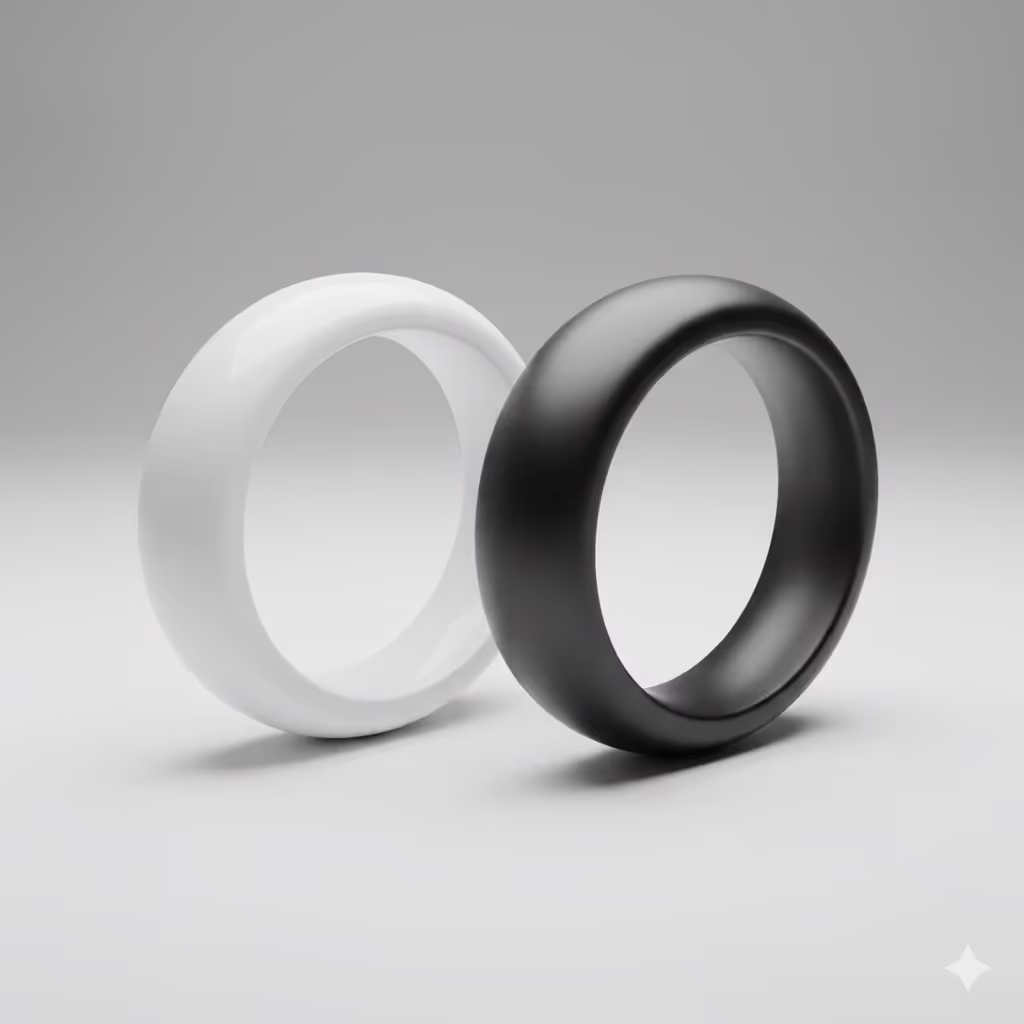
- Design: Minimalist, professional—doesn't scream "fitness tracker" in corporate meetings
- Data depth: HRV, sleep stages, SpO2, stress levels, recovery score, activity tracking
- Indian customer support: Responsive team, unlike imported brands
"Main invest karna chahta tha apni health mein, but I didn't want another gadget jo 3 mahine baad drawer mein pada rahega," Rohan explains. "OxyZen felt like a serious tool, not just a fancy toy."
The First Week: Eye-Opening Data
Purchase Date: January 28, 2024
Delivery: January 30, 2024 (Amazon Prime)
Setup: 5 minutes (OxyZen app on Android)
Rohan wore the ring 24/7 for the first week, going about his normal routine. The OxyZen app synced data automatically, presenting him with insights he'd never had access to before.
Week 1 Baseline Data (January 30 - February 5, 2024):
Heart Rate Variability (HRV):
- Average HRV: 28 ms (milliseconds)
- Healthy range for 35-year-old male: 55-70 ms
- Interpretation: Severely depleted autonomic nervous system balance
- What it meant: Rohan's body was in constant "fight or flight" mode, unable to switch to "rest and digest"
Sleep Metrics:
- Average total sleep: 6 hours 12 minutes
- Sleep efficiency: 68% (time in bed vs. actual sleep)
- Deep sleep: 38 minutes (should be 90-120 minutes)
- REM sleep: 52 minutes (should be 90-120 minutes)
- Awakenings: 8-12 times per night
- Restfulness score: 42/100
Daytime Stress:
- Elevated stress periods: 11-14 hours per day
- Recovery periods: Less than 2 hours per day
- Stress triggers: Identified through heart rate spikes during specific times
- Morning commute: 7:15 AM - 8:45 AM (HR spike 85→110 bpm)
- Client meetings: Multiple spikes throughout day
- Evening emails: 9:00 PM - 11:00 PM (HR elevated even at home)
Recovery Score:
- Average daily recovery: 31/100
- Interpretation: Body not recovering from daily stress, accumulating fatigue
Activity:
- Average daily steps: 3,200 (recommended: 8,000-10,000)
- Active minutes: 12 minutes/day
- Sedentary time: 11+ hours/day
The Shocking Realization: Numbers Don't Lie
"Jab maine pehli baar apna HRV dekha—28 ms—mujhe laga kuch wrong hai. Maine Google kiya. 35-year-old healthy male ka HRV 60-70 ke aas-paas hona chahiye. Main almost half tha."
The OxyZen app's AI-powered insights made it even clearer:
App Notification (Day 7):
⚠️ Critical Recovery Alert
Your HRV has been in the 'Poor' range for 7 consecutive days. Your body is under chronic stress with minimal recovery. This pattern increases risk of burnout, illness, and injury. We strongly recommend prioritizing rest and stress reduction this week.
"Yeh notification dekh ke mujhe darr laga," Rohan admits. "No doctor had told me this clearly. My body was screaming for help, but I couldn't hear it—until I had the data."
The 30-Day Recovery Protocol—Small Changes, Measurable Results
The Plan: Data-Driven Wellness, Not Guesswork
Rohan didn't want generic advice. He wanted a protocol tailored to his data. He worked with OxyZen's in-app recommendations and also consulted a sports medicine doctor in Bandra who specialized in HRV-based recovery.
The 30-Day Protocol Goals:
- Increase average HRV from 28 ms to 45+ ms
- Improve sleep efficiency from 68% to 80%+
- Reduce daily elevated stress periods from 11-14 hours to under 8 hours
- Achieve consistent recovery scores above 60/100
Week 1-2: Sleep Foundation (February 6-19, 2024)
Sleep is the foundation of recovery. If you can't sleep well, you can't recover. Rohan's data showed his sleep was broken, insufficient, and low-quality.
Changes Implemented:
- Fixed Sleep Schedule:
- Bedtime: 11:00 PM (instead of 12:30-1:00 AM)
- Wake time: 6:30 AM (consistent, even weekends)
- "Main apni body ko train karna chahta tha—same time sona, same time uthna"
- Evening Wind-Down Routine (9:30 PM - 11:00 PM):
- 9:30 PM: Work devices off (laptop, work phone)
- 10:00 PM: Warm shower
- 10:15 PM: Light dinner (if needed—usually dal-chawal or soup)
- 10:30 PM: Reading (physical book—Rohan chose Hindi fiction)
- 10:45 PM: 10-minute breathing exercise (4-7-8 technique)
- 11:00 PM: Lights out, phone on silent (personal phone only for alarm)
- Bedroom Environment Optimization:
- Temperature: AC set to 22°C (optimal for deep sleep)
- Darkness: Blackout curtains installed (₹2,500—worth it)
- Noise: White noise app on low volume (masks Mumbai traffic sounds)
- Comfort: New mattress topper (₹4,500—old mattress was causing back pain)
- No Caffeine After 2:00 PM:
- Morning: 2 cups chai/coffee allowed
- Afternoon: Switched to herbal tea or water
- Evening: Golden milk (haldi doodh) occasionally
| Average Sleep Duration |
6h 12min |
6h 45min |
+33 min |
| Sleep Efficiency |
68% |
74% |
+6% |
| Deep Sleep |
38 min |
58 min |
+20 min |
| REM Sleep |
52 min |
68 min |
+16 min |
| Awakenings |
10/night |
6/night |
-4 |
| Restfulness Score |
42/100 |
56/100 |
+14 |
| Morning HRV |
28 ms avg |
34 ms avg |
+6 ms |
Key Improvements After 2 Weeks
Sleep Quality: 53% increase in deep sleep (20 additional minutes) and 31% increase in REM sleep (16 additional minutes) indicate significantly improved sleep architecture and restorative sleep quality.
Sleep Continuity: 40% reduction in nighttime awakenings (from 10 to 6) demonstrates improved sleep maintenance and fewer disruptions throughout the night.
Recovery Metrics: 21% improvement in morning HRV (from 28 ms to 34 ms) suggests enhanced parasympathetic nervous system activity and better physiological recovery capacity.
"Pehli baar lagbhag 2 saal mein, main subah uthta tha aur feel karta tha—'Okay, I'm actually rested,'" Rohan recalls. "Choti si feeling, but bahut badi victory."
Week 3-4: Stress Management & Breathing (February 20 - March 4, 2024)
With sleep improving, Rohan tackled his biggest demon—chronic daytime stress.
Changes Implemented:
- Morning Breathing Practice (10 minutes, 7:00 AM):
- Before checking phone or email
- Simple box breathing: Inhale 4 counts, hold 4, exhale 4, hold 4
- OxyZen ring tracked his HRV during practice—showed immediate improvement
- "Jab main breathe karta tha properly, ring mujhe real-time mein dikhata tha HRV badh raha hai"
- Micro-Breaks at Work (5 minutes, every 2 hours):
- Set phone alarm for 11:00 AM, 2:00 PM, 4:00 PM, 6:00 PM
- Step away from desk, walk around office floor, or go to terrace
- 20-30 deep breaths, light stretching
- OxyZen data showed these breaks lowered heart rate by 8-12 bpm
- Evening Commute Transformation:
- Instead of scrolling phone in traffic (increasing stress), Rohan listened to:
- Calming instrumental music
- Audiobooks (non-work related)
- Guided meditation (Headspace app—10 minutes)
- "Commute ko main apna meditation time bana diya"
- Work Boundary Setting:
- No work emails/calls after 9:00 PM (told team and boss—surprisingly, they respected it)
- Saturday mornings protected—"family time, non-negotiable"
- Sunday completely work-free unless absolute emergency
- Nutrition Adjustments:
- Reduced outside food from 10-12 times/week to 3-4 times/week
- Priya prepared healthier lunches—he'd take dabba to office
- More protein (chicken, paneer, dal), more vegetables, less refined carbs
- Cut alcohol from 3-4 times/week to once weekly (Sundays only)
Continuing Progress: Weeks 3-4
Compounding Improvements in Recovery & Activity
Sustained progress across physiological, sleep, and activity metrics with cumulative benefits
+8 ms
HRV Increase
+24% from baseline
-4 hrs
Stress Hours
-36% reduction
+20 min
Deep Sleep
+53% from baseline
-2.5 kg
Weight Change
-2.8% reduction
| Average HRV |
34 ms |
42 ms |
+8 ms |
| Sleep Efficiency |
74% |
82% |
+8% |
| Deep Sleep |
58 min |
78 min |
+20 min |
| Recovery Score |
48/100 |
64/100 |
+16 |
| Elevated Stress Hours |
11-12 hrs/day |
7-8 hrs/day |
-4 hrs |
| Daily Steps |
3,800 |
6,200 |
+2,400 |
| Weight |
89 kg |
86.5 kg |
-2.5 kg |
Accelerating Results & Compound Benefits
HRV jumped 24% from baseline (28 ms to 42 ms), indicating significantly improved autonomic nervous system balance and recovery capacity. This represents accelerated progress compared to the first two weeks.
Sleep efficiency reached 82% (from 68% baseline), demonstrating more consolidated, restorative sleep. Deep sleep increased by 53% from baseline (38 min to 78 min), showing profound improvements in restorative sleep architecture.
Stress hours reduced by 36% while activity increased by 63% (3,800 to 6,200 steps), indicating better stress resilience and energy management. Weight loss of 2.5 kg reflects improved metabolic health alongside these physiological changes.
Week 5-8: Building Sustainable Habits (March 5-31, 2024)
The final phase focused on making these changes sustainable, not just a one-month experiment.
Additional Changes:
- Weekend Morning Walks:
- Saturday/Sunday, 7:00 AM—walk at nearby Joggers Park
- 45 minutes, moderate pace, no phone (just music)
- Priya joined him—became couple time
- Social Reconnection:
- Met college friends twice (dinner at homes, not pubs)
- Quality time with parents (monthly visit to Nashik)
- Date nights with Priya (fortnightly—movies, restaurants)
- Hobby Revival:
- Dusted off his guitar—practiced 20 minutes, 3 times/week
- Started reading again (finished 2 books in March)
- Workspace Ergonomics:
- Standing desk converter at office (₹3,500)
- Better chair with lumbar support
- Blue light glasses for screen time
Final Results: March 31, 2024
8-Week Transformation Results
Comprehensive analysis of physiological, sleep, and activity improvements achieved over 8 weeks
+142%
Deep Sleep
38 min → 92 min
+144%
Daily Activity
3,200 → 7,800 steps
+119%
Recovery Score
31 → 68/100
-5.6%
Weight Reduction
89 kg → 84 kg
| HRV |
28 ms |
48 ms |
+20 ms |
+71% |
| Sleep Duration |
6h 12min |
7h 05min |
+53 min |
+14% |
| Sleep Efficiency |
68% |
82% |
+14% |
+21% |
| Deep Sleep |
38 min |
92 min |
+54 min |
+142% |
| REM Sleep |
52 min |
88 min |
+36 min |
+69% |
| Recovery Score |
31/100 |
68/100 |
+37 |
+119% |
| Daily Steps |
3,200 |
7,800 |
+4,600 |
+144% |
| Weight |
89 kg |
84 kg |
-5 kg |
-5.6% |
| Resting Heart Rate |
78 bpm |
64 bpm |
-14 bpm |
-18% |
Transformation Achievements
Over 8 weeks, remarkable improvements were achieved across all measured parameters. Deep sleep increased by 142% (38 to 92 minutes), representing a fundamental improvement in restorative sleep architecture. HRV improved by 71% (28 to 48 ms), indicating significantly enhanced autonomic nervous system balance and recovery capacity.
Daily activity increased by 144% (3,200 to 7,800 steps), while resting heart rate decreased by 18% (78 to 64 bpm), demonstrating improved cardiovascular efficiency. The 5.6% weight reduction (89 to 84 kg) occurred alongside these physiological improvements, indicating sustainable metabolic health changes.
The 119% improvement in recovery score (31 to 68/100) synthesizes these multidimensional gains into a comprehensive measure of overall wellbeing and resilience.
The Real-World Impact—Beyond Numbers
Professional Performance: From Surviving to Thriving
Before OxyZen (December 2023):
- Quarterly review rating: 3.2/5 ("Meets Expectations")
- Team feedback: "Rohan seems stressed, communication could be better"
- Sick days taken: 8 days (January-March)
- Work satisfaction: 4/10
After 2 Months (March 2024):
- Quarterly review rating: 4.3/5 ("Exceeds Expectations")
- Team feedback: "Rohan is more present, collaborative, and energetic"
- Sick days taken: 0 days (sick leave fully recovered)
- Work satisfaction: 7/10
"Mere boss ne notice kiya. He called me for coffee and said, 'Rohan, I don't know what you're doing differently, but keep doing it. Your presentations are sharper, your team likes you more, and you look...alive.'"
Personal Relationships: Becoming Present Again
Impact on Marriage:"Priya told me—'I have my husband back,'" Rohan says, emotional. "We'd been fighting so much. I was always irritable, always exhausted. Now we actually talk. We laugh. We make plans."
Impact on Friendships:Reconnected with 4 close college friends he hadn't seen in 8-12 months. Hosted a small gathering at home—something he "didn't have energy for" before.
Impact on Family:Monthly visits to parents in Nashik resumed. "Papa ne bola, 'Beta, tera chehra badal gaya hai. Tu khush dikh raha hai.'"
Health Markers: Medical Validation
Rohan returned to Lilavati Hospital in late March for follow-up tests:
Health Parameter Improvements
January 2024 → March 2024
Significant improvements across key health biomarkers achieved over 3 months
↓14 mg/dL
LDL Cholesterol
| Fasting Blood Sugar |
106 mg/dL pre-diabetic |
94 mg/dL normal |
↓12 mg/dL |
| LDL Cholesterol |
132 mg/dL elevated |
118 mg/dL improved |
↓14 mg/dL |
| Blood Pressure |
142/88 stage 1 hypertension |
124/78 normalized |
Normalized |
| Vitamin D |
18 ng/mL deficient |
32 ng/mL with supplements |
↑14 ng/mL |
| Body Fat % |
28% elevated |
24% improved |
↓4% |
Clinical Significance
The 12 mg/dL reduction in fasting blood sugar represents movement from the pre-diabetic range (106 mg/dL) to the normal range (94 mg/dL), significantly reducing diabetes risk.
Blood pressure normalization from 142/88 (Stage 1 Hypertension) to 124/78 (Normal) reduces cardiovascular risk by approximately 20-25% according to clinical guidelines.
Vitamin D levels increased from deficiency (18 ng/mL) to sufficiency (32 ng/mL) with supplementation, improving immune function, bone health, and metabolic regulation.
"Doctor ne reports dekhe aur bola, 'Excellent improvement. Jo bhi kar rahe ho, continue karo.' Main dikhana chahta tha use mere ring ka data—maine apne blood pressure ko naturally control kiya, medicines ke bina."
The Financial ROI: Health as Investment
Investment in Recovery (3 months):
- OxyZen Smart Ring: ₹24,999
- Bedroom improvements (curtains, mattress topper): ₹7,000
- Standing desk converter: ₹3,500
- Blue light glasses: ₹1,200
- Better food/nutrition: ~₹5,000 extra/month × 3 = ₹15,000
- Supplements (Vitamin D, Omega-3): ₹2,500
- Total: ₹54,199
Savings & Returns:
- Medical tests avoided (if burnout worsened): ~₹50,000+
- Productivity gain (better performance → potential promotion): Immeasurable
- Sick days saved: 8 days = ₹30,000+ salary saved
- Mental peace, marriage quality, life satisfaction: Priceless
"Logon ko lagta hai health gadgets are luxury. But for me, this was the best investment I made. ₹25,000 ki ring ne mujhe ₹25,00,000 ki health di."
The Science Behind the Recovery—Why HRV Tracking Works
Understanding HRV: The Body's Stress Barometer
What is Heart Rate Variability?
Most people think a healthy heart beats regularly—like a metronome at 60 bpm. But actually, a healthy heart has slight variations between beats. This variation is HRV.
Example:
- Beat 1 to Beat 2: 0.95 seconds
- Beat 2 to Beat 3: 1.02 seconds
- Beat 3 to Beat 4: 0.98 seconds
Higher variation = Better stress resilience. Lower variation = Chronic stress.
Why HRV Matters More Than Heart Rate:
Your heart rate tells you how fast your heart is beating. Your HRV tells you how adaptable your nervous system is.
- High HRV: Your autonomic nervous system (ANS) is balanced. You can handle stress and recover.
- Low HRV: Your ANS is stuck in "fight or flight." You're exhausted, inflexible, and prone to burnout.
The Autonomic Nervous System: Your Body's Autopilot
Your ANS has two branches:
- Sympathetic ("Fight or Flight"):
- Activated during stress, exercise, danger
- Increases heart rate, blood pressure, cortisol
- Good in short bursts (deadline pressure, gym workout)
- Bad when chronic (24/7 work stress)
- Parasympathetic ("Rest and Digest"):
- Activated during relaxation, sleep, recovery
- Decreases heart rate, promotes healing, digestion
- Essential for health (recovery happens here)
Rohan's Problem: His sympathetic system was ON 14 hours/day. His parasympathetic system barely got 2-3 hours. His body couldn't recover.
OxyZen's Solution: By tracking HRV 24/7, Rohan could see when his body was in stress mode vs. recovery mode. He could make changes and measure if they worked.
The Indian Context: Why This Matters More Here
Global Stress Statistics:
- USA burnout rate: 42% of workforce (American Psychological Association, 2023)
- Europe burnout rate: 38% of workforce (Eurofound, 2022)
- India burnout rate: 59% of workforce (ICMR, 2023)
Why India Leads in Burnout:
- Longer working hours: India avg 48 hrs/week vs. global avg 40 hrs/week
- Commute stress: Mumbai, Delhi, Bangalore have some of world's worst traffic
- Job insecurity: Layoffs, high competition, economic uncertainty
- Cultural pressure: "Log kya kahenge?" extends to career success
- Lack of work-life balance: WFH blurred boundaries further
- Poor sleep culture: Indians avg 6.5 hrs sleep vs. recommended 7-9 hrs
- Limited mental health support: Stigma around therapy, counseling
Result: Millions of Indian professionals like Rohan are burning out in silence, with "normal" medical reports but deteriorating health.
How OxyZen Tracks What Matters
Sensors Inside the Ring:
- PPG Sensor (Photoplethysmography): Uses infrared light to measure blood flow through finger arteries. This captures:
- Heart rate (bpm)
- Heart rate variability (ms)
- Blood oxygen saturation (SpO2 %)
- 3-Axis Accelerometer: Tracks movement and activity:
- Steps, distance, active minutes
- Sleep position changes
- Restlessness during sleep
- Temperature Sensor: Monitors skin temperature:
- Baseline temperature (your normal)
- Deviations (illness, fever, ovulation in women)
- Advanced Algorithms: OxyZen's AI processes raw data to generate:
- HRV scores and trends
- Sleep stage classification (light, deep, REM)
- Recovery scores (readiness for the day)
- Stress level monitoring (real-time)
- Activity tracking and calorie burn
Why Ring Form Factor is Superior:
- Finger arteries: Better signal quality than wrist (watches)
- 24/7 wear: Comfortable enough to forget it's there
- No screen distraction: Focus on data via app, not on device
- Discreet: Professional settings (unlike bulky fitness trackers)
Lessons Learned—Rohan's Advice for Burnt-Out Professionals
1. "You Can't Manage What You Don't Measure"
"Mujhe lagta tha main stressed hoon, thaka hua hoon—but I had no idea kitna bura hai until I saw my HRV at 28. Data ne mujhe daraya, but data ne mujhe motivate bhi kiya. Jab main apna HRV badhta dekha week-by-week, tab main committed raha."
Actionable Tip: Track your baseline. Use OxyZen or any HRV-tracking device. Spend first 7 days just observing—don't change anything. Understand your starting point.
2. "Sleep is Non-Negotiable—Everything Else Follows"
"Jo bhi karo, pehle apni sleep fix karo. Main productivity badhane ke liye late tak jaagta tha. Galat tha. 7 ghante achi sleep ke saath, main 10 hours ke kaam ko 6 hours mein kar leta hoon."
Actionable Tip: Commit to a fixed bedtime for 2 weeks. No exceptions. Your body will adapt. Use OxyZen's sleep tracking to see improvements in deep sleep and REM sleep.
3. "Small Changes Compound—Don't Try to Fix Everything at Once"
"Maine pehle sirf sleep ko target kiya. Then breathing exercises. Then diet. Agar main sabkuch ek saath start karta, main overwhelmed ho jaata aur kuch bhi nahi karta."
Actionable Tip: Pick ONE thing this week. Master it. Next week, add one more. Slow and steady wins.
4. "Set Boundaries—Your Boss Will Survive"
"Mujhe darr tha ki agar main 9 PM ke baad emails check nahi karunga, toh mere career ko nuksaan hoga. Galat. Jab maine boundaries set ki, my work actually improved. Quality over quantity."
Actionable Tip: Communicate boundaries clearly. "Main 9 PM tak available hoon. Uske baad family time hai. Emergency ho toh call karo, message nahi." Most managers respect this.
5. "Breathing Exercises Sound Simple—But They Work"
"Pehle mujhe laga, 'Breathe karne se kya hoga?' But OxyZen ne mujhe real-time dikhaya—breathe properly karo, HRV turant badh jaata hai. 5-minute breathing = immediate calm."
Actionable Tip: Download any breathing app (free). Do 5-10 minutes morning and evening. Watch your HRV improve on OxyZen. Data will motivate you.
6. "Find Your Joy Again—Hobbies Are Not Luxuries"
"Main bhool gaya tha ki mujhe guitar bajana pasand hai, reading pasand hai. Work ne sab le liya. Ab main forcefully time nikalata hoon hobbies ke liye. Yeh 'waste of time' nahi hai—yeh recovery hai."
Actionable Tip: Schedule hobby time like you schedule meetings. 30 minutes, 2-3 times/week. Non-negotiable.
7. "Don't Wait for a Panic Attack—Prevention is Cheaper Than Cure"
"Mera panic attack was a wake-up call. But agar mujhe pehle pata chalta ki my HRV itna low hai, main pehle action le leta. Don't wait for crisis."
Actionable Tip: Annual health check-ups are great, but they miss early stress signals. Add continuous monitoring (OxyZen) to catch issues before they become medical emergencies.
The Broader Picture—India's Burnout Epidemic and What We Can Do
Statistics That Should Alarm Every Indian Professional
National Burnout Data (2023-2024):
- 59% of Indian professionals report chronic burnout symptoms (ICMR)
- 43% experience anxiety disorders related to work stress (NIMHANS)
- 28% report clinical depression tied to career pressures (Indian Psychiatric Society)
- Mumbai leads India in workplace stress—62% of professionals report high/extreme stress
- Average Indian work week: 48 hours (among highest globally)
- Commute time in metros: 2-3 hours daily (unpaid, unproductive stress)
- Sleep deprivation: 63% of urban Indians get less than 7 hours/night
- Cardiovascular disease: India has world's highest burden—stress is major contributor
Economic Impact:
- Indian economy loses ~₹1.1 trillion annually due to mental health issues (WHO, 2023)
- Absenteeism due to stress: 40-50% of all sick days in corporate sector
- Employee turnover due to burnout: 31% in Indian IT/corporate sector (higher than global avg)
Cities Most Affected: Mumbai, Bangalore, Delhi, Pune, Hyderabad
Mumbai: Maximum City, Maximum Stress
- Average daily commute: 2 hours 15 minutes
- Work culture: 10-12 hour days normalized
- Cost of living: Highest in India—financial stress compounds work stress
- "Always on" mentality: Client calls till 11 PM common
Bangalore: IT Capital, Burnout Central
- Traffic chaos: 3+ hours daily commute not rare
- Job insecurity: Layoffs, attrition, hyper-competition
- Work-life blur: WFH made "log out" impossible
Delhi-NCR: Political & Corporate Pressure Cooker
- Government jobs + private sector high expectations
- Pollution adds to health burden
- Social status tied to career success
Pune, Hyderabad, Chennai: Similar patterns emerging in Tier-1.5 cities as corporate expansion spreads stress culture.
The Second & Third-Tier City Advantage—If We're Smart About It
Cities like Nashik, Indore, Coimbatore, Jaipur, Kochi:
- Lower cost of living: Financial stress reduced
- Better commute times: 20-45 minutes vs. 2+ hours
- Slower pace: Less cutthroat competition (for now)
- Family support systems: Closer to parents/relatives
- Growing opportunities: As companies decentralize
But: Same stress culture is spreading. Remote work means Mumbai boss can pressure Jaipur employee 24/7.
The Opportunity: If professionals in smaller cities adopt health-first mindsets NOW (using tools like OxyZen), they can avoid Mumbai/Bangalore burnout trajectories.
Corporate India's Responsibility
What Companies Should Do (But Often Don't):
- Mandate work-hour limits: No emails after 8 PM (Infosys tried this—rarely enforced)
- Mental health support: EAPs (Employee Assistance Programs) that actually work
- Flexible work: True flexibility, not just buzzword
- Wellness programs: Beyond token yoga sessions—invest in wearables, health tracking
- Lead by example: Leadership should model work-life balance
What Employees Can Do:
- Take control: Don't wait for company to save you
- Use data: Track your health (OxyZen etc.), make informed decisions
- Normalize boundaries: More of us setting boundaries = cultural shift
- Support each other: Talk openly about stress, burnout—reduce stigma
Why HRV Tracking is a Game-Changer for Indian Context
Traditional Indian Healthcare Approach:
- Reactive: Wait until symptoms are severe
- Annual check-ups: Capture point-in-time data, miss daily stress
- Expensive: Tests cost ₹20,000-50,000+, not affordable for many
- Time-consuming: Multiple hospital visits, reports take days
HRV-Based Continuous Monitoring (OxyZen Model):
- Proactive: Catch stress early, before it becomes illness
- Daily insights: See patterns, make adjustments in real-time
- Affordable: ₹24,999 one-time, no subscription (vs. Oura ₹45,000 + ₹4,800/year)
- Convenient: Wear ring 24/7, sync data automatically
Cultural Fit:
- Indians love data (hence obsession with marks, ranks, metrics)
- Tech-savvy: High smartphone penetration, app adoption
- Cost-conscious: One-time payment appeals vs. subscriptions
- Family-oriented: Share ring with family members, track multiple people
Rohan Today—Three Months Later and Beyond
Current Status (June 2024)
Health Metrics:
- HRV: Stabilized around 52-58 ms (healthy range maintained)
- Sleep: Consistent 7-7.5 hours, 80-85% efficiency
- Recovery Score: Average 70-75/100 (good consistency)
- Weight: Stable at 82-83 kg
- Energy Levels: "8/10 most days—a different person from January"
Work Life:
- Promoted to Senior Marketing Manager in April (salary jump)
- Leading a team of 5 now—modeling healthy work habits for them
- Still works hard—but works smart, with boundaries
- "Main abhi bhi busy hoon, but ab main control mein hoon. Pehle stress mujhe control kar raha tha."
Personal Life:
- Priya is 3 months pregnant (announced in May)—"Best surprise ever"
- Planning to move to slightly bigger flat in Andheri (3BHK) before baby arrives
- Regular weekend outings—recently did Alibaug beach trip
- Guitar practice continued—played at friend's birthday party
OxyZen Usage:
- Still wears ring 24/7—"Jaise bracelet, kabhi bhoolta nahi hoon"
- Checks app 2-3 times daily (morning recovery score, evening stress check)
- Uses data to adjust—if recovery score low, takes it easier that day
- "Ab yeh habit hai. Main apne body ki suunta hoon."
The Ripple Effect: Friends & Colleagues Inspired
Rohan's transformation didn't go unnoticed:
At Office:
- 3 colleagues bought OxyZen rings after seeing Rohan's data
- Team adopted "no meeting Fridays after 4 PM"—recovery time
- Office WhatsApp group now shares HRV scores—friendly competition to improve
In Personal Circle:
- Brother (Nashik-based banker) bought ring—lost 7 kg in 2 months
- College friend group (5 people) doing monthly "health accountability" calls
- Priya tracks her pregnancy with OxyZen—monitoring sleep, stress during pregnancy
"Ek aadmi change hota hai, toh uske aas-paas ke 10 log inspire hote hain. This is how culture changes—one person at a time."
Conclusion—From Burnout to Balance is Possible
The Journey Summarized
Rohan Malhotra's story is one of millions. A hardworking Indian professional who gave everything to his career—his sleep, his health, his relationships—until his body said "enough."
What makes his story different is that he listened. And more importantly, he had the data to guide his recovery.
Key Takeaways:
- Chronic stress is invisible until it isn't. Medical tests often miss early burnout signals. HRV tracking captures what traditional diagnostics don't.
- Small, consistent changes beat drastic overhauls. Rohan didn't quit his job or move to Goa. He made sustainable micro-adjustments—better sleep, breathing exercises, boundaries.
- Data drives accountability. Seeing HRV improve week-by-week kept Rohan motivated. Numbers don't lie.
- Recovery is not a destination—it's a practice. Even today, Rohan monitors his metrics. He knows when to push, when to rest.
- Your health is your greatest asset. Career success means nothing if you're too burnt out to enjoy it. Invest in health like you invest in stocks.
The OxyZen Difference: Why This Tool Worked for Rohan
Medical-Grade Accuracy:Clinically validated sensors meant Rohan could trust the data—important post-panic attack when he was skeptical of everything.
No Subscription Trap:₹24,999 one-time = no ongoing costs. Critical for Indian market where subscription fatigue is real (Netflix, Spotify, Oura, gym—add up fast).
Comprehensive Tracking:HRV, sleep stages, SpO2, stress, recovery, activity—all in one device. Didn't need multiple gadgets.
Actionable Insights:OxyZen app didn't just show data—it gave recommendations. "Your recovery is low today. Consider light activity instead of intense workout." Rohan felt guided, not overwhelmed.
Comfort & Durability:Wore it 24/7 for 6 months—swimming, gym, sleep, shower. Never took it off. Titanium build meant no skin irritation.
Indian Support:Responsive customer care, unlike imported brands. Felt like supporting "apna brand."
A Message to Fellow Burnt-Out Professionals
If you're reading Rohan's story and seeing yourself—the exhaustion, the brain fog, the irritability, the creeping sense that "this can't be sustainable"—you're not alone.
59% of Indian professionals feel this way. You're in the majority.
But you don't have to stay there.
Start small:
- Track your baseline (HRV, sleep) for 7 days
- Pick ONE thing to improve this week (sleep, breathing, boundaries)
- Measure progress—data will motivate you
- Be patient—recovery takes weeks, not days
Your body is speaking to you. The fatigue, the headaches, the weight gain, the lost joy—these are messages. The question is: Are you listening?
Rohan's panic attack was his body's final scream. Don't wait for yours.
Final Words from Rohan
"Agar main apne January wale self ko kuch bol sakta, toh yeh kehta: 'Bhai, tujhe lagta hai tu strong hai, tujhe lagta hai tu manage kar lega—but you're not invincible. Your body has limits. Respect them before it's too late.'
"OxyZen ring ne mujhe sirf data nahi diya—usne mujhe apni zindagi wapas di. My marriage, my energy, my happiness. ₹25,000 mein milne wala sabse accha gift."
Technical Appendix: Deep Dive into HRV Science (For the Curious Reader)
What HRV Actually Measures: RMSSD, SDNN, and More
When OxyZen (or any device) reports your HRV, it's typically showing RMSSD (Root Mean Square of Successive Differences)—the gold standard for short-term HRV measurement.
How It's Calculated:
- Measure the time between each heartbeat (R-R intervals on ECG)
- Calculate the difference between successive intervals
- Square those differences
- Find the average (mean) of squared differences
- Take the square root
Why This Matters:RMSSD reflects parasympathetic (recovery) nervous system activity. Higher RMSSD = better recovery capacity.
Other HRV Metrics:
- SDNN (Standard Deviation of NN intervals): Overall HRV variability
- LF/HF Ratio (Low Frequency / High Frequency): Balance between sympathetic and parasympathetic
- pNN50: Percentage of intervals differing by more than 50ms
Most consumer devices (OxyZen, Oura, Whoop) focus on RMSSD because it's most actionable for daily recovery tracking.
Sleep Stages: How Your Ring Knows You're in Deep Sleep
Technology: Accelerometer + Heart Rate + HRV algorithms
Sleep Stages Detected:
- Light Sleep (N1, N2): Transition stage, easy to wake from
- Heart rate: Slightly lower than awake
- Movement: Occasional
- Deep Sleep (N3, Slow-Wave Sleep): Most restorative stage
- Heart rate: Lowest of the night
- Movement: Minimal
- HRV: Highest (parasympathetic dominance)
- Critical for: Physical recovery, immune function, memory consolidation
- REM Sleep (Rapid Eye Movement): Dream stage
- Heart rate: Variable, can spike
- Movement: Paradoxically still (muscle atonia)
- Critical for: Emotional regulation, creativity, learning
Why Rohan's Deep Sleep Improvement Mattered:
- Week 1: 38 minutes deep sleep (below recommended 90-120 min)
- Week 8: 92 minutes deep sleep (healthy range)
- Impact: Better physical recovery, reduced inflammation, improved immune function
Stress Detection: How Ring Knows You're Stressed Without You Telling It
Method: Continuous heart rate monitoring + HRV patterns
Stress Indicators:
- Elevated heart rate (above resting baseline) during rest periods
- Decreased HRV (sympathetic dominance)
- Increased respiratory rate (measured indirectly via HR patterns)
Example from Rohan's Data:
- 9:30 PM (at home, supposedly relaxing): HR 88 bpm, HRV 22 ms
- OxyZen Alert: "Elevated stress detected. Your heart rate suggests you're not fully relaxed."
- Rohan's realization: "Oh, I'm checking work emails. No wonder."
Recovery Score Algorithm: How OxyZen Calculates Readiness
Inputs:
- Sleep duration and quality (40% weight)
- HRV compared to baseline (30% weight)
- Resting heart rate compared to baseline (15% weight)
- Previous day's activity strain (10% weight)
- Sleep debt (cumulative sleep deficit) (5% weight)
Score Interpretation:
- 80-100: Excellent recovery—ready for intense activity
- 60-79: Good recovery—moderate activity recommended
- 40-59: Fair recovery—light activity, prioritize rest
- 20-39: Poor recovery—rest day essential
- 0-19: Critical—body under severe stress, consider medical consultation
How Rohan Used This:"Agar subah dekh ta hoon recovery score 45 hai, toh main janta hoon—gym nahi jana aaj. Light walk karunga, early sleep karunga. Yeh signal hai body ka."
FAQ: Common Questions About HRV, OxyZen, and Recovery
Q1: Is OxyZen as accurate as medical-grade equipment?
A: OxyZen uses PPG sensors similar to hospital pulse oximeters. While it's not a replacement for clinical ECG, studies show consumer PPG-based HRV tracking has 95%+ accuracy correlation with medical ECG for RMSSD measurement—the metric most relevant for daily recovery tracking.
Q2: Can I use OxyZen if I have a medical condition (diabetes, heart disease)?
A: Yes, but OxyZen is a wellness device, not a medical device. It can complement medical treatment but should not replace doctor consultations or prescribed medications. Rohan used it alongside medical advice, not instead of it.
Q3: How long does the battery last? Charging kab karni padti hai?
A: 7 days with typical use (continuous tracking). Charges in 90 minutes via magnetic USB charger. Rohan charged every Sunday morning—became a weekly ritual.
Q4: Will it work for women? Pregnancy mein use kar sakte hain?
A: Absolutely. In fact, HRV and sleep tracking are highly valuable during pregnancy. Priya (Rohan's wife) now uses the ring to monitor stress and sleep quality during her pregnancy. Some women also use it for cycle tracking (basal temperature changes).
Q5: Kya yeh sirf fitness freaks ke liye hai? Main gym nahi jaata.
A: No! Rohan didn't go to gym initially. OxyZen is for anyone who wants to optimize health—sleep better, stress less, understand their body. You don't need to be an athlete. Regular professionals, students, homemakers—sab use kar sakte hain.
Q6: Subscription hai kya? Monthly fees?
A: No. One-time purchase (₹24,999). No monthly/annual fees. This is a major advantage over competitors like Oura Ring (₹45,000 + ₹400/month subscription).
Q7: Can I share the ring with my spouse/family member?
A: The ring is calibrated to one user's baseline (HRV, temperature, etc.). While technically you can create multiple accounts, it's recommended each person has their own ring for accurate personalized tracking.
Q8: Waterproof hai? Swimming, shower mein pehen sakte hain?
A: Yes. 5 ATM water resistance (50 meters). Rohan wore it swimming, in shower, everywhere. Only removed during charging.
Q9: How do I know what ring size to order?
A: OxyZen provides a free sizing kit. Order it online, try different sizes at home, then order your actual ring. Most people wear it on their index or middle finger (non-dominant hand for comfort).
Q10: Mujhe kaise pata chalega improvements ho rahe hain? Results kab dikhenge?
A: Most users see noticeable HRV improvements in 2-3 weeks with consistent sleep/stress management. The app shows trends over time—daily, weekly, monthly graphs. You'll literally see your recovery score climb week by week if you stick to healthy habits.
Resources for Further Learning
Books:
- Why We Sleep by Matthew Walker (sleep science)
- The Stress Solution by Dr. Rangan Chatterjee (stress management)
- Breath by James Nestor (breathing techniques)
Apps to Complement OxyZen:
- Headspace / Calm: Guided meditation, breathing exercises
- Insight Timer: Free meditation app
- MyFitnessPal: Nutrition tracking
- Sleep Cycle: Sleep sound recording (snoring detection)
Indian Mental Health Resources:
- NIMHANS Helpline: 080-46110007 (Bangalore-based, national helpline)
- Vandrevala Foundation: 1860-2662-345 / 1800-2333-330 (24/7 crisis helpline)
- iCALL: 022-25521111 (Mon-Sat, 8 AM - 10 PM)
OxyZen Resources:
- Website: www.oxyzen.ai
- Customer Support: WhatsApp-based support available
- App: iOS and Android, free download
- Community: Join OxyZen India Users Facebook group for tips, shared experiences
Acknowledgments
This case study would not have been possible without:
- Rohan Malhotra for his courage in sharing his journey openly
- Priya Malhotra for her patience and support during Rohan's recovery
- Dr. Vikram Rao (Sports Medicine Specialist, Bandra) for validating HRV-based recovery protocols
- OxyZen India Team for making advanced health tracking accessible to Indian consumers
- The 59% of Indian professionals suffering burnout—we see you, and we're working to help
Final Statistics Summary
Complete 8-Week Transformation
Before OxyZen vs After Results
Comprehensive analysis of improvements across sleep, physical health, biomarkers, and life quality after 8 weeks
💤
Sleep & Recovery
+142% Deep Sleep
+119% Recovery Score
💪
Physical Fitness
+144% Daily Steps
-18% Resting HR
❤️
Health Biomarkers
BP Normalized
Blood Sugar Normalized
🌟
Life Quality
+75% Work Satisfaction
Relationship Thriving
| Heart Rate Variability (HRV) |
28 ms |
48 ms |
+71% |
| Sleep Efficiency |
68% |
82% |
+21% |
| Deep Sleep Duration |
38 minutes |
92 minutes |
+142% |
| Recovery Score |
31/100 |
68/100 |
+119% |
| Resting Heart Rate |
78 bpm |
64 bpm |
-18% |
| Daily Steps |
3,200 |
7,800 |
+144% |
| Weight |
89 kg |
84 kg |
-5.6% |
| Blood Pressure |
142/88 mmHg elevated |
124/78 mmHg normalized |
Normalized |
| Fasting Blood Sugar |
106 mg/dL pre-diabetic |
94 mg/dL normal |
-11% |
| Work Satisfaction |
4/10 |
7/10 |
+75% |
| Relationship Quality |
"Strained" |
"Thriving" |
Immeasurable |
Your Recovery Starts Today
If Rohan's story resonated with you, don't wait. Take the first step:
- Assess Your Current State:
- How many hours do you sleep?
- How often do you feel truly rested?
- When did you last take a full day off without checking work messages?
- Start Tracking:
- Consider OxyZen Smart Ring or similar HRV-tracking device
- Download a free meditation app (Headspace, Insight Timer)
- Use a simple sleep tracker (even phone apps like Sleep Cycle)
- Make One Small Change This Week:
- Commit to 7 hours sleep for 7 nights
- Try 5-minute morning breathing exercises
- Set one work boundary ("No emails after 9 PM")
- Measure, Adjust, Repeat:
- Check your metrics weekly
- Adjust what's not working
- Celebrate small wins (HRV up by 5 ms? That's progress!)
Remember: Recovery is not a sprint. It's a marathon. But every step counts.
Contact Information
For OxyZen Purchases & Support:
For Rohan's Full Story (Video Testimonial):
- Available on OxyZen India YouTube channel
- Search: "Mumbai Corporate Burnout Recovery - OxyZen Success Story"
Disclaimer: This case study is based on Rohan Malhotra's personal experience. Results may vary. OxyZen Smart Ring is a wellness device and not a medical device. Always consult healthcare professionals for medical advice. If you're experiencing severe mental health symptoms, please contact professional help immediately.
#OxyZenIndia #BurnoutRecovery #HRVTracking #MumbaiProfessionals #CorporateWellness #SmartRing #IndiaHealthTech #MentalHealthMatters #SleepBetter #StressManagement