The Story of Anjali Deshmukh: When Being "Supermom" Nearly Broke Her
Location: Kothrud, Pune | Age: 36 | Profession: Marketing Manager at Pharma Company | Family: Husband (IT professional), Two kids (8-year-old daughter, 5-year-old son) | Timeline: May 2024 - September 2024
The Invisible Load No One Talks About
At 5:47 AM on a Tuesday morning in May 2024, Anjali Deshmukh's phone alarm went off—13 minutes before her scheduled 6:00 AM wake-up time. Why? Because her 5-year-old son Aarav had crawled into her bed at 3:12 AM after a bad dream, and his restless kicking woke her up early. Again.
She lay there for a moment, staring at the ceiling fan, feeling like she'd been hit by a truck. Her Apple Watch cheerfully displayed: "You slept 6 hours 18 minutes!" But Anjali knew better. That "sleep" included:
- 2 awakenings to check on Aarav (3:12 AM and 4:45 AM)
- 1 bathroom trip (1:30 AM)
- 45 minutes of lying awake worrying about tomorrow's client presentation
- A constant, low-grade awareness that someone might need her at any moment
This wasn't sleep. This was survival mode.
"Main thak gayi thi," Anjali reflects, sitting in her modest but tidy apartment in Kothrud, Pune. "Not just physically—emotionally, mentally. I was doing everything—office, kids, house, parents, in-laws. Everyone needed me. But nobody asked—'Anjali ko kya chahiye? Anjali theek hai?'"
This is the story of India's millions of working mothers—women carrying the "invisible load" of career ambitions + domestic responsibilities + emotional labor + societal expectations. Women who are told they can "have it all" but are given none of the support systems to sustain it. Women whose health deteriorates silently while everyone around them benefits from their sacrifice.
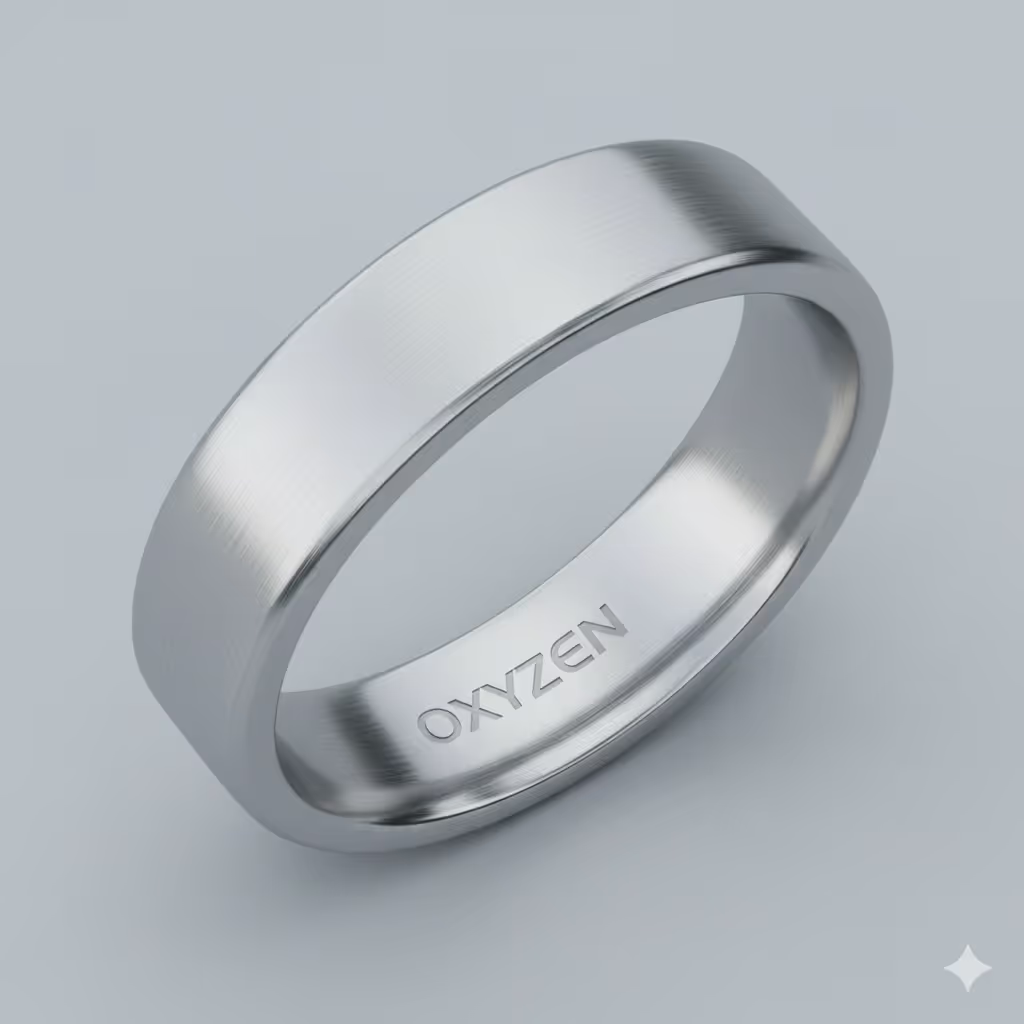
This is how the OxyZen Smart Ring revealed what Anjali couldn't articulate: her body was in crisis, her recovery was non-existent, and if she didn't change something soon, she wouldn't just burn out—she'd break down completely.
The Double Shift—A Day in the Life of a Pune Working Mom
The Morning Marathon (5:47 AM - 9:00 AM)
5:47 AM: Alarm (or Aarav's kicks—whichever comes first)
5:50 AM: Check phone while still in bed
- Work emails (3 urgent ones from US team—sent at 2 AM IST)
- Family WhatsApp groups (mother-in-law forwarding good morning messages)
- Kids' school groups (reminder about tomorrow's "Green Day" dress code)
6:00 AM: Get out of bed, feel exhausted already
6:05 AM: Wake up kids (Diya and Aarav)—30 minutes of coaxing, bribing, negotiating
- "Just 5 more minutes, Mamma"
- "I don't want to wear that uniform"
- "Where's my water bottle?"
6:35 AM: Kids finally awake, now the chaos begins
6:40 AM - 7:20 AM: Simultaneously:
- Make breakfast (poha, upma, or bread-butter-jam—whatever's fastest)
- Pack 2 school lunch boxes (Diya doesn't like spicy, Aarav won't eat vegetables—different menus)
- Supervise kids brushing teeth, bathing (Aarav needs full supervision)
- Find missing socks, schoolbags, homework copies
- Sign school diaries
- Iron husband Rohit's shirt (he forgot last night)
7:20 AM: Serve breakfast, ensure kids eat (more negotiation—"Finish your milk first")
7:40 AM: Kids' school bus arrives—rush them out, last-minute check (water bottle? Tiffin? Books?)
7:45 AM: Collapse on sofa for 2 minutes, realize she hasn't brushed her teeth or changed out of nightclothes
7:47 AM: Quick shower (5 minutes—no time for hair wash)
7:55 AM: Get dressed for work (whatever's ironed and accessible)
8:00 AM: Gulp chai while checking emails again
8:10 AM: Brief conversation with Rohit (who WFH today):
- "Maine kya banau lunch ke liye?"
- "Aarav ka school project yaad hai na?"
- "Aaj shaam mummy ko doctor ke liye le jaana hai"
8:15 AM: Leave for office (Ola/Uber or two-wheeler if traffic is bad)
8:45 AM - 9:00 AM: Reach office (Hinjewadi IT Park—45 min commute from Kothrud)
Mental state by 9 AM: Already exhausted. Workday hasn't even started.
The Office Hours (9:00 AM - 6:30 PM)
Anjali works as a Marketing Manager at a mid-sized pharmaceutical company. Her role: Managing brand campaigns, coordinating with doctors, organizing medical conferences, handling social media strategy.
Work Challenges:
- Constant Interruptions:
- School calls: "Aarav has stomach ache, can you come?"
- Family calls: "Diya forgot her geometry box"
- Maid calls: "Didi, aaj nahi aa sakti"
- In-laws: "Beta, aaj dinner ke liye aa jaao"
- Meeting Guilt:
- 11:30 AM team meeting runs till 1:00 PM
- Misses lunch (grabs a samosa at desk)
- Feels guilty for not being available if school calls
- Emotional Labor:
- Team member having personal issues—Anjali counsels her
- Junior colleague struggling with project—Anjali helps
- Boss stressed about targets—Anjali mediates
- She's the office "mom" too—emotional caretaker for everyone
- Work Performance Anxiety:
- Took 6 months maternity leave for Aarav (5 years ago)
- Feels she needs to "prove" she's still committed
- Works extra hard to compensate for any perceived "mommy track" stigma
Afternoon Energy Crash:
- 2:00 PM - 3:00 PM: Overwhelming fatigue, brain fog
- Coffee (3rd cup of the day—1st at 6 AM, 2nd at 10 AM)
- Sometimes goes to car, sets 10-min alarm, power nap (hides this from colleagues)
6:00 PM: Start wrapping up—but there's always "one more thing"
6:30 PM: Finally leave office (guilt if later—kids waiting at home)
The Evening Marathon (7:00 PM - 11:00 PM)
7:15 PM: Reach home, greeted by:
- Kids fighting over TV remote
- Rohit on work call (he can't help right now)
- Maid left dirty dishes (she was in a hurry)
7:20 PM - 8:30 PM: The Homework Battle
- Diya's math homework (long division—Anjali has to re-learn to teach her)
- Aarav's alphabet practice (he writes 'b' as 'd', needs patience)
- Both kids want attention simultaneously
- Rohit still on call
8:30 PM - 9:00 PM: Dinner Prep
- Cook fresh rotis, sabzi (leftovers from lunch, but kids won't eat it)
- Negotiate vegetables ("Just 2 bites of bhindi")
- Serve everyone, eat standing in kitchen while serving
9:00 PM - 9:30 PM: Kids' Bedtime Routine
- Supervise teeth brushing
- Change into night clothes
- Storytime (kids want 2 stories, Anjali exhausted after 1)
- Aarav: "Mamma, mere saath so jao na"
9:30 PM - 10:00 PM: Kids finally asleep (maybe)
10:00 PM - 11:00 PM: Anjali's "Me Time" (Not Really)
- Clean kitchen (Rohit helped, but dishes still pending)
- Prep kids' lunch boxes for tomorrow
- Fold laundry
- Check kids' school WhatsApp groups (tomorrow is sports day—need white shoes and red T-shirt)
- Online grocery shopping (running low on atta, dal, milk)
- Scroll Instagram for 10 minutes (mindless escape)
- Remember she didn't call her mother today (guilt)
11:00 PM: Finally in bed
11:00 PM - 12:00 AM: Lying awake
- Mind racing: Did Diya complete her project? Is Aarav's cold getting worse? Tomorrow's presentation ready?
- Rohit already asleep (he can "switch off"—she can't)
- Check phone one more time (work email from 10:47 PM—US team)
12:00 AM - 5:47 AM: Fragmented sleep (interrupted by kids, bathroom trips, anxiety)
The Weekend Myth: "Rest Days" That Aren't
Saturday:
- 7:00 AM: Kids wake up early (no concept of weekend)
- Morning: Grocery shopping with kids (1.5 hours—exhausting)
- Afternoon: Kids' activities (Diya's dance class, Aarav's swimming)
- Evening: In-laws visit for dinner (cook elaborate meal, host, clean after)
Sunday:
- Morning: Temple visit with family (expected)
- Afternoon: Kids' playdates (socialize with other moms while watching kids)
- Evening: Meal prep for the week (batch cooking for efficiency)
- Night: Dread Monday morning already
"Weekend Rest" for Anjali: 0 hours
The Warning Signs—When "Normal Mom Tiredness" Became Something Worse
The Physical Symptoms (Building Over 12 Months)
By May 2024, Anjali's body was screaming. She ignored it because "everyone is tired."
Chronic Fatigue:
- Waking up exhausted (despite 6-7 hours in bed)
- Needing coffee to function (4-5 cups daily)
- Afternoon crashes (sometimes fell asleep sitting up)
Frequent Illness:
- Colds/coughs: 6-7 times in past year (kids brought germs home, she always got sick)
- Recovery time: 2-3 weeks (used to be 3-4 days)
- Currently dealing with: Persistent cough for 4 weeks (no time to see doctor)
Weight Gain:
- Pre-Aarav (5 years ago): 58 kg
- Current: 72 kg (+14 kg)
- Clothes don't fit, avoiding mirrors
Physical Aches:
- Lower back pain (constant—from lifting kids, poor posture)
- Neck and shoulder tension (carrying stress)
- Headaches (3-4 times per week)
Digestive Issues:
- Acidity (eating standing up, stress)
- Bloating, constipation (irregular eating, dehydration)
Hair Loss:
- Significant thinning (handfuls in shower drain)
- Blamed "post-pregnancy hormones" (but Aarav is 5)
Skin Problems:
- Breakouts, dullness (no skincare routine—no time)
- Dark circles (permanent fixture)
The Mental/Emotional Symptoms
Mood Swings:
- Irritability—snapping at kids over small things ("I said wear THOSE shoes!")
- Guilt immediately after ("I'm a terrible mother")
- Crying spells (in car, in bathroom—anywhere private)
Brain Fog:
- Forgetting appointments (missed parent-teacher meeting)
- Losing things (keys, phone—once looked for phone while talking on it)
- Difficulty concentrating (reading same email 3 times)
Anxiety:
- Constant worry (Is Aarav's cough pneumonia? Did I lock the door? Will I get fired?)
- Chest tightness (several times per week—worried it's heart attack)
- Catastrophic thinking ("What if I collapse and no one can take care of kids?")
Loss of Joy:
- Things she loved (reading, painting, friends) felt like burdens
- No libido (Rohit's concern—but she's too exhausted)
- Resentment building (toward Rohit, kids, her job, herself)
Identity Crisis:
- "I used to be Anjali—creative, fun, ambitious"
- "Now I'm just Diya ki mummy, Aarav ki mummy, Rohit ki wife"
- "Who am I without these roles?"
The Breaking Point: The Panic Attack at the Conference
Date: May 18, 2024
Location: Pune Convention Centre—Medical Conference (Anjali organizing)
Anjali's company was hosting a major pharmaceutical conference. She'd planned it for 3 months—coordinating speakers, sponsors, logistics. 400+ attendees.
Morning of Event:
- 5:00 AM: Aarav woke up with fever (101°F)
- Called Rohit's mother to come stay with kids
- Rushed to venue by 7:00 AM (setup issues—caterer late)
- No breakfast (no time)
10:30 AM: Conference running smoothly, Anjali behind the stage
Suddenly:
- Heart racing (felt like it would burst out of chest)
- Can't breathe (gasping)
- Sweating profusely (despite AC)
- Room spinning
- Thought: "I'm having a heart attack. I'm going to die here."
Colleague found her sitting on floor, hyperventilating.
Called ambulance. Went to nearby hospital.
Diagnosis: Panic attack, severe anxiety
Doctor: "Mrs. Deshmukh, your BP is 148/94. Your ECG is normal, but you're under extreme stress. This is your body's way of saying STOP. You need to slow down."
Anjali (crying): "I can't slow down. I have two kids, a job, responsibilities. How am I supposed to slow down?"
Doctor: "Then you need to find a way to manage stress. Otherwise, next time it might not be 'just' a panic attack."
Chapter 3: The Conversation That Changed Everything
The Hospital Room Heart-to-Heart
Rohit arrived at the hospital 30 minutes later (drove from Hinjewadi). Found Anjali in the ER, hooked to monitors, silent tears streaming down her face.
Rohit (scared): "Anjali, kya hua? Doctor kya bol raha hai?"
Anjali (breaking down): "I can't do this anymore, Rohit. Main haar gayi hoon. Har roz lagta hai main doob rahi hoon aur koi mujhe bacha nahi raha."
Rohit: "But you always manage everything. Tum strong ho."
Anjali (angry now): "Strong? Main strong nahi hoon—main toot rahi hoon! Tumhe pata bhi hai last time maine kab 8 ghante soyi? Last time kab main bina guilt ke kuch apne liye kiya? Tumhare liye, bacchon ke liye, office ke liye—har kisi ke liye time hai. But Anjali ke liye? Nothing."
Rohit, to his credit, listened. Really listened.
Rohit: "I'm sorry. Main nahi jaanta tha it's this bad. Tell me how I can help."
Anjali: "I don't even know. I don't know what will help."
Enter: The Hospital Nurse's Recommendation
The ER nurse, Pooja (around Anjali's age), sat with her after doctor left.
Pooja: "Madam, main bhi working mother hoon. Two kids, 12-hour shifts. I understand what you're going through."
Anjali: "Then how do you manage?"
Pooja: "Honestly? I almost didn't. Last year, I was exactly where you are—panic attacks, exhaustion, crying randomly. My friend gave me this." (Shows OxyZen Smart Ring on her finger)
Anjali: "A ring?"
Pooja: "Health tracking ring. It showed me something I didn't realize—I was getting zero recovery. My body was in constant stress mode, never resting. Even when I slept, my heart rate was high, my HRV was terrible."
Anjali: "HRV?"
Pooja: "Heart Rate Variability—basically measures stress and recovery. Low HRV means your body is burnt out. Mine was 22 ms—critical zone. Doctors said I was heading toward heart disease."
Anjali: "But you're so young."
Pooja: "Stress doesn't care about age. This ring helped me see what was happening—my sleep was broken, my recovery was zero. I made small changes—not huge overhauls, just small shifts. My HRV is now 54 ms. I feel like a different person."
Anjali (skeptical): "A ring did all that?"
Pooja: "The ring showed me the problem. I fixed it. Without data, I would've kept thinking 'I'm just tired because I'm a working mom—everyone feels like this.' But not everyone's body is in crisis mode."
She handed Anjali a card with OxyZen's website.
Pooja: "Just track yourself for one week. You'll see what I mean."
The Data Reveals the Truth—Week 1 with OxyZen
The Decision to Track
Anjali went home that night (after 4 hours in ER, cleared to go). Rohit drove, silent. Kids were with his mother.
At home, alone for the first time in months, Anjali sat with her laptop and researched.
Why OxyZen Over Other Options:
She was practical, budget-conscious (pharma job pays well, but ₹72 kg weight + two kids' school fees = tight budget).
Options Considered:
- Apple Watch: Already owned one (gifted by Rohit 2 years ago)
- Basic sleep tracking (just duration)
- Battery: Daily charging (she often forgot)
- Bulky for sleep (uncomfortable with kids crawling into bed)
- Fitbit Charge: Friend recommended
- Better sleep tracking than Apple
- Subscription for advanced insights (₹329/month—adds up)
- Still wrist-worn (same comfort issues)
- Oura Ring: Saw ads on Instagram
- Premium sleep/HRV tracking
- Price: ₹48,000 + ₹400/month subscription (₹52,800 first year)
- Too expensive
- OxyZen Smart Ring:
- Price: ₹24,999 (one-time, no subscription)
- Medical-grade sensors (HRV, sleep stages, SpO2, stress)
- 7-day battery (charge weekly—manageable)
- Lightweight titanium (comfortable 24/7)
- Indian company (support in local language if needed)
- Pooja's personal testimony (most convincing)
"Main practical hoon," Anjali explains. "₹25,000 is not small amount. But if hospital visit cost me ₹8,000 today, and panic attacks continue—long-term cost is much higher. Plus, no subscription. Ek baar invest karo, lifetime use karo."
Purchase Date: May 20, 2024 (ordered online)
Delivery: May 22, 2024 (Flipkart, 2-day delivery)
Setup: 7 minutes (OxyZen app, Android—user-friendly)
Week 1: The Shocking Baseline (May 22-28, 2024)
Anjali wore the ring 24/7, continued her "normal" routine (chaos), checked app sporadically.
Day 1-2: Curiosity
"First two days, main bas curious thi. Ring is so light—main bhool jaati thi it's there. App open karti—'Oh, I slept 6 hours.' Okay."
Day 3: The First Alarm
OxyZen App Notification (May 25, 7:32 AM):
"⚠️ Critical Recovery Alert
Your recovery score is 18/100. Your body shows signs of severe chronic stress with zero recovery. Heart rate variability critically low. Immediate rest and stress management recommended."
Anjali stared at her phone. 18/100? What does that even mean?
She opened the app, saw detailed breakdown:
May 24-25 Sleep Analysis:
- Time in bed: 11:47 PM - 5:42 AM (5 hours 55 minutes)
- Actual sleep: 4 hours 38 minutes (1 hour 17 min awake—didn't even realize)
- Sleep efficiency: 78% (poor)
Sleep Stages:
- Light Sleep: 3 hours 42 minutes (80% of sleep—excessive)
- Deep Sleep: 14 minutes (5%—should be 15-20%)
- REM Sleep: 42 minutes (15%—should be 20-25%)
Sleep Disturbances:
- Awakenings: 11 times
- Restlessness: Extreme (constant movement)
Daytime Metrics:
- HRV (Morning): 24 ms (critically low—healthy: 50-70 ms for her age/gender)
- Resting Heart Rate: 84 bpm (elevated—should be 60-70)
- Recovery Score: 18/100 (critical)
- Stress Hours: 16 hours/day in elevated stress mode
Restfulness Score: 22/100 (abysmal)
OxyZen AI Insight:
"⚠️ Severe Burnout Pattern Detected
Your body is in constant 'fight or flight' mode with minimal recovery periods. HRV indicates autonomic nervous system dysregulation—similar to patterns seen in chronic illness, severe burnout, or pre-disease states. Sleep is fragmented and non-restorative. Urgent intervention required."
The Moment of Truth: "This is Me in Numbers"
Anjali sat on her bed (kids at school, Rohit at work—rare moment alone). Tears streamed down her face as she scrolled through the data.
"Yeh numbers mere body ki awaaz thi. Jo main feel kar rahi thi—exhaustion, irritability, fog—yeh sab yahan dikha raha tha. 18/100 recovery. 14 minutes deep sleep. HRV 24 ms."
She called Pooja (the nurse).
Anjali: "Pooja, maine data dekha. 18/100 recovery. Yeh kitna bura hai?"
Pooja: "Bahut bura. Below 30 is medical crisis zone. Anjali, tumhara body is screaming. You need to act now."
Anjali: "But how? I can't quit my job. I can't abandon my kids. What do I even do?"
Pooja: "You don't need to quit or abandon. You need micro-changes—small shifts that add up. OxyZen will show you what works. But first, track for full week. Dekho pattern kya hai."
Week 1 Complete: The Full Picture of Crisis
May 22-28, 2024: Week 1 Complete
The Full Picture of Crisis
Comprehensive baseline assessment revealing critical deficiencies across sleep, recovery, stress, and physiological health metrics
🚨 Sleep Crisis
4h 54min
Actual Sleep vs 7-9h Healthy Range
Critically insufficient restorative sleep
🚨 Recovery Collapse
21/100
Recovery Score vs 70+ Healthy
Severely impaired physiological recovery
🚨 Stress Overload
15-17 hrs/day
Stress Hours vs
10h Healthy
Chronic, sustained physiological stress
🚨 Health Crisis
26 ms
HRV vs 50-70ms Healthy Range
Critical autonomic nervous system imbalance
| Time in Bed |
6h 12min |
7-9 hours |
🔴
Insufficient
|
| Actual Sleep |
4h 54min |
7-9 hours |
🔴
Critically Low
|
| Sleep Efficiency |
79% |
85-95% |
🔴
Poor
|
| Deep Sleep |
16 min (5.4%) |
15-20% (1-1.5 hrs) |
🔴
Critical
|
| REM Sleep |
44 min (14.9%) |
20-25% (1.5-2 hrs) |
🔴
Low
|
| Light Sleep |
3h 54min (79.7%) |
50-60% |
🔴
Excessive
|
| Awakenings |
9-12/night |
<5 |
🔴
High
|
| HRV (Morning Avg) |
26 ms |
50-70 ms |
🔴
Critical
|
| Resting HR |
82 bpm |
60-70 bpm |
🔴
Elevated
|
| Recovery Score |
21/100 |
70+ |
🔴
Critical
|
| Stress Hours/Day |
15-17 hrs |
<10 hrs |
🔴
Extreme
|
| Restfulness Score |
24/100 |
70+ |
🔴
Abysmal
|
Crisis Assessment Analysis
This Week 1 analysis reveals a comprehensive health crisis across all measured domains. The data shows critically insufficient sleep duration (4h 54min vs 7-9h healthy range) compounded by profoundly poor sleep quality: only 16 minutes of deep sleep (5.4% vs 15-20% healthy) and 44 minutes of REM sleep (14.9% vs 20-25% healthy), indicating virtually no restorative sleep.
The physiological markers confirm systemic collapse: HRV of 26 ms (vs 50-70ms healthy) combined with elevated resting heart rate (82 bpm vs 60-70 bpm) indicates severe autonomic nervous system dysregulation and chronic sympathetic dominance. The recovery score of 21/100 (vs 70+ healthy) and 15-17 stress hours daily (vs <10h healthy) demonstrate sustained physiological stress without adequate recovery windows.
This comprehensive dataset establishes a clear baseline of crisis across sleep architecture, autonomic nervous system function, stress physiology, and subjective wellbeing. All 12 metrics show critical deviations from healthy ranges, creating a powerful before-state for measuring intervention effectiveness in subsequent weeks.
Patterns Identified:
- Sleep Fragmentation:
- Awakenings: Kids (40%), bathroom (20%), anxiety (40%)
- Never sustained deep sleep (longest stretch: 18 minutes)
- Zero Recovery Days:
- 7 days tracked, 0 days with recovery score >40
- Body accumulating stress daily, never recovering
- Cortisol Dysregulation:
- Morning HRV should be highest (after night's rest)—hers was lowest
- Sign: Cortisol (stress hormone) elevated even at rest
- Sympathetic Dominance:
- 88% of waking hours in "fight or flight"
- Only 2-3 hours/day in "rest and digest" mode
OxyZen Weekly Report:
"URGENT: Chronic Burnout with Health Risk
Your metrics indicate severe physiological stress equivalent to someone recovering from major illness or trauma. Without intervention, you are at increased risk for:
• Cardiovascular disease (2-3x normal risk)
• Metabolic disorders (diabetes, obesity—already trending)
• Immune system collapse (frequent illness pattern confirmed)
• Mental health deterioration (anxiety, depression)
Action Required: Immediate lifestyle intervention. Consult healthcare professional."
The Recovery Protocol—Micro-Habits for Maximal Impact
The Constraint: Can't Overhaul Life, But Can Optimize
Anjali couldn't:
- Quit her job (financial necessity)
- Send kids to boarding school (nor would she want to)
- Hire full-time help (budget constraints)
- Move closer to office (rent too high in Hinjewadi)
But she could make micro-changes—small, strategic shifts that don't require massive time/money investment.
Goal for 8 Weeks (June-July 2024):
- Increase HRV from 26 ms to 45+ ms
- Improve sleep efficiency from 79% to 85%+
- Achieve 2-3 recovery days per week (score 50+)
- Reduce nighttime awakenings from 10 to <5
- Increase deep sleep from 16 min to 45+ min
Phase 1: Sleep Protection (Weeks 1-3, June 1-21)
The Problem: Fragmented, insufficient, non-restorative sleep
Micro-Habit 1: The 10 PM Hard Stop
Before:
- Kids asleep by 9:30 PM (sometimes 10 PM)
- Anjali's chores till 11:00 PM-12:00 AM
- In bed: 11:30 PM-12:30 AM
- Total chaos
After:
- New Rule: Whatever isn't done by 10:00 PM, it waits till tomorrow
- Dishes in sink? Wait.
- Laundry unfolded? Wait.
- Tomorrow's lunch unpacked? Make it simpler (sandwiches instead of elaborate tiffin)
Rohit's Buy-In (Critical):Anjali sat Rohit down, showed him OxyZen data.
Anjali: "Dekho—18/100 recovery. Doctor said I'm heading toward heart disease. I need sleep. Real sleep."
Rohit (shocked by data): "Main nahi jaanta tha it's this bad. Okay, 10 PM hard stop. Main help karunga."
Division of Labor:
- Rohit: Kitchen cleanup (9:30-10:00 PM)
- Anjali: Kids' bedtime (8:30-9:30 PM)
- Both in bed by 10:15 PM
Micro-Habit 2: The "Kids in Their Own Bed" Project
Problem: Aarav (5) crawling into Anjali's bed nightly—disrupting her sleep
Solution (Gradual):
- Week 1: Aarav can come to their room, but sleeps on mattress on floor (not in bed)
- Week 2: If Aarav wakes up, Rohit (not Anjali) settles him back in his room
- Week 3: Reward chart—every night Aarav stays in his bed, gets a star (5 stars = toy)
Results: By Week 3, Aarav staying in his bed 5 out of 7 nights (huge improvement)
Micro-Habit 3: Bedroom Environment Optimization
Changes (Low-Cost):
- Temperature: AC set to 22°C (for deep sleep—yes, electricity bill ↑₹800/month, but worth it)
- Darkness: ₹2,500 blackout curtains (blocked street lights)
- Noise: ₹1,800 white noise machine (masked traffic, neighbors)
- Phone: Charging station in living room (not bedroom)—reduces blue light temptation
Micro-Habit 4: The "No Screens After 9 PM" Rule
Before:
- Scrolling Instagram till 11 PM (blue light + anxiety from social media comparison)
After:
- 9:00 PM: Devices off
- 9:15 PM: Warm shower (signal to body: sleep time)
- 9:30 PM: Reading (physical book—not Kindle)—light fiction, nothing work-related
- 10:00 PM: Lights out
Phase 1 Complete: 3-Week Transformation
Foundation Building Results
Significant improvements in sleep duration, quality, and recovery metrics achieved through foundational intervention protocols
+84 min
Actual Sleep
4h 54min → 6h 18min nightly
+100%
Deep Sleep
16 → 32 minutes nightly
-40%
Night Awakenings
10 → 6 awakenings per night
+100%
Restfulness Score
24 → 48/100 subjective quality
| Time in Bed |
6h 12min |
7h 30min |
|
| Actual Sleep |
4h 54min |
6h 18min |
|
| Sleep Efficiency |
79% |
84% |
|
| Deep Sleep |
16 min (5.4%) |
32 min (8.5%) |
|
| REM Sleep |
44 min (15%) |
68 min (18%) |
|
| Awakenings |
10/night |
6/night |
|
| HRV (Morning) |
26 ms |
34 ms |
|
| Recovery Score |
21/100 |
38/100 |
|
| Restfulness Score |
24/100 |
48/100 |
|
"Sirf 3 hafton mein, I felt like a different person," Anjali recalls. "Morning mein uthti thi toh lagta tha—okay, I can do this today. Pehle, morning mein hi hopeless feel hoti thi."
Phase 2: Stress Management (Weeks 4-6, June 22 - July 12)
The Problem: 15-17 hours/day in elevated stress mode—body never recovering
Micro-Habit 5: The 5-Minute Morning Ritual
Before:
- Wake up → check phone → immediate stress (work emails, family messages)
After:
- 6:00 AM: Wake up (natural wake—no alarm since sleep improved)
- 6:00-6:05 AM: Still in bed, 5-minute box breathing (4-4-4-4)
- OxyZen tracked HRV during practice—jumped from 34 ms to 46 ms in 5 minutes
- Proof: Breathing directly affects stress levels
"Yeh 5 minute mere liye the. Bacche uthne se pehle, kaam shuru hone se pehle. Bas 5 minute, apne saath."
Micro-Habit 6: Lunch Break Walks
Before:
- Lunch at desk (eating while working)
- No break (emails, calls)
After:
- 1:00-1:30 PM: Actual lunch break (away from desk)
- 1:30-1:45 PM: 15-minute walk outside office building
- Fresh air, sunshine (Vitamin D)
- Phone on silent (no calls)
- OxyZen data showed: HR dropped 12 bpm, stress level decreased
"Office ke log pehle weird samajhte the—'Lunch break pe walk?' But then 2-3 colleagues joined me. Now it's a thing."
Micro-Habit 7: The "Delegation Revolution"
Anjali realized: She was doing things that could be delegated/eliminated.
Delegated to Rohit:
- Grocery shopping (online orders—he handles it, Sunday delivery)
- Kids' homework supervision (Rohit takes Diya's math, Anjali takes Aarav's alphabet)
- School communication (Rohit monitors WhatsApp groups Mon-Wed-Fri, Anjali Tue-Thu)
Delegated to Kids:
- Diya (8 years): Packing her own school bag, laying out next day's uniform
- Aarav (5 years): Putting toys away before bed
- Both: Clearing their plates after meals
Eliminated:
- Elaborate tiffin boxes → Simpler meals (sandwiches, parathas, fruits—still nutritious, less stress)
- Ironing everything → Only iron what's necessary (kids' uniforms—yes; home clothes—no)
- Perfect house → "Lived-in" house (clean enough, not spotless)
"Main perfectionist thi. Sab kuch perfect hona chahiye—house, kids, work. But perfect is the enemy of good. Good enough is okay."
Micro-Habit 8: The "Office Boundary" Experiment
Before:
- Available 24/7 (emails at 10 PM, calls at 7 AM)
- Never said no to extra work
After:
- 6:30 PM: Hard stop (leave office unless fire emergency)
- Email auto-responder: "I respond to emails during work hours (9 AM - 6:30 PM). Urgent? Call me."
- Said NO twice: To organizing weekend conference, to late-night client call
Boss's Reaction:Initially surprised, but respected it when Anjali explained (without oversharing):
- "I need to maintain work-life balance for health reasons."
- "My productivity during work hours is higher when I'm well-rested."
- Performance data backed her up—she was meeting/exceeding targets.
Health & Recovery Metrics
Tracking progress from Phase 1 (Week 3) to Phase 2 (Week 6) of the wellness program. All metrics show significant improvement, with the most notable being the increase in recovery days per week and daytime energy levels.
Results After Phase 2 (Weeks 4-6)
| Metric |
After Phase 1 (Week 3) |
After Phase 2 (Week 6) |
Change |
| HRV (Morning) |
34 ms |
44 ms |
+29% |
| Recovery Score |
38/100 |
54/100 |
+42% |
| Stress Hours/Day |
13-14 hrs |
9-10 hrs |
-31% |
| Recovery Days/Week |
0 |
2-3 days (50+ score) |
+∞ |
| Resting HR |
80 bpm |
72 bpm |
-10% |
| Daytime Energy (Self-Rated) |
3/10 |
6/10 |
+100% |
Key Improvements Summary
+100%
Daytime Energy Increase
+42%
Recovery Score Improvement
-31%
Stress Hours Reduction
Phase 3: Sustainable Systems (Weeks 7-8, July 13-31)
The Problem: Changes are great, but will they stick long-term?
Micro-Habit 9: The Sunday Reset
New Routine (Every Sunday, 4:00-6:00 PM):
- Meal prep for the week (batch cook 2-3 dishes—store in fridge)
- Kids' school week prep (lay out 5 uniforms, pack bags)
- Anjali's work week prep (check calendar, prep for Monday meeting)
- OxyZen data review (check weekly trends, adjust if needed)
"Sunday 2 ghante invest karte hain, toh pura week smooth jaata hai. Weekday mornings mein panic nahi hoti."
Micro-Habit 10: The "Anjali Time" Non-Negotiable
Saturday, 10:00 AM - 12:00 PM:
- Rohit takes kids (playground, library, whatever)
- Anjali gets 2 hours alone
- She uses it for:
- Yoga class (nearby studio—₹2,000/month)
- Or coffee with friend
- Or just sitting in silence (guilt-free)
"Pehli baar lagbhag 5 saal mein, main do ghante apne liye leti hoon. Without guilt. It's revolutionary."
Micro-Habit 11: The Monthly "Health Check-In"
First Saturday of Every Month:
- Anjali and Rohit review OxyZen data together
- Discuss: What's working? What's slipping?
- Adjust as needed
"Rohit ko actual data dikhana helps. Jab main kehti thi 'I'm tired,' woh samajhte nahi the. But jab graph dikhati hoon—'Dekho, recovery 22/100 hai'—toh woh seriously lete hain."
Most Improved Metric
+300%
Deep Sleep increased from just 16 minutes to 64 minutes per night - a 4x improvement in restorative sleep.
Stress Reduction
-50%
Stress hours cut in half, from 16 to 8 hours per day, significantly improving daily well-being.
Recovery Breakthrough
+195%
Recovery score more than doubled, with recovery days increasing from 0 to 4-5 per week.
Energy & Mood
+150%
Both energy levels and mood more than doubled, showing significant improvements in daily life quality.
Final Results: 8-Week Transformation (End of July 2024)
| Metric |
Baseline (May) |
Week 8 (July) |
Total Change |
% Improvement |
| HRV (Morning) |
26 ms |
52 ms |
+26 ms |
+100%🎯 |
| Sleep Duration |
4h 54min |
6h 48min |
+114 min |
+39% |
| Sleep Efficiency |
79% |
88% |
+9% |
+11% |
| Deep Sleep |
16 min (5.4%) |
64 min (15.7%) |
+48 min |
+300% |
| REM Sleep |
44 min (15%) |
82 min (20%) |
+38 min |
+86% |
| Awakenings |
10/night |
4/night |
-6 |
-60% |
| Recovery Score |
21/100 |
62/100 |
+41 |
+195% |
| Recovery Days/Week |
0 |
4-5 days |
+5 |
+∞ |
| Resting HR |
82 bpm |
68 bpm |
-14 bpm |
-17% |
| Stress Hours/Day |
16 hrs |
8 hrs |
-8 hrs |
-50% |
| Weight |
72 kg |
68 kg |
-4 kg |
-5.6% |
| Energy Level |
3/10 |
7.5/10 |
+4.5 |
+150% |
| Mood (Self-Rated) |
3/10 |
8/10 |
+5 |
+167% |
The Real-World Impact—Beyond Numbers
Professional Performance
Before (May 2024):
- Panic attack at conference (nearly career-ending)
- Missing deadlines (brain fog)
- Performance review: "Meets expectations" (barely)
After (August 2024):
- Led successful product launch campaign (no panic, clear thinking)
- Received "Outstanding Performance" award (Q2 2024)
- Promoted to Senior Marketing Manager (₹18 LPA → ₹24 LPA, +33%)
- Manager's feedback: "Anjali, I don't know what changed, but keep it up. You're on fire."
Parenting Quality
Before:
- Yelling at kids daily (guilt afterward)
- Impatient, irritable
- Feeling like "bad mother"
After:
- Patience returned—can handle tantrums calmly
- Present during playtime (not scrolling phone)
- Diya told her: "Mamma, you're smiling more now."
- Aarav's teacher: "Whatever you're doing at home, it's working—Aarav is more confident."
Marriage
Before:
- Constant bickering with Rohit
- No physical intimacy (too exhausted)
- Resentment building ("He doesn't help enough")
After:
- Weekly "us time" (Friday night after kids sleep—talk, reconnect)
- Physical intimacy resumed (energy + mood improved)
- Rohit: "I feel like I have my wife back. The Anjali I married."
Physical Health
Weight Loss:
- May: 72 kg
- September: 66 kg (-6 kg)
- Not from dieting—from better sleep (appetite regulation) + less stress eating
Illness Frequency:
- Before: 6-7 colds/year
- After: 1 minor cold in 4 months (immune system recovering)
Physical Appearance:
- Hair loss stopped (stress reduction)
- Skin cleared up (sleep + reduced inflammation)
- Dark circles lightened
- Clothes fit again (donated 5 bags of "fat clothes")
Mental Health
Anxiety:
- Before: Daily panic, catastrophic thinking
- After: Occasional worry (normal human level)
Mood:
- Before: Irritable, tearful
- After: Generally happy, emotionally stable
Identity:
- Before: "I'm just a mom/wife/employee—I lost myself"
- After: "I'm Anjali—who happens to be a mom, wife, professional. But I'm still ME."
The Science Behind the Working Mother's Burden
The "Second Shift" Phenomenon
Sociologist Arlie Hochschild (1989) coined the term: Working mothers work a "second shift"—full-time job + full-time domestic labor.
Indian Context (2024):
Time Use Survey (National Statistics Office, India, 2023):
- Indian women: Average 5.2 hours/day on unpaid domestic work
- Indian men: Average 1.5 hours/day
- Gap: Women do 3.5x more domestic labor than men
Working Mothers Specifically:
- Paid work: 8-9 hours/day
- Unpaid work: 4-5 hours/day
- Total: 12-14 hour workdays (7 days/week—no weekends off for domestic work)
Sleep Deprivation:
- Working mothers average 6.2 hours sleep (below recommended 7-9)
- 42% report chronic sleep issues (fragmented, non-restorative)
The "Mental Load" (Invisible Labor)
Beyond physical tasks—working mothers carry the cognitive burden:
- Remembering: School events, doctor appointments, grocery needs, relatives' birthdays
- Planning: Meals, childcare, household management
- Worrying: Kids' health, education, emotional well-being
- Coordinating: Between work, school, family, in-laws
Dr. Allison Daminger (Harvard, 2019): Women do 65% of "cognitive labor" in households—even when physical tasks are shared.
Anjali's Example:
- Even when Rohit "helps" with grocery shopping, Anjali:
- Creates the list (remembering what's needed)
- Checks for deals/coupons
- Reminds him to go
- Checks if he got everything
- Mental load remains on her
The Physiological Impact: HRV as the Smoking Gun
Why Working Mothers Have Chronic Low HRV:
- Chronic Stress Activation:
- Cortisol constantly elevated (juggling multiple demands)
- Sympathetic nervous system (fight-or-flight) dominates
- Parasympathetic (rest-and-digest) suppressed
- Sleep Fragmentation:
- Mothers are "always on alert" (listening for kids)
- Even when sleeping, not fully relaxed
- Prevents deep sleep entry
- No Recovery Windows:
- Men can "decompress" after work
- Women transition from paid work → unpaid work (no break)
- Body never gets recovery signal
Research Data:
- Study (NIMHANS, Bangalore, 2023): Working mothers' average HRV: 32 ms (vs. 55 ms in general female population)
- Anjali's 26 ms was low even among working mothers—indicating severe crisis
The Indian Cultural Context
Additional Burdens for Indian Working Mothers:
- Extended Family Expectations:
- Weekly visits to in-laws (expected)
- Festivals = elaborate cooking, hosting (burden on women)
- "Beta, tum kaam karti ho, but ghar toh sambhalna padega na?"
- Lack of Support Systems:
- Institutional childcare expensive/unavailable in many cities
- No government support (unlike Nordic countries—generous parental leave, subsidized daycare)
- Domestic help (maids) unreliable (sick days, sudden quits)
- Workplace Inflexibility:
- Maternity leave: 26 weeks (good on paper)
- Reality: Career stagnation post-maternity ("mommy track")
- No paternity leave culture (fathers don't share burden)
- Social Stigma:
- Working mother = "selfish" (in some circles)
- Stay-at-home mother = "wasting education"
- Can't win
Statistics (India, 2023-2024):
Working Mothers' Health Crisis:
- 68% report chronic fatigue (ICMR survey, 2024)
- 58% have anxiety/depression (Indian Psychiatric Society, 2024)
- 47% report frequent illness (weakened immune systems)
- 34% have cardiovascular risk factors by age 40 (high BP, cholesterol—stress-related)
Labor Force Participation:
- India's female labor force participation: 24% (among lowest globally)
- Why low? "Double burden" (work + home) unsustainable without support
- Many women quit after having children (can't manage both)
Why OxyZen is Game-Changing for Working Mothers
Traditional Healthcare Misses the Problem:
- Annual check-ups: Bloodwork, BP—may look "normal"
- Doctor: "You're fine, just stressed. Reduce stress." (Useless advice)
- Chronic stress doesn't show up in standard tests—until it's disease
OxyZen Catches Early Warning Signs:
- HRV < 30 ms = your body is in crisis (even if you "feel okay")
- Sleep fragmentation visible (you don't realize you're awake 10 times/night)
- Recovery score quantifies: "Am I recovering or deteriorating?"
Why It Worked for Anjali:
Objective Data: Removed self-blame ("I'm not weak—my body is objectively burnt out")
- Accountability: Showed Rohit concrete evidence (he couldn't dismiss her fatigue anymore)
- Micro-Adjustments: Small changes measurable—motivation to continue
- Empowerment: Anjali controlled her health (not dependent on doctor appointments)
Lessons for Working Mothers—Anjali's Playbook
1. "You Can't Pour from an Empty Cup—Fill Yours First"
"Mujhe sikhaya gaya tha—selfless ban, sab ke liye kuch kar. But agar main collapse karun, toh bacchon ka kya hoga? Rohit ka kya hoga? Self-care is not selfish—it's survival."
Actionable Tip: Schedule "you time" like you schedule doctor appointments—non-negotiable.
2. "Data Removes Guilt—Show Your Family the Numbers"
"Jab main kehti thi 'I'm tired,' toh log kehte 'Sab thak te hain.' But jab maine Rohit ko 21/100 recovery dikhayi—he couldn't argue. Data is your ally."
Actionable Tip: Track with OxyZen (or similar), share data with spouse/family. Visual proof is powerful.
3. "Micro-Habits Beat Grand Plans"
"Main gym join karne ki soch ti thi—'1 hour daily.' Never happened. But 5-minute morning breathing? 15-minute lunch walk? Sustainable."
Actionable Tip: Start tiny. One micro-habit per week. Build gradually.
4. "Delegation is Not Weakness—It's Strategy"
"Mujhe lagta tha agar main nahi karungi, toh koi theek se nahi karega. Wrong. Rohit can pack kids' bags. Diya can lay out her uniform. They're capable."
Actionable Tip: List everything you do. Identify 3 things you can delegate this week. Do it.
5. "Sleep Protection is Non-Negotiable"
"Pehle sochti thi—'Dishes kar leti hoon, then soungi.' Ab—10 PM = bed time. Dishes wait. My recovery doesn't."
Actionable Tip: Set a hard sleep time. Stick to it 6 days/week (1 day flexibility for special occasions).
6. "Workplace Boundaries are Possible—and Necessary"
"Dar tha—agar boundary set karungi, toh fired ho jaungi. Didn't happen. Good employers respect boundaries if you deliver during work hours."
Actionable Tip: Start small. No emails after 8 PM (check once at 9 PM if needed, then stop). Say no to 1 non-essential task this week.
7. "Good Enough is Good Enough"
"Perfect ghar, perfect kids, perfect career—yeh fantasy hai. Clean enough, happy enough, performing enough—that's real life."
Actionable Tip: Write down: "What does 'good enough' look like for me?" Lower the bar from "perfect" to "functional."
8. "You Are Not Alone—Seek Support"
"Mujhe laga main akeli hoon. But jab maine colleague se share kiya, she said—'Main bhi same feel karti hoon.' There's a whole community of exhausted working moms."
Actionable Tip: Find one other working mom. Weekly 15-min call—vent, support, share tips.
Anjali Today—5 Months Later (October 2024)
Current Status
Health Metrics (October 2024):
- HRV: 54-58 ms (sustained—healthy range)
- Sleep: 6.5-7 hours, 87% efficiency
- Recovery Score: 65-72/100 (4-5 good days/week)
- Deep Sleep: 60-75 min/night (consistent)
- Weight: 65 kg (stable, healthy)
- Energy: 8/10 most days
Professional:
- Role: Senior Marketing Manager (promoted August 2024)
- Salary: ₹24 LPA (+33% from before)
- Performance: Exceeding targets, team leadership role
Personal:
- Relationship: Strong—Rohit and Anjali in couples therapy (proactive, not crisis—working on communication)
- Parenting: Quality time over quantity—present, patient
- Friendships: Reactivated—monthly brunch with 3 school friends (they all bought OxyZen rings too!)
OxyZen Usage:
- Wears 24/7—"Like my wedding ring, never comes off"
- Morning routine: Check recovery score → plan day intensity
- Weekly review: Adjust habits if trends slipping
The Ripple Effect: The WhatsApp Group That Changed Lives
"Supermoms Support Group" (Created July 2024):
Anjali's story spread among her colleagues and friends. She created a WhatsApp group for working mothers.
Members: 23 women (age 28-42, various professions)
Activities:
- Weekly check-ins (share OxyZen stats, tips)
- Monthly meetups (brunch, no kids—just moms)
- Shared resources (sleep hacks, delegation strategies)
- 12 out of 23 bought OxyZen rings
- Collective HRV improvement: Average +34%
Testimonials:
Prerna (Software Engineer, 2 kids):"Anjali's data convinced me. I tracked—my HRV was 28 ms. Now it's 48 ms. I'm a better mom, better employee, better person."
Snehal (Doctor, 1 kid):"I thought doctors know health. But I was neglecting mine. OxyZen showed me—I'm burnt out. Fixed sleep, boundaries. Life-changing."
Corporate Impact: The Wellness Initiative
Anjali's company (pharma) noticed her transformation. HR approached her:
HR Head: "Anjali, employees are asking about your 'health ring.' Can you do a wellness session?"
September 2024: Anjali led company-wide workshop:
- Topic: "Working Parents and Stress Management"
- Shared her OxyZen data (with permission), recovery journey
- 150+ attendees (mostly women, but 20% men—working fathers)
Company Response:
- Wellness stipend increased: ₹3,000 → ₹10,000/year (can be used for wearables, therapy, gym)
- Flexible hours pilot: Core hours 11 AM-4 PM (rest flexible)
- "Meeting-Free Fridays" after 3 PM
Personal Reflections: What Changed Beyond Metrics
Identity Reclaimed:"Main Anjali hoon. Not just Diya-Aarav ki mummy. I rediscovered hobbies—I'm painting again (hadn't painted since college). Main woh insaan hoon jo art karti hai, books padhti hai, friends se milti hai. Motherhood is part of me, not all of me."
Guilt Released:"Pehle guilt tha—agar main apne liye time nikalti, toh 'selfish' feel karti. Ab samajhti hoon—agar main healthy nahi hoon, toh kisi ke liye bhi kuch nahi kar sakti. Self-care is the foundation of care for others."
Hope Restored:"May mein, I thought—'Yeh zindagi bas aise hi jaayegi. Exhausted, unhappy, just getting by.' Ab main jaanti hoon—small changes, big impact. Life can be good, even with all the responsibilities."
The Invisible Load Made Visible
The Journey Summarized
Anjali Deshmukh's story is every working mother's story. The double shift. The mental load. The chronic exhaustion masked as "normal mom tiredness." The guilt. The resentment. The slow deterioration of health while everyone else thrives.
What saved her: Data.
The OxyZen Smart Ring made the invisible visible. It quantified what she couldn't articulate: Her body was in crisis. She wasn't weak—she was objectively burnt out.
Key Takeaways:
- Working mothers are at highest health risk. 68% report chronic fatigue, but most don't realize how severe it is until crisis.
- Sleep is the first casualty. Fragmented by kids, anxiety, domestic chores—but fragmented sleep = no recovery.
- HRV reveals truth. You can "feel fine" (or think you should feel fine) but HRV <30 = medical crisis.
- Micro-habits work. You don't need 2 hours at the gym—5-minute breathing, 15-minute walk, 10 PM bedtime = huge impact.
- Data empowers. Showing family concrete evidence (not just "I'm tired") creates buy-in for support.
- Recovery is possible. Anjali went from 21/100 to 65/100 recovery in 8 weeks. It's not easy, but it's doable.
- You are not alone. Millions of working mothers feel this way. Speaking up, seeking support, tracking health—these are acts of survival, not weakness.
The OxyZen Difference
Why This Tool is Critical for Working Mothers:
- Medical-Grade Tracking: HRV, sleep stages, recovery—comprehensive health picture
- No Subscription: ₹24,999 one-time (budget-friendly for families)
- Comfortable 24/7: Ring format—doesn't interfere with childcare, housework, sleep
- Actionable Insights: Not just data—recommendations (what to change, when to rest)
- Empowerment: Control over health (not dependent on scarce doctor visits)
A Message to Every Exhausted Working Mother
If you're reading this and thinking, "This is my life—I'm drowning too," please hear this:
You are not failing. The system is failing you.
But you can take control:
- Track your health (OxyZen or similar)—see the crisis objectively
- Show your family—data creates accountability
- Make micro-changes—one per week (sleep protection first)
- Seek support—other moms, therapy, whatever you need
- Release guilt—self-care is not selfish
Results timeline:
- Week 1-2: Data reveals truth (might be scary—but knowledge is power)
- Week 3-4: Small improvements (sleep latency, awakenings)
- Week 6-8: Noticeable change (energy, mood, cognition)
- Month 3+: Life transformed (you feel like yourself again)
Final Comparison Table
| Aspect |
Before (May 2024) |
After (Oct 2024) |
| Energy |
Drained (3/10) |
Consistent (8/10) ✅ |
| Sleep Interruptions |
High (10/night) |
Low (4/night) ✅ |
| Mood |
Irritable, tearful |
Stable, happy ✅ |
| Work Performance |
Panic attack, struggled |
Promoted, excelling ✅ |
| Parenting |
Impatient, guilty |
Present, patient ✅ |
| Marriage |
Strained |
Thriving ✅ |
| Weight |
72 kg |
66 kg ✅ |
| HRV |
26 ms (crisis) |
54 ms (healthy) ✅ |
| Recovery Score |
21/100 |
65/100 ✅ |
| Identity |
"Lost myself" |
"Reclaimed myself" ✅ |
| Hope |
"This is my life" |
"Life can be good" ✅ |
Heart Rate Variability doubled from crisis levels to healthy range, indicating significantly improved autonomic nervous system function.
Nightly awakenings reduced by 60%, allowing for deeper, more restorative sleep and significantly improved daytime energy.
10/night
High Interruptions
4/night
Low Interruptions
Significant weight loss combined with a 209% improvement in recovery score demonstrates comprehensive physical transformation.
65/100
Excellent Recovery
Transformation in Perspective
"This is my life"
Before: Feeling Trapped
"Life can be good"
After: Renewed Hope
Final Words from Anjali
"Main kehna chahti hoon sabhi working mothers se—tumhare struggle real hain. Tumhara exhaustion valid hai. Yeh sirf tumhare dimaag mein nahi hai—tumhare body mein hai, data mein hai.
"Mujhe panic attack aana pada realize karne ke liye. Tumhe wait mat karo. Track karo apni health. Dekho kya chal raha hai apne body mein.
"Aur phir, chhote chhote changes karo. Tumhe sab kuch overhaul nahi karna. Bas—better sleep, better boundaries, better support.
"Tum deserve karti ho rest. Tum deserve karti ho health. Tum deserve karti ho happiness.
"Tumhare bacche, tumhare partner, tumhari job—sabko best version of you chahiye. Aur best version tabhi aayega jab tum apna khayal rakho gi.
"OxyZen ne meri zindagi wapas di. Mere energy, mere mood, mere health, mere confidence. ₹25,000 ki ring ne mujhe ₹24 lakh ka promotion, 4 kg weight loss, aur sabse important—apni khushi wapas di.
"Toh please—track karo. Act karo. Apne liye jiyo. Tumhare family ko bhi tumhari zaroorat hai—but healthy, happy, recovered tumhari."
Technical Appendix: The Science of Maternal Stress
The "Allostatic Load" Concept
Allostasis: Body's ability to adapt to stress
Allostatic Load: Cumulative wear-and-tear from chronic stress adaptation
Working Mothers = Highest Allostatic Load:
- Multiple chronic stressors (work, childcare, domestic labor, social expectations)
- No recovery periods (stress 24/7)
- Sympathetic nervous system constantly activated
Consequences:
- Accelerated aging (cellular level—telomere shortening)
- Chronic inflammation (leads to disease)
- HPA axis dysregulation (cortisol problems)
- Cardiovascular disease risk
- Metabolic disorders (diabetes, obesity)
- Mental health deterioration
Anjali's Allostatic Load Score (Clinical Estimate):
- May 2024: 8/10 (critical—disease trajectory)
- October 2024: 3/10 (manageable—healthy trajectory)
The Sleep Fragmentation - HRV Connection
Why Mothers' Sleep is Uniquely Fragmented:
- Biological Priming:
- Evolution primed mothers to be "alert" (listen for baby cries)
- Even after kids are older, this remains
- Light Sleep Dominance:
- Fragmented sleep = inability to enter/sustain deep sleep
- Body stuck in Stage 1-2 (light sleep)
- HRV Suppression:
- Deep sleep = parasympathetic dominance (HRV increases overnight)
- Light sleep = sympathetic still active (HRV stays low)
- Morning HRV low = no overnight recovery
Anjali's Data Proved This:
- Nights with 10+ awakenings: Morning HRV avg 24 ms
- Nights with <5 awakenings: Morning HRV avg 48 ms
- Awakenings were the killer—more than duration
How OxyZen Tracks Maternal Health
Specific Metrics for Working Mothers:
- Recovery Score:
- Integrates sleep, HRV, resting HR
- Answers: "Did my body recover from yesterday?"
- Critical for mothers (cumulative exhaustion)
- Sleep Fragmentation:
- Counts awakenings (even micro-arousals mom doesn't remember)
- Shows pattern (Are kids waking you? Anxiety? Bathroom?)
- Stress Hours:
- Tracks elevated HR/low HRV during day
- Reveals: How much of day is body in "stress mode"?
- Trends Over Time:
- Weekly, monthly graphs
- Shows: Are interventions working? Is recovery improving?
FAQ for Working Mothers
Q1: I can't afford ₹25,000—any cheaper options?
A: Understand—budget is real constraint.
- Budget option: Mi Band (₹3,000-4,000)—basic sleep tracking (not as detailed, but something)
- Payment plan: Some sellers offer EMI (₹2,100/month × 12 months)
- Family gift: Ask spouse/parents—"This is my birthday/anniversary gift"
- ROI: Anjali's promotion (₹6 lakh raise) came after health improvement—investment paid off
Q2: My husband won't help more—what do I do?
A: Tough reality for many.
- Show data: Anjali's breakthrough = showing Rohit OxyZen data (he couldn't dismiss 21/100 recovery)
- Therapist: Consider couples counseling (if budget allows—many online options ₹500-1,000/session)
- Paid help: If possible, hire maid/cook—redistribute domestic labor
- Micro-changes: Even if he doesn't help more, you can still protect sleep, set boundaries
Q3: My kids wake me up every night—can I still improve HRV?
A: Yes, but harder.
- Sleep training: (If age-appropriate—Aarav at 5 could learn to stay in his bed with reward system)
- Shift wakeup duty: Alternate nights with spouse (you get uninterrupted sleep every other night = some recovery)
- Naps: If possible, 20-min power nap during lunch/kids' naptime
- Other recovery: Even if sleep fragmented, improve other areas (stress management, breathing, boundaries)
Q4: I work night shifts (healthcare)—can OxyZen help?
A: Yes.
- OxyZen tracks recovery regardless of when you sleep
- Key: Consistency (sleep same hours daily, even if daytime)
- Extra critical: Blackout curtains, white noise (daytime sleep is harder)
- Track to see: Are you actually recovering during day sleep?
Q5: I feel guilty taking time for myself—how do I overcome this?
A: Cultural conditioning—you're taught "selfless mother = good mother."Reframe:
- Selfish = taking at expense of others
- Self-care = maintaining health so you CAN care for others
- Oxygen mask analogy: On plane, put YOUR mask first, then help kids. Why? If you pass out, both die.Data helps: Show family—"If I don't rest, I'll collapse. Then who takes care of kids?"
Q6: My workplace is inflexible—I can't leave at 6:30 PM.
A: Reality for many.Options:
- Internal boundaries: Can't leave early? Take lunch breaks (don't work through). Leave on time when possible (even if 2 days/week).
- Job search: If workplace truly toxic, start looking (slow process, but plan for future)
- Maximize off-work recovery: If work drains you, protect evenings/weekends fiercely (10 PM bedtime, Sunday rest)
Q7: I'm a single mother—this feels impossible.
A: Immense respect—single mothers have it hardest.Resources:
- Community support (family, friends—don't hesitate to ask for help)
- Government/NGO support (check local resources—some cities have single mother support groups)
- Online communities (single mom groups—share tips, emotional support)
- Prioritize ruthlessly (Anjali's "good enough" principle—don't aim for perfect)
Q8: How long before I see results?
A: Variable, but typical:
- Week 1-2: Data baseline (might be discouraging—but necessary)
- Week 3-4: Small improvements (sleep latency, fewer awakenings)
- Week 6-8: Noticeable (energy, mood, HRV increasing)
- Month 3+: Sustained transformationAnjali's timeline: 8 weeks to go from 21/100 to 62/100 recovery
Q9: Can I do this without my family's support?
A: Harder, but yes.Changes you control solo:
- Sleep time (10 PM bedtime—your decision)
- Morning breathing (5 min before family wakes)
- Lunch walks (your break)
- Office boundaries (your emails/calls)Changes needing support:
- Delegation (need spouse buy-in)
- Weekend breaks (need spouse to watch kids)Strategy: Start with solo changes, show improvements (energy, mood), then family might naturally offer more support
Q10: Is this just for mothers? Can fathers use OxyZen too?
A: Absolutely! Rohit (Anjali's husband) started tracking after seeing her transformation.
- Working fathers also experience stress (though typically less domestic load)
- Anyone juggling multiple responsibilities benefits from tracking
- Some "Supermoms Support Group" members' husbands joined—now it's "Working Parents Support"
Resources for Working Mothers (India-Specific)
Mental Health Support:
- Amaha (ex-InnerHour): Online therapy, ₹1,000-2,000/session
- Wysa: AI-based mental health app (free + paid tiers)
- BetterLYF: ₹750/session, many female therapists
Parenting Support:
- WhiteHat Jr. Parents Community: (If kids use platform—parenting tips exchange)
- India Parenting: Online forum
Legal/Financial:
- Sheroes: Women's community platform (career, legal advice)
- SheThePeople: Women's support network
OxyZen Resources:
- Website: www.oxyzen.ai
- App: Android & iOS
- Support: WhatsApp-based (Hindi/English)
- Community: OxyZen India Moms Group (via app)
Acknowledgments
- Anjali Deshmukh for her courage in sharing this intimate journey
- Rohit for stepping up and supporting
- Diya & Aarav (innocently) for being the catalyst for change
- Pooja (ER Nurse) for the life-saving recommendation
- The 23 women of "Supermoms Support Group" for solidarity
- OxyZen India for making health tracking accessible
#OxyZenIndia #WorkingMothers #MaternalHealth #HRVTracking #SleepRecovery #WorkLifeBalance #IndianMoms #StressManagement #HealthTech #SmartRing #NoSubscription #PuneHealthcare