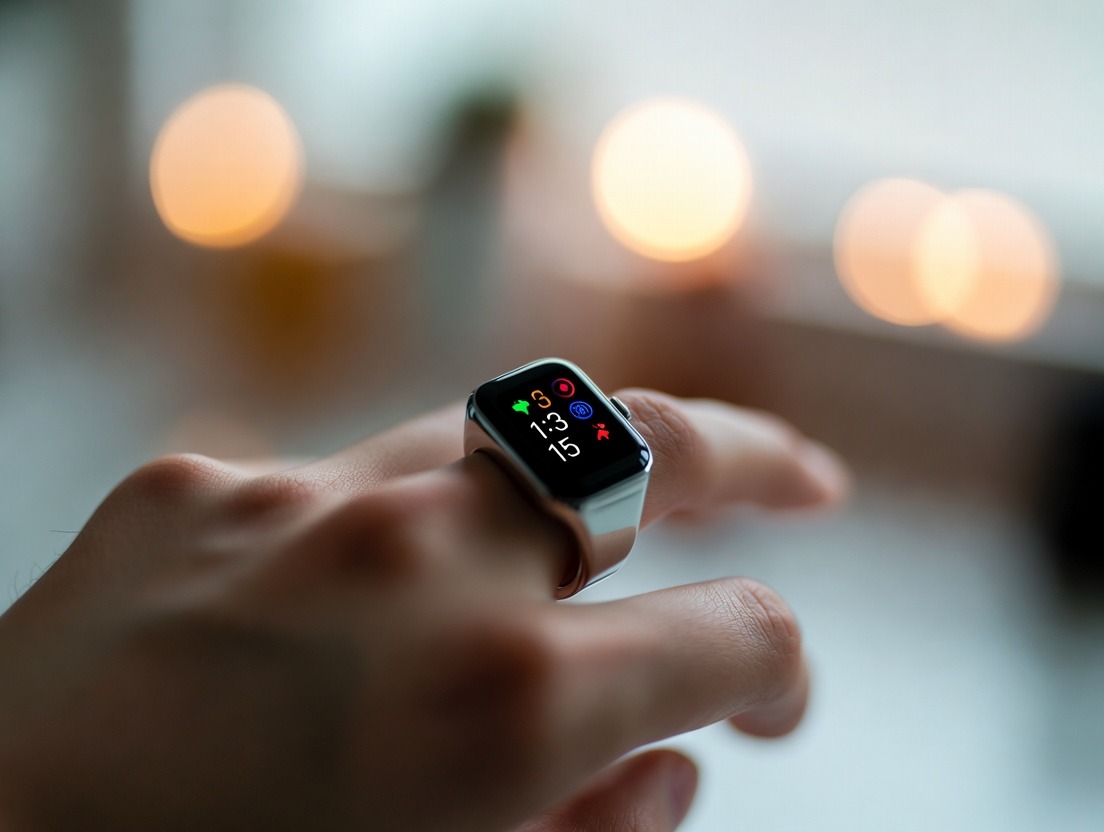
12 Daily Energy Management Principles Proven by Your Wellness Ring
Managing energy when juggling multiple roles and responsibilities.
The 12 Daily Energy Management Principles Proven by Your Wellness Ring
You know the feeling. That 3 PM wall that feels like concrete. The morning fog that coffee can’t burn through. The vague, draining sense of being “always on” yet never truly energized. For decades, managing our daily energy was a guessing game—a mix of folk wisdom, productivity hacks, and sheer willpower. We’ve been told to “listen to our bodies,” but what does that even mean when the signals are subtle, confusing, or drowned out by the noise of modern life?
Enter the modern wellness ring: a silent, continuous observer on your finger, translating the cryptic language of your physiology into a clear, actionable data stream. This isn’t about step counting; it’s about decoding the fundamental rhythms of your vitality. The data pouring from these devices reveals a profound truth: energy isn't a static resource you're given each morning. It's a dynamic, flowing state—a currency generated and spent by complex biological systems that you can learn to manage with precision.
What if you could move from guessing to knowing? From ignoring your body's whispers until they become screams, to understanding its dialect in real-time? This is the promise of data-driven body awareness. Through millions of data points—heart rate variability (HRV), skin temperature, blood oxygen, sleep phases, and resting heart rate—your ring creates a living blueprint of your personal energy architecture. It shows you not just that you're tired, but why. It reveals the hidden tax of that late-night scroll, the energizing dividend of a perfect recovery night, and the precise impact of stress, nutrition, and movement on your reservoir of fuel.
This article presents 12 foundational, daily principles for managing your human energy system, principles that are no longer just theoretical but are now provable and personalizable through the lens of your wearable data. We will move through the arc of your day—from how you wake, to how you work, to how you recover—exploring how each principle directly manifests in your biometrics. This is the beginning of a new partnership: where your innate intuition meets objective validation, empowering you to craft days not of survival, but of sustainable vitality. Let's begin by understanding the very core of what your ring is measuring: your body's fundamental plea for balance.
Principle 1: Honor Your Unique Biological Dawn – It’s More Than Waking Up
We’ve been sold a lie of uniformity: that 6 AM is the “right” time for everyone to start their day, that the “early bird gets the worm” is a universal biological law. Your wellness ring’s sleep data—specifically its tracking of your circadian rhythm and sleep stages—tells a different story. Your “biological dawn” is the natural, optimal time for your body to transition from sleep to wakefulness, dictated by your personal chronotype and the quality of your sleep cycle completion. Forcing yourself awake during deep or REM sleep is like yanking a computer from its update process; you’re starting the day corrupted, with slower processing and higher instability.
The Data Doesn’t Lie: Waking Against Your Rhythm Look at your app the next time you use a blaring alarm. You’ll likely see a spike in your resting heart rate (RHR) the moment you wake—a sign of sympathetic nervous system (stress response) activation. Your Heart Rate Variability (HRV), a key metric of recovery and resilience, will often be lower on these days. Compare this to a morning where you wake naturally, or just as you transition into a period of light sleep. The RHR rise is gentler, and your HRV baseline is higher. This is your body saying, “Thank you for letting me finish my work.” This initial stress shock sets a dysregulated tone for the entire day, forcing your energy systems to start from a deficit.
Practical Application: Finding and Honoring Your Dawn So, how do you find this elusive ideal wake time without risking being late for work? This is where your ring becomes a master detective.
Use the “Sleep Score” or “Readiness Score” as a Retrospective Guide: Over a week or two, note which mornings you achieve your highest scores. Look at what time you woke those days. A pattern will emerge.
Analyze Sleep Stage Completion: A full sleep cycle lasts about 90 minutes. Waking at the end of a cycle is ideal. Your ring’s sleep stage graph shows you where you were when you woke. Aim to set your alarm for a time that allows you to complete cycles, even if it means slightly less total sleep but of higher quality.
The Gradual Shift: If your biological dawn (say, 7:30 AM) conflicts with a necessary wake time (6:30 AM), don’t change it overnight. Use 15-minute increments over several weeks, going to bed correspondingly earlier, and watch how your HRV and RHR respond. Your data will show you if you’re adapting or if you’re fighting a losing battle.
This principle isn’t about laziness; it’s about respect. By starting your day in alignment with your internal clock, you begin with a full reservoir of coherent energy, not a scrambled system playing catch-up. It’s the first and most critical deposit into your daily energy account. For a deeper exploration of how your body’s internal clock speaks to you, our guide on understanding circadian signals offers a detailed breakdown.
Principle 2: Fuel Your Engine, Don’t Just Feed Your Hunger – The Metabolic Energy Audit
Food is energy, full stop. But in the context of your daily vitality, it’s less about calories and more about information. Every meal sends instructions to your mitochondria (your cellular power plants), your hormones, and your nervous system. Your wellness ring acts as a continuous metabolic auditor, showing you the real-time energy ROI of your dietary choices. It moves you from asking “Is this healthy?” to “How does this make my unique system feel and perform?”
Biometric Signatures of Different Fuels You don’t need a lab test to see the effects of a high-sugar breakfast versus a balanced one. Your ring provides the readout.
The Sugar Spike & Crash: After a meal high in refined carbs and sugar, watch your heart rate. You’ll often see a pronounced, sustained elevation for 60-90 minutes post-meal. This is your body working overtime to manage the glucose flood—a process that is energetically expensive and stressful. This is often followed by a dip in energy (and sometimes a rise in skin temperature) as the insulin response overshoots. Your HRV may dip during this period, indicating metabolic stress.
The Balanced Burn: A meal with balanced protein, healthy fats, and complex carbohydrates typically results in a more modest, brief heart rate rise and a quicker return to baseline. Your energy levels and focus remain steadier. Your overnight recovery metrics, like HRV and deep sleep, often improve when your last meal was balanced and appropriately timed, as the body isn’t diverting energy to digestion during critical repair phases.
Conducting Your Personal Food-Energy Audit This is about becoming a scientist of your own body.
Establish a Baseline: For 2-3 days, eat in your “normal” pattern and note your energy peaks and slumps in the app’s journal.
Introduce a Variable: Choose one meal to change. For example, swap a pastry breakfast for eggs and avocado.
Observe the Data: Don’t just go by feel. Check your heart rate graph for the 2 hours after the meal. Note your subjective energy at the 90-minute and 3-hour marks. Observe your sleep and recovery score that night.
Correlate and Iterate: The goal is to find the foods and meal timings that give you the longest, steadiest energy curve and the best subsequent recovery. You might discover that a larger lunch leaves you sluggish, or that a light, early dinner profoundly improves your deep sleep score.
This process builds profound body awareness basics for understanding hunger and fullness, moving you beyond external diet rules to internal wisdom. It proves that the right fuel isn't just about weight; it's about generating clean, sustainable wattage for everything you do.
Principle 3: Hydrate for Electrophysiology, Not Just Thirst
We know water is life, but from an energy management perspective, hydration is about maintaining your body’s electrical system. Every heartbeat, every neural signal, every muscular contraction depends on the precise balance of electrolytes in fluid. Even mild dehydration—far before you feel thirsty—impairs this conductivity. Your wellness ring, particularly through metrics like Heart Rate Variability (HRV) and resting heart rate (RHR), is a sensitive voltmeter for your systemic hydration status.
The Dry Data: How Dehydration Manifests When you’re under-hydrated, your blood volume decreases slightly. Your heart has to work harder (pump faster) to maintain blood pressure and deliver oxygen, leading to an elevated RHR. Furthermore, the balance of sodium and potassium is disrupted, which can negatively affect the autonomic nervous system’s flexibility, leading to a lower HRV. You may also see a slight increase in your body temperature reading as your cooling system (sweat) becomes less efficient. Subjectively, this translates to brain fog, fatigue, and a lack of mental “spark”—all signs of low-grade system inefficiency.
Strategic Hydration, Backed by Biometrics The old “8 glasses a day” is a blunt tool. Your ring helps you personalize.
Pre-emptive Hydration: Drink a large glass of water upon waking. Check your ring’s data from the night before. If your HRV was low or RHR high, you might have gone to bed slightly dehydrated. This morning ritual helps correct that deficit before the day’s demands begin.
The Work Hydration Protocol: Instead of drinking reactively, schedule hydration. Drink 250-500ml of water every 90 minutes. Observe your energy and focus in your ring’s journal. Do you feel a difference on days you do this consistently? Check your afternoon RHR; it should be more stable compared to days you forget.
Electrolytes Are Key: For sustained energy, especially if you sweat or consume caffeine, pure water isn’t always enough. Adding a pinch of salt or using an electrolyte supplement can be transformative. After incorporating electrolytes, look for a stabilizing effect on your HRV during the day and a better recovery score at night, as your cells maintain their electrical balance more effectively.
By viewing hydration as fundamental system maintenance for your biological machine, you ensure all other energy processes have the fluid medium they need to function optimally. This is a cornerstone of the foundation of self-care through body awareness, a non-negotiable first step in managing your daily output.
Principle 4: Strategic Movement Beats Compulsive Exercise – The Energy Investment Portfolio
The fitness mantra of “no days off” and “crush every workout” is a recipe for burnout, not sustainable energy. Your ring reframes movement from a moral obligation to a strategic energy investment. It answers the critical question: What type and dose of movement will yield the highest energy return today, based on my current physiological state? Sometimes, the highest-yield investment is a walk, not a weightlifting session.
Reading Your Body’s Readiness for Movement Your recovery or readiness score is your starting point, but dig deeper.
High Readiness + High HRV + Low RHR: This is a green light for higher-intensity or longer-duration training. Your body has the resources to not only complete the workout but to adapt and grow stronger from it—a net energy gain over 48 hours.
Low Readiness + Low HRV + Elevated RHR: This is a red flag. Your nervous system is stressed, possibly fighting off illness, or under-recovered. Intense exercise here is a withdrawal from an overdrawn account. It will further depress HRV, elevate RHR for longer, and impair sleep. The smart investment is restorative movement: gentle yoga, walking, or mobility work. This can actually improve your recovery metrics by promoting circulation and parasympathetic activation.
The “Medium” Day: This is where nuance matters. Perhaps your sleep was poor but your HRV is okay. A moderate, skill-based session or a social, fun activity might be perfect. The ring guides you away from black-and-white thinking.
The Non-Linear Relationship Between Movement and Energy The goal is to avoid the boom-bust cycle. Your data will vividly show this pattern: a brutal workout leads to a great sleep score the next night (due to exhaustion), but a crashed HRV and high RHR on the second night, indicating failed recovery. This is not progress.
The “Energy Dividend” Workout: These are sessions that leave you feeling energized, not destroyed. They are characterized by a brief, sharp elevation in HRV post-exercise (a sign of good stress adaptation) and a quick return of RHR to baseline. Your sleep that night is deep and uninterrupted.
Using the Ring for Intra-Workout Wisdom: Pay attention to real-time heart rate during a session. Is it disproportionately high for the perceived effort? That’s a signal from your body to pull back. Learning this body-awareness approach to exercise and movement prevents overtraining and injury.
By aligning your movement with your metrics, you stop exercising against your body and start training with it. This turns physical activity from an energy drain into the most reliable system for generating long-term, renewable vitality.
Principle 5: Master Your Nervous System’s Gear Shift – The Art of Strategic Recovery
Energy isn’t just about what you do; it’s about how you recover between doing. Your autonomic nervous system (ANS) has two primary gears: Sympathetic (“Fight or Flight”—the gas pedal) and Parasympathetic (“Rest and Digest”—the brake and repair system). Modern life keeps us stuck in a sympathetic-dominant grind, a state that burns energy reserves at a high rate. The key to daily energy management is learning to consciously downshift into parasympathetic states throughout the day. Your HRV is the direct readout of your ANS flexibility—your ability to shift gears smoothly. A high HRV indicates a healthy, responsive system.
Micro-Recovery: The 5-Minute Parasympathetic Boost You don’t need a 90-minute nap. The data proves that short, deliberate practices can significantly impact your ANS.
Coherent Breathing: Inhale for 5 seconds, exhale for 5 seconds (5.5 breaths per minute) for just 3-5 minutes. This rhythm has been shown to maximize HRV and synchronize heart and respiratory rhythms. Do an experiment: Sit quietly for 2 minutes, then do 3 minutes of coherent breathing. Check your real-time heart rate graph on your ring’s app. You will likely see a noticeable smoothing and lowering of your heart rate, and a calmer heart rate rhythm—a sign of increased parasympathetic activity. This is a system reset.
The 90-20 Rule for Focus: Instead of marathon work sessions, work in 90-minute blocks (aligning with your ultradian rhythms), then take a true 20-minute break. Use that break for a non-screen, parasympathetic activity: a walk outside, light stretching, or even closing your eyes. Your ring will show that these breaks prevent the steady creep upward of your RHR and the decline in HRV that happens during prolonged cognitive stress.
The Data of Downshifting Track these practices in your ring’s journal. Over time, you’ll see correlations: on days you practice regular micro-recoveries, your average daily HRV is higher and your RHR is lower. Your sleep latency (time to fall asleep) decreases because you haven’t spent the entire evening in a sympathetically charged state. This is the essence of managing stress through a body-awareness approach—using data to prove the efficacy of small, consistent recovery habits that keep your energy system running cleanly all day long.
Principle 6: Align Cognitive Work with Your Ultradian Rhythm – The Focus Sprint Method
Your brain’s energy supply is not limitless. It operates on ~90-120 minute cycles called ultradian rhythms, during which you can maintain high focus, followed by a 20-30 minute period where it needs restoration. Ignoring this rhythm—pushing through with caffeine and willpower—leads to cognitive fatigue, more mistakes, and a physiological stress response. Your wellness ring can help you identify and honor these natural cycles, turning your workday into a series of productive sprints rather than a draining marathon.
Biometric Markers of Mental Fatigue While your ring can’t read your thoughts, it can detect the physiological cost of concentrated mental effort.
The Stress of Sustained Focus: During intense, uninterrupted cognitive work, you may see a gradual, slight elevation in your resting heart rate and a decrease in HRV. Your breathing may become shallower (which some advanced rings can infer from heart rate patterns). This is your sympathetic nervous system engaging to support the cognitive load.
The “Brain Fog” Signal: That feeling of hitting a wall is often accompanied by a specific biometric state. You might notice your heart rate has become more erratic or settled into a higher-than-usual plateau. This is your body’s signal that the cognitive energy account is overdrawn and needs a deposit.
Implementing Rhythm-Based Work
Discover Your Personal Cycle: Use your ring’s “moment” feature or journal to note when you feel naturally sharp and when you start to drift. Over a week, look for patterns. Most people find a 90-minute focus window is natural.
Schedule Sprints, Not Marathons: Block your calendar for 90-minute focused work sessions. Guard this time fiercely.
Honor the Break with Physical Reset: When the sprint is over, get up and move. A 5-minute walk, some light stretching, or even looking out a window at a distance does two things: it provides mental disengagement and promotes physical circulation. Check your ring after such a break; you’ll often see your heart rate dip back down, indicating a nervous system reset.
The Deep Work Match: Schedule your most demanding cognitive tasks for your first one or two ultradian cycles of the workday, when your mental energy from sleep is at its peak. Use later cycles for administrative tasks, meetings, or creative brainstorming.
By working with your brain’s natural energy cycles, you produce higher-quality output in less time and protect your physiological resources. This principle moves you from being a task-completer to an energy architect for your mind, a practice supported by learning to recognize your body’s needs before they become urgent.
Principle 7: Cultivate Your Emotional Energy Signature – The Heart-Brain Feedback Loop
Emotions are not abstract; they are electrochemical events in the body with direct energy consequences. Anger, anxiety, and frustration are high-energy burn states. Joy, contentment, and gratitude, while uplifting, can also be metabolically efficient. Your wellness ring, particularly through heart rate and HRV, provides an objective mirror to your emotional state, creating a powerful feedback loop. It helps you move from being hijacked by emotions to observing their physiological impact and choosing more energy-efficient responses.
The Physiology of Feeling Different emotional states create distinct cardiovascular patterns, which your ring detects.
Anxiety & Frustration: These often create a “chaotic” heart rate pattern—spikes and irregular rhythms—with a suppressed HRV. The energy cost is high: diverted blood flow, tense muscles, and a racing mind. It’s like revving a car engine in neutral.
Grounded Calm & Focus: This state is associated with a lower, steady heart rate and higher, more coherent HRV. The famous “heart coherence” state, achievable through focused breathing and positive emotion, shows up as a smooth, sine-wave-like pattern in your heart rate rhythm. This state is biologically regenerative.
Joyful Engagement: Positive excitement, like during fun social interaction or a state of “flow,” may raise heart rate, but often in tandem with good HRV—a sign of healthy, engaged energy expenditure.
Using the Ring for Emotional Alchemy This isn’t about suppressing “bad” emotions. It’s about recognizing their energy tax and using the data to shift state.
Notice and Name: When you feel a strong emotion, pause and check your ring’s live heart rate. Just observe: “My heart rate is 95 BPM while sitting at my desk. I am feeling frustrated.”
Intervene with Physiology: You cannot think your way out of a physiological state. You must act physiologically. Take three deep, slow breaths. Smile (even if forced—it triggers neural pathways). Stand up and stretch.
Observe the Shift: Watch your live heart rate graph as you do this. You will likely see it begin to descend within 60 seconds. This tangible feedback is powerful. It proves you have agency. This practice builds what we call emotional and somatic awareness, the critical link between feeling and physical data.
Track the Triggers: Use your journal to note what triggered a high-energy-burn emotional state. Over time, you can see patterns (e.g., specific times of day, types of meetings, or even hunger states) and pre-emptively manage them.
By treating your emotional energy with the same scrutiny as your physical energy, you reclaim a massive part of your daily vitality budget that was previously spent on unseen, chaotic internal processes.
Principle 8: Optimize Your Environmental Energy Field – Light, Temperature, and Noise
Your body is not an isolated system; it is in constant conversation with its environment. Three key environmental factors—light, temperature, and noise—have a profound, measurable impact on your energy expenditure. Your wellness ring tracks your body’s response to these factors through skin temperature, heart rate, and sleep quality, allowing you to engineer your surroundings for minimal energy drain and maximal support.
Light: The Master Circadian Signal Light is the primary regulator of your cortisol-melatonin cycle. Get it wrong, and you fight your biology all day.
Morning Light Priority: Exposure to bright, ideally natural, light within 30 minutes of waking sharply signals to your body that the day has begun, boosting cortisol appropriately to promote alertness. On days you get this, your ring may show a more dynamic, healthy heart rate pattern in the morning and better energy stability.
The Evening Light Tax: Blue light from screens in the 2-3 hours before bed suppresses melatonin. Your ring’s sleep data will show the cost: longer sleep latency, less deep sleep, more restlessness, and a higher nighttime average heart rate. This poor sleep directly drains the next day’s energy reserves.
Data-Backed Action: Use your ring’s sleep score as a biofeedback tool. On nights after you’ve used blue-light blocking glasses or avoided screens for 90 minutes before bed, does your score improve? The correlation will be clear.
Temperature: The Goldilocks Zone for Performance Your body expends significant energy to maintain its core temperature. Being too cold or too hot is a hidden energy tax.
Sleep Temperature: A cool room (~65-68°F or 18-20°C) is critical for initiating and maintaining deep sleep. Your ring’s skin temperature sensor will show you this: as you fall into deep sleep, your core temperature drops, and your skin temperature may rise slightly as blood vessels dilate to release heat. A room that’s too warm disrupts this process. Look for correlations between a cooler bedroom and higher deep sleep scores.
Daytime Comfort: Mental work is optimized in a slightly cool environment. If you see your heart rate creeping up or feel sluggish in a warm office, it could be your body working to cool itself. Anecdote becomes data when you track it.
Noise: The Silent Energy Vampire Intermittent, unpredictable noise—even at low levels—triggers micro-stress responses (startle reactions), elevating cortisol and heart rate. Your ring can capture these subtle spikes. Working in a noisy café or with a distracting background may feel stimulating, but the physiological data often shows a higher, more variable heart rate compared to working in quiet. This represents wasted energy on subconscious vigilance.
By auditing and adjusting these three environmental levers, you reduce the constant, low-grade biological friction that depletes you. It’s about creating a habitat that serves your energy, a practice deeply connected to understanding your body's language of comfort and distress.
Principle 9: Leverage Social Energy Dynamics – The Biometrics of Connection
Human connection is a powerful energy modulator. Positive, supportive social interactions can be regenerative, while draining or conflict-ridden ones can be profoundly costly. Your wellness ring provides an objective lens on the physiological impact of your social world, helping you identify which relationships and interactions are net energy producers and which are net consumers. This allows you to manage your "social battery" with intention.
The Physiology of Positive and Negative Connection
Regenerative Connection: A warm conversation with a close friend, laughter with loved ones, or a feeling of being understood often correlates with a stable or slightly elevated heart rate (from excitement) paired with good HRV. After such an interaction, you may feel energized and notice your nervous system is calm. Your ring might show a lower RHR in the hours following.
Draining Interaction: A stressful work call, a conflict, or even time spent with a chronically negative person can trigger a stress response. Look for: a sustained elevation in heart rate during and after the interaction, a dip in HRV, and sometimes an increase in skin temperature. The energy hangover from this can last hours, impairing focus and mood. It’s a direct withdrawal from your energy reserves.
Loneliness & Isolation: A lack of positive connection is also costly. Chronic loneliness is a stressor and may manifest in a subtly elevated baseline RHR and lower baseline HRV over time, as shown in longitudinal ring data.
Conducting a Social Energy Audit
Tag Your Interactions: Use your ring’s journal feature to tag moments after specific social interactions (e.g., “lunch with Alex,” “weekly team meeting”).
Review the Correlating Data: Later, look at your heart rate and HRV graphs for those times. Be objective. Does your heart rate spike and stay elevated during calls with a certain client? Does it settle beautifully after a walk with your partner?
Set Boundaries Based on Data: This isn’t about cutting people out, but about managing exposure. If a necessary interaction is draining, schedule it for a time of day when your energy is high, and buffer it with restorative activities before and after. Prioritize energizing connections, especially when your ring shows your recovery is low.
Quality Over Quantity: A few minutes of deeply connected, present conversation can be more regenerative than hours of superficial small talk. Your biometrics will often reflect this.
Understanding that your social ecosystem is part of your energy infrastructure is a game-changer. It validates the need to protect your vibrational environment and invest in connections that truly fuel you, a key aspect of improving health outcomes through body awareness practices.
Principle 10: Practice Digital Fasting – The Cognitive and Nervous System Reset
Our devices are engineered to hijack attention, creating a state of continuous partial attention and hyper-stimulation. This digital diet has a direct metabolic cost: it promotes shallow breathing, activates the sympathetic nervous system, and fragments cognitive focus. Your wellness ring can quantify this cost, providing the motivation for deliberate “digital fasts”—periods where you disconnect to reconnect with your own biological rhythms and restore focused energy.
The Biometric Cost of Digital Distraction
The “Doomscroll” Effect: Endlessly scrolling through social media or news feeds often induces a state of low-grade anxiety and comparison. Physiologically, this can appear as a slightly elevated, unvarying heart rate and lower HRV. It’s a state of passive stress.
Notification Interruption: Each ping from your phone—even if you don’t check it—can trigger a micro-startle response, causing a tiny, sharp spike in heart rate. Over hundreds of pings a day, this represents a real cumulative tax on your nervous system’s stability.
The Pre-Sleep Scramble: Using devices before bed is a triple threat: blue light, mental stimulation, and emotional activation. Your ring’s sleep data will show the undeniable impact: reduced deep sleep, increased restlessness, and poor sleep scores.
Implementing a Data-Backed Digital Fast The goal is strategic disconnection to preserve high-quality mental energy.
The Morning Fast: Commit to the first 60-90 minutes of your day without screens. Use this time for Principle 1 (honoring your dawn), hydration, movement, or planning. Observe if this changes the shape of your morning heart rate curve—does it rise more gently? Do you feel less reactive?
The Focus Sprint Fast: During your 90-minute focused work blocks (Principle 6), turn off all notifications and put your phone in another room. Use an app or a timer. Your ring data during these periods will likely show a more stable heart rate, indicative of deeper, less fractured concentration.
The Evening Wind-Down Fast: Institute a 60-minute screen-free buffer before bed. Replace with reading (physical book), conversation, light stretching, or meditation. Track this religiously in your ring’s journal. The correlation between screen-free nights and superior sleep metrics (faster latency, more deep sleep, higher HRV overnight) will be your strongest motivation to maintain the habit.
This principle isn’t anti-technology; it’s pro-attention. By proving to yourself how digital clutter drains your biological resources, you reclaim the power to use your devices as tools, not let them use you as a resource. This conscious management is a core body awareness skill that wellness rings help develop.
Principle 11: Embrace Purposeful Unplanning – The Strategic Energy Buffer
Our culture worships the packed calendar, equating busyness with importance. However, every scheduled commitment, even a fun one, carries a cognitive load: anticipation, transition, and decision-making. Back-to-back events without buffer zones lead to “schedule friction,” a hidden source of fatigue. Your wellness ring reveals the cost of constant doing in your resting physiology. The principle of “Purposeful Unplanning” involves intentionally scheduling open space to allow for recovery, spontaneity, and integration, which directly replenishes your energy systems.
The Data of Over-Scheduling When you have a day packed with meetings, appointments, and tasks, even if they are not physically demanding, observe your biometrics:
Elevated Baseline: Your average heart rate for the day may be 5-10 BPM higher than on a light day, even while sedentary. This is the metabolic cost of psychological engagement and context-switching.
Suppressed HRV: Your Heart Rate Variability will likely be lower throughout, indicating your nervous system is under persistent, low-grade stress with little opportunity to downshift.
Poor Recovery Signal: Such a day often leads to poorer sleep, as your brain struggles to process the day’s events and your nervous system remains activated.
Building Buffers into Your Energy Budget Treat open space with the same non-negotiable priority as a critical meeting.
The 50-Minute Hour: Schedule meetings for 50 minutes instead of 60, or 25 instead of 30. Use the buffer to stand, breathe, hydrate, and mentally transition. Note in your journal how you feel before the next commitment compared to rushing.
Theme Your Days: If possible, avoid mixing radically different types of energy expenditure on the same day (e.g., deep creative work, high-stakes negotiations, and social events). Cluster similar activities to minimize the psychological cost of shifting gears.
Schedule “Energy Audit” Blocks: Put a 90-minute “Buffer” or “Audit” block in your calendar every afternoon. This is time to process, to take a walk, to handle small tasks without urgency, or simply to be. Defend this time. On days you honor this, your ring will likely show a healthier heart rate pattern in the late afternoon, avoiding the classic crash-and-burn spike.
The “Nothing Night”: Keep one evening per week completely plan-free. No dinner plans, no classes, no projects. This open space allows your nervous system to truly settle. Track your sleep on these nights—they are often your best.
By deliberately creating white space, you give your body and mind the time they need to process, repair, and restore. This prevents the slow leak of energy that comes from constant engagement and is a practical application of recognizing stress signals early through your lifestyle structure, not just your physiology.
Principle 12: End Your Day with Intentional Closure – The Ritual of Systematic Power-Down
Just as you wouldn’t abruptly shut down a complex computer without closing programs, ending your day without a deliberate wind-down ritual leaves your biological "systems" running in the background, sabotaging sleep and next-day energy. Your sleep data is the ultimate report card on how well you powered down. This principle is about creating a consistent, sensory-rich ritual that signals safety, completion, and restoration to your nervous system, transitioning you from sympathetic drive to parasympathetic dominance for the night.
The Biometric Blueprint of a Good Night Your ring defines a good night not just by duration, but by architecture: high Sleep Score, balanced sleep stages, high overnight HRV, low and steady RHR, and minimal restlessness. The hours before you fall asleep are the primary determinant of this architecture.
The Cost of Unresolved Stress: Going to bed with a mind full of to-dos or unresolved emotions often manifests as high sleep latency (long time to fall asleep), frequent awakenings visible in the sleep graph, and a lower proportion of deep sleep. Your heart rate may not drop to its true resting baseline.
The Benefit of Ritual: A consistent wind-down routine builds a Pavlovian response. Over time, the ritual itself begins to trigger physiological relaxation. You’ll see this in your data as a gradual descent in your heart rate starting before you even get into bed, and a quicker drop into deep sleep once you do.
Crafting Your Data-Driven Power-Down Ritual A powerful ritual engages multiple senses and moves you from external focus to internal awareness.
The Digital Sunset (Revisited): Make Principle 10’s evening fast non-negotiable. This is the single most effective intervention for sleep quality. The light, cognitive, and emotional stimulation from screens are the arch-enemies of closure.
The Environmental Shift: Dim the lights in your living space 60-90 minutes before bed. Use lamps instead of overhead lights. This supports your body’s natural melatonin production. Your ring’s skin temperature data will often show you fall asleep faster when you’ve aided this natural process.
The “Brain Dump”: Spend 10-15 minutes with a notebook. Write down everything on your mind—tasks, worries, ideas. The goal is not to solve, but to transfer from your mind to paper. This act of externalization reduces cognitive load. You can even note your daily energy observations from your ring, closing the loop on your self-tracking.
Gratitude or Completion Review: Write down three specific things you’re grateful for from the day, or three things you accomplished (big or small). This practice fosters a positive emotional state, which correlates with healthier heart rate patterns as you drift off.
Somatic Grounding: Engage in a gentle, body-focused practice for 10-20 minutes. This could be:
Gentle Yoga or Stretching: Focus on releasing tension in the hips, back, and shoulders.
Progressive Muscle Relaxation: Systematically tense and relax muscle groups from toes to head.
A Breathing Exercise: Simple 4-7-8 breathing (inhale 4, hold 7, exhale 8) is profoundly calming.
Using your ring for biofeedback during this time can be powerful. Do your breathing exercise while watching your real-time heart rate graph fall. This visual confirmation reinforces the practice.
The Consistent Cue: Create a final, sensory cue that means “bed.” It could be a specific cup of herbal tea, applying a certain scent (like lavender), or reading a few pages of a physical fiction book (no thrillers!). Consistency is key.
By investing 30-45 minutes in this systematic shutdown, you are not “wasting” time. You are ensuring that your 7-9 hours of sleep achieve maximum restorative efficiency. This high-quality sleep is the compound interest on your daily energy investments. It’s the ultimate practice in understanding your body's recovery signals and honoring them with ritual.
The Integrative Framework: Syncing Your Principles into a Cohesive Energy Symphony
Individually, these 12 principles are powerful. But their true transformative potential is unlocked when they are woven together into a synergistic daily practice. Your wellness ring is the conductor of this symphony, showing you how each instrument (principle) affects the others. This framework moves you from a checklist of habits to a fluid, responsive dance with your energy.
The Core Concept: Energy Cascade & Compound Interest Think of your daily energy not as a tank to be filled, but as a series of connected reservoirs. The output of one becomes the input for the next.
Morning Cascade (Principles 1-3): Honoring your Biological Dawn (1) with natural light sets a stable cortisol curve. This optimizes your body’s ability to metabolize the right Fuel (2) and utilize Hydration (3). Your ring shows this as a stable, healthy morning heart rate ramp and good HRV.
Daytime Performance Loop (Principles 4-8): Strategic Movement (4) based on readiness invests in future energy. Mastering your Nervous System gear shift (5) with micro-recoveries protects the energy from that investment. Aligning Cognitive Work (6) with ultradian rhythms ensures you spend that energy wisely. Managing your Emotional (7) and Environmental (8) fields prevents leaks in the system. This loop creates a self-reinforcing cycle of productive output and sustainable expenditure.
Evening Integration & Investment (Principles 9-12): Positive Social connections (9) can be regenerative, while Digital Fasting (10) stops the leaks. Purposeful Unplanning (11) creates the space for all this to settle. Intentional Closure (12) is the final, critical investment that pays you back overnight with high-quality sleep—the principal that funds the next day’s entire cascade.
Using Your Ring as the Synchronization Dashboard Your ring’s daily Readiness/Recovery Score is the ultimate integrator. But to sync your principles, look at the interplay:
The Cause & Effect Analysis: Your score is low. Don’t just accept it. Investigate.
Was your sleep poor because you skipped your Closure ritual (12) due to late Social plans (9)?
Was your HRV low because you ignored a low-readiness signal and did intense Movement (4) anyway, compounded by poor Fuel (2) choices?
Was your RHR elevated because you had back-to-back meetings (no Unplanning, 11) in a noisy office (poor Environment, 8) that triggered frustration (Emotional cost, 7)?
The Positive Reinforcement Loop: Your score is high. Celebrate, but also reverse-engineer.
What did you do yesterday that led to this? Did your Food audit (2) pay off in better sleep? Did your morning Light (8) and Breathing (5) practice set a calm tone? Seeing these positive correlations motivates you to stick with the system.
This framework turns daily life into a continuous learning lab. You stop seeing “bad days” as failures and start seeing them as rich data sets revealing which part of your energy symphony is out of tune. It fosters a profound sense of agency, a concept explored in depth in our resource on how a wellness ring validates body awareness and intuition.
Case Study: A Week in the Data – From Depleted to Dynamic
To see these principles in action, let’s follow “Alex,” a knowledge worker, through a week of transformation. We’ll see the raw biometric data shift as Alex applies the principles.
Day 1-2 (Baseline – The “Default” State):
Pattern: Alarm at 6:30 AM (often waking from deep sleep). Coffee for breakfast. Back-to-back Zoom meetings from 9-5 with lunch at the desk. Afternoon slump battled with candy and more coffee. Evening spent scrolling social media and watching TV. Bed after midnight with phone.
Ring Data: Low Sleep Scores (72 avg). High sleep latency. Low deep sleep. Morning HRV: 45 ms (low). Daily RHR: 68 BPM (elevated for Alex). Energy journal entries: “3 PM crash,” “brain fog,” “drained by 8 PM.”
Day 3 (Awareness & First Interventions): Alex reviews the week’s data and is shocked. Implements:
P1 & P12: Sets a later alarm (7 AM) and commits to a 30-minute screen-free wind-down with reading.
P2 & P3: Has eggs for breakfast and fills a large water bottle.
P10: Turns off social media notifications.
Data That Night: Sleep Score: 79. Slightly faster latency. Notes feeling calmer before bed.
Day 4-5 (Building the Routine): Alex adds more layers:
P5: Implements a 5-minute breathing exercise after lunch.
P6: Schedules two 90-minute focus blocks for deep work, with breaks.
P8: Opens blinds for morning light and turns down thermostat at night.
Day 6-7 (Integration & Synergy): The principles start to compound:
P4: Ring shows high readiness, so Alex takes a vigorous lunchtime walk.
P7 & P9: Notices heart rate spikes during a stressful call, uses breathing after, and schedules a calming call with a friend later.
P11: Protects Friday afternoon as a “buffer block” for loose ends.
Weekend Data: Sleep Score: 88. HRV Morning: 65 ms (excellent for Alex). RHR: 60 BPM. Journal: “Felt energetic all day Saturday,” “Recovered from week easily.”
The Takeaway: Alex didn’t change her job or life circumstances. She changed her management of her energy systems within that life. The ring provided the objective proof that small, consistent changes in timing, input, and recovery created a massive shift in output—from depleted to dynamic. This mirrors the journey many take when they begin to develop body awareness through smart ring tracking.
Advanced Protocols: Leveraging Ring Data for Precision Energy Optimization
Once you’ve mastered the daily principles, you can use your ring’s longitudinal data for advanced personal optimization. This is where you move from general management to precision tuning.
Protocol A: The Stressor Inoculation Protocol Goal: To systematically increase your resilience to a specific stressor (e.g., caffeine, late workouts, challenging work periods) by observing its exact impact and adapting strategically.
Baseline Week: Maintain consistent sleep, diet, and hydration. Note your average HRV and RHR.
Introduce the Stressor: For example, have a standard cup of coffee at the same time each day for 3 days.
Measure Precisely: Use your ring’s “Tag” feature for the coffee moment. Analyze:
The immediate 90-minute heart rate response.
The effect on your HRV for the 6 hours post-consumption.
The impact on that night’s deep sleep and HRV.
Adapt: If the data shows a severe HRV dip and sleep disruption, you have options: reduce dose, change timing (never after 2 PM), or pair it with food and extra water to blunt the impact. Re-test. The goal isn’t necessarily elimination, but informed, minimal-impact use.
Protocol B: The Perfect Week Experiment Goal: To discover your personal “ceiling” for energy and recovery by intentionally optimizing all 12 principles for one full week.
Plan: Schedule your week in advance: sleep/wake times aligned with rhythm, meal prepping for optimal fuel, hydration schedule, focus blocks, movement based on readiness, wind-down rituals, and social/digital boundaries.
Execute & Document: Live the plan meticulously. Journal subjective feelings.
Analyze: At week’s end, review your data dashboard. What was your peak Sleep Score? Your highest HRV? Your lowest RHR? This data set represents your potential when all systems are supported. It becomes your North Star.
Reintegrate: You likely can’t live a “Perfect Week” every week. But seeing the data shows you which principles have the highest ROI for you. Perhaps it’s sleep timing and digital sunset. Focus on making those non-negotiable, while being more flexible with others.
Protocol C: The Energy Debt & Recovery Cycle Tracker Goal: To visually map the 48-72 hour lag effect of energy expenditures and truly understand your personal recovery cycle.
After any significant energy expenditure (a hard workout, a stressful deadline, a night of poor sleep, a big social event), tag it in your ring’s journal.
Track FOR THE NEXT 2-3 DAYS: Don’t just look at the next morning’s score. Watch your HRV, RHR, and sleep depth for the following night as well. You will often see the deepest impact on Night 2 (the “delayed onset” recovery debt).
Build Your Personal Model: Over time, you’ll learn: “If I do a heavy leg day, I need two nights of extra sleep focus to fully rebound.” Or, “If I have a draining meeting, my HRV is low the next day unless I do an extra nervous system reset that evening.” This allows for proactive recovery scheduling.
These protocols transform you from a passive wearer of a device to an active biohacker, using data to run precise experiments on your own biology. This is the pinnacle of using technology to bridge data and body awareness.
Troubleshooting: When the Data Confuses – Interpreting Common Paradoxes
The data isn’t always straightforward. Sometimes your ring shows something that seems to contradict how you feel. These “paradoxes” are often the most valuable lessons.
Paradox 1: “I Feel Great, But My HRV is Low.”
Possible Interpretations:
Onset of Illness: Your immune system may be mounting a silent defense, which is a stressor that lowers HRV before symptoms appear. Hydrate, rest, and monitor.
Overreaching: You are in a sustained training load or work stress that your body is coping with (you feel fine due to elevated hormones like cortisol), but your nervous system is showing the strain. This is a warning to prioritize recovery now to avoid a crash.
Digestive Load: A heavy meal the night before, even if healthy, can lower morning HRV.
Action: Don’t ignore it. Treat a low HRV as a signal to prioritize gentle movement, extra sleep, and stress-management practices that day, even if you feel energetic.
Paradox 2: “I Slept Terribly, But My Readiness Score is High.”
Possible Interpretations:
Compensatory Resilience: Sometimes, after a night of poor sleep, your body jacks up sympathetic tone and cortisol to get you through the day. Your heart rate-based metrics (which heavily influence scores) may look “ready for action,” but this is a fragile, borrowed energy. Your score may be reflecting this forced alertness, not true recovery.
The Power of Consistency: If your sleep was bad but the 3-4 nights before were excellent, your body may have enough reserves to buffer one bad night. The score reflects your medium-term trend.
Action: Proceed with caution. It’s not a license to go hard. Use the day for maintenance, not intensity. Be extra diligent with your evening wind-down to get back on track.
Paradox 3: “My Heart Rate is High During Meditation/Wind-Down.”
Possible Interpretations:
Initial Resistance: As you first sit to quiet down, you may become acutely aware of your own stress, which can temporarily elevate heart rate. The key is to watch the trend over the 10-20 minute session. Does it gradually come down?
Focus on Breath: If you are controlling your breath too forcefully (a common beginner mistake), it can create strain and raise heart rate. Aim for gentle, natural breath extension.
Frustration or Judgment: If you’re frustrated that you’re “not doing it right,” that’s an emotional stressor that raises HR.
Action: Use the ring as non-judgmental feedback. The goal isn’t instant low HR; it’s observing the process. Seeing the number can be agitating at first. Try turning the phone face down and just practicing. Check the graph afterward to see if a downward trend occurred.
Beyond the Day: Using Longitudinal Data for Lifecycle Energy Planning
Your energy management shouldn’t reset every 24 hours. Women have menstrual cycles, everyone has seasonal variations, and we all go through periods of higher life stress. Your ring’s long-term data (viewable in monthly or yearly trends) is invaluable for planning your energy across these longer cycles.
For Cyclical Hormones (A Critical Application):
Mapping Your Pattern: Over 3+ months, sync your cycle in the app with your biometric data. You will likely see clear patterns:
Follicular Phase: Often characterized by gradually improving HRV, lower RHR, better sleep, and higher tolerance for intense exercise and cognitive load. This is a time to invest energy in challenging projects and fitness goals.
Luteal Phase (especially the week before menstruation): Often shows a gradual decline in HRV, a rise in RHR, more restless sleep, and a higher basal body temperature (visible on the ring’s temp sensor). This is a time to protect energy. Shift workouts to gentle movement or strength maintenance, schedule fewer demanding meetings, prioritize the wind-down ritual, and be kind to yourself about fuel cravings. The data validates that the fatigue and irritability are real, physiological events.
Strategic Life Alignment: Knowing your pattern allows you to plan your month strategically. Schedule important presentations, creative sprints, or new habit launches for your high-energy follicular phase. Schedule administrative tasks, planning, and social recovery for your luteal phase. This is the ultimate in understanding the hormone-body connection through data.
For Seasonal Adaptation:
Observe Trends: Do your average HRV and sleep scores dip in the deep winter? Does your resting heart rate trend up in the heat of summer? This is normal circadian adaptation to light and temperature.
Adjust Expectations & Habits: In winter, you may need more sleep and more deliberate morning light exposure (SAD lamp). Your capacity for intense exercise might be naturally lower. In summer, hydration (P3) and temperature management (P8) become even more critical. Let the data guide your seasonal self-care shifts.
By zooming out, you stop fighting your natural rhythms and start collaborating with them. This leads to sustainable management that prevents the annual burnout cycles so common in our always-on culture.
The Final Transformation: From Tracking to Knowing – Cultivating Effortless Energy Awareness
We began this journey with the premise of moving from guessing to knowing. The ultimate destination, however, is even more profound: moving from knowing (via data) to knowing (via embodied wisdom). The long-term goal of using a wellness ring with these 12 principles is not to become dependent on a device, but to use the device as a training tool to recalibrate your own internal sensors. This is the shift from external tracking to internal knowing—a state where the ring becomes a periodic validator, not a constant crutch.
The Phases of Mastery:
The Data Discovery Phase (Months 1-3): This is where you’ve been. Every metric is new and fascinating. You are actively testing principles, seeing cause and effect, and building the foundational correlations between action and biometric outcome. The ring is your primary teacher.
The Integrated Practice Phase (Months 4-12): The principles become habits. You check your data less obsessively, perhaps just a morning and evening review. You start to feel your low HRV as a subtle sense of fragility, or sense your rising RHR as internal tension, before you look at the app. The ring confirms what you already suspect. Your intuition and the data begin to align. This is the stage of trusting your body's wisdom, backed by objective proof.
The Embodied Wisdom Phase (Year 1+): This is the goal. Your daily decisions are guided by a fine-tuned internal awareness. You naturally wake near your biological dawn. You crave the foods that fuel you steadily. You take a breath when you feel the first flicker of frustration. You might wear the ring only periodically—for a week every season, during a stressful project, or when tweaking a training plan—to “check your calibration.” The device has successfully trained you to become your own best energy manager.
Signs You’re Progressing:
You feel the 3 PM urge to scroll, but instead, you instinctively get up for a glass of water and a 2-minute stretch (Principle 3 & 5).
After a poor night’s sleep, you automatically lighten your workout and schedule an earlier bedtime without internal debate (Principle 4 & 12).
You feel a social interaction draining you and gracefully exit or change the subject, preserving your energy without guilt (Principle 9).
You experience a stressful event, notice your heart pounding, and think, “My HRV is going to be low tomorrow; I need to be gentle with myself” (Principle 7).
This progression is the true promise of the technology: not to outsource our self-awareness, but to amplify and accelerate its development until it becomes our default state.
Building Your Personal Energy Command Center – Habit Stacking & Environmental Design
Knowledge is inert without implementation. To make these 12 principles stick, you must design your environment and routines to make the right choices the easy choices. This is about creating a “Personal Energy Command Center” in your life.
Habit Stacking for Automaticity: Link new energy principles to existing, unshakable habits.
Morning Stack: After I turn off my alarm, I will drink a large glass of water (P3). After I drink water, I will spend 2 minutes in natural light (P8). After I get dressed, I will check my readiness score to decide on movement type (P4).
Work Stack: Before I start my first focus block, I will turn on Do Not Disturb (P10). After 90 minutes of work, I will get up and look out the window for 2 minutes (P6 & P5). Before I eat lunch, I will do 1 minute of breathing (P5).
Evening Stack: After I finish dinner, I will plug my phone into its charger outside the bedroom (P10). After I plug in my phone, I will write my brain dump and gratitude list (P12). After I write, I will do 10 minutes of gentle stretching (P12).
Environmental Design for Frictionless Energy:
Hydration: Place a full water bottle on your nightstand and on your desk. Use a marked bottle to track intake visually (P3).
Nutrition: Pre-prepare or identify 2-3 “high-energy ROI” breakfast and lunch options for the week. Make them easier to grab than low-quality alternatives (P2).
Digital Management: Use app blockers during focus hours. Charge your phone in another room. Buy a traditional alarm clock to remove the phone from the bedtime equation (P10, P12).
Recovery Cues: Create a “wind-down corner” with a comfortable chair, a lamp (not overhead light), a book, and perhaps a weighted blanket. The space itself invites the ritual (P12).
Movement Prompts: Lay out your workout clothes or walking shoes the night before. Keep resistance bands by your desk (P4).
By designing your surroundings and routines, you reduce the willpower needed to follow the principles. Your environment becomes a silent partner in your energy management, working alongside your smart ring to build body awareness habits every single day.
The Community & Sharing Dimension – Collective Energy Wisdom
While energy management is deeply personal, there is power in shared learning. Some of the most advanced insights come from comparing notes (not scores) with trusted friends, partners, or communities who also use biometric tracking.
Positive Use Cases for Shared Data:
Partners Syncing Sleep & Recovery: Couples can use their combined data to optimize their shared environment. If one partner’s data shows poor sleep due to temperature, you adjust the thermostat. Seeing how a partner’s stress day affects their metrics fosters empathy and practical support (“I see your HRV is low; let me handle dinner tonight.”).
Athletic Training Groups: With a coach, sharing trend data (not daily scores) can inform team training loads, helping to periodize intensity to maximize group performance and minimize injury risk.
Accountability & Insight: A trusted friend can help you troubleshoot. “You say you’re fine, but your RHR has been elevated for a week. What’s really going on?” This external, data-informed perspective can break through denial.
The Critical Caveat – Avoiding Comparison & Anxiety: This is not about leaderboards. Comparing absolute HRV or sleep scores with others is meaningless and counterproductive. Genetics, age, and individual baselines vary wildly. A person with an HRV of 40 may be perfectly healthy, while another at 80 may be overtrained. The only valid comparison is you vs. your own baseline. The community value is in sharing strategies: “When my HRV dips, I find this specific breathing exercise brings it back fastest.” This collective problem-solving is where the real wisdom grows, moving beyond the data to the body awareness practices that support mental health in a connected way.
Addressing Limitations & Cultivating a Healthy Relationship with Your Data
The wellness ring is a powerful tool, but it is not an oracle. A healthy, sustainable practice requires recognizing its limitations.
What Your Ring CANNOT Tell You:
The “Why” Behind Every Fluctuation: It can tell you your HRV is low, but it can’t distinguish between emotional grief, an incoming cold, or dietary intolerance without your contextual input (journaling).
Absolute Health Status: It is a wellness and optimization tool, not a medical diagnostic device. It can indicate trends and deviations, but it cannot diagnose conditions.
Your Worth: Your readiness score is not a grade for the day. A low score is not a failure; it’s crucial information. Your value is not correlated with your HRV.
Guarding Against Obsession & Anxiety: For some, constant data can fuel health anxiety or orthorexia (an unhealthy fixation on “perfect” metrics). Be vigilant for these signs:
Feeling distress or guilt over a “bad” score.
Making decisions that contradict your joy or social needs solely to “protect” a metric. (e.g., skipping a once-in-a-lifetime concert to protect your sleep score).
Checking the app compulsively throughout the day. The Antidote: Practice data detachment. Schedule your check-ins—morning and evening only. Use the journal to add qualitative context (“Felt amazing on my hike, even though score is only 75”). Remember, the data serves your life; your life does not serve the data. The ultimate metric is not on your phone; it’s your lived experience of vitality, connection, and purpose. This balanced approach is the heart of a sustainable foundation of self-care through body awareness.
The Future of Personalized Energy: Where Technology Meets Human Wisdom
We stand at the beginning of a revolution in self-knowledge. The wellness ring is an early, powerful example of what’s to come: seamless, continuous biometric monitoring that integrates into our lives. The future will bring:
More Sensors & Multi-Modal Data: Integration of glucose monitoring, continuous blood pressure, advanced EMG for muscle tension, and even EEG for brain waves will create a holistic picture of our energy systems.
AI-Powered Personal Coaching: Algorithms will move beyond showing data to suggesting hyper-personalized, real-time interventions. “Your stress response is elevated for this type of meeting. Would you like a 90-second breathing protocol now?”
Predictive Health & Energy Forecasting: Longitudinal data will allow for predictive insights, not just reactive feedback. “Based on your current stress load and recovery trend, you have a 70% chance of catching a cold in 3 days. Recommended action: Prioritize sleep and vitamin C.”
However, the core lesson from our 12 principles will remain paramount: Technology provides the map, but you are the driver. The most sophisticated AI is useless without your subjective experience, your contextual choices, and your commitment to act on the insights. The goal is a symbiotic partnership where technology handles the complex measurement, freeing your consciousness to focus on meaning, creativity, and connection—all fueled by a well-managed energy foundation.
Your Invitation to Mastery – A 30-Day Energy Protocol
Theory is essential, but action creates change. Here is a condensed 30-day protocol to launch your journey into deliberate energy management, using your ring as your guide.
Action: No major changes. Simply wear your ring consistently. Go to bed and wake at roughly the same time. Drink a glass of water upon waking. Start a 10-minute screen-free wind-down. Journal: Note your natural wake-up tendency and how the wind-down makes you feel.
Data Goal: Establish a baseline sleep score and see if consistency alone improves it.
Days 8-14: The Fuel & Focus Week (Nourish & Direct)
Action: Conduct one “Food-Energy Audit” meal (see P2). Implement the 90-20 work rule for two focus blocks per day. Institute a 60-minute digital fast before bed.
Data Goal: Observe the heart rate response after your audited meal. Note any change in afternoon energy slumps on days you use focus blocks.
Days 15-21: The Recovery & Reset Week (Manage & Soothe)
Action: Add one 5-minute coherent breathing session to your afternoon. Practice “notice and name” with one emotional trigger. Optimize one environmental factor (e.g., morning light or cooler bedroom).
Data Goal: Look for a calming effect on your heart rate graph during/after breathing. See if the environmental change improves sleep depth.
Days 22-30: The Integration & Synergy Week (Connect & Flow)
Action: Let your morning readiness score guide your movement choice (intense vs. gentle). Schedule one intentionally energizing social connection. Block one 90-minute “buffer” period in your weekly calendar.
Data Goal: See if movement aligned with readiness leads to better recovery. Observe your physiological response (heart rate) during/after the positive social connection.
At the end of 30 days, review your data trends. Has your average Sleep Score improved? Has your baseline HRV increased or your RHR decreased? More importantly, how do you feel? More agency? More resilience? More in tune? This is the proof of concept for a lifetime of empowered energy management.
Conclusion: Reclaiming Your Birthright of Sustainable Vitality
We are not meant to live in a perpetual state of drained endurance, punctuated by crashes and fueled by stimulants. That is a pathology of the modern world, not the human design. We are designed for rhythm, for cycles of expenditure and profound restoration, for bursts of brilliant output followed by periods of integrative calm.
The 12 Daily Energy Management Principles, illuminated and proven by the data from your wellness ring, provide the operating manual we were never given. They translate ancient wisdom—listen to your body, respect your rhythms, nourish your temple—into a precise, modern, and personalized practice.
This journey you’ve embarked on is about more than better sleep or higher productivity. It is a fundamental reclamation of sovereignty over your most precious resource: the vitality that powers every thought, every action, every emotion, and every connection. It is about moving from being a passive passenger in your body to becoming its skilled pilot and devoted steward.
Your ring is the instrument panel, giving you visibility into the once-invisible engines of your being. But you are the one who decides the destination, adjusts the course, and enjoys the journey. Let the data inform you, but let your lived experience of joy, purpose, and presence be the ultimate metric of success.
Begin today. Start with one principle. Observe the data. Feel the shift. You have the tools, the understanding, and the innate biological wisdom. The path to a life of sustained, renewable energy is not a mystery; it’s a practice. And it is yours to master.



%402x.svg)