


The Beginner-Friendly Guide to Morning Light Exposure: What Your Ring Tracks
A beginner's guide to the importance of morning light, which affects circadian rhythms tracked by your ring.
A beginner's guide to the importance of morning light, which affects circadian rhythms tracked by your ring.
%402x.svg)
There’s a silent, powerful signal that sets the rhythm for every living thing on our planet. It arrives without a sound, costs nothing, and yet, it orchestrates the delicate internal symphony of your biology. It’s the first light of dawn. For millennia, humans have risen with the sun, their bodies and minds intricately tuned to its daily arc. But in our modern world of snooze buttons, commutes that start in darkness, and days spent under artificial glow, we’ve severed this fundamental connection. The consequence? Our internal clocks are confused, our energy is misaligned, and our foundational well-being is quietly compromised.
Enter the smart ring. Sleek, unobtrusive, and worn 24/7, it has become a trusted companion for those seeking data-driven insights into their health. It tracks your sleep stages, your heart rate variability, your body temperature. But one of its most profound—and often underutilized—capabilities is its ability to measure your light exposure. This isn't just about counting lux; it's about decoding the timing and quality of the light you receive, particularly in those critical morning hours. Your ring is trying to tell you a story about your circadian rhythm, the master clock that influences everything from your mood and metabolism to your cognitive function and long-term health.
This guide is your translation manual. We’ll move beyond the simple advice to "get morning sun" and dive into the why, the how, and the what now—specifically through the lens of the data your ring provides. We’ll explore the ancient science of chronobiology with modern clarity, interpret the metrics on your companion app, and build a personalized, sustainable morning light practice that doesn’t add to your to-do list but instead transforms it. This is not about adding another chore; it’s about relearning a natural rhythm and using your wearable technology not just to track, but to truly guide you back into alignment.
Let’s begin by understanding the primal connection between your eyes, the morning sky, and the very core of your well-being.
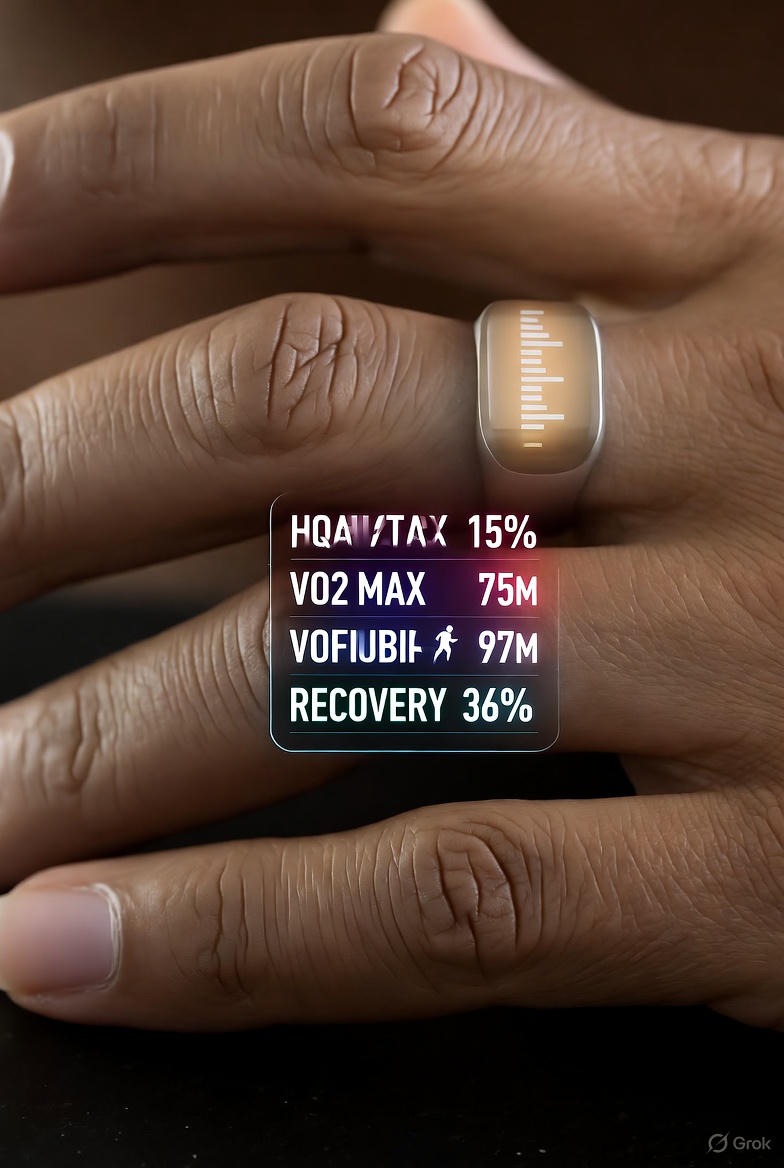
Imagine a meticulous conductor standing before a grand orchestra—your body. Every instrument, from the gentle strings of your digestive system to the powerful brass of your hormone release, must play in perfect time for the symphony of your day to feel harmonious. This conductor is your circadian rhythm: a roughly 24-hour internal clock that regulates your sleep-wake cycle, hormone production, body temperature, and countless other physiological processes.
This rhythm isn't a suggestion; it's a biological imperative. It's governed by a tiny region in your brain called the suprachiasmatic nucleus (SCN), a cluster of about 20,000 nerve cells located in the hypothalamus. The SCN doesn't operate in a vacuum. To keep accurate time—to ensure the orchestra doesn’t drift into a cacophony—it needs a daily cue. The most powerful cue of all is light, specifically bright light in the morning.
Here’s the pivotal mechanism: Specialized cells in your eyes, called intrinsically photosensitive retinal ganglion cells (ipRGCs), are uniquely sensitive to blue-wavelength light. These cells have nothing to do with vision; they are dedicated timekeepers. When morning light hits them, they send a direct signal along the retinohypothalamic tract to the SCN. This signal is a clear message: "Day has begun. Reset the clock. Start the daytime sequence."
The SCN then broadcasts this message to every cell and organ system in your body. It tells your pineal gland to halt the production of melatonin, the sleep-promoting hormone. It signals for a rise in cortisol, not as a stress response, but as a gentle, energizing wake-up signal. It cues the body temperature to begin its slow climb from its nighttime low. It influences the release of hormones that regulate hunger, focus, and mood. This entire cascade, triggered by light, sets your biological trajectory for the next 16 hours.
When this signal is weak, inconsistent, or mistimed (like from bright screens at night), the conductor loses its beat. The orchestra falls out of sync. This state, known as circadian misalignment, is linked to a staggering array of issues: fragmented sleep, daytime fatigue, difficulty concentrating, poor metabolic health, dampened immune function, and a heightened vulnerability to mood imbalances. Your smart ring, by tracking the subtle shifts in your nighttime physiology—like core body temperature and heart rate—is often picking up the downstream effects of a mistimed or weak morning light signal.
Understanding your circadian rhythm is the first step to working with your biology, not against it. It’s the foundational science that makes morning light exposure not just a wellness hack, but a non-negotiable pillar of physical and mental well-being. By giving your master conductor a clear, strong cue, you empower every system in your body to perform at its best.
In our ancestors' world, the morning light cue was unavoidable. Today, it's a choice—and one we often skip. We wake up in dark bedrooms, shuffle to a dimly lit bathroom, and commute facing a dashboard or phone screen. We might not see significant natural light until mid-morning or even lunchtime. By then, the opportunity to optimally set our circadian clock has significantly diminished. The impact of this daily deficit is profound and touches every facet of our well-being.
1. The Sleep-Wake Anchor: Morning light is the single most effective tool for solidifying a healthy sleep schedule. By suppressing melatonin production in the morning, you create a strong, clear contrast that allows it to rise robustly and earlier in the evening. Think of it like squeezing a rubber ball: the harder you suppress it in the AM (with light), the higher it bounces back in the PM (in darkness). Your ring likely tracks "sleep consistency" or "sleep score." A consistent morning light habit is one of the most reliable ways to improve those metrics, leading to deeper, more restorative sleep. For a deeper dive into this critical relationship, our article on how sleep forms the foundation of mental wellness explores the mechanics in detail.
2. Metabolic and Hormonal Harmony: Your circadian rhythm governs the timing of insulin sensitivity, glucose metabolism, and hunger hormones like leptin and ghrelin. Bright morning light exposure has been linked to improved glucose regulation and can help curb excessive appetite later in the day. It helps align your food intake with your body's internal metabolic processes, a key factor in maintaining healthy energy and weight.
3. Mood and Cognitive Foundation: The morning light signal directly influences the production of serotonin, a key neurotransmitter that stabilizes mood, promotes feelings of well-being, and serves as the precursor to melatonin. Adequate exposure is a natural, evidence-based mood booster. Furthermore, it enhances cognitive functions like alertness, reaction time, and the ability to focus. Starting your day with light is like giving your brain a cup of premium fuel, optimizing it for the demands of the day ahead and building resilience that supports your overall mental wellness mindset.
4. Beyond "Feeling Good" – Long-Term Resilience: Chronic circadian misalignment isn't just about feeling groggy. Research associates it with increased long-term risks for metabolic syndrome, cardiovascular issues, and certain mood disorders. Regular morning light exposure is a form of preventive medicine. It strengthens the regularity and amplitude of your biological rhythms, building systemic resilience. This proactive approach is at the heart of a preventive approach to mental wellness.
For the modern individual juggling countless responsibilities, the beauty of morning light is its efficiency. It’s a high-impact, low-time-investment practice. You don’t need an hour; often, 10-30 minutes can suffice. It requires no special equipment, just your presence outdoors or near a bright window. And now, with a smart ring, you don’t have to guess its impact—you can measure it. The data becomes your feedback loop, showing you how this simple, natural act translates into tangible improvements in your tracked physiology and subjective feeling.
Your smart ring is a sophisticated environmental sensor worn in the perfect location—on your finger, which typically sees a good amount of ambient light throughout the day. The companion app doesn't just show you a "light exposure" score; it's presenting a nuanced narrative about your daily light diet. To become an expert in your own rhythm, you need to learn its language.
Key Metrics You'll Likely Encounter:
What Your Ring Can't Tell You (Yet):
Interpreting the Story:
A week of data is more telling than a single day. Look for patterns:
By learning to read this data, you transform your ring from a passive tracker into an active guide. It provides objective proof of your habit and shows you the direct correlation between this simple morning practice and the quality of your rest, recovery, and readiness. It makes the invisible, visible.
With the science and the data in mind, let's translate theory into practice. What does an effective morning light routine actually look like? It's simpler than you might think, but the details matter.
The Golden Hour: Timing is Everything
The optimal window for circadian-resetting light is within the first 60 minutes of waking. This is when your SCN is most sensitive to the "reset" signal. The earlier you can get light in this window, the better. If you wake up before sunrise, you can use a bright light therapy lamp (10,000 lux) to simulate the signal, but the moment the sun is up, prioritize getting outside. Light exposure later in the morning still has benefits for alertness and mood, but its power to shift your circadian phase backward (helping you wake up earlier) diminishes as the morning progresses.
Duration: It's Not All or Nothing
The required duration depends entirely on intensity:
Intensity & Method: How to Do It Right
Tailoring to Your Chronotype:
Are you a natural "lark" (early riser) or "owl" (night owl)? Your chronotype influences your ideal schedule. A strong lark may get light right at dawn and feel great. An owl might find forcing light at 6 AM aversive. If you're an owl wanting to shift earlier, be consistent with morning light and crucially, pair it with early evening darkness (dim lights, avoid screens) to shift your rhythm gradually. Your ring's sleep timing data will show you if this is working.
While morning light is the cornerstone, your relationship with light throughout the entire day and evening is what creates a truly robust circadian rhythm. Think of it as a daily light diet: a big, bright breakfast of sunlight, steady daytime light, and a "fast" from bright, blue-rich light in the evening.
The Daytime Sustenance:
After your morning anchor, continue to seek bright, natural light during the day. Take lunch breaks outside, choose walking meetings, or position your workspace near a window. Consistent daytime light reinforces the "day" signal, boosts alertness, and can help prevent the afternoon slump. It also lessens the sensitivity to disruptive light later on. A well-lit day leads to a more resilient night.
The Evening Wind-Down: The Dark Side of the Rhythm
As sunset approaches, your biological need shifts from alertness to preparation for rest. The key is to minimize exposure to blue-wavelength light, which is abundant in LEDs, fluorescents, and the screens of our devices. This light tells your ipRGCs and SCN that the day is still happening, delaying melatonin release and pushing your sleep time later.
This balanced light diet—abundance in the morning, moderation during the day, and scarcity at night—creates the strong contrast your circadian rhythm craves. It’s this contrast that leads to the most profound improvements in sleep architecture, daytime energy, and overall physiological stability. It turns the simple act of managing light into a powerful form of sustainable integration for work-life balance, where your environment actively supports your restoration.
Even with the best intentions, life gets in the way. Understanding how common challenges manifest in your data helps you adapt and problem-solve, rather than give up. Here’s how to decode and address some frequent scenarios.
Challenge 1: "I Wake Up Before the Sun." (The Early Riser/Shift Worker)
Challenge 2: "My Mornings Are Chaotic – No Time for a Walk."
Challenge 3: "I Live Where It's Cloudy/Gray for Months."
Challenge 4: "My Sleep Data is Still Poor, Even With Morning Light."
Challenge 5: "My Weekend/Wake-Up Times Are Wildly Different."
By learning to troubleshoot, you move from rigid rules to adaptive mastery. Your ring becomes a diagnostic tool, helping you see what's working and what's not, so you can personalize the protocol to your real life, not a perfect ideal.
Your smart ring doesn't view your health in silos. It understands that light exposure, sleep quality, heart rate variability (HRV), resting heart rate (RHR), and body temperature are all interconnected threads in the same biological tapestry. When you pull on the morning light thread, you should see a positive shift in the entire pattern. Observing this synergy is where the magic of data-driven wellness truly happens.
The Positive Cascade:
Your ring's app dashboard is designed to show you these correlations. After a week or two of consistent morning light, don't just look at your light score in isolation. Look at the trends:
This interconnected view is crucial. It prevents you from over-optimizing one metric at the expense of others. For example, forcing yourself into a 5 AM light session that causes sleep deprivation will likely show as a good light score but a terrible sleep score and crashing HRV. The body seeks balance, and the full suite of metrics shows you that balance.
This holistic perspective is at the core of understanding the inseparable connection between mental and physical health. You cannot have a calm, resilient mind without a body whose fundamental rhythms are in sync. Morning light is a direct input that harmonizes these systems, and your ring provides the concert report, showing you how each section of your biological orchestra is performing in response to the conductor's clear cue.
Knowledge is power, but implementation is transformation. Let’s build your personalized morning light habit using a phased, evidence-based framework that leverages your ring’s data for motivation and feedback. This isn't about perfection; it's about progressive, sustainable integration.
Phase 1: Days 1-7 – The Observation & Baseline Week
Phase 2: Days 8-14 – The Minimal Viable Habit Week
Phase 3: Days 15-21 – The Optimization & Integration Week
Habit Stacking & Sustainability:
The key to making this last is to anchor it to an existing, non-negotiable part of your morning. This is called "habit stacking."
By the end of 21 days, you are no longer "trying to get morning light." You have become "someone who starts their day with the sun." This identity shift, supported by the tangible evidence on your phone, is what creates lifelong change. This process of building small, foundational habits is precisely the methodology behind creating a mental wellness plan that fits your life.
Once the basic habit is established, you can use your ring and other tracking methods to explore more nuanced relationships. This turns your practice from a general wellness protocol into a finely-tuned personal optimization tool.
Subjective + Objective Data:
Your ring provides objective physiology (light, sleep, HRV). You provide subjective experience. Combining them is powerful.
Performance Markers:
The Long-Term Correlation:
Over seasons, you may notice broader patterns. For example, you might see your average HRV dip and resting heart rate creep up during a month of poor weather and inconsistent light. This awareness allows you to be proactive—doubling down on your lamp use during these times—rather than reactive to a slump in mood and energy.
This level of tracking moves you from being a passenger to being the pilot of your own well-being. You start to predict how changes in your light input will affect your physiological and psychological output. It demystifies your own energy cycles and empowers you to take precise actions to support yourself, whether you're navigating a high-stress project period, a change of seasons, or simply seeking to perform at your personal best. It's a practical application of the foundational science of mental wellness, putting research into actionable, personal practice.
As with any popular wellness topic, myths abound. Let's clarify common misunderstandings to ensure your practice is both effective and safe.
Myth 1: "Any Light in the Morning is Good."
Myth 2: "I Get Plenty of Light Driving to Work."
Myth 3: "More Light is Always Better."
Myth 4: "I Use Night Mode on My Devices, So Evening Screen Time is Fine."
Myth 5: "If I Can't Do It First Thing, There's No Point."
Myth 6: "My Smartphone's Brightness is Enough for a Light Therapy Lamp."
By dispelling these myths, you can focus your efforts on what truly works, saving time and energy. You can look at your ring's data with a more informed eye, understanding why a certain pattern of light exposure may not be yielding the expected results in your sleep or recovery metrics. This clarity is essential for building an effective, personalized practice.
The sun is not a static entity in our lives. Its angle, intensity, and duration change with the seasons, and our biology is exquisitely designed to respond to these shifts. A rigid, year-round morning light routine that doesn't account for seasonal variation is missing a key piece of the puzzle. Your smart ring, by tracking the downstream effects on your sleep and recovery, will often be the first to tell you that your rhythm needs a seasonal tune-up.
The Summer Challenge: Early Dawns and Late Sunsets
The Winter Challenge: Late Dawns, Early Dusk, and Gray Skies
Spring and Autumn: The Transition Periods
These are times of relatively balanced light but rapid change. Your body may need a week or two to adjust to the shifting sunrise.
The key takeaway is to view your light practice as a dynamic dialogue with the environment, not a fixed prescription. By observing the seasonal shifts in your own ring data—your energy, sleep, and recovery—you learn to anticipate your needs and adjust your tools (lamps, timing, duration) accordingly. This responsive approach is a cornerstone of maintaining well-being amidst natural cycles.
Your circadian rhythm doesn't just govern sleep and wakefulness; it also creates optimal windows for digestion, nutrient processing, and metabolism. The master clock in your SCN synchronizes peripheral clocks in organs like your liver, pancreas, and gut. Morning light is the primary signal that aligns these clocks, making it a silent but powerful partner in metabolic health.
The Light-Food Connection: Setting the Digestive Schedule
When morning light hits your eyes and resets your SCN, it sends a signal that kickstarts the daytime metabolic processes. This includes:
Circadian Eating: Aligning Food with Light
The principle of "circadian eating" or time-restricted feeding suggests consuming most of your calories within a window that aligns with your light-exposed day, typically an 8-12 hour period.
What Your Ring Can Reveal:
While most rings don't track food directly, they track the metabolic consequences of mistimed eating through:
By using morning light to firmly set your metabolic day, you create a natural inclination to eat earlier and finish earlier. This synergy between light and food timing reduces the metabolic load at night, freeing up your body's resources for repair, detoxification, and memory consolidation. This integrated approach to light and food is a powerful, non-invasive way to support metabolic health, demonstrating the profound and inseparable connection between lifestyle inputs and physical well-being.
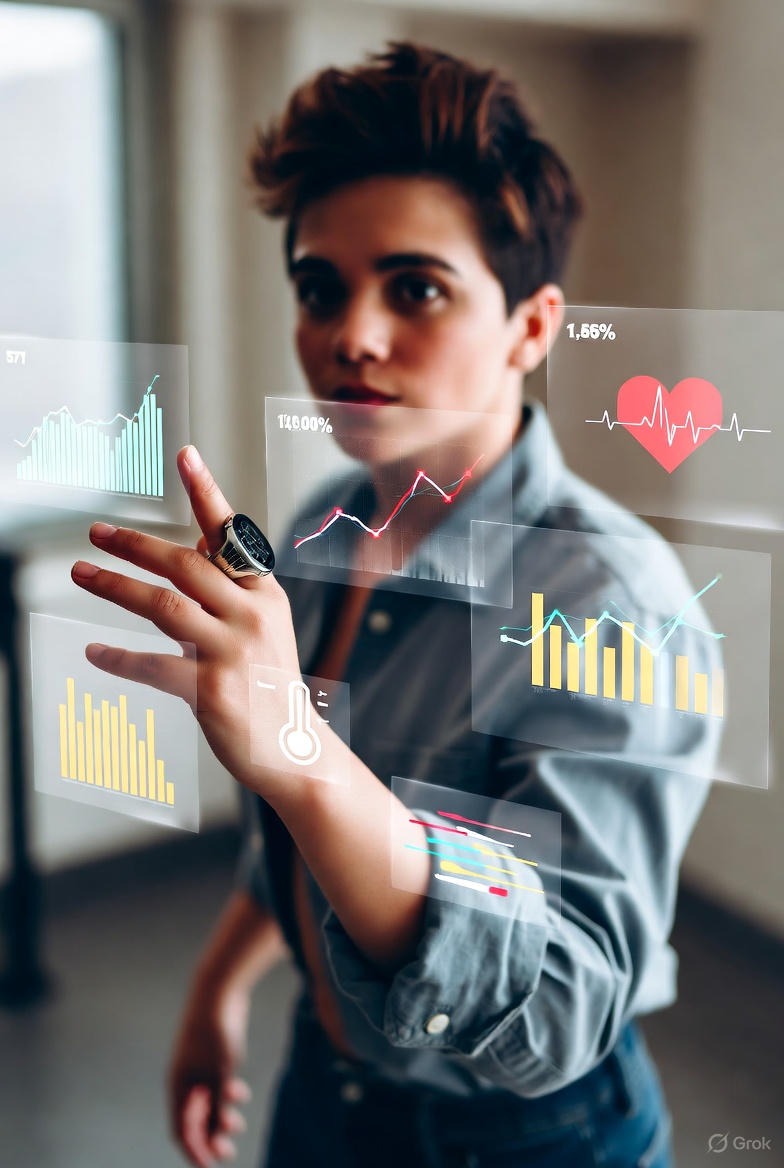
The magic of a smart ring lies in its ability to translate the environment on your finger into insights about your internal state. Understanding the "how" demystifies the data and helps you trust—and better interpret—the metrics you see.
1. The Light Sensor: A Tiny Photodiode
Embedded within the ring's housing is a small ambient light sensor (ALS), typically a photodiode. This sensor measures the intensity of light (in lux) hitting the ring's surface throughout the day and night.
2. The Circadian Inference Engine: Connecting Dots
This is where the software brilliance comes in. The ring's algorithms don't just report lux; they combine light data with other physiological signals to infer the state of your circadian rhythm.
The Synthesis:
The app's algorithm creates a model. It takes the input (morning light timing/intensity) and looks at the outputs (temperature rhythm, sleep onset/wake time, HR/HRV patterns). Over time, it learns your personal patterns. It can then provide insights like:
This multi-sensor, algorithmic approach is what makes a modern smart ring more than a sleep tracker. It's a circadian assessment tool. It shows you not just if you slept, but how well your internal timing system is functioning. This level of insight empowers you to make precise adjustments, moving from guessing about your energy to understanding its root cause in your biological rhythm. It operationalizes the foundational science of mental wellness by providing a personal feedback loop for one of its most critical pillars: circadian alignment.
Morning light is a powerful, standalone lever. But when combined synergistically with other foundational wellness practices, its effects can be amplified, creating a morning routine that primes your biology for an exceptional day. This isn't about creating an exhausting, hour-long regimen; it's about intelligent stacking for compound benefits. Your smart ring can help you observe the combined impact of these practices on your recovery and readiness metrics.
The Light + Cold Exposure Synergy:
Both morning light and brief cold exposure (like a cold shower or plunge) are potent sympathetic nervous system activators—they gently shock the body into a state of alert, focused arousal. When combined, they can create a powerful, sustained energy lift.
The Light + Movement Synergy:
This is the most natural pairing of all—moving your body in the morning sun. The benefits are more than additive; they’re interwoven.
The Light + Mindfulness Synergy:
While light and cold are activating, pairing light with mindfulness brings balance. It turns a passive light exposure into an active sensory and mental reset.
Creating Your Personalized Stack:
Start with light as your non-negotiable anchor. Then, experiment with adding one other element for a week. Use your ring’s daily "Readiness" or "Recovery" score, along with your subjective energy, as your guide. Does adding a cold shower make you feel jittery or focused? Does mindful light leave you calmer? Your data and your felt experience will tell you what combination creates the ideal launchpad for your system.
To see the power of this practice in action, let's follow a hypothetical but data-driven case study. Meet "Alex," a 38-year-old knowledge worker who felt perpetually drained by 3 PM and struggled with inconsistent sleep despite being in bed for 8 hours.
The Baseline (Week 1 - Observation):
The Intervention:
Alex committed to the "Minimal Viable Habit": stepping outside with coffee for 10 minutes within 30 minutes of waking (around 7:15 AM).
The Data Transformation (Over 8 Weeks):
Beyond the Numbers:
Alex’s subjective experience shifted profoundly: "I don't just do morning light; I look forward to it. It's my quiet time. My energy is stable now. I finally understand what 'waking up refreshed' means. The ring data showed me the cause and effect so clearly—it wasn't just a feeling, it was measurable."
This case study illustrates the journey from circadian misalignment to rhythm. The ring provided the objective feedback that turned a vague wellness tip into a non-negotiable, personalized health habit. It moved the practice from the realm of anecdote into the realm of personal evidence.
The daily practice of morning light exposure, tracked and reinforced by your ring, compounds over time. The benefits extend far beyond feeling more alert this week. They weave into the fabric of your long-term health, influencing systems that dictate vitality and resilience over decades.
1. Fortified Sleep Architecture:
Consistent circadian signaling leads to more robust and predictable sleep architecture. This means:
2. Improved Metabolic and Cardiovascular Resilience:
A stable circadian rhythm promotes metabolic efficiency—using energy when you need it (day) and repairing/store-regulating when you don't (night). Long-term, this is associated with:
3. Emotional and Cognitive Durability:
The regular circadian production of serotonin and the proper timing of the cortisol rhythm create a more stable neurochemical environment. This fosters:
4. Potential Longevity Links:
While human lifespan studies are complex, the evidence is compelling at a mechanistic level. Circadian disruption accelerates cellular aging and inflammation, while robust circadian function is associated with longevity in animal models. The hallmarks of aging are influenced by circadian rhythms. By supporting your master clock, you are supporting a fundamental system that governs cellular repair, oxidative stress response, and genomic stability.
Your smart ring, in this long-term view, becomes a guardian of your rhythm. It’s not just tracking last night's sleep; it's helping you protect and optimize a core biological function that influences your healthspan—the number of years you live in good health. The daily "Morning Light Score" is more than a gamified metric; it's a daily investment in the consistency of your internal timekeeper, paying dividends across every system in your body for years to come.

Your morning practice sets the stage, but your environment throughout the day either supports or undermines that strong start. Transforming your living and working spaces to be "light-conscious" minimizes circadian drag and maximizes your daytime energy and nighttime sleepiness. Here are actionable, non-invasive hacks to align your surroundings with your biology.
The Home Environment:
The Workspace Environment:
The Mindset Shift:
This isn't about overhauling your life overnight. Start with one change—perhaps programming your living room lights to dim at 8 PM. Observe if, over a week, your ring shows a slightly lower resting heart rate or a slightly higher HRV. This data-driven feedback makes each environmental tweak an experiment with measurable results. You are essentially becoming the architect of your own micro-environment, designing it to work in harmony with your innate circadian biology, which supports sustainable mental wellness in the digital age.
Your smart ring is a phenomenal guide for daily optimization and habit formation, but it is not a diagnostic medical device. While morning light is a powerful foundational practice, persistent issues in your data—especially when you've been consistent with the protocol—can be important signals to consult a healthcare professional.
Persistent Red Flags in Your Ring Data:
The Role of Specialists:
Using Your Data as a Communication Tool:
One of the greatest values of your ring in a clinical setting is its longitudinal data. Instead of saying, "I'm tired," you can show a doctor: "Here are three months of my sleep architecture, my resting heart rate trend, and my morning light consistency. Despite improving these metrics, my subjective fatigue, measured by these daily journals, has not improved." This objective record can accelerate the path to an accurate diagnosis.
Your ring empowers you to be a proactive, informed participant in your health. Knowing when its data is pointing you toward professional guidance is a critical part of that empowerment. It aligns with the principle of knowing when to seek professional help for your mental wellness, applying the same logic to your physiological data.
We have journeyed from the fundamental biology of your suprachiasmatic nucleus to the practicalities of interpreting a graph on your smartphone. You now understand that morning light exposure is not a wellness trend but a biological imperative—a non-negotiable signal that orchestrates your sleep, energy, metabolism, and mood. You've seen how a simple smart ring on your finger can translate this ancient wisdom into a modern, personalized feedback loop, showing you the direct correlation between light in your eyes and restoration in your body.
You are no longer a passive recipient of your daily rhythm. You are its architect. You have the tools to:
This journey is about becoming light-literate. It's about relearning a language your biology never forgot. The consistent, daily practice of greeting the morning light, verified and encouraged by the subtle metrics on your device, is a profound act of realignment. It’s a way to step out of the chaotic, artificial timing of the modern world and back into the steady, nourishing rhythm of the planet itself.
In the next portion of this guide, we will dive even deeper. We'll explore the cutting-edge intersection of light and technology, including how future wearables might use real-time light data for dynamic coaching. We'll examine the social and psychological dimensions of a light-based routine, and provide advanced templates for combining all these principles into a comprehensive, lifelong plan for circadian wellness. The path to mastering your energy, sleep, and health is illuminated—literally—and you are now firmly on it.
Your Trusted Sleep Advocate: Sleep Foundation — https://www.sleepfoundation.org
Discover a digital archive of scholarly articles: NIH — https://www.ncbi.nlm.nih.gov/
39 million citations for biomedical literature :PubMed — https://pubmed.ncbi.nlm.nih.gov/
Experts at Harvard Health Publishing covering a variety of health topics — https://www.health.harvard.edu/blog/
Every life deserves world class care :Cleveland Clinic - https://my.clevelandclinic.org/health
Wearable technology and the future of predictive health monitoring :MIT Technology Review — https://www.technologyreview.com/
Dedicated to the well-being of all people and guided by science :World Health Organization — https://www.who.int/news-room/
Psychological science and knowledge to benefit society and improve lives. :APA — https://www.apa.org/monitor/
Cutting-edge insights on human longevity and peak performance:
Lifespan Research — https://www.lifespan.io/
Global authority on exercise physiology, sports performance, and human recovery:
American College of Sports Medicine — https://www.acsm.org/
Neuroscience-driven guidance for better focus, sleep, and mental clarity:
Stanford Human Performance Lab — https://humanperformance.stanford.edu/
Evidence-based psychology and mind–body wellness resources:
Mayo Clinic — https://www.mayoclinic.org/healthy-lifestyle/
Data-backed research on emotional wellbeing, stress biology, and resilience:
American Institute of Stress — https://www.stress.org/


